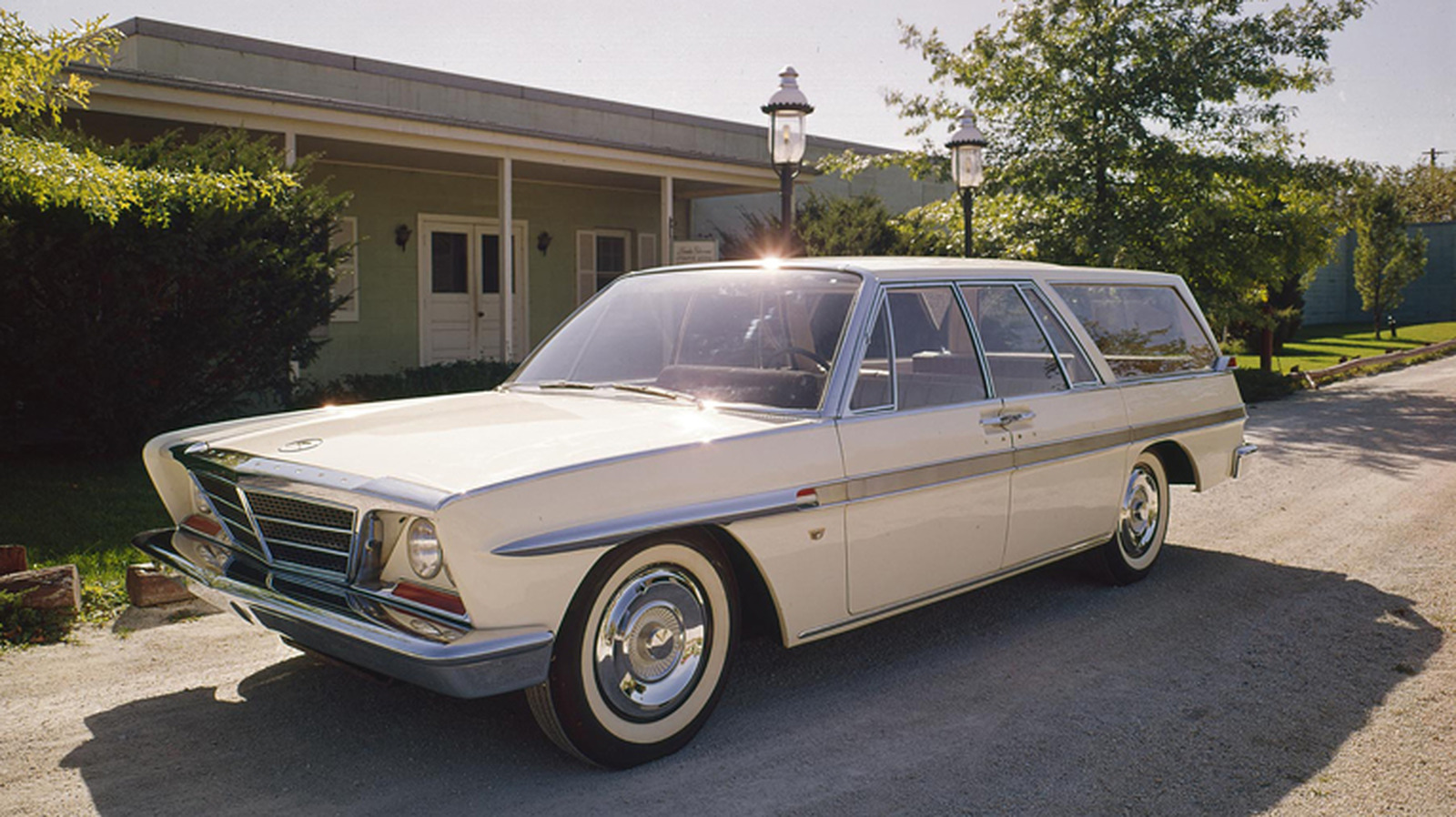
Could an American Compact Have Truly Challenged the Volkswagen Beetle?
The proposition that Stevens’ vision for a new Studebaker Lark could serve as a credible American rival to the Volkswagen Beetle invites skepticism, not least because the Beetle’s dominance in the compact car segment was never solely a matter of engineering or price. The Beetle’s appeal, rooted in its idiosyncratic design, reliability under specific conditions, and countercultural cachet, proved remarkably resistant to direct imitation. Stevens’ proposal, therefore, must be understood not as a mere exercise in product parity, but as an attempt to reframe what an American compact could signify—stylistically, technologically, and culturally.
The Core Mechanism: Interchangeability and Modularity
At the heart of Stevens’ proposal lay a technical ambition that, if realized, would have anticipated later automotive trends by decades: the use of interchangeable body panels. This modular approach, while conceptually elegant, posed formidable manufacturing challenges in the early 1960s. The evidence suggests that the American auto industry’s entrenched production systems—optimized for scale, not flexibility—would have struggled to accommodate such innovation without significant capital investment. Moreover, consumer appetite for modularity in this era remains ambiguous. While contemporary buyers valorize customization, mid-century Americans often equated novelty with status, not interchangeability. Thus, the practical significance of Stevens’ vision, though prescient, may have been blunted by both technological and cultural inertia.
Why the Stakes Extended Beyond Market Share
To frame the Lark merely as a would-be Beetle competitor is to miss the broader stakes. The proposal implicitly challenged the Detroit orthodoxy that equated “American” with “big.” Had Studebaker succeeded in redefining compactness as a site of innovation rather than compromise, the ripple effects could have extended well beyond sales figures. There is a plausible counterfactual in which the Lark’s modularity catalyzes a shift in consumer expectations, forcing larger automakers to reckon with flexibility and efficiency as core values. Yet, this interpretation remains contested, as the gravitational pull of postwar prosperity and the highway system arguably made the American market structurally inhospitable to small cars, regardless of their ingenuity.
Who Would Have Benefited—And Who Would Not
The most immediate beneficiaries of a successful modular Lark would likely have been urban and cost-conscious drivers, for whom the promise of easy repair and affordable updates held tangible appeal. Less obvious, however, are the interests arrayed against such a shift. Dealer networks, whose profitability depended on frequent model-year changes and proprietary parts, would have had little incentive to champion interchangeability. Labor unions, too, might have viewed modular assembly with suspicion, fearing job losses from reduced complexity. These structural limitations—rarely acknowledged in mainstream accounts—help explain why even the most forward-thinking proposals often falter at the threshold of implementation.
Methodological Boundaries and the Limits of Historical Imagination
Any retrospective assessment of Stevens’ proposal must grapple with the paucity of empirical data. Production prototypes, consumer surveys, and longitudinal market analyses are largely absent, rendering counterfactual claims necessarily speculative. The available evidence, drawn from design sketches and internal memos, reveals ambition but not inevitability. It would be a category error to treat the Lark’s unrealized potential as proof of its probable success. Rather, the episode underscores the contingency of innovation: that what seems obvious in hindsight—modularity, compactness, consumer choice—was, in its own time, a radical departure from prevailing norms.
What Judgment Should the Reader Draw?
For the informed reader, the lesson is not that Studebaker missed a guaranteed opportunity, but that the intersection of technical possibility and market receptivity is rarely straightforward. The Lark proposal, in its ambition and its failure, illuminates the structural blind spots of American automotive culture and the persistent difficulty of translating visionary design into commercial reality. If there is a call to action, it is to interrogate present-day orthodoxy with the same skepticism: to ask not only what is possible, but what is systemically permitted—and whose interests those systems serve.