How Does the FAA’s Shift in Regulatory Focus Reframe the Supersonic Flight Debate?
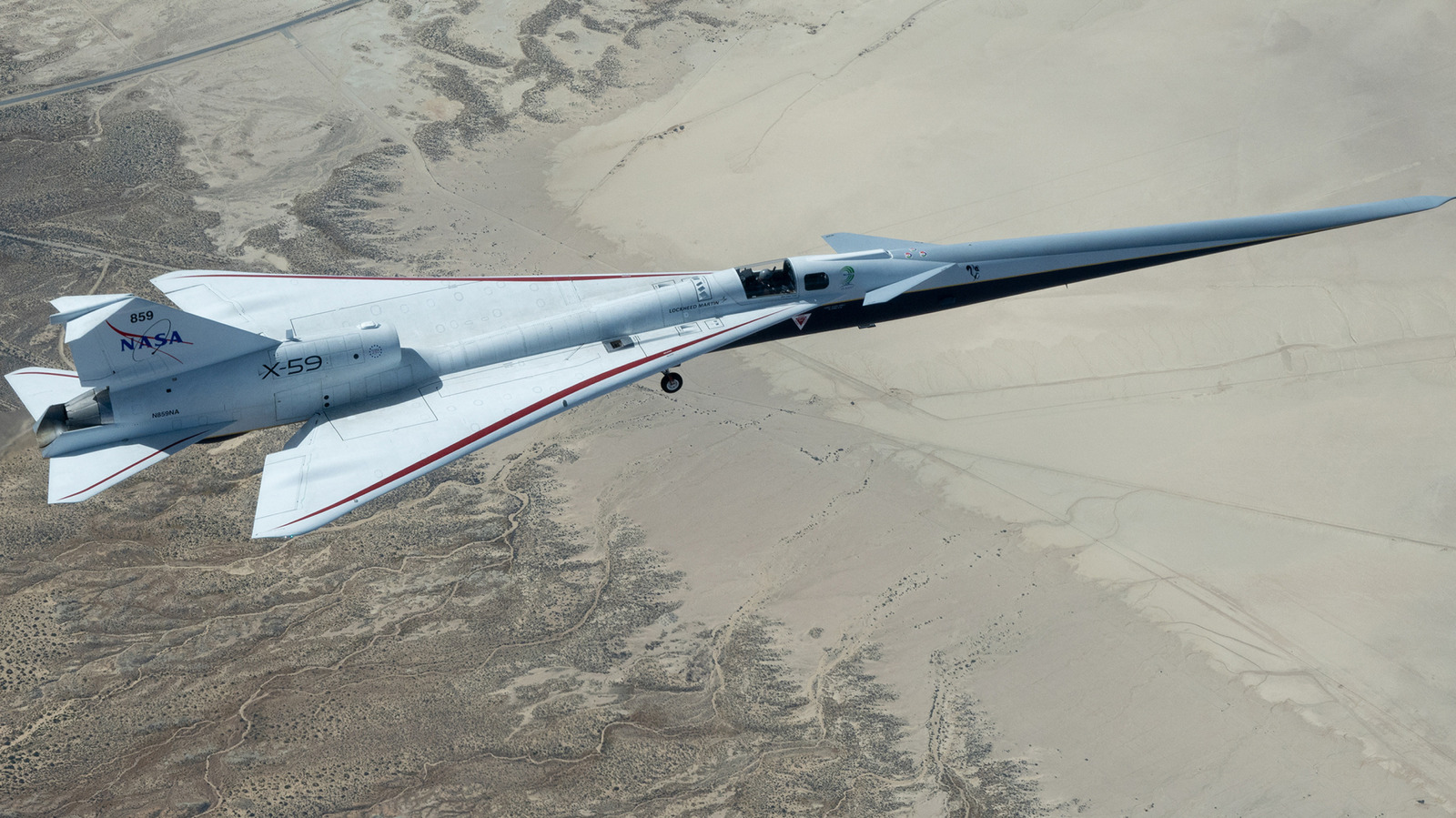
The Federal Aviation Administration’s recent rhetorical pivot—emphasizing the intensity of sonic booms rather than the mere fact of supersonic speed—signals a subtle but consequential recalibration in the regulatory discourse surrounding high-velocity commercial aviation. Historically, the prohibition of civilian supersonic flight over land in the United States has rested on the assumption that speed itself is the proximate cause of unacceptable environmental and social disruption. However, by foregrounding the acoustic footprint—the “power” of the sonic boom—as the locus of regulatory concern, the FAA is implicitly acknowledging that technological advances may render the once-intractable noise problem a matter of degree rather than kind.
This reframing is not merely semantic. It opens the door to a more nuanced, evidence-driven regulatory regime, one that could potentially accommodate differentiated standards based on measurable acoustic impacts rather than a categorical ban. The underlying mechanism at stake is thus not the physics of speed, but the psychoacoustic and structural effects of shockwave propagation—effects that, in principle, could be mitigated through design innovation. Yet, this approach also introduces new complexities: how to reliably measure, model, and enforce acceptable boom thresholds across diverse geographies and population densities remains an open technical and policy challenge.
Why Does Regulating Sonic Boom Intensity Matter Beyond the Obvious?
At first glance, the FAA’s proposed shift appears to be a straightforward concession to technological optimism: if manufacturers can “quiet” the boom, why not permit supersonic travel? The deeper significance, however, lies in the regulatory precedent it sets for balancing innovation with public welfare. By moving from a binary prohibition to a conditional standard, the FAA is not only responding to industry lobbying and the promise of economic revitalization but also implicitly redefining the social contract between technological progress and environmental stewardship.
This recalibration carries second-order consequences that extend beyond the aviation sector. It signals to other industries—autonomous vehicles, urban air mobility, even data privacy—that regulatory regimes can evolve from blunt prohibitions to more granular, risk-calibrated frameworks as empirical evidence and technical capabilities advance. Yet, this evolution is not without risk: the practical enforceability of “quiet enough” booms remains contested, and the potential for regulatory capture or uneven application across jurisdictions cannot be dismissed.
Who Stands to Gain or Lose from a Shift to Boom-Based Regulation?
While aerospace manufacturers and high-net-worth travelers are the most visible beneficiaries of a more permissive regulatory environment, the distributional impacts are more complex. Communities situated along potential supersonic corridors—often rural or economically marginalized—may bear disproportionate exposure to residual noise pollution, even under attenuated boom standards. Conversely, urban populations, shielded by routing decisions or political clout, may experience little direct impact. This spatial asymmetry raises questions about environmental justice and the allocation of both risks and benefits.
Moreover, the evidentiary basis for what constitutes an “acceptable” boom remains unsettled. Psychoacoustic research suggests that even low-level sonic disturbances can have cumulative effects on well-being and property values, particularly in sensitive populations. The FAA’s willingness to entertain a threshold-based approach thus presupposes a consensus on harm that does not yet exist—and may, in practice, privilege economic interests over less quantifiable social costs.
What Are the Structural and Methodological Limitations of the FAA’s Approach?
The move toward regulating boom intensity rather than speed itself is, at best, a provisional solution. The methodological boundaries are significant: acoustic modeling of sonic booms is subject to substantial uncertainty, especially when extrapolated across variable atmospheric conditions and built environments. Field trials, while informative, cannot fully capture the diversity of real-world contexts. Furthermore, the political economy of standard-setting—where industry actors have both the incentive and the resources to shape regulatory thresholds—raises the specter of standards that are technically compliant yet socially inadequate.
Complicating matters further, the international regulatory landscape is fragmented. Even if the FAA adopts a more permissive stance, cross-border harmonization remains elusive, with other jurisdictions potentially maintaining stricter prohibitions. This patchwork undermines the economic rationale for supersonic commercial services and introduces operational uncertainty for manufacturers and operators alike.
What Should an Informed Reader Conclude About the Future of Supersonic Regulation?
The evidence suggests that the FAA’s rhetorical and regulatory shift is less a wholesale endorsement of supersonic revival than a calculated bet on the pace of technological mitigation. Under specific conditions—where boom attenuation can be reliably demonstrated, and where monitoring and enforcement mechanisms are robust—a conditional relaxation of the ban may be justified. Yet, this interpretation remains contested, both within the technical community and among affected publics.
For the analytically minded observer, the key takeaway is not the inevitability of quiet supersonic flight, but the contingent, negotiated nature of regulatory adaptation. The FAA’s evolving stance exemplifies the broader tension between innovation and precaution—a tension that will only intensify as new technologies challenge the boundaries of existing policy frameworks. In this context, vigilance regarding both the evidentiary basis for regulatory change and the distributional consequences of its implementation is not merely prudent, but essential.