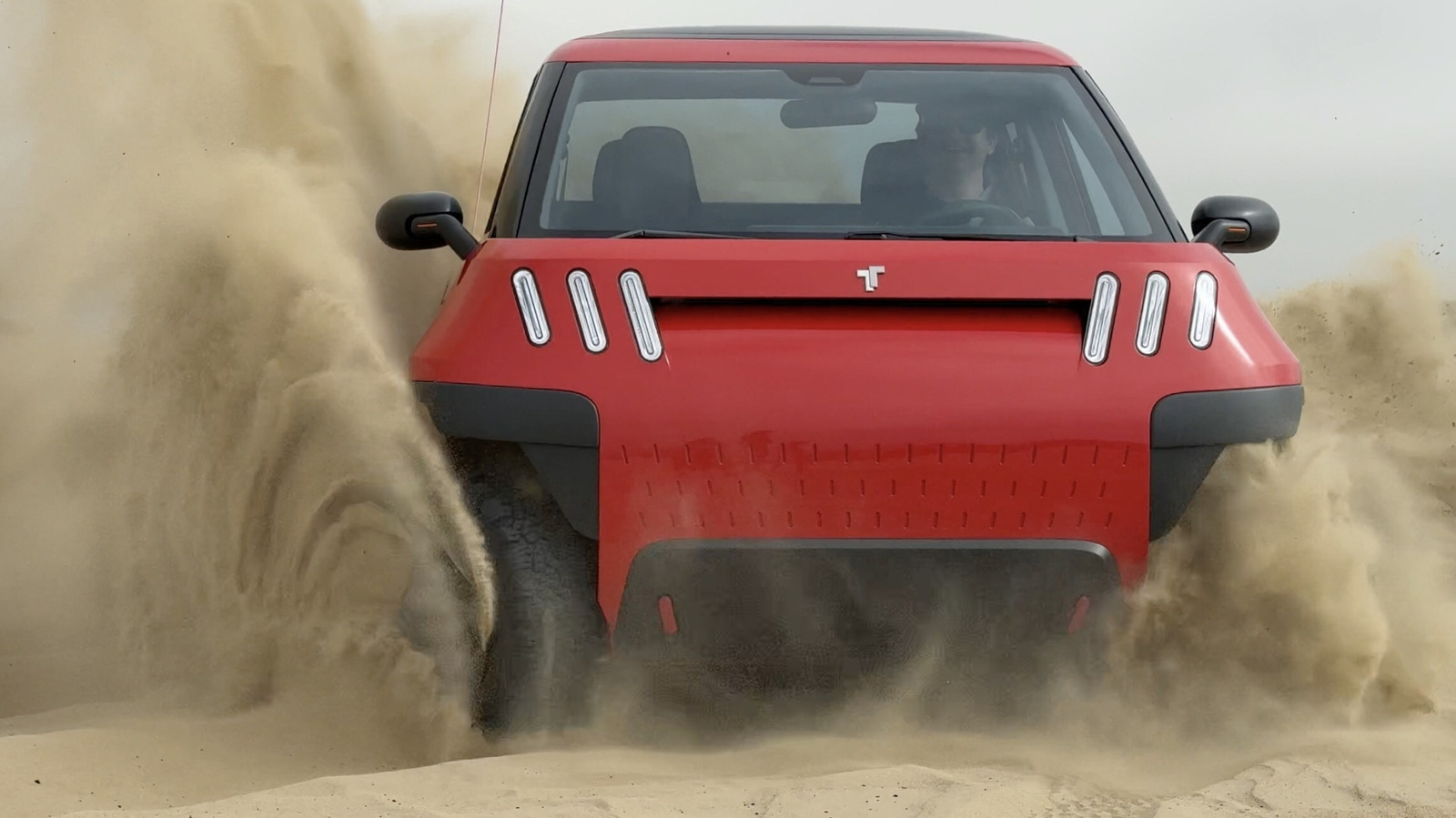
Assessing the Prospects for Telo: What Does Progress Actually Mean?
The recent developments surrounding Telo, a compact electric pickup, invite cautious optimism but demand a more nuanced appraisal than celebratory headlines might suggest. While incremental advancements—such as regulatory milestones, prototype unveilings, or funding rounds—are often interpreted as harbingers of imminent market entry, the evidence indicates that Telo’s trajectory remains highly contingent. The core mechanism at stake is not merely technical feasibility but the confluence of supply chain resilience, consumer adoption patterns, and regulatory clarity. Each of these vectors is subject to volatility. For instance, the electric vehicle sector as a whole has demonstrated a propensity for abrupt reversals, with promising startups encountering insurmountable obstacles at the very threshold of commercialization. Thus, while recent news may be construed as a positive signal, it would be premature to infer inevitability from incremental progress.
Why Incremental Progress in EV Startups Rarely Guarantees Survival
The broader context of electric vehicle innovation is littered with cautionary tales. Startups frequently announce breakthroughs or secure provisional approvals, only to falter when scaling production or navigating the capital-intensive demands of distribution. The evidence suggests that the leap from prototype to mass production is not linear; rather, it is punctuated by bottlenecks—ranging from battery sourcing to compliance with evolving safety standards. Telo’s apparent momentum, therefore, must be interpreted within this framework of systemic fragility. The practical significance of a single positive development is limited unless accompanied by demonstrable advances in manufacturing capacity and sustained investor confidence. Moreover, the sector’s history reveals that consumer enthusiasm for novel form factors, such as ultra-compact pickups, often dissipates when confronted with real-world trade-offs in range, utility, or price.
Who Stands to Gain or Lose from Telo’s Uncertain Future?
The implications of Telo’s fate extend beyond its founders and early adopters. Should the company succeed, it could catalyze a reconfiguration of urban mobility norms, offering a template for right-sized electrification in dense environments. Conversely, failure would reinforce incumbent skepticism toward niche EV startups, potentially chilling investment in unconventional vehicle architectures. Less obvious, but equally consequential, is the impact on regional supply chains and labor markets: a successful Telo could anchor new manufacturing clusters, while collapse would perpetuate geographic concentration in established automotive hubs. The evidence remains equivocal as to which scenario will prevail, but the stakes are not trivial.
Interpreting the Signals: What Should the Informed Observer Conclude?
Given the sector’s volatility and the methodological limitations of interpreting isolated milestones as predictive, the prudent stance is one of measured skepticism. While there is cause for guarded optimism—especially if Telo can demonstrate resilience across multiple operational domains—there is little justification for extrapolating short-term progress into long-term viability. For stakeholders, the rational course is to monitor not only headline achievements but also the less visible indicators: supply chain contracts, regulatory filings, and evidence of sustained consumer interest. In sum, Telo’s journey remains a live experiment in the structural challenges of automotive innovation, and its outcome will likely hinge on factors that transcend the immediate good news.