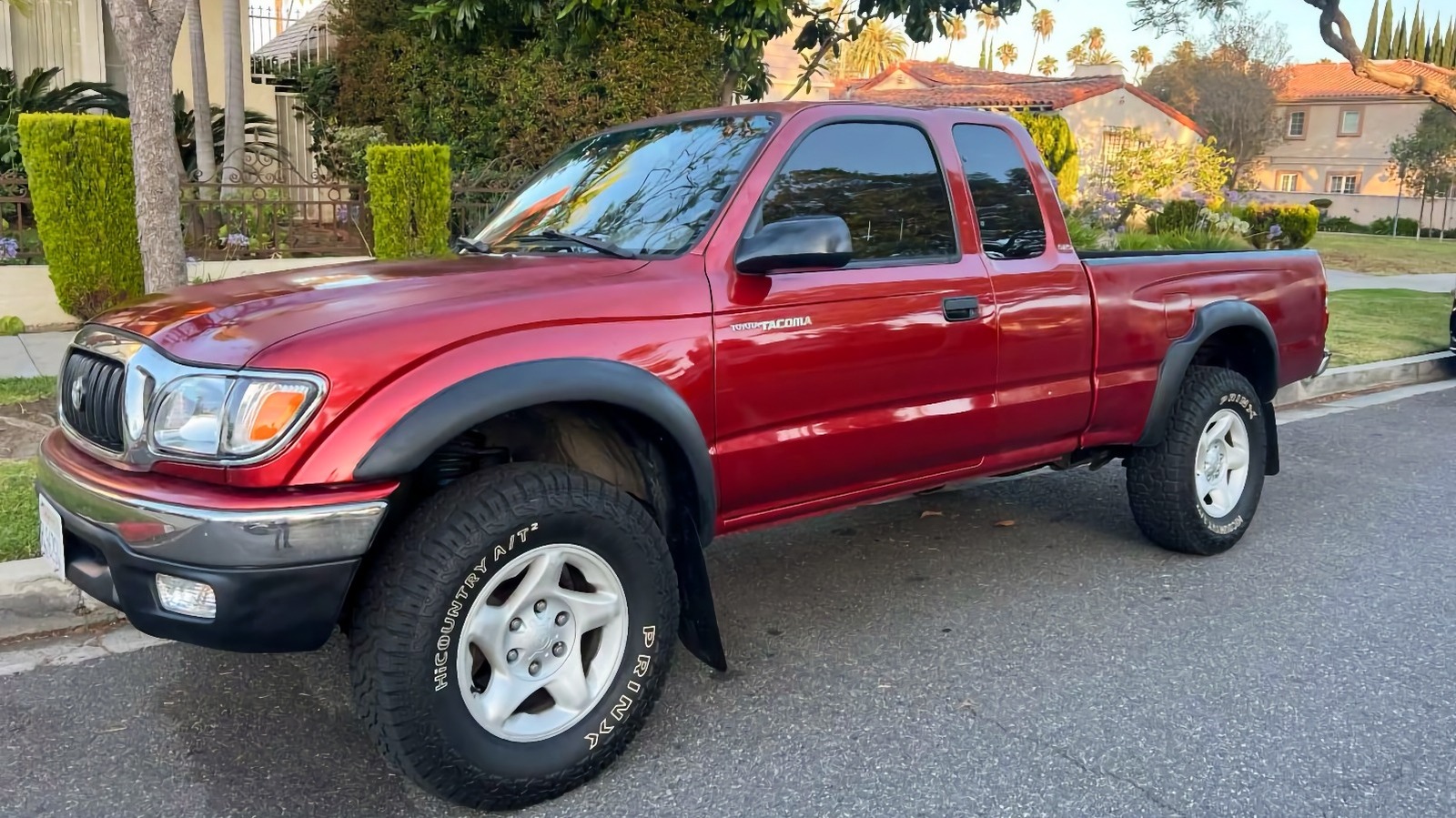
What Drives the Enduring Appeal of the Toyota Tacoma 4×4?
The Toyota Tacoma’s persistent popularity, particularly among used pickup buyers, is not a mere artifact of brand loyalty or nostalgia. Instead, it reflects a confluence of engineering conservatism, market positioning, and the psychological calculus of risk aversion. The evidence suggests that the Tacoma’s reputation for reliability—while not invulnerable to exceptions—has become a self-reinforcing asset, especially as the broader midsize truck segment oscillates between innovation and obsolescence. This reputation, however, is not simply the product of mechanical robustness; it is also a function of the truck’s relative simplicity. In an era when competitors have chased technological sophistication, often at the expense of long-term durability, the Tacoma’s incremental upgrades and evolutionary design have insulated it from the depreciation curves that afflict more ambitious rivals.
Do the Upgrades on the 2003 Model Justify Its Price Premium?
The 2003 Tacoma 4×4, particularly in well-maintained condition, commands a price that frequently surprises casual observers. This premium is not solely a reflection of scarcity or sentimentality. Rather, it represents a rational response to the perceived risk of catastrophic failure in newer, more complex vehicles. The upgrades on this model year—modest refinements in drivetrain, incremental safety improvements, and the retention of a proven chassis—do not, on their own, constitute a technological leap. Yet, under specific conditions, these very limitations become virtues. For buyers wary of costly electronic malfunctions or proprietary parts, the 2003 Tacoma’s analog sensibilities offer a form of mechanical transparency that newer trucks cannot match.
Still, this interpretation remains contested. Critics argue that the price premium is artificially inflated by online auction dynamics and a subculture of enthusiasts who valorize the Tacoma beyond its objective merits. While there is some validity to this claim, the market’s willingness to pay a premium for a two-decade-old truck suggests that, for a substantial cohort, the perceived reduction in long-term risk outweighs the opportunity cost of forgoing newer features.
Who Benefits—and Who Is Excluded—by the Tacoma’s Market Position?
The practical significance of the Tacoma’s enduring value extends beyond individual buyers. For rural tradespeople, outdoor enthusiasts, and those operating in regions where dealer support is thin, the Tacoma’s reputation for reliability translates into lower total cost of ownership and reduced operational downtime. Conversely, this market dynamic excludes price-sensitive buyers who might otherwise benefit from the Tacoma’s durability but are priced out by the very premium that its reputation commands. There is also a demographic skew: younger buyers, who might be more willing to accept the risks of newer, less proven models, are often unable to access the used Tacoma market at rational price points.
What Are the Structural Blind Spots and Second-Order Consequences?
A critical blind spot in the mainstream narrative is the assumption that the Tacoma’s value proposition is static. In reality, the durability premium is contingent on a supply of vehicles that have not been subjected to severe neglect or modification. As the pool of unmolested examples dwindles, the risk profile for buyers shifts—potentially undermining the very rationale for the price premium. Furthermore, the Tacoma’s market position may inadvertently discourage innovation in the midsize segment: manufacturers, observing the Tacoma’s success, may deprioritize radical improvements in favor of incrementalism, thereby stifling the emergence of genuinely disruptive alternatives.
What Judgment Should an Informed Reader Draw?
The evidence suggests that, under current market conditions, the upgrades found in the 2003 Toyota Tacoma 4×4 do justify a price premium—but only for buyers who prioritize mechanical simplicity, proven reliability, and long-term cost predictability over technological novelty. For others, particularly those seeking advanced features or lower upfront costs, the Tacoma’s market position may represent a misallocation of resources. The informed reader should recognize that the Tacoma’s value is not intrinsic, but rather a function of shifting market perceptions, demographic pressures, and the ongoing tension between innovation and risk aversion in the midsize truck segment.