Parsing the Symbolism Behind Political Rhetoric at Automotive Venues
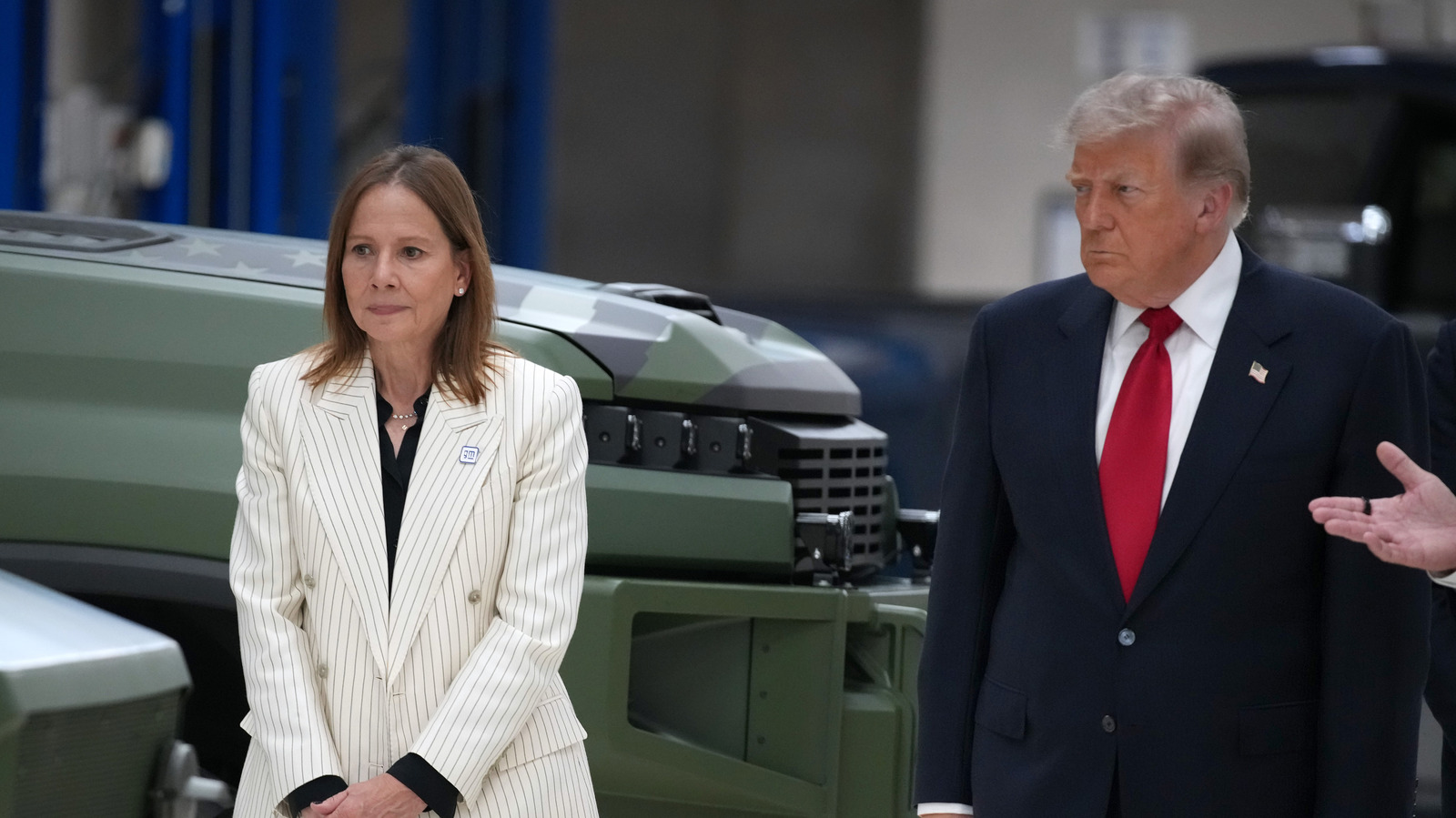
When a political figure chooses an automotive proving ground as the stage for campaign remarks, the venue itself becomes a rhetorical device. The selection of GM’s Milford Proving Ground, a site synonymous with American industrial prowess and technological experimentation, is not incidental. It signals an attempt to align with the legacy of domestic manufacturing, even as the content of the speech may diverge sharply from the values or realities of the modern auto industry. The evidence suggests that such settings are leveraged to evoke nostalgia and to frame policy debates in terms of national identity, rather than technical or economic substance.
What Lies Beneath the Surface of Offhand Remarks
A seemingly offhand comment—expressing uncertainty about being struck by a specific model of truck—functions on multiple levels. On the surface, it may read as a moment of levity or personal preference. Yet, under scrutiny, this rhetorical move can be interpreted as a subtle critique of the automaker’s products, or even as a coded signal to constituencies skeptical of recent industry shifts toward electrification, automation, or globalized supply chains. The ambiguity of the statement allows for plausible deniability while still sowing doubt or reinforcing in-group skepticism. Such remarks, while easily dismissed as mere banter, often serve as dog whistles to audiences attuned to the undercurrents of cultural and economic anxiety surrounding the future of American manufacturing.
The Broader Implications for Industry and Public Perception
The practical significance of these rhetorical choices extends beyond the immediate audience. When high-profile figures publicly question the desirability or safety of a flagship vehicle, even in jest, the reputational effects can ripple through consumer confidence and investor sentiment. However, the empirical impact of such statements is notoriously difficult to quantify, as attribution is confounded by concurrent media cycles, pre-existing brand loyalties, and the complex psychology of risk perception. Still, the pattern of targeting specific products or executives—rather than abstract policy—reflects a strategic personalization of critique, which may have second-order consequences for corporate leadership and labor relations.
Structural Blind Spots and the Limits of Political Theater
What is often omitted from mainstream interpretations is the degree to which these spectacles obscure the structural realities facing the auto industry: global supply chain fragility, regulatory uncertainty, and the capital-intensive pivot to electric vehicles. The focus on individual personalities or isolated product lines can distract from these systemic challenges, narrowing the public discourse to the level of anecdote and personality. Moreover, vested interests—whether political, corporate, or media—frequently benefit from this narrowing, as it forestalls more substantive debate about policy, investment, and the distribution of risk and reward.
Guidance for the Informed Observer
For readers seeking to move beyond the spectacle, the core takeaway is this: scrutinize not only what is said, but where and how it is said. Consider the interests served by framing industrial debates in personal or performative terms. Recognize that the most consequential dynamics—technological transformation, labor restructuring, and regulatory adaptation—often unfold beneath the surface of headline-grabbing remarks. To remain genuinely informed, one must resist the gravitational pull of personality-driven narratives and instead interrogate the deeper mechanisms shaping the future of American industry.