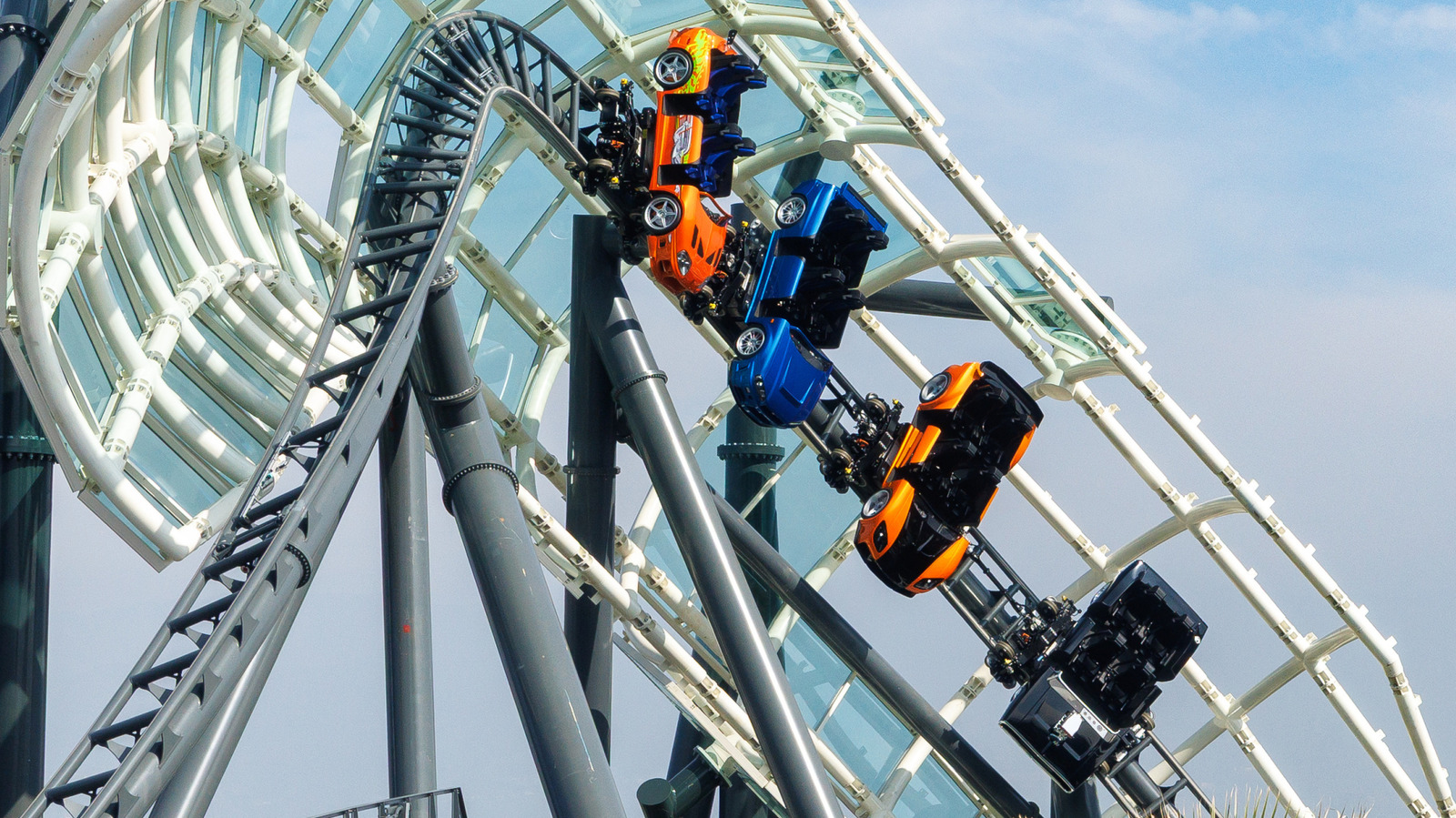
How Does the Fast & Furious Roller Coaster Challenge the Boundaries of Urban Amusement?
The construction of high-thrill attractions in densely populated urban environments has always entailed a negotiation between entertainment value and community impact. In Toluca Lake, the persistent complaints about the Fast & Furious roller coaster’s auditory footprint reveal a deeper tension: the collision between the economic imperatives of theme park expansion and the lived realities of adjacent residential zones. While the ride’s design promises adrenaline and spectacle for visitors, the evidence suggests that its soundscape—particularly the involuntary screams of riders—has become a disruptive force for those whose homes abut the park’s perimeter.
Why Do Resident Complaints Signal More Than Mere NIMBYism?
It would be facile to dismiss local opposition as mere NIMBY (Not In My Backyard) sentiment. Instead, the grievances articulated by Toluca Lake residents point to a structural asymmetry: the power of large entertainment corporations to externalize the costs of their operations onto less influential communities. The persistent nature of the complaints, and their focus on the unpredictability and volume of human-generated noise, underscores a qualitative distinction from more routine urban disturbances. Unlike traffic or construction, the screams are both irregular and emotionally charged, making adaptation difficult and amplifying the sense of intrusion. This dynamic complicates the standard calculus of urban planning, which often privileges economic development over intangible quality-of-life metrics.
What Are the Methodological Limits of Assessing Noise Disruption?
Quantifying the impact of roller coaster noise—especially that generated by human voices—presents methodological challenges. Decibel measurements, while objective, fail to capture the psychological salience of intermittent, high-pitched sounds. Moreover, the temporal distribution of the noise (peaking during weekends and holidays) may disproportionately affect residents who are otherwise seeking respite during those periods. The evidence base for long-term health or psychological effects of such noise remains contested, with some studies suggesting elevated stress markers, while others find adaptation over time. In this context, the absence of clear regulatory thresholds for amusement park noise leaves affected communities in a legal and political gray zone.
Who Bears the Hidden Costs, and Who Benefits?
The distribution of benefits and burdens is far from symmetrical. Park visitors, many of whom are transient, reap the immediate rewards of entertainment and escapism. Local businesses may benefit from increased foot traffic, but the residents—whose property values, sleep quality, and sense of tranquility are at stake—shoulder the externalities. There is also an intergenerational dimension: families with young children or elderly members may be disproportionately affected by unpredictable noise, a factor rarely accounted for in environmental impact assessments. The evidence thus points to a misalignment between those who profit and those who pay, both literally and figuratively.
What Structural Blind Spots Perpetuate the Conflict?
Underlying the controversy is a regulatory and cultural blind spot: the presumption that economic development, especially in the form of entertainment infrastructure, is an unalloyed public good. This assumption often marginalizes dissenting voices and frames quality-of-life objections as obstacles to progress. The lack of robust mechanisms for community input or compensation exacerbates the sense of disenfranchisement. Furthermore, the episodic nature of media attention means that resident grievances may be cyclically ignored until they reach a threshold of public nuisance or legal action.
What Should an Informed Observer Conclude?
The Toluca Lake dispute is not merely a parochial squabble over noise; it is a microcosm of broader urban dilemmas about whose interests shape the sensory environment of cities. The evidence, while incomplete, suggests that current regulatory frameworks inadequately balance economic and social goods. For policymakers, the challenge is to devise more nuanced standards that account for the qualitative aspects of noise and the asymmetrical distribution of its impacts. For residents and advocates, sustained collective action and strategic use of data may be necessary to recalibrate the terms of engagement. Ultimately, the case invites a reconsideration of how cities negotiate the boundaries between fun and fairness—between the right to amusement and the right to peace.