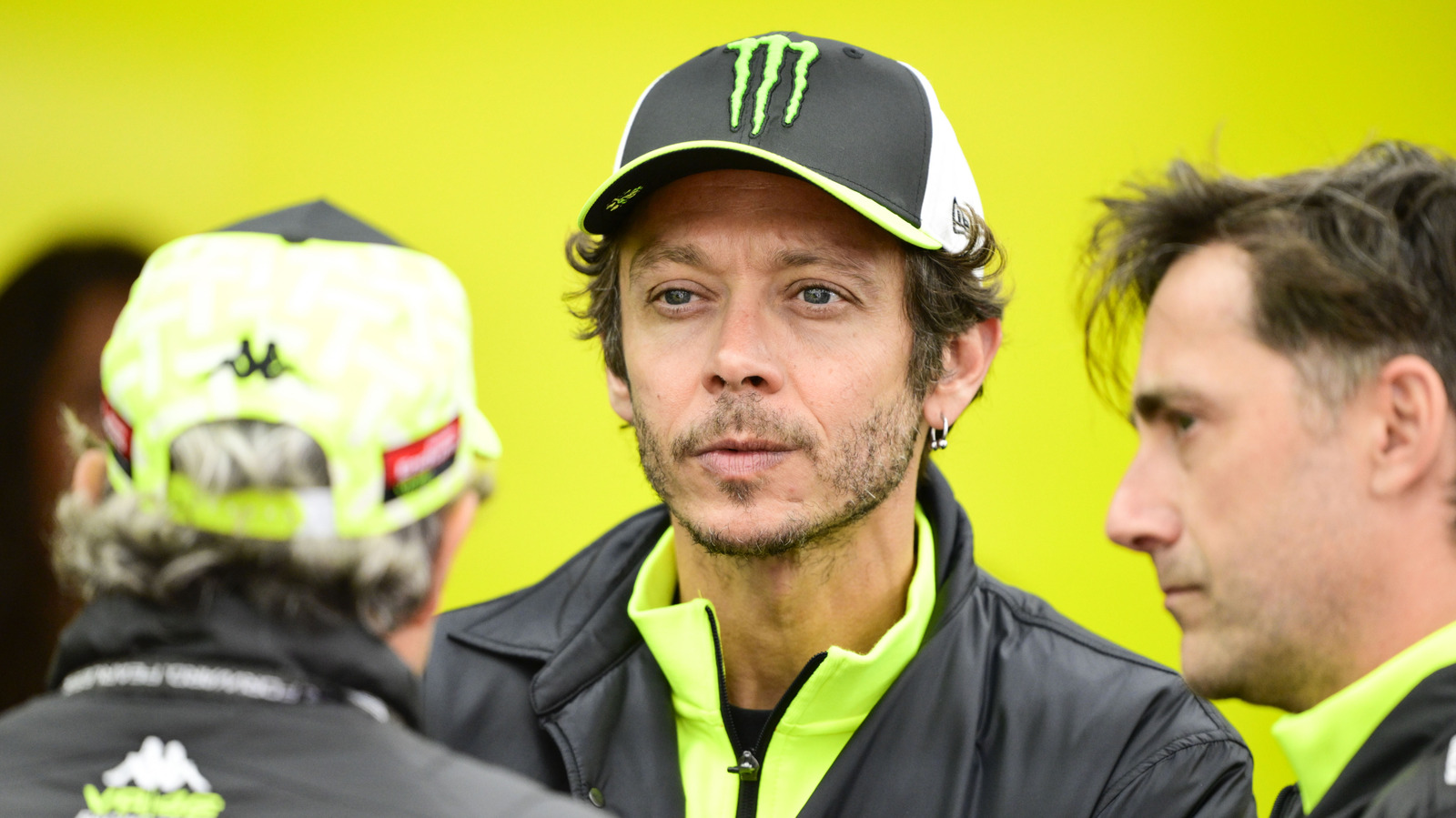
How Does Valentino Rossi’s Transition Reflect Broader Shifts in Motorsport Identity?
Valentino Rossi’s ambition to compete at the Nürburgring, following a storied career in MotoGP, signals more than a personal evolution; it encapsulates a subtle but consequential transformation in the boundaries of motorsport identity. The evidence suggests that the permeability between racing disciplines—once sharply demarcated by technical specialization and cultural allegiance—has become increasingly negotiable. Rossi’s move is not merely a celebrity’s dalliance with novelty; it is a calculated engagement with a tradition-laden, physically punishing venue that has historically resisted the incursion of outsiders.
The core mechanism at stake is the transferability of elite racing skill across fundamentally different platforms. While MotoGP and endurance racing at the Nürburgring demand divergent technical proficiencies—two wheels versus four, sprint versus endurance, open circuits versus the Nordschleife’s labyrinthine complexity—Rossi’s career has repeatedly demonstrated an aptitude for adaptation. Yet, the methodological boundaries of such adaptation remain underexplored. The prevailing narrative, which frames Rossi’s transition as a natural extension of his competitive drive, risks obscuring the structural and psychological discontinuities that such a leap entails.
Why Does This Move Matter Beyond Rossi’s Personal Narrative?
Rossi’s prospective debut at the Nürburgring reverberates beyond the cult of personality that surrounds him. It challenges entrenched assumptions about the lifecycle of elite athletes in motorsport, particularly the notion that career twilight is synonymous with diminishing ambition or risk aversion. For a generation of fans and aspiring racers, the move destabilizes the expectation that specialization is the only viable path to excellence; instead, it posits versatility as a form of mastery in its own right.
There are, however, second-order consequences that the mainstream interpretation tends to overlook. Rossi’s entry into endurance racing could recalibrate sponsorship dynamics, media attention, and even the competitive strategies of established Nürburgring teams. The influx of global attention—driven by Rossi’s celebrity—may distort the competitive equilibrium, privileging spectacle over tradition. For purists, this raises the specter of dilution; for pragmatists, it represents an opportunity to rejuvenate a venerable event with new audiences and commercial energy. The tension between these perspectives is unlikely to resolve cleanly.
Who Stands to Gain or Lose from This Cross-Disciplinary Experiment?
While Rossi himself is the most visible protagonist, the ripple effects of his transition implicate a broader cast of stakeholders. Younger riders and drivers, observing the permeability of racing boundaries, may recalibrate their own career strategies—potentially accelerating a trend toward cross-disciplinary experimentation. Sponsors and manufacturers, ever attuned to the optics of association, may shift resources toward athletes who embody adaptability rather than single-discipline dominance.
Yet, not all interests align. Established Nürburgring competitors, whose expertise is honed through years of circuit-specific experience, may find themselves marginalized by the gravitational pull of Rossi’s media presence. The evidence from analogous cases—such as high-profile athletes transitioning between Formula One and endurance racing—suggests that while initial attention is intense, the long-term impact on competitive balance is more muted. Still, the psychological effect on the paddock, and the recalibration of what constitutes legitimate expertise, should not be underestimated.
What Are the Structural and Cultural Blind Spots in Mainstream Narratives?
Mainstream coverage tends to valorize the drama of individual reinvention, often at the expense of interrogating the institutional and cultural constraints that shape such moves. The Nürburgring, with its storied history and fiercely protective community, is not merely a stage for personal ambition; it is a site of contested meaning, where tradition and innovation are in constant negotiation. The risk, underappreciated in celebratory accounts, is that the influx of external celebrity could erode the tacit norms that have sustained the event’s distinctiveness.
Moreover, the practical significance of Rossi’s transition is bounded by the realities of endurance racing itself. Success at the Nürburgring is as much a function of team cohesion, technical reliability, and local knowledge as it is of raw driving talent. The evidence from previous cross-disciplinary attempts suggests that even the most gifted athletes face a steep learning curve—one that is often underestimated by outsiders and fans alike.
What Should an Informed Observer Conclude?
The most analytically defensible judgment is that Rossi’s move to the Nürburgring is neither a mere vanity project nor a guaranteed triumph of talent over circumstance. It is, instead, a high-visibility experiment in the permeability of motorsport boundaries—one that will test not only Rossi’s adaptability but also the resilience of the Nürburgring’s traditions. For those invested in the future of racing, the episode invites a more nuanced appreciation of how individual ambition and institutional identity interact, sometimes productively, sometimes in tension. The outcome remains uncertain, but the implications—structural, cultural, and commercial—are likely to reverberate well beyond the confines of a single race.