What Drives the Pursuit of Extreme Engineering in Custom Motorcycles?
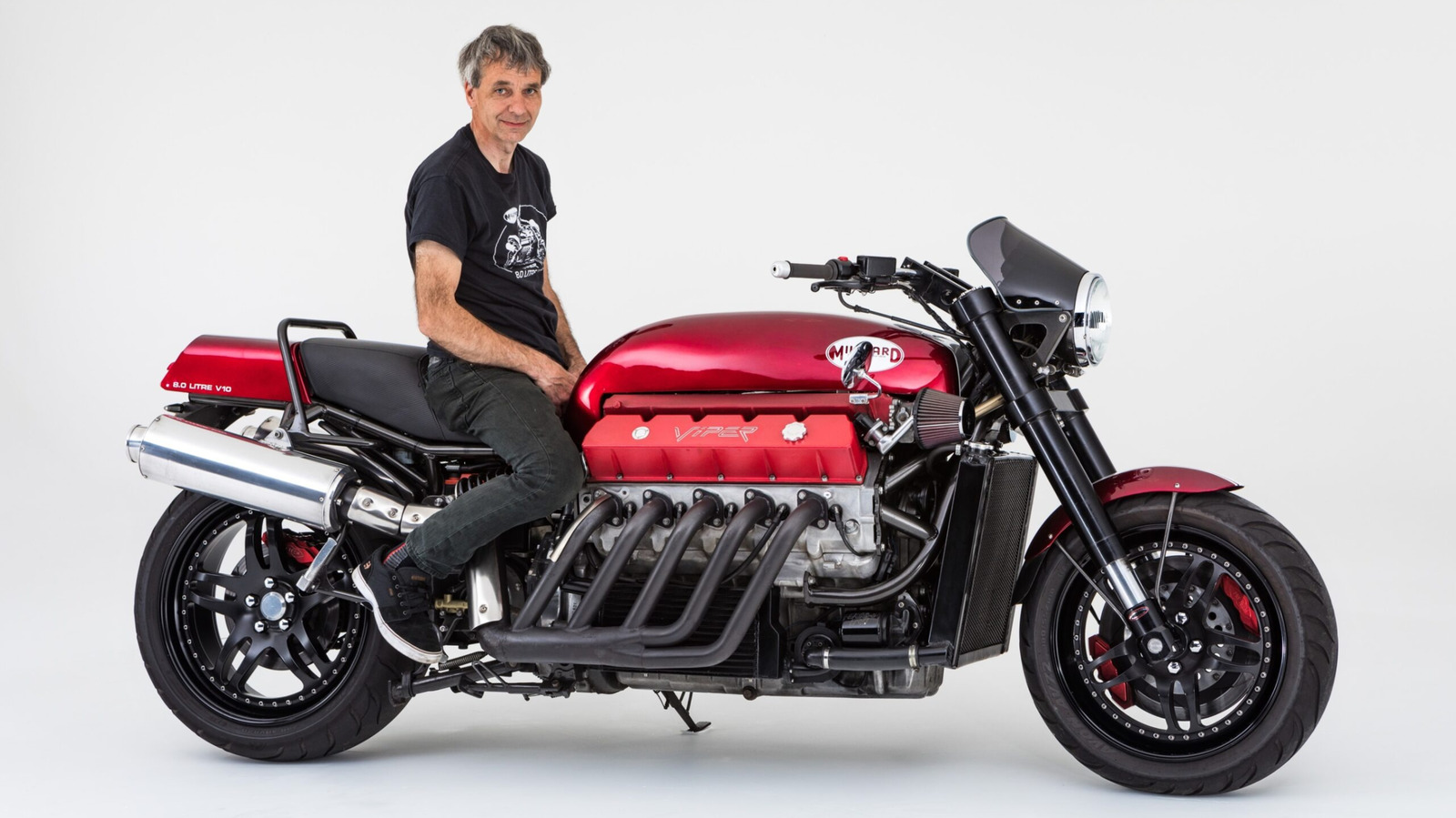
The construction of a motorcycle powered by a Viper V10 engine—an audacious feat by any measure—invites a deeper inquiry into the motivations and technical ingenuity underpinning such projects. Allen Millyard, whose reputation in the custom motorcycle world is well established, exemplifies a particular breed of builder for whom the boundaries of mechanical possibility are not merely to be respected, but actively transgressed. The evidence suggests that the core mechanism at stake is not simply the desire for raw power or spectacle, but a sustained engagement with the limits of engineering integration: how to reconcile the colossal mass, torque, and thermal output of an automotive V10 with the structural and dynamic constraints of a two-wheeled chassis.
This pursuit is not without precedent, yet each iteration—especially at this scale—raises fresh questions about the relationship between form and function. The Viper V10, originally designed for a sports car, introduces challenges of weight distribution, vibration management, and frame rigidity that standard motorcycle architectures are ill-equipped to address. The act of making such an engine operable on two wheels, therefore, becomes less an exercise in brute force and more a test of adaptive design, where each solution begets a new set of compromises. The mainstream narrative often frames these builds as eccentric or purely performative, yet this interpretation risks obscuring the real technical sophistication and iterative problem-solving involved.
How Does the Integration of a V10 Engine Transform the Motorcycle’s Identity and Utility?
The transplantation of a 500-horsepower V10 into a motorcycle chassis fundamentally alters the machine’s identity, pushing it beyond the conventional boundaries of either category. Under specific conditions, such a hybrid creation is less a motorcycle in the traditional sense and more a rolling laboratory—a platform for interrogating the outer limits of mechanical synergy. The evidence from similar projects suggests that rideability, safety, and regulatory compliance become secondary to the act of demonstration: the machine exists to prove that the improbable can be rendered operational, if not exactly practical.
Yet, this transformation is not without consequence. The sheer scale of the engine redefines the ergonomics, handling characteristics, and even the social meaning of the motorcycle. For the rider, the experience is as much about managing risk and spectacle as it is about transportation. For observers, the machine functions as a provocation—a challenge to received wisdom about what motorcycles are, and what they might become. The practical significance of such builds, therefore, lies less in their replicability and more in their capacity to expand the conceptual vocabulary of both engineering and motorcycle culture.
Who Benefits—and Who Is Excluded—by Such Extreme Customization?
The creation of a Viper V10-powered motorcycle is, by its nature, an exclusionary act. The technical expertise, financial resources, and workshop infrastructure required place such projects well beyond the reach of most enthusiasts. This exclusivity is not merely a function of cost, but of cultural capital: only those with a certain standing in the custom community, and the credibility to attract attention, can marshal the resources necessary for such undertakings. The evidence suggests that these machines serve as status symbols within a niche subculture, reinforcing hierarchies of skill and innovation.
However, the second-order effects are more ambiguous. While these projects inspire awe and curiosity, they may also reinforce a perception of custom motorcycle building as an elite pursuit, disconnected from the everyday realities of most riders. The mainstream motorcycle industry, with its emphasis on safety, reliability, and mass-market appeal, is unlikely to adopt lessons from such extreme builds except in the most abstract sense. Yet, the symbolic value—the demonstration that the envelope can always be pushed further—remains potent, even if the practical applications are limited.
What Structural and Interpretive Limitations Shape Our Understanding of These Machines?
The available evidence on V10-powered motorcycles is necessarily anecdotal, shaped by the rarity of such builds and the idiosyncratic nature of their creators. Methodological boundaries abound: there is little in the way of systematic testing, peer-reviewed analysis, or longitudinal data on performance and safety. Much of what is known derives from the accounts of builders and the impressions of those few who have witnessed or ridden these machines. This interpretive gap leaves room for myth-making and exaggeration, but also for genuine innovation to go underappreciated.
Moreover, vested interests—whether from the custom community, the broader motorcycle industry, or the media—shape which narratives gain traction. Stories of technical triumph are often foregrounded, while failures, near-misses, and the sheer impracticality of such machines are downplayed. For the informed reader, the appropriate stance is one of measured admiration: to recognize the extraordinary skill and imagination involved, while remaining cognizant of the structural limitations and the selective storytelling that surrounds such projects.
What Should the Discerning Observer Conclude About the Value of Extreme Engineering in Motorcycles?
The spectacle of a Viper V10-powered motorcycle, while undeniably captivating, should not obscure the deeper questions it raises about the nature of innovation, the boundaries of practicality, and the social dynamics of expertise. These machines are best understood not as blueprints for the future, but as provocations—reminders that the horizon of possibility is always further than it appears, yet also that each advance brings new complexities and exclusions. For those with the means and the vision, such projects offer a canvas for technical self-expression; for the broader community, they serve as both inspiration and cautionary tale. The value, ultimately, lies not in the replication of the feat, but in the ongoing dialogue it provokes about what motorcycles are, and what they might yet become.