How Does the X-59 Challenge Prevailing Assumptions About Supersonic Flight?
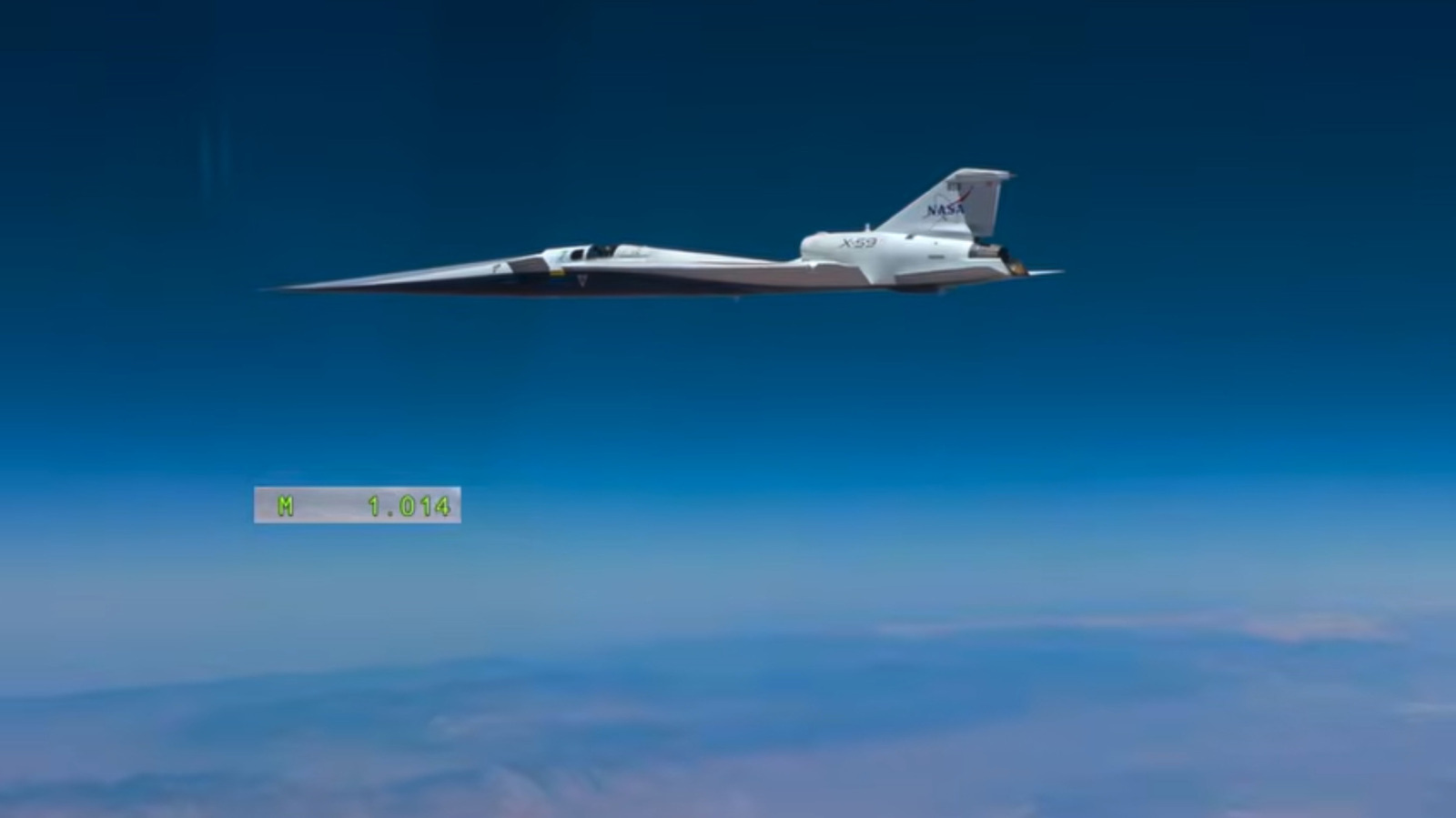
The X-59 project, at its core, interrogates a longstanding technological and regulatory impasse: the persistent belief that supersonic travel is irreconcilable with the tranquility of communities beneath its flight path. For decades, the thunderous sonic booms produced by aircraft breaking the sound barrier have been the principal obstacle to widespread supersonic commercial aviation over land. The X-59, by attempting to transform the disruptive “boom” into a far subtler “thump,” directly contests the notion that speed and societal acceptability are mutually exclusive. Yet, the evidence for this transformation remains preliminary; the aircraft’s first supersonic flights are as much experimental probes as demonstrations of inevitability.
What Mechanisms Underlie the Promise of Quieter Supersonic Travel?
The technical ambition of the X-59 is not merely to fly faster than sound, but to do so in a manner that fundamentally alters the acoustic signature of supersonic flight. This is achieved through a combination of elongated fuselage design, careful shaping of the nose, and advanced computational modeling of shockwave propagation. Rather than dispersing energy in a single, abrupt pressure wave, the X-59 seeks to distribute it across a sequence of smaller, less intrusive waves. The theoretical underpinnings are robust, drawing on decades of aerodynamic research, but the translation from simulation to atmospheric reality is fraught with variables: humidity, temperature gradients, and topographical features all modulate the final impact on the ground. Thus, while the mechanism is conceptually sound, its practical efficacy across diverse real-world environments remains an open empirical question.
Who Stands to Gain—or Lose—from a Quieter Supersonic Era?
The most immediate beneficiaries of successful quiet supersonic technology would be business travelers and high-net-worth individuals for whom time is a premium commodity. Airlines and aircraft manufacturers, eager to revive the dormant promise of Concorde-era speed, have vested interests in the X-59’s success. However, the calculus is not purely economic. Communities historically opposed to overland supersonic routes—often those with limited political leverage—may find themselves subject to new forms of acoustic intrusion, albeit diminished. The distribution of benefits and burdens is unlikely to be uniform; regulatory frameworks will determine whose voices are privileged in the process of certifying and routing these flights. Absent robust community engagement, the risk of reproducing old patterns of environmental injustice persists.
Why Do Mainstream Narratives Overlook Structural Barriers to Adoption?
Much of the public discourse surrounding the X-59 is suffused with technological optimism, presuming that regulatory change will naturally follow technical achievement. This assumption is contestable. The Federal Aviation Administration and its counterparts have historically adopted a posture of caution, shaped by both public sentiment and the inertia of precedent. Even if the X-59 achieves its acoustic goals under test conditions, translating those results into broad regulatory acceptance will require overcoming entrenched skepticism and demonstrating repeatable, context-specific outcomes. Furthermore, the economic viability of supersonic commercial service—given fuel costs, maintenance complexity, and environmental impact—remains unresolved. The narrative of inevitable progress, therefore, elides the complex interplay of technical, regulatory, and market forces that will ultimately determine the X-59’s legacy.
What Are the Second-Order Implications for Society and Policy?
Should the X-59’s approach prove scalable, the consequences would extend far beyond faster business travel. Airspace management protocols, noise abatement policies, and even urban planning paradigms would require recalibration. There is also the specter of unintended consequences: increased demand for supersonic travel could exacerbate carbon emissions unless paired with parallel advances in sustainable aviation fuels or propulsion. Moreover, the symbolic resonance of “quiet” supersonic flight may shift public expectations for technological accommodation of social concerns, raising the bar for future innovations across sectors. The X-59, then, is not merely an aircraft but a test case for how societies negotiate the boundaries between progress and preservation.
What Should an Informed Observer Conclude About the X-59’s Prospects?
While the X-59 embodies a credible challenge to the status quo, its ultimate significance will be determined less by the physics of shockwaves than by the politics of risk, equity, and environmental stewardship. The evidence suggests that quieter supersonic flight is technically plausible, but the path to widespread adoption is contingent on factors that extend well beyond the laboratory or test range. For stakeholders—policymakers, community advocates, and industry leaders alike—the prudent course is not to assume inevitability, but to interrogate whose interests are served, whose are marginalized, and what trade-offs are being silently ratified in the name of speed.