Oman’s Duqm port cannot replace India’s dependence on Iran’s Chabahar. But it can help challenge Pakistan in the Indian Ocean.
India’s expanding presence along Oman’s coastline has unfolded without announcements, declarations, or diplomatic spectacle. Indian naval vessels have been making increasingly regular port calls to Oman, framed as routine deployments and professional exchanges rather than strategic statements.
One such long-range training deployment, acknowledged by India’s Ministry of Defence, described Indian Navy ships arriving in Muscat for engagements with the Royal Navy of Oman. The language was deliberately procedural. What matters is not the individual visit, but the accumulation. Naval deployments that once appeared episodic are now predictable, forming a pattern that places Oman firmly within India’s western Indian Ocean operating environment.
Read more: Winter storm brings blizzard conditions and dangerous wind chills
This rhythm rests on foundations laid earlier. In 2023, India and Oman signed defense cooperation agreements that expanded military engagement and enabled Indian naval vessels to access Omani ports for logistics and maintenance. At the time, these arrangements were treated as enabling frameworks rather than strategic shifts. What has changed since is not access itself, but normalization. What once required explanation now passes without comment.
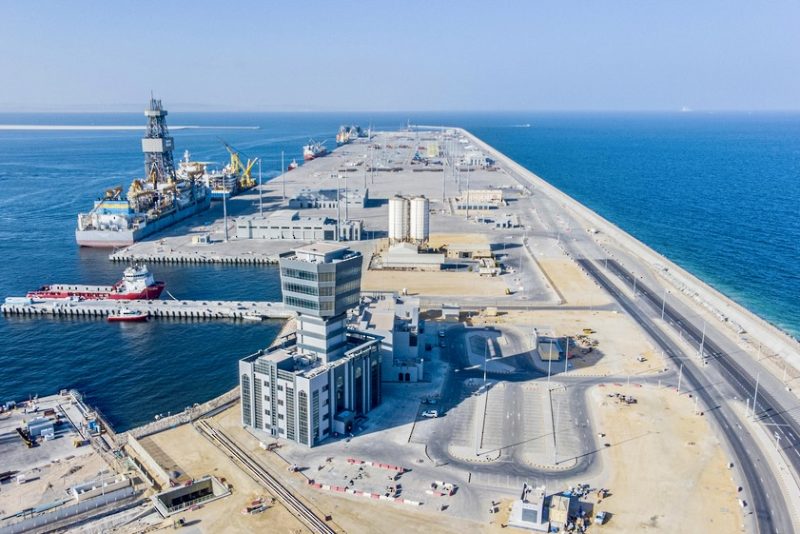
The geography of Duqm amplifies the significance of this shift. The port lies outside the Strait of Hormuz, beyond the chokepoint politics that routinely inject uncertainty into naval movement inside the Persian Gulf. Periods of regional tension have repeatedly shown how quickly risk around the strait can affect both commercial and military traffic. Access to Omani ports offers India continuity without exposure to the diplomatic volatility, sanctions risk, and legal uncertainty that often accompany sustained activity inside Iranian territory.
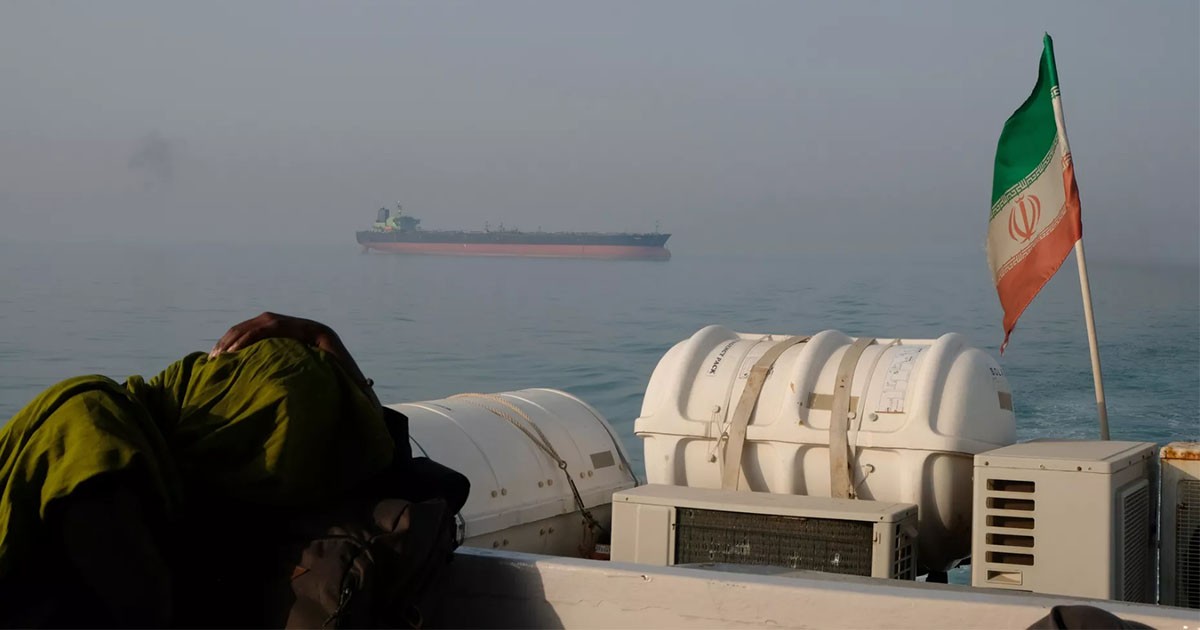
This distinction is critical when placed alongside India’s other major port project in Chabahar, Iran. Oman’s ports cannot replace Chabahar’s overland access to Central Asia. Only Iran provides India with a direct land route into Afghanistan and beyond, a reality that continues to shape India’s continental strategy. Chabahar remains operational, cargo continues to move, and India has secured a long-term agreement to operate the port. What has changed is not the port’s legal or operational status, but the strategic weight India now assigns to it.
Read more: Trump’s team no longer trusts Netanyahu – Axios
For Tehran, the implications are different. The strategic weight Iran once assumed would flow automatically from geography has diminished. India’s growing reliance on Duqm represents a second pillar: a politically safer maritime anchor that allows New Delhi to sustain naval operations without exposure to sanctions cycles or diplomatic friction. From Tehran’s perspective, this does not replace Chabahar. It reduces the sense of exclusivity that Iran long associated with its position on the map.
For India, the logic is straightforward. Duqm sits outside the Strait of Hormuz, is insulated from sanctions regimes, and does not require political signaling each time it is used. Oman does not employ port access as leverage in regional disputes. A maintenance stop in Duqm carries none of the volatility surrounding long-term commitments in Iran. These attributes make Duqm a low-risk base for India’s western Indian Ocean operations.
The shift toward Duqm did not occur overnight, but the rhythm has clearly changed. Naval visits that were once occasional are now regularly scheduled, reflecting a broader recalibration shaped by renewed sanctions enforcement, tighter compliance standards in global financial centers, and India’s determination to avoid over-reliance on any single port. Chabahar remains useful, but it no longer stands alone.
Iran has been slower to acknowledge the implications publicly, but the discomfort is visible beneath the surface. Iranian strategic thinking has long rested on the assumption that geography guarantees relevance. That assumption is weaker today. Chabahar still matters, but it no longer translates into leverage. Goods move, infrastructure functions, but India’s maritime continuity now rests elsewhere. Geography remains valuable, but political risk increasingly conditions how that value is used.
Even developments that might appear favorable to Iran do little to reverse this trend. Improved working ties between India and the Taliban do not restore Iran’s former strategic weight. India may still require Iranian territory for continental access, but its broader maritime posture no longer depends on operating within Iran’s political environment.
Pakistan’s response has been quieter and more pragmatic. Indian naval access to Omani ports introduces a new logistical variable into Pakistan’s western naval planning, particularly given Duqm’s proximity to the Makran coast and key facilities at Gwadar and Ormara. Islamabad has avoided public alarm, but Pakistani maritime commentary increasingly treats Indian use of Omani infrastructure as a factor to be accounted for rather than a provocation to be dramatized.
The concern is not confrontation but an altered balance of forces. For Pakistan, India’s ability to sustain deployments from a stable, politically neutral port across the Arabian Sea complicates long-standing assumptions about operational depth along its western approaches. Duqm does not place Indian vessels inside Pakistan’s maritime space, but it shortens logistical distances and reduces the need for Indian improvisation during extended deployments.
Oman’s role in this evolving landscape is deliberately understated. Muscat has long pursued a foreign policy built on balance and insulation from regional rivalry. Duqm’s development reflects economic necessity rather than geopolitical ambition. After several difficult fiscal years, Oman placed the port and its surrounding industrial zone at the center of its diversification strategy, seeking long-term partners without political conditionality. India fits that model, offering predictable engagement without forcing Oman into strategic alignment.
Crucially, Oman has avoided turning Duqm into an exclusive platform. The port remains open to multiple international partners, reinforcing Muscat’s insistence on strategic autonomy. Duqm functions as infrastructure first and strategy second.
Duqm will not replace Chabahar. Geography prevents that. But it expands India’s range of options. India is ensuring that its access to the western Indian Ocean does not depend on a single partner or a single political environment. The adjustment appears incremental, but its effects are structural. It reshapes how Iran fits into India’s long-term strategy, how Pakistan assesses its western approaches, and how Oman’s quiet ports influence South Asia’s evolving maritime map.
About the Author: Fatemeh Aman
Fatemeh Aman has written on Iranian, Afghan, and broader Middle East affairs for over 25 years and advised US and non-governmental officials. A former non-resident fellow at the Middle East Institute and senior fellow at the Atlantic Council, a writer, producer, and anchor at Voice of America, and a correspondent at Radio Free Europe/Radio Liberty, her work has appeared in Jane’s Islamic Affairs Analyst, Jane’s Intelligence Review, and the Stimson Center’s Middle East Perspectives. Follow her on X: @FatemehAman.
The article was published in The National Interest
The opinions presented here reflect the author’s personal analysis and experience, which may not fully align with the publication’s editorial outlook.