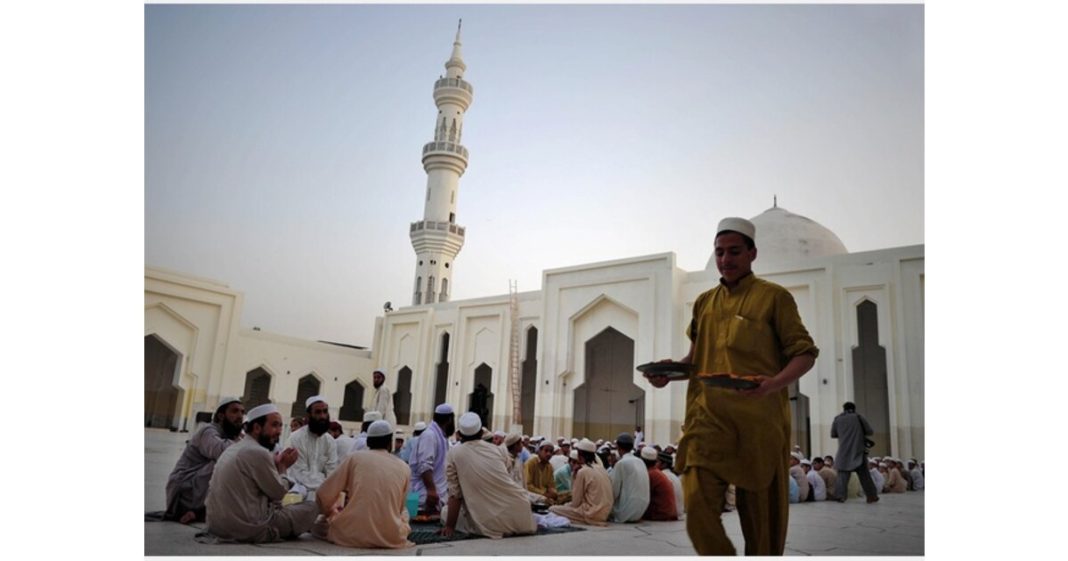
Ramadan is a month of blessings, mercy, sacrifice, and compassion. It is a sacred time during which special care for the weak and underprivileged segments of society is strongly emphasized. In Pakistan as well, Ramadan is observed every year with great enthusiasm. Markets are decorated, mosques are filled, television channels broadcast special transmissions, and governments make grand announcements. But the question is: does this enthusiasm also preserve respect? Are we truly upholding the spirit of this sacred month in practice? Unfortunately, the reality appears otherwise, especially when it comes to the rising inflation during Ramadan.
Every year, the federal government announces Ramadan relief packages worth billions of rupees. Newspaper headlines prominently declare that billions have been allocated to provide relief to the public. Promises are made regarding subsidized flour, sugar, cooking oil, pulses, and other essential commodities. However, in practical terms, this relief rarely reaches the ordinary citizen. The question remains: where are these billions actually spent? Why is there no transparent system to monitor their utilization? And if funds are released, why do their effects remain invisible in the markets?
In many countries around the world, special subsidy packages are introduced during Ramadan. Even in some non-Muslim countries, special discount schemes are offered to Muslim communities. Large stores provide essential goods at reduced prices, and governments actively monitor markets to ensure price control. There is a clear link between announcement and implementation. In contrast, in our case, announcements are made but implementation remains missing. Consequently, the monster of inflation becomes uncontrollable as soon as Ramadan begins.
The announcement of a relief package by the federal government is merely the first step. The real test lies with provincial governments and district administrations in implementing it on the ground. Unfortunately, this is where the system begins to weaken. Provincial governments may formulate policies, but there appears to be a lack of seriousness in ensuring effective monitoring and enforcement. Thereafter, city administration from commissioners to deputy commissioners and assistant commissioners often fail to ensure that relief genuinely reaches the deserving segments.
The market situation is such that prices of chicken, vegetables, fruits, pulses, cooking oil, sugar, and other food items increase chaotically. At the mere mention of Ramadan, many retailers and wholesalers appear delighted, as if a peak earning season has arrived. The mindset that demand increases during Ramadan and therefore prices should also be raised has unfortunately become a common though unethical practice. Local mafias fix arbitrary rates, and the common citizen is left helpless to purchase essentials at inflated prices.
This is not merely a question of rising prices but also of the writ of the state. If the government issues official price lists, why are they not enforced? Where are the price control committees? Why do market inspections seem limited to photo opportunities? Often, officials visit a few locations, impose fines on a handful of shopkeepers, and then share pictures on social media, creating an impression of strict action. Yet the ground reality tells a different story.
Ramadan bazaars or subsidized markets are also established, but either the quality of goods is substandard or the quantities are insufficient. Many citizens stand in long queues for hours, only to find that the required items are out of stock by the time their turn arrives. Meanwhile, the same goods are readily available in the open market at significantly higher prices. This contradiction indicates serious flaws within the system.
The brunt of inflation is borne primarily by the middle and lower-income classes. The white-collar segment, which neither qualifies for charity nor prefers standing in free ration lines, suffers the most. Even arranging a modest sehri and iftar becomes financially burdensome. In such circumstances, the true spirit of Ramadan which teaches simplicity, contentment, and empathy fades under the harshness of market realities.
Administrative indifference is another major concern. Even when raids are conducted, they often appear symbolic. Minor fines are imposed, files are closed, and larger mafias remain untouched. Those who systematically engage in hoarding, create artificial shortages, and manipulate prices frequently evade legal consequences. Political pressure, conflicts of interest, and structural weaknesses may contribute to this failure. However, for the public, the only visible reality is unchecked inflation and a lack of accountability.
The prolonged silence of the public is also worth examining. As a society, we have normalized inflation. Every year the same pattern repeats itself: a few days of protest and then silence. Social media posts, WhatsApp messages, and short-lived debates follow, after which life returns to routine. But have we ever collectively attempted a boycott? Have we refused to purchase goods at unjustified prices? Even a temporary, organized refusal to buy overpriced items could force market correction. Unfortunately, our division and lack of coordination benefit exploitative elements.
Read more: Askari Privilege and the Making of a Hopeless, Lawless, and Sacrilegious Society
It is the government’s responsibility not to confine itself to announcements but to establish an effective monitoring mechanism. Modern technology can be utilized for real-time price monitoring. Official rate lists should be published daily online. A simple and immediate complaint system should be introduced, with guaranteed swift action. Likewise, strict and exemplary punishments must be imposed against hoarding to serve as deterrence.
Provincial governments must regularly evaluate district administration performance. Merely seeking reports is insufficient; practical outcomes must be assessed. If prices remain uncontrolled in a particular district during Ramadan, concerned officials should be held accountable. Performance evaluation must be based on public relief rather than paperwork or photo documentation.
At the same time, society must also play its part. Ramadan is not merely a month of worship but of moral purification. If a shopkeeper engages in profiteering during this sacred month, it is not only a legal violation but also a moral and religious failure. Religious scholars should clearly address issues of hoarding and exploitation in sermons. The business community must also strengthen internal accountability mechanisms and eliminate unethical practices from within.
Ultimately, the purpose of the Ramadan relief package is to provide genuine relief not newspaper headlines. If prices continue to skyrocket despite billion-rupee announcements, it signals systemic failure. A coordinated, transparent strategy at federal, provincial, and district levels is essential. Without bridging the gap between announcement and implementation, meaningful reform cannot occur.
Ramadan teaches patience, gratitude, and sacrifice. If during this sacred month the public’s pockets are being looted, it is not merely an economic crisis but a moral one. Until the government fulfills its responsibility with seriousness, the administration moves beyond symbolic actions, and citizens exercise their collective power, this cycle will continue. The time has come to bridge the divide between promises and performance so that Ramadan may truly become a month of mercy and ease not a narrative of inflation and helplessness.
Syed Shoaib Bukhari is a Pakistani journalist and columnist with over a decade of experience in political, social, and investigative reporting. His work focuses on governance, public policy, accountability, and socio-economic issues. He has contributed to various media platforms and regularly writes analytical commentary on contemporary national affairs.
The views expressed in this article are solely those of the author and may not necessarily reflect the position or editorial policy of the publication.