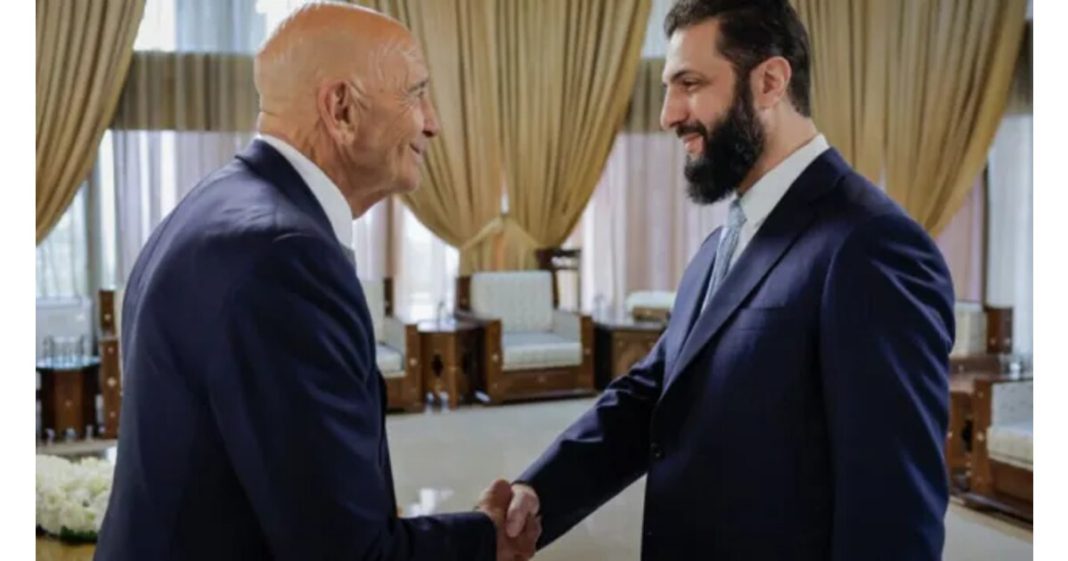
From being one of the most notorious and feared Al-Qaeda affiliates to wearing tailored suits and hosting foreign journalists, the transformation of Abu Mohammad al-Julani has shocked both Western governments and Islamic ideological peers.
As the head of Hay’at Tahrir al-Sham (HTS) in Syria’s Idlib region, Julani has shifted from a global jihadist to a localized, pragmatic, and ambitious political figure.1 His strategic rebranding sends a powerful message to the Taliban regime in Kabul: international legitimacy cannot be earned through power alone—it requires governance reform, political pragmatism, social engagement, and most importantly, image management.
When Assad’s regime grew increasingly brutal—carrying out killings, forced disappearances, and chemical attacks against its own citizens—it wasn’t the West or pro- democracy forces that stepped in. It was a former Al-Qaeda-linked jihadist, Abu Mohammad al-Julani, who has now emerged as the transitional head of a new power structure in Syria following years of civil war and the weakening of Assad’s regime. Julani’s rise to power marked a significant strategic shift—hosting Western journalists in formal dress and presenting HTS not as a threat, but as a security partner against ISIS.2
By denying past ties to global jihadism and embracing moderate rhetoric, Julani gained regional trust and opened doors for soft international engagement—even if formal recognition remains elusive.
In contrast to Julani’s HTS, the return of the Taliban in 2021 came as a shock to the world. The withdrawal of U.S. forces and the collapse of the republic government after a 20-year war paved the way for their resurgence. However, the group’s supreme leader, Hibatullah Akhundzada, has shown no willingness to comply with Western expectations. The Taliban’s refusal to form an inclusive government and its harsh policies— particularly toward women—have severely damaged its domestic legitimacy.3
Despite growing internal rifts, the supreme leader remains committed to an extremist vision, further isolating the country. The Taliban’s failure to rebrand its image or address international concerns has stalled meaningful engagement. In contrast, Julani has openly stated that women have the right to education and has distanced HTS from the Taliban’s rigid ideology.
A Lesson in Survival: Why the Taliban Must Adapt Like Julani
While both the Taliban and HTS have roots in radical jihadism, their political trajectories diverged significantly in the aftermath of conflict due to differing structural incentives and coalition dynamics. In Syria, the fragmented Syrian opposition and, most importantly, the decline of ISIS, which created a power vacuum that HTS filled through its localized governance and strategic media engagement, facilitated al-Julani’s shift toward political pragmatism. HTS’s survival increasingly depends on its ability to integrate into civilian life and present itself as a rational actor both domestically and internationally. In contrast, the Taliban inherited a more centralized state apparatus following the U.S. withdrawal, yet chose ideological rigidity and extremist policies over inclusive coalition building and constructive relations with Western countries.
Their domination of the political system by rural clerics, and the exclusion of key factions— such as women, ethnic minorities, and former republic technocrats—have undermined the Taliban’s legitimacy both domestically and globally. 5 This shows how the history of a conflict and the allies a group has can influence whether Islamist groups become more moderate or stay extreme.
Julani quickly understood that just controlling land wasn’t enough to stay in power. To survive in post-war Syria, he needed more than weapons and fighters—he needed public trust and a better image.6 It’s still not too late for the Taliban to learn this lesson. They must start showing some flexibility—especially by allowing women to get an education and giving people their basic rights. The international community has always asked for an inclusive government, and the Taliban need to take that seriously.
Read more: The Taliban’s Mistake: Ignoring What Julani Understood
If the Taliban want to survive—not just as rulers of Afghanistan, but as an important voice in the region—they need to learn from Julani’s fast changes. Right now, the Taliban’s actions and messages make them look extreme, and this only pushes them further into global isolation. If they keep going this way, they risk becoming irrelevant— just going along with the flow like dead fish. Julani focused on building stable institutions and responding to people’s needs, which helped him gain trust. He has made significant efforts to portray himself and his group as respectful of human rights. Under Julani’s leadership, HTS has released detainees, including journalists and aid workers.7 Additionally, Julani presents himself as a more rational governance actor by providing a stable legal framework and public services— contrasting himself with the Assad regime or the Taliban.8 This approach sends a strong message to the West and supports his claims of respecting human rights. The Taliban, on the other hand, have no clear plan, and that’s making people lose confidence in them. This might be their last chance to prove they can lead. If they want to stay in power, they must start reforming and show the world a softer, more responsible side.9
Al-Julani may not be a Western ally, but his transformation during his rise in Syria shows that even a radical militant leader can adjust to political realities and follow international expectations to survive. In contrast, the Taliban continue to hold tightly to their strict ideology, which puts them at risk of becoming irrelevant over time and increases both regional and internal instability. If the Taliban truly want to keep their government and gain international recognition, they need to change—not just in terms of military power, but also in their political approach. They should at least adapt to the level of Julani’s shift if they hope to survive and be accepted on the global stage, because international engagement depends on moderate policies and the rejection of harsh, radical ideologies. Unless the Taliban adopt this strategy, they may fail and lose what could be their last real opportunity to secure their future.