The hidden architecture of the global economy is fracturing. Understanding how it was built is the first step to seeing what comes next.
Imagine you have spent your entire life chained inside a cave, forced to face a bare stone wall. Behind you, unseen handlers move puppets in front of a fire, and you watch only their shadows flicker across the rock. You name those shadows. You study them. You build elaborate theories about why they rise and fall, why they surge and vanish. You come to believe, with total sincerity, that what you are watching is reality.
This is Plato’s Allegory of the Cave — composed in The Republic around 375 BC — and it is, stripped of its Greek setting, a precise description of how the modern world experiences economics. We have been trained to watch financial crises the way prisoners watch shadows: as natural phenomena, as gravity, as the inevitable consequence of human greed and mass delusion. What Plato understood — and what the architects of the modern financial order counted on — is that most prisoners, even when unchained, choose the familiar darkness over the blinding discomfort of the sun. That choice may no longer be available to us.
THE MACHINERY BEHIND THE WALL
To understand the shadows, you must first understand who built the fire. The story begins not with a market crash or a central bank memorandum, but with a revolution. In 1688, the Dutch Prince William of Orange was invited to take the English throne in what history politely calls the Glorious Revolution — a bloodless coup that fused the financial genius of the Dutch Republic, then the wealthiest civilization on earth, with the military security and island geography of England. The Dutch had already invented the modern stock exchange, joint-stock companies, and sovereign debt instruments. Now they had a navy.
Six years later, in 1694, the Bank of England was established — not as a public institution in any meaningful sense, but as a private bank empowered to print money and lend it to Parliament, repaid through taxation. For the first time in history, a nation-state’s future tax revenues became the collateral for private capital. The king was no longer the source of money. Money had become the source of kings. This single innovation — the sovereign debt model — became the engine of an empire. The Napoleonic Wars (1803–1815), all seven campaigns, were financed through the Bank of England, which lent Britain the resources to exhaust and ultimately defeat France across two continents. Britain’s subsequent global expansion — the conquest of India formalized by the British Raj in 1858, the forced opening of China through the Opium Wars (1839–1842 and 1856–1860), the Great Game for Central Asia — was not the adventure of explorers or the impulse of patriotism. It was the operational logic of capital that must compound upon itself or die.
MANUFACTURING THE MIND
But territory alone was never sufficient. To sustain a commercial empire across generations, you must also conquer the interior of the human being — his values, his desires, his understanding of what constitutes a life well lived. And so, alongside the guns and the ships, there emerged a parallel project: the systematic promotion of a philosophical tradition whose cumulative effect was to dethrone God and install material consumption in His place. John Locke laid the foundation — private property as a natural right — while David Hume dissolved the metaphysical, arguing that nothing beyond direct sensory experience could be trusted.
Jeremy Bentham then crowned pleasure itself as the highest human good, and John Stuart Mill refined this into the language of liberty — freedom to acquire, to trade, to maximize utility. Karl Marx, whose materialism was superficially opposed to capitalism yet shared its foundational premise — that matter, not spirit, is the ground of human existence — gave the working class a materialist lens through which to understand their own misery. Charles Darwin removed humanity from divine creation, and Sigmund Freud reduced the human interior to libido and appetite. Taken together, these thinkers — whatever their individual intentions — produced a civilization intellectually incapable of resisting consumerism. The cave had been prepared not only with chains, but with an entire philosophy explaining why the shadows were all there was.
THE ENGINEERED CENTURY
The American chapter of this story opens in 1913 with the creation of the Federal Reserve — a private banking consortium modeled explicitly on the Bank of England. It was not a government institution in any meaningful sense; it was, and remains, a network of private member banks empowered to create money and set its price. The consequences were swift and, on inspection, oddly sequential. Within four years, the United States entered World War I, transforming a republic philosophically resistant to foreign entanglement into a creditor empire. The war debts owed to American banks by Britain and France ensured that American capital now held European collateral.
The subsequent Roaring Twenties — the very boom whose ‘collective delusion’ Andrew Ross Sorkin would later document — was fueled by easy Federal Reserve credit. Then, beginning on Black Thursday, October 24, 1929, the Fed systematically contracted the money supply: between 1929 and 1933, the U.S. money supply fell by roughly one-third, and what had been a stock correction became the Great Depression, with unemployment peaking near 25 percent. The wealth transfer that followed — as ordinary Americans sold distressed assets at pennies on the dollar to those with access to remaining capital — was among the greatest upward redistributions in American history. By the time the Depression had run its course, the psychological ground had been prepared for World War II: a humiliated Germany, a desperate Europe, and a United States whose industrial capacity alone could tip the global balance.
Even during that conflagration, the architecture of transnational capital held together with remarkable resilience. The Bank for International Settlements (BIS), established in Basel in 1930 ostensibly to manage WWI reparations, continued facilitating transactions between Allied and Axis central banks throughout the war. Confirmed historical records show the BIS received at least 3.7 tonnes of gold looted by Nazi Germany from Belgium and the Netherlands. Switzerland — Basel’s home — was never invaded. When the war ended and the Marshall Plan (1948–1952) began pouring American dollars into a shattered Europe, it came attached to a cultural blueprint: consume, advertise, grow. The BIS was placed at the center of the new international payment architecture, its wartime conduct quietly forgiven and forgotten. The shadows on the cave wall had been rebuilt — bigger and brighter than before, now in Technicolor, projected on television screens, selling soap.
THE PETRODOLLAR WORLD
No account of the modern financial order is complete without understanding that its ultimate power source was not gold, not genius, and not goodwill. It was oil — and the decisive move was ensuring that oil could only be purchased in U.S. dollars. The Persian Gulf states whose names today evoke sovereign wealth funds and glass skylines — Kuwait, Bahrain, Qatar, the UAE, Oman — were, until 1971, administered protectorates of the British Persian Gulf Residency, a colonial structure Britain maintained from 1822 until its abrupt withdrawal in 1971. Their borders, their ruling dynasties’ legitimacy, and their earliest institutional frameworks were British constructions. When Britain left, the United States stepped in.
In 1974, one year after the oil embargo that had quadrupled prices from $3 to $12 a barrel, Washington and Riyadh struck a secret deal — kept classified until 2016 — in which Saudi Arabia agreed to price all its oil exclusively in U.S. dollars. In return, the United States provided military protection and preferential arms sales. The petrodollar system was born: because the entire world needed oil, and oil could only be purchased in dollars, the entire world needed dollars. Washington could print money; the world had to earn it. This arrangement powered the post-war expansion and sustained American global primacy for five decades — until, in June 2024, Saudi Arabia declined to renew the 50-year agreement. Few mainstream outlets paused to note the event.
In 2008, the system exposed its most spectacular internal crack. The Glass-Steagall Act, which since 1933 had separated commercial banking from investment speculation, was repealed in 1999 under President Clinton via the Gramm-Leach-Bliley Act. This opened the door to the weaponization of the American housing market: subprime mortgages were packaged into collateralized debt obligations, sliced and sold globally, while Japan’s near-zero interest rates generated a yen carry trade that funneled cheap capital into U.S. assets at extraordinary scale. When the structure collapsed, hedge fund manager John Paulson — who had bet against it — netted more than $20 billion. JP Morgan absorbed Bear Stearns and Washington Mutual at fire-sale prices. The crisis did not weaken the system’s largest players. It consolidated them. Meanwhile, the BIS signaled a new center of gravity: the renminbi was permitted to appreciate, Chinese state banks were capitalized at unprecedented scale, and today the four largest banks in the world by assets are all Chinese — ICBC, China Construction Bank, Agricultural Bank of China, and Bank of China. The prisoners in the cave received a new shadow to watch: the China miracle.
THE CAVE WALL CRACKS
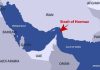
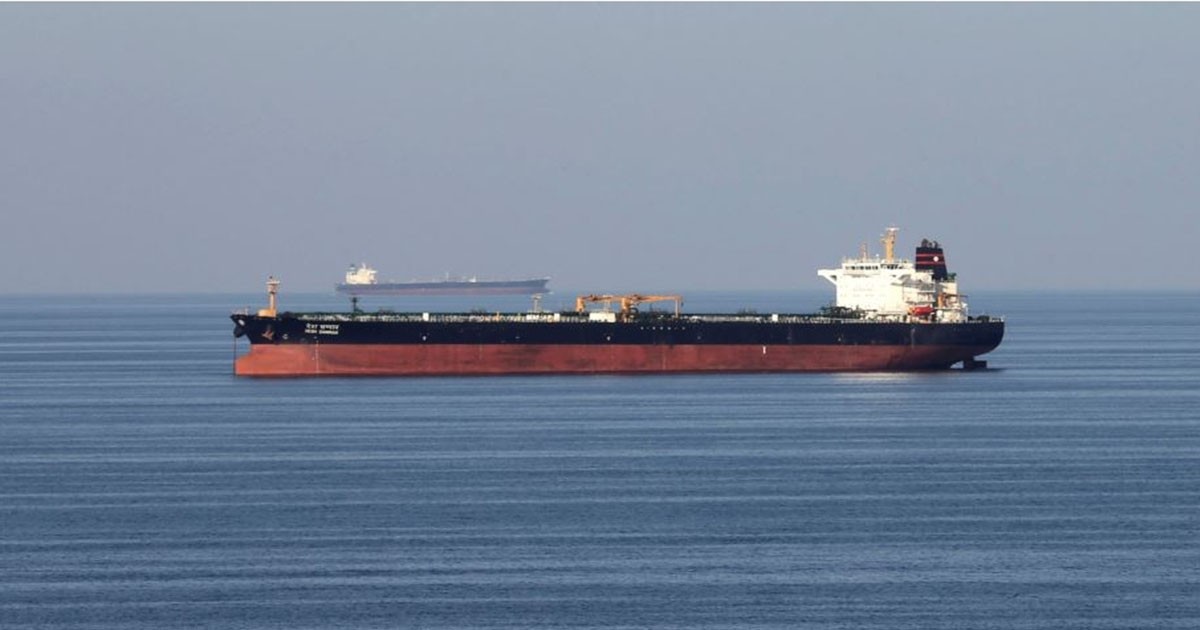
And now the fire itself is flickering. On February 28, 2026, the United States and Israel launched coordinated strikes on Iran, killing Supreme Leader Ali Khamenei and targeting nuclear and military infrastructure in what was designated Operation Epic Fury. Iran responded with missile barrages on U.S. Gulf bases and Israeli cities, and the Islamic Revolutionary Guard Corps effectively closed the Strait of Hormuz to commercial shipping. This is not a footnote in global trade. Approximately 20 percent of the world’s traded oil and nearly a third of global liquefied natural gas passes through this 33-kilometer-wide chokepoint. The U.S. Navy launched escort operations, but as of this writing vessels continue to avoid the strait, and President Trump has suggested the war could end in two to three weeks — a timeline that does not resolve the underlying geopolitical reality.
The United States cannot occupy the Strait of Hormuz. It is not a territory that can be conquered and held; it is a maritime corridor flanked by Iranian territory and will. A negotiated end — the only realistic endpoint, as Secretary Rubio has himself signaled — will require Iran’s agreement to let commerce flow. Iran will not grant that agreement for free. The most plausible outcome of either a fought or a negotiated conclusion is that Gulf states pay Iran — directly or through back-channels — for the security of their own trade routes. The nations that Britain drew into existence and that America armed will find themselves writing checks to the Persian civilization they were, in part, designed to contain. The United States, meanwhile, exits this conflict with its Treasury under further strain, its NATO relationships visibly fractured, and its petrodollar architecture no longer backed by the Saudi guarantee that lapsed, quietly, in 2024.
A NEW CANDIDATE
Into this vacuum steps an actor that defies the conventional geopolitical script. Israel, whose recent years have been defined in the Western imagination by the catastrophic events in Gaza and Lebanon, has emerged from those conflicts as the only state in the Middle East with the military capability, intelligence infrastructure, and institutional depth to project hard power across the entire region. It has degraded Hezbollah in ways that have structurally altered Lebanon’s political landscape. It has participated, alongside the United States, in the most consequential strike on Iranian leadership since the Islamic Republic’s founding.
Simultaneously, Israel has been building the economic architecture of a regional hub. Its government has announced a target of expanding exports toward $1 trillion over the next fifteen years, with focus on the Arabian Peninsula and India, and Dubai as the primary gateway. Over 600 Israeli companies established operations in the UAE following the 2020 Abraham Accords — and that was before the war transformed the regional calculus. Israel sits at the intersection of Europe, Asia, and Africa with world-class universities, a mature venture capital ecosystem, and a military-industrial complex battle-tested in real time.
And then there is the demographic argument, often overlooked in a West where birthrate discussions have grown ideologically uncomfortable. Israel carries a fertility rate of approximately 3.0 births per woman — nearly twice the OECD average and the highest of any Western democracy. It is a young nation with a growing population, an expanding workforce, and a larger annual cohort of military recruits that will compound over decades. Its fertility rate now exceeds that of most of its Muslim-majority neighbors. In a world where demographic contraction haunts Europe, China, Japan, and South Korea simultaneously, this is not a trivial advantage. A nation that produces more people than it buries tends, over time, to produce more of everything else.
EMERGING FROM THE CAVE
The shape of what is coming is not the end of civilization. It is the end of this particular civilization — the specific arrangement of shadows that has played on the wall since 1688. A system built on sovereign debt, fiat currency, petrodollar recycling, and the manufactured consent of a materialist philosophy is now encountering the limits of its own architecture simultaneously: a closed strait, an expired pact, a fractured alliance, a rising Asia, and a Middle East in violent reorganization. These are not isolated crises. They are the simultaneous failure of load-bearing walls.
Plato’s freed prisoner, stumbling out of the cave into sunlight, does not find paradise. He finds complexity, brightness, and the disorienting work of seeing things as they actually are. The handlers who cast the shadows — who funded the philosophers, built the central banks, drew the borders of the Gulf, and engineered the booms and busts — have not disappeared. They are adapting, as they always have. But for the first time in three centuries, the prisoners are blinking. And the wall, at last, is showing cracks.
───────────────────────────────────────────────────────────
The writer is a technology analyst who writes under the pseudonym Patience Quill.
The views expressed in this article are solely those of the author and may not necessarily reflect the position or editorial policy of the publication.