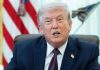
President Donald Trump entered his war of choice against Iran without consulting global allies, but as he weighs an exit from the conflict, he is making it clear that he is expecting the world to help him fix the unintended damage that it has caused.
Trump is taking an increasingly annoyed tone toward Europe’s lack of support for the U.S.-Israeli war effort. He also is giving short shrift to the fact that his decision contributed to disrupting the flow of oil to global markets through the crucial Strait of Hormuz, which Iran has managed to largely choke off even as Trump insists that Iran has been “decimated.”
The president started his Tuesday by fuming on social media at two of America’s closest allies — France and Britain — while calling on the world to “Go get your own oil!” and “start learning how to fight for yourself.”
“All of those countries that can’t get jet fuel because of the Strait of Hormuz, like the United Kingdom, which refused to get involved in the decapitation of Iran, I have a suggestion for you: Number 1, buy from the U.S., we have plenty, and Number 2, build up some delayed courage, go to the Strait, and just TAKE IT,” Trump posted.
Minutes later, he went after France, claiming the country was “very unhelpful” as it “wouldn’t let planes headed to Israel, loaded up with military supplies, fly over French territory.
Read more: Israel medics say 14 wounded after Iranian missile fire
Trump’s top advisers also are stepping up anti-NATO rhetoric
As Trump has ratcheted up his criticism, particularly against NATO allies, for not joining the U.S. and Israel in the war and being slow to respond to its consequences, top members of his administration have followed suit. The dynamic is creating uncertainty and concern over the future of the alliance, whose value Trump has already called into question.
While Trump’s often scattershot insults and complaints toward partners and allies have become expected and to a certain extent tolerated, the piling on by top aides like Secretary of State Marco Rubio, Treasury Secretary Scott Bessent and Defense Secretary Pete Hegseth in recent days has suggested that the administration’s anti-NATO posture is gaining steam — even as the president is showing signs that he could be edging toward finding an exit to the war sooner than later.
Read more: Yemen’s Houthis claim third missile attack targeting Israel
Hegseth argued Tuesday that the U.S. did “the heavy lifting on behalf of the free world” to deal with the threat from Iran and that other countries that depend on oil normally flowing through the strait should be aware that getting shipping moving is “not just our problem set going forward.”
“There are countries around the world who ought be prepared to step up on this critical waterway as well,” Hegseth said at a Pentagon news conference. “It’s not just the United States Navy. Last time I checked, there was supposed to be a big, bad Royal Navy that could be prepared to do things like that as well.”
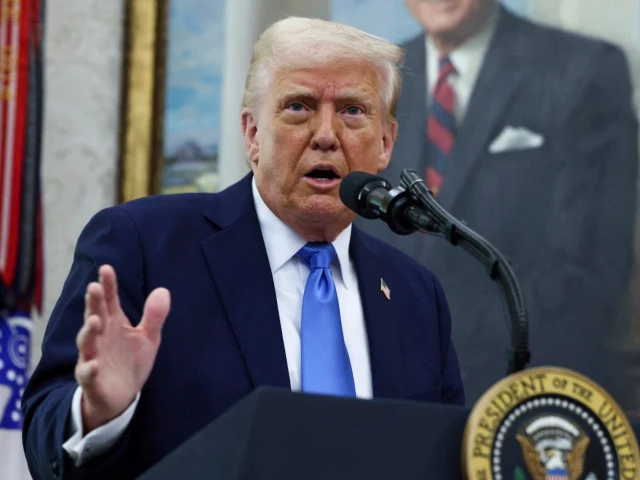
Trump, in an Oval Office exchange with reporters later Tuesday, said protecting the strait will be up to other countries and estimated that the U.S. would be done launching attacks against Iran in two to three weeks.