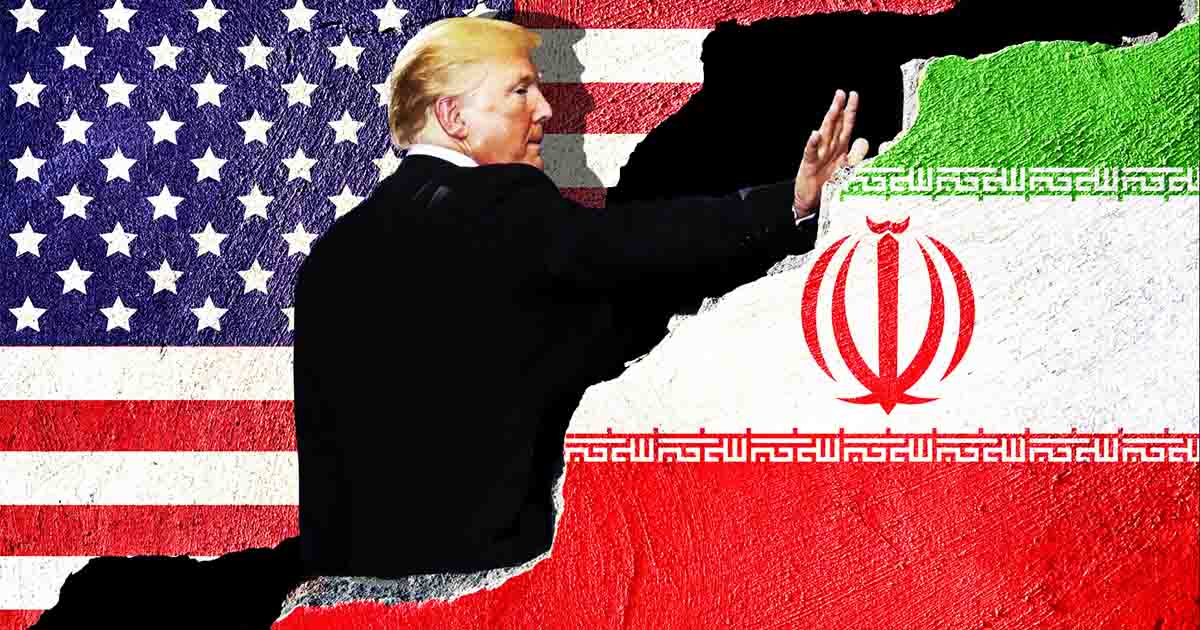
Foreign military strikes on Iran have revived debates about the country’s internal stability, the possibility of fragmentation, and the future direction of its political system. At the same time, the attacks have exposed deep divisions among Iranians themselves. While some view the strikes as blows against a regime they despise, others experience them as a painful assault on the homeland. The discussion below explores how external military pressure interacts with Iran’s internal tensions, why some Iranians once looked to foreign intervention, and what the current moment may mean for the country and the region.
Q: Foreign military strikes against Iran have intensified speculation about the country’s internal stability. What kind of pressure do such attacks create inside Iran?
External military pressure does not only target a government. It places stress on the entire state system. Infrastructure becomes vulnerable, economic activity slows, and the political environment hardens. In Iran’s case this pressure comes after years of sanctions, economic strain, and growing distance between state and society.
Under such conditions war rarely produces immediate political openings. More often it strengthens the security logic of the state. Authorities close ranks, security institutions gain greater influence, and dissent becomes easier to suppress in the name of national defense.
Read more: Major UAE refinery shut as Saudi Aramco warns war spells catastrophe for oil
At the same time, sustained pressure can deepen underlying fractures. Competition within the elite may intensify, economic hardship may grow, and public frustration can rise. The result is not necessarily collapse. More often it produces a system that survives but becomes more brittle and more dependent on coercion.
Q: Some analysts are raising the possibility of fragmentation or even partition. How serious is that risk?
Partition remains unlikely in the near term. Iran has a long history of centralized governance, strong security institutions, and a political culture in which territorial integrity remains a powerful idea.
The greater concern lies elsewhere. If the state becomes overstretched, central authority may weaken unevenly. Peripheral regions could become more volatile and local armed actors more visible. That would not necessarily produce a formal breakup, but it could gradually erode the state’s ability to govern uniformly across the country.
In that sense the more realistic danger is not a clear partition map but a slow weakening of national cohesion under sustained pressure.
Q: Could the situation evolve into civil war?
Civil war requires a convergence of conditions. The state’s coercive center must weaken significantly, armed challengers must emerge with the ability to control territory, and those challengers usually require outside support.
Iran certainly faces deep political anger and visible social divisions. But it does not yet have a nationwide armed opposition capable of replacing the state.
What is more plausible in the near term is a combination of harsher repression, elite rivalry, and localized unrest. If conflict drags on and institutions weaken, however, violence can gradually become more decentralized.
Read more: Iran’s new supreme leader ‘safe and sound’ despite war injury reports: president’s son
Q: Iran now has a new Supreme Leader closely associated with the previous leadership. What message does that transition send?
The transition signals continuity rather than political adjustment. Hardline circles appear to be emphasizing resilience and defiance at a moment of external pressure.
The new leader has spent much of his life within the political system shaped by his father’s rule. Personal loss during the conflict and years spent inside the institutions surrounding the Supreme Leader’s office may reinforce a worldview shaped by siege and resistance.
Leaders formed in that environment often interpret compromise as vulnerability rather than pragmatism. The leadership change therefore suggests consolidation rather than a shift toward flexibility.
Q: One striking feature of the current moment is how divided Iranian reactions appear. Some celebrate the attacks while others are deeply distressed. Why such starkly different reactions?
The divide reflects a long erosion of trust between the state and significant parts of society.
For some Iranians anger toward the ruling system has become so intense that any blow against it feels like justice. They believe the regime has already inflicted enormous damage on the country, so weakening it from the outside can appear morally justified.
But many other Iranians experience the attacks very differently. They may oppose the government just as strongly yet still feel grief and anxiety when their homeland comes under foreign military pressure. For them the destruction of infrastructure and the possibility of instability represent wounds to the country itself.
The disagreement therefore goes beyond politics. It is emotional and moral. It raises the question of where opposition to a regime ends and harm to the nation begins. That debate now runs through families, friendships, and diaspora communities.
Q: Why did some Iranians hope for foreign intervention in the first place?
For many people it came from exhaustion. Protest movements were repeatedly suppressed, reform within the system appeared blocked, and the political structure seemed too entrenched to change from within.
Under those circumstances some began to imagine external force as the only remaining lever capable of breaking the system.
Yet what many imagined was not a prolonged war. They envisioned something limited and surgical. In their minds outside actors would weaken the coercive core of the Islamic Republic, remove key figures responsible for repression, and open space for change without inflicting lasting damage on Iran itself.
This idea reflects a distinction many Iranians instinctively make between the Islamic Republic of Iran as a ruling system created after the revolution and Iran as a country with a much longer historical identity. Some believed outside force could remove the former while leaving the latter largely intact.
The current moment shows how difficult that separation becomes once military conflict begins.
Q: Are some of those who once supported outside intervention now reconsidering their views?
Yes, for some people the scale of destruction forces a reassessment.
It is one thing to imagine precise strikes against a regime’s leadership. It is another to see infrastructure damaged, economic life disrupted, and the possibility of prolonged instability emerge.
This realization does not necessarily change their view of the government. But it can change how they think about the costs of war.
Q: Some observers suggest Kurdish armed groups could be encouraged to enter Iran if the conflict escalates. How realistic is that scenario?
Kurdish actors are sometimes mentioned in discussions about pressure on Iran because Kurdish armed groups operate near the border and have a long history of tension with Tehran.
But the reality is more complex. Iraqi Kurdistan has strong incentives to avoid becoming a battlefield. The region depends heavily on economic ties, cross border trade, and relative stability. Opening its territory to a wider conflict with Iran would expose it to serious retaliation and could destabilize its fragile political and economic balance.
Kurdish political leaders are also shaped by long historical experience. Kurdish communities have endured decades of discrimination and repression, but they have also experienced how alliances with outside powers can shift quickly. The experience of Syrian Kurds in recent years has reinforced that caution.
For many Kurdish leaders the priority is therefore likely to remain stability rather than turning Kurdish territory into a front line of confrontation between Iran, the United States, or Israel.
Q: There have also been reports of pressure on Kurdish actors to take a clearer position. At one point President Trump reportedly asked Kurdish leaders whether they were “with us or not.” How might Kurdish leaders interpret that kind of signal?
Kurdish leadership is very familiar with this kind of strategic pressure. Throughout modern Middle Eastern history Kurdish movements have often found themselves caught between larger regional and international powers.
Because of that history Kurdish leaders tend to approach such signals cautiously. They understand that geopolitical alliances can shift quickly when broader priorities change.
Iraqi Kurdistan today has strong incentives to preserve stability. Entering a wider conflict with Iran would expose the region to retaliation and could undermine its already delicate political and economic balance.
For many Kurdish leaders the lesson of past decades is clear. The risks of becoming the battlefield for confrontation between larger powers are often far greater than the potential gains.
Q: From Israel’s perspective, one argument is that a much weaker Iran would eliminate a major threat. How should that logic be understood?
From a narrow security perspective weakening an adversary’s military capacity can appear rational. If Iran loses the ability to threaten Israel directly or project power in the region, that would reduce immediate strategic pressure.
The complication is that a severely weakened Iran does not automatically become a stable or predictable neighbor. A country whose institutions and infrastructure are under sustained strain can become more fragmented and volatile.
Weak states sometimes generate new security problems rather than simply removing old ones. The long term question therefore is not only whether Iran’s capabilities decline but what kind of state remains afterward.
Q: What role are Russia and China likely to play?
Both maintain strategic ties with Iran, but those relationships have limits. Russia and China tend to approach such crises cautiously. They may offer diplomatic support or economic channels, yet neither is likely to risk direct confrontation with other major powers on Iran’s behalf.
For Tehran these partnerships can soften isolation but they do not fundamentally alter the military balance in a conflict like this.
Q: What is the biggest misconception shaping the current debate about Iran’s future?
One major misconception is the belief that the Islamic Republic can be removed through external force while leaving Iran itself largely untouched. Many Iranians who once hoped for outside intervention imagined something limited and surgical. They believed foreign actors could eliminate the core leadership of the regime and create an opening for political change without inflicting serious damage on the country.
But military conflict rarely works that way. Once violence expands, the damage spreads beyond political leadership to infrastructure, institutions, and social cohesion. In trying to weaken a regime, war can end up weakening the state that must exist after that regime.
Another misconception is the belief that internal fragmentation can easily be turned into a strategic advantage. Encouraging armed actors in border regions or mobilizing ethnic grievances may appear tactically useful from the outside. In practice it risks creating instability that can spill across borders and draw neighboring regions into the conflict.
Perhaps the most painful reality revealed by this moment is the depth of division among Iranians themselves. Some celebrate the weakening of a regime they despise. Others feel profound grief at seeing their homeland under attack. Many who once spoke about foreign intervention are now confronting the gap between the idea of surgical strikes and the reality of war.
Ultimately the future of Iran will not be determined only by military pressure or geopolitical maneuvering. It will depend on whether a political relationship between state and society can eventually be rebuilt. Without that, neither external intervention nor regime survival will resolve the country’s deeper crisis.
About the Author: Fatemeh Aman
Fatemeh Aman has written on Iranian, Afghan, and broader Middle East affairs for over 25 years and advised US and non-governmental officials. A former non-resident fellow at the Middle East Institute and senior fellow at the Atlantic Council, a writer, producer, and anchor at Voice of America, and a correspondent at Radio Free Europe/Radio Liberty, her work has appeared in Jane’s Islamic Affairs Analyst, Jane’s Intelligence Review, and the Stimson Center’s Middle East Perspectives. Follow her on X: @FatemehAman.