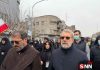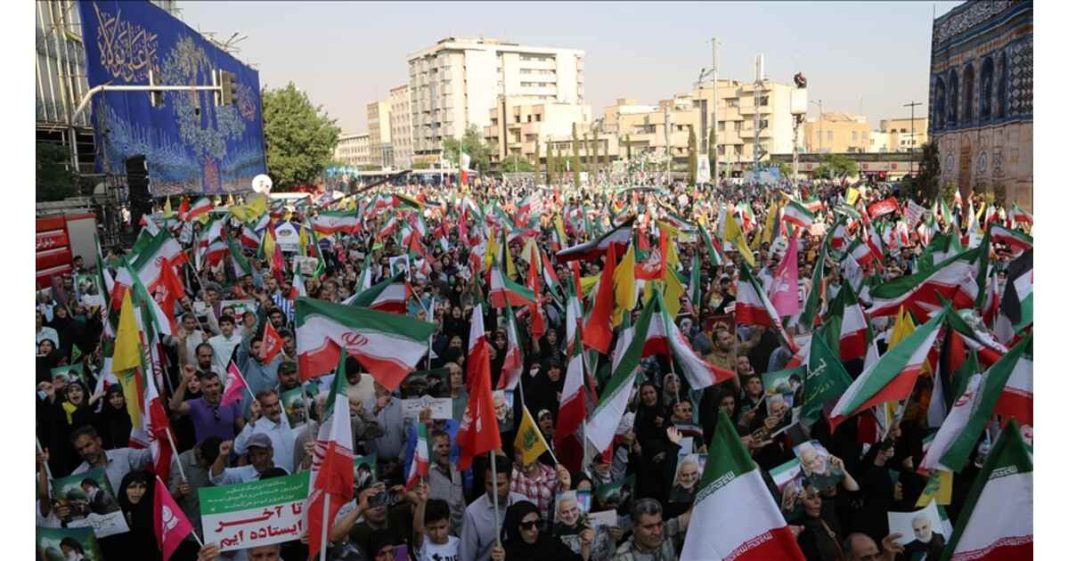
Since early December, Iran has entered a new phase of unrest and state violence. What began as anger over daily economic pressure spread quickly across cities and social groups. By late December, the state’s response shifted from intimidation to open force. Arrests surged. Live fire was reported. Families began describing a second battle after the protests themselves.
Finding the injured. Retrieving bodies. Burying the dead under surveillance. As the crackdown tightened, Iran also entered a near total blackout, making independent verification difficult and deepening fears that the real toll was being hidden. Estimates now vary widely. TIME magazine cited two officials from Iran’s Ministry of Health who said more than 30,000 people were killed on the streets in just two days, January 8 and 9.
Read more: NATO chief wishes ‘good luck’ to those who think Europe can defend itself without US help
In an interview with journalist/analyst Fatemeh Aman.
Q: There is a moment when a country stops feeling like a country and starts feeling like an open wound. Is Iran at that point now?
A: Yes. Because the violence is no longer episodic. It is structural. When death becomes routine, the state is no longer trying to govern. It is trying to endure. It is not asking society for consent. It is demanding submission. This is not a temporary crackdown. It is a way of ruling.
Q: Many people watching from outside assume that when repression reaches this scale, the system must be close to collapse.
A: That assumption is comforting. It is also wrong. Extreme violence can signal fear. But fear does not automatically produce collapse. It can produce discipline. It can produce silence. It can push people into numbness, just to survive the day. That is how a state buys time. Not by fixing anything. By raising the cost of resistance until even ordinary life feels dangerous.
Q: You said something earlier that stayed with me. That this regime is willing to trade legitimacy for survival. What does that look like on the ground?
A: It looks like a government that no longer needs to be believed. It only needs to be obeyed. It stops persuading. It stops explaining itself in a language people recognize. Fear becomes the daily environment. Punishment becomes routine. Even collapse becomes manageable, because the state is no longer offering a future. It is trying to survive the present.
Read more: US deploys aircraft carrier as Iran warns against attack
Q: If legitimacy no longer matters, do international institutions still matter?
A: They matter morally. They matter historically. They matter for the record. But they do not interrupt the machinery of violence. A regime that kills at this scale has already decided it will not be judged in real time. It can live with condemnation. It has lived inside condemnation for years. The world still treats disgrace as leverage. This regime treats disgrace like weather.
Q: This is where the military argument comes in. People say: if pressure does not work, force must. They say: hit the regime hard and the killing stops. Why does that argument attract so many people?
A: Because watching a massacre creates a hunger for a lever. People want an action that feels proportional to horror. Something that brings the story to an end. A strike sounds like an ending. It sounds like rescue. But it can also become a substitute for thinking. A siege state knows how to live inside war logic. It was built for it. A limited strike that does not remove the regime gives it a gift. It gives it a new excuse to do what it is already doing. It gives it a narrative of “defense.” And “defense” can justify almost any cruelty.
Q: So in your view, military action might not topple the regime and could even harden it.
A: Exactly. There is a fantasy that external pressure will shock the system into collapse. But pressure can also compress it. It can concentrate power. It can silence internal doubts. It can turn fear into obedience. If the regime survives the strike, it comes out with a new argument. It says: we were attacked, and we survived, and now anyone who challenges us is serving the enemy. That is how survival states think.
Q: Many readers will respond with a brutal question. If sanctions do not work, diplomacy does not work, international bodies are ignored, and military strikes might fail, what is left?
A: What is left is not a clean solution. What is left is a choice about what kind of disaster we are willing to risk. You cannot always stop violence from outside. Sometimes you can only decide whether you are going to add another layer of violence on top of it. That is the hardest truth in this moment. It is not comforting. It is not satisfying. But it is honest.
Q: That still sounds, to some people, like surrender.
A: It is not surrender. It is refusing to perform. It is refusing to pretend that outrage automatically produces strategy. There is a difference between solidarity and spectacle. Real solidarity does not promise miracles. It does not sell rescue fantasies. It does not tell people inside Iran to hold on for help that will not arrive. People inside Iran do not need lectures about patience. They need the world to stop turning their deaths into talking points.
Q: Then what does solidarity look like when there is no rescue?
A: It looks like keeping people alive where possible. It looks like keeping society connected when the state tries to cut the wires. It looks like helping the injured get care without turning hospitals into traps. It looks like helping families survive detention, disappearance, and economic punishment. It looks like making sure names do not vanish. The regime wants darkness. It wants exhaustion. It wants amnesia. Solidarity is the refusal of amnesia.
Q: You keep returning to the word “erasure.”
A: Because that is how the Islamic Republic survives its own violence. Not only by killing, but by controlling the story of the killing. It tries to make death private. It tries to make grief invisible. It isolates families. It erases the chain of responsibility. In Iran, repression is not only physical. It is also archival. It is the attempt to delete what happened while it is still happening.
Q: Do you believe the system can keep killing at this scale indefinitely?
A: Not indefinitely. But longer than many outside Iran expect. A regime can survive without legitimacy for a long time if it retains coercive cohesion. The danger is that as it narrows, it becomes more paranoid. More brittle. More violent. It becomes a system that can only imagine survival through escalation. That is what makes it so dangerous in its later stages.
Q: If it ends through fracture, where does fracture come from?
A: It comes from inside the machinery. It comes from the moment the system can no longer coordinate fear the way it used to. A succession crisis. Elite conflict. Financial breakdown. A refusal somewhere in the chain. A loss of discipline. These are not things you can schedule. They are not things you can command from abroad. They happen when a regime loses its internal balance. That is why actions that unify elites under siege conditions can delay fracture instead of bringing it closer.
Q: Final question. What is the one mistake you think the outside world keeps making about Iran?
A: It keeps treating Iran like a normal state with normal incentives. It assumes the regime still fears isolation. It assumes it still needs legitimacy. It assumes stability means what stability means elsewhere. But this is a survival state. It can trade reputation for time. It can trade welfare for control. It can trade bodies for endurance. Until we accept that, we will keep reaching for the wrong levers. And we will keep calling it failure when the tools do exactly what they were always going to do.
Fatemeh Aman has written on Iranian, Afghan, and broader Middle East affairs for over 25 years and advised US and non-governmental officials. A former non-resident fellow at the Middle East Institute and senior fellow at the Atlantic Council, a writer, producer, and anchor at Voice of America, and a correspondent at Radio Free Europe/Radio Liberty, her work has appeared in Jane’s Islamic Affairs Analyst, Jane’s Intelligence Review, and the Stimson Center’s Middle East Perspectives. Follow her on X: @FatemehAman.