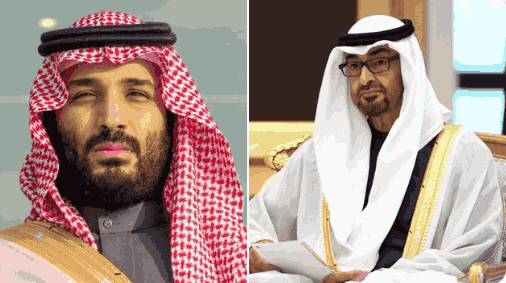
The United Arab Emirates said on Tuesday that it was pulling its remaining troops out of Yemen, hours after a Saudi-led airstrike targeted an Emirati shipment, an episode that has laid bare the deepening rift between two Gulf powerhouses.
The escalation pits two key U.S. allies against each other. Amid the crisis, Secretary of State Marco Rubio spoke with the Saudi foreign minister, Prince Faisal bin Farhan, about “ongoing tensions in Yemen,” a State Department spokesman said.
“We can’t isolate what’s happening in Yemen… with the recognition of Somaliland by Israel.”
Regional tensions are coming to the fore, says Al Jazeera’s Ali Hashem, after years spent settling differences in war-torn countries.
🟥 Read analysis: https://t.co/t6f4AoSPNl pic.twitter.com/8NlSkQvmDv
— Al Jazeera English (@AJEnglish) December 30, 2025
Early on Tuesday, the Saudi-led coalition in Yemen launched an airstrike on what it said was an arms shipment bound for a group of Yemeni separatists who are backed by the United Arab Emirates.
The Saudi-led coalition has supported Yemen’s internationally recognized government since the country splintered into various factions after the outbreak of civil war in 2014.
Demonstrators took to the streets in support of Yemen’s separatist Southern Transitional Council to protest a call by Rashad al-Alimi, the head of Yemen’s Saudi-backed presidential council, for the UAE’s forces to leave the country https://t.co/JXFMhEzjGR pic.twitter.com/pjYuQgwicB
— Reuters (@Reuters) December 31, 2025
Brig. Gen. Turki al-Malki, a Saudi military official and coalition spokesman, said that the arms were intended for the Southern Transitional Council, or S.T.C., an Emirati-backed group that has swept through southern Yemen in recent weeks, seizing territory.
The Emirati Foreign Ministry denied that the shipment included any weapons, saying it contained vehicles intended for Emirati forces in Yemen only, not for any Yemeni party.
Hours later, the Emirati Defense Ministry announced it was voluntarily withdrawing its remaining forces from Yemen, following calls from the Yemeni government for it to do so.
Saudi Arabia and the Emirates once led a military coalition to try to defeat the Houthis, a rebel militia that seized control of the Yemeni capital Sanaa in 2014 with Iranian support, igniting the civil war.
Yet there have been several significant drawdowns of Emirati forces, and the Emirates’ statement on Tuesday said that its presence in Yemen was “limited to specialized teams as part of counterterrorism efforts.” It was unclear how many soldiers the Emirates had in Yemen, or what impact their departure would have there.
The strike early Tuesday morning was on the southern port of Al Mukalla and was prompted by the arrival of two ships from the Emirates without permits, according to General al-Malki. He said in a statement that crew members had begun unloading a “large quantity” of weapons and armored vehicles.
“Given the danger and escalation posed by these weapons, which threaten security and stability, the coalition air forces conducted a limited military operation this morning targeting the equipment,” General al-Malki said. He did not say whether there had been any casualties.
The Emirati government’s priorities in Yemen are opaque. Emirati officials typically say they support the Yemeni people’s aspirations, whether that means one or two states. But some analysts say they believe Emirati leaders are trying to build a crescent of influence along Yemen’s southern coast. That would allow them to control maritime trade routes by securing strategic ports and islands.
After Tuesday’s airstrike, the head of Yemen’s government, Rashad al-Alimi, said in a televised address that the separatists’ recent moves were pushing the country toward “chaos and division,” and accused the Emirates of fueling the war. He had sent an official request on Friday to the Saudi-led coalition, asking it to intervene.
Residents of Al Mukalla, the capital of the Hadramaut province, reported hearing a loud explosion at about 4:20 a.m.
Images from international news agencies showed a large industrial port crowded with dozens of military vehicles and pickup trucks, many of which were badly burned or destroyed.
Ahmed Saleh, a local journalist affiliated with the S.T.C., said by telephone that he saw vehicles damaged after the strike and flames billowing from inside the port facility, with military vehicles encircling the area. “The explosions shattered and damaged the windows of the building near the port,” he added.
Story by New York Times with additional input by GVS