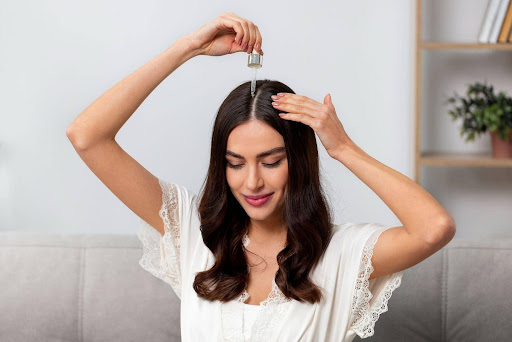
Most people reach for a hair serum hoping it will fix frizz or add some shine before stepping out. That’s fair — but it’s also a narrow view of what a good serum can actually do. When used consistently and correctly, hair serums can play a meaningful role in improving hair strength, reducing breakage, and even supporting better growth over time.
What Hair Serums Actually Do
A hair serum is a lightweight, concentrated formula designed to coat the hair shaft or penetrate the scalp, depending on its composition. Unlike oils, which primarily sit on the surface, serums are formulated with smaller molecules that can work at a deeper level.
The two main types are leave-in serums for the hair shaft (targeting texture, breakage, and frizz) and scalp serums that focus on the follicle environment. Both serve different purposes, and understanding this distinction helps you choose the right product for your actual problem.
Why Hair Becomes Weak and Breaks
Hair doesn’t just break randomly. Weakness usually builds up over time due to a combination of factors:
- Protein loss from heat styling, chemical treatments, or harsh shampooing
- Friction damage from rough towel drying or tight hairstyles
- Nutritional gaps, particularly in iron, biotin, or zinc
- Scalp inflammation that disrupts the normal hair growth cycle
- Environmental stress like UV exposure, hard water, or pollution
When the outer layer of the hair strand — the cuticle — gets damaged, the inner cortex becomes vulnerable. This is where breakage starts. Hair serums with ingredients like hydrolyzed keratin or amino acids can help reinforce the cuticle, reducing the rate at which strands snap under tension.
How Serums Support the Hair Growth Environment
Strong hair growth depends on a healthy scalp. The follicle needs proper blood circulation, a balanced sebum level, and a clean environment free from buildup or inflammation.
Certain scalp serums include actives like Redensyl, Anagain, or caffeine, which are backed by research for stimulating follicle activity. Redensyl, for instance, targets hair follicle stem cells and has been shown in studies to improve hair density and reduce shedding. Caffeine, when applied topically, has been found to extend the growth phase of hair by blocking the effect of DHT at the follicle level — DHT being one of the primary hormones linked to androgenetic hair loss.
This is different from simply applying a product and hoping for the best. These ingredients have a mechanism of action, which is what separates a well-formulated serum from one that just smells nice.
Using Serums the Right Way
Even a good serum won’t deliver results if it’s used inconsistently or applied incorrectly. A few things matter here:
- Apply scalp serums on clean, slightly damp scalp for better absorption
- Use the dropper or nozzle to apply directly to the scalp, not just the hair
- Massage gently for a minute or two to improve circulation and help the product penetrate
- Consistency is non-negotiable — most research-backed actives take 8–12 weeks to show visible results
- Don’t rinse off a scalp serum unless the label specifies it
Applying too much product, or applying it to the lengths instead of the scalp, is one of the most common mistakes people make with growth-targeted serums.
Where This Fits in a Broader Hair Care Approach
A serum is one piece of the puzzle. Hair loss or thinning that persists despite good topical care often has an underlying cause — hormonal imbalance, nutritional deficiency, chronic stress, or scalp conditions like dandruff and seborrheic dermatitis.
Some approaches, like Traya Hair Serum, are built around identifying and addressing the root cause alongside topical treatment, rather than relying on a single product to do all the work. That kind of thinking — layered, cause-aware — tends to produce more lasting results than product-hopping.
Final Thoughts
Hair serums can genuinely help with strength, breakage, and growth — but only when you pick the right kind, use it correctly, and pair it with an honest look at what’s driving the problem in the first place. Shine is a side effect. A healthier scalp and stronger hair are the real goals.