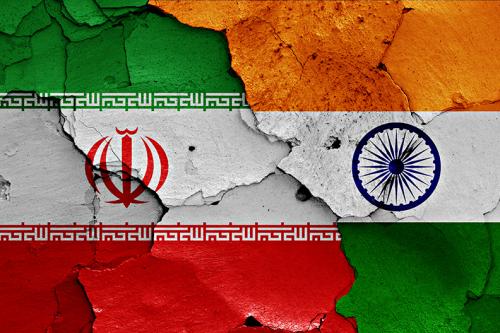
India spent twenty years building a place for itself in the Middle East. It courted Israel and Iran at the same time, signing defence deals in Tel Aviv while building a port in Iran. When the United States and Israel began striking Iran on 28 February 2026 and killed Supreme Leader Ali Khamenei, all that careful positioning faced a single test. India failed it. Not because it picked the wrong side, but because it found it could no longer speak to every side. The war did not isolate India by accident. It revealed an isolation that was already there.
New Delhi’s first move was to say almost nothing. The Ministry of External Affairs voiced “deep concern” and asked “all sides” to choose dialogue. It did not condemn the strikes or name who launched them. Two days before the bombing started, Prime Minister Narendra Modi was in Jerusalem meeting President Isaac Herzog, having just raised the India-Israel relationship to a “Special Strategic Partnership.” The timing was hard to miss. India calls this silence strategic autonomy. From Tehran, it looked like a decision.
Read more: Rubio is optimistic on eventual Iran nuclear talks despite congressional skepticism
The trouble is that the costs of taking a side arrived without the protection neutrality is supposed to buy. Iran restricted the Strait of Hormuz from early March, delaying or rerouting more than a thousand ships through a channel that normally carries about a fifth of the world’s seaborne oil. By one analysis, close to half of India’s crude imports and around ninety percent of its cooking gas pass through that water. India could not reopen the strait. It could not lower the price. It could only absorb the shock at home.
The clearest evidence of India’s bind is Chabahar. In May 2024 India signed a ten-year deal to run a terminal at the Iranian port, putting in 120 million dollars of equipment and a 250 million dollar credit line. Chabahar was meant to be India’s road to Central Asia, one that skips Pakistan. Then Washington withdrew India’s sanctions waiver, which lapsed on 26 April 2026. India’s February budget set aside nothing for the port. By April, New Delhi was looking to hand its stake to an Iranian partner until sanctions ease. A two-decade project quietly stalled the moment the United States frowned.
The deepest irony sits in a conference hall in New Delhi. India took the rotating chair of BRICS on 1 January 2026. Iran is a BRICS member. Tehran asked India directly to use the bloc; President Masoud Pezeshkian phoned Modi, and Foreign Minister Abbas Araghchi called S. Jaishankar. As chair, India could not produce a single joint statement on the war. The April meeting of BRICS envoys on the Middle East closed with only a “chair’s statement,” the wording used when members cannot agree. India holds the gavel and cannot move the room.
Read more: US and Iran exchange missile strikes
The honest case for India’s silence deserves a fair hearing. India has no power to stop a war that Washington and Tel Aviv chose to start. It leans on the United States for technology and on the Gulf for energy and for the wages of nearly ten million Indians who work there. Picking a public fight with Donald Trump would cost more than a strong statement is worth. Restraint, read this way, is what a careful rising power does when it has little to gain from speaking.
That case has one flaw. It assumes silence is free. It was not. India still lost its working channel to Tehran, still saw its oil bill climb, still watched its port investment freeze. It paid the full price of alignment and got none of the cover of neutrality. There is a difference between principled restraint, where you say less because you have judged the moment, and anxious silence, where you say less because you are afraid of the consequences. India’s conduct this spring reads more like the second.
The lesson is not that India backed the wrong horse. It is that India’s strategic autonomy was a fair-weather doctrine. It worked while no one forced a choice. The Iran war forced one, and India found it had spread its bets across too many capitals to lead from any of them. New Delhi still calls itself the voice of the Global South and a power that shapes events. In the Gulf this spring, it shaped nothing. It evacuated its citizens, guarded its budget, and waited for the storm to pass. That may be prudent. It is not the conduct of the great power India says it is. If New Delhi wants the standing it claims, it will need more than the freedom to stay quiet. It will need the will to act when others would rather it sat down.
Syed Saqlain Hussain Naqvi is an MA candidate in International Relations at Karadeniz Technical University, Trabzon. He previously taught international security and political economy at the University of Azad Jammu and Kashmir.