Israel’s strike on Beirut activated the “first phase” of a broader response by the resistance axis, a senior adviser to Iran’s supreme leader said early Monday.
In remarks carried by Iranian media, Ali Akbar Velayati said the current security stability in the Bab al-Mandab Strait should not lead Israel into a “miscalculation.”
“The resistance axis has the capability to shut both waterways. The choice is yours: stop the foolishness or enter a balanced equation involving the two straits,” he said, referring to the Strait of Hormuz.
Velayati also said predictions made days earlier had materialized through a missile response of the “Zat al-Salasil type.”
“Today’s Israeli attack on Beirut and its clear violation of the ceasefire activated the first phase of our response,” he added.
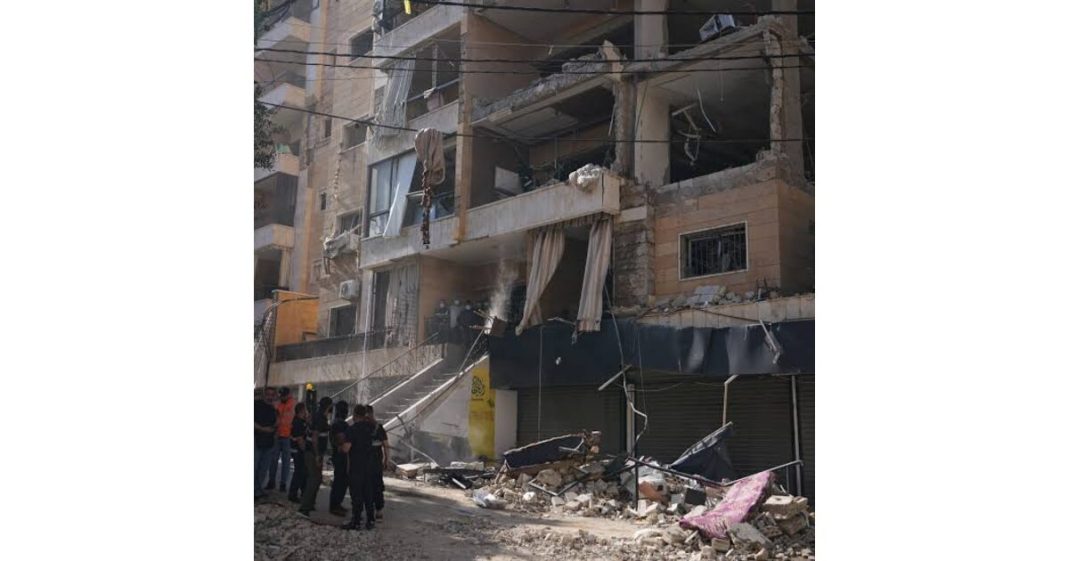
Iran launched several missile barrages toward northern Israel late Sunday following an Israeli airstrike on Beirut’s southern suburbs which Tel Aviv claimed targeted a Hezbollah command and planning center.
The Israeli attack killed two people and injured 11 others in a preliminary toll.
The Iranian attack marked the first such bombardment of Israel since a fragile ceasefire in early April.
A temporary ceasefire was reached on April 8, but negotiations later stalled amid disputes over its implementation and subsequent regional developments.
Iran’s Islamic Revolutionary Guard Corps (IRGC) said Monday Israel started “a dangerous game” by carrying out attacks against civilian targets and oil industries.
Read more: US military says it shot down Iranian missiles, drones launched toward Gulf allies, Strait of Hormuz
In a statement carried by the state broadcaster IRIB, the IRGC said it launched a missile attack “on similar industries” in Haifa in northern Israel “a few minutes ago” in retaliation for an Israeli attack on Iran’s Mahshahr petrochemical firm earlier in the day.
The IRGC warned the consequences of the current wave of escalation on the global economy will be “the responsibility of the main arsonist in this field, America.”
Earlier in the day, an Israeli airstrike targeted a petrochemical firm in southwestern Iran, causing partial damage to the industrial complex, Iranian officials said.
The attack came as sirens also sounded in several cities in Israel following missile launches by Tehran.
The region has been on edge since the US and Israel launched airstrikes on Iran in late February, triggering Iranian retaliation on Israel and other regional countries hosting US assets.
A temporary ceasefire was reached on April 8, but negotiations later stalled amid disputes over its implementation and subsequent regional developments.