Pakistan’s army chief is set to meet with Iranian officials in Tehran on Thursday in a bid to ease tensions in the Middle East and arrange a second round of negotiations between the United States and Iran after almost seven weeks of war.
Diplomacy continues. pic.twitter.com/YyyvMRolg5
— Consulate General of I.R.Iran in Mazar-e-Sharif (@IRANinMAZAR) April 15, 2026
The White House said any further talks would likely take place in the Pakistani capital of Islamabad, though no decision had been made on whether to resume negotiations.
The U.S. naval blockade of Iranian ports continued as U.S. Treasury Secretary Scott Bessent said the Trump administration would ramp up economic pain on Iran with new economic sanctions on countries doing business with it, calling the move the “financial equivalent” of a bombing campaign.
Pakistan has emerged as a key mediator after it hosted direct talks between the U.S. and Iran in Islamabad that authorities said helped narrow differences between the two sides. Mediators are seeking a new round before the ceasefire expires next week.
(IRAN CRISIS: US-ISRAEL STRIKES IRAN)
BREAKING:
UPDATE (2)
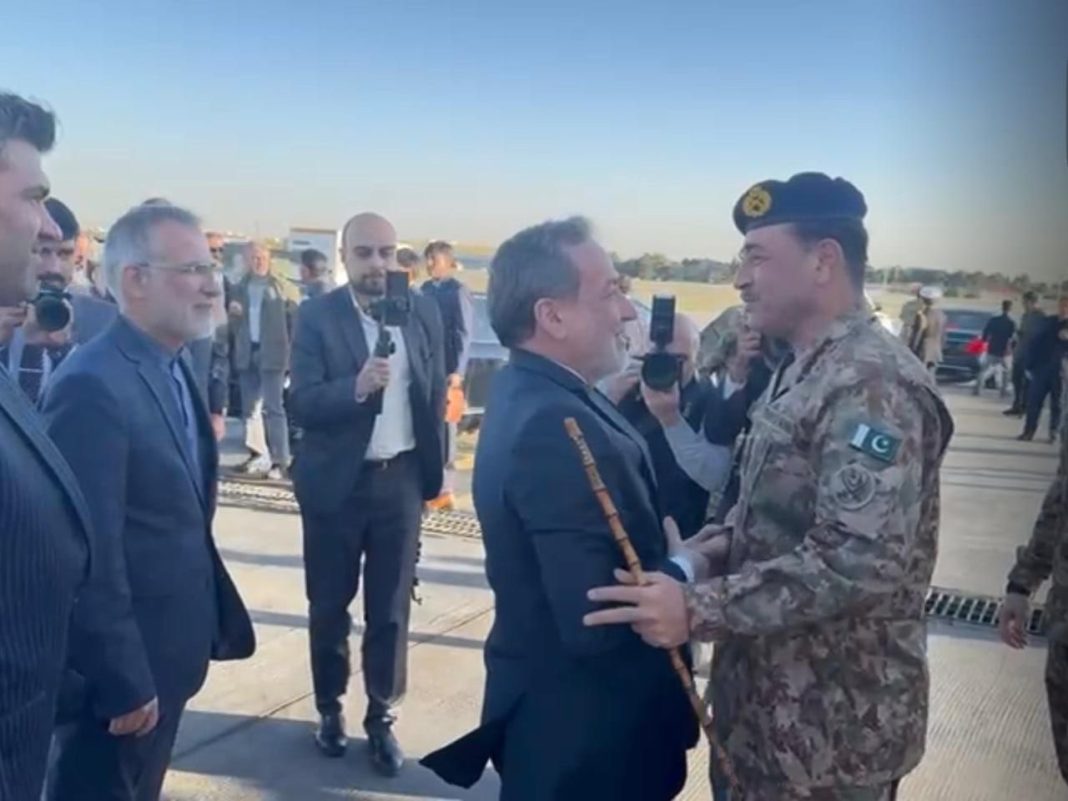
🇵🇰🇮🇱🇺🇸🇮🇷Pakistan’s Army Chief, Field Marshal Asim Munir, and his delegation have arrived in Tehran, Iran, where they were welcomed by Iran’s Foreign Minister Araghchi. https://t.co/hxymic1x46 pic.twitter.com/KtloboySXn
— Defensive Century (@Def_Century) April 15, 2026
Meanwhile, Trump wrote late Wednesday on Truth Social that leaders from Israel and Lebanon would speak the next day in a renewed effort to broker a ceasefire after the countries’ first direct talks in decades ended the previous day in Washington without a deal. It was not clear what leaders Trump was referring to. The Israeli prime minister’s office did not immediately respond for comment, which was posted before dawn in Israel and Lebanon.
The war has jolted markets and rattled the global economy as shipping has been cut off and airstrikes have torn through military and civilian infrastructure across the region. Oil prices have fallen amid hopes for an end to fighting, and U.S. stocks on Wednesday surpassed records set in January.
Officials say US and Iran are making progress
Even as the U.S. blockade on Iranian ports and renewed Iranian threats strained the ceasefire agreement, regional officials reported progress, telling The Associated Press the United States and Iran had an “in principle agreement” to extend it to allow for more diplomacy. They spoke on condition of anonymity to discuss sensitive negotiations.
Iran’s foreign minister, Abbas Araghchi, took part in a preliminary meeting Wednesday with Asim Munir, Pakistan’s army chief of staff, Iranian state media reported.
But even as mediators worked for peace, tensions simmered.
The commander of Iran’s joint military command, Ali Abdollahi, threatened to halt trade in the region if the U.S. does not lift its naval blockade, and a newly-appointed military adviser to Iranian Supreme Leader Mojtaba Khamenei said he doesn’t support extending the ceasefire.