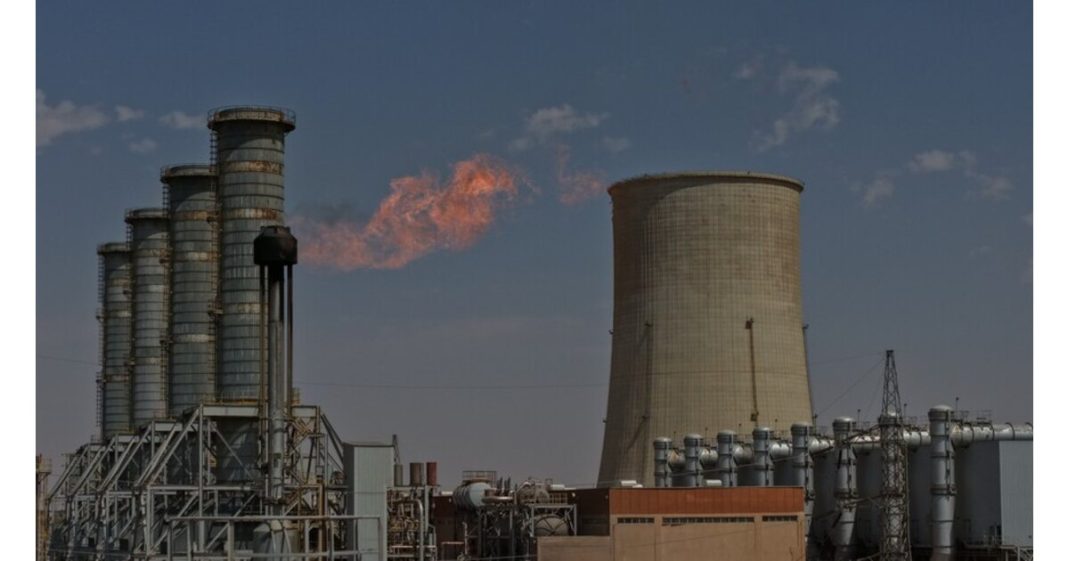
Syria is seeking to redefine its position as a “vital regional hub” for regional and international energy security, the country’s energy minister said Tuesday, announcing partnerships with major global oil companies.
“We view this stage not only as a recovery for what we have lost, but also as an opportunity to redefine Syria’s position as an active partner and a vital regional hub contributing to regional and international energy security,” Energy Minister Mohammed al-Bashir told the Atlantic Council Global Energy Forum in Washington, D.C.
Noting that Syria’s energy sector has been significantly impacted by the 14-year civil war, he said the country is now “moving towards reconstruction, economic openness, and the strengthening of international partnerships.”
Al-Bashir said Syria had chosen to make its energy sector a “key gateway” to international engagement, announcing strategic partnerships over recent months with global companies such as Chevron, ConocoPhillips, HKN Energy, GE, TotalEnergies, Simmons and Ansaldo, with advanced talks underway with Italian and other European firms.
He also announced a $7 billion investment agreement with Qatar’s UCC Holding and its partners covering electricity, infrastructure and renewable energy, alongside additional partnerships with Turkish and Gulf companies.
“Syria’s doors are open to responsible investment and long-term partnerships,” he said.
On Dec. 8, 2024, opposition forces led by Ahmad al-Sharaa overthrew the government of Bashar al-Assad, ending more than two decades of his rule. A transitional administration led by President al-Sharaa was formed in January 2025.
Read more: US launches airstrikes on Iran after blaming Tehran for helicopter crash, prompting retaliation
The US, European Union and UK have since lifted sanctions on Syria, including on its energy sector, as the country pursues diplomatic reintegration and economic reconstruction.
Plan to rebuild Kirkuk-Baniyas pipeline
Syrian Petroleum Company CEO Youssef Qablawi said the closure of the Strait of Hormuz due to the Iran-Israel-US war had created a direct strategic opening for Syria.
“The war which has happened now in the Gulf area and Hormuz gives us that chance and opportunity to be the hub or exported land for Iraqi fuel oil and oil,” he said.
Qablawi outlined plans to rebuild the Kirkuk-Baniyas pipeline, which would stretch approximately 1,200 kilometers (745 miles) from the oil-rich Kirkuk region to Syria’s Mediterranean port of Baniyas.
He said the vision had been discussed with US Energy Secretary Chris Wright and was supported by Washington.
Qablawi projected further stabilization in Syrian oil production by the end of 2026, sharing the expectation that oil output could reach 1 million barrels per day by 2030.
The remarks comes as global shipping through the Strait of Hormuz has sharply declined in the wake of the US-Israeli war on Iran, prompting countries to consider alternative maritime and land routes.
About 20 million barrels of oil pass daily through the strait, or about 20% of the world’s petroleum supply, and disruptions have driven up shipping and insurance costs, raised oil prices and fueled concerns over global economic impacts.