

Blazerossa Redefines Automotive Absurdity with Irresistible Charm


Shell Triple10 Concept Advances Small Electric Cars with Breakthrough Battery Cooling for Faster Charging...
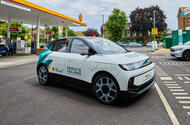 Triple10 promises faster charging and better environmental credentials thanks to battery cooling breakthrough
Energy giant Shell has unveiled its vision for the future of small electric cars, previewing a generational leap in efficiency, charging speeds and weight reduction.
The concept is named the Triple10 Challenge, referencing the project’s three key objectives: a 10-minute recharge from a common 175kW rapid charger; efficiency of 10km per kWh (6.2mpkWh); and lifecycle CO2 emissions of 10 tonnes.
The company’s ambition is to demonstrate how new technologies can be used to build more compelling EVs for the mainstream.
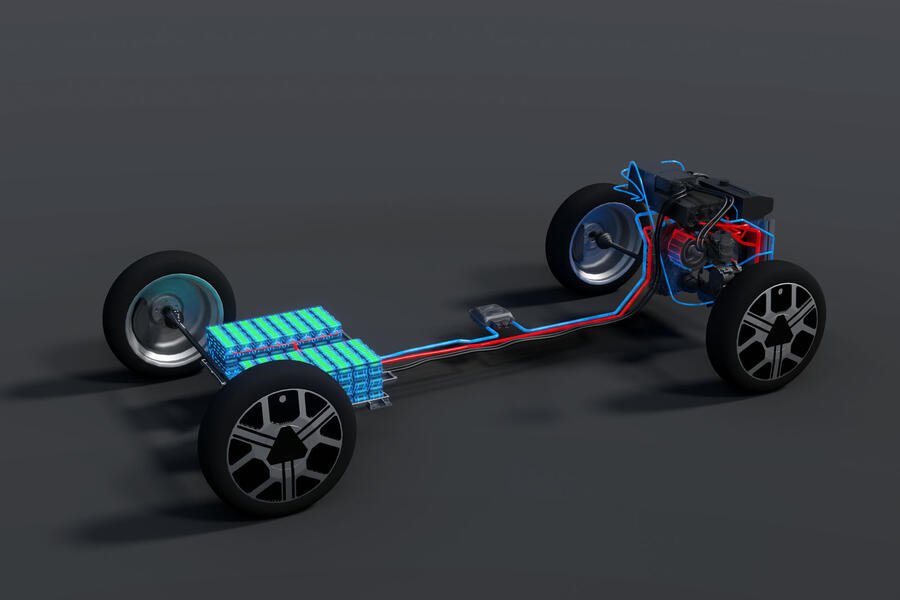
Key to the Triple10 is a new fluid-immersed battery developed in partnership with Northamptonshire engineering firm RML.
It is composed of two banks of cylindrical cells that are submerged in a dielectric (non-electrically-conductive) fluid developed by Shell. This chills the cells directly, rather than by running coolant through pipes over the top of each battery module, as is the case in a traditional EV battery.
Immersing the batteries directly in coolant provides much more effective thermal management, said Shell. This means the battery is capable of running at its optimal temperature almost all of the time, the firm claimed, which brings several benefits.
Toby Rockstroh, Shell’s manager for energy application testing, said that although many EVs can now yield peak charge rates north of 300kW, their cooling systems restrict such capabilities to short bursts.
“The battery cells start to go towards 60deg C, the thermal management of the battery reduces the current and the power drops,” he explained.
“It starts degrading because the battery cells simply get too hot. This is something we do not have with our system; the thermal constraint has been removed.”
Shell claims its 32kWh (usable capacity) battery is capable of sustaining a 175kW charge rate for the full time it is charging, giving a 10-80% refill time of 10 minutes.
Better cooling also enables far more effective energy recovery from regenerative braking, said Rockstroh.
This, the firm proposes, creates a virtuous circle for the car’s specification. Better cooling improves electrical efficiency – and therefore outright range – while faster charging reduces range anxiety. This may make a smaller battery like that employed by the concept more palatable to buyers, reducing weight and cost.
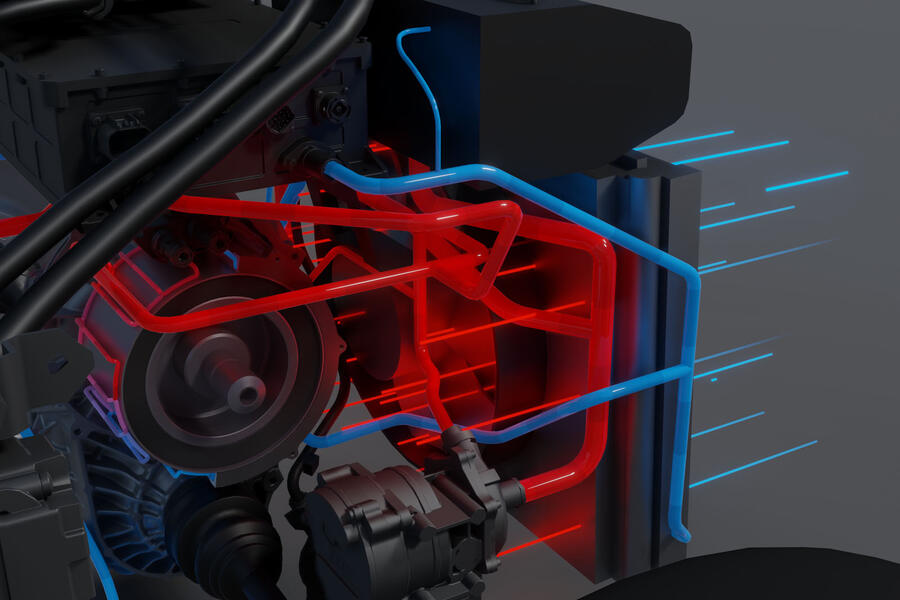
The reduced battery temperature also allows it to be connected to the same radiator as the motor and power electronics, rather than requiring a dedicated unit, saving more weight, complexity and cost.
“After cooling the battery, the fluid leaves the battery at about 50deg C, runs to the front of the vehicle (in a front-wheel drive vehicle), through the traction motor and the power electronics, which can run at a higher temperature,” said Rockstroh.
“Then it expels the heat through a conventional water-ethylene-glycol radiator – you don’t need special equipment, special pumps, piping, valves or heat exchangers.”
More effective and consistent cooling also helps to protect against thermal runaway events – a violent reaction caused by a cell being damaged, which can lead to fire – which improves safety, said Rockstroh.
Recyclability and repairability are too improved, according to Rockstroh: “If you've ever opened [conventional] batteries, they are glued together, basically.
“There is thermal paste that ensures that there are no air gaps between the cooling plates and the cells, and they have many layers so when you open one up, it's a mess.
“In our battery, in order to get to the modules you drop the fluid, you absorb the fluid – put it into a bucket – you open the battery and you can actually pull out the modules. There's no gooey stuff that you have to get rid of or that you have to try and shred out.”
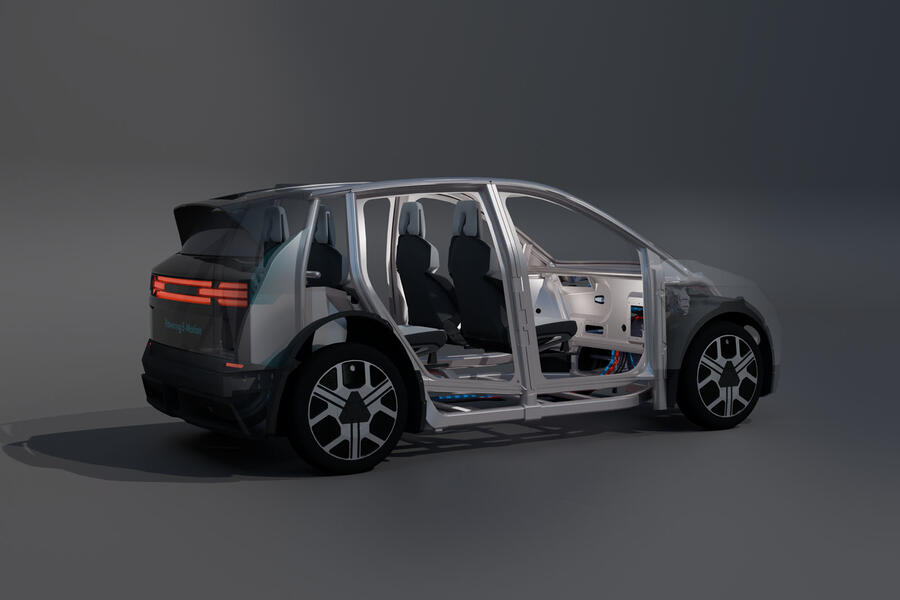
Aside from the battery, a significant improvement in the Triple10’s environmental credentials is brought by its use of recycled and naturally-occurring materials. Its chassis is made from recycled aluminum, which is claimed to produce 10% of the CO2 emissions of new ‘virgin’ material. Its roof and wheels, meanwhile, are made from recycled carbonfibre. Its interior upholstery is derived from flax.
Asked about the practical application of a car in the vein of the Triple10, Lars Nieslen, Shell Lubricants’ global business development manager, told Autocar: “[Those who] buy a big SUV with a long range may not have a fast-charging problem because they may live in a residential area, have a wall box, and can charge overnight. Then they have the convenience of fast charging.
“But actually, where would this technology be more appropriate? We think it’s in urban areas, where you don't have access to charging infrastructure all the time so you charge on the go.
“You don't want to be standing there for too long: surveys [we conducted] say a good time is up to 10 minutes. We took these elements and decided, we need a smaller car, we need to make it more affordable by making it lighter, with less material, and a smaller battery but it needs to be fast-charging. We are addressing that segment, but we do not see such a technology coming in at the moment.”
Pressed on Shell’s commitment to electric vehicle technology and decarbonisation, given it is one of the world’s largest producers of oil and gas, Nielsen said: “The main business benefiting from this concept is the lubricants business, as well as [our charging] business.
“In the lubricants business, we have a long history of engaging and improving efficiency for our customers, and we are just building on where they are heading. They're heading towards battery electric vehicles, and we are moving in the same direction. [We also want to make] the customer experience at our Recharge sites better – in the UK these are powered by renewable energy.
“So I think we can't shy away from this criticism that may come up, but we can go back factually and say [greenwashing] is not the intent. The intent is actually to carry on on a journey which we started many years ago and to continue on that. For us, it's the technology which we want to show.”

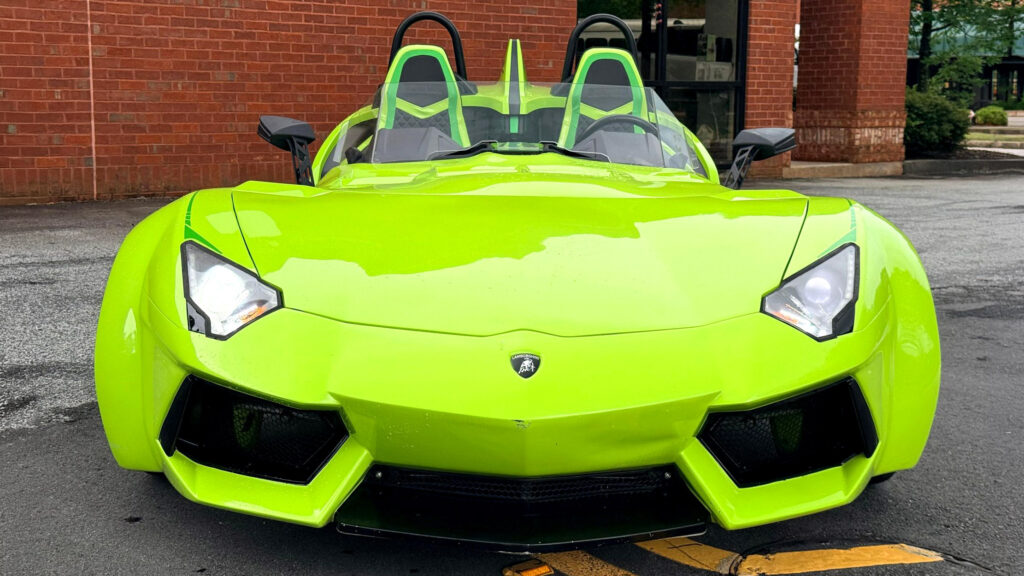
Polaris Slingshot R Customization Undercuts Value as Aventador-Inspired Body Kit Fails to Attract Buyers

Intelligent Speed Assist Undermined by Real-World Inaccuracy, Raising Calls for Stricter Testing Standards
 Intelligent speed assist misreads up to one in four sign changes, prompting safety body to call for tougher rules
A major UK safety body is calling for revisions to the way in-vehicle speed limit recognition technology is tested and approved after its own tests revealed serious inaccuracies.
Intelligent speed assist (ISA) is one of a number of safety technologies collectively known as advanced driver assistance systems (ADAS). It has been a mandatory fitment in new cars sold in the European Union and the UK since 2024.
Using an in-car camera, satellite navigation, electronic map data or a combination of all three, ISA displays the prevailing speed limit and alerts the driver when it changes. In response, the driver can adjust the speed of their car or choose to ignore it. In some vehicles, the system will automatically limit the car’s speed to the new limit, a function the driver can override. According to charity The Road Safety Trust, ISA helps drivers stay within speed limits and reduces the risk of collisions and injury.
To determine the accuracy of ISA systems, the EU regulation governing it (EU 2019/2144) requires cars to be tested over a combination of roads totalling a distance of 250 miles. To pass the test, the system must recognise the correct speed limit for at least 90% of the travelled distance. In addition, it must be able to display the speed limit, at the latest, within two seconds of the vehicle passing the road sign.
However, a new programme devised by UK-based vehicle testing organisation Thatcham Research to investigate the performance of ADAS technologies in the real world has found inconsistencies in the performance of the ISA systems in three cars when judged on their performance at each change of speed limit, rather than over distance travelled, as required by the EU. It says the three systems are representative of 10% of those in new cars.
Ignoring all system response times of up to two seconds, the worst performing vehicle, an MG ZS, achieved 91.3% accuracy across the driven distance or just above the EU’s approval threshold. However, against Thatcham’s performance-based metric, its system was 74.3% accurate.
This means that for roughly one in four events, the MG’s ISA displayed the wrong speed limit. The best-performing vehicle, a BMW i5, scored 98.39% accuracy across the driven distance, comfortably within the requirements of the EU regulation. However, its event-based accuracy was 90.3%, meaning that around one in 10 speed limit changes were either incorrectly identified by the system or not at all. In the case of all the vehicles tested, ISA displayed speed limits that are not legal in the UK. They included multiple instances of 5, 10, 15 and 100mph.
Thatcham Research says ISA systems that misread speed limits can lead to unexpected or inconsistent responses, while in the case of implausible speed limits, they could cause unwanted harsh braking or acceleration in a car also fitted with adaptive cruise control (ACC). Thatcham Research is concerned that, presented with incorrect speed limit information, drivers will lose confidence in the technology and switch it off, meaning its intended safety benefits are lost.
The cars that Thatcham tested were fitted with systems already tested and rated by Euro NCAP, the independent European vehicle safety organisation that awards safety ratings. Its test requires a car to be driven on mixed roads for 60 miles, during which engineers check its ISA responses.
Its responses to a range of speed limits are then also evaluated on a dedicated test track. It awarded the 2024-model MG ZS a four-star rating and reported that its speed assistance systems were ‘adequate’. It didn’t test the BMW i5 separately but bundled it with the 2024-model 5 Series, to which it awarded five stars. However, it noted that its speed assistance systems were also only ‘adequate’.
Euro NCAP is currently introducing revisions to its evaluation programmes that will place greater emphasis on real-world testing. Every vehicle that it tests will be fitted with a suite of exterior and interior sensors monitoring the responses of its ADAS systems, including ISA, to a variety of road signs and conditions over a total of around 1200 miles in at least three European countries.
Commenting on its own ongoing tests, Thatcham Research says the accuracy of ISA systems can be achieved with improvements to camera recognition, GPS map data and sensor fusion. It is calling on regulators and the motor industry to incorporate event-based assessment of ISA performance in its approval framework.
Jonathan Hewett, CEO of Thatcham Research, said: “The automotive industry has the capability to deliver ISA that is accurate, consistent and genuinely useful. What is needed now is a regulatory standard that demands exactly that – one that measures performance at the moments that matter, rather than allowing systems to pass approval while failing drivers in real-world conditions.
"Getting this right is not optional. The safety case for ADAS depends on drivers trusting these technologies enough to keep them switched on. We will continue to assess these systems and feed the results into our new Vehicle Risk Rating system for insurers.”

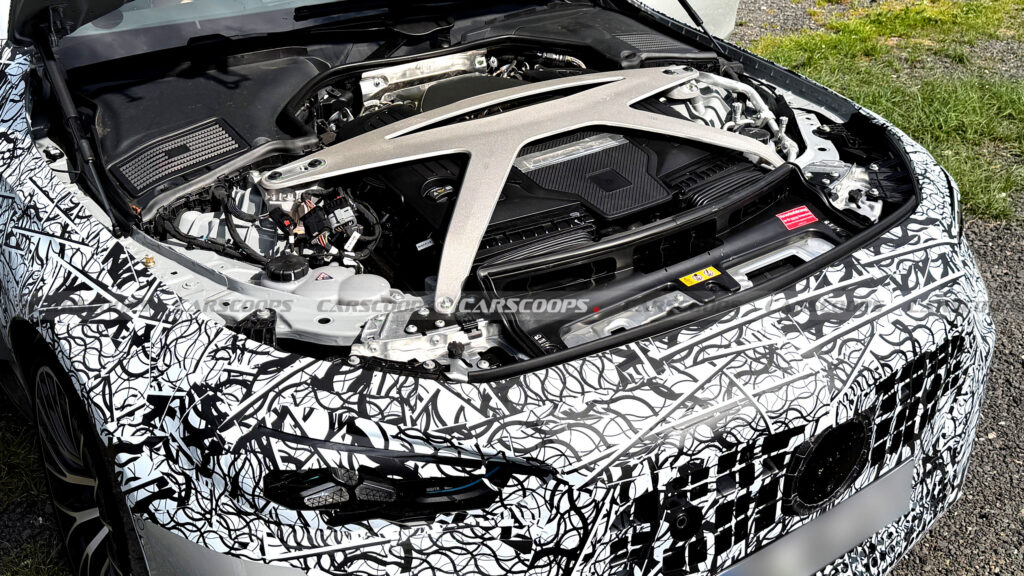
Mercedes-AMG CLE 63 Signals V8 Revival Amid Shifting Performance Coupe Landscape

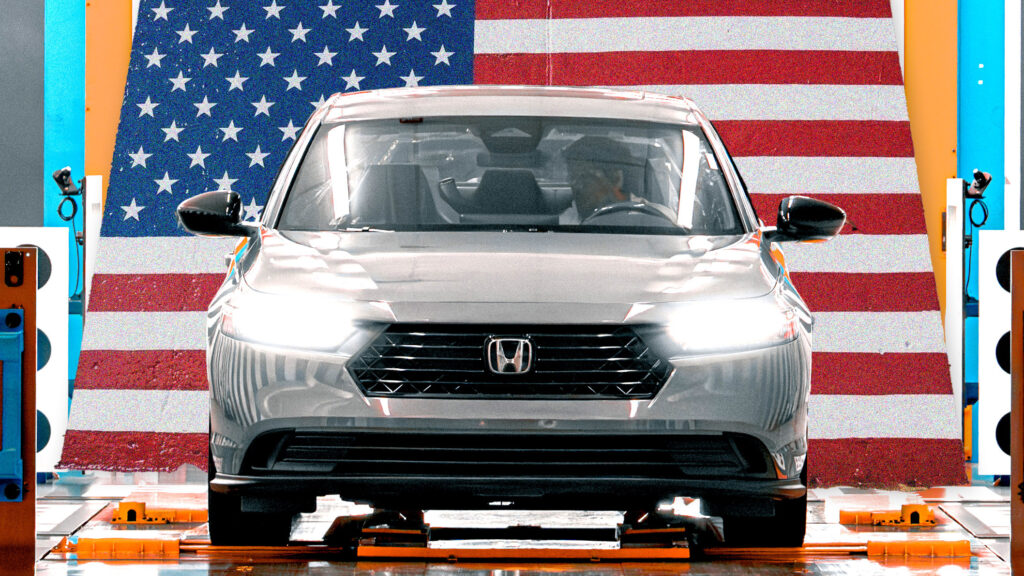
American-Made Index Reveals Foreign Automakers Dominate US Vehicle Production Despite Tariffs

Stanceworks Redefines Automotive Build Culture Through YouTube’s Most Ambitious Project


Skoda Peaq Redefines Electric SUV Luxury With Seven Seats, Extended Range, and Flagship Ambition
 Seven-seater brings luxurious features, 390 miles of range and a big price tag
Skoda has unveiled the Peaq as its new flagship - and its most expensive car to date, priced from £51,980.
As the jewel in the crown of the brand's electric SUV range, the Peaq is a high-rise seven-seater positioned as an equivalent to the combustion-engined Kodiaq SUV.
It is also Skoda's largest model yet, stretching the Volkswagen Group's MEB architecture to 4.9m in length and 1.7m in height. The new SUV has been designed to maximise interior practicality and flexibility.
Skoda says it has generous leg room in the second and third rows, while the high roofline is said to boost head room in the rearmost seats. Skoda claims a boot capacity of 299 litres with all three rows in use, rising to 890 with the third row folded flat, or 2075 with only the front seats in situ. There is also a 37-litre compartment under the bonnet for stowing either the charging cable or the parcel shelf.
As Skoda's new flagship, the Peaq also offers a range of features typically reserved for more luxurious models. These include reclining massage seats with footrests, a Sonos sound system and the largest panoramic roof yet offered by the Czech brand-it is capable of dimming or lighting specific segments of the cabin as the driver chooses.
The Peaq features a new 13.6in infotainment touchscreen display with haptic feedback, while physical toggles for the fan speed and interior temperature feature on the centre console.
Key driving information is displayed on a 10in instrument screen, and an optional head-up display will be available on models ordered from next year.
The seven-seater is also the flag-bearer for the 'Modern Solid' design language that was introduced in full with the Epiq, the other bookend to Skoda's electric SUV line-up.
Notably, the Peaq's door handles retract back into the body when the car is locked or moving to improve its aerodynamics performance, which is crucial for improving range in such a large EV. The electronically operated handles, which extend automatically when the car is approached with key in hand, also feature a mechanical fail-safe release for use in emergencies.
The Peaq will be offered with two powertrains from launch, named 90 and 90X. The 90 has a 282bhp electric motor mounted on its rear axle, while the 90X adds a motor up front for four-wheel drive and a combined output of 294bhp. Both versions have an official range of 390 miles.
The Peaq's 86kWh (usable capacity) battery can be recharged at rates of up to 199kW, giving a 10-80% refill in 28 minutes on a compatible charger connection. The pack can also be used to power external devices.
Customer deliveries will begin early next year.

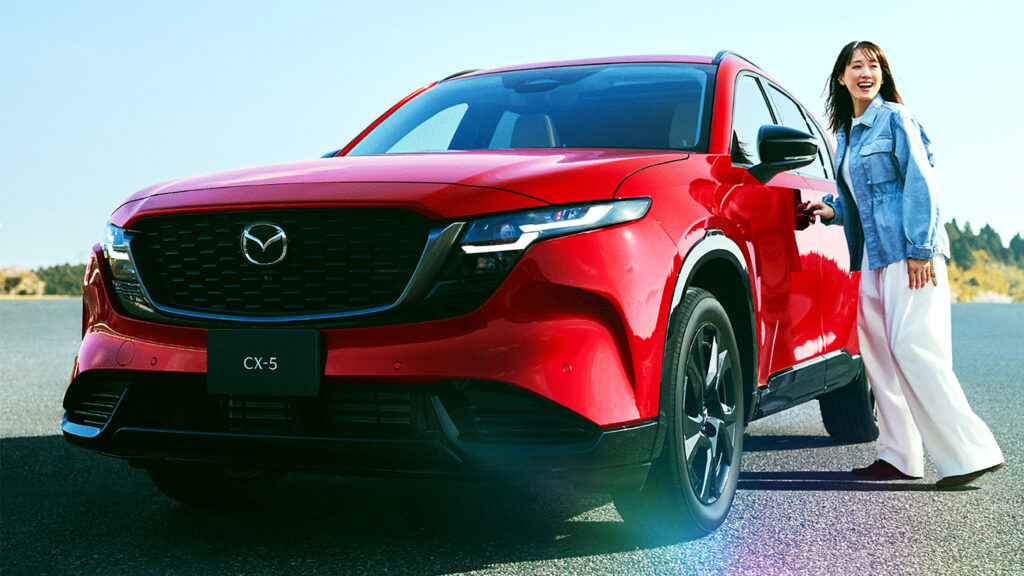
Mazda CX-5 Redefines Segment Expectations as Japanese Buyers Flock to Premium Trims and Customization

Porsche at 75 How a Silverstone Festival Reflected the Brand’s Enduring Appeal in the...
 Porsche celebrates 75 years in the UK with a very special festival at Silverstone. These are the highlights
“This beautifully streamlined rear-engined sports model is the first German car to be shown in England since the war.”
That car, announcing its maker’s arrival on these shores, was the Porsche 356 at the Earl’s Court motor show in October 1951 and those words were tucked away on page 141 of The Autocar’s 19 October 1951 issue.
Two of those three very examples of the 356 that starred at Earl’s Court were back on display at Silverstone this past weekend (one static, one having been driven there by its owner) at the Porsche Sunstede festival, held to celebrate 75 years of Porsche in the UK.
The UK is typically Porsche’s fourth-largest market and the Porsche Experience Centre at Silverstone was bursting with owners and brand enthusiasts on its sprawling site, greatly expanded since your correspondent last visited a decade ago.
The track space was packed with every flavour of Porsche from every era, though a leaning towards 997-, 991- and 992-generation Porsche 911s was most evident. A chunk of them were from the centre's own collection, surely one of the UK's if not the world's best collection of contemporary iconic Porsches.
My favourite? A 997 Sport Classic, the car that effectively started the hugely successful business for desirable, limited-run 911s that have followed. The 991-generation 911 R was a close second ("driving it is a spiritual experience" said our Andrew Frankel at the time, words that have always stuck with me).
The SUV and electric Porsches parked among the sports cars didn’t stand out or feel like they didn’t belong. The Porsche Cayenne hybrid I arrived in briefly turned into an attraction in its own right when the heavens opened and I scooped up four colleagues past and present to shelter from the rain. Couldn't have done that in a 911…
On display in the centre’s main atrium was the latest 911 GT3 Earls Court 51 Edition, created specifically by Porsche GB for this anniversary. It looked great and it will sell, but I did wonder if a back-to-basics 911 Carrera might have been a better base for it than a Porsche 911 GT3, especially when it was parked next to the gorgeous simplicity of the 356.
The Silverstone centre is now home to Porsche's 2023 Goodwood Festival of Speed statue (a 2014 sculpture from Goodwood now resides atop Porscheplatz in Zuffenhausen) and it was on display in the middle of its handling track.
Around the main Grand Prix Circuit at Silverstone ran high-speed demonstrations from classic racers, including perhaps the most famous Porsche of all, the 917.
The event ran over the whole weekend and was remarkably well attended, as the queues for the shuttle buses returning to the packed car parks will testify. Even on the drive home, the car spotting continued along the M40, where 911 GT3s were as common as Fiestas.