New York City as the Ultimate Urban Canvas for Street Racing Dreams

Fuel Prices and the Hormuz Peace Deal Why UK Drivers Face Delayed Relief at...
 Petrol is set to drop below 150p a litre following a Gulf peace deal, but lags in the system will delay savings
A deal struck between the US and Iran has reopened the Strait of Hormuz to tanker traffic. Experts say the strait, which carries around 20% of the world's oil supplies, should take some of the pressure off oil markets.
Brent crude has already dropped below $80 (£60.44) a barrel after rising to $120 during the conflict. At its peak, according to the RAC, the average price of petrol rose by 20% to 159.53 pence per litre. Diesel hit 191.54 pence on 15 April, which was a 19% increase since the start of the conflict. But when will motorists see lower prices at the pumps?
While wholesale prices, which are the prices that retailers pay for petrol and diesel, can adjust quickly, the same cannot be said of pump prices, which move much more slowly.
That is because fuel retailers buy fuel in different ways. Gordon Balmer, the executive director of the Petrol Retailers Association, said: “There are some operators who work on a daily basis, while others buy on a weekly, fortnightly or a three-week lag."
As a result, retailers carrying petrol and diesel bought at higher prices may take longer to pass on lower wholesale costs than those buying more frequently.
Luke Bosdet, the AA’s head of policy, said that while a fall in oil prices feeds "almost immediately into commodity values for road fuel", motorists are likely to have to wait longer before prices at the pump begin to fall.
What determines how quickly prices come down?
According to Nigel Driffield, a professor of international business at Warwick Business School, a lot depends on the number of forward contracts signed during the recent spike in oil prices.
He said: “I don't know what long-term contracts were signed and by whom, but that is what will determine how quickly actual prices reflect the reduction in oil prices.”
So when could drivers see some relief? According to figures from the AA, petrol prices have already fallen by 4.6 pence a litre and diesel prices by nearly nine pence per litre even before the peace deal was signed. The RAC says that on average, the drop in petrol prices is saving almost £3 a tank and for diesel car owners £9 a tank.
But despite the fall in fuel prices, Bosdet doesn’t think they will drop to pre-crisis levels any time soon. He said it could take months, depending on the size of the fall. “Remember: tankers could be in the wrong place, currently going to other oil/fuel sources away from the Gulf,” he added.
Driffield said his best guess was that drivers could begin to see lower prices within around three weeks, although much depends on what contracts have been signed.
“If buyers of oil or petrol have bought forward contracts during the crisis, then prices will take much longer to come down," he said. "If they haven’t, then prices will fall much more quickly as there won’t be a lot of priced-in inflation to feed through the system.”
However, Driffield does not believe that the crisis in the Gulf will prove to be as serious as the Covid crisis, which hit long-term refining capacity and production.
“Refiners and producers feared that they could be in lockdown for six months and so they signed forward contracts to guarantee supply, whereas in this crisis, they knew that the situation would only last a couple of months, and so why would they pay a high forward price when it is almost certain that something would happen that prices would come down in the next three months?” said Driffield.
How much cheaper could fuel get?
With Brent crude having traded below US$80 a barrel for the past two days, Simon Williams, the RAC's head of policy, believes drivers could see fuel prices fall further.
He said: "Drivers can now expect to see the average pump price of petrol drop below 150 pence in the next week or so, while diesel should drop back under 170 pence."
Before the conflict, petrol averaged 132 pence a litre and diesel 141 pence, according to the RAC.
According to Balmer, the signing of a peace accord between the US and Iran and the reopening of the Strait of Hormuz should lead to lower pump prices, which he said “is good news for motorists as we move into the holidays”. He advises drivers to compare prices locally to find the cheapest fuel in their area using the petrolprices.com app.
How quickly prices continue to fall will depend on how long the ceasefire holds and whether tanker traffic can pass through the Strait of Hormuz as normal.

Honda S2000 Values Surge as Ultra-Low Mileage Example Tests the Limits of Collectibility

Toyota Tacoma Upgrades Tested Against Rising Costs and Enduring Popularity

EU Considers Tariffs on Chinese Plug-in Hybrids as Market Share Surges and Domestic Competition...
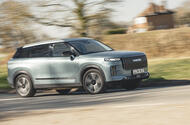
Jaecoo 7 is UK's best-selling PHEVBig-selling PHEVs such as BYD Seal U and Jaecoo 7 could see similar tariffs to Chinese EVs in Europe
The European Union is considering adding Chinese-built plug-in hybrids (PHEVs) to its elevated tariff structure for EVs from the country after sales of the drivetrain soared in recent months, according to a report.
The European Commission, the main executive body of the EU, is preparing proposals for similar ‘countervailing’ tariffs on PHEVs for member states to vote on “in the coming weeks”, according to the report from Germany’s Handlesblatt newspaper. The European Commission didn’t comment on the story.
Registrations of PHEVs rose 28% to 364,067 within the EU in the four months to the end of April, according to data from carmaker association ACEA.
Much of that increase has come from Chinese carmakers including BYD and MG after they pivoted to drivetrain following the imposition of additional tariffs on their EVs starting in 2024.
Chinese plug-in hybrids accounted for 21% of the EU market for the drivetrain to the end of April, up from 7% the same period the year before, according to Dataforce figures quoted by Automotive News Europe.
The BYD Seal U was Europe’s best-selling PHEV outright, according to the figures.
European carmakers are struggling to compete against the Chinese brands, which have built up a formidable expertise and scale in electrified drivetrains thanks in part to generous state subsidies. The EU imposed additional tariffs of up to 35% of China built EVs from October 2024 depending on carmaker, describing them as “anti-subsidy measures” designed to level the playing field.
The EU could roll over the same tariffs for plug-in hybrids, a move that’s likely to slow growth of the drivetrain among Chinese players and promote more hybrid sales.
Any imposition of additional tariffs on PHEVs into the EU could see more focus from Chinese makers onto the UK market, which has so far chosen not to follow the EU but erecting tariff barriers and is now Europe’s largest market for Chinese cars.
The Chinese dominate PHEV sales in the UK currently, taking 44% of the market to the end of April, up from 14% last year after increasing sales by 144%, according to figures from the SMMT. The UK’s top three PHEVs are all Chinese, led by the Jaecoo 7 followed by the Seal U, and the Chery Tiggo 8.

Toyota bZ3X Knight Edition Redefines Affordable EV Luxury for China with Blacked-Out Style and...

Ferrari Luce EV Becomes a Strategic Stepping Stone in the Brand’s Exclusivity Hierarchy

Car Reviews on YouTube Redefine How Audiences Engage with Automotive Design

Mini John Cooper Works Marks the End of Affordable Petrol Hot Hatches with Lasting...
 Petrol-powered John Cooper works is the last of the breed – and hilariously good fun
While it might have been tempting for us to pick some rare-groove luxury car or revered Italian performance machine as a shoo-in for our Future Classic accolade (awarded in association with our friends at Classic & Sports Car magazine), there's a surprisingly affordable new car that's staring us in the face this year.
Soon enough, it's going to become the very last petrol-powered hot supermini on the market - which surely makes it collectable in just about anyone's book.
For now, the Mini John Cooper Works has one avenue of competition for that status, because Toyota's on-again-off-again sales saga with the admittedly excellent GR Yaris hasn't quite finally blown itself out. But Toyota guides us to expect that car to depart before long, not to return. And even now, for as long as it is on sale, it's hardly a bargain, at £48,000.
The hot three-door Mini JCW, then, might already be regarded as the only truly compact, genuinely powerful, genuinely affordable and genuinely fun petrol-sipping hot hatchback there is left to buy.
It's powered by a fiercer version of the 2.0-litre turbocharged four from the Cooper S, turned up to 228bhp and a punchy 280lb ft of twist. It will do 62mph from rest in a whisker over 6.0sec (only a whisker behind its electric sibling) and 155mph flat out.
And it can be bought from just £33,550 - or more likely around £36,000 once you've picked the colour and options you like best. Still seems pretty reasonable for the price of a mid-sized, Chinese-brand electric crossover, right?
The Mini JCW is all about making life fun. While its busy, slightly restive ride can get a little wearing over long journeys and uneven country roads, it makes for indefatigable agility and liveliness when the car is at its zappy best.
That Mini doesn't make the car's stability control fully switchable any more may be a development that really keen drivers and track-day regulars won't appreciate.
But none of the Mini JCW's electronics are irksome, overbearing or hard to neuter, and the ESC isn't such a killjoy as to stop the car from swivelling its hips on a trailing throttle around roundabouts and hairpin bends and then snorting off into the middle distance with terrier-like abandon.

Quattroporte Reinvention Signals Maserati’s Bid to Bridge Sedan and Crossover Divide