MG 2 Electric Supermini Concept Signals Shift Toward Value-Driven Design Ahead of 2025 Launch
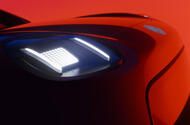 Concept car will provide a first look at the MG 2 supermini, due in showrooms next year
MG will preview the design of its forthcoming electric supermini with a new concept car that's due to be unveiled at the Goodwood Festival of Speed.
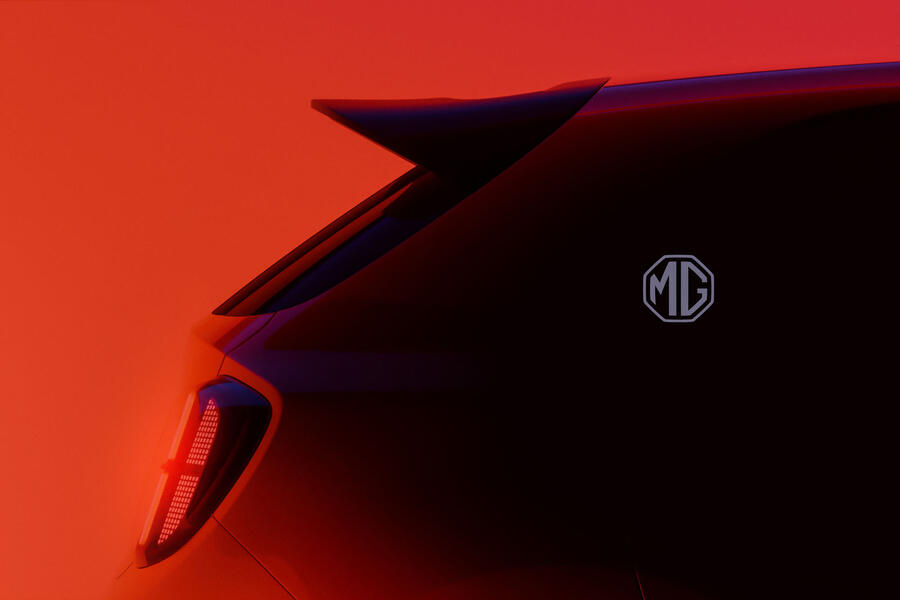
Teaser images released by MG showcase the front and rear flanks of the hatchback, hinting at a fresh design language distinct from recent models such as the 4 EV Urban and S5 EV.
A production version of the concept will arrive in showrooms next year, MG has confirmed. As previously reported by Autocar, it's expected to be called the MG 2.
MG Motor UK boss David Allison last year told Autocar that the 2 is “the obvious area of the market that’s next to happen” for the Chinese brand.
He suggested that MG is refocusing on value for money rather than offering the outright cheapest option in each class it enters.
He said: “I think we have moved on. Not consciously, but other brands and other products have come in that are the cheapest.
“If you look at the price of the Dacia Spring and you look at the price of the Leapmotors, that’s not the space we occupy, and I don't necessarily think it will be the space that we can occupy.
"I think our ethos has always been about value. You know, it has not necessarily been about being the cheapest; it has been about providing the most that we can for the best value for money.
“The ZS is [Nissan] Qashqai-sized, but it's Juke money. And I dare say we will see something similar with the 2.”
Autocar understands the 2 will be based on the same Modular Scalable Platform as the 4 EV, meaning it's likely to be rear-wheel-drive.
Alongside the supermini concept, MG will show a “design vision” of an “aspirational” model at the Festival of Speed. This too will be electric, but further details are yet to emerge.

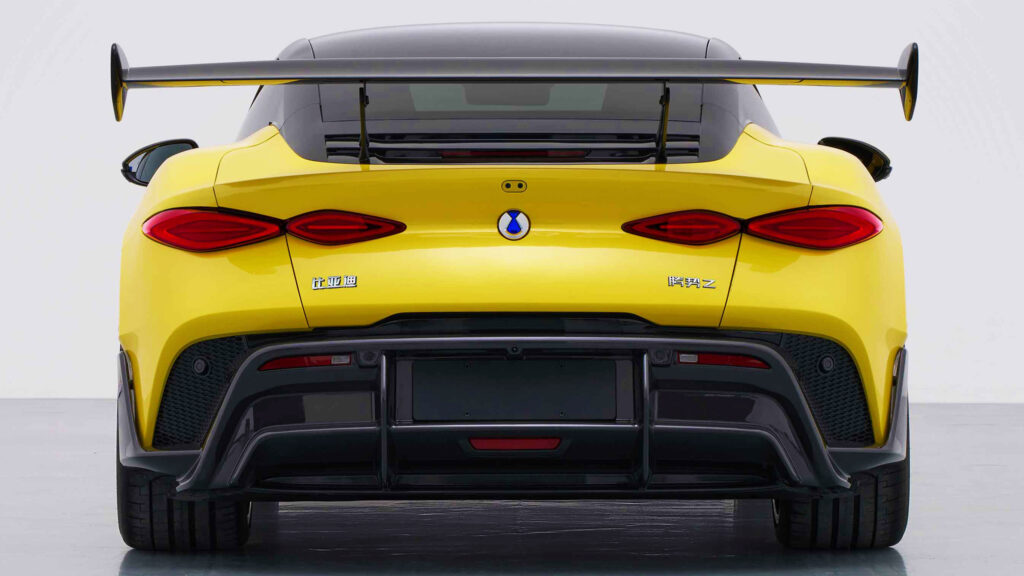
Denza Z Redefines Electric Supercar Performance With 1582 HP and Aggressive Track Focus

Fiat’s Revival Realized: How Olivier François’ Long-Deferred Vision Transformed the Brand’s Fortunes
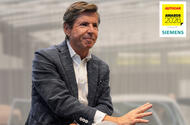 Fiat is finally back on the up – thanks to ideas its CEO had wanted to pursue since 2011
Were it not for several big misunderstandings and a few close brushes with the axe, Olivier François would never have become Fiat's CEO.
The Frenchman, now renowned for his marketing expertise, admits he knew little about the subject when he first got into the car business. Nor did he really understand cars themselves. His first love was music: he is married to Italian pop star Arianna Bergamaschi; is close friends with reggae legend Shaggy; and holds the distinction of having helped organise the first-ever concert in the Vatican City. And although he once hid it from his bosses, François now admits that he has even published his own poetry book.
But through sheer willpower and a scarcely believable knack for making the best of a bad lot, he has clawed his way right to the very top of the car business.
Bloomberg once called François "Chrysler's Don Draper"; today he is the winner of Autocar's 2026 Editors' Award - given to an individual who has had the greatest impact on success in their company - for bringing Fiat back to rude health after decades on the brink.
The Italian brand is finally on the path back to growth in Europe, with its strongest product line up in decades. The Grande Panda is tantamount to making wine from water, transforming the austere Vauxhall Frontera into something wholly more desirable. The 500 finally has its much-needed petrol engine back. And waiting in the wings is a pair of clever new Panda-inspired family cars, named Grizzly, to replace the drab Tipo.
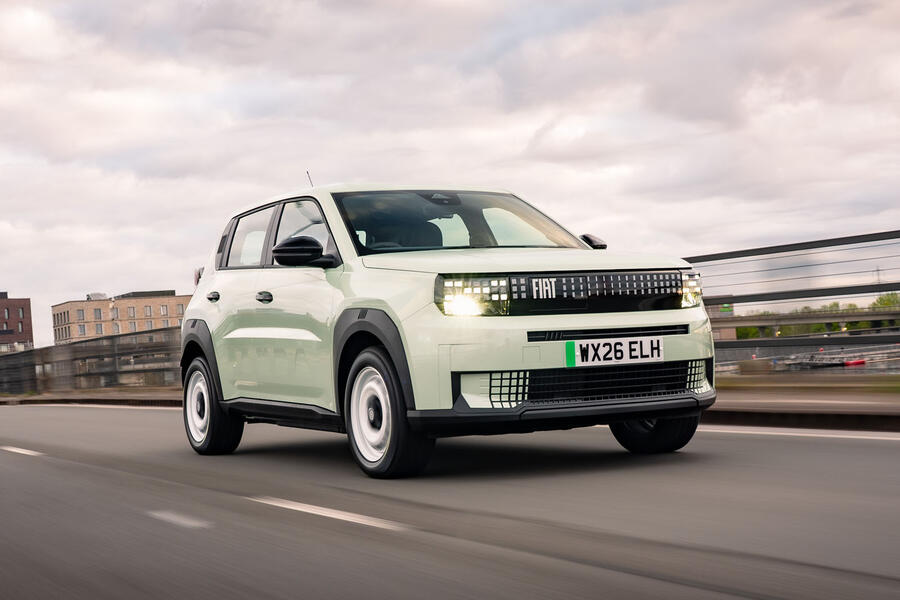
Yet Fiat's phoenix-like return to prominence isn't the sudden about-turn it may seem. François was appointed CEO of the brand back in 2011, at the behest of Sergio Marchionne.
François recalls a slide deck that he presented to the legendarily stern future FCA boss in those first few weeks at the helm: "I said to Sergio: 'I don't think we should do that car, we should do this and that.' A whole line-up is still on my old computer. One was like the Grande Panda 15 years ago. You would say: 'A-ha!'" But it wasn't until FCA merged with PSA to form Stellantis in 2021 that he actually got the resources to put these plans into action.
François' first steps into the car industry most certainly weren't stable. His rise began in 2001, having landed a job in charge of Citroën Italy.
The contemporary C2 and C3 had unfulfilled potential and he was charged with realising it. So he set to work on what he now does most effectively - but which he admits he then had little clue about - developing bespoke marketing campaigns for the Italian market.
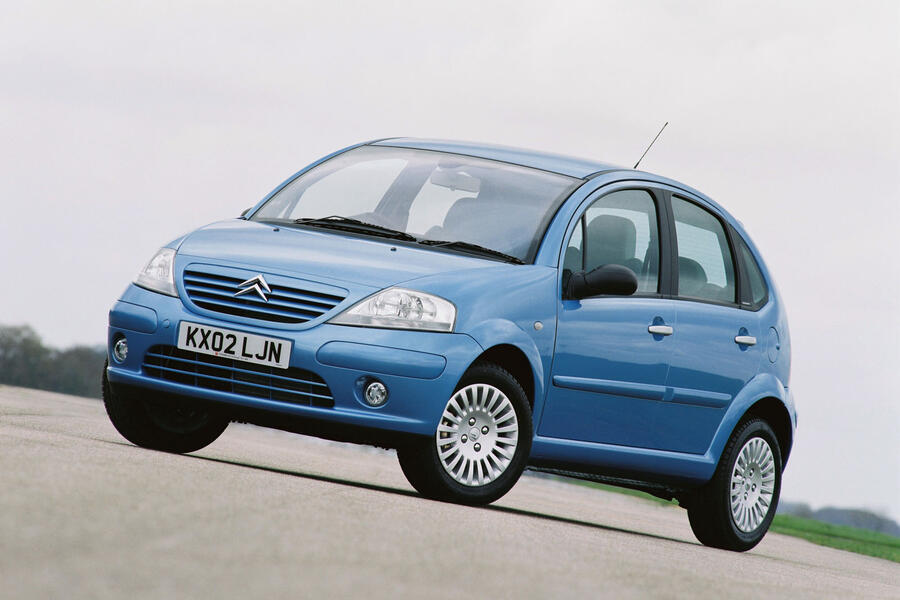
His bosses were dumbfounded and, nine months in, summoned him to Paris as Citroën's market share failed to cross the 3% target they had set. Only timing salvaged his first brush with the axe: "That same month I was at 3.1%, so the conversation never took place."
François' work in getting Citroën to a "crazy" Italian market share of 7.4% earned him the attention of Fiat Group bosses. He says: "I had two big [fears]: one, maybe they want to remove a problem, to exfiltrate me from where I am. Two, Fiat wasn't a good company to work with, because they were in bad shape. It doesn't sound politically correct today, but it was the truth. It was a very dark period."
Enter Marchionne: "Sergio called me. I didn't know who he was, and I would probably never have gone to the interview, except that he called me for a very unexpected reason. He told me: 'You're a great guy, but let's speak poetry.' I thought that if my bosses in France had known about that, I would have lost the credibility I had left. But he found out and he loved it, and that's how he convinced me."
François was placed in charge of the Lancia brand, but it wasn't an easy gig: "Lancia was supposed to be shut down, and [Marchionne's] point was 'let's see what this crazy, artistically minded guy with some marketing competencies can do to change my mind.'"
François explains that you can assess the robustness of a car maker on how many models it can afford to get wrong: "Sometimes you mess up one car, you're dead; sometimes two cars; sometimes three cars.
"The weakness of [the Fiat Group] was that, a few years earlier, it was two cars away and then the Lancia Thesis was one of these two cars. Fiat was two cars away from disaster and a Lancia was one of them. In that moment, when you become the CEO of Lancia, you are not the most popular guy. You come to the boardroom with an investment proposal and they look at you like: 'Are you kidding?'"
François burnt himself almost immediately: "I came in saying: 'We're going to do the new Delta Integrale, the new Stratos, and I'll show you how.'" His bosses were unimpressed.
Yet he looks back on yet another brush with the axe with a smile: "Any brand CEO has to be a bullshitter, because you are the advocate of your brand; you need to show your brand in a positive light. You can't totally fool your audience, because they are good at business as well. So I was advocating for some things that were objectively risky. That went really badly."
The ensuing rethink birthed the Lancia we have known for the past decade, with its range of chic, rebodied Fiats (the 500-based Ypsilon and Bravo-based Delta) plus, following the creation of FCA, a few rebadged Chryslers to boot. Sure, Lancia has lost the lustre it had through the 20th century, but it still exists.
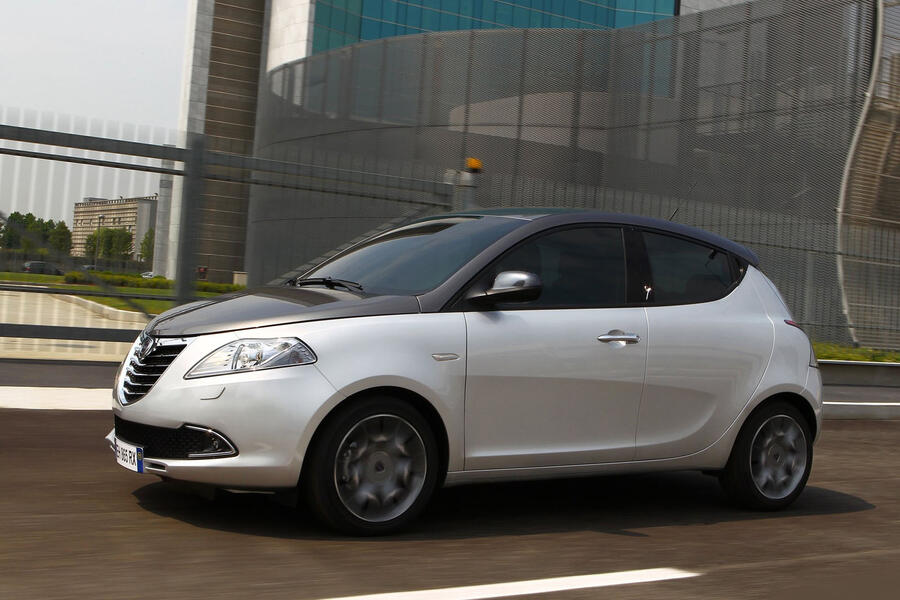
"It was a misunderstanding," says François, "because I thought that Sergio wanted me to be the one relaunching Lancia in all its glory, spending billions and so on. I will never go into posterity as a guy who revived the Stratos and the Delta Integrale. You never receive an award for killing a brand: if you lead a brand, the minimum thing you do is to not [kill it]. But in my case, it was meant to disappear."
With Lancia saved, Marchionne set François to work on salvaging Chrysler - with only the aged Sebring left in the line-up. The Crossfire had just been killed, the PT Cruiser was on its way out, the Aspen (a big SUV with a forward-thinking hybrid powertrain) was "totally dead" and the 300C was about to go on hiatus.
With just $64 million in the bank, "I put $20m on a Super Bowl commercial and $44m on fixing the Sebring's looks", renaming it the 200. The result was a sales increase of 6000% - yes, six thousand - between the last year of the Sebring and the first year of the 200. Meanwhile, the ad starring rapper Eminem won an Emmy Award.
With two FCA hits on his hands, François finally got the nod to lead the Fiat brand - the "cash cow" - in 2011. He immediately set to work on a plan: "I showed Sergio the equivalent of the Stratos and Delta, but one of the first things [I did] was to stop the next Punto. There was a new one in the works and it was not very good-looking; it was not interesting.
"The people [were furious], saying 'this guy comes out of nowhere and it was a year away from launch'. But when people tell me 'I will do the new X, Y and Z', I always ask them why. What is its unique purpose? If that car didn't exist, why should it be invented? If you're not able to answer that question, don't do it."
And so the foundation of the new Fiat was laid, with a range of cute yet purposeful city slickers. But you know what they say about the best-laid plans: although François had a clear vision in his head of what the brand needed, "by the time I presented my projects, it was always a Jeep, a Dodge, a Ram that needed funding [within FCA]. Rightfully so, but every time Sergio said no I was heartbroken. We just spent it on a new Pacifica, a new Compass, a new whatever. Fiat had to wait and wait and wait. I've been waiting."
You get a sense from talking to François that the 2010s were something of a lost decade for Fiat. The Panda and 500 kept the brand ticking over, while the assortment of Punto-based offshoots - 500X, 500L and Tipo - found occasional, if limited, success. His ambition was ultimately limited by how few cars FCA could afford to get wrong.
The momentum began to shift upon the formation of Stellantis. "I've been educated in starving", he says, but now he can see "an oasis - and I'm making the most of it".
François gives much credit to Carlos Tavares, the ousted founding CEO of Stellantis, in finally making his vision for Fiat a reality: "My babies from 2011 have matured with new platforms - Smart Car - and new engines, but they have been enabled by the Stellantis merger. Everything you see today has been blessed by Carlos."
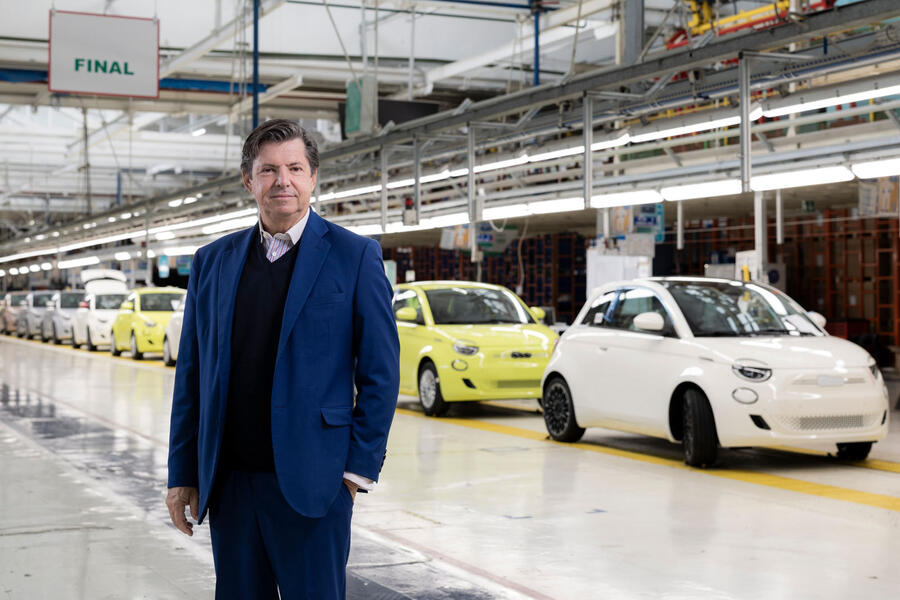
François admits to a couple of missteps along the way: "We presented the 600 too early, we presented the Topolino too early, even the Grande Panda, and then you say: 'Where are they?'"
Meanwhile, the electric 500e wasn't the true replacement for the enormously popular 500 that Fiat had hoped, but it did provide a platform on which to build a new and vastly more modern petrol model. And François' "baby", the Grande Panda, is at last in showrooms around the world.
With those foundations laid, François excitedly awaits the return to prosperity that he has long envisioned for Fiat: "I turn 65 in October. The question of 'could I go, could I retire?' crosses my mind, but the real reason [I'm still here] is I still have all the energy and I've been patiently waiting for this moment. Most people can't see it coming, but it is coming. Let me enjoy it."

BYD’s Global Ambition Faces Growth Hurdles as Domestic Sales Stall and International Expansion Becomes...

Japanese Bubble Economy and Its Lasting Impact on Automotive Innovation

Porsche 911 GT3 Touring Redefines Driver Engagement to Claim Unprecedented Third BBDC Title
 The spectacular 911 GT3 is the first ever car to win our Handling Day contest three times
Bad weather, an unfamiliar circuit and equally unknown public roads made Autocar's annual Britain's Best Driver's Car (BBDC) shootout divisive in 2025. It's a good job the adjudicating testers aren't like a trial jury, then, needing to come to a unanimous verdict before being let out of the pit lane.
There can be no deadlock at 'Handling Day': everyone has their say, casts their own scores, and the voting system unfailingly settles on a winner. And last November, in the Cumbrian damp of M-Sport's Dovenby Hall test track and its surrounding roads, it promoted an old master to the top step of the podium one more time.
The 992.2-generation Porsche 911 GT3 Touring was an outside bet to scoop the big prize in some ways. It wasn't among the competition's top ranks in terms of price, power or accelerative performance. It didn't have the 12-cylinder pomp of the Ferrari 12Cilindri, Lamborghini Revuelto or Aston Martin Vanquish. It didn't have a thousand hybrid horsepower or asymmetrical torque vectoring via synapse-quick electric motors.
It was run close by a defending champion, in the shape of McLaren's excellent and assured Artura PHEV supercar. But, in the end, the GT3 rose higher than them all. It used its unmatched powers of analogue simplicity and predictability, of tactility and communication, and its three pedals and manual gearbox to carve through sodden conditions, to make its more technically complex rivals seem overcomplicated and to put our testers at sufficient ease to enjoy themselves. Only one of the five judges scored it anywhere other than either clear first or joint first - so even if we had needed unanimity, chances are the arguing wouldn't have taken all that long.
Should we have been surprised? Well, on the day, and with such a strong field of newer rivals, we certainly were but on the basis of recent BBDC history, we certainly shouldn't have been.
Cars qualify for the BBDC starting grid by being either wholly or partly (but meaningfully) new from a material point of view and also being among Autocar's favourite 10 driver's cars of the year. By that standard, the 992.1-generation GT3 qualified in 2021 by being all-new and brilliant to drive and it duly won. Then it won again in 2022, as the defending champion, because the year's winner always comes back by default.
Except when it doesn't. In 2023, we found ourselves in a quandary and ultimately opted to include the box-fresh GT3 RS in place of the 'regular' GT3, because having two GT3s on the BBDC starting grid seemed heinously unfair on everyone else. The technically correct thing to do, perhaps, but not the right thing. And then the Anglesey rain fell - and fell and fell - and the RS was outdone by the Lamborghini Huracán Sterrato.
Had we denied Porsche the first three-time consecutive champion in almost four decades of unbroken BBDC history, effectively on a technicality? Had the 992 GT3 been robbed of its rightful, exceptional status? And if so, by what? The British weather? Its own success and fecundity? We will never know.
In 2024, the new, GT3-adjacent S/T qualified for our annual shootout, only to fail to appear as the result of a last-minute safety recall concerning its centre-lock wheels.
All of which means GT3s of some description have entirely legitimately qualified for four of the past five editions of BBDC; have won three of them; and might well, if things had worked out only slightly differently, have strolled the entire lot.
It's not a stretch to imagine how that could have happened: the GT3 is just that good. In 2025 it got in because it deserved to, thanks to new suspension hardware, new wheel geometry, new steering tuning, revisions to its 503bhp atmospheric flat six and shorter gearing. And in the end, nobody could contend that it wasn't worth the glory.
So the awesome 992 GT3 has gone down in Autocar history as the first-ever three-time BBDC champion - finally, controversially and very deservingly indeed.

Bronco Raptor Faces Limits as Ford Rules Out Raptor R, Leaving Jeep Wrangler 392...

Honda CEO Faces Leadership Crisis as Board Support Shields Him Amid Executive Backlash Over...

Fragmentation Reshapes the Global Car Industry as Regional Divergence Undermines Scale and Profitability
Volvo XC70 was developed for the Chinese market using a Geely platformCar makers have for a long time developed models globally, but that is fast changing
Global scale has always been the secret to success in the global car industry but that is under threat as regions diverge in ways we’ve not seen for decades.
The increasing gulf between regulation, buyer demands and state protectionism from market to market is forcing car makers to take a much more localised approach, and that’s badly hurting their ability to use scale to sell cars profitability.
“Our industry is fundamentally more regional and fragmented,” Stellantis CEO Antonio Filosa told investors at the company’s capital markets day in May. He cited the firm's two biggest markets, Europe and the US. “Europe is moving faster into electrification, while the US is easing the CO2 trajectory and redefining trade conditions,” he said.
The dream situation for car makers would be to sell their model line-up across global markets united by similar legislation and buyer preferences. Back in the real world, of course, that has never really happened. Crash legislation in the US, for example, was always out of kilter with Europe's laws, while richer markets require more content than those with less buyer spending power.
But on the whole, the major markets could still be reached with common global platforms, an idea taken to its zenith by former Ford CEO Alan Mulally, who took over the top job in 2009. The former Boeing exec saw the world buying similar 777s – so why couldn’t the same happen with cars?
However, the mega-trends of electrification, the rise of the Chinese and the retreat of the US to a pre-electric, pre-globalisation era is dramatically altering the calculations for global car companies.
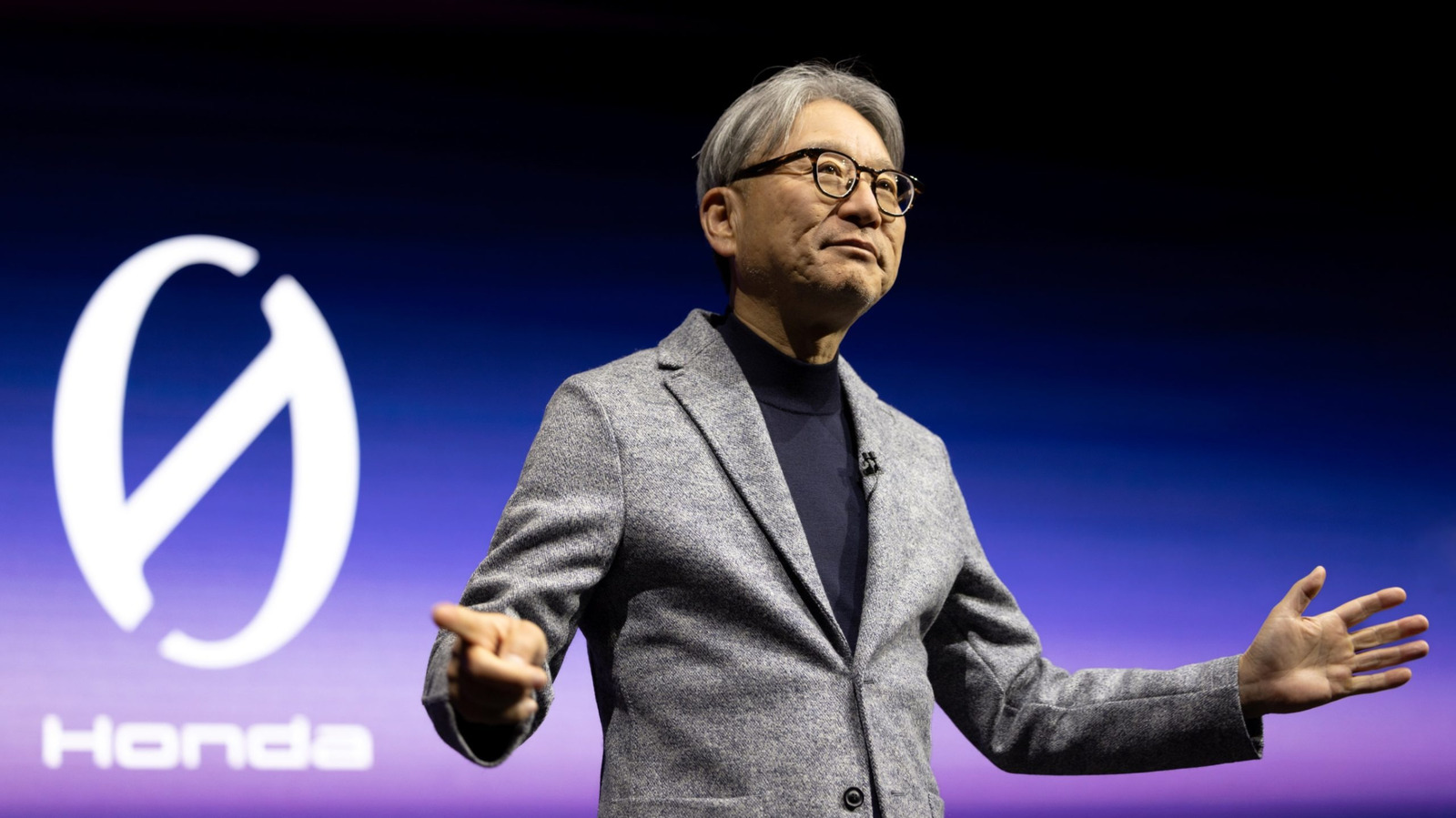
Honda is among those revisiting strategies that have been in place for decades. “It has been our standard practice to develop and sell all products based on global standard performance specifications regardless of target countries and regions,” CEO Toshihiro Mibe said on the company’s earnings call 14 May. However, the global car market started to fragment, forcing a change of strategy. “Our global standard approach may have been somewhat excessive,” admitted Mibe, in reference partly to a failed attempt to crack the difficult Indian market.
The mantra for car makers now is to think regional and develop models for local tastes. However, this requires a fundamental rethink. “First off, it’s incredibly expensive just to develop vehicles, as everybody knows. But then, if you have to start regionalising them to the point where you cannot make a global platform, that gets even more expensive,” said Rebecca Lindland, global head of automotive advisory at consultants HarrisX, on a recent webinar.
Even the premium brands are being forced to think more local. European premium brands such as BMW and Mercedes-Benz in the past could largely rise above global barriers because regional differences mostly evaporated higher up the price bracket. Any remaining differences requiring re-engineering were easily absorbed by the higher profit margins, but not any more.
A good example is in China, where tax changes and phenomenal technological leaps from local brands have this year almost entirely killed off the plug-in hybrid market for European premium marques. Instead, they are having lean on local partners to supply the technology missing from their armoury.
For example, Volvo had to reboot its PHEV strategy in China using a platform from owner Geely, which allowed it to launch the China-only XC70 SUV with its 124-mile electric range, matching that of local rivals such as Li Auto.
“Special products for China would be almost impossible for us to develop by ourselves,” Volvo CEO Håkan Samuelsson told the Financial Times Future of the Car conference in May. “Now we have a more regionalised world, we need stronger regional partners.” BMW calls this approach ‘think global, but act local’.
Global player Porsche knew what to do when emissions regulations in its three biggest markets – the US, Europe and China – were all heading in the direction of electric. When the US under president Donald Trump slammed on the brakes to return to combustion and Europe started wobbling, Porsche was left with no option but to shred much of its future EV plans in reaction, costing it €2.4 billion (£2.1bn).
In total, car makers including Stellantis, Honda, GM and Ford have booked write-downs totalling more than $70bn (£52bn) this year, largely due to the US's reversals on emissions requirements, according to research from Reuters.
Meanwhile, the increase in tariffs to import cars into the US to 10% for UK-built models and 15% from the European Union has made cars less competitive in what is now the biggest market for many European premium brands.
For those already localised with plants there – BMW, Mercedes and Volvo – that’s not too much of a problem. For JLR, though, it only widens the gulf with its rivals – hence the news that it wants to partner with Stellantis specifically within the US. This is likely to include local production in Stellantis plants, almost certainly with a new or heavily reworked model built to the new US standards, a costly process.
Meanwhile, on the other side of the coin, Europe’s dash to electric and its preference for smaller cars has forced Ford to turn to regional help with its EVs, first with Volkswagen for the Explorer and starting in 2028 with Renault, which will build two small EVs for the US giant.
The rise of the Chinese and the astonishing pace at which they’ve exported their low-cost, often electrified cars has forced markets with car industries of their own to abandon globalist principles and raise barriers, including tariffs. The US has shut the Chinese out entirely, while others have made it costlier for them to import electric cars, including the European Union, Brazil and Mexico.
The EU has gone further with the proposed ‘Made in Europe’ Industrial Accelerator Act that ring-fences certain benefits on cars made within its borders. This gives local brands breathing space from the Chinese onslaught but has obvious knock-off effects, including potentially excluding cars made in the UK.
BMW has already slammed the proposal, mainly because it throws more sand into the delicate machinery that is global trade by encouraging other countries to put up their own barriers in retaliation.
The speed at which the global world has turned in on itself has loused up long-term product plans. The Volkswagen Group, for example, has had to go back to the drawing board with its new, all-encompassing SSP electric platform because once-nailed-on markets are knocked out of contention and new Chinese players lower the price ceiling.
“The reality is that you have to tighten the screws. Because of the world being disconnected, you can't scale across the continents. Then you have to redo the math,” Volkswagen brand boss Thomas Schäfer told the Financial Times Future of the Car conference. SSP is now planned for the end of the decade, having initially been pencilled in for launch this year. “It sounds like it has taken so long, but we're looking at scale, and you have to have scale in this game,” said Schäfer.
The company is still working out whether the platform will need a range-extended option with a combustion engine. The fundamental differences between an ICE platform and a properly engineered EV platform (ie not an ICE carryover) makes it hard to find common ground, but flexibility is vital for global relevance. “The key to maintaining profitability in a fragmented market lies in maximising parts commonality between BEV and ICE/hybrid lines,” Harris Ng, a partner at consultant Kearney wrote in a report. “Platform strategies become essential.”
Car makers will never give up on global coverage with a single platform, simply because of the scale benefits it can bring. For example, Stellantis will make a version of the new Fiat Grizzly compact SUV, using the company’s low-cost Smart Car platform, for Chrysler in the US in the hope that there’s still demand for smaller cars in an increasingly truck-dominated landscape.
Stellantis’s buzzword at its capital markets day was 'multi-regional'. Fate has tried its hardest to prevent those regions from helping each other, but the car company that can thread that needle and stitch back together a fractured world will do very well indeed.

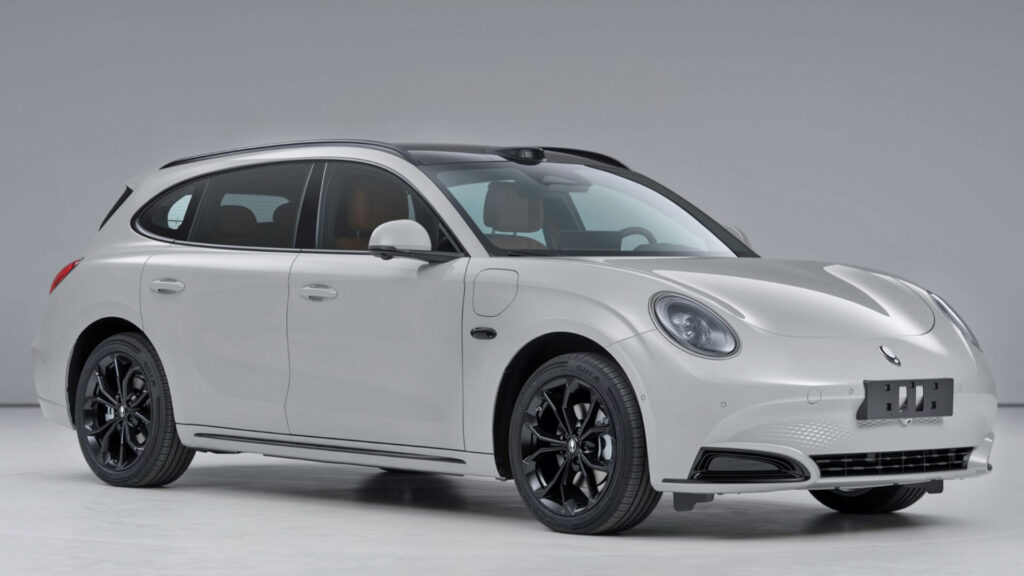
ORA 7 Blends Iconic European Design with Chinese Electric Innovation in Dual-Body Launch