BYD Flash Charging Challenges Tesla with Faster, Cheaper EV Network Expansion in the UK
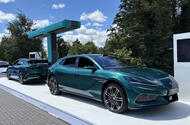 BYD's answer to the Tesla Supercharger can refill an EV's battery in minutes and could be much cheaper too
BYD plans to install 300 ultra-rapid 1500kW chargers in the UK by the end of next year - and it could charge far less than rival providers, despite offering speeds several times higher.
Flash chargers are BYD's self-developed answer to Tesla's Supercharger network - and will quickly start to rival it for coverage, with around 3000 units planned to be installed across Europe by 2027.
The Chinese company said this rapid roll-out (focused on high-traffic areas and motorways) will result in there being a Flash charger roughly every 50km, or 31 miles.
There are currently around 20,000 Superchargers in operation in Europe, spread across 1500 sites.
Flash chargers are far more powerful than Superchargers, with their peak output of 1500kW representing a three-fold increase on the fastest of Tesla's devices.
However, while Flash devices are compatible with all EVs equipped with a standard CCS charging port, the maximum output can be achieved only by certain BYD-made cars equipped with two charging ports – starting with the Denza Z9 GT shooting brake, due here in September.
Future additions to the European Denza line-up, including the B5 SUV and D9 MPV, will also be equipped with Flash charging compatibility, because they use the new second generation of BYD’s Blade battery technology.
There’s no word yet on when the tech will trickle down to the mainstream BYD range.
At top speed, a Flash charger can take the Z9 from 10-70% capacity in just five minutes and on to 97% in only another four minutes, claims BYD - and even in extremely cold temperatures (-30deg C) it will need only another three minutes.
The locations of the first UK Flash chargers remain unconfirmed, but BYD has said the nation's first Denza customers will benefit from 18 months of free Flash charging - similar to the free Supercharging offer Tesla gave to early Model S buyers.
Flash chargers take their power from on-site batteries, which will be filled overnight via the grid at off-peak prices. This means that BYD could ultimately charge significantly less than rival charger providers while massively outpacing them on maximum speed.
BYD UK boss Bono Ge told Autocar that "in the ideal situation, we want to be sub-50 pence per hour", which would have the Flash chargers dramatically undercutting rapid chargers from the likes of Ionity, Gridserve and Instavolt.
Ge said being able to charge around 50p per kWh would be "the sweet point" and suggested such a low cost could be possible because of the Flash chargers' potential to charge far more cars per day than rival devices, using energy secured at a lower cost.
"We do not want them to pay a more expensive price," said Ge about drivers of Denza EVs, adding that EVs from other brands could pay a higher cost depending on the commercial agreements reached with the firms that will operate the Flash chargers.
"If we work with CPOs [charge point operators], we will probably offer a special rate for BYD customers," he said, "and then we need to match their prices for non-BYD customers" to make the partnership profitable for both parties.
As well as established charging firms, BYD is in talks with various supermarket brands over setting up Flash chargers in their car parks.
It claims to have 30-40 dealerships in the UK with the necessary power connections already, which have begun the process of securing planning permission for Flash chargers.
Ge said "the only concern" he had about building the UK's Flash network was securing planning permission - which is commonly cited as one of the main obstacles to setting up new charging sites.
However, he said that working with existing charger operators will make this concern "a little bit less relevant", because they will have secured permission at the relevant sites already.
"The challenge" in that regard, however, will be establishing "a commercial agreement" that suitably benefits both the operator and BYD.

BYD Faces Pentagon Scrutiny as US Expands Chinese Military Company List, Raising Stakes for...


GPS Vulnerability and the Hidden Risks to Global Infrastructure


Mazda MX-5 Redefines Affordable Driving Joy as Rivals Disappear
 After a decade on sale, the MX-5 is better than ever – and now stands in a class of its own
The Mazda MX-5 is an atypical recipient of our rare and coveted five-star road test score, the only car to have been awarded top marks over the past 12 months. Not because it isn't worthy - far from it - but because it isn't new.
Normally an instrumented full test is part of the launch hubbub for a new car, and if it's exceptionally good and moves the game on in one way or another, it might have a chance of a perfect score.
Instead, the fourth-generation MX-5 has been on sale for 11 years, and while it has received some tweaks and improvements over the years, it's not a radically different car from when it was launched in 2015.
Really, putting the 2.0-litre MX-5 through a road test felt like taking care of unfinished business.
We evaluated the 1.5-litre version in 2015 and gave it four and a half stars. It was a fabulous roadster that could brighten up even the greyest day but, in that spec and in the face of vibrant competition, it lacked some grunt and body control.
In a thorough update in 2018, the 2.0-litre model got exactly those things. It won plenty of praise in various group tests thereafter, but newer and shinier things got in the way of us rerunning the numbers. In the meantime, though, the MX-5's affordable sports car rivals were removed from sale one by one.
The little Mazda has outlasted all of them, and without itself being diminished in any major way. So it was worth asking the question: what if this car were launched today? Well, the answer is that it would cause an absolute sensation.
Here stands a small sports car that weighs barely more than a tonne. It ticks every box an enthusiastic driver could want: a zingy, naturally aspirated petrol engine, a manual gearbox, rear-wheel drive, a bespoke chassis and an ingenious convertible roof mechanism. And, unlike the vanishingly few other cars on sale today that fit that description, the MX-5 is priced such that it's attainable for many people.
At £28,605 for the 1.5-litre Prime-Line or £36,065 for our preferred 2.0-litre Homura, it's not as cheap as it once was, but you would still struggle to find a new car with a warranty that serves the same amount of entertainment and usability for twice the price, let alone the same.
From the fundamentals to the small details, everything in the MX-5 is clearly designed for and by driving enthusiasts. It's no bigger than it needs to be to accommodate a wide range of body types with a pedigree sports car driving position. The interior is simple yet elegant and remains unsullied by enormous digital screens, a thick and non-round steering wheel or even a drive mode button.
After all, the joy of the MX-5 is in how simply excellent it is to drive. It doesn't need different drive modes, because everything about it is set up right from the start. Even on a boring A-road commute, the MX-5 will liven up the experience. The feeling of mechanical connection through the tactile steering and delightful manual gearbox will remind you how much fun driving can be, even without having to go particularly fast. It won't beat you up, either, because the suspension is set up for real roads.
Of course, if you do up your pace on a good B-road or a race track, the MX-5 will serve up an engrossing experience. The relatively soft suspension invites you to play with the weight balance, while the sensibly sized tyres grip gently and then break away progressively, so exploring the limit becomes entirely unthreatening and fun.
That's the entire point of the MX-5: it's fun. Other driver's cars may push the boundaries of speed and grip, but they often forget to actually be entertaining.
The MX-5 has been around in one form or another since 1989, and the fourth-generation model has existed since 2015. As a result, it's easy to take this car for granted, but we really shouldn't. In a world where exciting engines, manual gearboxes and light cars have become rarities and collector's items for the ultra-rich, the MX-5 is a bit of a miracle, and we should treasure it.
It has been a long time coming, but its five-star status is finally official.

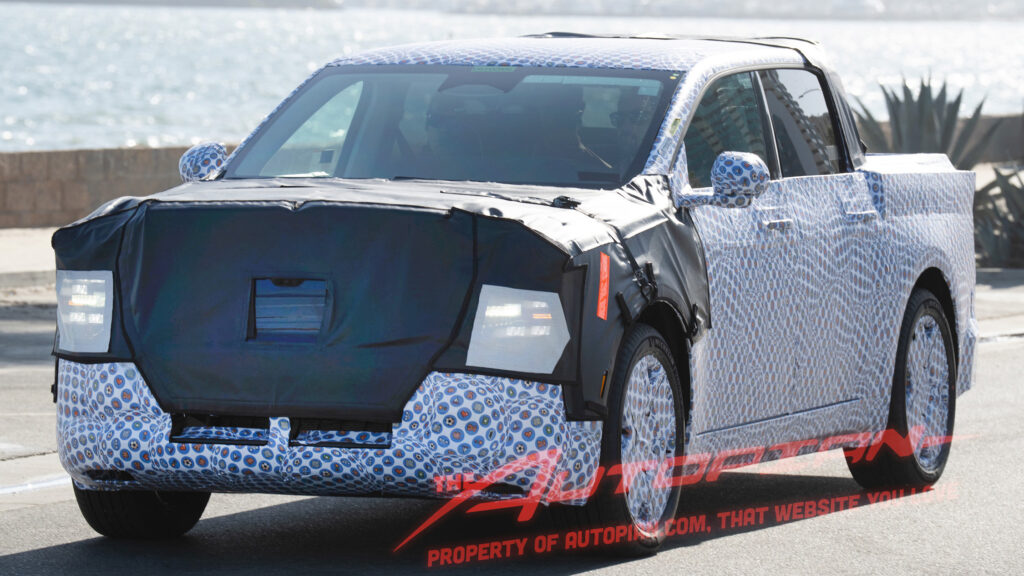
Ford’s Affordable Electric Pickup Redefines Compact Trucks With Efficiency-First Design and Radical Cost-Cutting Platform

BYD’s Global Ambition Challenges Industry Leaders as Mercedes Advances EV Tech and Honda Faces...

BYD Dolphin G Plug-In Hybrid Redefines Affordable Superminis with Class-Leading Electric Range
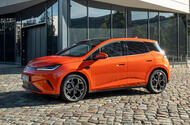 New Volkswagen Polo rival becomes UK's smallest plug-in hybrid; prices are expected to start below £20,000
The new BYD Dolphin G plug-in hybrid supermini will offer 65 miles of electric-only running and a total range of up to 646 miles.
Due on sale shortly at less than £20,000, the Dolphin G will rivals the likes of the Renault Clio, Volkswagen Polo and Toyota Yaris – but while most B-segment cars feature mild- or full-hybrid powertrains, the Dolphin G is a full PHEV.
It's powered by BYD’s Super Hybrid system, as used by the recently launched Atto 2 DM-i crossover, featuring a 128bhp 1.5-litre petrol engine and two electric motors: a 161bhp drive unit and a generator.
The system is described as “EV-led”, because the motors turn the wheels in most situations, and it can power from 0-62mph in 8.3sec.
The Dolphin G will be offered with a choice of two batteries. Active cars feature a 7.2kWh pack giving 25 miles of electric-only range, while Boost, Comfort and Sport cars feature an 18.3kWh pack for a range of 65 miles.
The smaller battery can be charged at 3.3kW on an AC charger, while the larger battery can take 6.6kW AC and 39kW DC charging.
The variants with the larger battery are expected to be priced between £23,000 and £25,000.
Notably, the system also has a vehicle-to-load outlet, meaning the car's battery can power external devices.
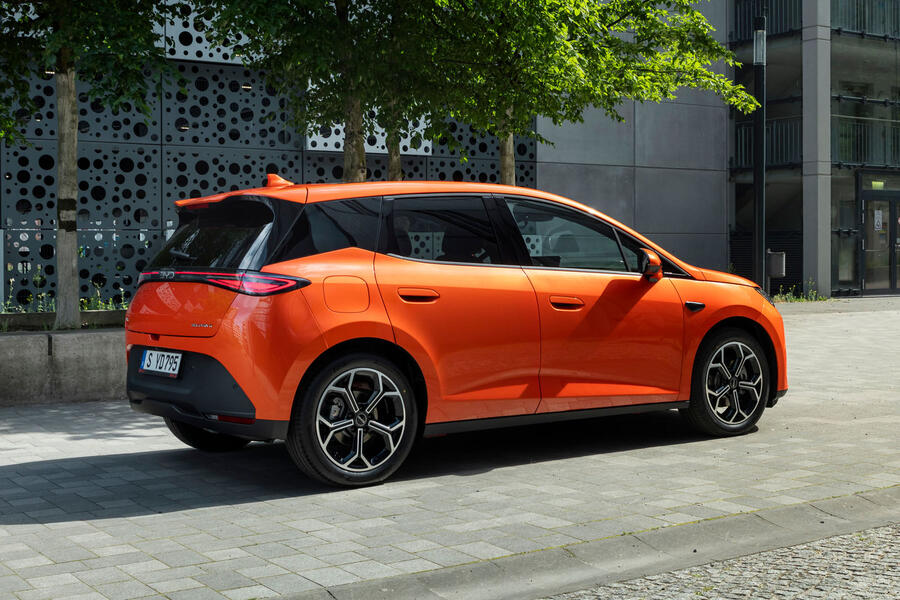
The Dolphin G sits in the heart of the supermini segment, measuring 4160mm long, 1825mm wide and 1575mm high, with a wheelbase of 2610mm. That makes it 170mm shorter than the Atto 2 and the market's smallest PHEV.
It weighs between 1440kg and 1555kg, depending on battery size, and sits on 16in or 18in wheels. Boot capacity stands at a class-leading 425 litres.
An active air intake on the front bumper adjusts the airflow to the engine to optimise cooling and range, while there’s also a small rear spoiler. Cars in Sport trim get extra styling elements.
Inside, Active models feature a 10.1in touchscreen running a Google-based infotainment system, along with an 8.8in digital instrument display. Higher-end models feature a 12.8in touchscreen, plus features such as a panoramic roof, a head-up display and a 360deg camera.
First customer deliveries are due in the autumn.

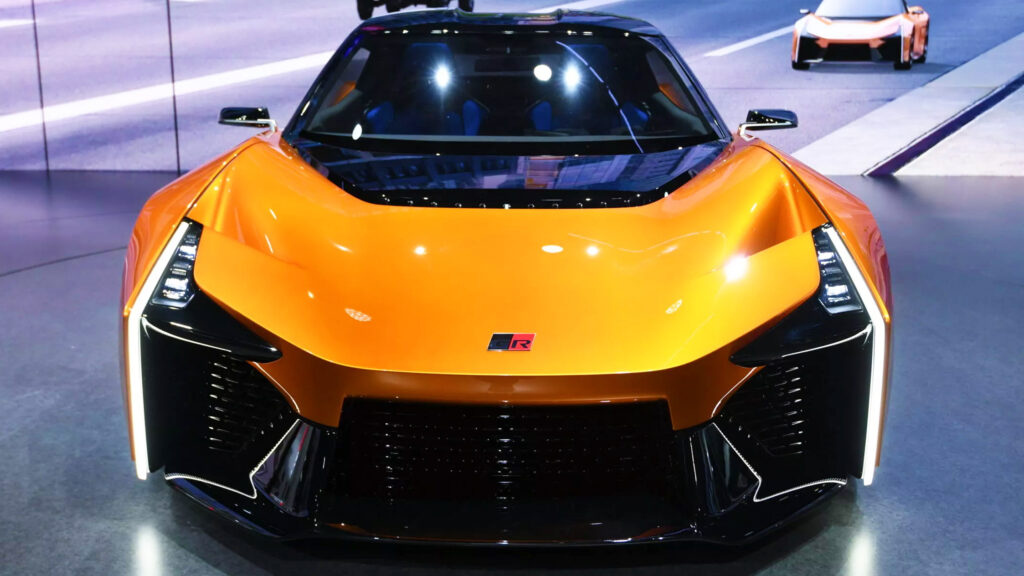
Toyota MR2 Returns as an All-Wheel-Drive Mid-Engine Sports Car Refined Through Endurance Racing

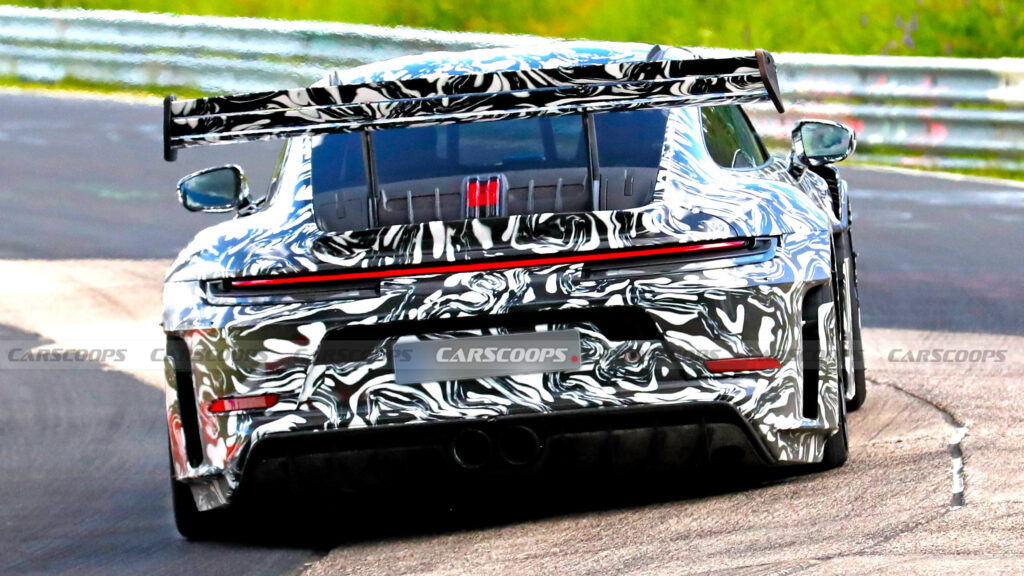
911 GT3 RS Facelift Intensifies Track Focus Amid Emissions Constraints

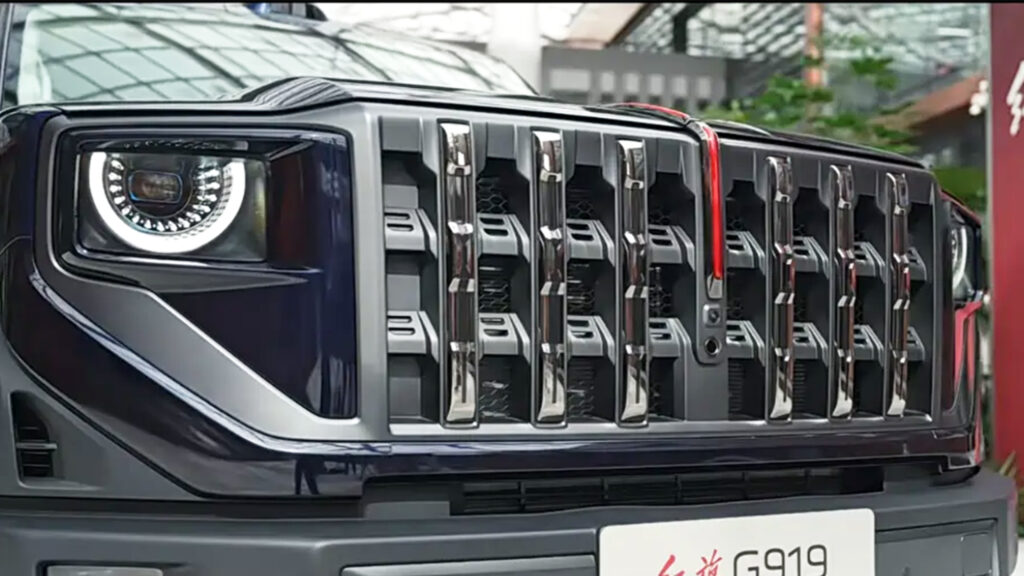
Hongqi G919 Redefines Chinese Off-Road Ambition with Hybrid Power and Extreme Capability