Aston Martin Hypercar Simulator Channels Le Mans Ambition Into Ultra-Exclusive Home Racing Experience

Lamborghini’s Transformation Under Stephan Winkelmann: Balancing Heritage, Innovation, and Profit in a Changing Automotive...
 Lamborghini CEO wins top prize in Autocar Awards for his transformative leadership of Italian firm
Stephan Winkelmann has been at the helm of Automobili Lamborghini for 15 of the past 20 years across two stints at the firm - longer than Ferruccio himself led the company for.
In 2005, the year in which he was appointed president and CEO, the brand sold 1600 cars. Last year, total sales eclipsed 10,700 and, while the firm is not immune from the global challenges of recent years, it remains a huge profit driver for the Volkswagen Group.
That remarkable growth alone would make Winkelmann a worthy winner of the Issigonis Trophy, an honour named after the inventor of the Mini, Sir Alec Issigonis, and presented by Autocar each year to an individual who has delivered exceptional success.
But the transformation of Lamborghini under Winkelmann's stewardship runs deeper: he has provided stability and a clear vision to a manufacturer with an uneven, sometimes troubled history. He has driven the addition of new products that pushed into fresh markets, turned Lamborghini's Sant'Agata factory into a modern production hub and moved its supercars into the electrified era. And he's done all that while preserving the spirit of Lamborghini as a producer of high-performance cars that remain wild, extravagant and often pleasingly madcap.
Winkelmann describes Lamborghini as "ready to go" at the time when he first joined the firm. "When I arrived, the Gallardo and the Murciélago were pretty much at the beginning of their life cycle," he says. "But there was a lot to exploit, and a lot of opportunities."
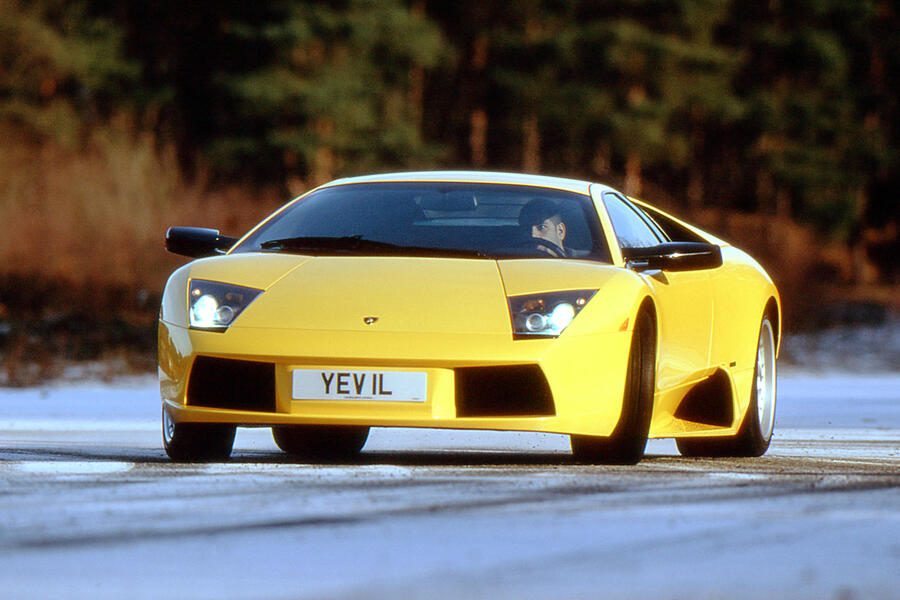
While the opportunities were obvious, there was no guarantee Winkelmann would succeed in realising them. After all, the brand's potential had long been clear, which explained why the often troubled marque had attracted a string of investors and owners, including Chrysler, before the Volkswagen Group took over in 1998. And the early returns weren't positive. "Early in my first stint, there was the big [2008] financial crisis," says Winkelmann. Having grown annual sales to 2400 by 2008, they slumped to just 1300 two years later. Winkelmann, though, says those struggles meant "it was a good time to work on the things which were paramount for success".
The early focus was on "the brand and the quality of the cars" before then looking at "the idea of derivatives". Even then, there was already "the wish and the will to add a third model line", which is now the hugely successful Urus SUV. That model, which accounts for significantly more than half of the firm's annual sales, has been key to Lamborghini's transformation, but Winkelmann says: "It was a long trip. The idea was born very early but we looked at lots of different variants such as the Estoque saloon we showed at Paris in 2008. We decided to do an SUV soon after that but it took years to get there, because we had to grow the organisation's size and it was not easy in terms of financials."
The Urus, in fact, was shown in concept form in 2012 yet it took until 2018 - during the period when Winkelmann was not at Lamborghini - to reach production. But it sparked a transformation of the firm and its Sant'Agata Bolognese factory. An entirely new assembly hall was built for the Urus, utilising state-of-the-art production techniques to achieve a scale unimaginable with its supercar lines. It also showcased one of the secrets to Lamborghini's growth: the backing of the Volkswagen Group.
The German giant acquired Lamborghini in 1998, putting it under the control of Audi in its premium and performance division. It has enabled scale - the Urus shares a platform with the likes of the Audi Q7 and Bentley Bentayga - but somehow without the firm losing sense of its roots. That's harder than it sounds: performance brands with similar heritage such as Maserati and Lotus have struggled to maintain an identity when subsumed into larger groups.
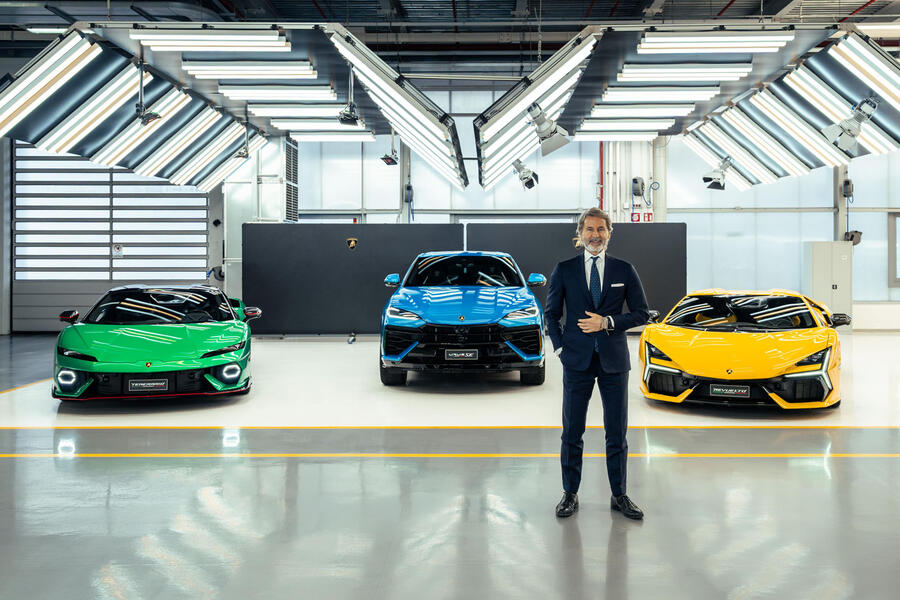
As a German who spent his youth living in Rome, Winkelmann is perhaps ideally placed to balance those delicate Italy-Germany relations. "Lamborghini is an Italian brand, so it's easy," he says. "We have our roots, factory and headquarters there. Most of our employees are Italians and a lot of the people in our factory are the second generation to work there.
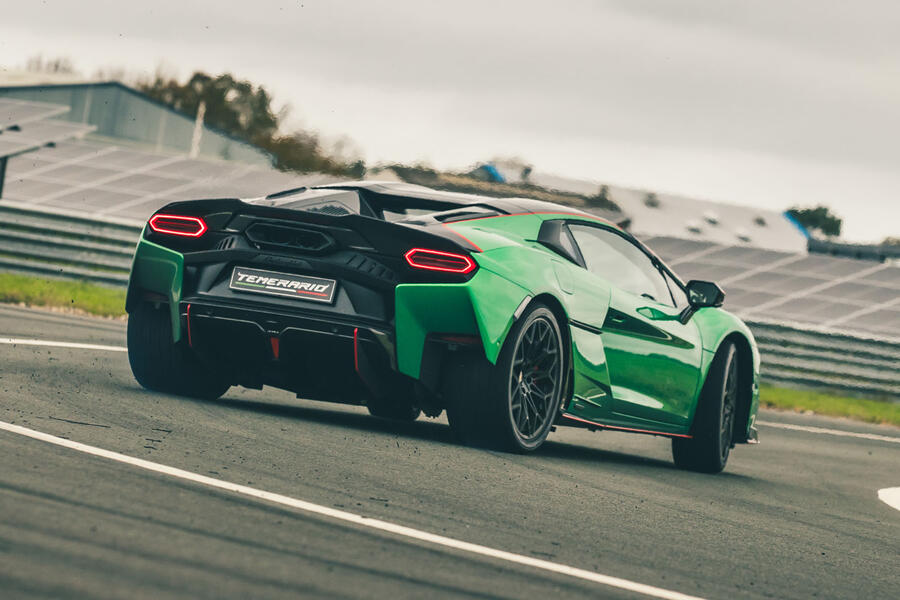
"The two supercars we have today, the Revuelto and Temerario, are almost 100% Italian in terms of development and parts. Where we showcase how well the synergies work is with Urus. It has a common platform, but our engineers did a fantastic job creating a car which is a real Lamborghini. Nobody who drives an Urus ever doubts this."
Talk of a 'real Lamborghini' reflects another key part of the brand's continued success under Winkelmann: its cars remain hugely distinctive, marrying bold styling, extreme performance and a little bit of theatre. There is still a pleasingly mad streak to Lamborghini and it runs from the entry-level Urus right up through to its outlandish 'few-off' specials. The idea of turning a V10 supercar into a jacked-up rally machine might sound crazy, but the resulting Huracán Sterrato was a hit.
So how does Lamborghini maintain that pleasingly wild side? "We always tend to look forwards," says Winkelmann. "But if you look at the history of Lamborghini, there were a lot of different things. It was never only a supercar company. We had machines such as the LM002 [a military-inspired off-roader]. There were a lot of projects that were sometimes not that successful.
"But our strategy is that we have the base models and then everybody now is allowed to think out loud. We probably put 99.9% of those ideas aside, but sometimes there is something that is really cool and we agree to attempt it. The Sterrato, for example, worked out very well. We hit a real sweet spot in the market.
"Sometimes someone comes to me with an idea and I like it. Sometimes it's totally off and we don't do it. But we always have this brainstorming and we allow this to happen. Sometimes it's silly, I have to admit. But at the end of the day, if you leave the door open, good things happen."
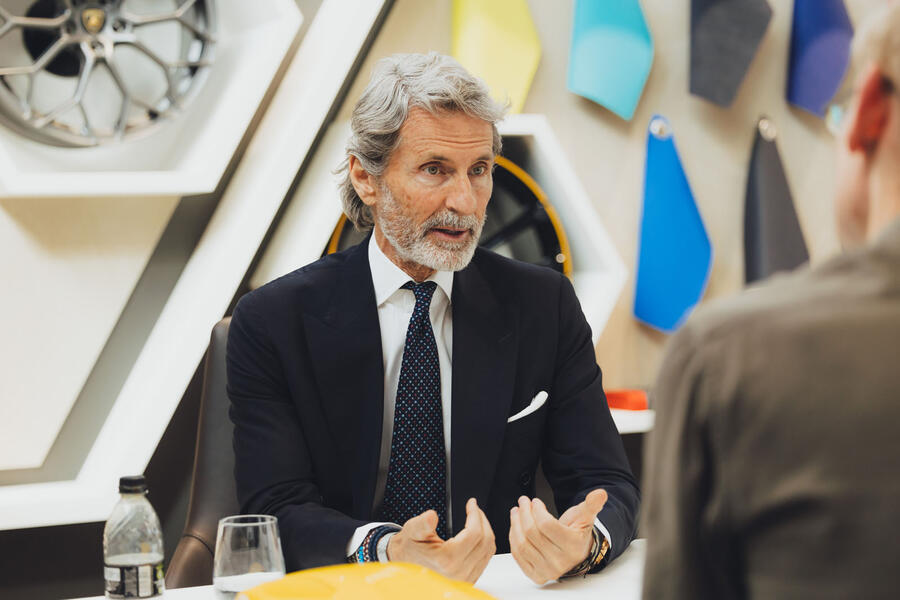
The trick is that in the Winkelmann era, those extravagant models are - arguably for the first time in Lamborghini's history - underpinned by business logic. So as well as the gleaming new Urus hall at Sant'Agata, the assembly lines for the two supercars have been merged into one, creating more flexibility to suit demand. "It's complex because they have a different takt time, but we can now change the amount of each models without changing the total output. And our people are now able to assemble both, which gives them a lot of pride," he says.
That flexibility is key. As noted, Winkelmann arrived at Lamborghini shortly before the 2008 global financial crisis, and returned to the firm in December 2020 in the middle of the Covid-19 pandemic. And, well, as you know, things have not calmed down much since then. That Lamborghini has continued to grow through it is a sign of the stability he has enabled.
"We've been pretty good in handling the challenges in the last five years," he says. "But with the chip shortage, the war in Ukraine, tariffs and now the conflict in the Middle East, it's not easy. And now the Chinese market is dropping, and we have issues with exchange rates, flexibility and speed. Having a well-balanced distribution among the regions is key. We don't want to be too dependent on one country or one region."
Lamborghini is also facing a lot more competition in an increasingly complex, fragmented market. So what makes the difference: the brand, heritage or its models? "It's a combination for sure," says Winkelmann. "The key element of the car is the design, performance and emotion: this is what the customer is expecting. We have to create the perfect car that exceeds dreams. At the end of the day, we're not selling mobility.
"Then we have to balance scarcity against residual values. This is something you always have to keep in mind and the brand has to be close to the product itself. We see ourselves as brave, unexpected and authentic. The bravery is coming from our founder to create something just because of the challenge. He said 'I will do my own thing', and we have lots of products now that nobody would have expected.
"To be authentic, you have to be really anchored to your roots. This is one of the things which is important. Every time we start thinking [about a new car], you have to know where you're coming from and the environment you're in. I see the other manufacturers, but we have premium upgraders, and then we have six true exclusive or luxury brands - including us."
The big challenge now facing the whole car industry is electrification, a challenge that is even tougher for a small manufacturer such as Lamborghini. Again, the Volkswagen Group links help to ensure the firm has access to technology, but the demand for electrification in the luxury performance sphere is uncertain. While Lamborghini has successfully hybridised both its supercar model lines, plans to add a pure-electric grand tourer - shown with the Lanzador concept - have been scrapped. That fourth product line will now be a plug-in hybrid.
The decision to put the Lanzador on hold showed humility, especially as firms such as Ferrari press on with their EVs. But Winkelmann says: "As I said, we don't sell mobility. Usually our customers have more than five cars in the garage so it's not a must to own [an electric] car like this.
"If you don't feed the dream, the emotional aspect and performance, then you risk losing it. Technology and all the advancement in terms of what you can do with it is key, but if people won't buy it, it doesn't matter if it's the most advanced technology. We always have to look into what the DNA of the brand is all about and what type of purpose we have in this environment now."
As for a full-electric car, Winkelmann says the firm "continue to work" on the technology: "It's paramount to be prepared for when the time is ready. What I see now is that when we speak about performance, there are things you can express in numbers: acceleration, top speed, lap time. But then there is the emotional part. And the emotional part is what is making the difference for our customers. It's the vibration, how you get in and out of the corners, how you use the pedals and then the sound. If you cut this off, you risk a lot.
"If you have a huge brand, you can do more. But for us, every euro we spend has to be spent in the right way."
Under Winkelmann's leadership, it's hard to argue that Lamborghini hasn't excelled in making the most of its spend. He has transformed the company beyond recognition in the past 20 years, while also navigating difficult, turbulent times. And he has set the firm up to keep on growing in the future.

VelociRaptor SUV Redefines Hennessey’s Approach with Off-Road Upgrades Over Raw Power

X-59 Advances Quiet Supersonic Flight to Enable Faster, Community-Friendly Air Travel

AirCab Flying Taxi Marks GAC’s Strategic Shift from Mass Mobility to Premium Autonomous Tourism

Chinese Vehicles Face Sweeping US Ban as Lawmakers Target Security Risks and Cross-Border Loopholes

Lamborghini Leadership and Industry Innovation Define 2026 Autocar Awards Honours
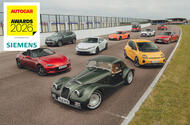 Autocar Awards, in partnership with Siemens, recognise the industry's best people, innovations and cars
Autocar has recognised Lamborghini CEO Stephan Winkelmann with its highest honour, the Issigonis Trophy, at the 2026 Autocar Awards in partnership with Siemens.
The prize, named after Mini inventor Sir Alec Issigonis, is presented to an individual in the automotive industry who has delivered exceptional success.
During two stints in charge of Lamborghini, Winkelmann has not only grown its annual sales from 1600 cars to more than 10,000, but has also provided stability and a clear vision for the marque’s future.
Having first joined after the launch of the Gallardo and Murciélago – its first cars under Audi ownership – he has since overseen the development of new products such as the Urus, tapping new markets. He has also transformed the historic Sant’Agata factory into a modern plant and electrified its supercars – all without betraying the character that defines a Lamborghini.
"What makes the Autocar Awards different is that we aren't just celebrating the very best cars on the road," said Autocar editor Mark Tisshaw. "Incredible cars don't just happen; they require immense bravery, vision and exceptional leadership. By honouring the individual trailblazers alongside the vehicles themselves, we recognise that great cars are always made by great people."
The Mundy Award, named after Autocar staffer Harry Mundy and given in recognition of engineering excellence, has been won by BMW’s Neue Klasse architecture. The basis of BMW’s forthcoming rebirth, it has already demonstrated its prowess under the iX3 SUV, which is among the finest electric cars yet launched.
The Editors’ Award, a special prize given in recognition of individual achievement, has been presented to Fiat CEO Olivier François for his role in returning the Italian brand to growth. He has overseen the development of its strongest line-up in generations – yet, as he told Autocar, his plan has taken more than a decade to come to fruition.
Horse Powertrain, the Renault-Geely joint venture working to give combustion engines a more sustainable future, has taken the Sturmey Award for innovation, named after former Autocar writer Henry Sturmey.
Ford Racing has won Autocar’s Motorsport Award, while Skoda CEO Klaus Zellmer has been recognised as 2026’s Outstanding Leader. BYD’s Bono Ge has been presented with Autocar's Outstanding UK Leader prize.
Meanwhile, Julian Thomson – responsible for the Lotus Elise, Range Rover Evoque and a number of striking Jaguars – has been recognised as Autocar’s Design Hero for 2026.
Renault took Best Manufacturer honours for its outstanding range of retro-futuristic EVs – the 4, 5 and Twingo – bringing electrification into the mainstream while also making it more desirable.
The Watt Electric Vehicle Company takes Autocar’s Innovation Award for PACES: a lightweight, scalable platform designed for niche and low-volume electric vehicles.
The full list of honours given to individual vehicles at the 2026 Autocar Awards, in partnership with Siemens, is as follows:
Autocar Awards 2026: The Best Cars
Five-Star Car: Mazda MX-5
Britain’s Best Driver’s Car: Porsche 911 GT3 Touring
Best Electric Car: Skoda Elroq
Best Hybrid: Honda Prelude
Best Large Car: Kia PV5
Best Value Car: Dacia Duster
Best Small Car: Renault Twingo
Best Dream Car: Morgan Supersport
Best Saloon: Mercedes-Benz CLA Electric
Future Classic, awarded in association with Classic & Sports Car magazine: Mini John Cooper Works

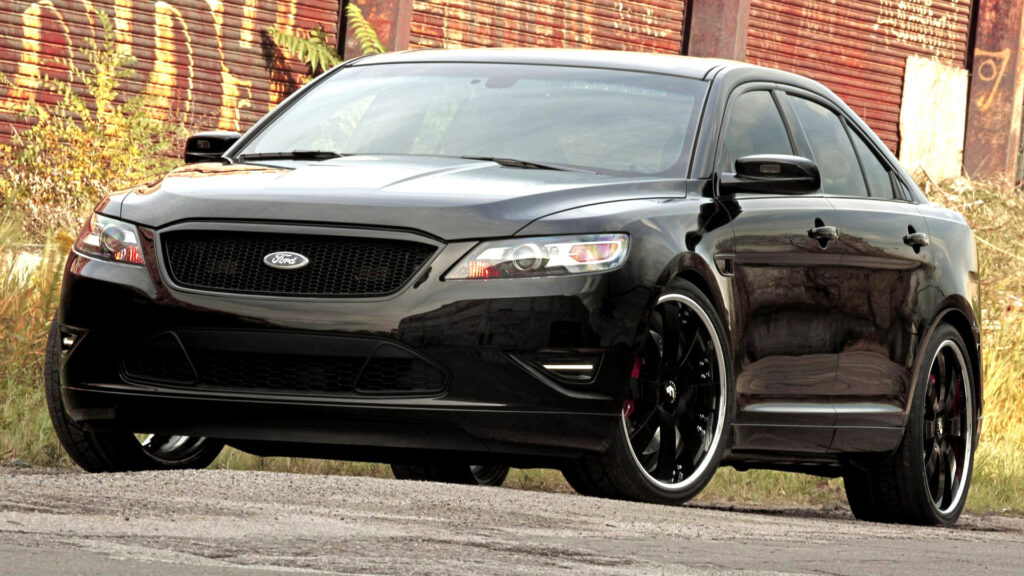
Cannonball Run Tactics Under Scrutiny After Colorado Arrest of Modified Ford at 130 mph

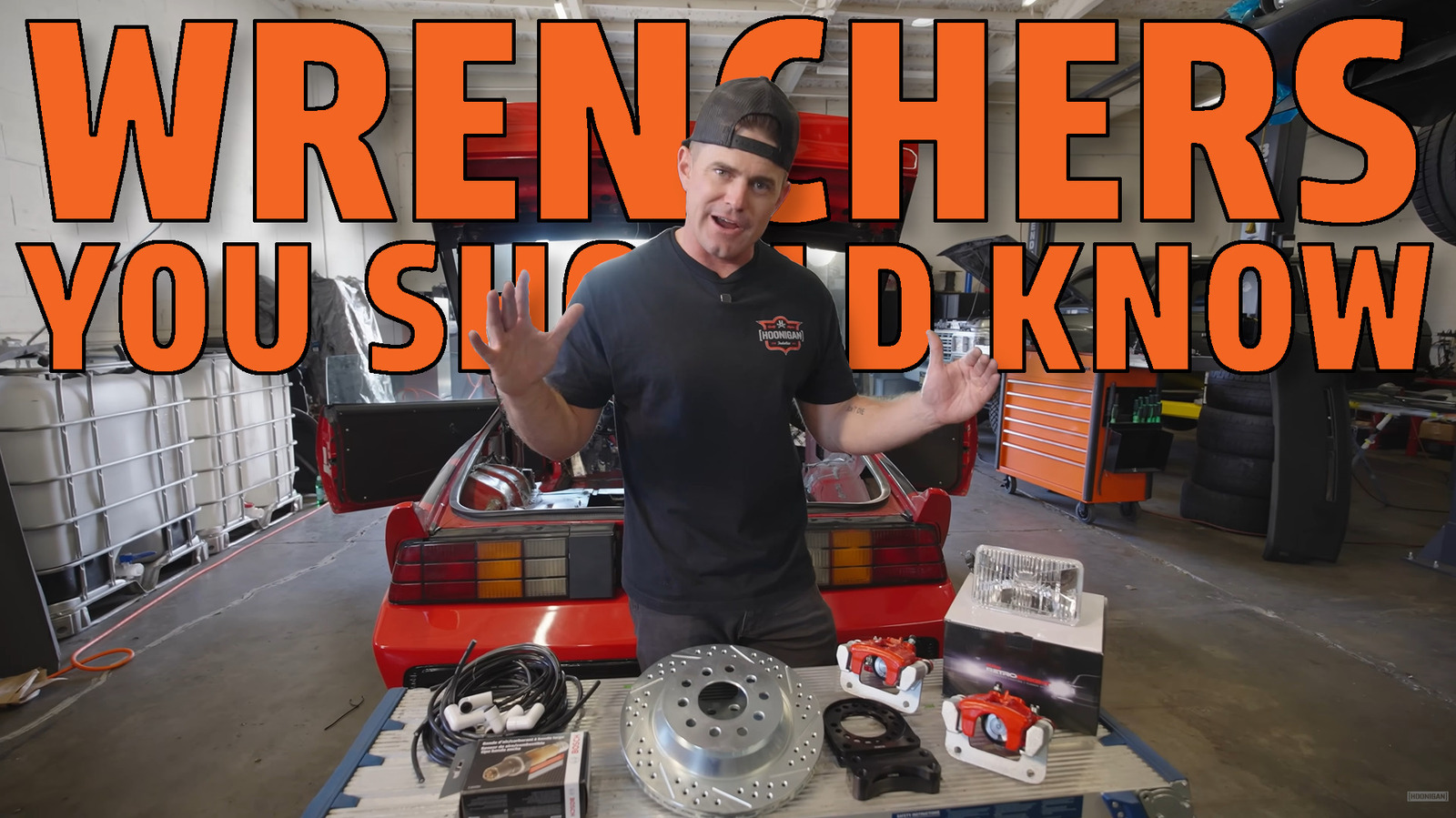
Hoonigan Returns to Grassroots Project Cars to Rekindle DIY Car Culture

Right-to-Repair at a Crossroads as Automakers and White House Clash Over Control of Vehicle...