Formula E Gen4 Redefines Electric Racing with 805bhp, All-Wheel Drive, and a Bid for...
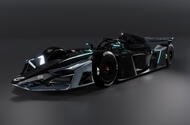 Formula E is stepping off the sidelines with its fearsome new 210mph racer - and more emphasis on proper racing
You can take it or leave it - and, let's face it, so many true-blood motor racing fans prefer the latter option.
But even the haters can't deny it: Formula E has lasted far longer than most expected. Now in its 12th season, the electric single-seater series has survived early technical glitches, widespread scorn, manufacturer pull-outs and a global pandemic to somehow keep the spark alive.
Soon comes the next chapter, and a fourth- generation Formula E racer on which rest a couple of gigawatts of both promise and faith. But forget unlucky for some: unleashing Gen4 in season 13 at the end of this year could and, judging by our first contact, should raise the Formula E game - and in a way that all racing fans and car lovers should genuinely care about. So put aside your EV prejudice, overlook the grating whine... Don't think about the electric bit. Just consider this as a new racing car - one that is properly, stupendously and seriously fast.
The Gen4
It's a long way from the first generation of 2014, when limited range forced drivers to switch cars mid-race just to get to the finish. You can see the progression in our performance chart overleaf but, in short, the Gen4 takes a significant leap even from the already rapid current Gen3 Evo.
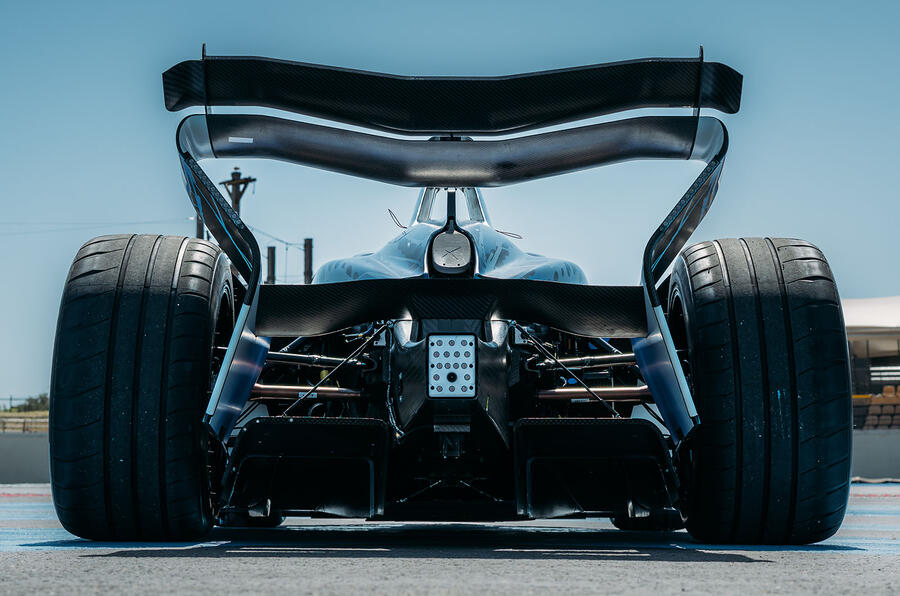
Topping out at 210mph, the Gen4 does 0-62mph in 1.8sec and 0-124mph in 4.4sec - 1.5sec faster than its predecessor. In race mode, it has 50% more power and is projected to lap as much as 10sec faster over some laps in qualifying mode. In Attack Mode, which drivers are obliged to trigger for a set period of time in each race, a whopping 600kW (805bhp) is available through all four wheels. And Formula E becomes the only single-seater series to offer permanent all-wheel drive.
So the unavoidable question: how does it compare to Formula 1? The only place where both series race at the same track configuration is Monaco - and "last year in qualifying, F1 was 18% quicker in lap time", says Porsche's factory motorsport director, Florian Modlinger. "We were around Formula 3 pace with Gen3; with Gen4 the target is to be in between F1 and Formula 2."
| GEN 1 | GEN 2 | GEN 3 EVO | GEN 4 | |
|---|---|---|---|---|
| Wheelbase | 3100mm | 3100mm | 2970.5mm | 3080mm |
| Min weight* | 900kg | 903kg | 863kg | 950kg |
| Max power | 270bhp | 335bhp | 470bhp | 805bhp |
| Max regeneration | 150kW | 250kW | 600kW | 700kW |
| Energy recovery | About 15% | About 25% | Nearly 50% | Over 40% |
| Powertrain | RWD | RWD | RWD/4WD | 4WD |
| Top speed | 140mph | 174mph | 200mph | 210mph |
| *including driver | ||||
Spectacle now key
When Formula E was inaugurated in 2014, the environmental angle was a clear and obviously worthy messaging point. Sustainability remains at the heart of the series, but we hear that all the time from everything and everyone, whatever they're selling. What has changed in Formula E now is the emphasis on the sporting spectacle.
As Jaguar team principal Ian James puts it: "We've got to stop referring to ourselves as the pinnacle of electric racing. We should be able to stand on our own two feet as a world-class sport."
Earlier this year, Max Verstappen shone a light on the series when he suggested the new- look F1 was too much like Formula E. Contrary to popular perception, he wasn't being derogatory: he later clarified that he likes the electric series but believes F1 is wrong to go down the same path of energy management motor racing. He has also apparently given a thumbs up to Gen4, branding the new car "cool".
Formula E CEO Jeff Dodds spends more of his time than he would wish talking about the F1 comparison. "Any time you've got a generational talent, a four-time world champion, talking about your sport, that's not a terrible thing," he tells me at France's Circuit Paul Ricard, where I'm witnessing the 'unleashing' of Gen4. "Also, while a lot of people wanted to interpret his comments in many different ways, [Max] clarified them: 'If we want to race electric cars, race electric cars. Why are we trying to sit on the fence between these two technologies? We are losing some of the special sauce we have in F1.' I have some sympathy with that conversation."
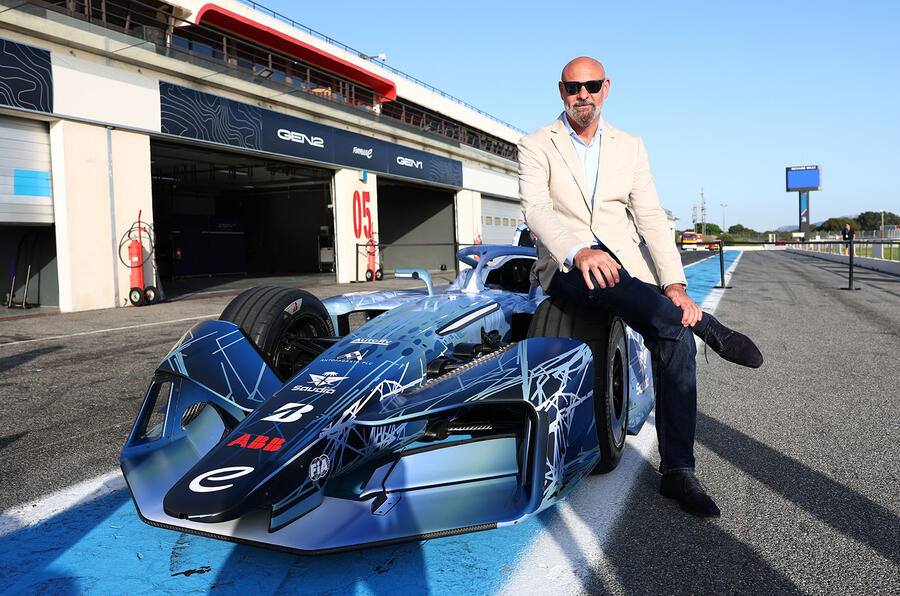
What's intriguing is that Formula E and F1 now share the same rights holder. American media giant Liberty Global controls both. Dodds' boss, Liberty Global CEO Mike Fries, was also at Paul Ricard. He referred directly to F1 as "our cousins" and added a good-natured dig - something about "no half measures" and how Formula E was "all in".
Like all motorsport leaders outside F1, Dodds knows his series can't compete with grand prix racing when it comes to a global audience. "We've said by 2030 we want to be the second-biggest [form of] motorsport, only behind F1, and I think that's doable," he says. "It will be interesting to see how F1 develops in a post- combustion era. We're the only people who can race all-electric [single-seaters]." That references a cast-iron contracted guarantee given to Formula E by motorsport's global governing body, the FIA.
Energy management racing
If wow-factor spectacle is central to Formula E's premise, why must its drivers and race engineers focus so heavily on managing energy corner to corner, lap to lap in races? That won't change with the Gen4. Given Formula E's obvious and genuinely gargantuan progression in technology, why does the racing equivalent of range anxiety remain a pillar of its show? It seems odd that a series that showcases EV capability plays up what is still the major turn-off for buyers of new road cars.
"We work on the basis we want to race for about 50 minutes," explains Dodds. "With the incredible power this [new] car has, even with its regeneration capability, if we just said 'go wild, foot to the floor, no energy management, you wouldn't get what we think is an optimal race time for a fan."
Dodds also insists this element is good for the show: "If you have energy management, it does a couple of things. One, it's highly strategic. Two, it creates close pack racing. If we went to a sprint race version and unleashed this car, it would be a pretty incredible spectacle, but it would be a much shorter race.
"There could be room for multiple different formats going forward. But as the technology gets better and battery development is on such a curve, you might get to a point where you could race for an hour with zero energy management. That would be a great problem to have."
Car makers still love it
Mercedes-Benz, BMW and Audi, most recently McLaren and Maserati: all dipped in and now have dipped out of Formula E. But there's still an impressive roster of six that have bought into Gen4: Porsche, Jaguar, Nissan, Mahindra, Lola-Yamaha, and Stellantis (with a start-up Opel entry replacing DS alongside Citroën). The likes of the Indycar Series and World Rally Championship would love such a mass commitment.
This year marks Jaguar's 10th anniversary in Formula E. Principal James, who switched from departed McLaren for this season, has spent eight years in the series and half his career in the mainstream automotive industry.
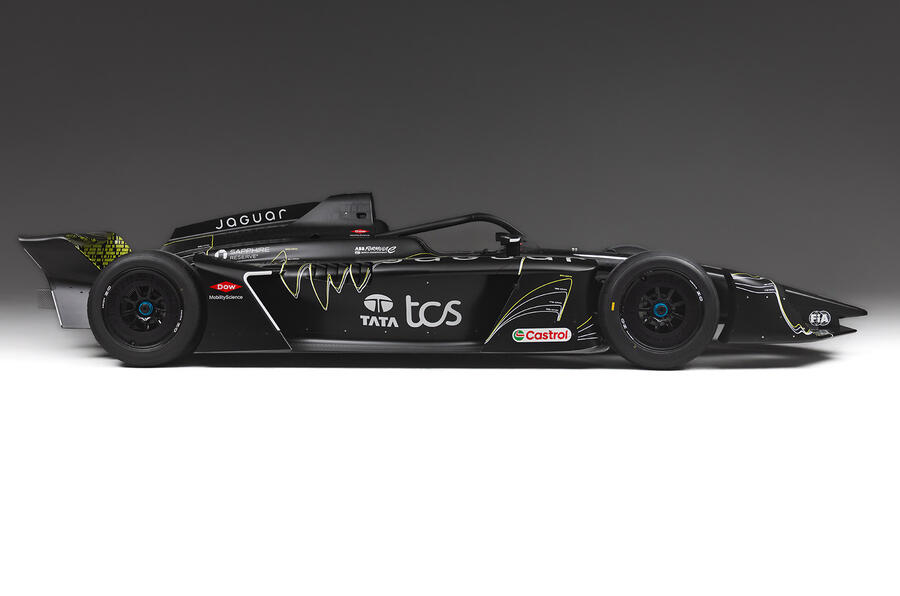
"There's the technology itself that we've been developing," he said when asked why the JLR brand remains wedded to this form of racing. The race-to-road transfer is genuine, he insists. "In motorsport we don't have the constraints that are necessary in mainstream automotive. We can push the boundaries harder, fail faster and learn. There are already key elements on the Formula E powertrain that have fed back into Jaguar road cars."
What the drivers think
At Paul Ricard, other than Formula E's own test and development car, only Porsche, Jaguar and Opel have a Gen4 to run on track. Not all of the drivers have driven one yet, which is why so many are watching eagerly, with a palpable sense of anticipation (and envy).
Porsche's duo are among the lucky few to have already racked up Gen4 miles. "First impression is it's a lot faster," 2023/24 champion Pascal Wehrlein says. "A lot more power, downforce, grip when braking; we're now pulling almost 4g at times. I'd also say it's even more complex than the Gen3. It's very impressive, the acceleration out of the corners. I'm looking forward to the feedback from fans." Nico Müller adds: "As drivers, we always look for speed and this is a huge leap - a revolution on track."
Dimensionally, the Gen4 is visually bigger - as emphasised when all four generations of car lined up on the pit straight. Oversized and heavy is a common trend in modern motorsport but, crucially, Müller points out these four-wheel- drive beasts are more agile than you might expect. "You can wrestle this car, it rewards being a bit more aggressive," he says. "That makes it enjoyable from inside and outside. Although the car is much bigger, we can still go wheel to wheel. The racing will still be tactical, still a unique mix to manage energy and slipstream to find efficiency. Also, it's an engineering challenge which Pascal and I enjoy."
Energy management racing can be complicated to follow, but racing drivers do genuinely seem to relish this aspect. Going flat out is for qualifying, they say, but racing is and should be more nuanced.
More space to race
From the beginning, Formula E has traded on taking its 'green' form of racing into the heart of the world's major cities, where there's no place for noisy, fossil-fuelled V8s. But characteristically, most of its street tracks are confined, short and tight. Everyone involved accepts some will no longer be suitable, given the Gen4's extra power and size.
These cars no longer look slow on normal race tracks but, as Wehrlein points out, city races are "part of Formula E's DNA", so an ideal calendar would include a mix of venues. The recent Gen3 Evo round at old-school Jarama in Spain (with a chicane added on the pit straight) went down well. Options for where Formula E can and should race have now opened up - but London's indoor-outdoor Excel track definitely won't work. The hot money is on a British round at Silverstone. Dodds admits the home of the British GP is "in the mix" but adds: "We don't just want to race on the same circuits as F1."
Will you watch - or care?
Dodds admits that winning over traditionalists remains tough. "Sometimes it feels like people take a moral position [on EVs], and we're certainly not asking them to do that," he says. But for what it's worth, here's what James said when we asked how he would convince Autocar readers to give Formula E a chance: "I was at the Monteblanco circuit in Spain a couple of months ago for our first-ever Gen4 test, and I remember the driver taking off their helmet after the first couple of laps and seeing the grin on their face. It tells you all you need to know if you are into cars and like your motorsport. Gen4 is going to be full-on entertaining - probably the world's best motor racing."
From the cockpit
James Rossiter knows all about powerful racing cars. A former F1 test driver, he has raced the biggest, most brutal of the modern breed - Super Formula and Super GT in Japan, LMP1 prototypes and Hypercars around the world. It would take a lot to impress him, then, but as Gen4's test pilot, his adrenaline-fuelled reaction at the Paul Ricard launch appeared genuine. Here's what he told us.
"Having four-wheel drive, the acceleration from the apex is faster than an F1 car. It's unbelievable. You have instant power, so much controllability in your right foot. Everything is right there. It's such a unique experience to have that power - it's going to open every single driver's eyes.
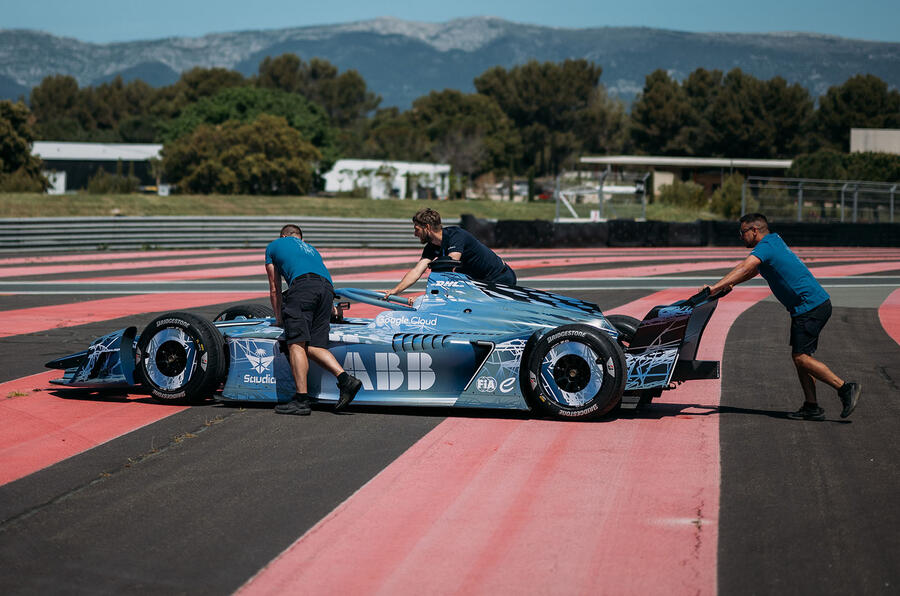
"And they are very agile, that's what surprised me during the development phase. [French car constructor] Spark has done such a great job in the suspension geometry, to pad out what we have learned with the Gen3 car with the powertrain on the front, utilising the front axle while having such an agile car. It's really done well.
"I'm super-excited to see a younger generation joining Formula E, because this car really is only second to F1. To many drivers, I think it will be more appealing than F1 too."
Trackside view
Every time I head to a race track, I'm looking for that old buzz. The hair standing up on the back of my neck, just as it did when I was a kid experiencing the shock and awe of F1 for the first time way back in the 1980s. A few days before Paul Ricard, I'd felt that thrill again as Jenson Button demonstrated his 2009 Brawn at Goodwood, so Gen4 had a lot to live up to.
But standing on the pitwall, face pressed to the wire-mesh fence, there it was again as James Rossiter rocketed away from a standing start. Okay, the whine has nothing on a V8 and V10 shriek. But the eerie whoosh and scrub of tyre rubber as Rossiter fired past on a flier... First time through, your brain struggles to comprehend the speed. The close-encounter experience is up there with watching an Indycar power through an oval turn without lifting or the day I saw a first-generation, plain-carbon Audi R18 turbo diesel LMP1 ghosting along Sebring's main drag. That's a good sign.

Airbag Recalls Expose Persistent Safety Risks in Jeep, Acura, and Honda Models

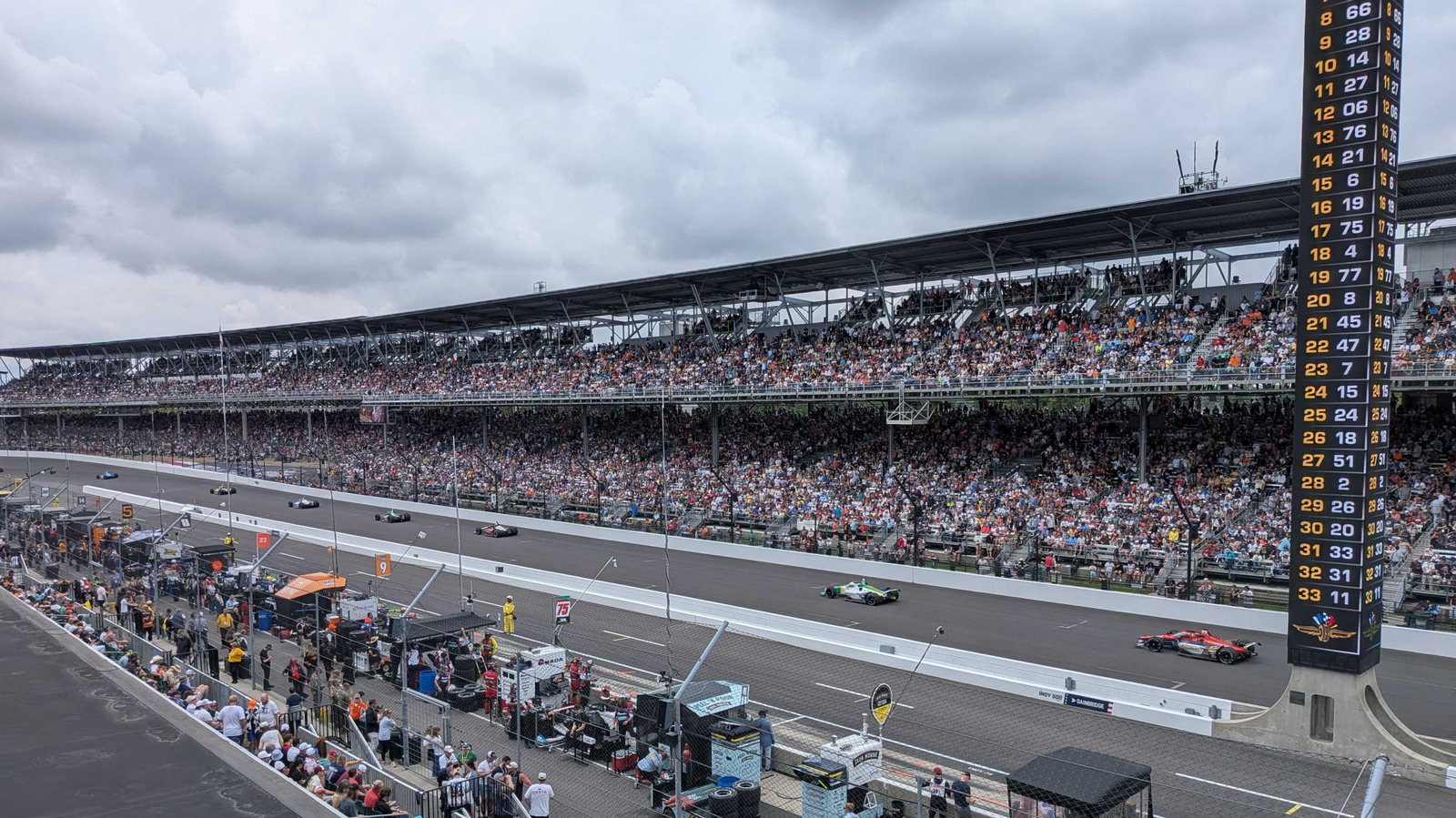
Indy 500 Delivers Family-Friendly Excitement Beyond the Hype

Tesla Grok AI Assistant Redefines In-Car Experience and Differentiates the Model Y in a...
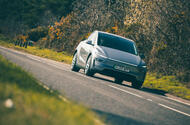 It even gave me running advice... My Model Y's in-car assistant is the best automotive innovation in years
When did a truly innovative new feature last appear on a car? Not just a passing trend but a breakthrough against which the tide would never turn. Automatic gearboxes, seatbelts, ESC: you get the idea. Touchscreens definitely don’t qualify…
You’d think the introduction of such features would be a regular occurrence in the electric era, yet however new and fast-improving EV technology may be, it is at its core a propulsion method. We’re seeing improved efficiency, range and charging times, but specific features that you can clearly remember first trying and then craving the next time you got in a car? Nope, not me.
You know what’s coming next: ‘until now’. The new Grok AI voice assistant in the Tesla Model Y is incredible, a game-changer that enhances the car’s usability and enjoyment of journeys, and I’ve missed it in every other car I’ve driven since without it.
Yes, it’s a voice control function, something that has been in cars for ages, but even the best ones have been largely useless, either unable to understand your instructions or unable to carry them out. Grok, on the other hand, is both willing and able to do most things it’s allowed to do in terms of controlling a car (or if it can’t, it will tell you and point you to the relevant touchscreen menu). It’s in essence a talking AI chatbot that has ingested the car’s manual and can also search the internet.
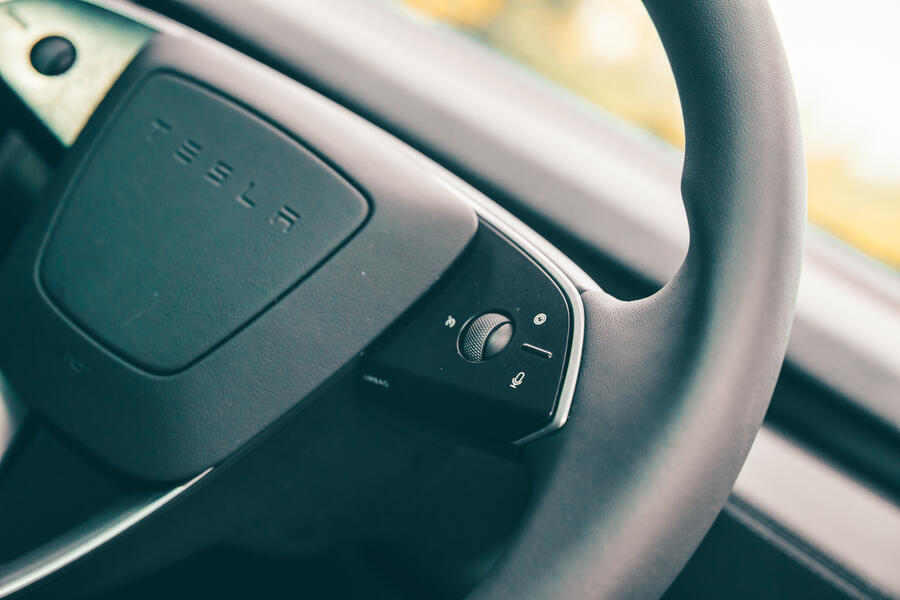
Long-press the microphone button on the steering wheel (or, after the latest software update, simply say “Hey, Grok”) and say, for example: “Navigate me to Bristol city centre and find me a car park. I’d like to arrive with 60% battery. On the way I’d like to visit a Costa coffee shop.” Within seconds, the route is in the sat-nav, charging stops are decided for you and your hot drink is lined up.
Given that the typical response I’ve got from car voice recognition systems to date has been “sorry, I’m unable to carry out that function”, this is some progress.
But it’s so much more than a way of controlling the car and its various functions: it’s the internet in your car in a non-distracting way. For example, driving on the M4 one Saturday early evening, the Plymouth Argyle football team’s coach was driving the other way. I asked Grok who they had played and what the score was. It was a good day for The Pilgrims and an even better one for my curiosity.
I’ve asked it about the weather at my destination, about how busy a charging station ahead was, about parking fees at a car park, about train frequencies – all the aspects of a journey where you usually think ‘I’ll Google that later’.
I’ve also asked it all sorts of other things, such as whether my football team’s game was on the red button that evening and even about a running technique after I’d pulled a calf muscle and was keen to keep exercising (run more on your heels and get the weight over your stride, I was told; it worked). It can sound tenuous, but it really is useful.
As I noted in a previous report, voice control functions have been touted by car makers as a way to control functions in the absence of physical buttons amid the rise of touchscreens. Given how poor the large majority of these systems are, it has felt like a lazy justification.
To date, Grok has tripped up only when I asked it for a scenic route home (it tried to take me about as far away from home as I was at that current point) and for the specific identifying features of a Launch Series version of the Model Y.
There’s a wider point to consider about the quality of this feature. Take the badges and bumpers off electric family crossovers and you would be hard-pressed to tell many apart, not just in the way they look but also in the way they drive. The need to house a large battery between the axles dictates the proportions and dimensions and then the dynamic make-up to deal with the weight. Some are better, some are worse, of course, but nearly all have more in common than they don’t, meaning many a buying decision will come down to price and proximity to and trust in one’s local dealer. So how can a car stand out in such a class?
In the case of the Model Y, it’s a killer feature that if embraced can be transformative to the way you use and enjoy a car.

USMCA Overhaul Would Shift Auto Production to US, Raising Costs and Straining North American...


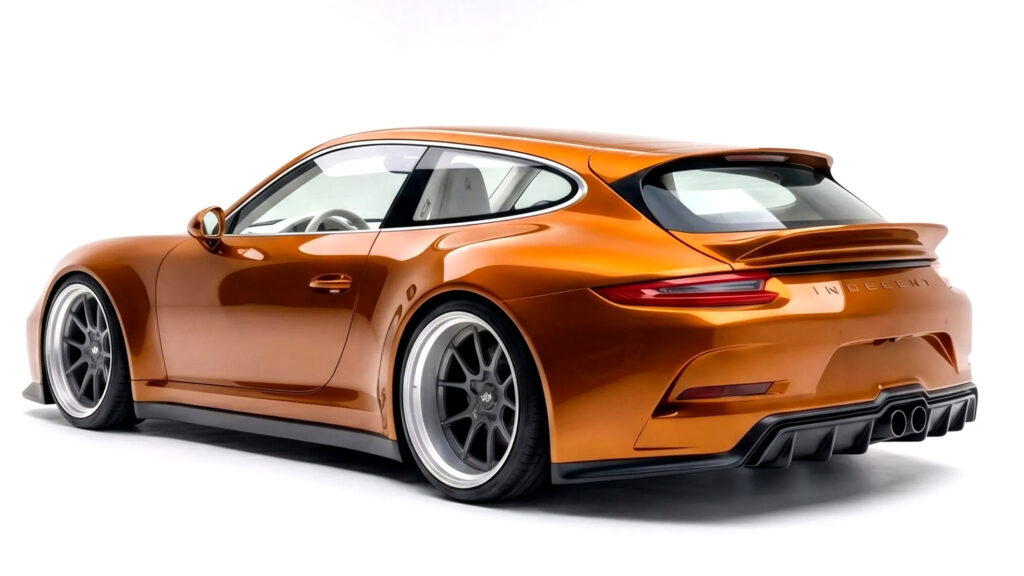
Porsche 911 Shooting Brake Conversion by Indecent Challenges Tradition with $350,000 Customization and Practical...

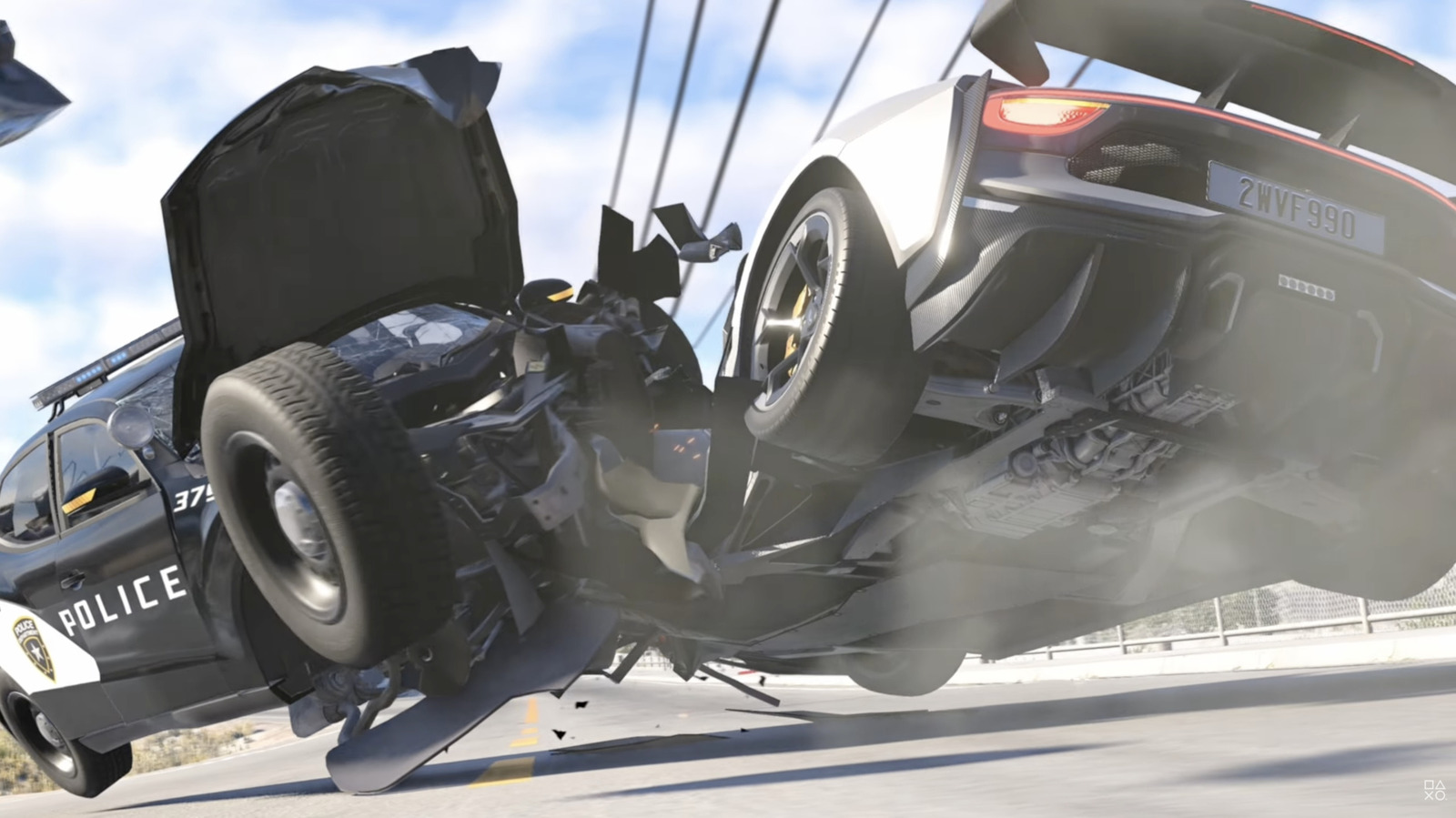
BeamNG Drives Realism Sets New Standards for Crash Physics in Gaming

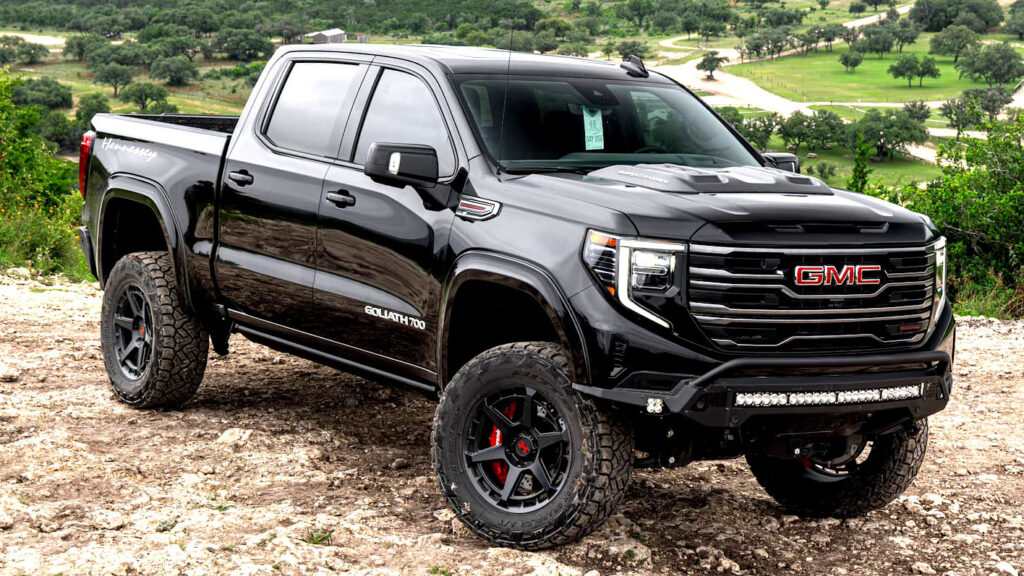
Hennessey Goliath 700 Transforms GMC Sierra AT4 Into a 700-HP Rival for Performance Off-Road...

Renault Performance Legacy Reimagined: From Motorsport Icons to Electric Innovation
Ever since Louis Renault founded the car company that bears his name in 1898, the diamond-logoed brand has always had a thing for going quickly.
Whilst, today, Renault predominantly occupies itself with producing small hatchbacks and crossovers, the brand has an illustrious reputation for building some of the finest performance cars ever produced – both for the road and the racetrack.
However, with the recent unveilings of both the mad 5 Turbo 3E and the ultra-special Alpine A110 Ultime, it appears that the love for making fast cars has well and truly returned – and, to celebrate the fact, here are 25 of the Greatest Renault Performance Hits.
1: Renault Type K (1902)
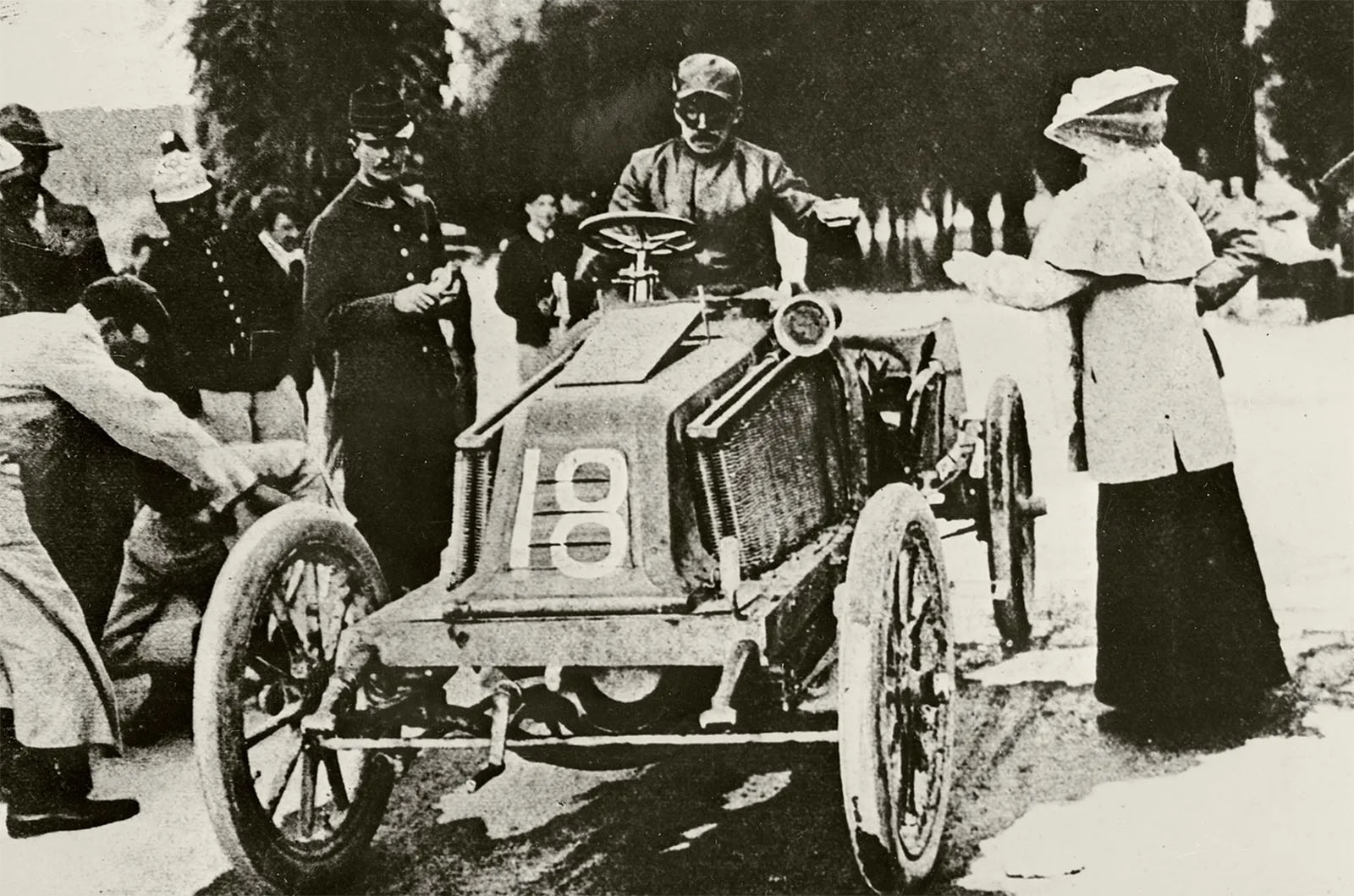
In the early years of his company, Louis Renault used motorsport as his primary marketing strategy. However, by 1902 the competition was beginning to heat up as cars became increasingly more powerful.
Therefore, Renault’s racer, the Type K, which had previously been equipped with a DeDion-Bouton-sourced powerplant, received an all-new, Renault-designed four-cylinder motor that was good for 24bhp. The updated Type K made the most of its new engine, storming to victory at the reputable 1902 Paris-Vienna race, and completing over 800 miles (1300km) at an average speed of 39mph (62.5km/h).
2: Renault 40 CV (1926)
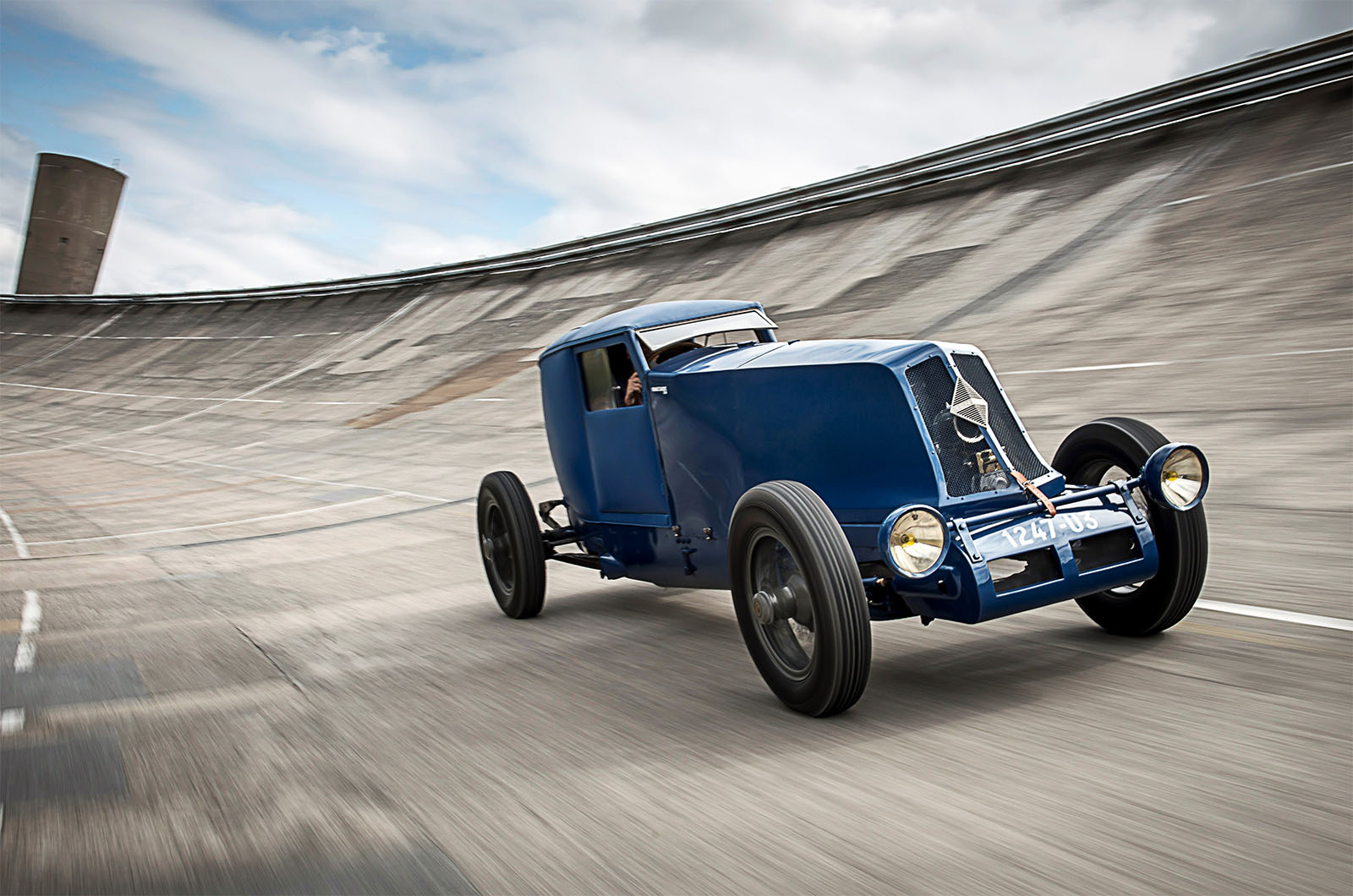
The 40CV was a luxury model built by Renault during the early 20th century; unveiled at the 1910 Paris Motor Show, and sold from 1922 until 1928, it was a primary example of European automotive exuberance from the period. In certain forms, the 40CV had a 9.0-litre engine, weighed over 2500kg and measured 5 metres in length. Not exactly the ideal basis for a performance car, then.
Well, the 40CV did, incredibly, enjoy success in motorsport. It famously scored a win for Renault at the 1925 Monte Carlo rally, and a heavily modified 1926 example, known as the ‘NM’ (pictured), broke several speed records in period.
3: Renault Dauphine Gordini (1961)
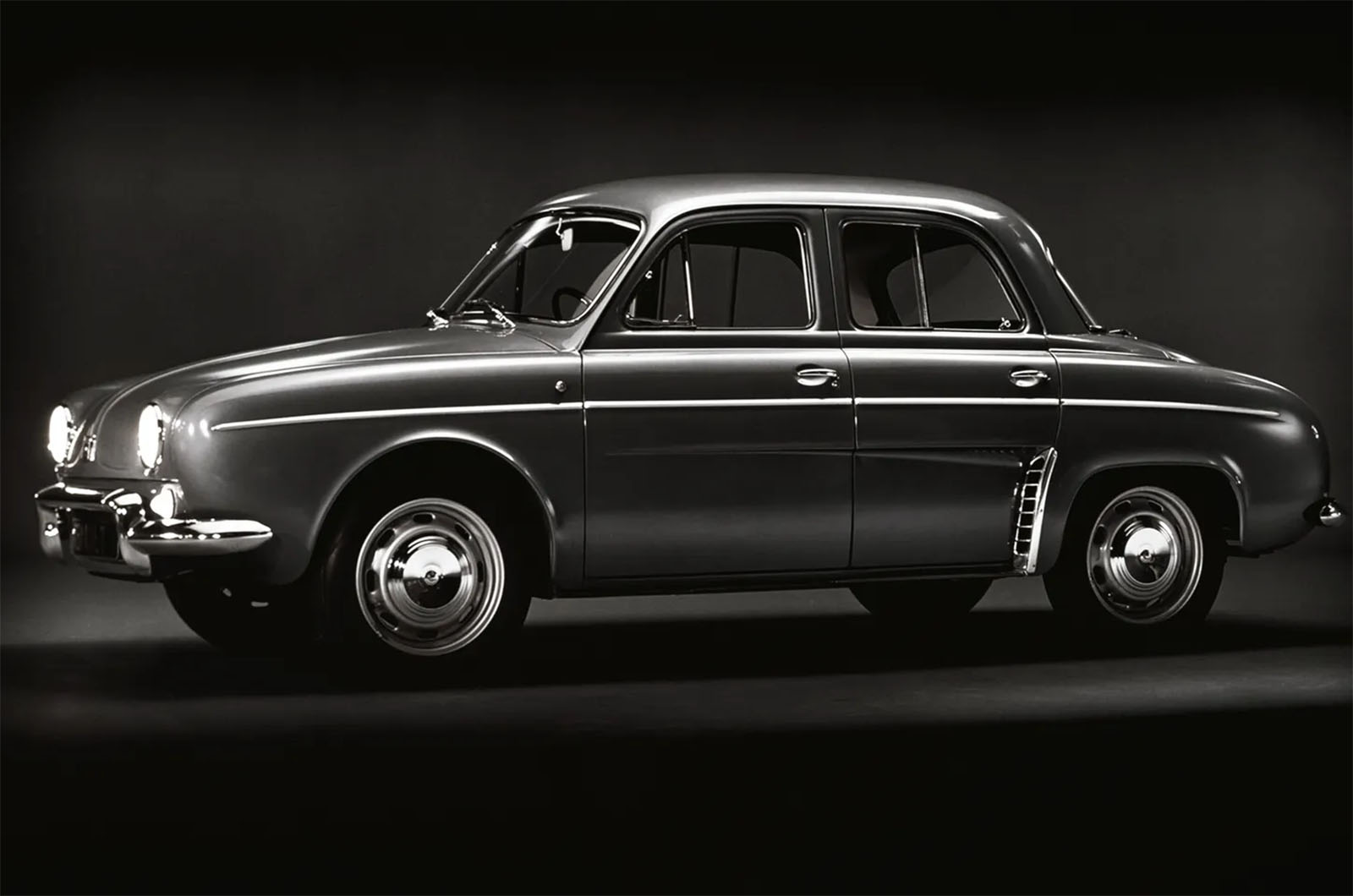
In 1955, Renault replaced their best-selling car, the 4CV, with a new model called the Dauphine. However, after a series of rally wins in 1956, Renault were motivated to build a faster version.
Developed in collaboration with engineer Amédée Gordini, Renault unveiled the Dauphine Gordini in 1961. Admittedly, this ‘performance’ version didn’t really possess much performance – 0-62mph (100km/h) took 27 seconds – but it was significant nevertheless, proving to be the first model to sport the now legendary ‘Gordini’ name. The most sought-after version is the 1093, which was a homologation special with 55bhp, and only 2140 units were ever built.
4: Renault 8 Gordini (1964)
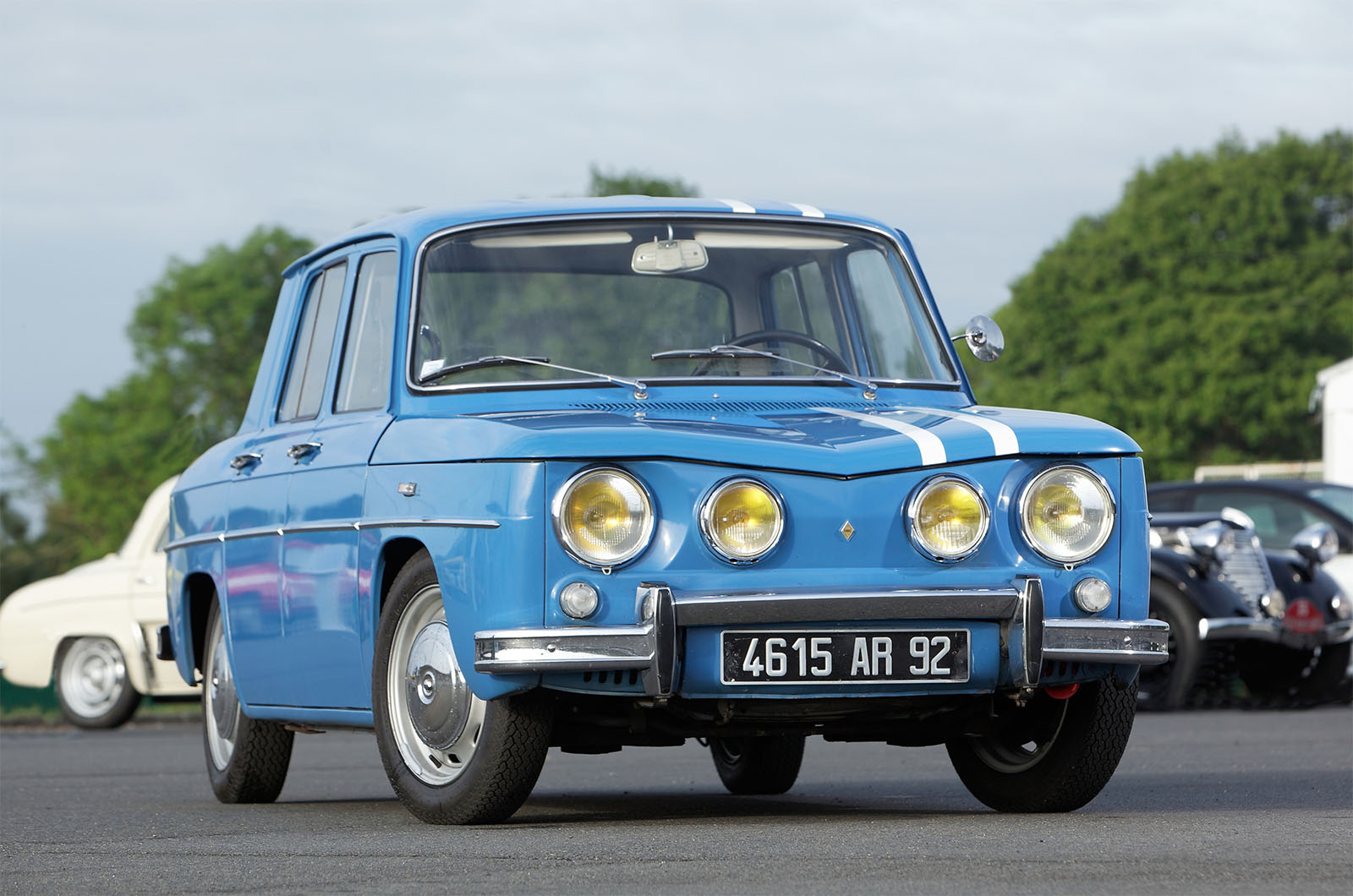
The next Renault to sport the ‘Gordini’ namesake was the humble 8. This model is arguably the most synonymous with the name today, thanks to its iconic twin white stripes and unusual quad-headlight setup.
The R8 Gordini offered a significant step on from the Dauphine; while it shared the rear-engined, rear-wheel-drive layout, the R8 ‘Gorde’ produced 95bhp, or nearly double that of a standard Renault 8. In 1966 it was updated with a 1.3-litre engine and a five-speed gearbox, allowing for a top speed of 108mph (175km/h) – a serious figure at the time.
5: Renault 12 Gordini (1970)
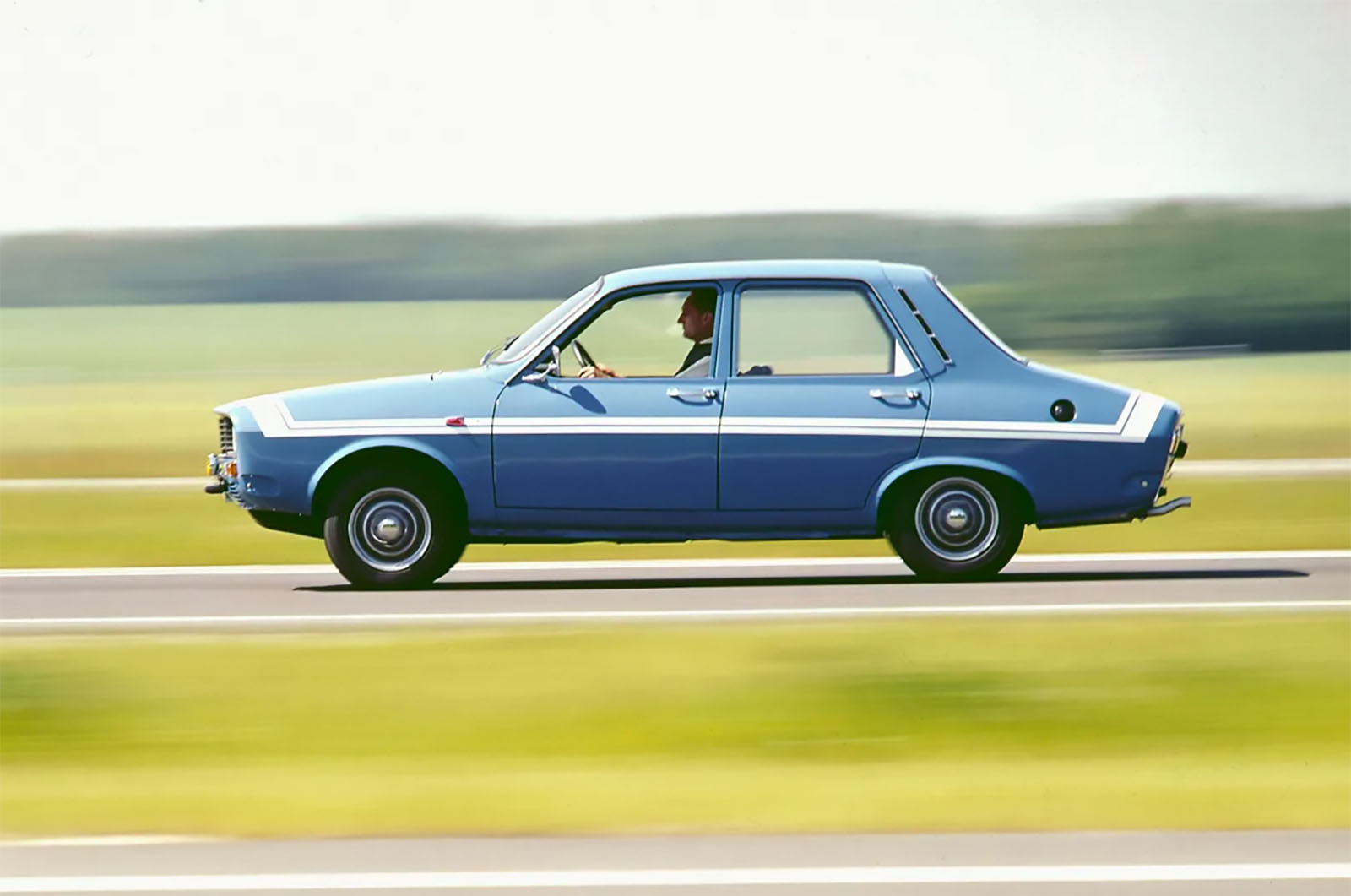
Next up came the 12 Gordini, which was radically different to the R8 ‘Gorde’ that it replaced – not least because the engine and driven wheels were located at the front of the car rather than the back.
Renault aimed to make the 12 Gordini as light as possible; for instance, the seats were simply made of fabric stretched around a tubular frame structure. It also made a respectable 116bhp, which meant a top speed of 115mph (185km/h); although the incredibly cool stripes probably made it even faster still...
6: Alpine A110 (1973)
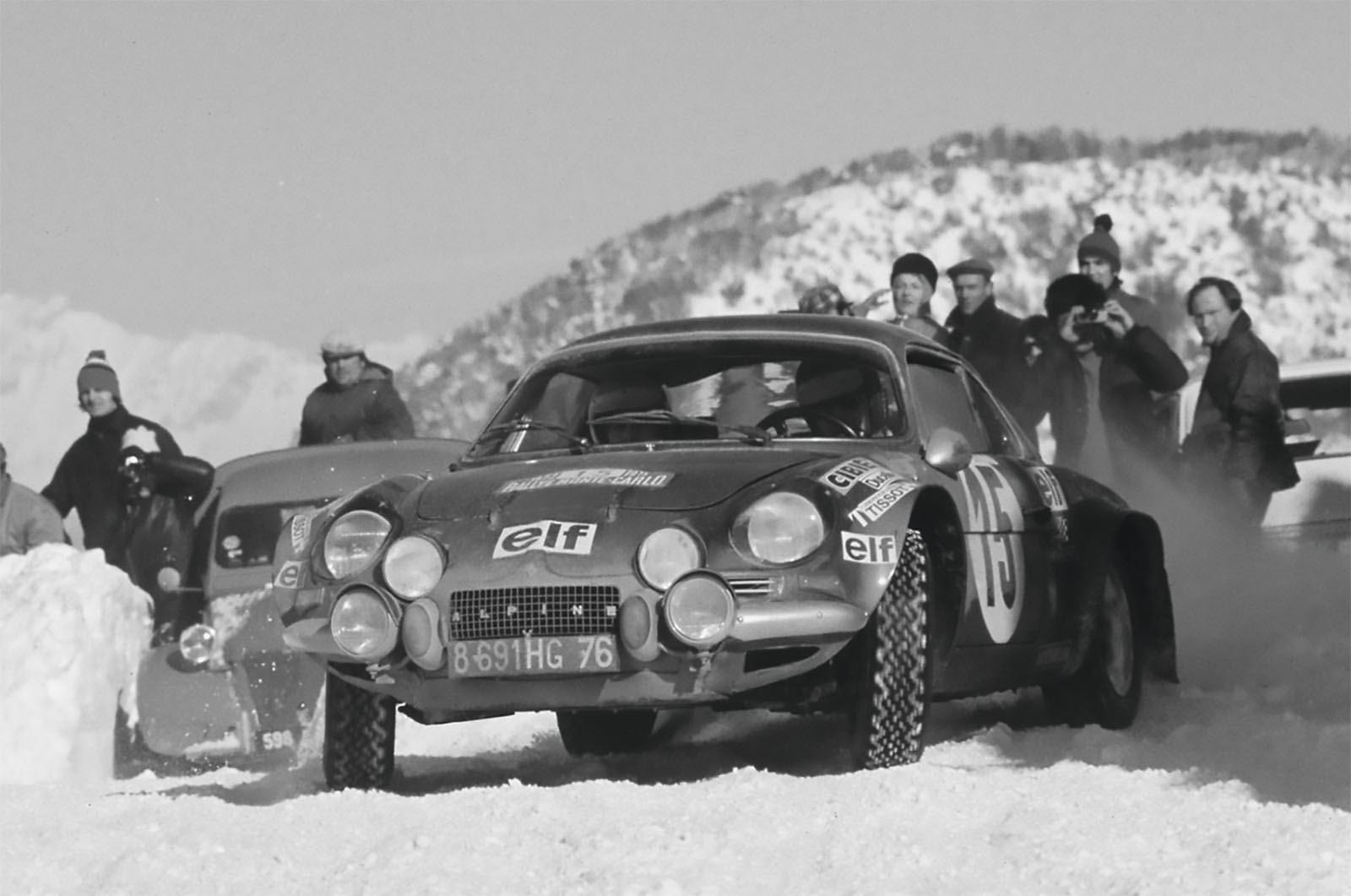
Now, strictly speaking, the original Alpine A110 – unveiled in 1961, and put into production in 1962 – wasn’t really a Renault, as at that point the two companies were unrelated. However, Renault became majority stakeholder of Alpine in 1973, which also happened to be the most important year for the A110, so it more than deserves to be here.
1973 was significant because it marked the year that an A110 won the very first FIA World Rally Championship, beating the likes of Porsche and Lancia to the title. The little Alpine had a 140bhp four-cylinder engine, making it pretty underpowered compared to rivals; however, with its tiny ‘Berlinette’-style fibreglass body, the A110 weighed in at just over 700kg wet. This made it incredibly agile, allowing Alpine-Renault to dominate the rally scene.
7: Renault-Alpine A442B (1978)
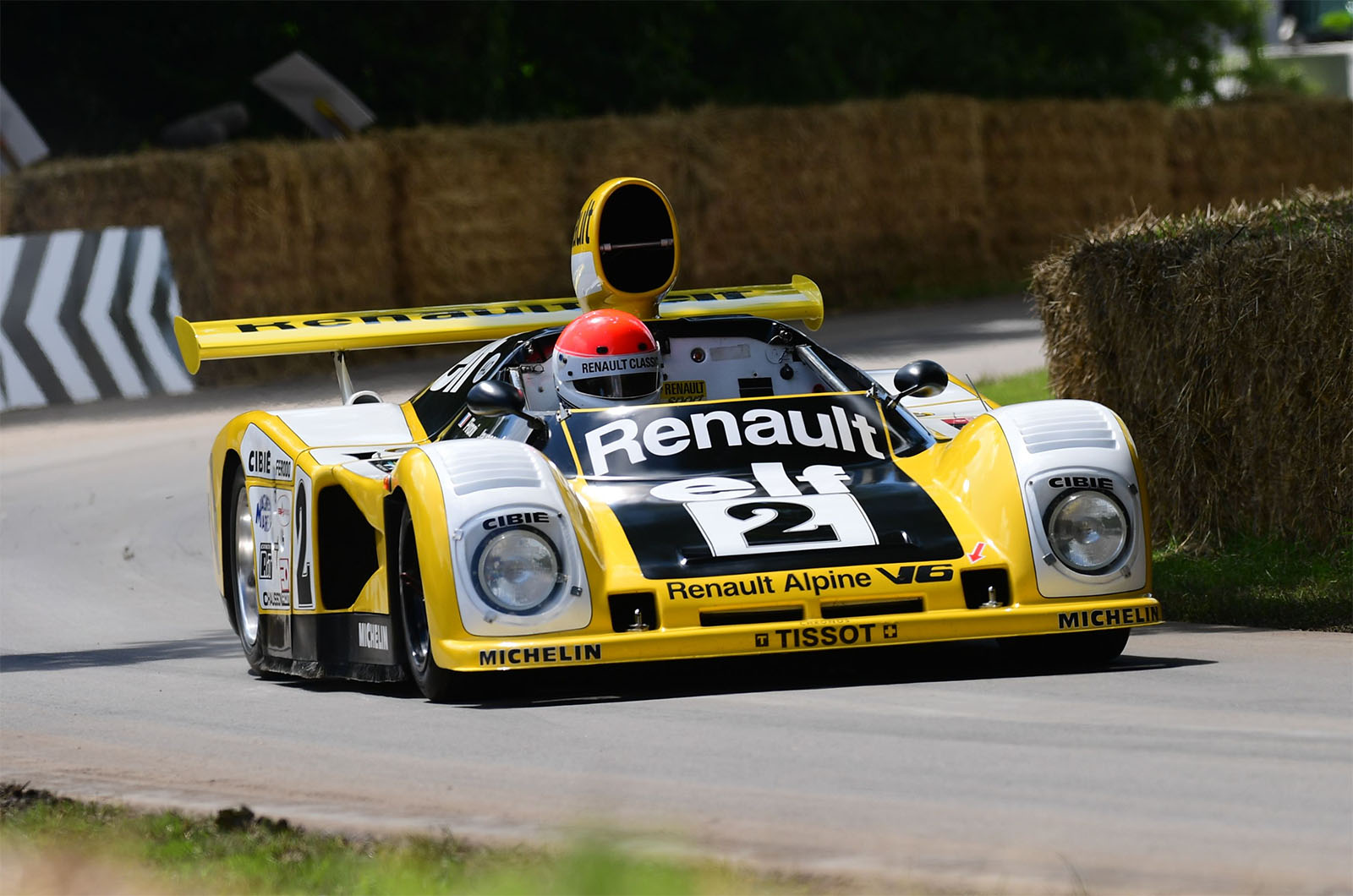
Another incredibly significant car, the A442B was responsible for winning Renault the 24 Hours of Le Mans.
In collaboration with Alpine, the A442B was entered into the Prototypes World Championship in 1975; but victory at La Sarthe in 1978 would prove to be its greatest achievement. Driven by Didier Peroni and Jean-Pierre Jaussaud in tough conditions, the six-cylinder, 500bhp racer achieved 220mph (360km/h) on the Mulsanne Straight before taking the chequered flag in first place, in front of a home crowd.
8: Renault RS10 (1979)
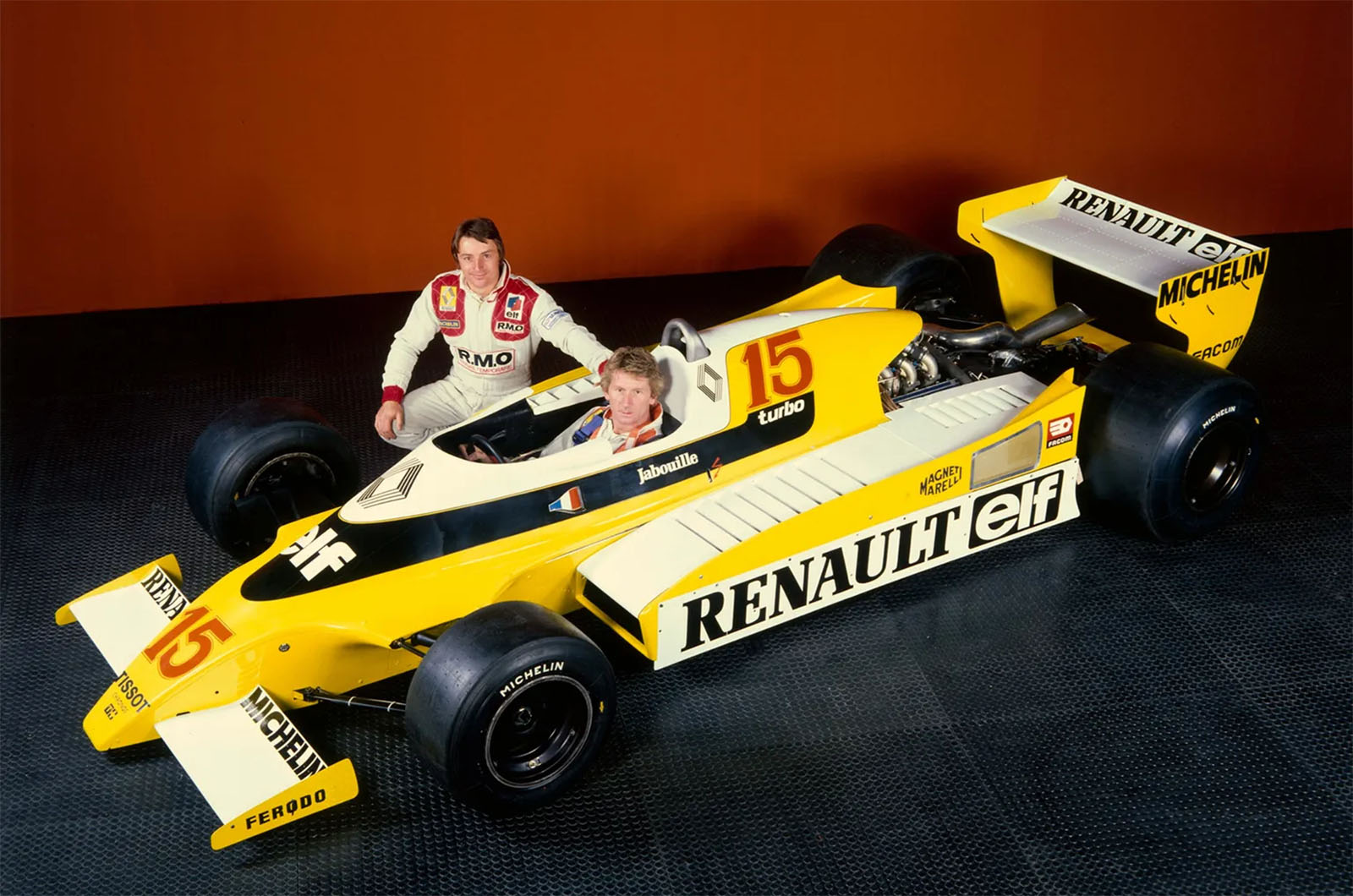
In the 1979 Formula 1 World Championship, Renault made history with the RS10, which became the first turbocharged F1 car in history to win a race.
Up until this point, turbochargers hadn’t really been taken seriously in the sport due to reliability issues, but the RS10’s maiden victory set the trend for decades to come. The victory in question was at the 1979 French Grand Prix, and the 530bhp RS10 was both pole-sitter and race-winner at the hands of Jean-Pierre Jabouille. Teammate Rene Arnoux bookended the podium by finishing the race in third.
9: Renault 5 Turbo (1980)
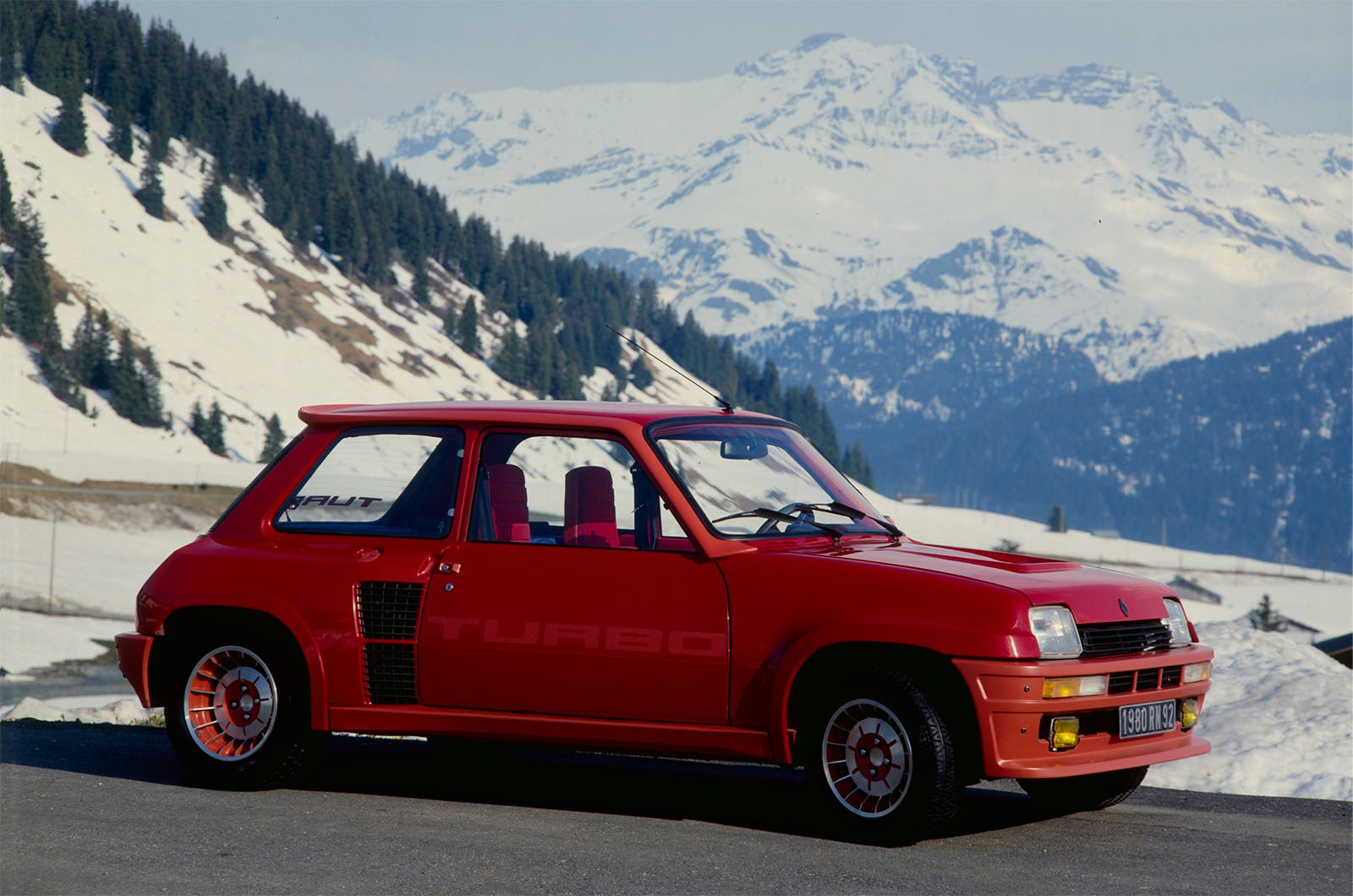
After such turbocharged success in motorsport, it was only a matter of time until turbo technology trickled down into a Renault road car. While the lesser-known 18 Turbo, a 110bhp saloon, was the first road-going Renault to be equipped with a turbocharger, the car that followed is now the stuff of automotive legend.
In 1980, Renault decided that what their best-selling family hatchback, the R5, needed most was a 160bhp mid-mounted, turbocharged four-cylinder engine, as well as outrageously wide rear arches and a superhero-spec red and blue interior. But, the idea went down rather well; and the R5 Turbo was born. It proved an instant hit, spawning fire-breathing rally variants that made up to 350bhp, while also becoming a formidable road car in the process. They are incredibly sought after today, alongside the R5 Turbo II that came along shortly afterwards.
10: Renault 5 Turbo GT (1985)
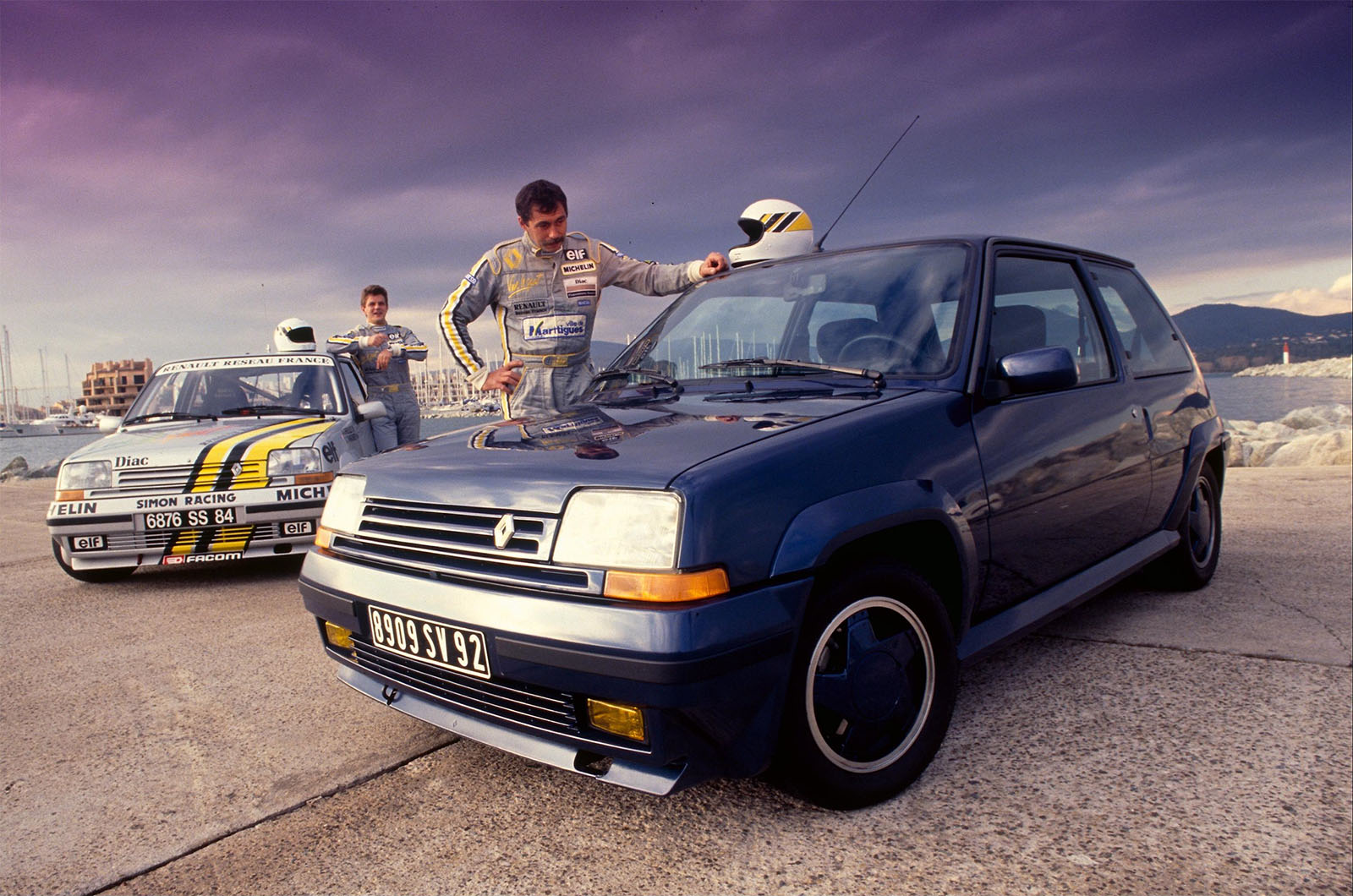
However, a hot version of the Renault 5 that won’t cost you the same today as a large house deposit is the 5 Turbo GT. Made in far greater numbers than its older, more powerful brother, the Turbo GT still deserves to be seen as a hot hatch hero in its own right.
The Turbo GT was a much more conventional example of a hot hatchback than the original R5 Turbo; the Garret-turbocharged engine was at the front, rather than in the middle, and produced enough power to concern a Golf GTI rather than a Porsche. Over 160,000 examples were produced; although, like many hot hatches from the period, there sadly aren’t many still left around today.
11: Williams-Renault FW 15 (1993)
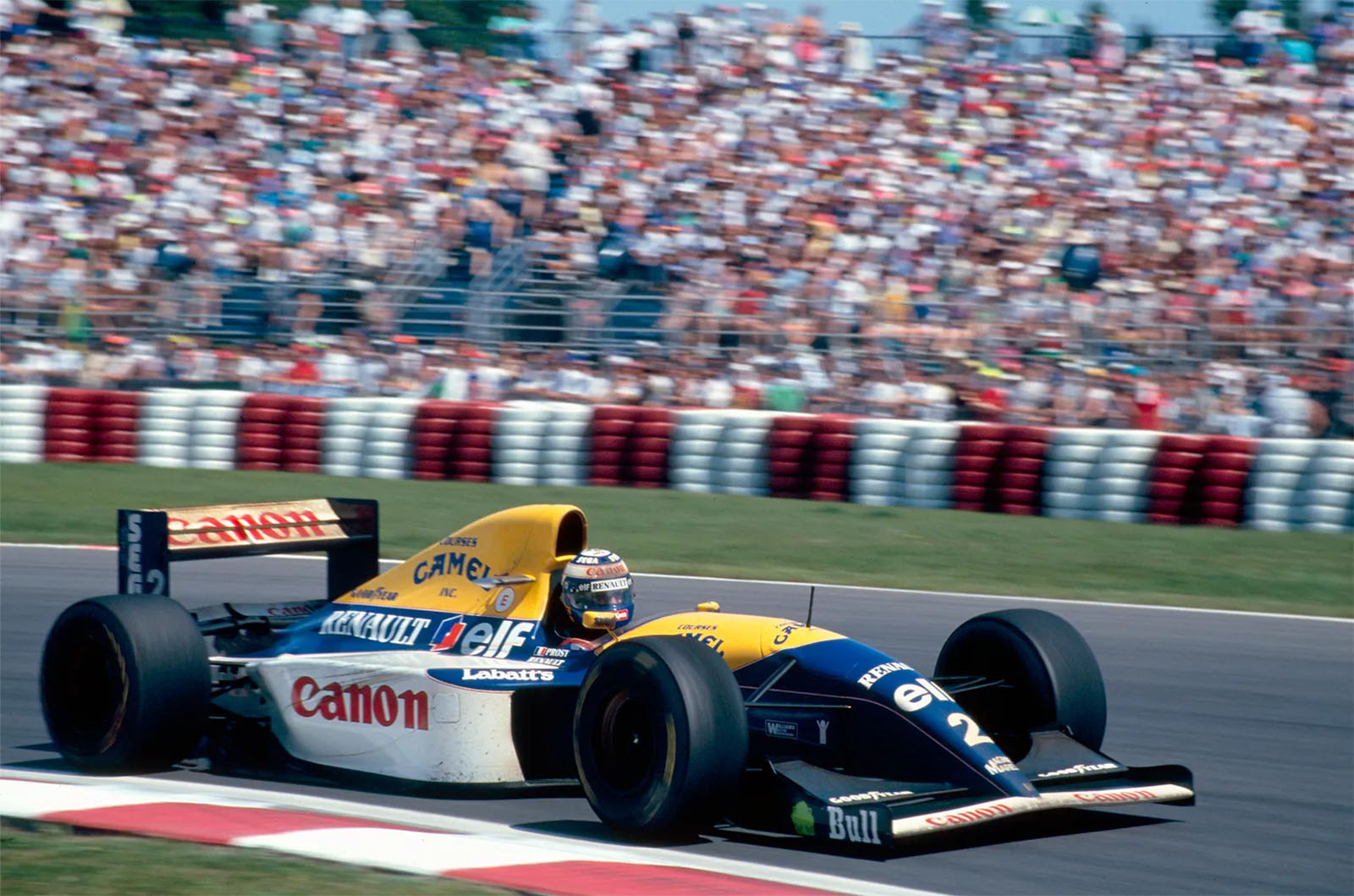
One of the highlights of Renault’s Formula 1 history was the 1993 World Championship season. Behind the wheel of his innovative, Adrian Newey-designed Williams-Renault FW15, French Formula 1 legend Alain Prost won seven of the 16 rounds in 1993 to claim his final of four World Championship wins. The Anglo-French team also secured the 1993 Constructor’s Championship, rounding off a season to remember.
Renault’s role within the team was as engine supplier; and the engine in question was rather special. Specifically, the ‘RS5’ 3.5-litre V10 that Prost had at his disposable produced 750bhp while revving to 15,000 rpm, despite only having to move a car that weighed little more than 500kg.
12: Renault Clio Williams (1993)
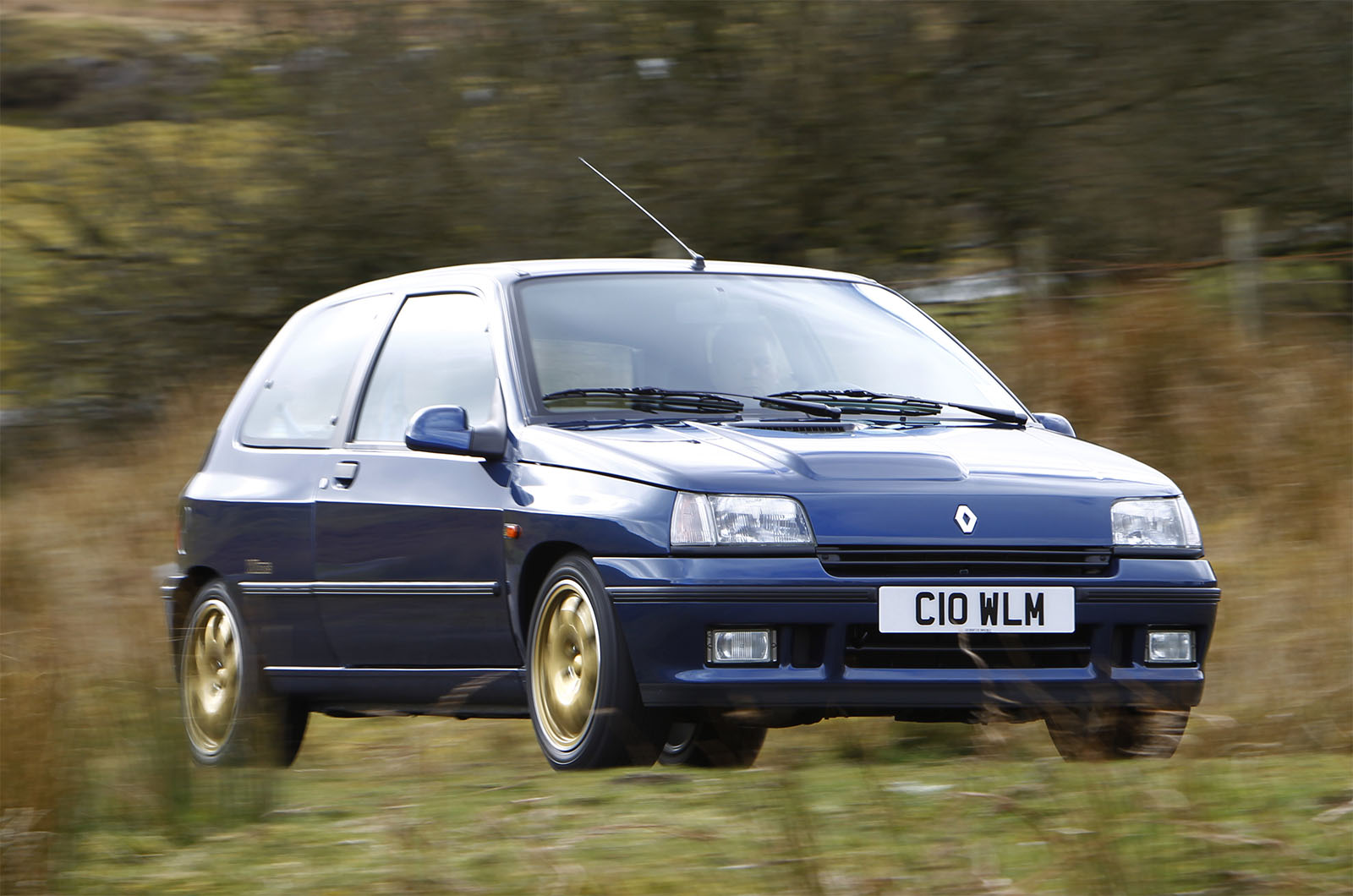
However, the Renault-Williams partnership far exceeded the boundaries of just Formula 1. In 1993, Renault wanted to produce a variant of their latest hatchback, the Clio, that could be homolgated for FIA Group A and Group N rally regulations; with the help of the Williams Formula 1 team, they came up with the Clio Williams.
While a performance version of the Clio did already exist in 1993 with the 16V, the Williams took things a step further. It recieved a torquey new 2.0-litre engine that produced 150bhp, as well as new front and rear wings to reflect a wider track, new suspension and brakes, a set of gold Speedline 15” wheels, and a lick of either ‘Sport Blue’ or ‘Monaco Blue’ paint depending on the year it was built. They proved a great success, and, once again, are hugely desirable today.
13: Renault Espace F1 (1995)
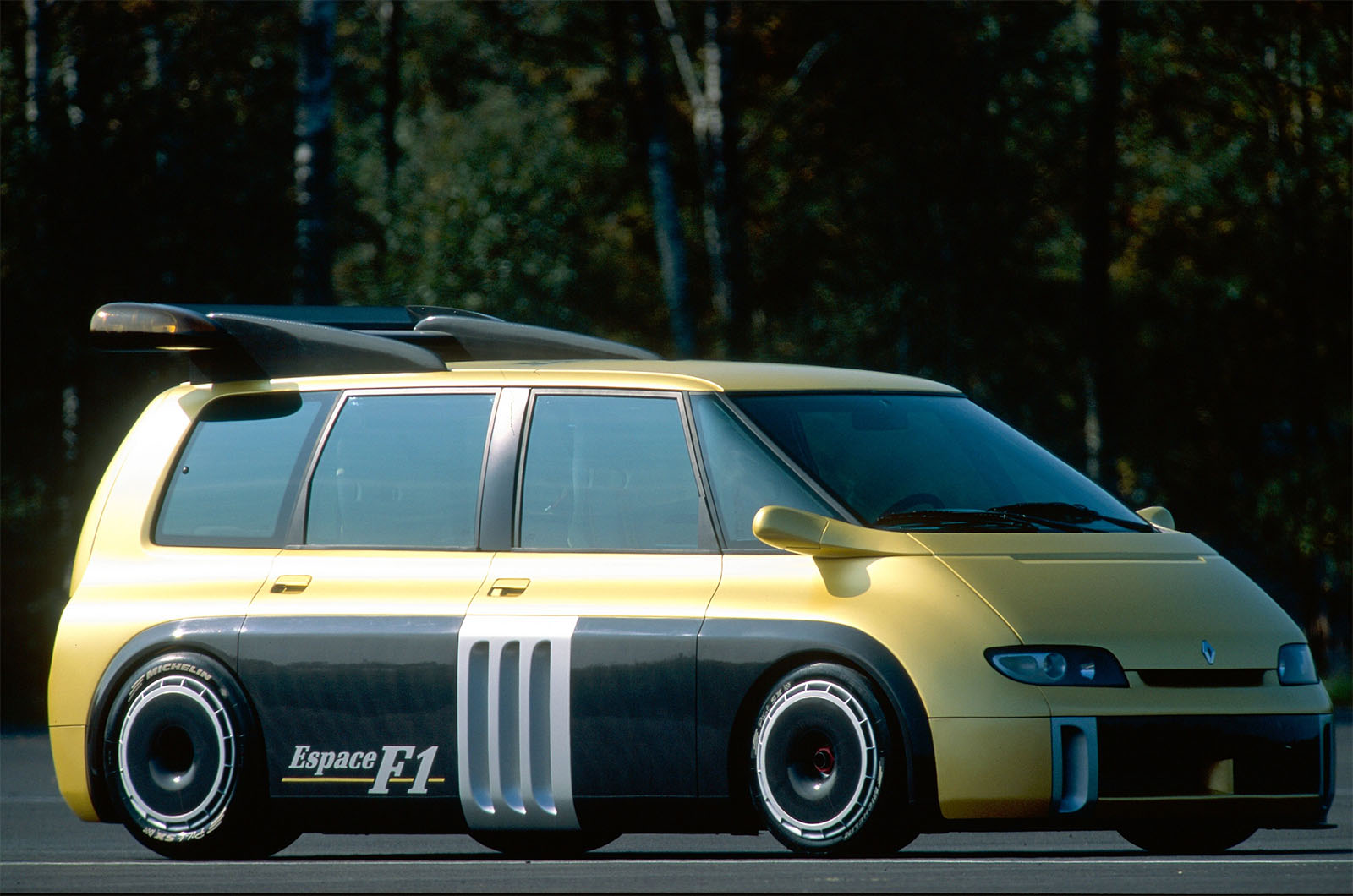
In 1995, Renault decided to celebrate the 10th anniversary of the humble Espace in style. However, it just so happened that their idea of ‘style’ involved combining their resident people carrier with the 800bhp, 3.5-litre V10 from the Williams-Renault FW14-B.
What resulted was an Espace that could complete the 0-62mph (0-100km/h) sprint in 2.8 seconds, and hit 194mph (312km/h)…while still seating four. The 40-valve V10 was mid-mounted, and the comically-proportioned body was built around a bespoke carbon fibre chassis. Unsurprisingly, the Espace F1 never went into production…
14: Renaultsport Spider (1996)
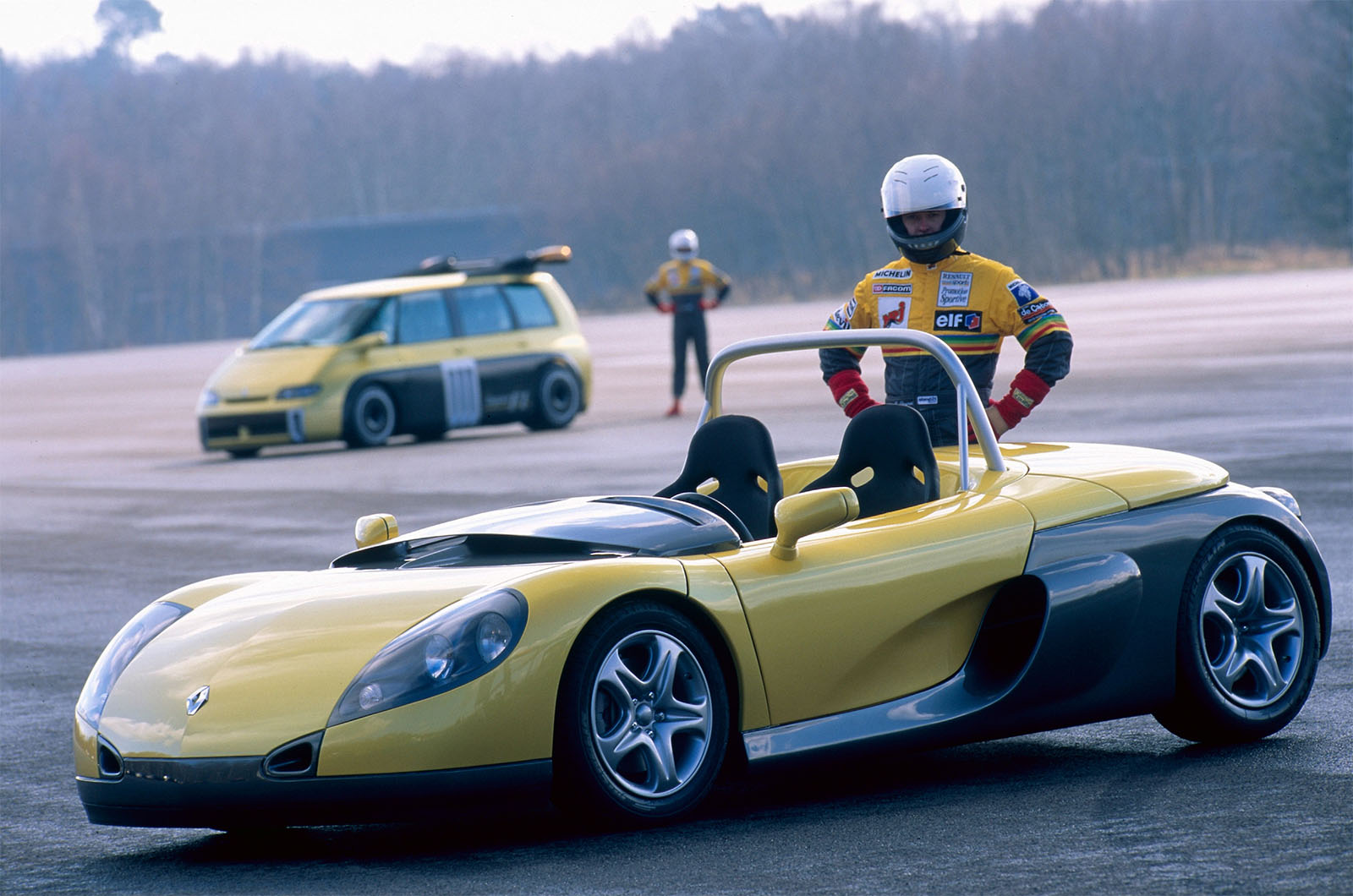
Displaying a major departure from the type of car that Renault were known for building, the 1996 Renaultsport Spider had no ABS, no traction control, and some examples didn’t even have a windscreen. However, the lack of creature comforts made this exotic sports car very light, at just 790kg. It also marked the first appearance of the ‘Renaultsport’ name.
Unfortunately for the Spider, while it shocked at Geneva upon its unveiling, it was totally overshadowed by the Lotus Elise, which employed a similar lightweight philosophy but was significantly less expensive to buy. As such, only 1726 examples of the Spider were ever built.
15: Renaultsport Clio V6 (2001)
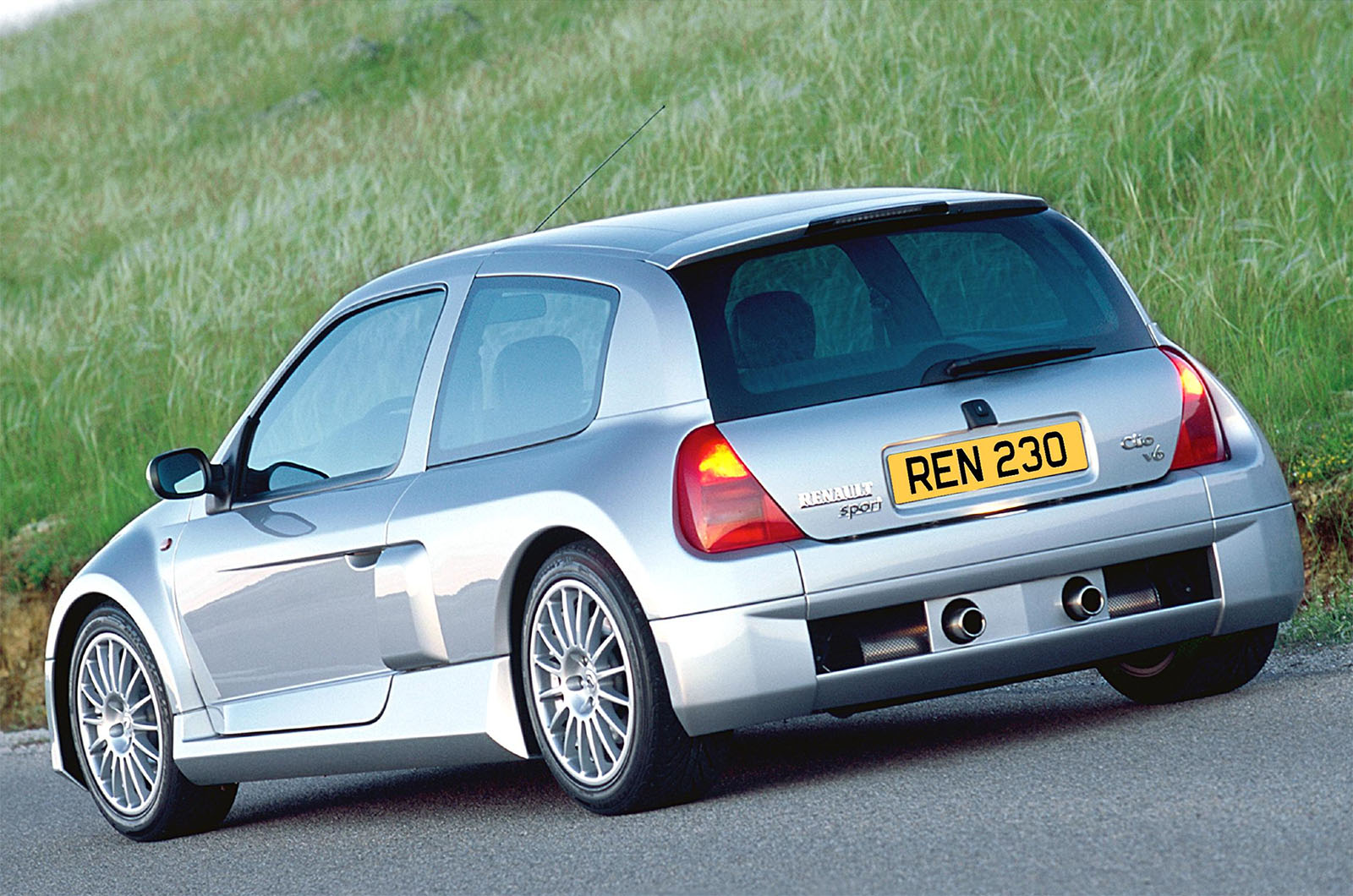
Undoubtedly the craziest Clio ever made, the Clio V6 was unveiled in 2001. Based around a similar set of principles as its distant ancestor, the R5 Turbo, the Clio V6 sacrificed its rear seats in favour of a mid-mounted engine. However, unlike the R5 Turbo, the Clio gained two additional cylinders in the process, bringing power up to 227bhp (rising again to 252bhp in the Phase 2).
A body kit with impossibly wide arches and two gaping air intakes on either side of the car was fitted, again mirroring the R5 Turbo; however, a short wheelbase combined with the power meant that the Clio V6 also gained a bit of a reputation when it came to the driving experience. But, who cares? Just look at it…
16: Renaultsport Clio 182 (2004)
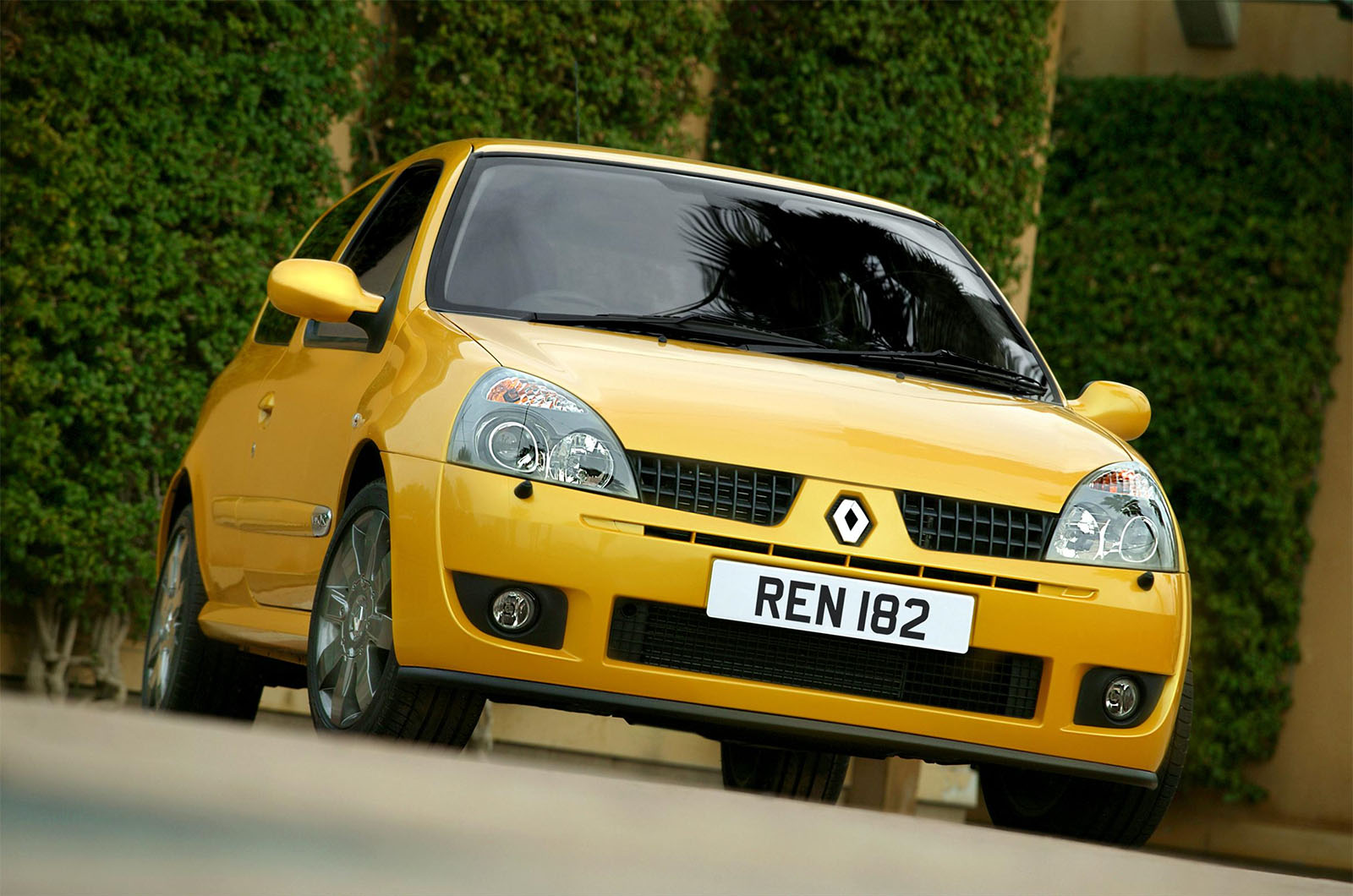
However, while the V6 sat atop the Clio II range, it was almost twice as expensive as the other, less exotic performance variants that Renault also offered at the time; and, whisper it, these were actually the better cars to drive. Arguably, the best of the bunch was the 182, which arrived in 2004.
Whilst they left the factory in many different guises, equipped with a confusing array of options and ‘Cup’ packs, the energetic, free-revving, 182bhp 2.0-litre 16V engine remained a constant across all examples. Plus, despite being well-equipped, the 182 was light; the heaviest examples still only weighed a fraction over 1100kg. They are brilliant, exciting cars that still won’t break the bank to buy – get one while you can.
17: Renaultsport Clio 182 Trophy (2005)
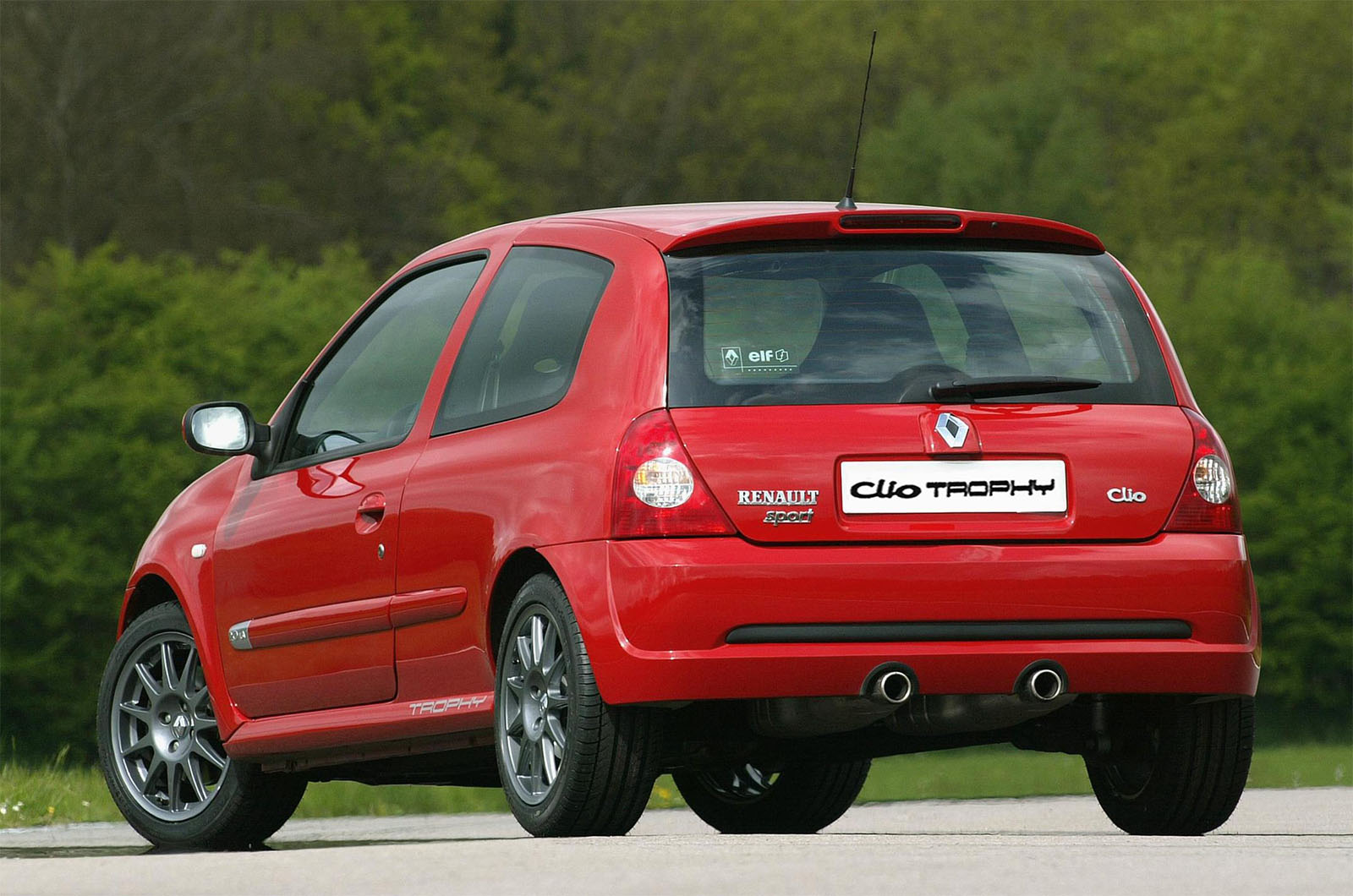
However, a year later, the 182 Trophy arrived. Comfortably in the conversation for best hot hatch of all time, the Trophy was essentially a regular 182 Cup, but with some small but significant changes.
Only available for the UK market (if you ignore the 50 examples that were sent to Switzerland), 500 Trophies were built. They received Recaro bucket seats and a set of Speedline Turini wheels, which were mounted in front of what made the Trophy really special - a pair of motorsport-derived Sachs remote reservoir dampers, the like of which had never before been seen on a hot hatch. These changes allowed the Trophy to punch well above its weight in the performance car world – and isn’t that exactly what a hot hatch is supposed to do?
18: Renault R25 (2005)
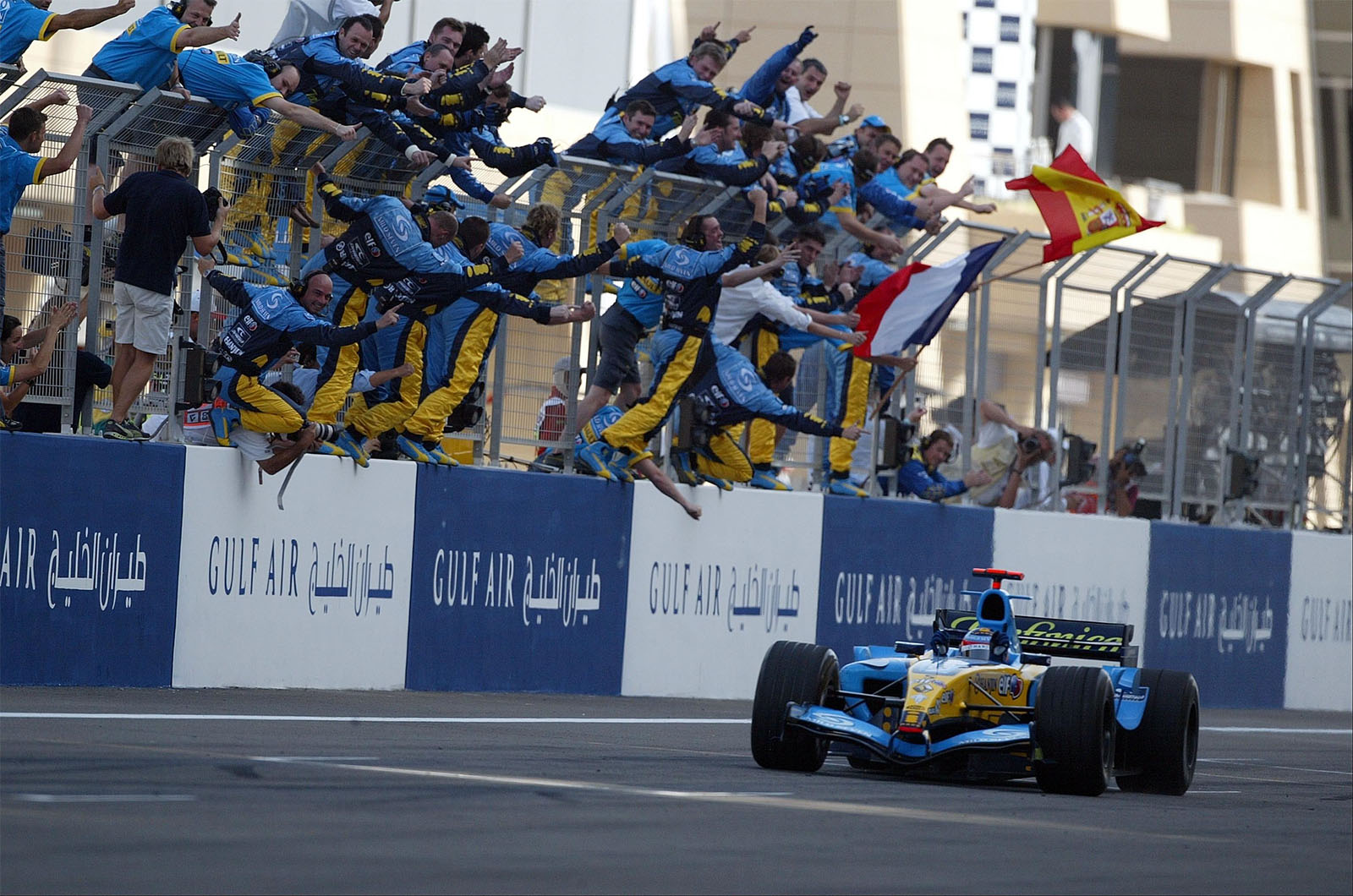
However, as it turned out, the Clio Trophy wasn’t the only success that Renault would enjoy in 2005, as the year would also mark the start of a brief but absolutely dominant period in Formula 1.
During the 2005 season, Fernando Alonso and Giancarlo Fisichella drove the V10-powered Renault R25 to eight wins and 15 podiums, which was enough to secure the World Constructors’ Championship for the French team; Alonso also claimed his first World Driver’s Championship behind the wheel of his R25. Plus, the same two feats were also achieved the following season, too.
19: Renaultsport Megane R26R (2008)
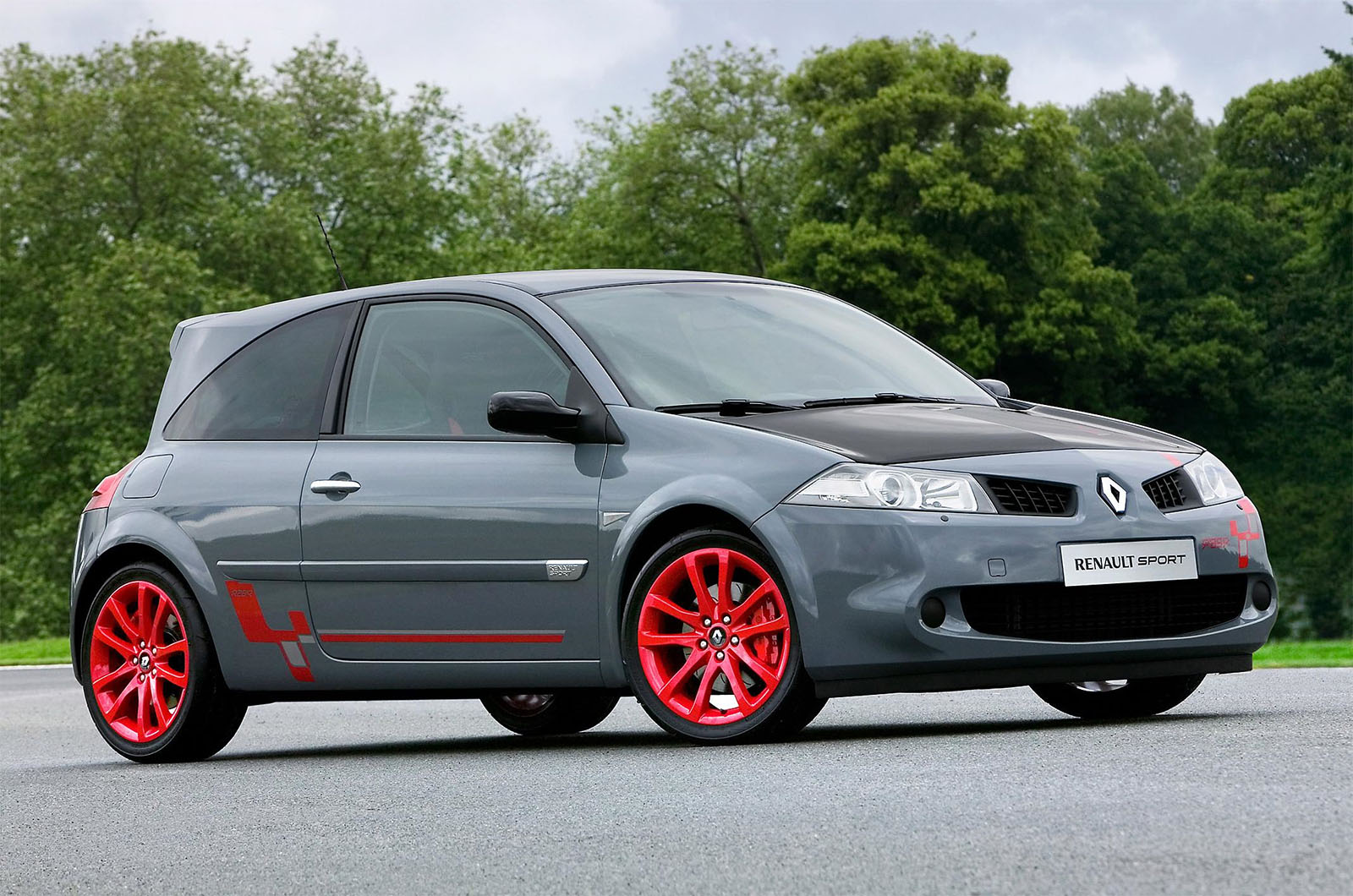
Such dominant success in F1 couldn’t simply go unacknowledged, so a special version of the Renaultsport Megane was built to mark the occasion. The resulting (breathe in) RS Megane 230 F1 Team R26 (and out) was already on the ‘hot’ end of the hot hatch spectrum, but Renault decided that it could be pushed even further still.
This led to the creation of the extreme Megane R26R, which left the factory with a full roll cage, lightweight bucket seats and a carbon-fibre bonnet, as well as a set of graphics that would cause even a GT3 RS to blush. It became an instant Autocar favourite, and in 2008 we said: ‘As a genuine driver’s car, the Renault Megane R26R has few rivals, and not just in the world of hot hatchbacks but at any level, at any budget’ – high praise indeed.
20: Renaultsport Twizy F1 (2013)
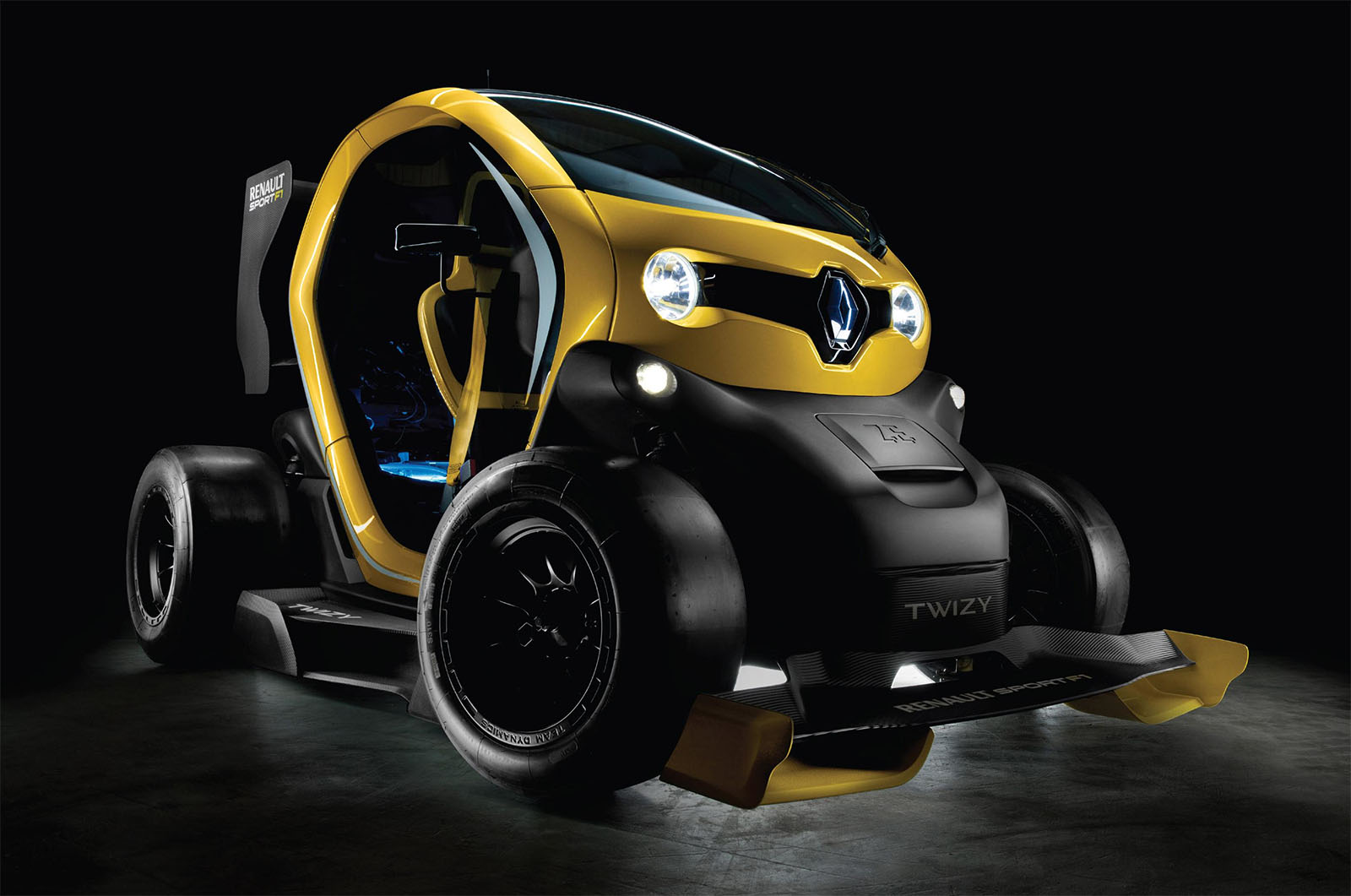
Going from the sublime to the ridiculous, this is the Twizy F1 – another example of a crazy idea that actually made it past the thinking stage in Dieppe.
This time, the little electric Twizy was the subject at hand, which in production form made a modest 17bhp. However, this figure rose to a slightly alarming 97bhp in the F1, which was achieved through the use of a Formula 1-style KERS system. The F1 also received a high-downforce kit, Formula Renault slick tyres, and, as if nearly 100bhp in a 500kg car wasn’t scary enough already, a distinct lack of doors…
21: Alpine A110 (2017)
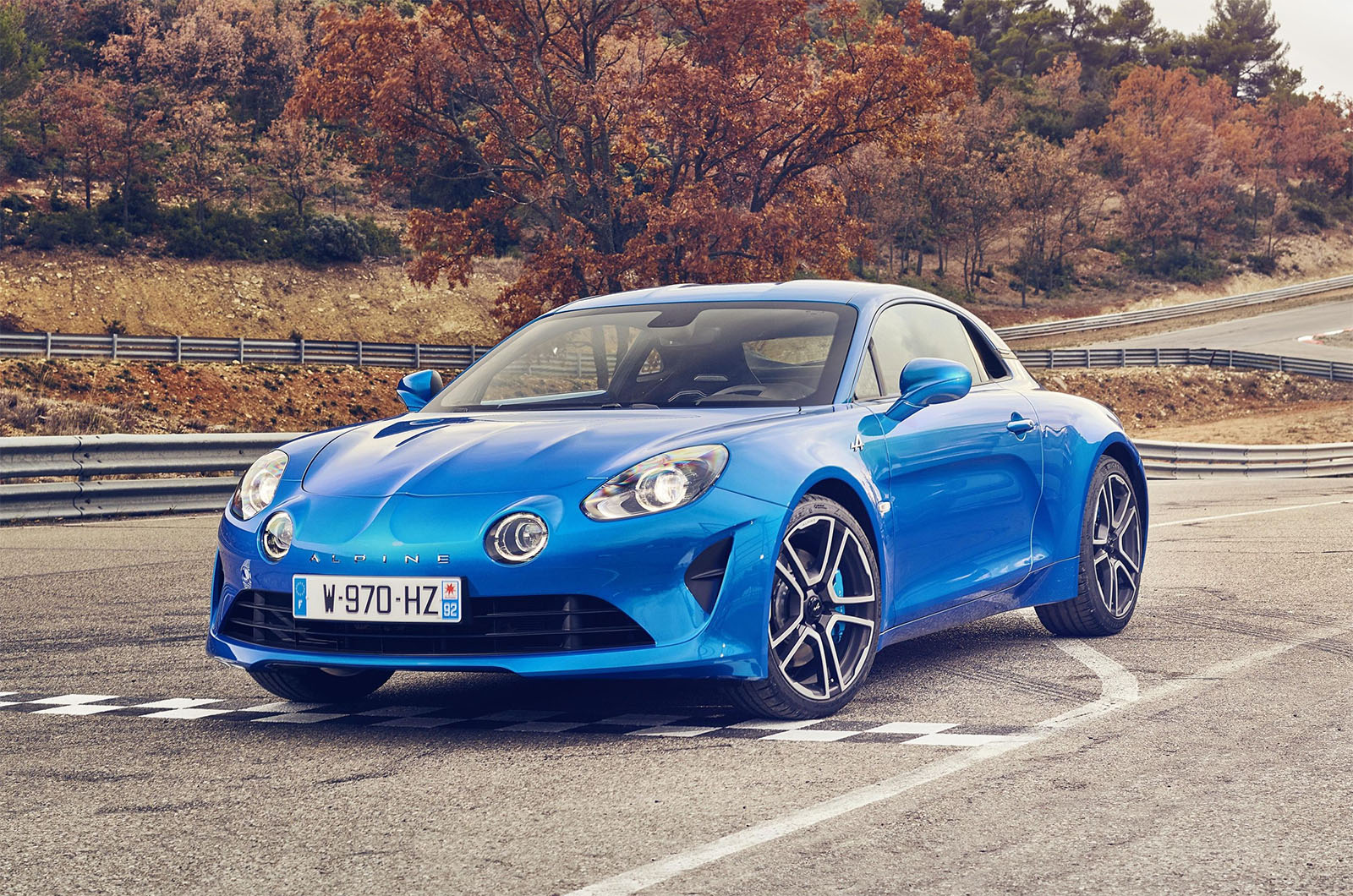
In November 2012, Renaultsport and Caterham announced a join-project to create a lightweight sports car, which would be sold under both Caterham and Alpine namesakes. Understandably, this made a lot of people very excited indeed.
Well, development began, but a few years in, Caterham unfortunately pulled out of the project for financial reasons – but regardless, Renault committed to finishing the car, and in 2017 the A110 was unveiled. That turned out to be a great decision on Renault’s part, as the 250bhp, 1098kg A110 turned out to be a bit of a revelation; even today, it’s still one of the best sports cars on sale.
22: Renaultsport Megane RS Trophy-R (2019)
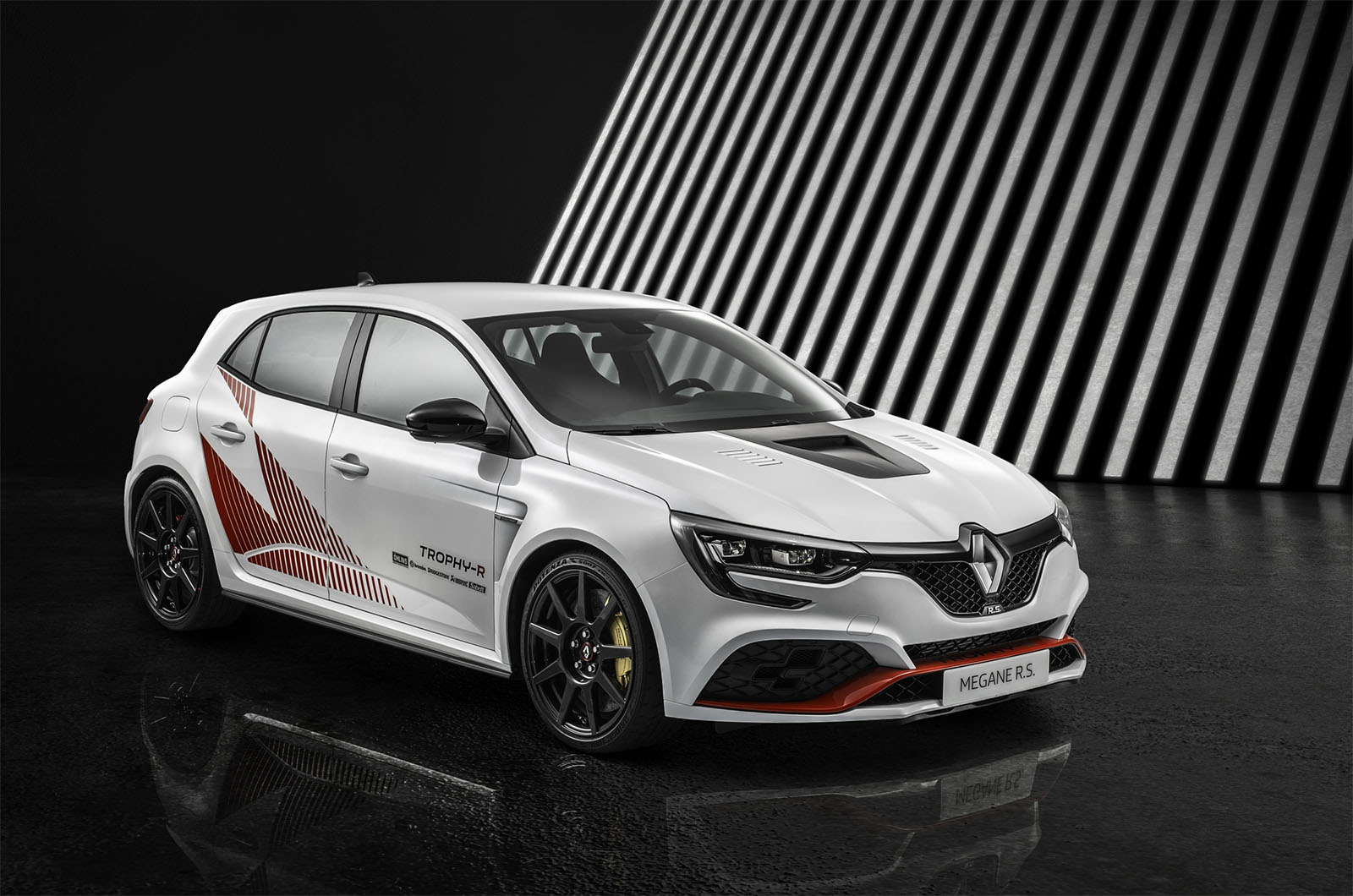
The RS Trophy-R will, in all probability, turn out to be the final performance Megane powered by a combustion engine – and what a way to bow out. Based on the RS variant of the fourth generation Megane, the RS Trophy-R was the spiritual successor to the R26R from 2008.
Emphasising a lightweight philosophy, the Trophy-R came with an Akropovic titanium exhaust, lightweight glass, no rear seats, and the only gearbox option was the lighter six-speed manual. Plus, for £12,000, you could even option carbon fibre wheels. All of this weight-saving meant a Nürburgring lap time that was some 37 seconds faster than the R26R – but it also came at a cost, as a fully optioned Trophy-R would have set you back £72,000 back in 2019.
23: Alpine A290 (2024)
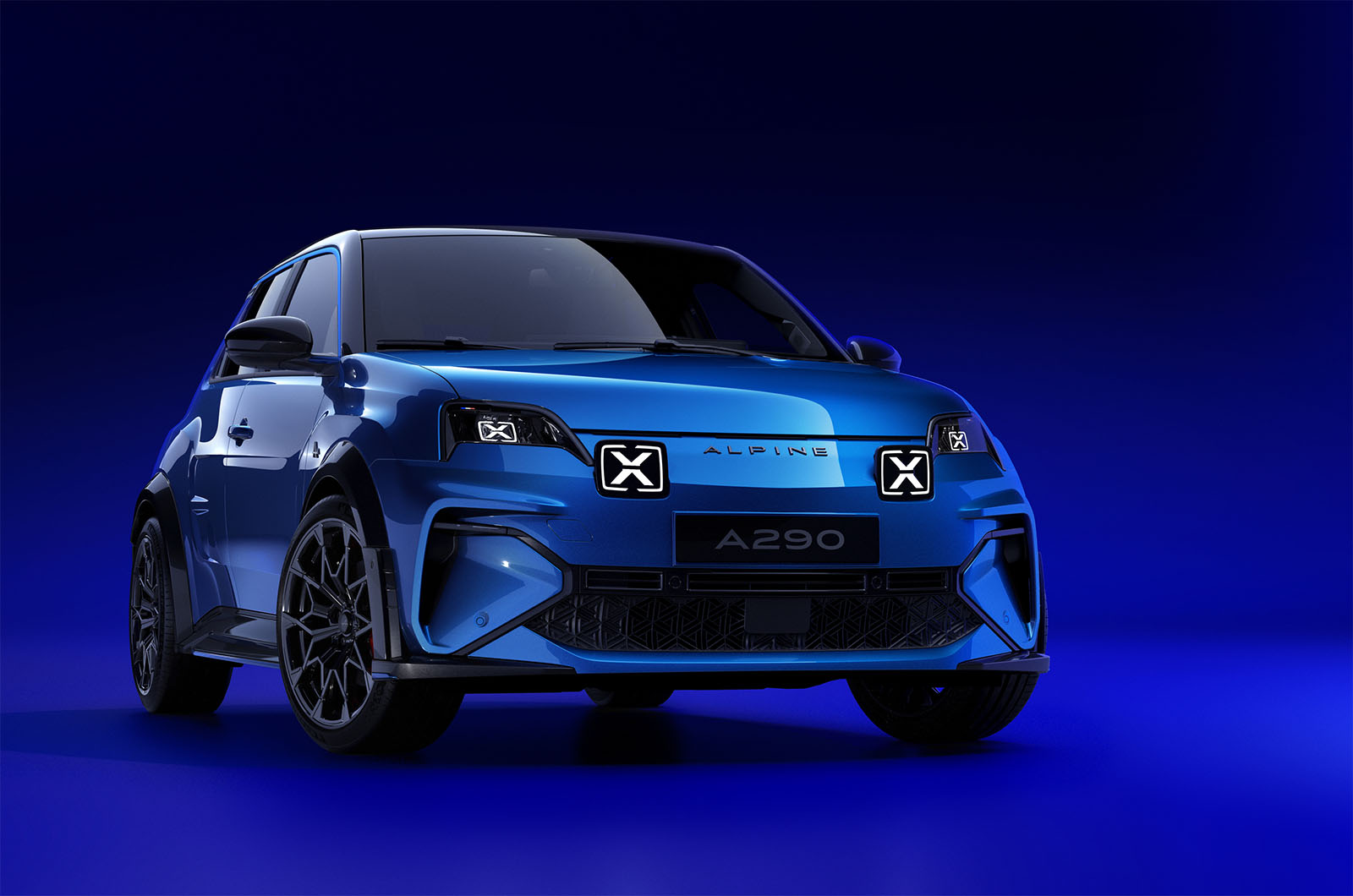
Renaultsport has since been replaced by Alpine as Renault’s sole performance branch; and in 2023, they announced that their first hot hatch was on the horizon. This alone created enough anticipation, but the kicker was that the Alpine hot hatch would be, for the first time for Renault, electric.
However, the car in question – the Alpine A290 – is now with us, and we needn’t have worried; it’s great, and an undoubted return to the hot hatch formula we know and love. Available with up to 217bhp, and crucially weighing under 1500kg, the A290 proves that ‘electric’ and ‘fun’ can absolutely belong in the same sentence.
24: Alpine A110 Ultime (2024)
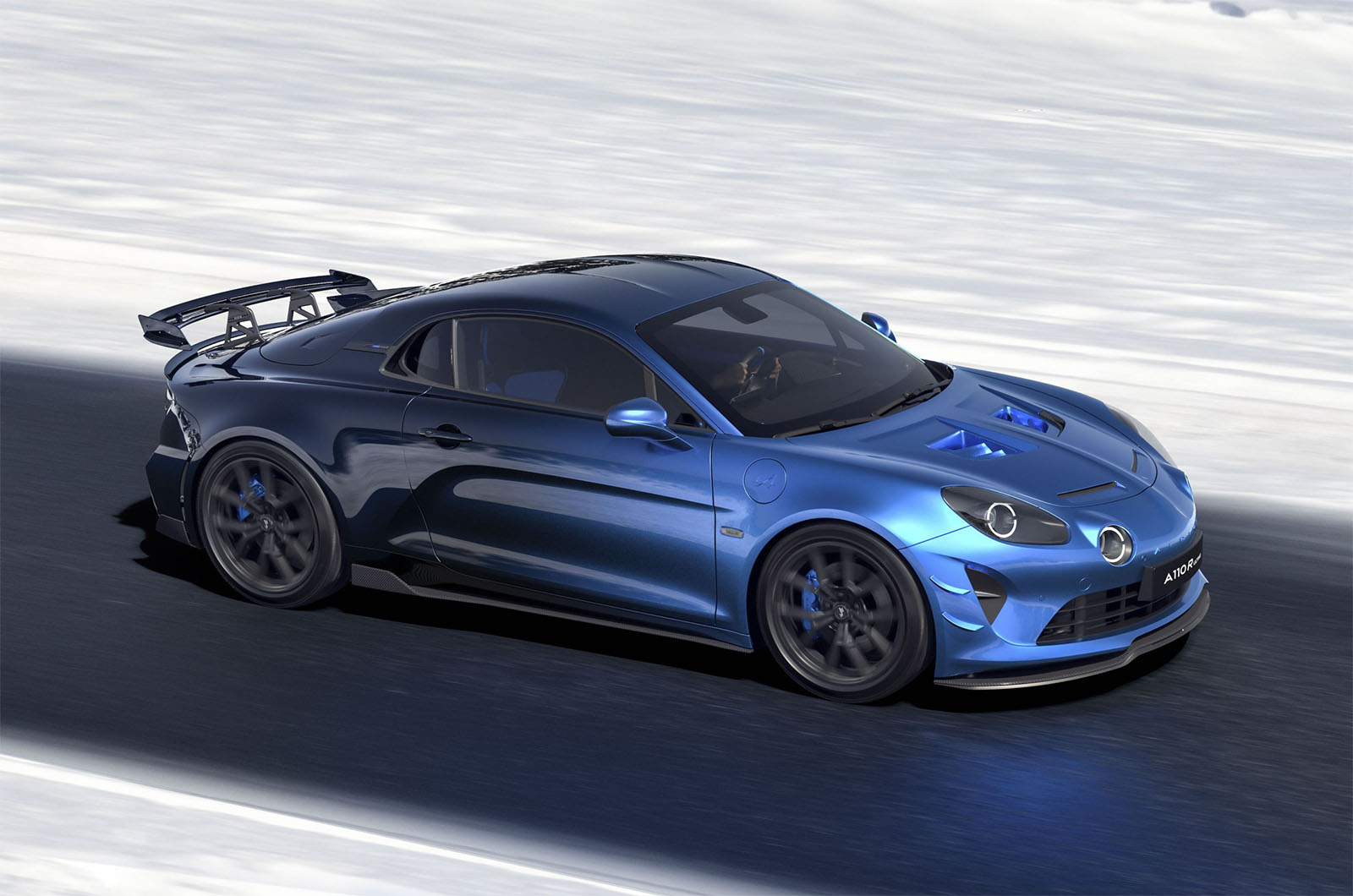
However, while a new chapter at Alpine is opening with the A290, another is closing, as the much-loved A110’s days will soon be numbered –however, Alpine are giving the model a proper send-off with the Ultime.
Based on the A110 R, but with an extra 50bhp (for 345bhp in total), as well as a new high-downforce kit, Ohlins adjustable dampers, AP Racing brakes and an uprated gearbox, the Ultime will be the ultimate version of the A110, and is limited to just 110 units. There is a ‘but’ here, though – a fully-optioned Ultime will cost £276,000, or over three times more than the R upon which it’s based.
25: Renault 5 Turbo 3E (2025)
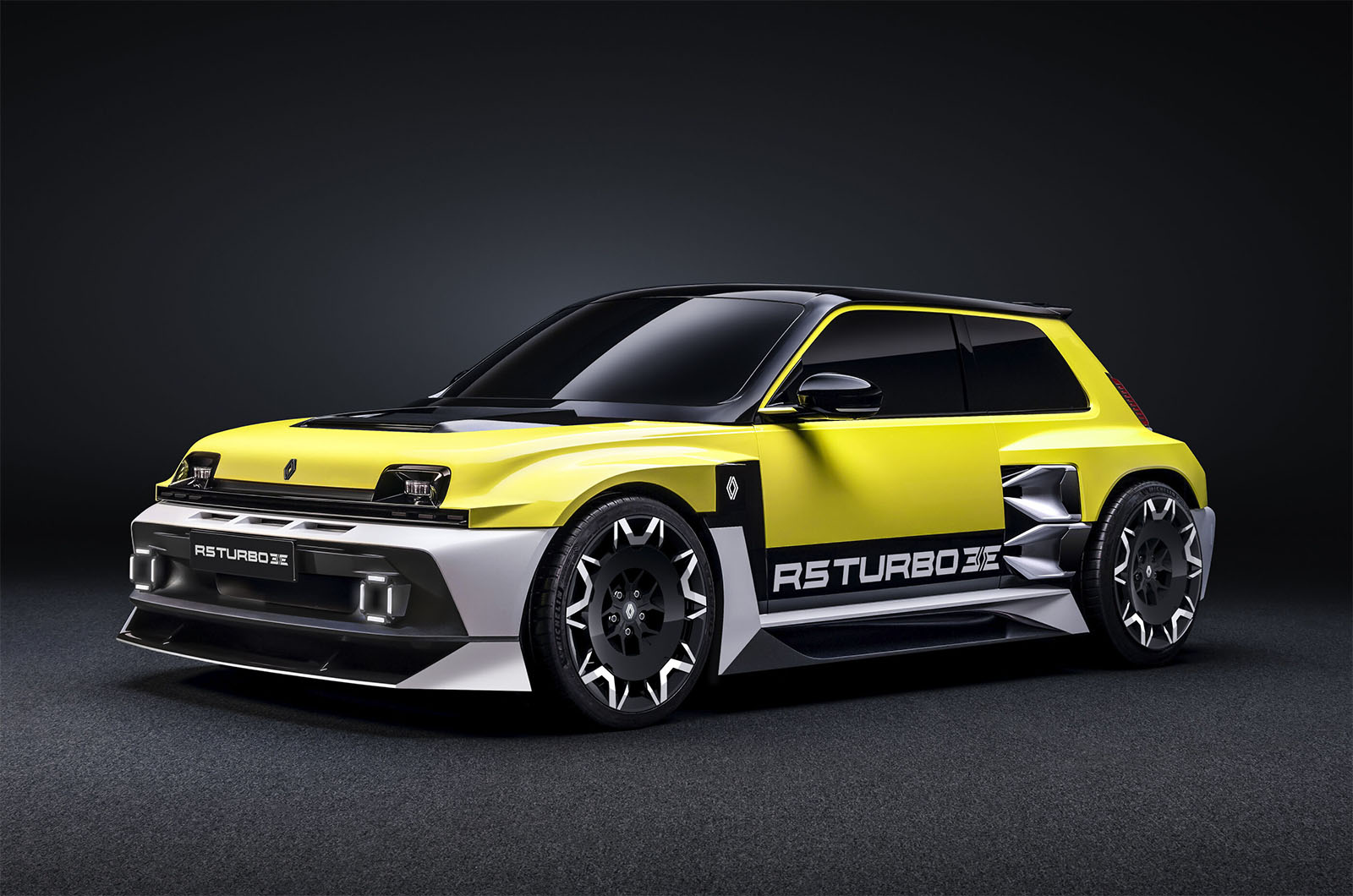
This is the latest member of the Renault performance catalogue to get everyone talking: the gloriously retro 5 Turbo 3E. Unveiled as a concept in late 2024 as a homage to the original R5 Turbo of 1980, the Turbo 3E is loosely based on the new Renault 5 E-tech, but with some substantial visual and mechanical changes.
The pumped-up, widened body is made of carbon fibre, and has been converted from five doors to three, creating a silhouette that closely mirrors the original. Similarly, the Turbo 3E will be rear-wheel-drive, and have an electric motor situated in each rear wheel – a setup good for 500bhp. Intended as Renault’s halo car for the future, the Turbo 3E promises to carry Renault’s performance car legacy on for many generations to come.

Tesla Full Self-Driving Faces Internal Doubts as Investigation Reveals Gaps Between Safety Claims and...