Badge Engineering as Industrial Strategy: How Rebadged Cars Reveal the Economics, Anxieties, and Alliances...
 Which of these cars do you remember?
Why go to the trouble and expense of creating two or more cars when you can simply create one and sell it with different names?
That process is called badge engineering, and it has been used many times over the years, usually for brands owned by the same manufacturer but occasionally by collaborating manufacturers. Such as this Fiat Fullback, sister to the Mitsubishi Triton/L200, and built in Thailand.
From hundreds of possible examples, we’ve picked a representative 41 to describe here, listed in alphabetical order. Cars which differed from the originals in specification, styling details and in some cases drivetrain are considered are acceptable, but we’re going no further than that.
Acadian Beaumont
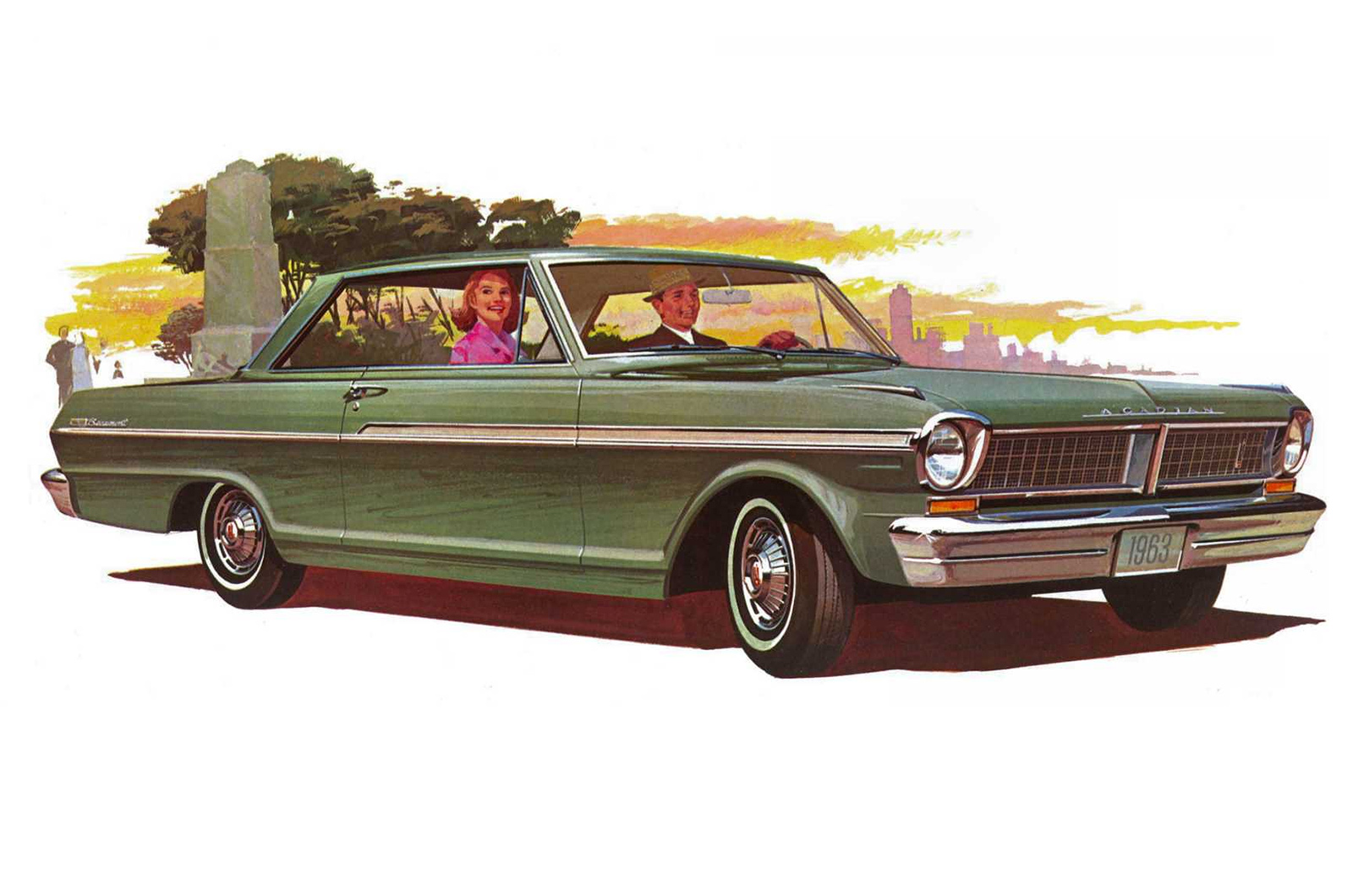
Acadian was a General Motors brand which, from 1962 to 1971, marketed very slightly adjusted Chevrolets on the Canadian market and sold by Pontiac-Buick dealers. The first Beaumont was a version of the Chevy II, while the second (pictured) was a rebadged and otherwise mildly altered Chevelle.
During the lifetime of the later car, Beaumont became a brand in its own right (GM always did like another brand), and only the Chevy II-based model remained known as an Acadian.
Alpheon
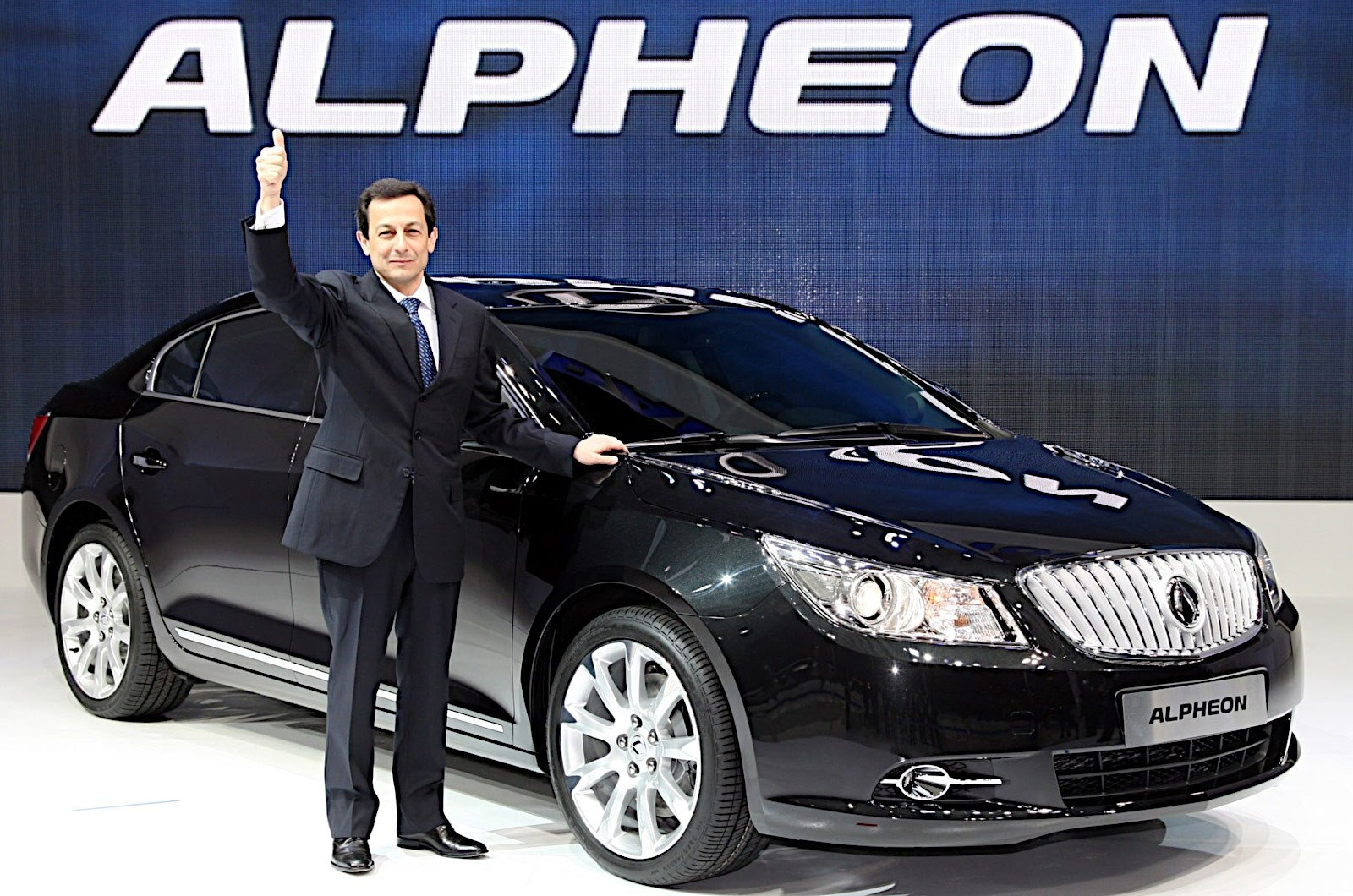
Alpheon was a single-model General Motors brand which operated briefly in South Korea. The single model in question was a locally-built second-generation Buick LaCrosse (itself a close sibling to the Opel Insignia), but Buick had no presence in the country, and there were no plans to create one. Renaming it as a Chevrolet seemed inappropriate, and the Daewoo brand was about to be discontinued.
Alpheon was created in 2010 simply as a name under which to sell this specific car. Both were discontinued five years later when GM Korea began importing the Detroit-built tenth-generation Chevrolet Impala.
Aston Martin Cygnet
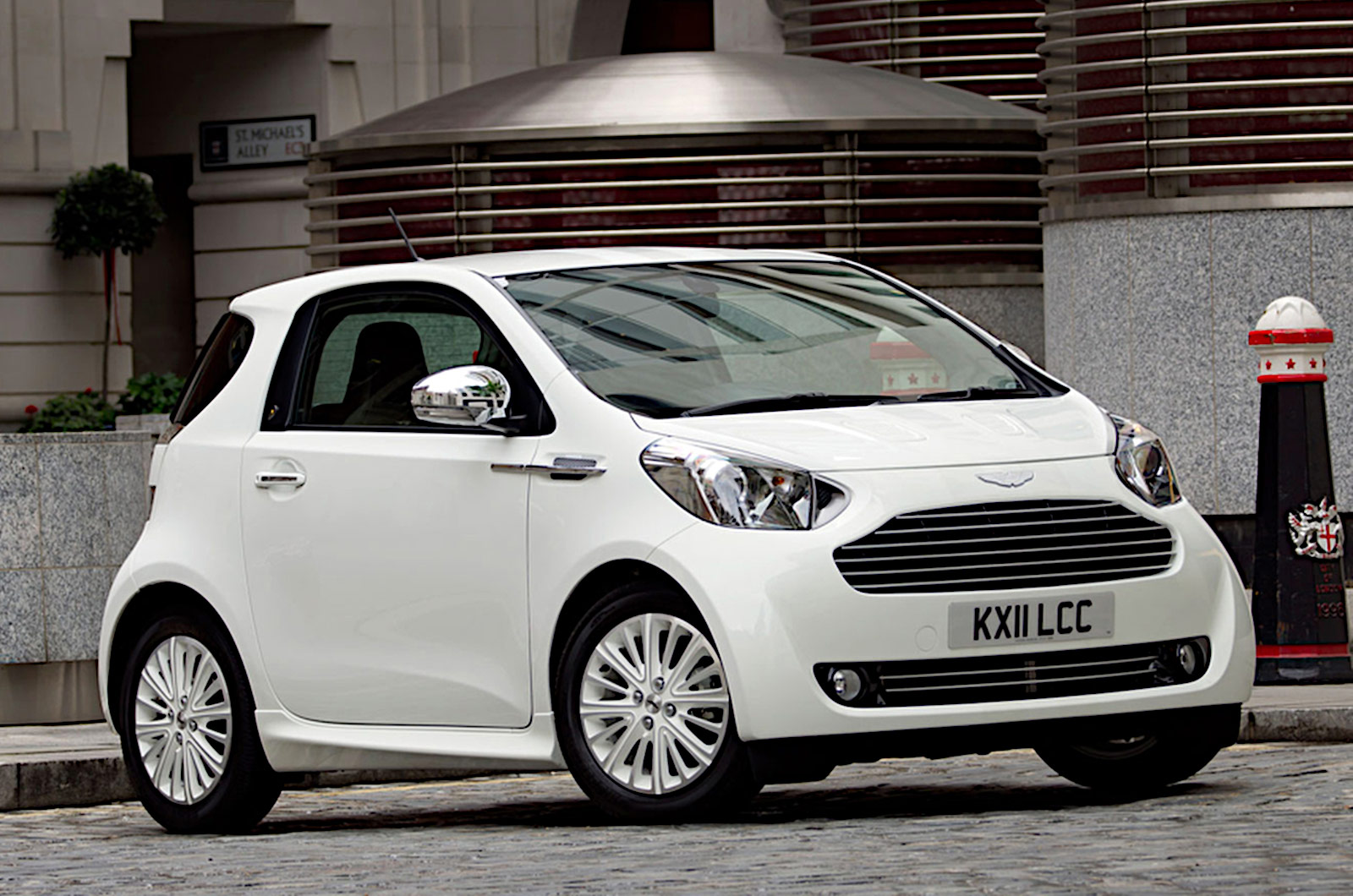
For almost the first century of its existence, the suggestion that Aston Martin might put a badge-engineered Japanese city car on the market would have inspired hard stares and rude retorts. Nevertheless, it actually happened in 2011.
The Cygnet was a Toyota iQ with a higher level of equipment, some cosmetic restyling and a startlingly higher price tag. It sold very poorly, and Aston has never attempted anything similar since. Only 300 were made however, and that rarity has meant they retain their value very well; they are a surprisingly common sight in posh parts of London.
Asüna Sunrunner
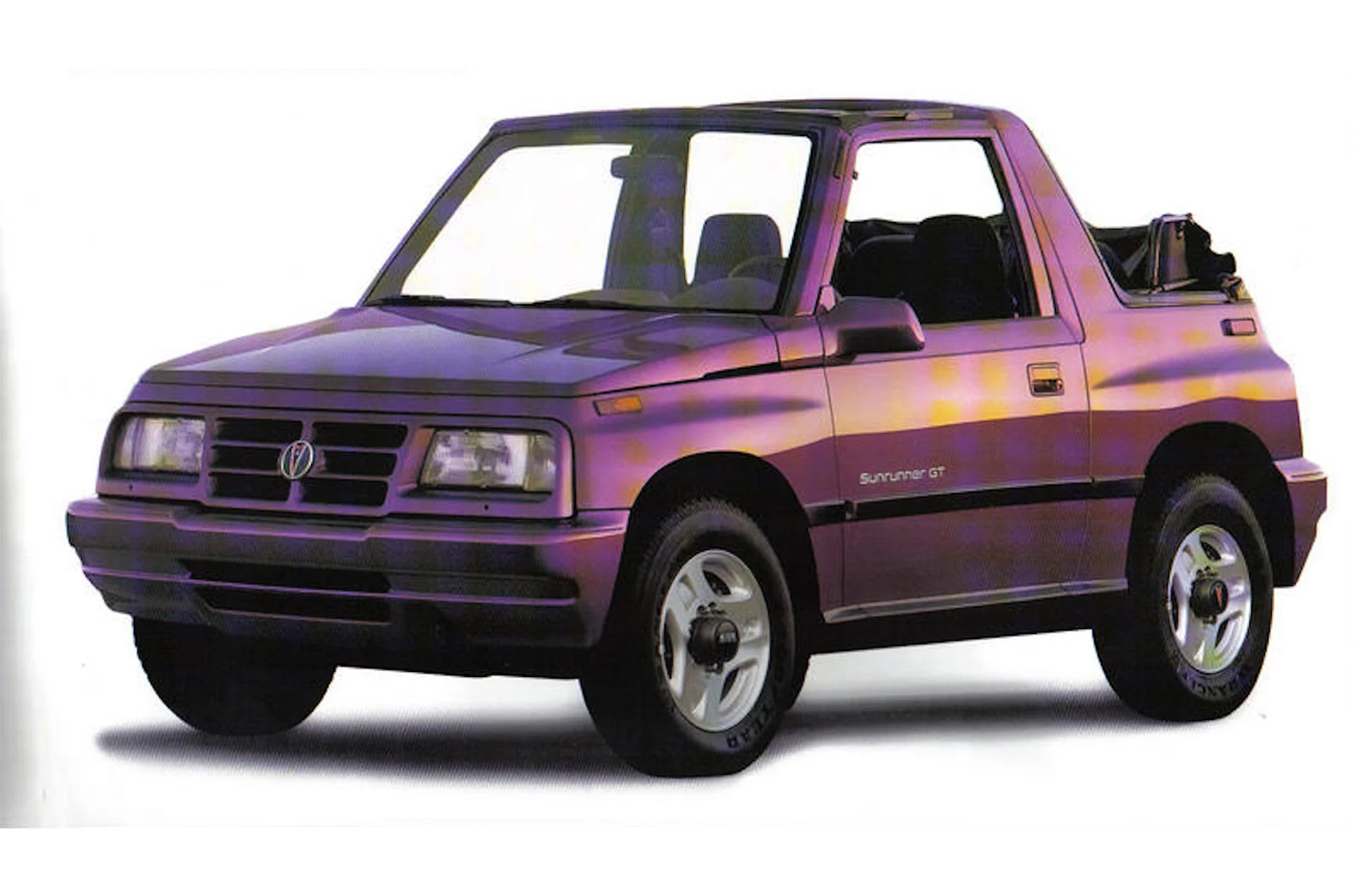
Like Acadian, Asüna was a General Motors brand dedicated to the Canadian market. During its very brief period of operation in the early 1990s, it sold three models which GM had very little to do with, other than importing them from Japan and South Korea.
They were the Sunrunner, the Sunfire and a sedan known either as the SE or the GT. The first of these was one of the most badge-engineered vehicles on the planet, being sold around the world as the Suzuki Escudo, Suzuki Vitara and Chevrolet Tracker, among many other names.
Audi 50
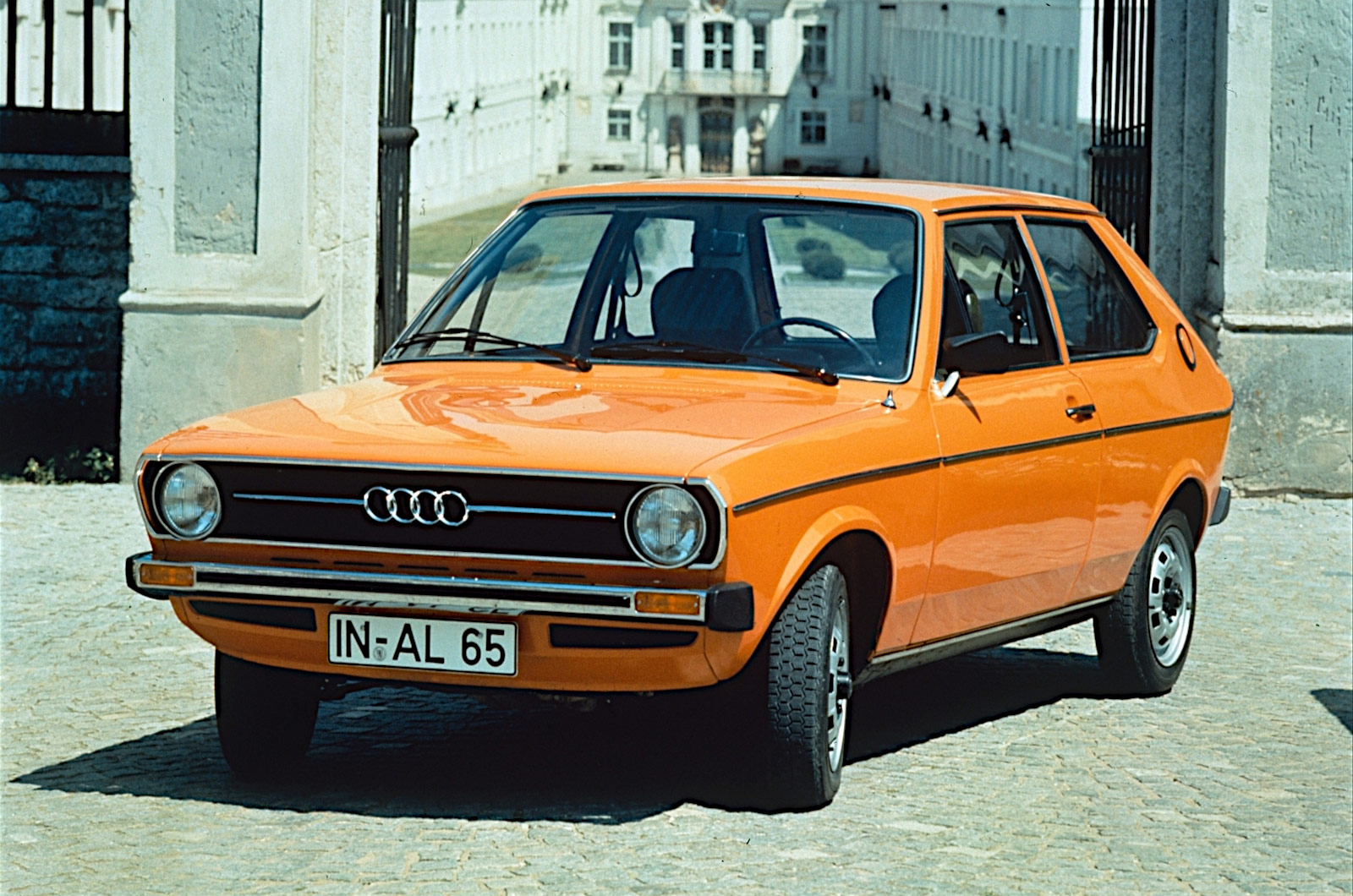
Still to this day the smallest car Audi has ever put on sale, the 50 was almost exactly the same thing as the first-generation Volkswagen Polo. Since Audi got there first in 1974, and had built what the company reports (with devastating precision) to have been 43,002 50s by the time Polo production began on 31 March 1975, it would be correct to say that the Polo was a badge-engineered 50.
However, Audi persevered with the 50 until 1978, while the Polo, now in its sixth generation, is still with us, so it’s easier, if less accurate, to think of them as being the other way round.
BMW 3/15
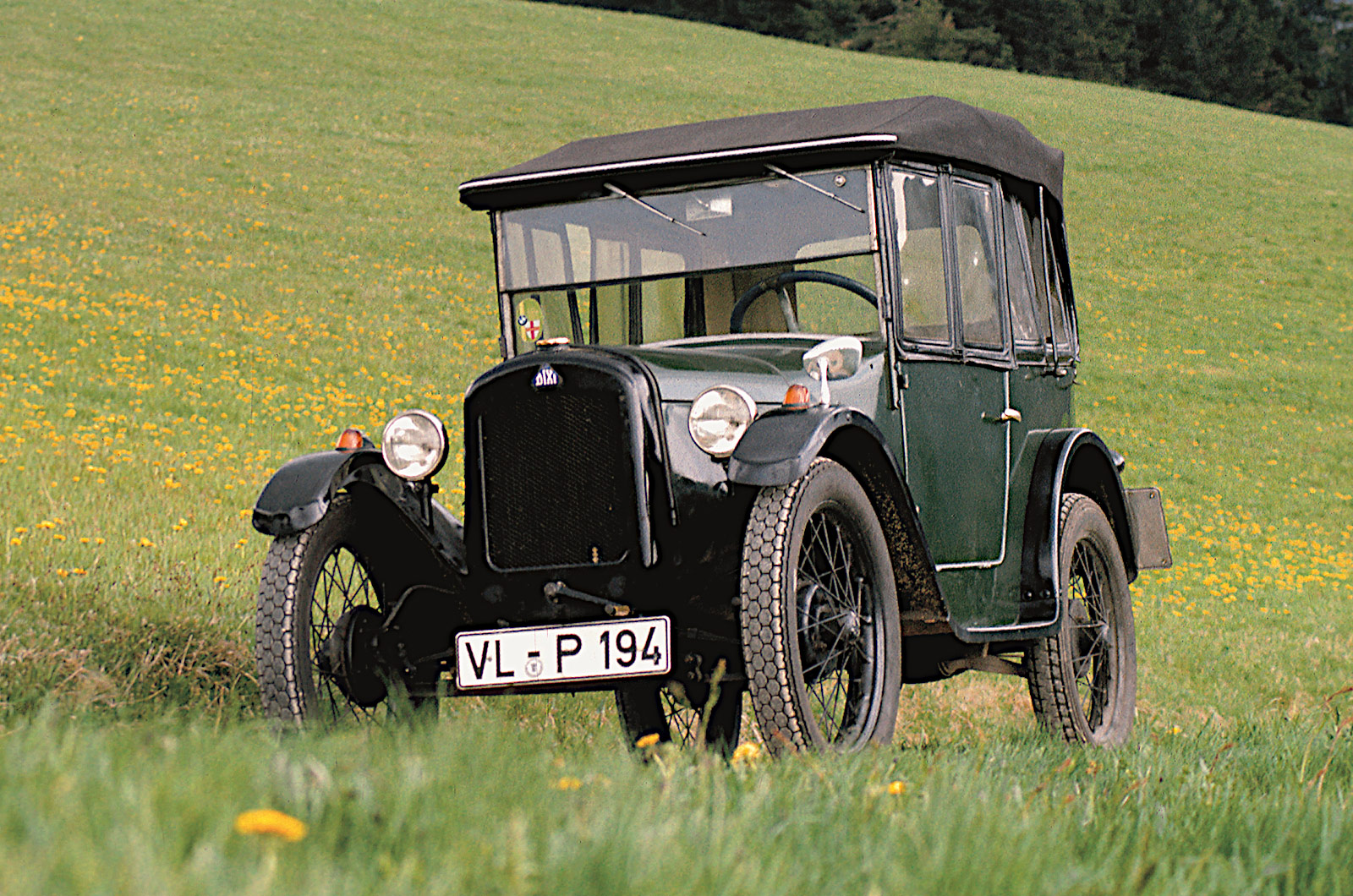
BMW entered the motor industry in 1928 through its purchase of Fahreugfabrik Eisenach. That now largely forgotten company was at the time producing a car called the Dixi, which was an Austin Seven built under licence in Germany.
The car, known as the 3/15 was steadily updated by its new owner, but it was only when this was replaced in 1932 by the 3/20 that BMW could no longer truly be said to be building badge-engineered Austins.
Citroën C-Crosser
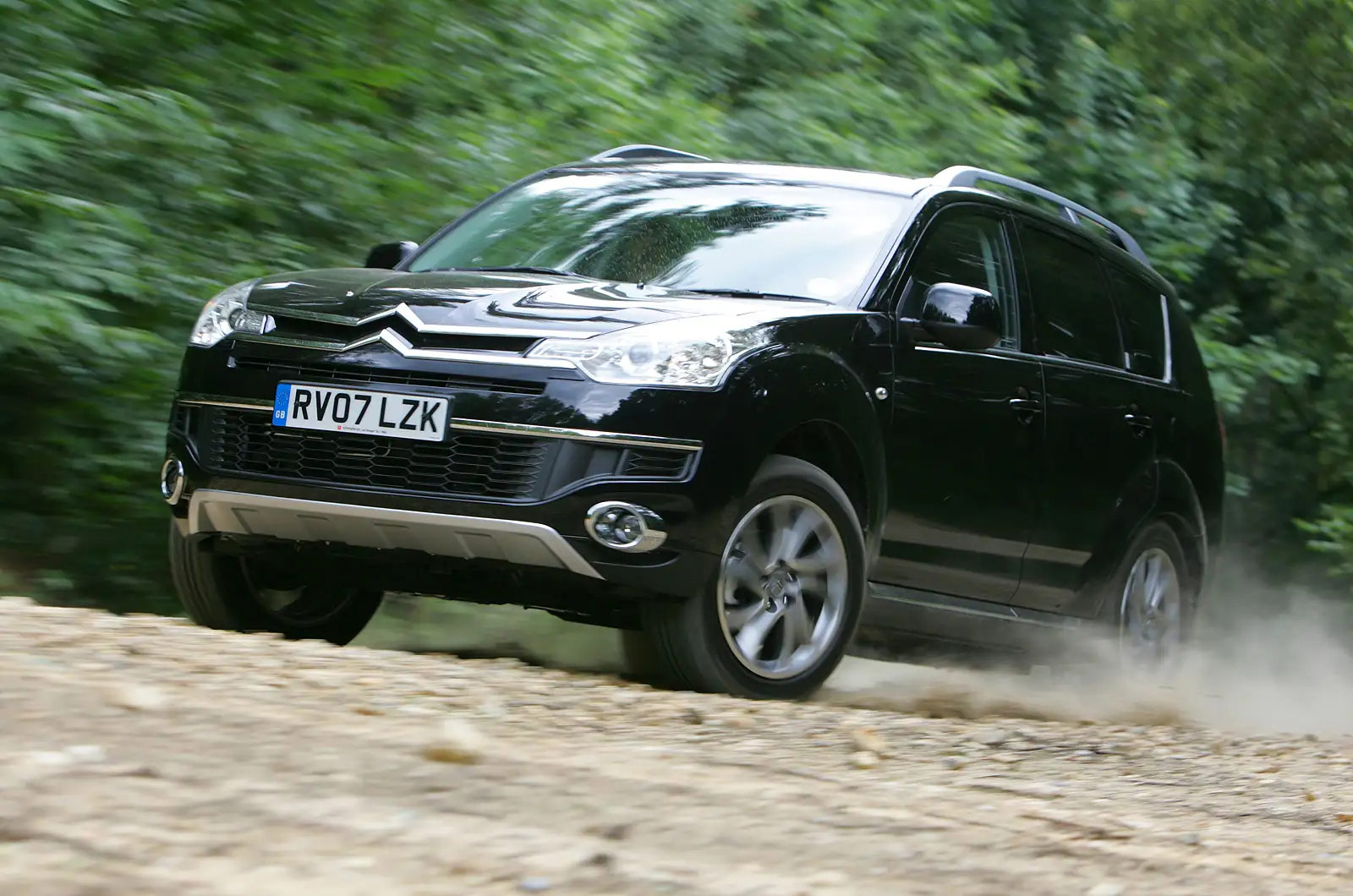
When you speak of the C-Crosser, you also speak of the Peugeot 4007, which was exactly the same thing. Both were badge-engineered versions of the Mitsubishi Outlander SUV, the first of the three to be launched in 2005.
It would be wrong to describe the Mitsubishi as a badge-engineered Citroën or Peugeot, since it was almost entirely the Japanese company’s work, though the French did supply engines (as did Volkswagen). The co-operation wasn’t a great success, and did not survive into the next generation of the Outlander.
Daewoo G2X
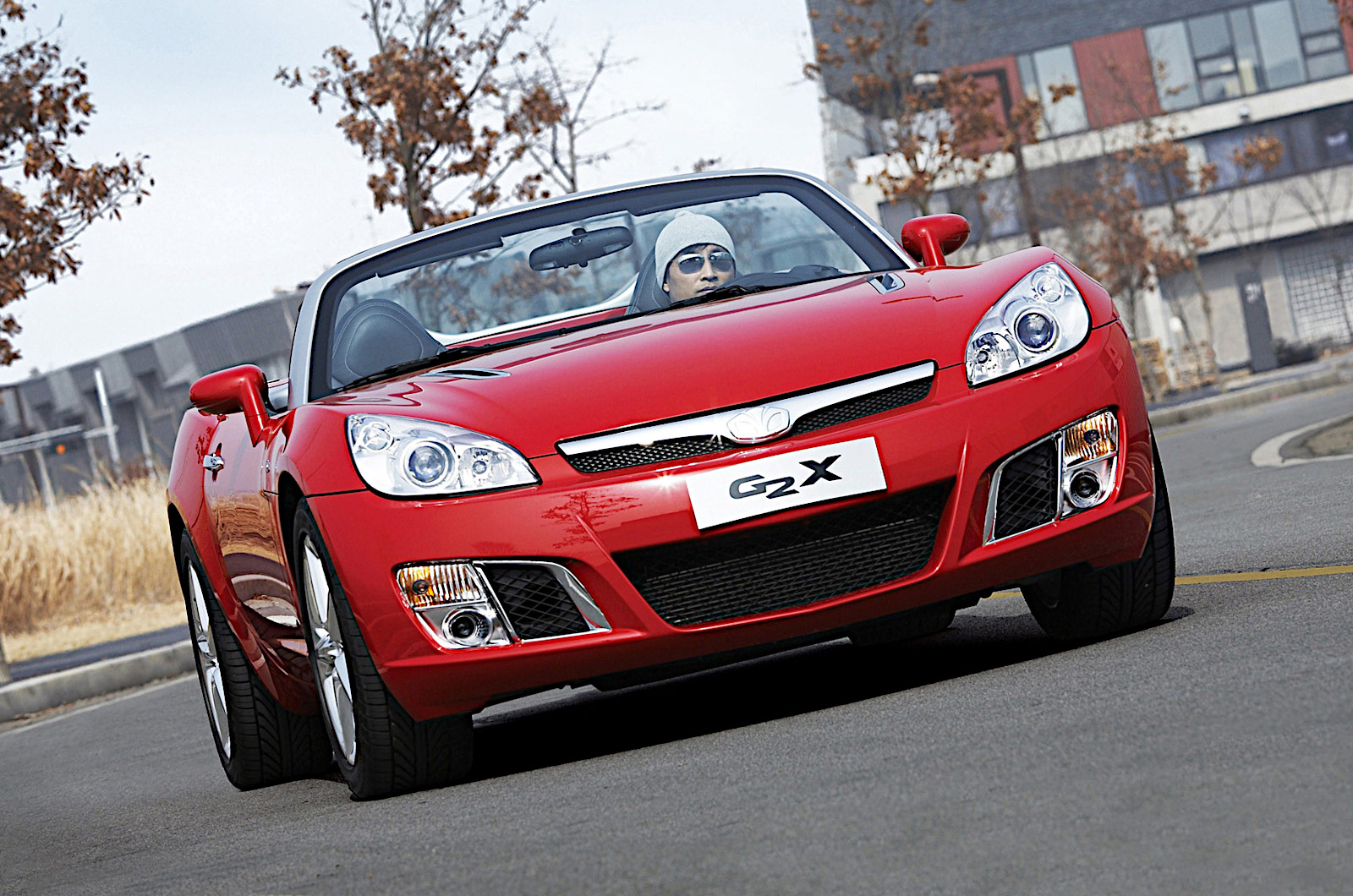
The General Motors Kappa platform was used for several concepts and four production sports cars. Of the latter, the Pontiac Solstice had its own distinctive styling, but the Saturn Sky and Opel GT were virtually identical apart from their badging.
Less familiar to western motorists was the Daewoo G2X, essentially the same car as the Sky and GT but, like the Opel, only ever available with a turbocharged engine as fitted to the Red Line version of the Saturn. It wasn’t a big hit, with only 179 examples reported as having been sold from 2007 to 2009.
Daewoo Royale
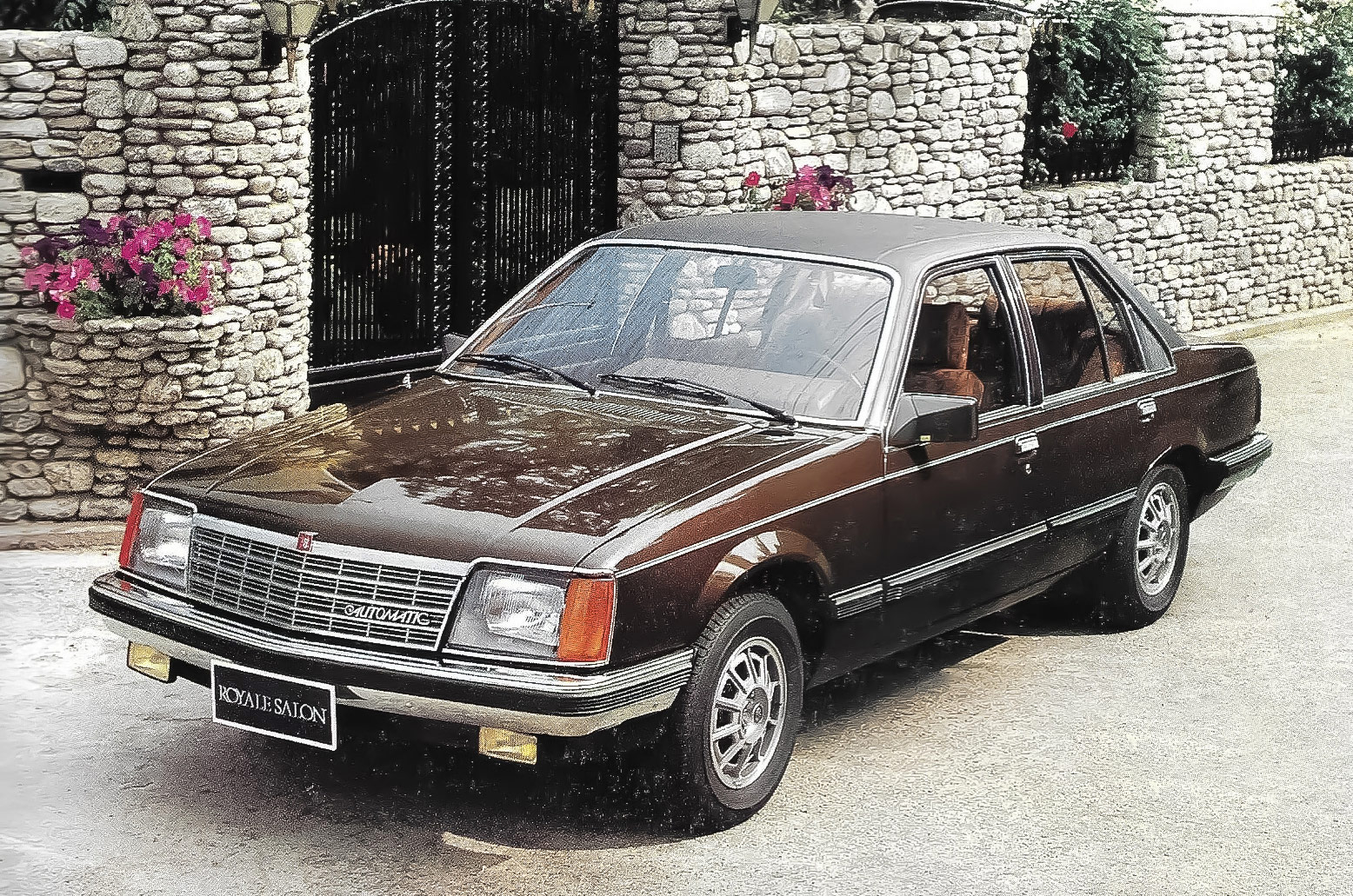
During the very complicated early history of GM’s presence in South Korea, the Daewoo Royale was introduced in 1978 as the replacement for a car called the Saehan Rekord.
Other than its name and a few styling changes, the Royale was essentially an Opel Rekord E, and therefore also more or less the same thing as the contemporary Vauxhall Carlton and Holden Commodore.
Dodge Brisa
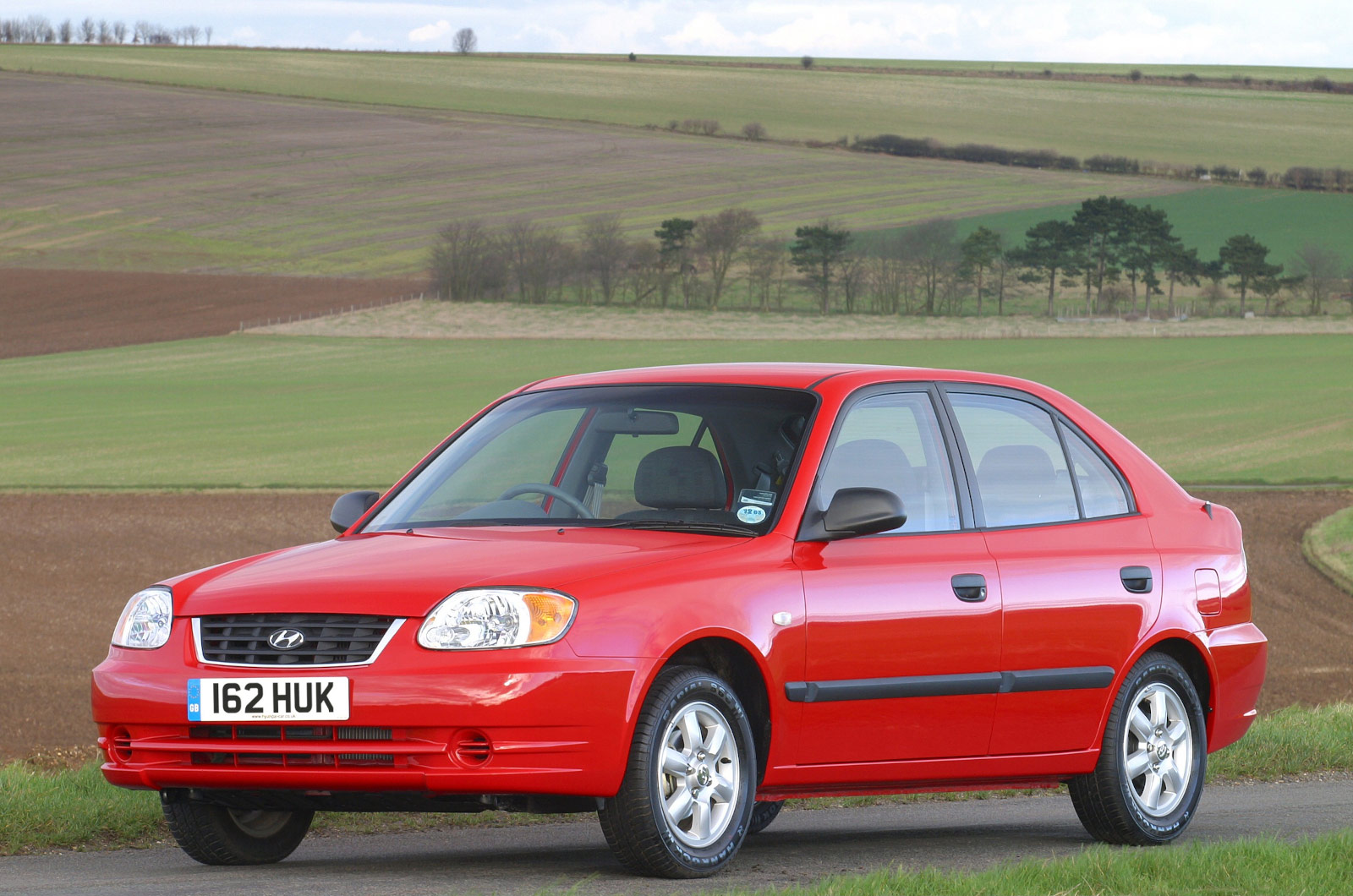
Quite unlike anything else marketed by the brand, the Brisa was sold as a Dodge only because of an arrangement between companies which otherwise rarely worked together. It was in fact a first-generation Hyundai Accent (pictured) manufactured in Venezuela from 2002 to 2006.
The Brisa name was also used for a completely unrelated Kia of the 1970s, which was a variant of the second-generation Mazda Familia.
Fiat Fullback
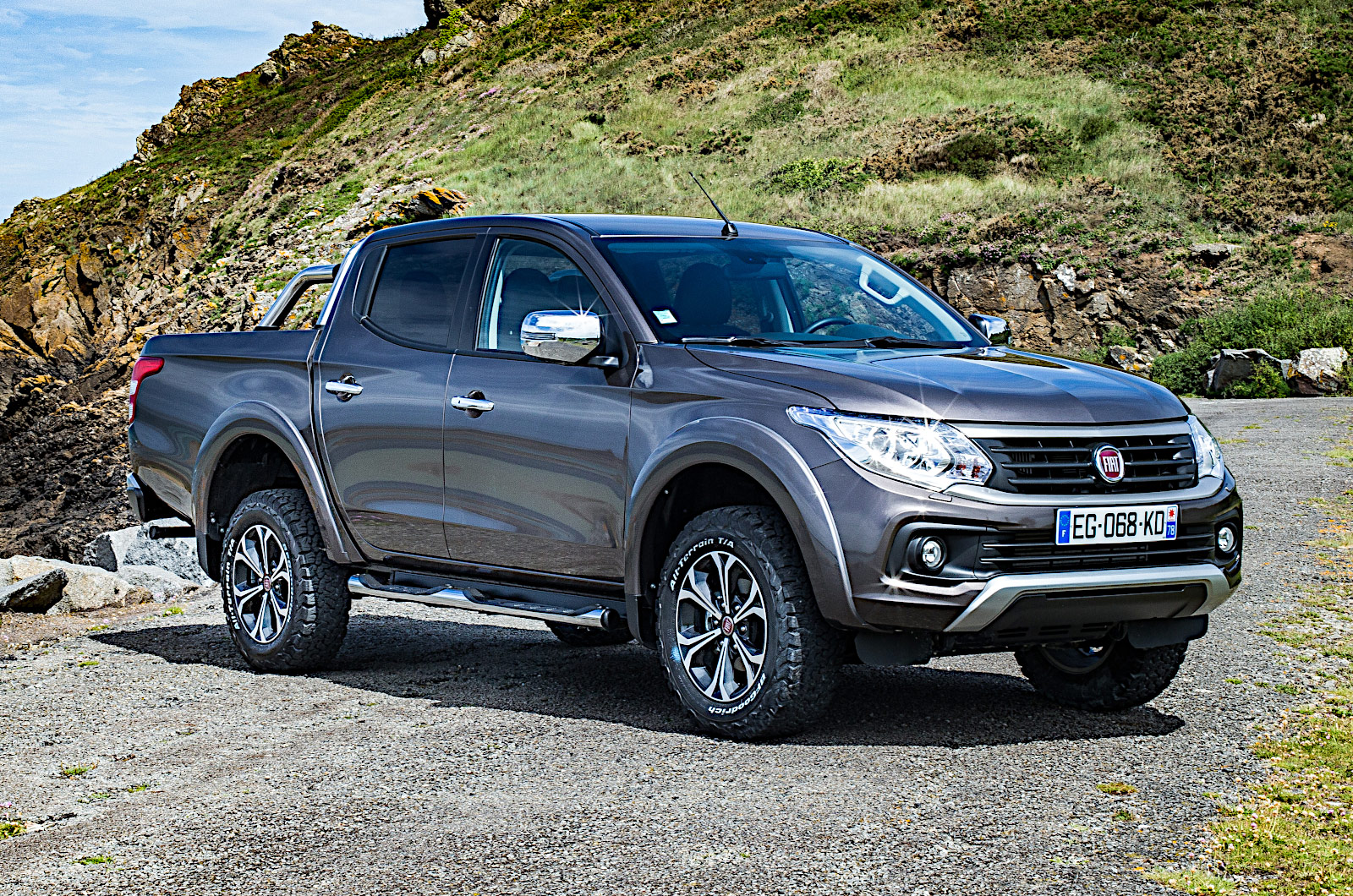
Usually, if you think you’re looking at a fifth-generation Mitsubishi L200 truck (also known as the Triton or Strada), you’re quite correct, but sometimes you’re not. If it was built between 2015 and 2019, it could actually be a Fiat Fullback, unless you’re in the Middle East, in which case it’s far more likely to be a Ram 1200. Badging and very minor details apart, they are all the same.
Since 2020, a similar situation has pertained to the Fullback’s successor, the Fiat Titano, which is actually a Peugeot Landtrek.
Fiat Sedici
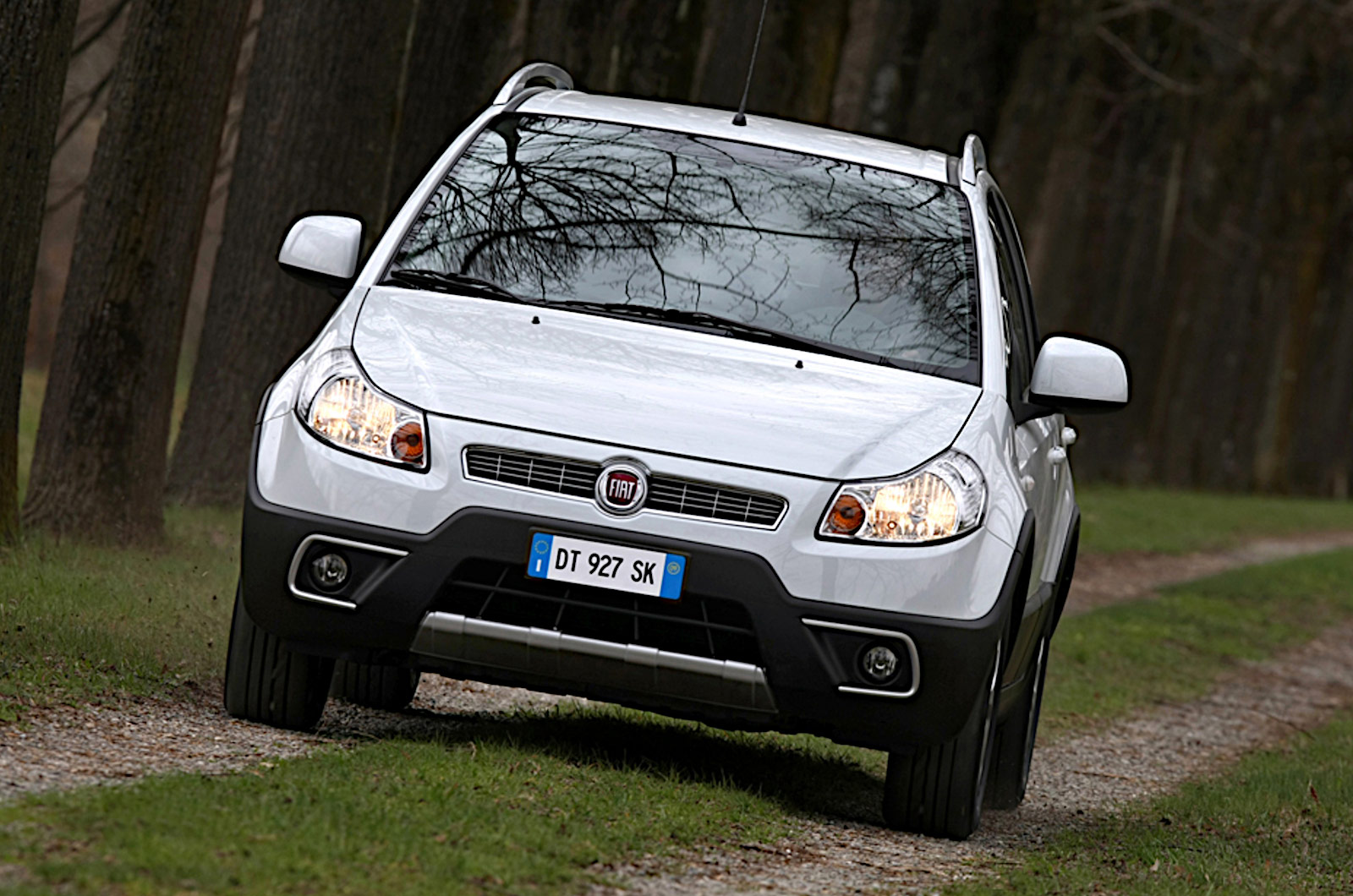
The Sedici, a compact SUV available with front- or four-wheel drive, was a rebadged Suzuki SX4, and built in the Suzuki factory in Hungary. We were reasonably impressed by it, saying, “Certainly there is no notable reason to avoid it.”
It was revised in 2009 (as pictured here), but there was no Fiat equivalent of the Suzuki’s successor, the SX4 S-Cross, which arrived in 2013. Fiat’s current model of this type is the 500X, related to, but not a badge-engineered version of, the Jeep Renegade.
Fiat Viaggio
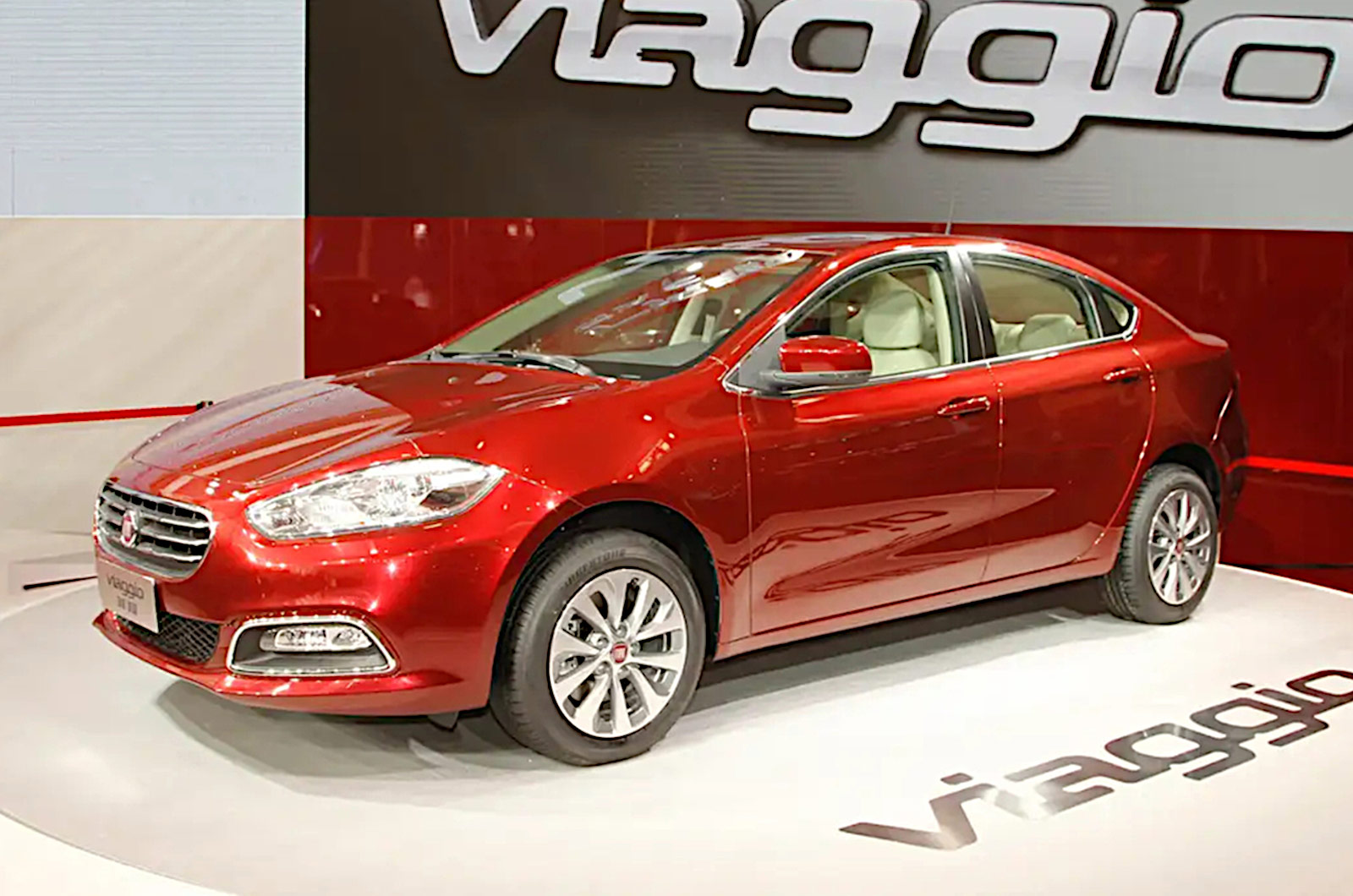
Fiat’s investment in Chrysler’s after Chrysler went bankrupt during the global financial crisis led, among other things, to the creation of the most recent model known as Dodge Dart, which was itself based on a larger version of the platform used for the Alfa Romeo Giulietta.
Fiat then converted the Dart (though the changes were minimal) into the Viaggio, which was sold in China. It then went a step further and created the Ottimo – basically the same car, except that it was a five-door hatchback rather than a four-door sedan.
Hindustan Ambassador

The big-selling Ambassador was developed considerably over its very long production life from 1957 to 2014, but it was at first – and at heart remained – a rebadged Series III Morris Oxford.
There has been talk of Hindustan Motors introducing a new Ambassador in the near future, but if this happens it’s unlikely to have much relationship to the old one.
Holden Jackaroo
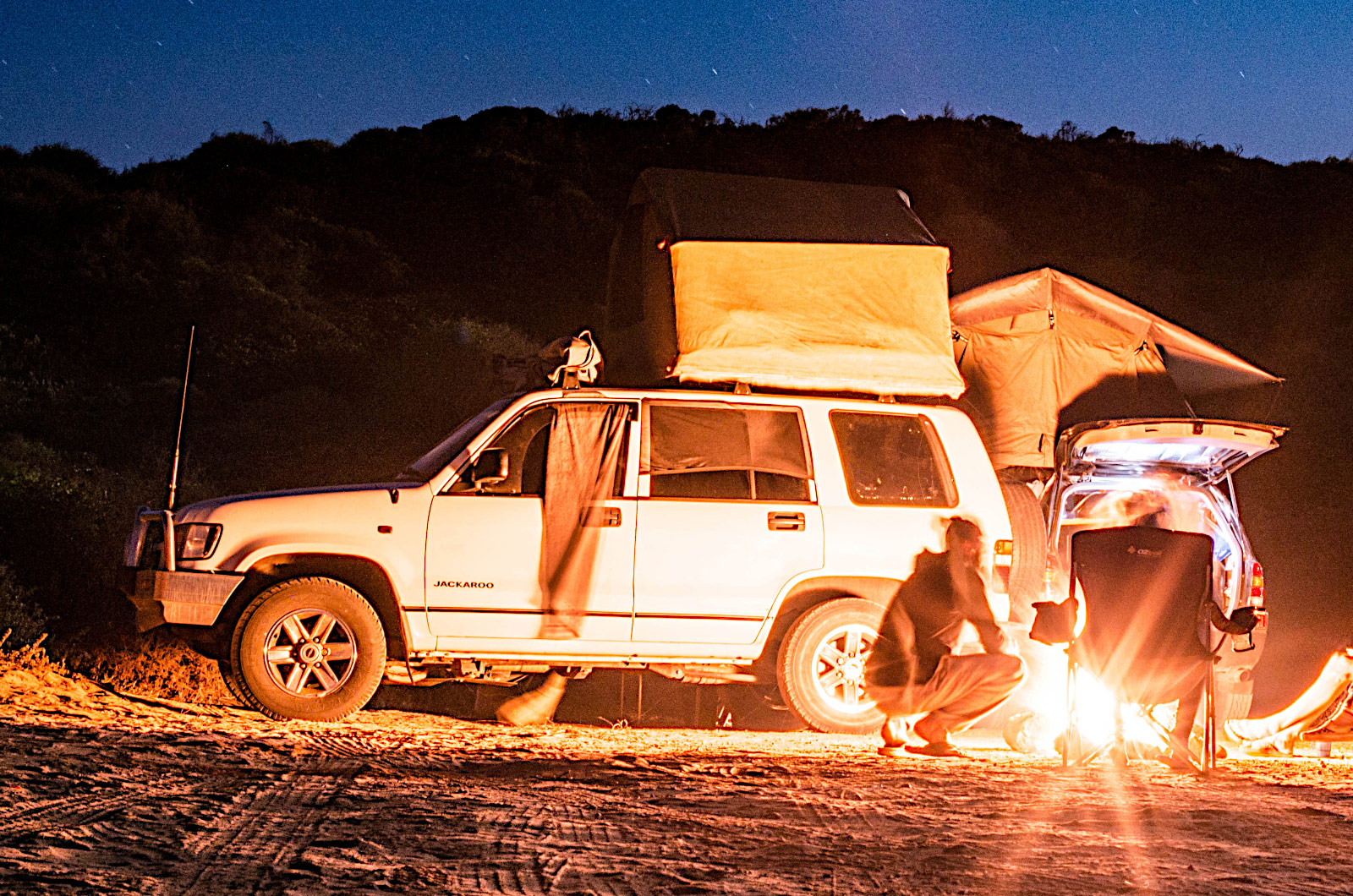
Both the first and the second (pictured) generation of the Isuzu Trooper were sold by GM’s Australian division with the model name Jackaroo. The earlier model was the first four-wheel drive vehicle in Holden’s history.
Used since the 19th century, the word jackaroo refers to a young man working on a sheep or cattle station.
Honda Crossroad
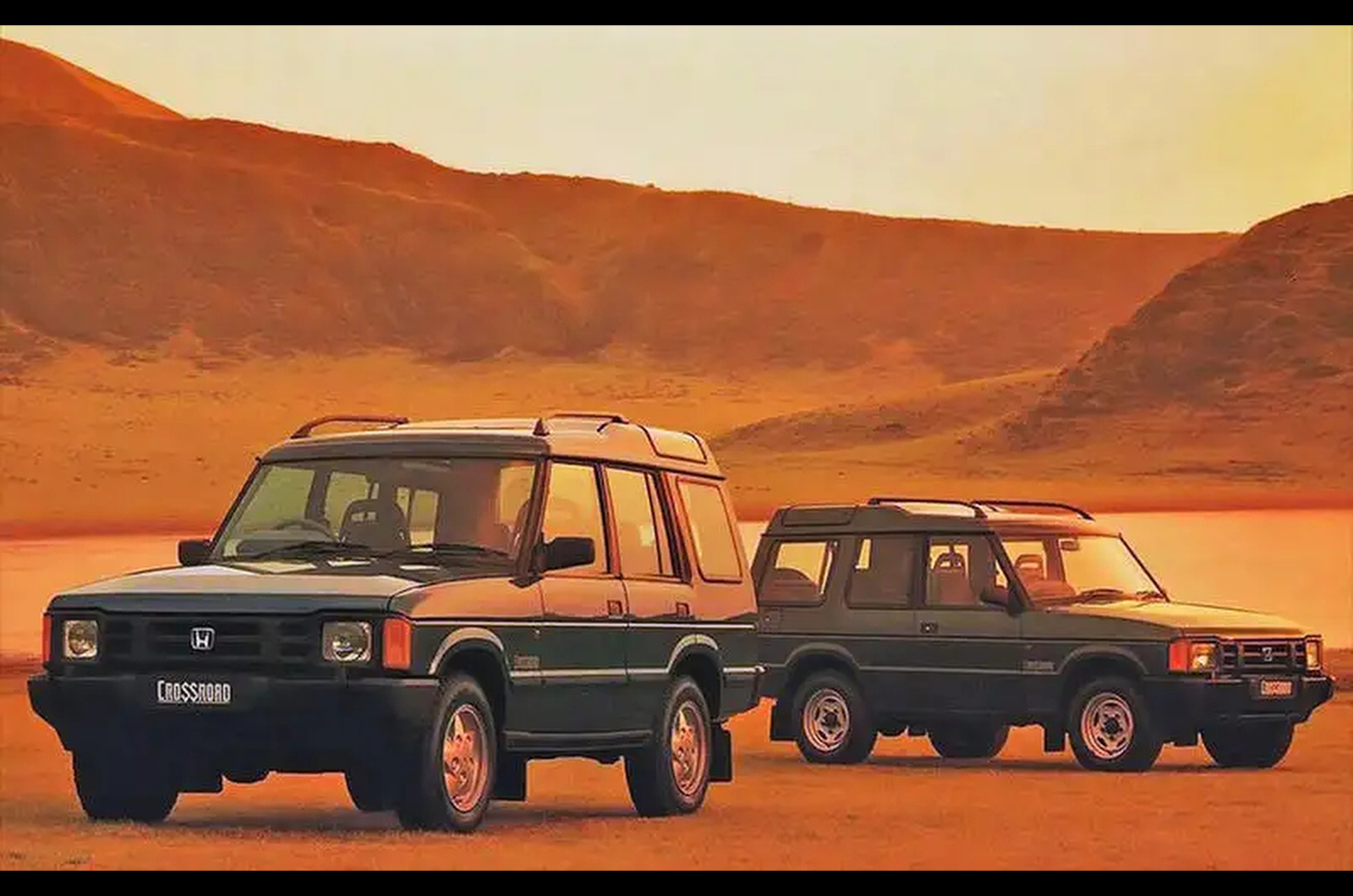
Honda has marketed two SUVs called Crossroad. The second was all in its own work. The first, dating from the 1990s, was a rebadged Land Rover Discovery, a situation made possible by the fact that Honda had a business arrangement with Rover at the time.
Its 3.9-litre engine is still to this day the largest ever fitted to a road-going Honda production vehicle, and Honda’s only production car V8.
Isuzu Hombre
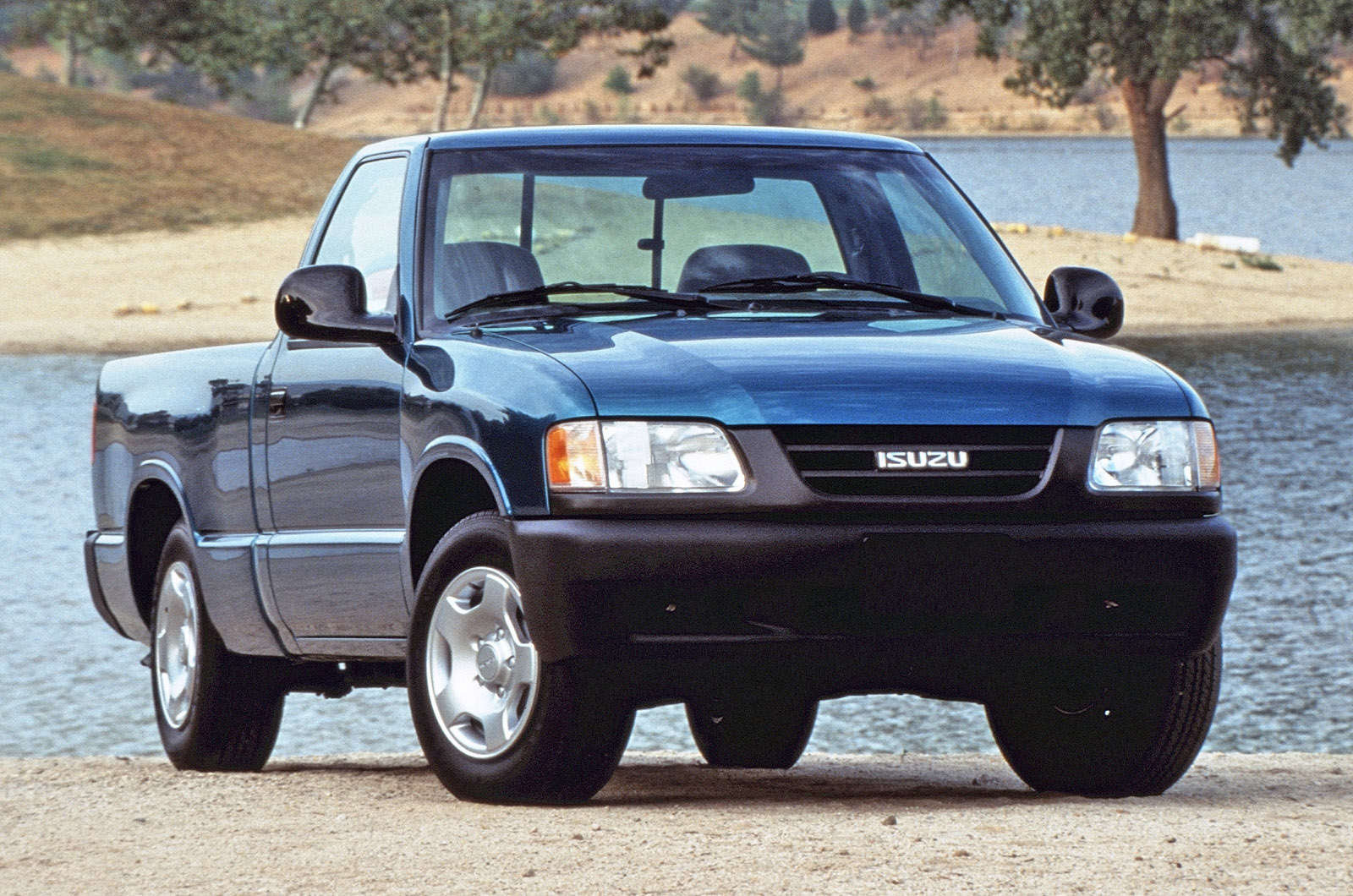
Isuzu is famous for, among other things, its pickup trucks. Who has never heard of the Rodeo, the D-MAX or the Hombre? Well, perhaps the Hombre might not have registered with you.
It was a mildly restyled version of the Chevrolet S-10 sold briefly in the late 1990s. Its successor, the i-series, bore a similar relationship to the S-10’s successor, the Chevy Colorado/GMC Canyon.
Lancia Flavia
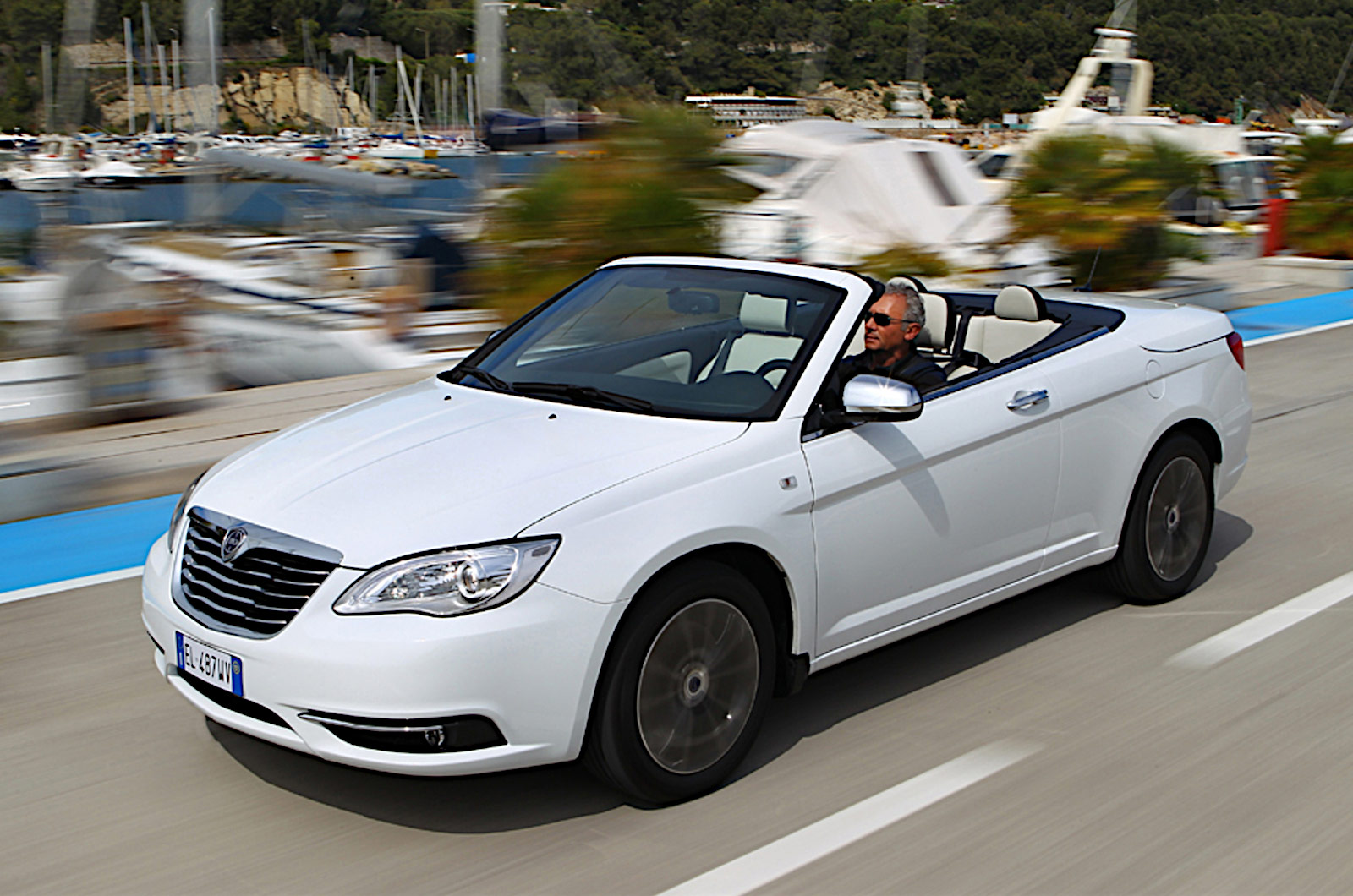
The Flavia we’re looking at here had nothing to do with the one sold throughout the 1960s and later renamed 2000. This one was hardly a Lancia at all, but a very slightly altered Chrysler 200 convertible (itself a reworked Chrysler Sebring) sold in left-hand drive European markets.
It was introduced in 2012 and abandoned two years later due to the introduction of the new 200, which had no Lancia equivalent.
Mazda 121
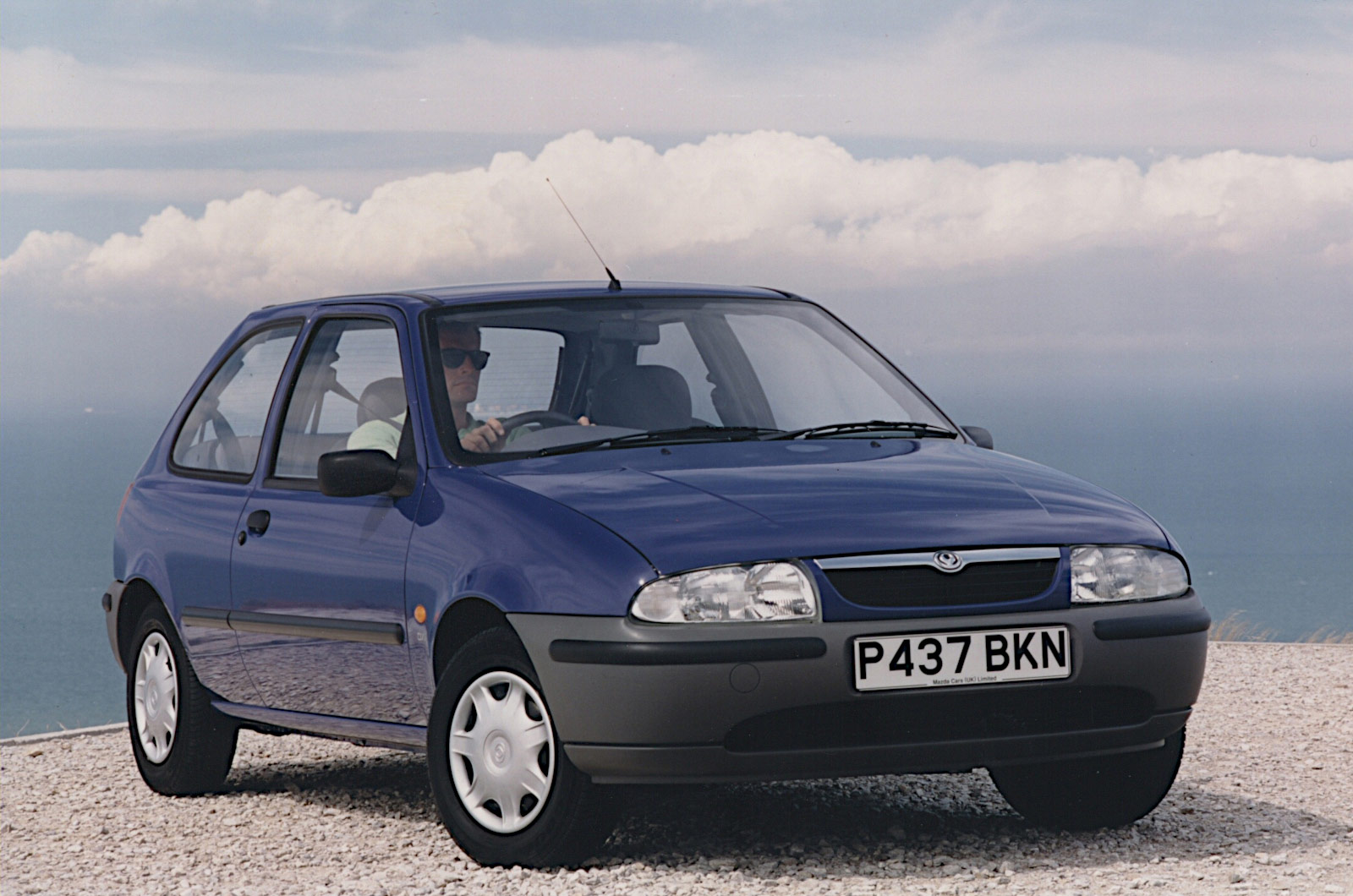
Mazda used the 121 name for several of its models from the mid 1970s until the early 21st century. The one of interest here was, except on the closest inspection, almost indistinguishable from the fourth-generation Ford Fiesta – the one which resembled a fish until it was facelifted in 1999.
Both cars were produced until 2002. There has been no Mazda 121 of any kind since then.
Nissan NMC
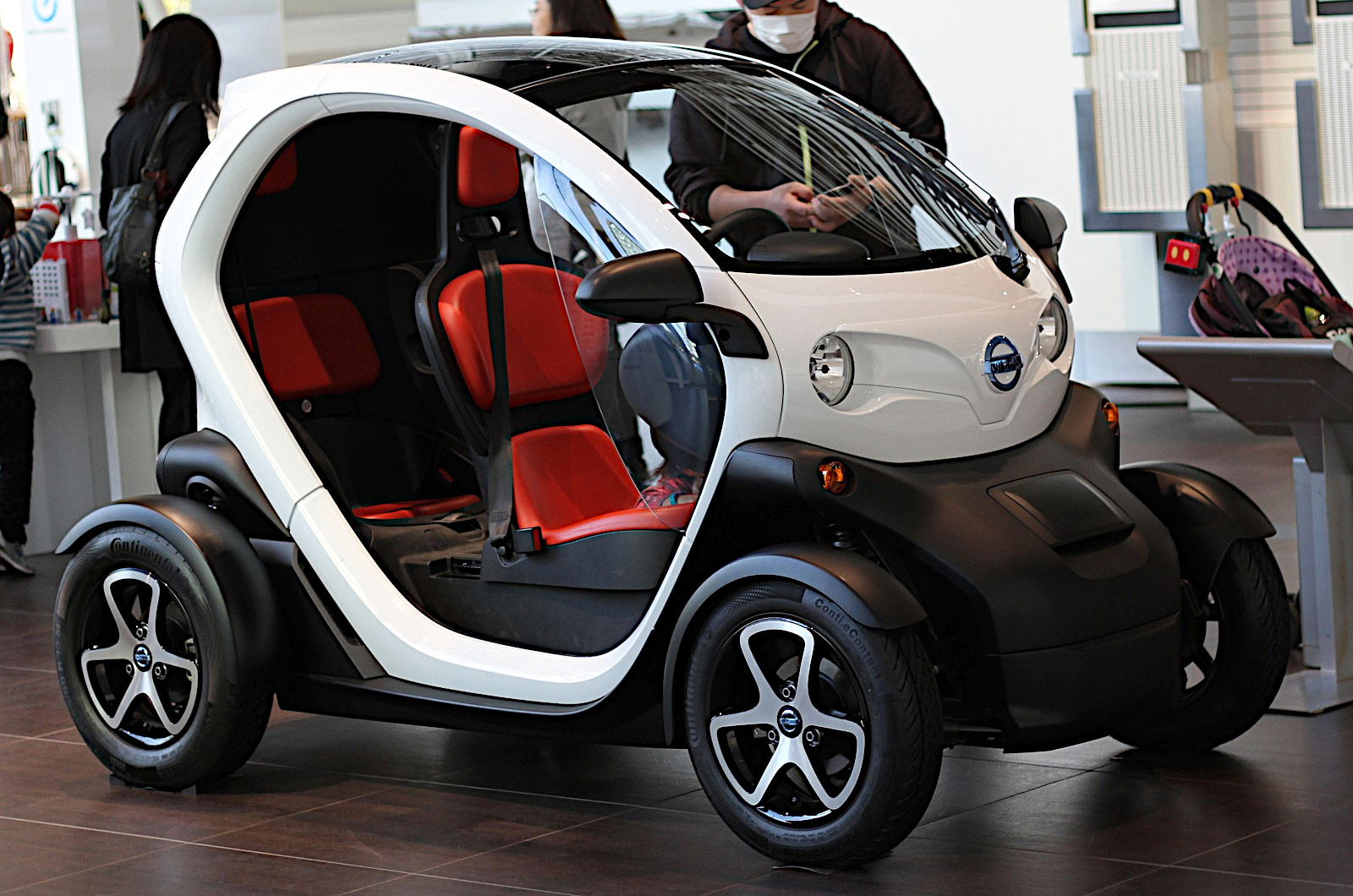
NMC stood for New Mobility Concept. That name was used – or at least its initials were – for a rebadged Renault Twizy, which Nissan said had been “developed in response to rising numbers of senior citizens and single-member households, along with increasing use of automobiles for short-distance trips by up to two people”.
It sold in very small numbers in Japan, and was also known as the Scoot Quad for the purposes of a car-sharing scheme in San Francisco. Contemporary reports revealed that both Renault and Nissan badges were visible.
Oldsmobile Firenza
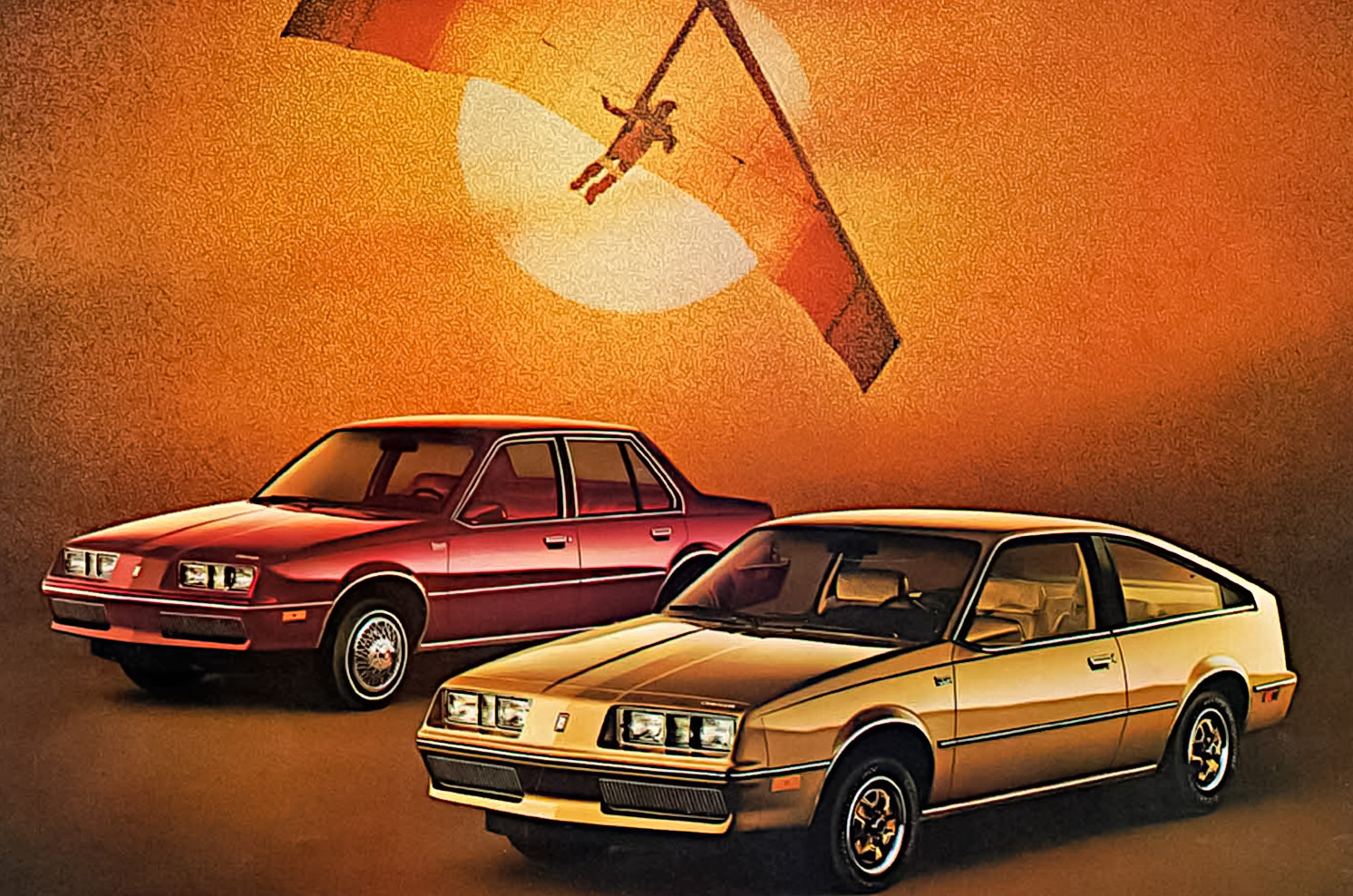
The Firenza is today perhaps the least remembered of the many General Motors J platform cars. Sold in the 1982 to 1988 model years, it was made of largely the same stuff as the Buick Skyhawk, Chevrolet Cavalier and Pontiac Sunbird of the same period, and as the much more expensive and much less successful Cadillac Cimarron.
Each brand applied its own styling to some extent, but at first glance it was difficult for a non-expert to tell which was which.
Opel Ampera-e
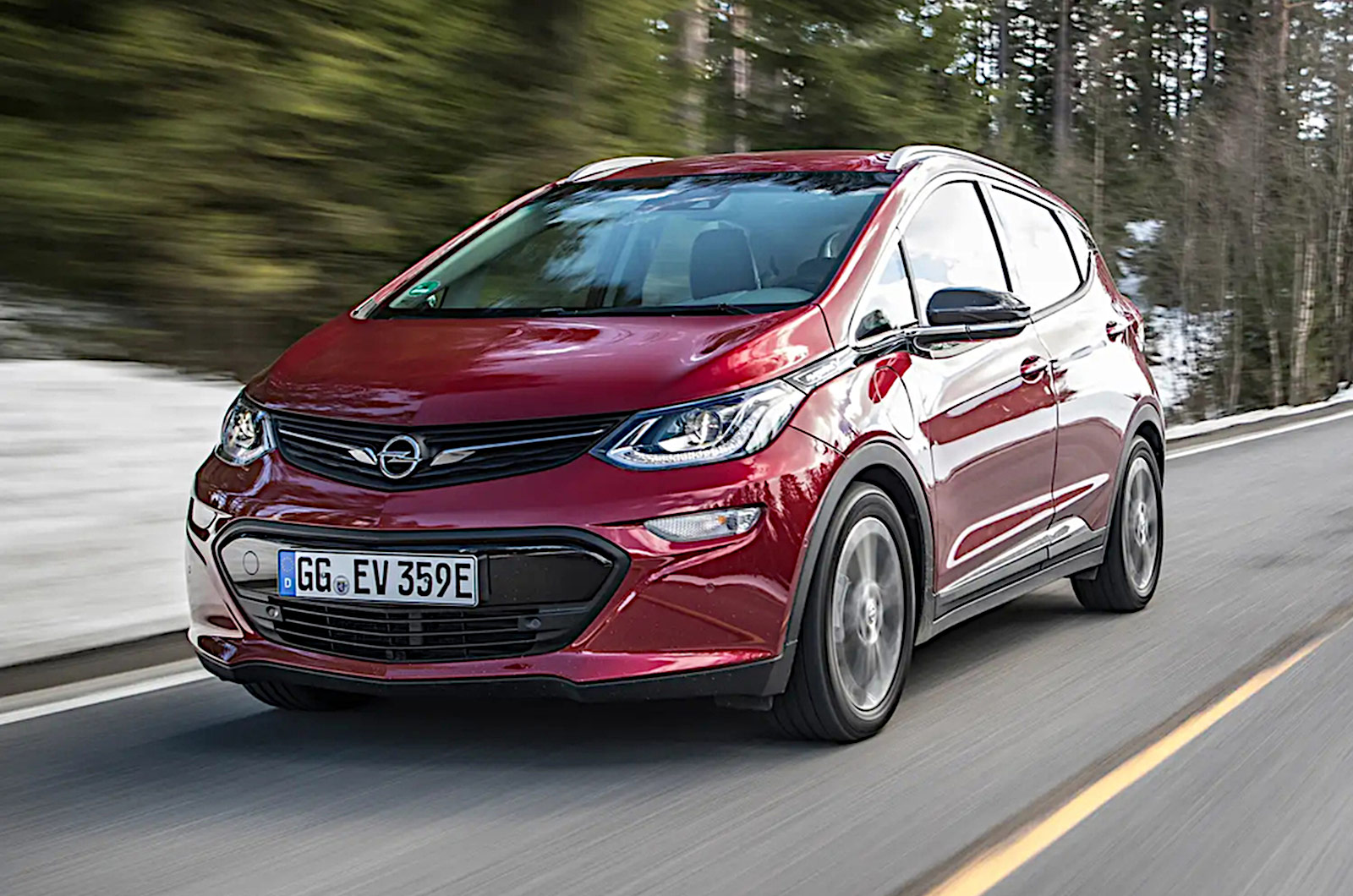
The recently discontinued Chevrolet Bolt EV was not sold under its own name in Europe, but in some countries it was available as the Opel Ampera-e. Both were built in the GM Orion Assembly Plant in Michigan, though Ampera-e production was not enough even to satisfy the small number of orders Opel dealers received.
The Ampera-e was already off the market by the time the Bolt EV was discontinued at the end of the 2023 model year. A replacement is due in 2026, but the chances of there being an Opel version are infinitesimal, since the German brand is now owned by GM rival Stellantis.
Opel Karl
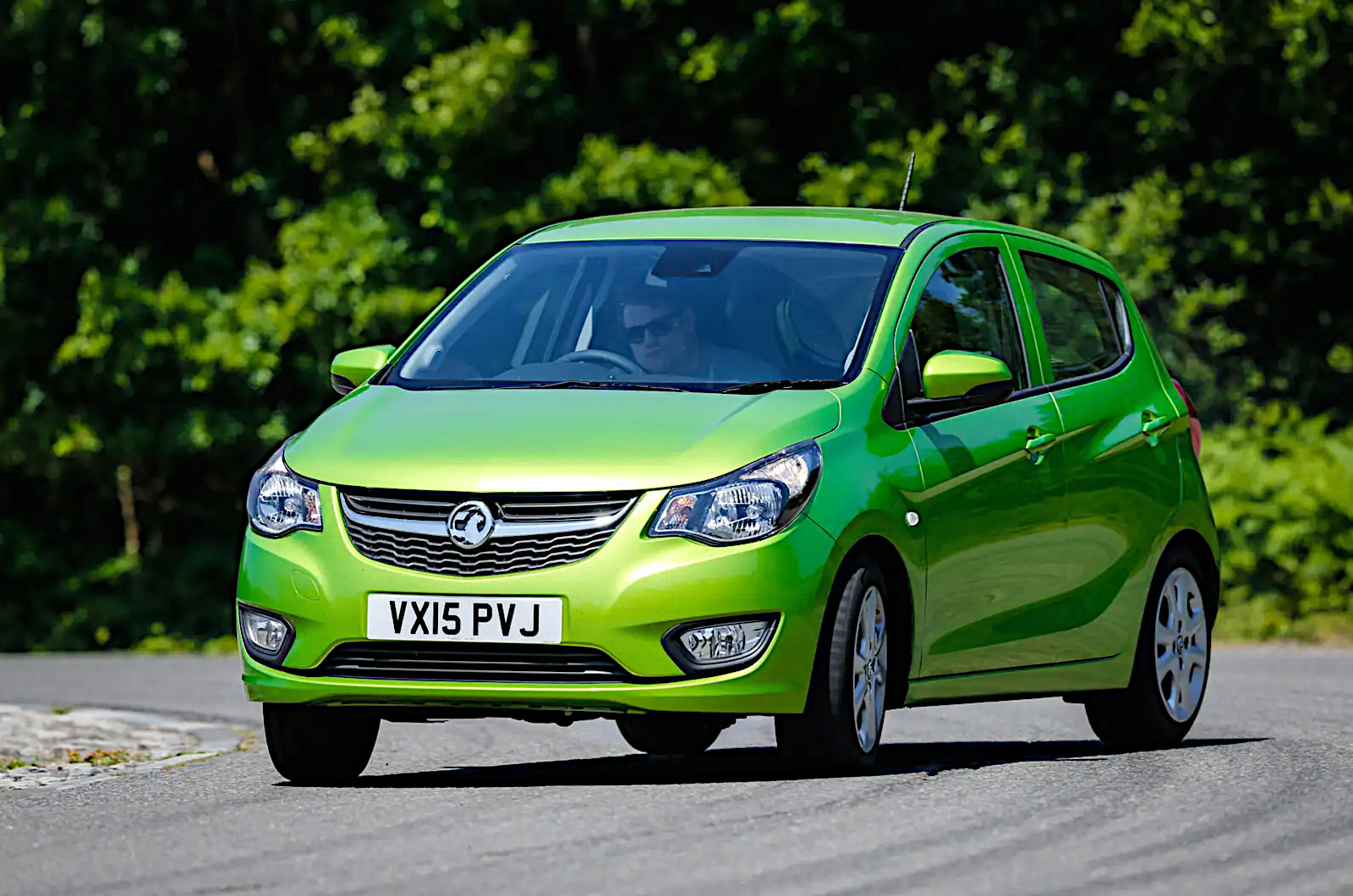
Before General Motors sold Opel and Vauxhall to the PSA Group in 2017, it was quite reasonable that they would both sell a slightly altered version of a Chevrolet. The Chevrolet in question was the Spark, which was designed and built by GM Korea.
Within our definition, the Karl was a badge-engineered Spark, since the styling changes were fairly minor. The Vauxhall Viva (pictured), sold only in the UK, was more precisely a badge-engineered Karl.
Peugeot Pars
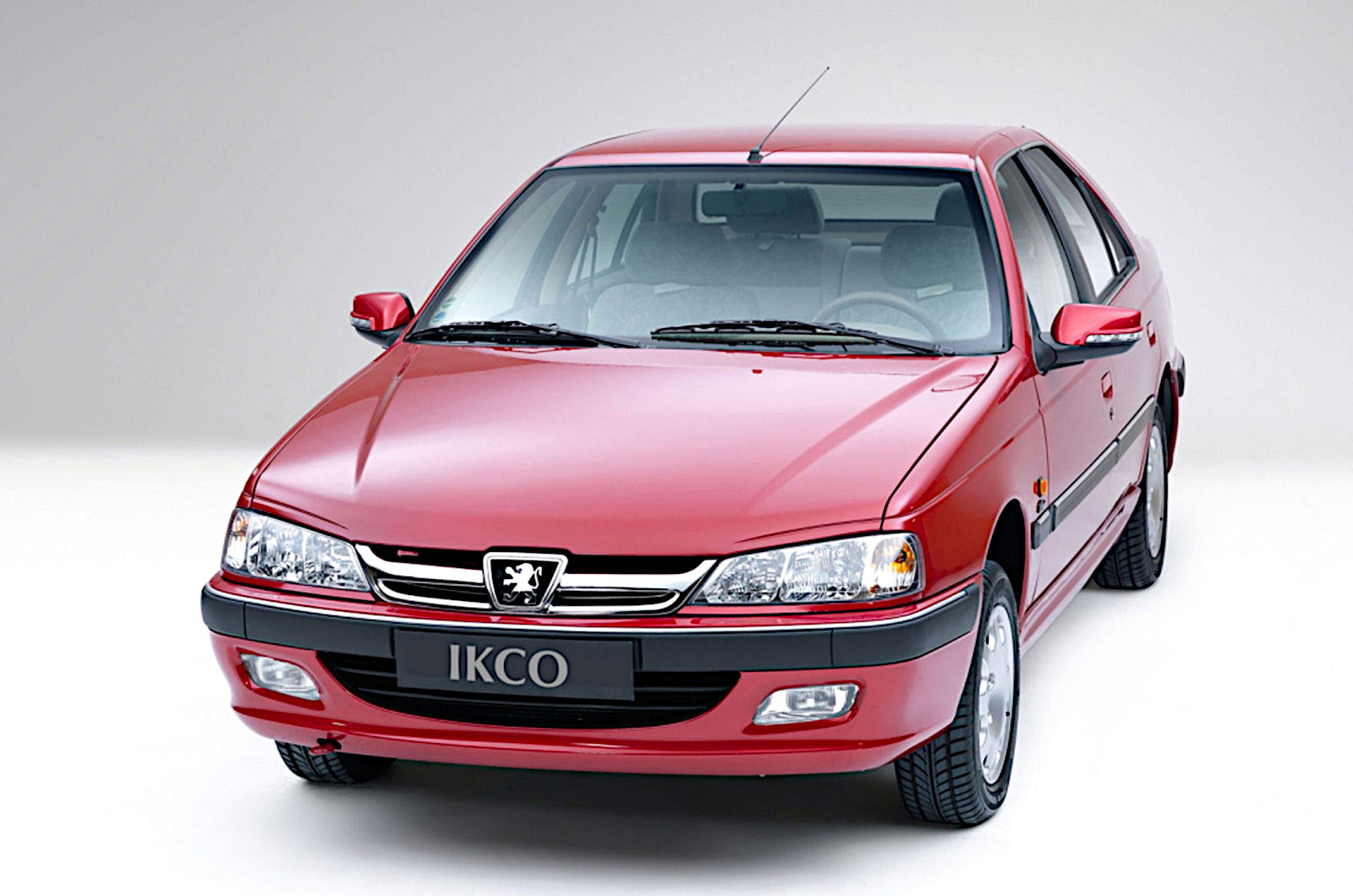
Iran Khodro, or IKCO, has both developed its own cars and manufactured ones designed by other companies. One of the most famous examples of the latter is the Peugeot Pars, which still looks very much the Peugeot 405 it really is, even though it has had several updates.
IKCO also builds produces its own versions of the Peugeot 207 and the much more recent Peugeot 2008.
Plymouth Cricket
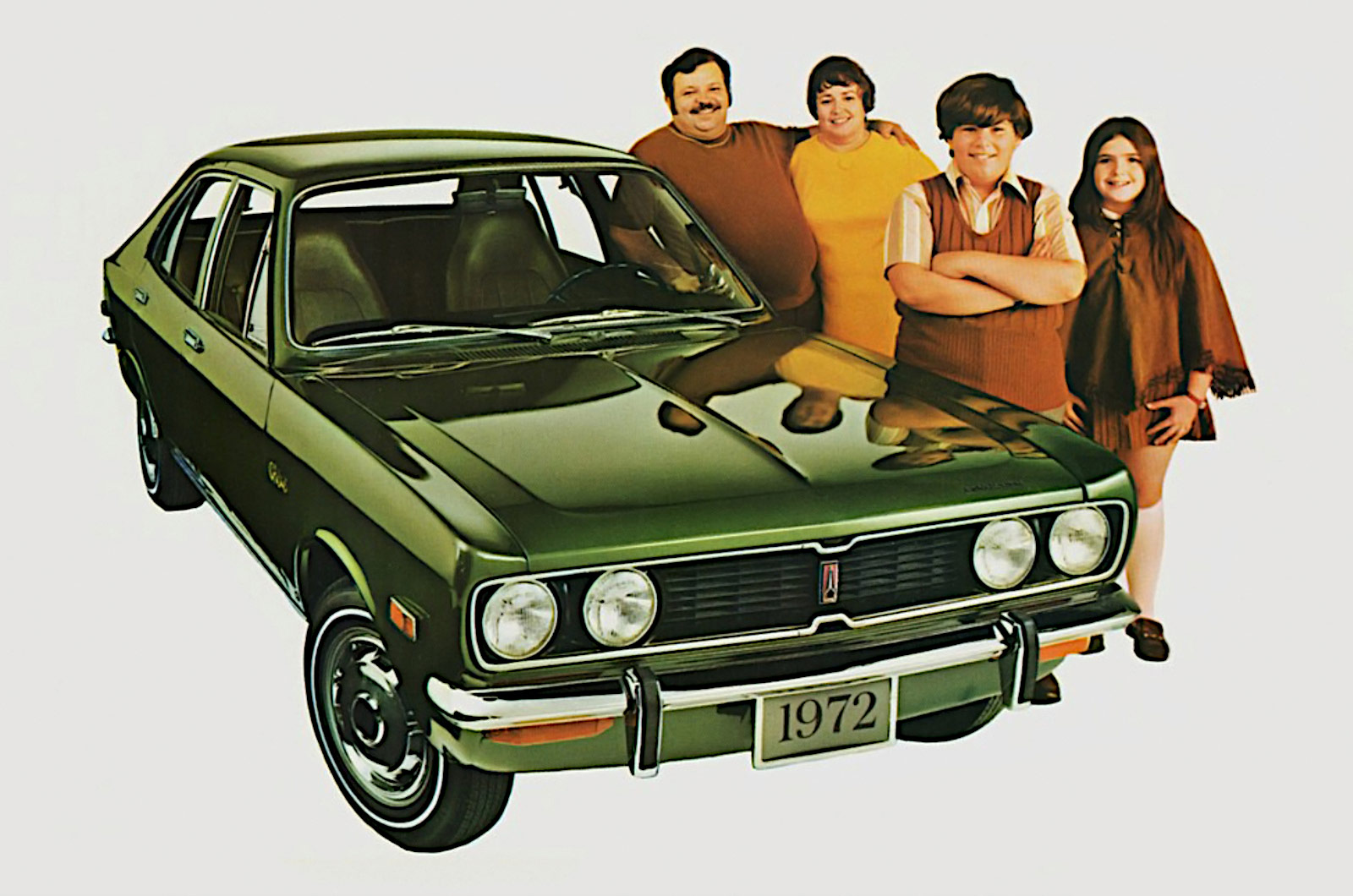
During the short existence of Chrysler Europe, the car normally known as the Hillman Avenger was rebadged as the Plymouth Cricket for North America, where the Hillman nameplate meant nothing. Despite winning the 1971 Press On Regardless rally, it proved to be very unpopular, and was discontinued in 1973, eight years before Avenger production came to an end.
It was followed almost immediately by a new Plymouth Cricket which was once again a badge-engineered car, this time based on the second-generation Dodge Colt.
Pontiac Torrent
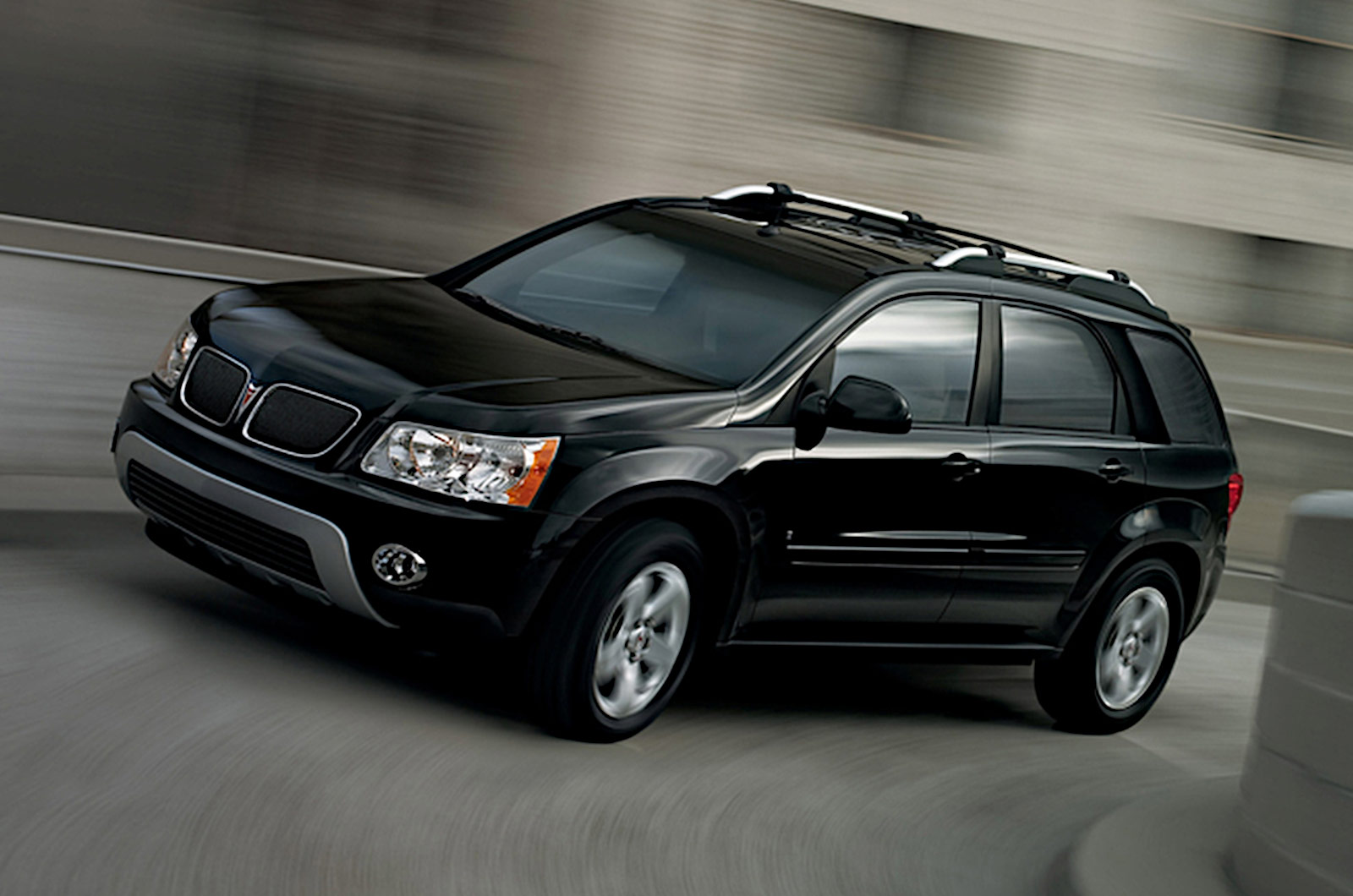
Although both ends were slightly restyled, only a few seconds’ study would make it evident that the Torrent, a mid-size crossover SUV launched in 2006, was neither more nor less than the first-generation Chevrolet Equinox introduced the previous year.
While the Equinox is heading into its fourth generation, there was only ever one Torrent. Any chance that there might have been more evaporated when General Motors closed Pontiac in 2010, 74 years after its creation.
Proton Pert
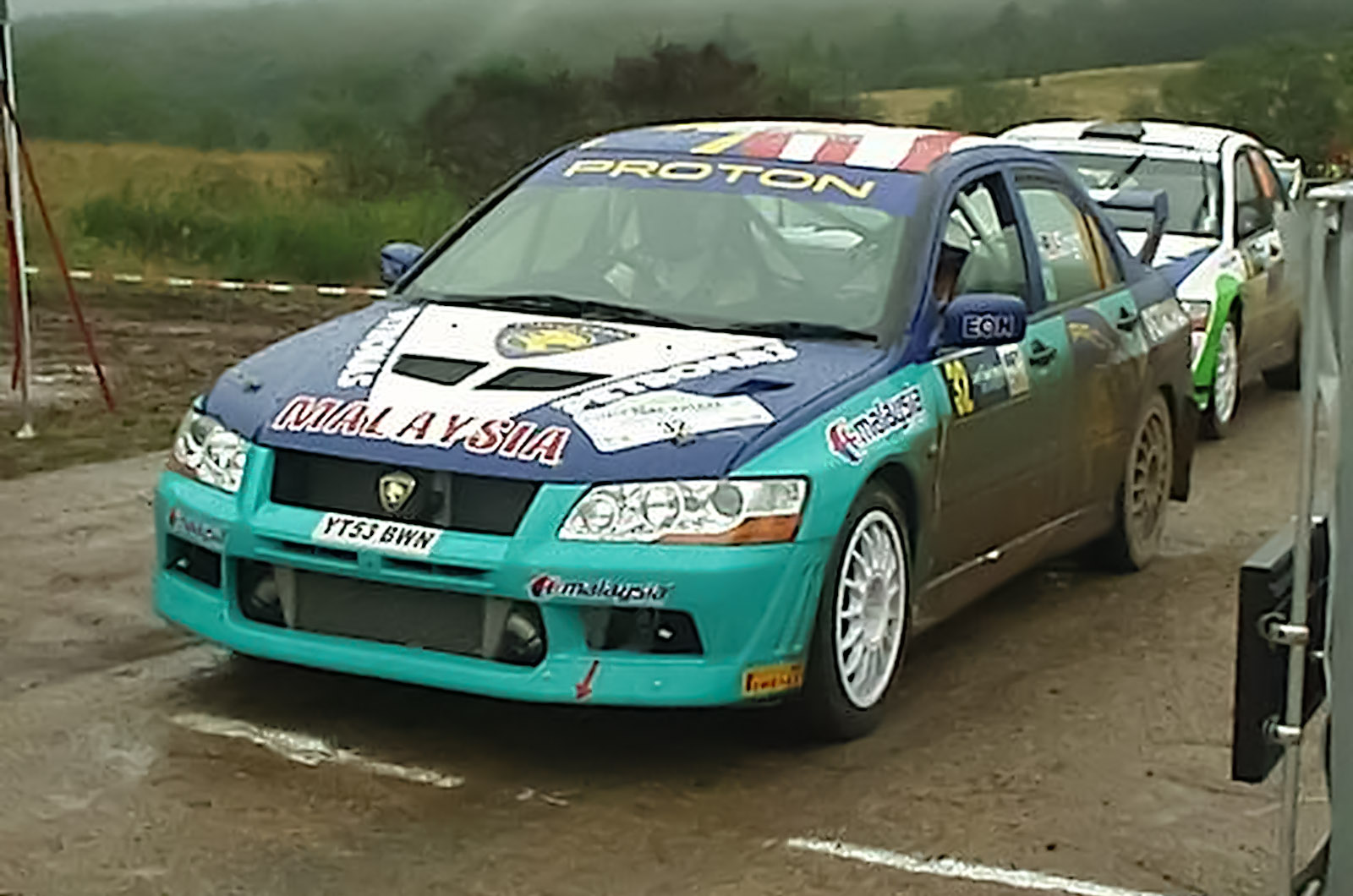
Some generations of the Mitsubishi Lancer Evolution were rebranded as Protons and given the name Pert, an acronym of Petronas EON Racing Team (EON being Edaran Otomobil Nasional, a company established in 1984 as a Proton distributor).
The Pert is most famous internationally for having won the 2002 Production World Rally Championship in the hands of Malaysian driver Karamjit Singh (born 1962), who beat Lancer Evo VIIs into second and third place over the course of the season.
Proton Tiara
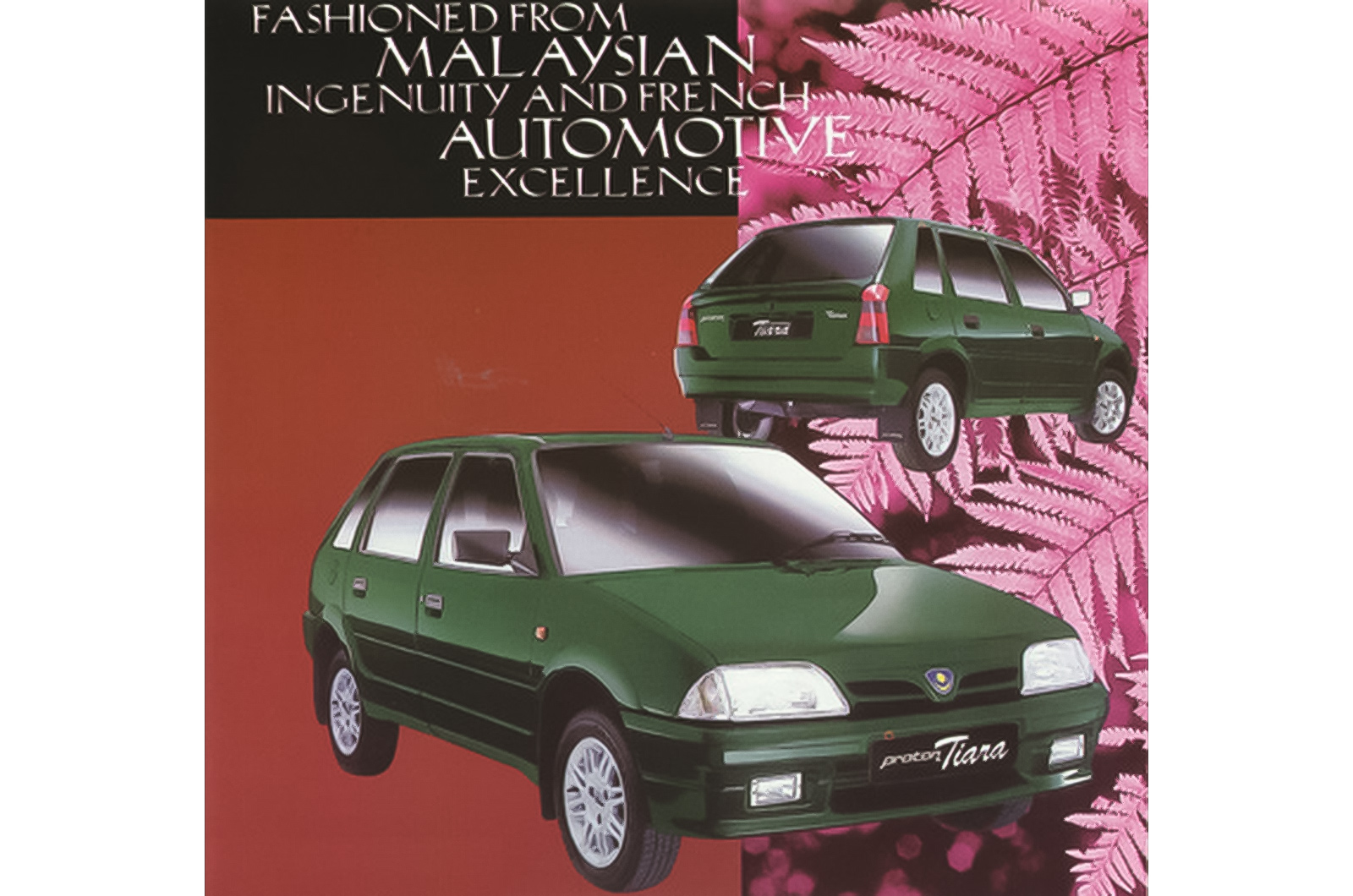
Protons built and sold in the 20th century were usually based on Mitsubishis in one way or another, but the Tiara was a unique case of one which was in fact a Citroën.
Specifically, it was a Citroën AX, that very light small car which was coming to the end of its production life when the Tiara arrived in the late 1990s. The Proton lasted slightly longer, but not beyond 2000.
Renault Alaskan
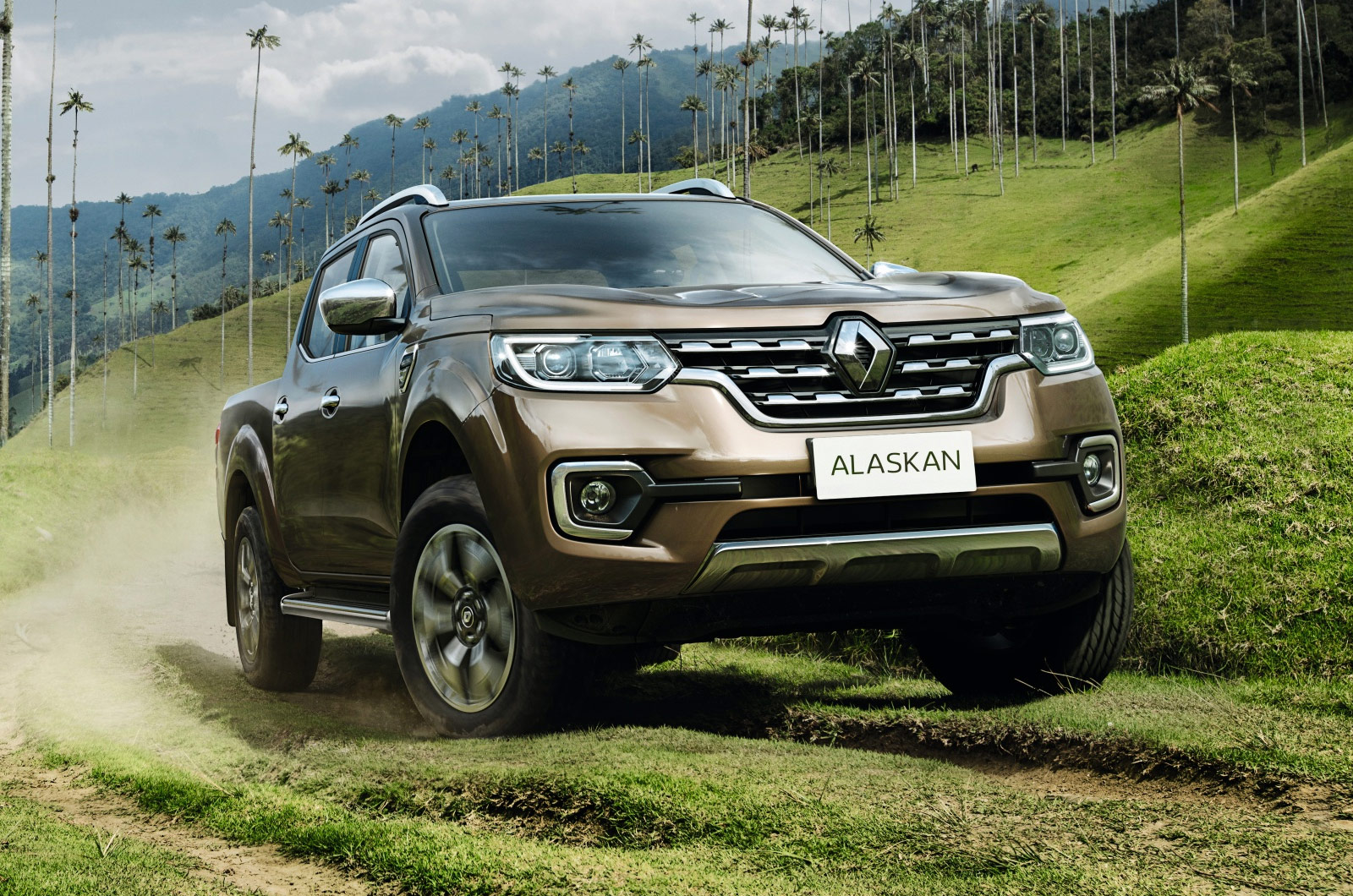
Like the discontinued Mercedes X-Class, the Alaskan is, barring some minor alterations to the design, a third-generation Nissan Navara.
Introduced in 2016, it became the longest-ever Renault (or at least Renault-badged) toad-going production vehicle, taking over from the 40CV luxury car which had been discontinued 88 years before.
Roewe 750
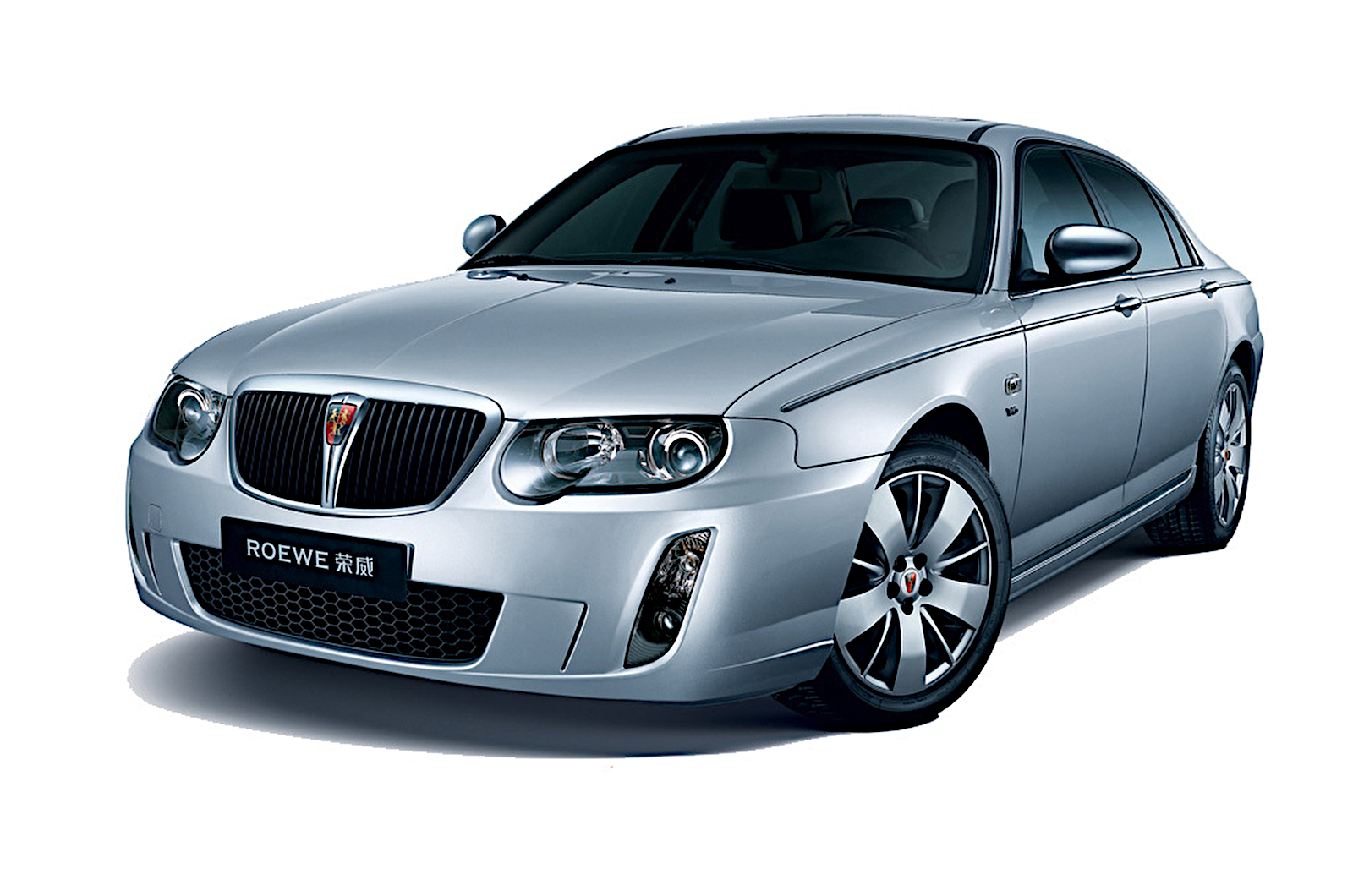
The 750 was the first model produced by Chinese manufacturer SAIC Motor after it bought the rights to the Rover 25 hatchback and the much larger Rover 75, but not to their names; the Rover name was owned by BMW, then sold to Ford, and then sold on to Tata Motors when it bought Jaguar Land Rover.
The 75 is the more important of the two in this context, since that’s basically what the 750 was, though there are just enough styling differences to make it clear that it was not precisely the same. Introduced in 2006, it remained in production for a full decade, until November 2016.
Rover CityRover
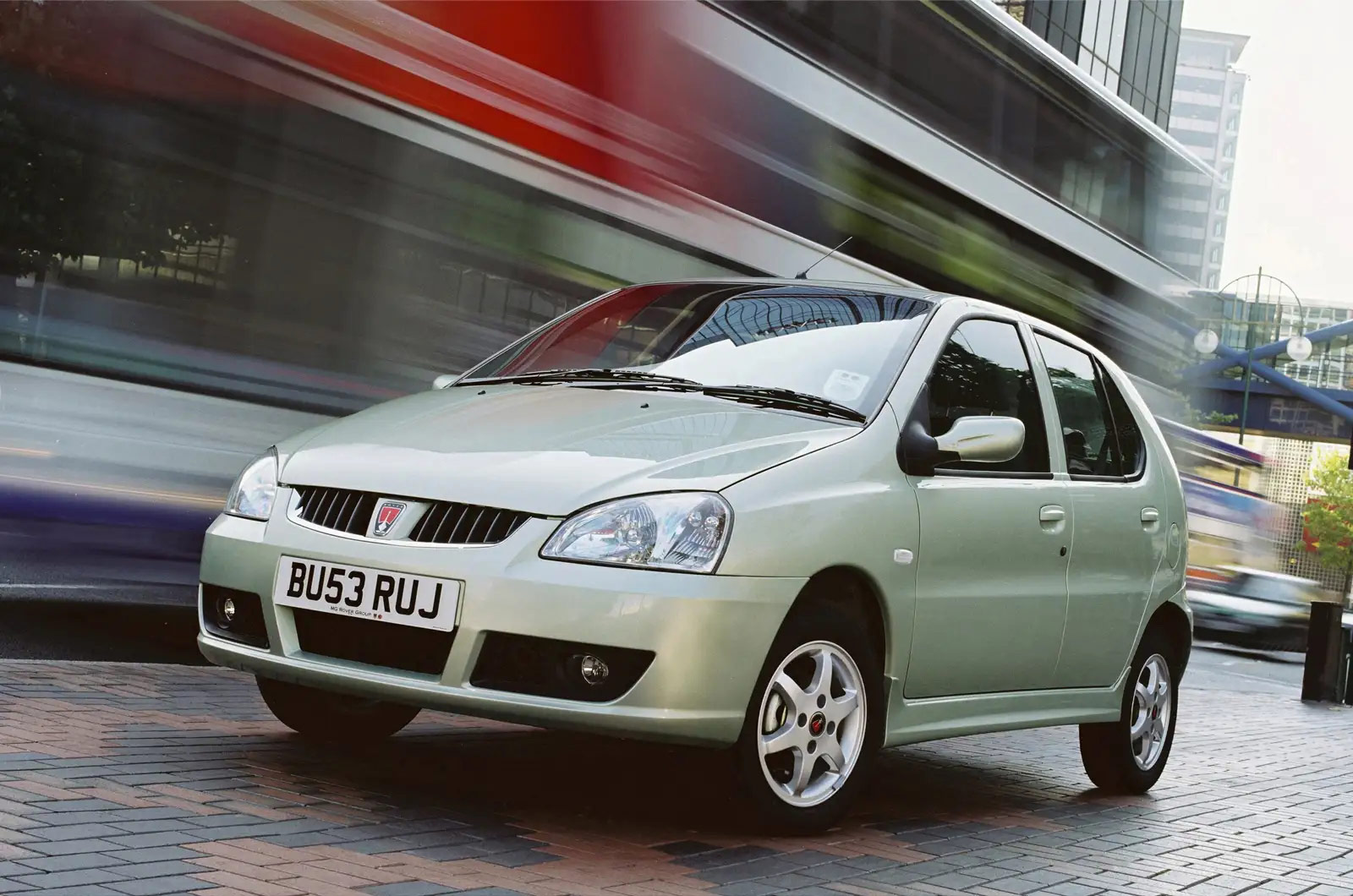
Except in the tiniest details, the CityRover introduced in 2003 was a Tata Indica designed and built by Tata Motors, which subsequently became – and is still – the owner of Jaguar Land Rover.
Motorists in different countries have different requirements. While the Indica was a success in India, it was robustly criticised in the UK as a poor attempt to keep MG Rover in business. As we wrote after it had gone, “A low price wasn’t enough to save the company.”
Saab-Lancia 600
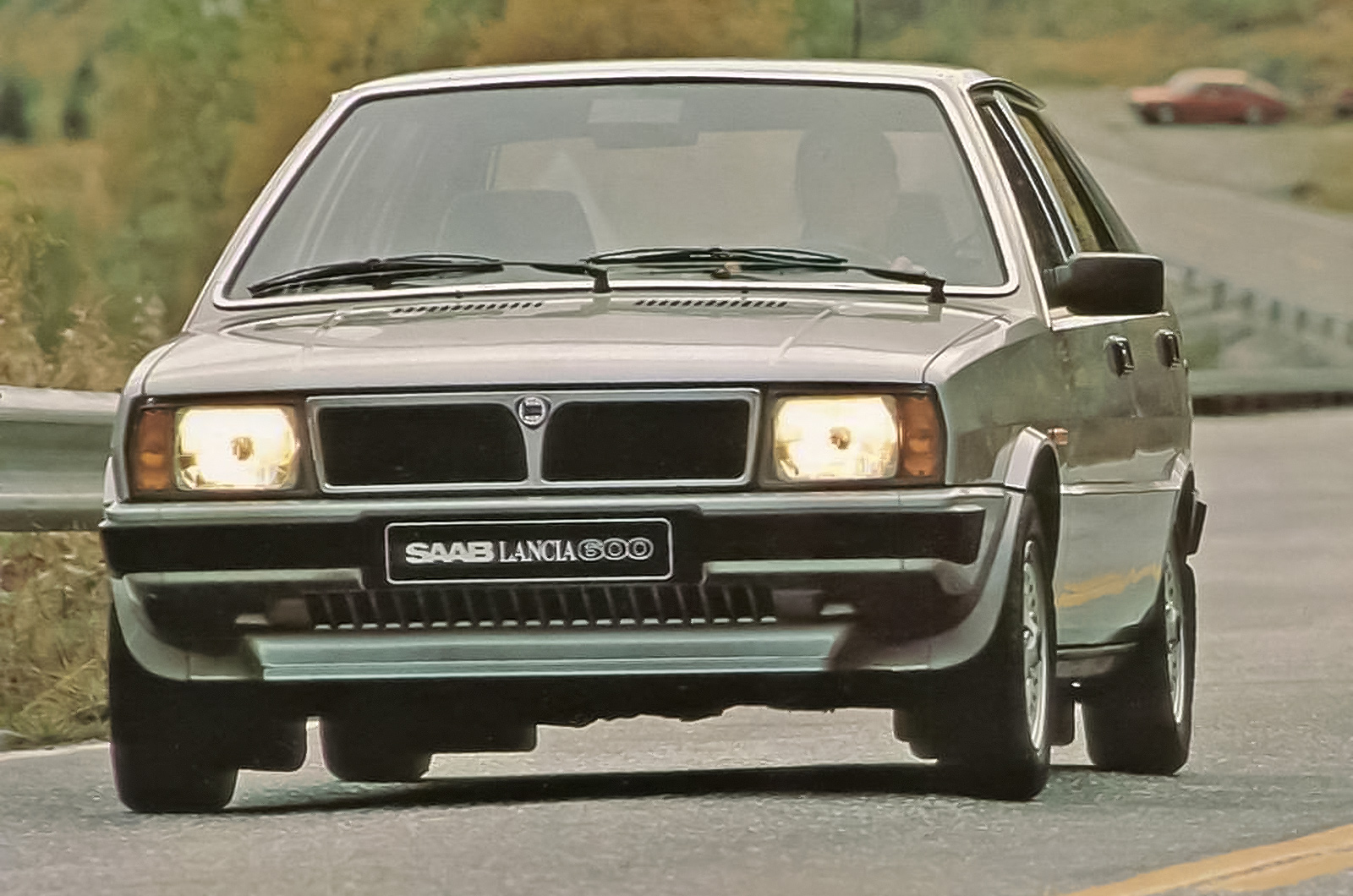
Once described as “the black, unexplored terrain of Saab history”, the 600 was unusual in that it wasn’t a Saab at all but an almost entirely unmodified Lancia Delta, even retaining a Lancia badge on the front grille.
Launched in Sweden, Finland and Norway in 1980, it quickly developed a reputation for being adversely affected by the salt spread liberally on the roads of those countries when they became icy, and was withdrawn after just two years.
Saturn Relay
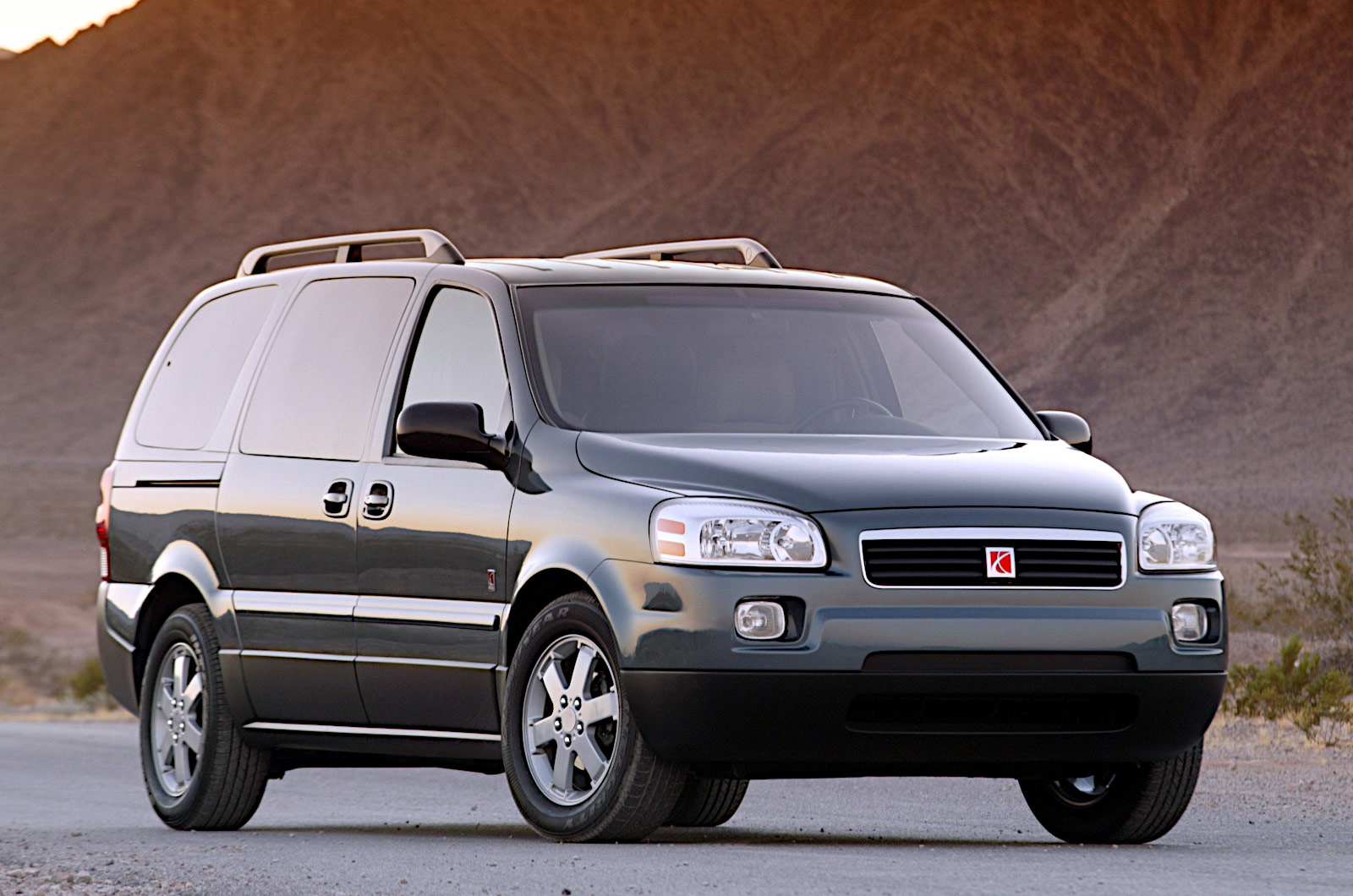
Towards the end of Saturn’s 25-year history, GM’s ‘different kind of car company’ brand produced a minivan called the Relay. It made its debut in the 2005 model year, the same time as the Buick Terraza, the Chevrolet Uplander and the second-generation Pontiac Montana, all of which were the same vehicle, though with very slightly different front-end treatments.
Like the Buick, the Saturn did not survive beyond 2007, though the Chevrolet and the Pontiac lasted slightly longer. Saturn itself was closed down in 2010.
Subaru Justy
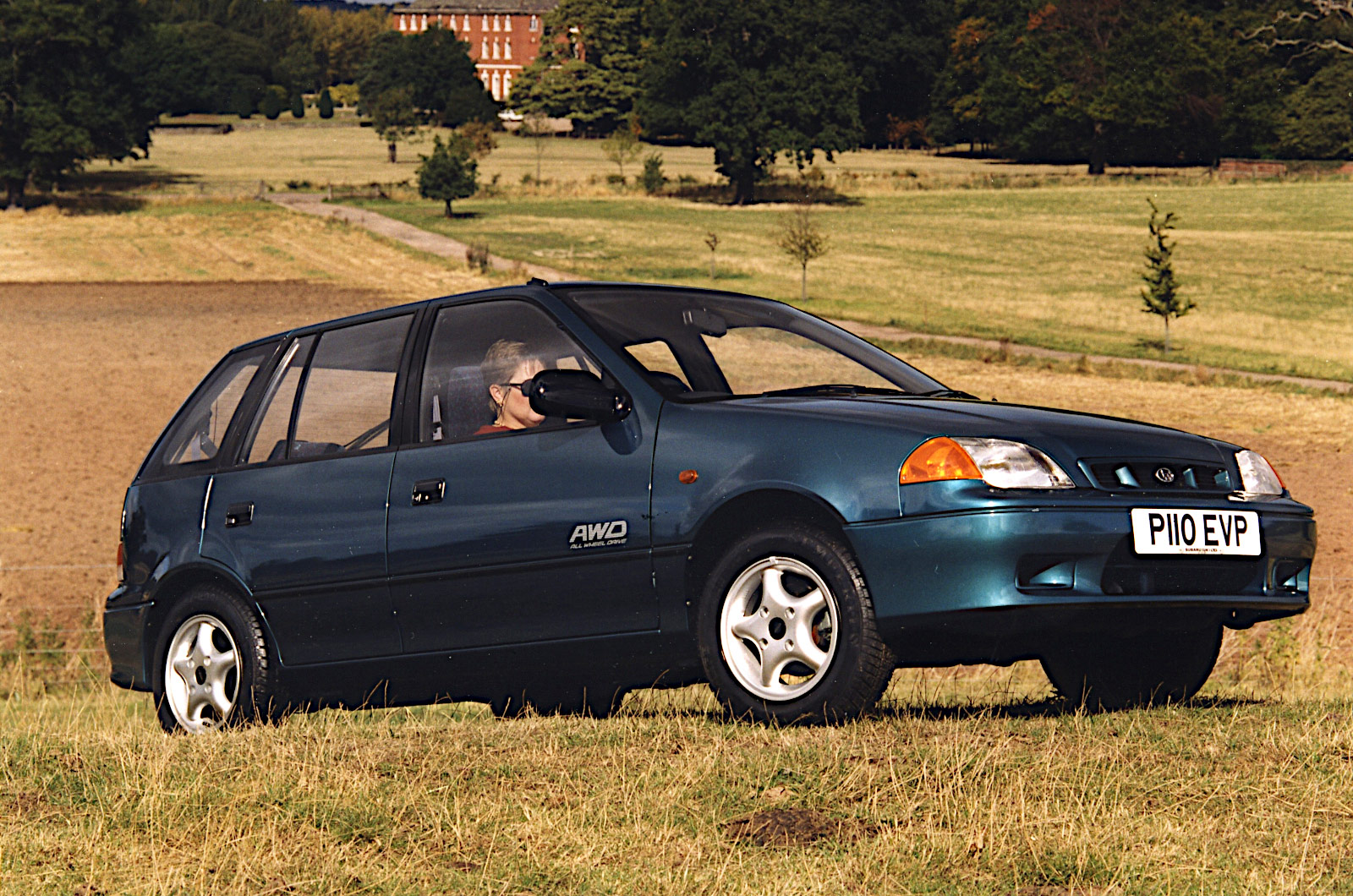
The second-generation Justy was almost identical to the second-generation Suzuki Swift. Oddly, for two cars marketed by Japanese companies, they were both built in Suzuki’s factory in Hungary.
The major difference between the two lay under the skin. By the 1990s, Subaru was globally famous for its four-wheel drive cars. The Justy accordingly came with 4WD as standard.
Subaru Pleo
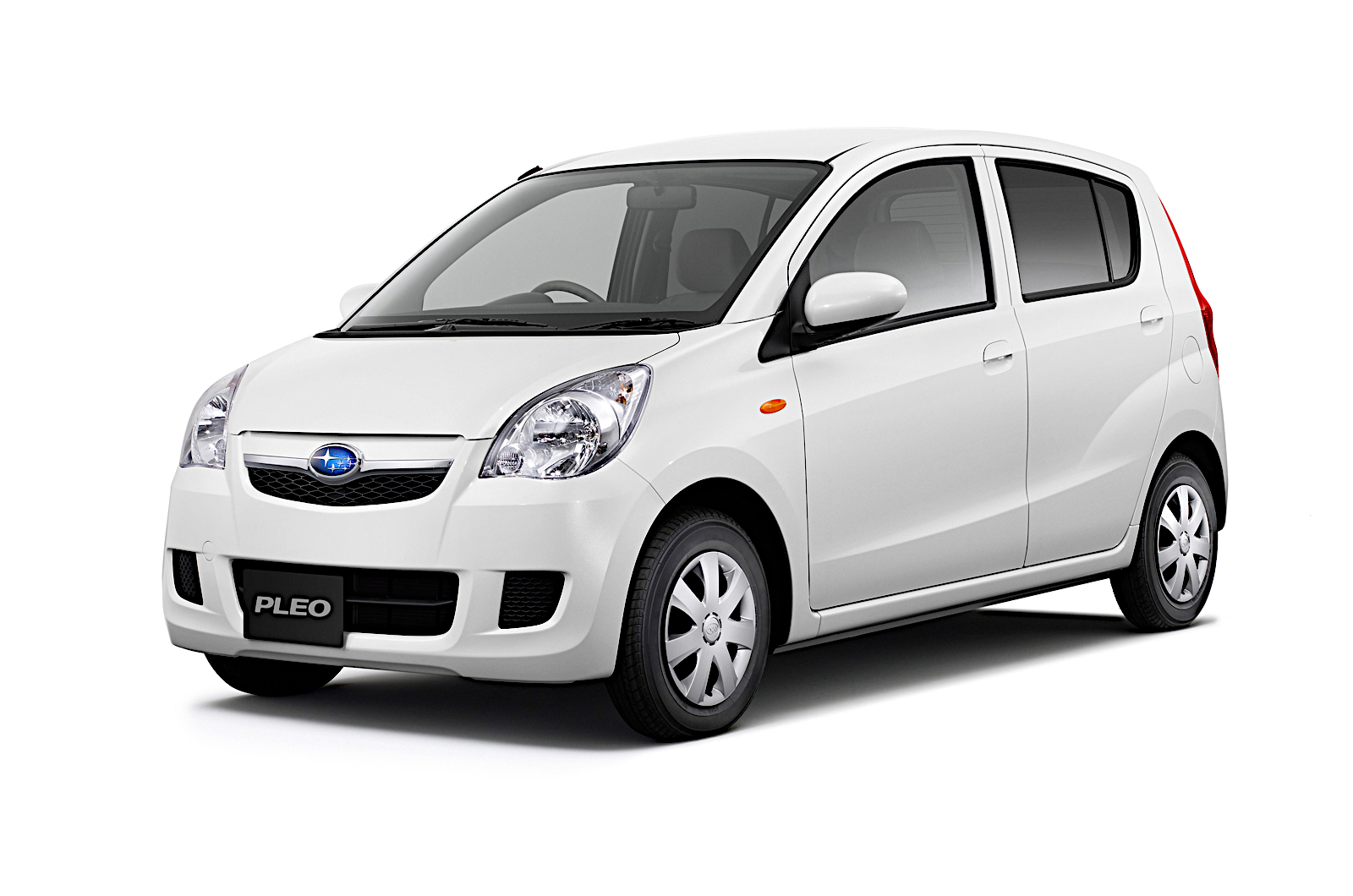
Subaru began making kei cars in 1958, and continued doing so until 2009, when its first-generation Pleo was discontinued. By now Toyota, a majority shareholder in Daihatsu, had a significant investment in Subaru too, and decided that there was no point in two brands it partly owned developing kei cars separately.
The second Pleo, therefore, was simply a Daihatsu Mira with Subaru branding. Both versions remained on the market until 2018.
Subaru Solterra
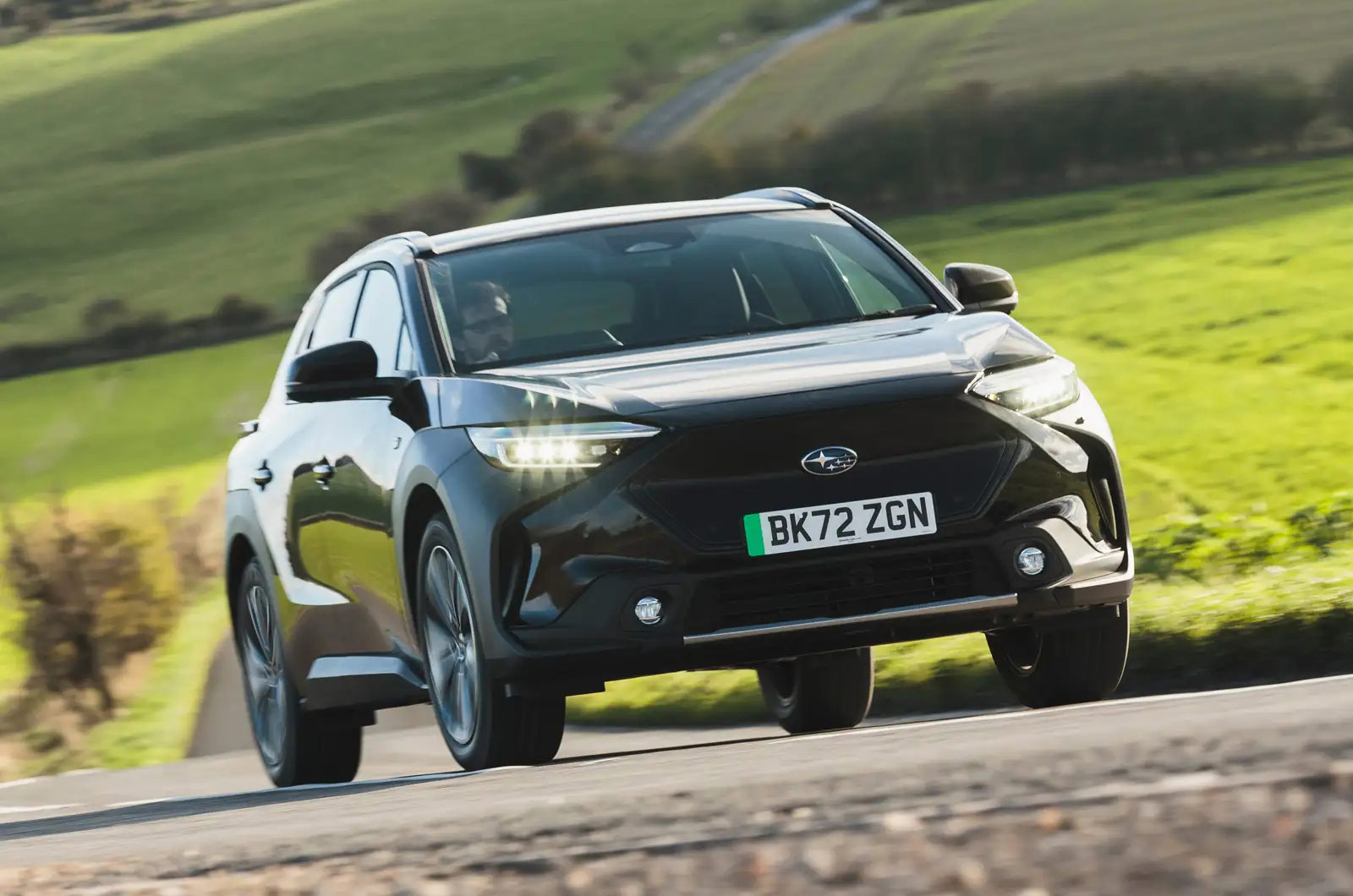
The partnership between Subaru and Toyota has led, among other things, to the creation of the Solterra, an all-electric crossover which amounts to a rebadged and very mildly redesigned Toyota bZ4X.
While the derivation of the name bZ4X isn’t immediately obvious, ‘Solterra’ comes from the Latin words for ‘sun’ and ‘earth’, emphasising Subaru’s ambitious claim that this is its “first global EV that aims to co-exist with nature”.
Suzuki Cara
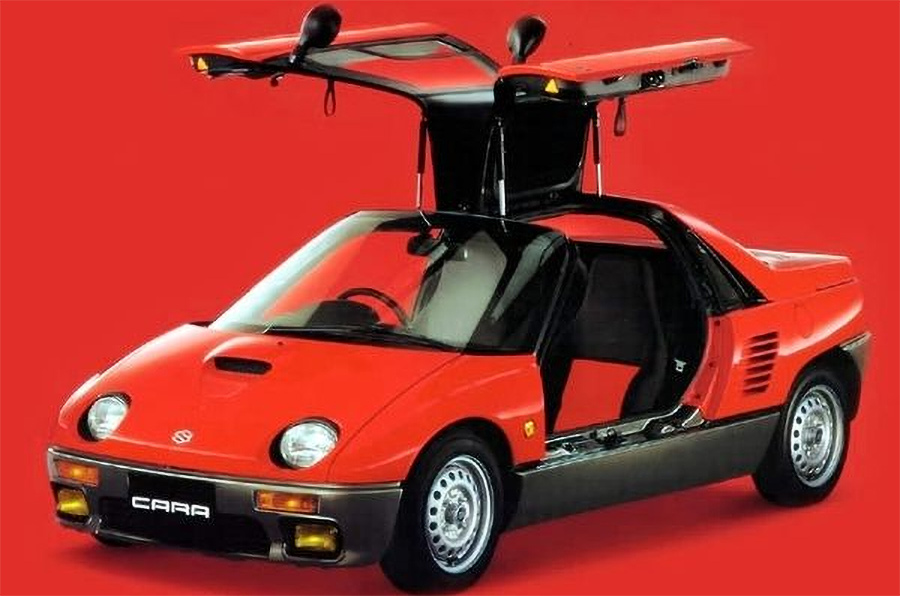
The Autozam AZ-1 was a kei sports car with gullwing doors, developed by Mazda. The Cara was the same thing, but with Suzuki badging.
However, there’s more to it than that. The history of the AZ-1 in fact begins with a Suzuki prototype which was dropped in favour of the less radical Cappuccino and picked up by Mazda. The production version was also powered by the same turbocharged 657cc three-cylinder engine used in the Cappuccino.
Toyota Glanza
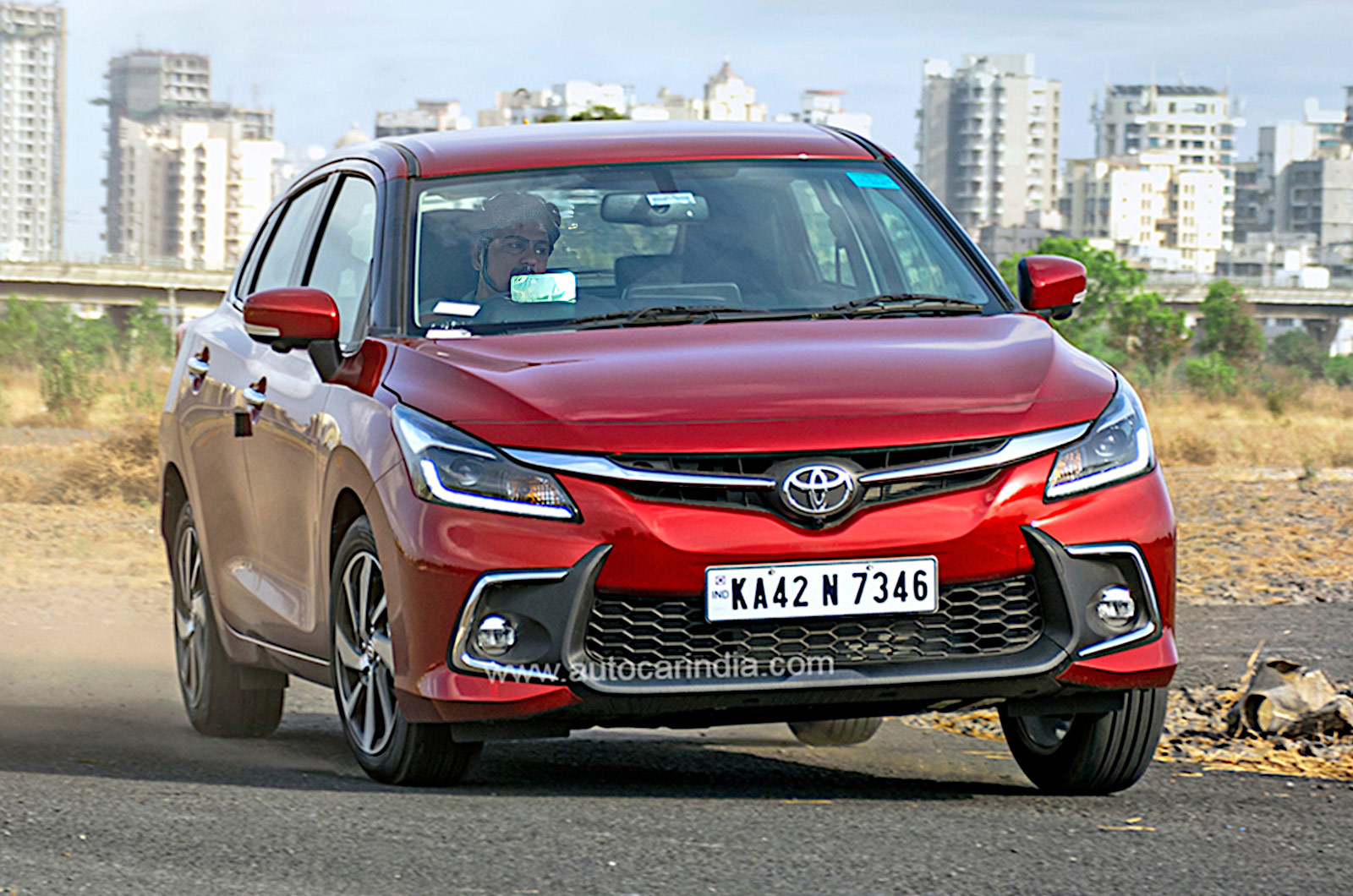
The Suzuki Baleno went on sale in India in 2015, and four years later gained a rival in the form of the Toyota Glanza, which was actually the same car. Both models moved into their second generation (pictured) in 2022.
Glanza is derived from the German word Glanz, which can be translated into English as ‘brightness’, ‘radiance’, ‘sparkle’ and various synonyms thereof. Toyota previously used it in Japan for a sporty version of the fifth-generation Starlet.
Vanden Plas Princess
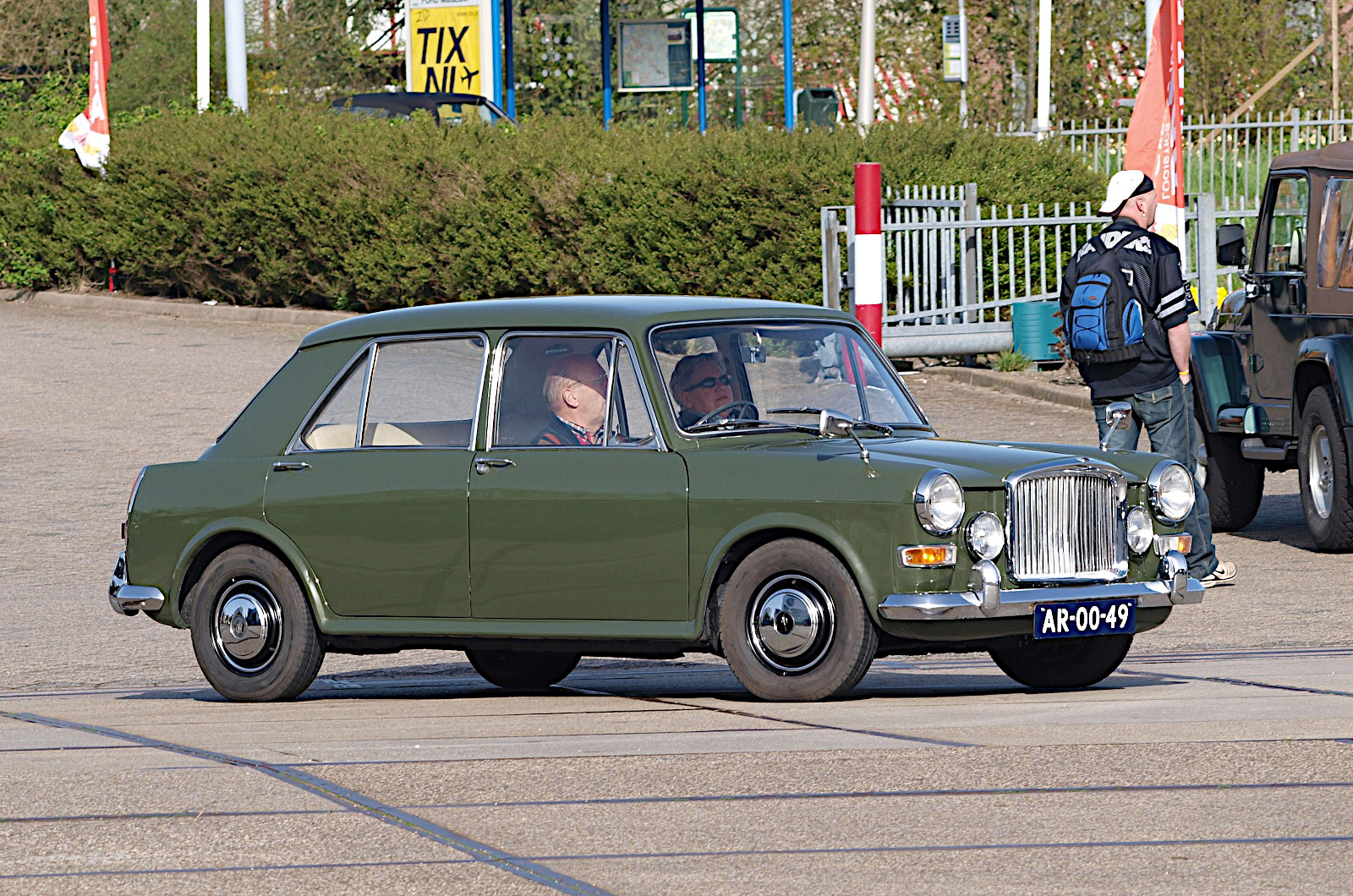
The British Motor Corporation car codenamed ADO16, always powered by a 1.1- or 1.3-litre A-Series engine, was one of the most popular models in the UK during the 1960s. It was also an extreme example of badge engineering, being marketed by the Austin, Innocenti, MG, Morris, Riley, Vanden Plas and Wolseley brands.
Today, Vanden Plas is perhaps the least well remembered of these. Its version of the car was notable, though not unique, for having an extravagant chrome front grille, but was structurally and mechanically the same as all the others. It had a delightful interior full of polished wood, with picnic tables on the back of the front seats.
Vauxhall VXR8
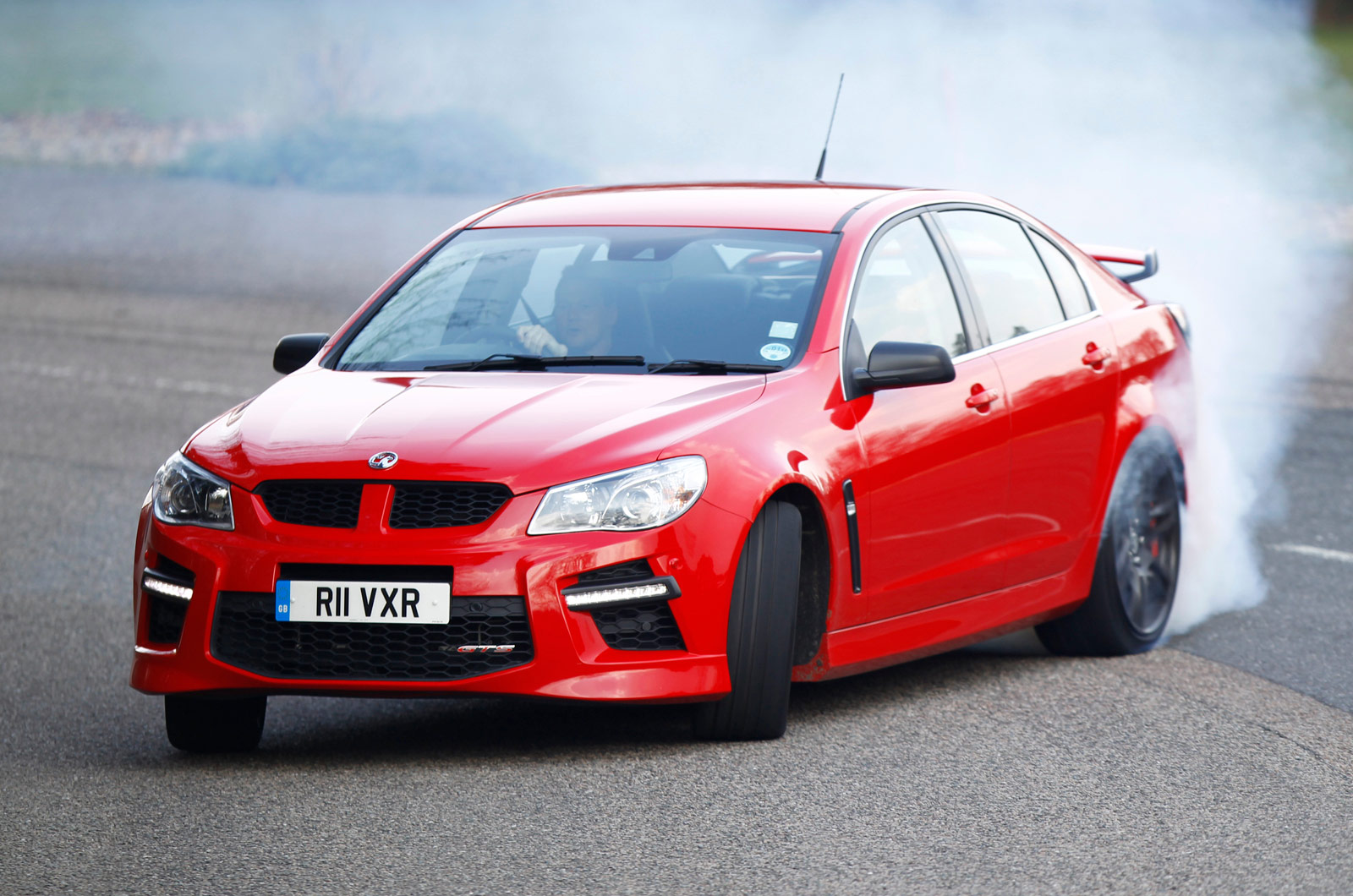
VXR8 was the name used for two generations of Vauxhall which weren’t really Vauxhalls at all. In fact, they were Holdens powered by Chevrolet V8 engines and imported from half a world away in Australia.
General Motors cancelled all Holden production in 2017, and that spelled the end for the VXR8.
Wolseley 6/99
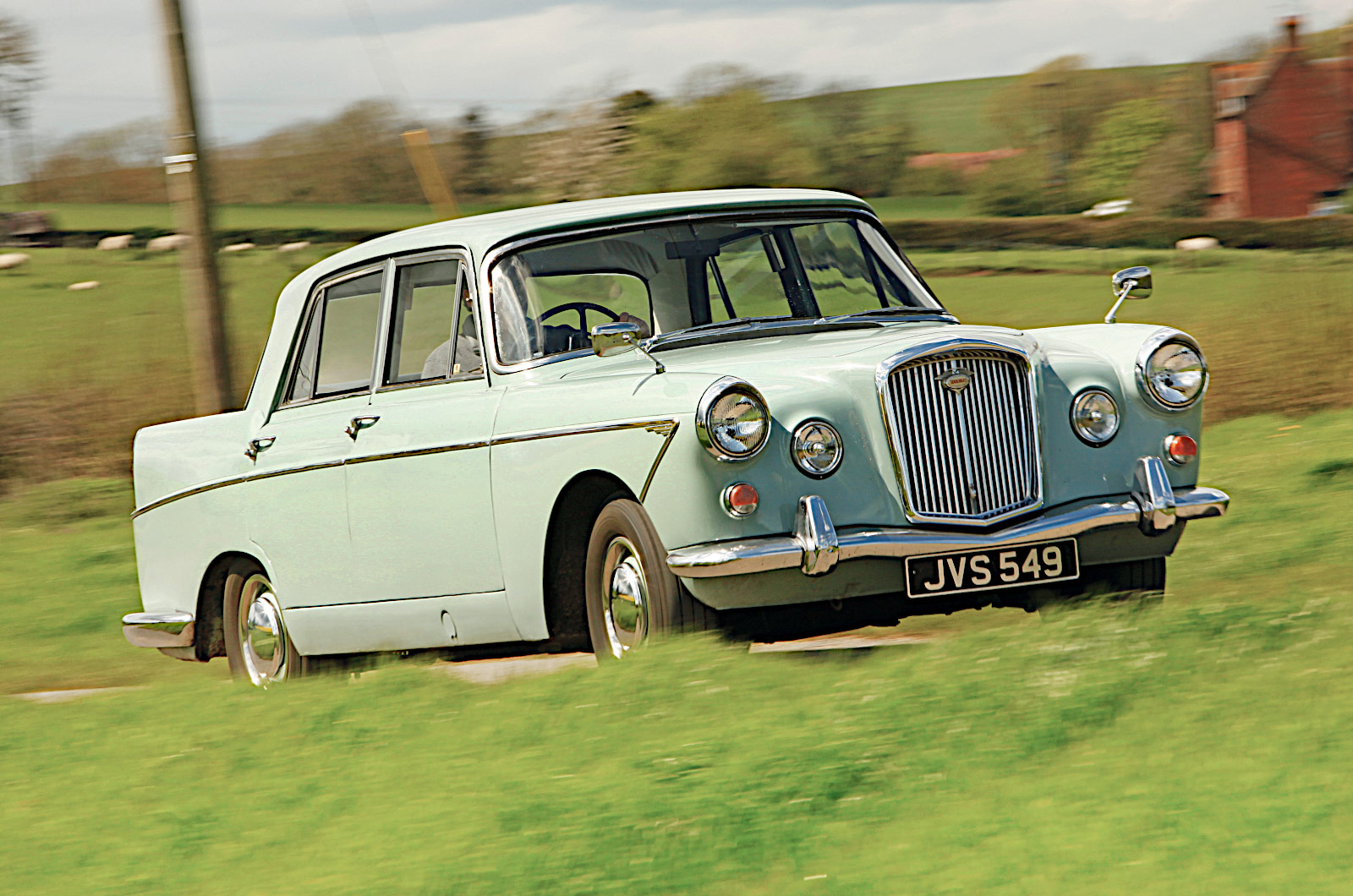
The Austin A99 Westminster introduced in 1959 was quickly joined by Wolseley’s badge-engineered equivalent. The mechanicals (including a 2.9-litre straight six engine) and Pininfarina-designed bodies were identical, but since Wolseley was a far more upmarket brand than Austin the 6/99 was made to look much grander.
A similar tactic was employed in 1961, when the cars were lengthened and became the Austin A110 Westminster and Wolseley 6/110 respectively.

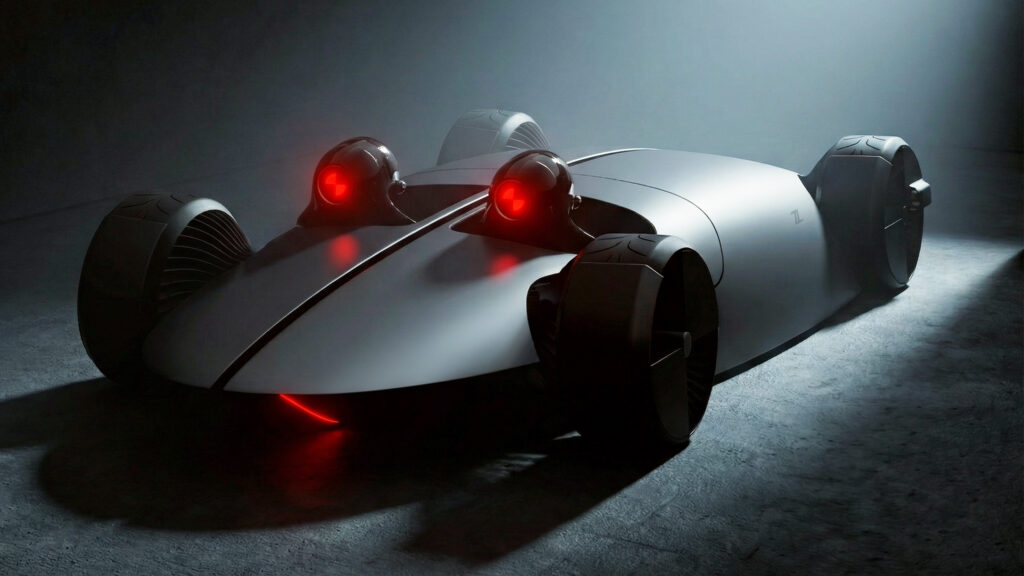
BMW Z/Z Concept Reimagines the Electric Roadster Through Modular Design and Analog Innovation

Auto Dealer Accountability at Stake as Lawsuit Alleges Unilateral Price Hike and Deceptive Sales...


Euro NCAP’s Overhaul of Driver Assistance Testing Signals Shift Toward Adaptive, User-Centric Vehicle Safety...
 Changes to testing regime include using systems in the real world, while pushing for adaptive technology
New safety features that adapt to individual drivers are expected to make their way into cars by the end of the decade – and it is hoped this will increase motorists' acceptance of advanced driver assistance systems (ADAS) anid growing scepticism of the tech, Europe's main vehicle safety body, Euro NCAP, has told Autocar.
In 2019, the EU introduced General Safety Regulations 2 (GSR2), which mandate the fitment of ADAS on all new models launched from 2022 and all cars registered from 2024 onwards. Technologies that became compulsory include intelligent speed assistance (ISA), emergency lane keeping (ELK) and autonomous emergency braking (AEB).
However, driver acceptance of the systems has been mixed. A survey commissioned by automotive risk analyst Thatcham Research found that 82% of drivers in the UK reported feeling safer with ADAS fitted to their car but almost a quarter regarded the features as distracting, irritating or intrusive, leading some to turn them off entirely (even though this must be done each time the vehicle is started).
In order to counter this scepticism, a key feature that ADAS must deliver next is the ability to adapt to each driver, because current systems can be too intrusive, leading to distrust, explained Adriano Palao, ADAS technical manager at Euro NCAP.
The organisation not only crash tests and safety rates new cars but also works with the industry to create new safety tech. "We only want to make ADAS better," he said. "I am on a mission to achieve this. It's a fundamental turning point in the technology, and we want to encourage OEMS to take this approach."
More intelligence required
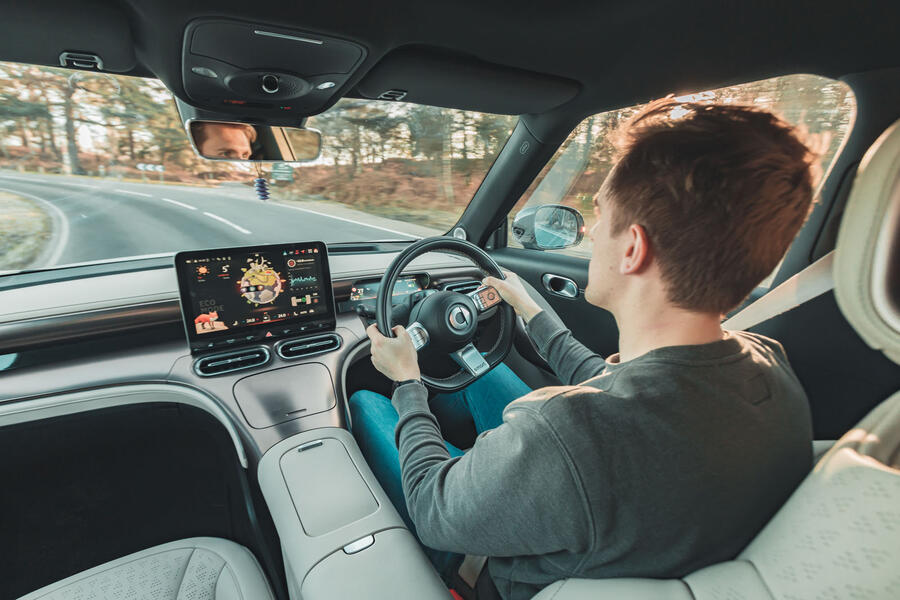
One thing that must change, said Palao, is the ability of systems to "understand what condition the driver is in". He explained: "This is important. If you understand that, you can make your ADAS better."
As an example, he cited lane keeping assistance, a system that attempts to keep the car in the centre of a lane by using a camera to monitor road markings and then takes over the steering to adjust the car's position as necessary.
"I consider lane keeping assist absolutely useless when i am in control," he said. "At such times, I don't want it to correct my trajectory at all. A good driver monitoring system will know if the driver is paying attention so that ADAS will intervene only when required."
Palao also criticised driver monitoring systems that don't distinguish between different levels of driver distraction - something that "can cause issues of acceptance among drivers and feelings that the system is patronising them".
He continued: "We need to understand that drivers will for legitimate reasons engage in distracting activities, such as turning off the radio or changing the temperature. We don't want the system to warn for this."
Tailored seatbelts and airbags; more cameras
Euro NCAP is pushing for restraint systems to become smarter too. Palao explained that sensors capable of detecting the dimensions and shapes of the driver and front passenger will ensure the load limiter on the restraint system is tuned to deliver the best interventions.
The system will also manage the inflation area and deployment of the airbags so that their explosive force is dissipated in a less potentially harmful way, again depending on the occupant.
In-cabin cameras will also be installed to detect seatbelt misuse. Palao said: "Some taxi drivers, for example, who find the seatbelt uncomfortable, bypass the alarm system with fake buckles, but a camera will detect this and trigger an audible warning.
"Using a camera, it will also be possible to detect If a passenger has their feet on the dashboard and how close individuals are sitting to the airbags."
What about hands-off driving?
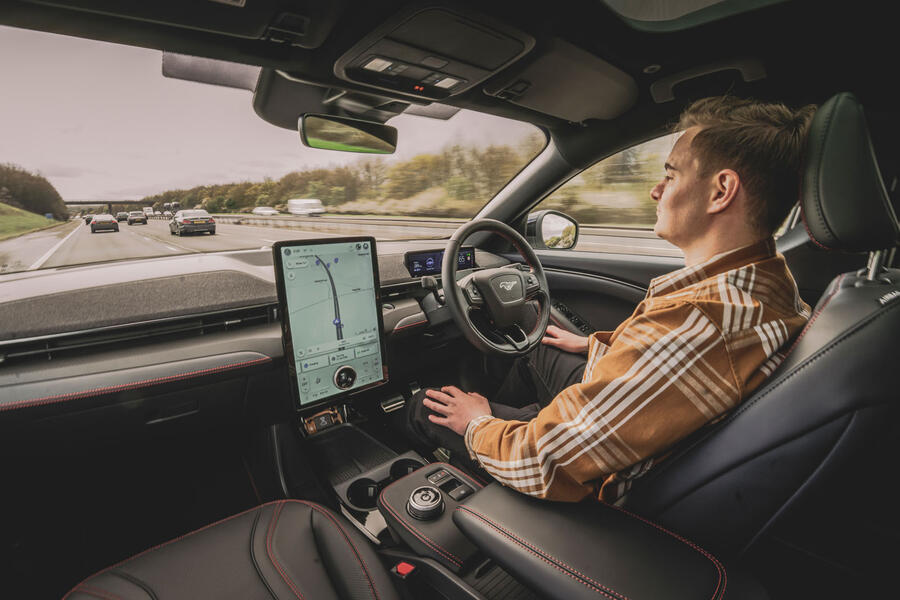
Semi-autonomous car technology is expected to become more widely available in the next decade - but some firms already offer it today.
Last month, the Netherlands Vehicle Authority gave Tesla permission to deploy its optional Full Self-Driving (FSD) Supervised system an Model 3 and Model Y cars on Dutch roads. The system, which went live in the US several years ago, enables the car to drive itself from point to point, albeit with the driver's eyes fixed on the road.
Other car makers offer systems that are similar but more limited. Ford's BlueCruise, for example, has the same semi-autonomy as FSD but is regulated for use in designated 'Blue Zones' only, which are mostly motorways.
Mercedes-Benz's level-three Drive Pilot system an option for the S-Class and EQS saloons - can be used only on specific roads in Germany, California and Nevada, only in traffic, only at up to 40mph and only where the weather is clear and road markings are visible.
Palao didn't criticise FSD but questioned aspects of its implementation. especially given Tesla's lack of participation in Europe's safety programmes.
"It's a breakthrough system, but what is Euro NCAP's role?" he asked. "We liaise with Tesla but the company is planning its own roadmap without collaborating with us, and we need to understand if it is doing so in a safe manner."
Palao said Euro NCAP's ignorance of Tesla's methods extended to FSD's driver monitoring technology: "What does it mean for the driver to have their eyes on the road with this system? They could be watching a film on their phone mounted on the steering wheel, fooling the system they are looking at the road. We don't have enough information to say whether it is good or bad."
He added: "We mustn't forget that if you crash using Tesla's FSD system, you, the driver, are liable."
Euro NCAP to start road testing ADAS
Euro NCAP will, for the first time, test vehicles on public roads to find out how reliable and accurate current ADAS features are amid growing scepticism among motorists of the safety technologies.
Euro NCAP's new 'on-road driving evaluation programme aims to understand these and other criticisms of ADAS.
Starting this year, every vehicle that it tests will be equipped with a suite of additional exterior and interior 'ground truth' sensors to accurately monitor speed limits and record how the vehicle responds to them. It will be driven a total of around 1200 miles in at least three European countries, with every reaction logged.
"We have worked on ADAS for years and now we want to make sure the technologies are delivering not only on the test track but on the road," said Palao. "For example, is (the lane keeping assist annoying and aggressive? What is the accuracy of the speed limit information? Were there any false braking events? This is the first time we have sought to find out what is the experience of the end consumer."

STLA AutoDrive’s Level 2++ Reboot Signals Stellantis’ Strategic Pivot Toward Scalable Urban and Highway...

Drug Smuggling Hidden in Plain Sight as Skims Shipment Conceals $9.7 Million in Cocaine...


GM’s Indiana Battery Plant Pause Exposes the Volatility of U.S. EV Investment Amid Policy...

Muscle Cars and the Enduring Appeal of American Automotive Power

Concept Cars as Catalysts of Innovation: How Radical Prototypes Shaped Eight Decades of Automotive...
 Some go nowhere, but other concept cars really point to the future. We take stock of the most interesting and influential ones ever made
Too often, the term ‘concept car’ is now used to describe a thinly veiled production model that’s about to hit showrooms.
But it wasn’t always like that; there was a time when the description was reserved for the most cutting-edge designs that showed just how fertile an imagination could be.
Here we take a look at more than eight decades of some of the most forward-thinking, influential concept cars ever created, but even with 10 times as many entries we could only ever hope to scratch the surface. Enjoy the ride:
Buick Y-Job (1939)
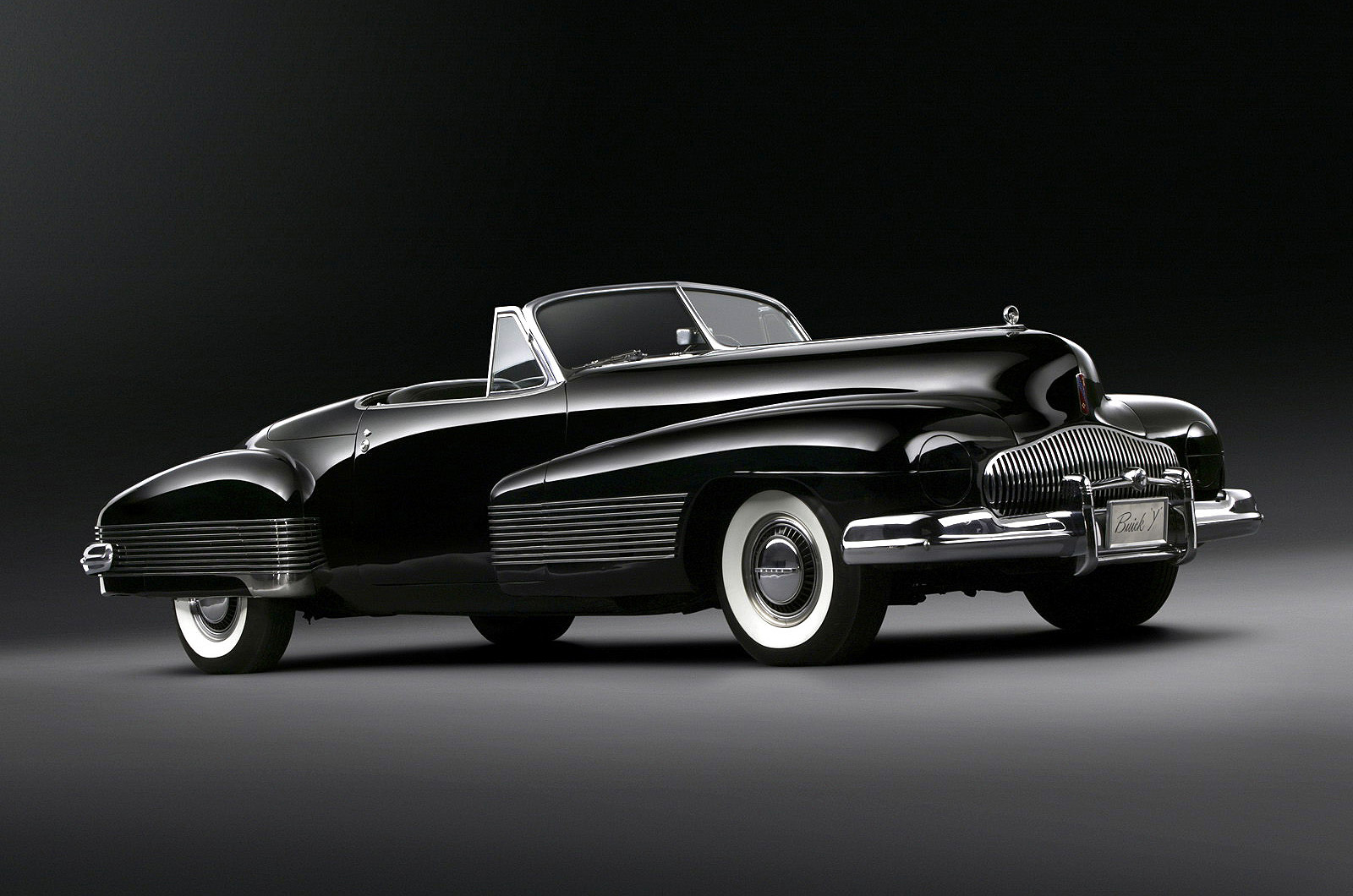
General Motors’ Y-Job is now considered to be the world’s first concept car; it wasn’t, as that title going to the Volvo Venus Bilo of 1933. But the Y-Job did make GM’s design boss Harley Earl famous.
Undeniably forward-thinking, the Y-Job featured hidden headlights, electric windows and a powered roof, concealed under a hard tonneau, and setting out overall design cues for American cars that would emerge after World War Two.
Buick LeSabre (1951)
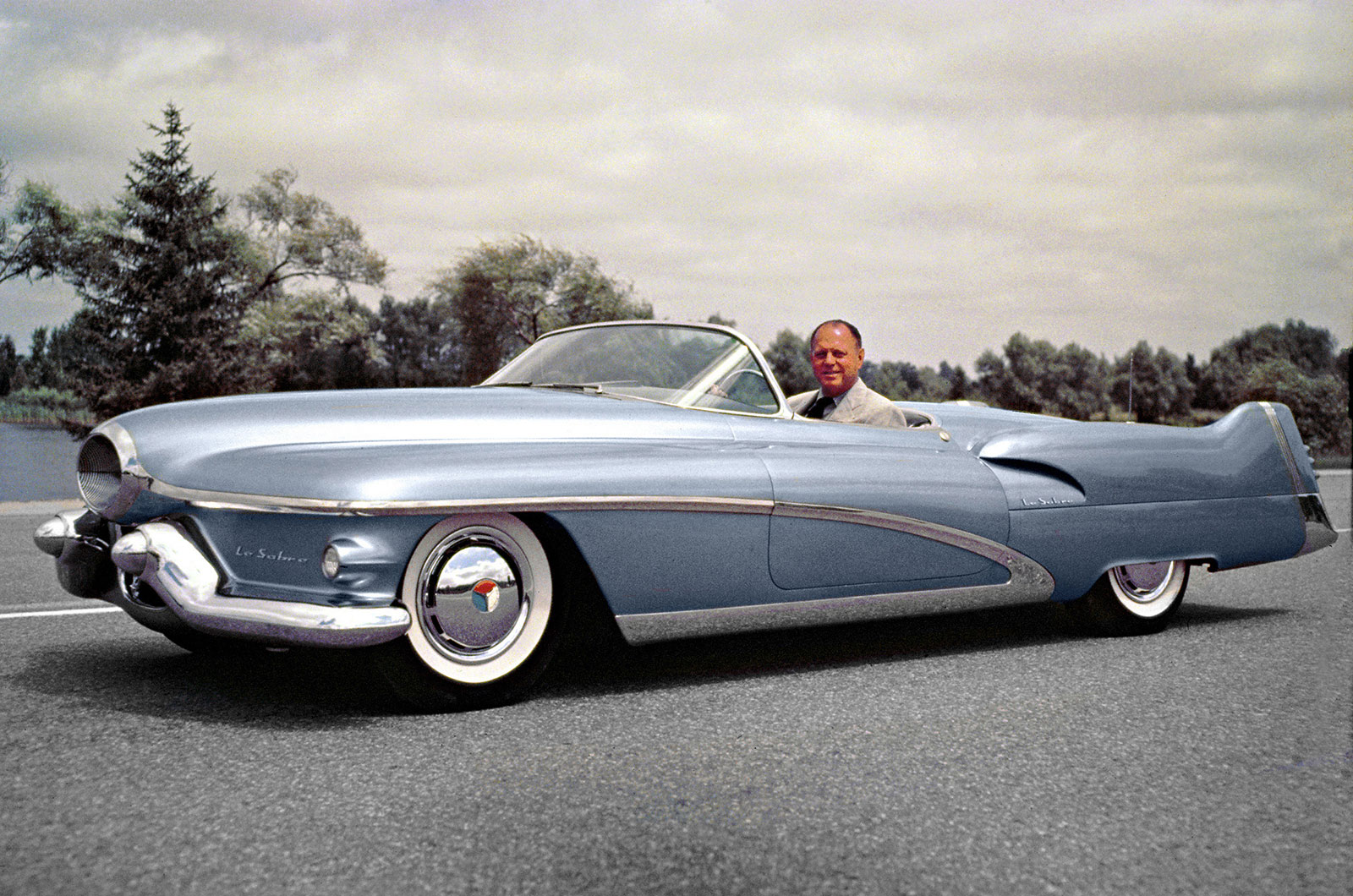
For an encore to his Y-Job, Harley Earl (pictured) came up with the LeSabre, which perfectly captured the optimism of the jet age and America’s long post-war boom. Sitting a foot lower than contemporary production cars, the 335bhp V8-equipped LeSabre came with a wrap-around windscreen, hidden headlights and huge tailfins that set a trend for America’s Big Three throughout the 1950s.
It also incorporated a powered roof that could be activated automatically in the event of rain. It also brought in a fashion for jet-age American concepts - and production cars - that would last for over a decade. So strap yourself in for the next few cars in this story:
Ford XL500 (1953)
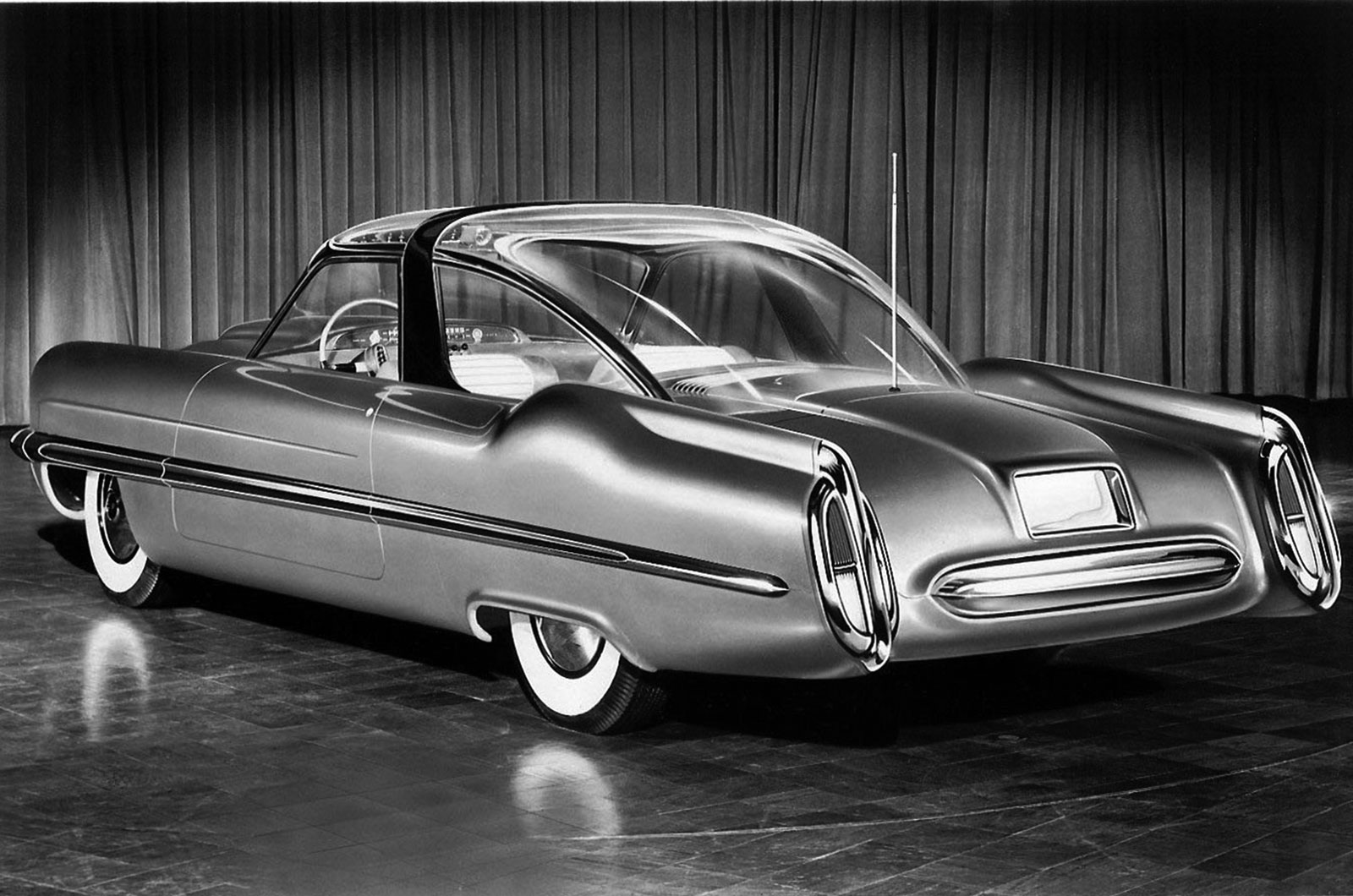
With push-button automatic transmission the XL-500 was supposed to provide effortless driving. The goldfish bowl problem presented by all that glass would be resolved by the then emerging technology of air conditioning that it featured.
Standard equipment also included a telephone and built-in jacks in the event of a puncture.
Alfa Romeo BAT 5 (1953)
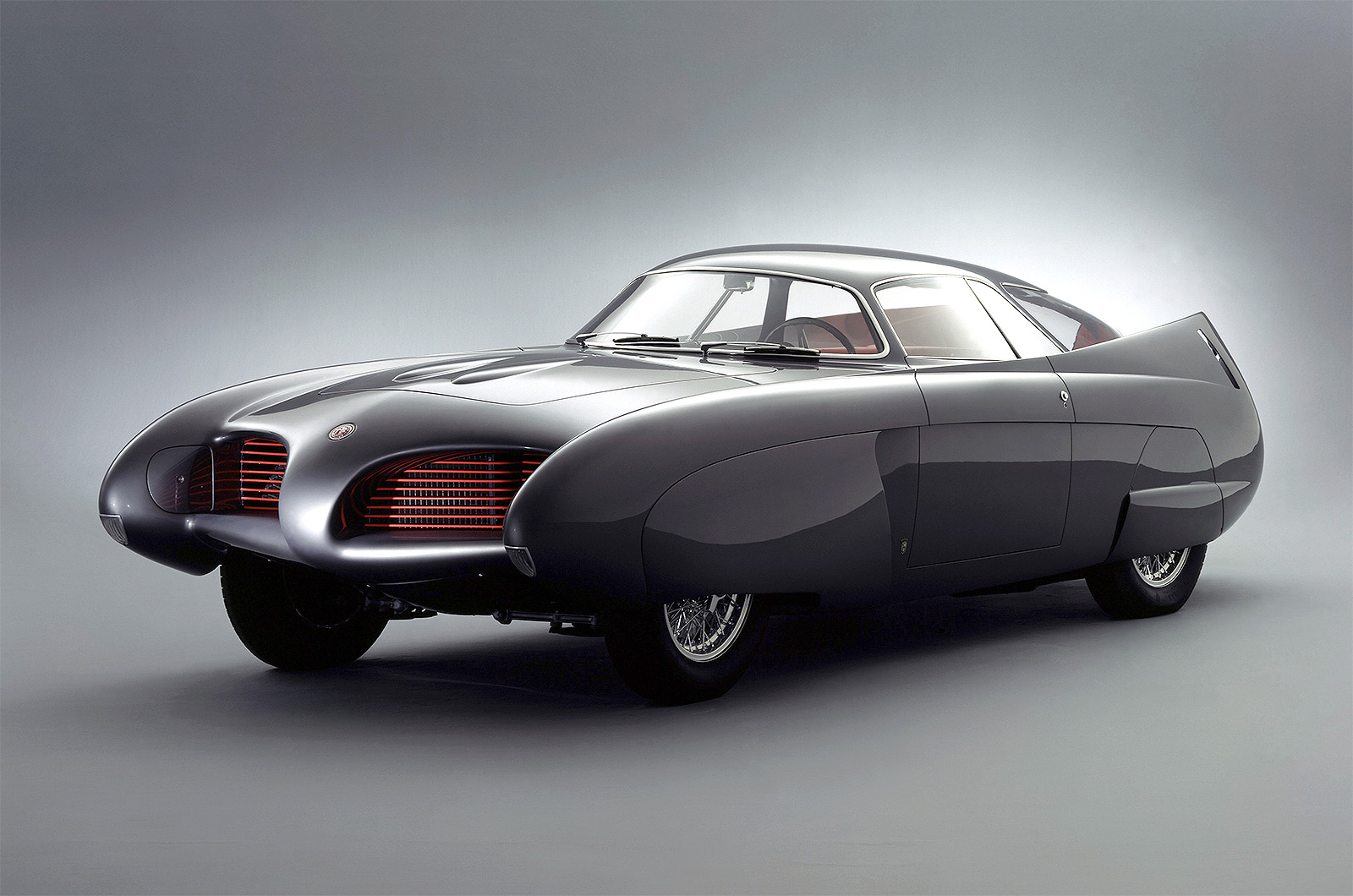
America didn’t have the concept car monopoly. Italian design house Bertone produced a range of groundbreaking concept cars during the 1950s, of which this is perhaps the most striking. The concept pursued extreme aerodynamics – it had a Cd drag coefficient of just 0.23 - and light weight to move the envelope of the possible.
It succeeded; despite a modest 100bhp engine, this 1100kg car could deliver a 120mph top speed. The BAT 7 the next year had a drag co-efficient of just 0.19.
Buick Wildcat II (1954)
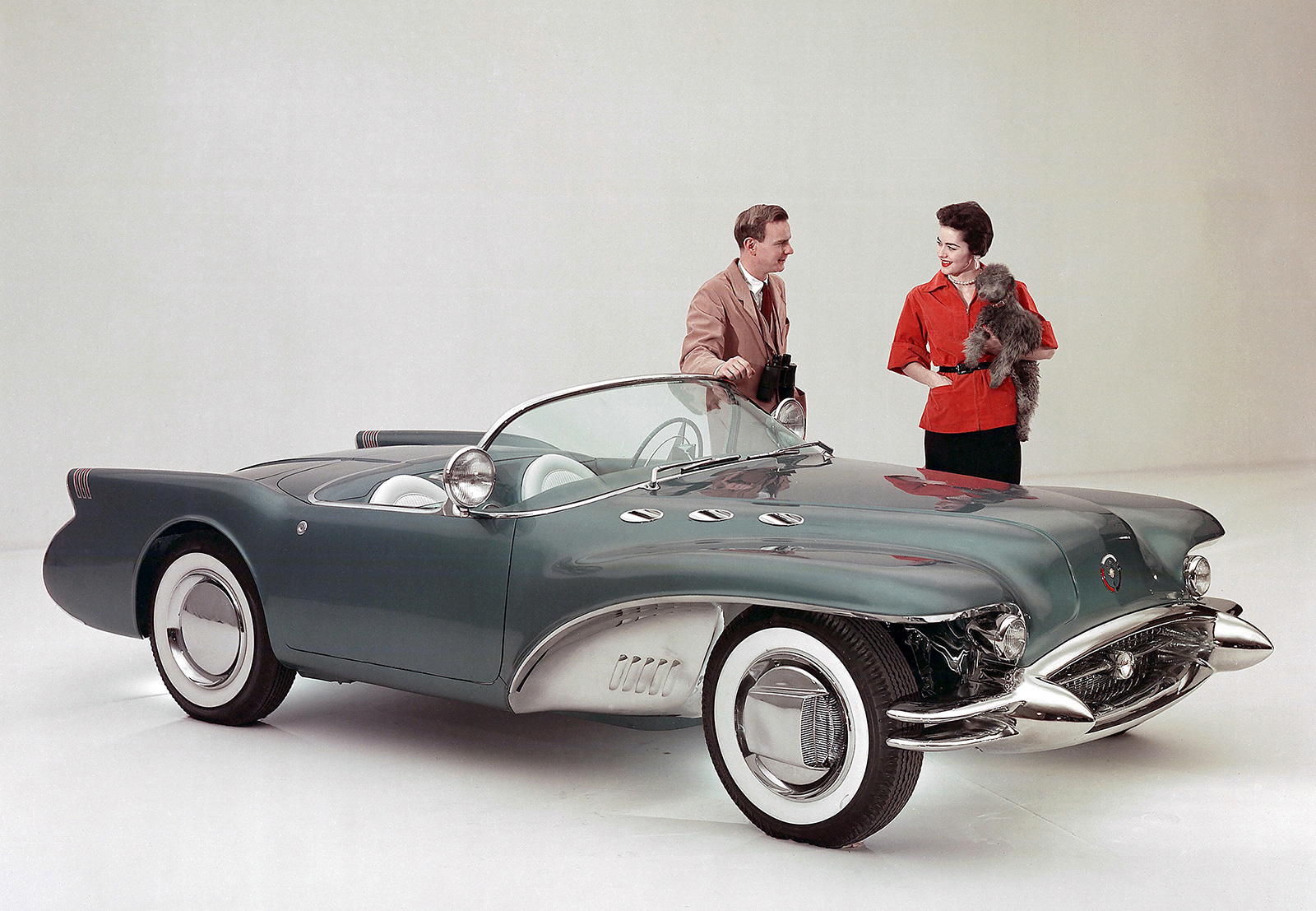
With its ‘flying-wing’ front end and glassfibre construction the Wildcat II was definitely a car of the future when it appeared in 1953 – the same year as the original Corvette. Focus on the centre section of this concept and you can see how similar it is to the earliest ‘Vettes.
De Soto Adventurer II Coupé (1954)
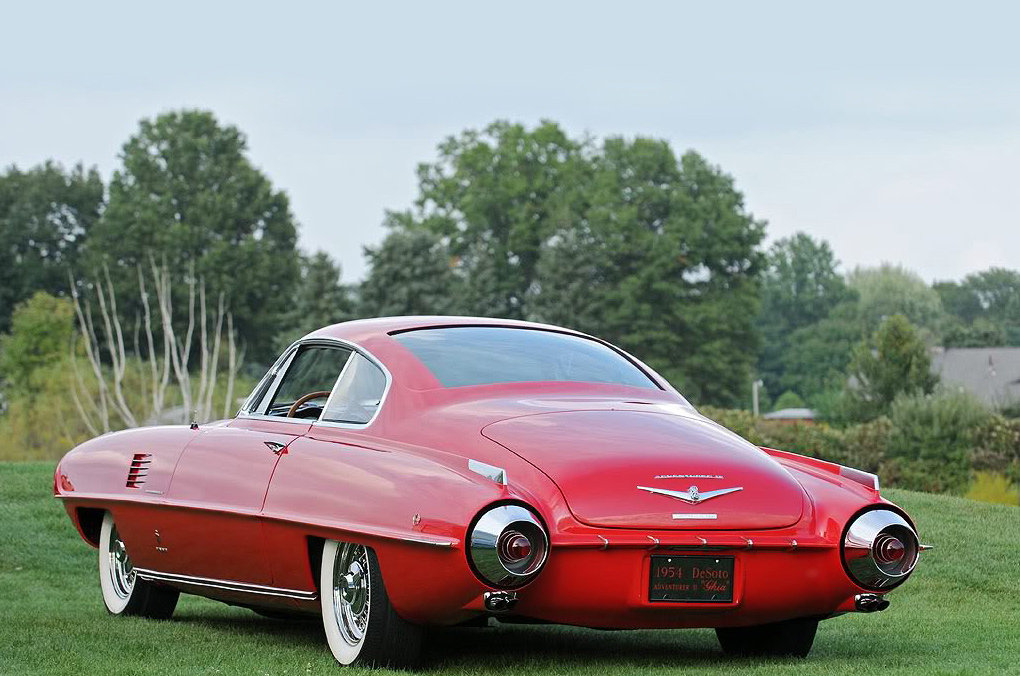
The brief with this one was to come up with something super-slippery rather than ostentatious. As a result the Adventurer’s clean lines are very understated but those afterburner-inspired tail lights give a hint of what was to come with later Chrysler concepts.
Ford FX Atmos (1954)
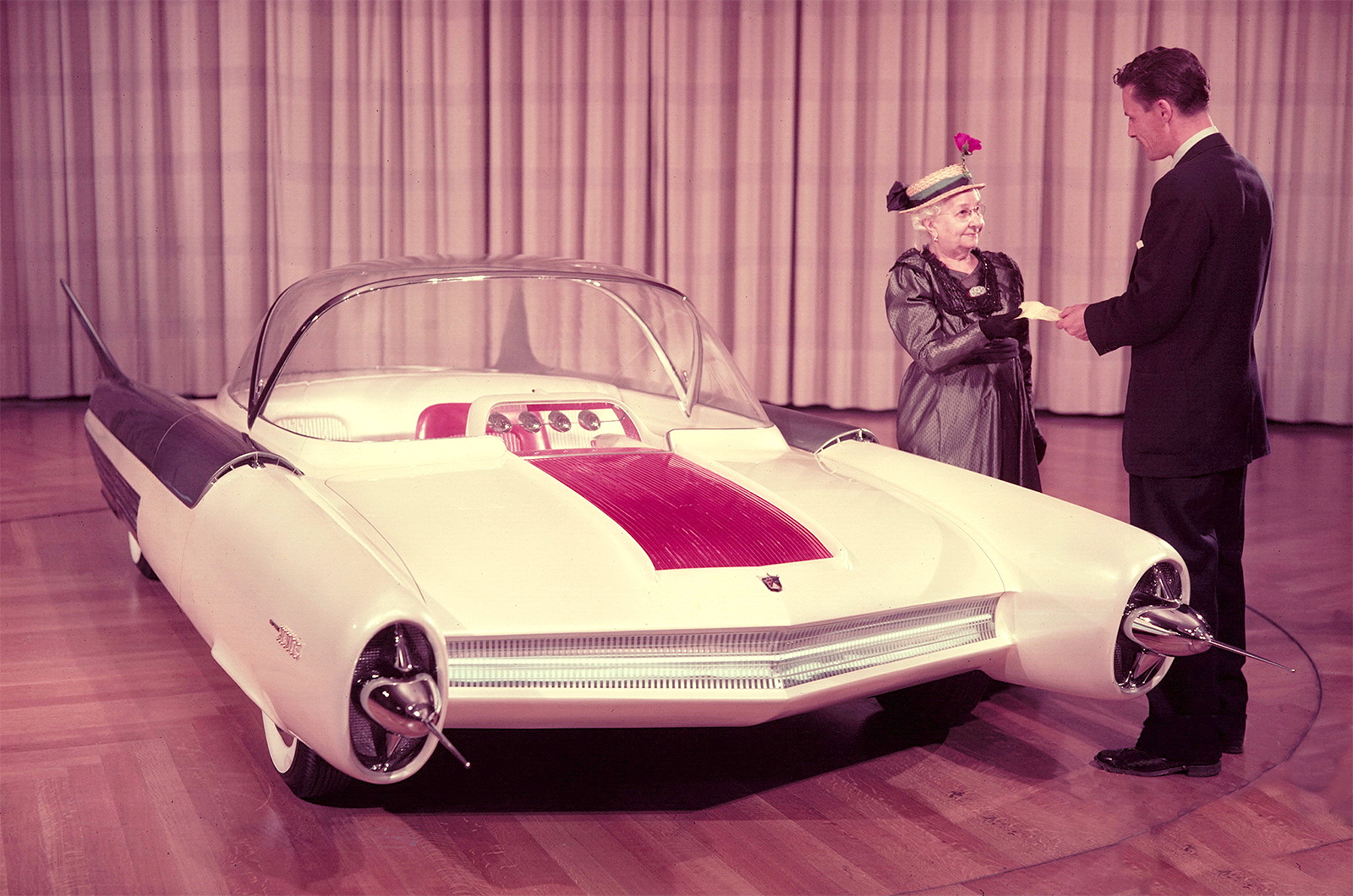
The FX stood for Future Experimental, those spears on the front were aerials to help control the car to stop it running into vehicles in front, and the ‘Atmos’ was taken from atmosphere, which Ford said “came from free and unlimited creative thinking”.
With a glass canopy, seating for three and a pair of aircraft-style fins, this was truly a jet-age - or even space-age - design.
GM Firebird I (1954)
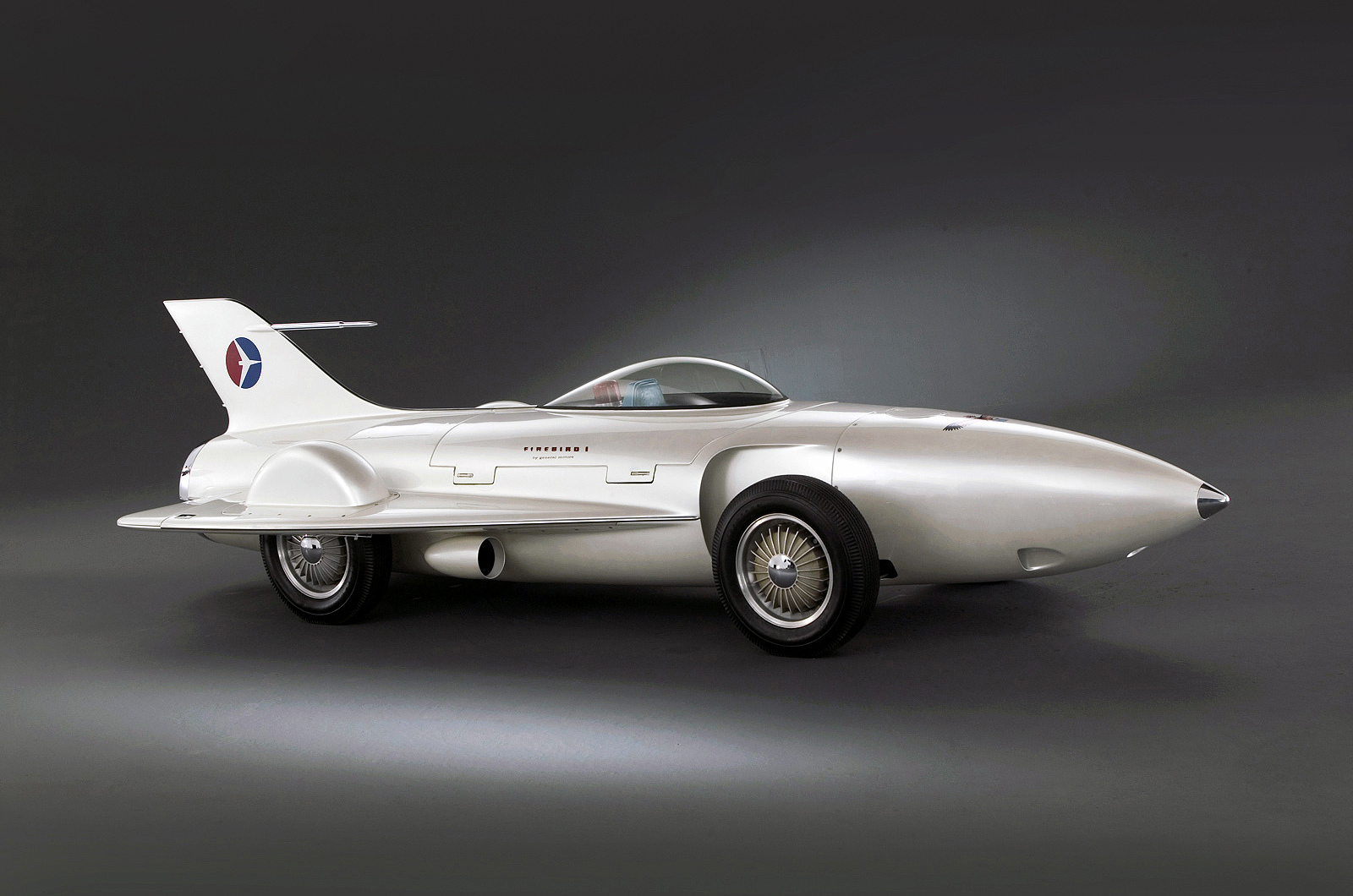
The first of three General Motors Firebird concepts, this one featured a single-stick control system which dispensed with the steering wheel, accelerator and brake.
Because it was located in the middle of the car either the driver or passenger could operate it; power came from a gas turbine which could be used to power a house via a built-in generator. And just look at it…
Ford Mystere (1955)
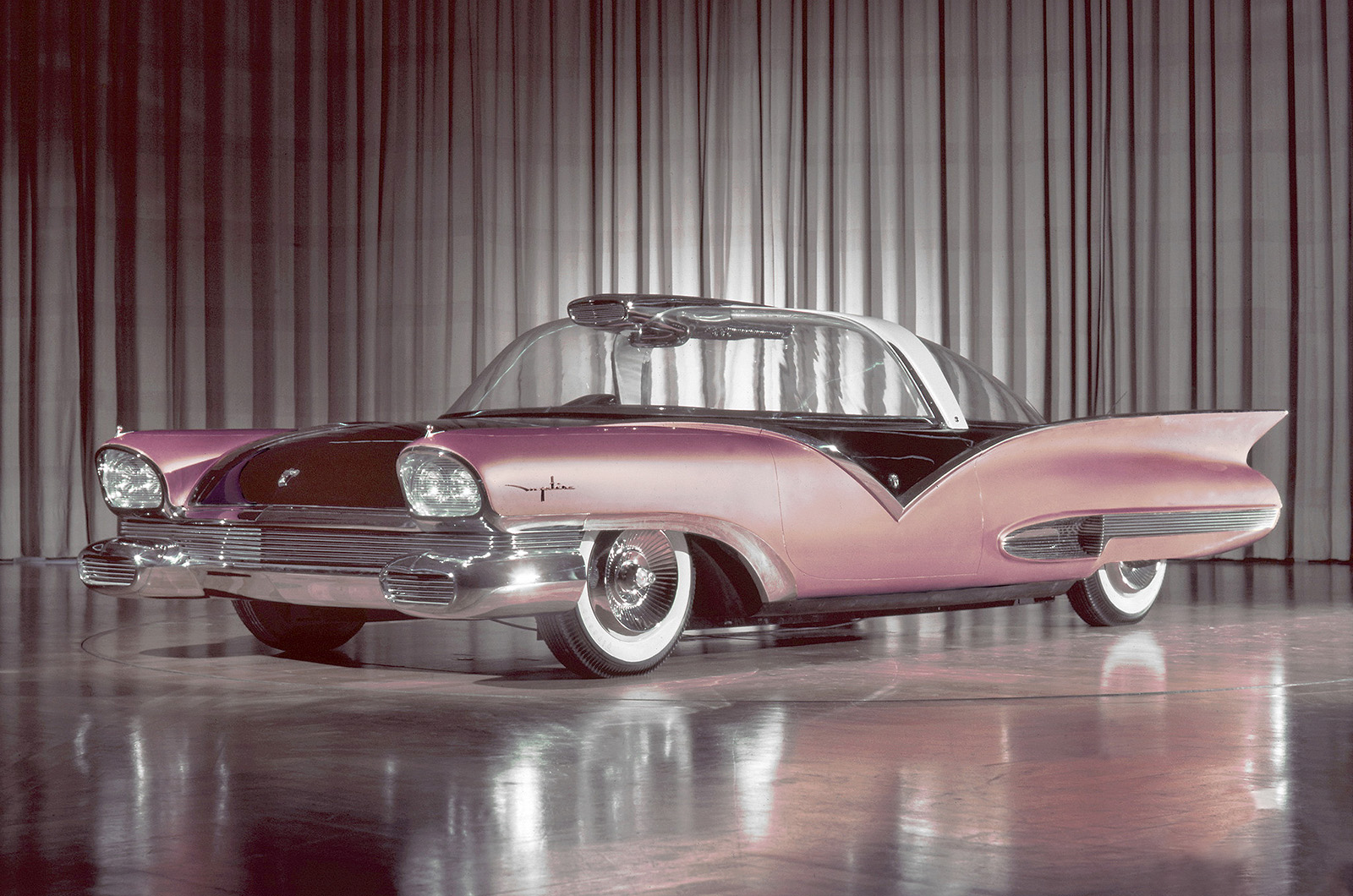
You wouldn’t want to have to fit a new windscreen to this beauty as it stretched right the way round the car from behind each door. To get in and out the whole vehicle tilted up as a canopy.
The cabin was air conditioned and power came from a rear-mounted gas turbine.
Lincoln Futura (1955)
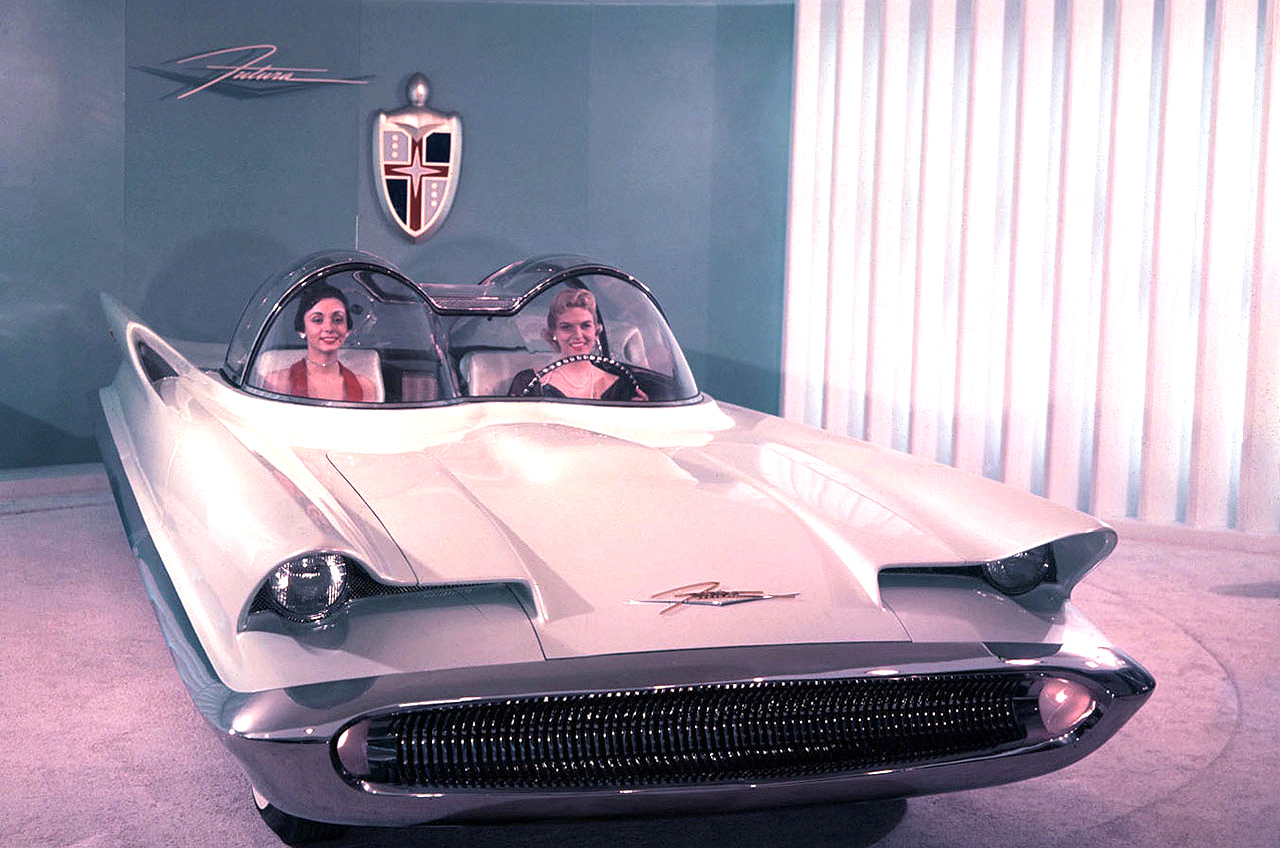
Best known for its starring role in the original Batman TV series, the Futura deserves a place in this story for looking like nothing else thanks to its twin Plexiglass domes along with fins front and rear.
Ford spent $250,000 (around $2.5 million in today’s money) building this 300bhp V8-powered running concept which also featured a push-button automatic transmission.
Buick Centurion (1956)
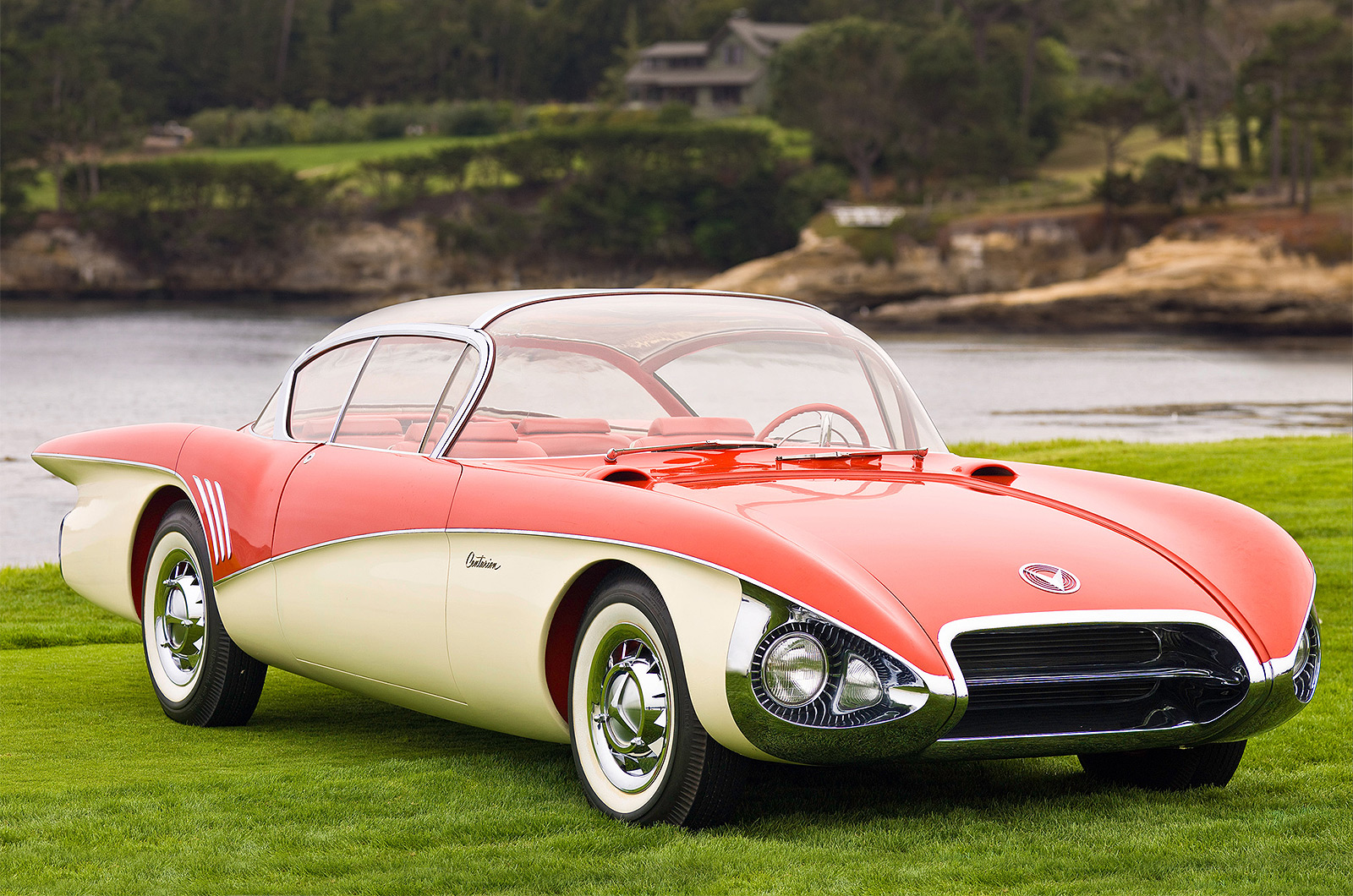
The rear end of this car was clearly inspired by a jet fighter, with all of its lines converging on a single spot.
This deserves special mention here as instead of rear-view mirrors there was a camera in the tail which beamed pictures to a TV screen on the dash – a technology that only now is making its way into production cars. The whole of the top of the car was made of glass, with just a few thin pillars to aid rigidity.
GM Firebird II (1956) & III (1958)
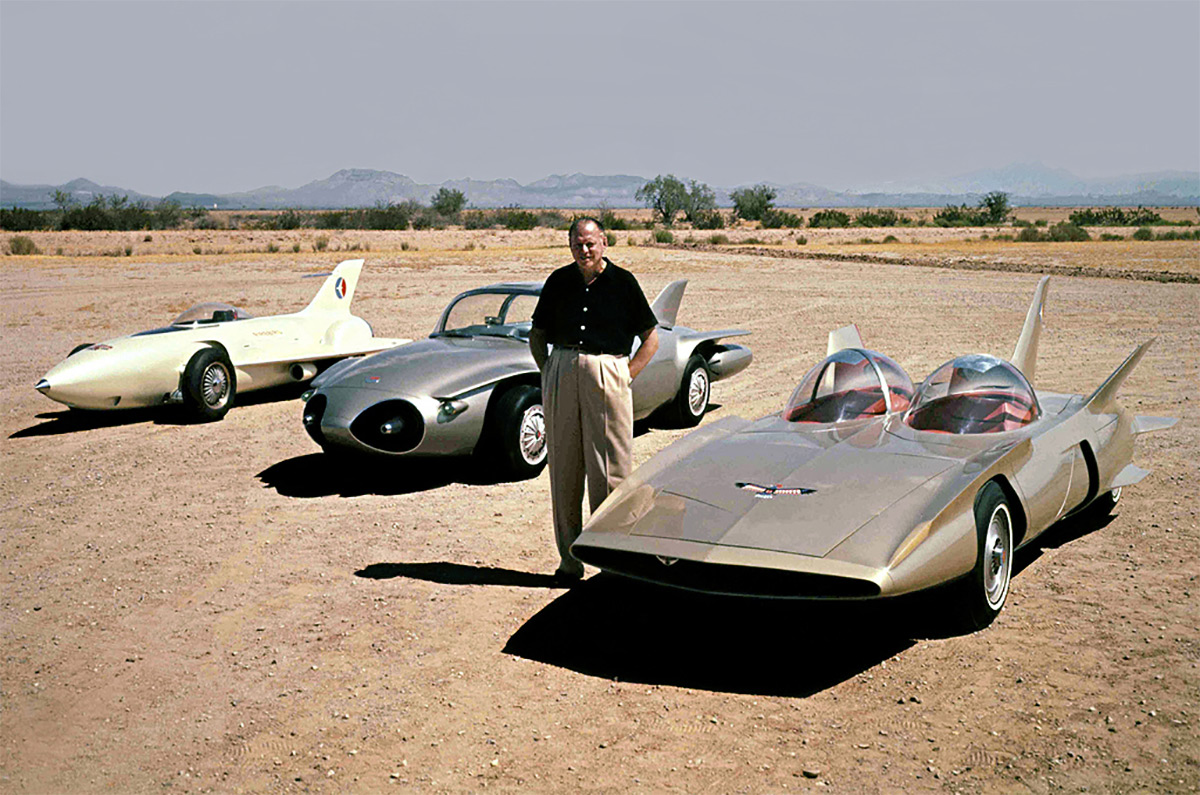
GM was in the market for a follow up to the Firebird 1 (pictured left). Constructed from titanium, Firebird II (centre) was designed to be run on guided roadways – so it was something of a forerunner to today’s autonomous cars.
Two years later, GM followed it with the Firebird III (right). This time Harley Earl (pictured) sought to move the inspiration on from jet planes to space rockets. As such it was even more extreme than its predecessors and featured automatic guidance, a 225bhp turbine, climate-control and automatic lighting.
It was Earl’s swansong – he retired the same year, after an extraordinary 30 years running the design operation of GM, a period when the company came to dominate the American car world and become the world’s largest company into the bargain.
Oldsmobile Golden Rocket (1956)
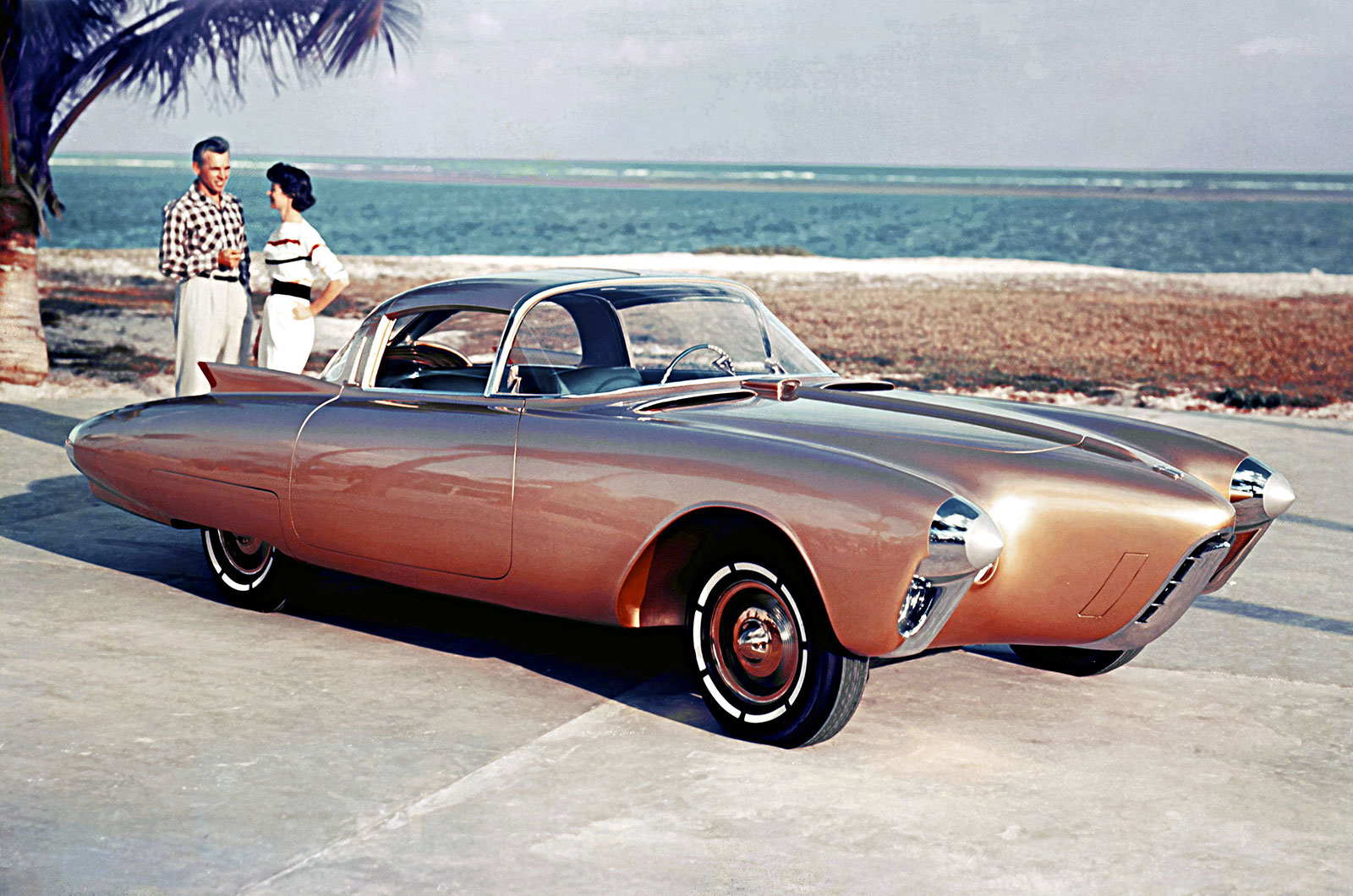
With much of the rest of the industrialised world focusing on rebuilding cities destroyed during the war, nobody could keep up with the Americans in the 1950s, with one futuristic concept appearing after another. The Golden Rocket packed a 275bhp punch from its 3.2-litre V8, and it introduced us to powered steering column adjustment.
Its party piece though was the seats rose up and swivelled outwards when the doors were opened. All these features made it into production cars shortly afterwards. One feature that did not were the roof panels that hinged upwards so it was easier to get in and out.
Ford X-1000 (1957)
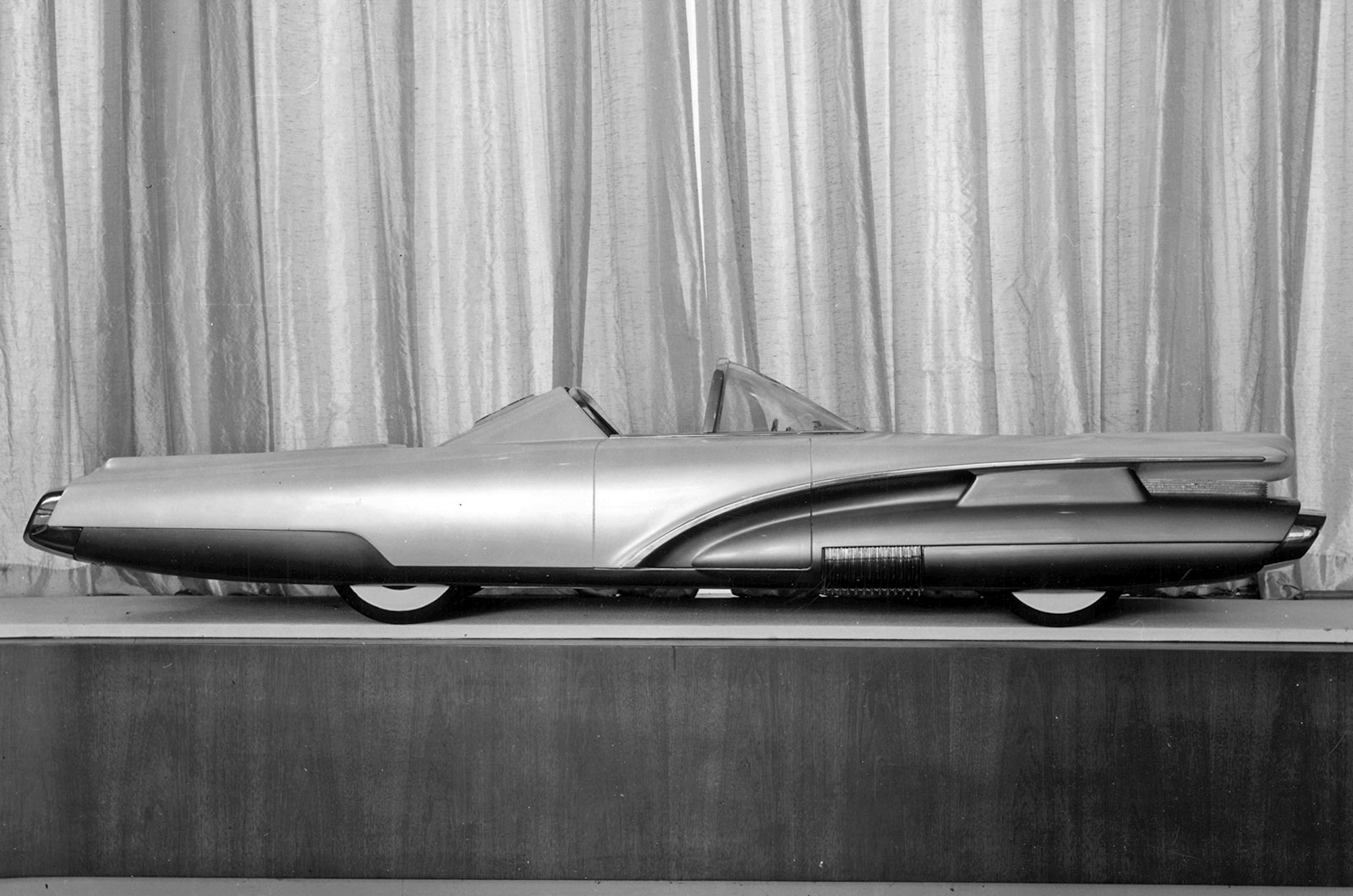
The X-1000 was designed by Alex Tremulis so that the engine could be mounted either in the nose or the tail. The luxurious cabin featured a TV and hi-fi system while there was a retractable canopy for the two seats, which allowed the car to be driven as a convertible or bubble-topped coupé.
XP-700 Corvette (1958)
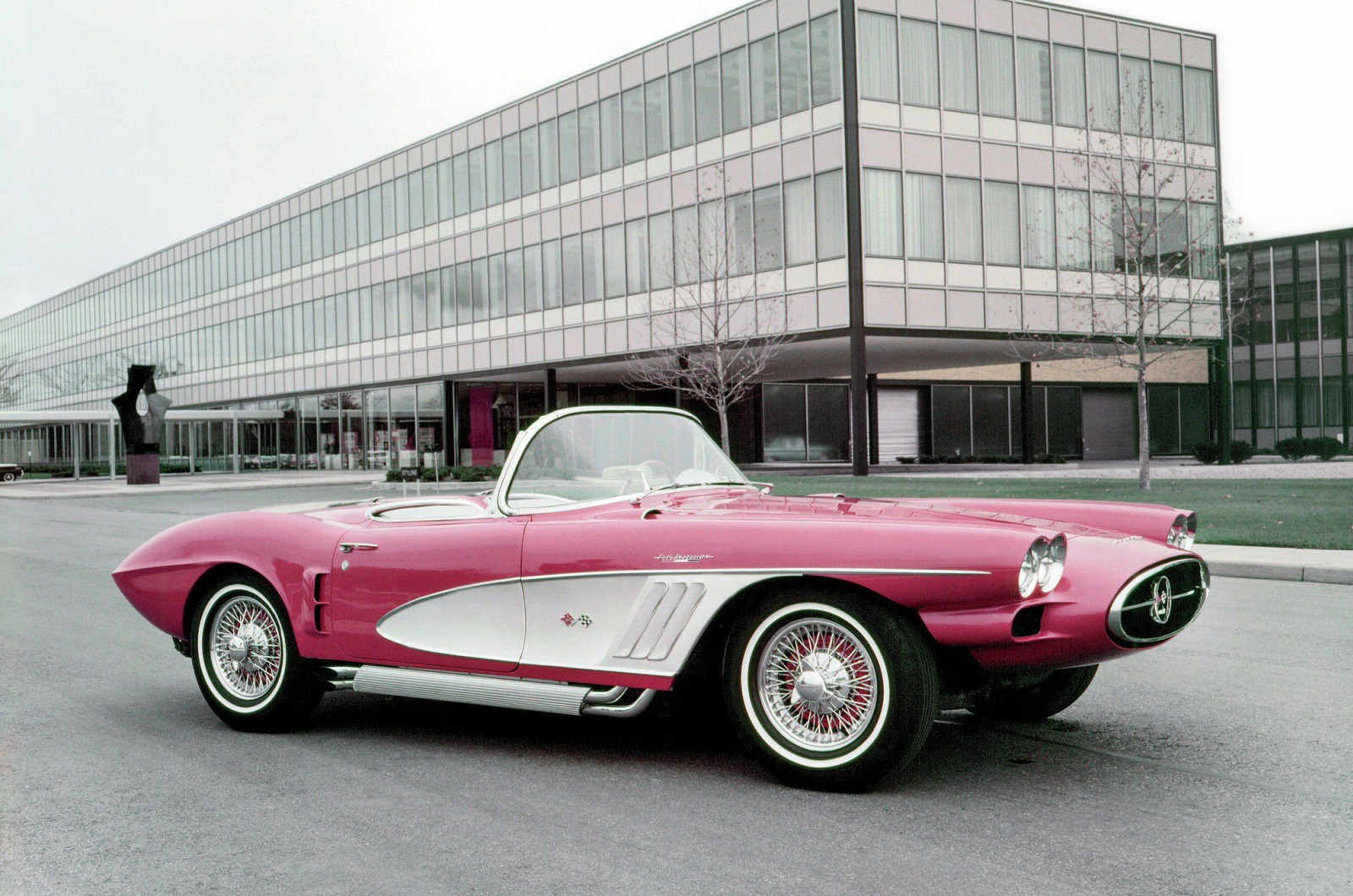
Effectively a rebodied Corvette, the XP-700 featured a distinctive nose design design and a bubble-top canopy that had a space-age feel about it.
Purely a design study, the XP-700 also ditched a conventional rear-view mirror and instead featured a periscope for an unobstructed view of the road behind.
Cadillac Cyclone (1959)
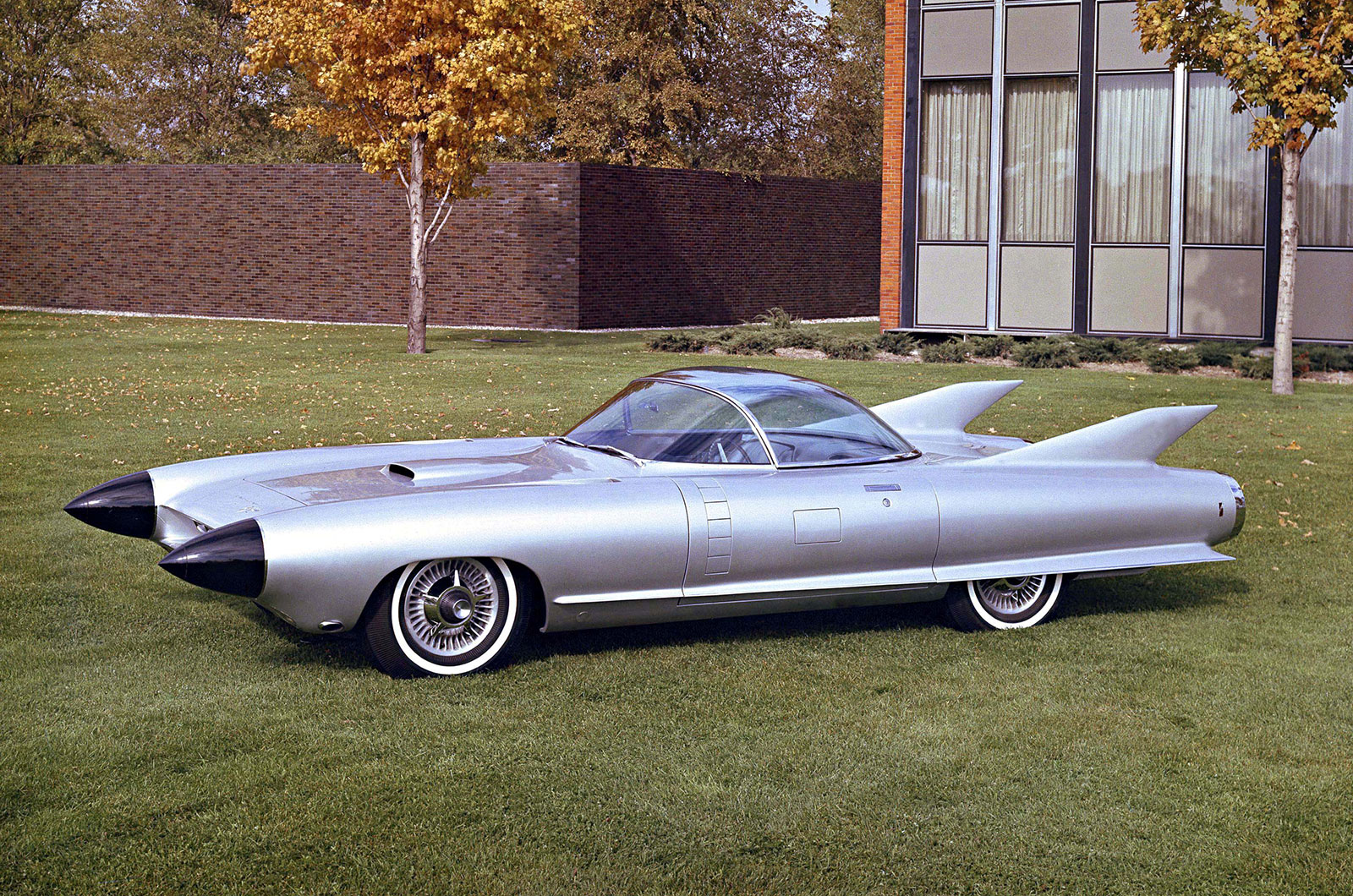
Cadillac had to look on as its corporate cousins got all the concept car glory, but in 1959 it too joined the great futuristic party with its Cyclone.
Those black cones in the nose were equipped with radar to help the Cyclone’s driver avoid anything in the way, a precursor to what we know today as adaptive cruise control. The cockpit meanwhile was protected by a single-piece plastic canopy coated with vapourised silver to deflect the sun’s rays.
Chrysler Turboflite (1961)
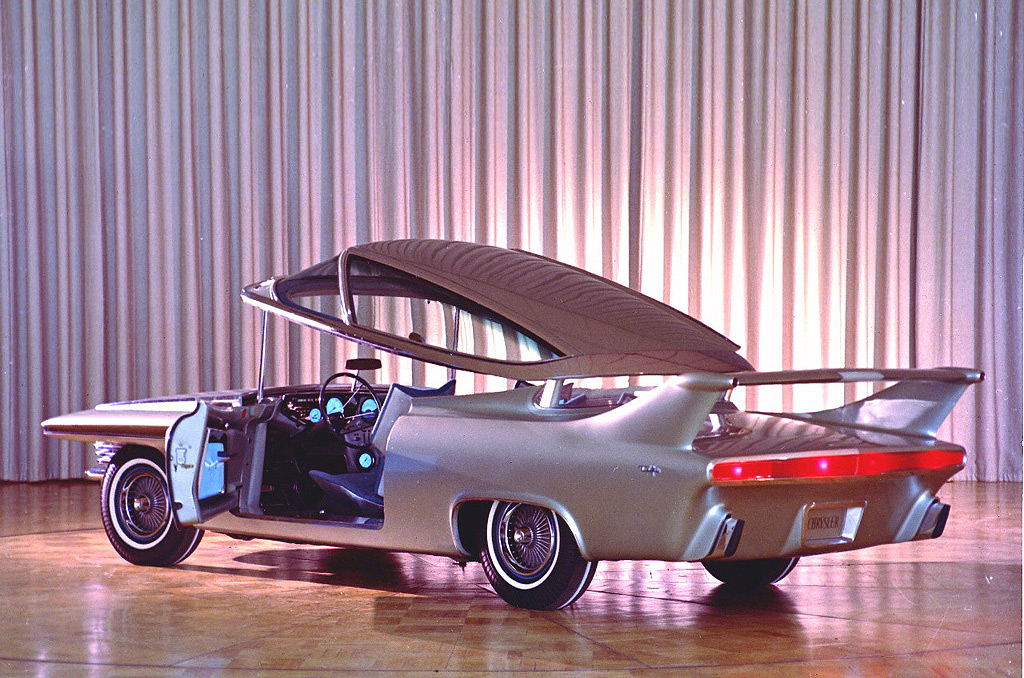
The Turboflite was certainly an innovative car, but it wasn’t without its shortcomings. The Turboflite’s regenerative turbine weighed half as much as an equivalent V8 internal combustion engine.
As soon as one of the doors was opened the glass canopy was raised electrically and an air brake popped up as soon as the hydraulic brake was applied, in a bid to help out the mechanical braking system. Today, air brakes are extremely rare – one of the few to have them is the McLaren 675LT.
GM Runabout (1964)
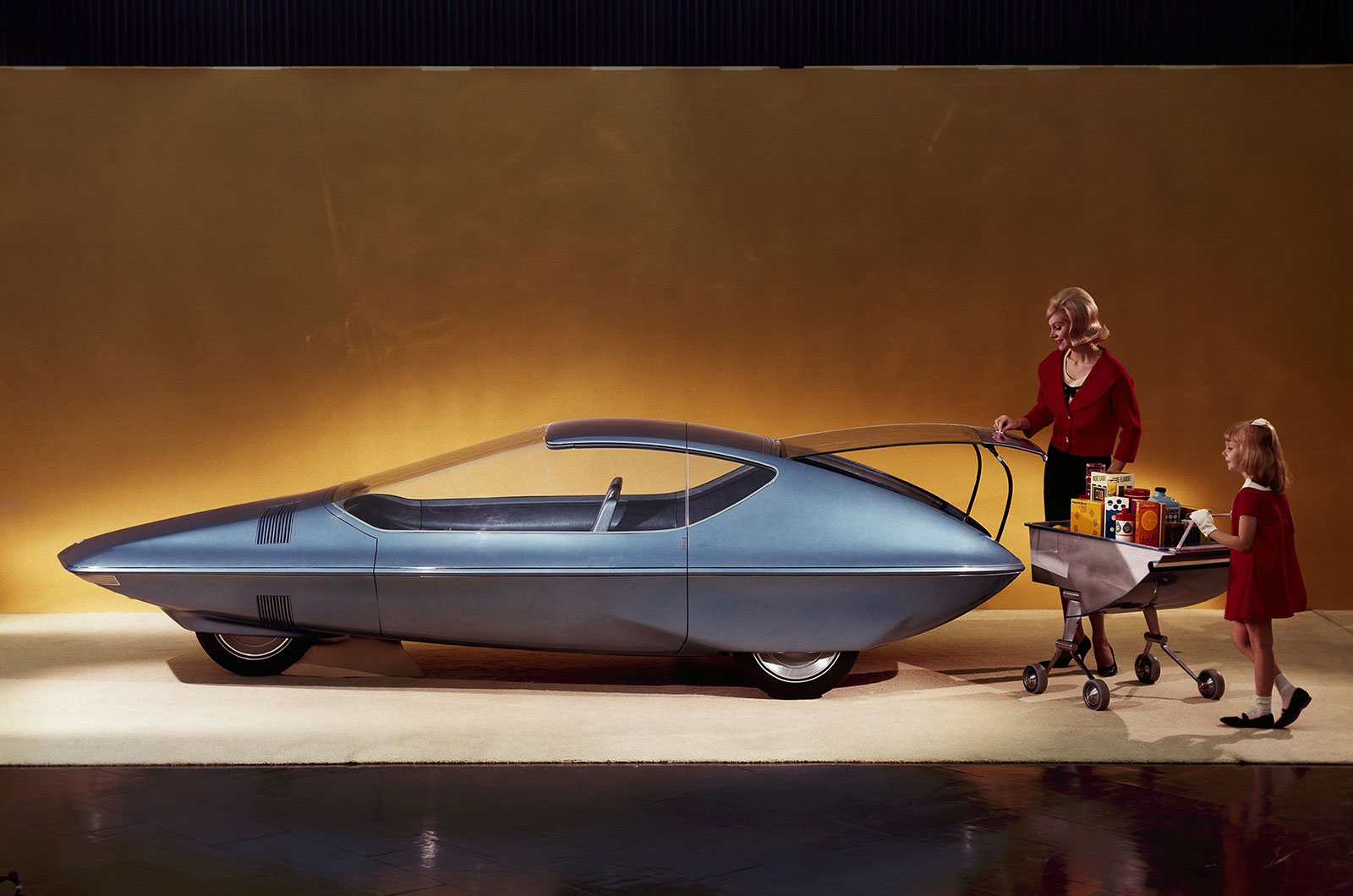
Charming in its simplicity, the Runabout was a three-wheeled city car with the aerodynamics of an arrow. In the boot were two integral shopping trolleys so you could load up on cheap beer.
Inside there was seating for five; two up front and three in the back. Shopping cars still don’t look like this, unfortunately.
Lamborghini Marzal (1967)
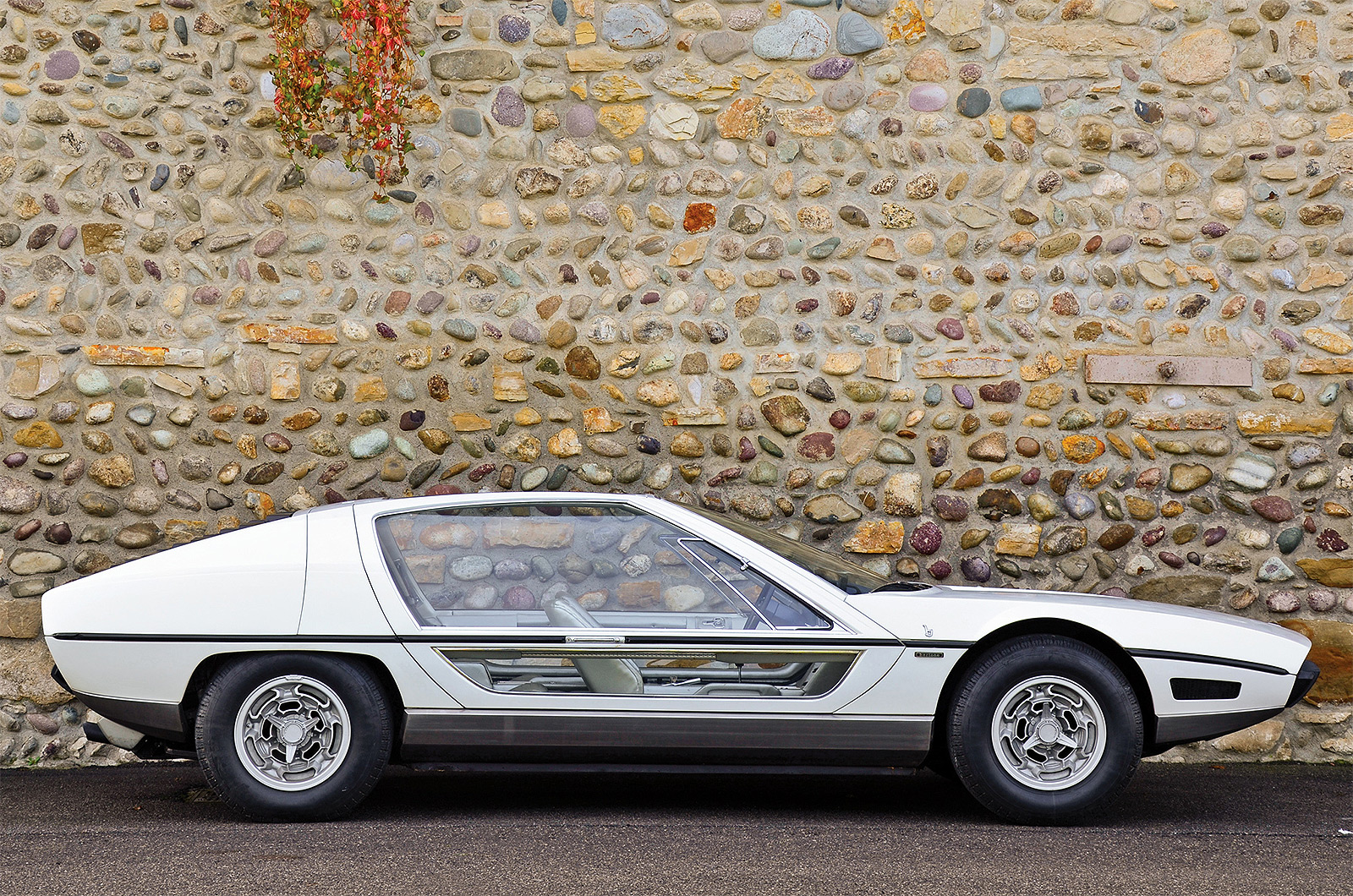
Few sixties concepts were as glassy as this one; the Marzal featured 48.4 square feet of the stuff, but exploited the relatively new wonder of air conditioning to ensure it wouldn’t be a problem in warm climates.
Designed by Bertone and clearly leading to the Lamborghini Espada, the Marzal featured an abundance of hexagons in its design. Power came from half a Lamborghini V12; a 175bhp six-cylinder unit mounted over the rear axle.
Alfa Romeo Carabo (1968)
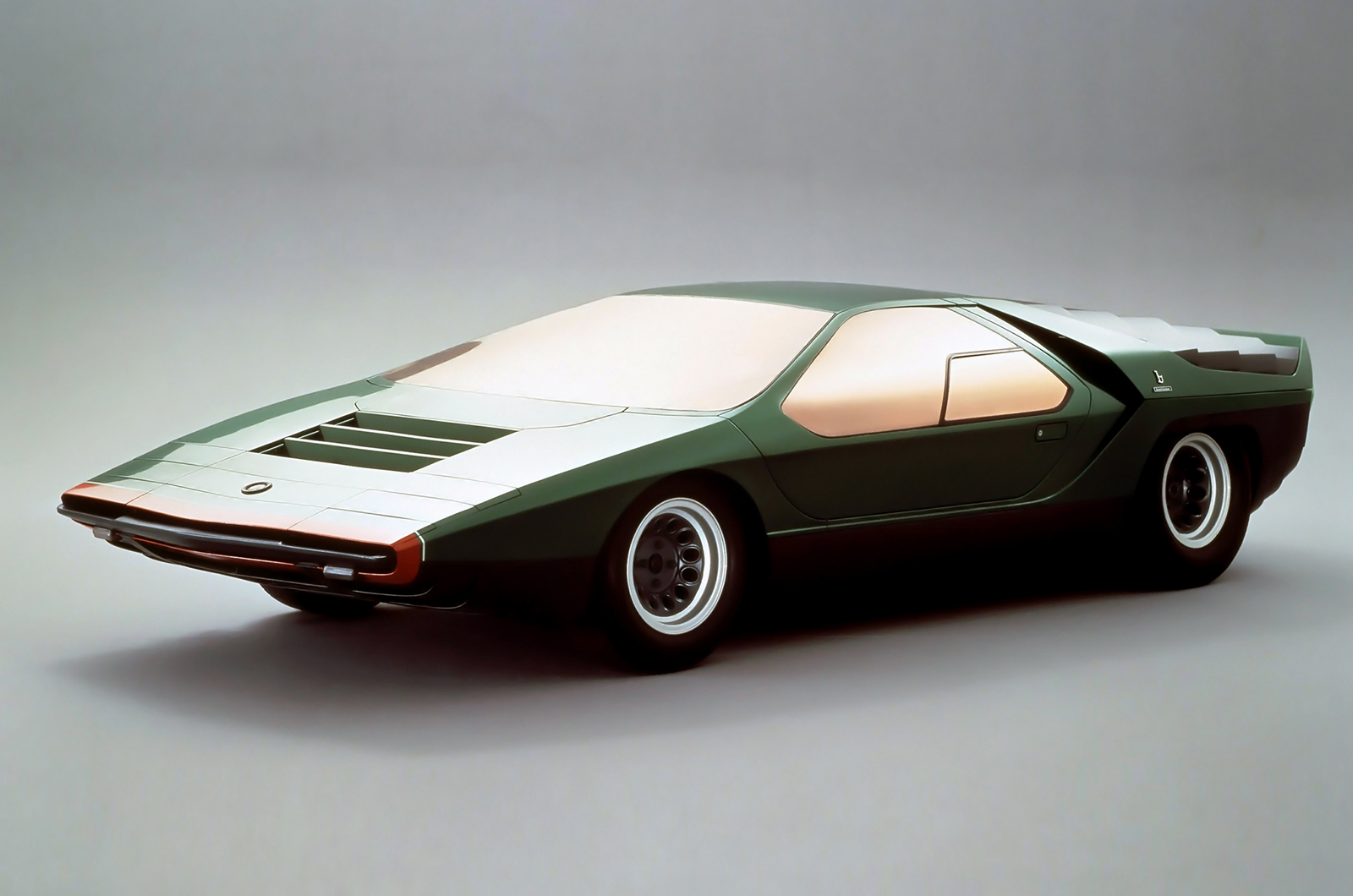
Penned by Marcello Gandini, the Carabo (Italian for Beetle) was based on the mid-engined V8-powered Alfa Romeo Tipo 33. This was essentially an updated Lamborghini Miura, another Gandini design.
The Lambo suffered front-end lift at speed so this car fixed that. It also introduced the world to beetle-wing doors, later put into production on the Countach.
Mercedes-Benz C-111 (1969)
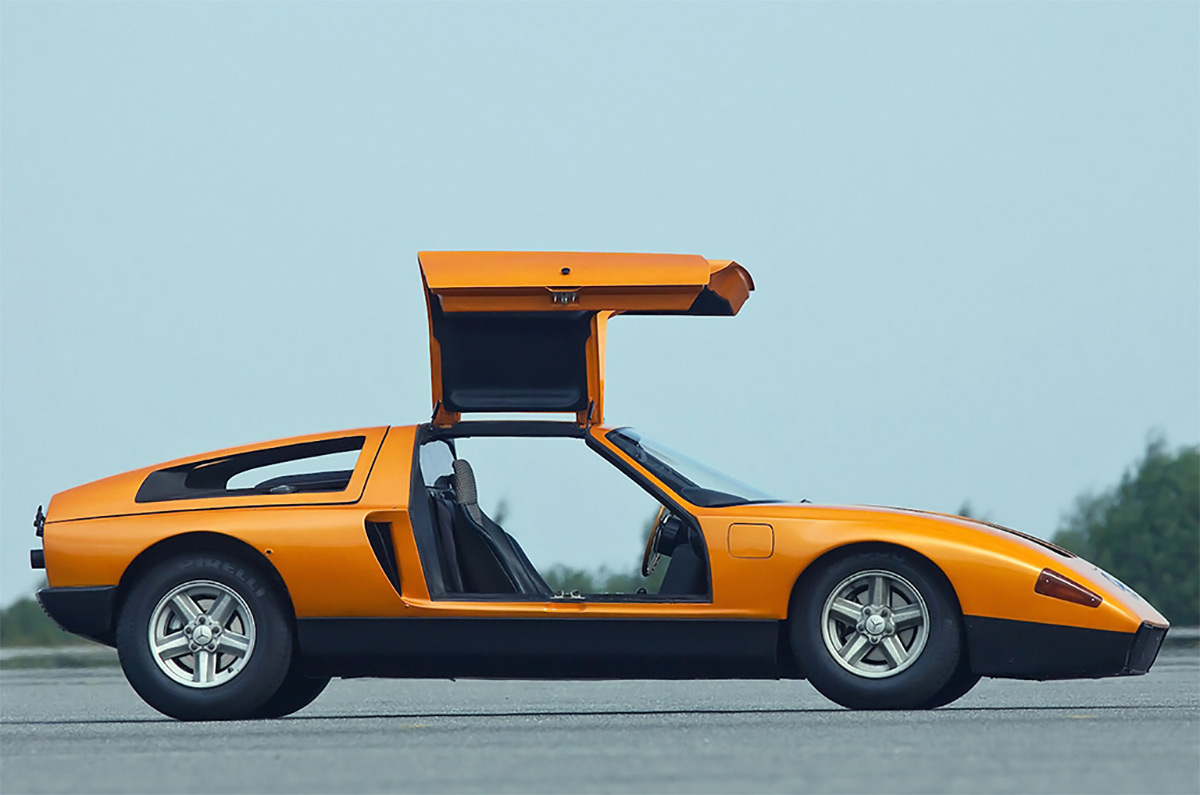
We call it a concept car, though Mercedes would term it a research vehicle. First unveiled in 1969, the gull-winged wonder sported a 280bhp three-rotor Wankel engine. In 1970 a refreshed car was wheeled out with a four-rotor powerplant then in 1978 an all-new car emerged, with diesel power, as pictured.
Extremely aerodynamic, as a diesel it broke a speed record for that fuel of 200mph in 1978, and a year later with a 4.8-litre petrol V8 it achieved the extraordinary average lap speed of 251mph. A total of 16 cars were produced.
Buick Century Cruiser (1969)
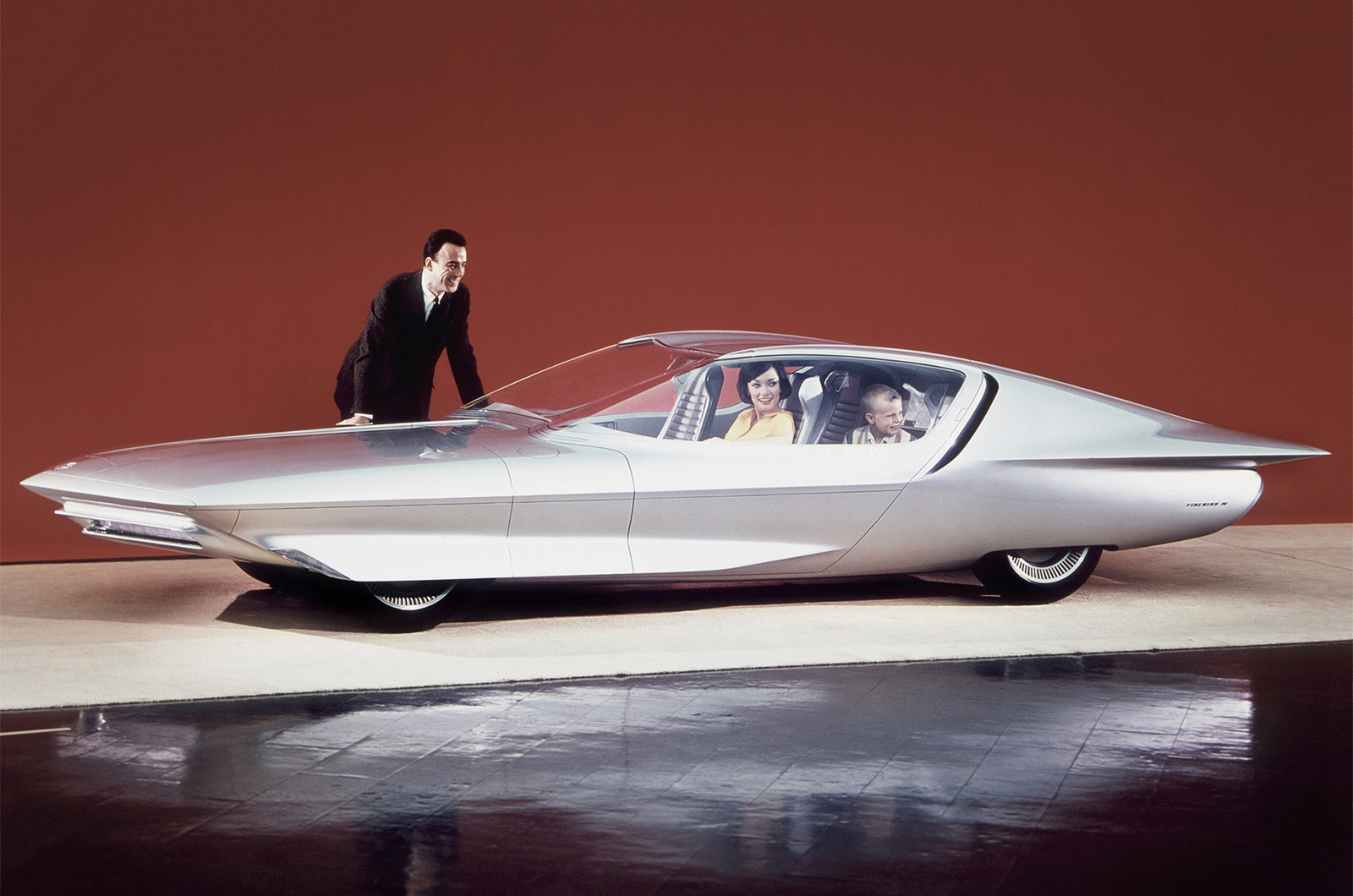
Designed originally as the Firebird IV in 1964, this high-performance car was designed as an autonomous car with all of the comforts of a living room. As such the seats could recline and swivel, there was a TV and pull-out table and even a built-in fridge. Looking at the picture it’s hard to see how they fitted that lot in; it must have been very cosy inside...
But it was certainly very forward thinking – many concept cars of today are looking forward to the idea of a living space on wheels as autonomy changes the way we think about personal transport, but 50 years ago the idea must have seemed unearthly.
Lancia Stratos Zero (1970)
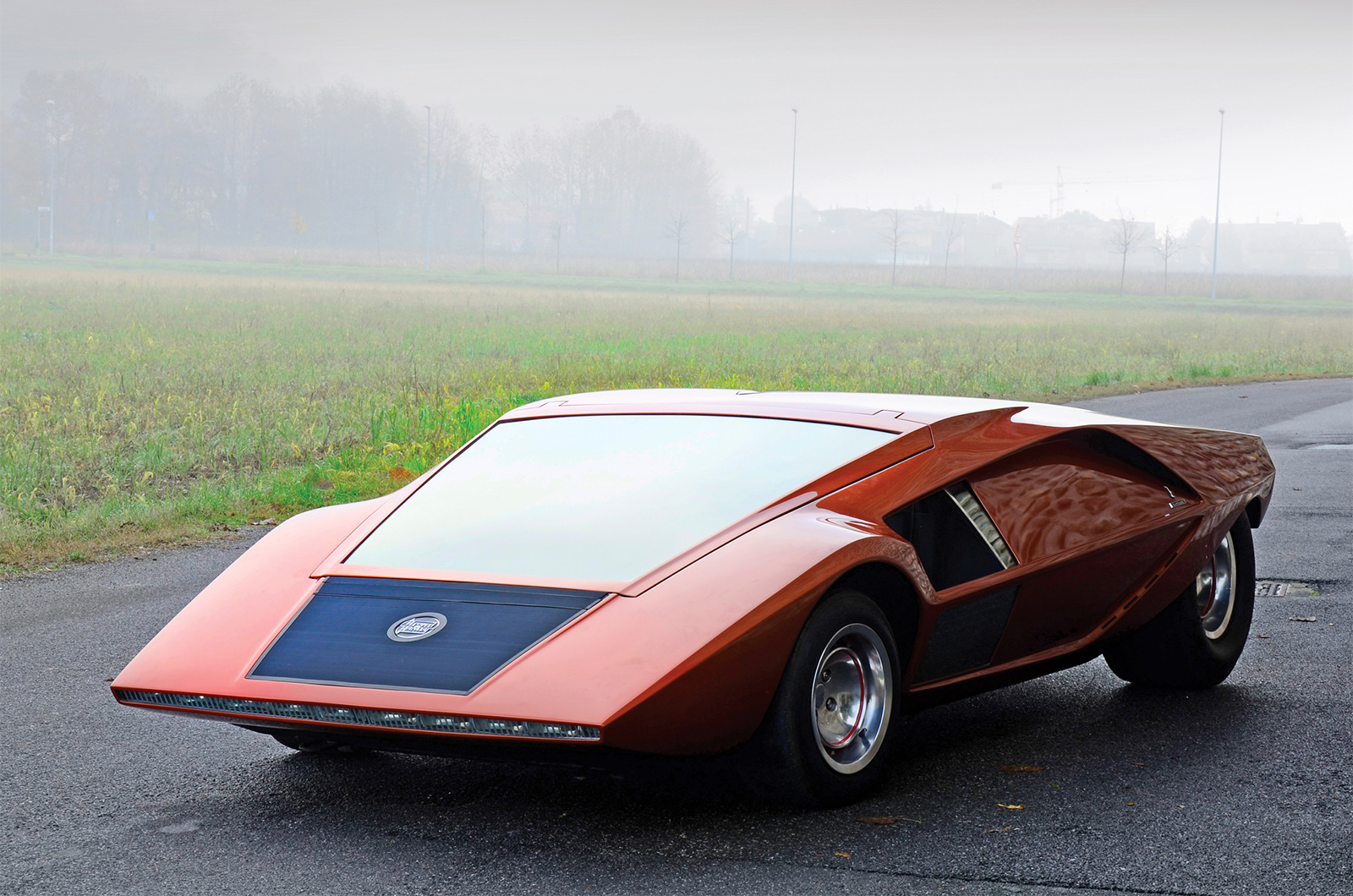
The seventies was the decade of The Wedge and this was one of the wedgiest concepts ever dreamed up. It was also one of the lowest at just 83cm.
Another Marcello Gandini confection, the Stratos Zero featured a 115bhp 1.6-litre V4 from the Lancia Fulvia, so was rather slower than it looked. But it ushered in a design theme that was to dominate supercar design for the next 15 years or so.
Maserati Boomerang (1971)
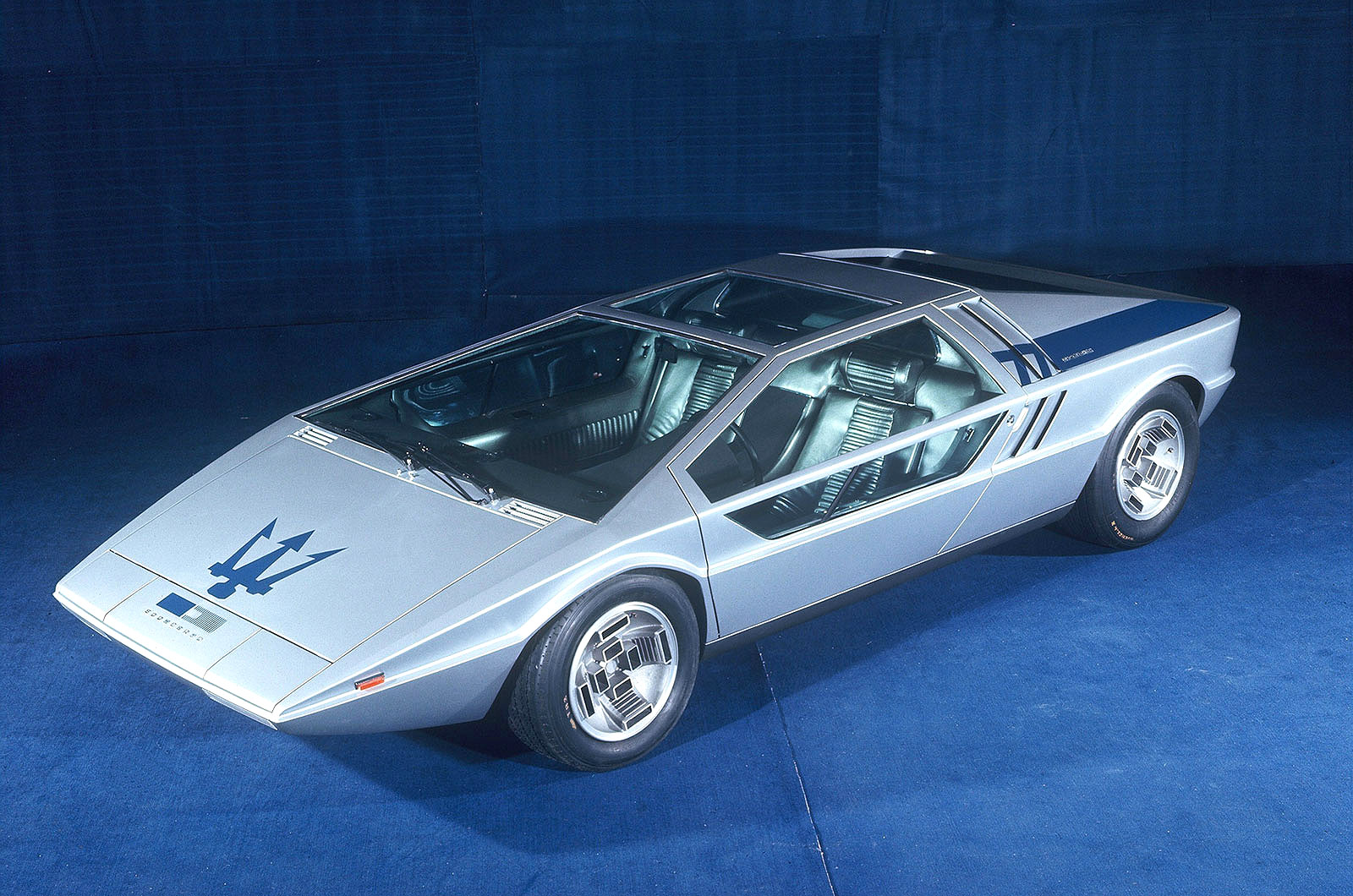
Taking the styling themes set down by the Carabo and Stratos Zero, the Boomerang showed how a wedge-shaped car could be packaged for real-world use.
It led directly to cars such as the Lotus Esprit and DeLorean DMC-12. The 4.7-litre V8 drivetrain was borrowed from the Maserati Bora.
Ford Probe (1979-1985)
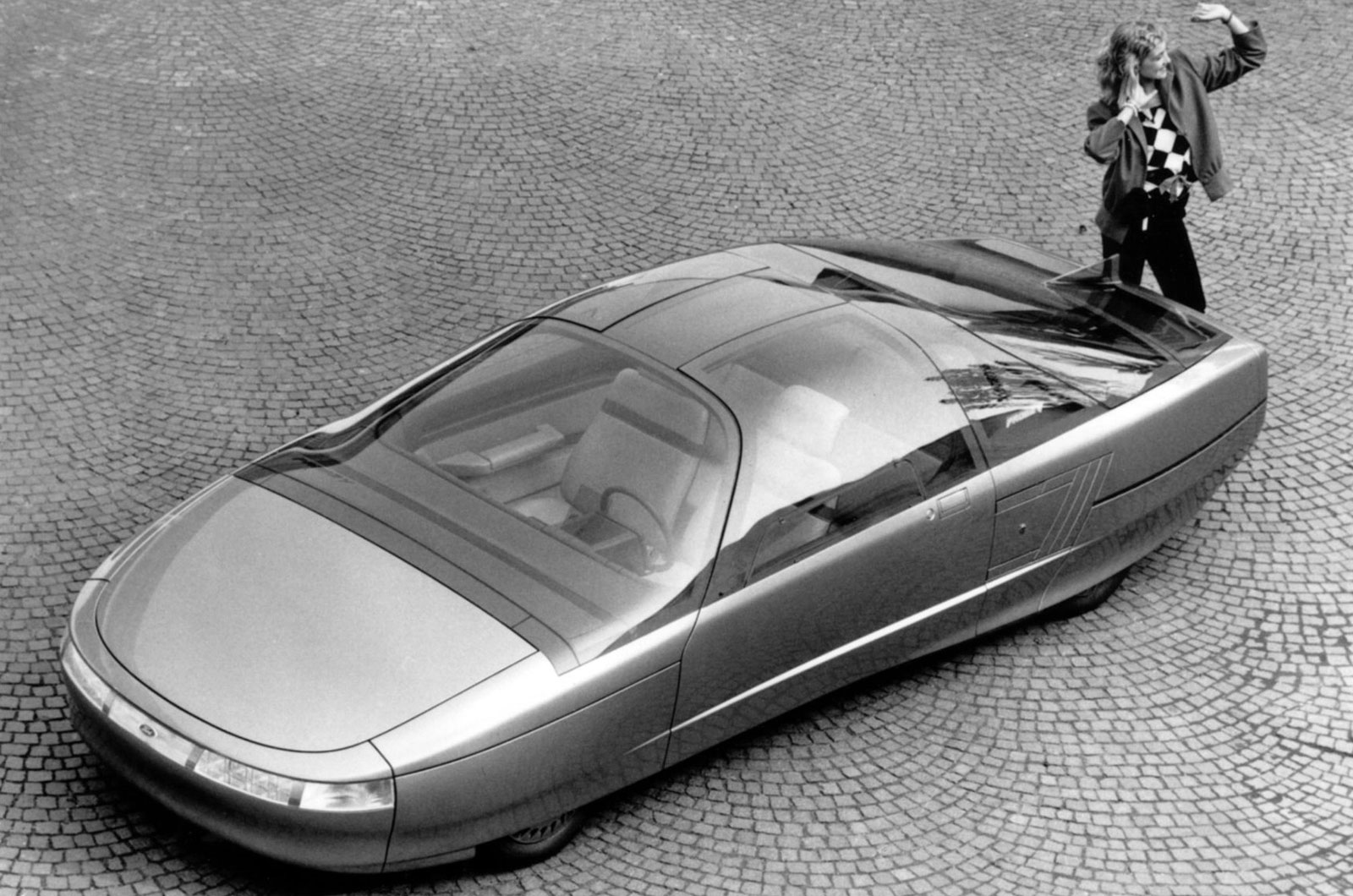
Over a six year period, Ford dreamed up a series of five concepts that tested aerodynamics to the limit. Some were more inspiring than others; the third iteration led directly to the introduction of the ‘jellymould’ Sierra while the 1985 Probe V (pictured) still looks ultra-modern, with its drag co-efficient of just 0.137 – the same as an F-16 fighter jet.
Ford Ghia Cockpit (1981)
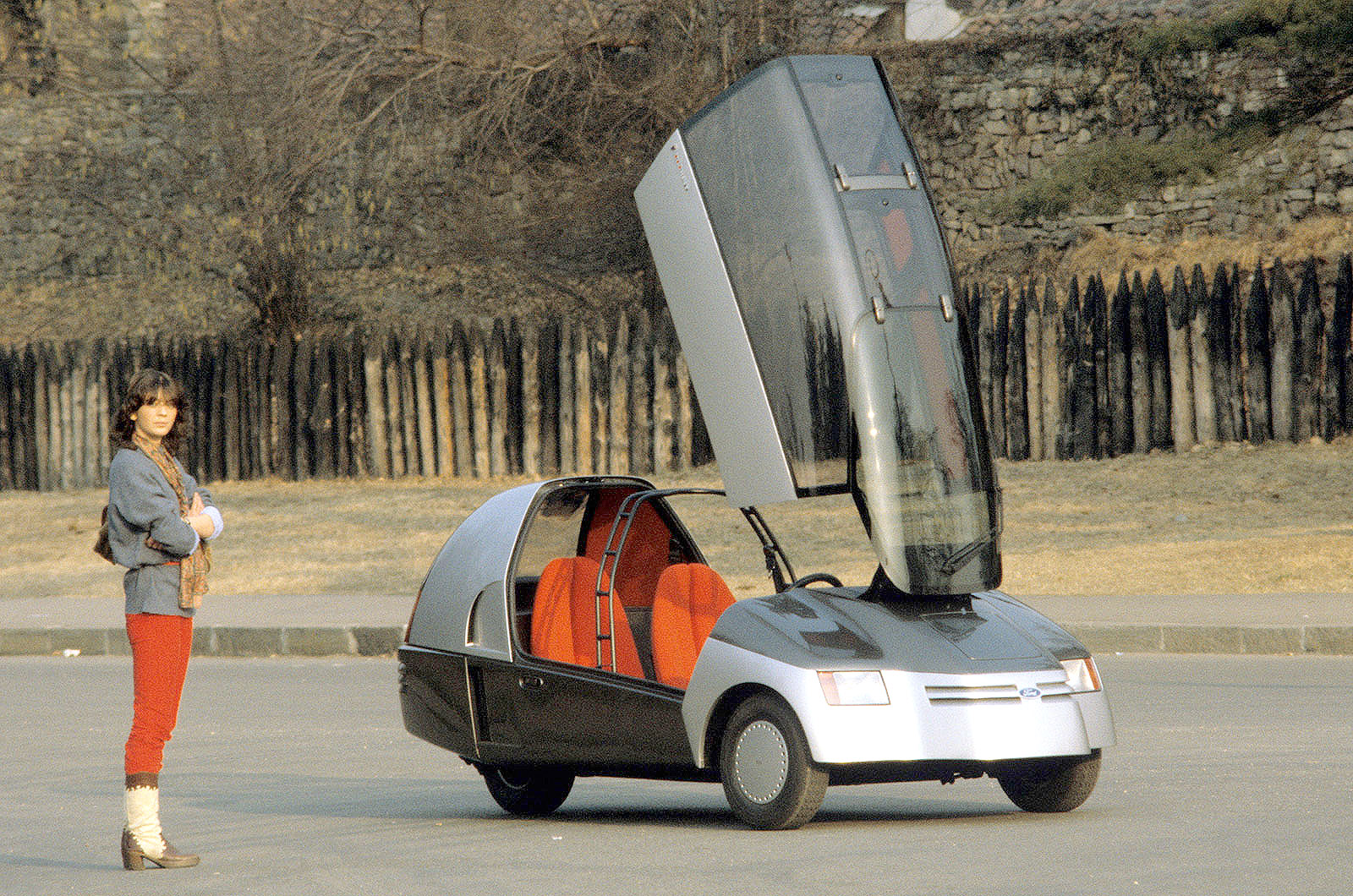
Revisiting the microcar formula of the 1950s, the Cockpit could seat two in tandem and it was designed as an economy car for urban streets.
Small, easy to park and ultra-frugal, power came from a 200cc single-cylinder motorcycle engine that peaked at 12bhp, and which could deliver 75mpg around town. A forward-look into future personal mobility.
Italdesign Capsula (1982)
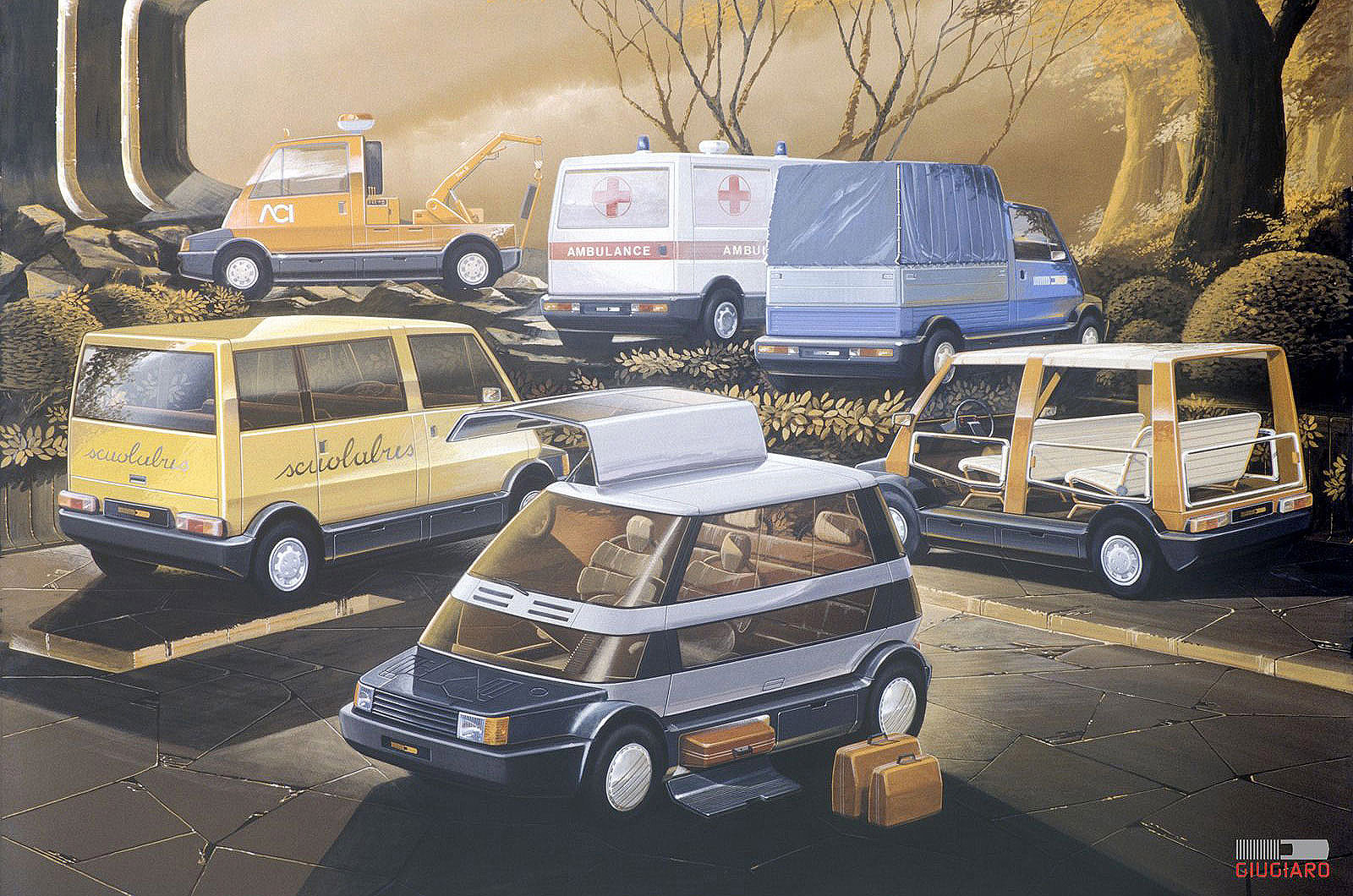
It may have looked more than just a bit weird but the Capsula really pushed the boundaries when it came to packaging. Here was a car that could be a car, van or just about any other type of vehicle, just by plonking a different bodyshell onto the chassis that contained all of the Alfasud boxer engine and running gear.
MG E-XE (1985)
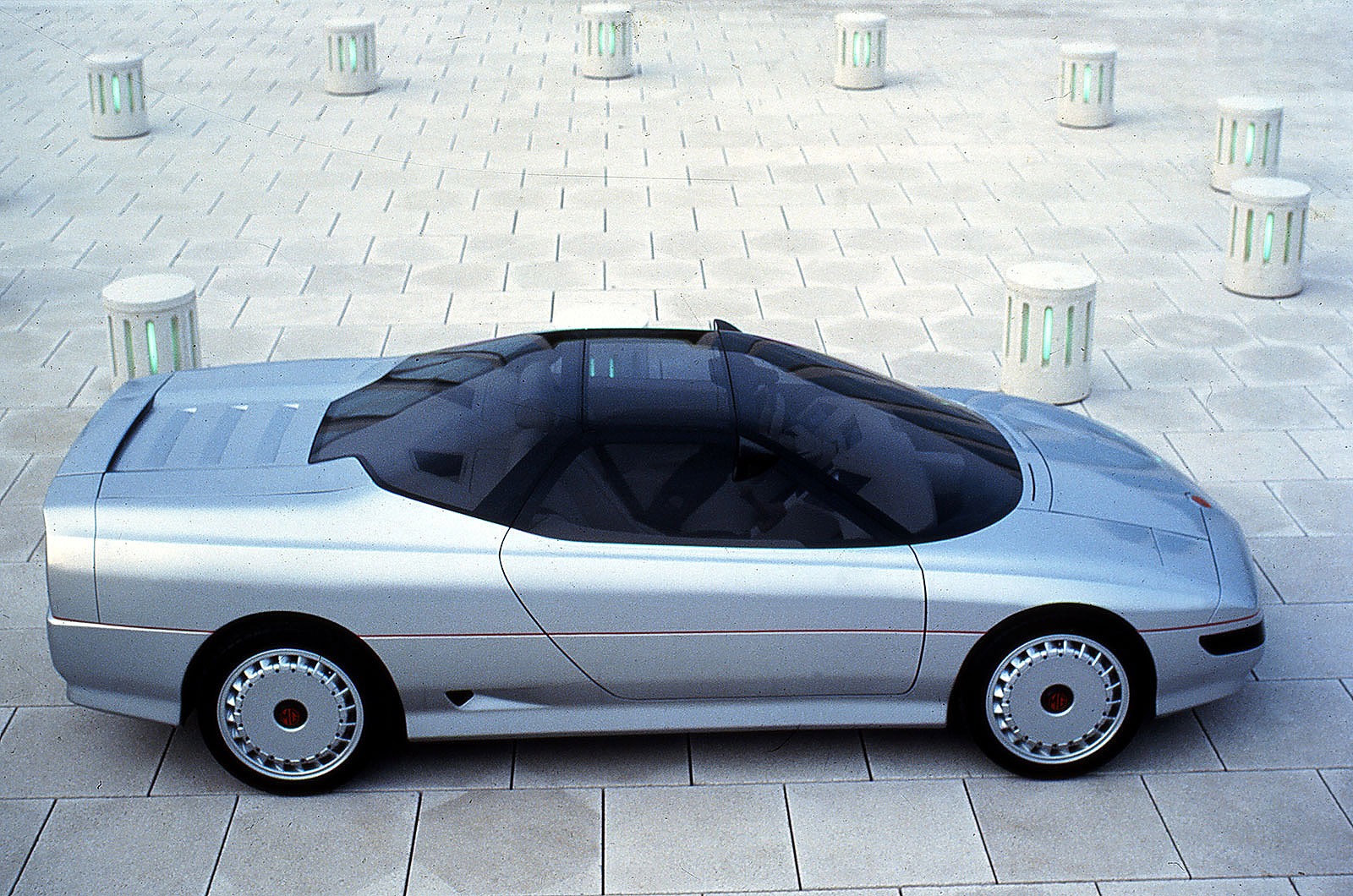
Perennially broke British Leyland/Austin Rover/MG Rover rarely created pricey concept cars, but this E-XE proved they could pull it off when they tried.
It clearly influences the MGF sports car that arrived a decade after the E-XE made its first appearance, complete with Metro 6R4 running gear. We reckon it still looks great today, not bad for an eighties concept aged 34.
GM CERV III (1990)
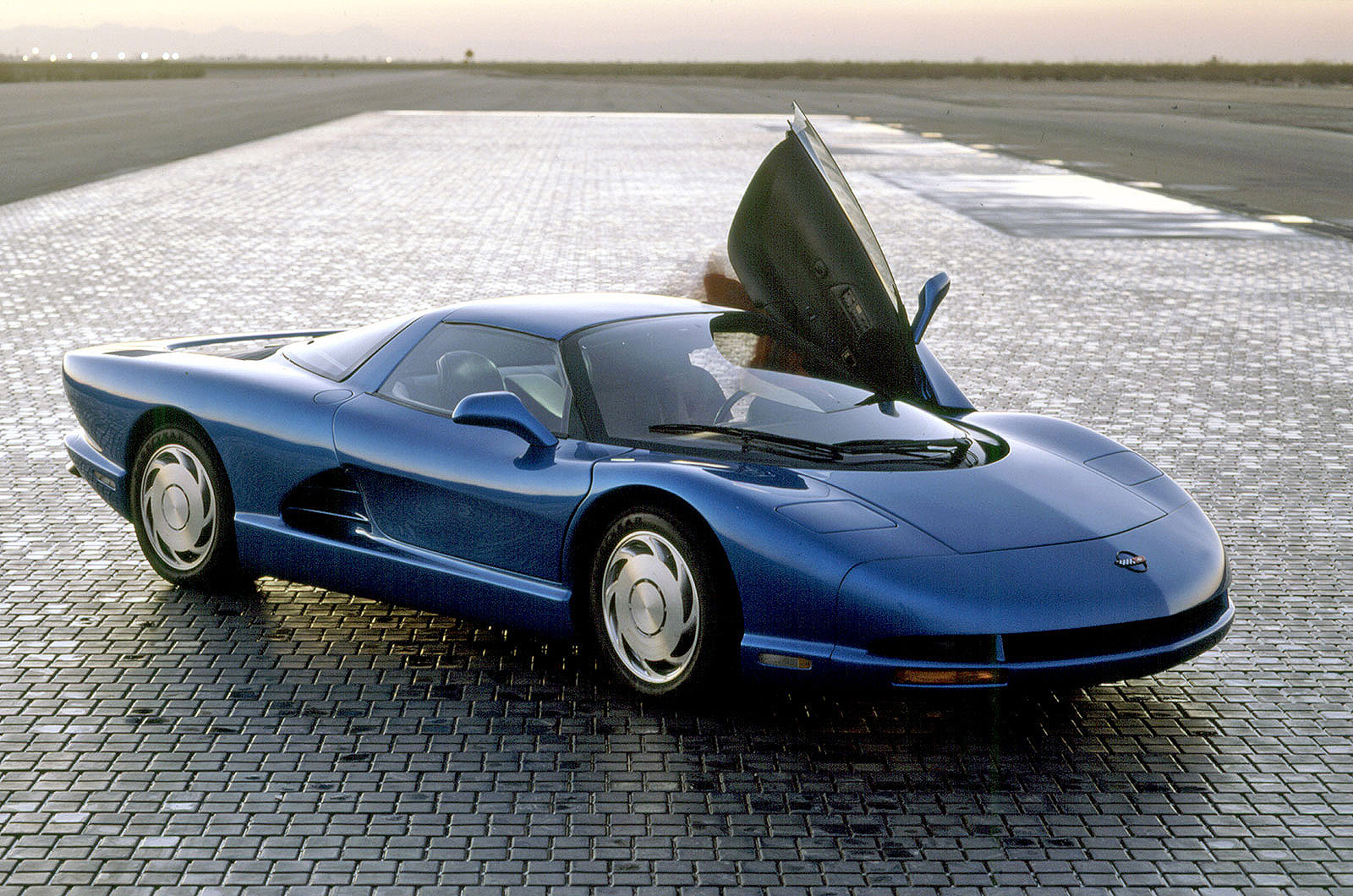
GM showed its first CERV (Chevrolet Engineering Research Vehicle) concept in 1962 and followed it up two years later. The third iteration was a very different beast and while it was a looker, it was the engineering that set it apart.
The car’s raison d’etre was to be capable of being driven at massive speeds - 200mph - without the need for super-human skills – even if driven on tricky or slippery surfaces. Its design language can clearly be seen in the Corvette C5 that arrived in 1997.
BMW E1 (1991)
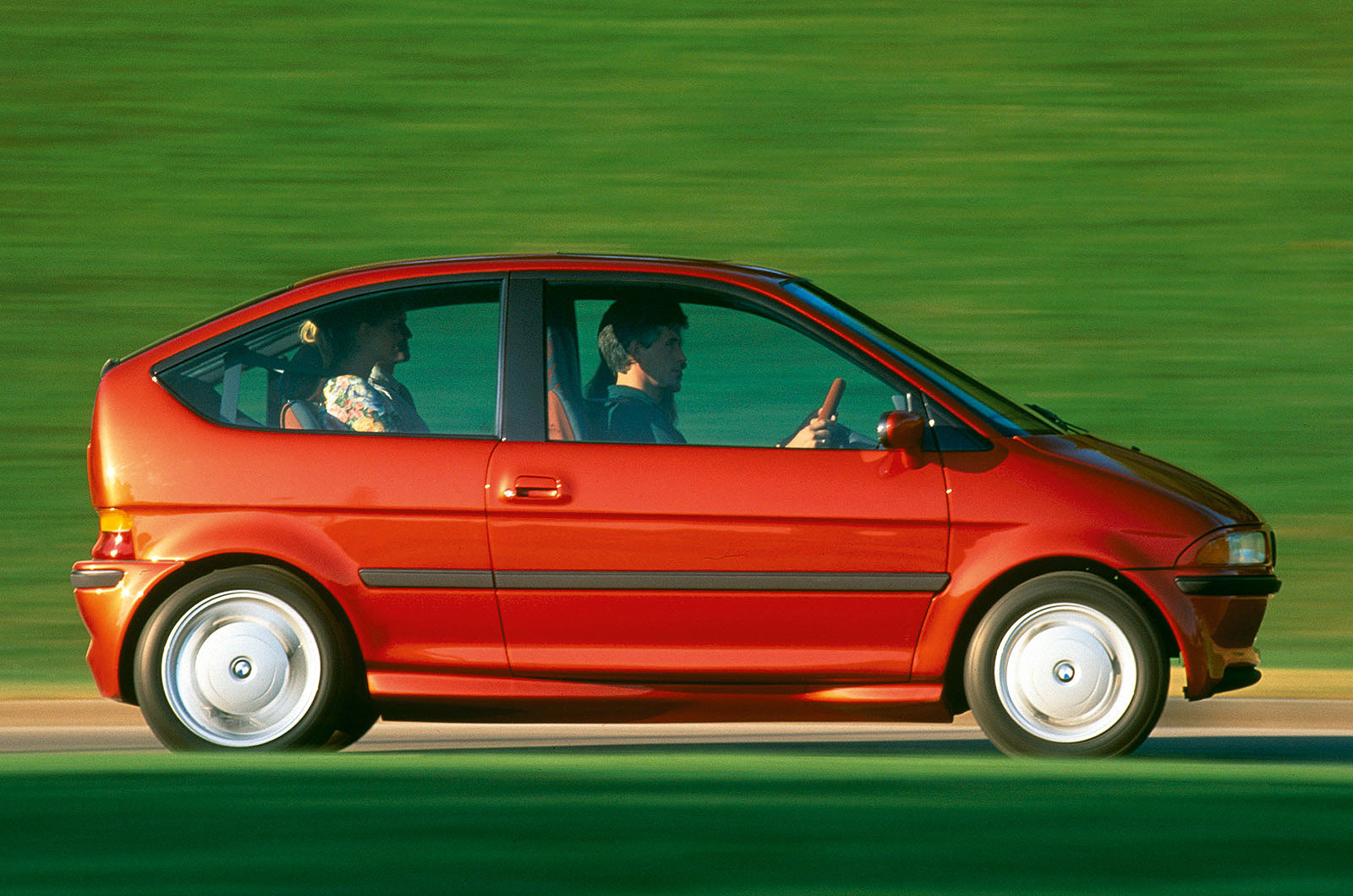
The smallest cars are often the most innovative, and so it was here with a concept first seen in 1991 then reimagined for 1993. While the first iteration came with electric propulsion only, a redesign two years later led to three powertrains being engineered: petrol, electric and petrol-electric hybrid, and a lightweight aluminium bodyshell to cut weight.
This concept was important as it showed the world what a small BMW could look like, at a time when the company – like its main German rivals – were associated with conventional saloons.
It’s said that this car might have been made production had the company not instead bought Rover, and concluded it could do BMW’s small cars instead; that didn’t end well, but BMW did at least get Mini from its misadventure, which has flown the small car flag for the company since. We finally got a small BMW-badged car with the first 1 Series of 2004.
Volvo ECC (1992)
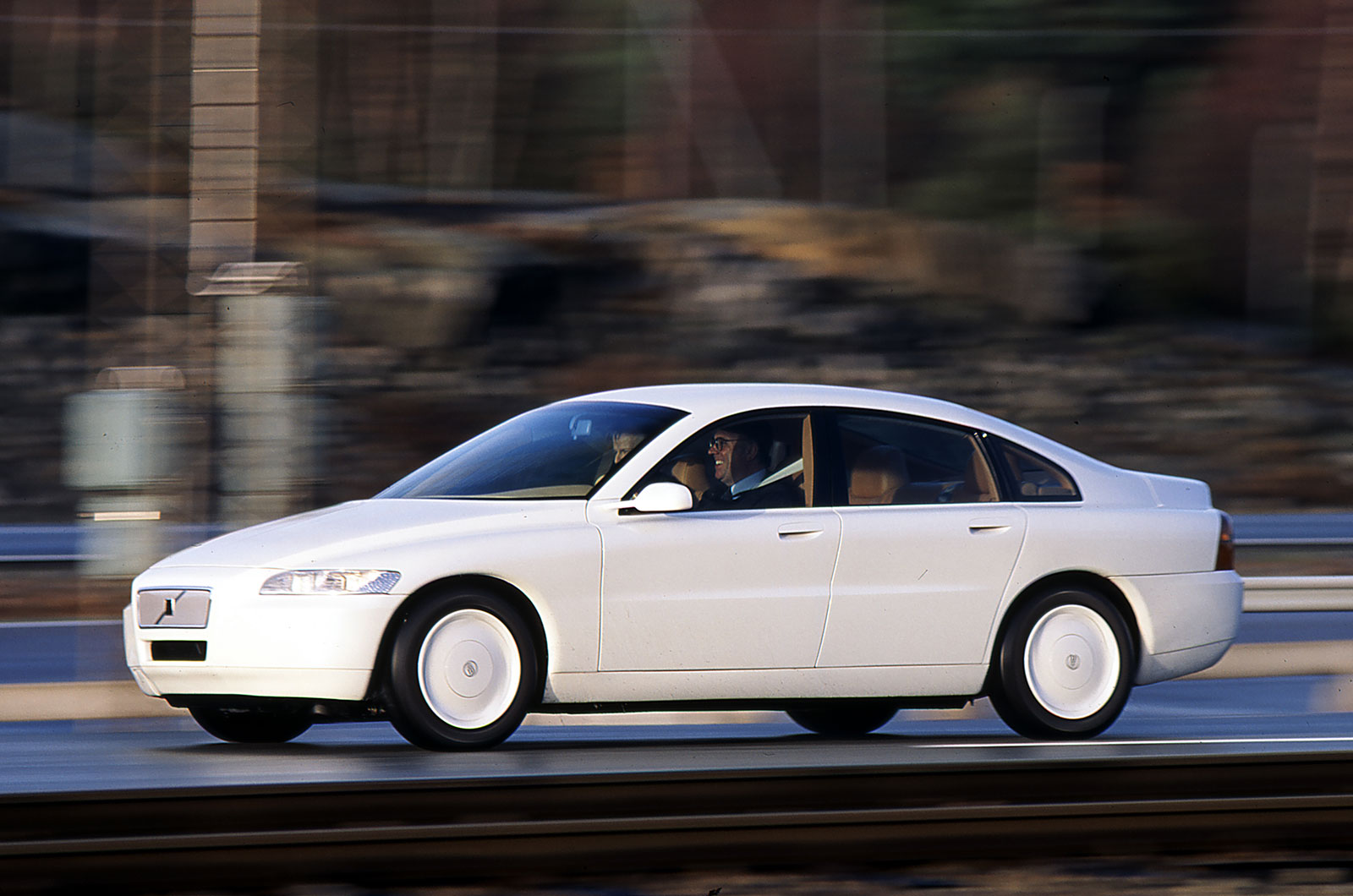
When the first-generation Volvo S80 went out of production in 2006 it didn’t look especially dated – yet it aped the ECC (Environmental Concept Car) that had first been seen as far back as 1992.
Designed to save the planet in use and its occupants in a crash, the ECC was light, slippery, strong and frugal; motive power was courtesy of a gas turbine combined with an electric motor.
Dodge ESX3 (2000)
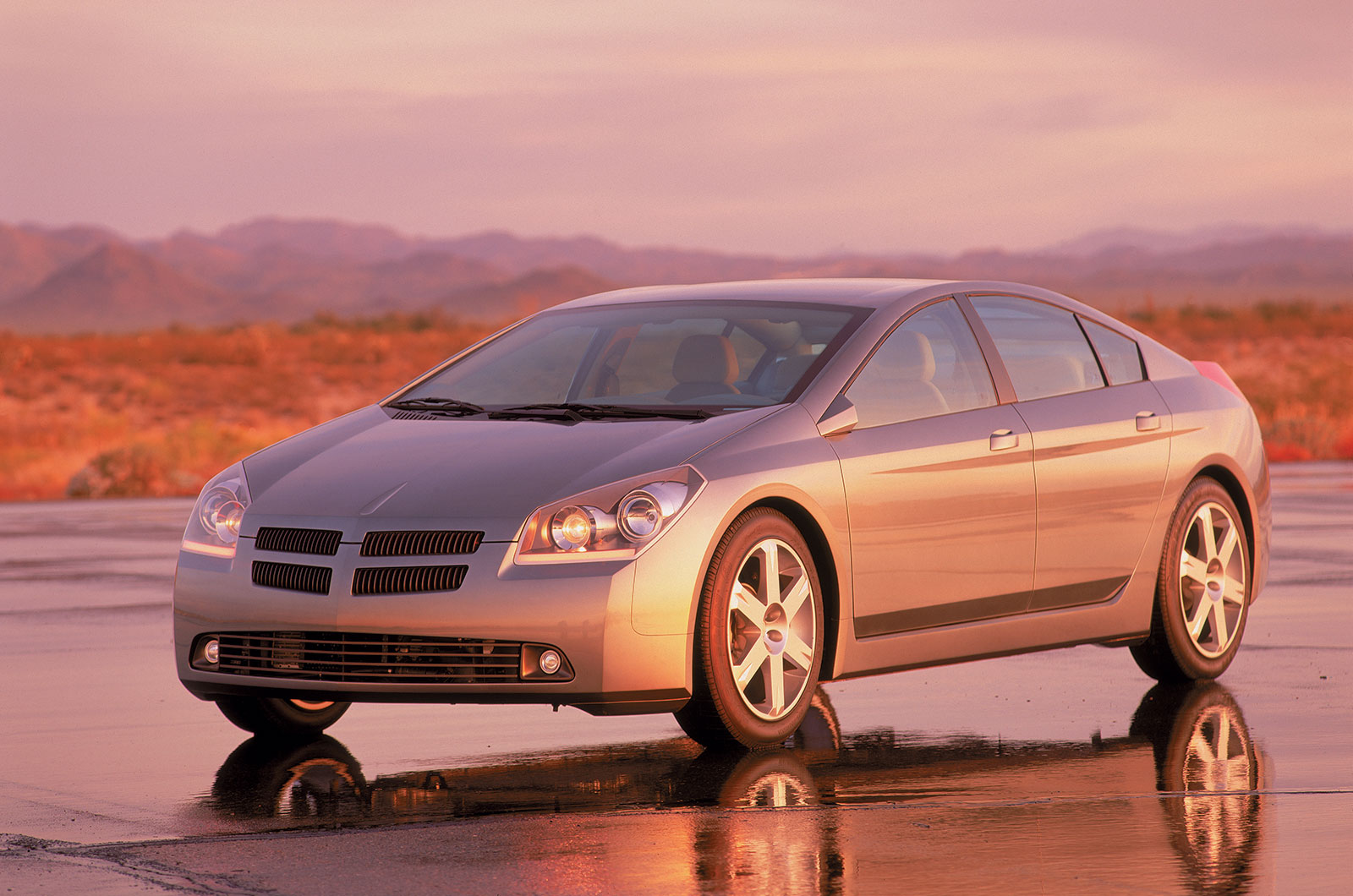
For a 21st century car the Dodge ESX3 may not have looked cutting-edge, but underneath that sober skin was something rather interesting – a diesel-electric hybrid powertrain. Honda and Toyota hadn’t long introduced their Insight and Prius respectively, yet as far back as 1996 Dodge had shown its first ESX hybrid concept – with the sequel following in 1998.
Jaguar F-Type (2000)
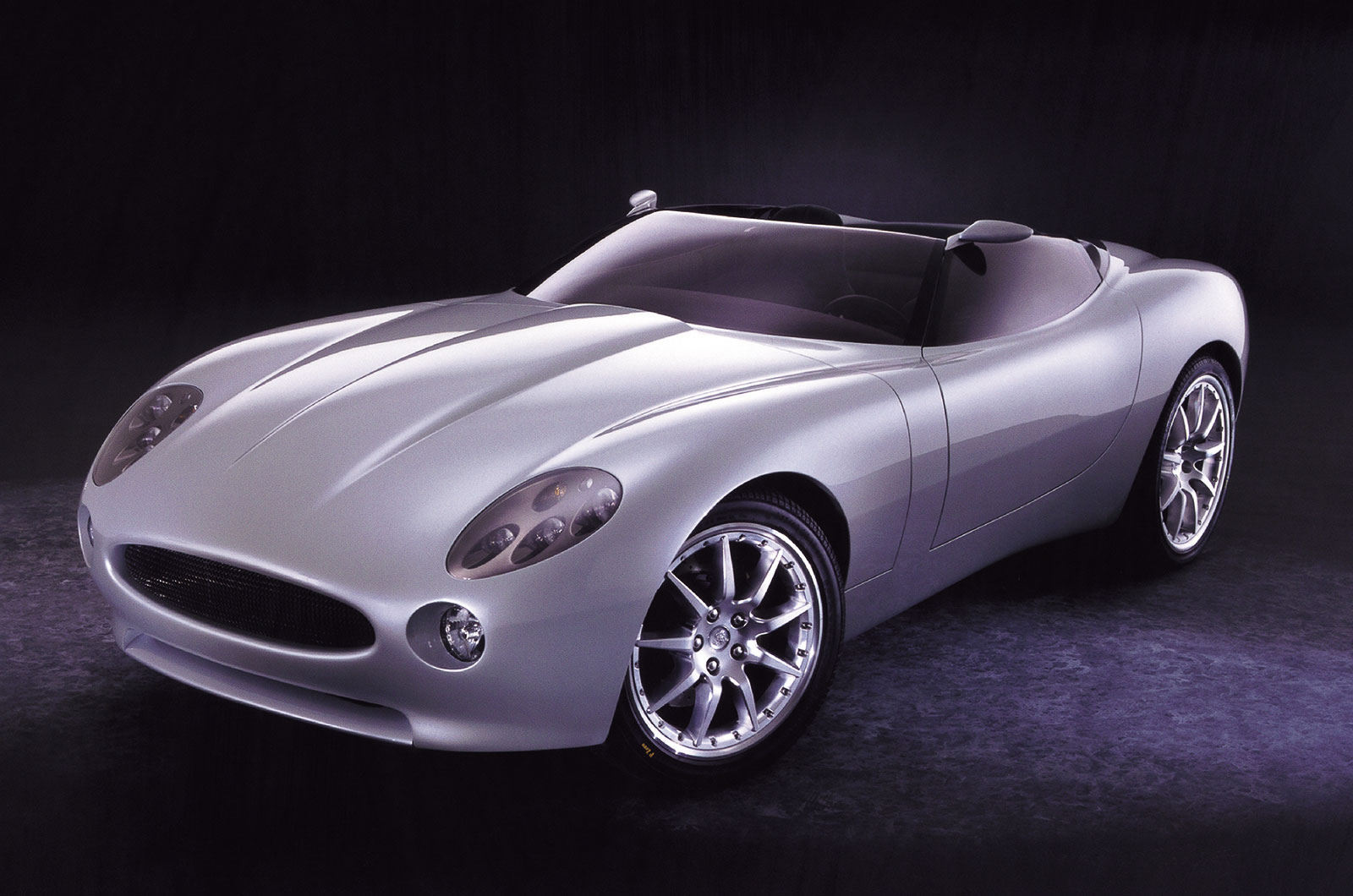
Jaguar has done a pretty magnificent job with the production F-Type that arrived in 2013. But this is what the F-Type could have looked like; this speedster concept made its debut at the Detroit motor show in 2000 and looked utterly sensational, though not exactly production-ready with its lack of weather gear and an almost complete lack of practicality.
Jaguar’s then-owner Ford however decided to spend its money on an ill-starred Formula One campaign instead, so the F-Type idea was canned for another decade or so. The 200 concept is now displayed at the British Motor Museum at Gaydon.
BMW X Coupé (2001)
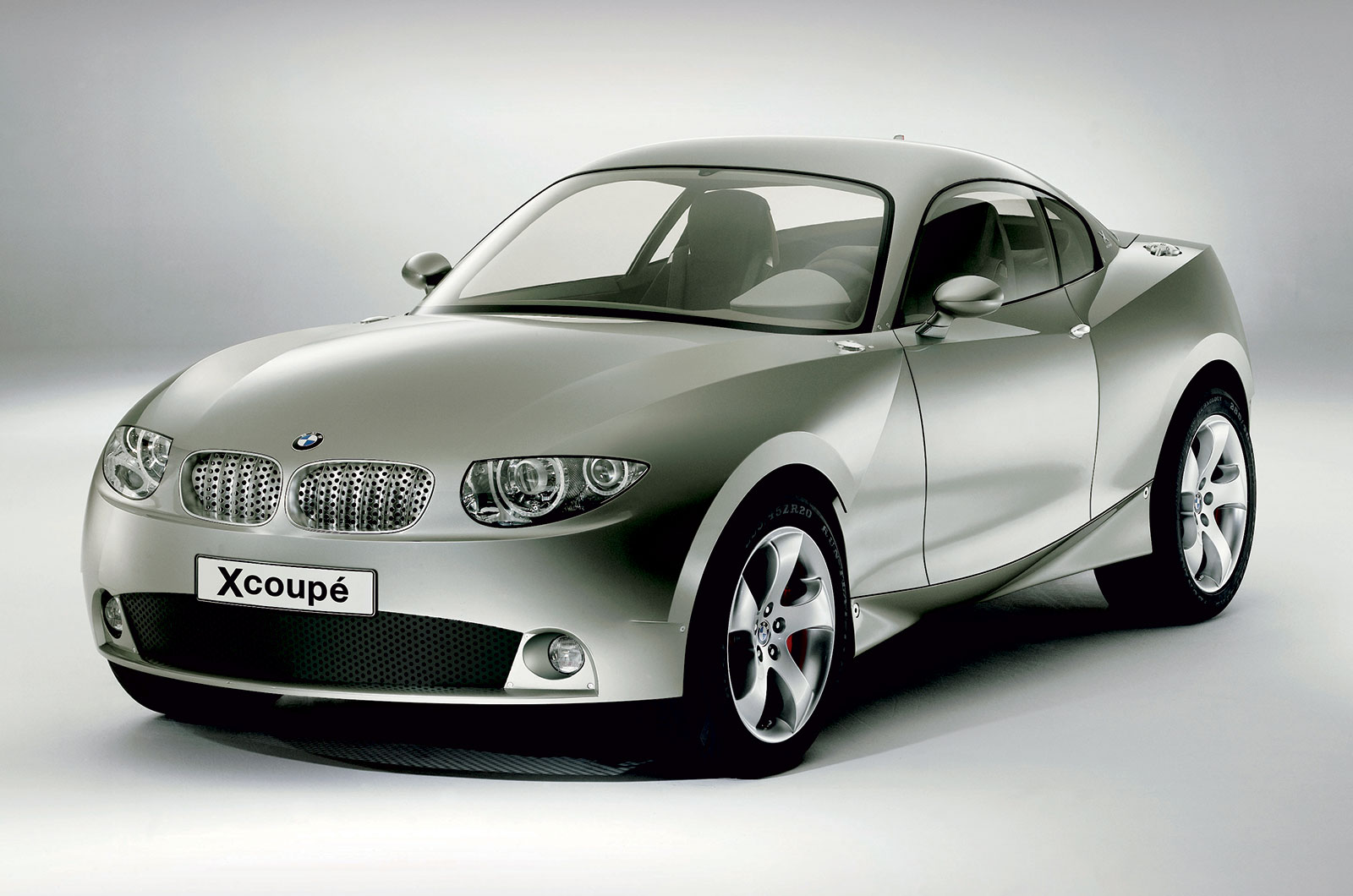
BMW came in for a lot of stick at the start of the 21st century thanks to design chief Chris Bangle and his radical styling ideas. One of the most obvious was the ‘flame surfacing’ that played tricks with the light down the car’s flanks.
The X Coupé also featured swivelling headlights, directed by GPS and a 3.0-litre diesel engine – a form of propulsion almost unheard of in a sporting coupé. Controversial or not, Bangle’s themes were certainly influential and made him one of the world’s most famous car designers.
Cadillac Sixteen (2003)
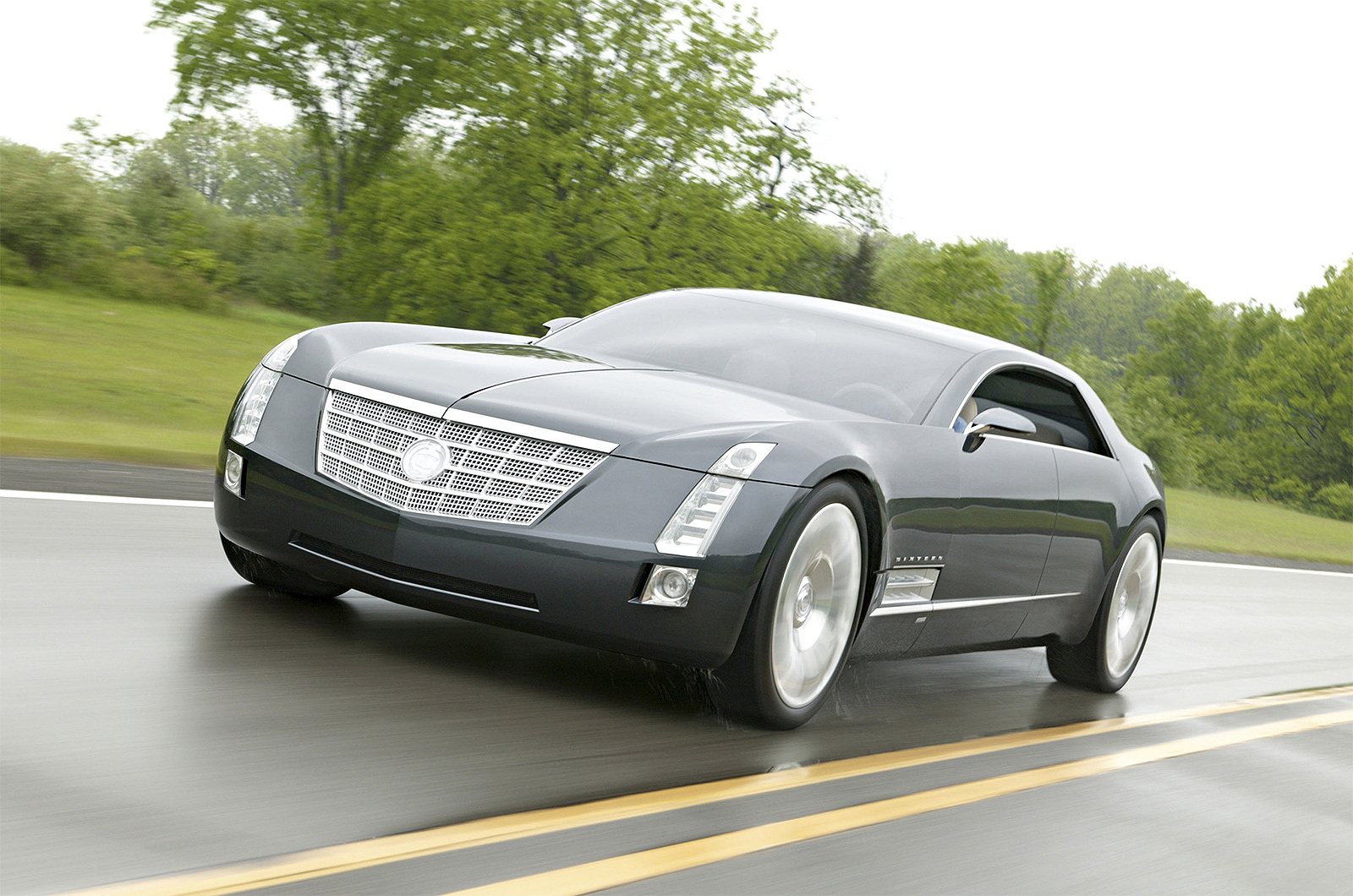
GM has come up with some outlandish concepts over the years, but few can top the Cadillac Sixteen, with its 13.6-litre V16 that was reputedly good for 1000bhp.
Nothing like it was ever going to enter production, but it did introduce a new design language for Cadillac that’s still current; take a look at a 2019 Escalade if you don’t believe us.
GM Hy-wire (2003)
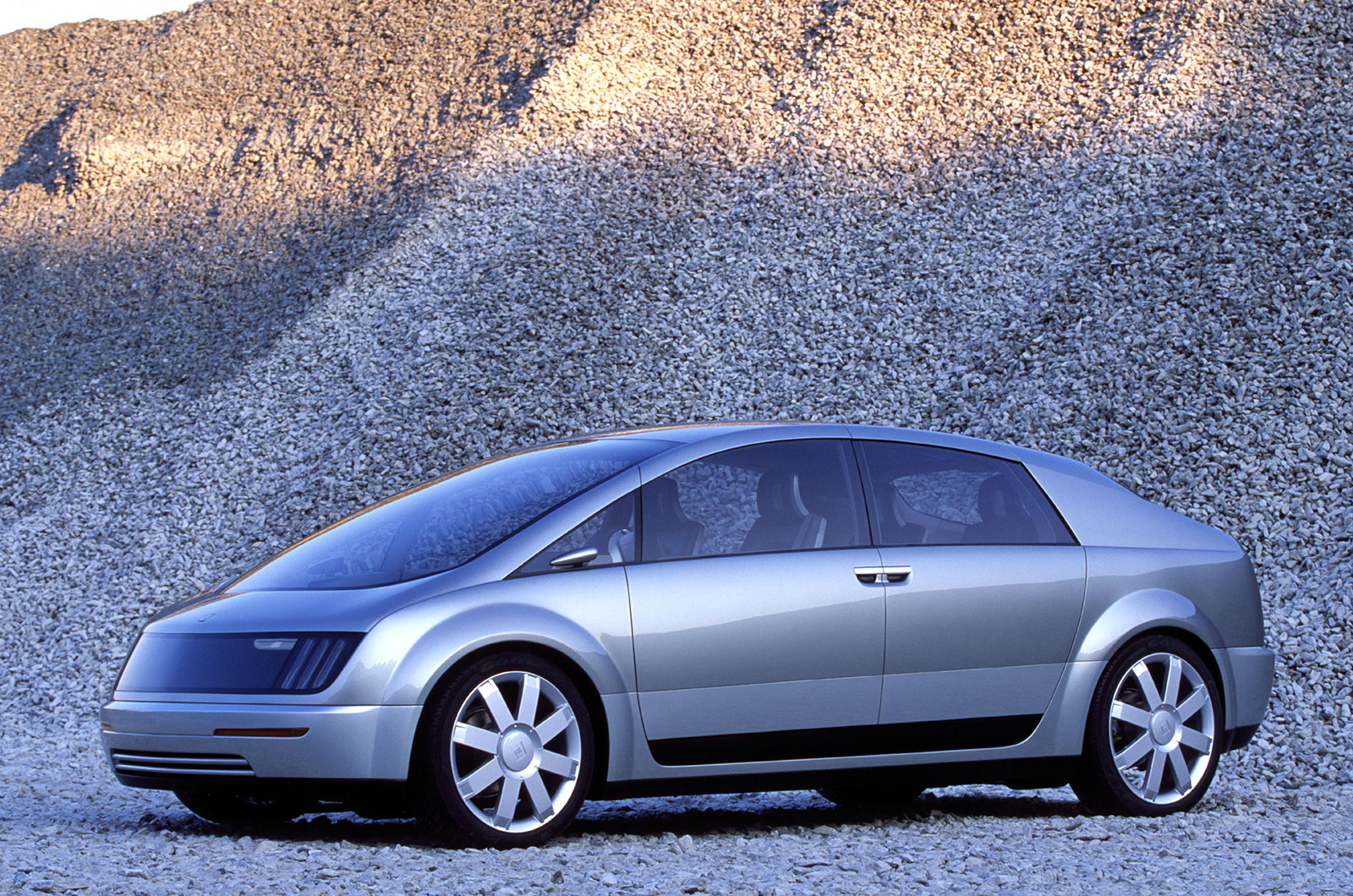
One day all cars will be like this. Thanks to everything being controlled through drive-by-wire tech there were no mechanical linkages in the cabin, allowing it to be completely opened up.
The fuel cell tech was all enclosed in the sandwich chassis; the three-phase motor provided 126bhp when running continuously, but 173bhp could be summoned for short bursts.
Holden Efijy (2005)
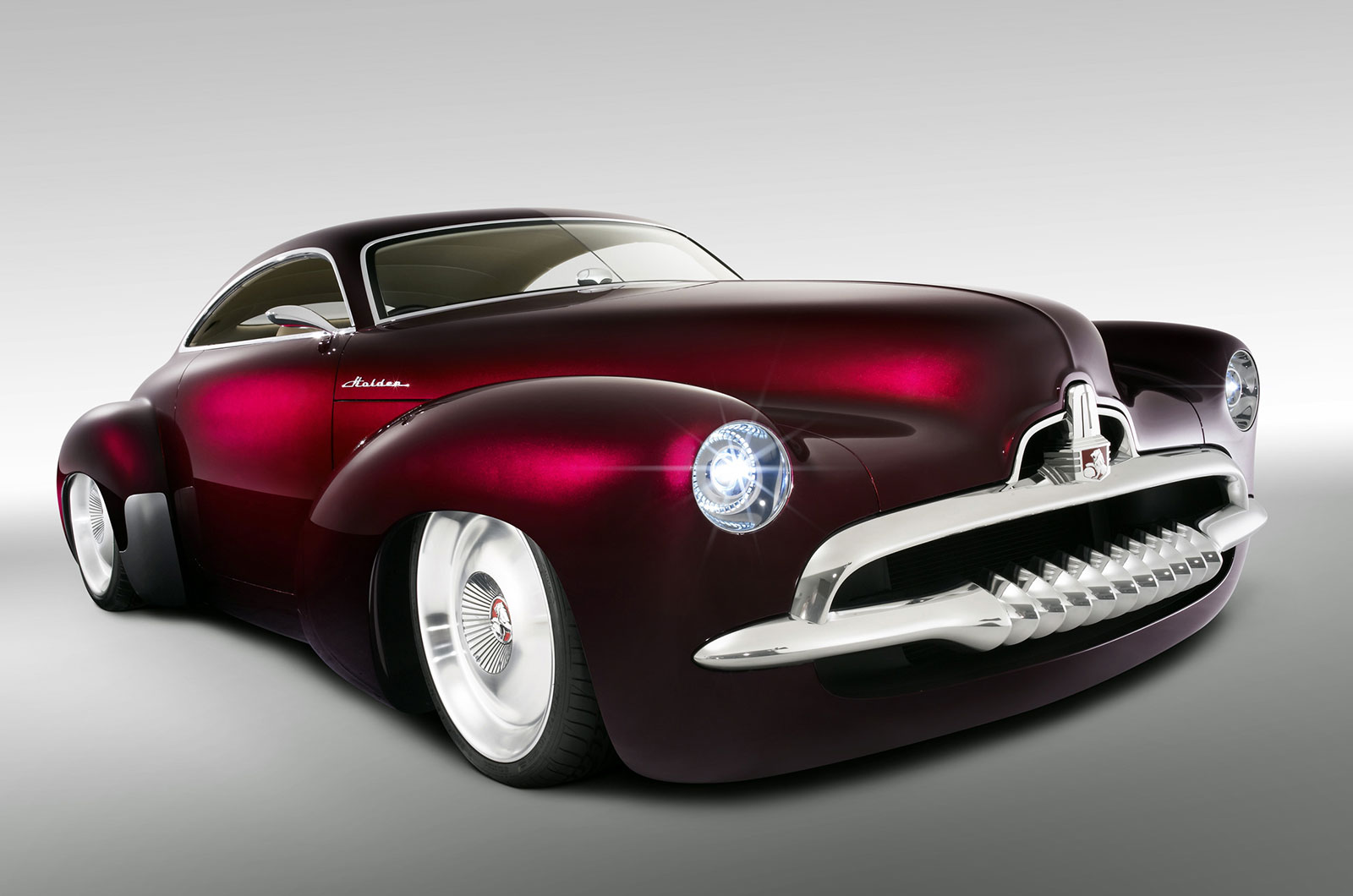
Concept cars usually look forward, not back. But the Holden Efijy from GM’s Australian arm looked so fabulous that it didn’t really matter.
A tribute to its legendary FJ from the ‘50s (hence the name), the Efijy was based on a C6 Corvette and utilised that car’s supercharged 6.0-litre LS2 V8.
BMW EfficientDynamics (2009)
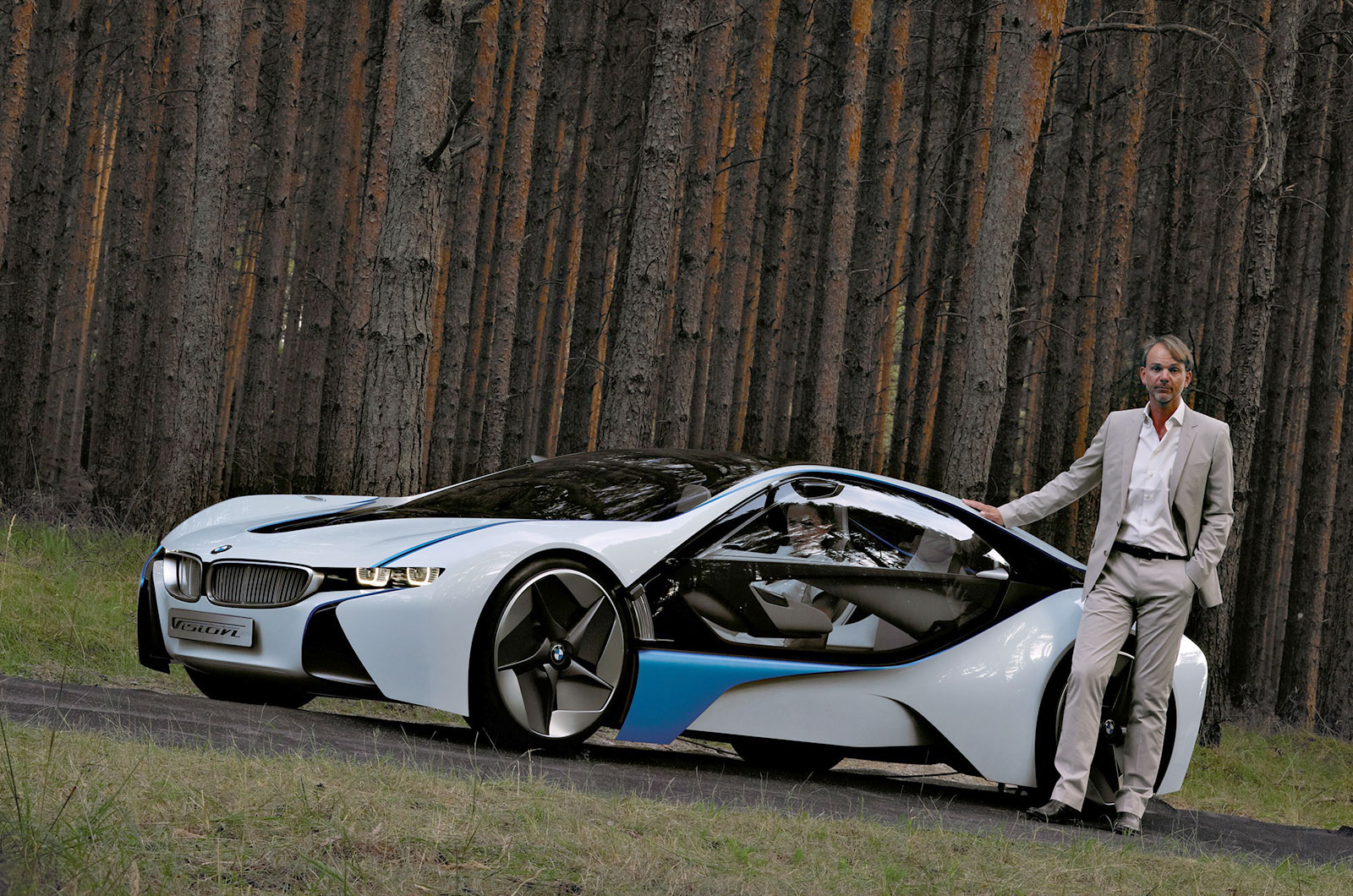
It led directly to the introduction of the i8 but the BMW Vision EfficientDynamics is much more than that. It pioneered a new type of performance car that mixed high-tech lightweight materials with a hybrid powertrain – and the best part is that now, if your pockets are deep enough, you can buy one of your own in the BMW i8.
BMW were loudly stating that if the future was electric, it could also be alluring.
Renault Dezir (2010)
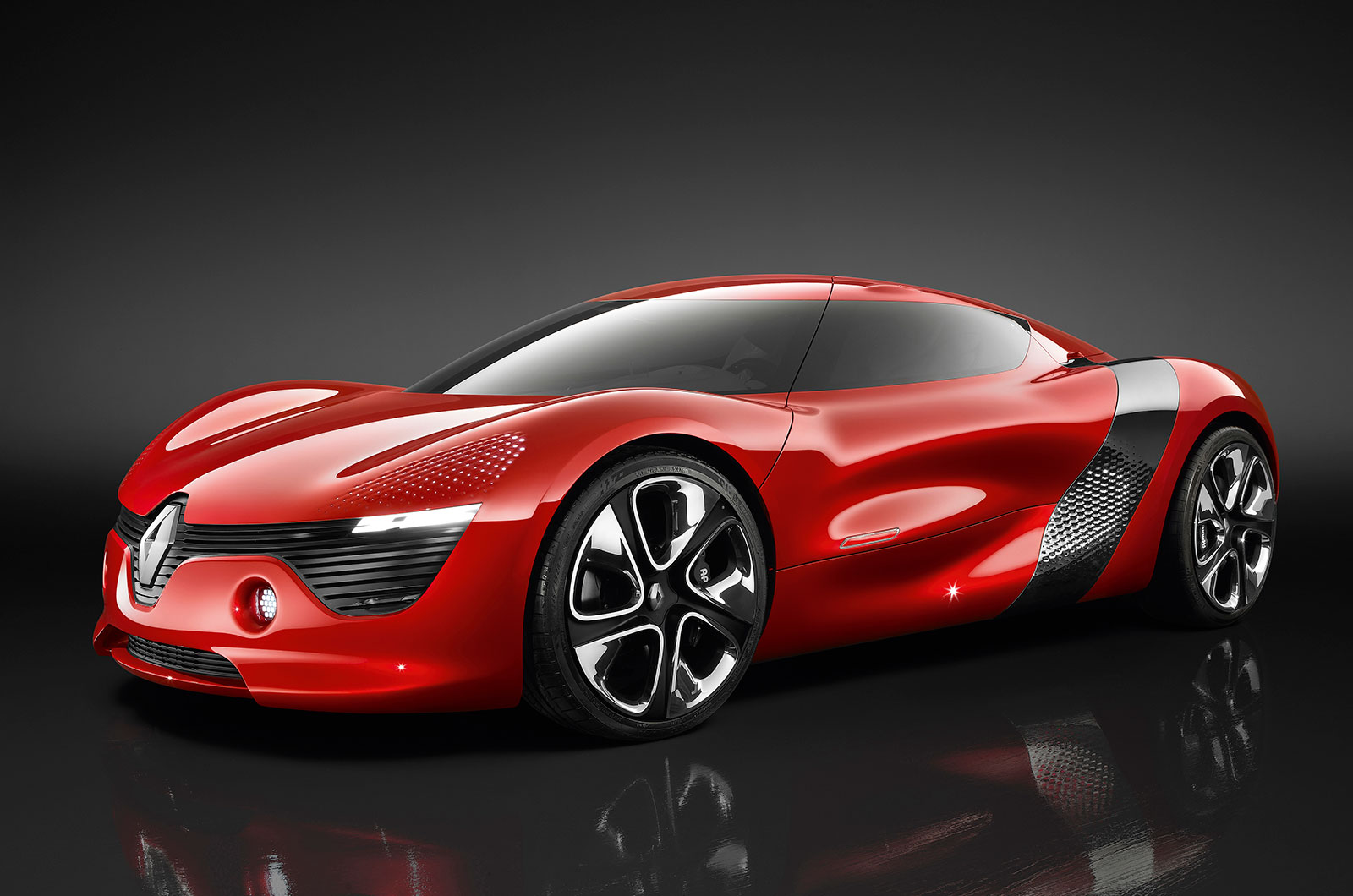
You’ll have to look long and hard to find a concept car that looks as beautiful as this one. First shown at the 2010 Paris motor show, the Renault Dezir was a pure-electric concept that offered a glimpse into an eco-friendly future where you could have beauty and brains in one compact package.
Nine years on, the Dezir still looks stunning.
Jaguar C-X75 (2010)
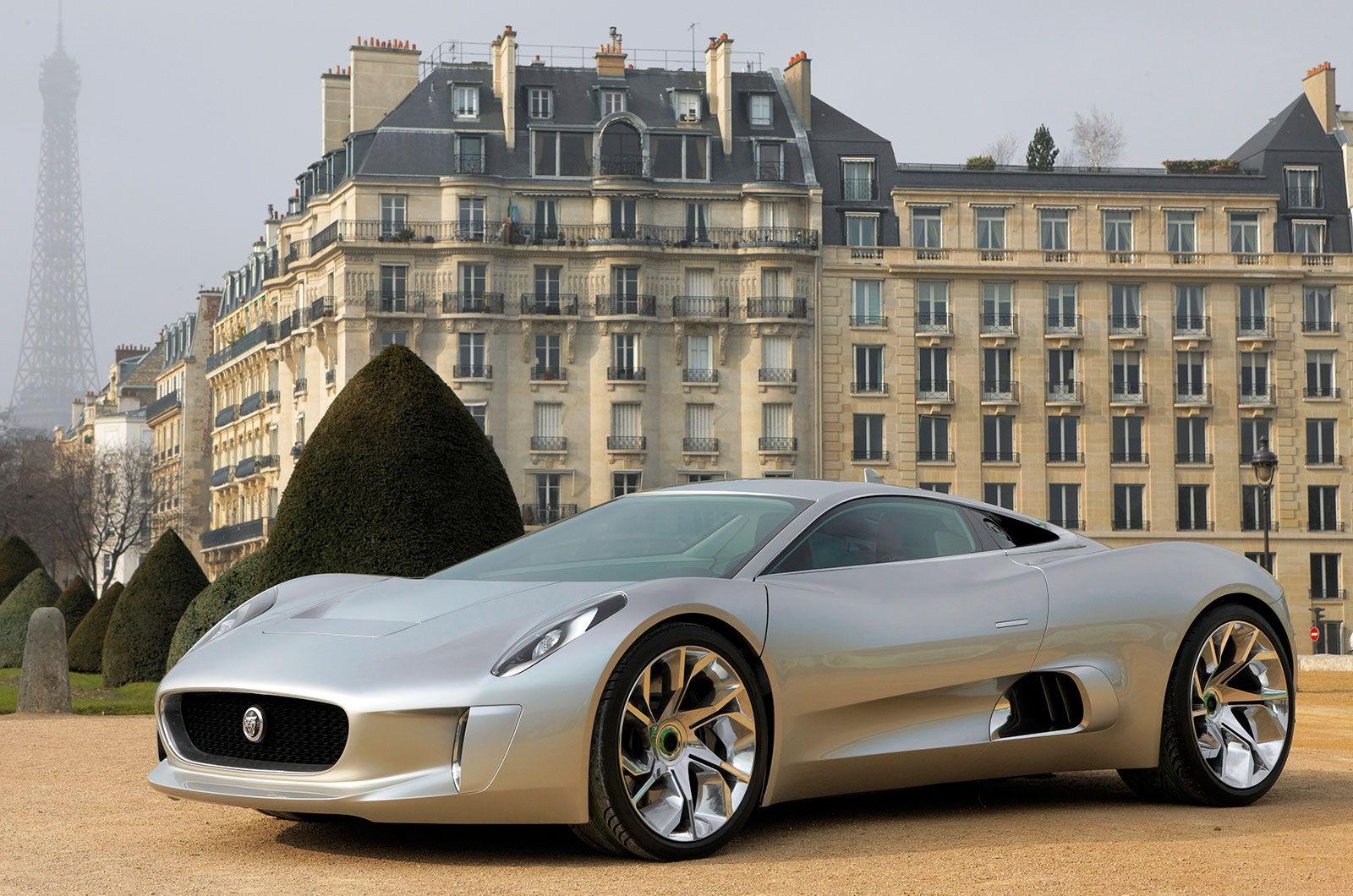
We got so close to being able to buy one of these gorgeous 778bhp hybrid supercars, but in the end the business case just didn’t stack up. Built in conjunction with Williams Advanced Engineering, the plan was to build up to 250 examples at around £1m apiece, but it wasn’t to be – although a villain got to drive one in the film Spectre, chasing James Bond in his Aston Martin DB10 round the streets of Rome.
When its designer Ian Callum retired from Jaguar in June 2019, one of his biggest regrets was that this car didn’t make production.
BMW Next 100 (2016)
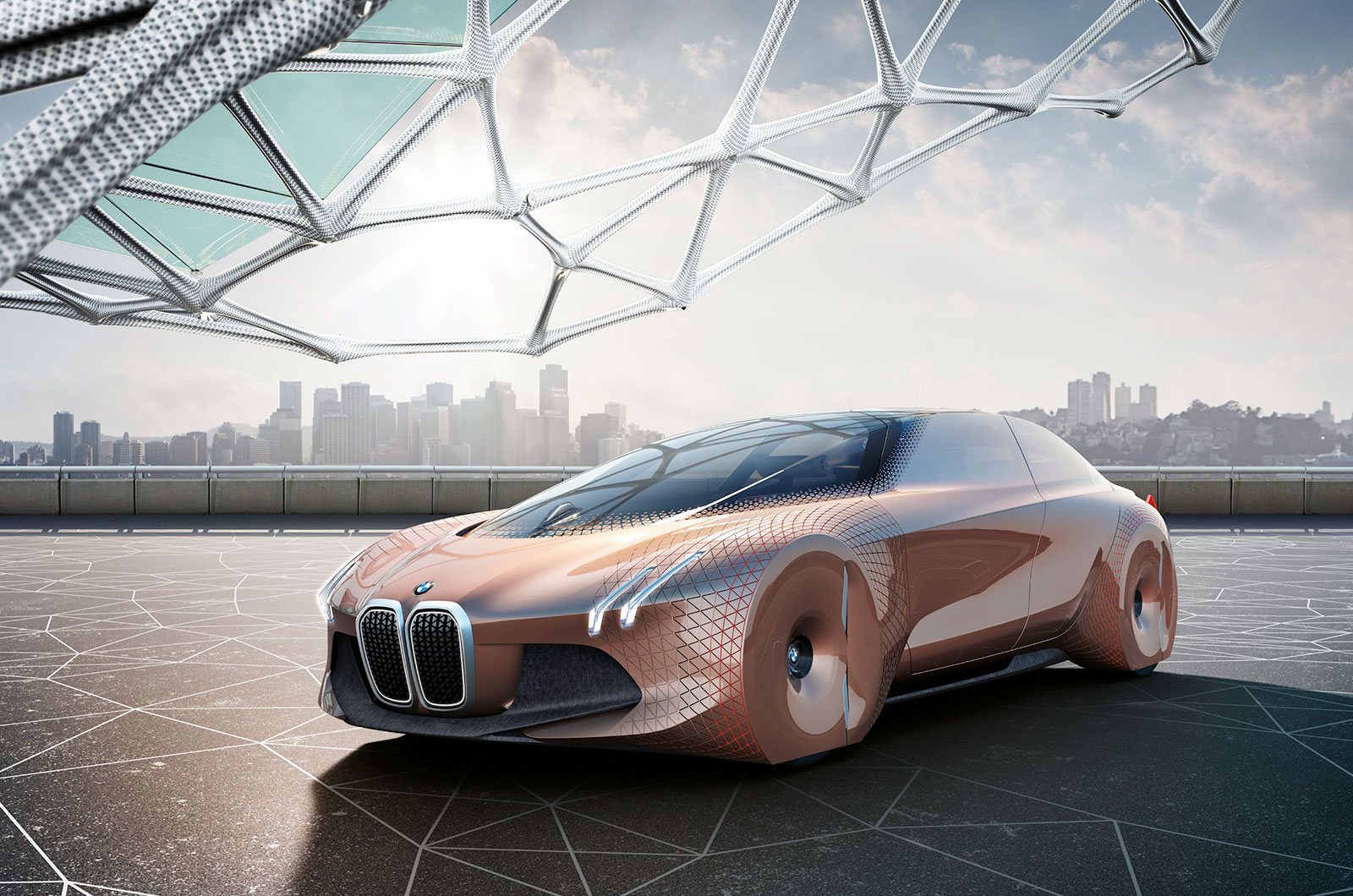
Launched to mark its centenary, BMW pulled out all the stops with this one. The self-driving Next 100 pioneered new design and construction techniques that incorporated carbonfibre structures for lightness and strength.
It was super-slippery too, with a drag co-efficient of just 0.18 Cd.
DS E-Tense (2016)
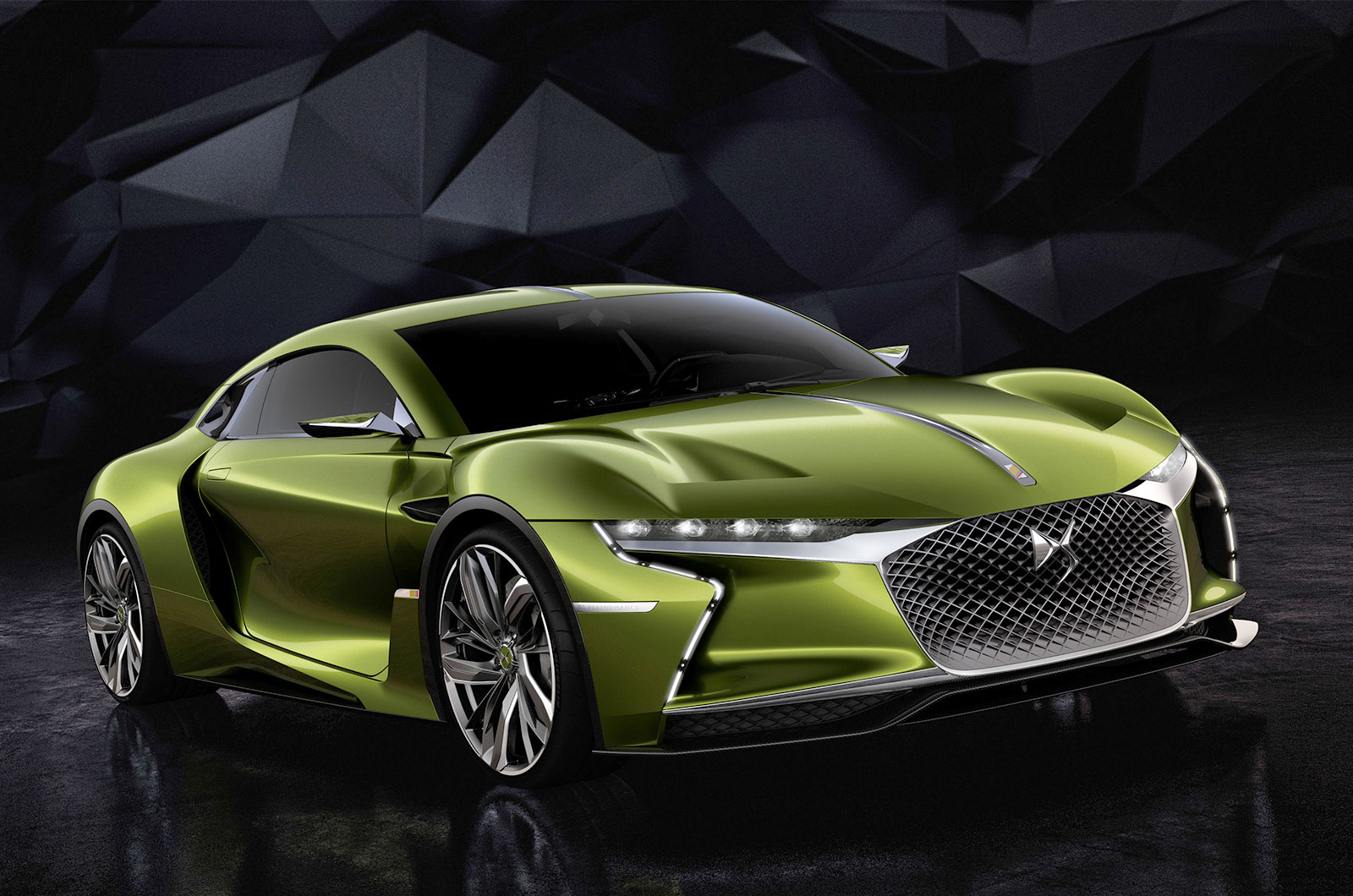
So far, the DS brand has brought us mainly reheated Citroëns, but this all-electric concept that made its debut at the Geneva salon in 2016 showed just what the PSA brand was capable of.
Looking like a mid-engined supercar, the 400bhp luxury coupé was the car of the show for many – so it’s a shame there are no plans for production.
Volkswagen ID.3 (2016)
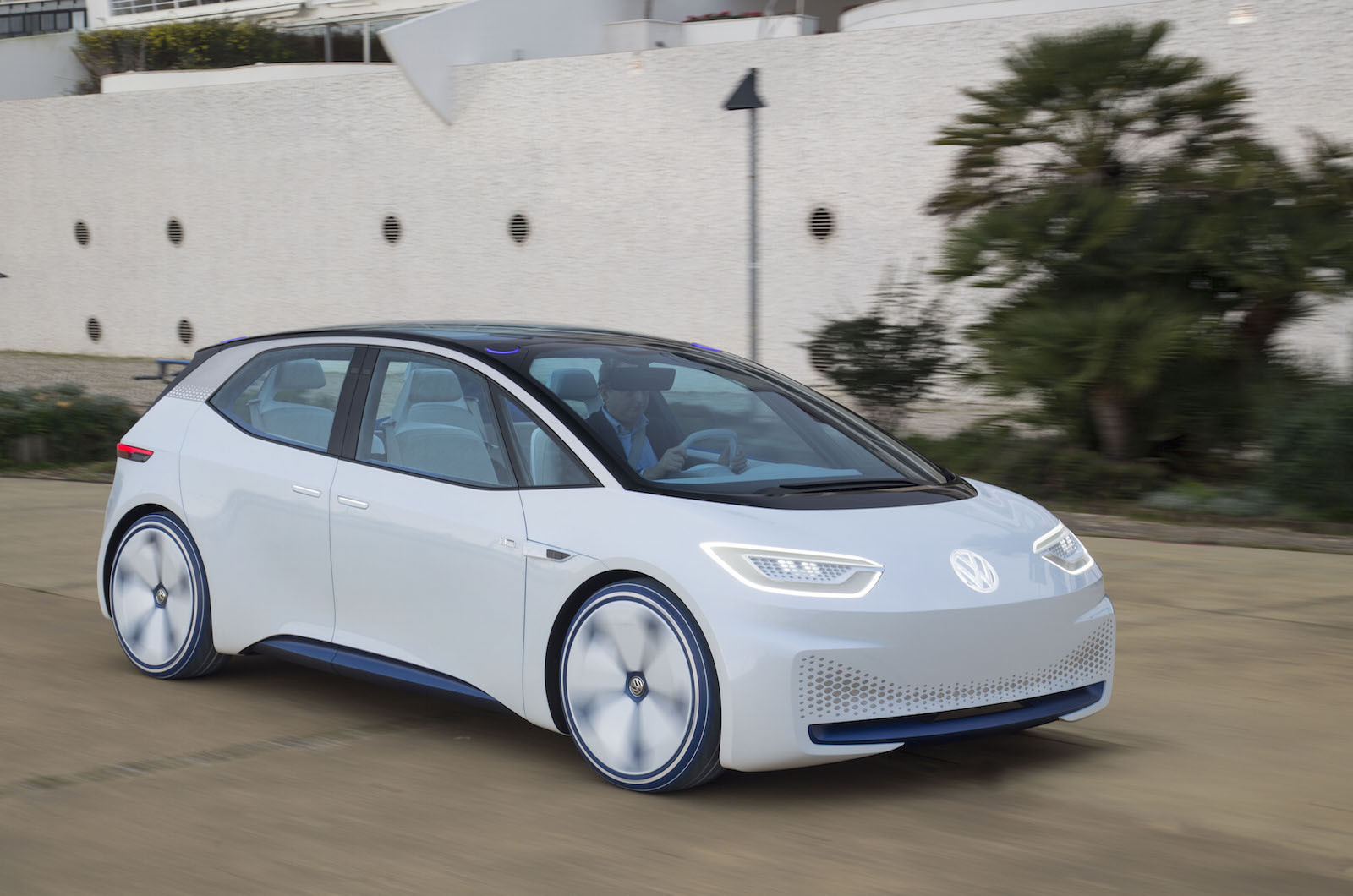
Take a close look at this car, as the chances are you’ll be seeing an awful lot of them in the future. This concept was unveiled at the Paris motor show, and previews a range of small all-electric cars from Volkswagen. So far, so unradical.
The difference is that the car promises a range of up to 340 miles, and a sale price starting at £25,000 – more or less what you’ll pay for a conventionally-powered high-end Golf today. First deliveries will begin in early 2020.
Lagonda All-Terrain Concept (2019)
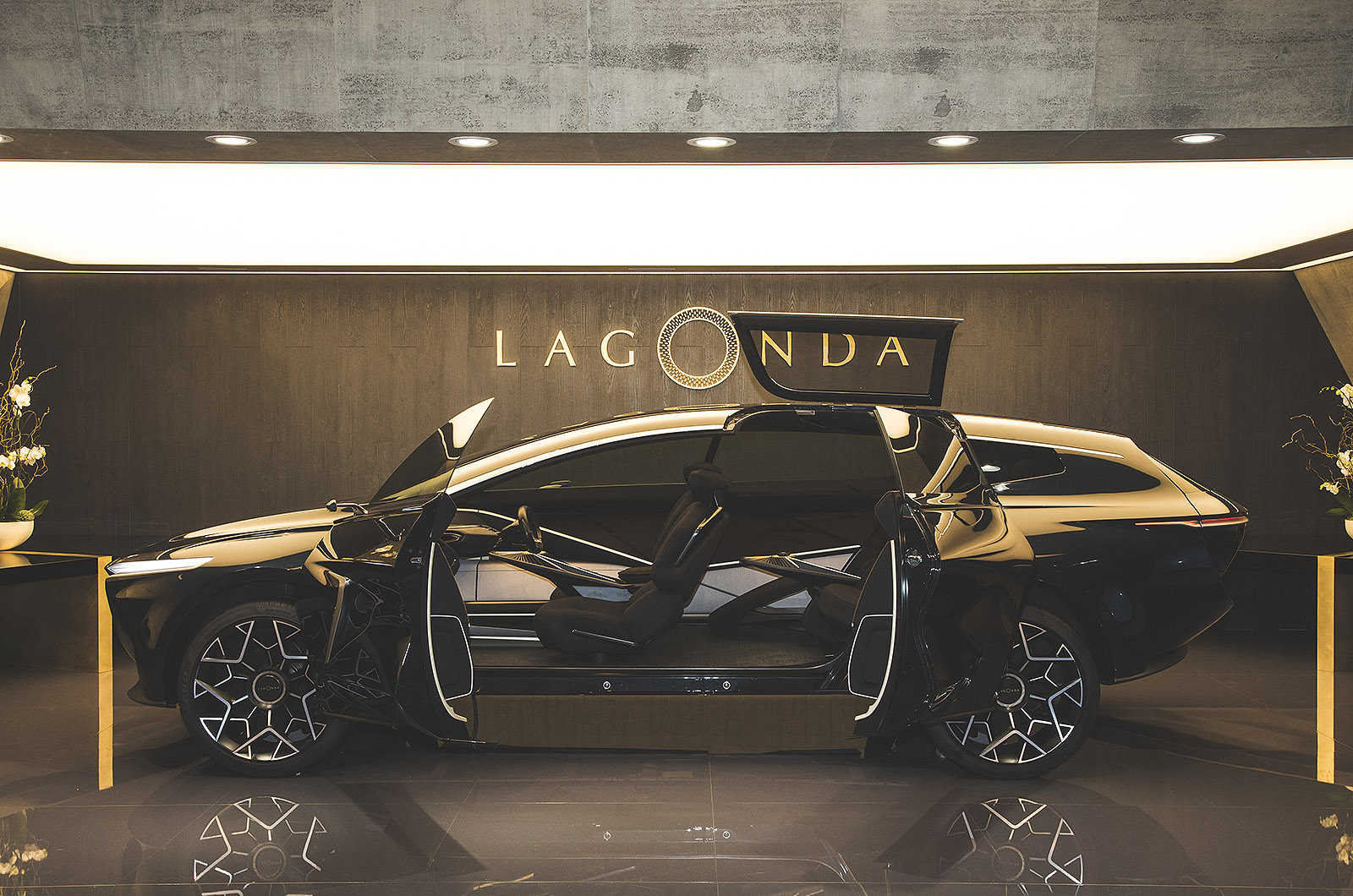
We credit this car from Aston Martin for the way it reimagines personal transport. Instead of a car, it seeks to deliver a private jet-like travelling experience, shuttling its well-heeled occupants from one place to the next in silence, oblivious to the outside world and its occasional tiresomeness.
All-electric power promised a range of 400 miles; sadly new management arrived at Aston and cancelled plans for production.

Dry Sump Systems as a Solution to High-Performance Engine Failure in Custom-Built V10 Continentals