Volkswagen Bets on AI-Powered Level 3 Automation to Regain Ground in China’s Competitive EV...

Pan Am Flight 7’s Disappearance and the Lasting Impact on Airline Safety Protocols

BMW M3 Electrifies Performance Benchmark by Prioritizing Driver Engagement Over Power in EV-Petrol Showdown
 New electric version of super-saloon prioritises driver engagement rather than more power, says M division boss
BMW is producing its “own natural enemy” in the electric M3, according to M division boss Frank van Meel, as buyers of the next-generation M3 will be lured away from the petrol variant by the EV’s superior dynamics.
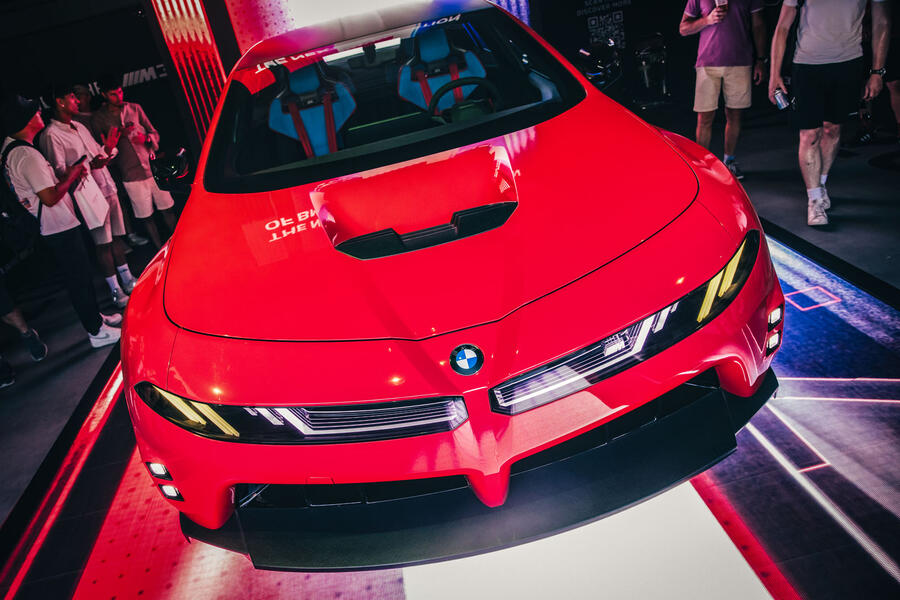
The M3 EV was previewed by last month’s unveiling of the M Concept Neue Klasse. This represents a total transformation of the forthcoming i3 electric saloon, with its muscular design drawing on the M division’s sporting heritage.
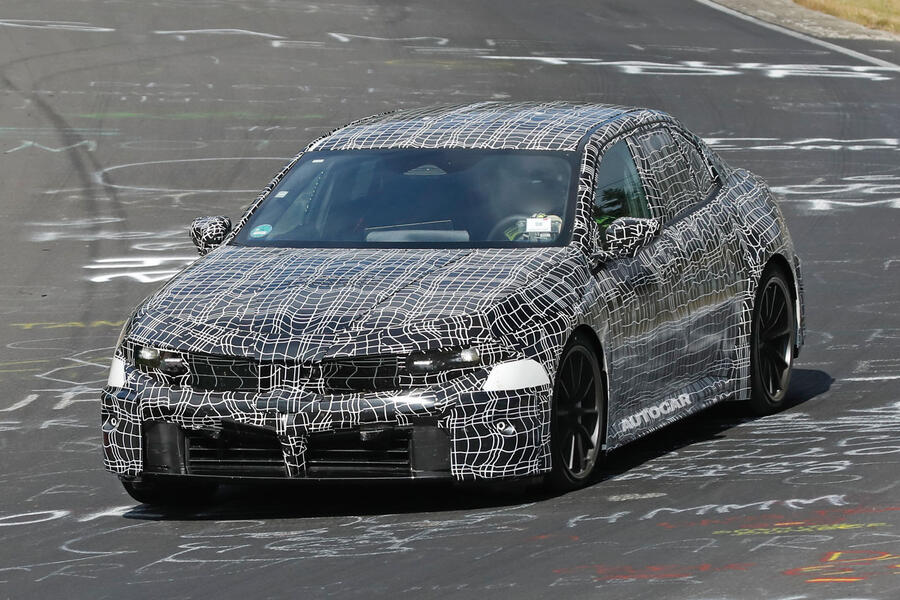
But it will also be sold alongside a new combustion-engined generation of the stalwart super-saloon, which was recently caught testing for the first time.
Its turbocharged 3.0-litre straight six has been updated to meet the Euro 7 emissions requirement without any loss of power from the current 503bhp.
Speaking to Autocar at the Goodwood Festival of Speed, van Meel said: “Now we are fighting against [ourselves], because with the all-electric M3 we are attacking our best-selling product – the leader in its segment.
“We are also working on a future generation of [petrol] M3, but now we have an internal fight. We are just pushing ourselves with the two different powertrains, and it's a great contest.”
Key to the electric M3’s engineering brief is that it will have four motors – but it won't simply chase headline power and torque outputs, instead using the unusual arrangement to bolster its poise and agility in pursuit of heightened driver engagement.
“It’s not about having even more power,” emphasised van Meel. “At the end of the day, you can’t put that down to the road anyway. You need to have sufficient power at every corner of the car and we are using four electric motors, but you will never use it at the same time.”
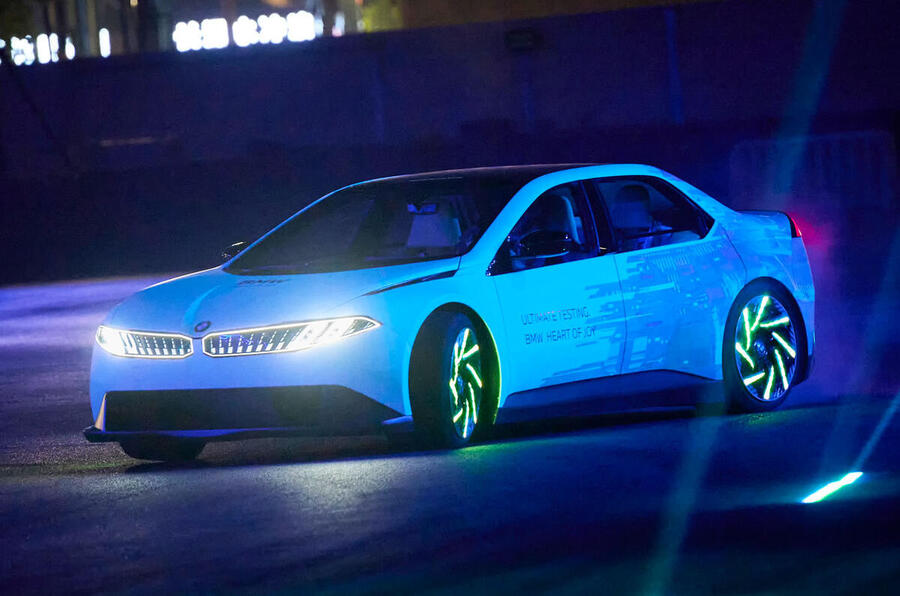
The BMW Vision Driving Experience prototype (pictured above), which previewed the technical capabilities of future M cars, had a four-figure power output, but van Meel said drivers “don’t need 1000 horsepower” on the road.
“It’s like a kickboxer. You never kick with two legs. You can have strong arms and strong legs, but you don’t use them all at the same time. And it’s the same with four electric motors.”
The M division is instead looking to unlock the dynamic benefit brought by having four motors controlled by a central computer, referred to as the Heart of Joy.
“It’s insane what you can do with that technology,” said van Meel. “You can bring more agility or stability to the car. You can brake the inner wheels, accelerate the outer ones and can get out of turns in a completely different way. It’s a new era of vehicle dynamics.”
He continued: “Power is nothing without control. Of course you need a lot of power [in a performance car], but you also have to control power. If you just throw out a huge amount, you will just leave four stripes on the Tarmac. In the best case it’s still stable but actually makes no sense.”
Van Meel is confident that the new capabilities brought by the quad-motor powertrain will win over buyers in the battle between the ICE and electric M3s.
He said: “There might be customers who say they want to have a combustion engine because they like the sound or the looks or cannot charge at home. That’s fully okay. But if you're into racing or driving dynamics, you might say the electric one is the best M3.”
Van Meel joked that “in case of doubt, [customers can] buy both” but added that BMW will target both versions of the M3 at the same people and “the customer can decide”.
As previously reported by Autocar, the M3 EV will also offer simulated gearchanges, but that will no longer be paired with a simulated engine note inspired by historic M cars, said van Meel.
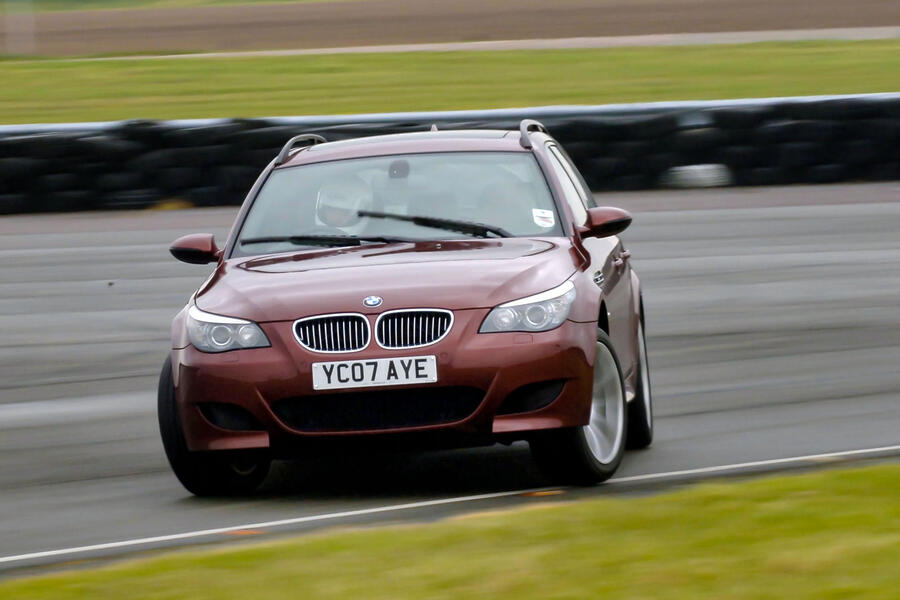
“We tried all the different sounds: we had a high-revving V10 from the M5 (pictured above); a high-revving V8 from the M3; we even tried the four-cylinder from the E30. But every sound only made sense for that specific car. If you try to put the sound in another car, the feeling is not right.”
The M division will instead develop a new sound inspired by the electric motors – but this, said van Meel, “shouldn’t be any Captain Kirk spaceship sound, because then you’re not connected”.
He said the dilemma is “philosophical” and that the M division is trying to “move ahead” in replicating the “feeling” and “emotion” of an ICE car, rather than directly copying its character.
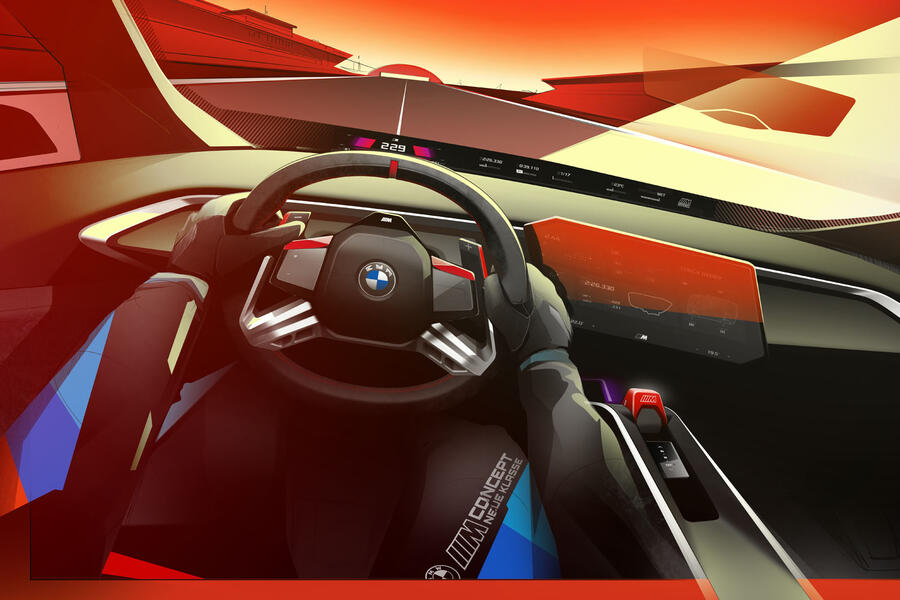
More broadly, van Meel said the decision to simulate the power delivery of a combustion engine and gearbox is intended to make driving an electric M3 more intuitive.
“If you’re on the track, you want to know how quick you are. You need to have some pedal feel and ratios that you are comfortable with, so that you automatically know you are driving [for example] 100mph because you are in third gear, because you know the deceleration and acceleration. That’s what you want.
“You can of course copy a gearbox, and it’s already quite emotional. That’s a good idea. But we want more."
Design reinvention
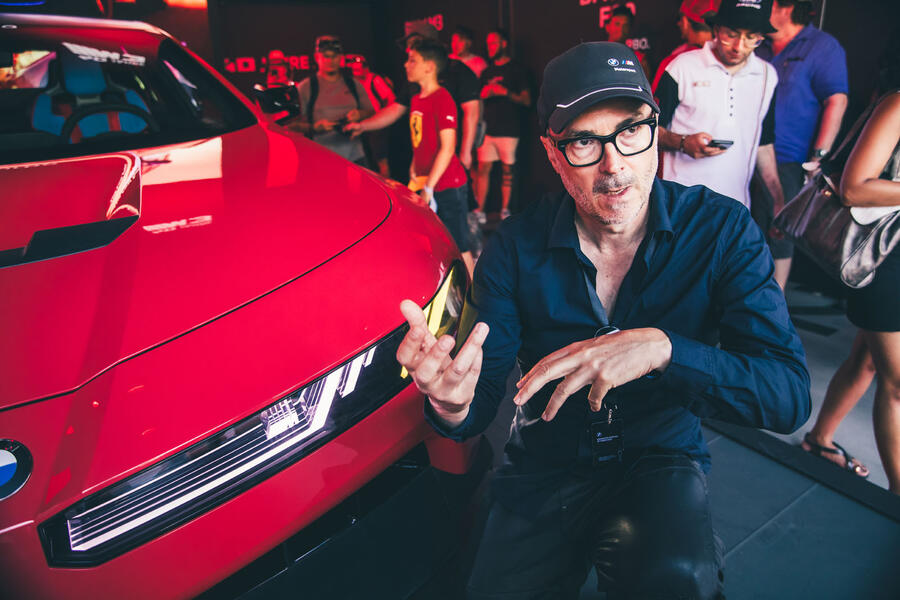
Fundamental to the design of the next M3 is “proportion”, said M division designer Michael Scully, guiding Autocar around the M concept.
“When we look at the new powertrain there are a very different set of considerations packaging-wise, and we have worked very hard to get the proportions to what our customers expect – that very classic two and a half boxes with a very agile, dynamic [stance].
“To find a proportion that works for us is the first order of business, and we have a chance to take it one step further in terms of boldness.”
Scully also hinted at a cleaner, less fussy look for future M cars. “We are reducing them down to really the performance essence of the car. There’s a reductionism which, if done intelligently, means you can get it down to what is truly necessary from a performance standpoint.
“That’s really important in racing, and we’re now approaching it the same way in our production models.”
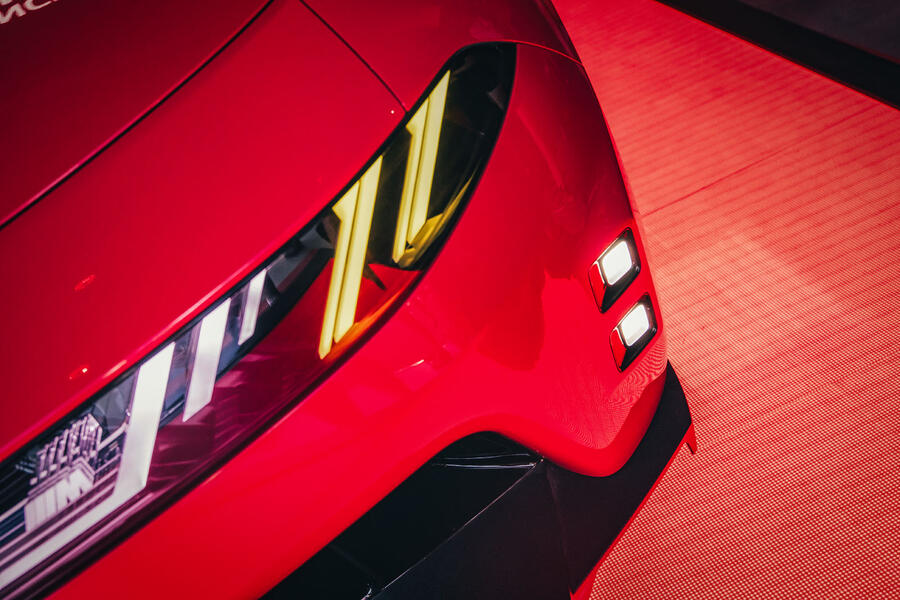
Scully described the fresh approach as “intelligent reduction”, as “whenever it turns into a decorative area, I don’t think that’s a good thing”.
Asked if that meant a move away from the large grilles and aggressive flares on current M cars, he explained: “Intelligent reduction is important, but it’s also about emphasising functional elements.
“What’s really important is that the elements we do have – from an aerodynamic perspective – is the real stuff, it’s not implied. That’s where the authenticity comes from. Our customers have incredibly educated eyes and they can see if we [jump the shark] on performance.
“It’s also important to embrace the new powertrain. For example, we’ve got four electric motors, one on each corner, so let’s pronounce that. It helps make the cars look muscular and strong but it also pronounces where the powertrain is.”
Scully drew on his experience shaping BMW’s race cars in devising the new M3.
One example of his new, more purposeful approach is the massive double-decker diffuser mounted at the rear of the M Concept Neue Klasse.
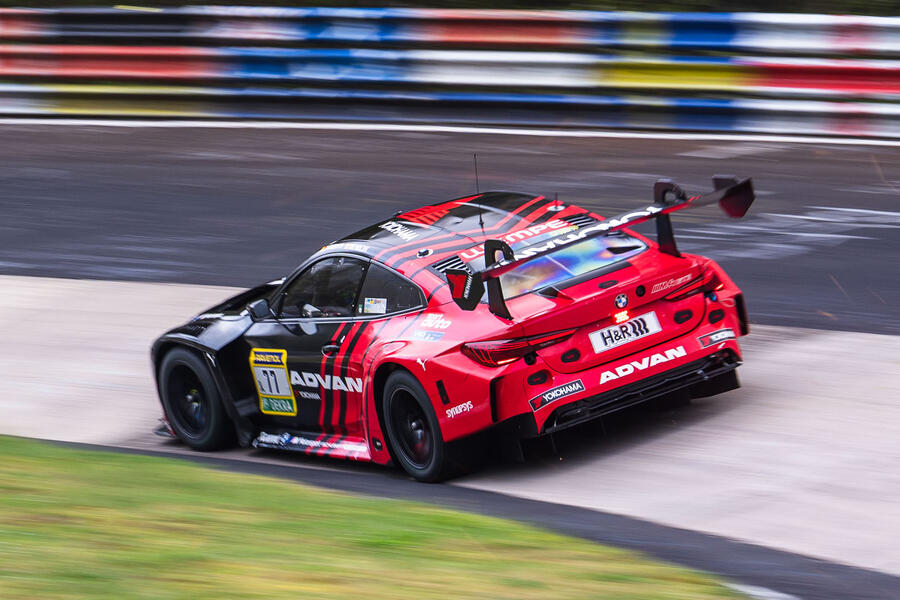
This, Scully explained, was inspired by the racing M3s fielded in the GT2 and GT3 classes over the years. Those cars trade a traditional exhaust for side-exit systems, opening up space for a more aggressive rear diffuser, needed to generate downforce on track.
Replicating this design on the road-going M cars of the past wouldn't have been possible, lest drivers or passengers burn their legs on entry or exit after a spirited drive. But when you dispense of an engine in its entirety, and therefore also an exhaust, that frees up room for such an aerodynamic package.
“We don’t have that [exhaust] requirement, so let’s open it up and celebrate the opportunity that we have now,” said Scully.
“We have a double-decker layout for the diffuser with a main [section] and an aerofoil across the bottom. The floating aerofoil helps to manage the flow. With aerodynamics, there’s never one standalone element: it’s always a constellation of things that affect each other.
“For example, that diffuser interacts significantly with the duck-tail spoiler, so that’s a constellation; that’s where a lot of downforce comes.
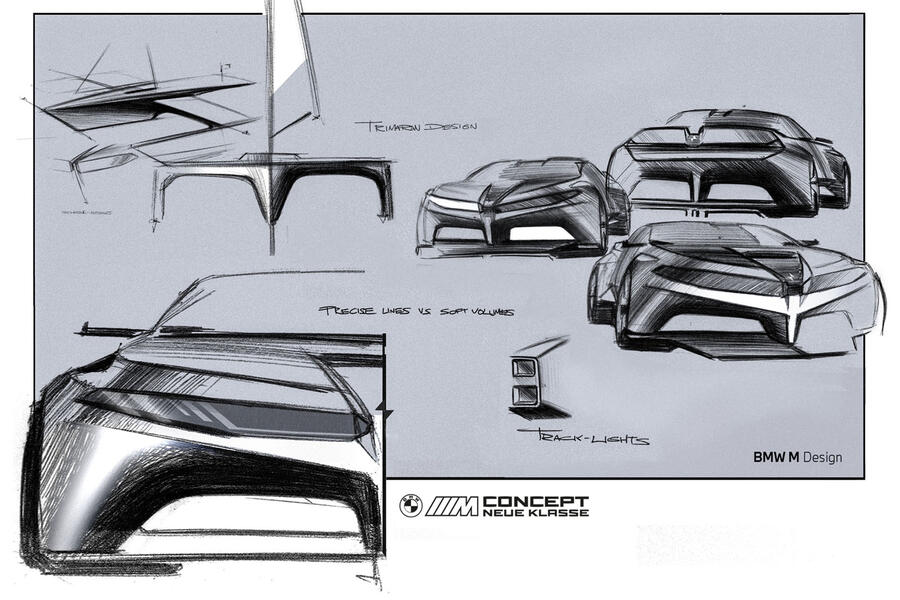
“I love downforce, because that’s the thing that, from a driving sensation standpoint, allows you to do things which your intuition says you can’t.
"When a car does that, when it enables the driver to experience those things their intuition tells them is impossible, I think we’ve landed in a great space.”
Indeed, prototypes of the next combustion-engined M3 have revealed a smaller rear diffuser than their electric counterparts, owing to the presence of M's signature quad-tip exhaust.
Scully also highlighted the large, deep vent in the concept’s raked bonnet. This is used to cool the four motors’ front-mounted radiator, but such a prominent feature would not have been possible were it not electric.
“Normally you would have a big engine right there and there’s no way you could have those ducts, but here we can,” he said.
Notably, the M concept dispenses with the hook-like side mirrors that have been a fixture of the M3 since the E36 generation.
This, said Scully, is another manifestation of motorsport-inspired design: “M customers over the years have come to know and love the cars for having this hook that points back toward the centreline of the car. But what we discovered was that if we turn the fin vertically, it's actually more efficient and brings small gains.”
Meanwhile, the car’s main-beam lights are mounted low and wide on the M Concept’s flanks. These are inspired by the M Hybrid V8, the BMW hypercar that raced in last month’s 24 Hours of Le Mans.
Meanwhile, the yellow positional lights – previously exclusive to the rare-groove CS versions of the M3 and M5, plus the M4 CSL – reference the headlamp colour cars are mandated to use in the American GTD racing class.
Although the M Concept exploits BMW’s sporting heritage, the company does not currently build an electric race car.
Asked whether there is a dissonance between drawing on ICE cars for the design of an EV, Scully said: “I don’t think it makes it more difficult; it makes it more meaningful.
"I think the reason this car resonates is that people can see we embrace our heritage with motorsport and our ongoing involvement with it and are able to translate it into an electrified future.”

Tesla Model 3 and Model Y Face Recall After Canadian Imports Fail US Safety...

Ford Kiosk Failures and Employee Grievances Highlight Workplace Accountability Gaps


Future Classics and Rising Values: How Scarcity, Significance, and Driving Character Shape Tomorrow’s Collectible...
 Autocar recommends the future classics you should snap up before collector status sets in
Predicting which cars will achieve classic status five or 10 years from now is a dark and uncertain art.
What are the key factors? Scarcity, for one, and reputation for another. If a car is rare and widely reckoned to be one of the best of its type to drive, it’ll probably reach classic status.
Beauty is another factor and so too is significance; a car that changed the game in its sector is bound to be held in high regard for years to come.
Every one of the cars we’re highlighting here meets at least one of those criteria, if not two or three. Let’s take a look:
Fiat Panda 100HP (2006-2010)
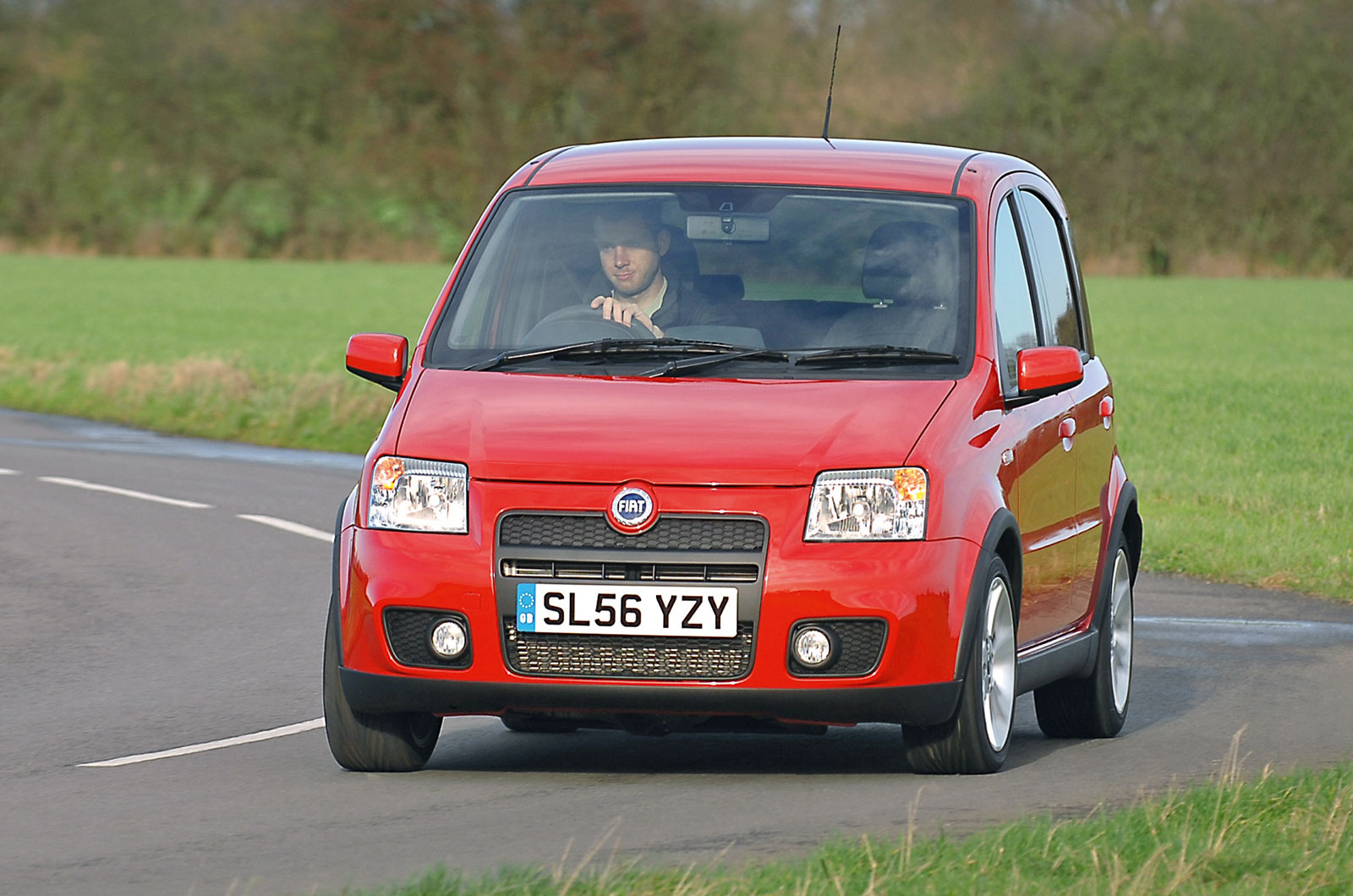
Whoever would have thought there was a vibrant baby hot hatch hiding away in the cheerfully upright Panda? Sitting a little closer to the road on 15-inch wheels that filled their arches perfectly, the 100HP looks poised and purposeful without being fussy or overwrought. More importantly, though, it’s a right old hoot to drive.
Fiat Panda 100HP (2006-2010)
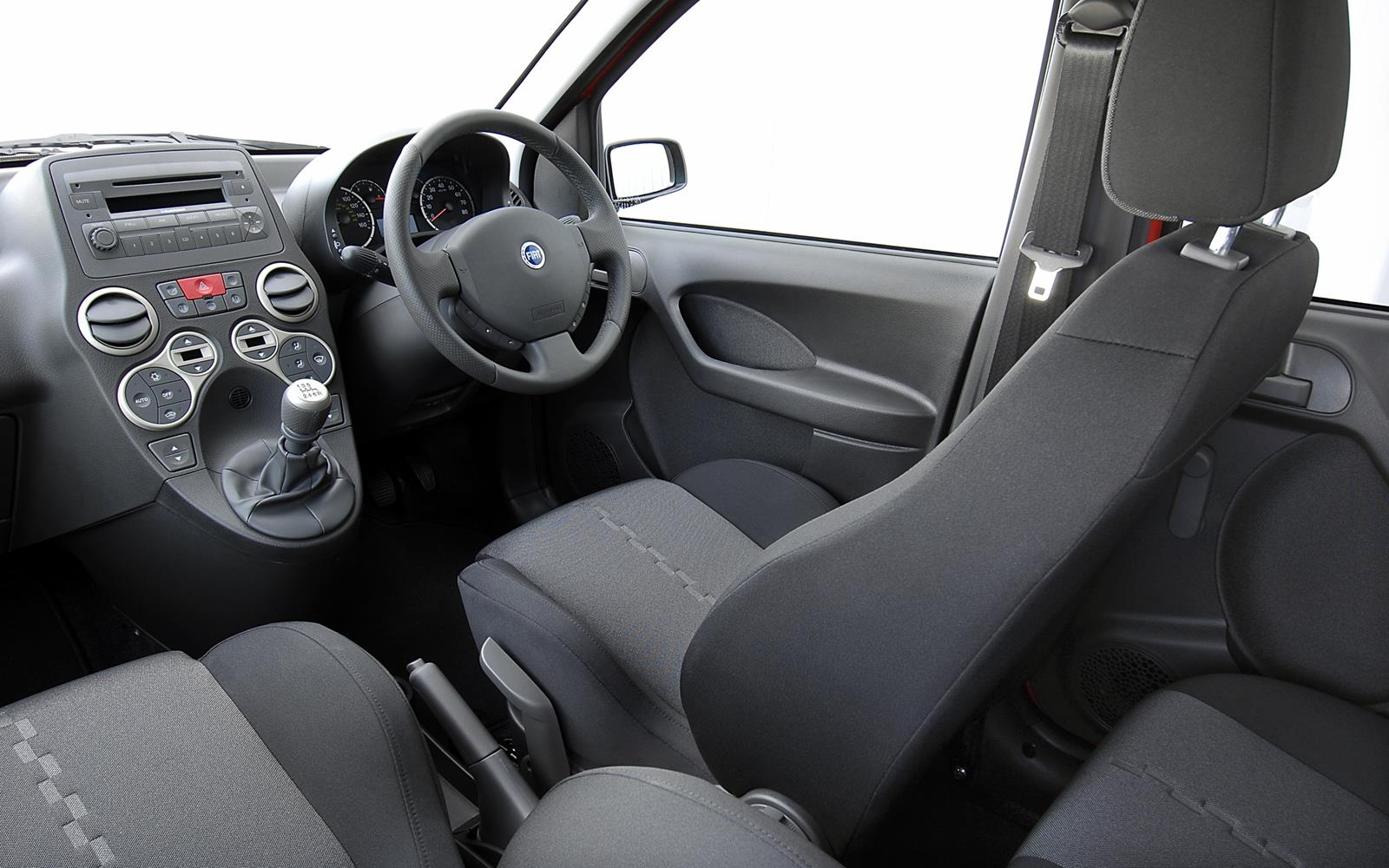
Running stiffer springs than a ready salted Panda, the salt and vinegar 100HP does tend to skip and pogo along the road, but with the tyres howling and the 1.4-litre motor singing its song that bouncy ride just seems to make sense. This is a fizzy, energetic sort of car.
The 100HP never sold in huge numbers during its four year life, which means it has scarcity on its side, which will help values greatly in the future.
Suzuki Swift Sport (2005-2012)
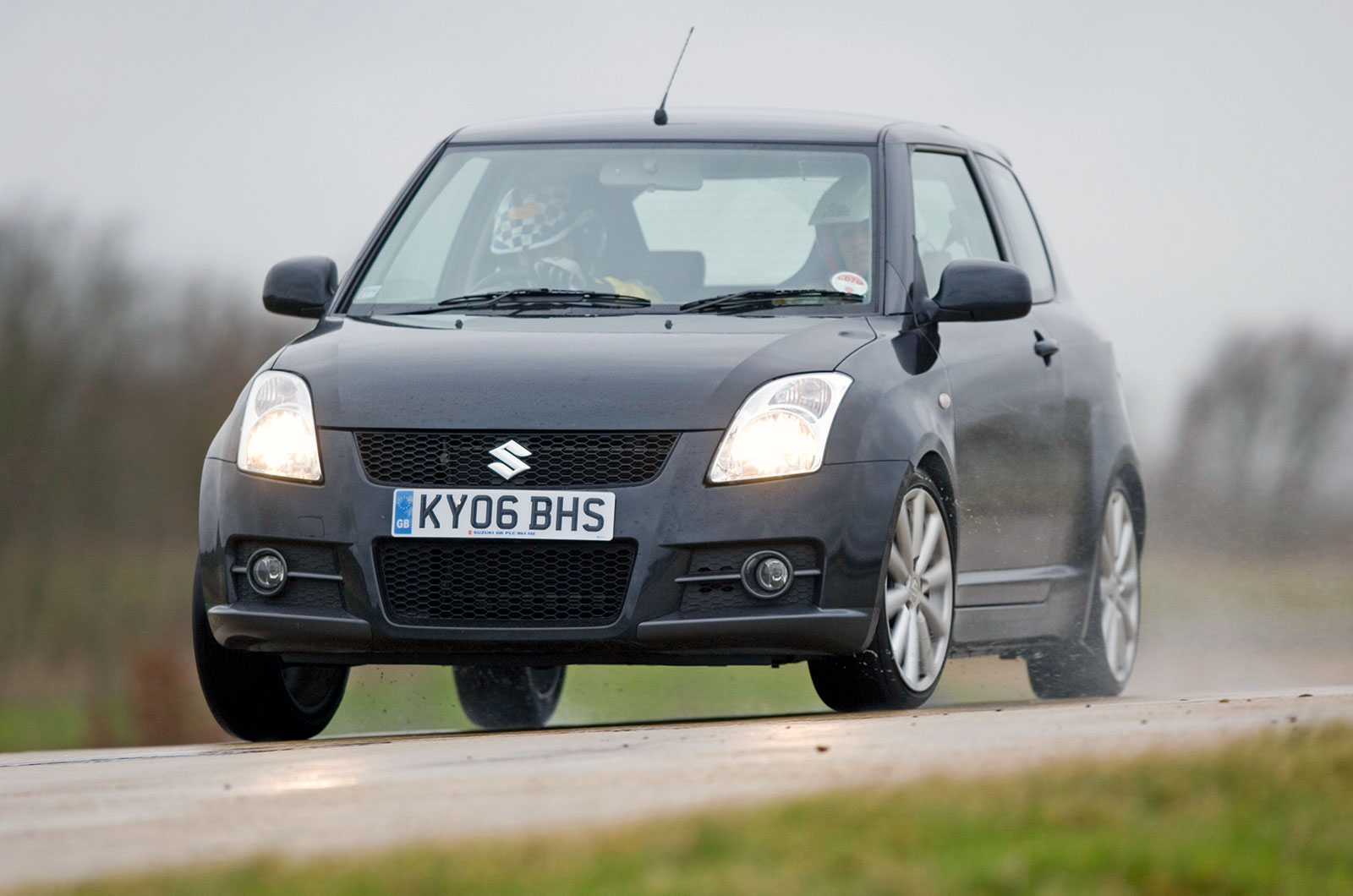
With its smily face and dinky proportions the Swift Sport is as cute as a puppy wearing a bow. In fact it is disarmingly sweet to look at, which simply makes its propensity for snap lift-off oversteer all the more alarming.
This charming little hatchback will have you off the road if you aren’t paying attention. Of course, that pointy handling balance is exactly what makes it so much fun to pedal along. The 1.6-litre engine is a ripper, if not exactly a powerhouse, and the gearshift short and direct.
Suzuki Swift Sport (2005-2012)
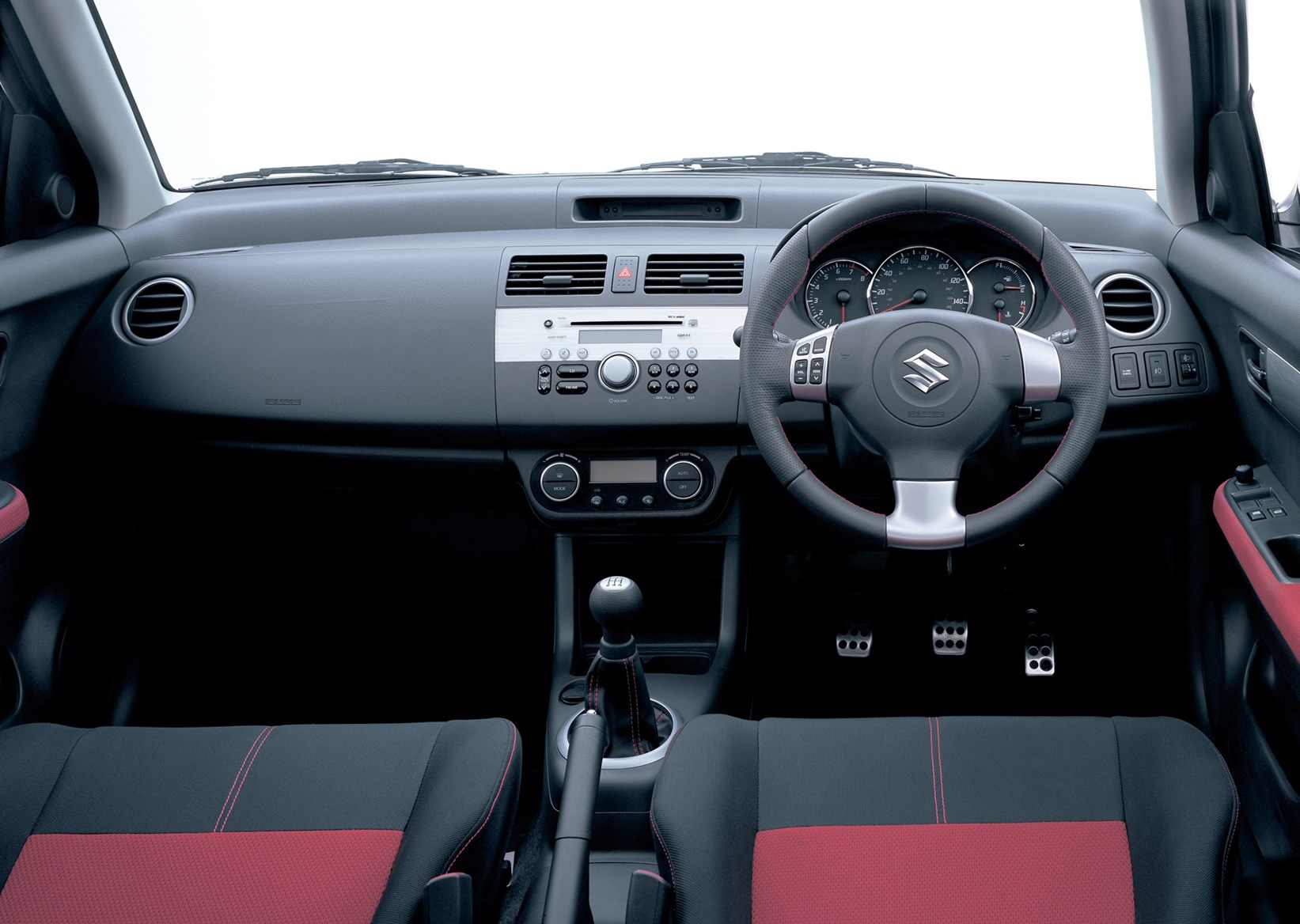
The Swift Sport will be revered in years to come because it was among the last of the old-school hot hatches that delivered their thrills not through sheer performance, but through feisty dynamics.
Audi TT (1998-2006)
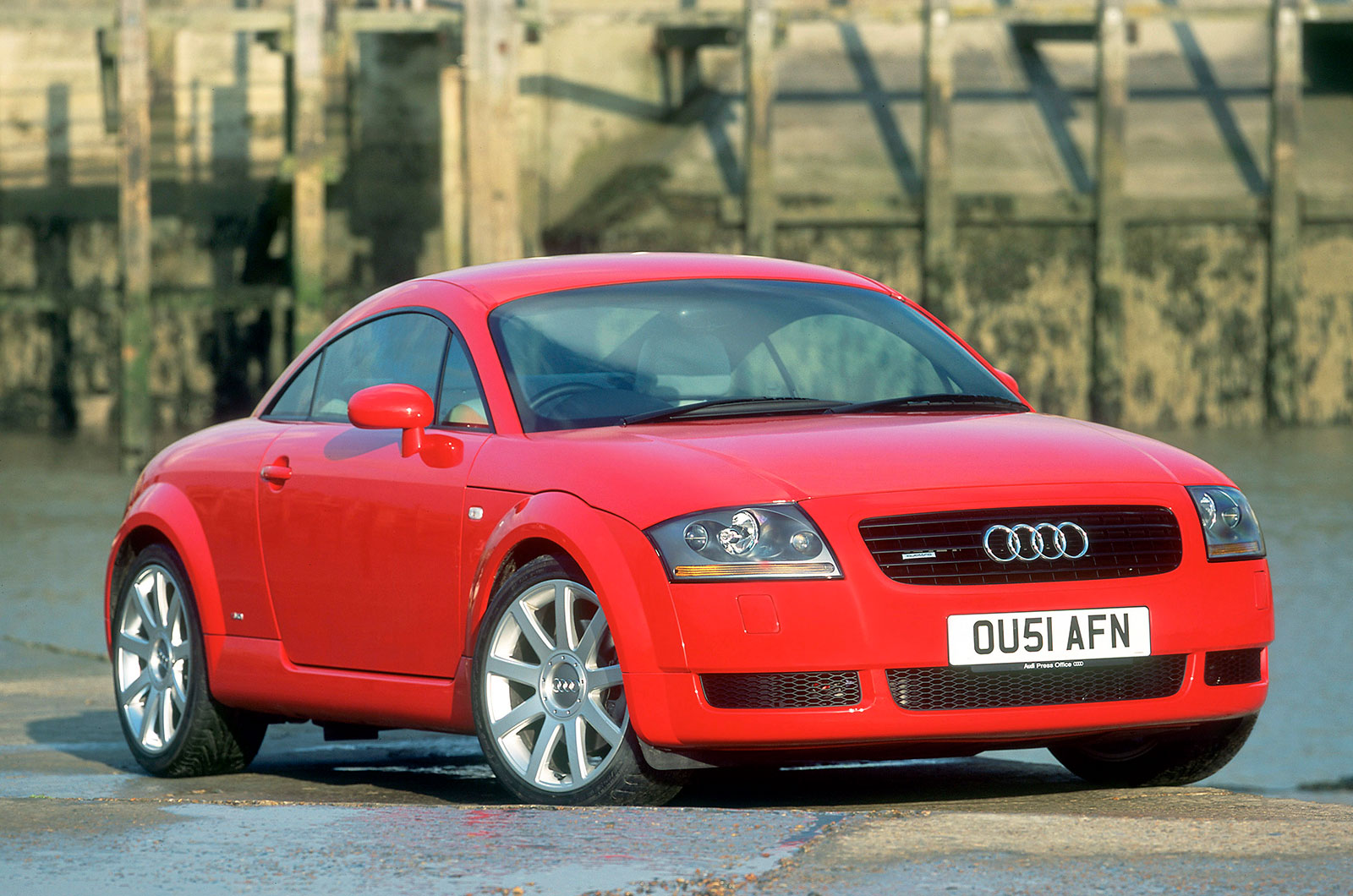
Being not much more than a reclothed VW Golf the Audi TT was never going to set new standards in the coupé sector for outright driving fun. Instead, it changed the coupé game with its ultra-cool and minimalist cabin, as well as its show-stopping Bauhaus exterior design.
Audi TT (1998-2006)
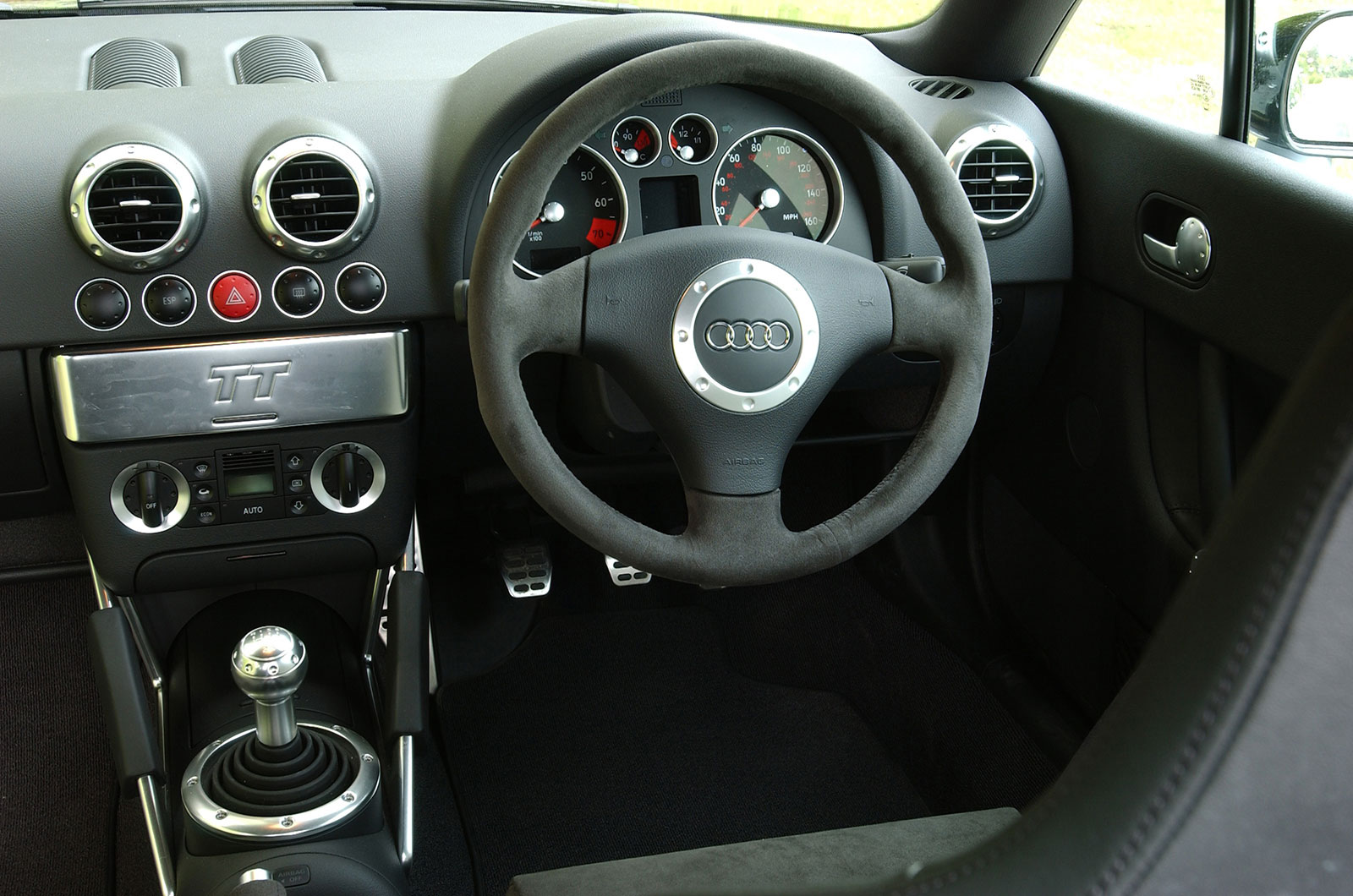
Tatty cars can be found for very small amounts of money now, but you should spend a little more for a well-looked after example with the muscular 225bhp 1.8-litre motor.
Toyota MR2 Mk3 (1999-2007)
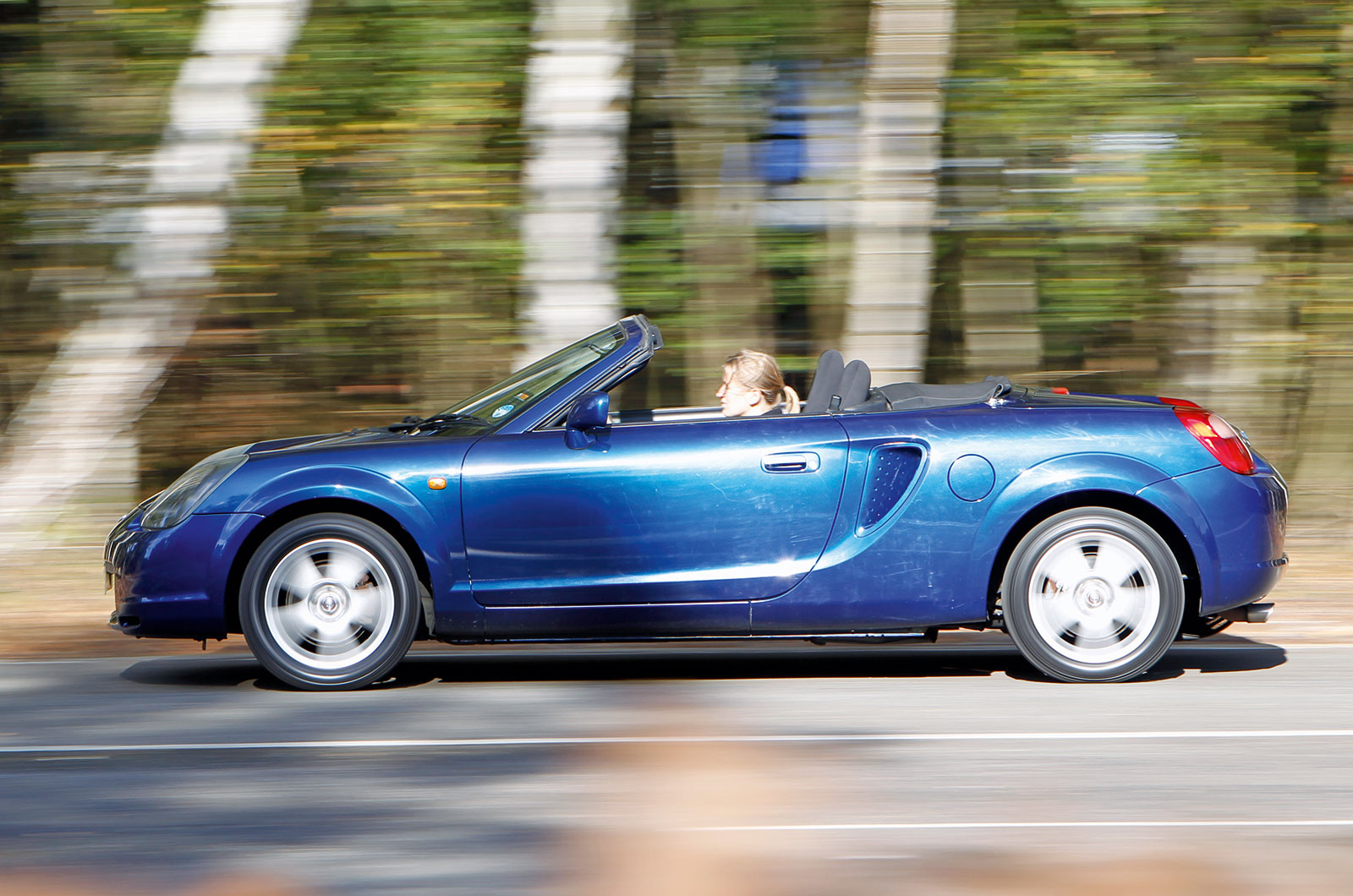
Even for a modest sum you'll get a very solid example, and there are plenty around to suit every budget in between. That gets you one of the most exciting sports cars of its time, too; firmer and sharper than an MX-5, but more usable and liveable with than an Elise.
Toyota MR2 Mk3 (1999-2007)
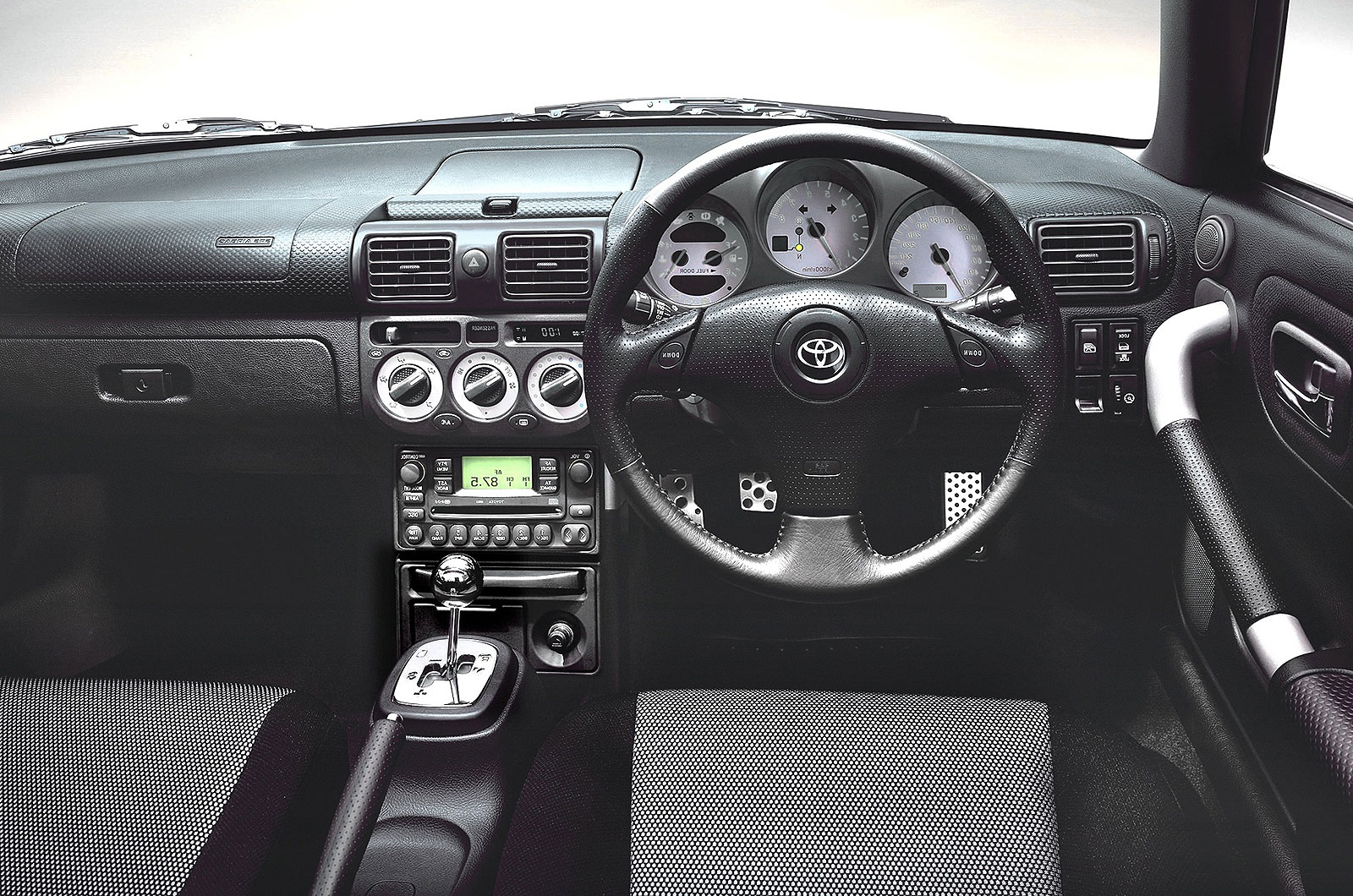
A perfect balance, in other words. Prices can only go one way from here.
Ford Puma (1997-2002)
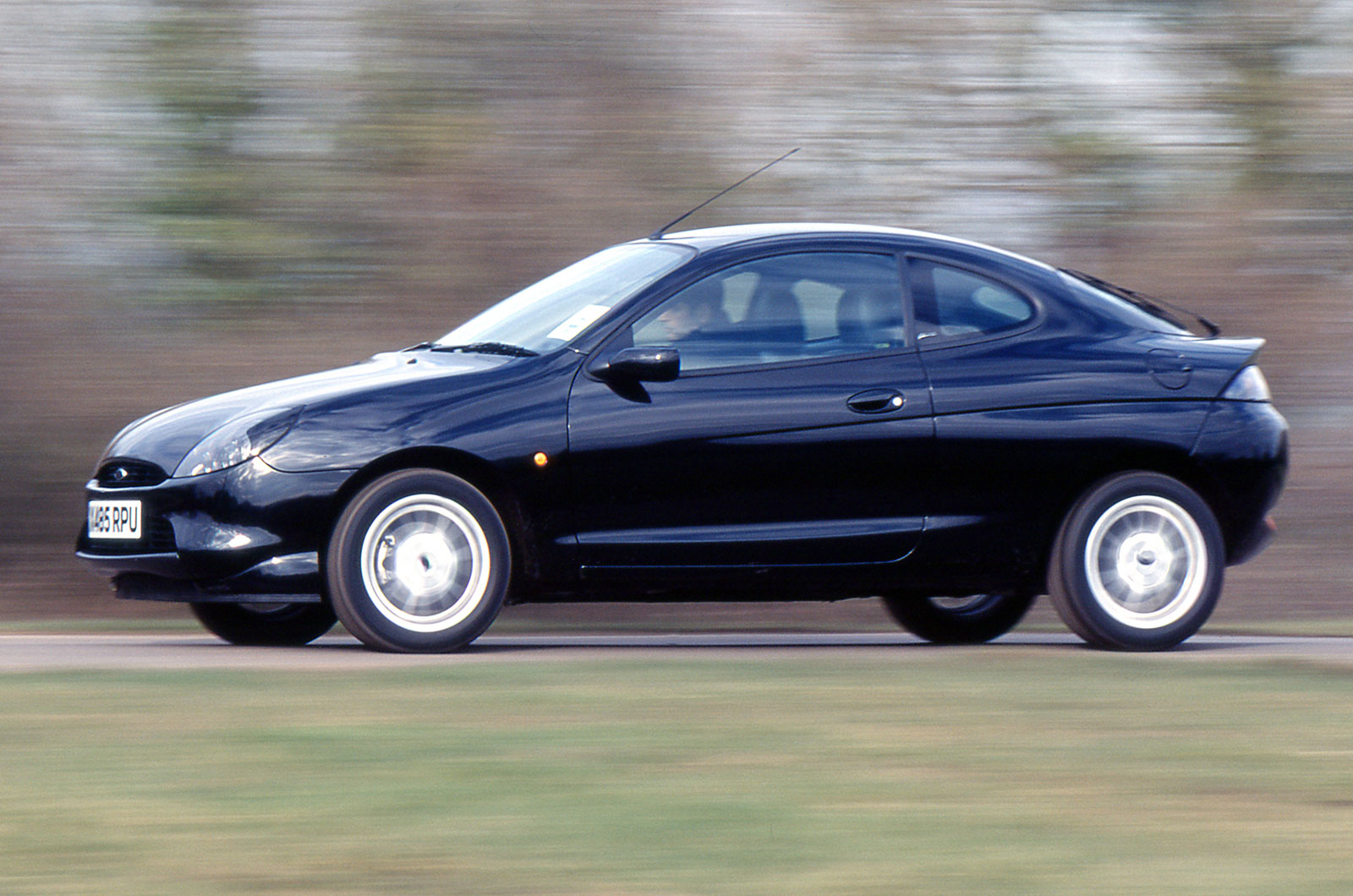
It may be a humble Ford Fiesta underneath its sharp, feline bodywork, but the Puma is actually a huge amount of fun to drive thanks to a sweet chassis, incisive steering and eager 1.7-litre engine.
Great swathes of the remaining Puma population are wiped out each year by that most virulent of automotive diseases, rust.
Ford Puma (1997-2002)
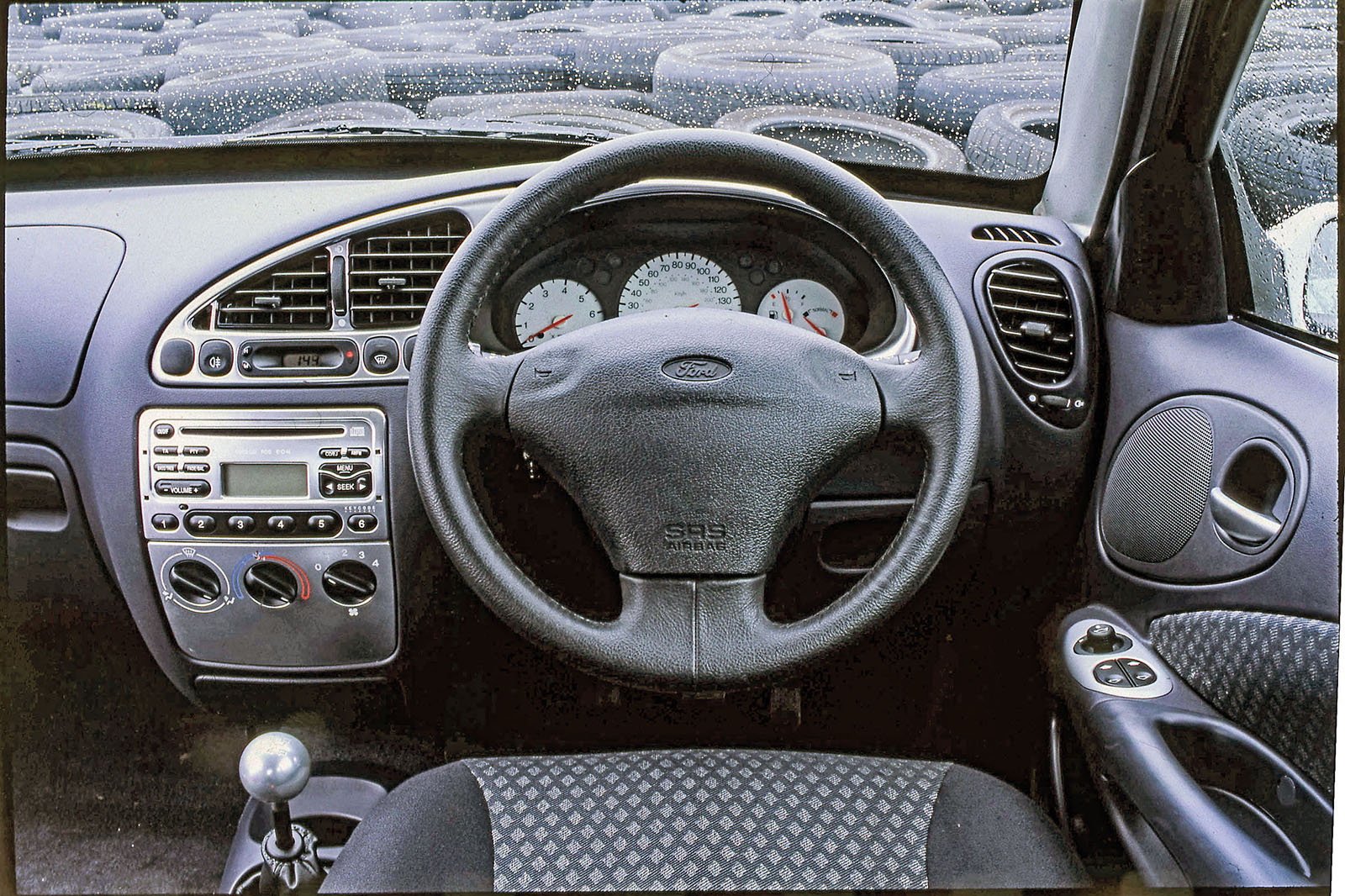
You can pick up a Puma today for very little money, and rust-free cars may start to rise in value.
Porsche Boxster 986 (1996-2004)
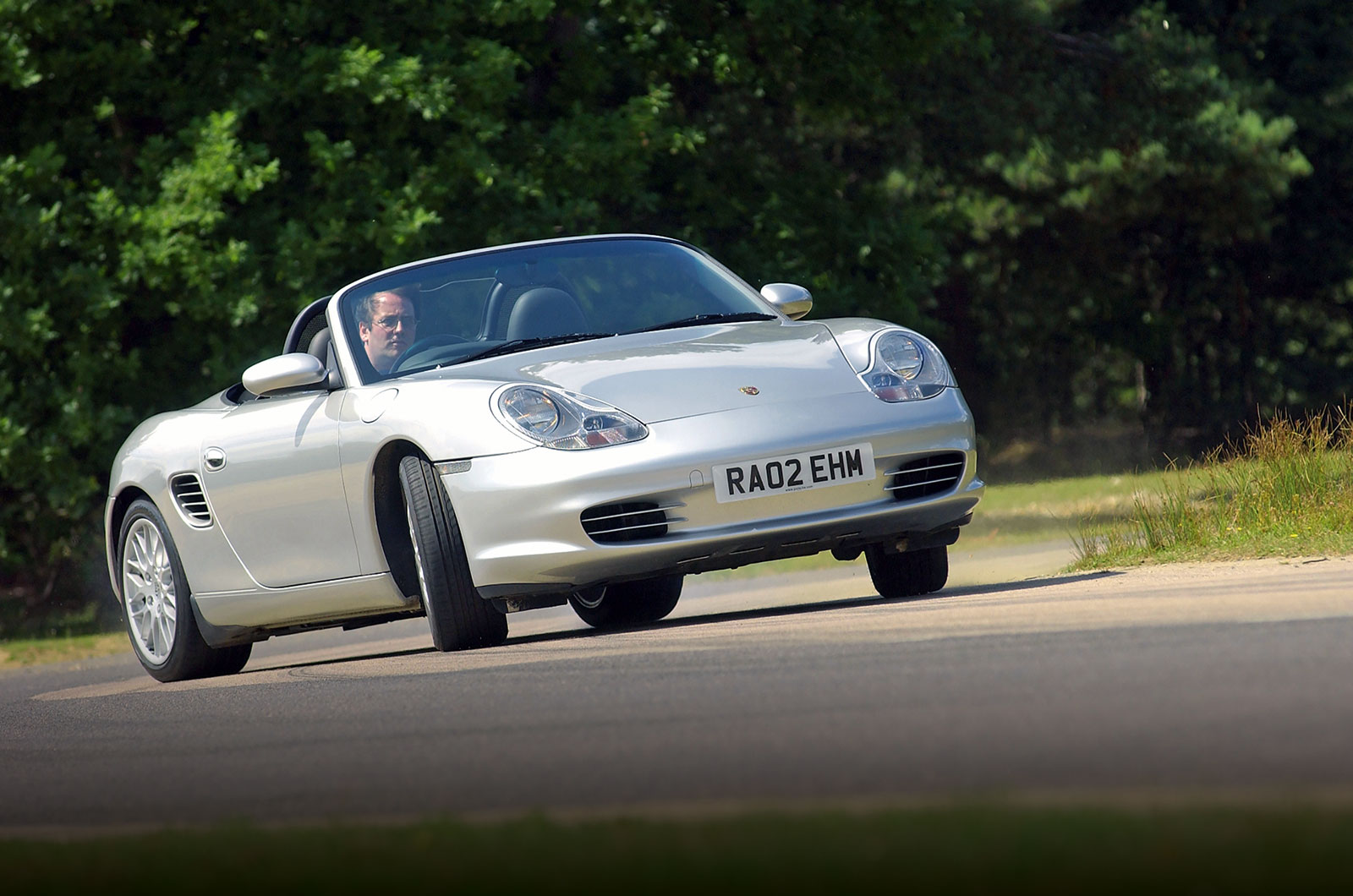
When the original Boxster arrived in the mid-1990s many people weren’t sure what to make of it.
For one thing it appeared to be styled with two front ends, and for another it was so clearly subordinate to Porsche’s flagship sports car, the 911, in every conceivable way that image conscious buyers didn’t want to be seen anywhere near it.
Porsche Boxster 986 (1996-2004)
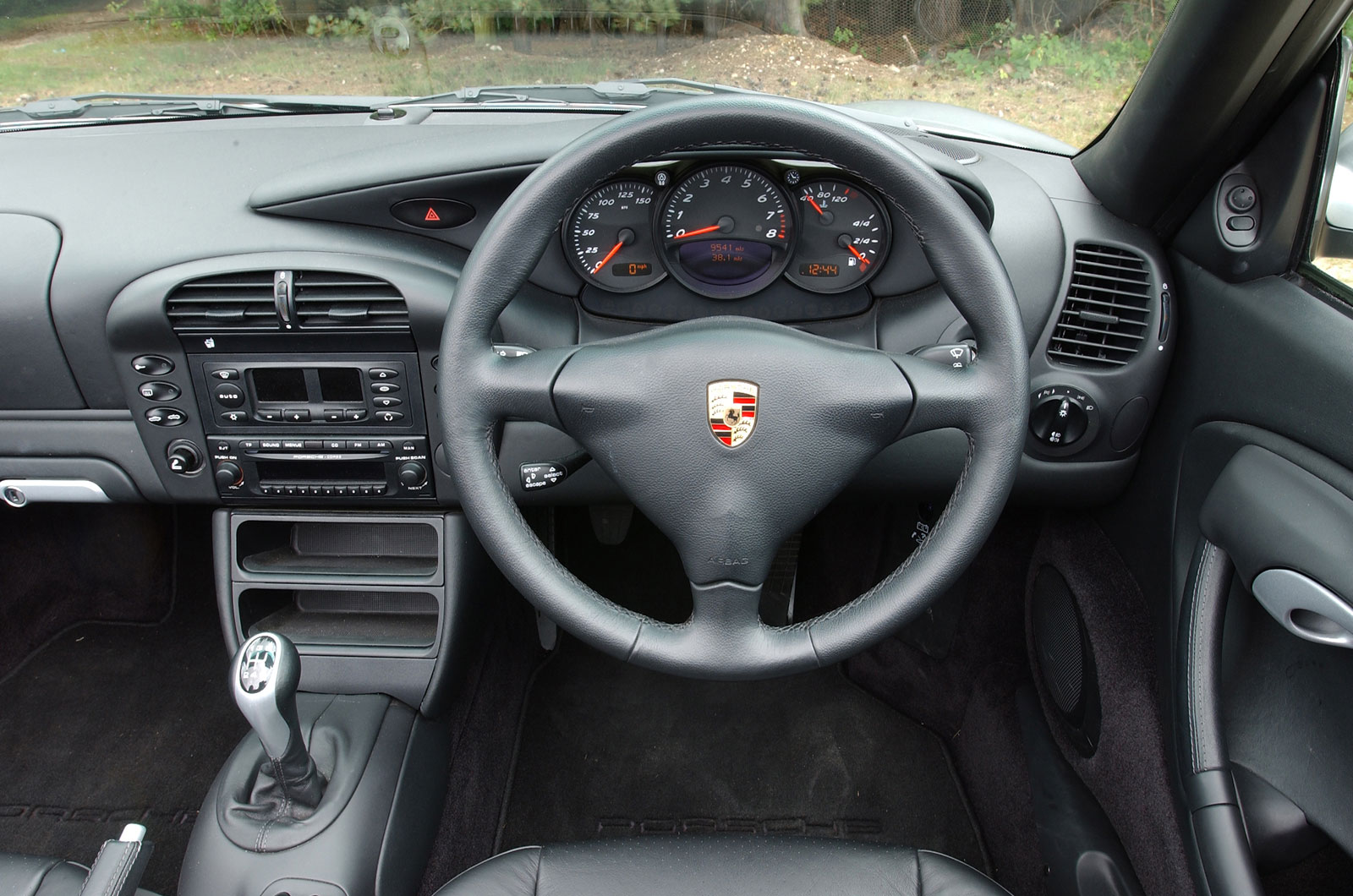
It was their loss, of course, because the Boxster was blindingly good to drive with communicative steering, a poised and perfectly balanced chassis and zesty flat-six engines.
Not much money will buy you a tidy Boxster today, and at that price you’ll find a car with the 2.7-litre engine that’s far preferable to the slightly asthmatic 2.5. In the fullness of time we’ll look back on the Boxster as the car that saved Porsche and propelled it towards global dominance.
VW Phaeton (2002-2006)
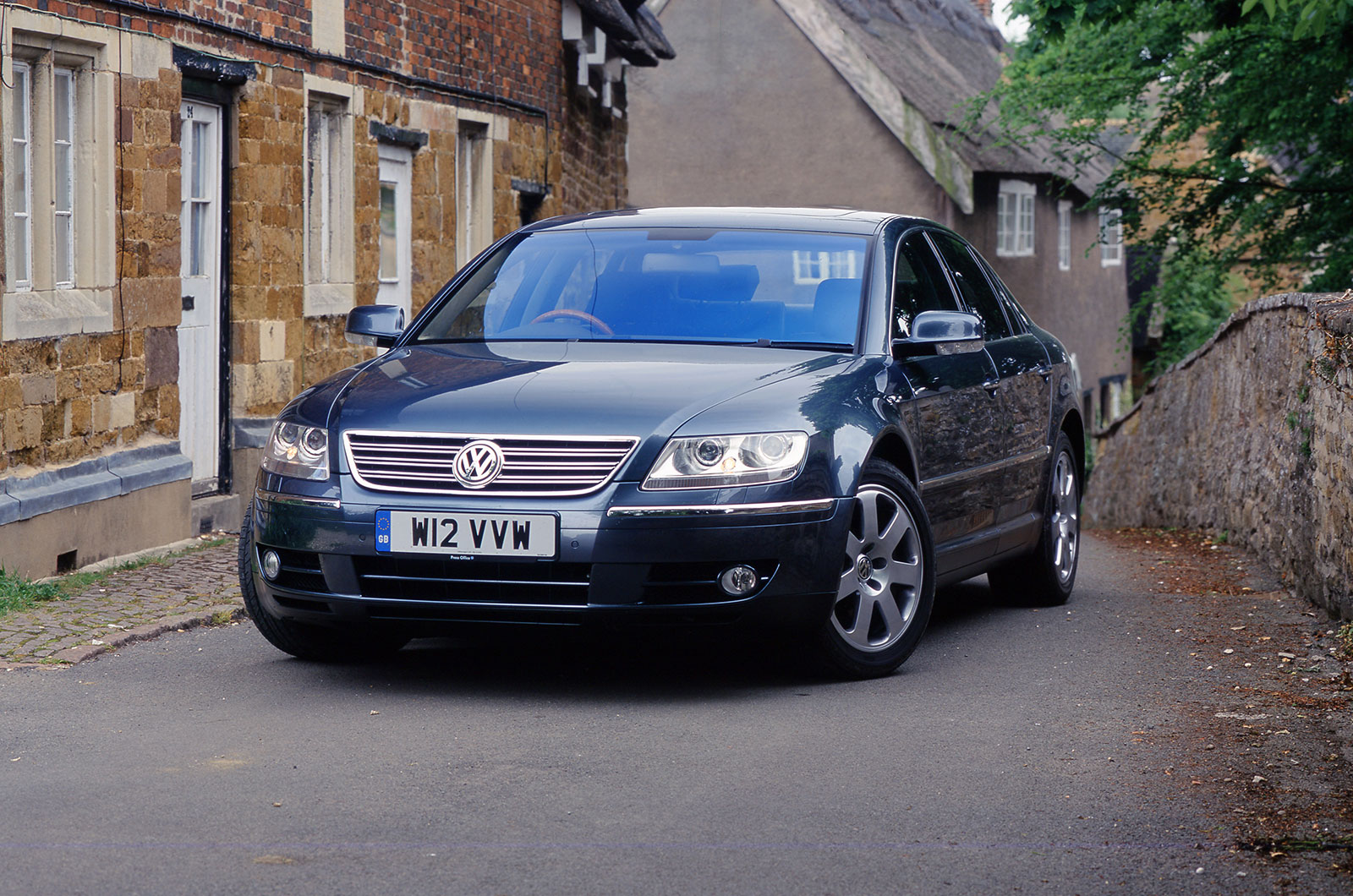
Anybody with even the faintest sense of the automotive market could have worked out that a Volkswagen luxury car would be a dismal flop. Plenty of people at Volkswagen probably knew it would be as well, but spearheaded by the mercurial Ferdinand Piëch the Phaeton was put into production in 2002 anyway. Sales were heroically slow, but an updated model remained on Volkswagen’s price lists until 2015 in most places.
VW Phaeton (2002-2006)
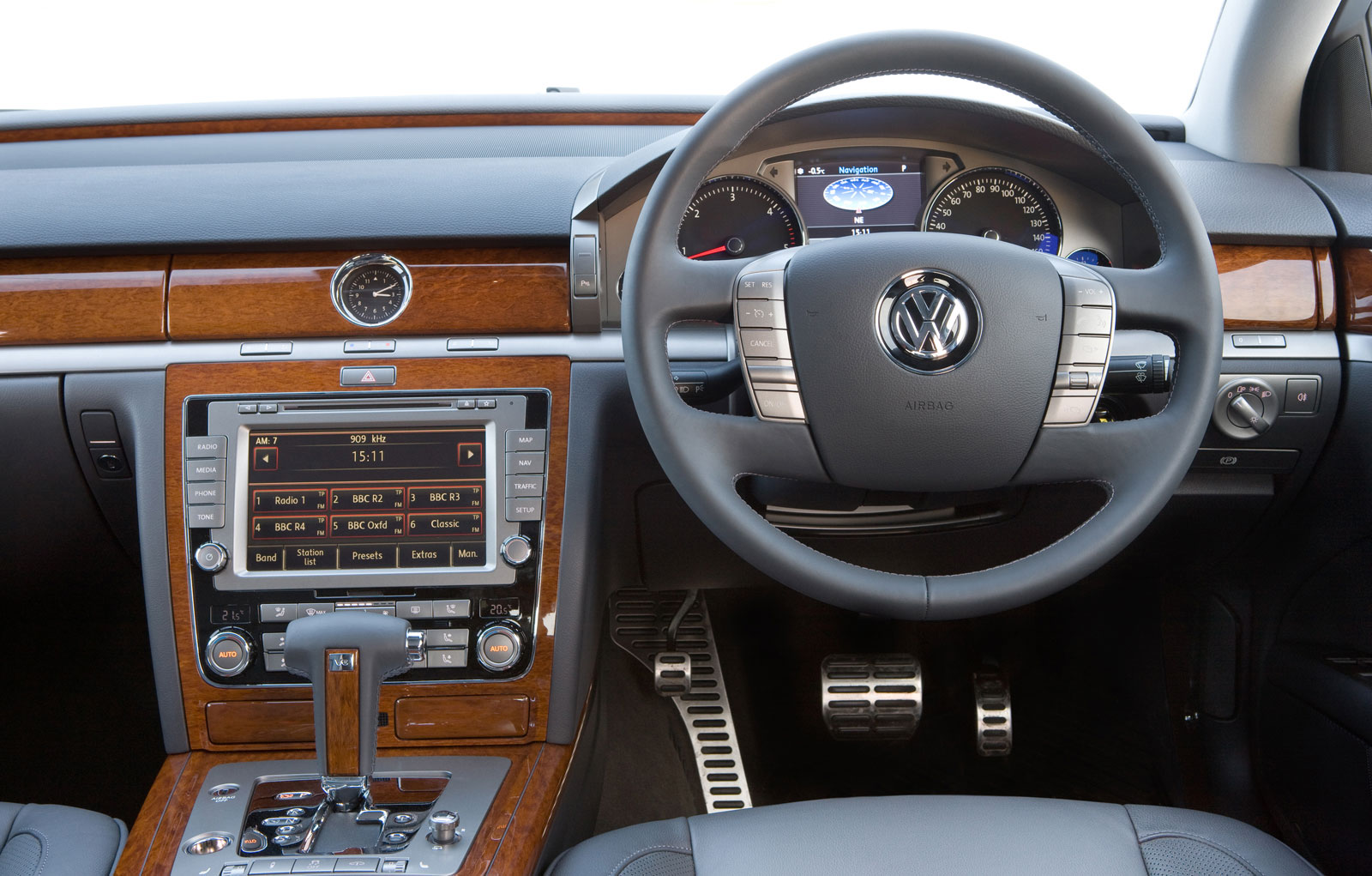
The most desirable engines were the 4.2-litre V8 and 6.0-litre W12, both of them petrol, although you’ll search high and low before you find either for sale at any price.
If you get lucky you might unearth a 3.2-litre V6 petrol not much money, but the vast majority are 3.0-litre V6 diesels (outside North America at least). As fine an example of corporate folly as you’ll find anywhere.
Citroën C6 (2005-2012)
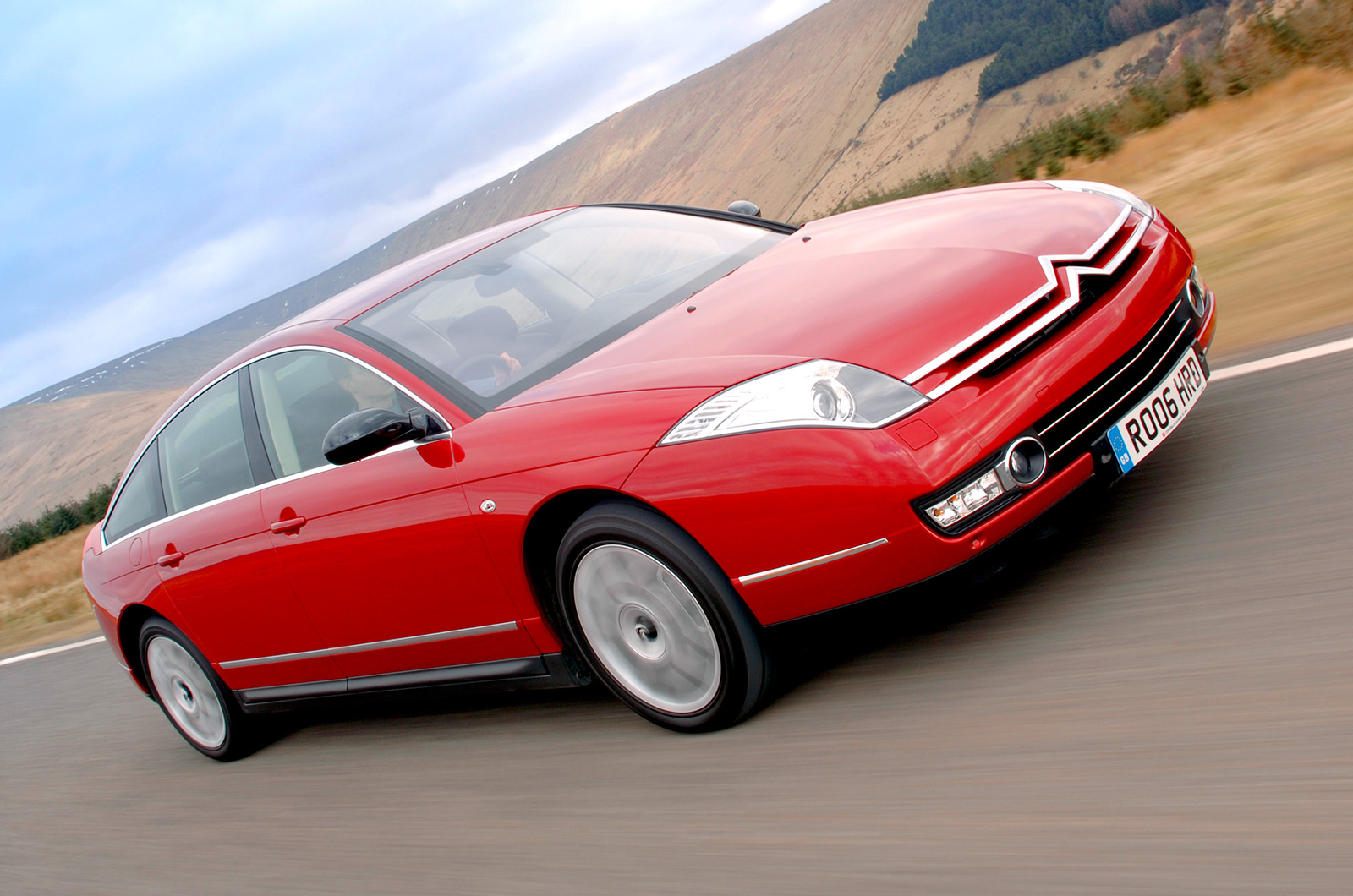
Citroën built its reputation on cars that were strange and non-conformist. For a long time the French company existed in its own little bubble, doing things its own way. The likes of the 2CV, DS, XM, BX and many others were proper oddballs.
Citroën C6 (2005-2012)
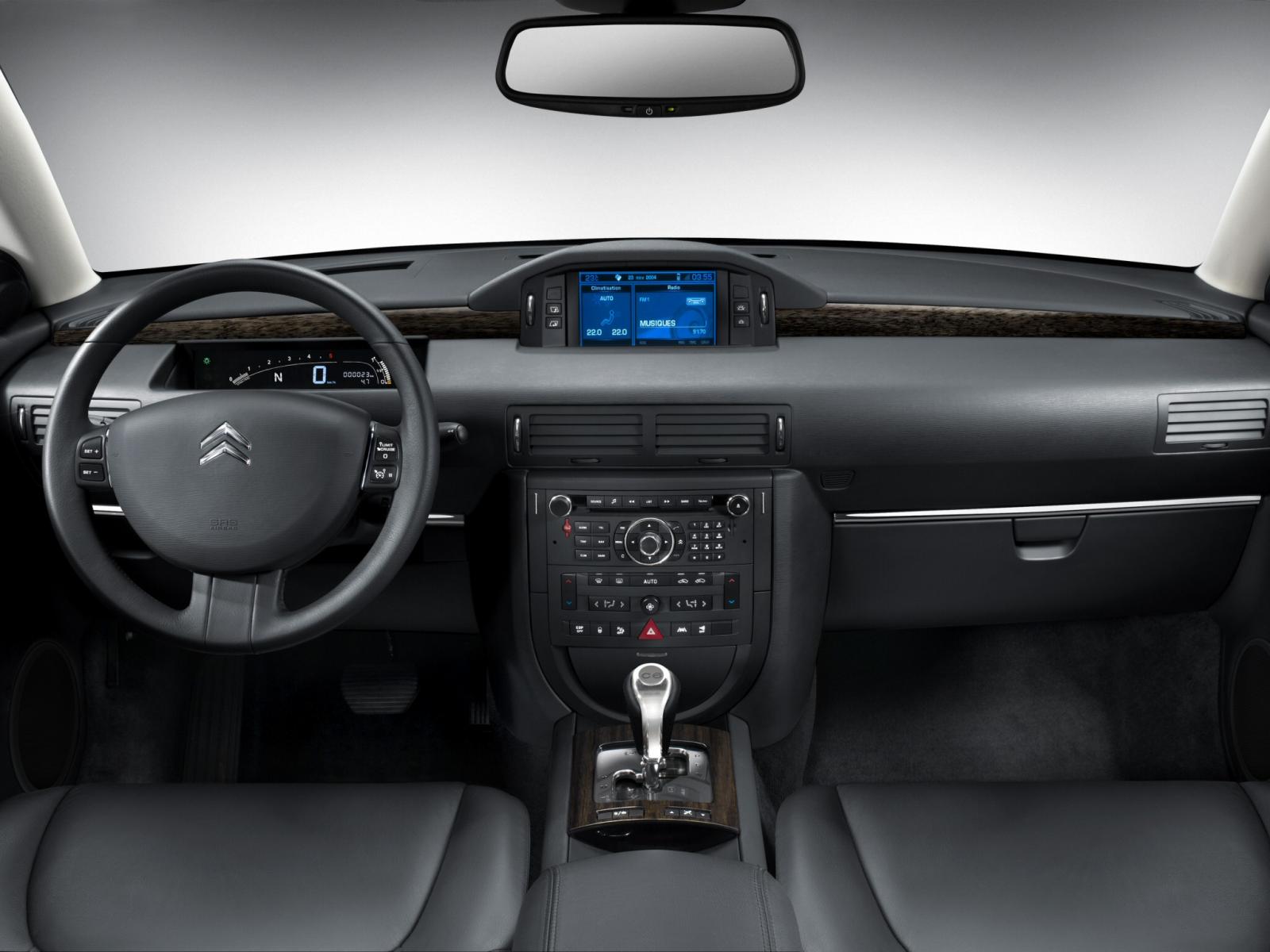
The C6 was among the very last of the bizarro Citroëns; its range today is nothing like as quirky as it once was.
BMW Z4 Coupé (2006-2009)
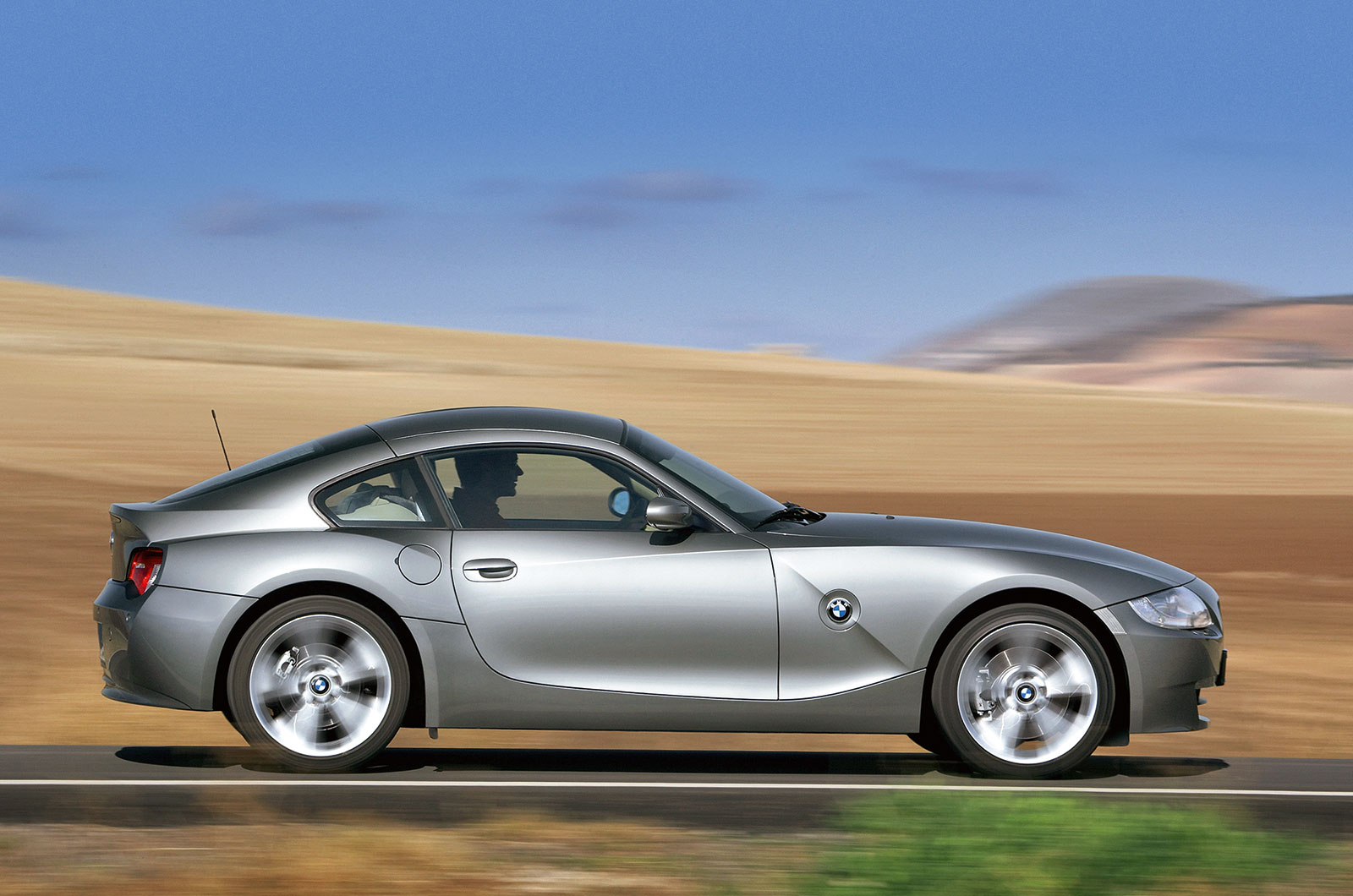
What is it that makes the Z4 Coupé so much more alluring than the roadster? Perhaps it’s a combination of rarity - just 9% of Z4s were Coupés- and the sleek, mini-supercar fastback styling.
Viewed from the rear three-quarters the Z4 Coupé remains one of BMW’s prettiest modern designs. Naturally, the Z4M Coupé is an even surer bet for classic status somewhere down the line, but even the leggiest cars command quite big money now.
BMW Z4 Coupé (2006-2009)
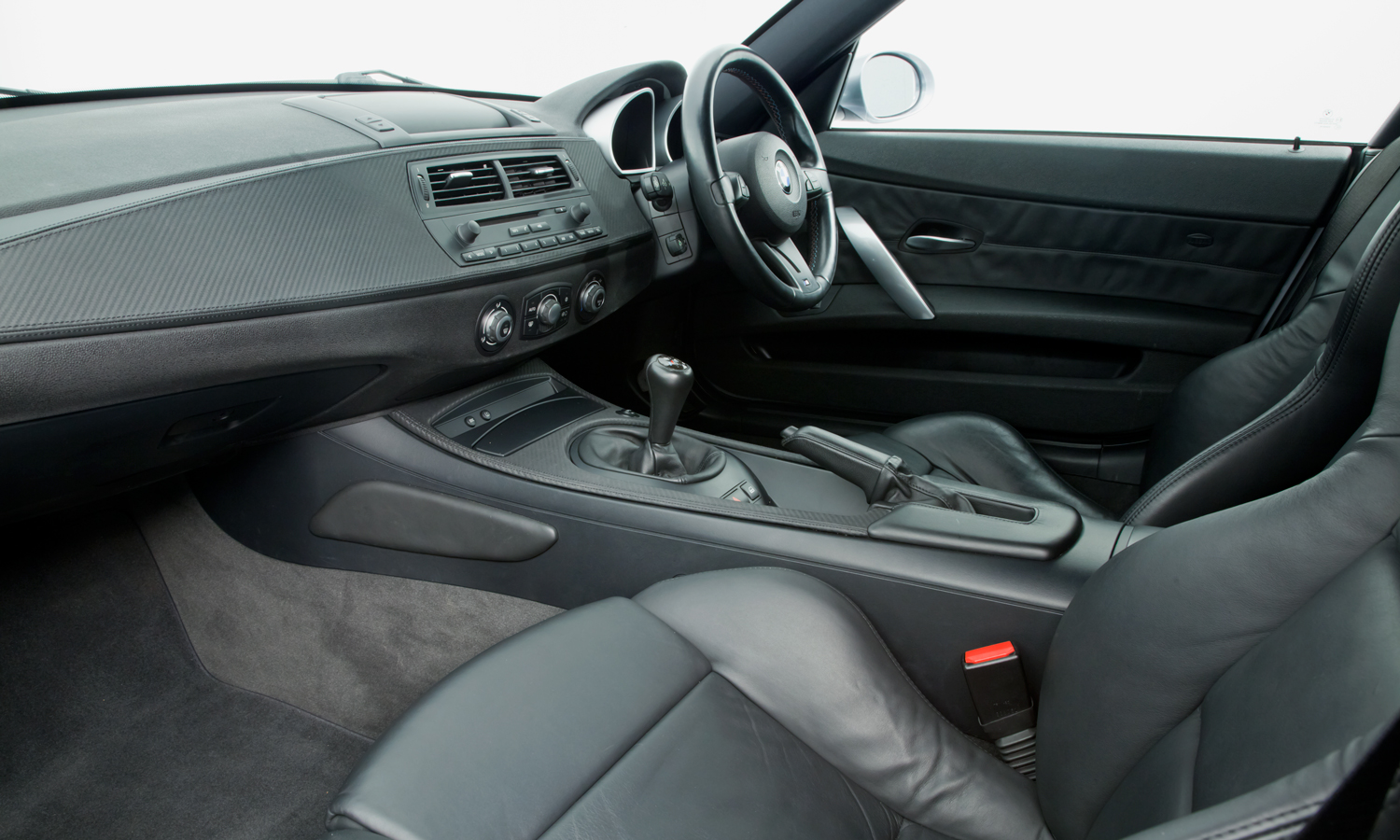
The 3.0si may not be a bells-and-whistles M-car and, yes, it does lack 75bhp compared to the Z4M, but prices are keen? Lower mileage cars aren't that much more and, notoriously weak rear springs aside, there isn’t too much to look out for. Just make sure you fit; the cabin is comically tight.
Renault Avantime (2001-2003)
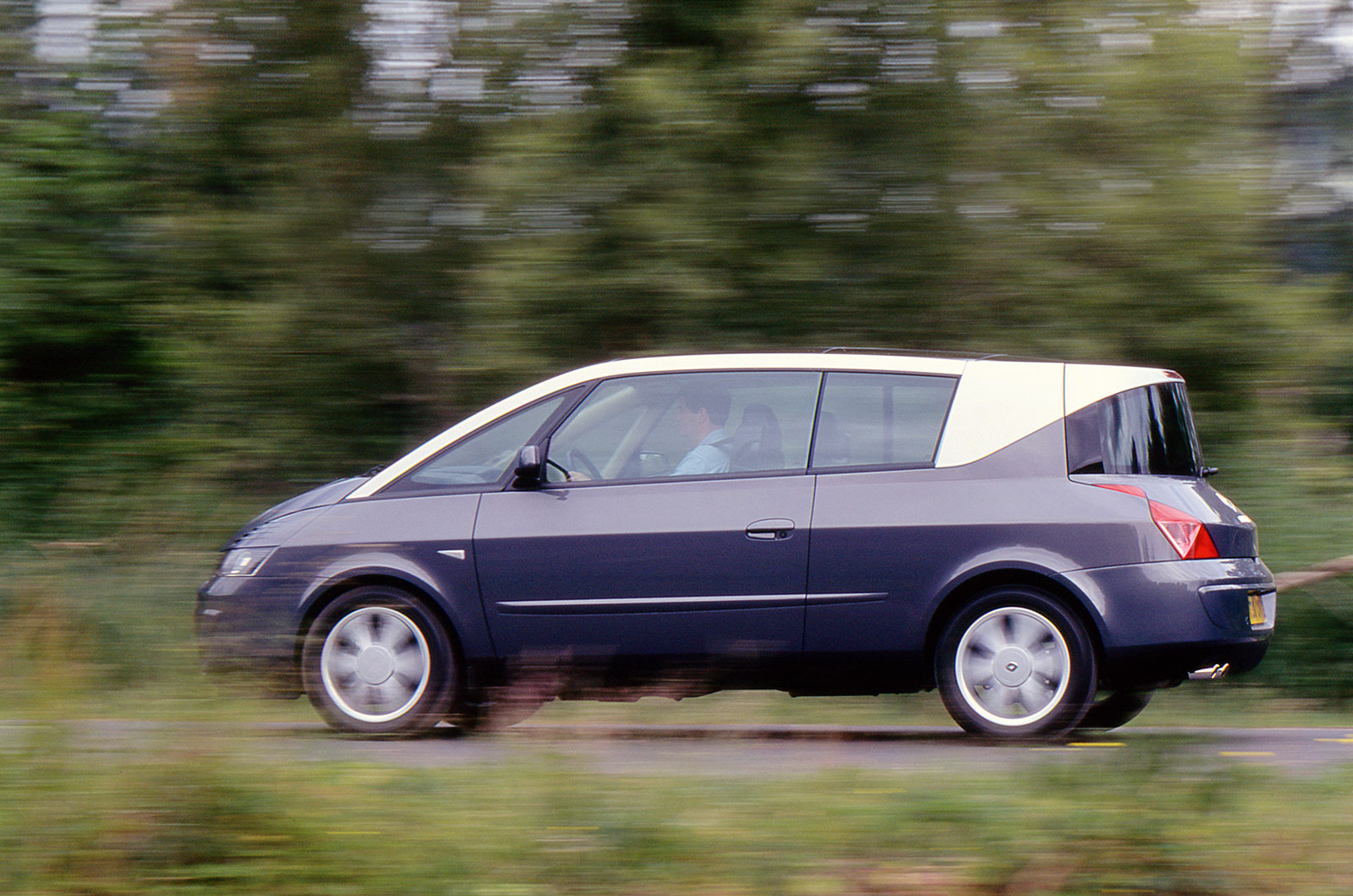
Very few car manufacturers can rival Renault in the noble discipline of building quirky, oddball cars. At least, that was true 25 years ago when the French company seemed to sign off whatever hair-brained concepts its - presumably very drunk - product planners could dream up.
Renault Avantime (2001-2003)
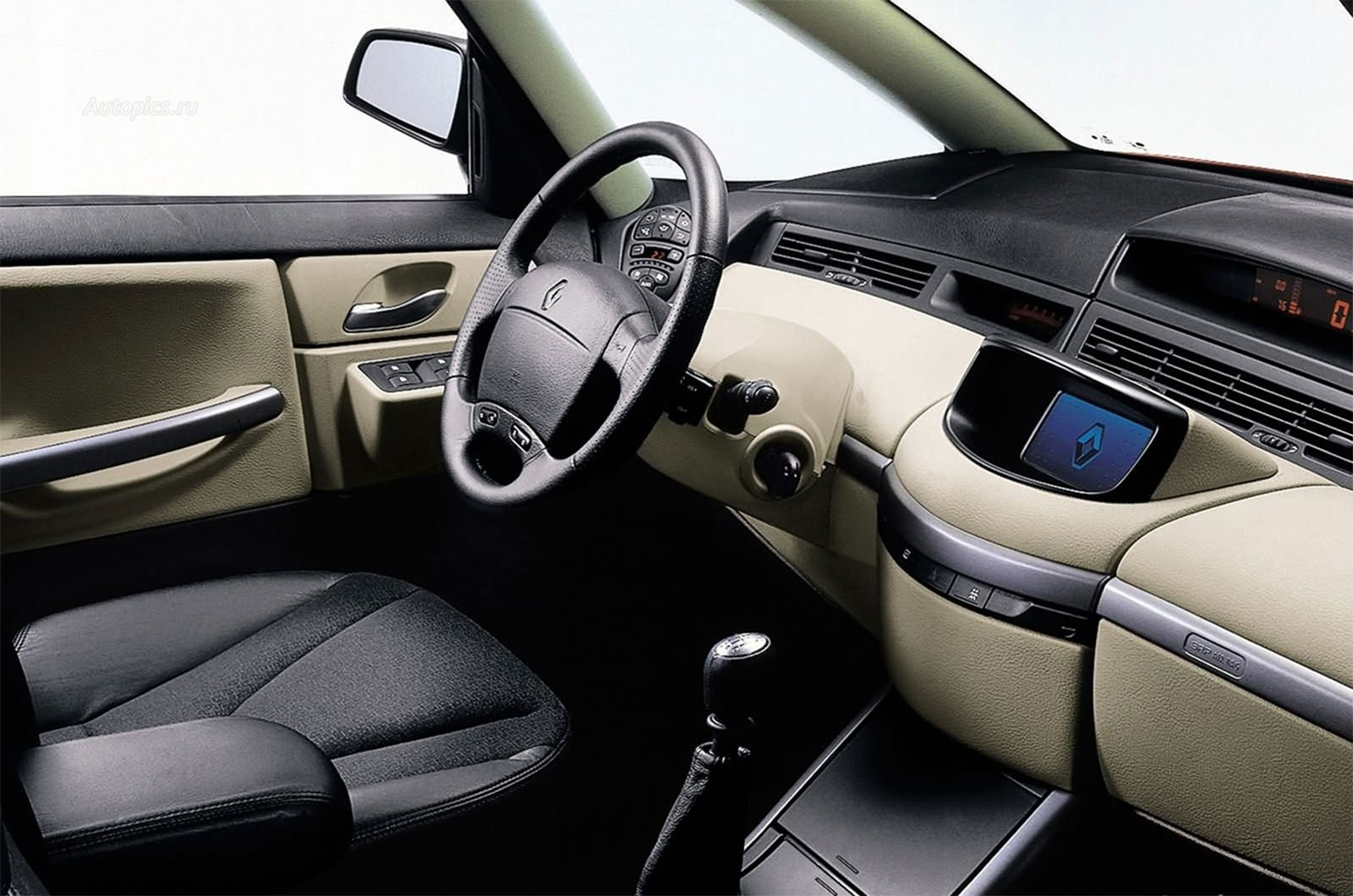
The Clio V6, the Vel Satis and the Avantime quasi-MPV would have been killed off by anyone else.
Subaru Impreza 2000 Turbo (1994-2000)
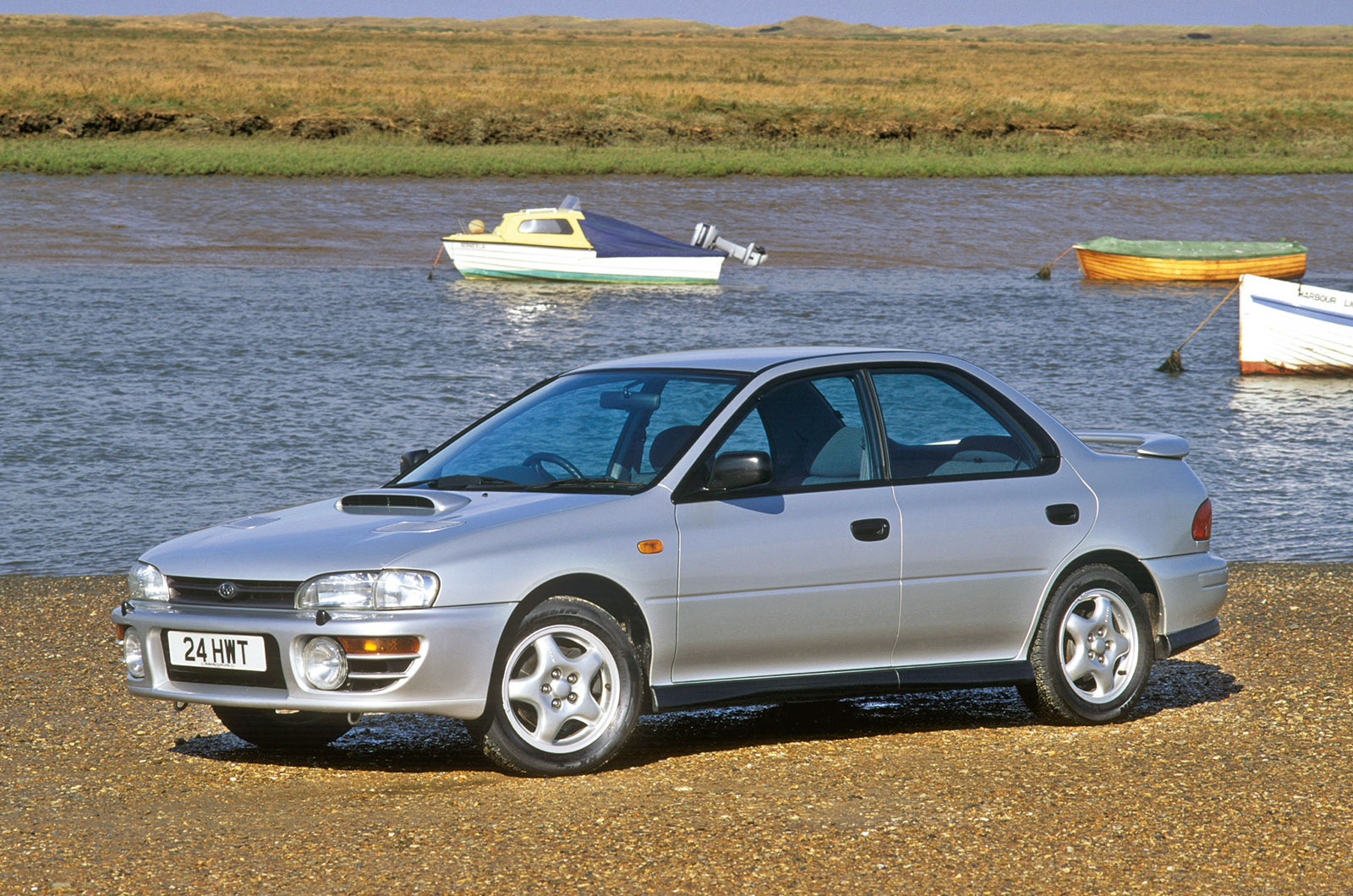
There is so much to enjoy about this most humble of high performance Subaru Imprezas, notably its punchy turbo performance, warbling boxer soundtrack and that rangey, fluid suspension that works so beautifully on bumpy roads.
Subaru Impreza 2000 Turbo (1994-2000)
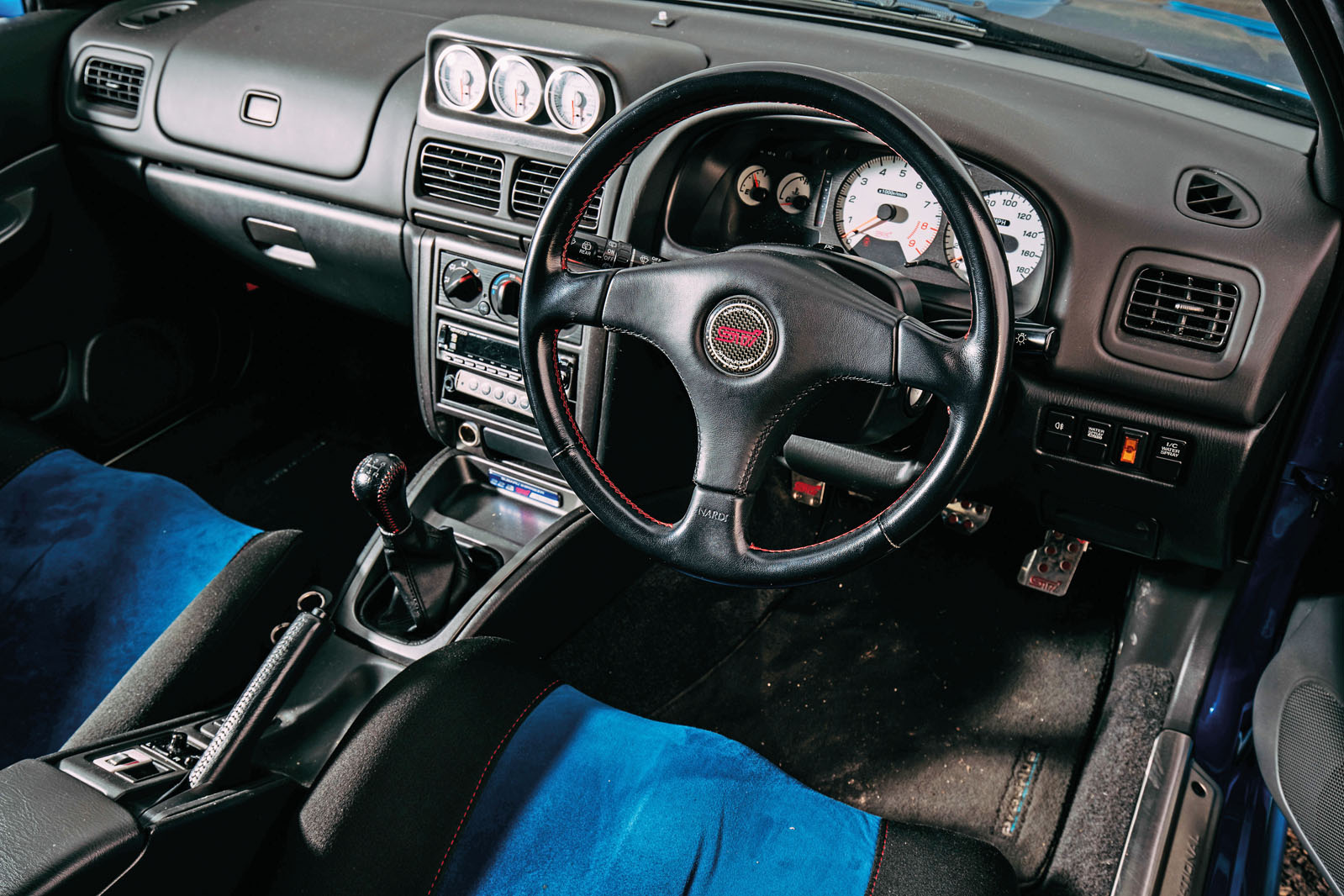
The trouble is, you’ll search far and wide before you find a car that hasn’t been messed about with. Indeed, originality is exactly what’ll make the Impreza Turbo a desirable car in years to come.
Porsche 944 (1982-1991)
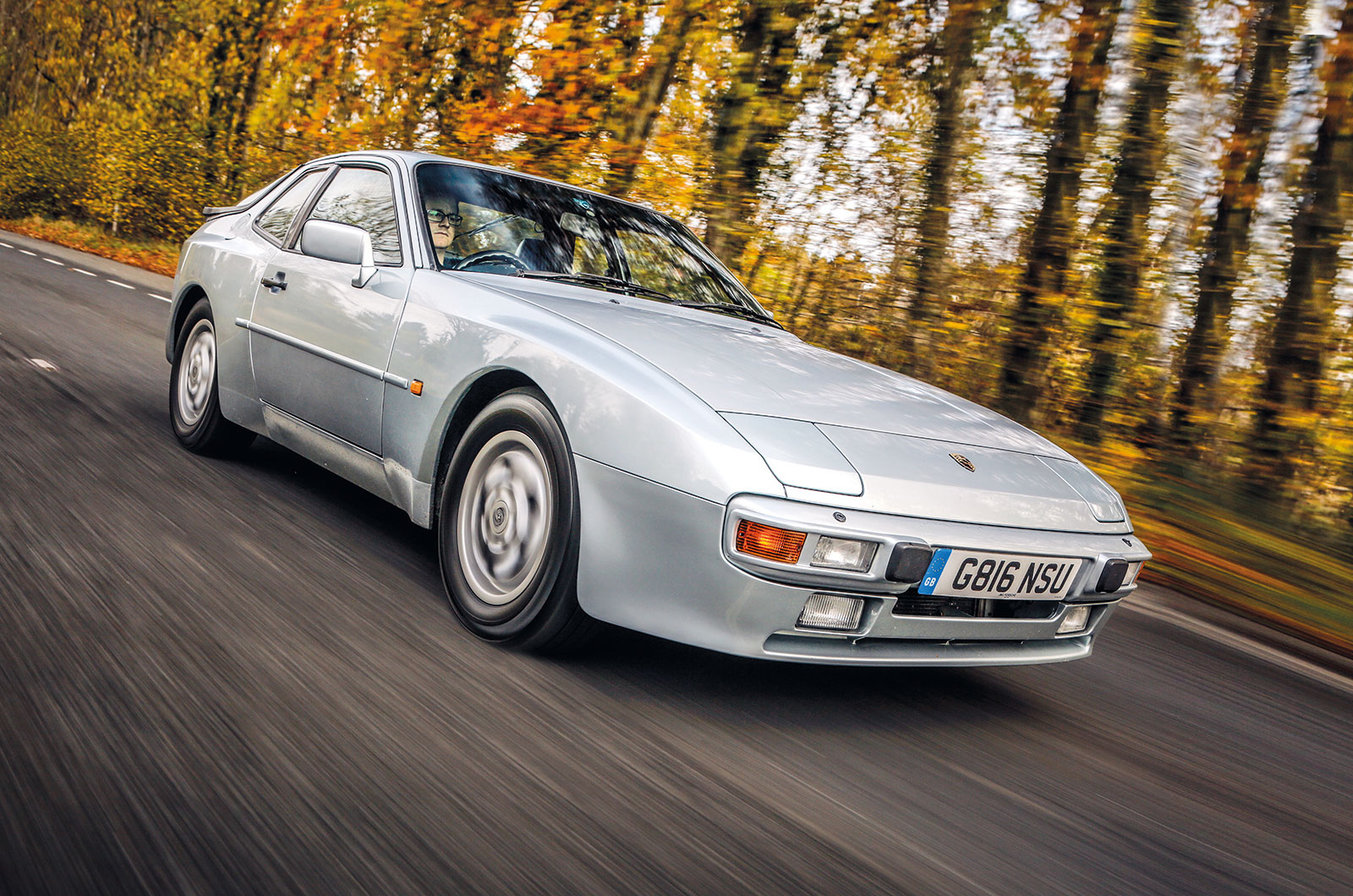
The Porsche 944 is already well on its way to being a classic, and values have been creeping upwards. Whereas contemporary 911s are fairly pricey now, a 944 is stil affordable.
Try and track down a a late-model 944 S - which had the more powerful, 190bhp version of the 2.5-litre four-pot - with not much more than 100,000 miles behind it.
Porsche 944 (1982-1991)
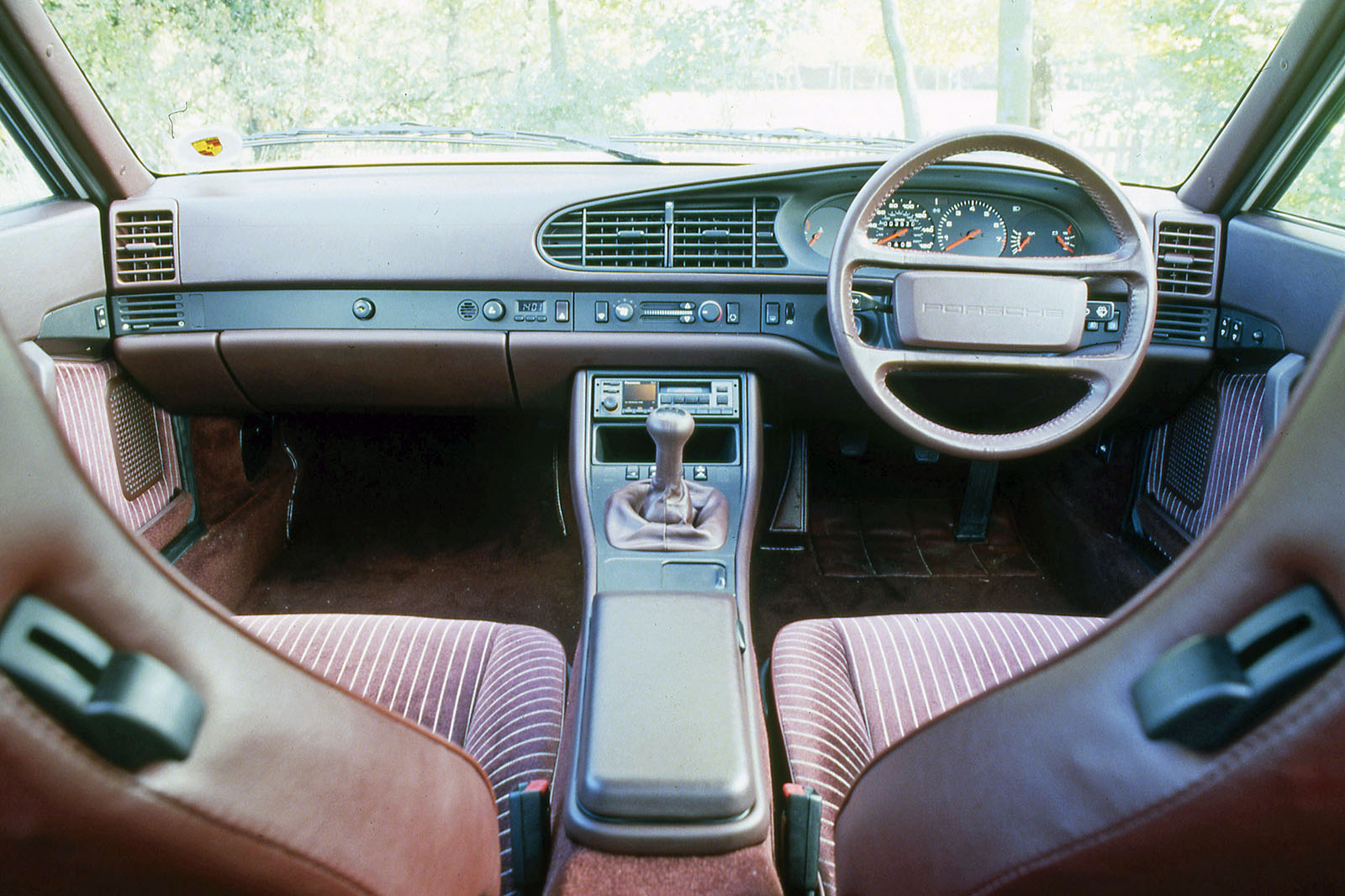
Values will never set off in pursuit of those stratospheric 911 prices, but they will continue to nudge along. What’s much more important is that the 944 will always be a sweet and rewarding car to drive. Mostly, that’s down to the transaxle layout, which gives the 944 its near-perfect chassis balance.
Honda Accord Type R (1998-2002)
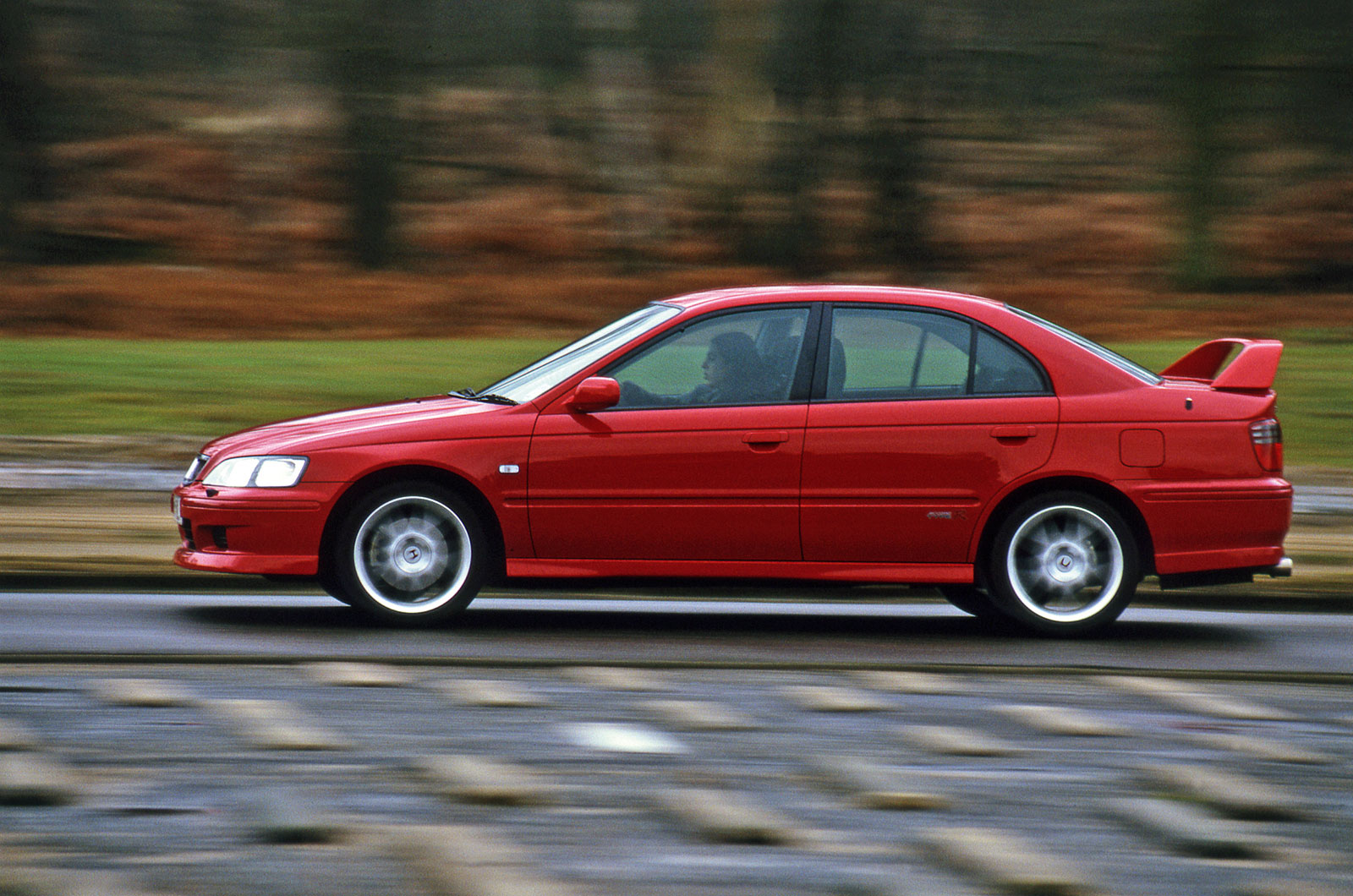
We're amazed that Honda's deliciously nutty Accord Type R isn't already attracting big prices. You certainly won't find many other modern four-door saloons with firecracker atmospheric VTEC engines, yet that offer room for the family.
Honda Accord Type R (1998-2002)
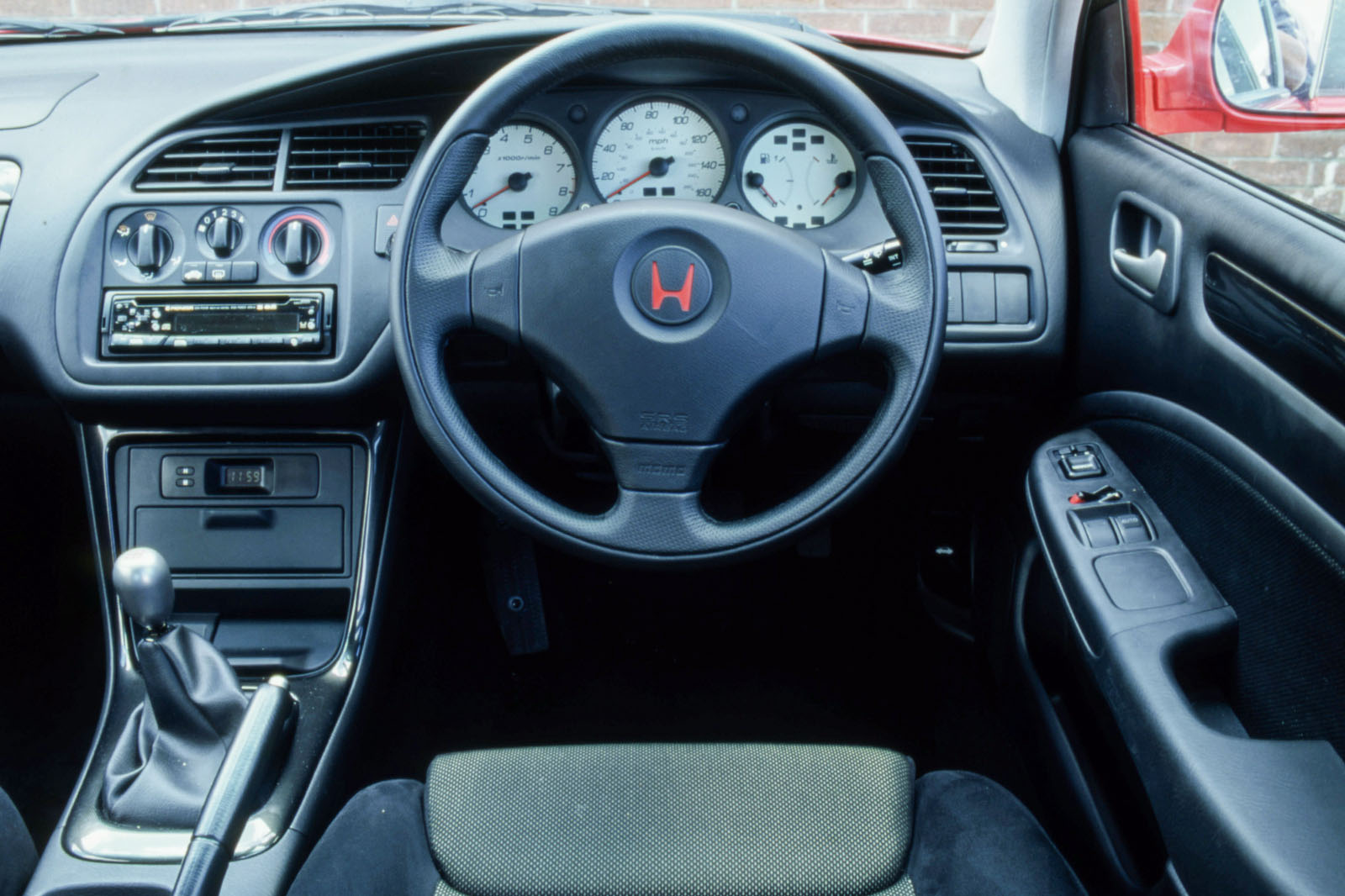
Superb shift quality, lovely steering, balanced and entertaining handling. And if scarcity's any guide of future classic status, this is one to watch: numbers on the road are dwindling fast.
Land Rover Defender (1982-2016)
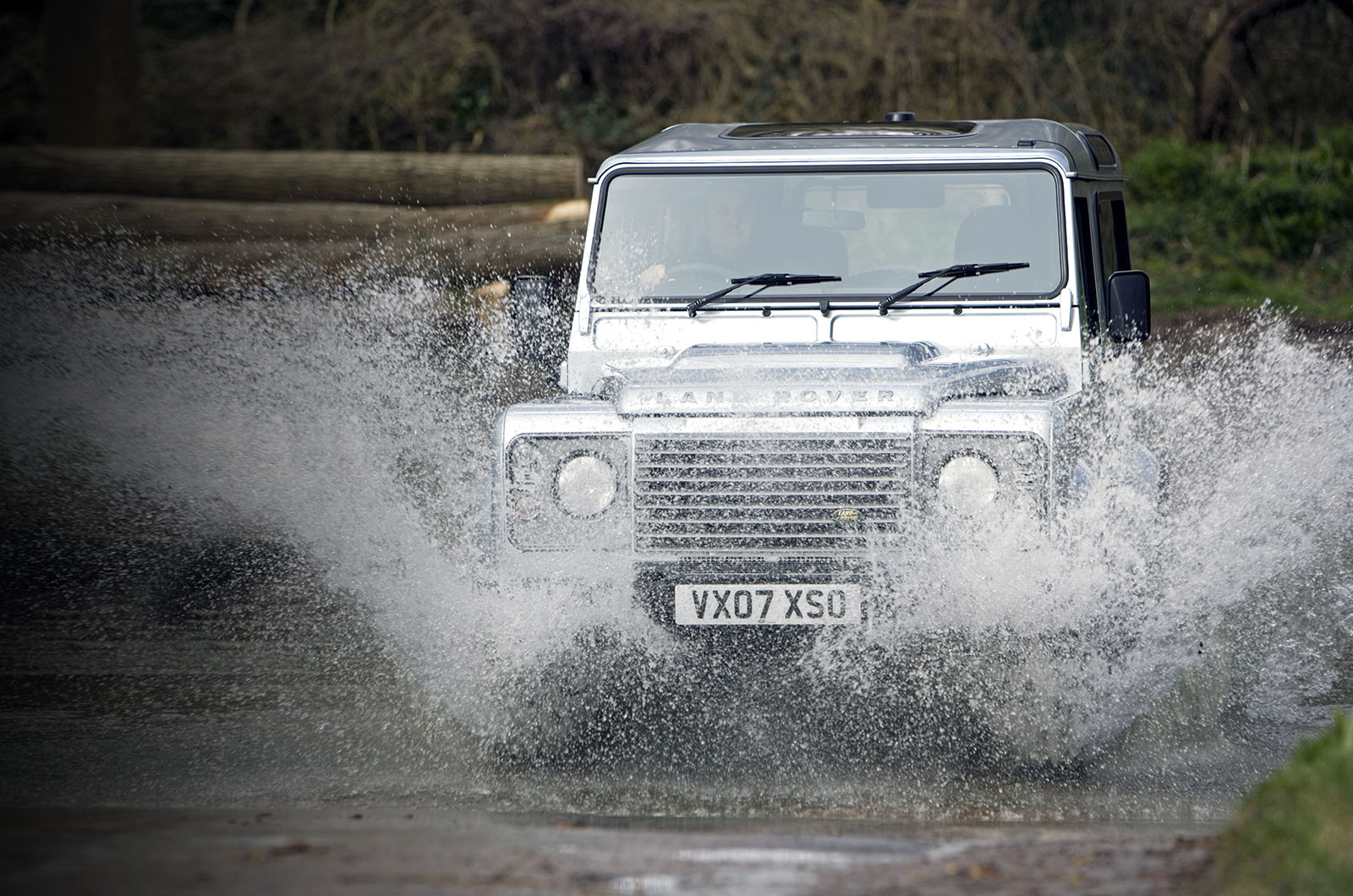
A Defender is as sure a place to put your money as bricks and mortar. It’s one of those cult cars that seems to command much higher values than rational common sense suggests it should.
Land Rover Defender (1982-2016)
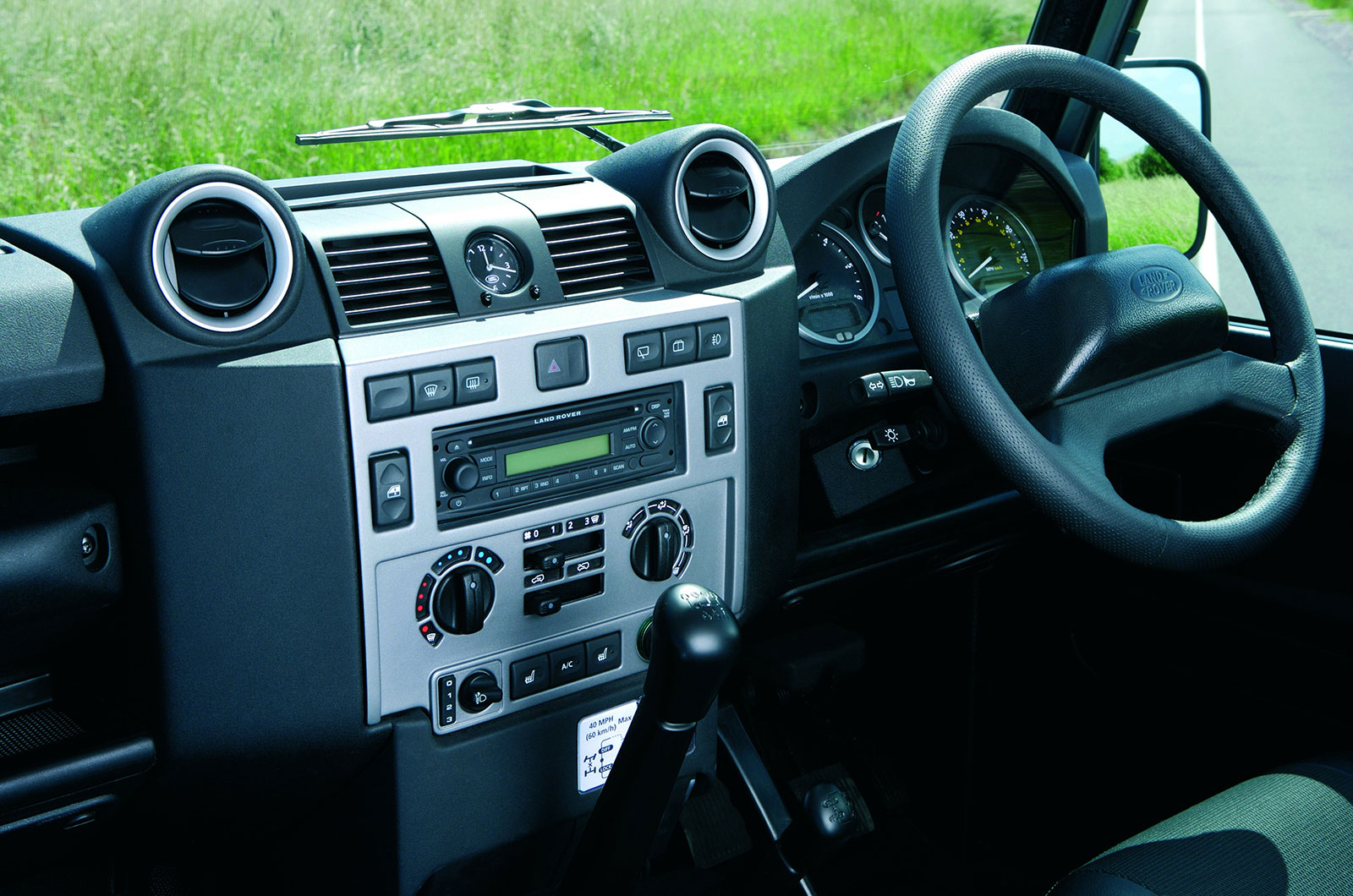
Defenders are slow and noisy and uncomfortable and hopelessly old fashioned, but they’re adored nonetheless and, accordingly, values are rising.
Mercedes SL55 AMG (2002-2008)
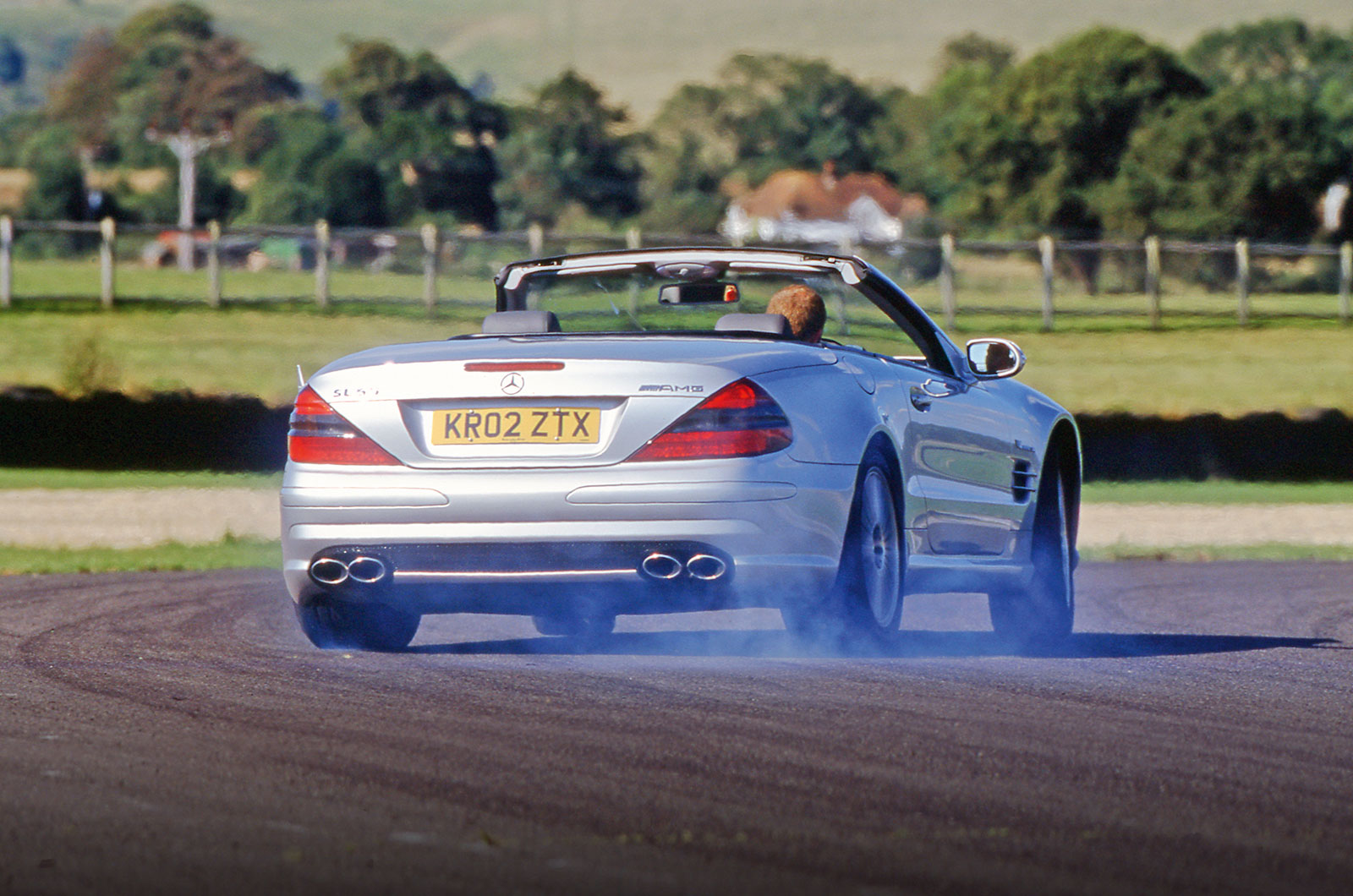
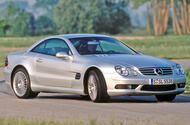
It is very easy to be sniffy about the SL. It’s much less a sports car and more a laid back cruiser, after all, but the full AMG treatment did unearth a hidden wild side. The SL55 AMG’s near-500bhp supercharged V8 also happens to sound like a low flying Spitfire, which goes a long way to vanquishing the SL’s well-groomed boulevardier image.
Mercedes SL55 AMG (2002-2008)
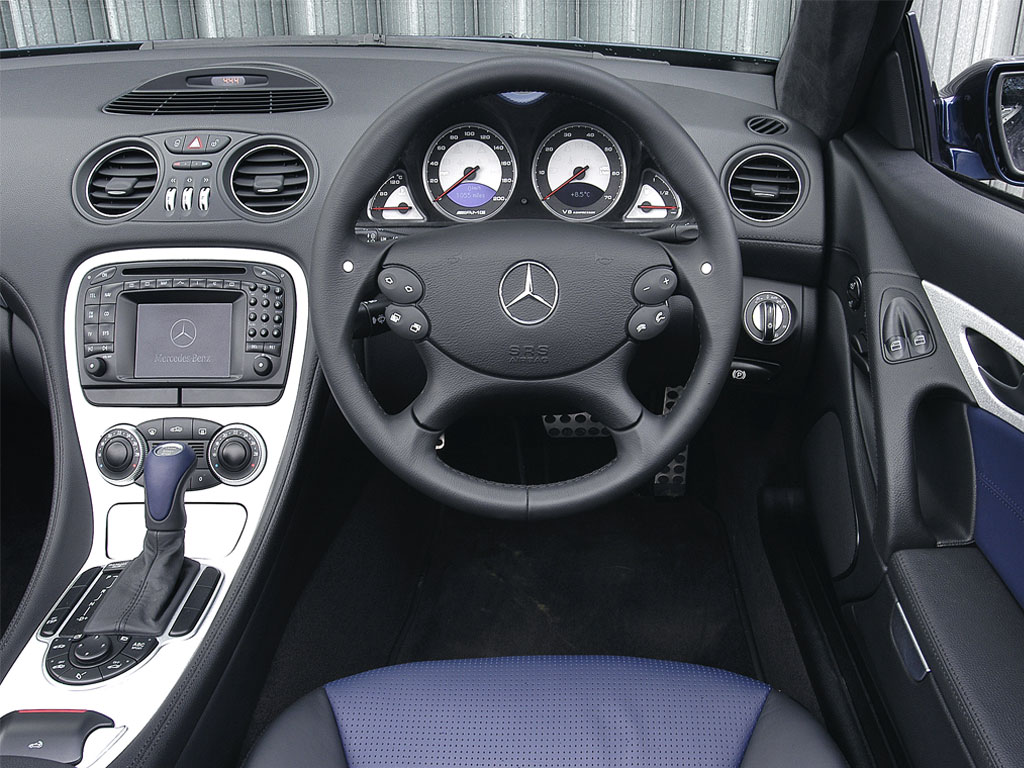
With a folding hardtop roof and Active Body Control suspension the SL55 is by no means a simple car. In fact, perished seals on earlier models mean the roof can allow water to leak into the boot, while the trick suspension can go wrong and chuck up nasty bills.
Those sorts of issues have suppressed SL55 values and they may even prevent them from climbing in years to come. The thunderous soundtrack will keep your mind off all of that, though.
Volvo 850 T5-R Estate (1995-1996)
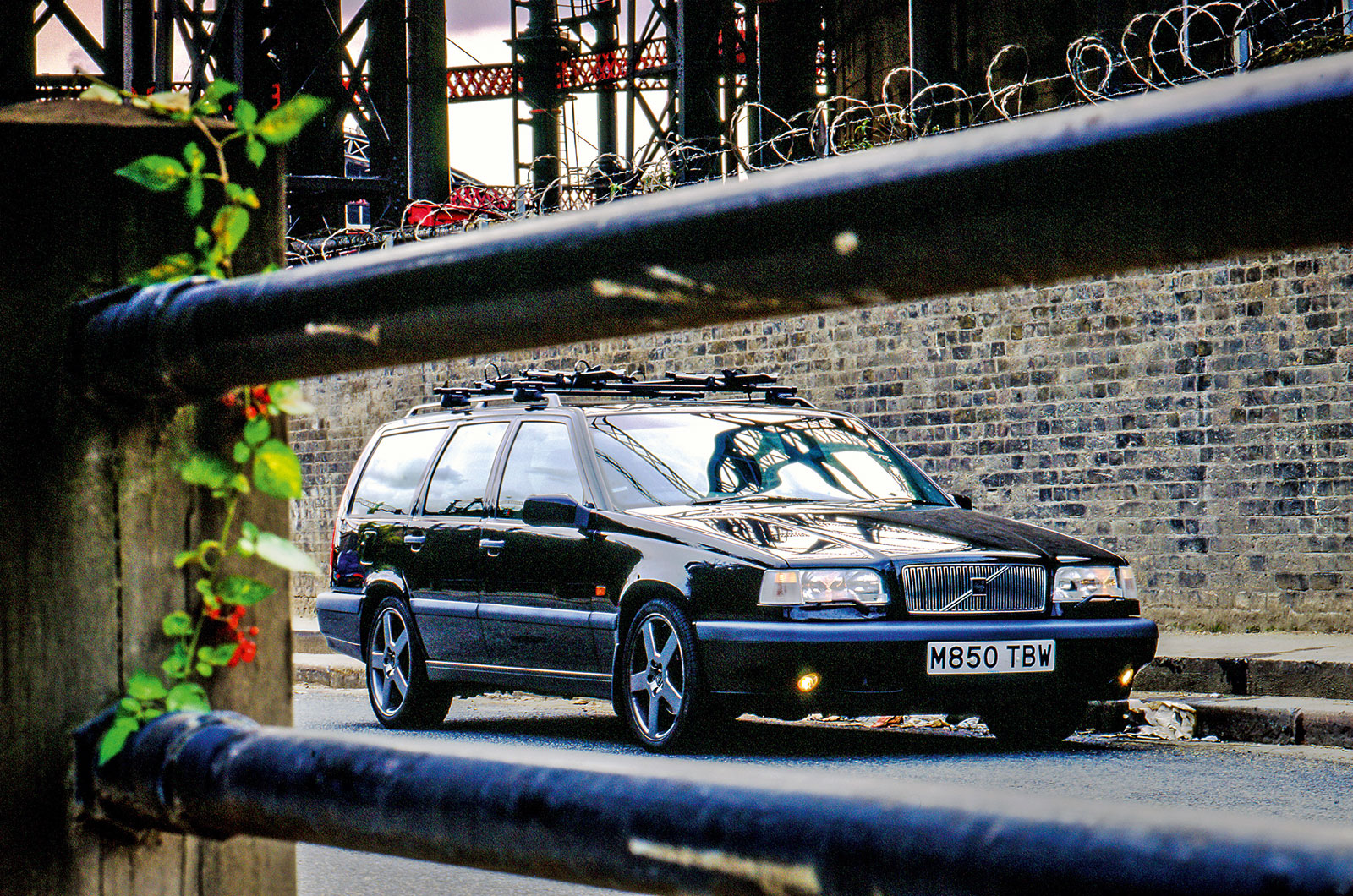
The sight of a boxy, square-edged Volvo 850 estate leaping across kerbs on a race track was so strange and incongruous that it remains one of touring car racing’s most iconic motifs.
Volvo 850 T5-R Estate (1995-1996)
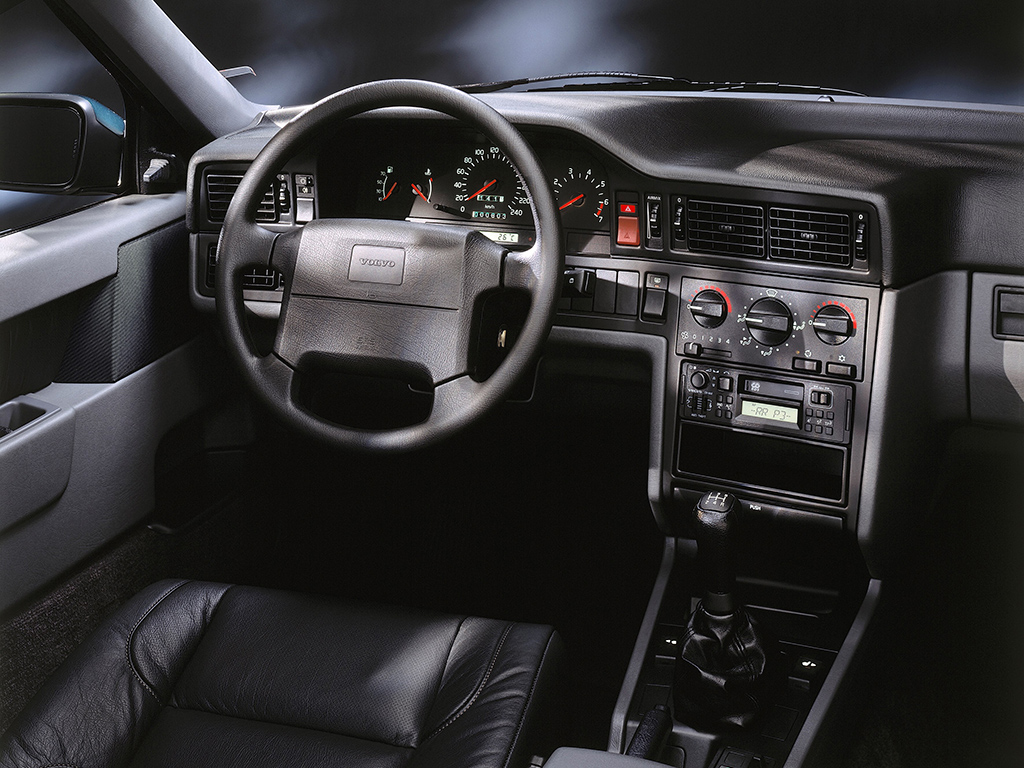
The road-going 850 T5-R will always be a sought after model simply for that association, even though the mechanical similarity between the two cars was close to negligible; the T5-R, after all, was no homologation special.
Ford Focus RS Mk1 (2002-2003)
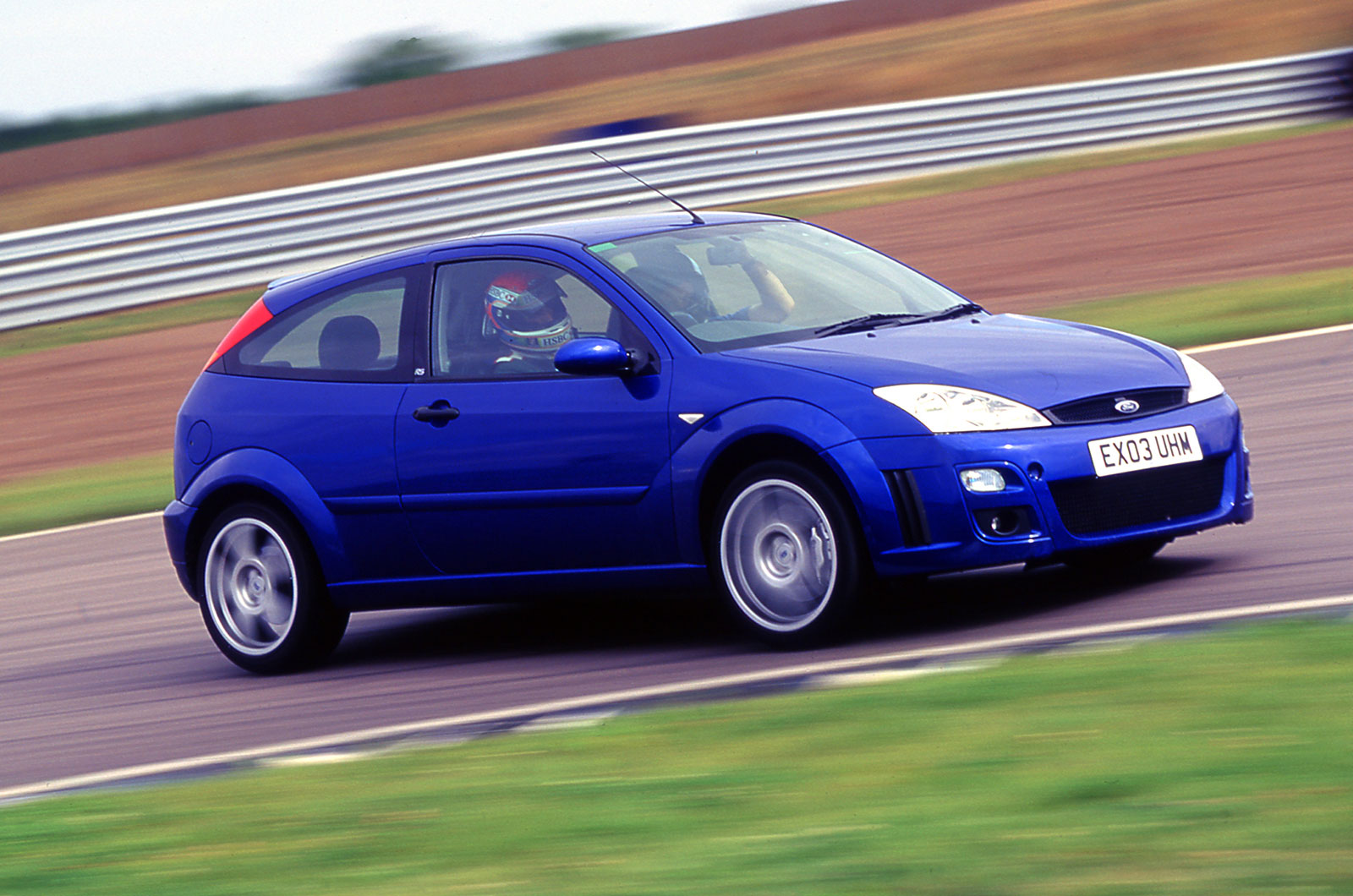
The original Focus RS arguably changed the hot hatch game more than any other car before or since. It was the first car of its type to be engineered with the same precision, attention to detail and track-proven hardware as a sports car.
In fact, the Focus RS reset our expectations for the sector: if a modern day hot hatch isn’t engineered to the same exacting standards, we write it off immediately.
Ford Focus RS Mk1 (2002-2003)
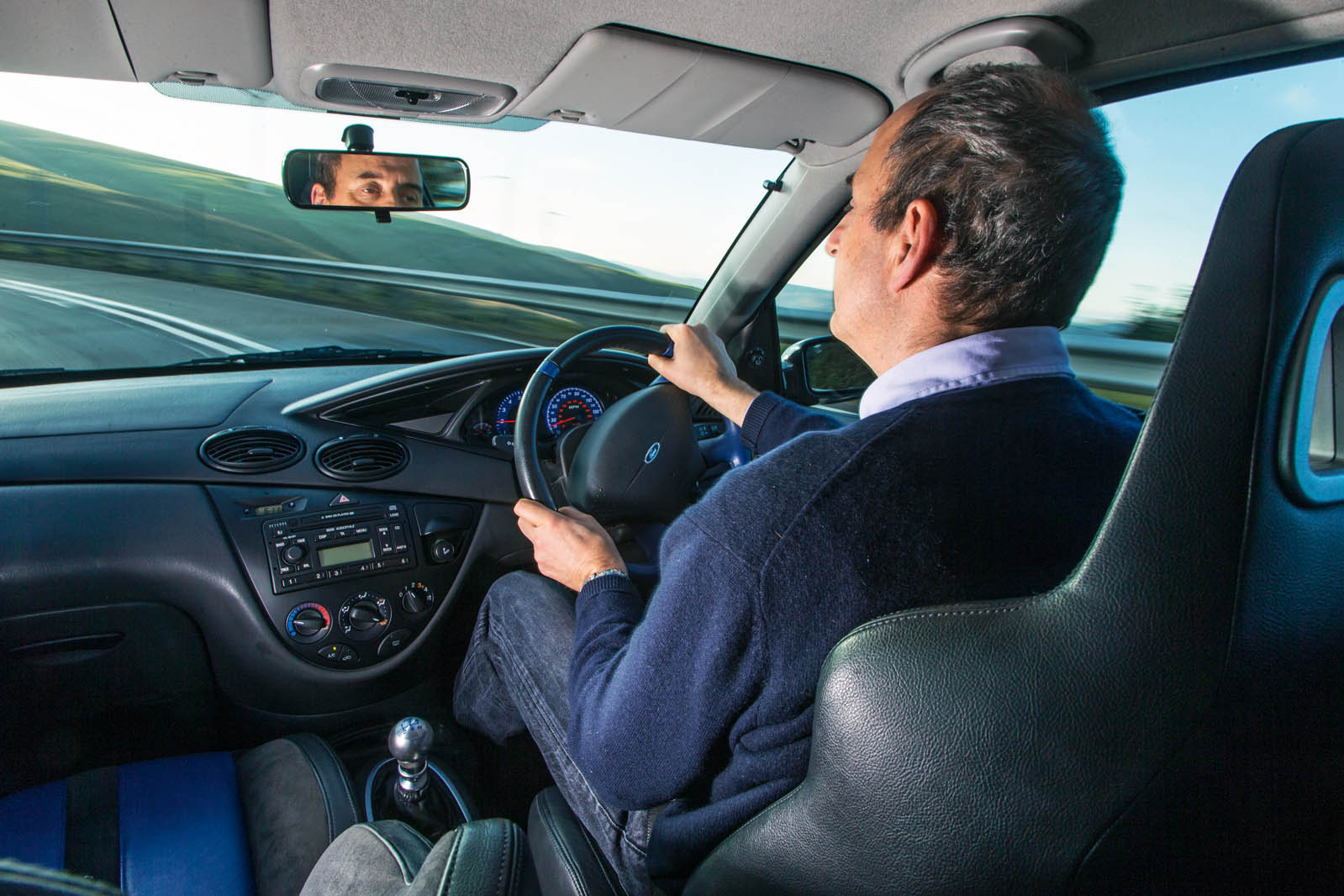
As well as being great to look at the Focus RS is thrilling to drive, albeit in a white-knuckle sort of way. The punchy turbocharged performance and tightly-wound Quaife limited-slip differential give it huge performance, but a ragged edge, too.
Factory-specification cars will one day shoot up in value, just as the more common Escort RS Cosworth has done.
Alfa Romeo 164 Q4 (1993-1998)
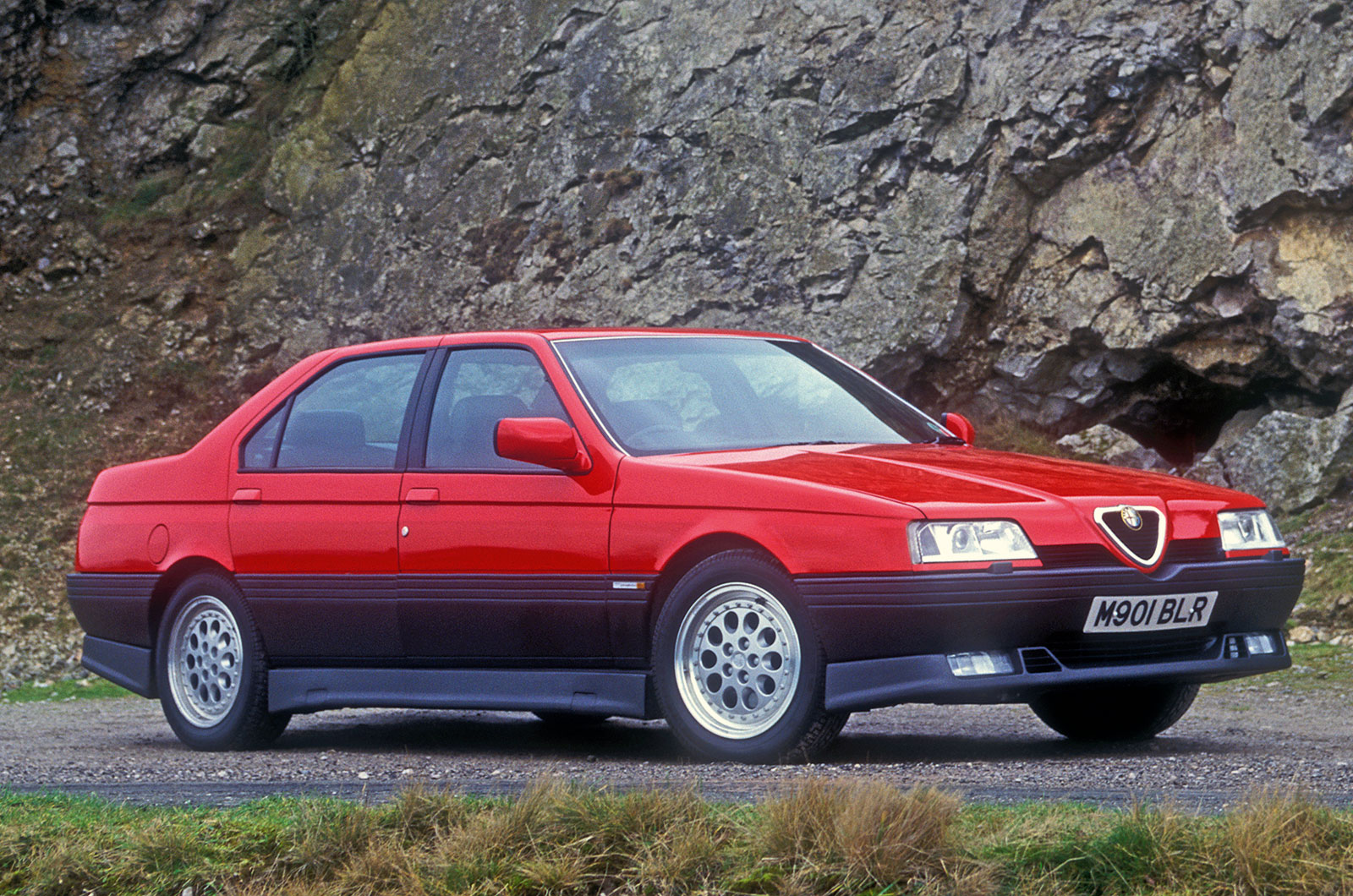
Styled by Pininfarina - apparently with judicious use of rulers and set squares - the 164 was Italy’s answer to the BMW 5 Series.
Alfa Romeo 164 Q4 (1993-1998)
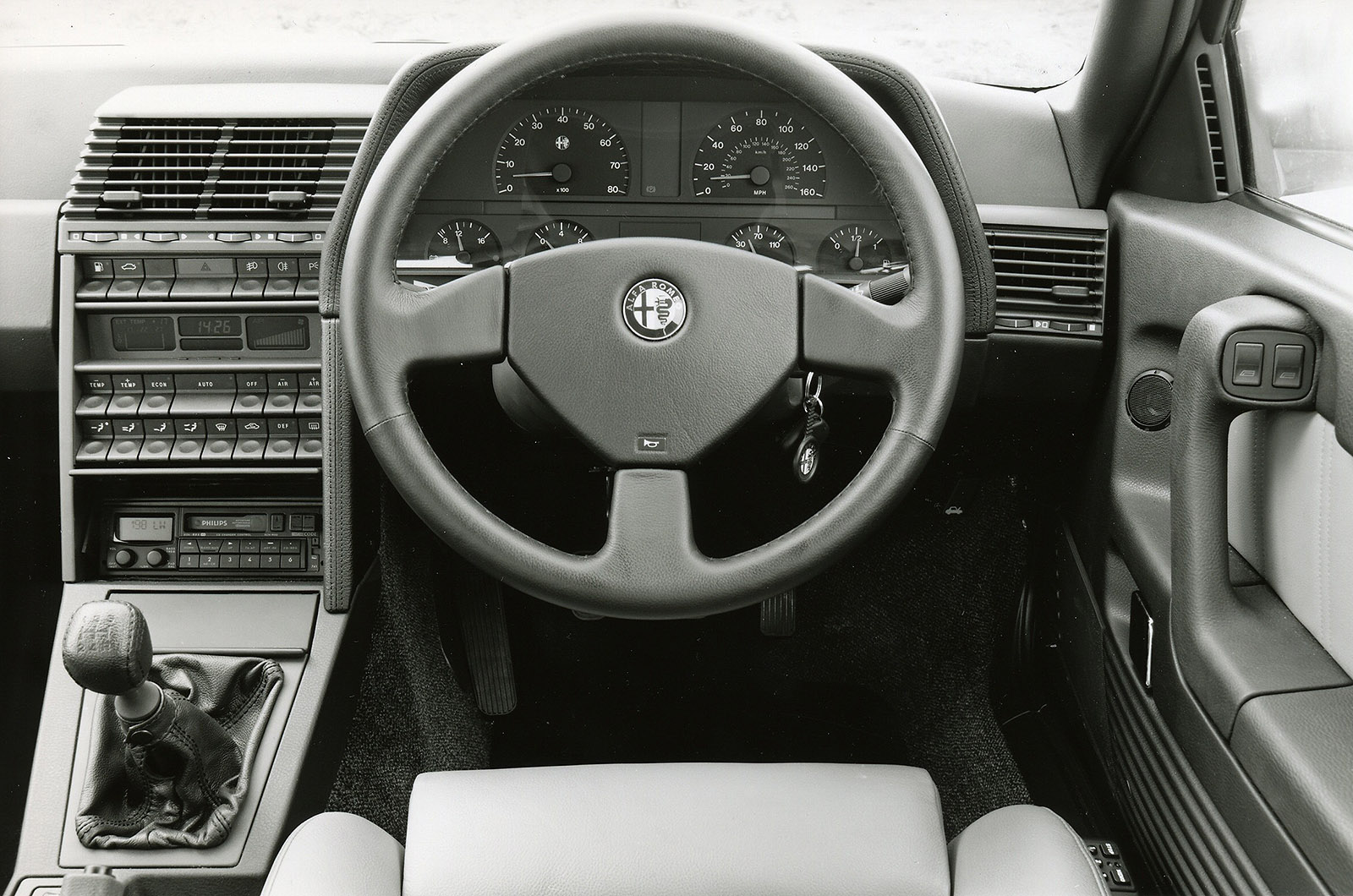
The V6-powered, four-wheel drive Q4 version that arrived in 1993 wasn’t exactly a rival to the 311bhp M5 of the time, but with 229bhp the Alfa was no slouch.
The car is extremely rare these days, but they can be found for fairly small sums.
BMW E39 M5 (1998-2003)
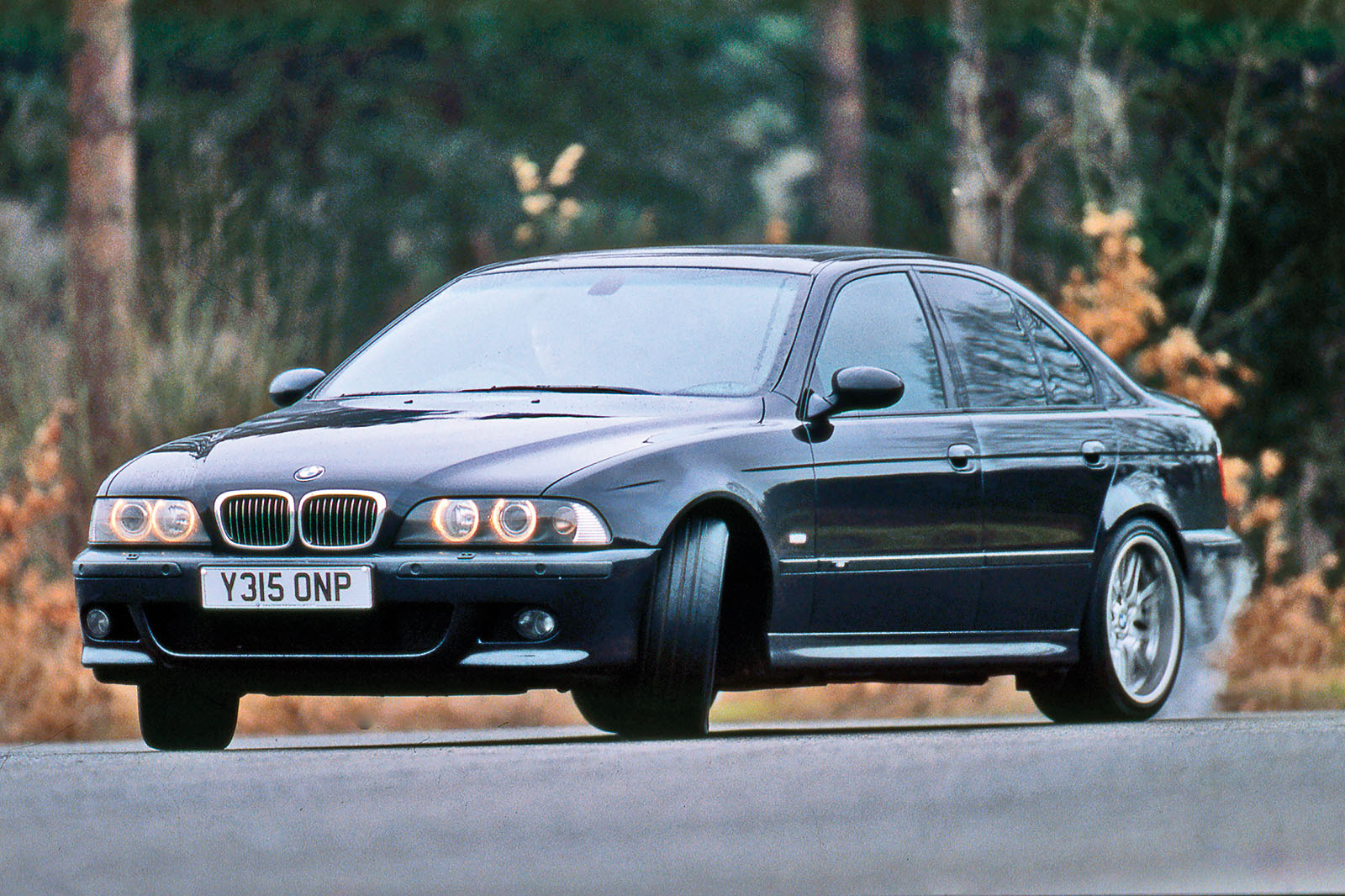
In this price bracket you're looking at an E39 M5 approaching, possibly exceeding, 100,000 miles, but that needn't put you off. A rebuilt VANOS variable valve timing system and rock-solid service history should see you straight.
BMW E39 M5 (1998-2003)
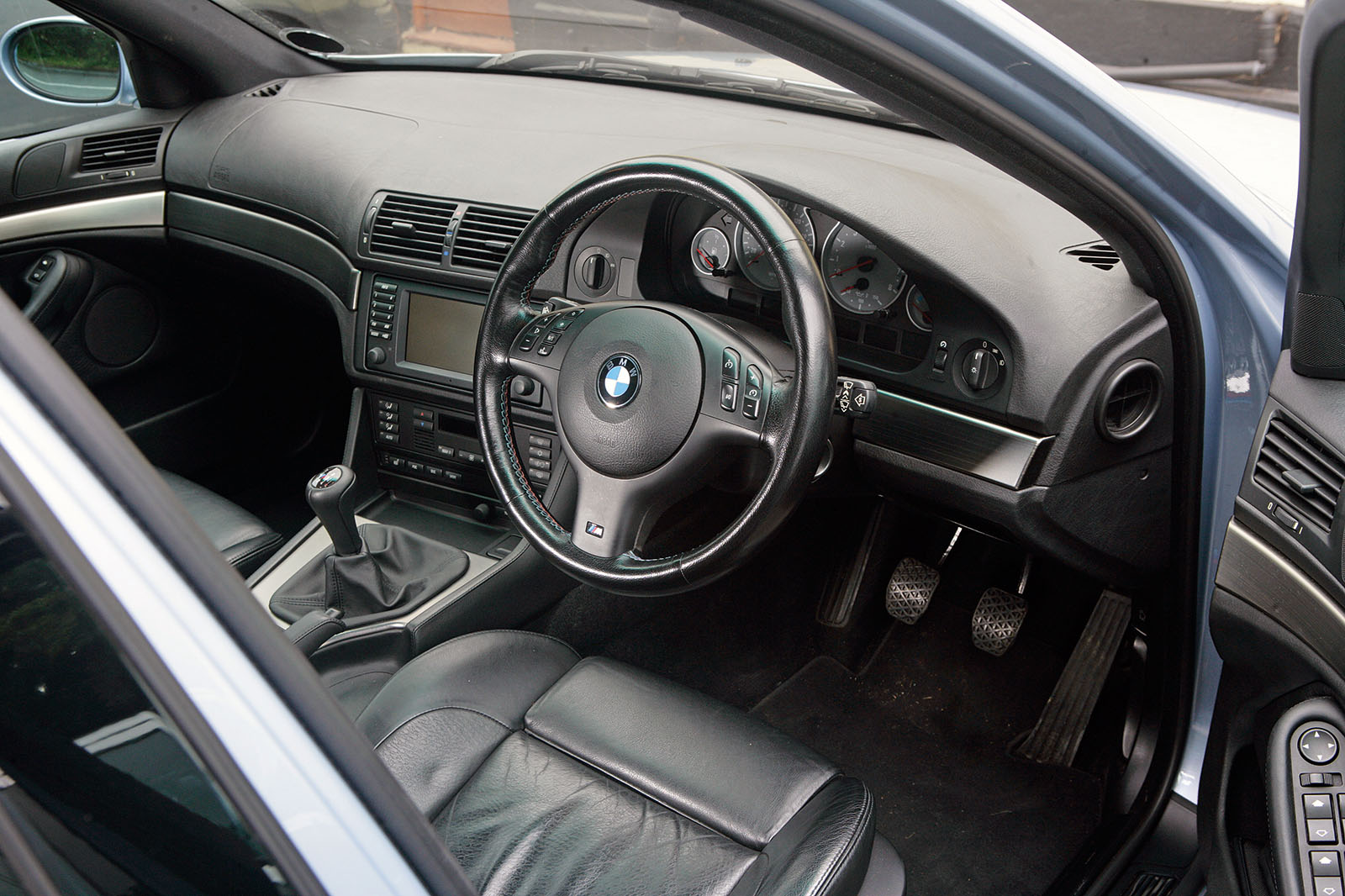
Then you can look forward to enjoying arguably the best M5 of the lot – manual gearbox, 400bhp V8 and a chassis that's almost as happy to play B-road stormer as it is grand tourer. Don't let the understated coachwork fool you into thinking this isn't a massively characterful super-saloon.
Toyota GT86 (2012-2021)
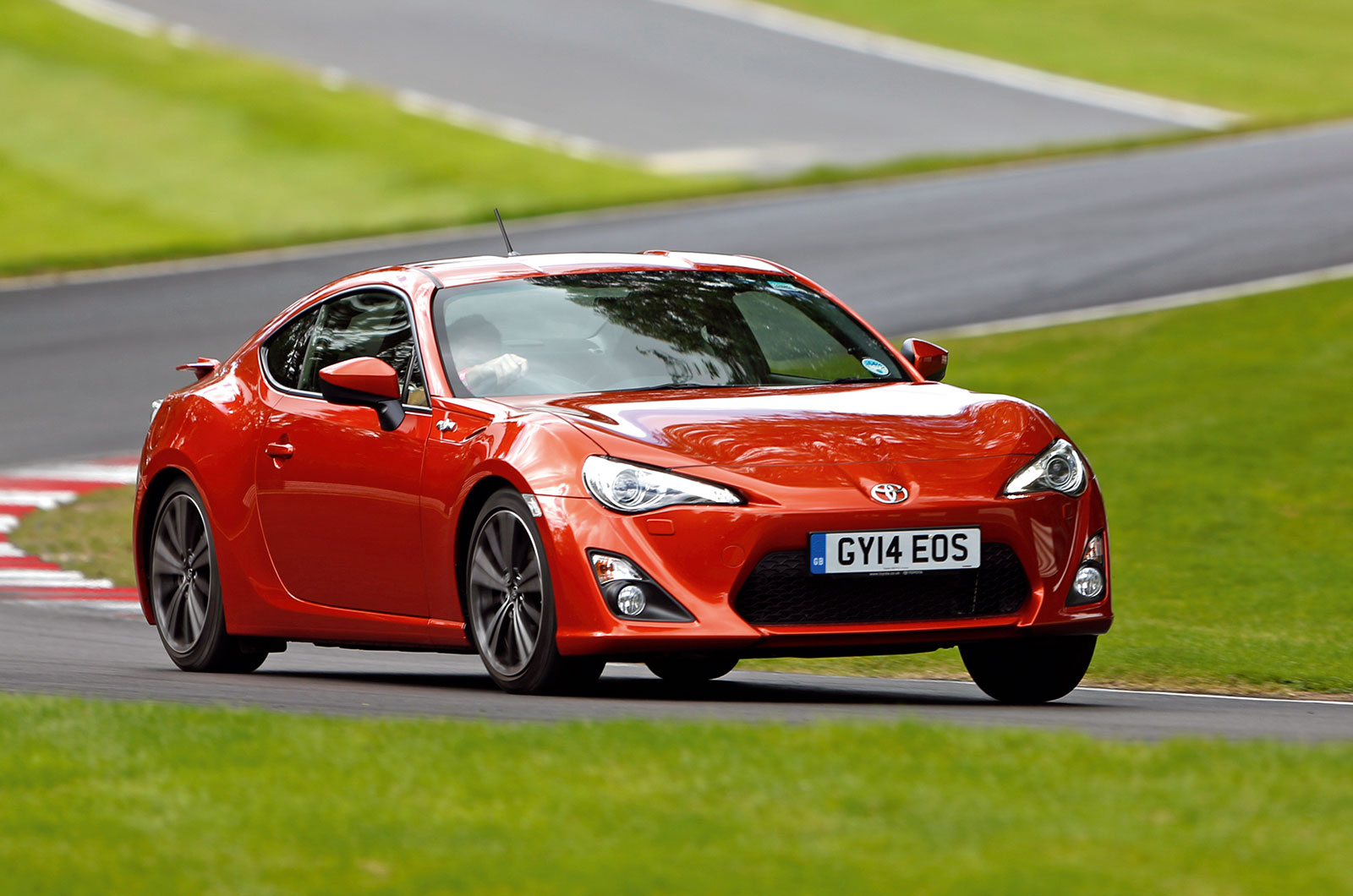
With the compact, rear-wheel drive GT86, Toyota - as well as Subaru with its own version, the BRZ - hit the reset button for the sports coupé sector. The GT86 prioritises fun and engagement over outright performance and is all the better for it. This car was known as the Scion FR-S in North America.
Aston Martin V8 Vantage (2005-2017)
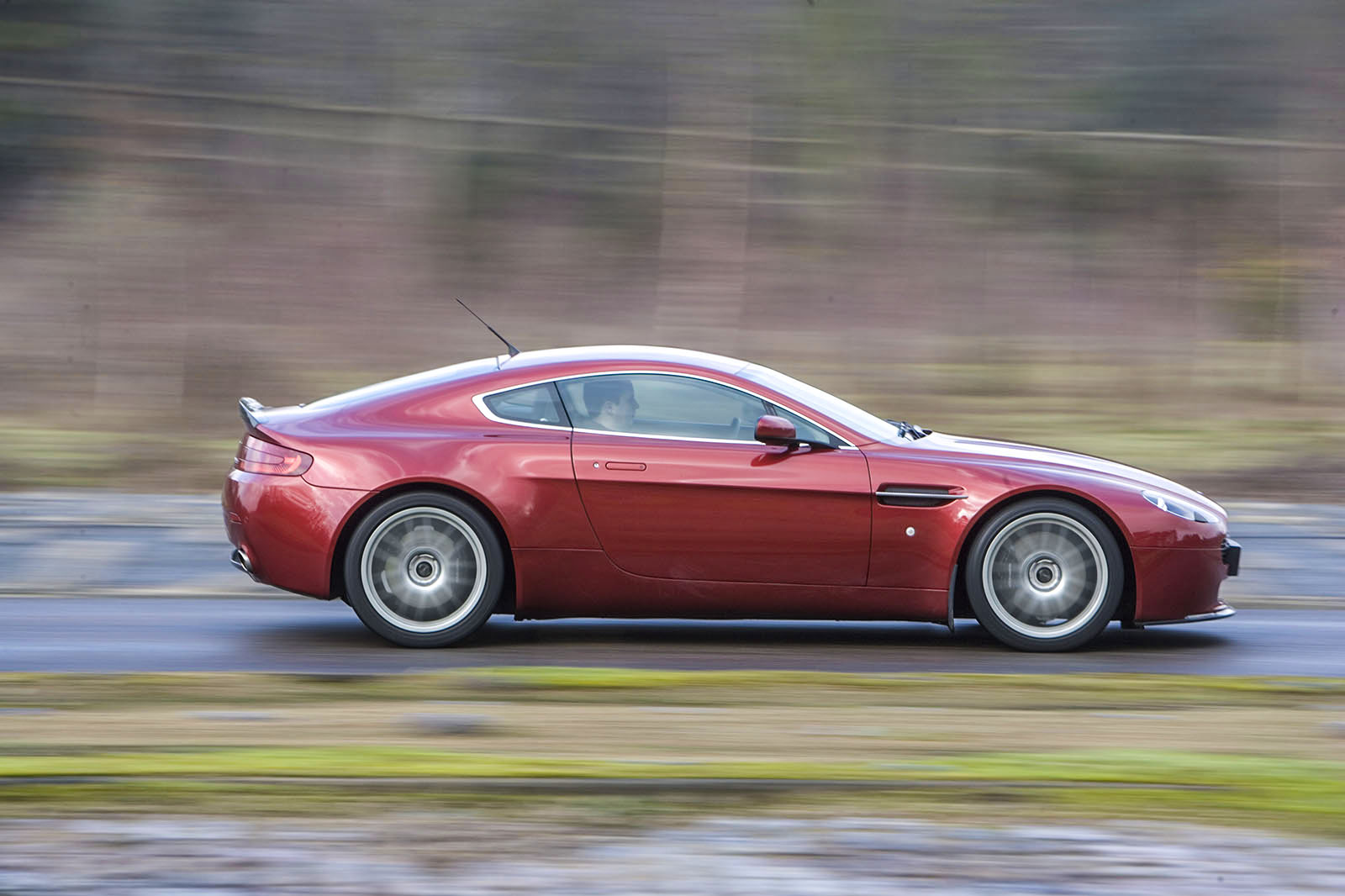
The previous V8 Vantage may be the most common Aston Martin ever, but it’s also the last of a breed. When we all commute to work in electric cars we’ll want to keep a normally-aspirated V8 in the garage.
BMW M3 E92 (2007-2013)
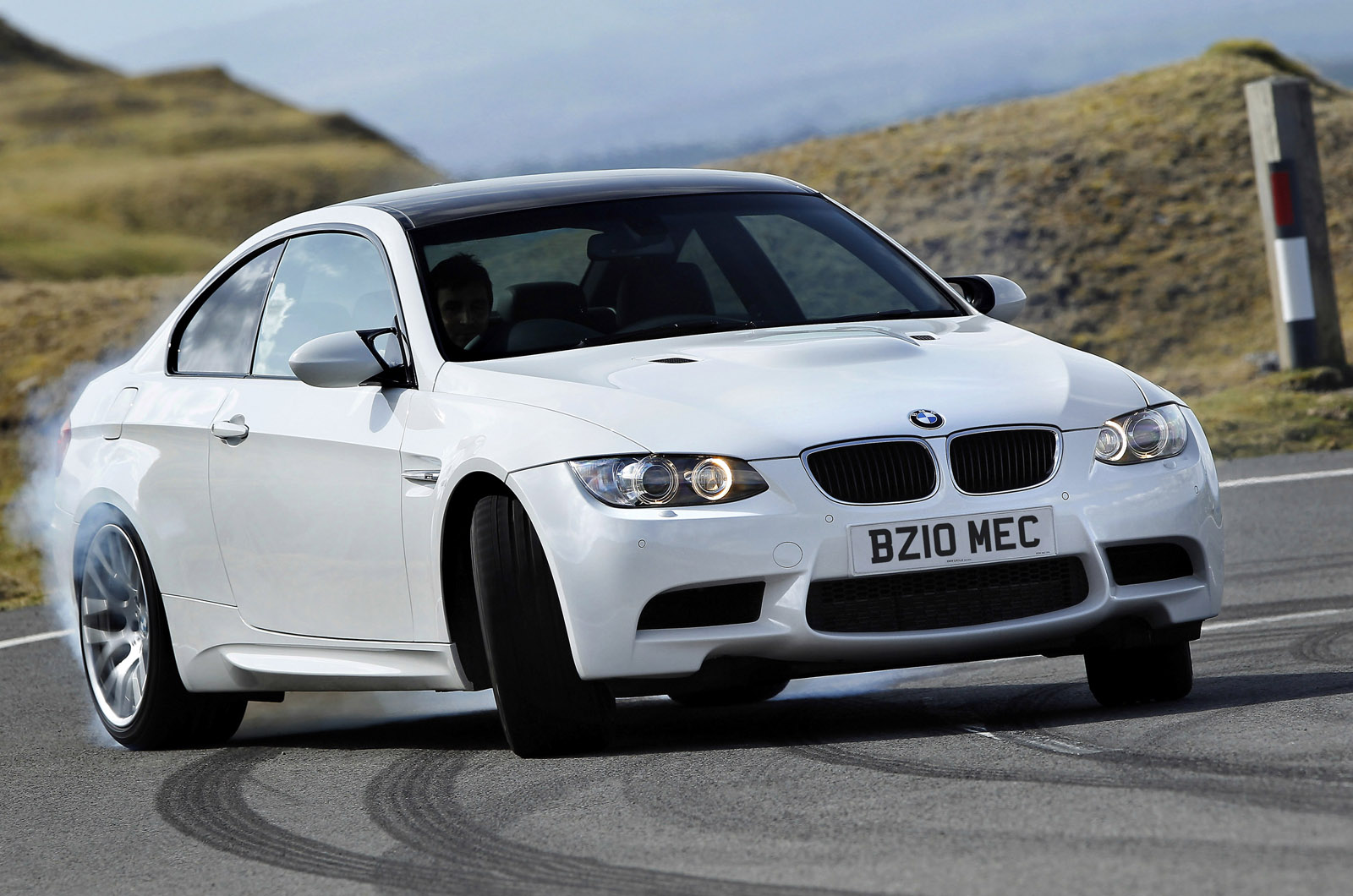
The M3 that came before it, the E46, is beginning to rise in value and you can bet the E92 will do the same thing one day. Its 4.0-litre V8 is such a masterpiece that demand will never falter.
Nissan GT-R (2008-present)
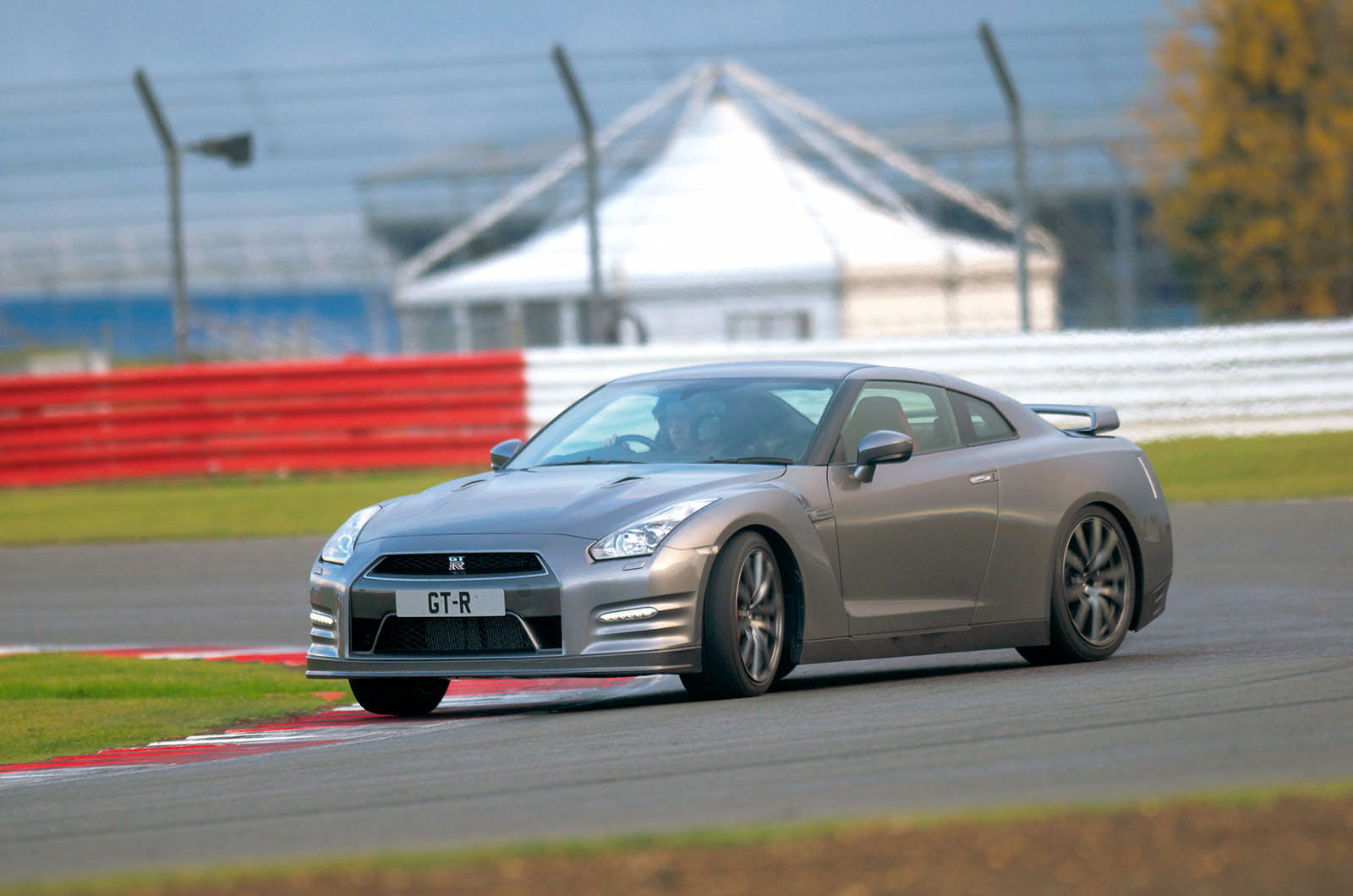
There aren’t very many cars that can claim to have conquered the world, but the R35 Nissan GT-R certainly did. It’ll go out of production soon and values will steadily drop until, years from now, they’ll begin to climb again.

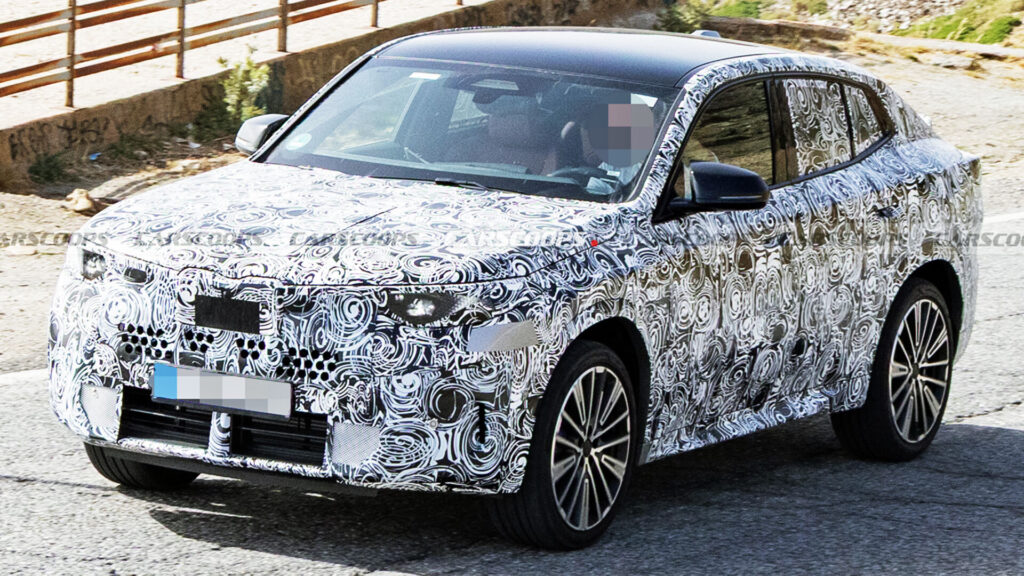
BMW X2 M40 Signals Neue Klasse Shift with Refined Design and Panoramic Tech Integration

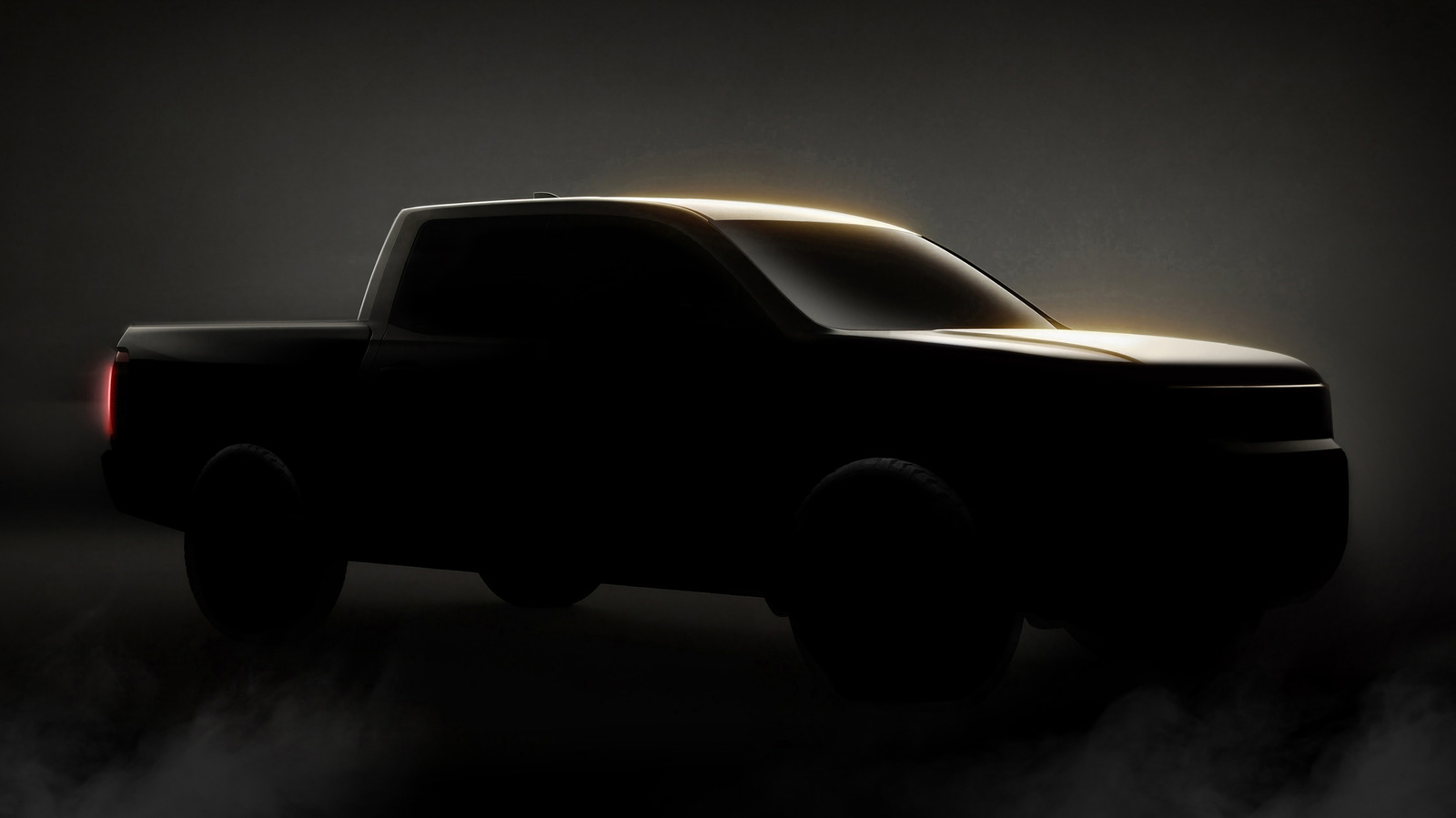
Honda Ridgeline Redesign Signals Shift Toward Boxier Utility for 2028

Unconventional German Car Design and the Innovation Behind Automotive Eccentricity
 A look at some of the most intriguing models to ever come from Germany
Throughout the years, some German car designers have dared to stray from the norm and give us some outlandish car designs.
From beautifully eccentric shapes to squirrelly design features, here’s our pick of Germany’s most unusual:
Volkswagen Beetle (1938)
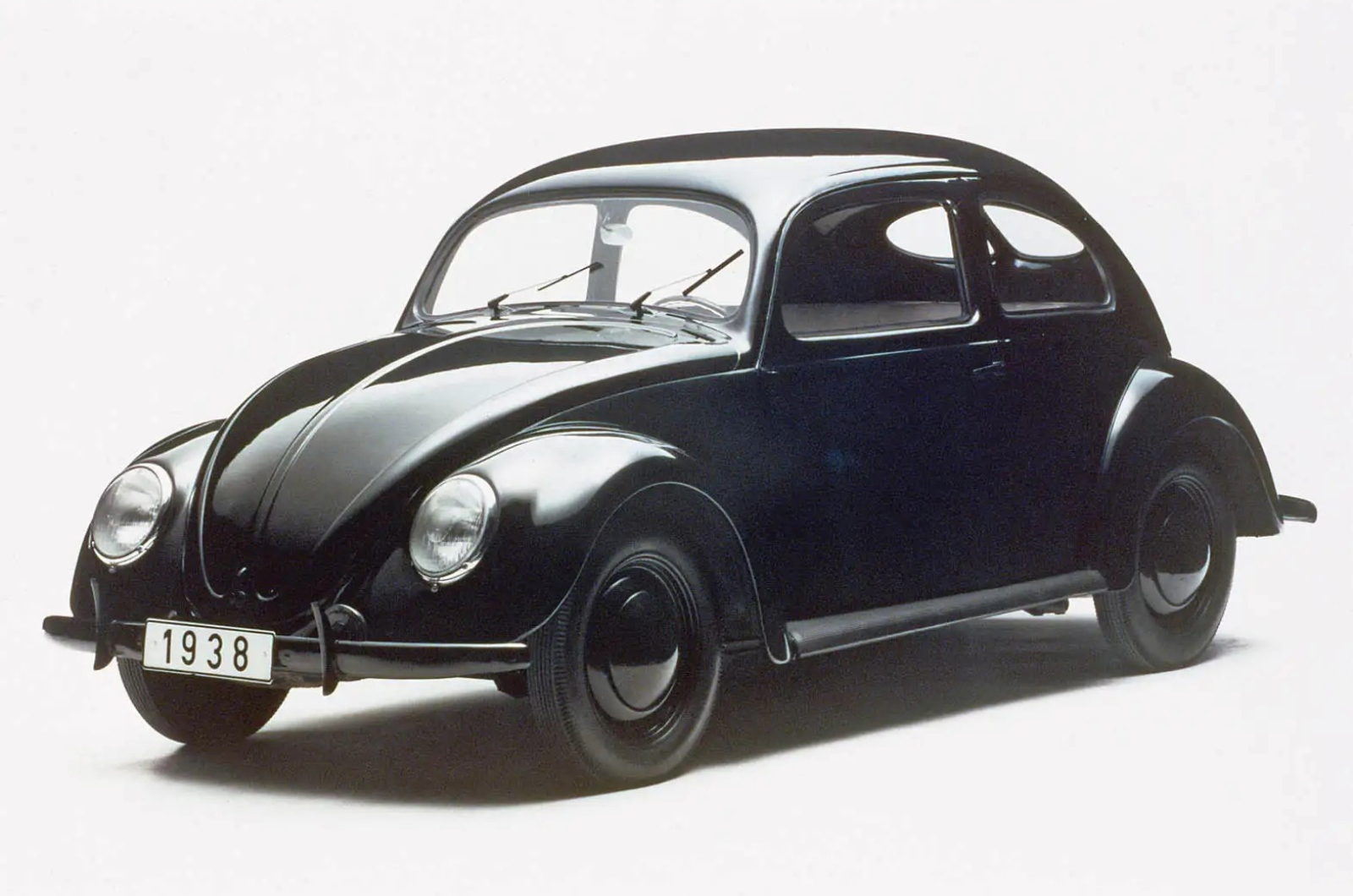
Many people think that Ferdinand Porsche was the man behind the Beetle, but this is incorrect. Engineer and inventor Bela Barenyi came up with the design five years before Ferdinand Porsche presented his initial insect-inspired sketch. We have Barenyi to thank for the life-saving “crumple zone” concept and “non-deformable passenger car cell”.
For Ferdinand Porsche’s Beetle guise, Adolf Hitler gave Porsche an order to develop a Volkswagen (People’s Car), which could transport two adults and three children at 60mph and cost no more than a motorbike. The Beetle’s unusual shape would become incredibly iconic and it was produced until 2003.
Schlörwagen (1939)
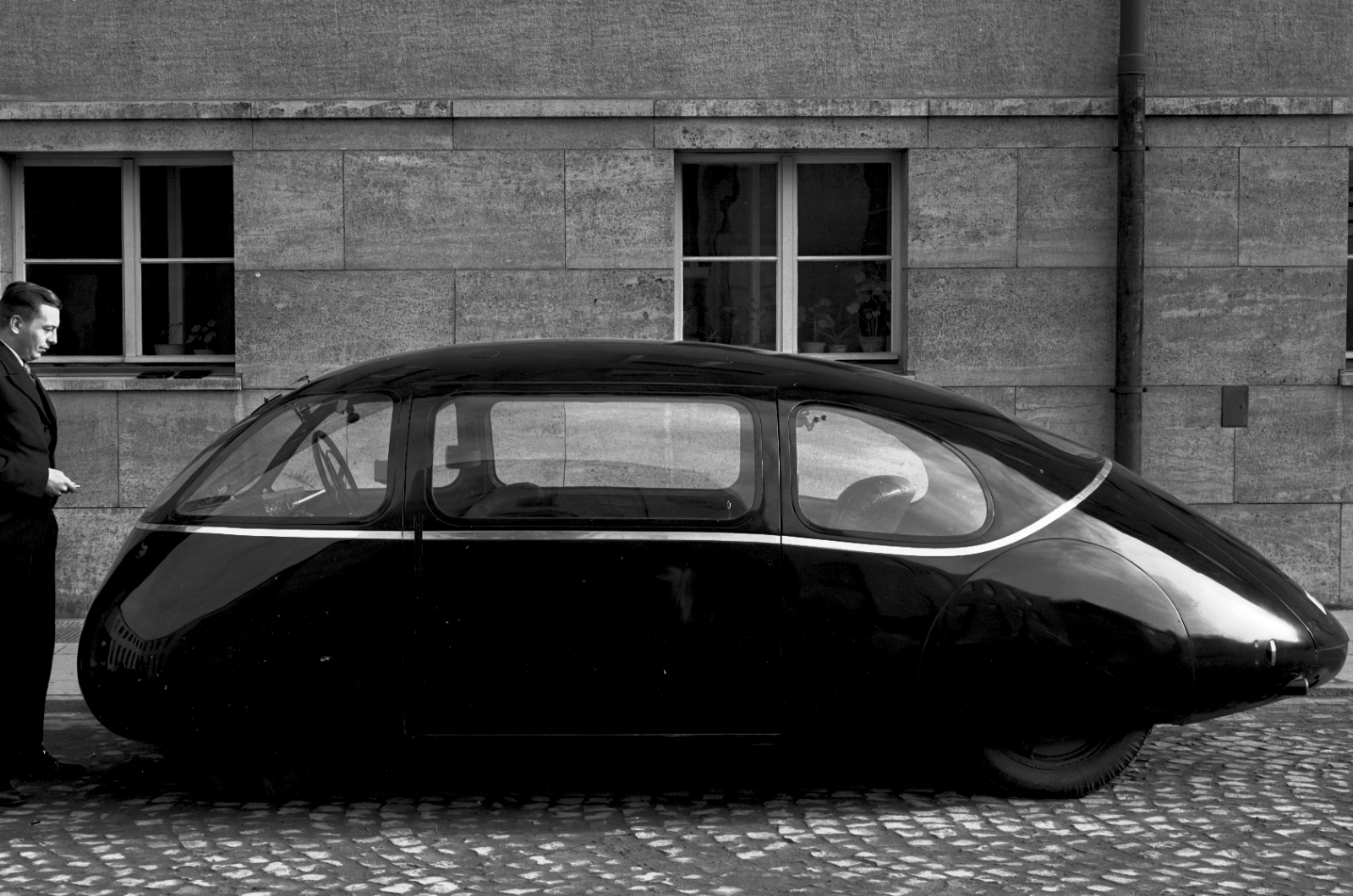
While it looks like something Area 51 would take interest in, the Schlörwagen was the vision of Aerodynamic Research Insitute engineer Karl Schlor. One functioning car was made, which used a Mercedes 170H chassis. The aluminium bodywork was built by the Ludewig Brothers who were also known for their bizarre Opel Blitz-based ‘Aero’ bus of 1938.
The Schlörwagen had a drag coefficient of just 0.186 in its working form and achieved a top speed of 84mph, which was slightly faster than the 170H. It was revealed to the public at the Berlin Motor Show, sadly labelled as ugly by the public and later shelved due to the Second World War.
Kleinschnittger F125 (1950)
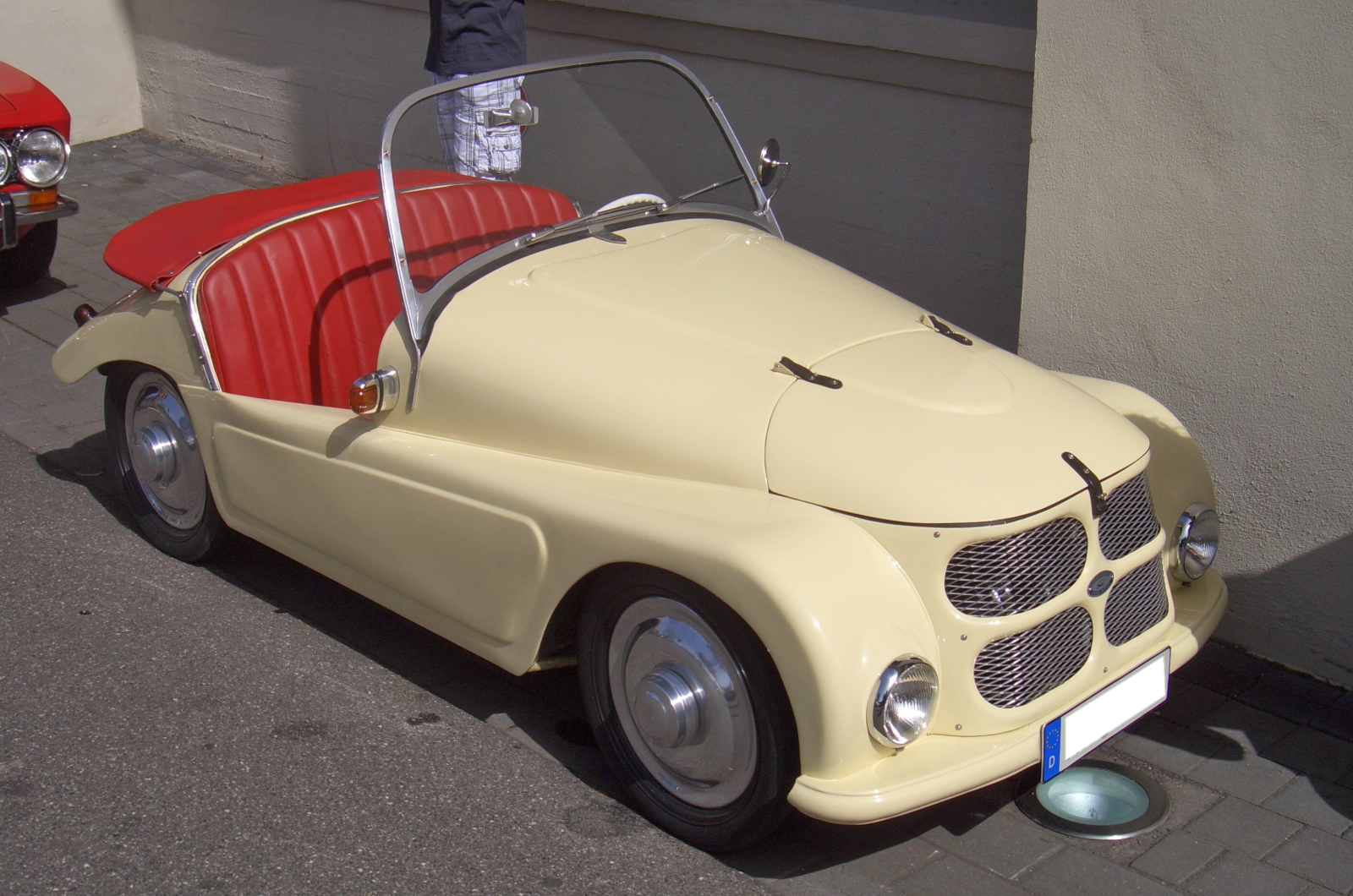
The F125 was tinkerer Paul Kleinschnittger’s creation. After the war he made a prototype from recycled metal, bicycle wheels and parts from old airplanes. By 1949, it was ready and included a windshield from a crashed fighter plane. A German businessman saw appeal in Kleinschnittger’s design and financed a small factory.
The prototype wasn’t quite big enough, however, and the F125 had to be redesigned. During early production, their aluminium bodies were sourced from army surplus cooking pots that had been hammered flat in a bid to save costs.
Hoffman (1951)
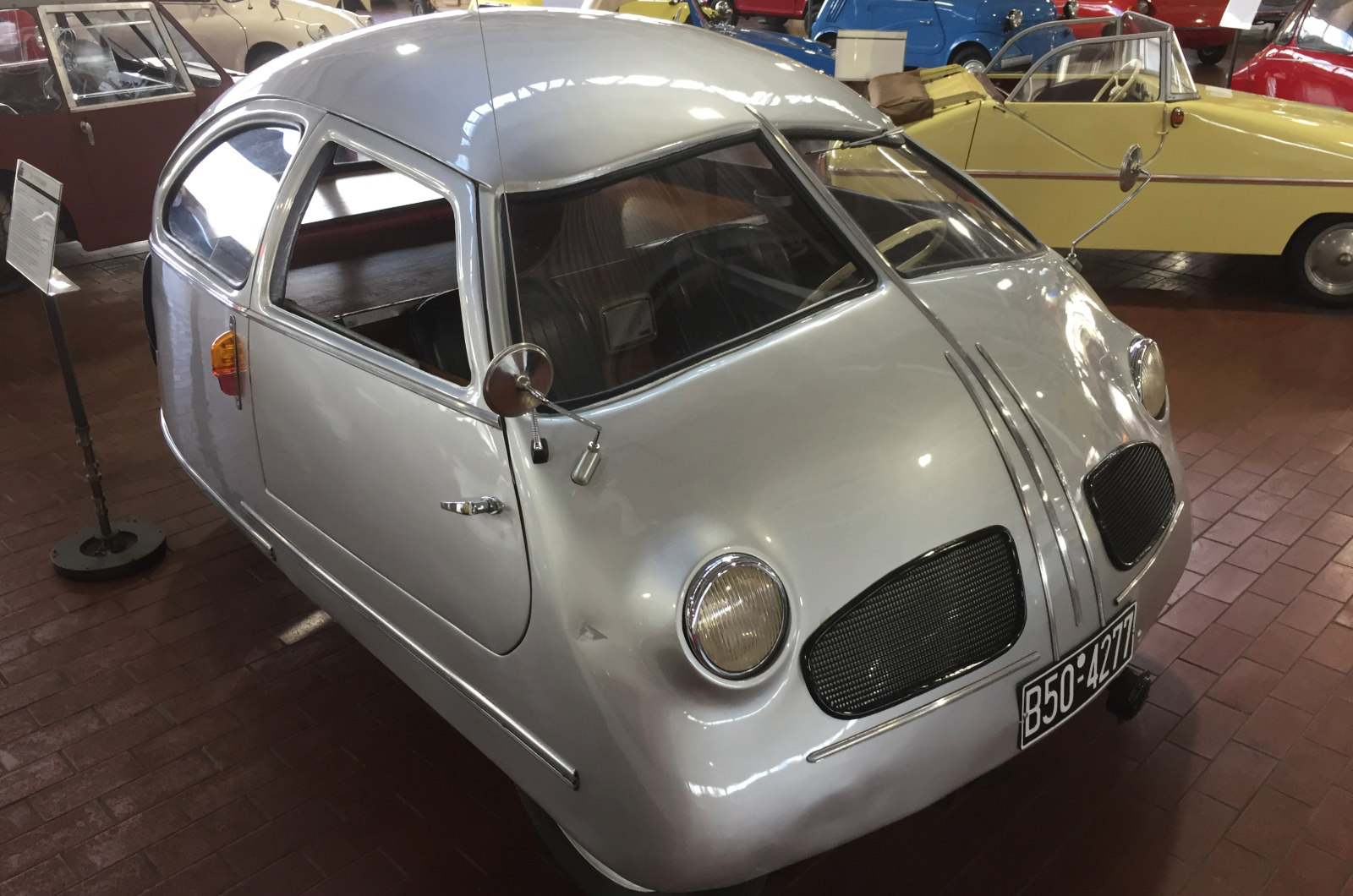
Michael Hoffman, a shop foreman from Munich, had an idea to build his own car after the Second World War. It featured rear-wheel steering and was built mostly from junkyard scrap and hardware parts. His idea was simple: three wheels and a tiny engine meant that it was tax free and no driving license was required to drive it.
Its oddball shape was due to the girthy mechanicals. A large rectangular frame housed the motor, a complex lever system was used to steer it, and it was incredibly cramped inside. The design never caught on, and he stepped away from designing cars. Only one was ever made, and you can see it at the Lane Motor Museum in Nashville, Tennessee.
Mercedes-Benz 300 SL (1954)
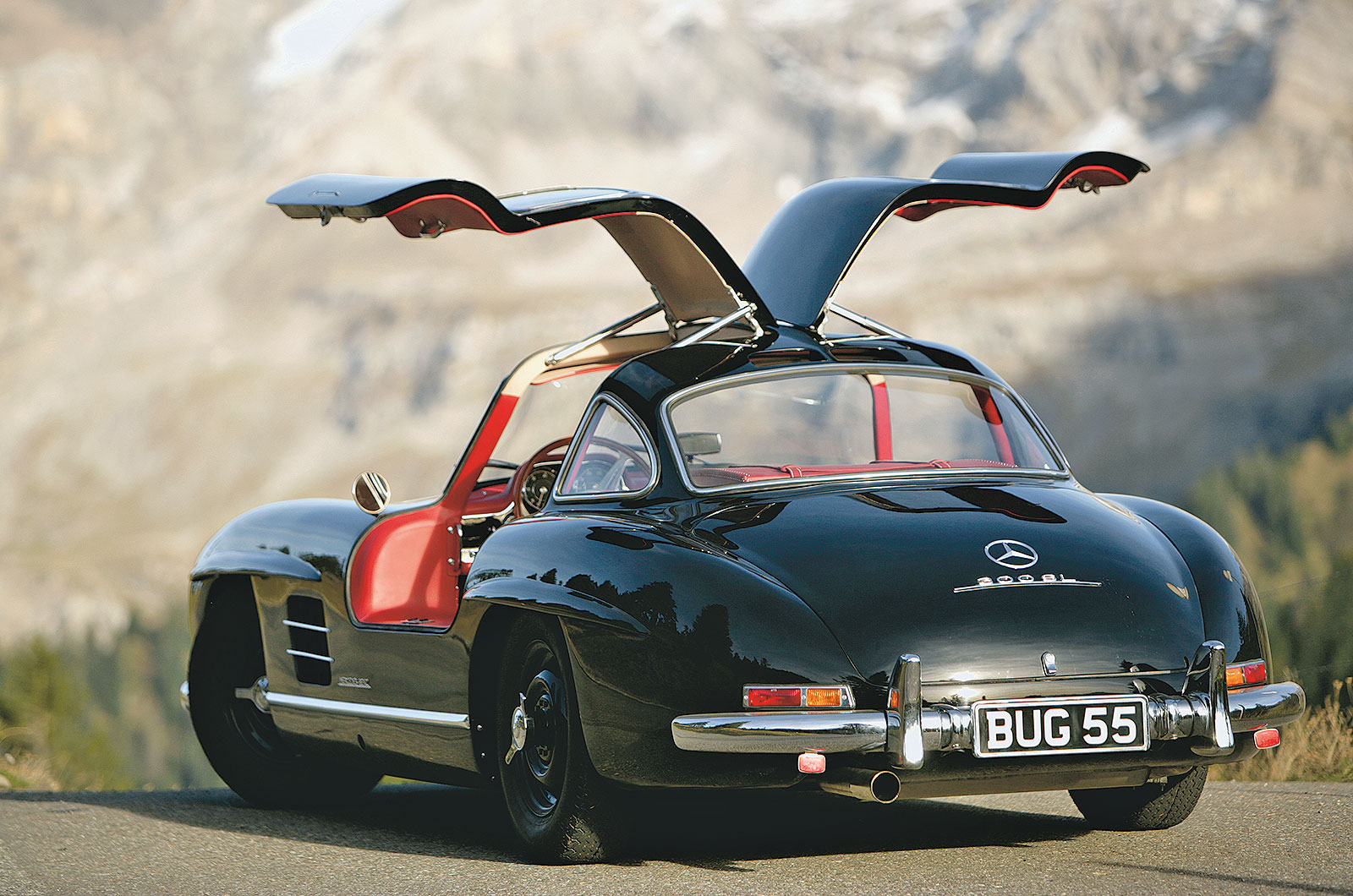
Rudolf Uhlenhaut joined Mercedes in 1931, becoming the leader of the race car department in 1936. Being an engineer, his skills were used to help replace the Mercedes-Benz W25 Grand Prix racer, and the Mercedes-Benz W125 successor was born shortly after. After the war Uhlenhaut returned to Mercedes, where he designed the tubular frame for the W194 300SL racer, and in 1955 he created the Uhlenhaut 300 SLR, which would become the world’s fastest road legal car.
His W194 design would inspire Friedrich Geiger’s beautifully unusual 300SL gullwing. The Uhlenhaut 300 SLR would influence the more modern Mercedes-Benz SLR McLaren supercar, while the Mercedes SLS AMG would take inspiration from the 300SL.
Brutsch (1954)
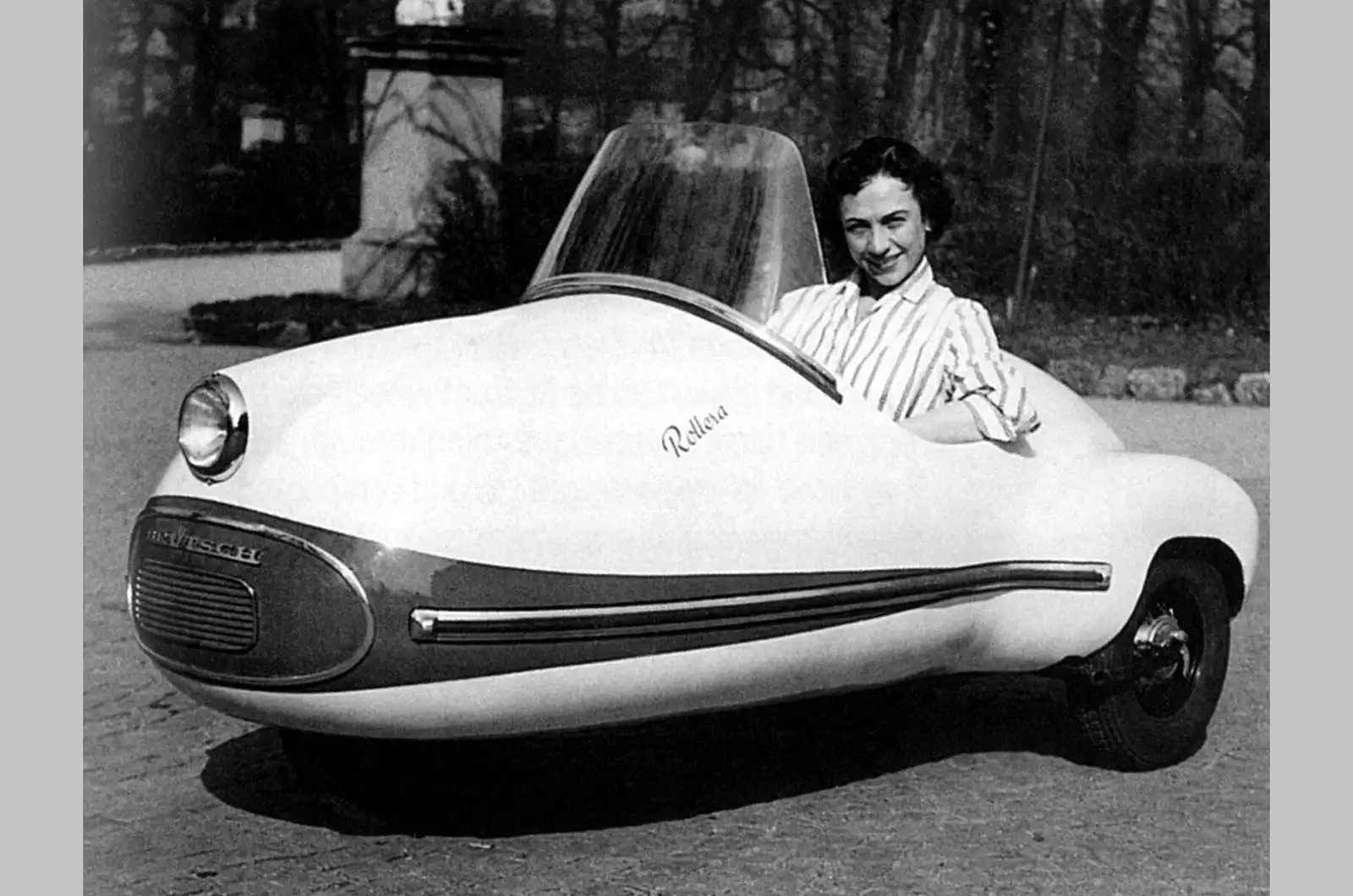
Brutsch was known for building wacky microcars, but it would only produce small numbers of its designs. In 1954, designer Egon Brutsch built the 200 “Spatz” — a three-seater, three-wheeled roadster. The car was ready for production, but the design was riddled with faults, such as the suspension being attached directly to the fibreglass body shell.
This meant that the intended production car, the Spatz Kabinenroller, had to be redesigned. There were various three-wheeled renditions over the years, but in 1956 the egg shaped Mopetta arrived. Its shape became incredibly popular, which led to shed dwellers building modernised replicas.
Fuldamobil NWF 200 (1954)
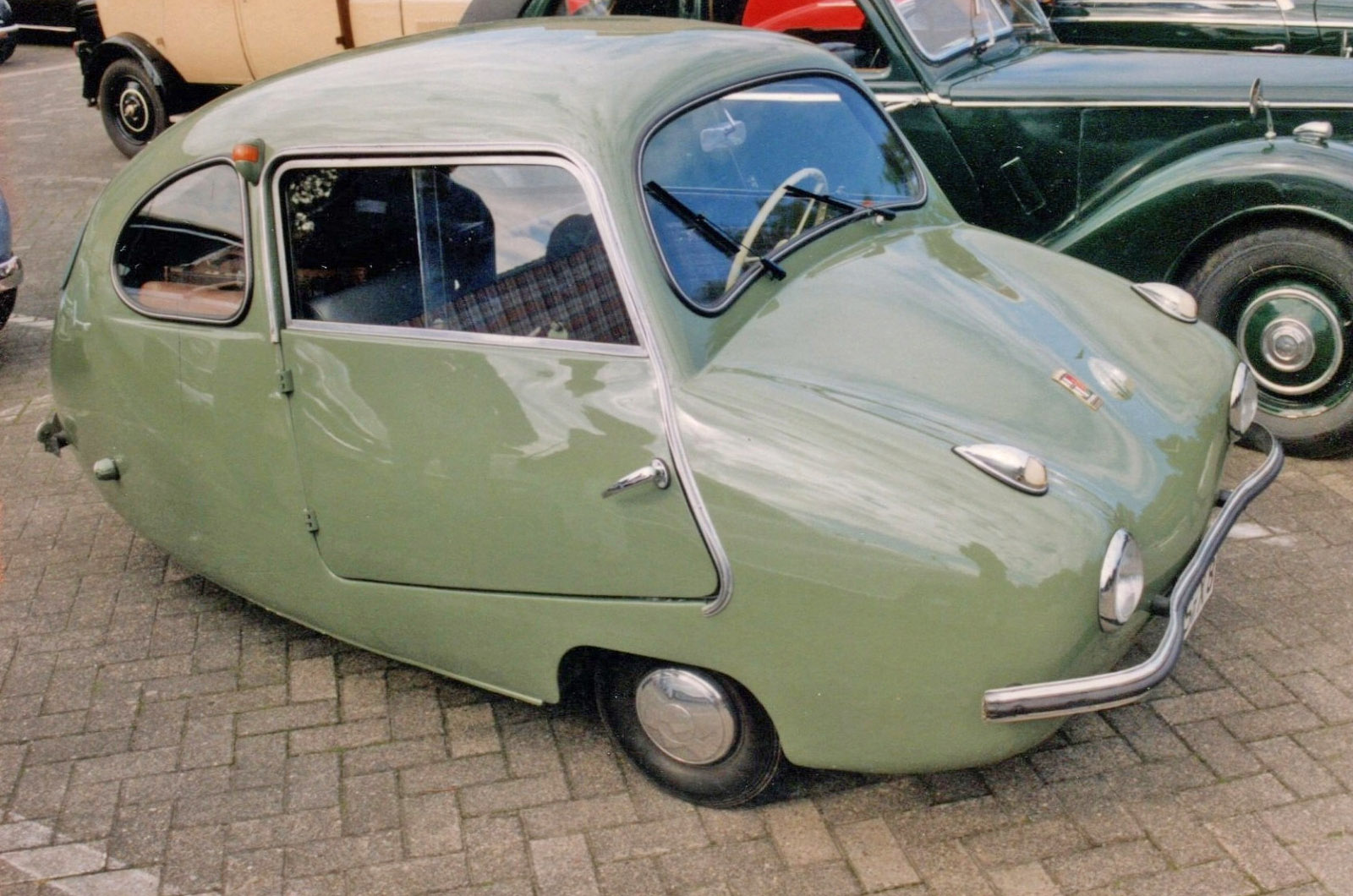
The NWF 200 fell into the BMW Isetta microcar category but was slightly larger. Its off-the-wall pig-like design featured rear-hinged doors and a rear “engine” hatch with a window — almost like what you’d find on a Lamborghini! The NWF 200’s design was the concept of freelance journalist Norbert Stevenson.
Stevenson had few formal qualifications in auto design but his idea was simple: create a car that was slightly bigger and more stable than a bubble car, and it was driven by a small engine at the rear.
Messerschmitt KR200 (1955)
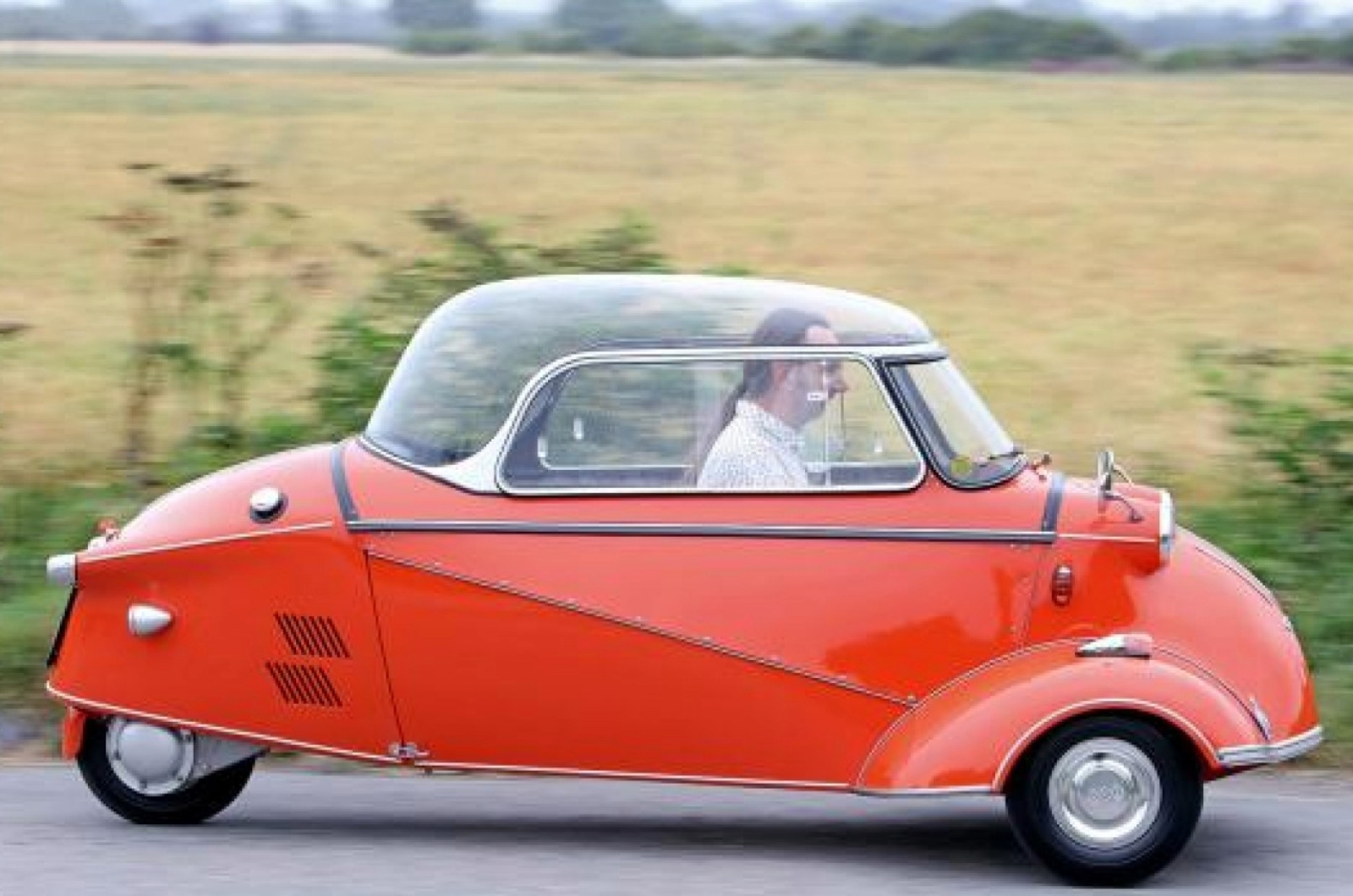
When looking at a KR200, you probably can’t help but notice its aeroplane-like canopy. This is because the KR200’s designer, Fritz Fend, was an aeronautical engineer. Fend was known for designing such canopy microcars before the KR200. It all started in 1948 with the Fend Flitzer, an engine-driven, easily accessible carriage for the many disabled people created by the world war.
It became apparent that many Flitzer buyers were not disabled but simply sought cheap transport. This then led to the two-seater Fend 150, the KR175 and eventually the KR200. The KR200 was re-engineered from the KR175 to house new mechanicals. 1957 saw the introduction of a convertible guise before production ended in 1964, and Messerschmitt returned to the aircraft industry.
Heinkel Kabine (1956)
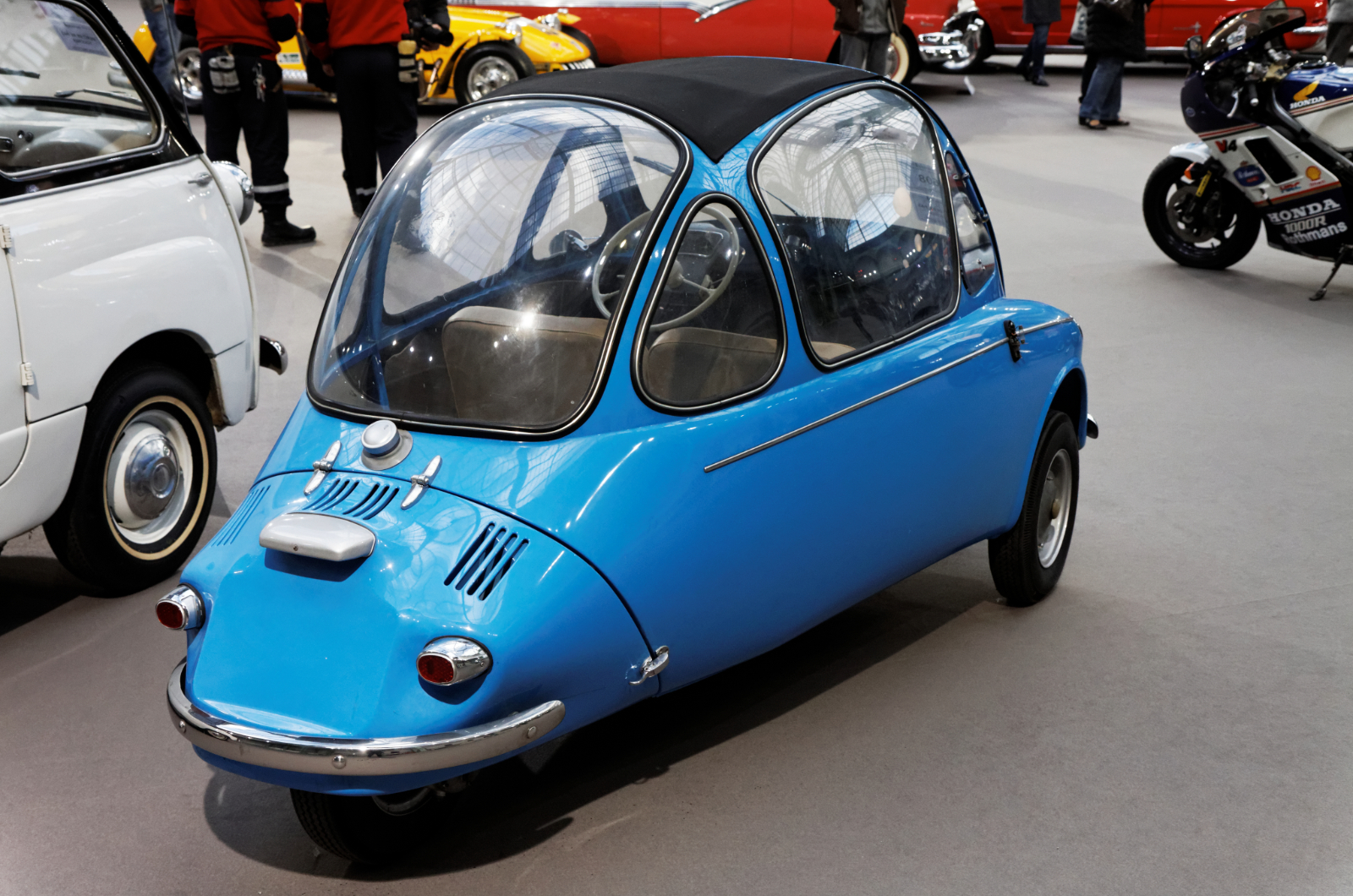
Another oddity during the bubble car craze was the Kabine, which was designed by former German aircraft company Heinkel Flugzeugwerke. Like Messerschmitt, the company realised that there was a thirst for affordable transport.
What made the Kabine so unusual was that it had a reverse gear and the fabric roof served as an escape hatch, should the front door become jammed in a crash. To avoid angering BMW with its Isetta, the Kabine’s steering wheel never hinged outwards when the door was open, thus avoiding a patent war.
Goggomobil TS Coupe (1957)
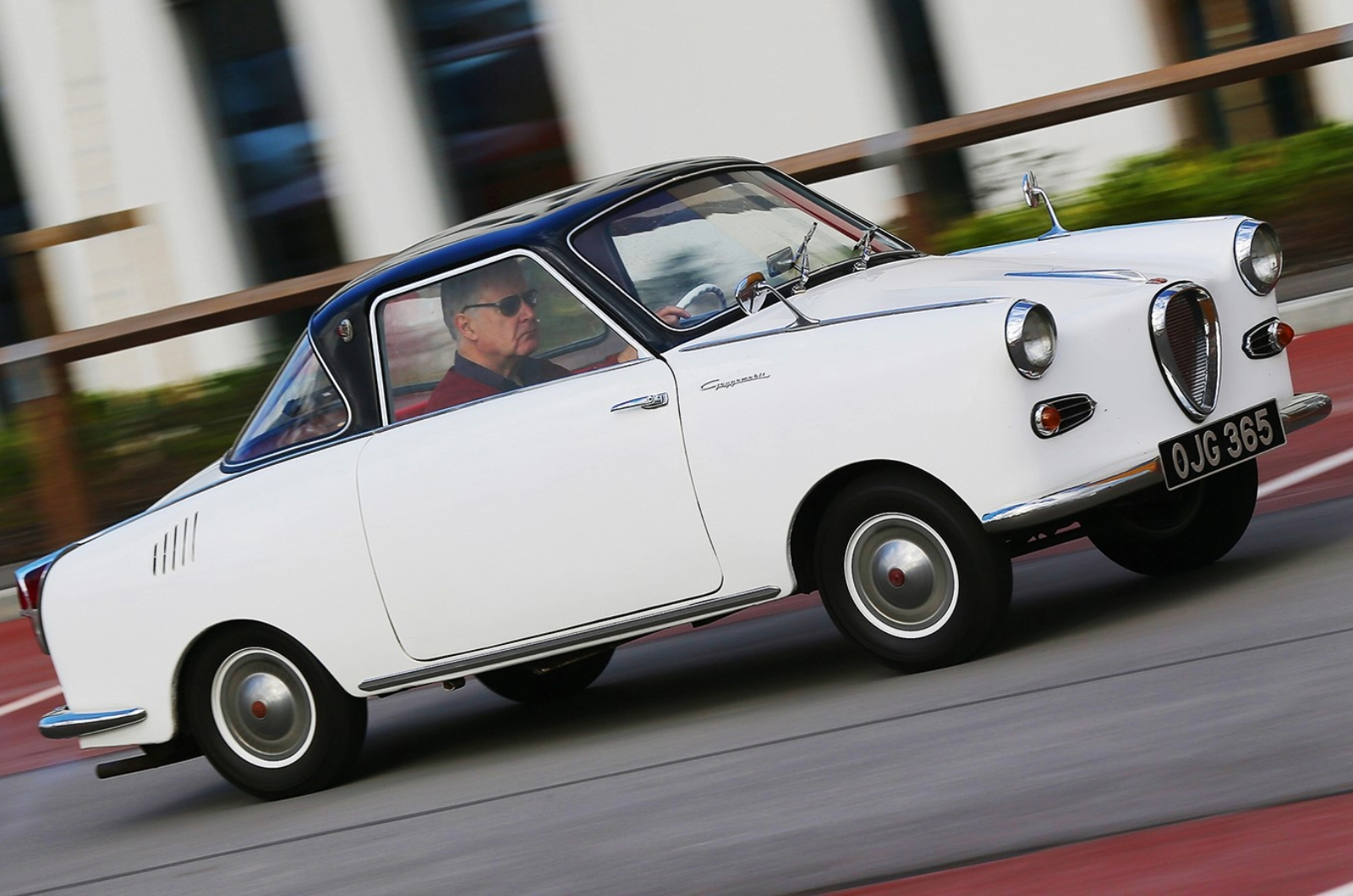
Sometimes, a quirky name correctly suggests an outlandish design, and such is the case with the TS Coupe. Hans Glas, the Goggomobil creator, was known for agricultural equipment before shifting to cars. Its first car was the compact T250 in 1954 (T sedan), and then the pricier TS coupe arrived in 1957.
The TS Coupe and its dinky dimensions were odd, but it was highly successful because of its size. The design carried on until BMW bought the company in 1966, aiming to gain access to Glas's patents.
Zundapp Janus (1957)
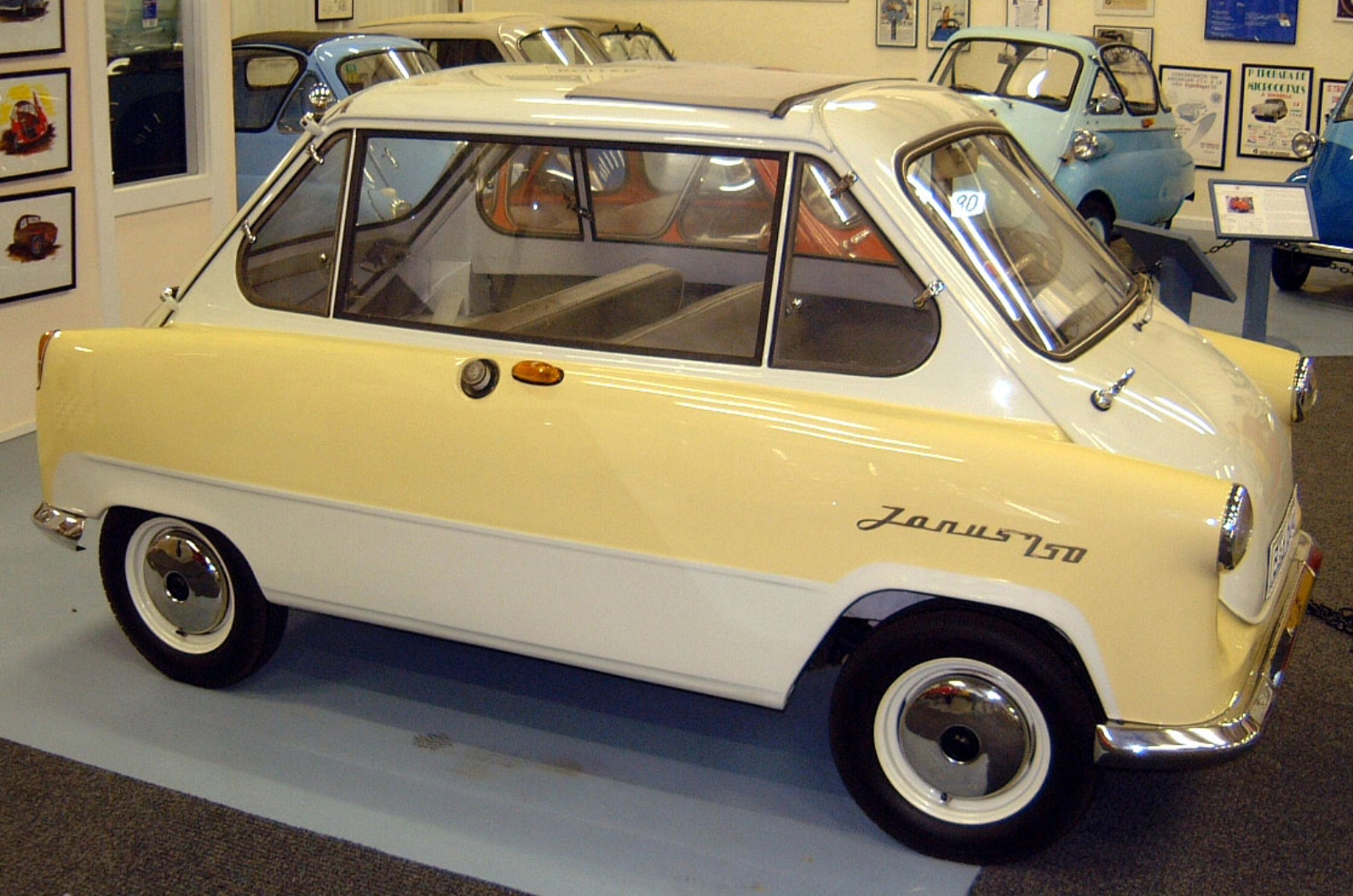
From the front, the Janus looks a bit like BMW’s Isetta, but from the side you’ll see less similarities. Zundapp was a motorcycle manufacturer, and in 1956 its focus turned to producing a ‘quality bubble car’. Aircraft designer Claude Dornier, mostly known for designing the Dornier Do X flying boat, was hired to envision the Janus.
It had two doors, one at the front and rear, and it could seat four people, although the rear bench faced backwards. 6900 were made before production seized in 1958. Its main design flaw was its poor handling: the engine was too light and the centre of gravity shifted depending on how many passengers were on board.
Amphicar (1960)
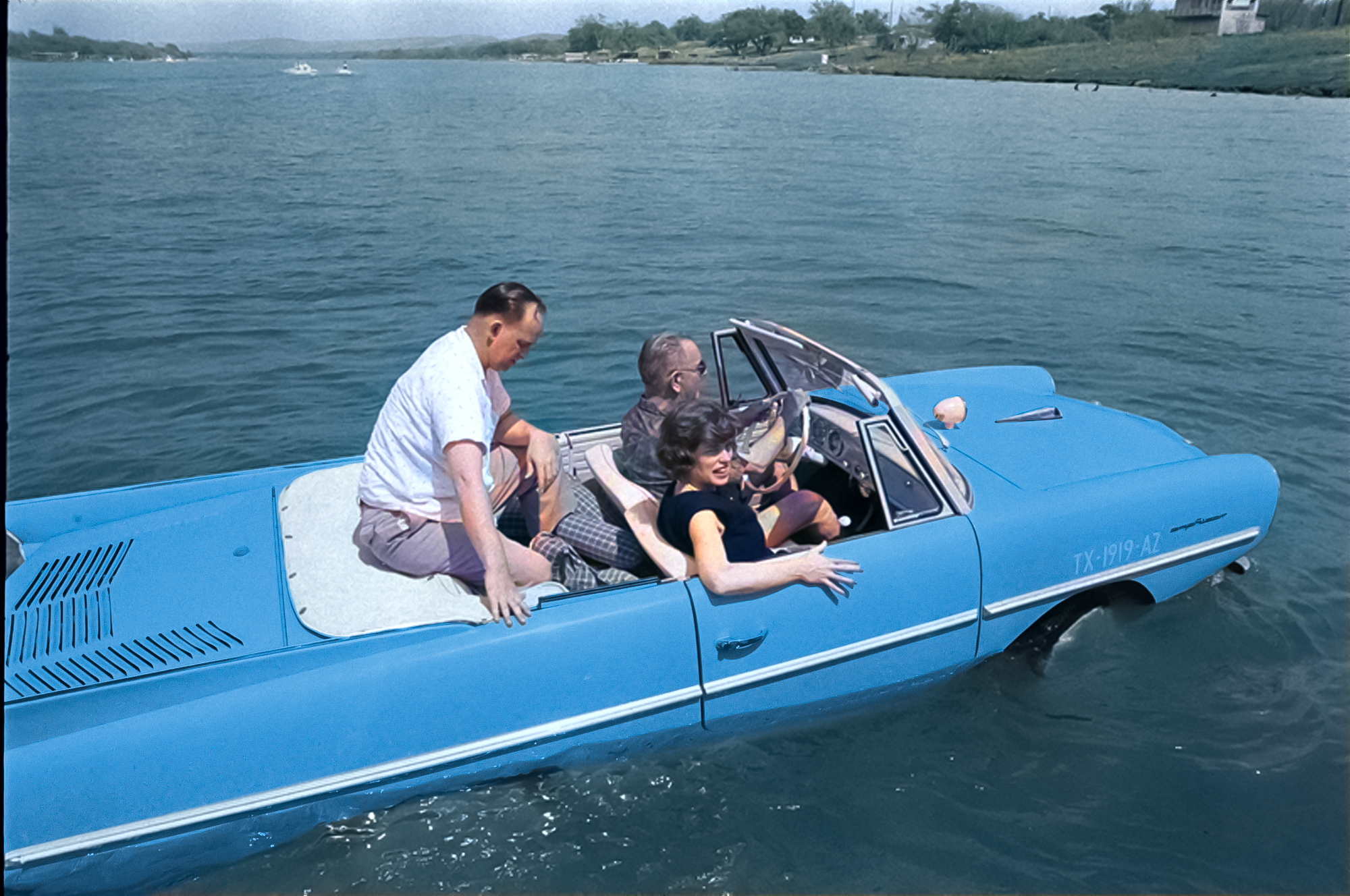
With the Amphicar, industrial designer took inspiration from the Volkswagen Schwimmwagen, an amphibious military vehicle used in the war. It used a Triumph Herald 1200 engine mounted at the rear; the same engine drove a pair of propellors.
3878 were built by a company owned by the Quandt family, which is best known today for its controlling stake in BMW. One famous celebrity owner was US president Lyndon Johnson (pictured); he would terrify passengers by pretending the brakes had failed before driving into a lake at his ranch in Texas.
Volkswagen Type 181 (1968)
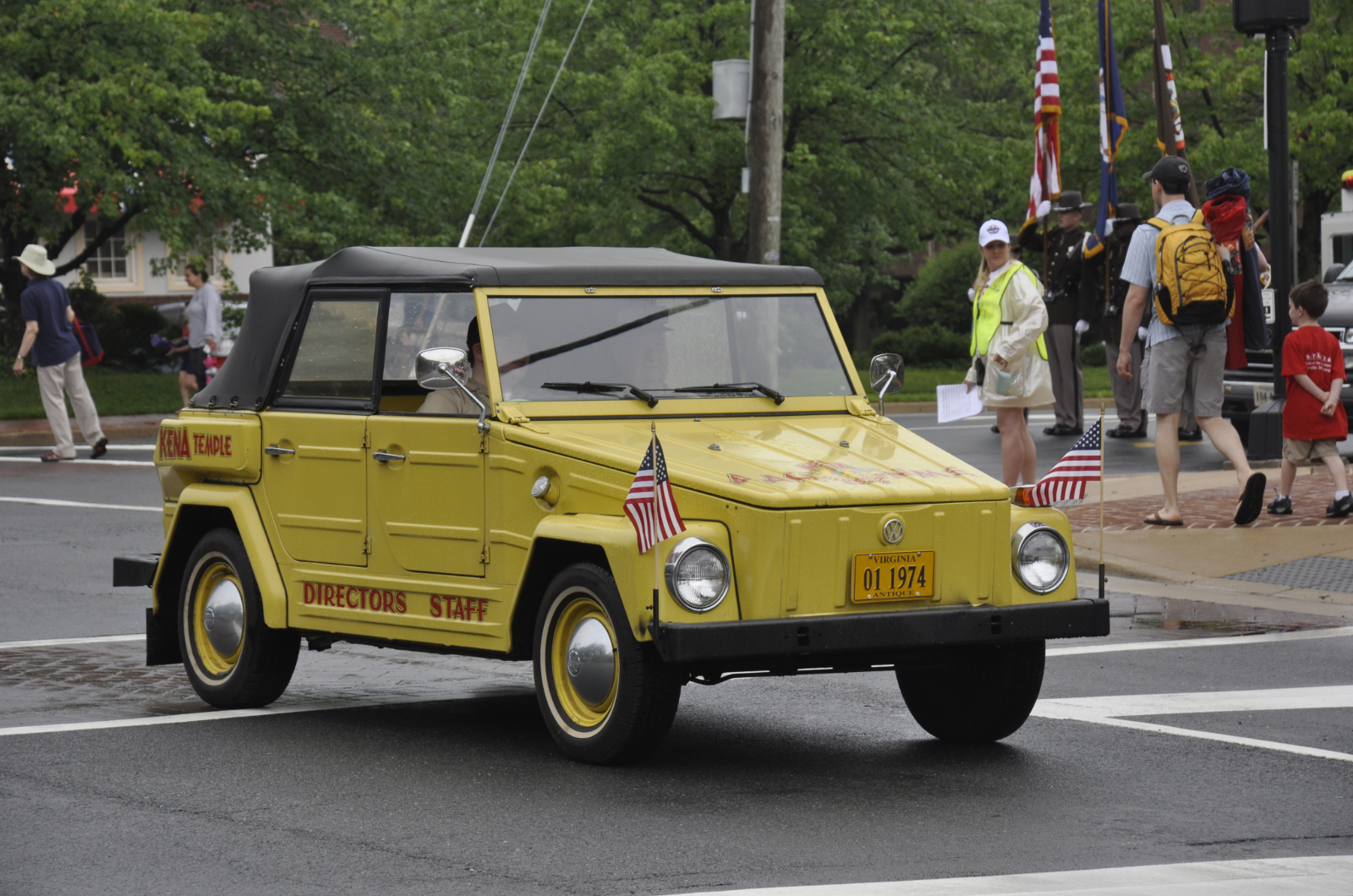
The Type 181 was given various names such as the Trekker, Type 181 and more appropriately, the Thing. It’s unclear who at Volkswagen was directly responsible for the 181’s design, but it was originally developed for the West German Army. It was made using floorpans from a Karmann Ghia and rear suspension from a split-screen camper. A civilian guise was also readily available in a variety of bright colours.
Melkus RS1000 (1969)
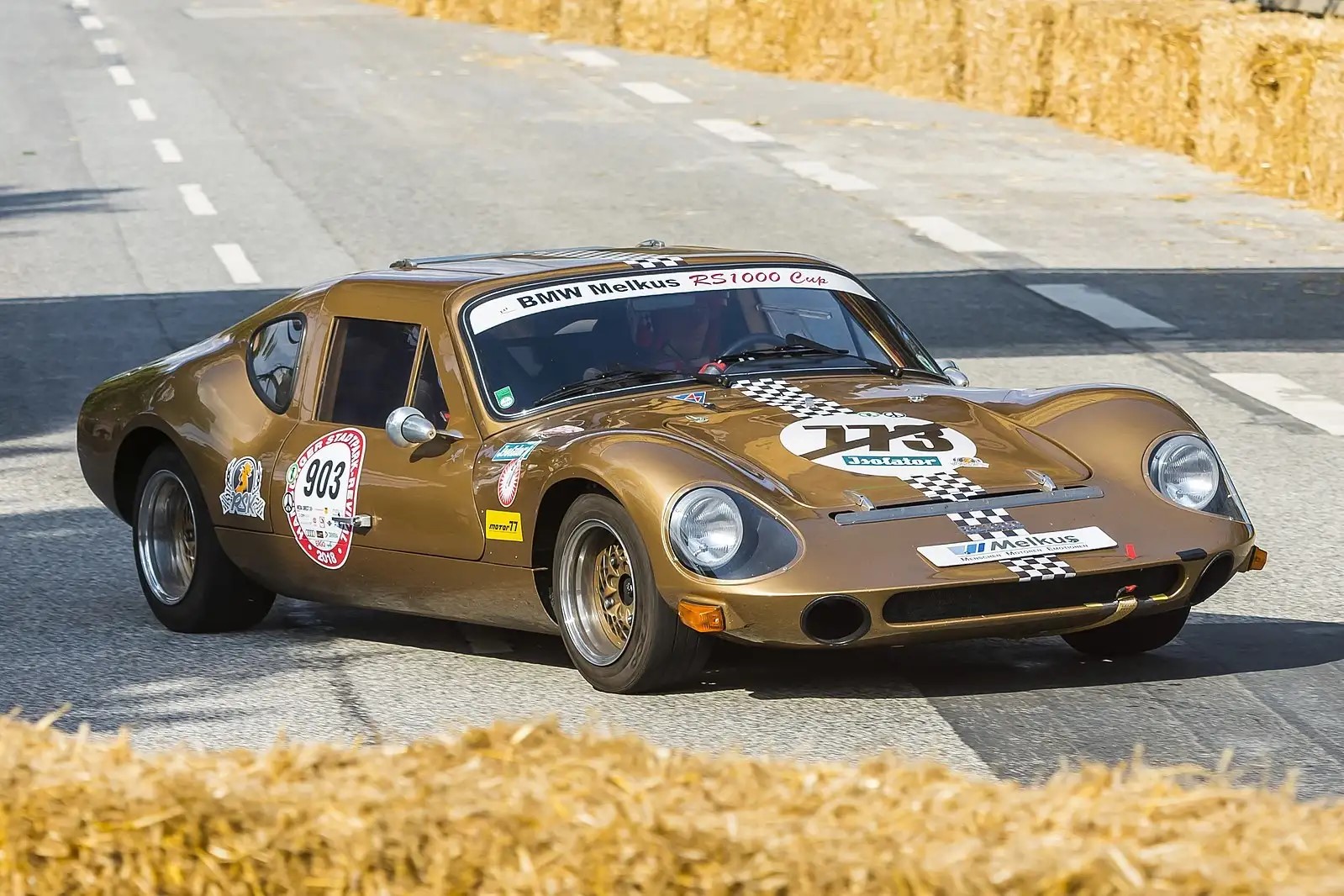
Emerging from Soviet-occupied Germany, the RS1000 was the brainchild of designer and racing driver Heinz Melkus. Melkus took great inspiration from the Ferrari 250 GTO for the RS1000, although the latter's 1.0-litre powerplant would, of course, be no match for the Italian stallion. Melkus began designing cars in 1951 using Volkswagen chassis but over the next three decades, until 1986, he designed and produced many single-seater and sports car models.
The RS1000 design was eventually shelved, until 2006, when the son of Melkus announced a re-launch named the RS2000. It was produced from 2009 till 2012, and while it retained some of the RS1000’s features, it had a more Lotus-like physique.
BMW M3 ute (1986)
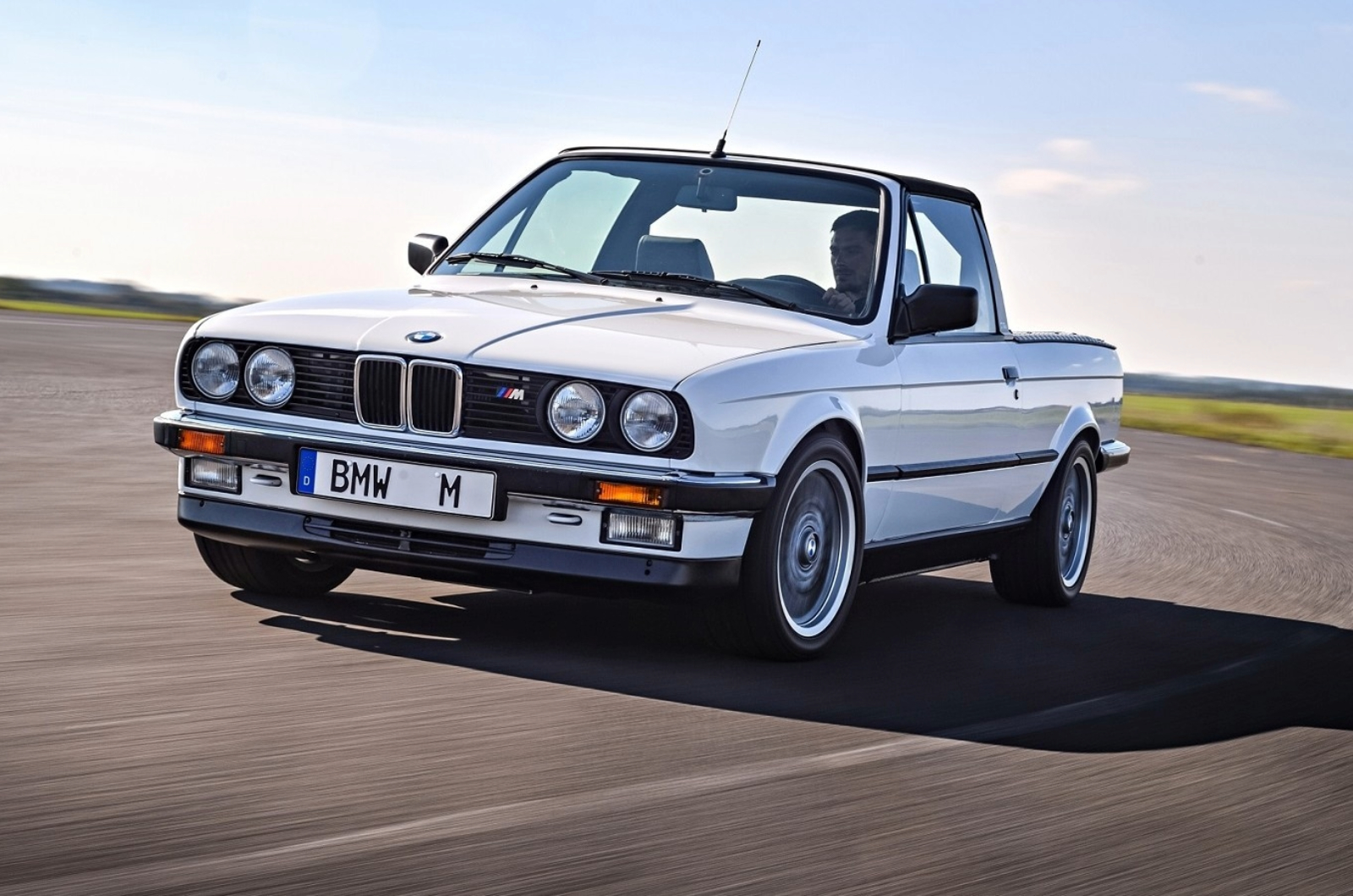
The E30 M3 is a car that’s loved by many, but BMW’s M division secretly made a pick-up guise in 1986. The M engineers thought that the M3 would be a great part hauler at their campus. A convertible 3 Series was soon grabbed, chopped and eventually given the S14 heart from the original M3.
It started off in life with a 192bhp engine and the M division used it for 26 years before retiring the ute in 2012. While it never went into production, it started a BMW ute craze, which saw both the E39 M5 and E92 M3 receive the pick-up treatment from adoring fans.
Isdera Spyder 036i (1987)
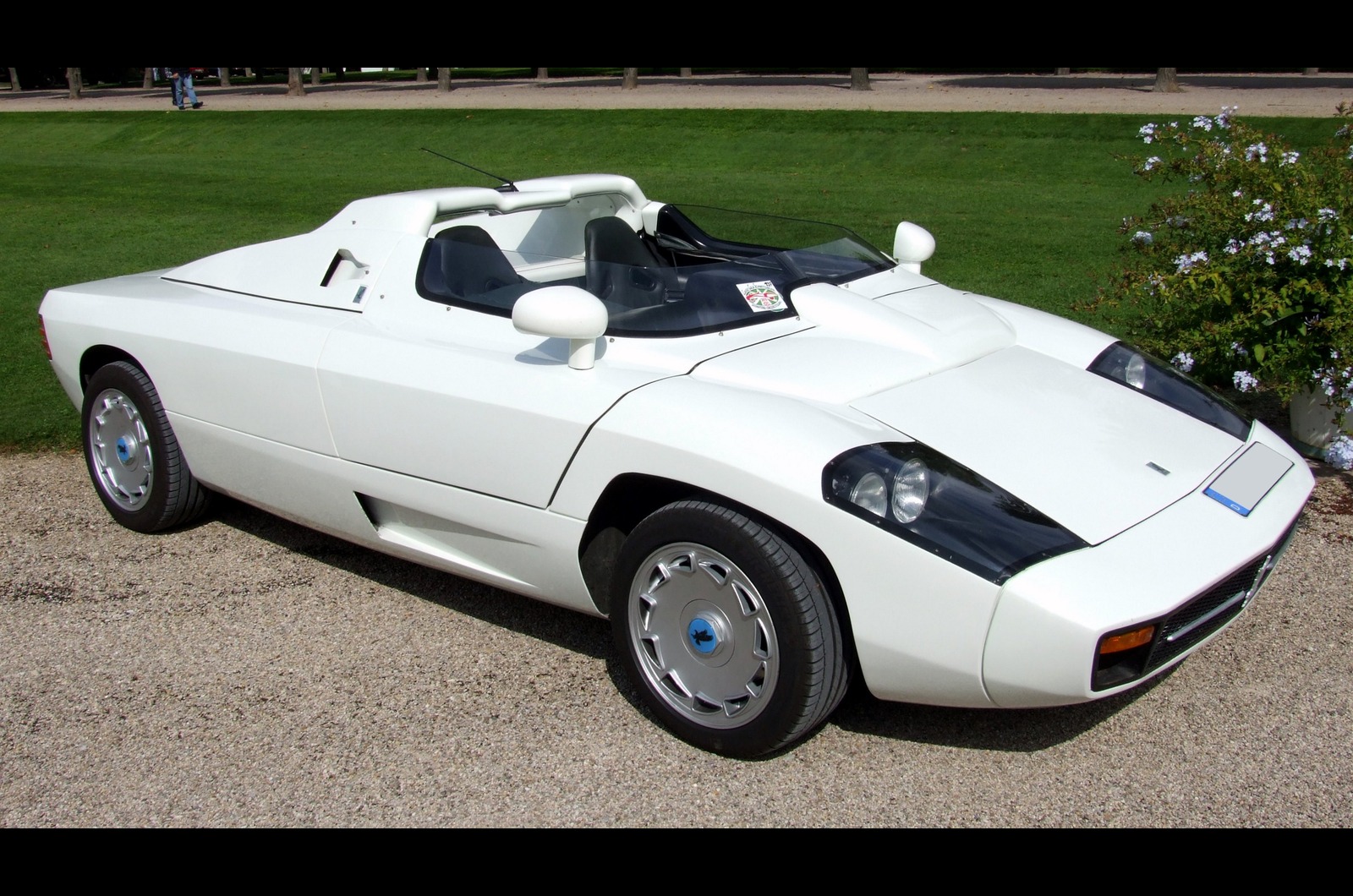
The 036i may look like a concept, but 14 of these unconventional machines were made. Designer Eberhard Schulz originally designed his own sports car, the 1969 Erator GTE, which impressed Porsche and got his foot through the doors. Schulz began working on his second concept in his free time while under Porsche — a car that would mimic the Mercedes-Benz 300SL (the CW311).
After meeting tuner Rainer Buchmann, Schulz and Buchmann created B&B GmbH and Co Auto KG. The concept was then shown to Mercedes who knocked it back, Schulz then left B&B and took his design to his new company, Isdera. The 036i sat on the CW311’s platform but in open-top form.
BMW Z1 (1989)
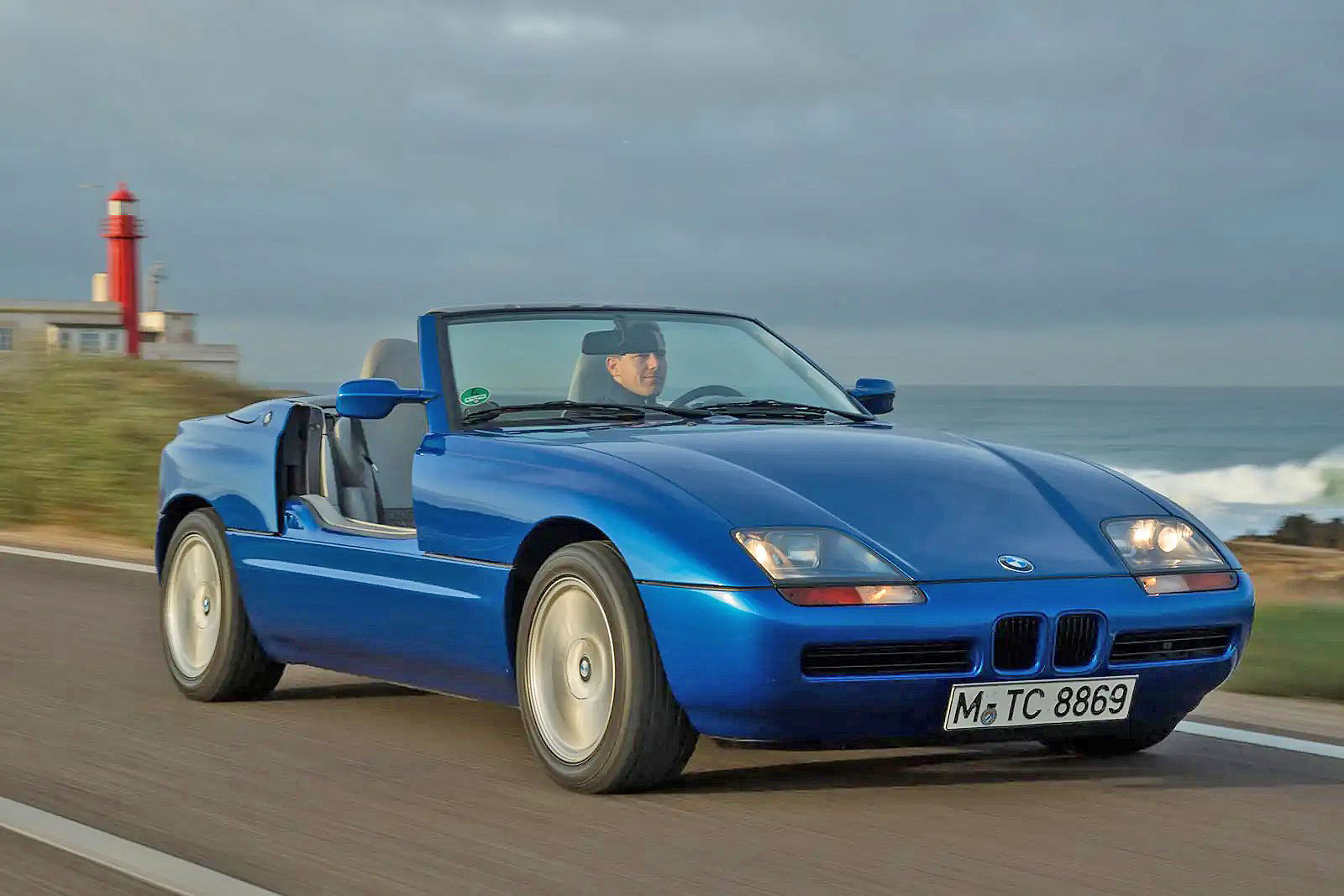
It was peculiar, and still is — few people understood how the Z1 executed its ‘disappearing door’ act. In addition, the Z1 also came with plastic body panels, which could be changed from red to blue using a screwdriver in under an hour. Harm Lagaay was the Z1’s lead designer and was known mostly for his work at Porsche — he led the Carrera GT design team, but also worked for Simca in the late 1960s.
The Z1 was never intended to be built as a full series production car - it was built for just two years - but instead to let BMW explore new ideas. Its low-slung design would eventually be carried on to the Z3.
Volkswagen Futura (1989)
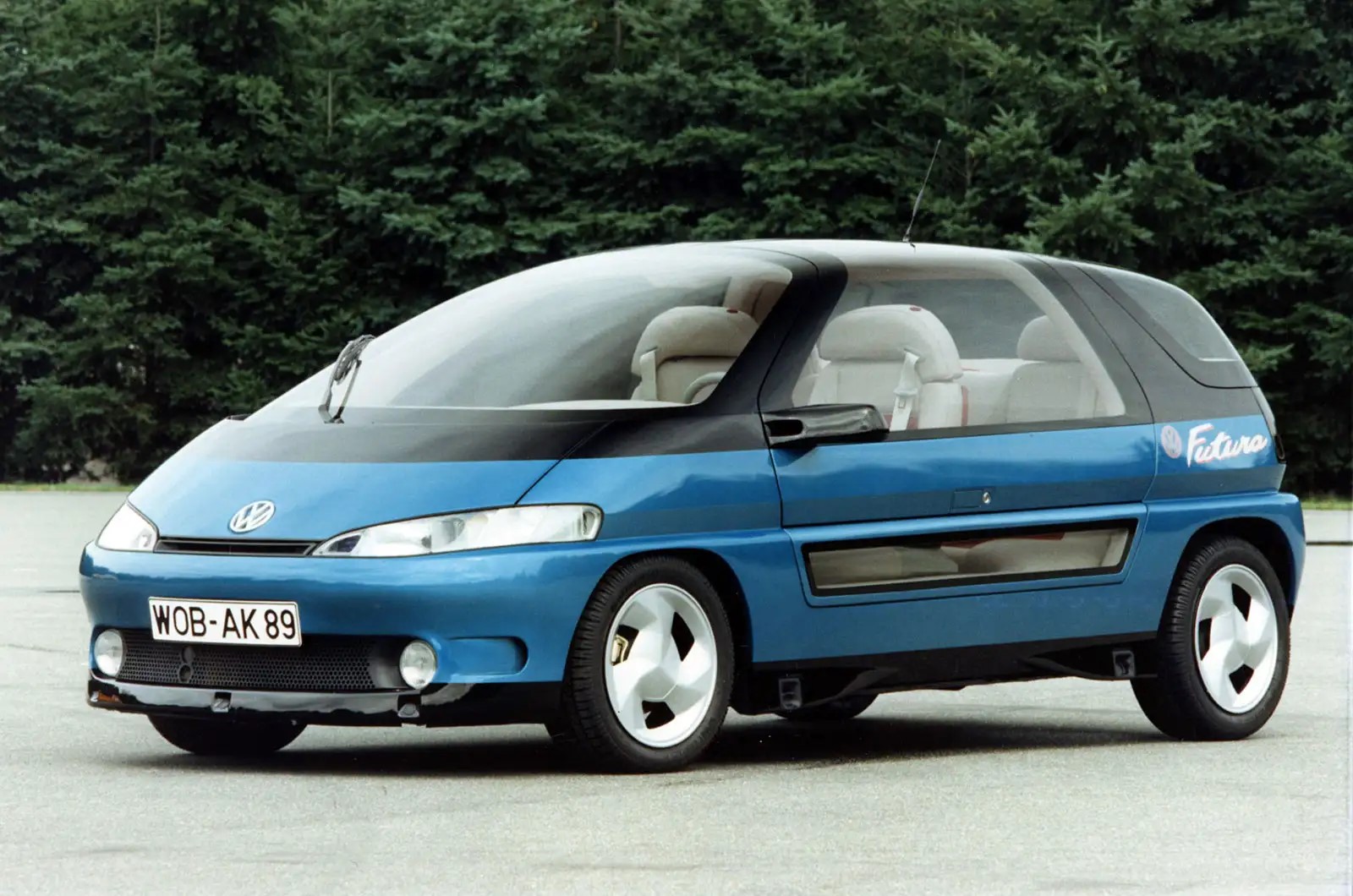
Volkswagen ID 3s have been about for a while now and still sit high in many review lists, but it’s believed that their styling is derived from the Futura — a concept van from the late ‘80s. It’s not clear who in Volkswagen designed the Futura, but they clearly had a vision of the future, hence the name.
It fell under the Integrated Research Volkswagen (IRVW) division, and despite its EV looks, it featured an 81bhp 1.7-litre petrol powerplant. All four wheels steered, and it had gullwing doors — none of which sadly made it to the ID 3.
BMW E1 (1991)
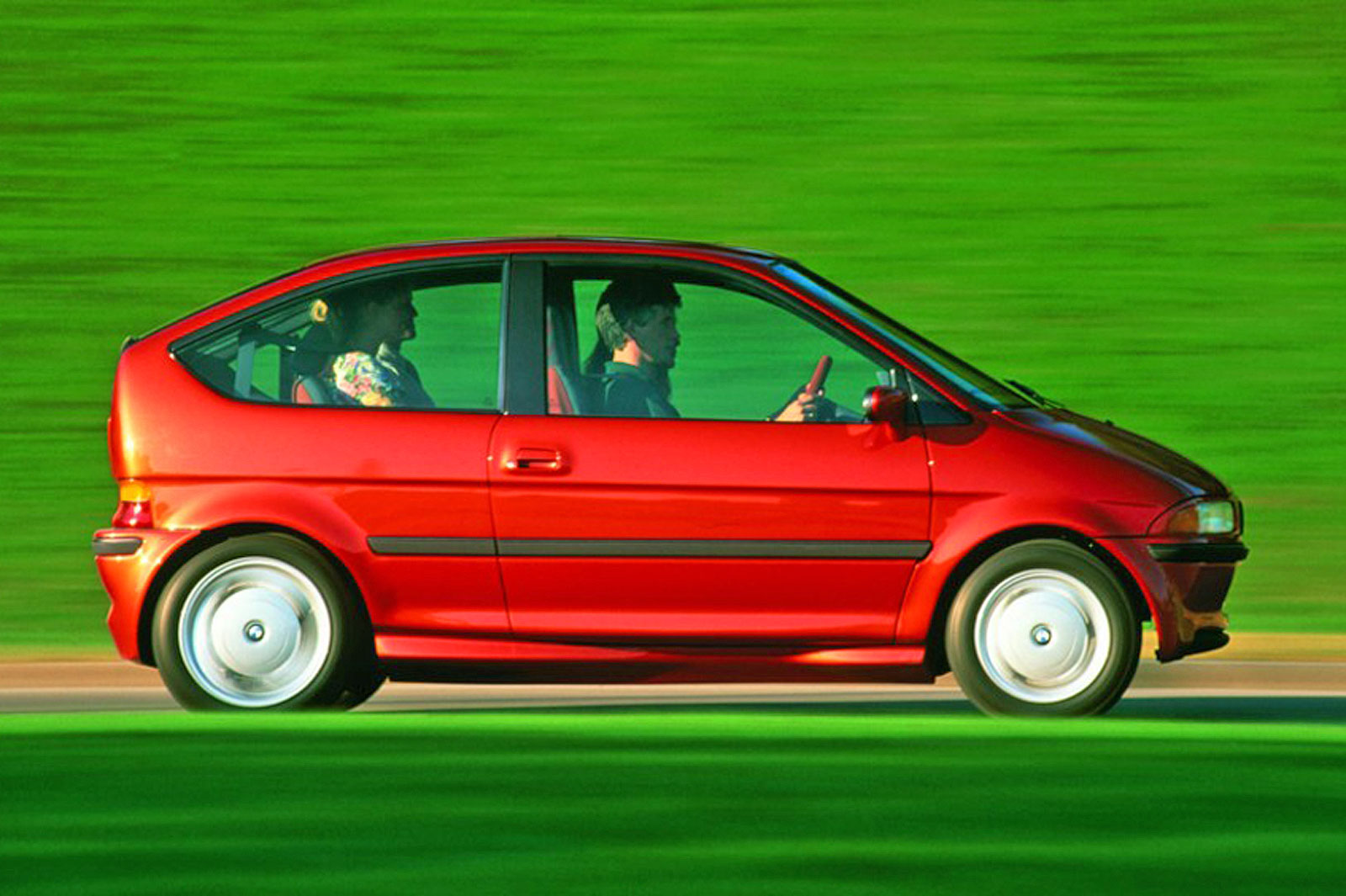
Its dimensions were nearly the same as modern day Fiat 500, but its shape and styling are more comparable to the Audi A2. BMW has been in the EV game since 1972 and the E1 might have stomped any competition in the early 1990s with its 155-mile range. The designer behind this was Mark D Clarke. He previously assisted in the BMW Z1 project and eventually moved on to Porsche as an Assistant Chief Designer where he had input in the Porsche Carrera GT and Porsche 987 Cayman styling.
The first E1 concept was destroyed in a charging fire and it was succeeded by a second-generation concept. While BMW never produced the E1 for customers, it inspired the 1993 3 Series Compact.
Wiesmann MF30 (1993)
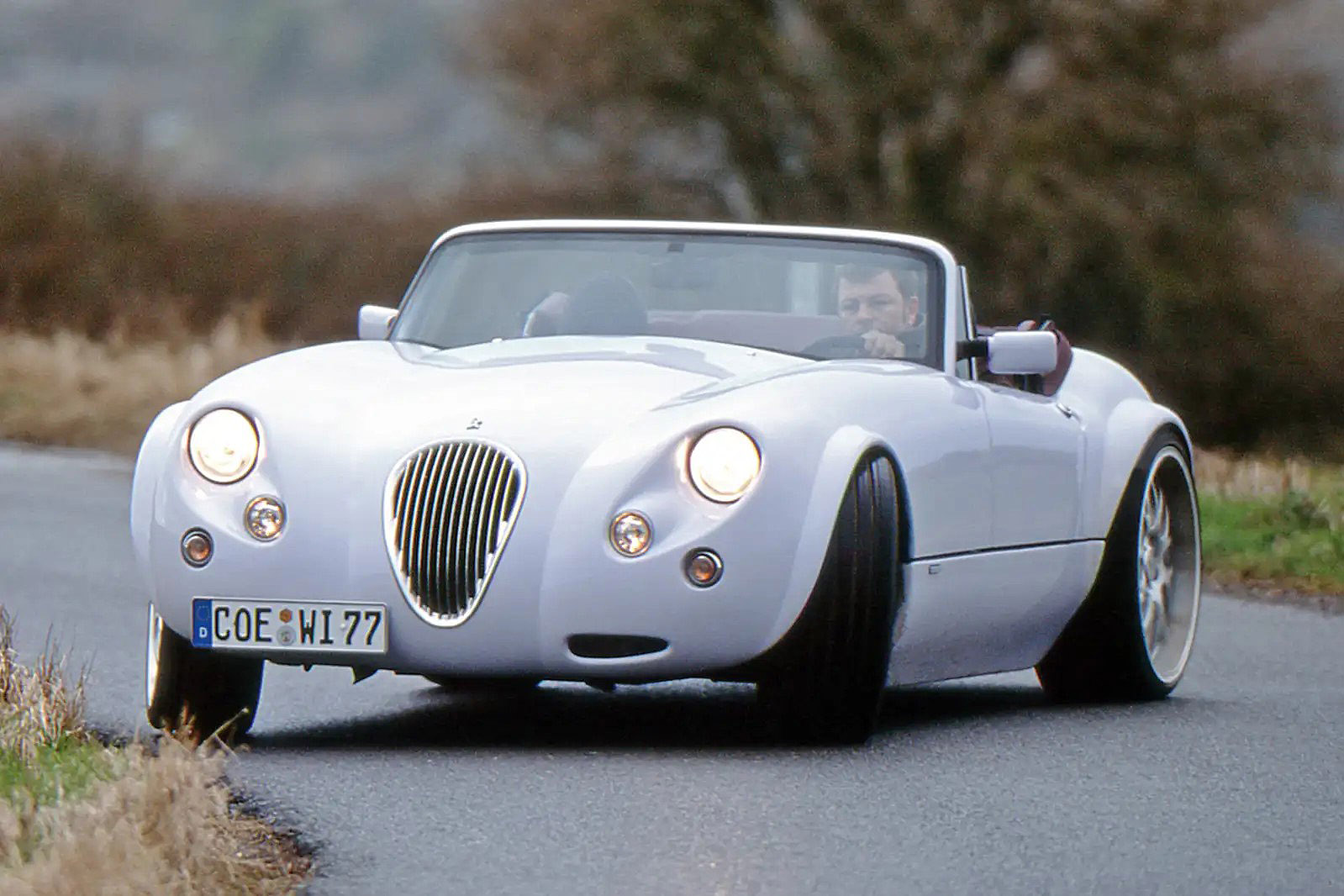
Brothers Martin and Friedhelm Wiesmann decided to design their own sports car after attending the 1985 Essen Motor Show. They decided their car would be a fusion of British sports car looks backed by German technology; as the car would stick to the road therefore the only suitable logo design for the company was a gecko. By 1993, the MF30 arrived, and over the years the shape would cement Wiesmann’s identity.
The MF30 was later retired for the MF3, followed by the MF4 and the MF5. A Spyder concept was teased and it would be the last with the ‘classic’ shape. The company closed in 2014 but was purchased by a UK-based investor. Weismann announced in 2022 that it would focus on the electric sports car market.
Porsche C88 (1994)
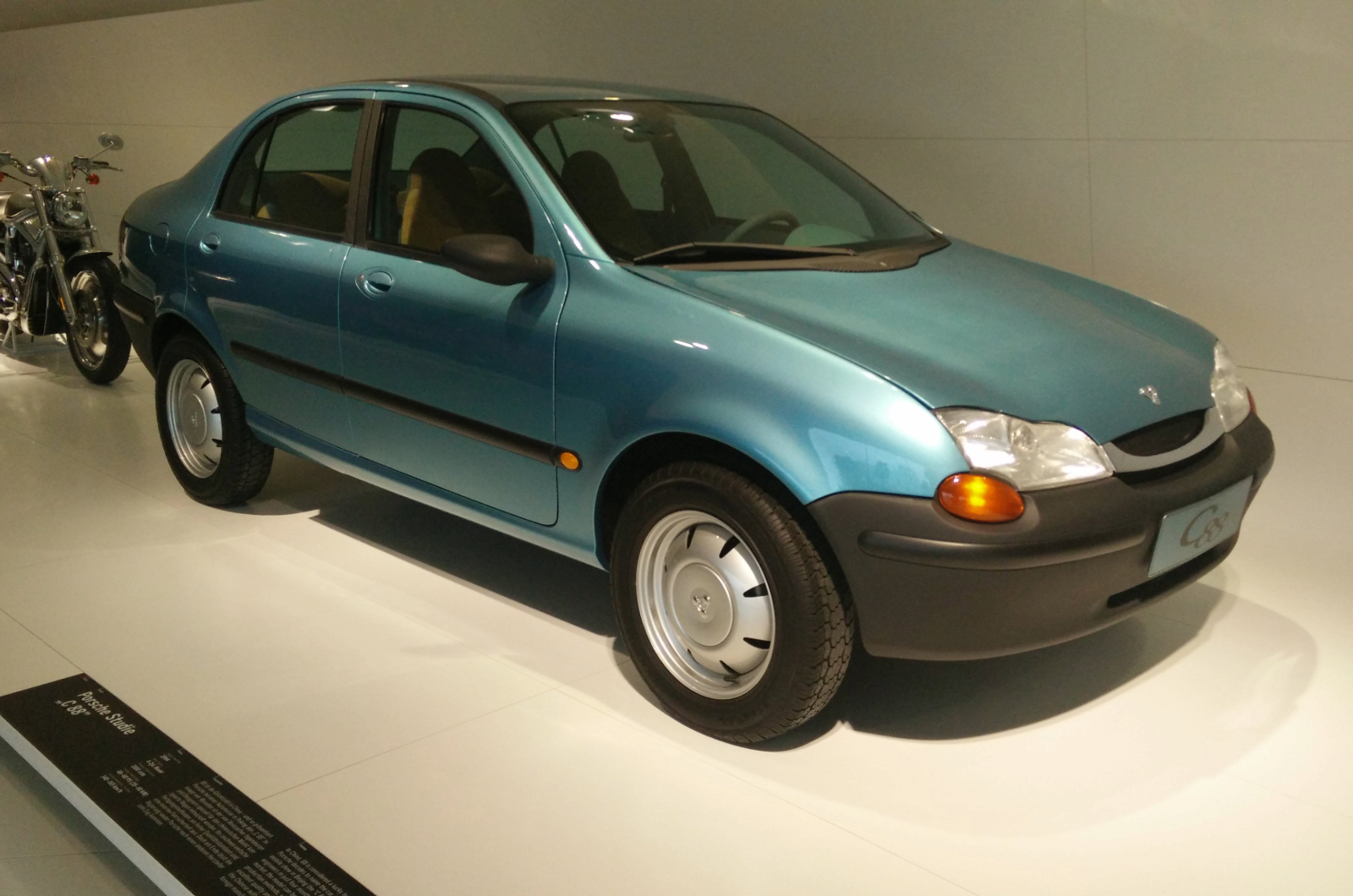
At a time when Porsche was making powerful cars like the 911 (993) Turbo S, it was also setting its sights on entering the Chinese market with a car for the people, which was a response to Chinese governmental requests for suitable European prototypes. An engineer and a designer were brought over from China and the idea was to make an affordable, simple, spacious and comfortable car.
There were no Porsche crests on the C88, as it wasn’t intended to be sold as a Porsche. The Chinese government also reached out to Chrysler, Fiat, Mitsubishi, Opel, Ford and Mercedes-Benz to participate but a winner was never chosen. Supposedly the government took the ideas for free and applied some of the C88’s design elements to other Chinese cars.
BMW Z18 (1995)
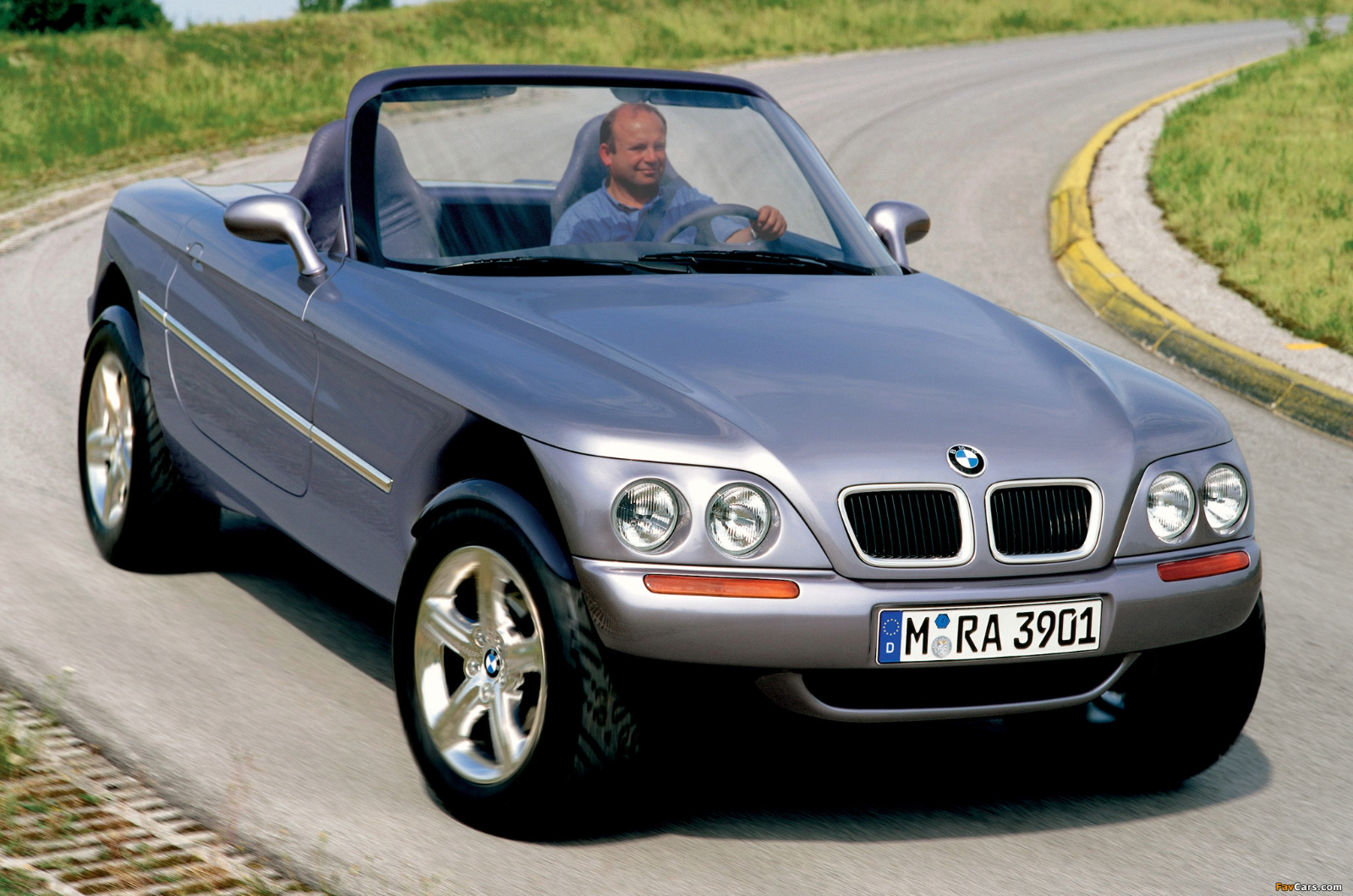
When asking people what BMW’s first SUV was, many will say the X5, but it was actually the Z18 — it remained a concept, though BMW did make one. It was designed by the company’s 1980s renegade R&D division and was produced at the same time as the first Z3 was launched.
It never came with a roof, but BMW fitted waterproof seats and thick rubber floor mat, and its modular interior meant that it could be turned into a pick-up truck or a four-seater. There was no real intention of mass producing the Z18, however it helped BMW gauge potential demand for new ventures.
Audi A2 (2000)
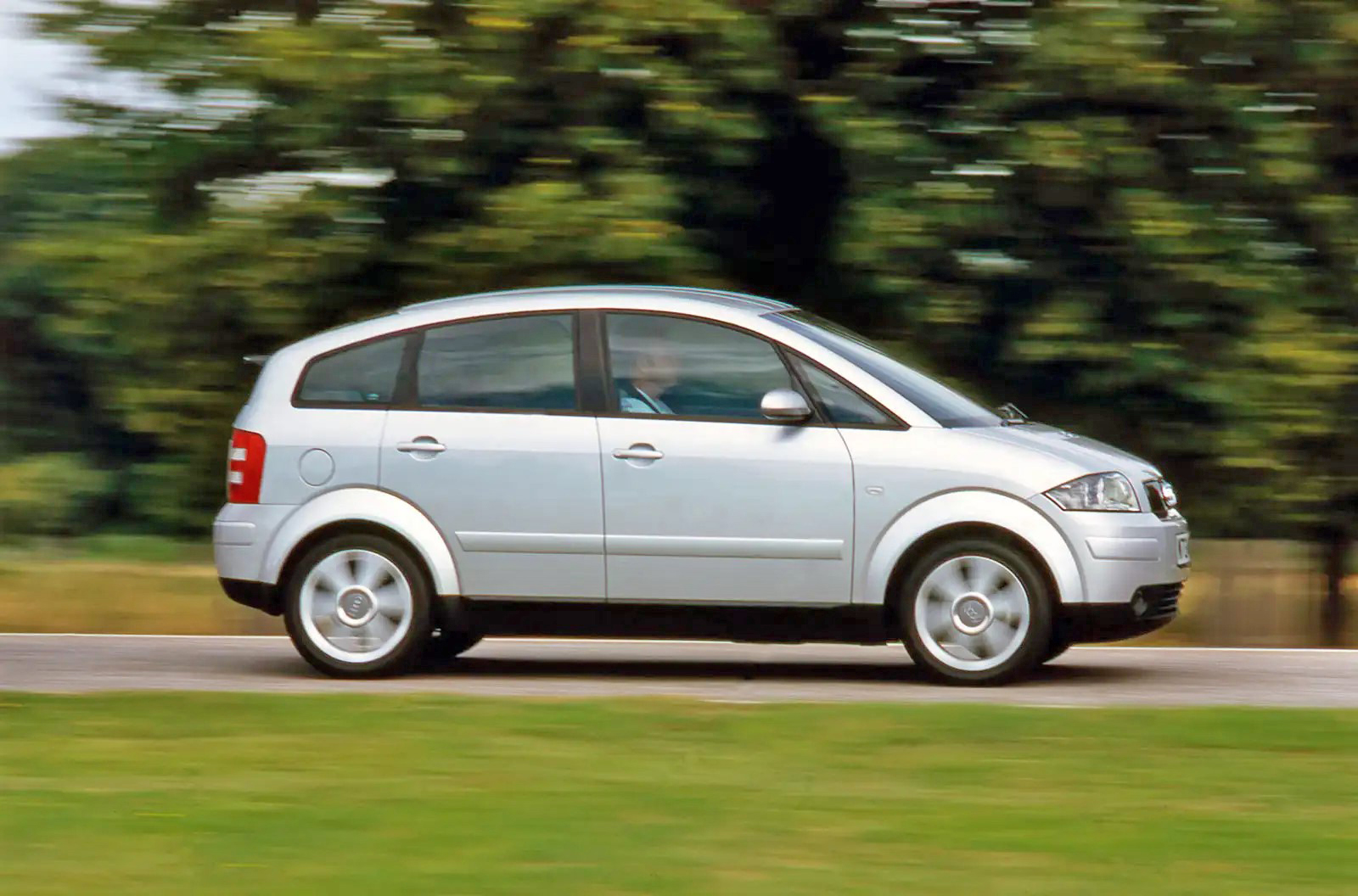
It could be considered that the A2 was ahead of its time: aluminium bodywork and incredible efficiency for the early 2000s. After the A2 won a design award in 2001, Audi commented that the idea of the car was to “transport four people from Stuttgart to Milan on a single tank of petrol”.
There’s nothing ‘Lamborghini Murcielago’ about the A2 but both cars share an element of madness, and this is thanks to designer Luc Donckerwolke who designed them both. The A2’s ‘bread loaf’ design had a mixed reception and Audi hasn’t produced anything like it since.
Audi Rosemeyer (2000)
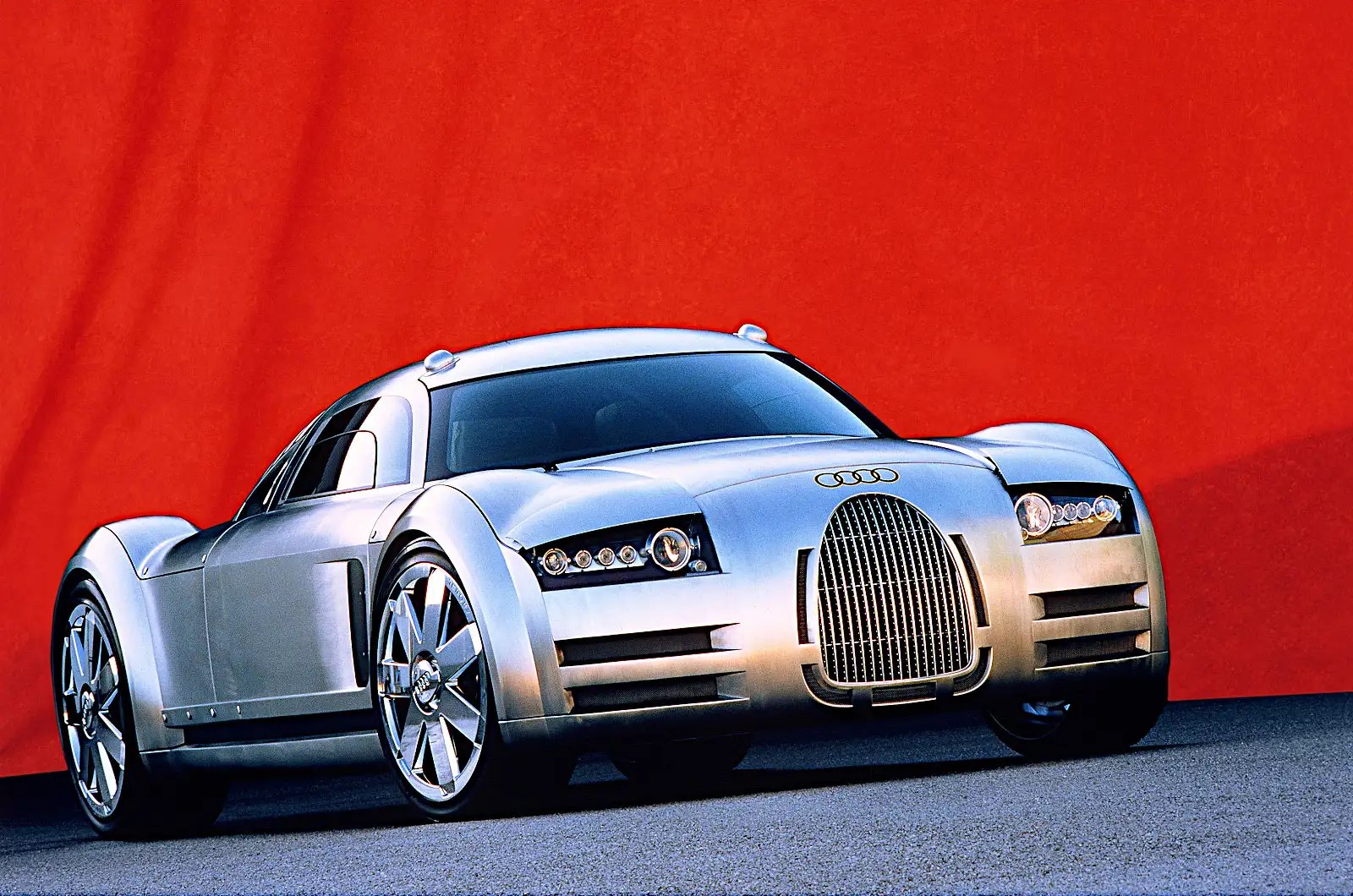
Audi’s supercar phase started in 1974 with the 100S Coupe Speciale. It later involved companies such as Pietro Frua and Pininfarina to design some of its wackiest cars. In 2000, the Rosemeyer concept appeared, which paid tribute to the 1930s’ ‘Silver Arrow’ Auto Union racers. It had Bugatti roots, alongside the Audi Avus concept, and even featured a concept version of the 16-cylinder powerplant, which we then saw in the Bugatti Veyron hypercar.
Behind the design was Stefan Sielaff, who joined Audi in 1984 as an intern. He quickly moved upwards and became head of Audi’s interior design — his most famous interior design is used in the Audi A7.
Lotec Sirius (2001)
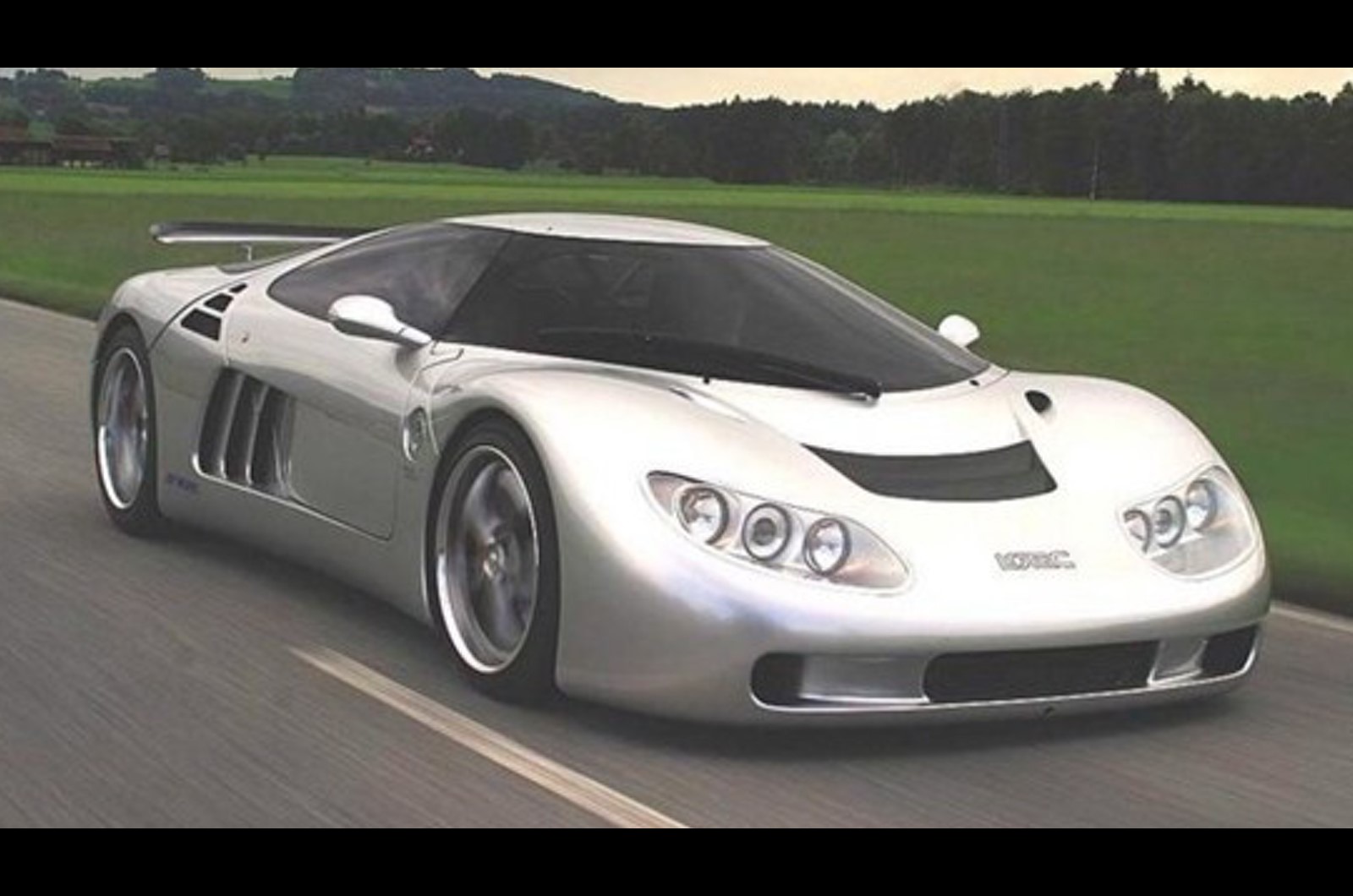
Kurt Lotterschmid, a racing driver, founded Lotec in 1962 with a focus on race car building. Attention later shifted to Porsche tuning and then onto crafting aftermarket aerodynamic parts for Ferrari and Mercedes-Benz. Lotec’s first car was the 1995 C1000, which failed to set the supercar world alight, then the Sirius arrived in 2001.
With just five Sirius to be made per year costing £380,000 each, it never quite took off. Its design was like the Koenigsegg CC’s, although somewhat crazier. Sketches of an updated Sirius were teased in 2008, but no car was ever produced.
Audi RSQ (2004)
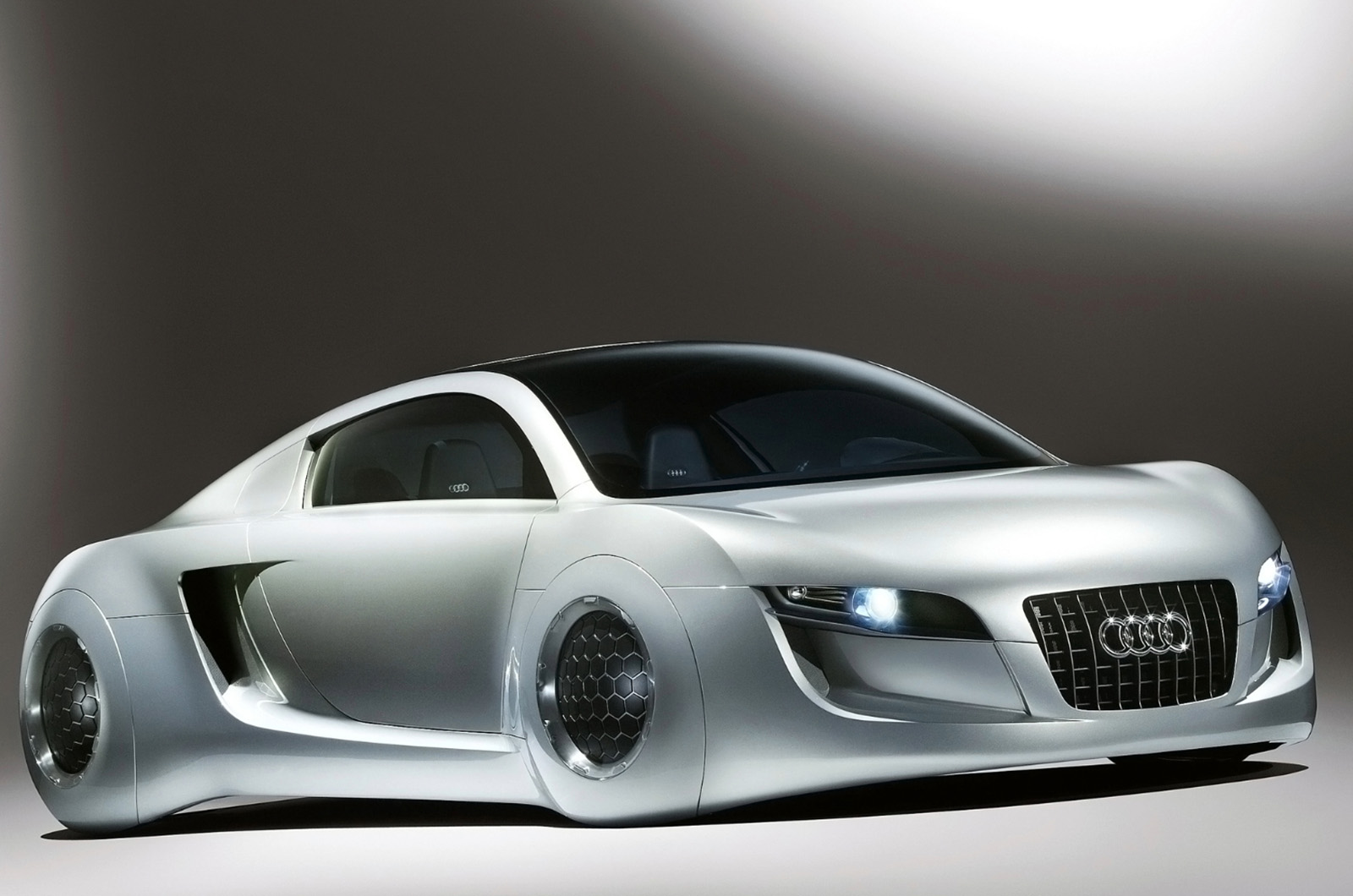
The RSQ was intended to act as a product placement for the 2004 I Robot film, but some of its design went on to inspire one of the world’s most iconic modern supercars, the Audi R8, although the majority came from the Audi Le Mans quattro concept. Designed by Julian Hönig, who is also known for configuring the 2007 B8 Audi A4 and 2011 Audi Q3 8U’s exteriors, the RSQ was in-your-face and fit well into the blockbuster’s 2035 environment.
Isdera Autobahnkurier 116i (2006)
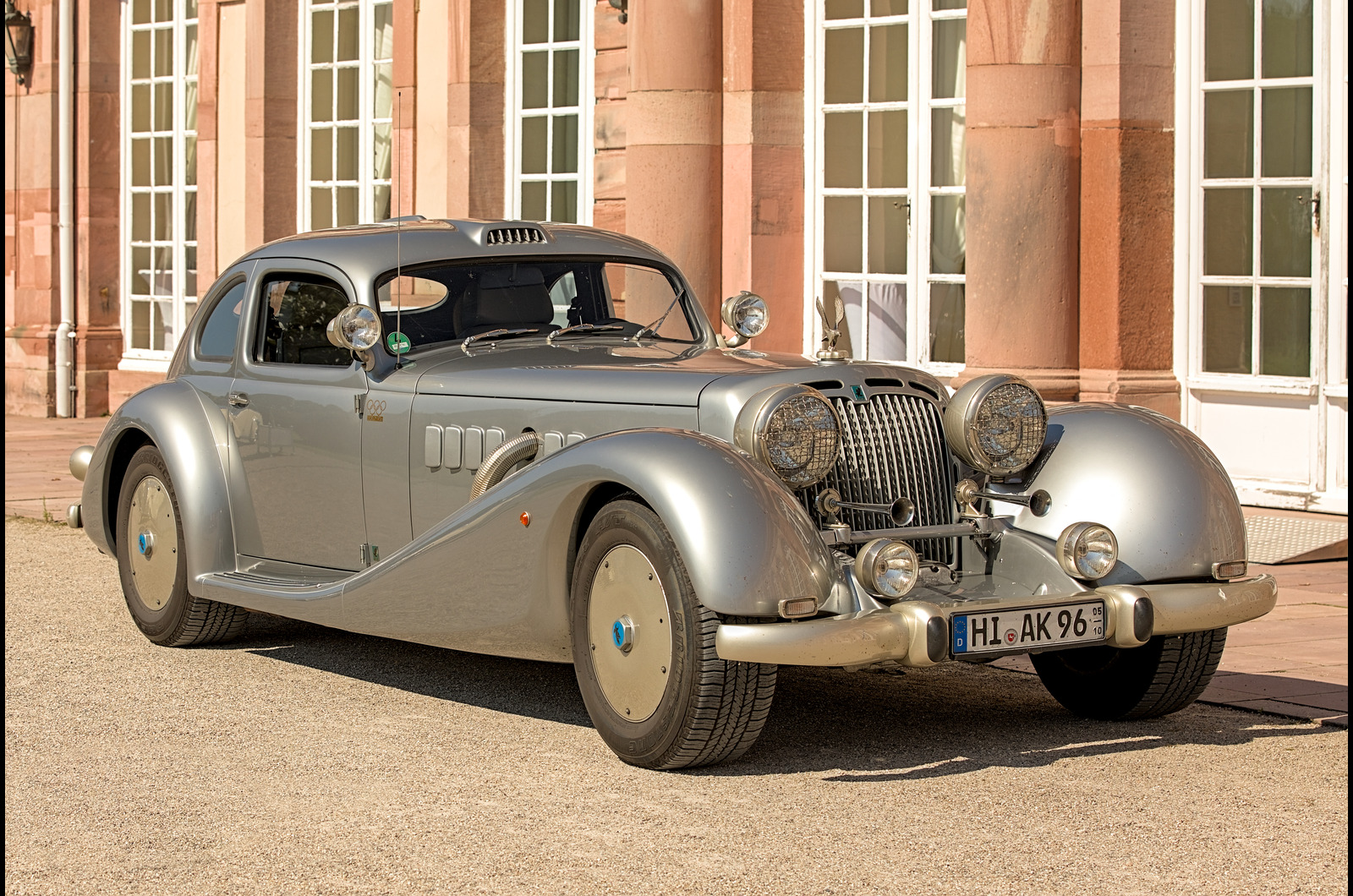
Known for producing some incredible designs, Isdera went a step further and gave us the 116i in 2006, which could be described as a long-nosed 1930s super saloon. Development started in the mid 1980s — the chassis and skeleton were Mercedes-Benz W126 S Class, it also had two Mercedes W117 engines, which could either operate together or with just one.
This meant 600bhp and 10 litres. Designer Eberhard Schulz took heavy inspiration from the Bugatti Royale and the Mercedes 540k Autobahn Kurier: his idea was to build a “retirement” project and the 116i ticked all the boxes.
BMW GINA (2008)
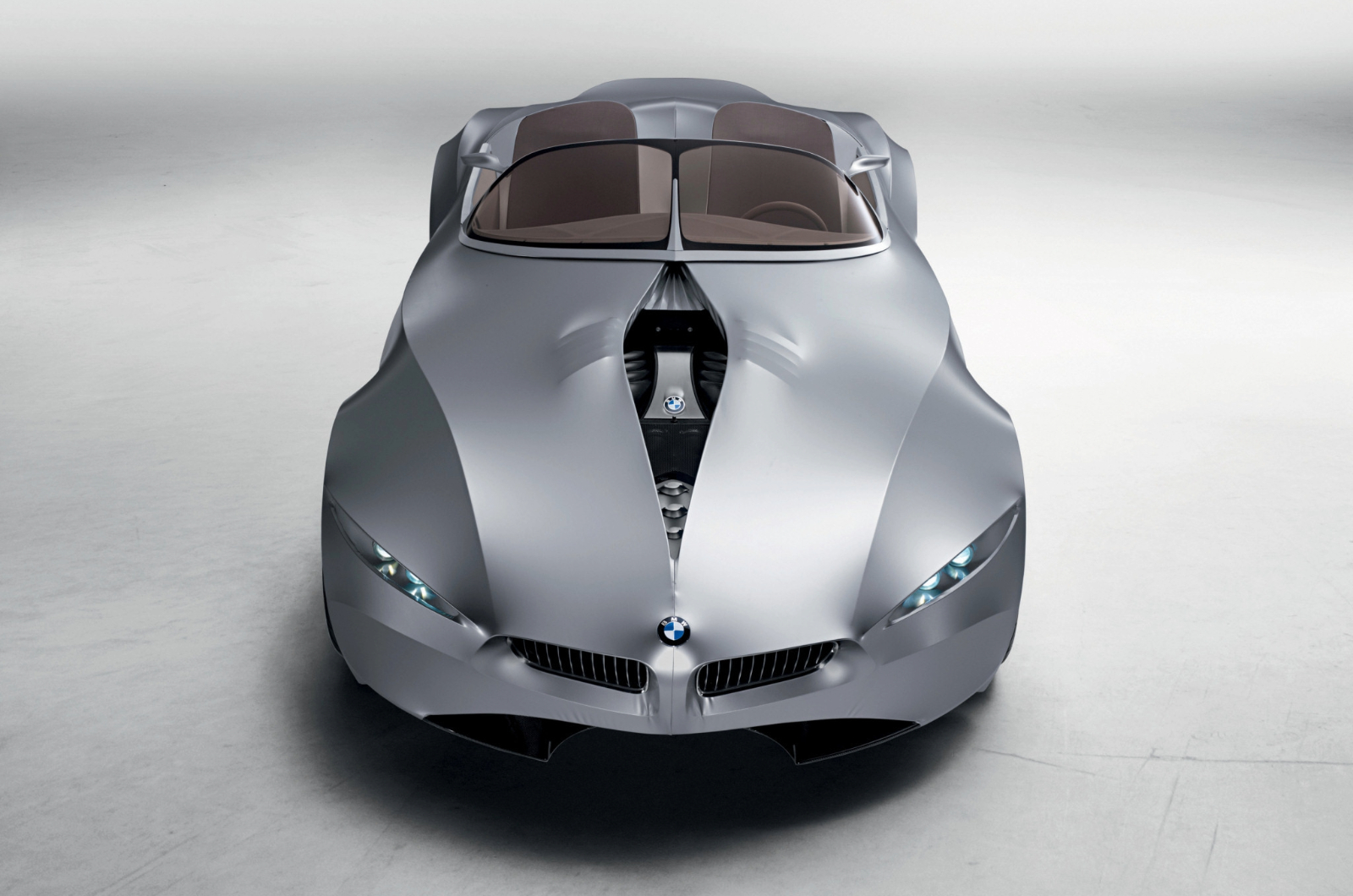
Most cars are made from some kind of solid material, but the BMW GINA was instead coated in a fabric skin, and this meant it could shape shift. The two-door sports car was the work of designer Chris Bangle, who is known for creating the Fiat Coupe and Alfa Romeo 145 — his designs can also be spotted in the entire BMW line up till 2009.
Bangle claims that GINA allowed his team to “challenge existing principles and conventional processes”. Its name stands for “Geometry and functions In ‘N’ Adaptions”.
Volkswagen XL1 (2013)
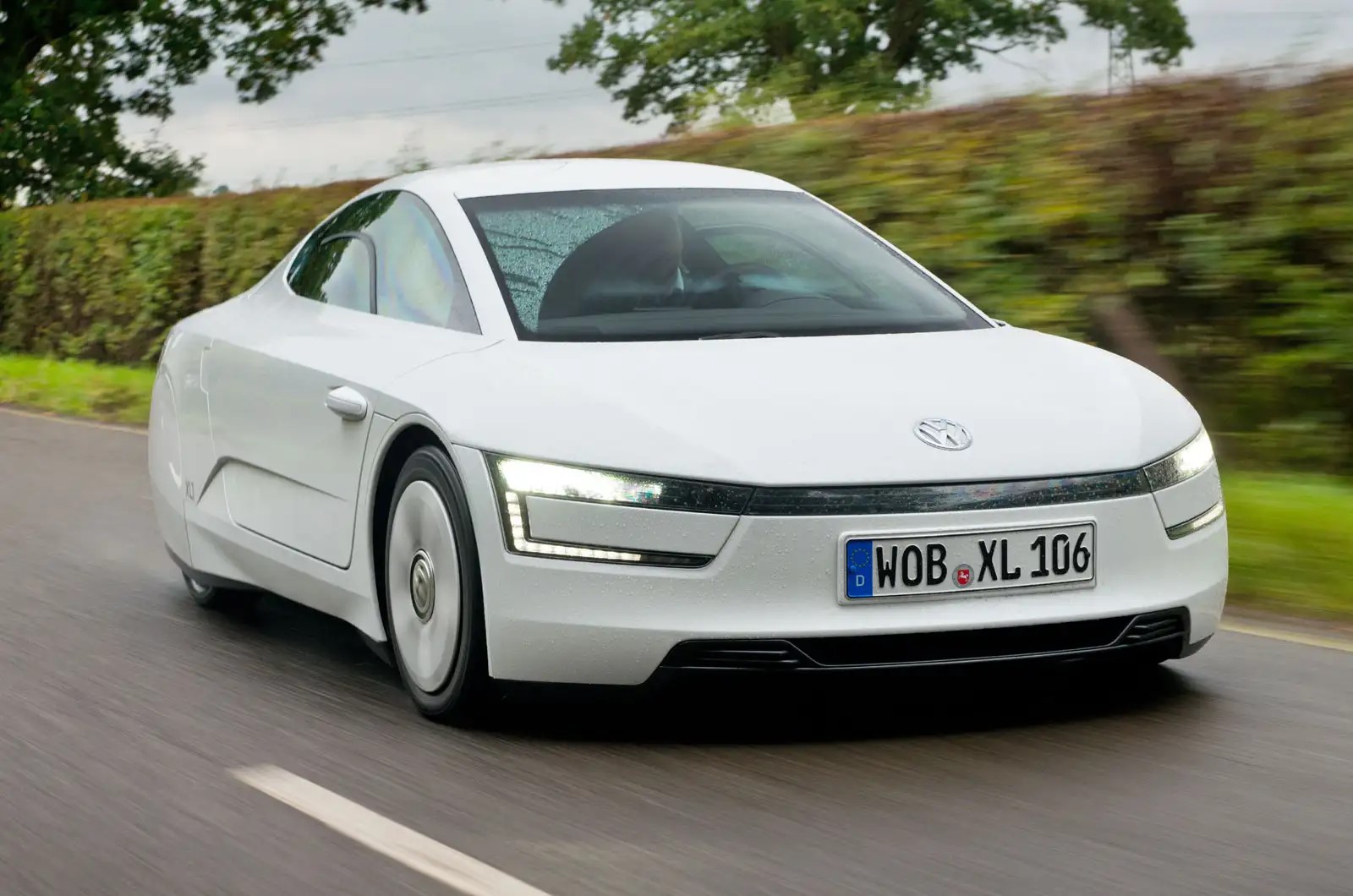
Three designers were involved in the XL1. There was speculation that the XL1’s appearance was inspired by penguins, but this was debunked by one of the designers, Peter Wouda, who claimed he was inspired by sharks instead. The XL1 had one goal: travel 100km on one litre of diesel. There were three concepts prior to the production car: the 2003, the tandem 2009 L1 and the 2011 XL1.
Production started in 2012 for the 2013 model year with very little changing from the 2011 concept. The XL1’s second designer, Klaus Zyciora, is known for designing the current Volkswagen ID range, and the third designer, Thomas Ingenlath, is best known for the Polestar 1 and 2.
BMW i3 (2014)
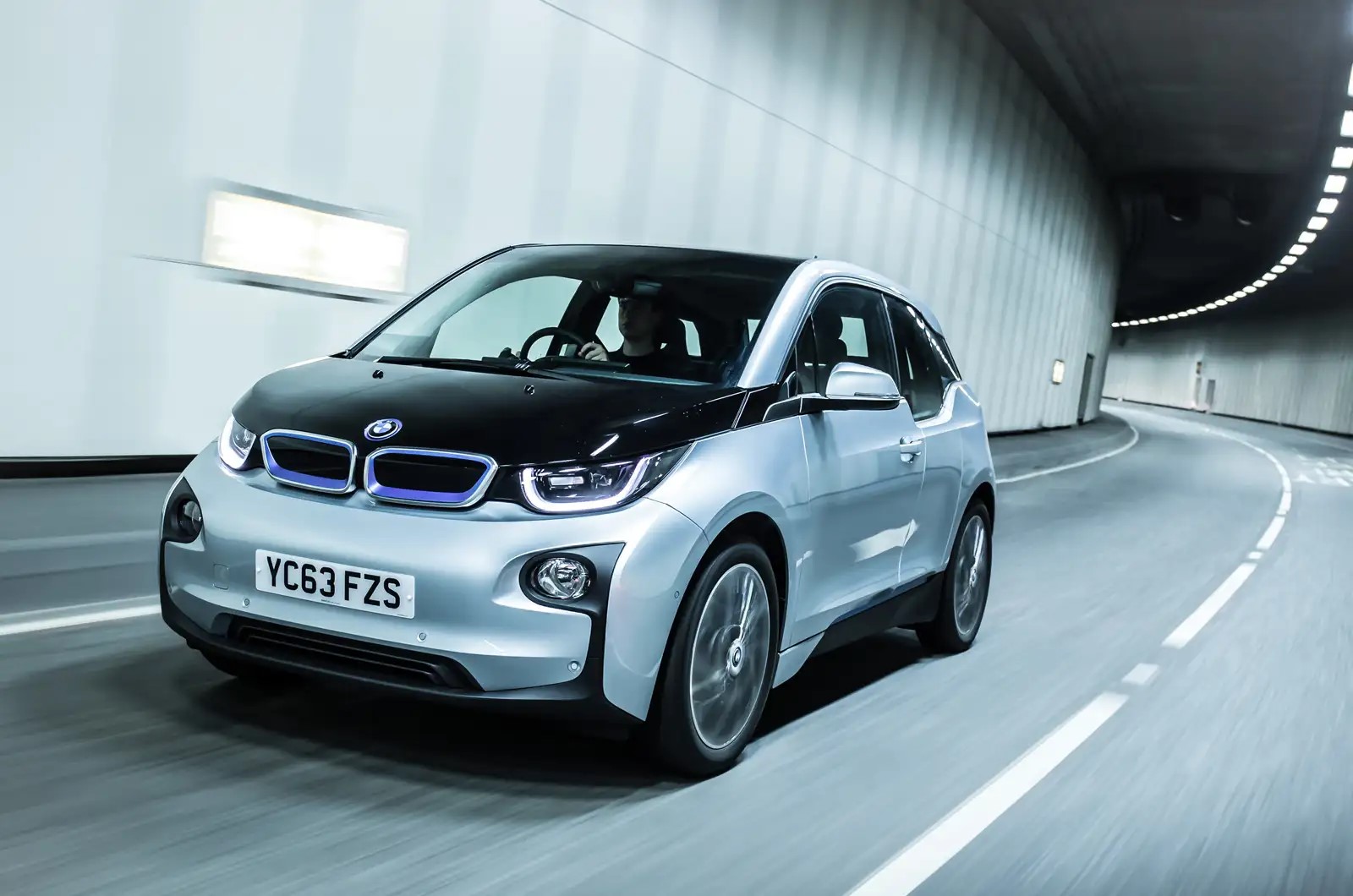
Designer Richard Kim is known for the E84 BMW X1’s exterior design. In 2011, BMW founded its ‘i’ brand, which would focus on electric-powered cars. Kim worked with BMW from 2005 and was put onto Project ‘i’ to sketch ideas for BMW’s electrified future. First, he designed the i3, which was also known as the Mega City Vehicle (MCV). Kim’s inspiration for the exterior design was to create more straight lines, horizontals and verticals.
The use of different materials and shapes in the interior was designed to calm the occupants and “balance energy levels”. The i3’s production stopped in 2022, but it carved the way for the quirky BMW ‘i’ cars of today.

Angelelli Project 754 Reimagines the Porsche 911 With Radical Lightweight Engineering and a Mid-Engine...