Polestar 4 SUV Redefines Practical Electric Mobility With Conventional Design and Extended Range
 'More versatile' version of electric family SUV brings a traditional rear window and nearly 400 miles of range
Polestar is putting the finishing touches on the new, more upright version of its 4 crossover ahead of its unveiling on 2 September.
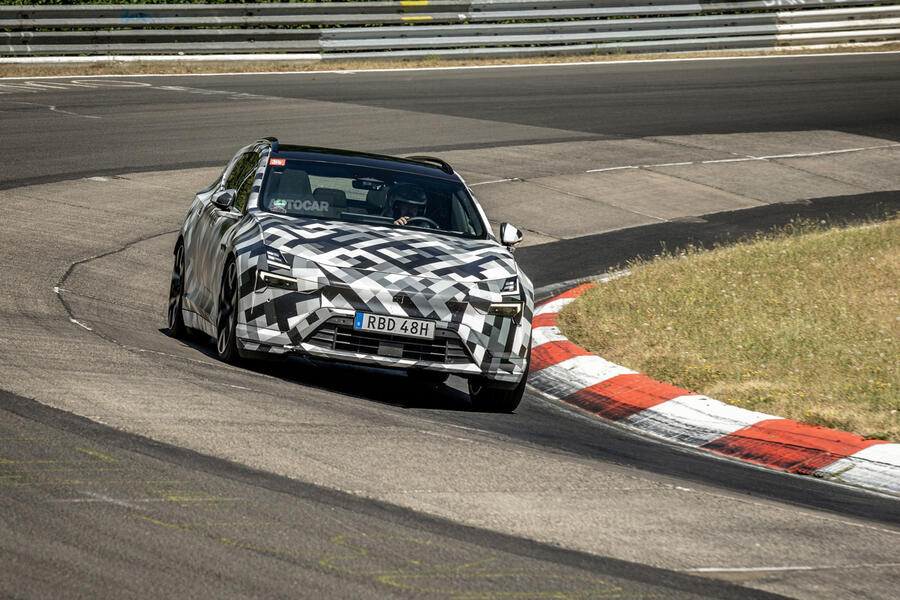
The new rival for the BMW iX3 and Mercedes-Benz GLC Electric has now been spotted testing on the Nürburgring Nordschleife with production-ready bodywork, showcasing how it has been transformed from a rakish saloon into a more conventional SUV.
The Polestar 4 SUV will place a greater emphasis on "flexibility and practicality", the company said, with "versatile storage capabilities for every journey".
Autocar first reported on plans for the new 4 variant in February, when Polestar CEO Michael Lohscheller referred to it as “combining the space of an estate and the versatility of an SUV”. At that stage the name was not yet confirmed, and the decision to firmly brand it an SUV likely reflects the bigger market for such machines.
Confirming the first technical details of its new entrant, Polestar revealed that it will be offered with the choice of rear- and four-wheel-drive powertrains, topping out at 536bhp - like the existing 4.
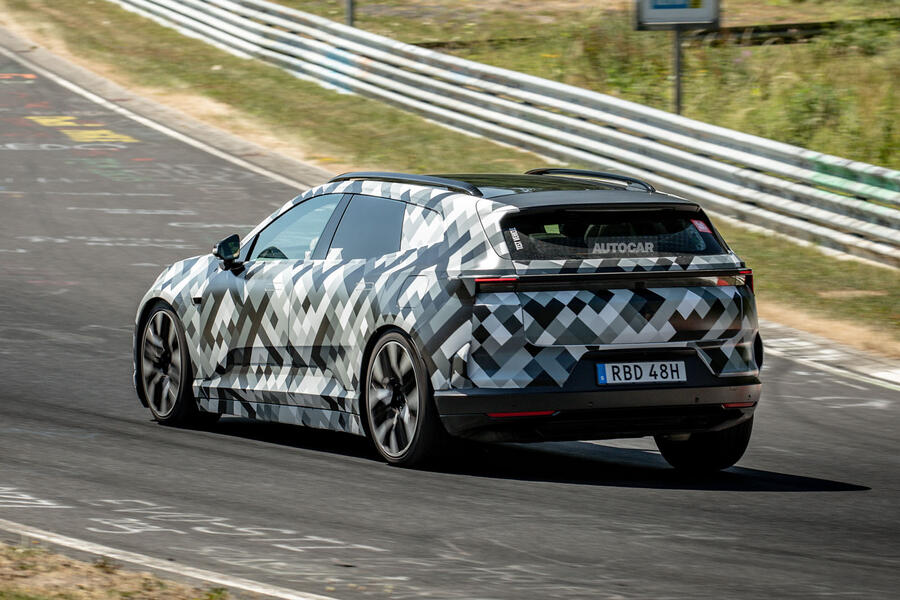
It will also roughly match the current 4's maximum official range, claiming 391 miles between charges in its most efficient form, and use the same 400V electrical architecture, which allows charging at up to 200kW.
The 4 SUV will be built in Busan, South Korea, alongside its coupé-roofed sibling, and is set to be revealed in the coming weeks before orders open in September.
The first official details of the car came after Autocar exclusively revealed (below) that it would feature a traditional, upright rear window in place of the familiar camera-based rear-view system.
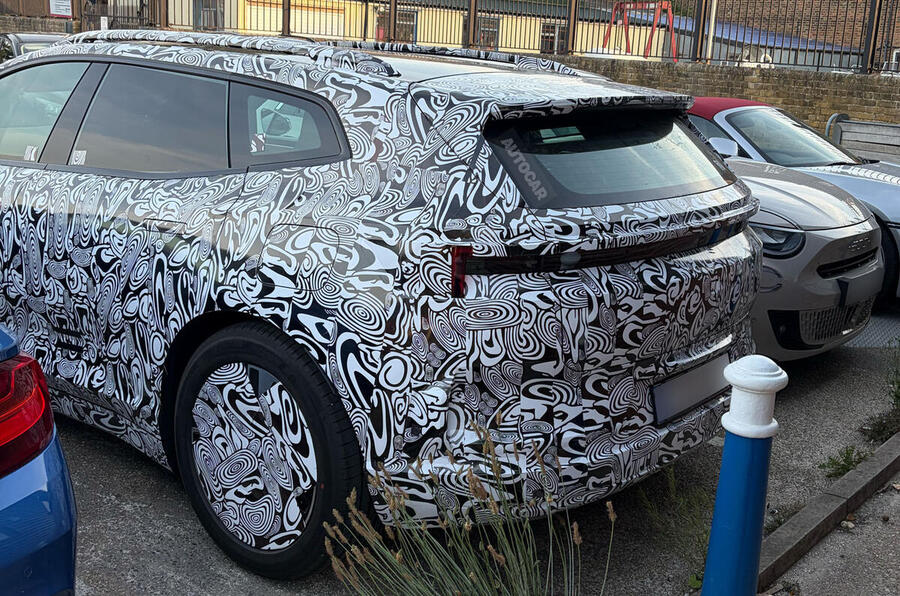
That will tie into an overall design treatment that is more conventional than that of the existing 4, which straddles the boundaries between coupé, crossover and saloon - and is most easily thought of as a Porsche Macan Electric rival.
The newcomer will be slightly shorter than the US-built Polestar 3 (which is more of a premium, sporting proposition), at around 4850mm long.
It will face a much larger field of direct rivals than the 4 Coupé, including the recently launched iX3 and GLC Electric, as well as the Audi Q6 E-tron, Lexus RZ and best-selling Tesla Model Y.
The 4 SUV is one of four new models that Polestar is priming for launch by the end of 2028, as part of a drive to recover from heavy financial losses and find a path to sustained profit.
The firm sold around 60,000 cars last year, but aims to increase its annual output to 100,000 units, and estimates that its new models will boost its coverage of the EV market segments from 25% to 55-65%.
The 4 SUV follows the new Polestar 5 GT, and will be joined next year by the next-gen Polestar 2, and in 2028 by the smaller Polestar 7 crossover.

Police Speed Monitoring Gains Urgency After Deputy’s 92-MPH Crash Spurs Accountability Reform


Genesis GV90 Redefines Luxury SUVs with Coach Doors, Cinema-Scale Interiors, and Ambitious Electric Performance
 Flagship SUV due imminently with Rolls-Royce-style doors, wooden floor and huge cinema screen
Genesis's upcoming Range Rover rival will have Rolls-Royce-style coach doors as it makes a statement about the brand's luxury intentions.
The GV90 is just weeks away from launch and will become the flagship for the Hyundai sibling brand on the premium side of its model range.
It will arrive at a similar time to the GV60 Magma, the first in a series of high-performance models that will perform a similar role on the sporting side.
Genesis Europe MD Peter Kronschnabl told Autocar that the GV90 wouldn't hold back in pushing the brand's premium and luxury credentials.
"You need to show what you can do at the top luxury end, and this is the GV90," he said.
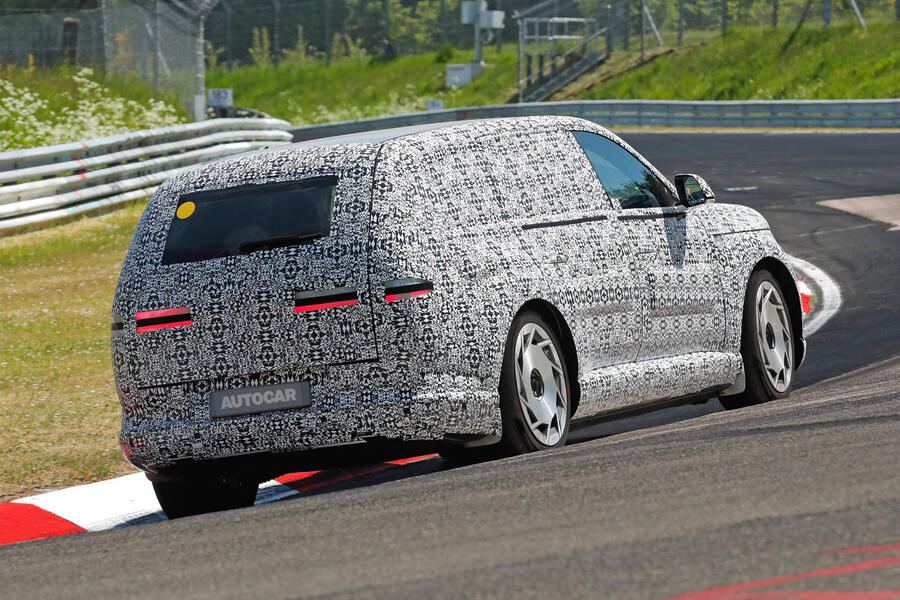
The Rolls-Royce-style rear-hinged doors are one feature of the GV90 that will make it stand out among its rivals.
Kronschnabl said there will also be a "theatre screen" for in-car entertainment as well as other technology and materials that would make the SUV the "pinnacle" of the Genesis range.
The GV90 will be vast – larger than the Kia EV9 and Hyundai Ioniq 9 with which it shares underpinnings, based on spy pictures of the model in testing.
The production model follows a concept called the Neolun, which it will closely mirror in its imposing style and which also featured rear-hinged doors.
The GV90 is likely to be offered with three rows of two seats in standard form, but Korean media has seen prototypes of a super-luxury four-seater with just two seats in the opulent rear, which seems to have wood flooring and abundant quilted leather.
Patents in the US have also shown an innovative dual-hinge system for the rear doors, with hinges connected to both the body and the frame and additional seals to boost structural integrity and insulation.
A maximum battery pack size of around 110kWh will boost range to in excess of 350 miles, while dual electric motors will likely take power to in excess of 500bhp and deliver four-wheel drive.
Charging speeds are set to top 350kW.
Genesis to rival AMG and M with Magma sub-brand
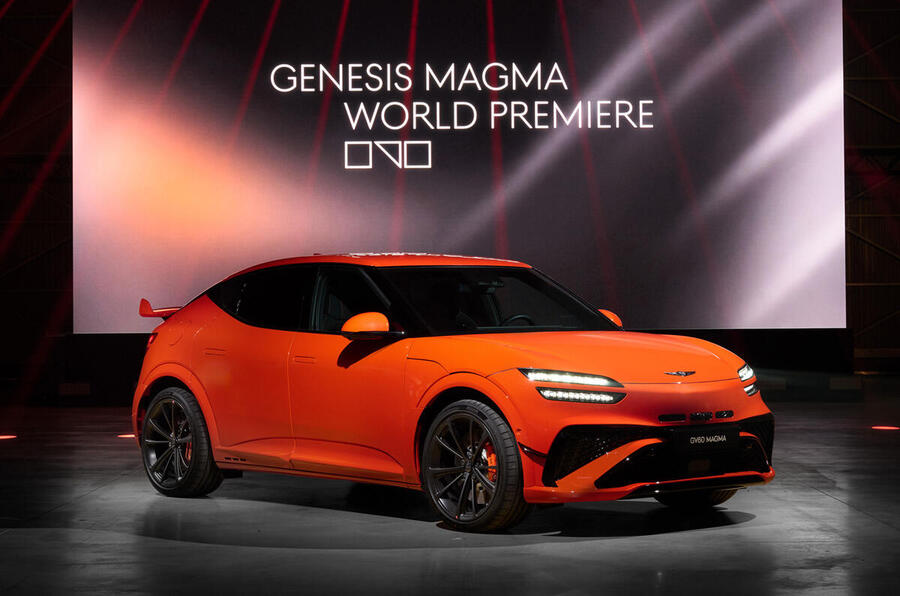
Kronschnabl revealed that the GV60 Magma, a 641bhp electric crossover with a 0-62mph time of just 3.4sec and a top speed of 164mph, is the start of a wider performance programme for Genesis.
He didn't detail which models would also get the treatment but said Magma is vital to Genesis's wider ambitions, a performance sub-brand akin to BMW M or Mercedes-AMG being a must for any would-be premium contender.
Magma's point of difference will be in its ability to make electric cars truly "feel alive" in the absence of an internal combustion engine, claimed Kronschnabl, as well as offering "something very special with the quality of materials" used for its interiors.
While both Genesis flagships will be electric, the brand will continue to offer a wider range of electrified drivetrains, including hybrid, plug-in hybrid, full-electric and range-extender. It will no longer offer pure internal combustion engines, however.
"From customer sentiment and feedback, you cannot limit yourself to one powertrain," said Kronschnabl.
The GV70 SUV is set to be the first hybrid model from Genesis, having recently been caught testing in prototype form.
The first REx model from the brand isn't yet known, but the GV90 is a likely candidate, given such a powertrain's suitability for large, heavy vehicles.

Ferrari 849 Testarossa Redefines Heritage with Hybrid Power and Bold Design Choices

Unconventional Cars for Sale Challenge Traditional Automotive Desires

Alfa Romeo 33 Stradale Redefines the Modern Supercar Through Exclusivity and Engineering Collaboration
 Maserati donates MC20 chassis and V6 for a limited-run Alfa that drives as sweetly as it looks
As I write I have just stepped out of a room in which I have been fantasy-specifying an Alfa Romeo 33 Stradale. It's something all of this model's 33 customers have done: the level of personalisation available is at the 'if you want it and it's feasible, they'll do it' level. But they won't tell me how much one costs at the end of it.
The 33's 'few-off' production run was sold out not before the car was announced but before it had even been designed or approved by Alfa Romeo (and Stellantis) bosses.
It's a - let's call it - £2 million supercar from a car maker that also sells a £30,000 crossover, and yet somehow it seems like a totally reasonable proposition from a company with this badge. It's also very good.
To recap, then. Potential customers - collectors, Alfa fans - were first shown sketches of the 33 Stradale in 2022 and said they would love one, thanks. Their input - and I don't think this is just puff - was taken on board during the next phase of the design process. Alfa formed a committee - the Bottega - to oversee limited-series production once it was approved. Camilla Rostagno, Bottega's head, said: "We were like a start-up: agile and fast."
By the time we saw the 33 Stradale in 2023, the first customer delivery had been earmarked for 17 December 2024. That's a remarkably short time, to the slight consternation of chief engineer Jean-Philippe Delaire, formerly a senior engineer in Citroën's WRC team and later the man behind the entirely decent Peugeot 508 PSE.
This is where it was "useful being part of a big company [in Stellantis]," says Rostagno, talking to me at Alfa's Balocco test track, located between Milan and Turin. It meant the team could leverage "best-in-class" hardware, says Rostagno, "so we had something to start with and worked to make it a true Alfa Romeo".
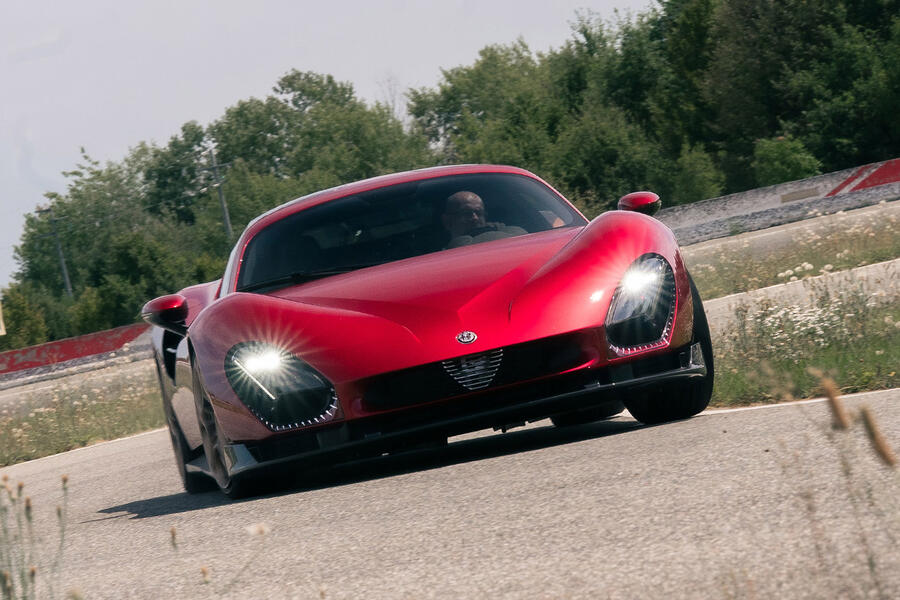
If the same architecture, platform or modules can underpin cars from ostensibly very different 'normal' brands, why not use one brand's supercar as the basis for another brand's? Especially given that the car in question, the Maserati MC20, was meant to be an Alfa in the first place, according to some sources (although not according to Maserati, inevitably).
The result is this two-seat, mid-engined Alfa Romeo 33 Stradale coupé of unknown but expensive price and such exclusivity that more than 50 people remain on a waiting list even today, just in case. Perhaps they will get the next car.
Beneath the 33 Stradale's covetable curves - you can spec whether you want the rear wing cut away, as here, or left intact - lies the carbonfibre tub of Maserati's MC20 Cielo convertible (selected because it has more strength in its lower section than the MC20 coupe's monocoque), to which an Alfa-designed aluminium X-frame is mounted above to support the roof. The X-frame also gives a locating point for the upper of each door's pair of hinges. Doing it this way increases door rigidity and removes any tendency to lift at speed.
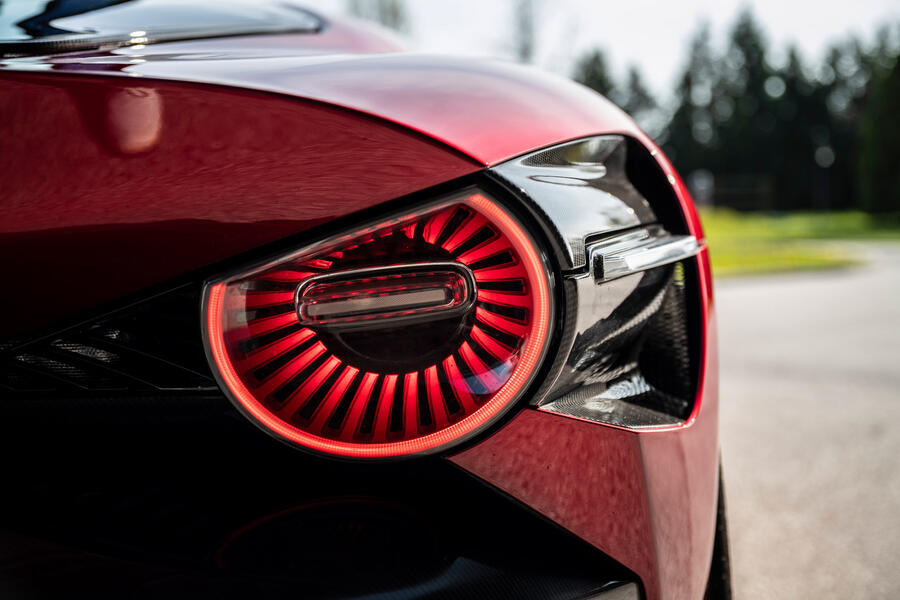
To the tub's rear is a modified MC20 aluminium subframe - again cross-strengthened - that houses a tweaked 3.0-litre MC20 engine. The twin-turbocharged V6 makes 621bhp at 7500rpm and is mated to an eight-speed dual-clutch automatic transmission driving the back wheels via an electronically controlled limited-slip differential.
The by-wire brakes are via standard carbon-ceramic discs, 390mm in diameter at the front, 360mm behind, with 20in aluminium alloy wheels offered in three designs, all shod with Bridgestone Potenza tyres: 245/35 ZR20s front, 305/30 ZR20s back. All-round double-wishbone suspension is sourced from the Alfa Giulia GTA, with 33 Stradale-specific settings.
There are two drive modes, Strada and Pista, with 'ESC off' available in the latter; damper modes are soft or medium in Strada, hard or a different medium in Pista. Production, taking place at supplier Carrozzeria Touring Superleggera, ramped up gradually after that first delivery and is very labour intensive. The last 33 won't be made until late next year.
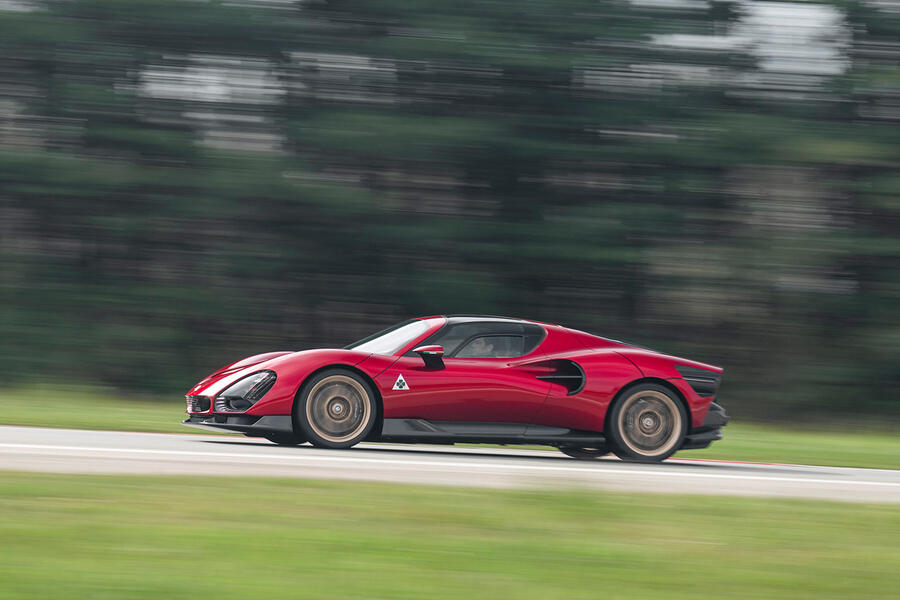
So why are we driving it now? Because they asked us to, is the short answer. But also the Bottega division was last November officially incorporated to make low-volume and one-off cars for both Alfa and Maserati (the MCXtrema is the Trident's first), plus there's a chance we will see the second few-off Alfa later this year and this is an opportunity to remind us about it.
Either way, I'm very pleased with the light blue metallic 33 that I specified on gold heritage wheels, with a biscuit and brown Alcantara/leather interior and about which I would change my mind by tomorrow morning. How on Earth do buyers nail down their chosen specifications for these cars? Not all do: one person agonised for eight hours over theirs; others make changes shortly before production starts. One called back the day after his highly satisfactory spec session to say his wife didn't like it. Even billionaires answer to someone.
So what's it like, this delicious north Italian slice of unobtanium? Great to sit in, for a start. The generous door glass makes it wonderfully airy, even though it's compact. The low scuttle reveals those shapely wings. I've been told by Delaire to make allowances for the fact that this is car zero of 33, so it's the 34th 33, the only prototype, and a few things have been amended for what counts as production. "We didn't have 'few-off' levels of quality when we started," admits Rostagno. "We made a new benchmark specifically built around this type of car."
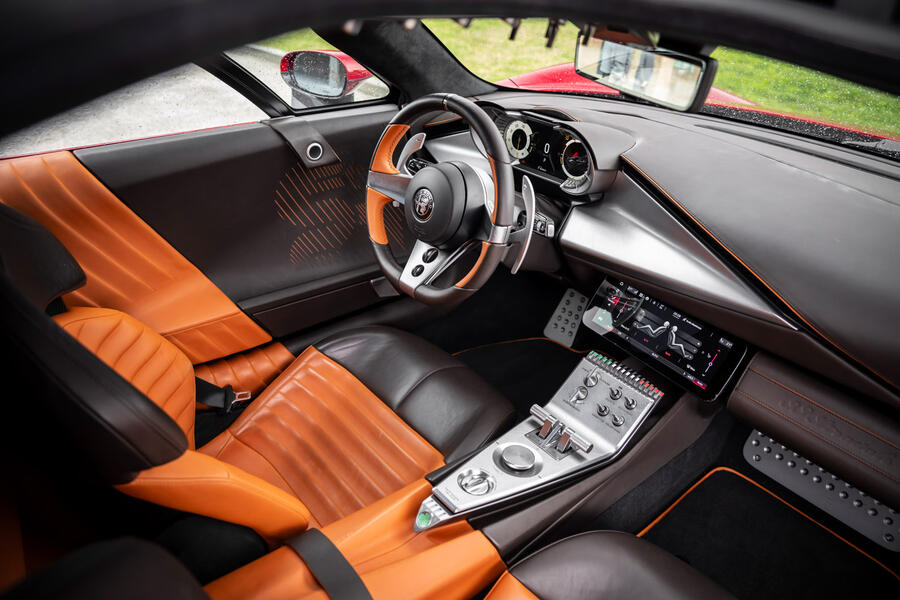
Only a fabric join on the dash top looks in any sense awkward in here, and it has since been resolved, I'm told. The rest of the perceived material quality is bob-on.
They have learnt a few lessons on the way: initially the door release button wasn't secured well enough for people who tried to pull the door closed by the small leather strap attached to it; and there's a touchscreen for the temperature and audio, whose mechanism to slide it up into the dash has been beefed up. I like how it stows when you don't need it.
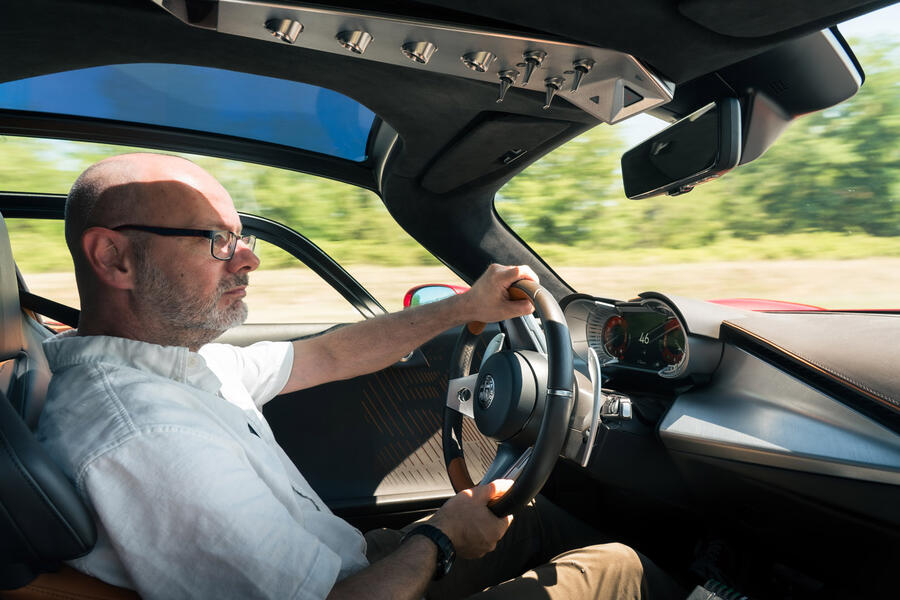
The vents are hidden behind a diagonal on the dash, so you can't adjust where they're blowing, but this is the kind of car where that bothers me not too much. Better - brilliant, even - are the centre console and overhead buttons and toggle switches, finished in aluminium. They're positive to the touch and easily grasped, while the action of the rotary start-stop button is as nice as any switch in any car.
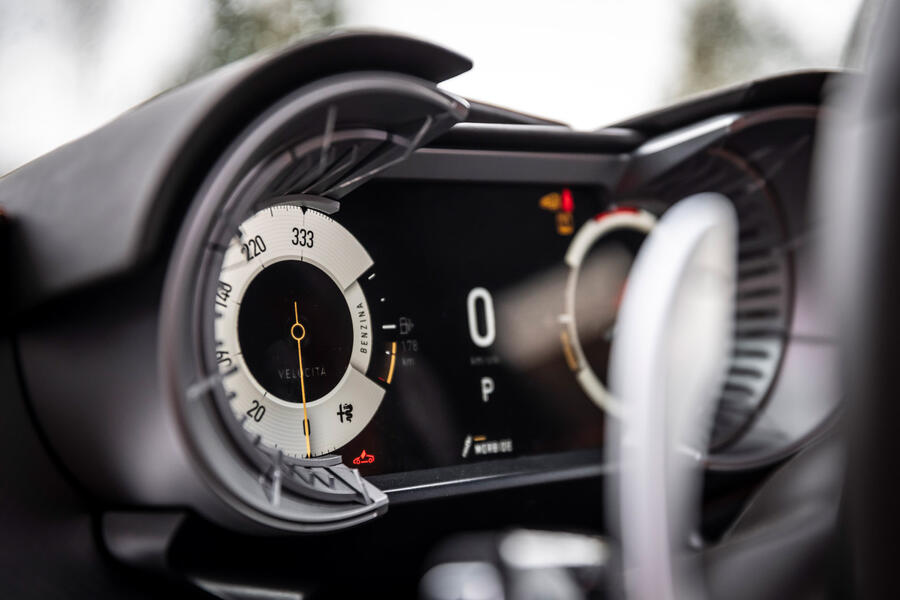
The steering wheel, too, is an aluminium three-spoker devoid of any buttons on its front. Wondrous. And do I detect the 33 team taking a certain pleasure in the fact that the wider industry is now following the trend of this tiny-volume sports car?
And a sports car it is. Perhaps a supercar: it can do 207mph (333kph), after all, and 0-62mph in 3.0sec. But does supercar horsepower have to start with a seven or more these days? The 33 has 'only' six cylinders, there's no electrical assistance, it has luggage space front (thin) and rear (hot), torque is spread broadly and weight is around 1600kg. Aerodynamic addenda serve only to make the 33 lift/downforce-neutral. It's not a hardcore, super-fast or aero-heavy car, then, as most supercars are.
There's more. Buyers have been coming to Alfa - they know them all well, of course - to say how surprised they are, pleasantly, to find the 33 is easy, unintimidating and refined to drive.
I find the same. My drive is on one of Balocco's handling tracks: it's smooth, hot and dusty and the kind of place where the clumsy-in-the-UK Alfa 4C probably felt really good. So some caveats, then. But generally the 33 Stradale is terrific. I'd describe it as MC20-adjacent, which I mean as a compliment: Maserati's (junior?) supercar has an old-school, perhaps old-fashioned feel to it, with an honesty and straightforwardness that isn't evident in every new sports car or supercar. And the 33 moves that theme gently onwards.
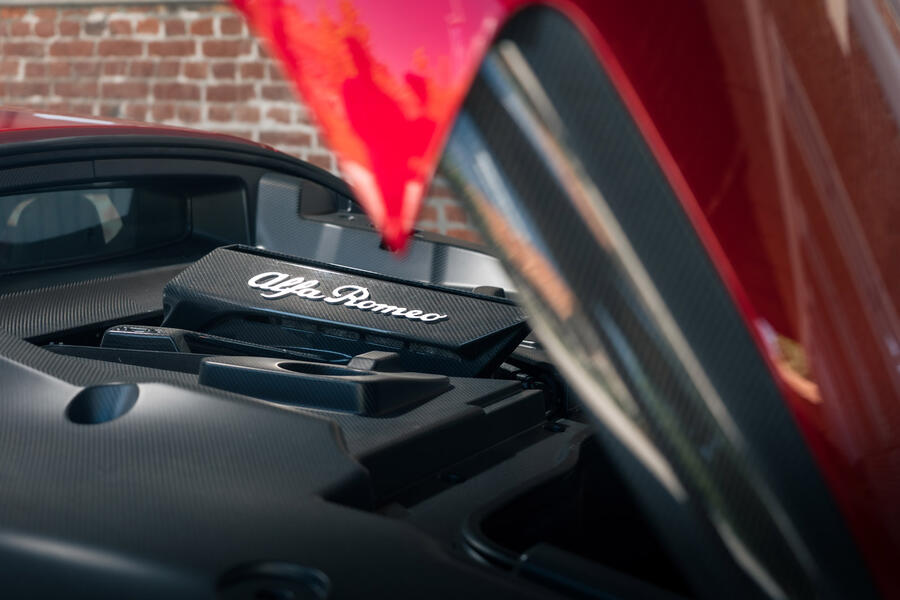
The engine breathes deep and gets going early. Is there some lag at low revs? Certainly, but pulling a lower gear ratio, or making sure you're in it in the first place, is simple enough. The engine is sonorous for a blown six that meets Euro 6 emissions levels and thus wears petrol particulate filters. Delaire's brief was to make the 33 sound as good as the V8-engined 8C - rather unfairly, because that had eight cylinders (obvs), no turbos, no PPFs and a generous exhaust length in which to develop the sound. This V6's gases are muted and ushered quickly out. That the 33 sounds as good as it does is an achievement.
It rides, too, I think. It breathes with the surface, albeit by no means silently. It's a carbonfibre tub, after all. It's a little noisier and lumpier in Pista modes, but I think the extra control is worth it on a circuit.
It steers cleanly, communicatively and relatively lightly by the standards of, say, a Porsche. There are just over two turns between locks and the turning circle is wide. It turns willingly, at its limit nudging into steady-state understeer, as I suppose it should.
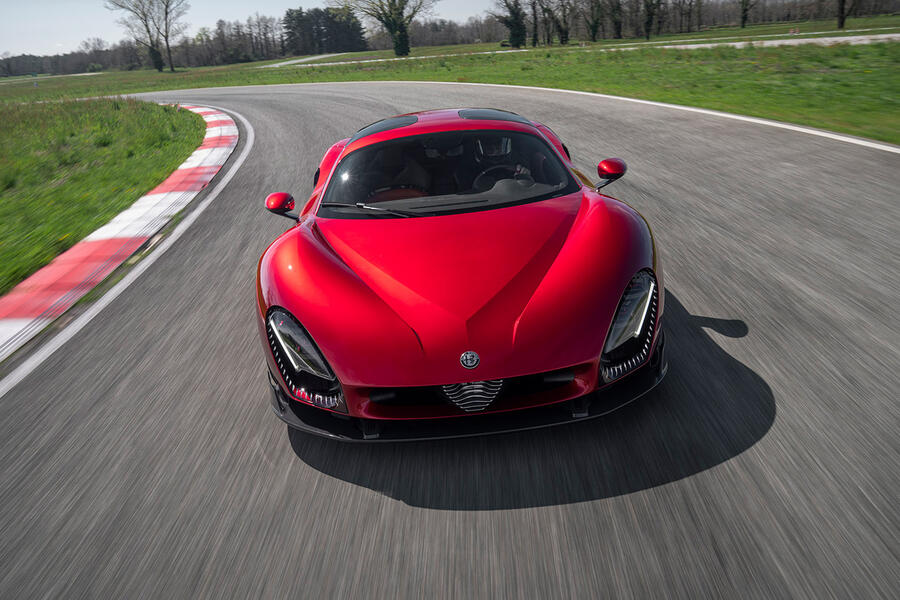
Brake pedal feel is very firm: "If you don't press the pedal, the car won't stop," deadpans Delaire. Settle the front end by modulating turn-in speed and the e-diff will help hook up the 33 Stradale nicely on the way out of corners.
But there is a relaxed trustworthiness to it. I can see why owners, many of them self-confessed collectors and enthusiasts rather than drivers, have come back satisfied. I think I would too. Maybe metallic olive green next time.
Alfa Romeo 33 Stradale
Verdict: Beautiful outside and in. Drives in an MC20-adjacent style with ability and confidence. An interesting project, lovingly executed
| Specification | Value |
|---|---|
| Model | Alfa Romeo 33 Stradale |
| Price | £2,000,000 (est) |
| Engine | V6, 3000cc, twin-turbocharged, petrol |
| Power | 622bhp at 7500rpm |
| Torque | 538lb ft at 3000-5750rpm |
| Gearbox | 8-spd dual-clutch automatic, RWD |
| Kerb weight | 1600kg (est) |
| 0-62mph | 3.0sec |
| Top speed | 207mph |
| Economy | 25.0mpg (est) |
| CO2, tax band | 260g/km (est), 37% |
| Rivals | Bentley Batur, Porsche 911 by Singer |

Ford Explorer Recall Exposes Ongoing Roof Rail Cover Failures and Safety Oversight Challenges

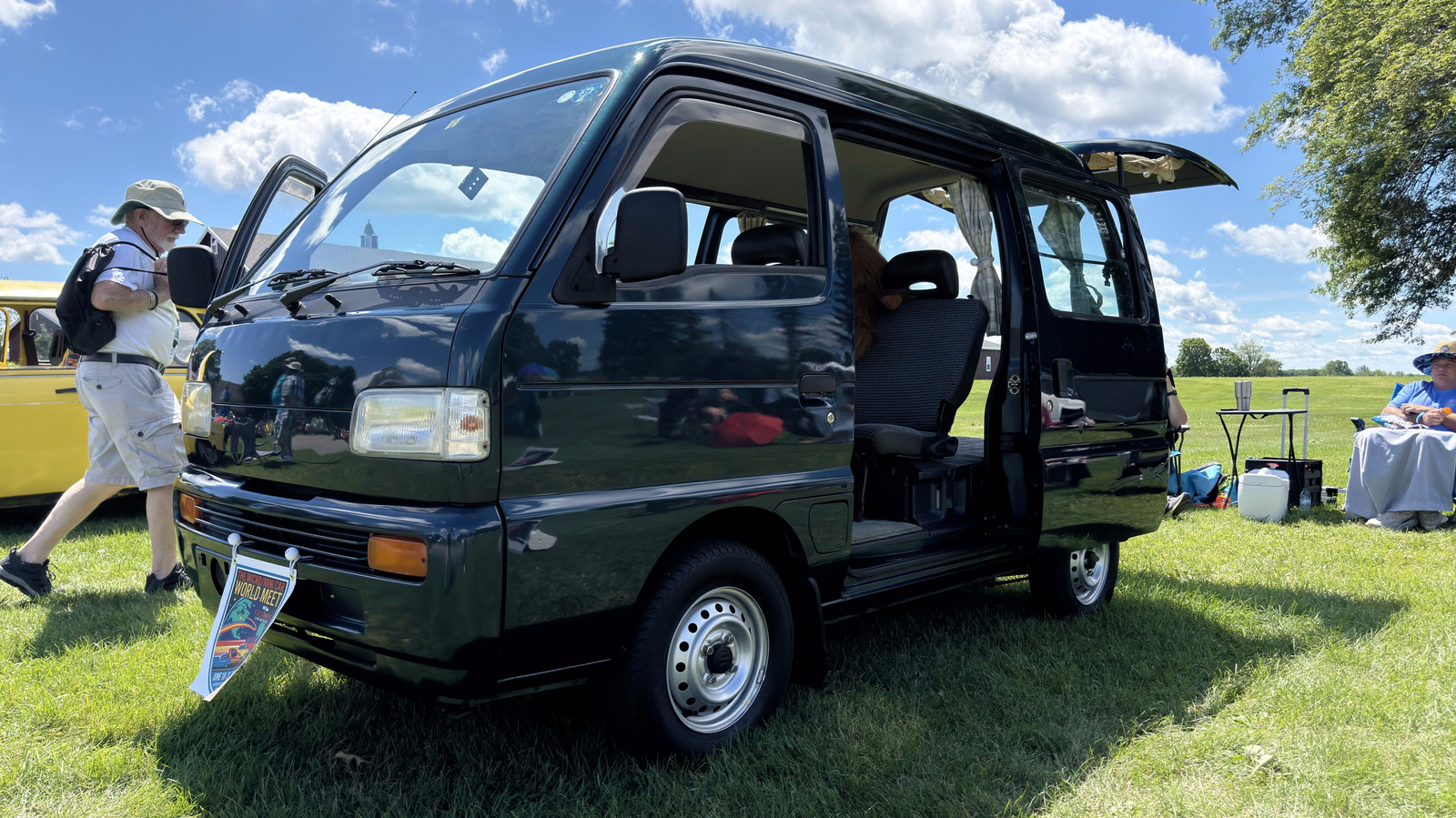
Japanese Kei Trucks Offer Practical Winter Comfort for Alaskan Drivers

Turnaround Cars How Single Models Rescued Iconic Automakers from Collapse
 A surprising number of car firms have been saved by a single model - these are the most famous
Many car companies have come perilously close to the edge of financial ruin or reputational death only for a single model to save the day.
Some of those cars have attained legendary status, while others have become staples of our motoring landscape.
The roles these cars played in saving their respective manufacturers from bankruptcy, obscurity, mundanity or all three cannot be understated. Here, we name those cars and mark their importance in date order.
Bentley MkVI (1946)
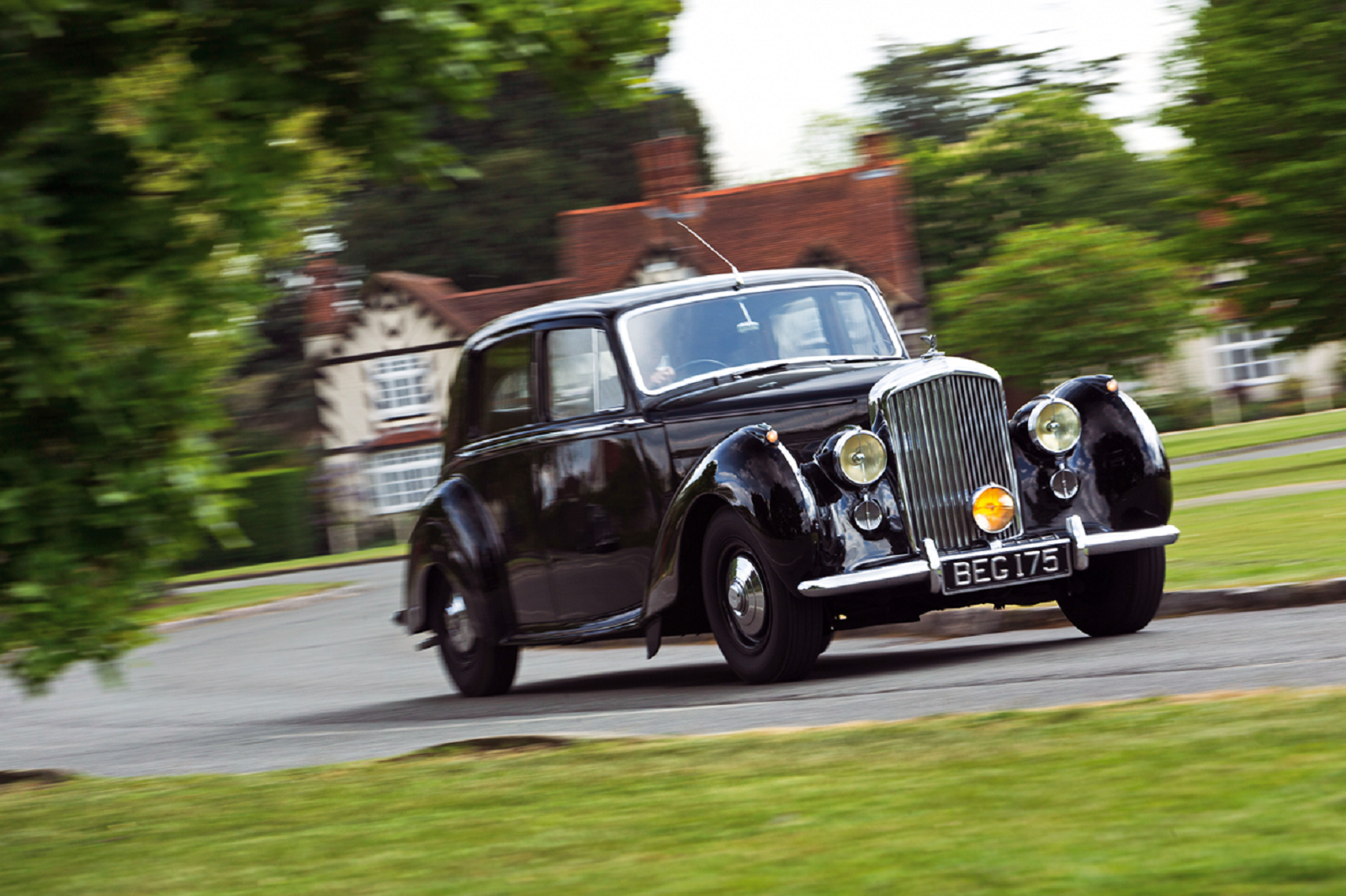
Immediately after the Second World War, luxury cars were not high on the priority list for many, assuming you could afford or get hold of a new car in the UK. However, the Bentley MkVI accounted for this and was the first car offered by its parent Rolls-Royce with a standardised body rather than providing a chassis to a coachbuilder.
Known as the Standard Steel saloon, the MkVI was restrained and elegant to suit the times. It and its Rolls-Royce Dawn sister were also quite advanced thanks to independent front suspension, servo brakes and a centralised chassis lubrication system. The Bentley sold in far greater numbers, with 5201 examples made to 760 for the Dawn, and this is what provided much needed funds for Rolls-Royce to develop much-needed new models.
Volkswagen Beetle (1948)
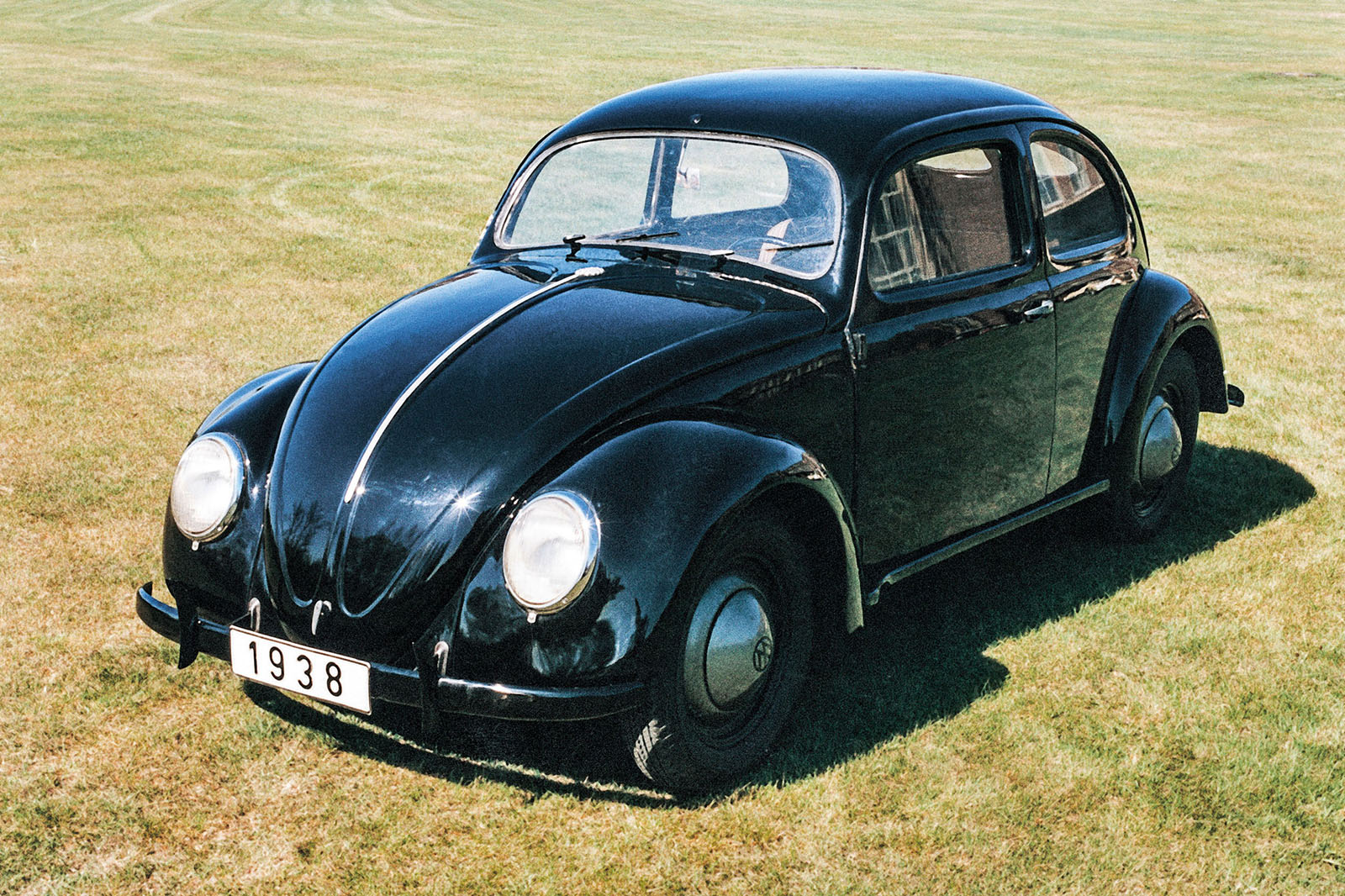
The Beetle saved Volkswagen and Major Ivan Hirst saved the Beetle. He cleared the factory, restarted the production lines and convinced the British Army to buy 20,000 of these unusual little cars. This was the Type 1 that set the mould for all subsequent air-cooled Beetles with a rear-mounted flat-four engine.
Sales increased gradually to begin with until factory director Heinz Nordhoff began to expand the sales network. Soon, cars were flying out of the factory and the one millionth was made in 1955. The money from these sales put Volkswagen on a firm footing and set it on track to become the global giant we now know. In total, 21,529,464 Beetles of all types were made in factories from Germany to Australia, Belgium to Brazil, and as far flung as Malaysia, Nigeria and even Ireland. The last were built in Mexico in 2003. Today, Volkswagen is the world's largest vehicle producer, with 10.83 million produced in 2018.
1949 Ford (1948)
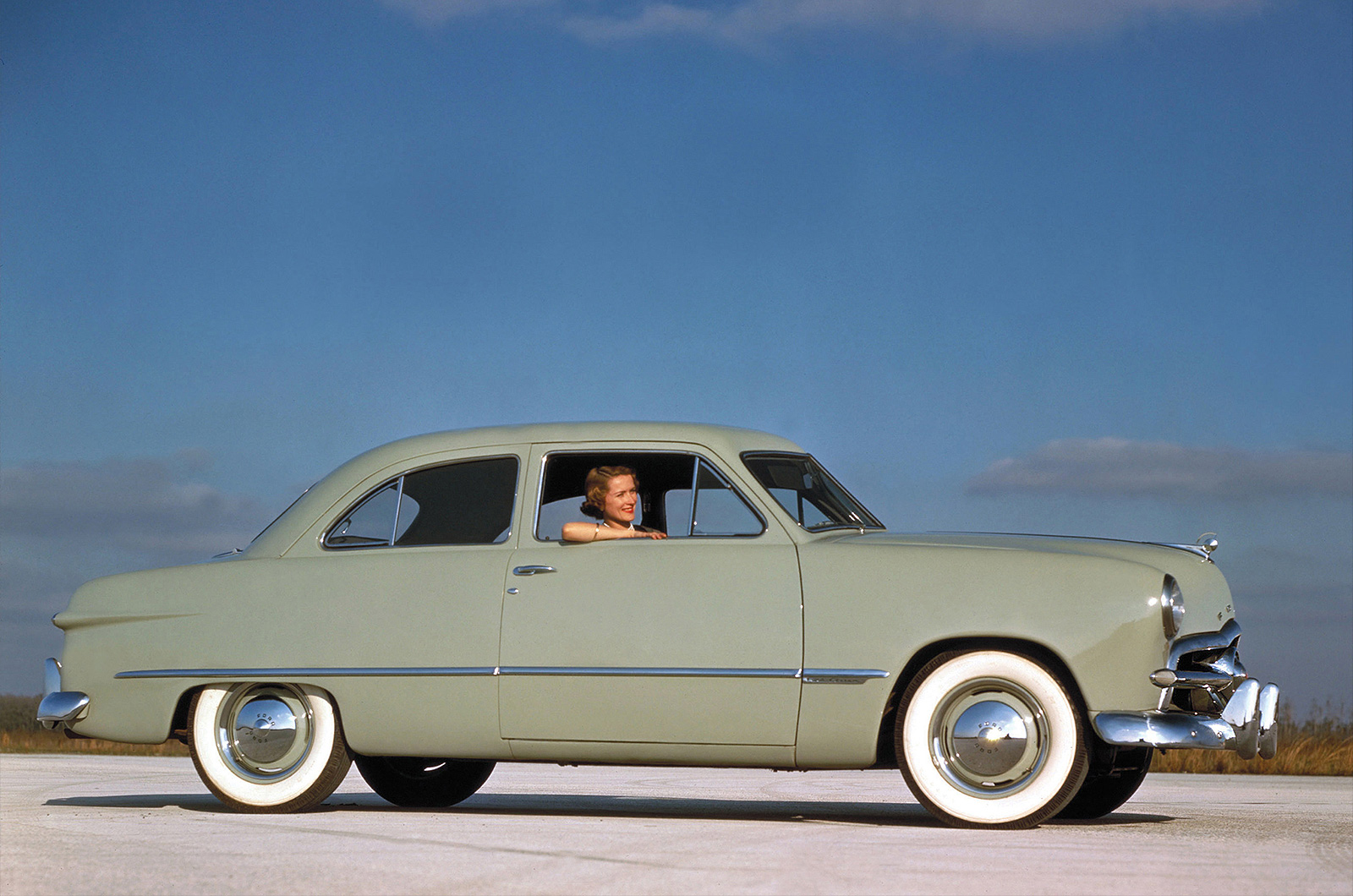
Ford, along with its competitors, had a big problem at the end of World War Two. Nearly all of its US assembly lines had been turned over to cranking out aeroplanes, tanks, military trucks, jeeps and much else during the war – but now the government didn’t need most of this anymore, while demobbed soldiers came home needing cars. Ford started making cars again, but all were based on pre-war designs, which were looking dated.
Henry Ford II was a grandson of the founder and became the company’s boss in 1945, at the age of just 28. He put together a crack team of engineers and business analysts and they took the all-new 1949 model from concept to production in just 19 months, and became the first of Detroit’s Big Three to make an all-new car after the war. 100,000 orders were placed on the day it was unveiled in June 1948. It featured a variety of bodystyles including a coupe (pictured), and power came from either a 3.7-litre straight-six or 3.9-litre V8; its front suspension was independent, with a new steering setup.
1.12 million examples were produced, eventually earning Ford $177 million in profit, a huge sum at the time. It reestablished the company, and set it up for going on the stock market in 1956.
Mercedes-Benz 180 (1953)
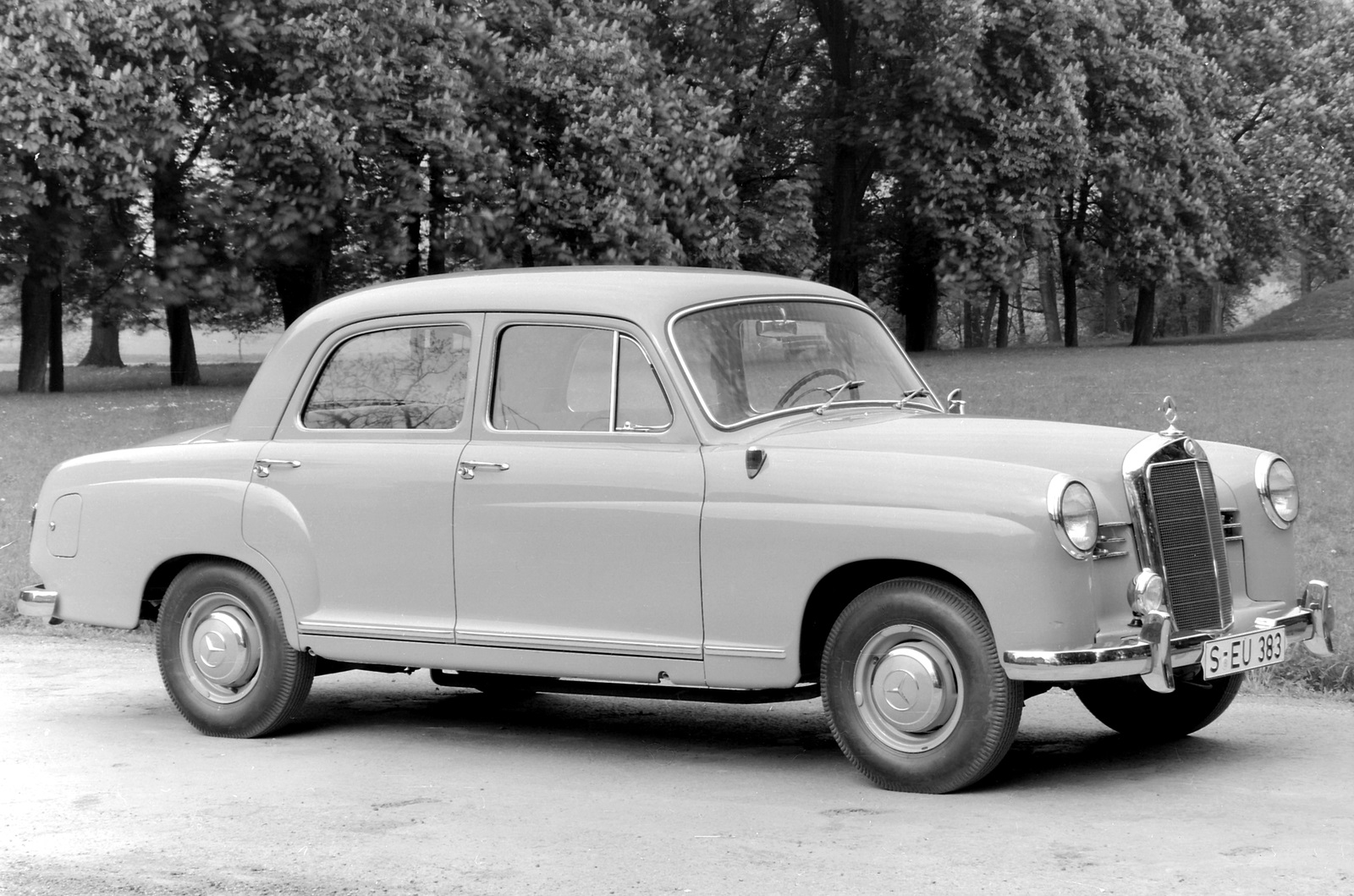
Mercedes had a somewhat different problem to Ford; during the war many of its factories had been obliterated by Allied bombers. But it slowly got back on its feet, and once it had done so it wanted to get back to doing what it did best: mass production of cars. It was the humble 180 saloon that saw the German firm move into volume production again. It was the firm’s first truly new model after the Second World War and used innovative unitary construction that mimicked the Citroen Traction Avant.
However, the 180 and its 180D diesel variant were very conservative in their styling and drive. This didn’t stop them offering rugged reliability, albeit at a plodding pace. Nevertheless, while the 300SL was all supercar performance, the 180 line ended up producing 270,000 cars and put Mercedes in profit. But the next model from Mercedes helped really seal its revival.
Mercedes 300SL (1954)
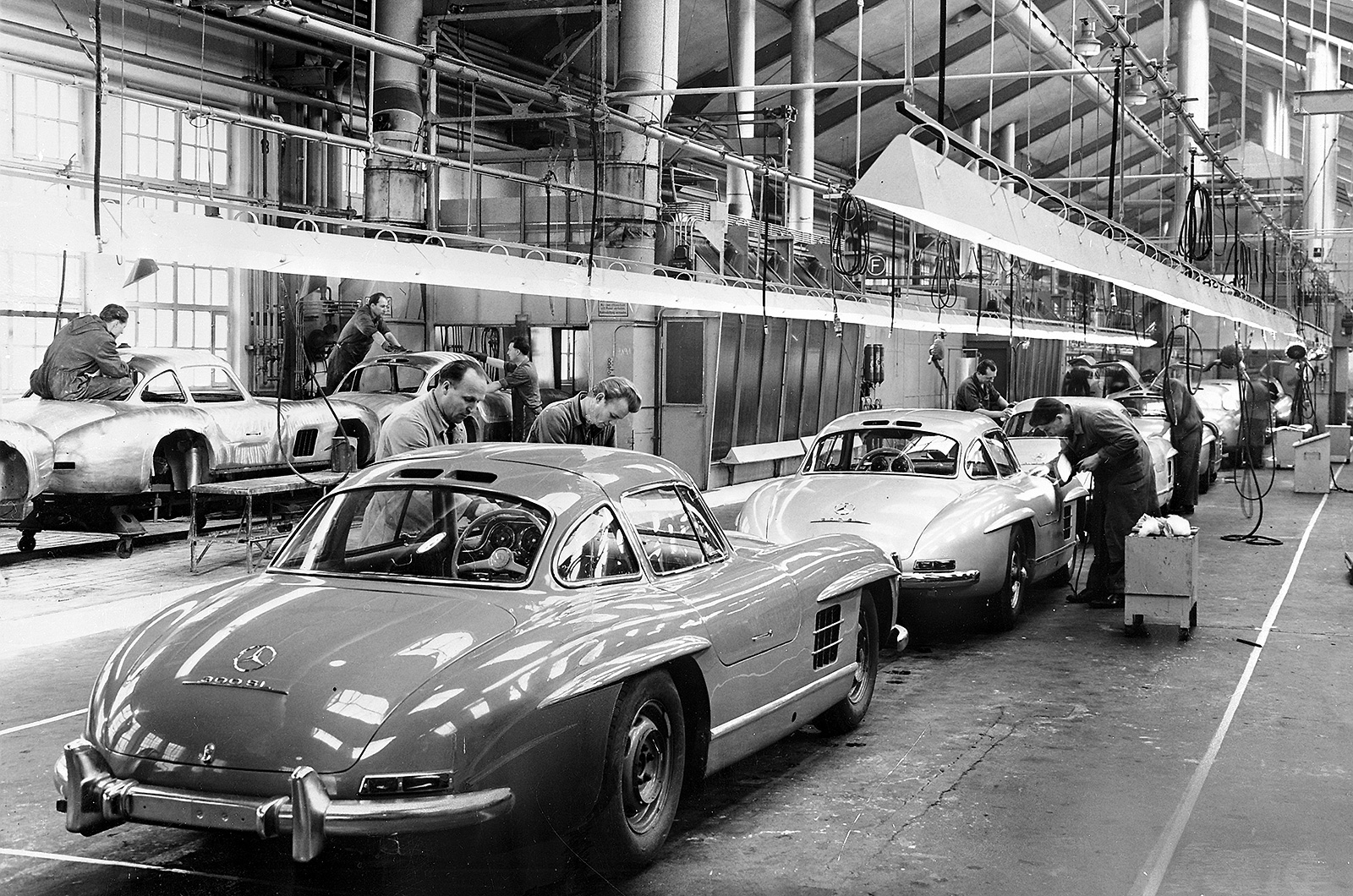
making glamorous cars for the rich and famous. It needed a halo. Its answer was the 300SL, and it could not have been more successful or important.
Its large car range was still rooted in 1930s’ design and the smaller cars were dutiful but dull, so some much-needed zest was required. Enter the gullwing doors of the 300SL, complete with a fuel-injected engine, racing pedigree and 135mph top speed. It was a sensation in every sense and turned perceptions of Mercedes right around.
After the 1400 Gullwing models ended production in 1957, the Roadster took over. Arguably the better car thanks to better rear suspension, stiffer chassis and easier entry, it carried on the glamour offensive and 1856 buyers thought it worth the huge £4393 asking price. More relevantly, the technology from the 300SL found its way into mainstream models and set Mercedes on its course as a technical and safety innovator.
Fiat 500 (1957)
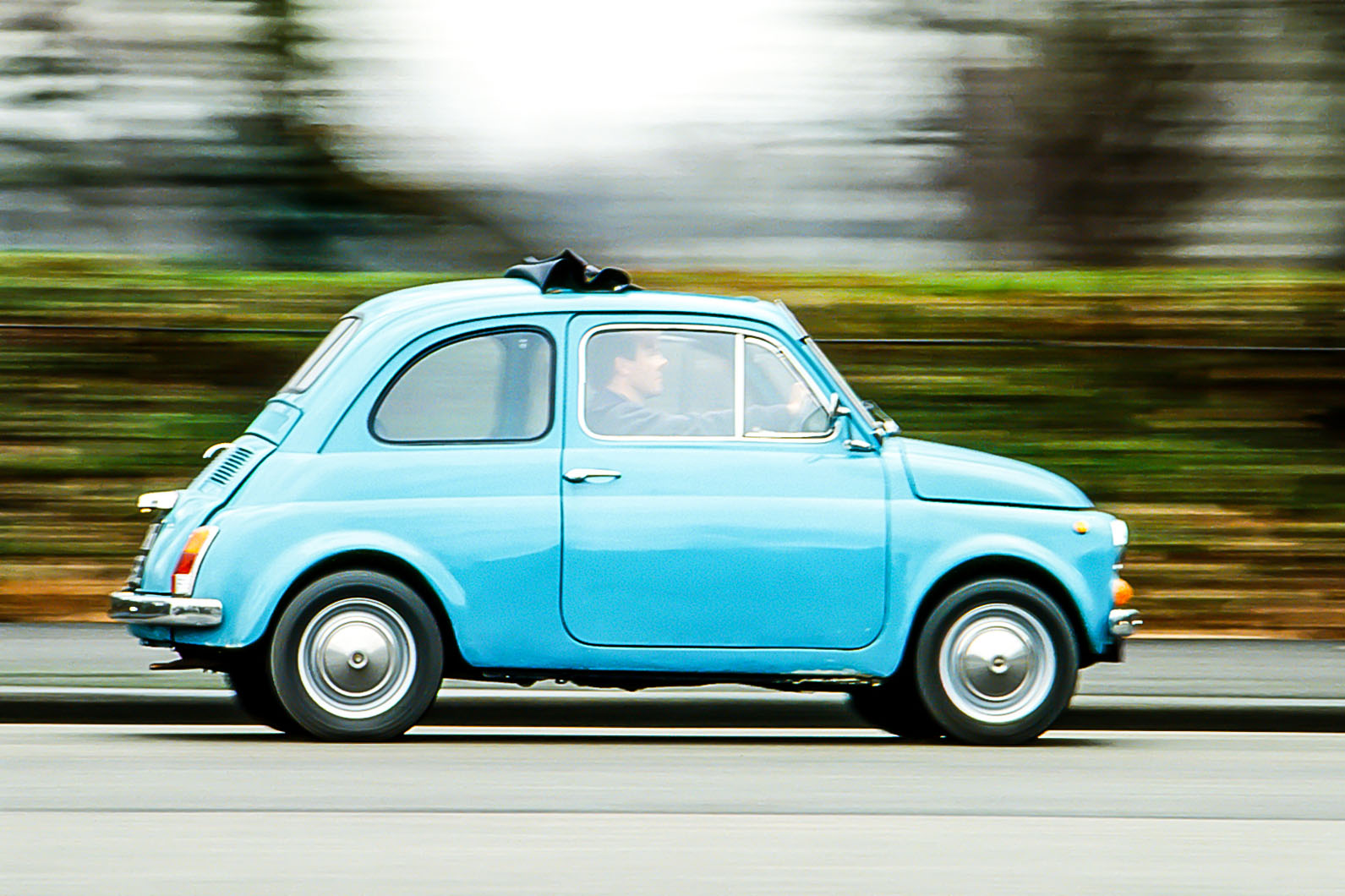
As Italy struggled to rebuild itself after the Second World War, initial demand for cheap transport was met by scooters, but the Fiat 500 put an end to that. Here was a proper car, not a bubble car, with four seats and looks cuter than a puppy dog’s. Little wonder Fiat shifted 3.5 million of them in 18 years.
Crucially, the rear-engined 500 with its diminutive 499cc parallel twin motor was easy and cheap to maintain while offering just enough performance to trundle around town and country alike. The money the 500 brought into Fiat made it an industrial powerhouse and made the foundations of the business it is today.
BMW 700 (1959)
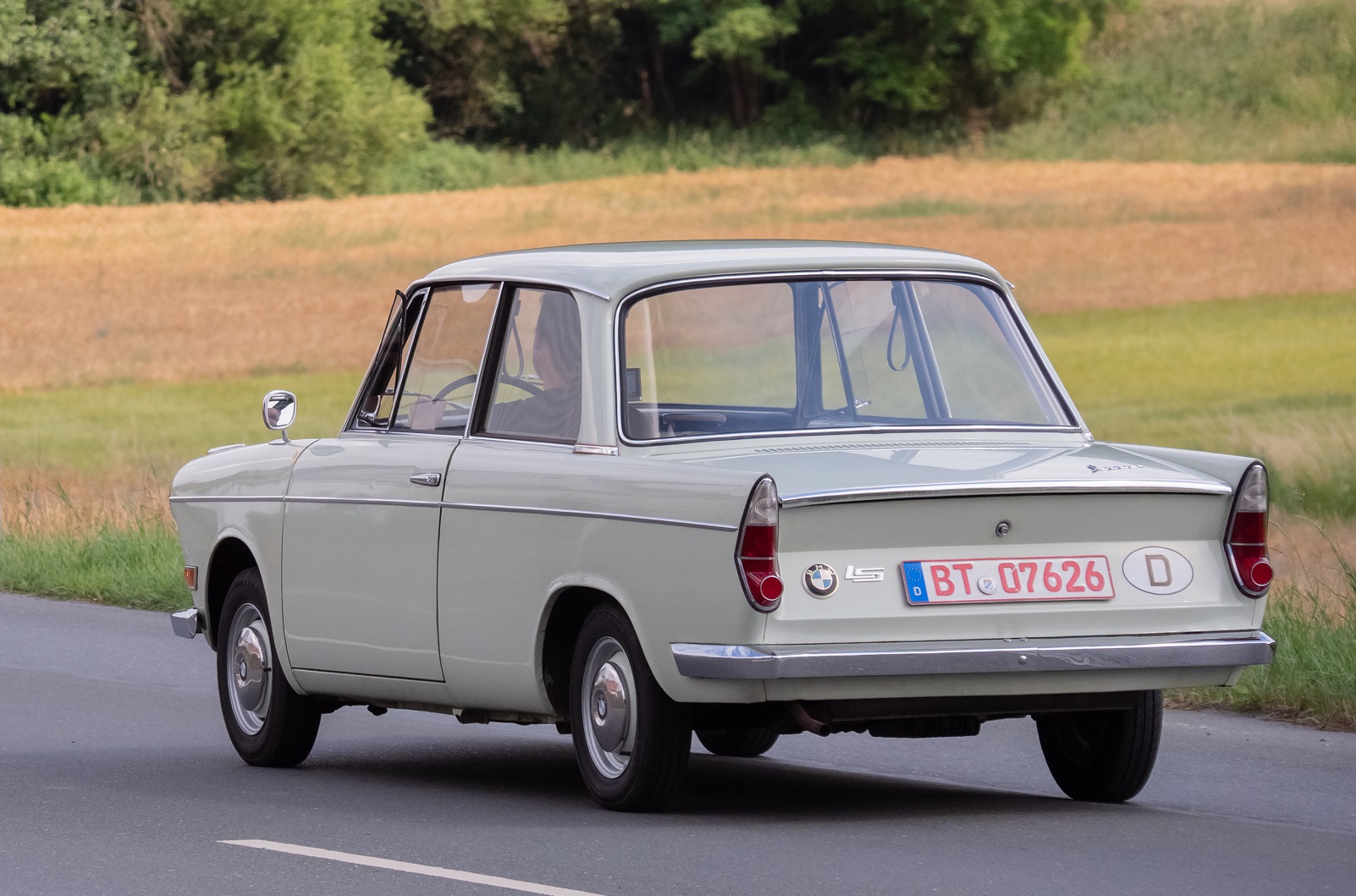
It’s hard to think of the BMW we know today as a company that was once on the cusp of going under, yet that’s where it was in the late 1950s. A disparate range of luxury and bubble cars wasn’t bringing home the bacon, which is where the 700 came to the rescue and set the template for its volume sellers that continues to this day with the likes of the 1 Series.
The 700 was radical in being BMW’s first monocoque structure and was initially offered as a coupe, but the saloon soon followed and racked up 154,557 sales on its own. The Coupe and Cabriolet added a further 33,500 to that tally. All were powered by a rear-mounted 697cc flat-twin derived from BMW’s motorcycle engine, but this unusual feature did nothing to dim the 700’s popularity or profit-generating income, which allowed the sleek saloons and coupes of the 1960s to create the BMW we know today.
Jaguar XJ6 S1 (1968)
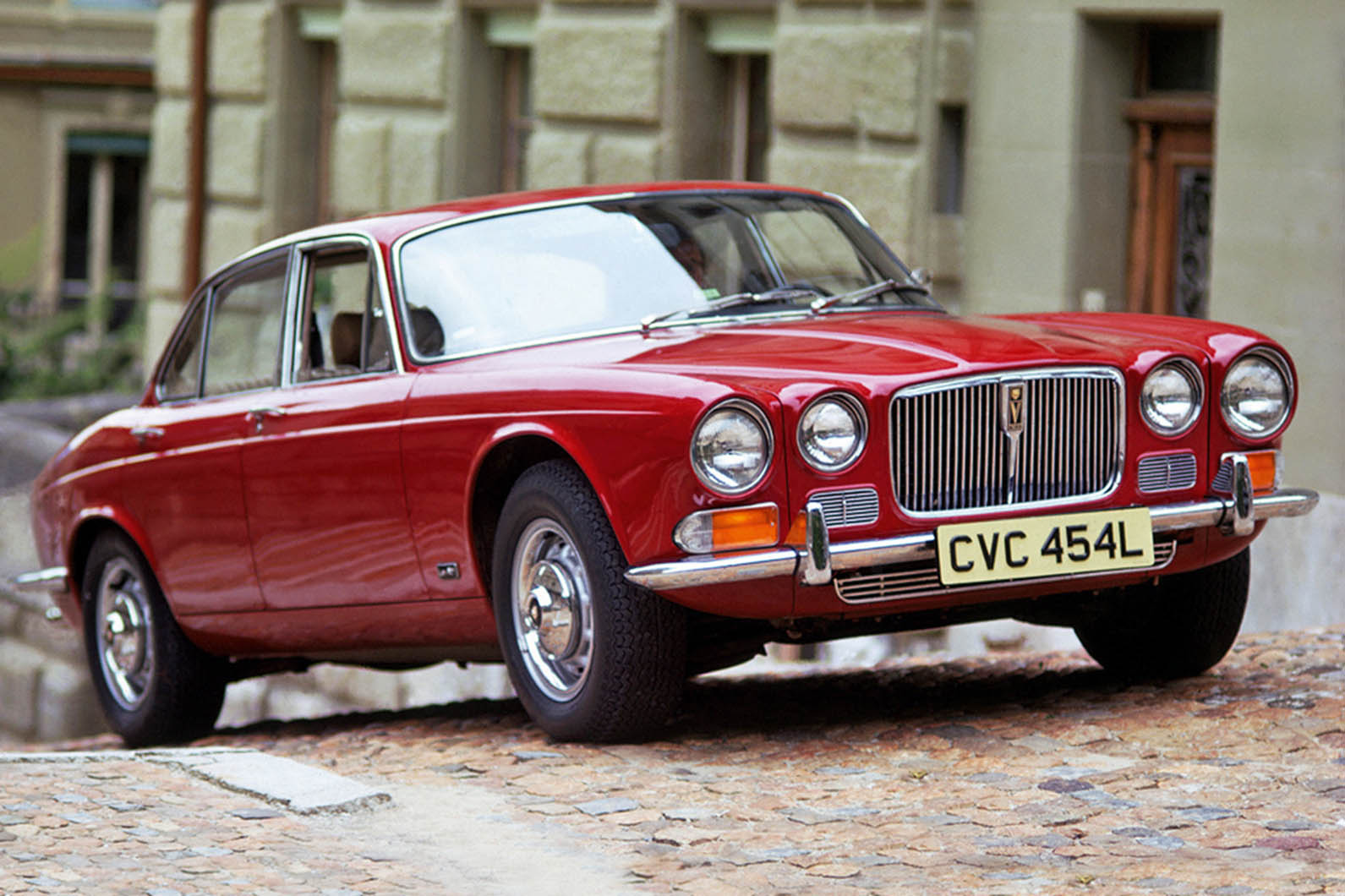
Jaguar’s sports cars may have garnered the headlines, but the first XJ6 was Sir Williams Lyons’ true career masterstroke. It not only consigned all other luxury saloons to second place for comfort, handling and refinement, it was achieved at a price that left the competition bewildered at how the British firm could do it for the money.
While not in financial straits when the XJ6 was launched, Jaguar was by then part of British Motor Holdings and was about to negotiate the muddled management of the Leyland era. Throughout all of this, the XJ6 held the company together and its derivatives lasted into the 1990s as the Series 3 XJ12. By the end of the S1 XJ6’s life in 1972, 78,218 had been made and sold to eager customers all over the world. The XJ line continued all the way to 2019; an all-electric XJ follow-up was cancelled just before launch. Let's hope we see the nameplate again.
AMC Gremlin (1970)
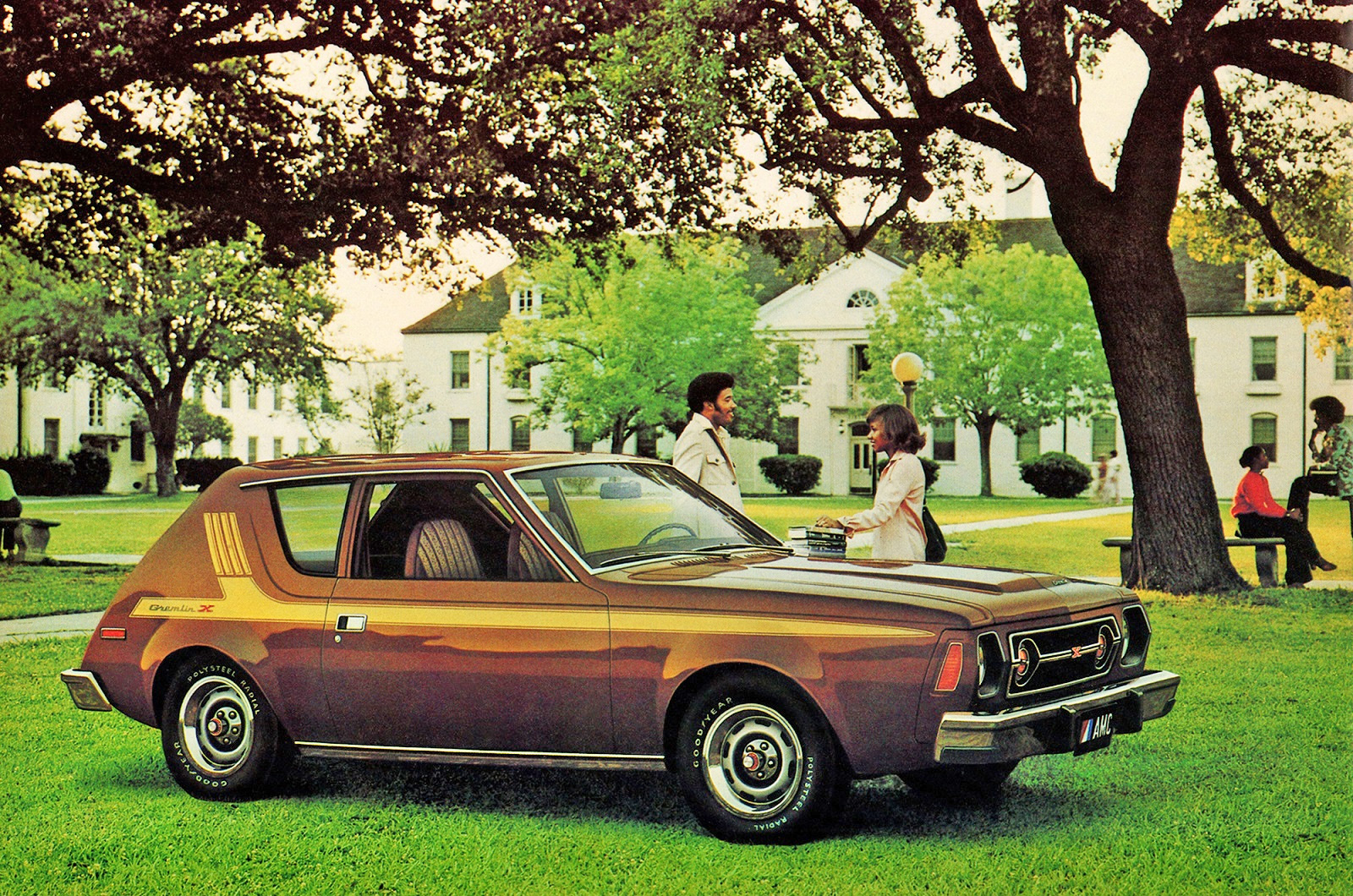
Just as the US was reaching its muscle car crescendo, along came the AMC Gremlin as a presage of a more modest era. Based on the independent company’s Hornet platform, the Gremlin offered four seats, comfort, space, and a decent drive in car that helped create the sub-compact class in the US. It also beat small-sized rivals from Ford and GM into showrooms.
Compact is a relative term as the Gremlin launched with 3.3- and 3.8-litre straight-six engines, but it tapped into a new generation of buyers and sold 671,475 cars in eight years. This kept AMC viable as an independent firm and producing cars into the 1980s – when it was eventually swallowed up by Chrysler.
Alfa Romeo Alfasud (1972)
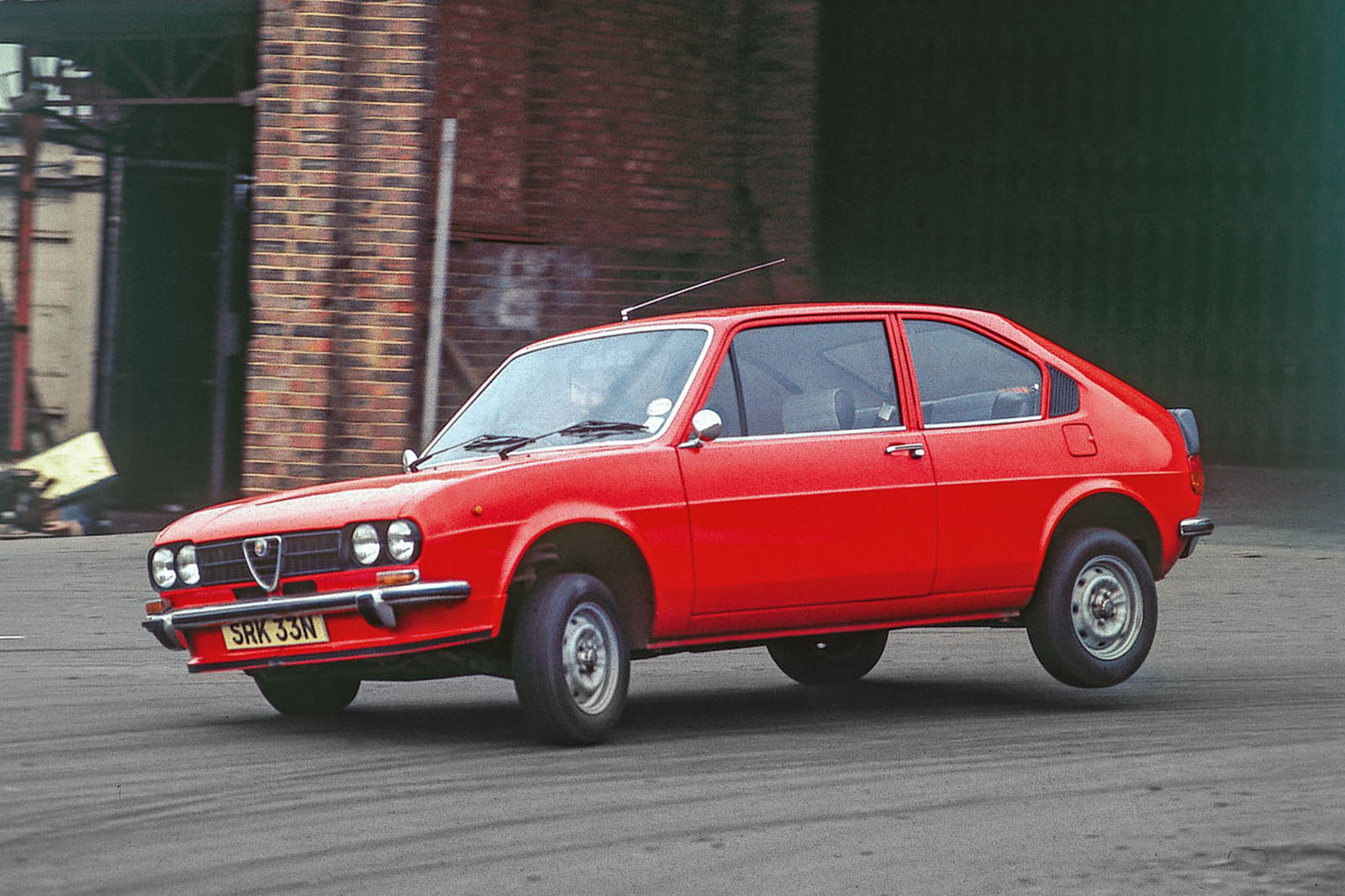
Sporty rear-wheel-drive cars had been Alfa’s staple, so the £1399 Alfasud was an exceptional car even before it was launched. Front-wheel drive with a flat-four engine mounted in hatch-style body, here was Alfa doing what it would take Volkswagen another two years to offer with its Golf. The name came from the new factory in Naples in the south, or ‘sud’, of Italy, though this created problems with build quality and rust resistance.
No matter, the Alfasud soon garnered a reputation as a fine-handling hatch with a willing engine. In Italy, it was a direct bullseye for Alfa, though remained a more acquired taste elsewhere. Still, 387,734 Alfasuds were sold in its 11-year period of manufacture, securing the company’s ongoing future into the 1980s.
Honda Civic (1972)
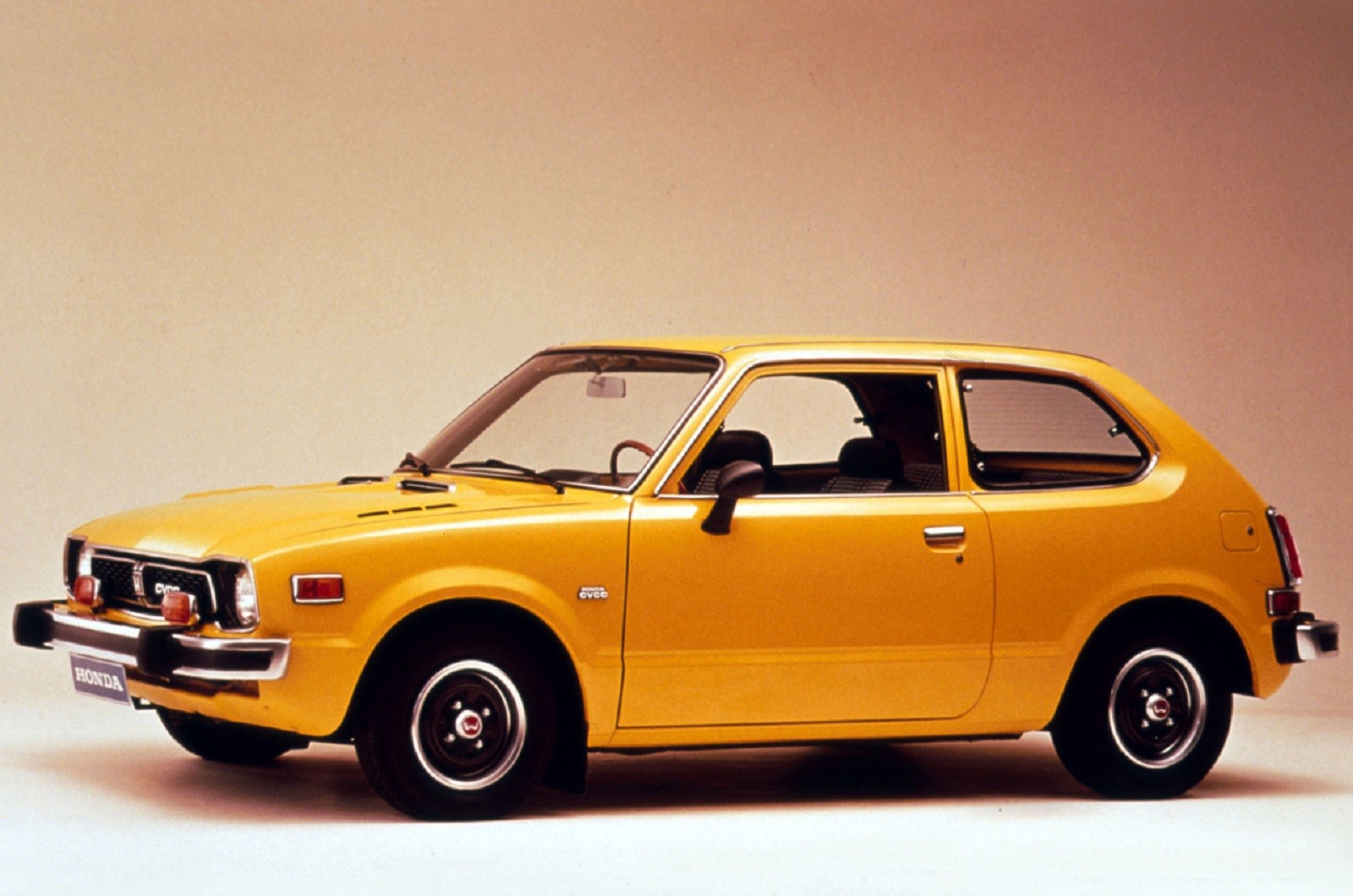
Honda was considering abandoning car production to concentrate on motorcycles when it launched the Civic in 1972. Where its previous small cars had enjoyed minimal success outside of Japan, suddenly the Civic took off as an energy crisis focused buyers’ minds on smaller, more economical cars.
Available in three- and five-door hatchback forms, the Civic was a thoroughly modern small car with front-wheel drive where the Ford Escort still used rear-drive and cart springs. This ensured success for the Civic and Honda never looked back as a car maker, launching the Accord in 1976 based on the same platform as the Civic. Over 20 million Civics have been sold to date.
Volkswagen Golf Mk1 (1974)
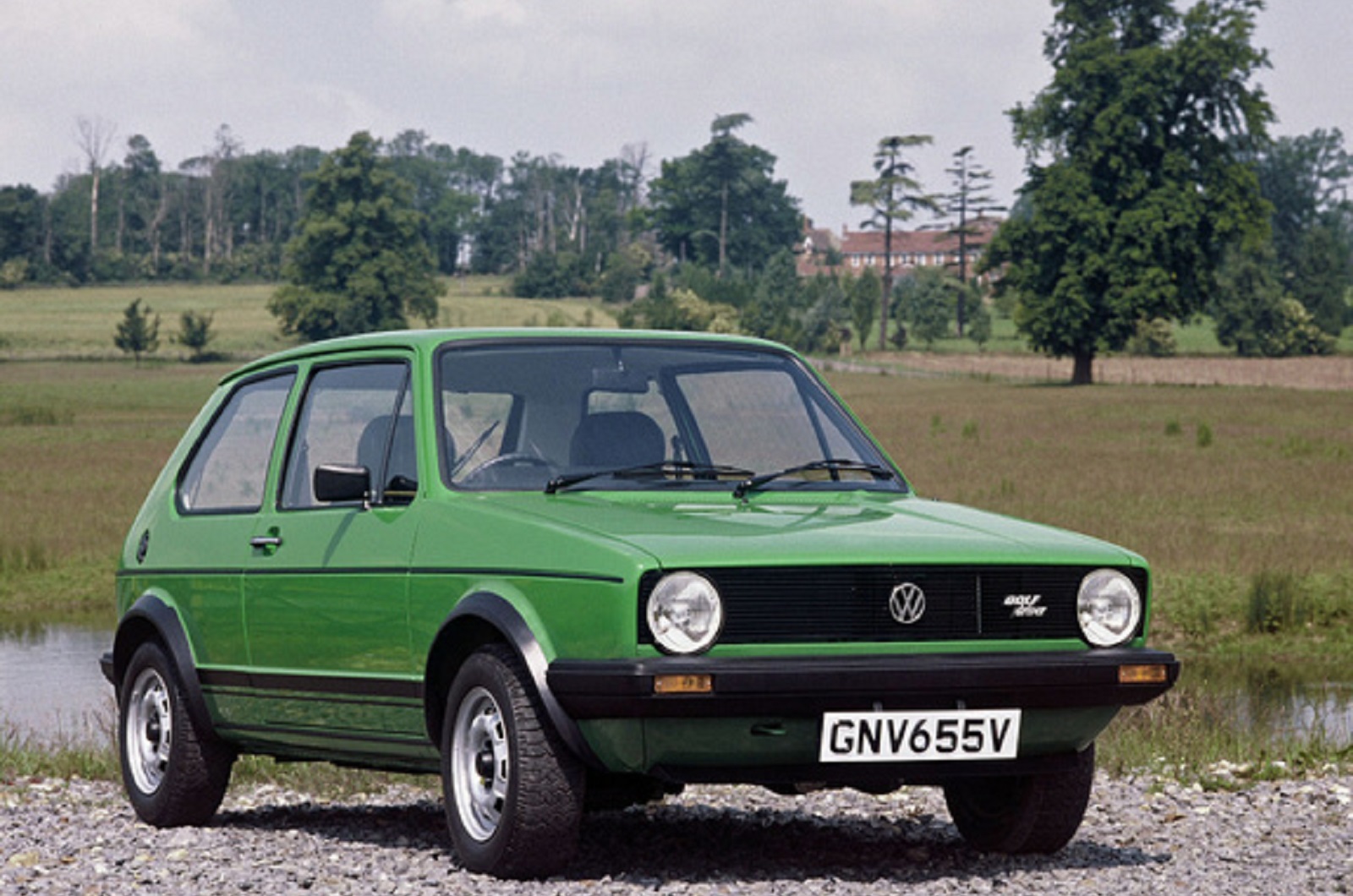
Volkswagen had tried to pension off the Beetle before and the new front-wheel drive Golf was another attempt in 1974. While the venerable Beetle continued, the Golf found its own fame and finally moved VW on from being a maker of air-cooled machines. It also helped swell the coffers to allow the Passat to be developed and move VW further away from its Beetle origins.
While VW was far from financially troubled at the launch of the Golf, this thoroughly modern hatch effectively started a whole new approach that set Volkswagen on the path to where it is now. Without the Golf, it would be hard to see how that could have happened.
Vauxhall Cavalier (1975)
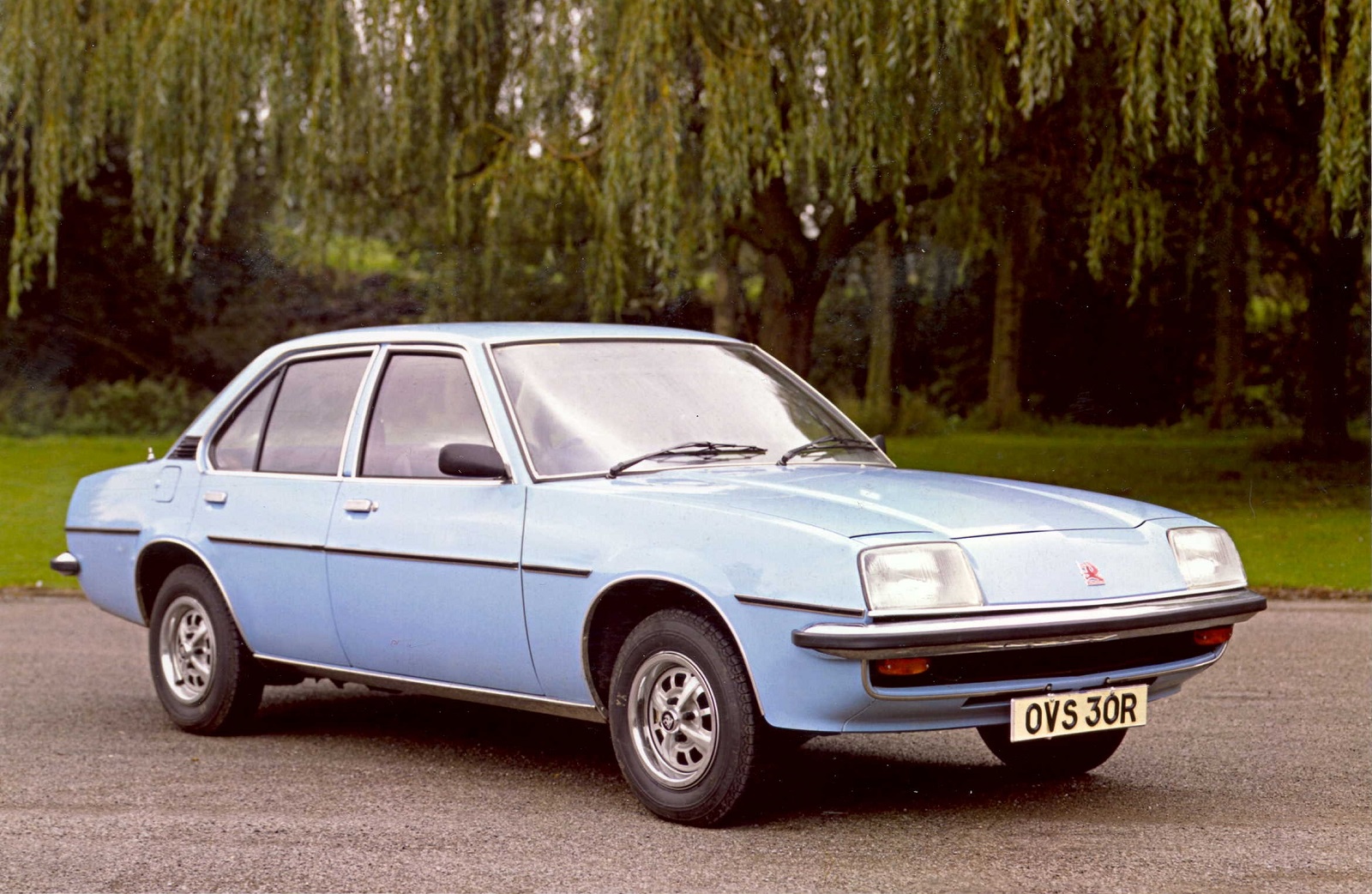
General Motor’s British arm was in decline in the mid-1970s, until the Cavalier turned up to give the Ford Cortina a serious run for its money. Billed as ‘the power you want, the economy you need and at a price you’ll like’, the £2749 Cavalier was all that and more. It handled well thanks to sharing much of its suspension and chassis with the Opel Manta, while a range of four-cylinder engines provided anything from frugal 1.3 to peppy 2.0-litre units.
In the UK, 238,980 Cavaliers were sold and many were built in Luton to appeal to a patriotic streak in their drivers. It set Vauxhall back on course in the all-important fleet sector and the name enjoyed two decades of success until it was replaced by the Vectra.
Dodge Omni (1978)
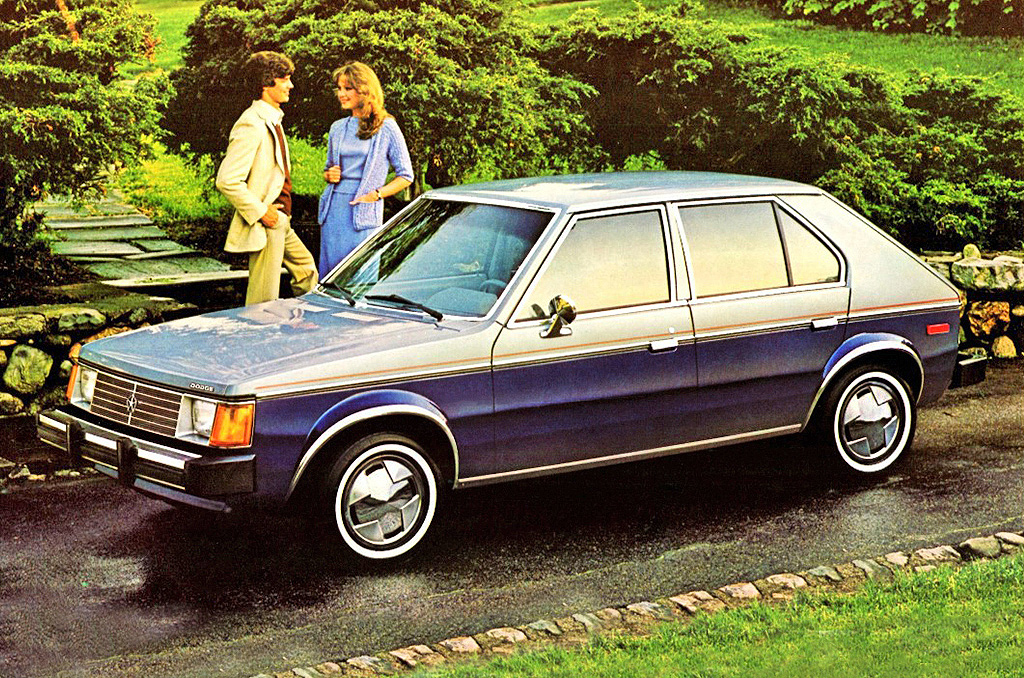
Dodge’s parent company Chrysler was not in a good way by the mid-1970s. It had missed out on the sub-compact class to the AMC Gremlin, Chevrolet Vega and Ford Pinto, and it needed a small car fast. It looked to Europe and the Talbot Horizon presented itself as a readymade solution.
For the US, Dodge ignored the Talbot’s smaller engines for the Omni and offered a range 1.6-, 1.7- and 2.2-litre petrols. There was also a turbocharged 2.2-litre motor to keep keener drivers happy. Chrysler’s management was also happy with the sales figures, which remained buoyant throughout the car’s lifespan. Curiously, nearly bankrupt Chrysler sold its European operation just as the Omni was launched in the US, so the Talbot Horizon became a model within the PSA Group.
Austin Metro (1980)
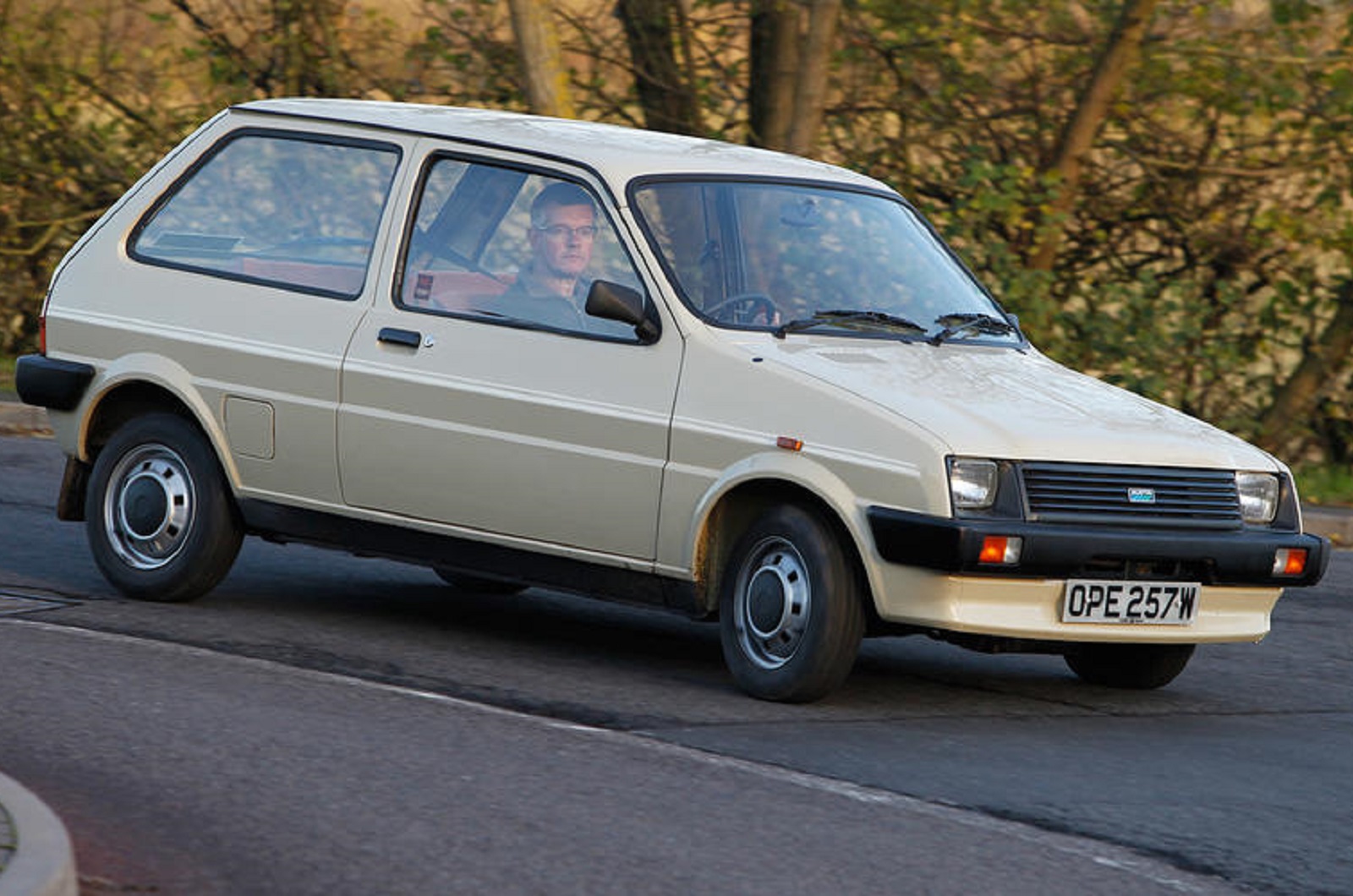
The Metro was a new car and new start for the beleaguered British Leyland just as it was morphing into Austin Rover. While the Mini refused to be pensioned off, the Metro showed the formula still had plenty of mileage with its spacious cabin and decent handling.
While some regard the Metro as an also-ran as it didn’t displace the Mini, which carried on in production after the Metro’s demise, this new supermini put the firm back on a sure footing. It routinely appeared among the top three best-selling cars in the UK through the 1980s, helped by a touch of glamour from Lady Diana Spencer being seen at the wheel of one ahead of her marriage to Prince Charles. Over 1 million examples were sold in the UK alone.
Chrysler K (1981)
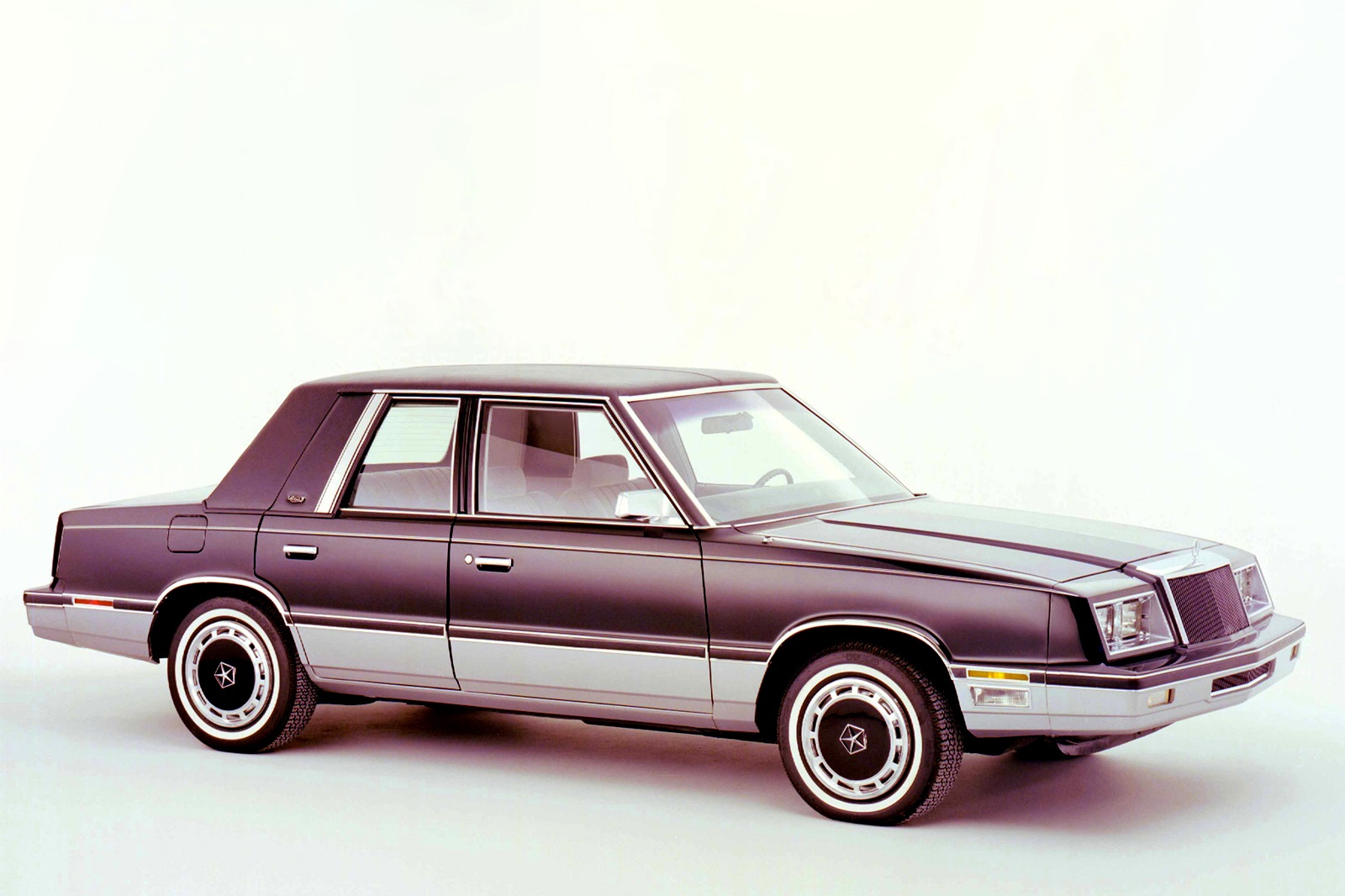
The sub-compact Omni helped pull Chrysler back from the brink in 1978, but it still needed all the help it could get by the start of the 1980s. This is where the K platform models, including the Chrysler LeBaron and Dodge Aries, came to the rescue and set the company back on the right track for the remainder of the decade.
Based on a development of the Omni’s platform, the K platform cars offered decent performance and economy to middle America. Engines ranged in power from 86bhp to 224bhp in the sportiest Dodge Magnum models. In the end, there were more than 50 model badges based on the K platform and they sold more than two million units throughout the 1980s, earning Chrysler a profit and welcome reprieve from money worries.
Porsche 944 (1982)
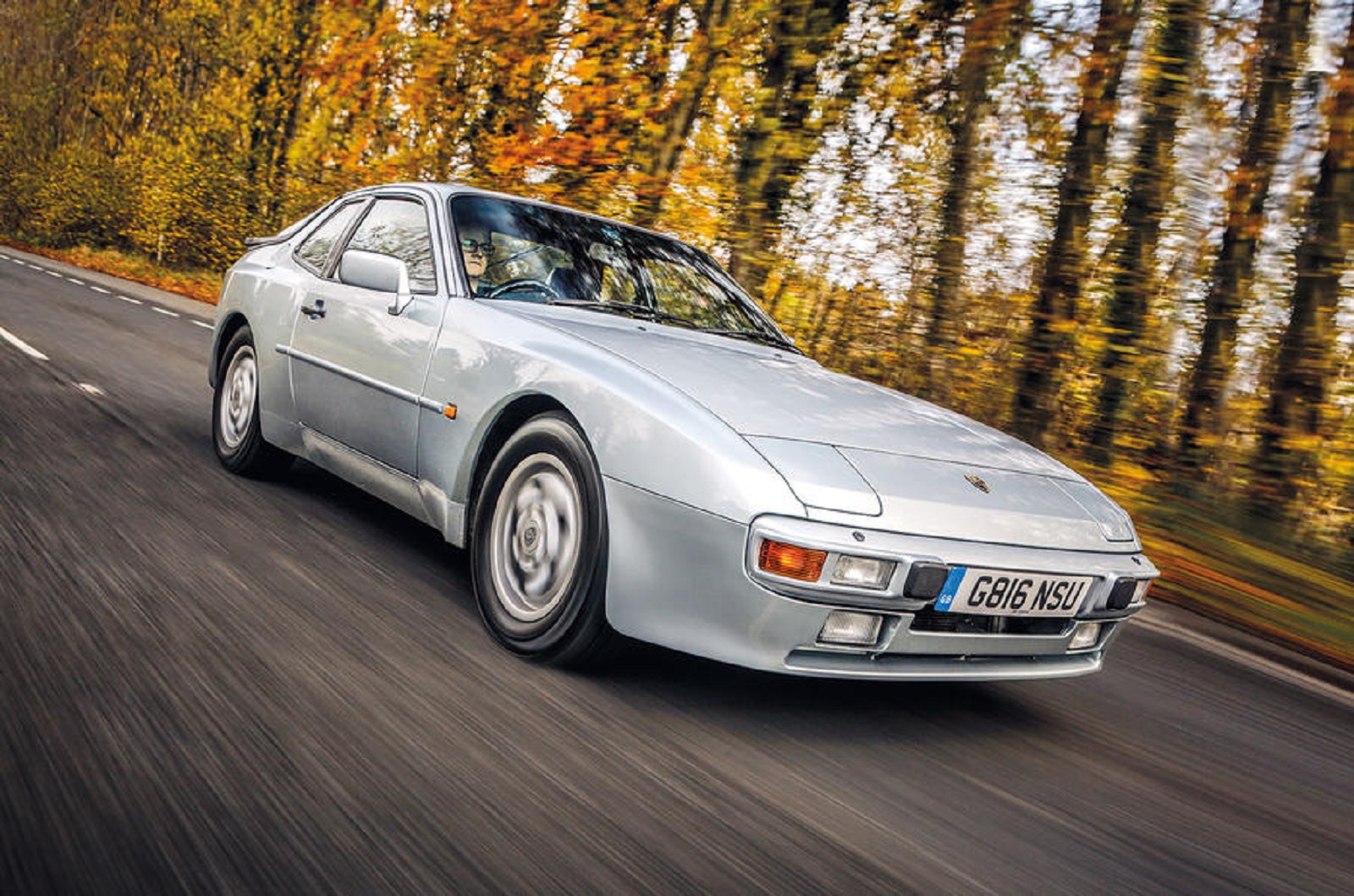
Porsche needed something to bridge the gap between its headline 911 and 928 models and the entry-point 924. Enter the 944, which went on to sell 163,280 cars in its various guises. That far exceeded the 924’s sales and kept the German sports car maker sufficiently liquid with cash to develop new cars for the 1990s, including the make-or-break Boxster.
The genius of the 944 was offering exactly the right amount of power, aggression and handling for its audience, which was a much broader demographic than the 911’s or 928’s. Adding a Turbo and Cabriolet models only added to the 944’s appeal, and the car even continued on as the much revised 968 in 1991.
Volvo 700 Series (1982)
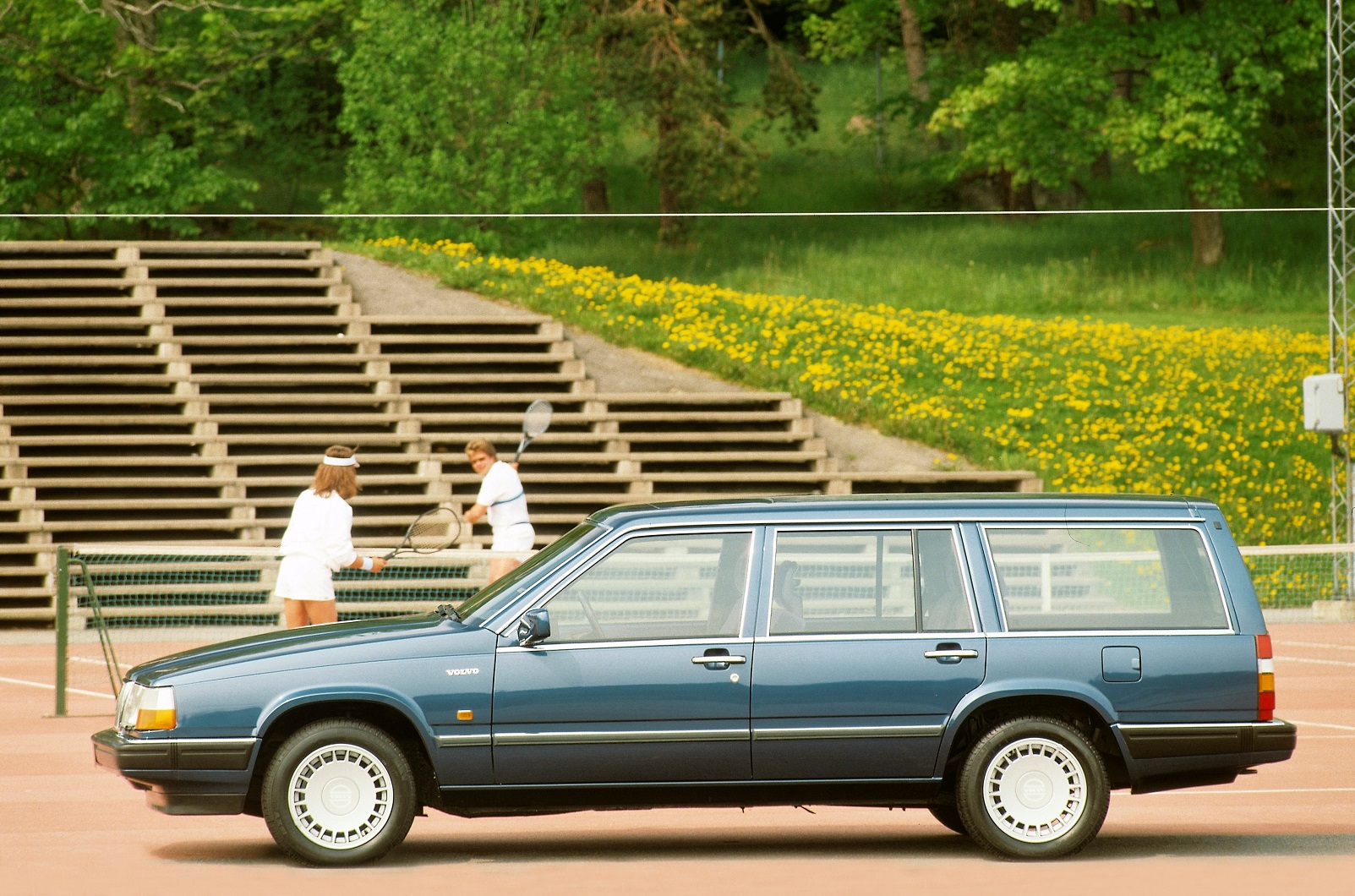
Volvo was ticking along on its image of safety and durability when the 740 and 760 arrived. In an instant, the Swedish firm moved up a notch into the executive sector and became a desirable alternative to a Mercedes estate. Vast boots were a given, along with build quality that made bank vaults look flimsy, but what was unexpected was how good these saloons and estates were to drive.
A rear-wheel drive chassis coupled to lively engines made the 740 and 760 entertaining and the turbocharged models were decently quick, taking 8.0 seconds to cover 0-60mph. By the time production ended and the 900 took over, Volvo had shifted 1.23 million 700 Series cars. Not only did this provide welcome funds, it paved the way to the more upmarket image the company now enjoys today.
Peugeot 205 (1983)
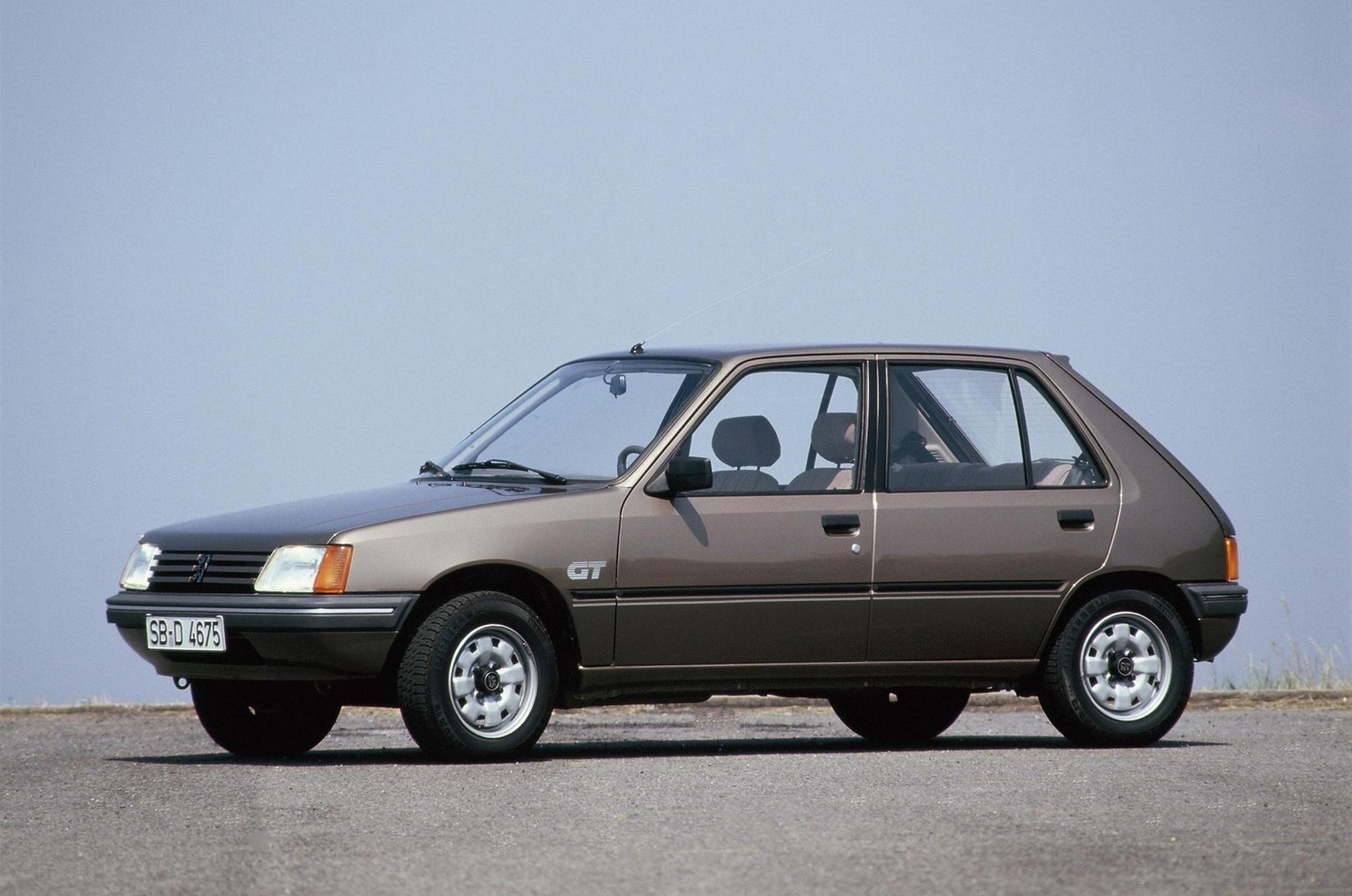
Staid, dependable models marked out the Peugeot range until the arrival of the 205 supermini, which had been styled by Pininfarina. Immediately, the Peugeot brand became desirable and led to a raft of successful models, such as the 309 and 405. From the word go, the 205 was a sales hit and it’s easy to see why with its great drive, roomy cabin, and low running costs.
While the GTI model now commands all of the limelight, it’s the basic 205 models that notched up more than 2.5 million sales that delivered the required shot of cash in the bank that Peugeot needed.
Ford Taurus (1986)
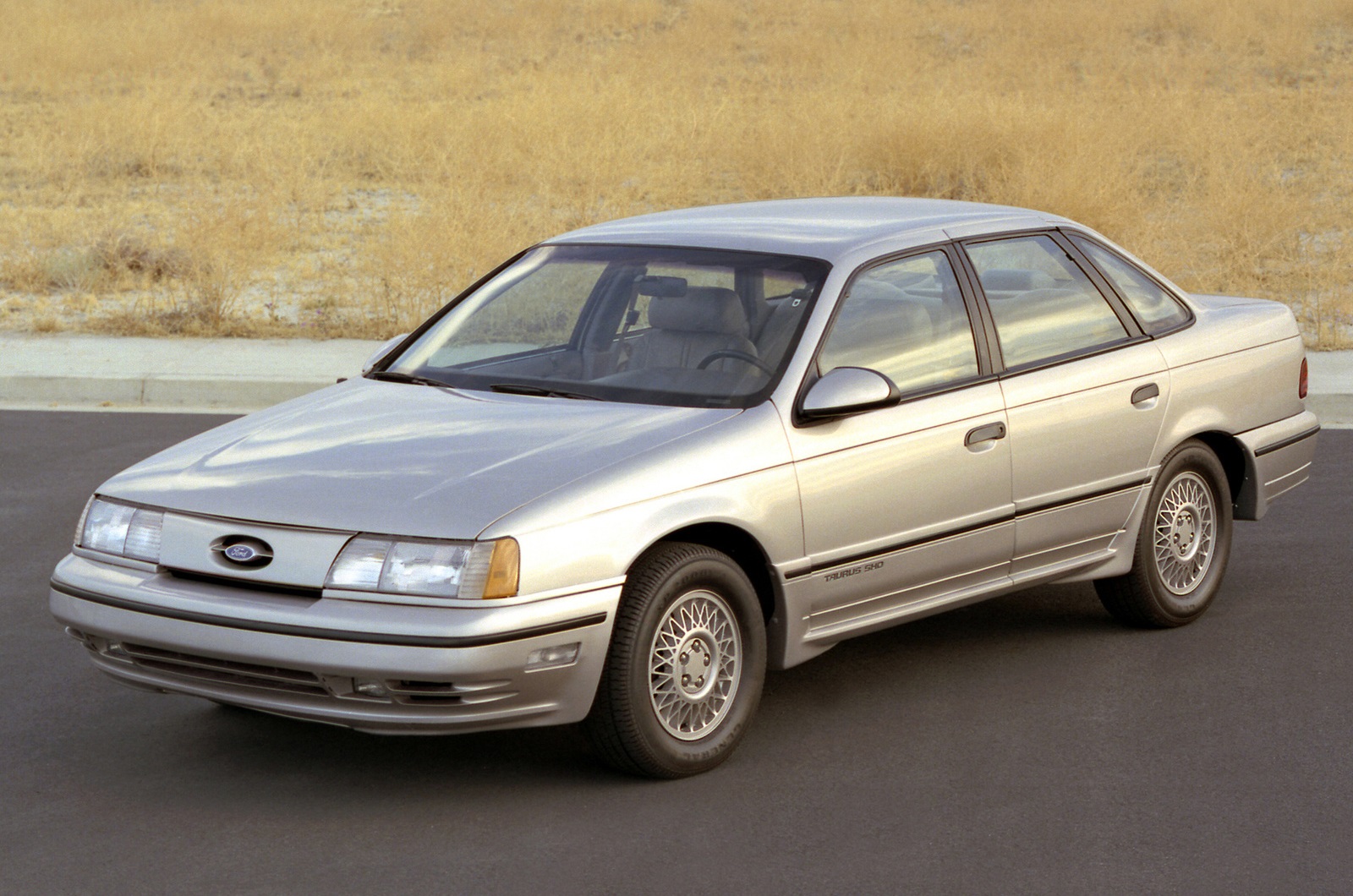
Ford in Europe might have been doing well in the mid-1980s, but in the US it needed a sale hit, and it needed it soon. As a result, the Taurus didn’t arrive a moment too soon for the Blue Oval to stop it haemorrhaging money. This was achieved with the new ‘culture of quality’ mantra that replaced the old ‘that’ll do’ approach.
At a stroke, Ford led the mid-size field in the US, helped by the Taurus coming in a variety of body styles and trims that allowed buyers to tailor it to their needs. It was also good to drive, economical, and the quality put well above rivals. By 1991, when the second-generation Taurus was introduced, the first-generation model had found more than two million happy buyers.
Land Rover Discovery (1989)
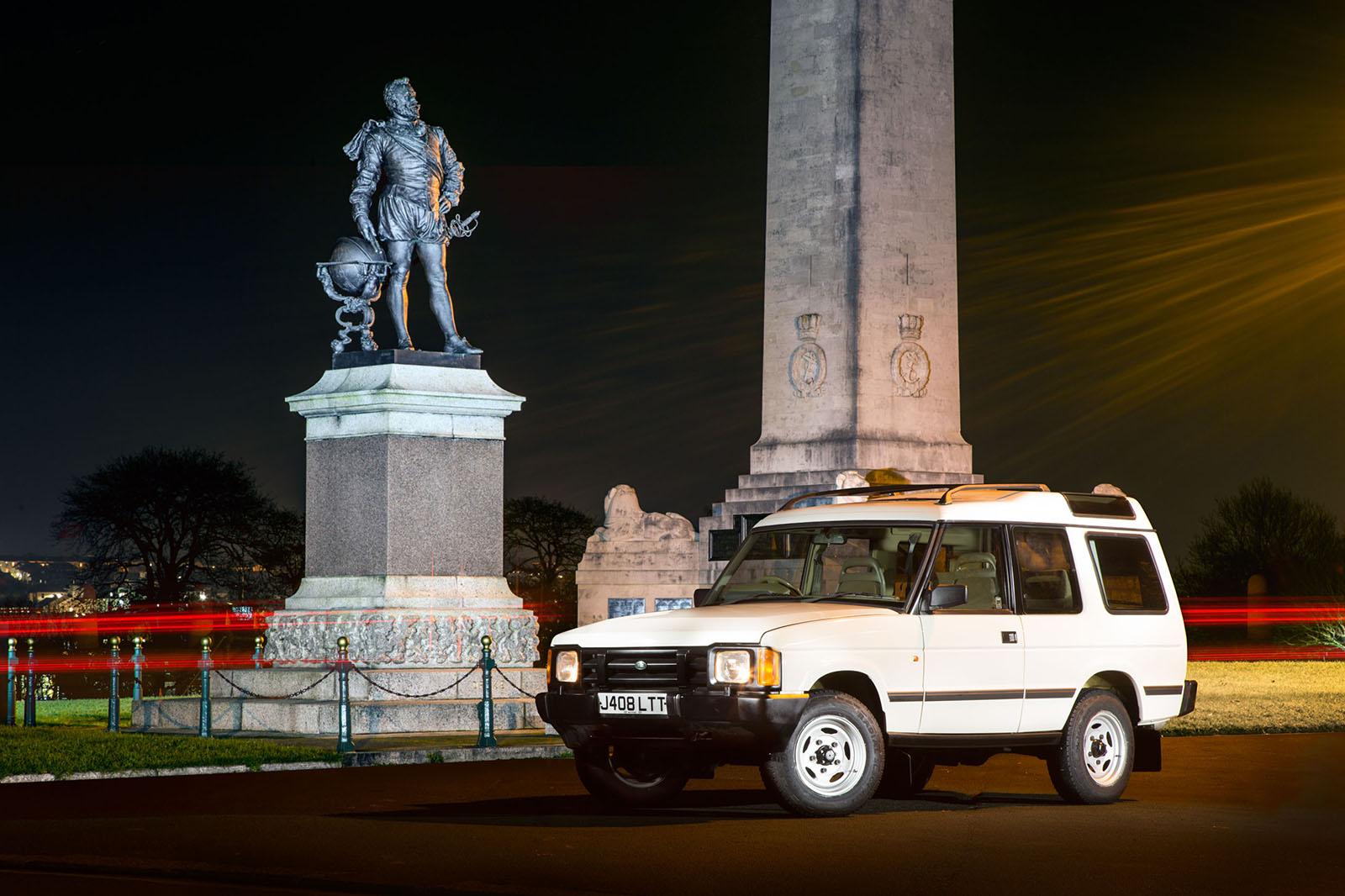
Land Rover was gently becoming a niche company selling off-roaders to farmers and utility companies until the Discovery was launched in 1989. The original Land Rover models were being left behind by Japanese and American rivals, but the Discovery turned that right around with its elegantly simple shape, Conran-styled cabin and a chassis borrowed from the Range Rover.
That final decision was a masterstroke as it made the Discovery acceptable to those who wanted a 4x4 as an everyday car first and foremost. The V8 was the range-topper, but four-cylinder turbodiesels made it cheaper to run and the bulk of the 392,443 Disco 1s sold used this motor. A five-door broadened its appeal and the Discovery was even sold in Japan as the Honda Crossroad with a 2.0-litre petrol engine from the Rover 800, as well as a V8.
TVR Chimaera (1993)
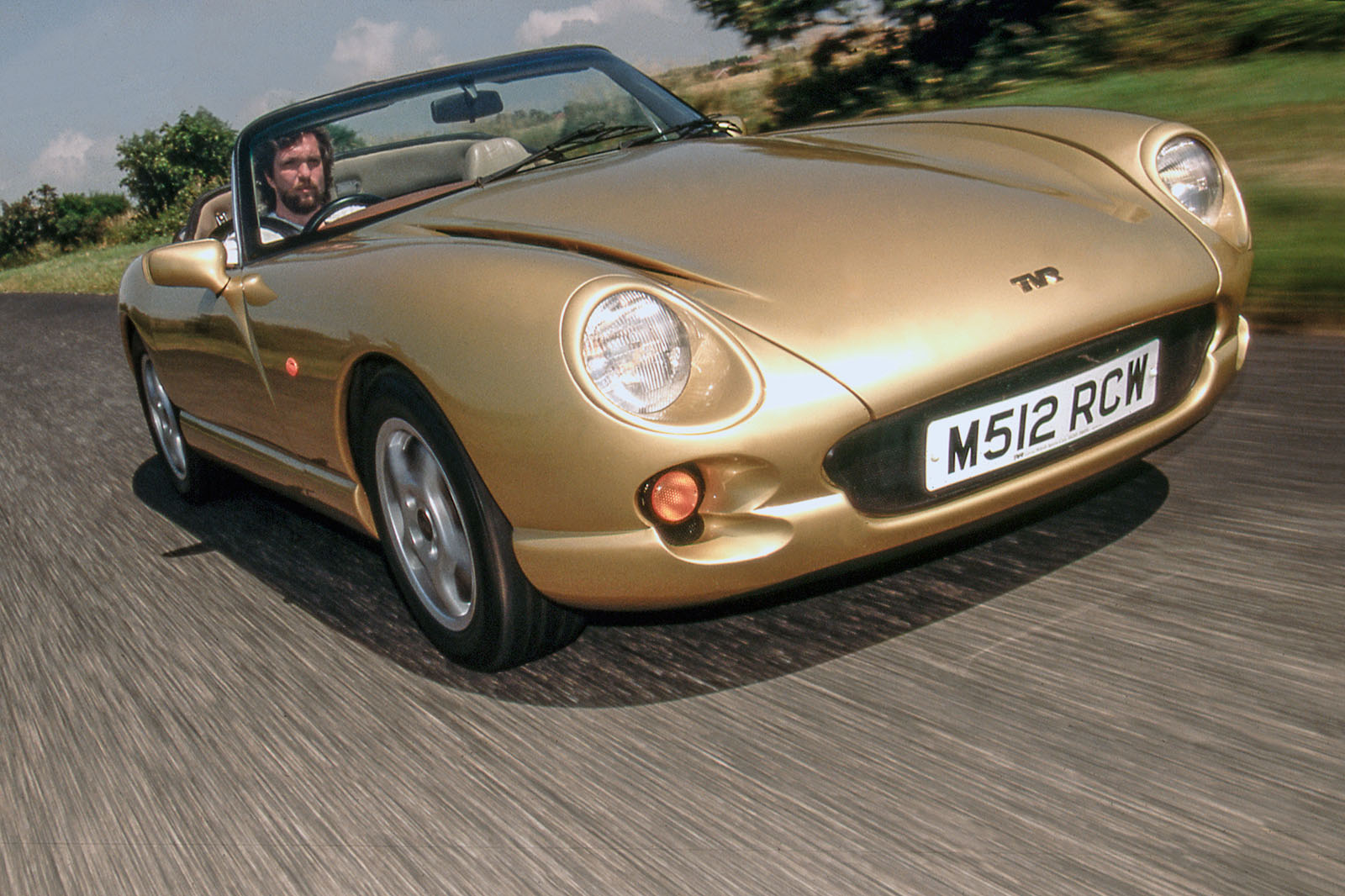
The TVR Chimaera may have lived in the shadow of the mighty Griffith, but the fact is TVR sold three times as many Chimaeras. It helped that the two shared a chassis, engine and much of their drivetrains, but the Chimaera was more affordable and practical thanks to a more spacious body. It set all manner of sales records for the Blackpool company and finally gave the firm the financial security that had always been missing.
Demand for the Chimaera remained strong throughout its life and its success helped spawn the Cerbera and Tuscan models. However, TVR’s insistence on developing its own engines to replace the ageing Rover V8 used in the Chimaera were to prove difficult. The company was sold in 2004 to Russian Nikolai Smolenski who invested in development, but sales never materialised in the way they had for the Chimaera. The company is in the process of being revived now.
Ford Mondeo Mk1 (1993)
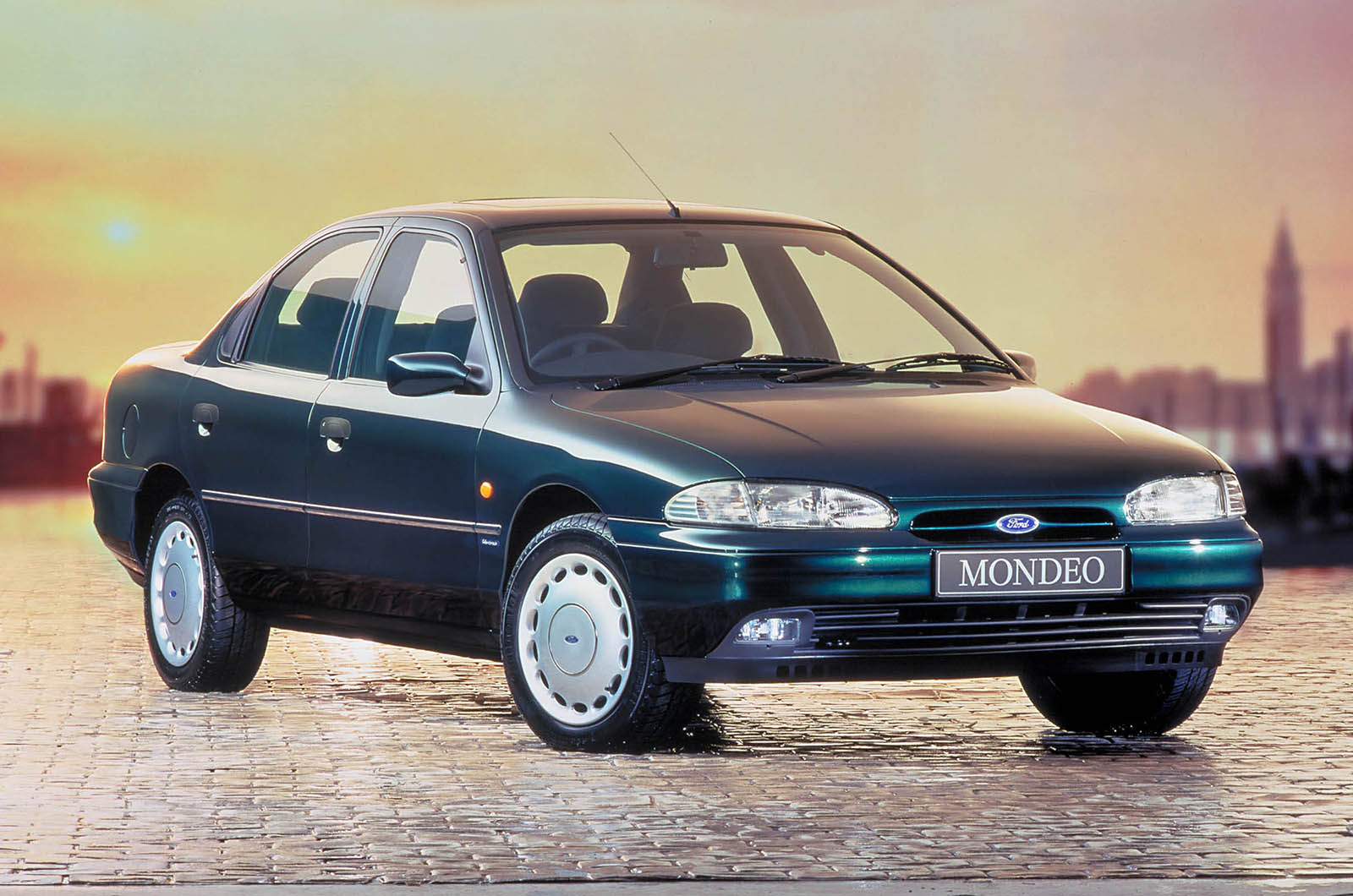
The Mondeo was a huge gamble for Ford. Not only did this range of saloon, hatch and estate models aim to offer a single badge to the whole world, it cost the company a huge sum in new factory facilities. Add in the expense of a new five-speed gearbox and modern engines, and the Mondeo was do or die for Ford.
History now records the Mondeo as a massive hit, although there was some early resistance to its front-drive platform from those used to the aged Sierra. However, the Mondeo’s superb ride and handling, quality and space shone through and made its rivals look distinctly old hat. Company fleets loved the Ford and it’s now rightly revered as a modern classic for the clarity of its design and execution.
Ferrari F355 (1994)
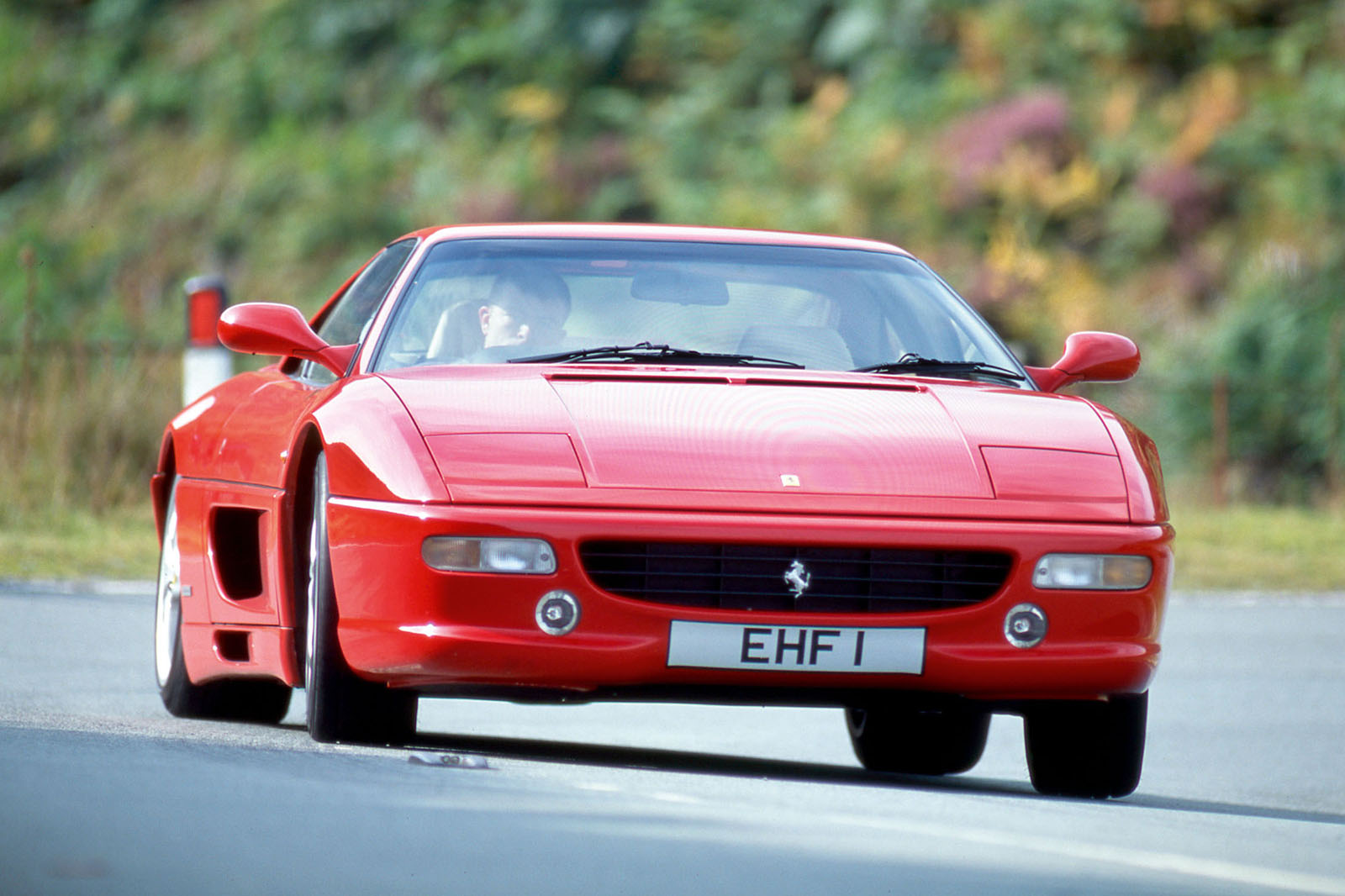
Ferrari was not floundering financially when the F355 was launched, but its supercar reputation had been tarnished by the so-so 348. For a company whose name was a byword for this type of car, something had to be done, and that something was the F355. The styling was perfect from every angle and a 380bhp 3.5-litre V8 engine that offered a 173mph top speed made it the complete package: Ferrari was back on top, its reputation saved.
A result of the F355’s allure was almost double the sales of the 348, bringing in 11,273 customers in just four years. This was good news, but the F355 is the car that opened up Ferrari to a wider audience and rekindled its desirability, paving the way for the 360 and every successive model since.
Aston Martin DB7 (1994)
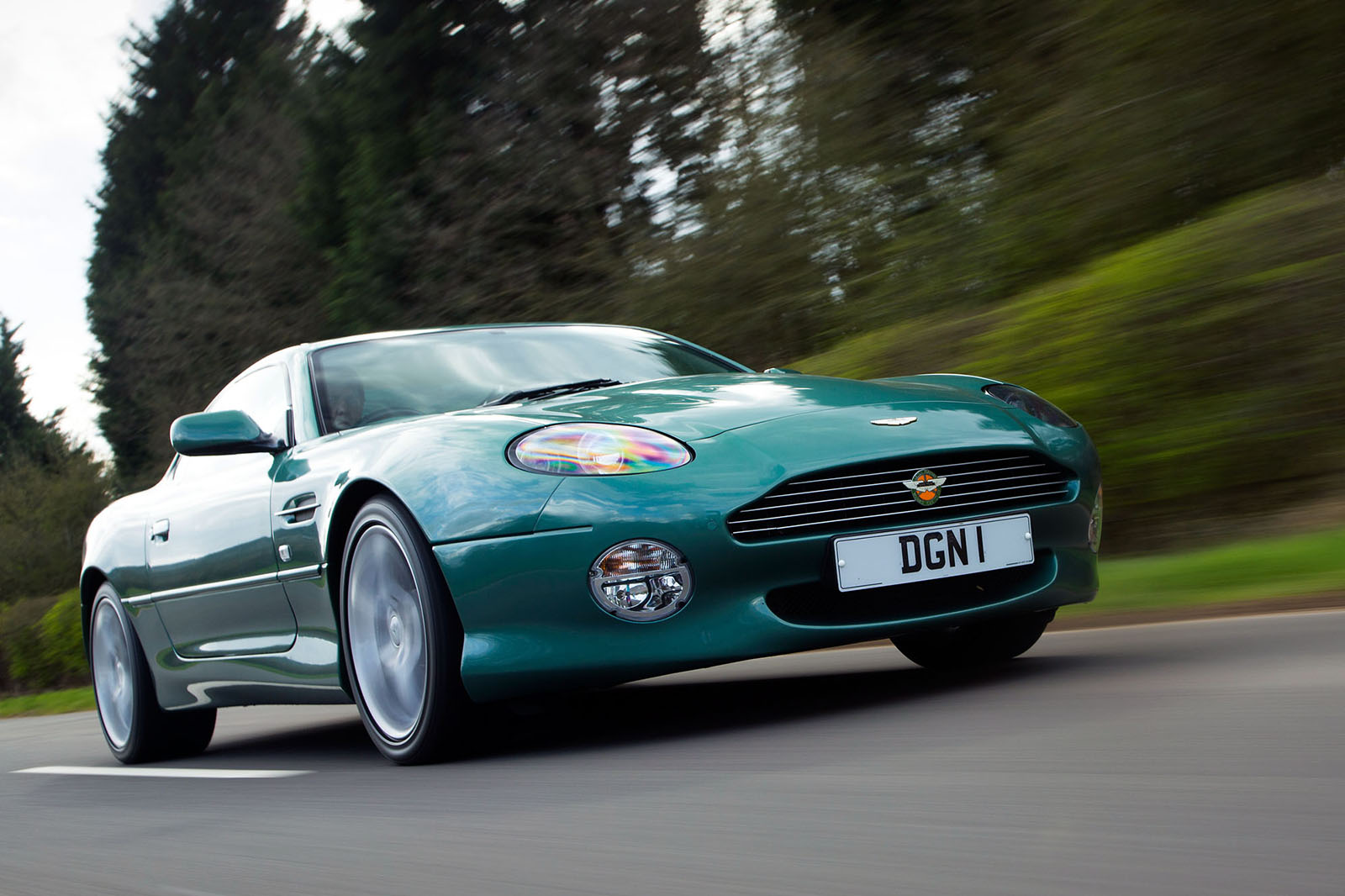
Aston Martin’s lurch from one owner to another had become almost legendary when Ford stepped into the breach in 1987 – indeed, it was the final major decision taken by the aforementioned Henry Ford II before his death in the September of that year. Ford’s money, plus the design talents of Keith Helfet and Ian Callum, created the DB7. However, it would take until 1994, seven years after Ford took control, for the company to find a stable footing.
Instantly, the DB7 was a hit thanks to its sleek looks, performance from a 3.2-litre supercharged six-cylinder engine and, crucially, a starting price of £78,500. While not cheap, the DB7 created an entry-point to the desirable brand that hadn’t been there before. The result was a huge commercial success; more than 7000 DB7s were sold in all variants and produced the rejuvenation of the company into what we know today.
MGF (1995)
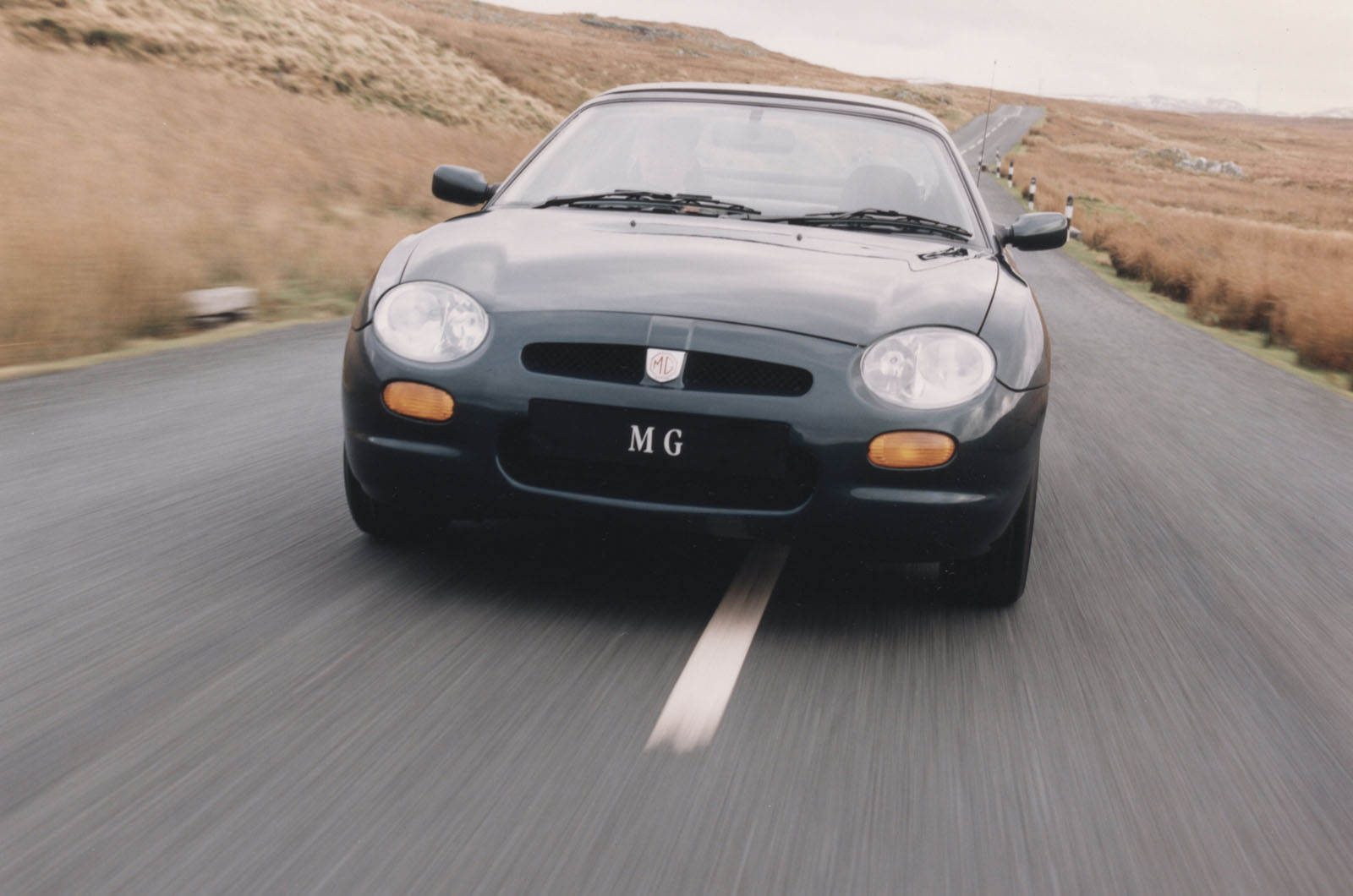
MG was all but consigned to the history books by 1995 when the MGB-based RV8 ended production. Then came the MGF, which didn’t just breathe new life into the historic brand but took the fight to the Mazda MX-5. In many ways, the Brit was the much better, more advanced car thanks to its mid-mounted alloy engine and Hydragas suspension.
Here was a Midget for modern times with a competitive starting price, and plenty of buyers found this package more appealing than the Mazda that was by then growing long in the tooth - 77,269 MGFs found willing homes before it was replaced by the TF version. Sadly the lack of a dealer network meant that the car was never sold in America, thus denying MG a chance to re-live its heyday of the 1950s and 1960s, when about half of all MGs ever sold – hundreds of thousands of cars in total - went to that market.
Skoda Octavia (1996)
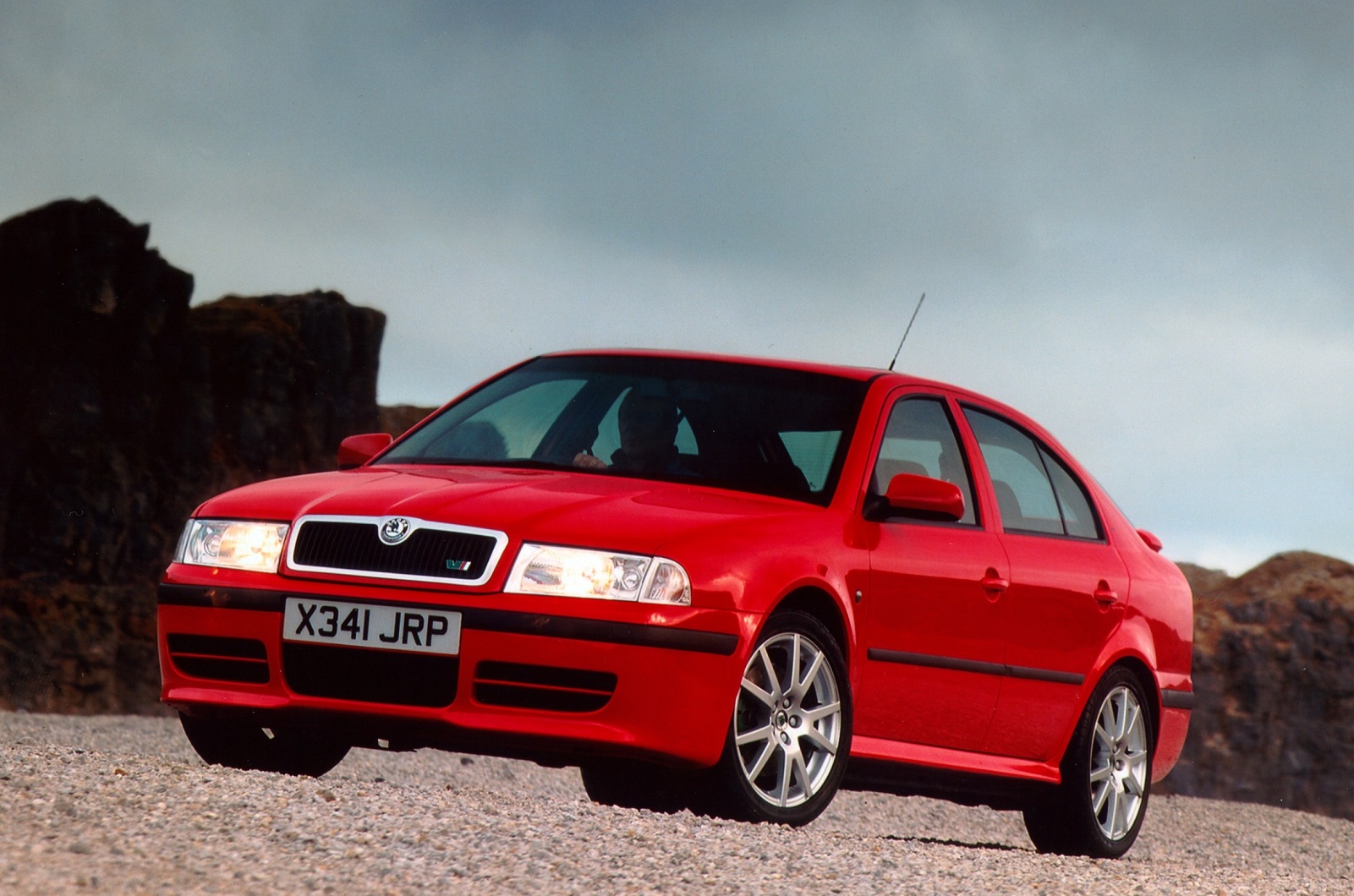
The first-generation Skoda Octavia is an unremarkable car in many ways, yet it’s also the car that turned the Czech manufacturer from the butt of jokes to sales success. By now owned by Volkswagen, the Octavia cleverly made the most of the Mk4 Golf’s platform to offer a family hatch for small car money. With strong build quality, generous cabin and boot, and a drive that was better than that of its German cousins, the Octavia nailed it.
Such was the importance of the Octavia to Skoda’s fortunes and turnaround, the advertising campaign used the cheeky tagline ‘It’s a Skoda, honest.’ That sort of tongue in cheek attitude endeared the Octavia to thousands and paved the way for the vRS model (pictured) that arrived in 2001 to be taken seriously as a rival to the likes of the Ford Mondeo ST220 and Honda Accord Type R.
Porsche Boxster (1996)
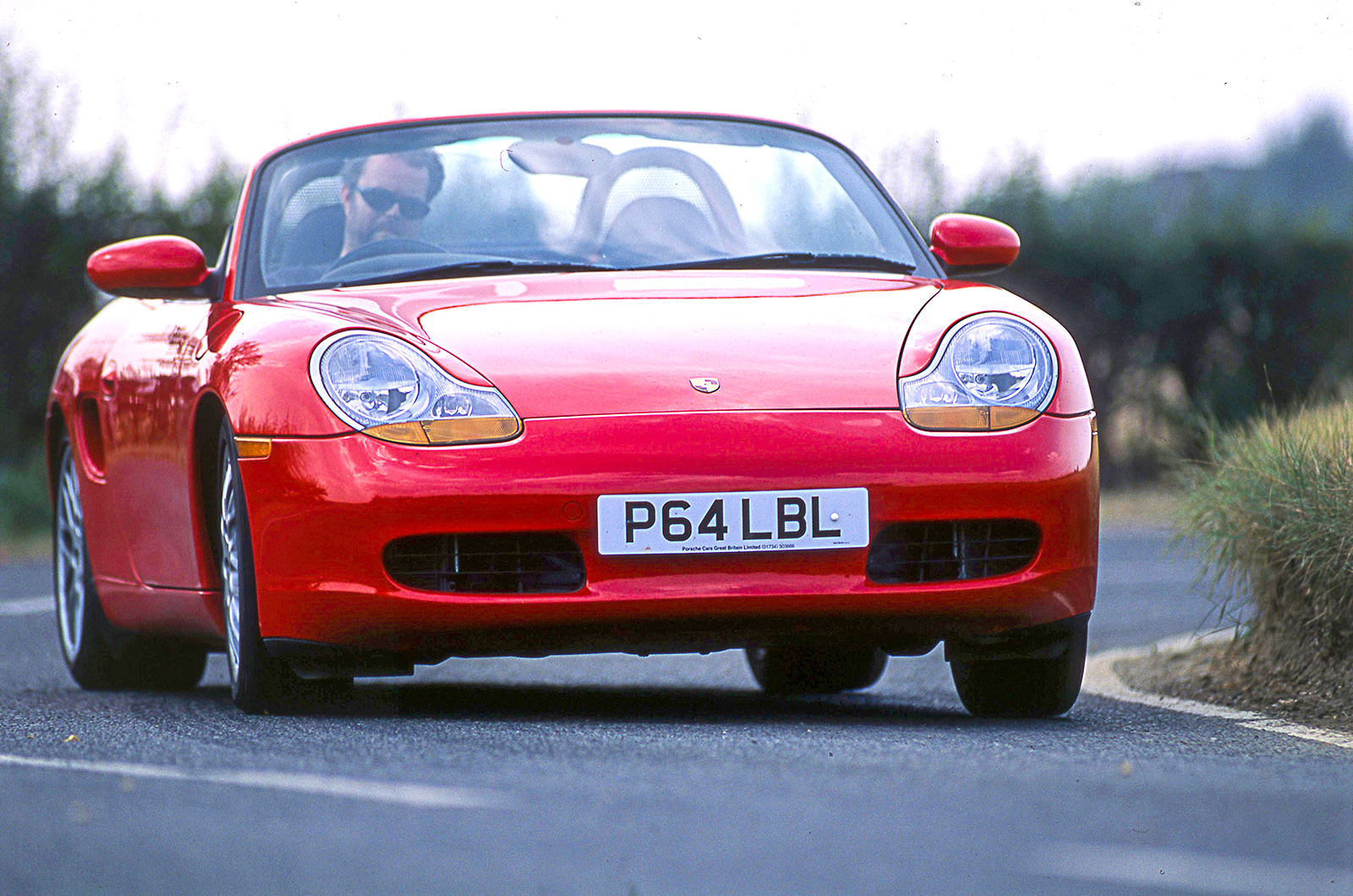
Without the Porsche Boxster, we would likely not have the company nor wide range of cars we know and love today. With sales dropping off of the last air-cooled 911, the mid-engined, water-cooled Boxster could not have been more important to Porsche’s survival. The Boxster shared its complete front end with the still to be launched 996-series 911, helping to save costs.
It was the company’s first roadster since the 1970s 914 and caused a showroom stampede when it arrived in 1996. The first-generation Boxster went on to sell around 160,000 units, pumping money into Porsche’s coffers and introducing thousands to the company. Although the original 2.5-litre model was criticised for being a little underpowered, that was soon addressed with larger motors to keep interest alive throughout its eight-year life.
Lotus Elise (1996)
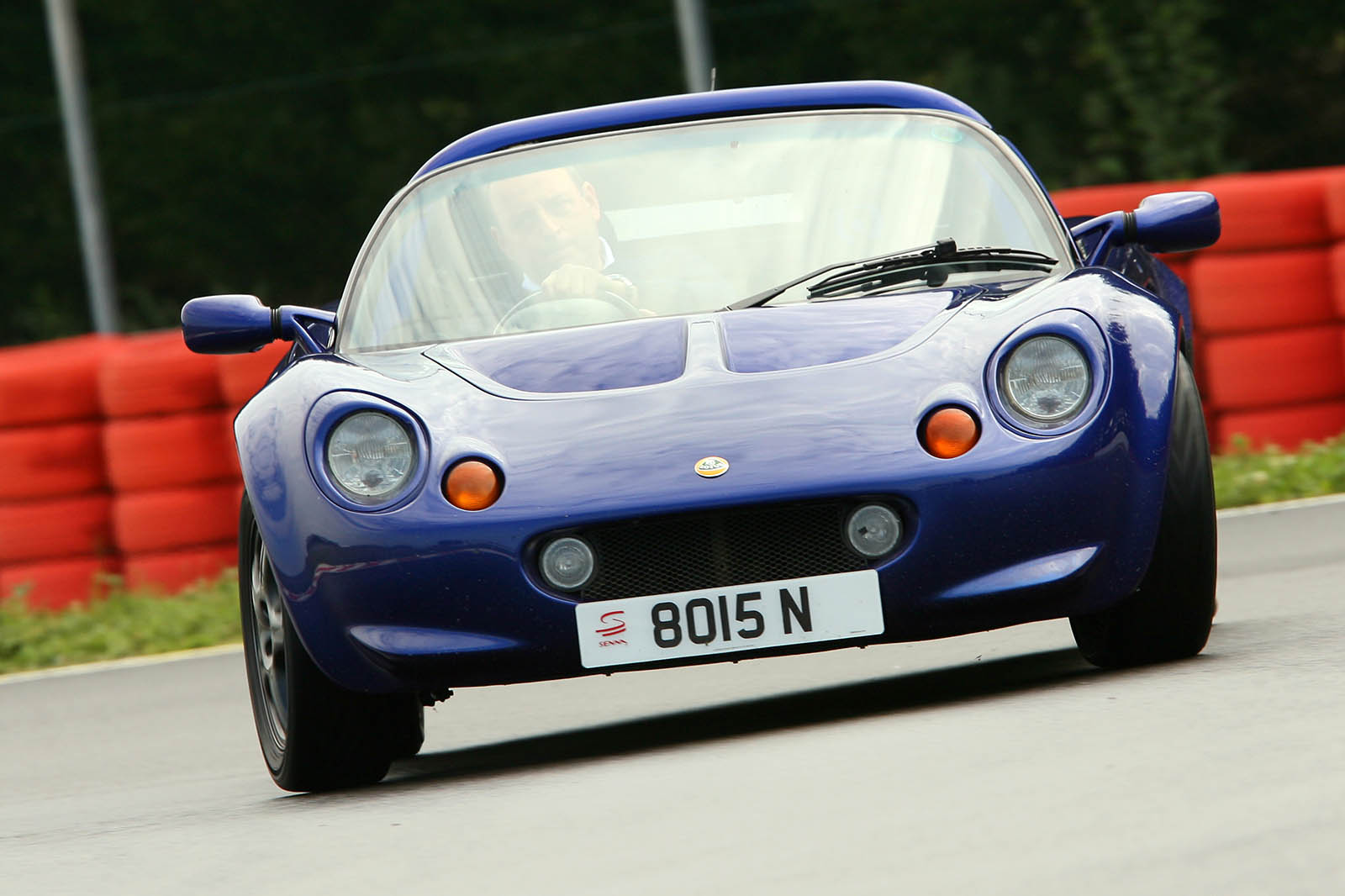
If ever there was a lesson in going right back to basic principles, the first Lotus Elise is it. After mixing with supercars and trying to beat the Mazda MX-5, Lotus returned to its roots with a thoroughly modern vision of its 7 sportscar. Weighing in at a mere 731kg, the original Elise was a joy to drive and quick because of that low mass, even with a humble 118bhp Rover K-series motor.
Quicker versions inevitably arrived to boost appeal and sales, along with the Exige coupe and rare 340R. However, the essential nature of that first Elise is what appealed to a broad spectrum of buyers and dragged Lotus back from the brink. It went on to notch up 10,619 sales, plus more for the models based on the same clever chassis tub, putting the Norfolk firm in the black and back on the map.
Buick GL 8 (2000)
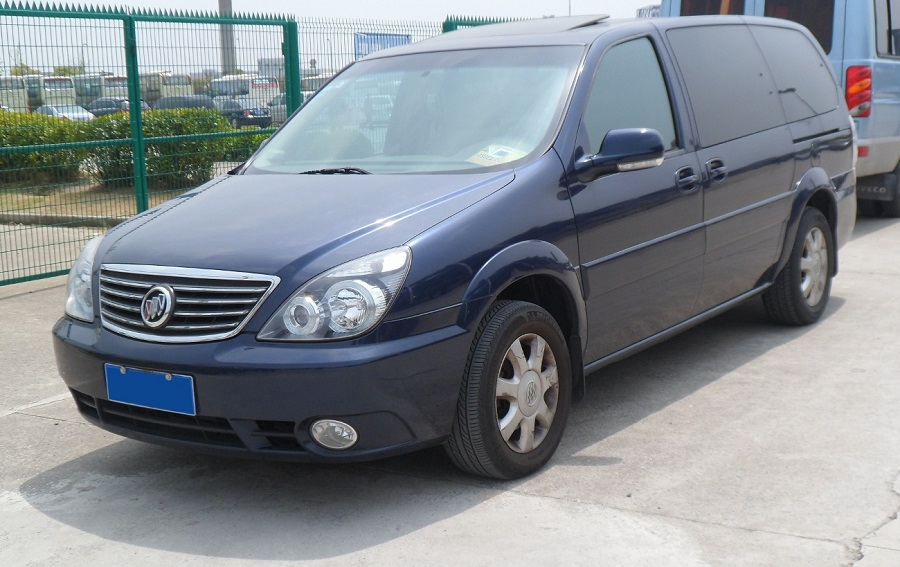
Buick’s history as a maker of luxury cars goes back to 1908 in the USA, but it was fond memories of the brand in China that helped it when it launched the GL8 there. Based on the Chevrolet Venture, also known as the Vauxhall Sintra in the UK, it was far from cutting edge but the comfort, space and swathes of wood and leather appealed to the Chinese market.
From its launch in China in 2000, the GL8 rapidly became the most popular car for business owners. It helped that Buick was among the first non-Chinese companies to build cars in China and was fortunate to be in the market early, but that’s all part of the industry. Just as importantly, the GL8 built an image for Buick in China that continues to this day as a maker of affordable luxury cars. Buick sold a cool 1.06 million cars in China in 2018, and GM is easily the most successful US car company in that market.
Volvo XC90 (2002)
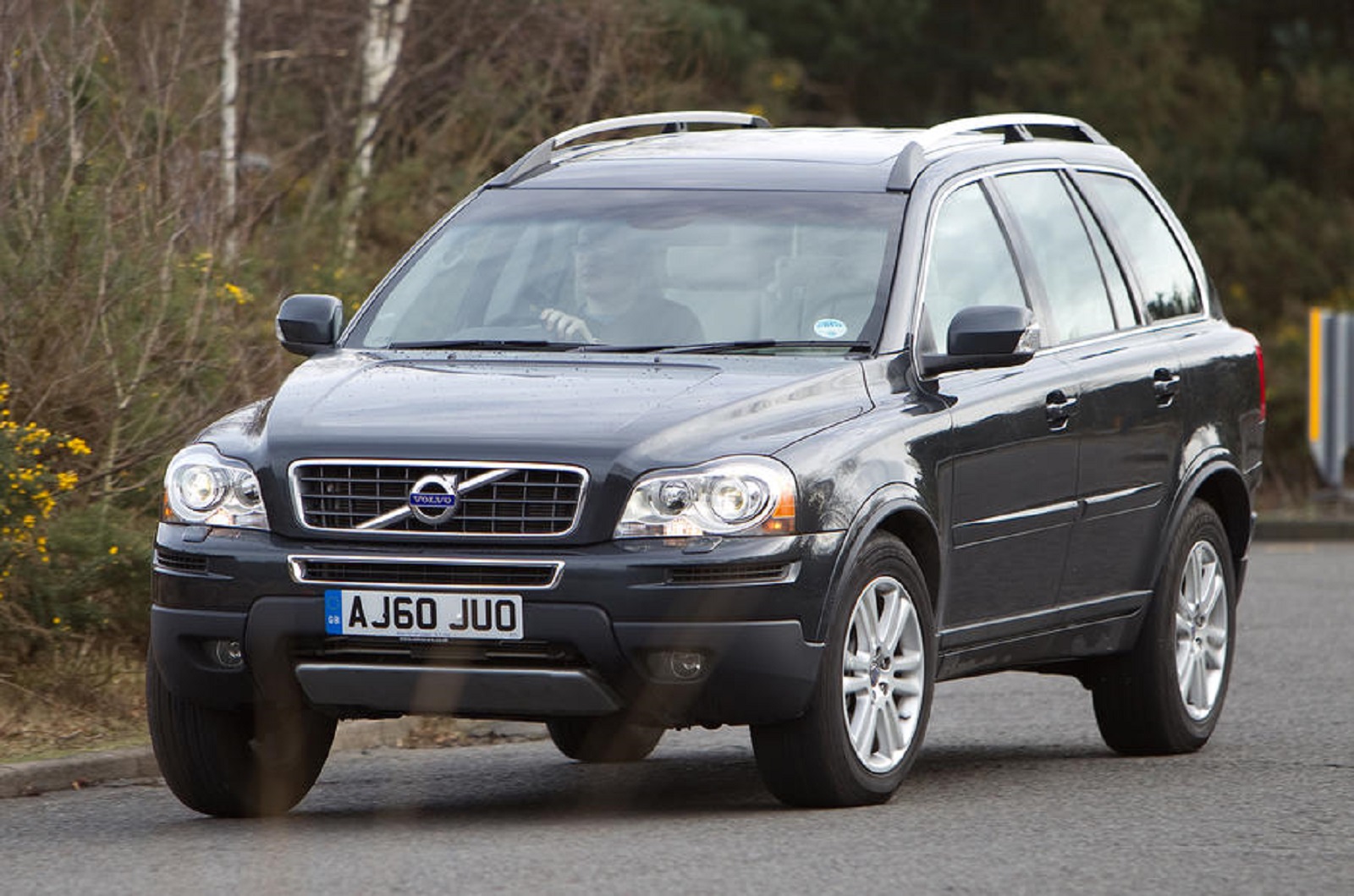
Volvo was doing just fine, thank you very much, when it launched the XC90 in 2002. Yet, the Swedish firm that was owned by Ford at the time suddenly found itself with a huge sales hit on its books. Customers couldn’t get hold of the XC90 quickly enough, lapping up its Scandi style, comfort, and safety.
It helped that the SUV market was growing by the day and the neat design put to rest any worries that Volvo was late to the party. Instead, Doug Frasher’s design set the tone for Volvo that continues to this day, turning a worthy but mildly beige company into one of the most desired in the world.
Bentley Continental GT (2003)
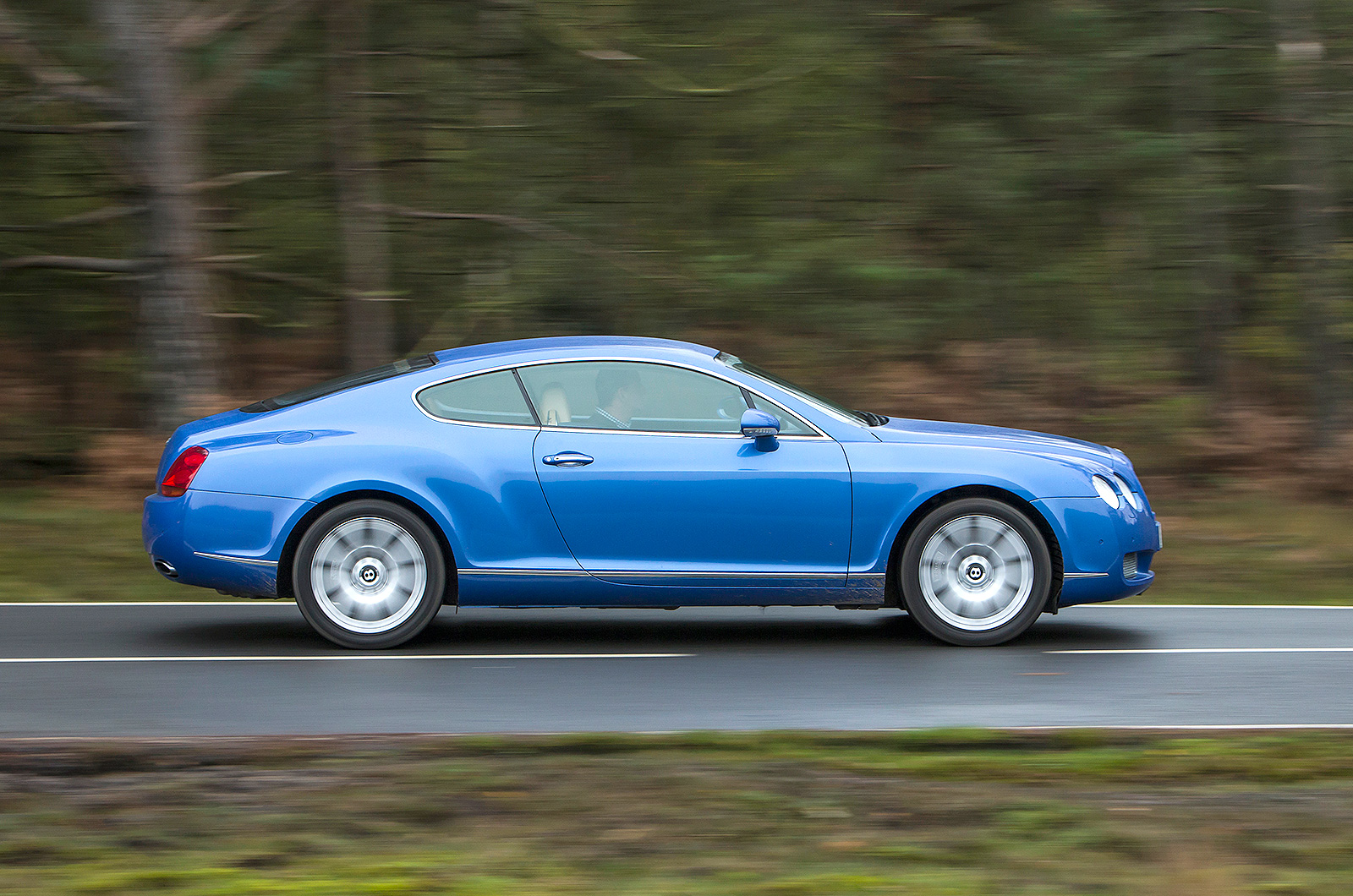
Few cars were more eagerly anticipated than the Bentley Continental GT in 2003. The Crewe-based company had been building barely 1000 cars per year, so what would its new parent company Volkswagen do to improve on that? The resulting Continental GT was just the ticket thanks to its sleek coupe looks, four-seat cabin and, of course, the twin-turbo 6.0-litre W12 engine with 552bhp. No wonder 3200 customers put down deposits before the car was even launched.
Another first for Bentley was four-wheel drive in the Continental GT that helped make this a year-round daily driver for many of the thousands who flocked to the Flying B’s showrooms. In its first year, 6896 Continentals were sold and more than 40,000 of the first generation left the production line including the convertible GTC. Without the Continental GT, Bentley would likely be another British marque left to history books alone.
Lamborghini Gallardo (2003)
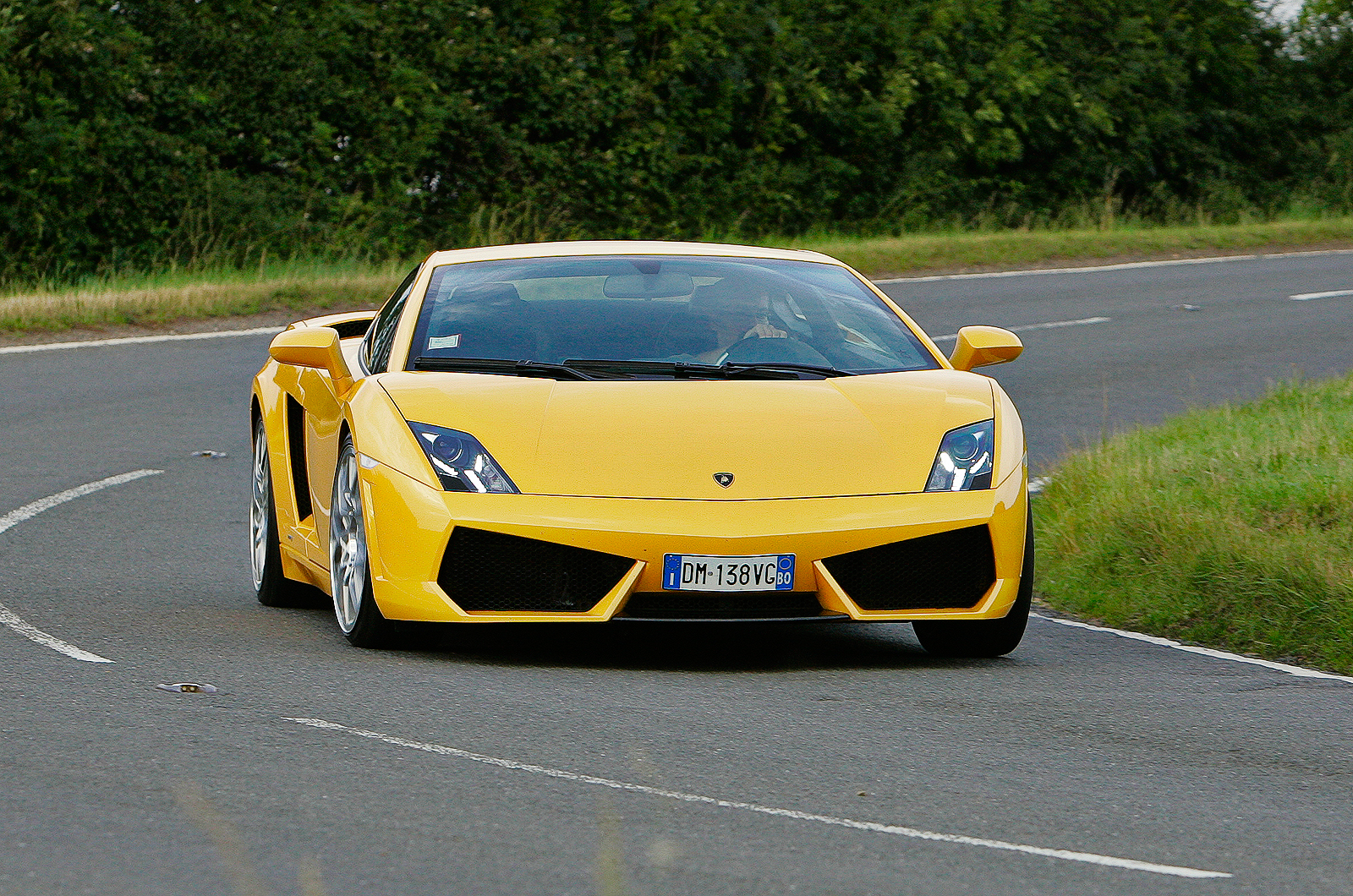
Lamborghini could often count its sales totals in the hundreds, so the Gallardo’s sales success was as shocking as it was required. New owner Audi demanded more of the Italian firm than previous incumbents, so a lot rested on the Gallardo’s chiselled shoulders.
A heady mix of 493bhp V10 power, four-wheel drive and superb driving manners took the fight right to Ferrari and Porsche, and plenty chose the Lamborghini as the winner. The result was a sales tally of 14,022 Gallardos built and financial security for the company.
Fiat 500 (2007)
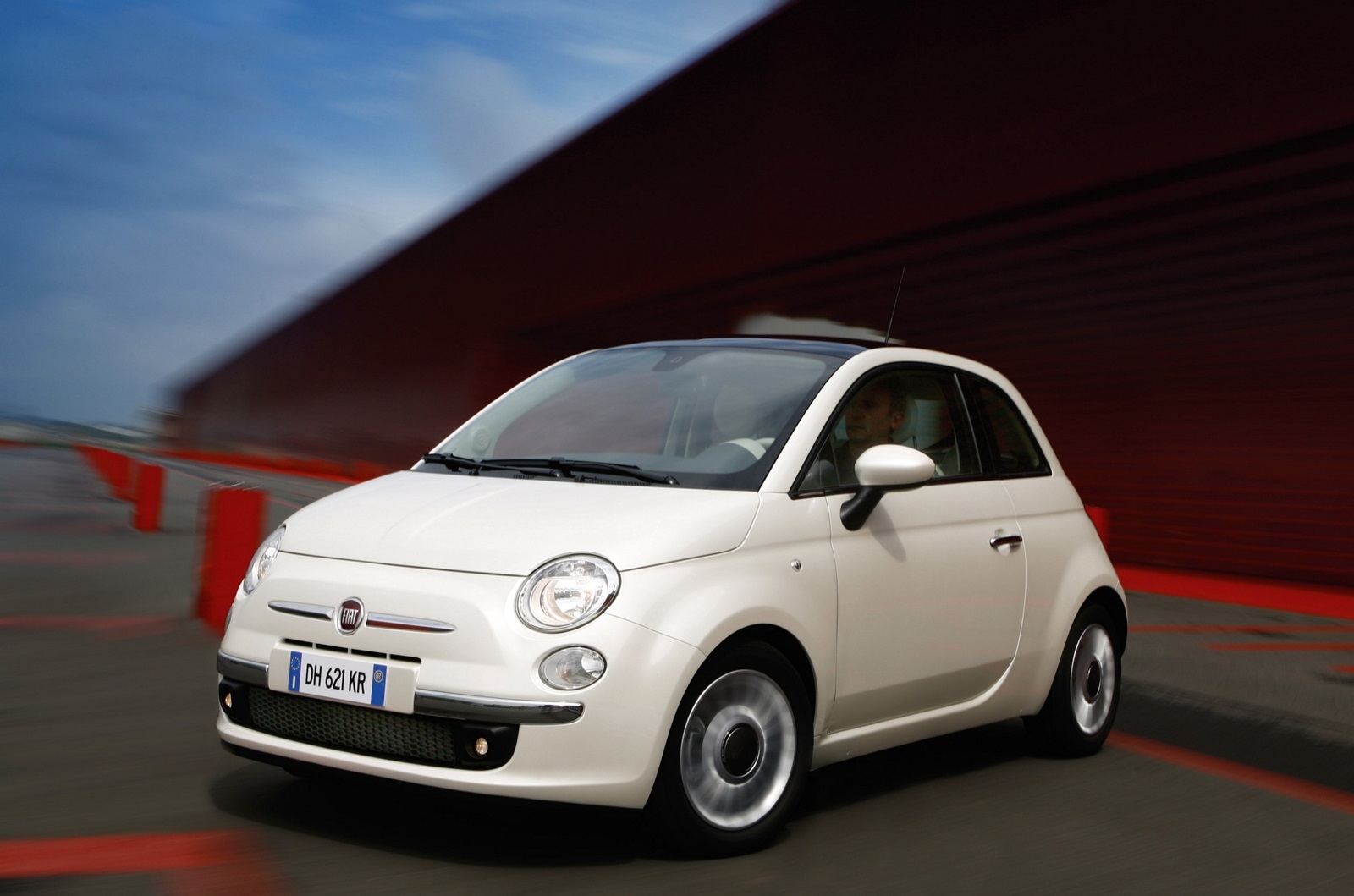
When Fiat’s small cars do well, the company thrives, but by the mid-2000s its small car offerings were decidedly long in the tooth and struggling in the showroom. Then, in 2007, Fiat unrepentantly jumped on the retro bandwagon led by MINI and launched the oh-so cute new 500. It perfectly captured the spirit of the 1950s 500 while offering near endless options for personalisation.
Adding convertible and Abarth models to the 500 line-up added to its appeal, and the basic design continues in production. The one millionth 500 rolled off the line after just four years and sales are now around 2.5 million. Fiat kept quiet about the fact that every one of this most Italian of cars was actually built in Poland, or later Mexico.
Jaguar XF (2007)
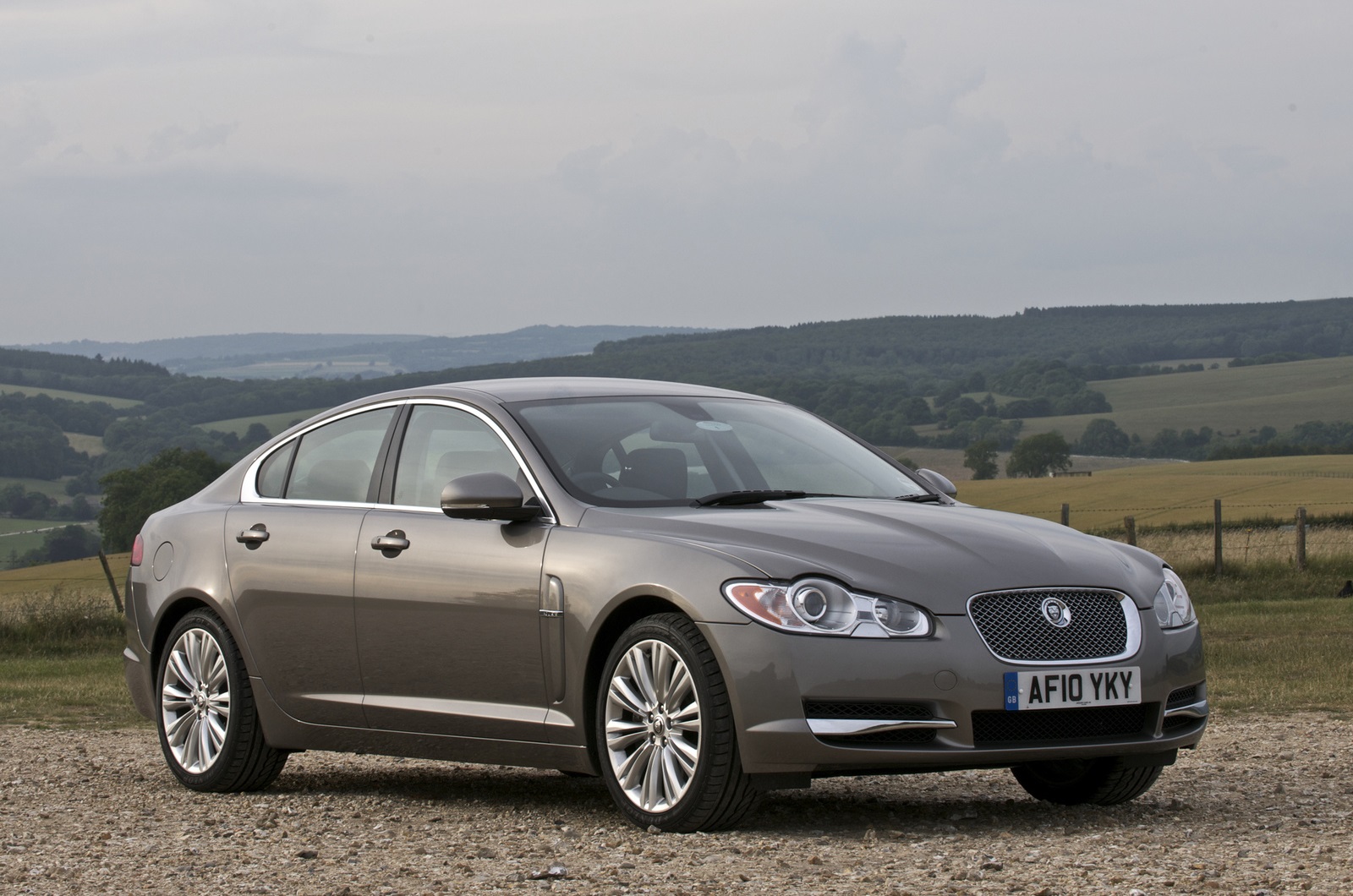
As the bells rang in 2007, Jaguar’s range of cars was about to go from its comfortable slippers of retro style to a bold new age. Unveiled at that year’s Detroit show, the XF was a radical departure for Jaguar and a desperately needed one if the company wanted to stay in any sort of contention with Audi, BMW and Mercedes.
Inside and out, the XF was a very different take on what a Jaguar should be, and an estate model was added in 2012 to broaden the range. The gamble paid off and Jaguar sales increased dramatically, with more than 250,000 sold by the time it was replaced by the second-generation XF in 2015. The XF also paved the way for the subsequent XJ and other models.
Nissan Qashqai (2007)
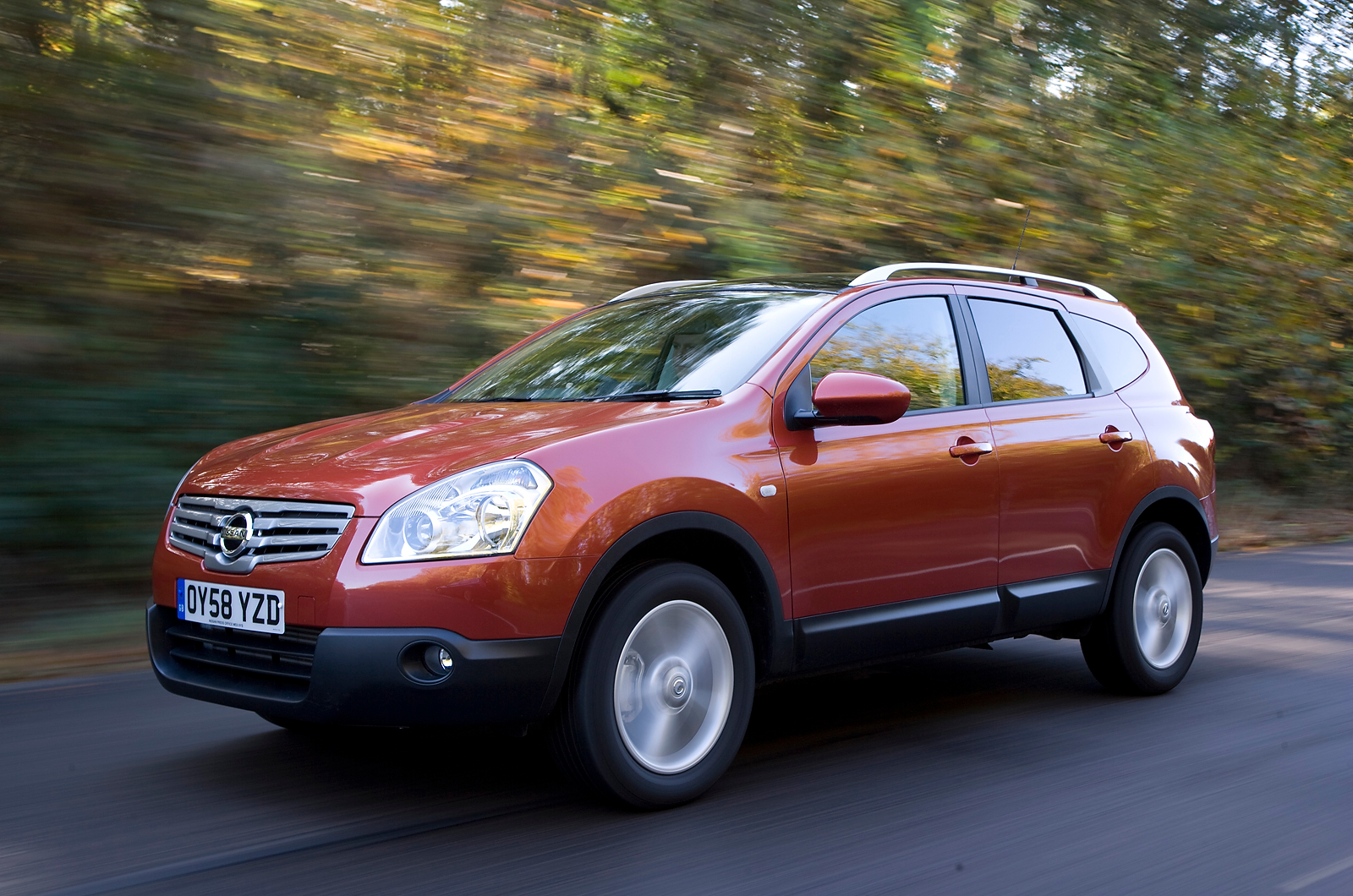
By the mid-2000s, Nissan’s mainstream line-up was as dull to look at as its sales figures were to read. That all changed in 2007 when the Qashqai reached showrooms and buyers queued out the door to place a deposit on this strange new breed of family car.
What Nissan did was cleverly offer all of the looks, space and raised driving position of an SUV but with the running gear and running costs of a small hatch. Suddenly, nobody wanted a humdrum hatch and other car companies had to work hard to catch up as Nissan’s sales and profits soared.
Chevrolet Camaro (2009)
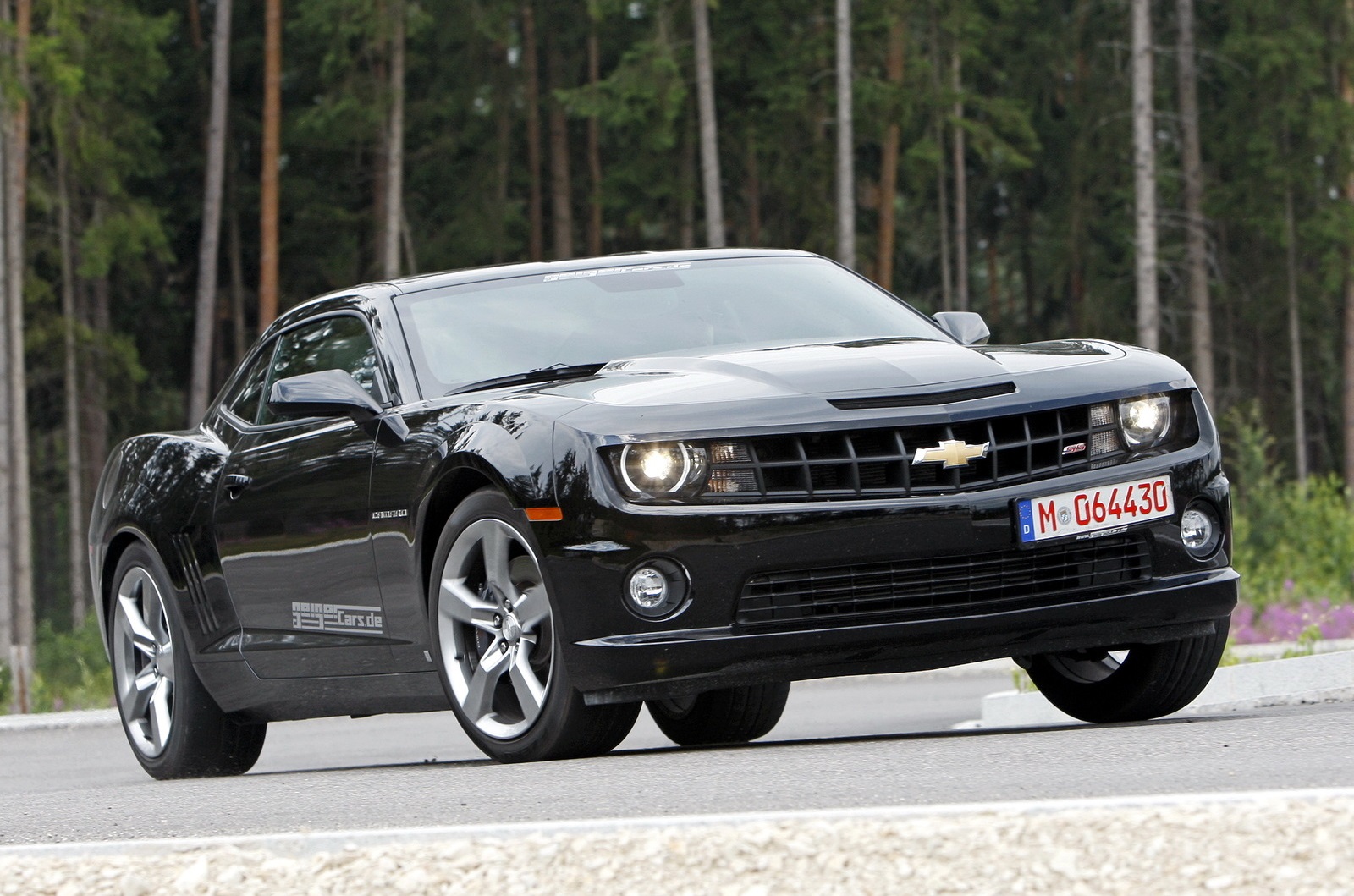
Global recession has bitten hard at General Motors in the US - and indeed almost killed it entirely - which might have made it a strange time to reintroduce the Camaro name after a seven-year break. However, boss Rick Wagoner was bullish about the car’s prospects for the struggling company and he was right, with the car taking 14,000 customer deposits before a car had even reached the showroom.
While Chevrolet were late to the retro-updated muscle car scene, the Camaro had all the style of the original. It also drove very well, helped by being developed in Australia by General Motor’s Holden division with its experience of this type of car. As well as the V8 models, there was also a V6 that tempted plenty with looks allied to lower running costs.
Tesla Model S (2012)
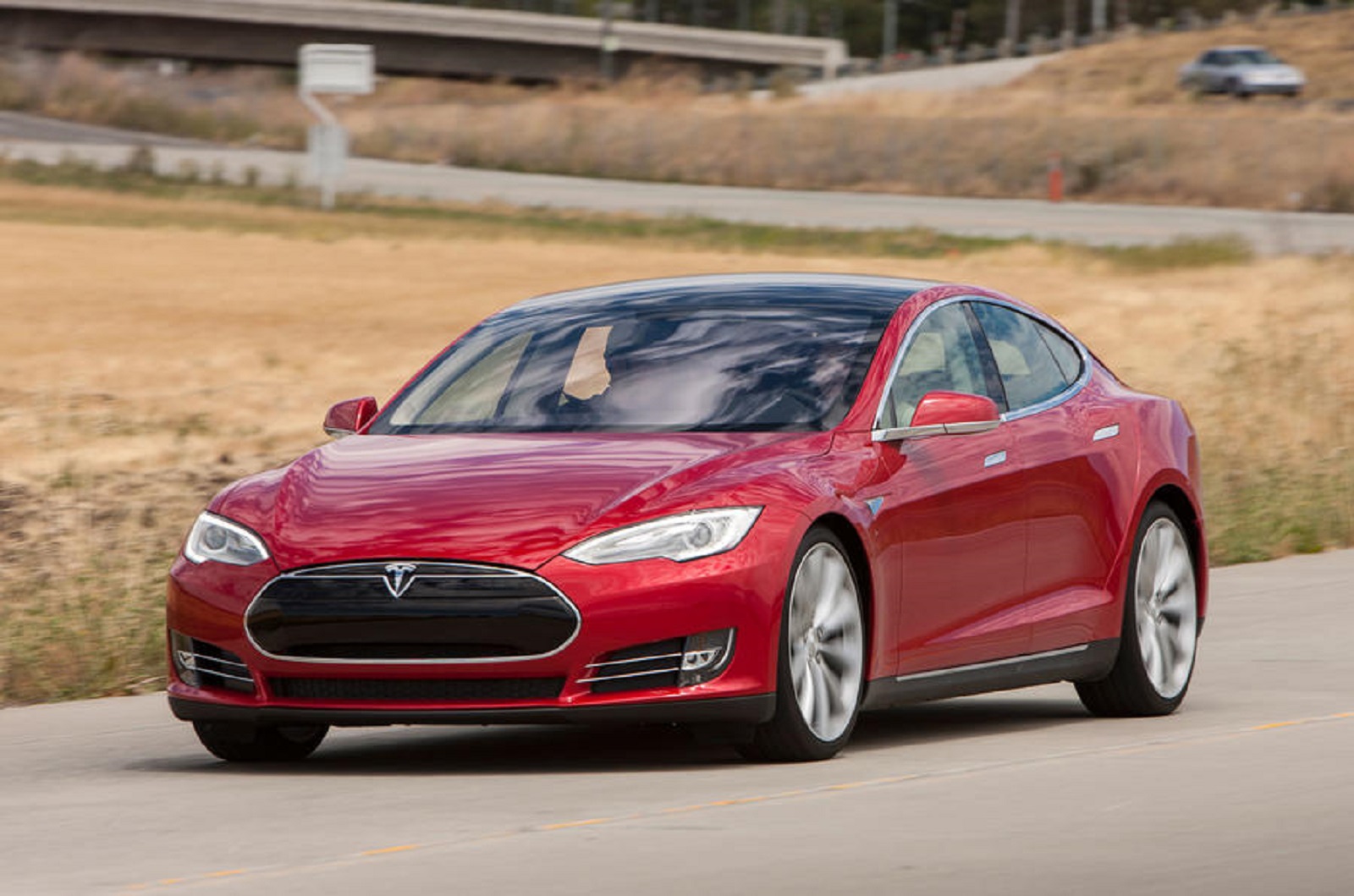
The original Tesla Roadster was based on the Lotus Elise but failed to capture sports car buyers’ imaginations or their bank details. This prompted a radical switch in direction from the American start-up that brought us the Model S in 2012 after several delays. Straight away, the Model S warranted comparison with the best executive saloons and put Tesla firmly on the map – complete with a single-charge range that did much to reduce the bane of EV-ownership, range anxiety.
Part of the reason for the success of the Model S is Tesla didn’t wait for others to create a charging infrastructure. Instead, the company began building its Superchargers to remove customer resistance about charge times and locations. Without this approach to launching the Model S, Tesla would not be the force it is today. And its impact on the wider industry was enormous.

RAV4 Interior Design Signals Industry Shift as Toyota Rethinks Screens Versus Buttons