Jeep Wrangler Laredo Returns as a Luxe Off-Roader Blending Heritage Design with Modern Capability


Autonomous Vehicles and the Challenge of Emergency Response Decision-Making

Coupé Identity in Flux as Mercedes CLE, BMW i4, and Audi Q5 Redefine the...
 Coupé is a word few car makers use these days, but its spirit is alive and well in Germany. Sort of...
The coupé market was bustling 25 years ago.
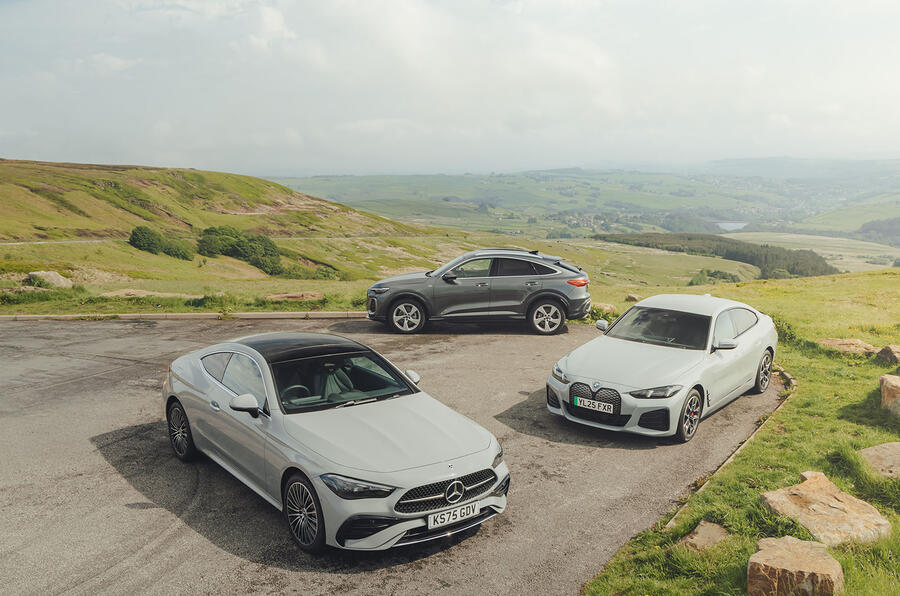
Ford, Peugeot and Volvo were among the raft of mainstream names doing a roaring trade in handsome two-door cars at accessible prices. And in very lurid colours. Today, the picture looks decidedly different and not merely because the trio we have here are all painted various shades of grey.
A headcount outside of the sub-£100k sports car market amounts to just five cars following the trad coupé recipe - one of which is the fairly specialised Lotus Emira. Honda launched its cool, intriguing new Prelude just as the Audi TT, Porsche Cayman and a pair of GR-badged Toyotas fumbled out the door. Ford still sells the Mustang, but arguably only BMW and Mercedes-Benz remain dogged believers in a bodystyle that was once the party piece of any range.
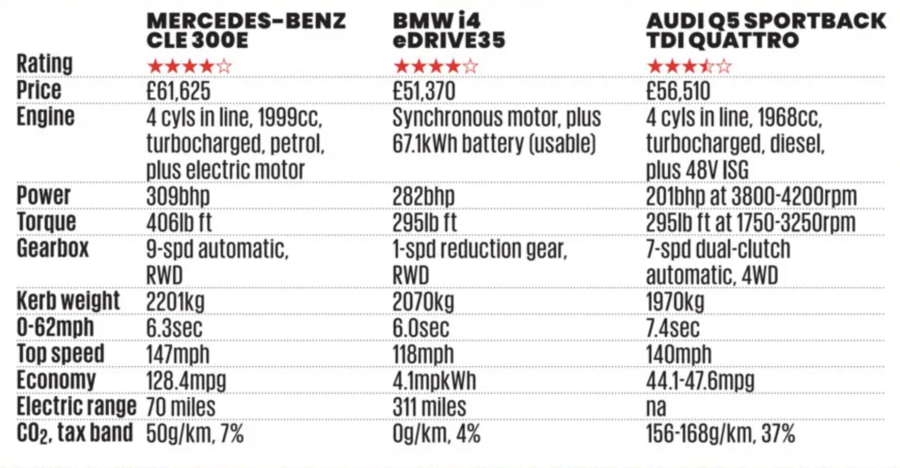
Assembling three plush German coupés together used to be a doddle, but you must now employ a faster, looser definition of the word to do so. The Mercedes-Benz CLE is our test control: a traditional two-door, four-seat coupé of convincing style and versatility. Prices kick off at a reasonably friendly £48,195 and the line-up offers a choice of petrol, diesel and plug-in hybrid powertrains, culminating in AMG's six-cylinder 442bhp CLE 53. It's the more mainstream fourpot 309bhp CLE 300e PHEV we have here.
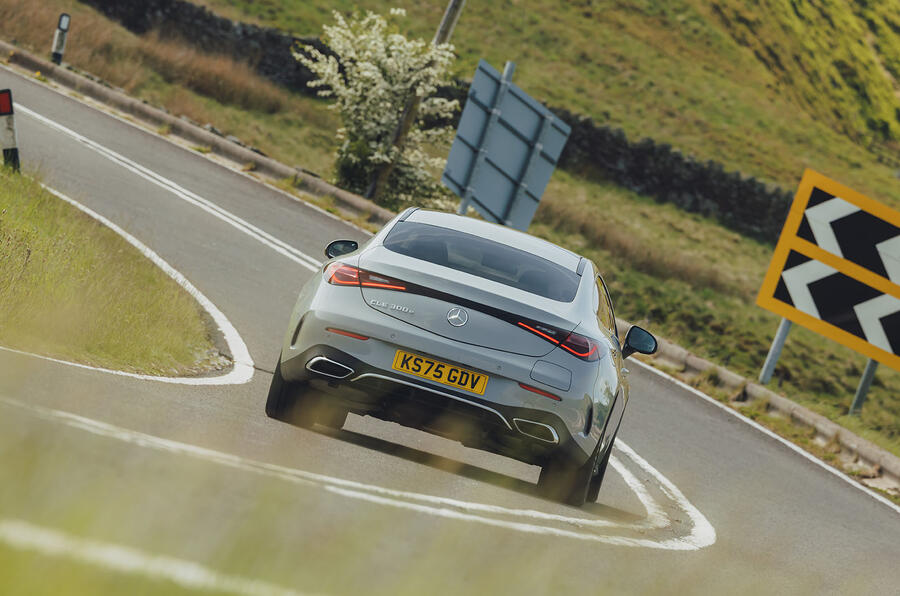
The CLE can take some responsibility for the shrinking of the coupé market because it replaced both the C-Class and E-Class Coupés in one fell swoop in 2023. Though its size matches the latter, its look and feel align more closely with the former and it doesn't - more's the pity - offer the opportunity to drop all four windows and roll along with a pillarless breeze like a classic Benz 'coop'.
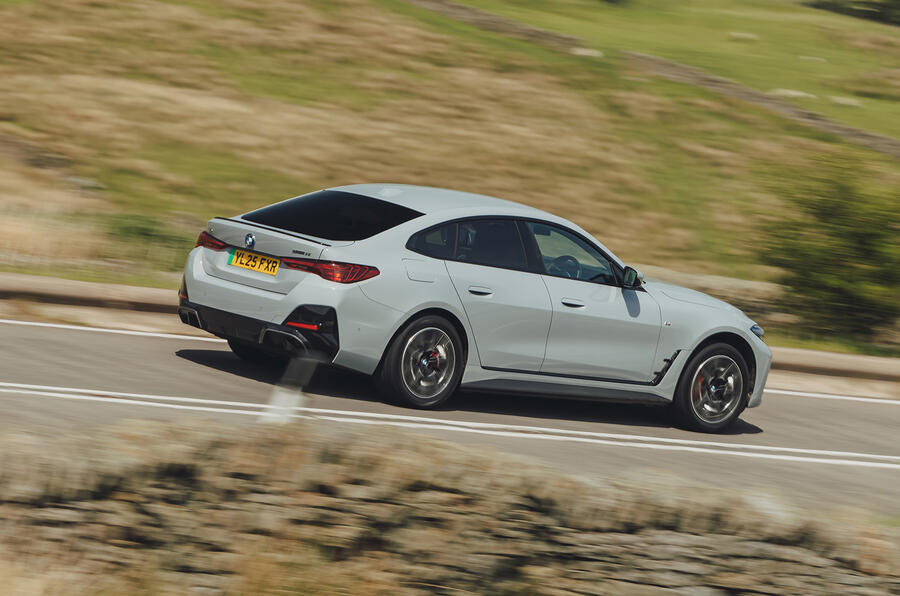
BMW's two-door range is twice the size of Mercedes' thanks to the existence of both a 2 and 4 Series Coupé. Yikes. Each is also available in four-door Gran Coupé form. Whether a car with back doors truly warrants the c-word is a debate easily concluded in the presence of the subgenre's modern genesis, the bold and beguiling Mercedes-Benz CLS. So rather than aim a two-door 4 Series directly at the CLE, we've chosen its Gran Coupé sibling, available in both petrol and electric form and represented here in the latter's tempting base spec. This 282bhp i4 eDrive35 starts at £51,370, though the range soars past £70,000 in 593bhp M60 trim.
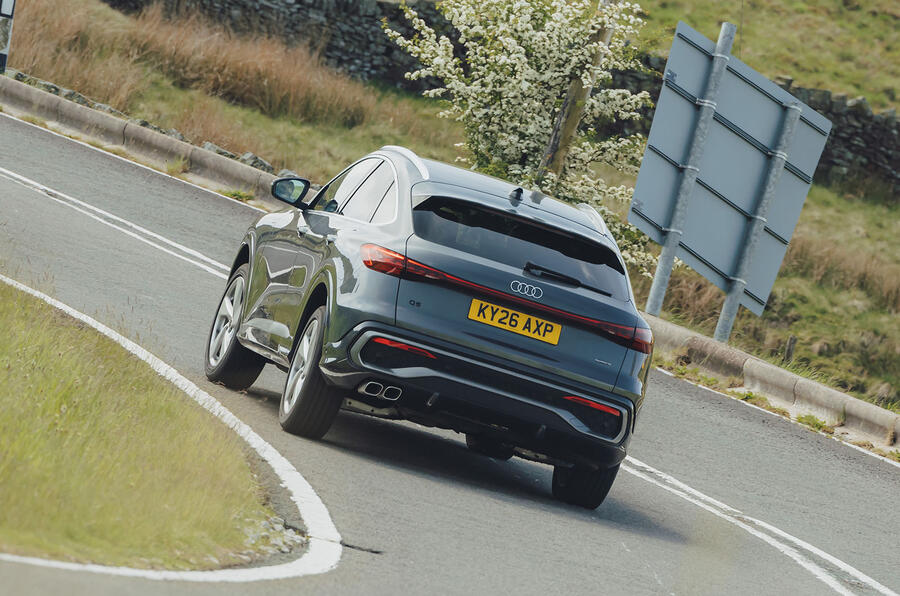
There's no traditional Audi coupé to neatly join our trio but the brand is on its comeback trail: a production version of the bold Concept C is set to follow the stark Nuvolari supercar into production as the next chapter in its new design era. For now, its only offer of a slinkier roof and more stylish swagger is with its Sportback SUVs. Y'know the ones: crossover height and dimensions but less roomy and costing more money. Sounds like a swizz, right? Yet these things are everywhere - even Skoda has one - and in an electrified era chasing aero efficiency to its nth degree, cars like this may finally hold a kernel of credibility for enthusiasts.
This Q5 Sportback is surely among the least offensive of the bunch too, with its relatively compact dimensions and much subtler looks than many brands' spin on the concept. Prices begin at £54,860 and, like the Merc, it offers petrol, diesel and plug-in hybrid power. We've got the 201bhp, 295lb ft 2.0-litre TDI here to give us not only three distinct shapes but also a diverse array of propulsion methods.
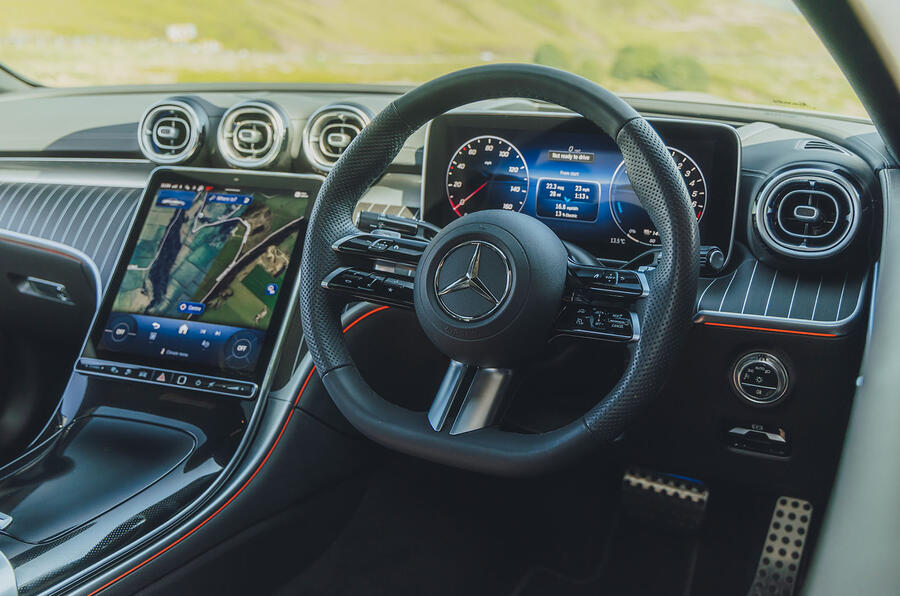
I go for the CLE first. It drips with the sort of glamour that big Benz coupés have always had, however curiously its full-width (but not fully lit) bar sits on that curvaceous rear. Climb inside and the glitz initially follows. Its frameless window drops an inch as you tug the handle and the wraparound wood of its upper dashboard sets the tone for a cockpit rather than a mere cabin. Less premium is the shovelling of most major functions into the touchscreen (far from a Mercedes-exclusive gripe, of course) and the awkward, overly sensitive controls on its steering wheel spokes.
The materials are broadly rich, though, and comfort is clearly the top priority here. Anyone under six feet tall can cocoon themselves in the back with reasonable comfort, enjoying an air vent and cupholder each. The seatbacks are also split 40/20/40 to help carry longer loads. This PHEV variant loses almost a third of the boot space of a pure-petrol or diesel CLE to accommodate the battery for its electric motor, but otherwise it demonstrates all the hallmarks of a car that will slip easily into everyday life.
The 300e also differs from its CLE rangemates with a taller, plusher suspension set-up, presumably to counter its chunkier weight. The result is a car that rides with real composure over wide roads and long distances. On slower, more rutted surfaces, there's a fiddlier sensation to its progress, albeit one that's broadly typical of big-wheeled cars hauling a battery around.
It balances ride and handling well overall, though, even if it never truly keys you into the surface of a more enthralling road, partly because it's always a touch too languid in its reactions to fully earn your trust. It will exhibit its rear-driven balance with greater commitment, but it's simply not what the car's about. It's soft and aloof - traits that feel very agreeable in a long-haul coupé.
The powertrain wants for a bit of inspiration. It surely exists for company car tax purposes and will be most satisfying when it's frequently plugged in and you're getting close to achieving its enormous EV range, which is 70 miles, according to Mercedes. It's a heavy vehicle to be driving around using just a 127bhp motor but the hushed progress feels right on-brand. If you can't charge at home or won't benefit from its potential tax breaks, I've a feeling the 60mpg CLE 220d is a better shout, though what would truly elevate the CLE's potential is a proper engine.
The hybridised six-cylinder of the AMG CLE 53 is a belter, and the V8 in the often-spied and inbound CLE 63 Mythos even more so. But what I really crave is a transplant of the 362bhp straight-six diesel from the wonderful E450d into this svelter, sportier body. What a car that might be.
BMW used to offer a diesel M440d Coupé and Gran Coupé, but its options are now purely petrol or electric. The i4 is only offered with back doors but there's no denying this bodyshell is a hit: the 4 Series Gran Coupé was launched in 2014 and now outsells the traditional coupé and cabriolet combined. It's a five-seater with a large hatchback, though its windows are still frameless and there's enough coupé ambience to live up to its billing.
Which, yes, is a polite way of saying its slim rear apertures lead occupants to berths with little more head room than in the CLE, though the i4 has more flexible leg room plus charging, vents and cupholders for two and a cramped middle seat when needed (with a chunky transmission tunnel that signals this platform's ICE roots).
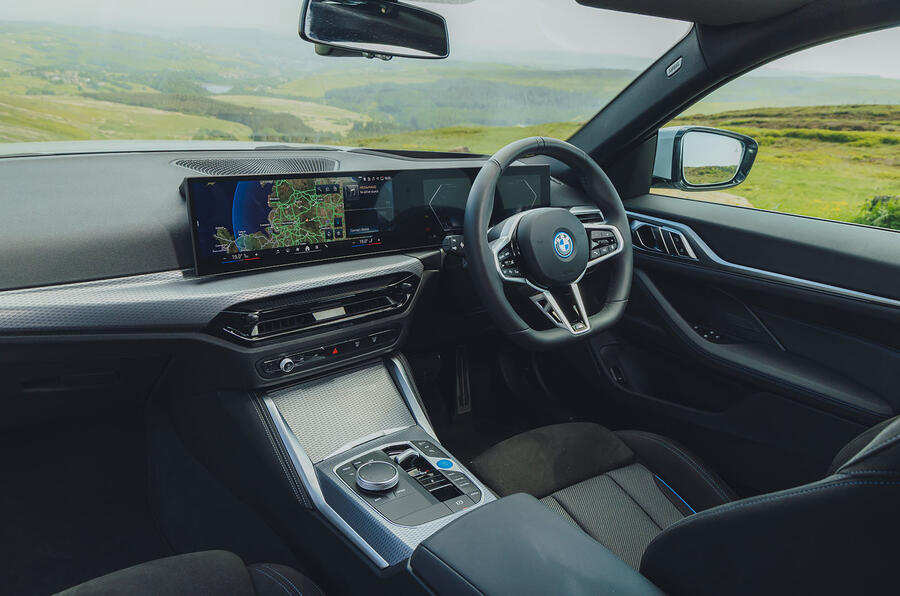
Fabric trim and manual seat adjustment betray this as the base trim level. There's also no Hans Zimmer-led Iconic Sounds (it's optional below the dual-motor i4 M60), nor even keyless entry. It all combines to yield a sense that this '35' model exists to highlight the greater spec, battery and performance of an eDrive40, though it also feels delightfully averse to nonsense in here, swerving the frustrating gloss black control panels of the other two. Too many of its controls are squirrelled away within the screen, but anything that's not in there at least gets a real button. The wraparound instruments and central screen are wonderfully hi-def too.
What I don't once crave is more speed, and even in base, 35 form, the i4 has enough zip to demonstrate the urgency of electrification without overwhelming you. Which is rather a lovely space to dwell in the modern EV landscape. There's more than enough torque for the rear axle to be getting along with, that's for sure. Loosen the shackles of its DSC and you quickly pick up tyre squeal as it claws for traction over bumpier surfaces. It clearly has a lot of weight to manage and it's not a car that knuckles down with a bit of speed and commitment.
Nor is it inert or short on fun. It's just a car that - in lieu of proper dieting measures or more focused damping - doesn't possess the same natural agility of countless others wearing the same propeller badge and tricolour detailing. It's a lovely thing to rub along with, mind, and its quiet progress seems to whisper 'coupé' just as convincingly as a swept roofline.
Which brings us to the Q5. While the Sportback badge dates back to 2004, it took Audi another 15 years to apply the treatment to an SUV and join a trend seemingly kick-started by the first BMW X6 of 2008. Fix your eyes on its rear quarter window and its impression of a coupé ain't half bad, but pan your vision back to read its whole side profile and the impression quickly fades.
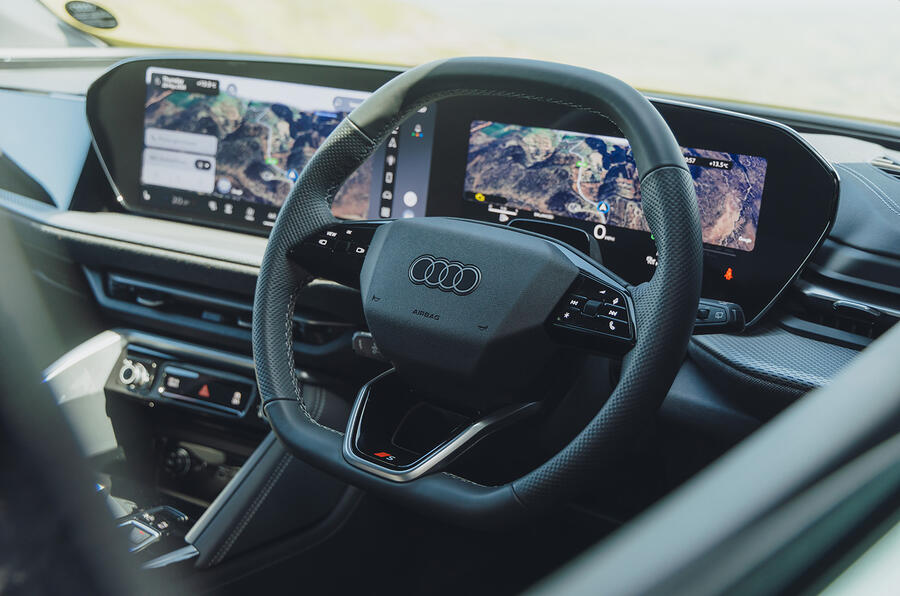
At least the roofline dips after the rear headrests, so it doesn't bin any of the stock Q5's usability, and its boot volume falls by only five litres with the back row in place. There are fun technical fabrics inside too, helping to lift the greyscale aesthetic in here. You naturally sit high beside these very indirect rivals - no matter how vigorously you ratchet the seat base down, and doing that rather misses the point of why people buy these. So I raise myself back up and instead relish the higher vantage point it affords on a great stretch of road. It's an underrated element of the misunderstood old Juke Nismo - a hill I'm very willing to die on.
The Q5 acquits itself well in the handling department too. It's built on the Volkswagen Group's latest PPC platform yet exhibits some of the innate keenness of previous MQB-based products. Its Quattro system isn't shy and you won't mistake this for a purely front-driven car - a big compliment to the neutral and trustworthy attitude it brings to corners. Sure, it's no performance SUV in disguise, but it punches well above its modest power-to-weight ratio in a straight line and can carry much of that speed without fuss.
Its 20in wheels are the largest of this test trio (the Merc has 19s, the BMW 18s) and while they audibly thump around, the ride is broadly good, assisted by the £1725 adaptive air suspension of this test car. Its calming atmosphere is supplemented by mild-hybrid tech (in the form of a 48V starter-generator), which puts in an impressive shift, softening the car's manners in traffic to imbue you with a lovely zen in everyday driving. The overwhelming sensation is of diesel still being relevant - even if you might ultimately save a bit of money to relish the higher revs of a base Q5 petrol 2.0 TSI, which offers a matching 201bhp output.
Nice car, then, if evidently the least coupé-like of our group. In fairness, it's never explicitly billed as such, though Audi left us hand-tied given nothing in its current line-up directly rivals a CLE or 4 Series. Nominally picking a winner from the other two is tricky, not least because neither the BMW nor Mercedes is perfect.
I'd love the i4 as an everyday car, with its rear-driven strut and useful mix of poshness and pragmatism inside, but the CLE exudes more glam, rides with less fuss and drives no less keenly than the countless Merc two-doors that have preceded its existence. It sticks closely enough to its respective script to claim a narrow win. What we wouldn't give for a resurgence of the coupé market around it next time, though.

China’s New Energy Vehicle Ambitions Face Market Headwinds but Fleet Turnover Accelerates Path to...

Volkswagen Group’s Strategic Overhaul Signals a Radically Different Automotive Future

Genesis Electrified GV70 Redefines the Executive SUV with Luxury, Range, and Business Value
 Comfort, performance and low running costs – company car and salary sacrifice drivers really can have it all
Did you know that almost half of the UK’s business-leased cars are battery electric? It’s easy to see why. Electric vehicles offer unrivalled refinement, enhanced performance and the latest and greatest in-car tech, all at a fraction of the monthly cost of petrol or diesel alternatives thanks to ultra-low Benefit-in-Kind rates and generally cheaper running costs.
But while all electric cars share some key characteristics, not all are born equal. Some excel when it comes to long-distance comfort but underdeliver on driving fun. Others offer great range and impressive charging capabilities but lack everyday practicality. And some, like the Genesis Electrified GV70, manage to pull everything together into one ultra-luxurious, breathtakingly quick, family-friendly package.
Launched in 2025, the Electrified GV70 took the good foundations of the petrol-powered GV70 luxury SUV (launched in 2022) and reinvented them with Genesis’ state-of-the-art electric vehicle technology. It’s also recently been updated based on customer feedback, tens of thousands of development kilometres and close collaboration between the carmaker’s engineering teams in South Korea and Germany, so it’s even better aligned with the demands of European drivers.
Offered in a choice of three generously appointed trim levels, with comprehensive exterior and interior upgrades and an extended range of up to 298 miles (WLTP), the Electrified GV70 has also stepped up its appeal for executive company car and salary sacrifice drivers. Here’s why we think it deserves a closer look.
Learn more about Genesis Electrified GV70
Standout styling, refreshed and refined
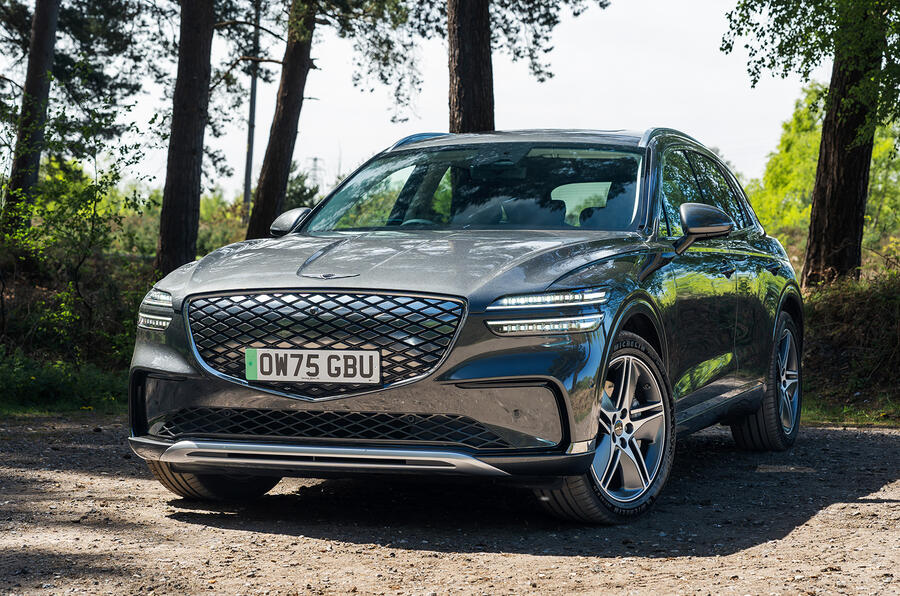
Why follow the crowd? The Electrified GV70 stands out from the usual group of executive SUVs with a uniquely sharp and opulent Korean design language, and styling that was subtly enhanced as part of the recent updates.
It retains most of the visual impact that’s already made it a popular part of the Genesis range. Refreshed models are marked out by redesigned front and bumpers, with new Micro Lens Array LED technology projecting a bright, precise beam from its distinctive dual-line headlights. The electronically operated charging port is discreetly hidden within the G-Matrix Crest grille, and it’s now heated for easier opening when it’s icy outside.
Individuality is key, including choice of three well-equipped specifications and a colour palette comprising 10 solid, metallic, pearl and matte paint finishes. Dynamic and Luxury trims feature a new 20-inch wheel design, while aerodynamic 19-inch rims are fitted to the Pure model. They’re one element of a streamlining package fitted across the range, including grille flaps that automatically open and close for better cooling or aerodynamics, and a full-length underbody fairing to manage airflow beneath the car. That’s great news for stretching the range, and for high-speed refinement too.
Space for work – and play
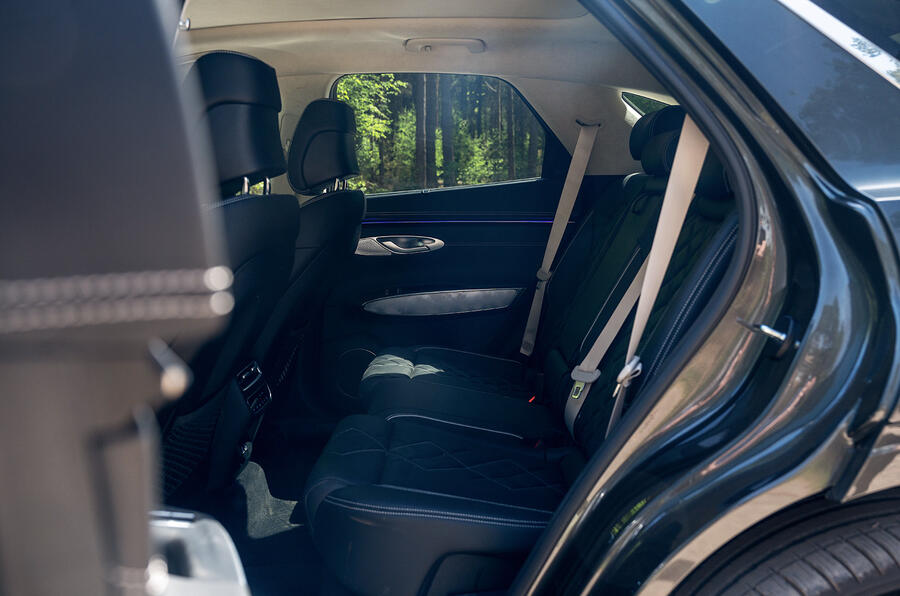
Fleet vehicles need to be a jack of all trades, with strong demands for a versatile interior space that can also deliver long-distance comfort. Genesis has made sure drivers won’t feel short-changed on either front.
Cabin updates are more pronounced than the exterior changes. There’s a much wider use of soft materials throughout, gently illuminated with soothing ambient lighting, and a new 27-inch panoramic display screen across the top of the dashboard. Genesis offers a choice of black, grey or white leather and wool interiors, each with brushed aluminium accents and using sustainably sourced materials such as yarns from processed plastic bottles and waste fishing nets.
Despite setting a high bar in standard spec, there are plenty of options to dial in extra luxury. The Comfort Pack adds 18-way adjustable seating with individual air cells that support better posture and keep you comfortable on long journeys, alongside Genesis’ Ergo Motion technology with massage functions to help minimise fatigue. Both are linked into new Mood Curator function, with four modes – Vitality, Delight, Care and Comfort – that combine music, scents and interior lighting to elevate the driving experience.
However, the Electrified GV70 can work just as hard hauling family or balancing work life. All versions are equipped with a powered tailgate for easy access to a versatile 503-litre loadspace. There’s room for five adults on board, with a panoramic sunroof on Luxury (optional on the Dynamic trim) to amplify that sense of space, and a towing capacity of up to 1800kg, which is enough to pull a large caravan.
Fold the rear seats and it’ll carry a massive 1678 litres, plus additional storage up front for the charging cables, while the optional Digital Centre Mirror uses an external camera to give a clear view even when rear visibility is blocked.
And it’s not just heavy loads that the Electric GV70 can help out with. Vehicle-to-Load technology (now standard across the range)* turns your car into a mobile energy source outputting up to 3.7kW for charging e-bikes, power camping gear or run large appliances – all with zero tailpipe emissions.
Clever, connected technology
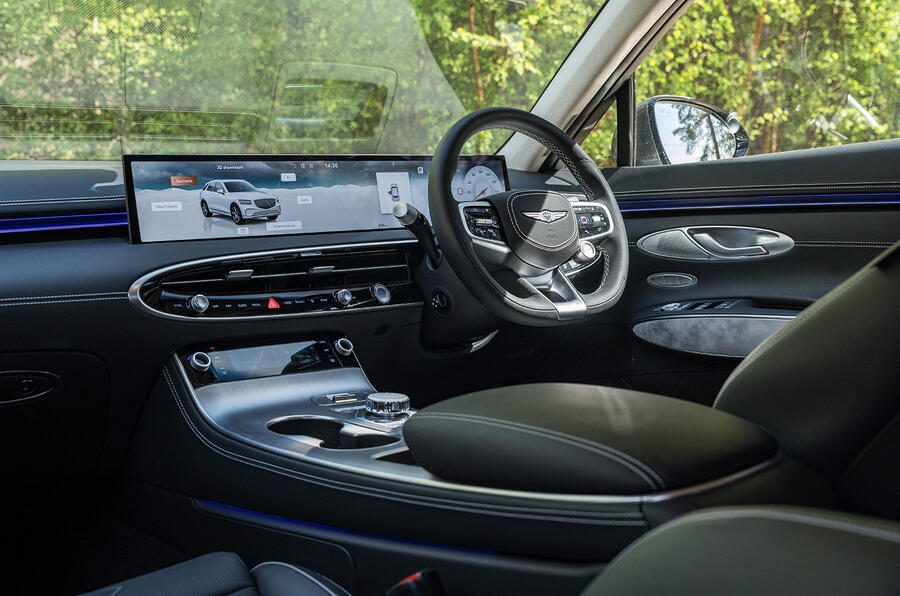
The Electrified GV70 doesn’t just provide a comfortable way to get tomeetings. It’s a well-equipped mobile office, designed to integrate seamlessly into your working life.
Its digital centrepiece is the new 27-inch connected Integrated Cockpit, combining the driver information and infotainment screens into a single panoramic display. It’s an intuitive and feature-rich system, controlled by touch, voice or the large rotary dial on the centre console and putting useful data exactly where the driver needs it. Dynamic and Luxury versions can even project navigation instructions onto the windscreen to make directions easier to follow.
That system is underpinned by a fast on-board data connection, underpinning a range of useful features for drivers. Genesis Connected Services integrates with Google and Apple calendars to download appointments on the move, and enables remote vehicle status checks including downloading individual journeys to check and improve on their driving efficiency. It’s quick enough to bring streaming services such as Netflix, Disney+ and YouTube into the cabin, enhanced by an optional 15-speaker Bang & Olufsen audio system with Dolby Atmos immersive sound.
Accessing it is clever, too. Digital Key 2 enables drivers to unlock the Electrified GV70 using a smartphone, while Fingerprint Authentication recognises who is behind the wheel and automatically configures the car to their preferences on startup. Both are standard across the range.
Longer range and fast charging capability
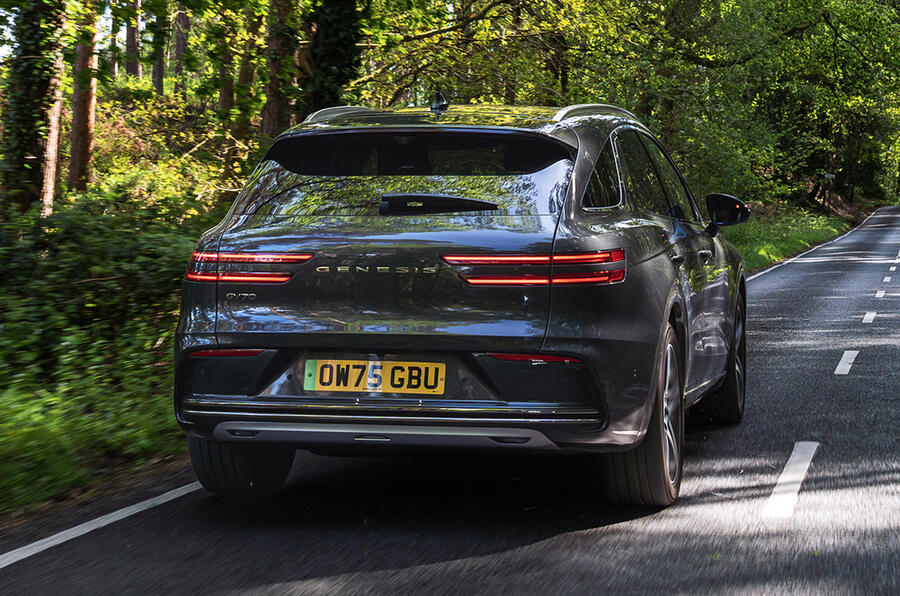
Genesis can lay claim to having some of the best EV hardware on the market, which means the Electrified GV70 makes good use of newly extended electric range.
All versions now use a larger capacity 84kWh battery pack covering of up to 298 miles (WLTP) on a full charge, or 287 miles for models fitted with 20-inch wheels. However, where Genesis really has rivals beat is with its advanced 800-volt charging infrastructure – 400 being the industry norm – which offers significantly faster charging speeds.
Plugged into a 350kW ultra-fast charger – there are 13,000 of these in the UK, according to the latest Zap-Map data – and it’ll restore the range from 10% to 80% in just 19 minutes. That’s more than 200 miles of range, and it’ll even automatically pre-warm the cells if the navigation system is routed to a charging point. It’s also fast enough to be worth plugging in during an ad-hoc rest stop, as it’ll gain around 100 miles in the time it takes to have a short comfort break.
To conserve energy, Genesis includes an efficient heat pump for the battery and cabin as standard, while the powertrain intelligently switches to two-wheel drive when it doesn’t need dual-motor traction. The Electrified GV70 also enables drivers to select from three levels of regenerative braking, the sharpest of which can slow the car without touching the brake pedal, and a separate mode that can adjust it automatically based on the road and traffic conditions ahead. All steps towards ensuring nothing is wasted.
An engaging drive
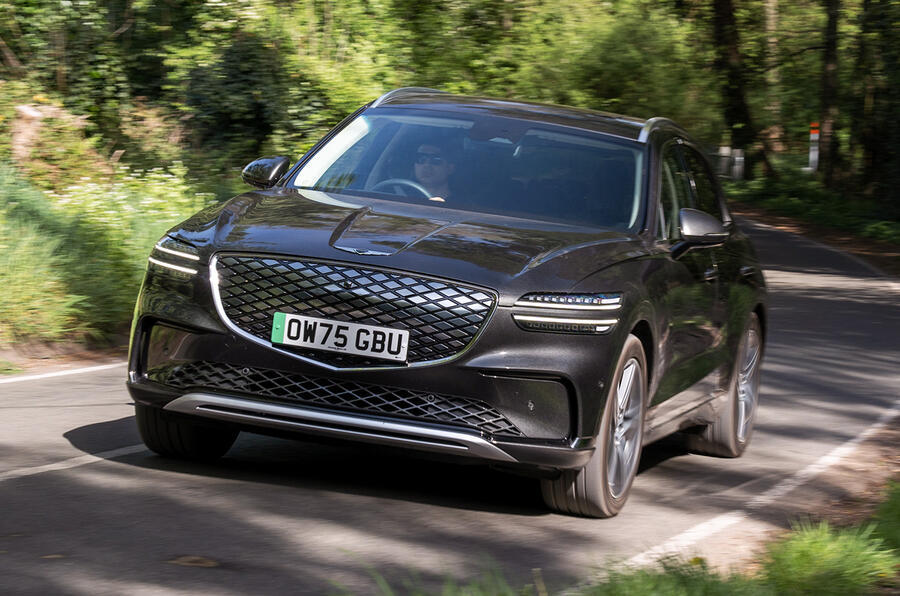
A generous range is just as well, because Genesis has re-engineered the Electrified GV70’s chassis for the best possible blend of driver engagement and comfort.
The bodyshell is designed to be as stiff and light as possible. Widespread use of structural aluminium saves 41kg, while the battery is packaged between the front and rear wheels to push the centre of gravity as close to the ground as possible, offering an impressively agile drive.
For the updated version, that’s enhanced by a re-worked suspension setup, including new hydro bushings that help reduce road vibrations, and electronic power steering calibrated to offer precise responses and weighted to inspire confidence when manoeuvring at high speeds.
The performance justifies that work, with motors at the front and rear axles, producing a combined 483bhp using the thumb-activated Boost Mode on the steering wheel. That’s enough to give this luxurious SUV a supercar-like turn of pace; 62mph in 4.4 seconds from rest and stress-free overtaking, supported by all-wheel drive with clever torque vectoring technology that channels the power to the wheels with the most grip, even while cornering.
The update dials this up a notch, adding Virtual Gearshift Technology which simulates the feeling of shifting through gears, selected using paddles on the steering wheel and accompanied by a choice of three artificial engine noises, to give a more engaging experience behind the wheel. Who says driving for work has to be a chore?
Genuine SUV capability – on and off road
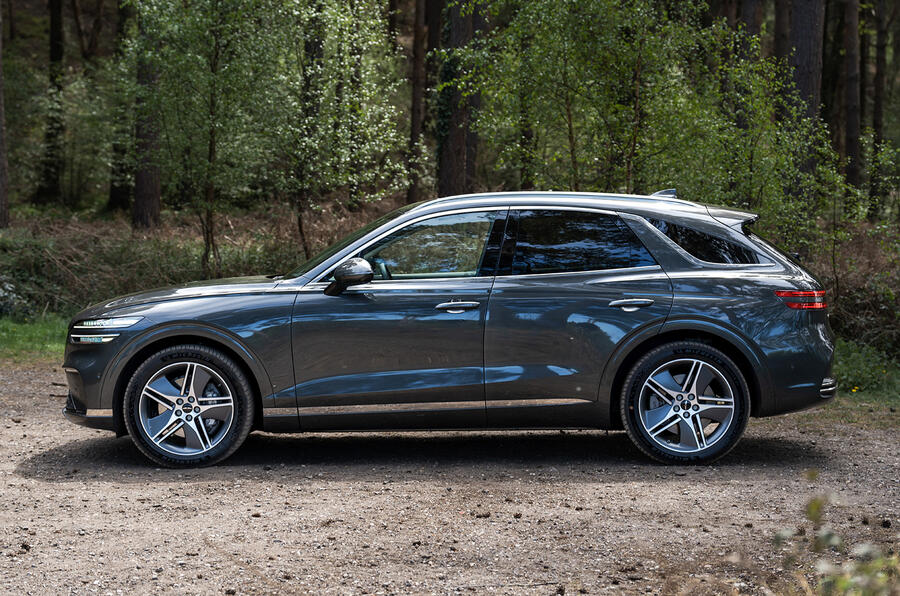
Another string to the Electrified GV70’s bow is a suite of assistance technologies that helps it adapt to whatever road conditions are ahead – even if they’re off the beaten path.
Great for boring motorway drives, Smart Cruise Control is standard and maintains a safe distance from other traffic, while optional Highway Driving Assist 2 expands that capability to lane positioning. And if automation is high on your priority list, you’ll love Remote Smart Parking Assist 2, which can manoeuvre in and out of spaces with nobody at the wheel – it’s standard on Dynamic and Luxury trims.
All trim levels include Genesis’s electronically controlled suspension, which uses a forward-facing camera to spot bumps in the road and adjusts damping to suit. The flagship Luxury version takes this up a notch, including active noise cancellation that intelligently uses the audio system to cancel out fatigue-inducing hum from the road.
If conditions are a little trickier, the dual-motor drivetrain has specific e-TERRAIN modes for Snow, Sand and Mud, enhanced by a new AI-powered Auto Terrain system which automatically switches to the most appropriate settings. Crosswind Stability Control is also included as standard, detecting side winds and intervening with gentle adjustments to the brakes and steering to keep the car in its lane.
And, with a full package of the latest active and passive safety features – including a front centre airbag that stops occupants colliding with each other in the event of a side impact, the Electrified GV70 scored a full five stars from Euro NCAP. Perfect protection for work and family-moving duties.
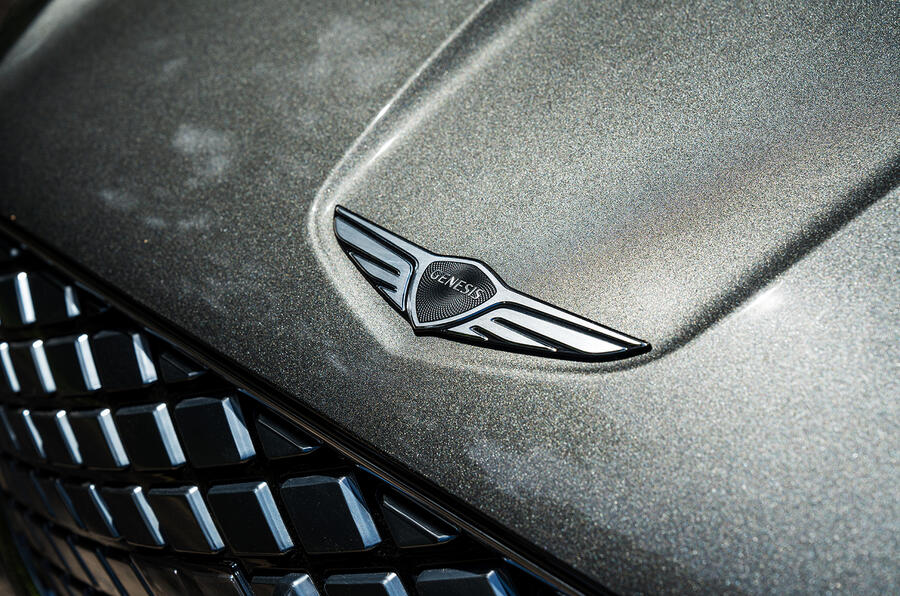
It’s good for business
Here’s where the real perks kick in. The UK Government is all in on electric vehicles, with plans to reach a 100% zero-emission new car and van market by 2035 – so there are plenty of great financial reasons for drivers and businesses to make the switch.
With 0g/km rated CO2 emissions, all Electrified GV70s fall into the lowest 4% company car tax bracket and enjoy significantly lower bills than equivalent plug-in hybrid or conventionally powered SUVs. The entry-level Pure version comes in at just £87.50 Benefit-in-Kind for a 40% income taxpayer per month, while their employer can enjoy ultra-low Class 1A National Insurance Contributions and 100% tax relief for buying or leasing the car.
Salary sacrifice sweetens the deal further. Because payments are taken from your gross salary before tax and National Insurance contributions are deducted, drivers can make significant savings versus a traditional personal lease – bringing a premium electric car like Electrified GV70 within easier financial reach on a predictable monthly budget.
It’s cost-effective to run, too, using between 7p and 8p of electricity per mile when charged at home (around half the cost of a large diesel engine) falling to 2p per mile if drivers have a home energy tariff with discounted overnight rates. It’s hardly surprising that drivers, and their employers, are rushing to making the switch.
Learn more about Genesis Electrified GV70
*Requires adaptor; sold as accessory

Mugen Upgrades Transform Honda Fit with Performance Damper and Sportier Design, Bridging Practicality and...
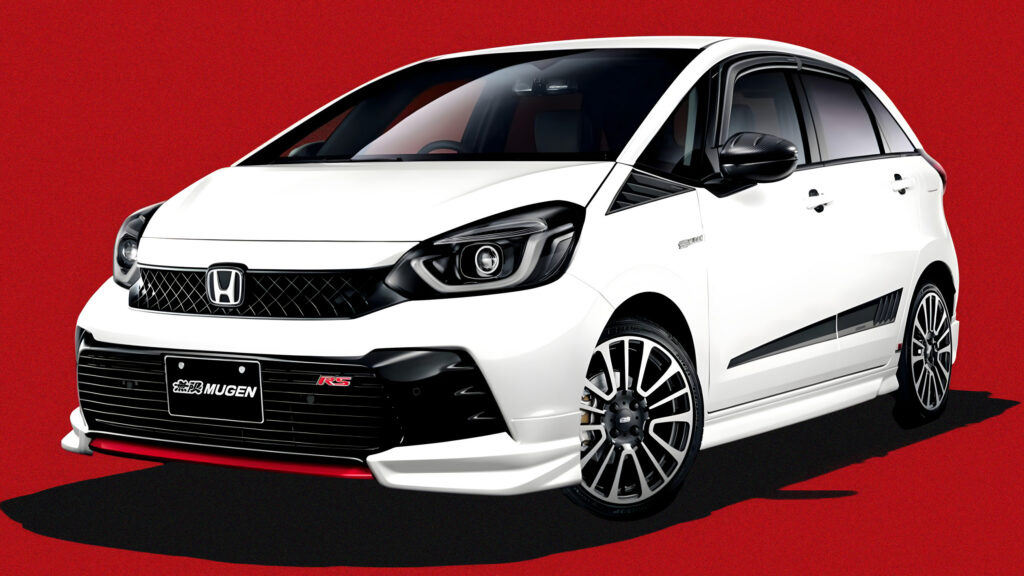

Car Designs That Transformed Public Perception Through Evolving Aesthetics
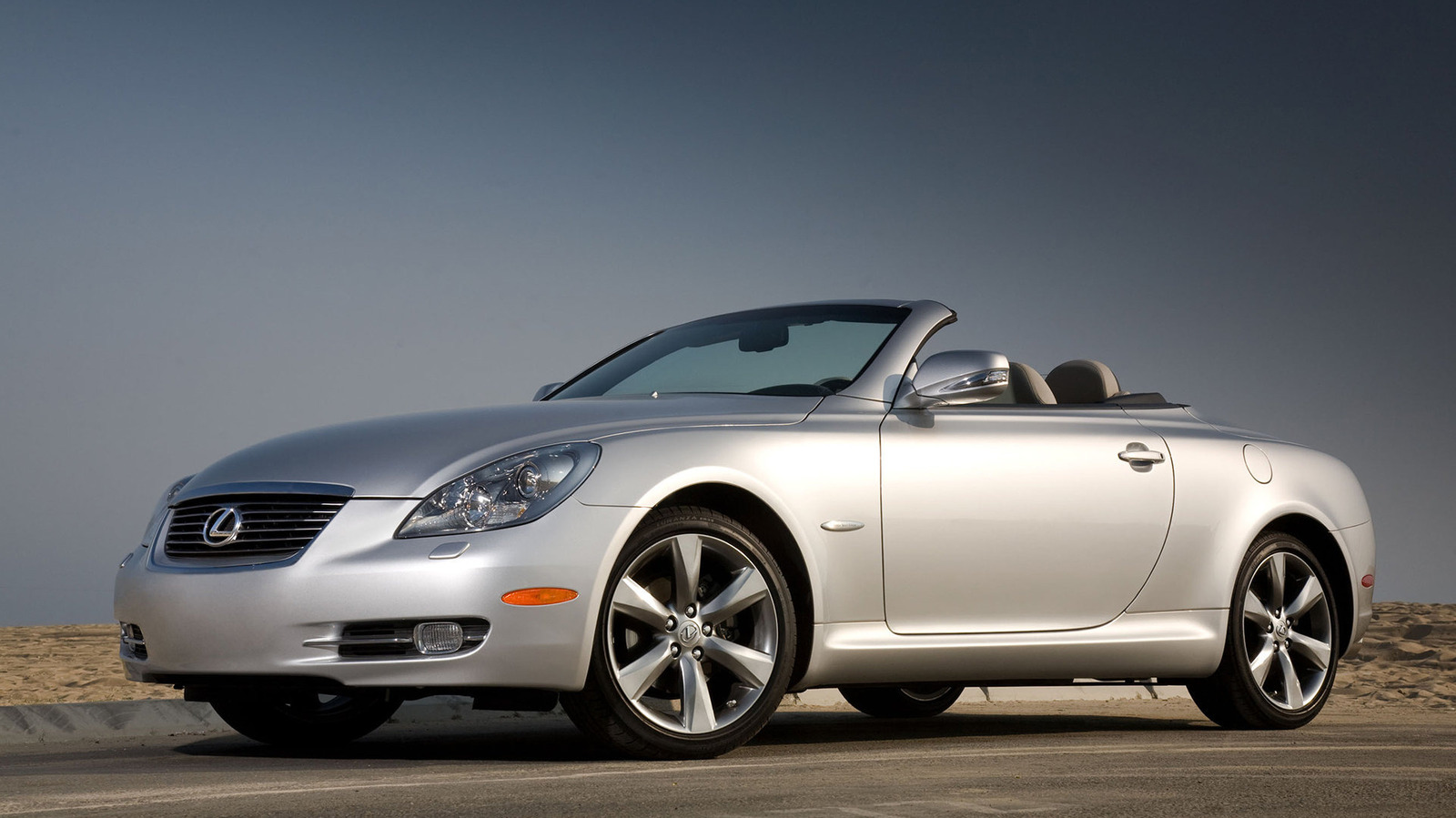

Porsche Macan Petrol Retirement Exposes Misjudged EV Transition and Market Demand Gap
 ICE version of SUV bows out, two years after end of EU sales and two years before it's replaced
Porsche will end production of the ICE Macan at the end of July, bringing the curtain down on one of the firm’s best-selling models two years before the launch of its petrol-powered successor.
This retirement follows Porsche's acknowledgement that it underestimated continuing demand for the 11-year-old SUV, having originally expected buyers to migrate to the all-new Macan Electric.
In an interview with Germany's Frankfurter Allgemeine Zeitung earlier this year, Volkswagen Group CEO Oliver Blume admitted Porsche had "got it wrong" with the Macan, saying the product planning at the time had been based on market conditions that had since changed.
Recently released global sales figures illustrate the scale of that miscalculation. During the first six months of 2026, Porsche delivered 35,315 Macans worldwide. Of those, 19,695 were petrol and 15,620 were electric.
When the Macan Electric was conceived, Porsche expected it to replace the ICE Macan with little interruption to sales. Instead, slowing growth in EV demand in a number of key markets has prompted the company to reassess its strategy.
The result is an unusual situation in which one of Porsche's most successful nameplates will disappear from global production before development of a direct successor – heavily related to the new Audi Q5 and codenamed M1 – is completed.
The Macan has played a pivotal role in Porsche's expansion since its introduction in 2014. Together with the larger Cayenne, it transformed the company's sales mix and profitability, becoming one of its strongest-selling models in Europe, North America and China. Losing it, even temporarily, creates a significant gap in Porsche's line-up at a time when demand for premium ICE SUVs remains high.
The withdrawal has taken place in stages. Porsche first ended sales of the petrol Macan in the EU after deciding not to update the ageing model to comply with the new General Safety Regulations (GSR2).
Meeting the legislation's cybersecurity requirements would have required a comprehensive redesign of the car's ageing electronic architecture among other changes, an investment Porsche concluded could not be justified.
The end of production this month extends that decision to every remaining global market.
However, Porsche has taken steps to cushion the sales impact by producing additional stocks of the ICE car. Those stocks are expected to keep it on sale well into 2027 in markets such as the US, Porsche's largest, softening the effect of the production gap until the new ICE Macan arrives.

Lexus LS Faces Hybrid-Only Future as Sedan Nears End, Paving Way for Radical Minivan...