LaGuardia Airport Bombing and the Enduring Mystery of America’s Forgotten Attack


Lexus LFA Redefines Electric Supercar Experience by Prioritizing Authentic Sensation Over Engine Sound Imitation
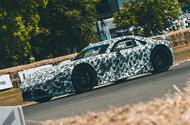 Lexus is aiming for the new LFA to feel like its predecessor behind the wheel – without howling V10 sound
Lexus plans for its electric LFA hypercar to feel authentically like its legendary predecessor to drive - but that doesn't mean simply faking its howling V10 engine note.
Making its dynamic debut in prototype form at the Goodwood Festival of Speed, the new LFA is effectively the EV twin of Toyota's V8-engined GR GT supercar.
Precise technical details remain under wraps, but it's understood to be the first production Lexus to use solid-state batteries (SSB), which are vastly more energy-dense than today's liquid-chemistry packs.
Built around the same lightweight aluminium architecture as the GR GT, the LFA is similar in silhouette but much less aggressive and overtly race-influenced in its styling - which concept designer Shogo Kasamatsu said is testament to the influence of the ICE original.
"The LFA itself was a very humble design, very artistic, and based on its true function," he explained, highlighting the relatively minimalist and subtle look of the new car, relative to its Toyota sibling.
Kasamatsu added that the rationale behind the design was to "express the message, rather than our overall design language", so the concept didn't necessarily need to look like Lexus's current production cars.
He said the design is "almost" indicative of the final production car, which is "almost finished" ahead of a planned launch next year.
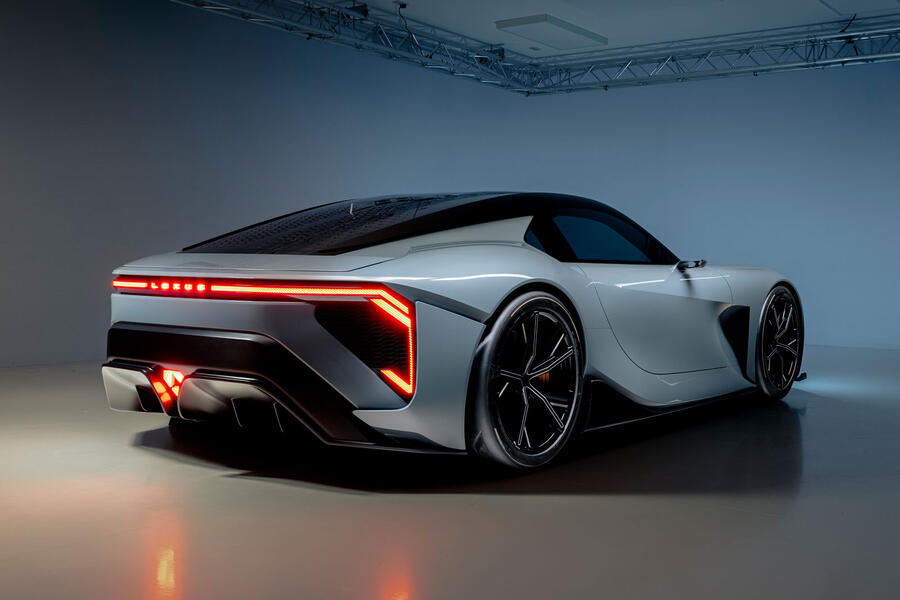
Its primary raison d'être, according to Kasamatsu, is to "challenge" established conventions around performance EVs. "Many people don't believe that battery [power] is exciting right now," he said. "This is a huge challenge."
Yukihiro Yukita, general manager of the LFA programme, concurred, admitting that lack of demand for high-priced sporting EVs is "our biggest challenge".
However, he added, Lexus wants to be a "leader" in convincing supercar drivers to make the jump from ICE to EV power, and an authentic driving experience will be key to achieving that.
"What I get from the market is that a BEV is fake," he said, "because we imitate the sound [of an ICE] – but that's not something we want to do."
Yukita said that rather than simply mimic the sound of an engine or the feel of a gearbox, Lexus wants LFA drivers to "feel like they are driving with an engine".
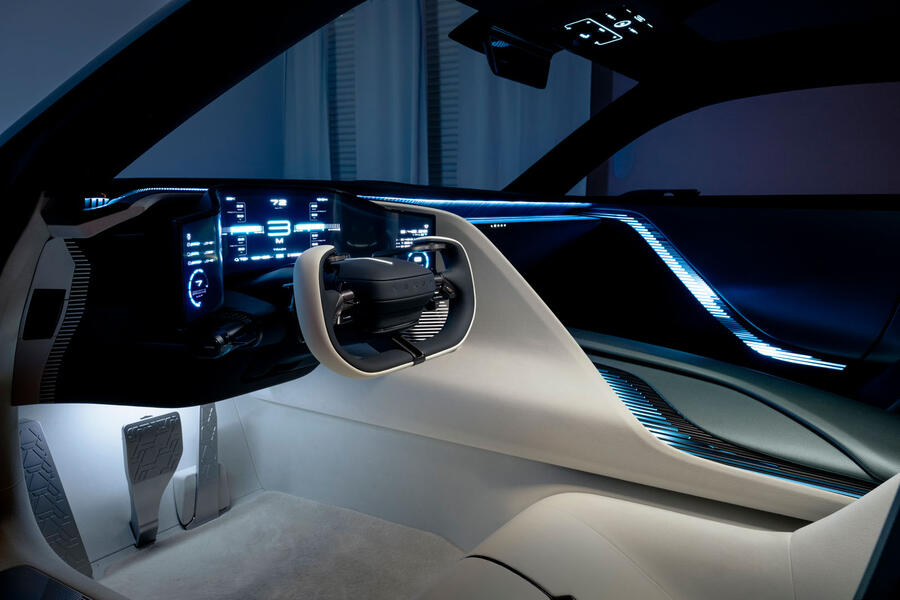
He acknowledged that one of the primary "demerits" of an EV, aside from the inherent added weight, is that "we lose the sound or the vibration, which gives a big impact to the five senses of the driver."
But on the other hand, he continued, an EV sports car can leverage the increased responsiveness and linearity of electric motors, which "we cannot get from an engine".
Plus, engineers are able to "eliminate all those sounds or vibrations that are not useful", which means "we can reset to zero and then discuss what we want to create in redesigning the sound or vibrations, which can have a good impact on the five senses".
Yukita acknowledged the efficacy of Hyundai's and Porsche's synthesised EV powertrains but said: "We're not just wanting to replicate the sound of the engine: we want to redesign the sound itself."

Zeekr Targets Off-Road and Pickup Segments to Challenge BYD and Redefine Premium Utility Vehicles

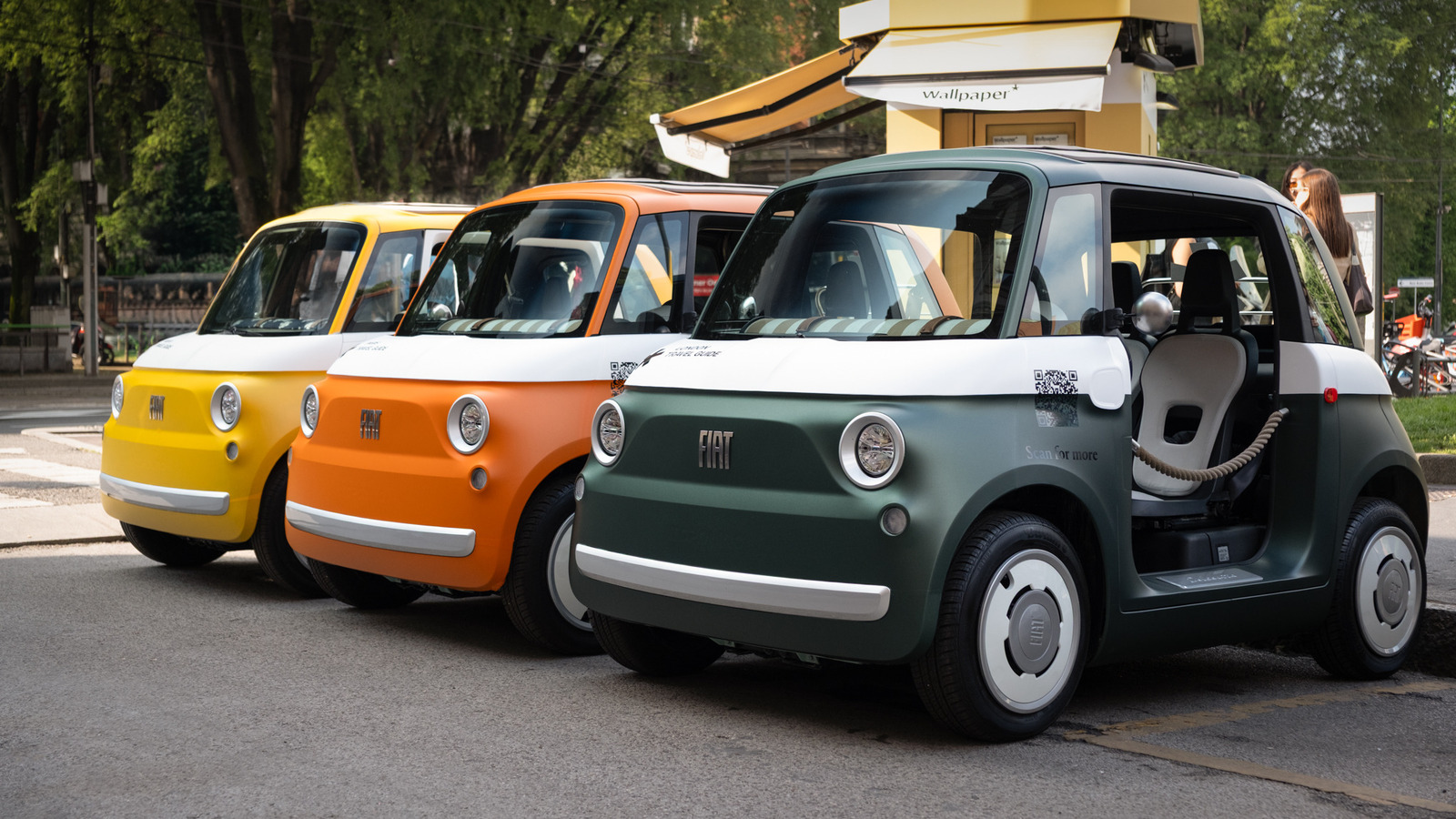
Fiat Topolino Redefines Urban Mobility with Ultra-Compact Low-Speed Design

MG Cyber Concept Signals Ambitious Shift Toward Premium Electric Design
 Rakish new electric crossover will make production – but won't necessarily be sold to UK drivers
The bold new MG Cyber concept serves as a showcase for the Chinese company’s future design direction and will evolve into its flagship EV.
A Goodwood Festival of Speed star, the Cyber is electric and close to five metres in length - and described by MG design boss Jozef Kaban as a "dream car" for the brand.
The Cyber will perform a similar role on the premium and aspirational side as the MG Cyberster roadster has done on the sporting side for MG.
For now it's only an exterior styling exercise, with an interior to follow in time, but it will make production in the future.
It will possibly be badged as a model from upmarket brand IM in some markets, but it might not necessarily be sold here, UK product director David Allison revealed.
"As a global brand that sells in 100 countries around the world in huge volumes, there are cars that are sold in other markets around the world, as well as China, that we don't necessarily take," he said.
"It may be that we do end up taking something like that, but [for now] it's a concept car that conveys a vision and design direction that we want to go down."
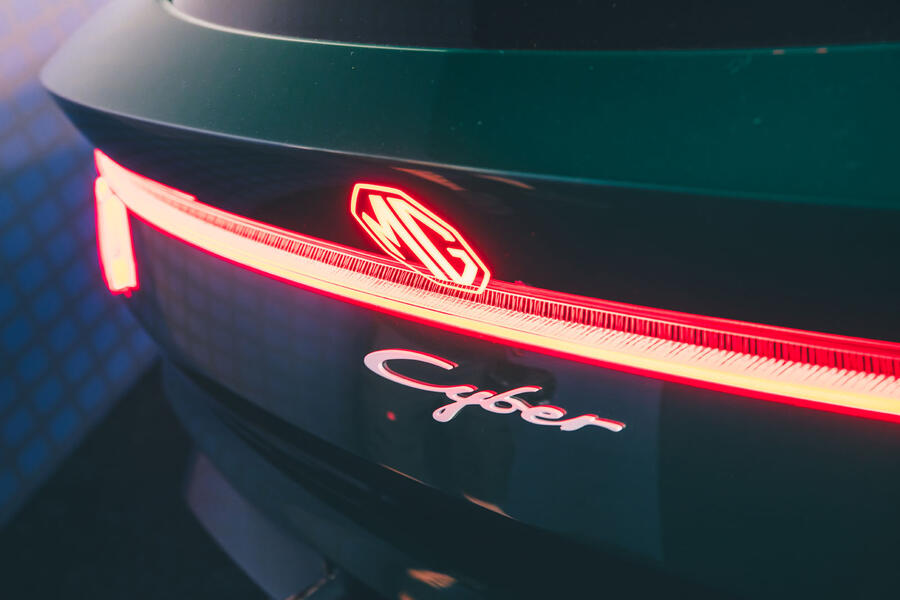
The Cyber was displayed at Goodwood alongside the new MG Go, a hot hatch concept that previews the upcoming MG 2 supermini.
While the production 2 is coming next year, the production version of the Cyber is further off – but its design ethos and approach will be felt across the MG range as Kaban looks to make his mark on the brand after two years in the role.
Asked of the Cyber was his statement of intent for MG, Kaban replied: "You could say that.” But he added that it was also the result of the brand listening to its customers and responding to the changing market demands.
"There's no one answer," he said. "Every brand is looking for the right one for them. For us, this is how we see our next steps, and we will see what the customer appetite is."

Corvette Theft Unravels $1.3 Million Luxury Car Ring in Southern California

Gordie Howe Bridge Delays Threaten Daily Economic Losses for Americans


Semi-Solid-State Batteries Reshape MG Plug-In Hybrid Performance and Efficiency from 2027
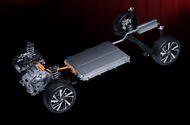 Chinese manufacturer's SolidCore technology will be used not only for EVs but also PHEVs like the next ZS
MG will equip its next-generation plug-in hybrids with semi-solid-state battery technology from 2027.
The new technology, announced earlier this year, will come first to the MG 4 EV Urban hatchback, and it has now been confirmed that it will then be used in PHEVs - first the next-generation MG ZS in 2027, then the MG HS and MG S9.
In time, MG's semi-solid-state battery technology, called SolidCore, will become the Chinese manufacturer's predominant battery technology as it continues to develop full solid-state batteries for the future.
The benefits of semi-solid-state, according to MG's lead scientist, Li Zheng, are better range, faster charging, better performance in cold weather and, in the case of PHEVs, better low-speed, high-speed and uphill performance.
Essentially, it makes the battery's performance more consistent and more stable across a wider range of driving and climatic conditions, and in the case of PHEVs allows them to use a smaller combustion engine.
These future MG PHEVs will be badged 'Plug-in Hybrid +' and will be offered in two different forms: a 1.1-litre model with 98bhp and 129lb ft in small cars like the ZS and a 1.5-litre version with 161bhp and 188lb ft in larger cars like the HS and S9.
Also included in the new system is a new hybrid transmission that allows for EV-like efficiency in how the drivetrain operates.
Meanwhile, much development on the engines to reduce friction and improve combustion has allowed the smaller drivetrain to operate at more than 42% thermal efficiency and the larger one at more than 43% - far above historical standards (in the low-mid-30s).
The powertrains are also said to run quieter - some five decibels than current MG PHEVs - and achieve better performance both off the line and in-gear.
Fei Jibing, MG's chief engineer for powertrain control, also detailed a new hybrid powertrain, badged 'Hybrid +', that will appear first on model-year updates for the MG 3 and ZS later this year.
This features the new transmission from the PHEVs and a larger 3.6kWh battery.
Jibing confirmed that MG would continue to develop hybrid and PHEV technology alongside EVs, with the goals of improving efficiency, boosting performance and making them quieter.
MG Motor UK's product boss, David Allison, told Autocar that more than 90% of MG's sales are hybrids, PHEVs and EVs, and while the brand offers pure-ICE vehicles with manual transmissions, "nobody really buys it".
"People are now into the efficiency and that electrified feeling, particularly in the urban area that you get with a hybrid car, and that's what people want," said Allison.
Even so, MG remains committed to offering a full range of powertrains, he confirmed.
Allison also revealed plans for MG's assisted driving technology to be made less intrusive and more reliable, as he said the "jury is still out" on the usefulness of such technologies to customers.
This includes new automated parking functions and improved lane-keeping assistance technologies before MG introduces its first 'Navigate on Autopilot' limited self-driving technology, on highways from late 2027 and in urban areas from 2028.

Mini Cooper Heritage and Oxford Editions Mark 25 Years with British Iconography and Premium...

Red Bull RB17 Hypercar Showcases Engineering Ambition at Goodwood with Adrian Newey at the...