Electric Company Cars Reshape UK Tax Incentives for Employers and Drivers Amid Shifting Policy
 Although the incentives aren’t as generous as they used to be, going electric is an easy way to cut your company car tax bill
The company car is a long-established workplace perk in the UK, with 840,000 drivers getting one as part of their employee benefits in 2023/24, according to His Majesty’s Revenue & Customs (HMRC). With a company car tax system that favours low CO2 emissions, it’s become an important early adopter market for electric vehicles.
HMRC reintroduced ultra-low tax bands for electric company cars in 2020 and, aligned with a fast-growing choice of increasingly cheaper and more capable models, it’s become a no-brainer for drivers and employees to switch. The latest government stats show an additional 120,000 employees have opted into a company car since the 2020/21 tax year, while 41% of the total are in an EV. Here’s why.
How much cheaper is electric company car tax for drivers?
If your job involves a lot of driving, then you might be lucky enough to be provided with a company car. It’s an attractive perk; most are brand new, with maintenance and insurance costs covered, and they’re available for you and (often) your family to use outside work hours.
Of course, there’s no such thing as a free lunch. If you’re using a company-owned car for private journeys, then HMRC classes it as what’s called a ‘benefit in kind’ (BiK). That’s a catch-all term for anything your employer provides on top of your salary, and they’re taxed as additional income.
The easiest way to keep a lid on your tax bill is to opt for something with the lowest possible CO2 emissions at the tailpipe, and nothing emits less than a car that doesn’t have an exhaust at all.
All benefits-in-kind are assigned a ‘taxable value’, and for cars this is a percentage of its list price with CO2-weighted bands from 4% to 37%. An electric vehicle (which has rated emissions of 0g/km) falls into the lowest 4% band, while even the lowest-emitting full hybrid on sale – the Toyota Yaris – is taxed at 25% of its list price.
Drivers pay BiK on that value at the same rate as their income tax. There are three bands (20%, 40% and 45%) in England, Wales and Northern Ireland, while Scotland has five (between 19% and 46%). A 20% taxpayer would be liable for 20% of their company car’s taxable value each year, and this is normally deducted in instalments from their monthly wages.
Put simply, that system offers drivers roughly five-times cheaper tax for selecting an EV, and there are sizeable incentives in place until at least 2030. The following table compares total tax costs over three years for 20% and 40% income taxpayers, for a vehicle delivered in 2026/27.
| Vehicle | Type | CO2 | List Price | Total BiK (2026-2029) | |
|---|---|---|---|---|---|
| 20%Taxpayer | 40%Taxpayer | ||||
| Ford Puma Gen-E Select | Electric | 0g/km | £31,930 | £1,022 | £2,044 |
| Ford Puma 1.0 EcoBoost Titanium (125PS) | Petrol | 122 g/km | £26,610 | £4,843 | £9,686 |
| Volkswagen ID.4 Pro Match | Electric | 0 g/km | £44,905 | £1,437 | £2,874 |
| Volkswagen Tiguan 2.0 TDI Match | Diesel | 142 g/km | £40,550 | £8,353 | £16,707 |
How are employers incentivised to offer electric company cars?
Businesses also have good reasons to go electric, supported by a few additional tax breaks that help offset the still-higher price compared to a petrol or diesel car.
For a start, they can deduct the full cost of buying or leasing an electric vehicle from their gross profits, which reduces their corporation tax bills. That tax relief is capped at 85% of the monthly lease, or 14% of the purchase price for cars emitting more than 50g/km CO2.
Vehicle excise duty (VED, or ‘road tax’) exemptions ended in April 2025, so renewals for EVs cost the same as any other car. However, they still qualify for a much lower £10 first-year rate (paid at registration), while the £440-per year ‘Expensive Car Supplement’ only applies if their list price is over £50,000. For all other vehicles, including plug-in hybrids, this comes in at £40,000.
The downside is a proposed 3p per-mile charge, specifically for EVs, which is set to come in from April 2028.
Employers also pay reduced Class 1A National Insurance Contributions (NICs) if they put drivers in an electric car. These are a flat 13.8% of the vehicle’s taxable value, which means it’s as heavily discounted as driver BiK. It’s no wonder businesses are early adopters.

BMW Bootleg SUVs in Russia Reveal Surging Demand and Risky Workarounds After Sanctions

Antipopemobile Imagined as Symbol of Dissent in Catholic Schism


Renault’s Google Integration Transforms EV Usability and Reduces Range Anxiety Through Seamless In-Car Intelligence
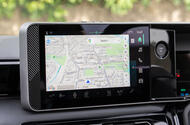 Forget clunky infotainment. Renault’s openR link puts Google Maps, Google Assistant and Google Play right at the heart of your driving experience
Ask most car buyers what puts them off switching to an electric vehicle and range anxiety usually tops the list. Ask them what frustrates them most about modern cars in general, and a fiddly, confusing infotainment system tends to come a close second. Renault has taken both of those concerns head-on with its openR link multimedia system, which has Google1 built directly into the heart of each of its latest models.
That means Google Maps, Google Assistant and Google Play are fully integrated into the whole Renault lineup, including Renault 4, Renault 5, Megane E-Tech electric, Scenic E-Tech electric. It’s not simply bolted on as an afterthought, but properly woven into the fabric of how these cars work. The result is an infotainment experience that feels instantly familiar, deeply capable and, crucially, designed to make electric driving easier. Here’s why it matters.
Find out more about Renault's E-Tech electric range
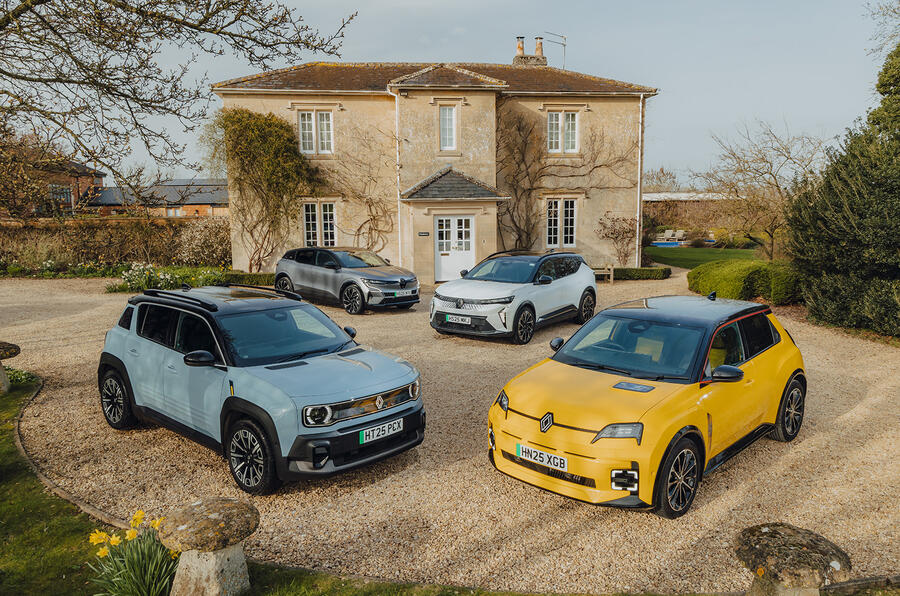
Which Renault E-Tech models have Google built-in?
The openR link system with Google built-in is available across Renault’s entire electric lineup, including Renault 5, Renault 4, Megane E-Tech and Scenic E-Tech. Google Maps and Google Assistant connected services are offered for five years from the vehicle’s delivery date.
Each of these cars already makes a compelling case for itself on its own merits. Renault 5 is one of the most characterful small EVs on the market, with retro styling and a thoroughly modern driving experience. Renault 4 builds on that with more space and versatility. Megane impresses with its sleek design and punchy performance, while Scenic adds a spacious family-sized option with impressive range. In every case, the Google integration adds a layer of usability and intelligence that makes the overall package significantly more compelling.
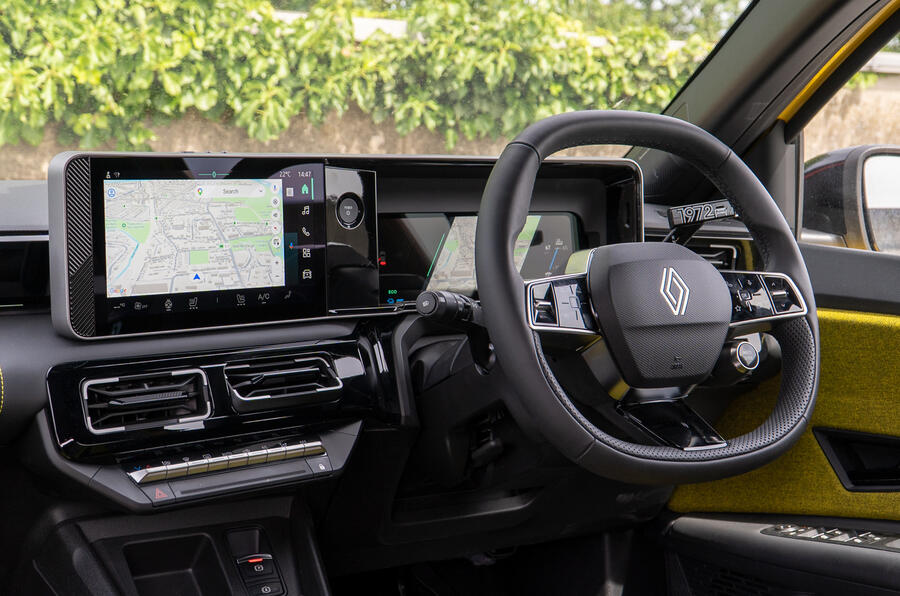
Google Maps: navigation that actually understands your EV
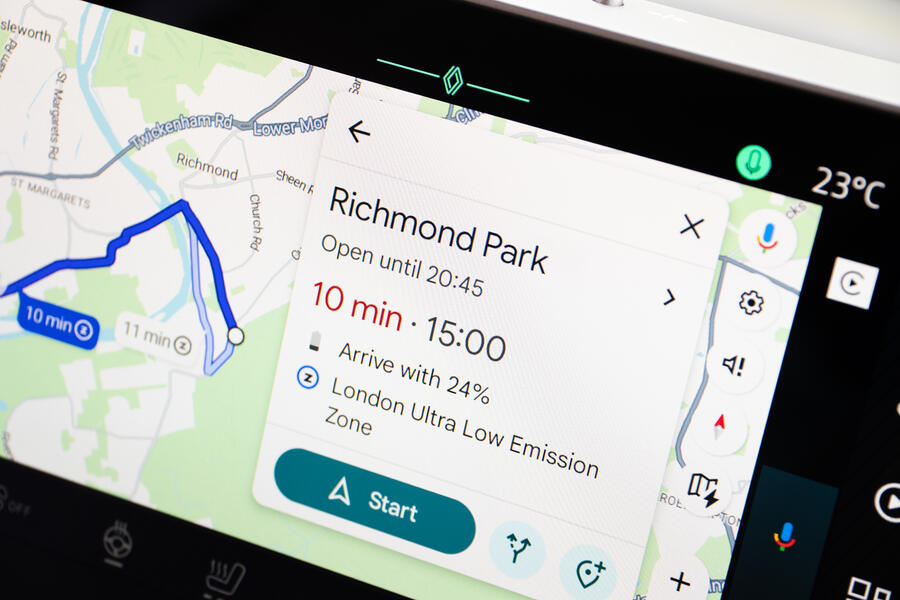
Google Maps is already the navigation app of choice for millions of people. So the fact that Renault has built it directly into its openR link system – rather than relying on a phone mount and a Bluetooth connection – is a significant step forward in its own right. You get the full Google Maps experience on your car’s central screen, complete with real-time traffic updates, live rerouting if disruptions occur, and maps that are constantly refreshed so you’re never caught out by outdated information. Better still, Renault has properly integrated Google Maps into their cars, so it's a much richer experience than simply using your phone.
Sign in with your Google Account and the experience becomes even more personal. Your saved addresses, search history and favourite places all transfer directly to the car’s screen, so you can pick up exactly where you left off on your phone. Better still, you can plan a route on your smartphone and send it straight to the car using the Google Maps ‘Send to Car’ feature – particularly handy when you’re heading somewhere new and want everything ready before you set off.
For EV drivers, though, the real headline is how Renault has made Google Maps feel native to its cars – so everything works seamlessly. This isn’t just sat-nav with a rough idea of your battery level – Renault has turned it into a genuinely joined-up system. Enter a destination that’s beyond your current range and your Renault will automatically add a charging stop to your route. It factors in traffic conditions, your real-time energy consumption, battery temperature and your preferences for charging speed to plot the most efficient journey possible.
There’s one feature that stands out above all others, though: battery preconditioning. When you set a fast charger as your destination, Renault’s system works with Google Maps to bring the battery up to its ideal temperature before you arrive. That means faster charging when you get there and less time spent waiting. Factor in the already-impressive electric range across the E-Tech electric lineup – up to 381 miles in Scenic – and you can see how this effortless approach to long journeys makes range anxiety a thing of the past. This intelligent, proactive thinking on Renault’s part makes a real difference to everyday EV ownership.
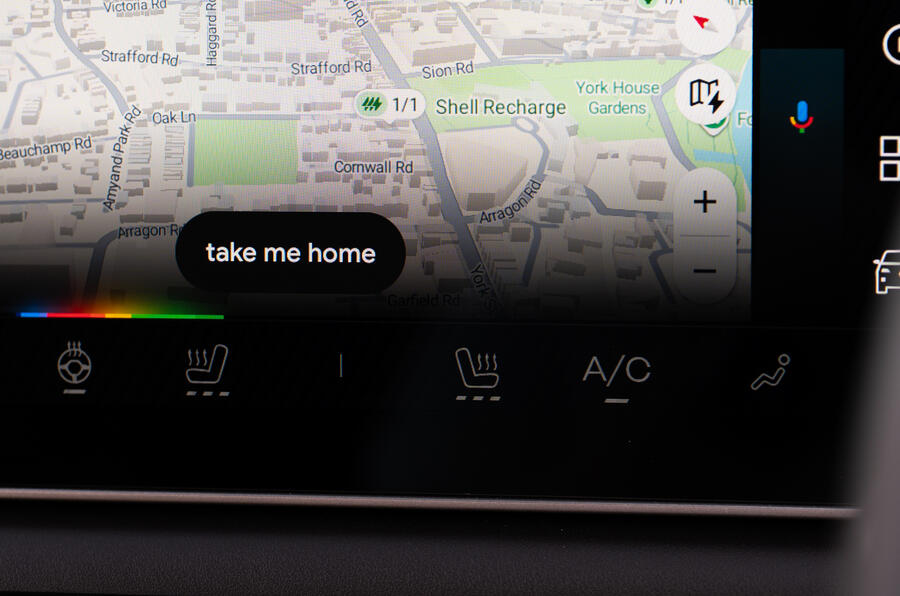
Google Assistant: a co-pilot that listens
Voice control has promised a lot over the years and, too often, delivered very little. Systems that mishear commands, require precise phrasing for a limited list of actions or simply don’t respond reliably have left many drivers ignoring the feature entirely. Google Assistant is a different proposition entirely.
Triggered with a simple “Hey Google”, it responds to natural, conversational requests and handles a remarkable range of tasks without you needing to touch the screen. Need to change the cabin temperature? Say so. Want to know if you have enough charge to reach your next meeting? Ask. Need to switch between driving modes? It’s done with a few words, and you never have to glance away from the road ahead.
The integration goes beyond basic commands. Google Assistant can read and compose messages, make calls, manage your diary and even check what’s happening on your agenda for the day – all without requiring your hands to leave the wheel or your eyes to leave the road. It’ll find a nearby cafe, tell you its opening hours and navigate you there in one seamless exchange.
Renault has also integrated Google Assistant with some of the more distinctive features in its lineup. In Scenic E-Tech electric, for instance, you can control the solarbay panoramic roof with voice commands – adjusting its opacity without ever reaching for a button. And for those who arrive home to a smart house, you can use Renault’s built-in Google Assistant to preheat your home, turn on the lights or open the garage door. The car becomes a brilliantly capable and intuitive extension of your connected life.
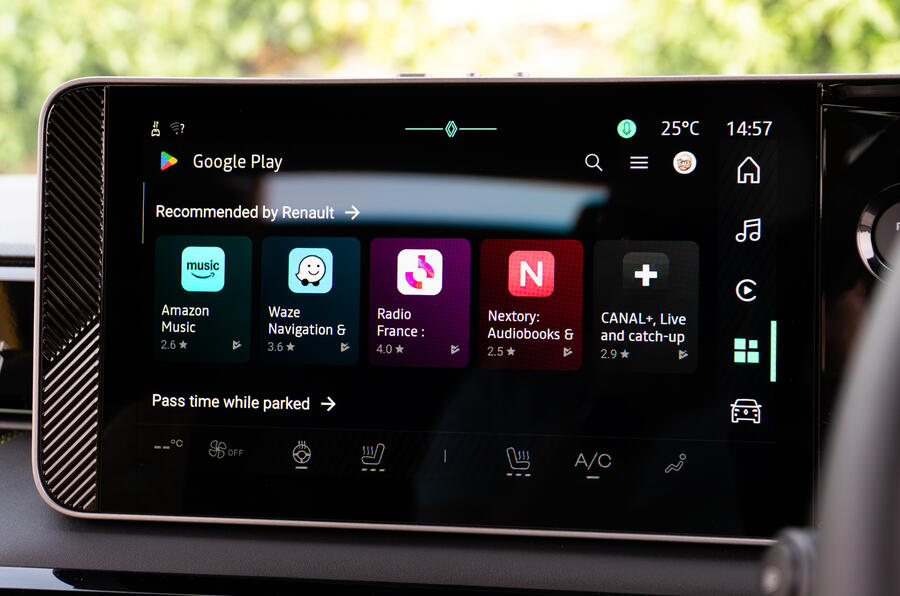
Google Play: your apps, on the road
One of the more underrated aspects of Renault’s Google integration is access to Google Play. Connect your Google Account and you can download compatible apps directly to the car’s screen, in the same way you’d add an app to a tablet or smartphone.
The selection includes some familiar names. Spotify and Amazon Music give you access to your playlists without tethering your phone. Waze offers an alternative navigation option for those who prefer its community-driven approach to traffic alerts. EasyPark simplifies parking payments, while Radioplayer brings a comprehensive live radio experience to the dashboard. There’s also video streaming apps, like Netflix and Prime Video, or even a built-in browser for those occasions when you need to look something up at a standstill.
The key advantage here is consistency. Rather than relying on your phone’s battery and Bluetooth connection, these apps are built into the car’s system – which means a more stable, more reliable experience every time you get behind the wheel.
Why built-in beats bolted-on
It’s worth pausing to consider what makes Renault’s approach different from simply plugging your phone into a car with Android AutoTM or Apple CarPlayTM. Both of those systems are useful, but they work by mirroring your phone onto the car’s display – they don’t actually talk to the car itself.
Renault’s built-in Google integration is a fundamentally different thing. Because Google Maps and Google Assistant are woven into the openR link system, they can communicate directly with the car’s own data – your battery level, your remaining range, your charging preferences, your driving mode. That’s why the navigation can precondition the battery, why the voice assistant can tell you exactly how far you can drive, and why the route planning factors in your real-world consumption rather than a generic estimate.
It makes the car feel coherent and intelligent rather than a collection of separate systems trying to talk to each other. And for anyone considering the step to electric driving, that coherence is genuinely reassuring.
Find out more about Renault's E-Tech electric range
1 Google, Google Maps and Google Play are trademarks of Google LLC

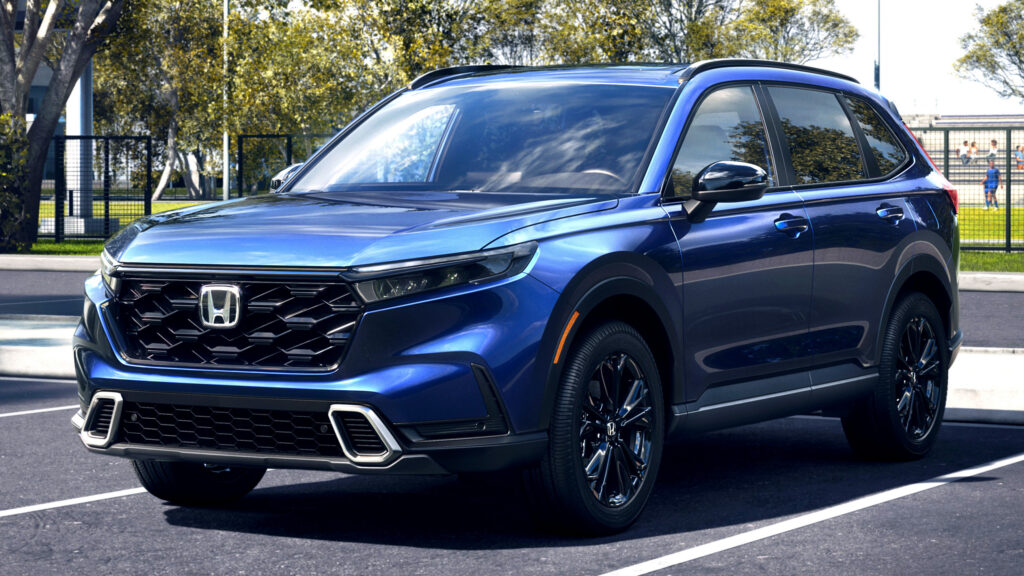
Honda CR-V Surges to Top of US Sales as Rivals Falter on Supply and...

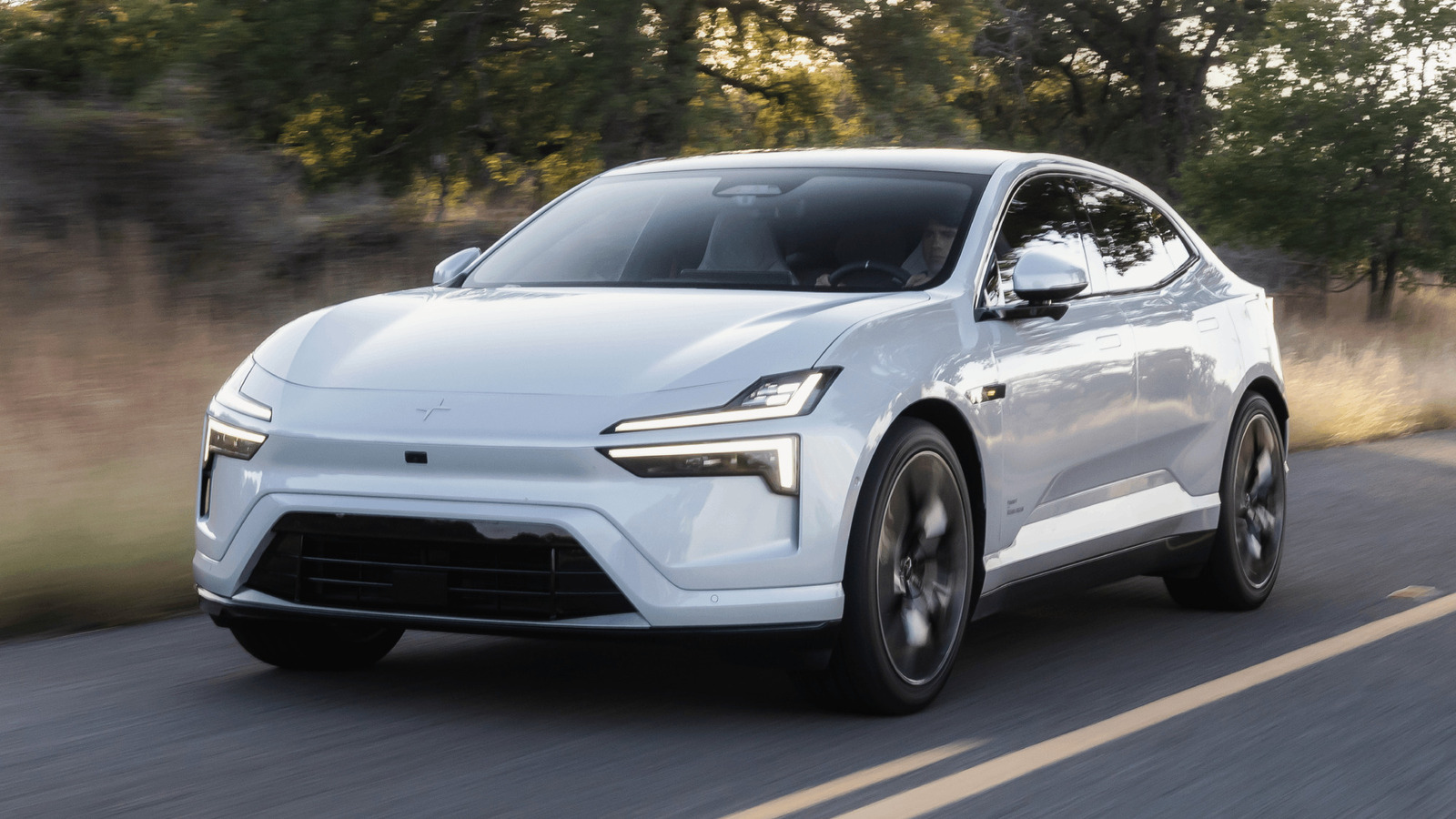
Polestar 4 Discount Highlights Brand’s Pricing Strategy Amid US Market Ban

McMurtry Spéirling Redefines Track Performance and Usability With Game-Changing Fan Technology

£1.2m Spéirling Pure is the ultimate track toy for the thrill-seeking driving enthusiast"Craziest go-kart ever made" is a 1000bhp, ground-hugging hypercar that you can easily drive with your friends
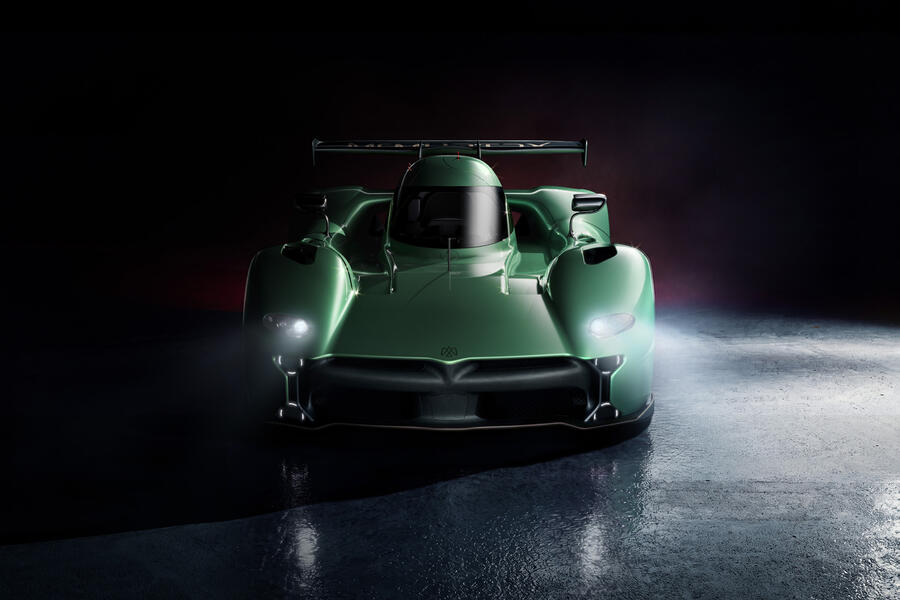
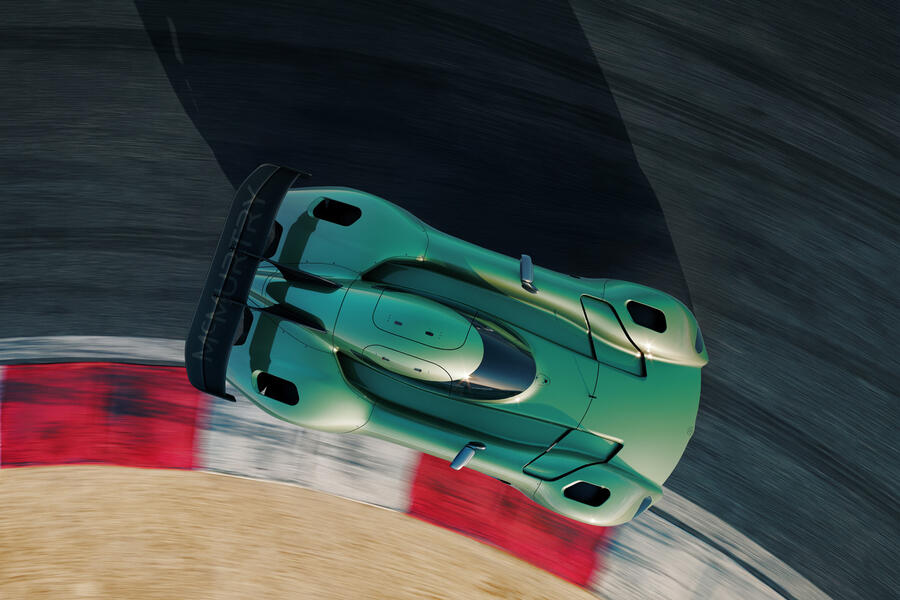
McMurtry has revealed the final production version of its record-breaking, ground-sucking Spéirling hypercar - on sale now for £1.2 million as the ultimate track toy.
The Spéirling Pure is a dramatically overhauled version of the pocket-sized, 1000bhp fan car that famously ascended the 1.16-mile Goodwood hillclimb in an outrageous 39.08sec in 2022.
Having smashed the all-time records at the Festival of Speed, Hockenheimring and Top Gear test track, to name a few, the single-seat EV has now been restyled for improved aero, extended by 200mm (to 2.2m) to accommodate a larger battery, equipped with a more powerful drivetrain, and re-engineered for a more spacious and comfortable cockpit.
Also new for the customer car are a full suite of track-mandated lights (including indicators), a more compliant suspension arrangement with 20% more ride height, wider and taller tyres and a hydraulic steering system that's said to be lighter and more feelsome than the previous electric system.
The production-spec car notably also has a small boot underneath its colossal rear wing, with space for a helmet and a HANS device.
It's 95% new compared with the earlier prototype, claims McMurtry, and has been engineered to give what managing director Thomas Yates claims are “F1 car levels of performance but an ownership experience that's more comparable to a [Porsche 911] GT3 RS".
"One of the key focuses has been on getting running costs of this car right down,” he told Autocar, explaining that the British company has invested heavily in extending the durability of all consumable components and making it as easy to drive and own as possible.
As an example, he highlighted that the Michelin slick tyres are rated to last for a relatively normal 175km (109 miles) - "in that sense we're completely conventional".
Plus, he added, "the car actually uses its tyres incredibly well because the downforce is constant", so they "still look great" when they come off the car.
Yates also said the fan – which can generate up to two tonnes of downforce from rest and allows the car to corner at 3g – will need replacing periodically, but McMurtry has "made huge progress" in reducing production costs and making access easier, so owners can treat it "like a brake pad" or another regular consumable.
McMurtry has sold 25 examples so far, taking the wait list right through to the end of 2027, and has started production at its new factory in Wotton-under-Edge, Gloucestershire, which employs around 100 people and is planned to produce cars at a rate of two per month.
Asked what sort of buyer the Spéirling Pure attracts, given its performance figures and list price are in another realm compared to most track cars, Yates explained that “it’s a real mind-over-matter car” that gives owners “a wonderful opportunity to push their own limits”.
"Some of the guys who are buying them have lived an absolute life of racing; they've been absolute racing legends, and this is a great opportunity to have fun. Some have Formula 1 cars, and this is another way to enjoy that kind of performance but in a much-lower-running-cost way, one that's way easier to share.”
A key component of the Spéirling ownership experience is the social element. McMurtry has already hosted owners events – including a “hilarious” ice driving day – and has equipped customer cars with an intercom system that allows drivers to communicate with each other out on track, which Yates said ramps up the communal and competitive aspects.
“It seems like it would just be a small thing, because the car itself is super-performant, but you add this layer of social while you're driving, and it's almost like you're in the craziest go-karts ever made,” he said. “We've got a single-seater, but we've found a really fun way to make those experiences shared."

Yates also touted the longevity of the battery as a boon for owners; after 10,000km (6200 miles) of hardcore track tests, it lost just 4.5% capacity and no resistance.
"This is much more running than most customers are ever going to do with the car," he said.
The battery itself – boosted to 100kWh in capacity – is a proprietary McMurtry design, engineered entirely at the firm's Cotswolds HQ, which has been designed so that new cell technologies can be easily integrated as time goes by and the Spéirling remains technologically up to date.
"We want people to be excited about using this car in 20-30 years' time," explained Yates.
"We had to in-house it", he said of the decision to develop a bespoke battery for the Spéirling, one which has as much capacity as the Polestar 4 in a space roughly half the size. "It's been a huge focus - a tremendous amount of iteration with motorsport engineers that just care about the last marginal gain."
"In a small shed in Gloucestershire, there is an awesome battery factory where we make some of the most power- and energy-dense battery packs in existence.
"If you control the design of the battery and you control the entire design of the chassis and all the packaging, you can iterate hundreds of times to try and get that last bit of packaging benefit, that last bit of central gravity. It's about taking it all in house and caring relentlessly about the last few per cent."
Now that the Spéirling is on its way to customers, thoughts have turned to what comes next for McMurtry. As well as confirming plans for three separate new model lines, Yates said the company is working to share its proprietary innovations with other companies, which could push the hypercar’s game-changing technology out to wildly different applications.
"We are working with one very high-profile motorsport team, one absolutely massive automotive OEM and another hypercar manufacturer," revealed Yates, without giving any names.
He said the talks revolve around both McMurtry's fan technology and its self-developed battery packs and that "most of" the supply deals it makes will go public in the future.
He admitted that he "had to do quite a lot of soul-searching" before agreeing to let other companies use McMurtry's tech but ultimately decided that "while it's really important that the Spéirling is always this amazingly different car, it's even cooler that one day the use of fan technology becomes far more ubiquitous and the Spéirling becomes the car that managed to change the game."
The parallels between Yates' company and that of revered Croatian tech entrepreneur Mate Rimac are evident - in so far as both started their businesses just a few years ago with a headline-baiting electric hypercar and are now evolving them into highly influential and prolific technology developers and suppliers.
But Yates has no plans for McMurtry to deprioritise its car-building programme in favour of expanding the component supply element of its business.
"I would say that our ambition as a company would be to have some component of applied technology in the future but maybe not to have the balance the way that Rimac has done, where maybe 2000 staff are on applied technology and relatively the car side of the business is about a tenth of that.
"My dream would be that maybe one day we are about 50:50; that we have a good applied technology division and we have a real strong drive still to build the world's most ridiculous cars."
McMurtry previously hinted at plans to make the Spéirling road-legal, sticking a numberplate on the back for its runs up the hill at the 2023 Festival of Speed, but Yates said it will now be built exclusively as "an utterly outrageous track car".
However, the company hasn't abandoned its plans to eventually put cars on public roads; Yates said McMurtry was "absolutely interested in what we can do in that space" and had "some cool ideas" for its next cars after the Spéirling.
The company is working on plans for three new models, "and it's quite possible that some of those have numberplates on", he revealed, without giving any firm details of what form they would take.
He did hint at potentially offering the Spéirling with a second seat in the future but said that the future models under consideration "are in a completely different direction altogether".
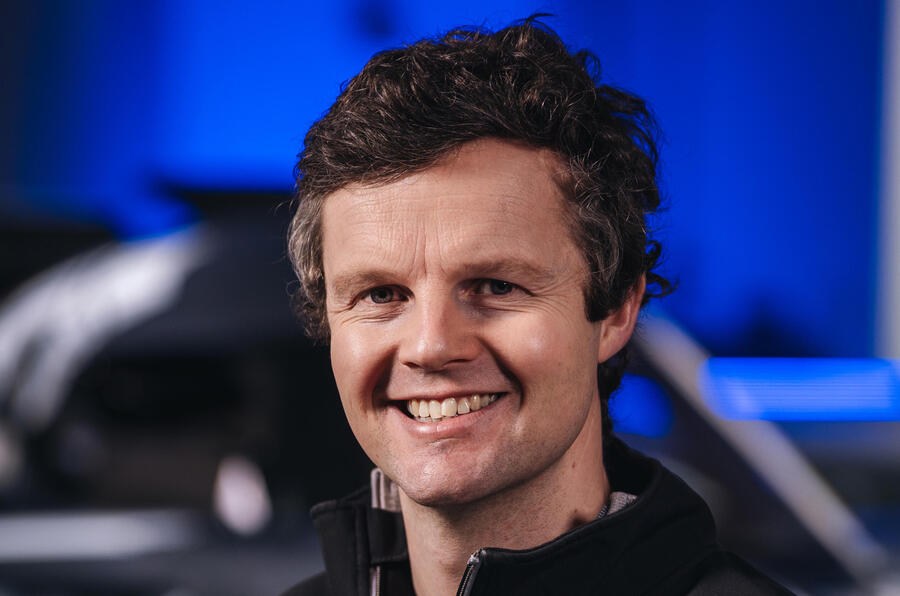
Q&A with Thomas Yates, MD, McMurtry Automotive
Can you imagine a motorsport series?
"I think of the pre-war era, where there was this spirit of endeavour, where you had people that were so enthusiastic about their cars and what they could build and what they could run, that people would just come together and they would race, and motorsport grew organically out of this burning desire to go quickly. I would love it if we had a customer base that turned to us and said 'we want to go racing'. To me that's that's the best ever justification for why you would go racing with these cars. But what we're not interested in at this point is curating an artificial environment to take these things racing."
Do you look to firms like Ariel and BAC for inspiration?
"One hundred per cent. We have a lovely meeting where it's me, [Ariel's] Simon Saunders, the [BAC] Briggs brothers, Morgan and Caterham, and we all get together and laugh about how insane it is to try and run a car company in the UK. But it's so uplifting, because even though we're offering different levels of cars, there's so much endeavour between the group, and it's wonderful. So I'm hugely inspired by those guys; they've done an incredible job, and the proof in the pudding is that I would so gladly have a garage filled with one each of their cars."
You could theoretically break every lap record under the sun. Will you?
"There's definitely some cool stuff in the pipeline that we want to do, and I'm sure we'll announce it formally soon. The extra huge effort that's been put through the car to increase the range opens up some interesting and new possibilities that maybe would have been more difficult with the original prototype, so that's exciting. Mostly what we want to achieve, though, is to support our wonderful owners to let them go and break records and go and live their aspirations. Our dream is that headlines will be made by our customers."

Volkswagen’s China-Developed Models Test Strategic Boundaries Amid Tariff Pressures and Internal Division

EV Fleet Management Faces Strategic Challenges as Charging Complexity Drives Cost and Data Pressures
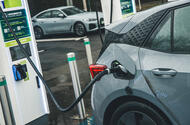 Fleets have gone electric; now keeping track of all the charging sessions is becoming a logistical and strategic nightmare
Managing an increasingly complex charging ecosystem has become a growing challenge for fleets as electric company cars move from pilot-scale deployments into mainstream use, ChargePoint has warned.
Ore Oluwatudimu, its solutions engineering director for Europe, told Autocar that fleets are no longer concerned about whether electric cars are fit for purpose but are instead struggling with the much larger volume of charging sessions – spanning homes, workplaces and public networks – as electrification scales up.
In turn, it has become harder for them to keep track of who is charging, where they’re plugging in, the energy used and differing costs across multiple providers, workplaces, reimbursement schemes and energy tariffs, he added, which has strategic implications.
Charging locations can have a significant impact on operating costs and suitability. Drivers who can plug in at home could pay as little as 7p per kWh of electricity if they charge overnight, whereas the most expensive public DC rapid charging networks cost 92p per kWh.
Based on those figures, a Volkswagen ID 3 Pro Match could cost 2p or 23p per mile, depending on where it’s charged. That’s 86% cheaper or 80% pricier than a petrol Volkswagen Golf eTSI, which becomes the cheaper option if more than half of the energy is supplied by a DC charger.
“Electrification strategies are becoming increasingly data-driven,” said Oluwatudimu. “Rather than simply asking how many vehicles can be electrified, operators are focusing on where charging can be delivered most efficiently, while maintaining control of total cost of ownership and ensuring drivers have reliable access to charging wherever they need it.”
ChargePoint operates 927 public chargers in the UK, according to Zap-Map, but the business is changing its focus.
On 30 June, it cut off access to its network via its own app and RFID cards, unless they were provided by the driver’s employer, fleet company or leasing provider. Other users can still access the network with contactless payment and third-party roaming providers. Now it's prioritising offering charging equipment and software solutions for businesses.
For corporate fleets, the aim is a reduced operating burden and leaving fleet managers to focus on their vehicles instead of charging infrastructure.
This includes tools such as the Driver Management Solution (DMS), which works across home, workplace and public charging, giving fleet managers a consolidated view of energy usage and costs, while automating expenses claims from drivers.
The alternatives are either using the HMRC-approved Advisory Electric Rate (AER) of 7p per mile for home and 15p per mile for public charging and apportioning the journey across the two or setting their own rates and proving that they’re accurate.
'Dynamic load management', which shifts energy use into cheaper periods, and chargers with a more efficient centralised (instead of per-unit) AC-to-DC conversion are also designed to reduce the cost of operating depot-based chargers.
“In time, fleet charging will improve how it integrates charging infrastructure, fleet management platforms, telematics systems and energy networks,” Oluwatudimu said.
“Rather than relying on fixed charging schedules, charging decisions will increasingly be driven by real-time operational requirements, vehicle availability, energy prices and site constraints.
"Smart platforms will be able to determine when, where and how vehicles should charge based on business priorities and energy availability."

Tesla Semi Fatal Crash Raises Questions Over Driver Fatigue and Safety Systems in First...