Alpine F1 Commitment Strengthened as Gucci Partnership Drives Renault’s Brand Strategy
 The Renault Group's F1 team has gradually slimmed down in recent years, prompting sell-off rumours
The Renault Group is committed to Formula 1 and plans to keep majority control of its team.
The Enstone-based operation has been through several iterations in recent years, transitioning from a full Renault works entry to an Alpine team with power units bought in from Mercedes.
Next year, the team will be renamed again after a title sponsorship and investment from the Italian luxury goods brand Gucci.
There are frequent rumours about other companies, consortiums and individuals looking to take either a stake or control Renault Group's F1 team, including Mercedes, BYD, Toto Wolff and Christian Horner.
When asked about all the changes at the team and what this meant to Renault's strategy in F1, Renault Group CEO François Provost was emphatic that "we will stay in F1".
He added: "We want to keep control of our team. We want to grow step by step."
Provost conceded that it "must improve operationally" but said he had been encouraged by recent improvements in performance.
"We shook up the team over the past four years and not in an overly orderly manner, but you see the performance getting better. I'm humble; it will take time."
As well as improved performance, Provost said that the Gucci deal will improve the team's marketing and the deal is "meaningful" in terms of building brand awareness.
Grand prix racing is also important to Renault as a company that loves cars, he said. "We share this concern," he replied when asked why F1 was needed for the brand to bring excitement to its operations and make its cars desirable.

Kia Sales Surge to Record Highs as Hybrid Demand Reshapes US Market Strategy

Polestar 4 Estate Reintroduces Rear Window to Boost Practicality Amid Strategic Shift
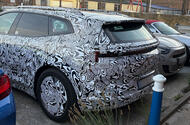
Image sent to Autocar by reader Richard Jinks showcases new rear windowNew variant of Polestar's premium SUV reinstates a rear window and promises greater practicality
An ‘estate’ variant of the Polestar 4 will spearhead a product offensive from the Swedish EV firm as it looks to overturn a financial slump – and the new model has now been caught testing in the UK.
Images sent to Autocar by reader Richard Jinks reveal a key difference compared with the existing coupé-SUV version of the 4. It has a conventional rear windscreen, something eschewed by the more rakish version in favour of a rear-view video camera.
The reinstatement of rear glass gives the appearance of a more conventional SUV, which will add another string to the 4’s bow as it fights off strong competition from the new BMW iX3 and Mercedes-Benz GLC Electric.
From the front end, however, the two versions will be indistinguishable from one another.
Polestar CEO Michael Lohscheller previously said: “The Polestar 4 is a winning model, but some people want a bit more function and practicality: some people have dogs. It’s all the good things from the current car, but it’s a bit more practical.”
The estate is due to arrive later this year. It will take on the 4 name, while the existing car will be renamed the 4 Coupé.
Under previous planning, the two variants were due to be built together in Busan, South Korea, so that they could sidestep prohibitive US tariffs on Chinese-built cars. It remains to be seen whether this will remain the case: Polestar was last week barred from the US market under cybersecurity rules designed to target Chinese- and Russian-made cars.
Following the decision to end sales in the US, Lohscheller said Polestar would refocus on Europe and other markets in which it could grow, such as Asia, Latin America and Canada.
“The automotive industry is entering a new phase, based on regional dynamics,” he said.

Ferrari 488 GTB Damage in China Highlights Legal and Social Tensions Over Parental Liability

New Car Prices Reach Record High as Consumer Demand Remains Unshaken

Guilty Pleasure Cars and the Allure of Automotive Oddities: Why Flawed Designs Win Lasting...
 We'd rather not tell anyone about this lot... but we can't resist
Not all cars that are released are considered attractive or of a high standard.
And that might well be true of some of the cars in this feature. But for all them there’s just something we can’t help but like. Let’s take a look:
BMW iX
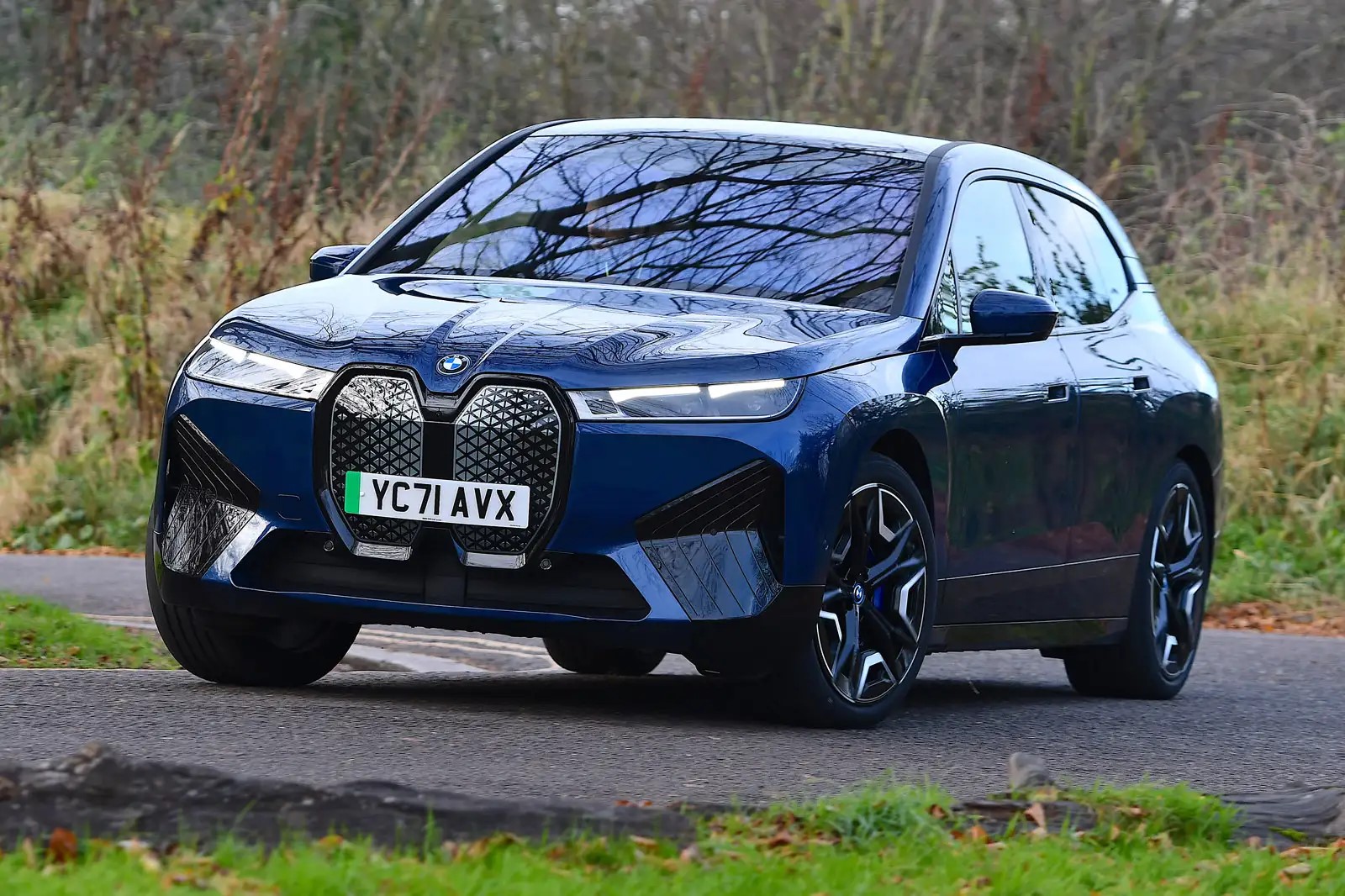
Upon its release, people laughed at the iX because of its long rabbit-toothed ‘kidney grille’ design, bizarre trapezoid front body panels and the fact that it didn’t quite fit the image of “The Ultimate Driving Machine”. Be that as it may, the iX is very comfortable and packed with tech such as an electrochromic sunroof and a powerful Bowers & Wilkins 4D audio system.
In the stock xDrive40 guise with 322bhp, it might not feel lightning quick off the line but when the iX is rolling, the instant throttle response is great fun. And honestly, we think smaller grilles on this car just wouldn’t look right when sat beside those aggressive headlights.
Renault Avantime
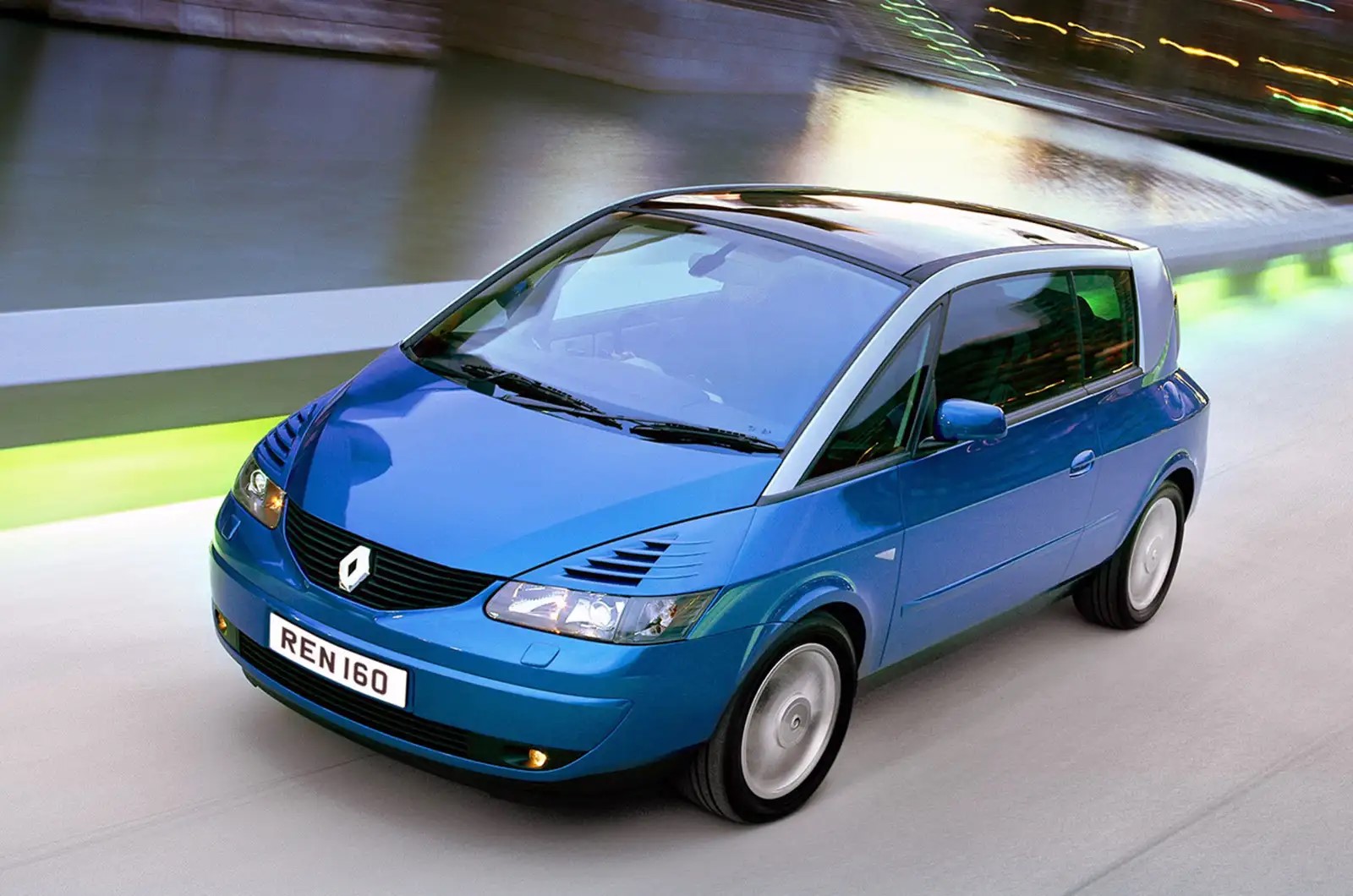
The Renault Avantime’s obscure design features and body shape gave it an ‘ugly’ character according to many. However, there’s not been another MPV-coupe like the Avantime since its release in 2001 and it’s this uniqueness that we can’t help but love. It almost looks like it should be wearing a Renaultsport badge with a fruity 3.0-litre V6 and wing-mounted grilles.
The side is its best angle with the large windows retracted and silver roof sections that just top off the sporty look. It’s clear that Renault put heaps of planning into the Avantime and instead of following other MPVs they took a risk and gave us a concept car for the road.
Volvo 240
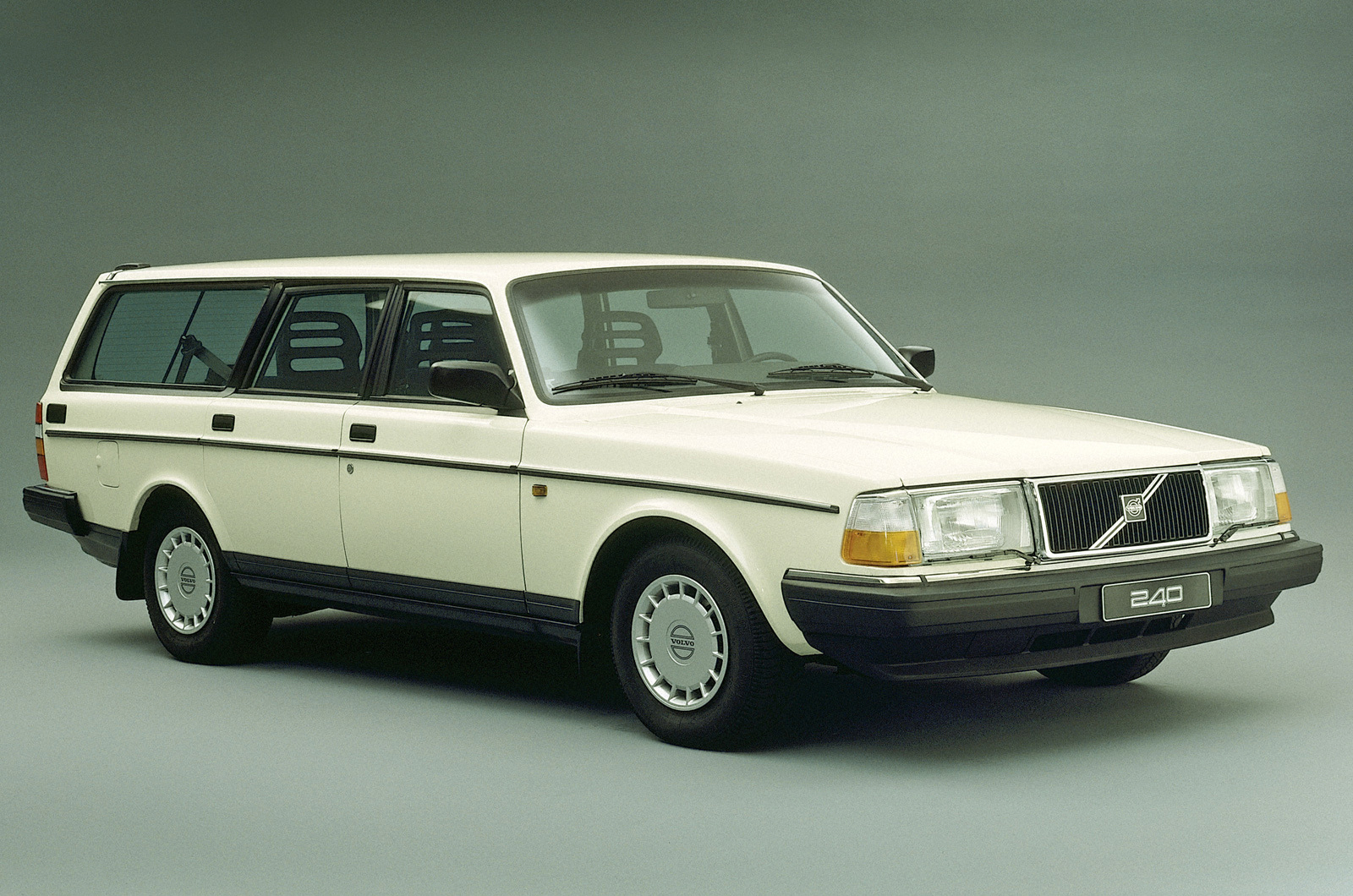
It was dull to some as its looks weren’t as sleek as other cars from its era but it’s exactly that elegant and charming retro look that we’re particularly fond of: it had a square front grille, large headlights, complete with nifty headlight wipers, and side strips that ran up the entire length of the car.
Inside, things were pretty basic but you had a selection of satisfying rocker switches while retro headrests topped off the look. The ‘Flying Brick’ Turbo variant with 153bhp can still be considered peppy even for today’s measurements.
Daihatsu Copen
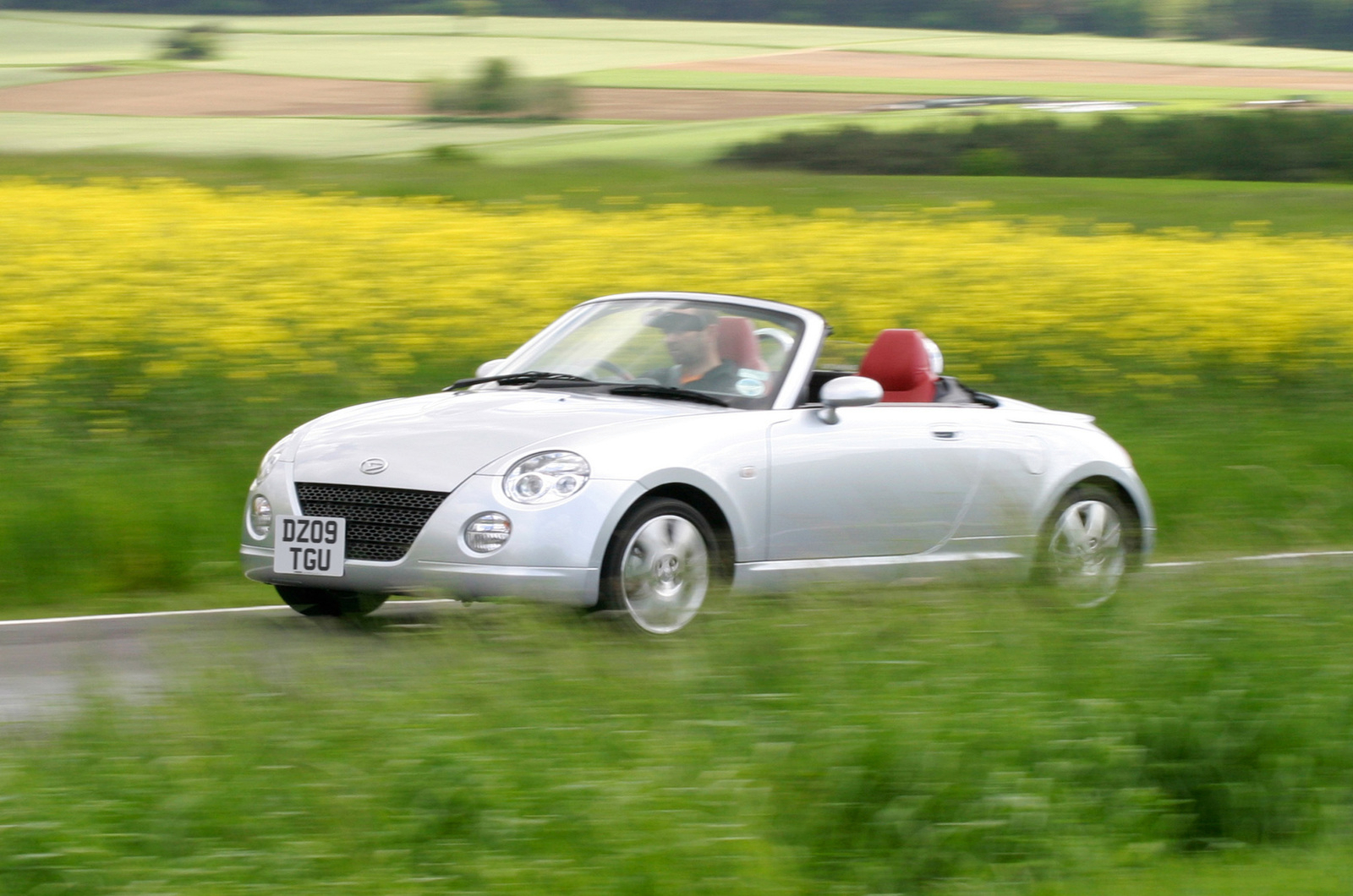
Many people didn’t like the Copen’s cute styling while its body shape was often compared to a Croc sandal. Its body styling was almost like a shrunken Audi TT and, from some angles, a Porsche 911. Whilst we can’t completely disagree, the Copen offered a brilliant open-top experience with its smart folding electric roof and zingy 68bhp turbocharged 0.6-litre engine.
On the road it came alive, weighing in at just 850kg. This meant the Copen could be thrown into bends at alarming speeds and give fantastic road feedback.
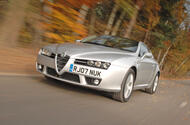
Alfa Romeo Brera
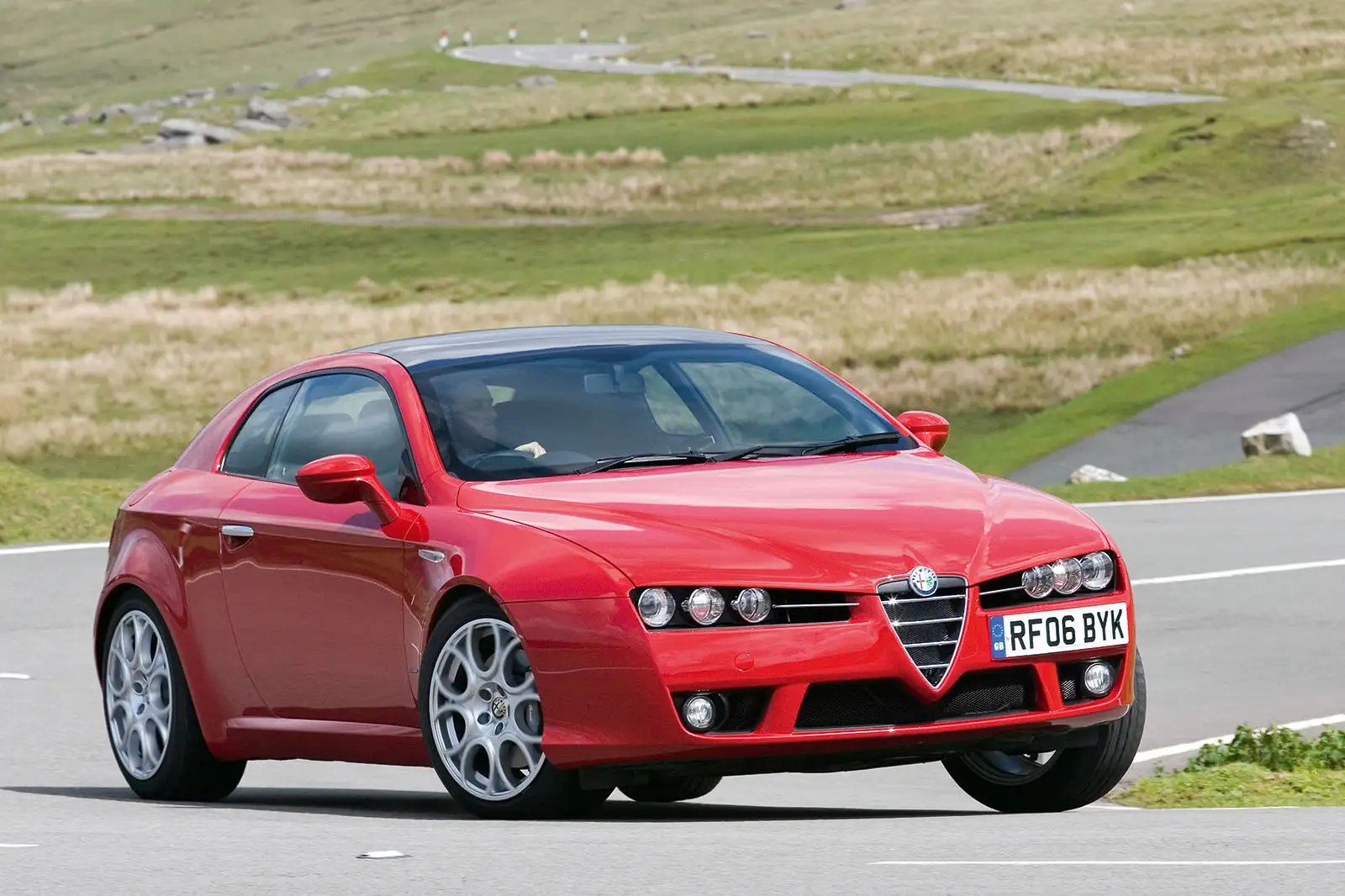
When released, the Brera didn’t quite know if it was a luxury GT cruiser or a sports car and its base front-wheel drive layout was enough to direct its target audience to the Nissan 350Z opposition. The Brera was thirsty and heavy at 1445kg (3185lbs), and its disappointing chassis meant that handling was numb.
Despite that, we can’t help but appreciate the Brera’s striking looks - from the quad exhausts that poke out from the rear bumper to the front headlights and pointy grille; it looks like a bird of prey.
Matra Rancho
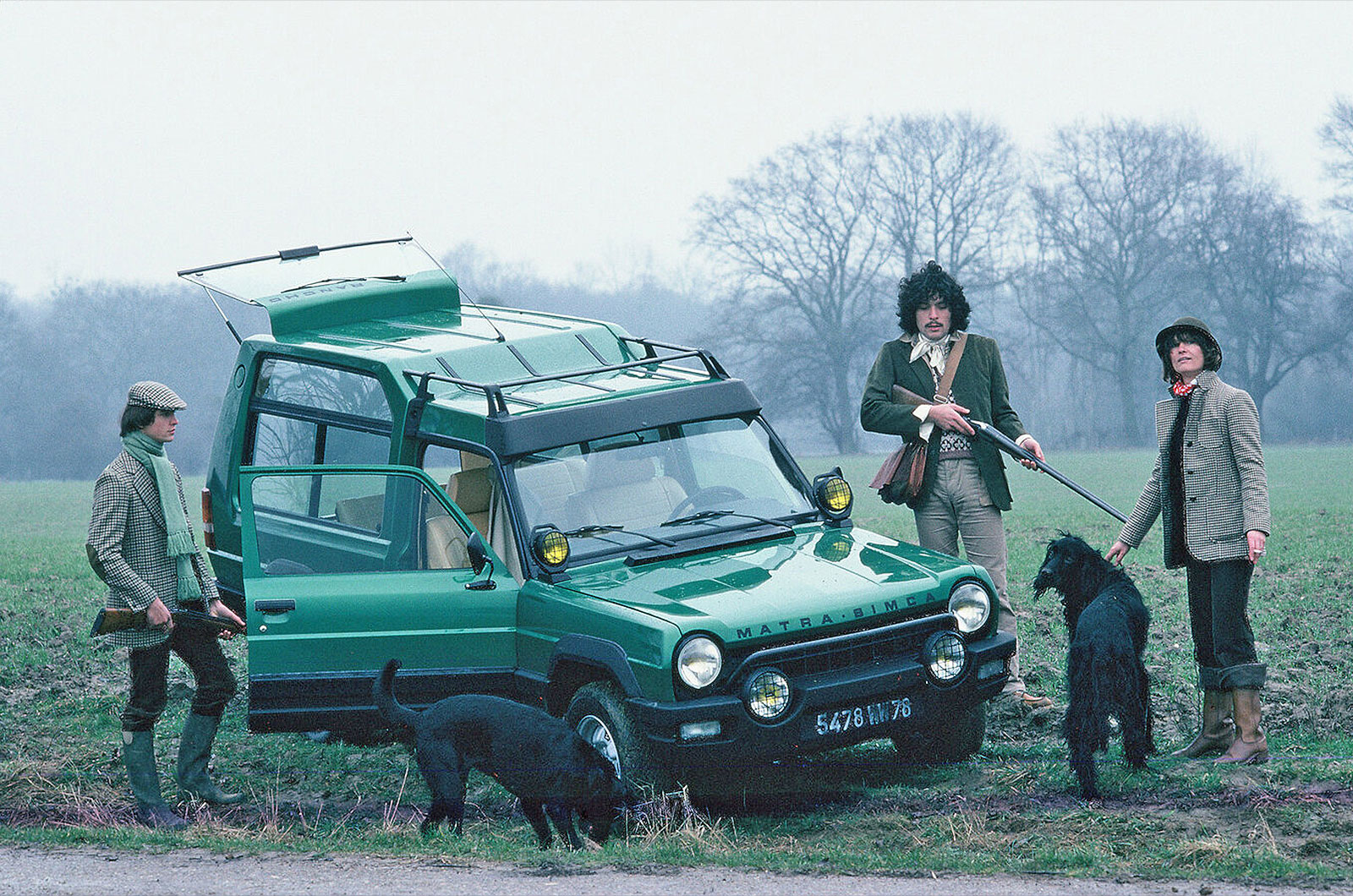
In the late 1970s, the off-roader market was expanding; to get on board, Matra sold its new Rancho as a ‘multi-purpose leisure vehicle’. Its offroad ability matched that of a hatchback as all Ranchos were front-wheel drive, had no high-low range ‘box and underneath the bonnet was a 1.4-litre engine good for just 80bhp.
As underwhelming as its performance was, its obscure looks were captivating: black bumpers, large front fog lights, high-sided body shape and retro styling, and that is exactly why we like it. It might have been the Skoda Yeti of its day rather than a bonafide off-roader, but it’s earned a special place on our list for these reasons alone – and a real trailblazer too. We also give it bonus points for having promotional photography like this…
Vauxhall Astra Coupe
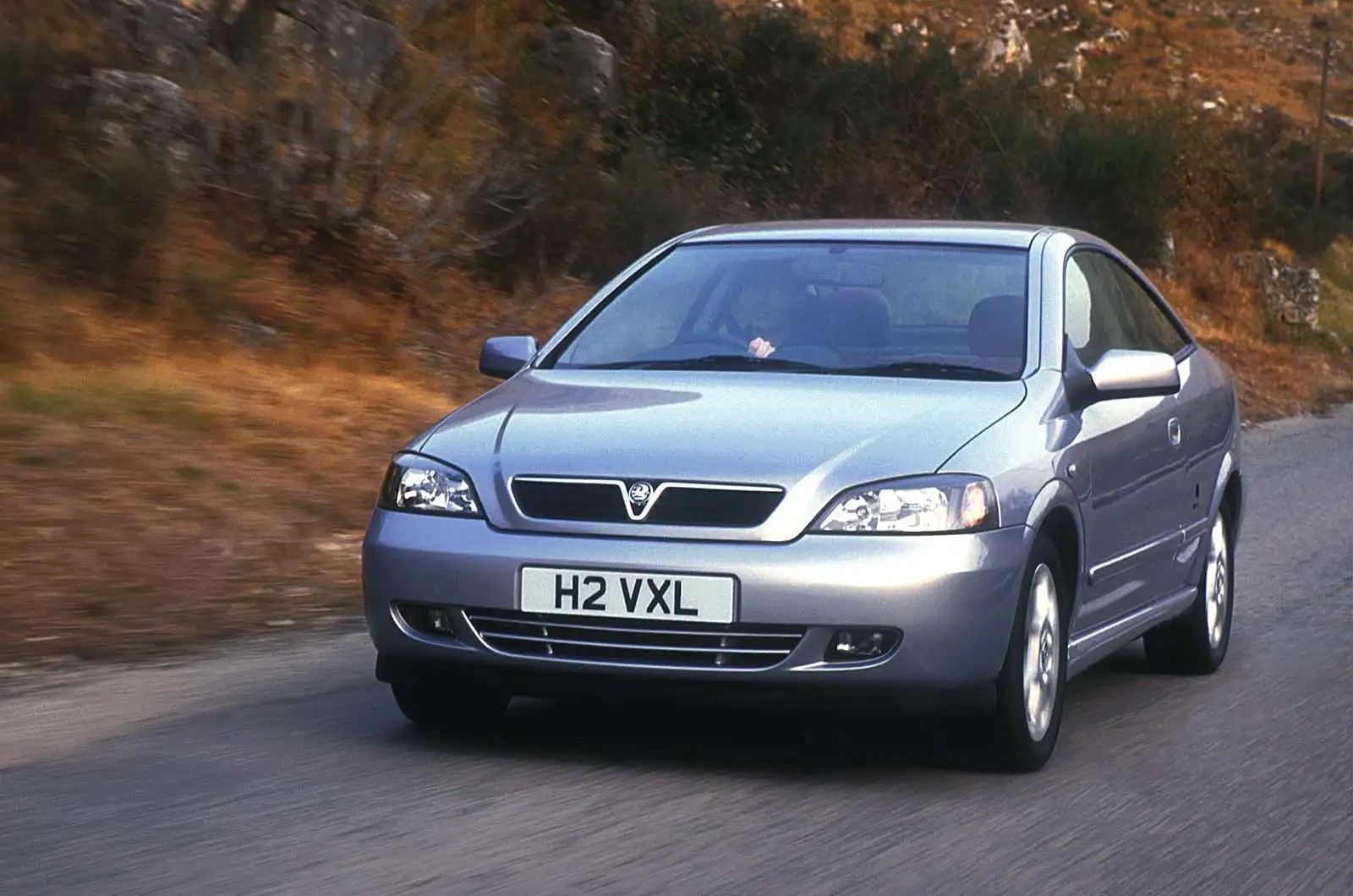
The Astra Coupe attempted to step into the shoes of the Calibra but never quite fully managed it. Its body was sleek but not as striking as the Calibra’s and the engines on offer were underpowered which led to disappointing performance. The rarer turbo variant was quick but came with torque steer.
They might have never got it completely right, but the Astra Coupe still looks refined, and responsive performance urged Porsche Boxster drivers to think twice at a set of lights.
Rover 800 Coupe
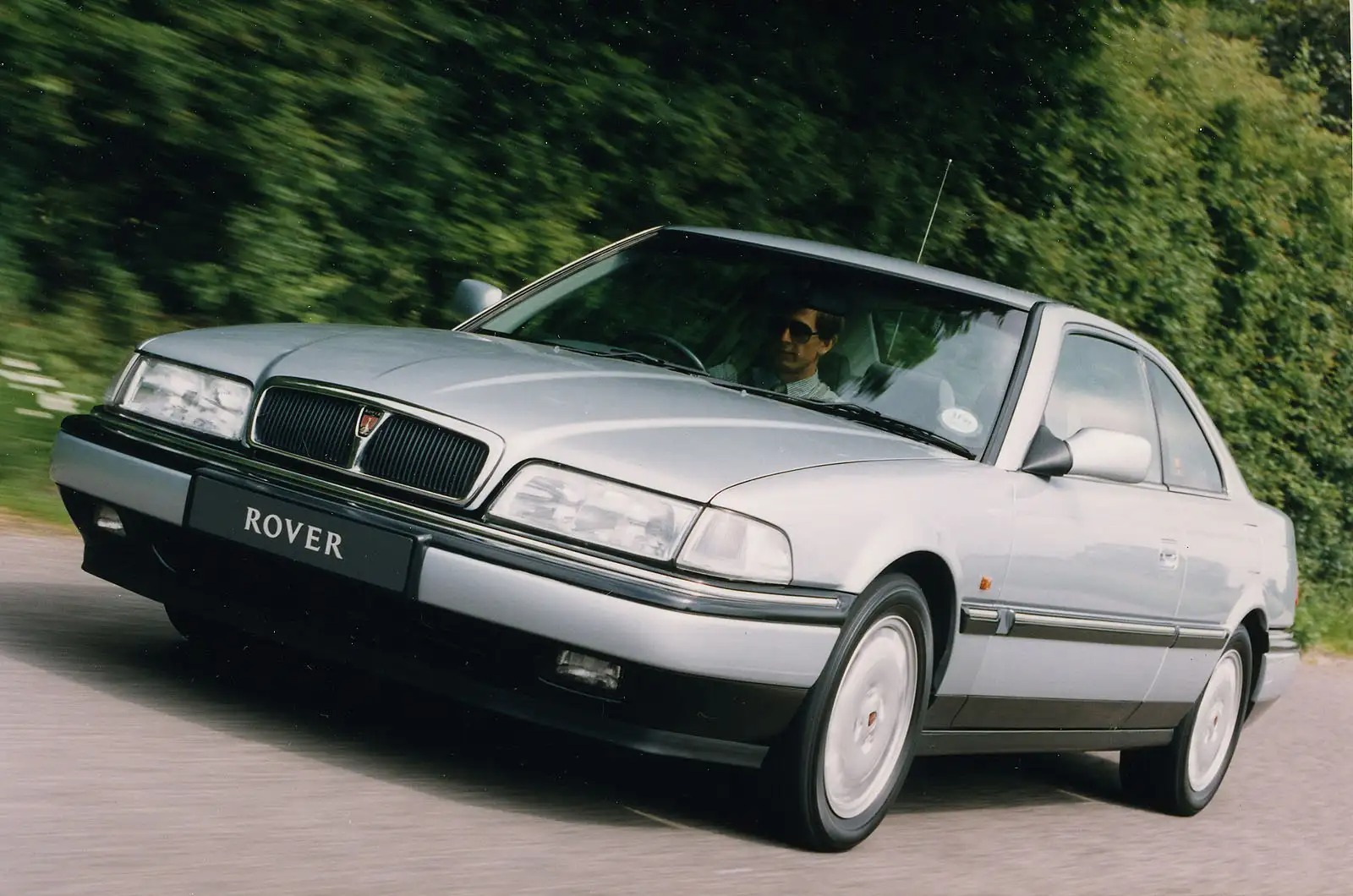
The Rover 800 was sold under the Sterling brand in the US. It was haunted by various gremlins, one being the headlights going dim whenever the air conditioning was turned on, cementing American prejudices about British build quality. A relaunch attempt saw some faults being ironed out but unfortunately before the Coupe could launch, Sterling withdrew from the US, and it remained in Britain where it duly failed to compete against the Germans.
This aside, we think the Rover 800 Coupe still oozes elegance with its long bonnet, side strips that ran the entire length of the car and lush leather interior with black piping, complete with lashings of wood that were impressively finished for the era.
Volvo 480
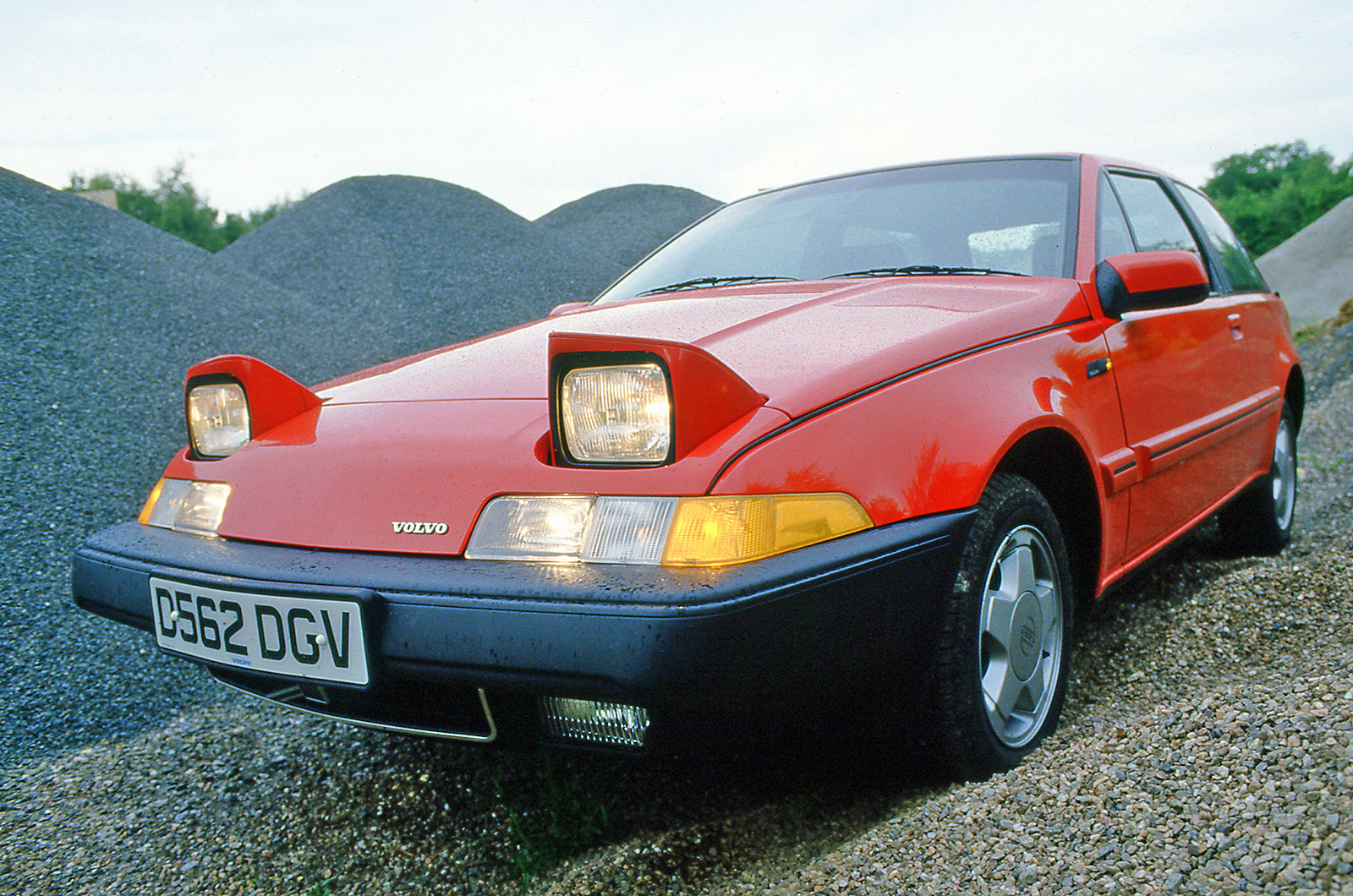
There’s nothing cooler than a hatchback with pop-up headlights that recede into a wedged nose, just like the Porsche 944. Flip the 480 on its roof and try not to see the resemblance to a Volvo 240, with its fog lights and front grille. It looks like barrels of fun and that’s why we love it. It was a looker but people laughed at its poor performance until Volvo fitted a turbo to the 1.7-litre powerplant which then took the top speed to over 120mph.
We reckon it’s aged pretty well and we’d very much like one.
Honda Insight
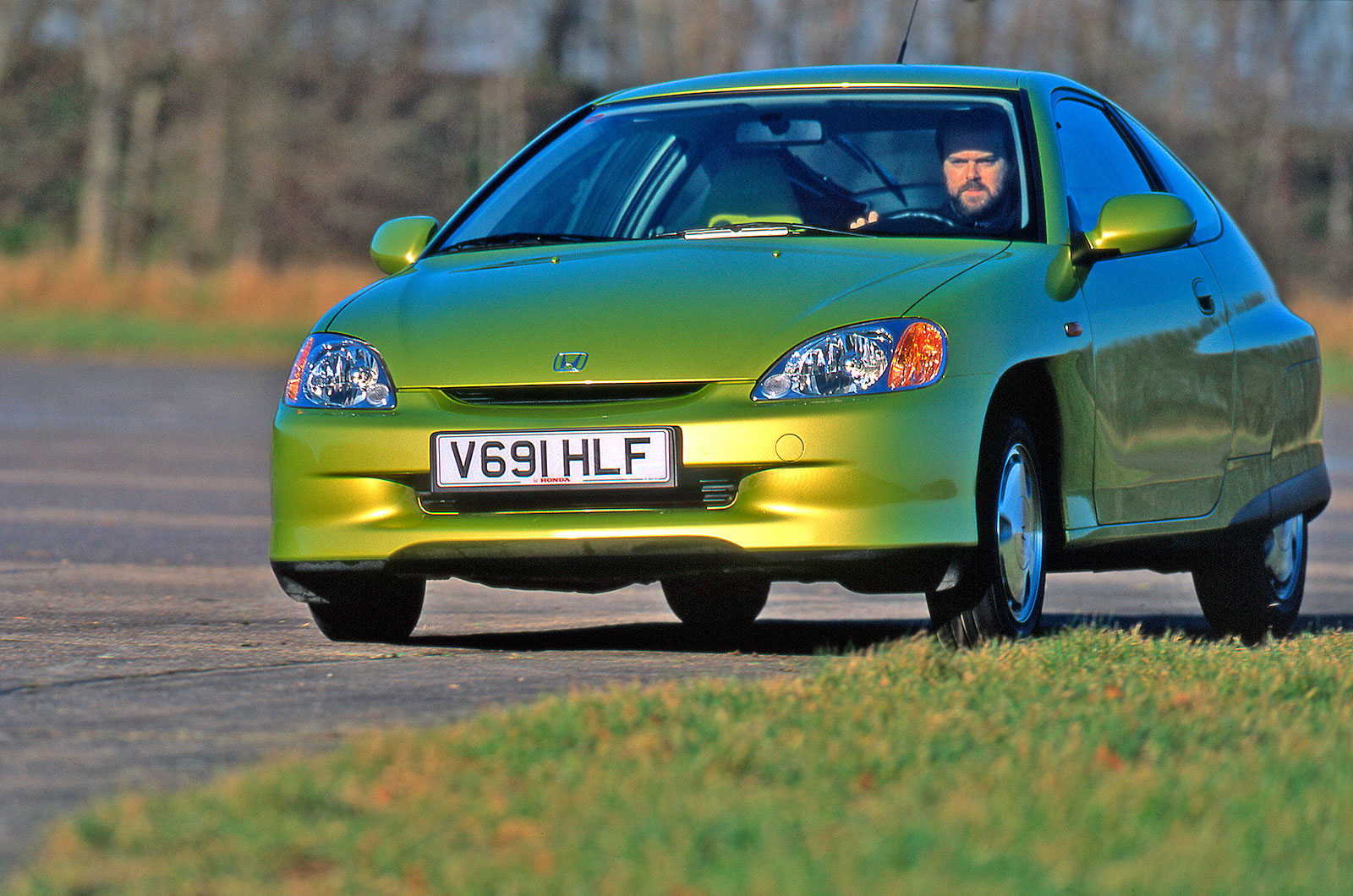
What Honda now offers in a hybrid form all started with the Insight – a car powered by a petrol engine coupled to an electric motor. The two-seater Insight offered up to 83mpg with help from its low rolling-resistance tyres. Its attractive futuristic teardrop-like design is offbeat with the rear tyres tucked away under sculpted covers, which wasn’t to everyone’s taste, although this is exactly why we like it – alongside the nifty space age glass boot lid.
The body panels, wheels and main structure were all made from aluminium which resulted in a weight of just 835kg.
BMW X5
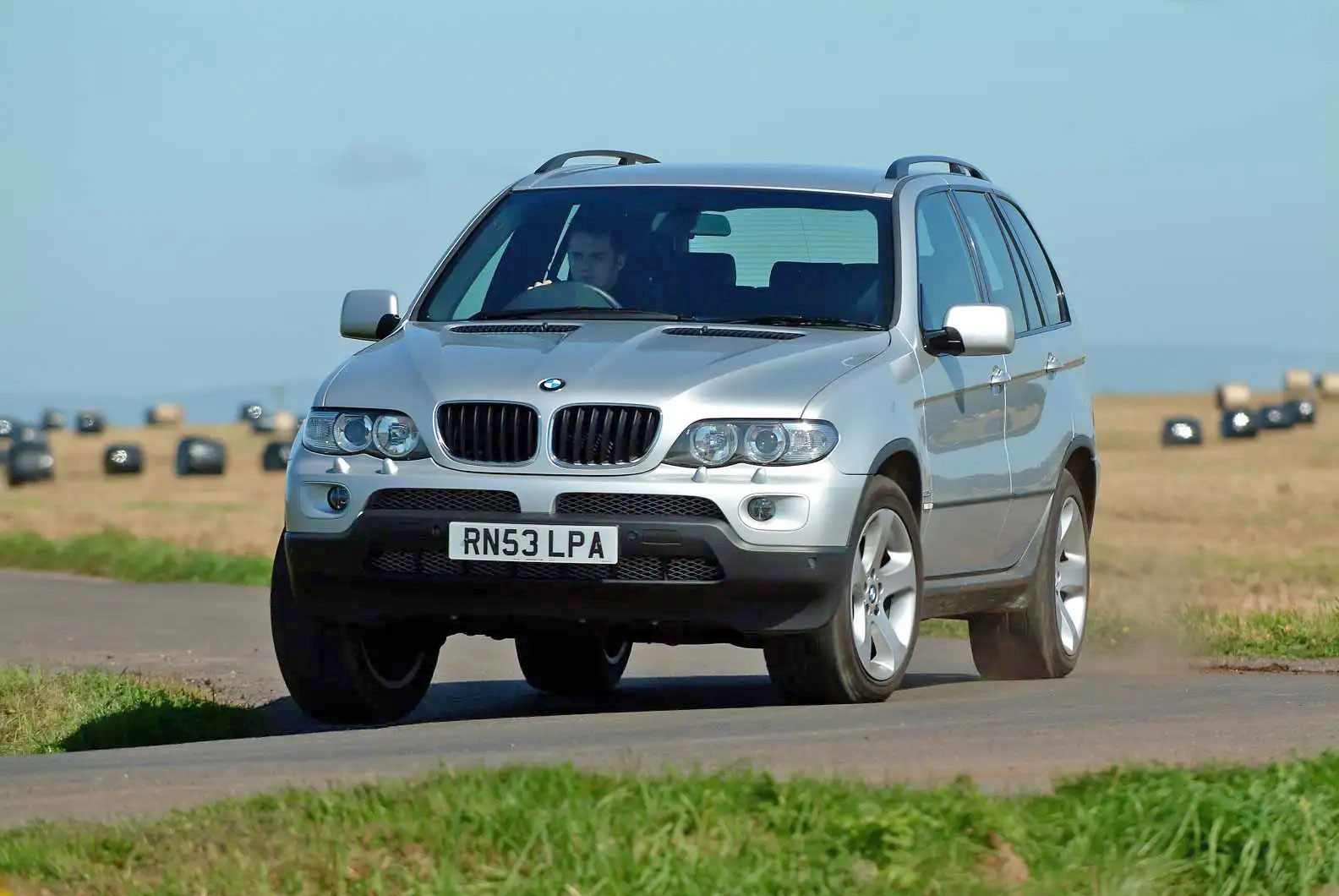
The standard 3.0-litre diesel engine in the X5 didn’t offer stellar performance and the X5 suffered from various electrical faults which forced people to think twice, and the looks weren’t everyone’s cup of tea.
On the converse, here was the first SUVs that was genuinely good to drive on the road – it is a BMW after all – but respectable off it as well. And you could even get it with a 4.8-litre V8 good for 360bhp; BMW’s first ever SUV properly hit the spot.
Mercedes-Benz A210 Evolution
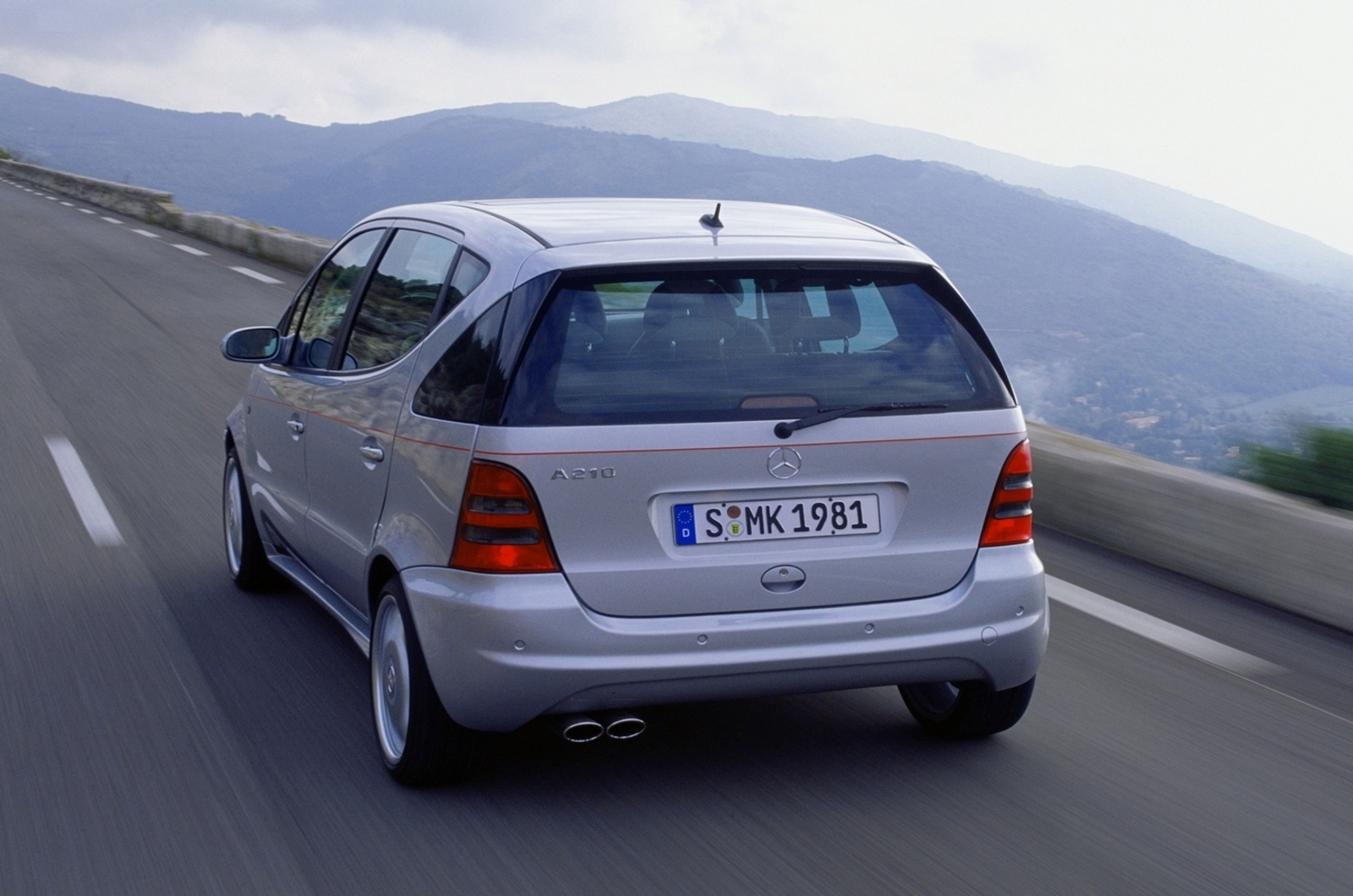
Back in 2002, the A-Class never had a fast guise, so Mercedes rose to the challenge and gave us the A210 Evolution. Underneath was a 2.1-litre 140bhp sub-8sec to 60mph car – characteristics that differentiated it from the A-Class that was perceived as a grandmother's shopping cart. The A-Class' looks certainly weren’t popular, but we applaud Mercedes for lowering it down, dressing it up in an understated AMG suit, shoehorning a 2.1-litre underneath and giving us an underdog.
Nissan Cube
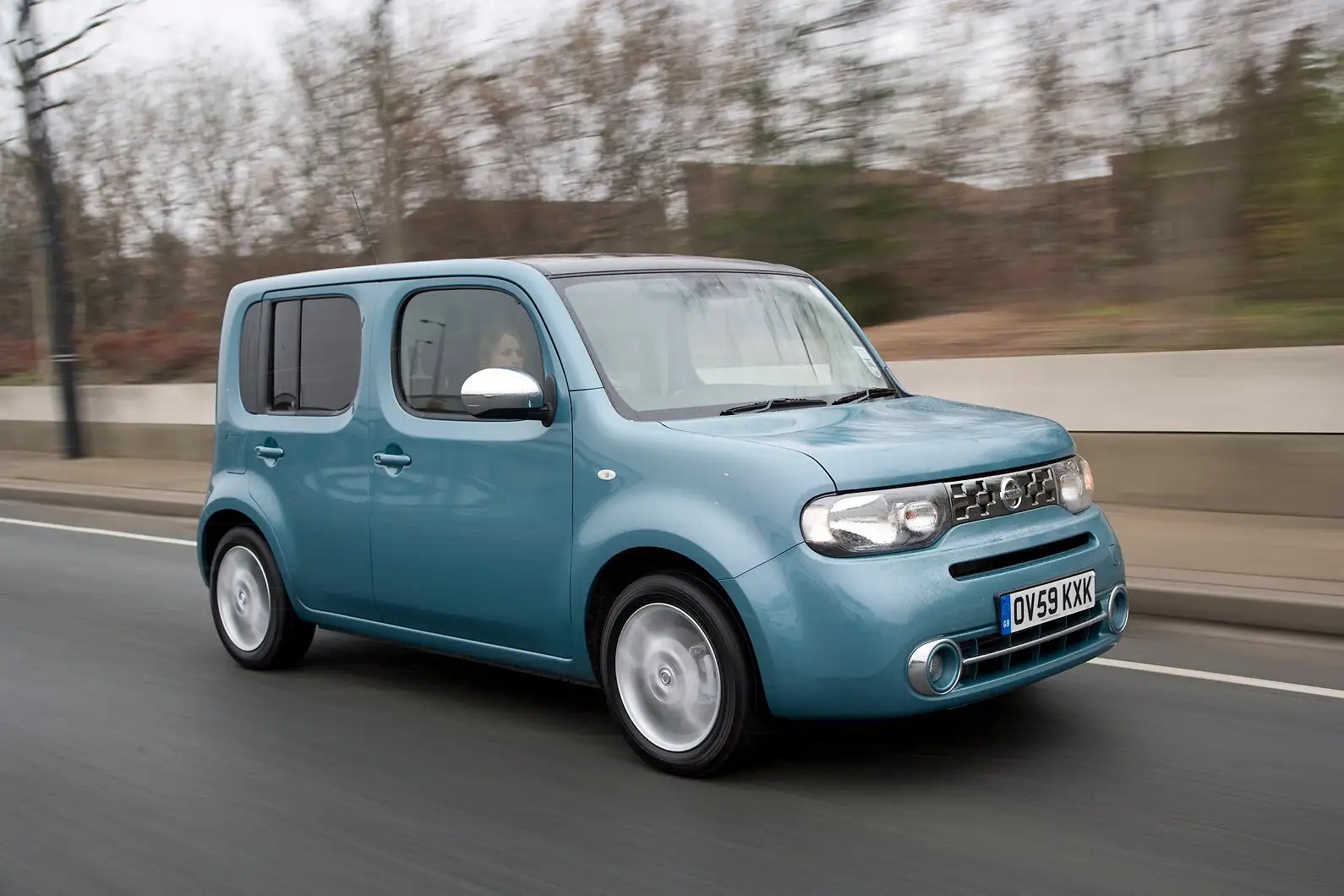
The Cube, when launched, turned heads because of its boxy, compact and tall nature and was a Japan-only car until 2010 when they were officially imported to the UK. It was seen as a home away from home and a mobile living room which meant that handling and speed were off the cards. Its interior was spacious with a high roof and plenty of visibility while the cabin was offered with soft sofa-like seats. Because it dared to be different it was pulled in 2011 from the UK market due to poor sales figures.
Alfa Romeo SZ
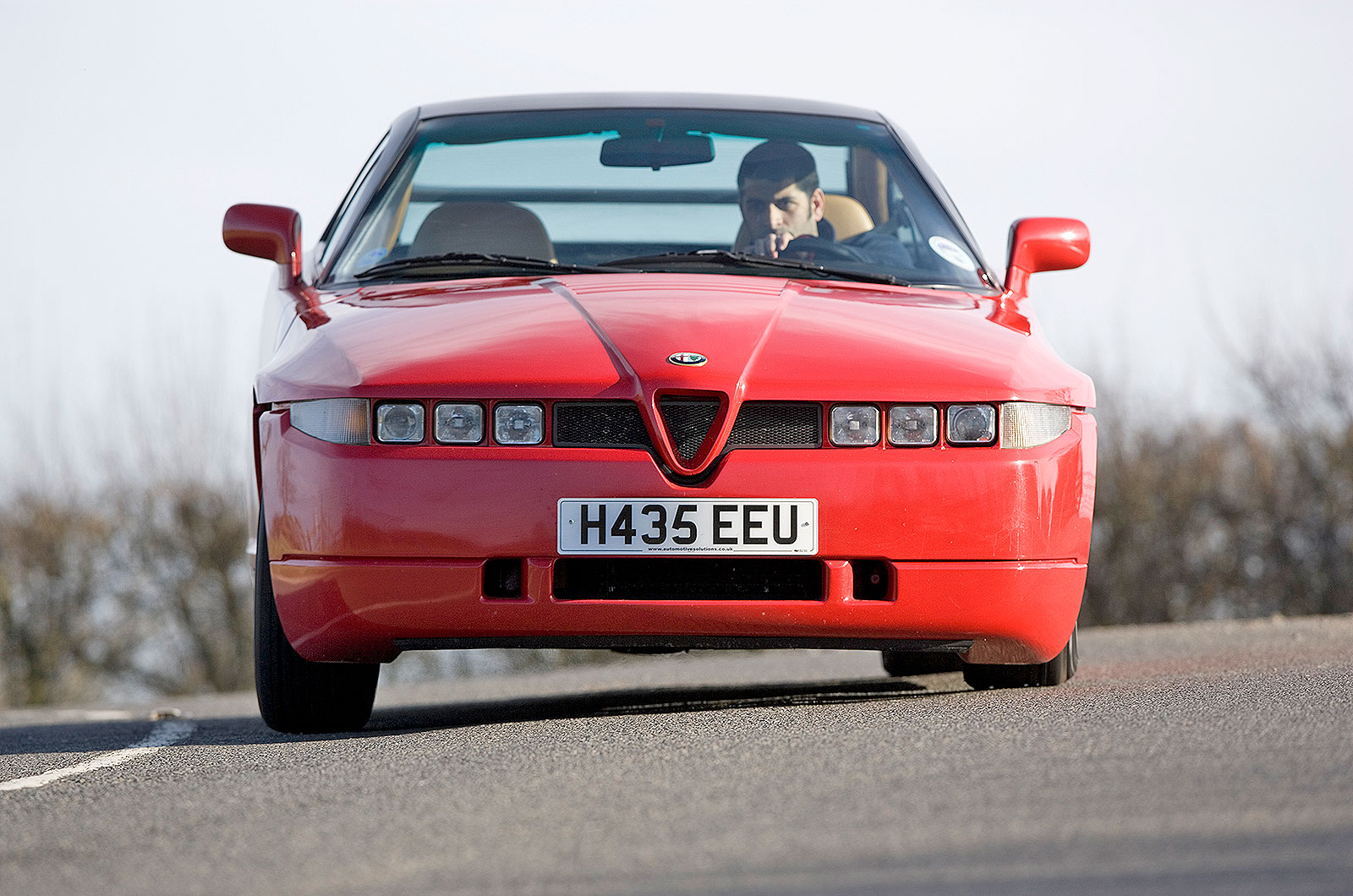
The SZ’s unconventionally designed body sat on a steel backbone chassis that was derived from the Group A 75 touring car while 207bhp came from a tuned variant of the ‘Busso’ V6. This meant sports car-acceptable performance with a 7sec 0-62mph time and a 152mph top speed although it cost nearly £15,000 more than a then-new BMW E30 M3.
Only 1036 SZs were built due to concentration shifting to the RZ roadster, the production of which stopped after just 278 units due to financial complications. The SZ might not have been the fastest and to some, its carved shape subjective but its other-worldly design means its place is secured on our guilty pleasure list.
Suzuki X-90
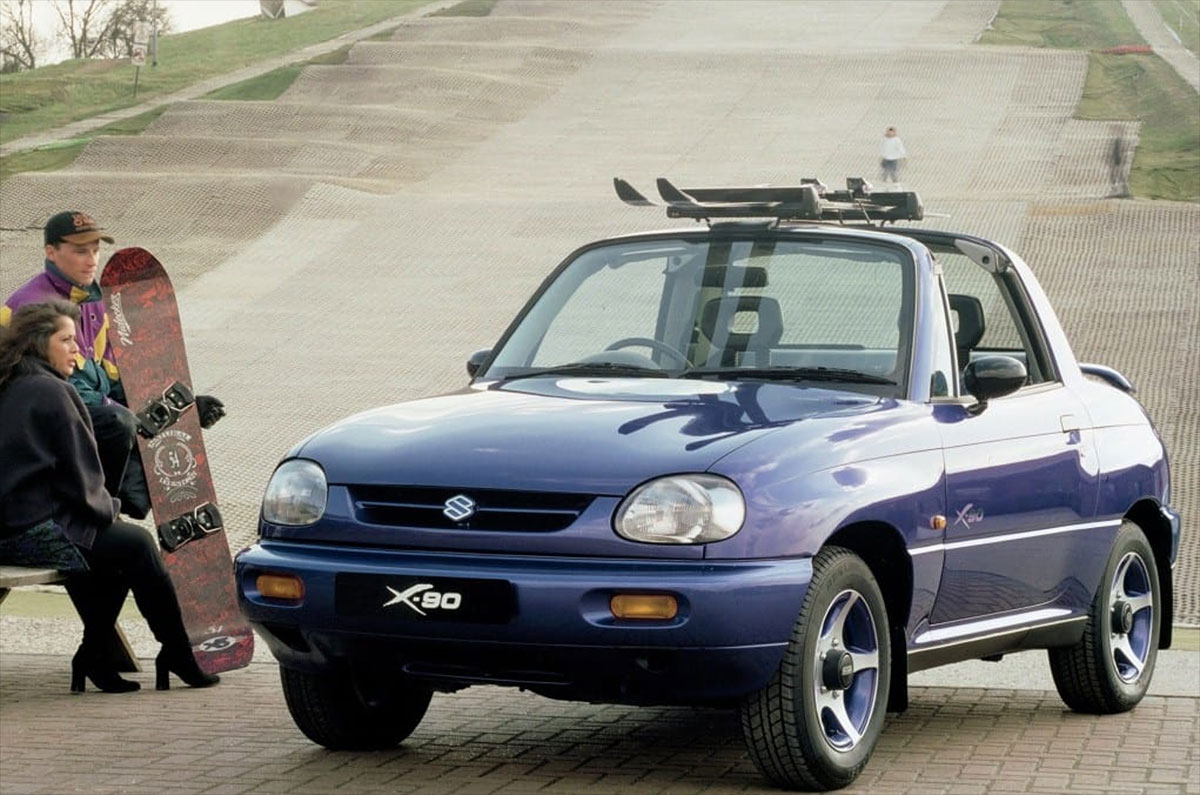
Suzuki took all the underpinnings from the Vitara and stuffed them into a compact bulbous convertible coupe body with the X-90 and in time it was labelled as Barbie’s jeep. All X-90s were reasonably specced as standard with power windows and door locks, power steering, a T-Top targa roof and tinted glass although front-wheel drive was standard while four-wheel drive was optional.
Its 1100kg (2425lbs) weight meant that it could tackle gnarly surfaces but unfortunately struggled with steeper inclines having only 95bhp. The X-90 disappeared due to its niche nature. It’s a shame as the compact off-roader was perfectly capable, and it looked great when paired with various offroad accessories.
Daihatsu Midget
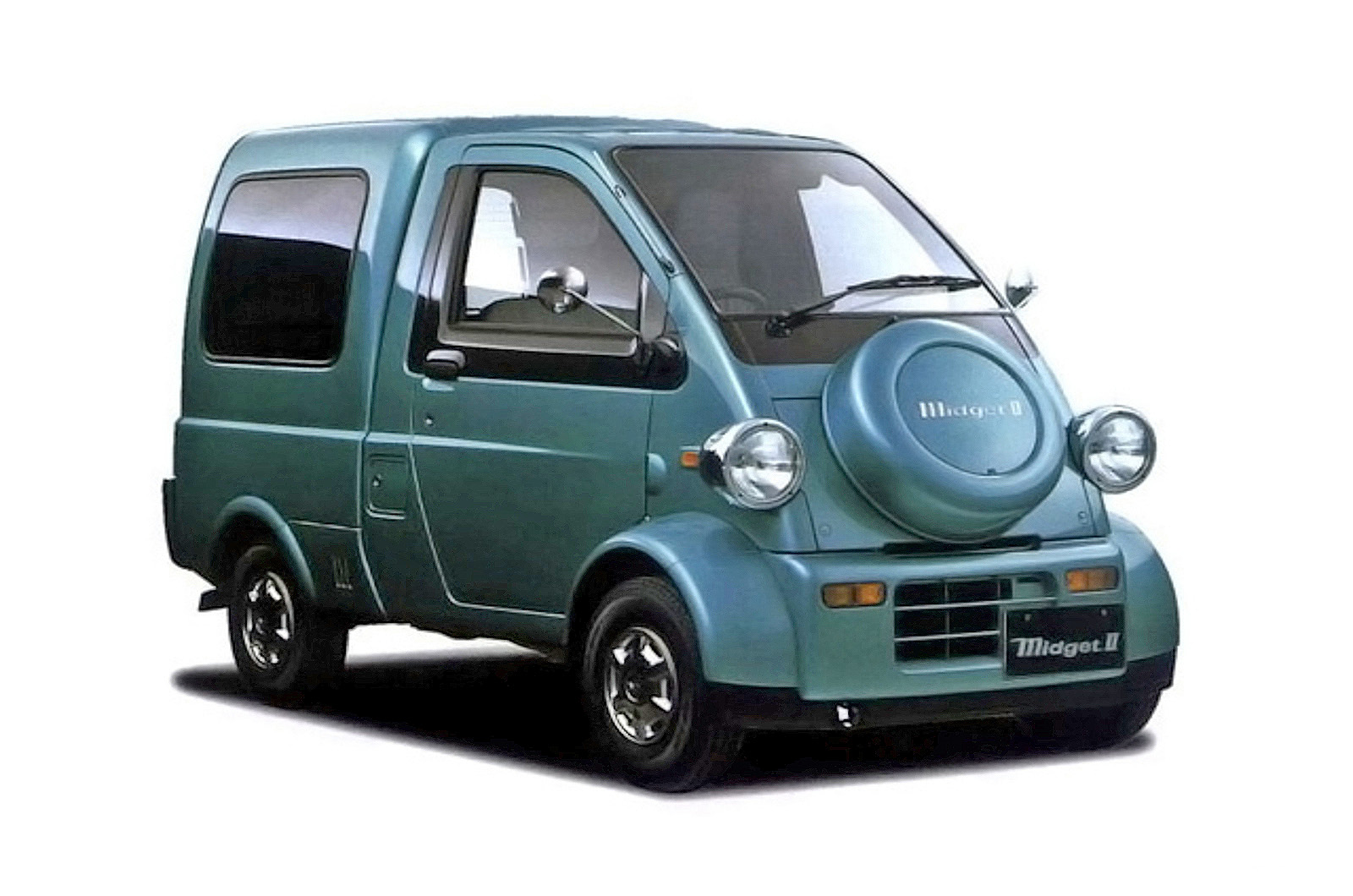
Originally released in 1957, the Midget was a kei truck that followed the famous rickshaw platform – three wheels, doorless and one front seat. In 1996, a second generation arrived with four wheels, a fully-enclosed cabin, available with one or two seats, and a 660cc engine to meet kei car regulations.
Its oddball looks quickly put it at the top of many ‘ugly car’ lists and many will most likely question its reason to exist but if you squint your eyes a bit more, it’s somewhat adorable and it’s a reminder of just how special the kei cars of Japan are.
Mini Paceman
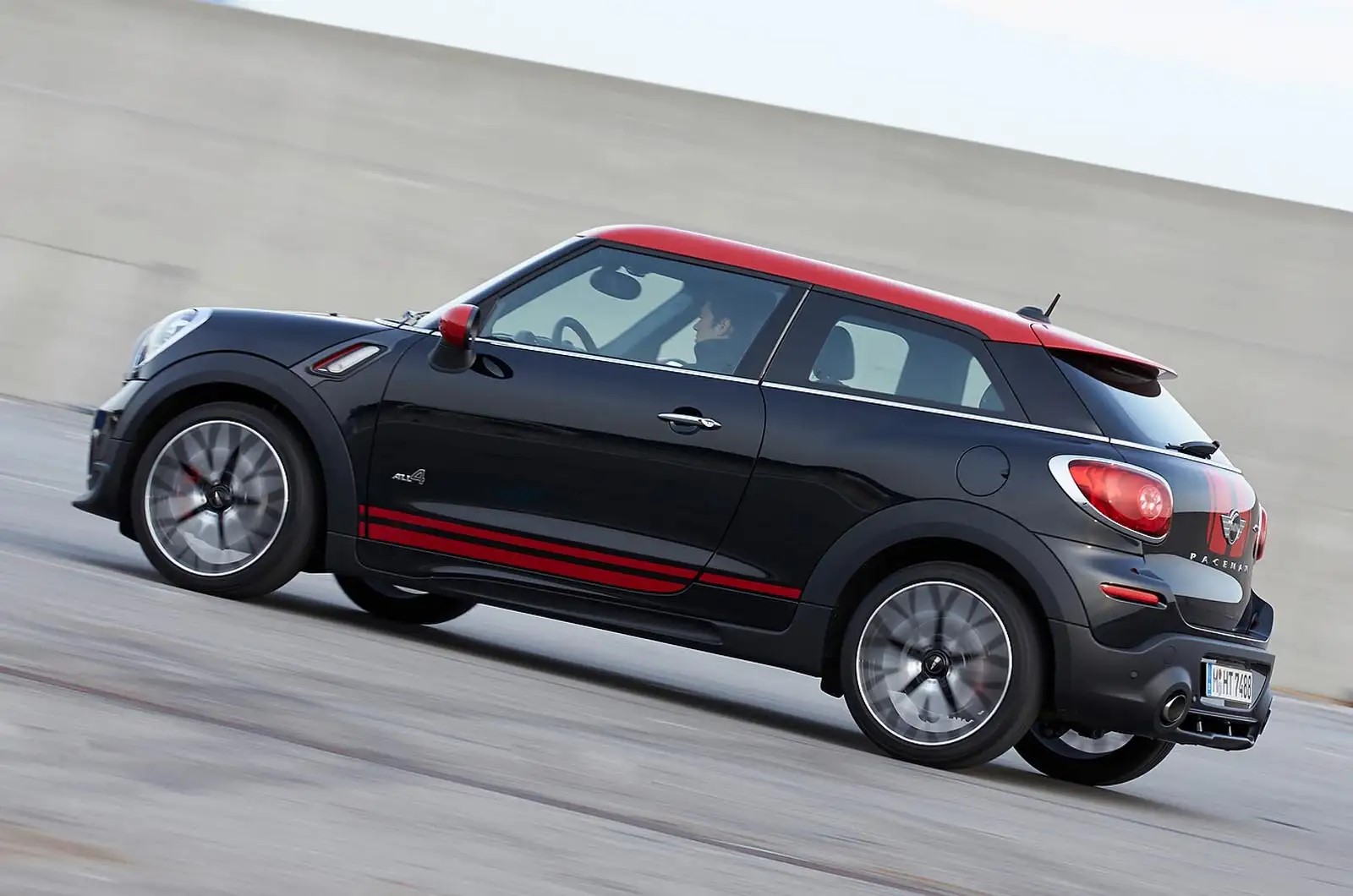
Not many people understood the Paceman when it first came out as the Countryman, that it was based on, covered the same tracks. Available in a 1.6-litre Cooper petrol and diesel, a turbocharged 2.0-litre SD, a turbocharged 1.6 Cooper S and a range-topping JCW variant, in base Cooper form there wasn’t much notable Mini charm and its sloped roof line looked as though it was copying the Range Rover Evoque.
But when equipped in either the S or JCW variants, things became more interesting combined with the large amount of additional packages on offer such as nifty stripes, All4 system and lounge type rear seats. It might not be an original Mini in size, or at heart, but there’s just something endearing about its outlandish styling.
Range Rover Evoque Convertible
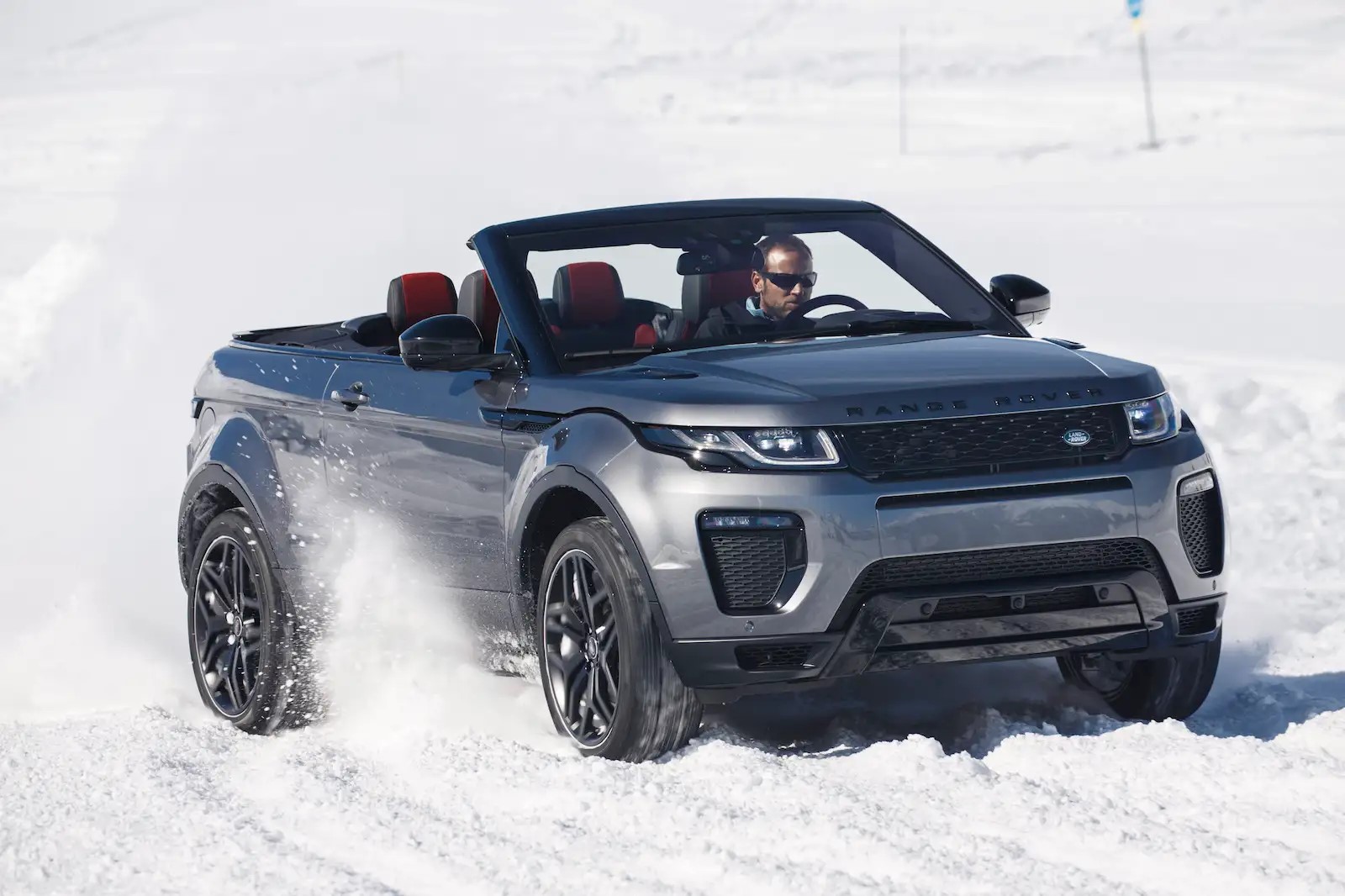
When released, people questioned why anyone would want a convertible off-roader, “wouldn’t you get soaked going through a puddle?” but its shape alone, when the roof is retracted, is simply cool. Land Rover added over 250kg of chassis bracing to counteract flex caused by chopping off the roof and although some people thought a convertible Evoque was odd, it was always part of the Evoque’s future from the original concept sketches.
The roof retracted in 18 seconds and if buyers opted for the £270 wind deflector, wind buffeting would be reduced significantly. 0-60mph arrived in 9.7sec with a top speed of 121mph while weighing 280kg heavier than a standard Evoque.
Renault Twizy
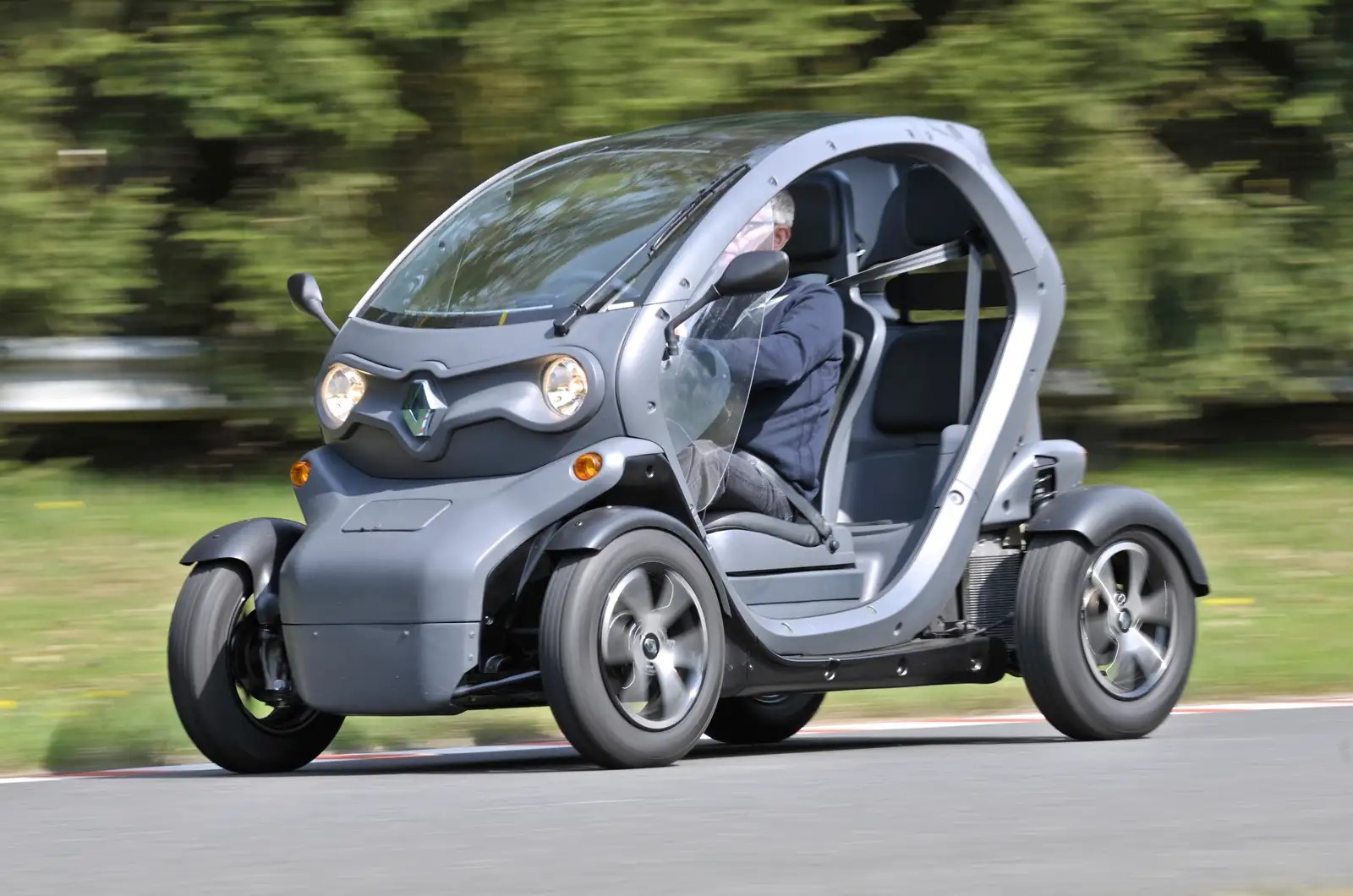
With its tandem layout and open-sided cabin, the Twizy looked like it had come from the future when first released. Prices started at £12,000 back in 2012 and it sat below the Zoe in Renault’s electric supermini range. Measuring in at just 2.3m in length and 1.2m in width, the Twizy began to pop up around rental companies in busy city centres due to its size and agility.
Powered by an electric motor producing 17bhp and 42lb ft of torque, it had a top speed of 50mph. It could be fully charged in three and a half hours from a domestic socket and provide 62 miles of range. The Twizy gained some serious stick with many claiming they wouldn’t drive one purely because of its asthetics, but Renault gave it its own personality: charm.
Autozam AZ-1
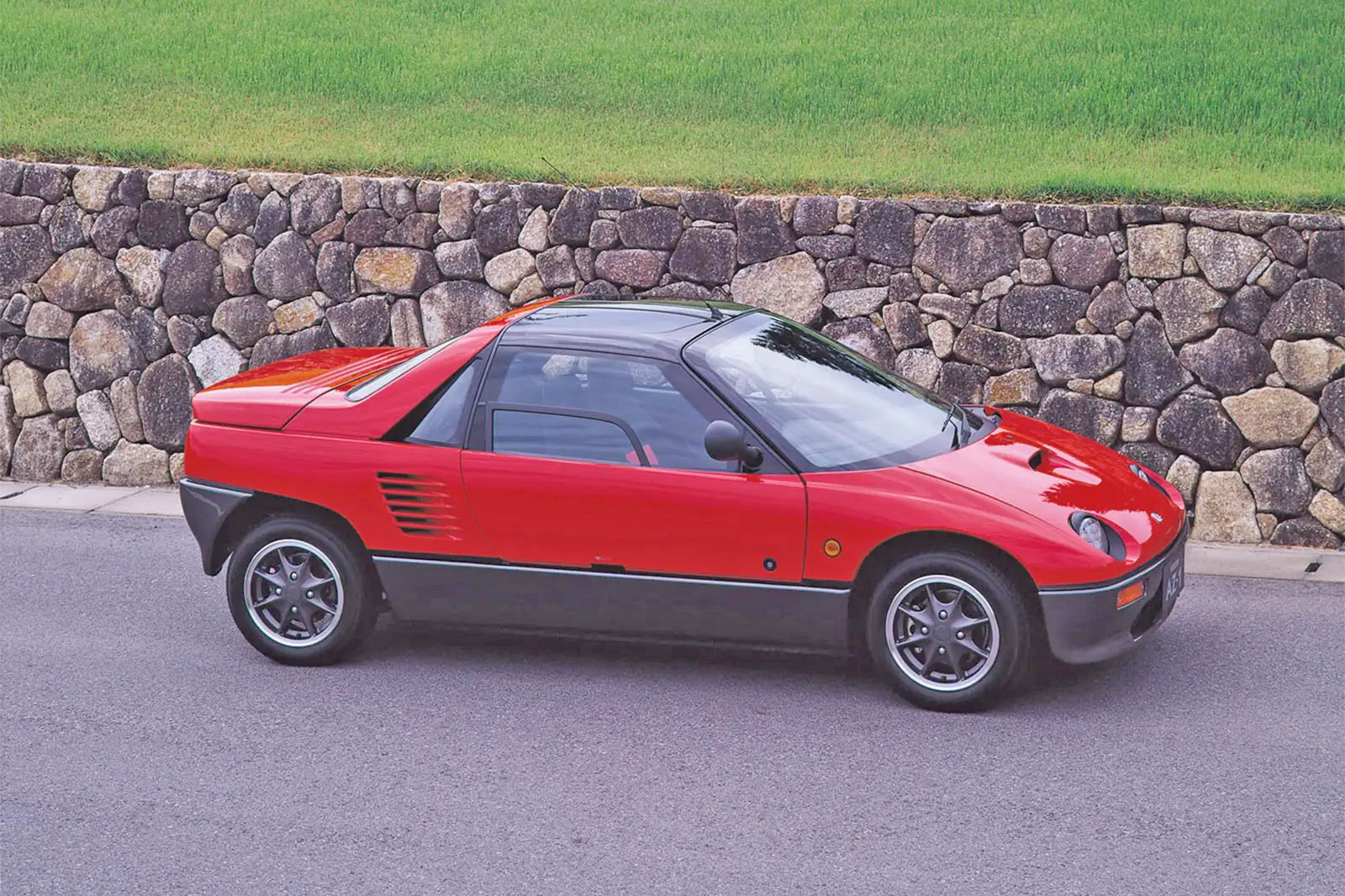
In the world of Honda Beats and Suzuki Cappuccinos exists the Autozam AZ-1, a kei car that was claimed to be “the ultimate Japanese micro machine”. Its wheelbase was just 88in long and it featured independent strut suspension and four-wheel disc brakes which resulted in balanced handling. A transverse-mounted 657cc engine fed 63bhp through the rear wheels but it only had a Lotus Elise-esque 720kg to shove.
Gull-wing doors and a Ferrari F40-like rear spoiler differentiated it from other kei cars. Only 4400 examples were built over three years from 1992. It’s the funkiest kei car available and together with its mini-Ferrari looks and three-cylinder whir is why it belongs on our list.
Chevrolet SSR
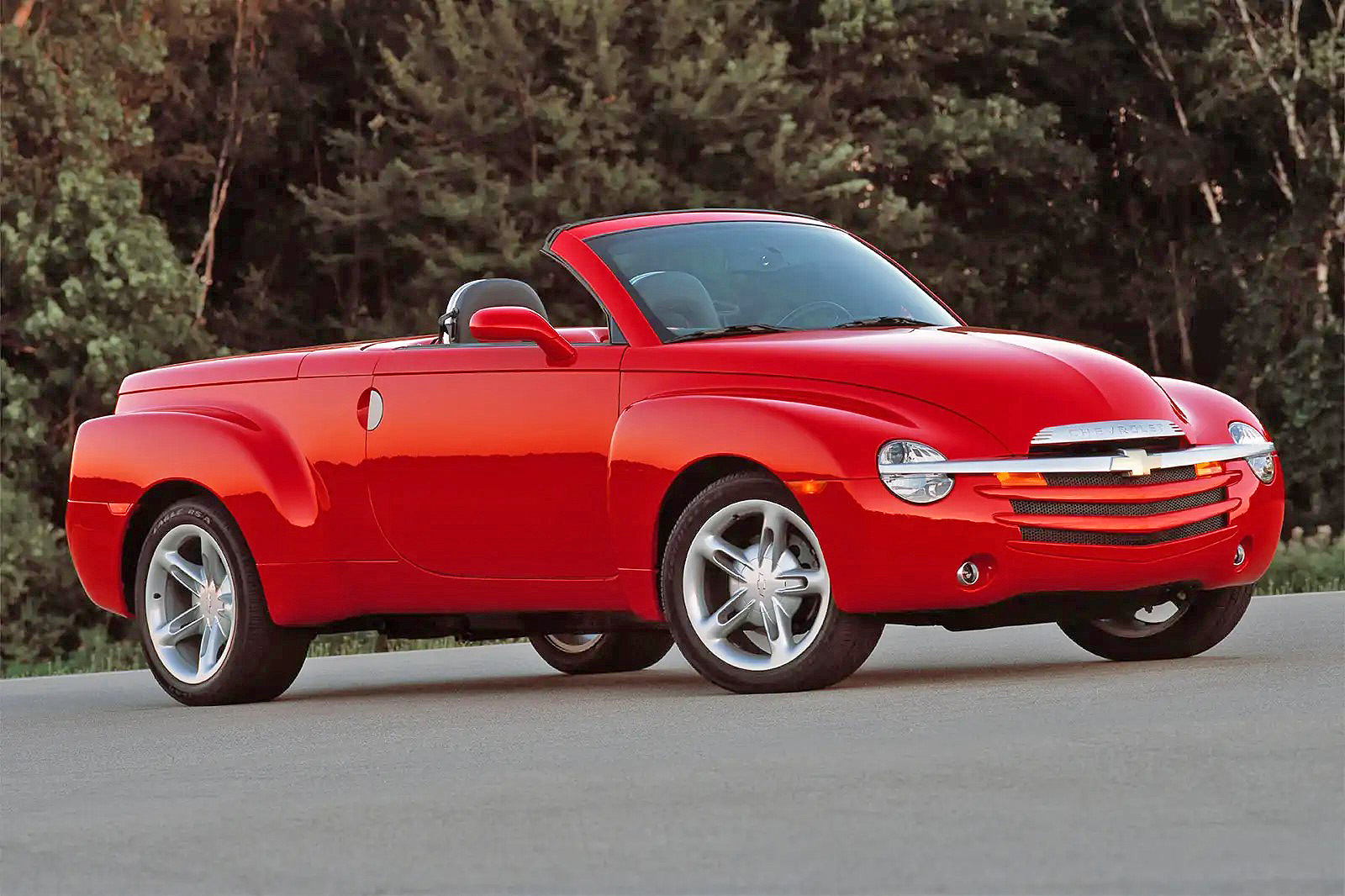
The Chevrolet SSR which became the world’s first truck-based two-seater roadster. A 300bhp 5.3-litre V8 sat underneath the retro bodywork which pushed the 2,270kg (5004lbs) SSR to 62mph from rest in only 7.6sec. A two-piece electric retractable roof would open in 20sec and fold into a separate compartment behind the two front seats.
Rack-and-pinion steering meant that the steering column would shake over the slightest of bumps and the 19in front and 20in rear alloys would lead to dramatic understeer if it’s pushed too far. It wasn’t the fastest nor strongest selling truck - it only lasted four model years - but its road presence is second to none.
Hummer H3
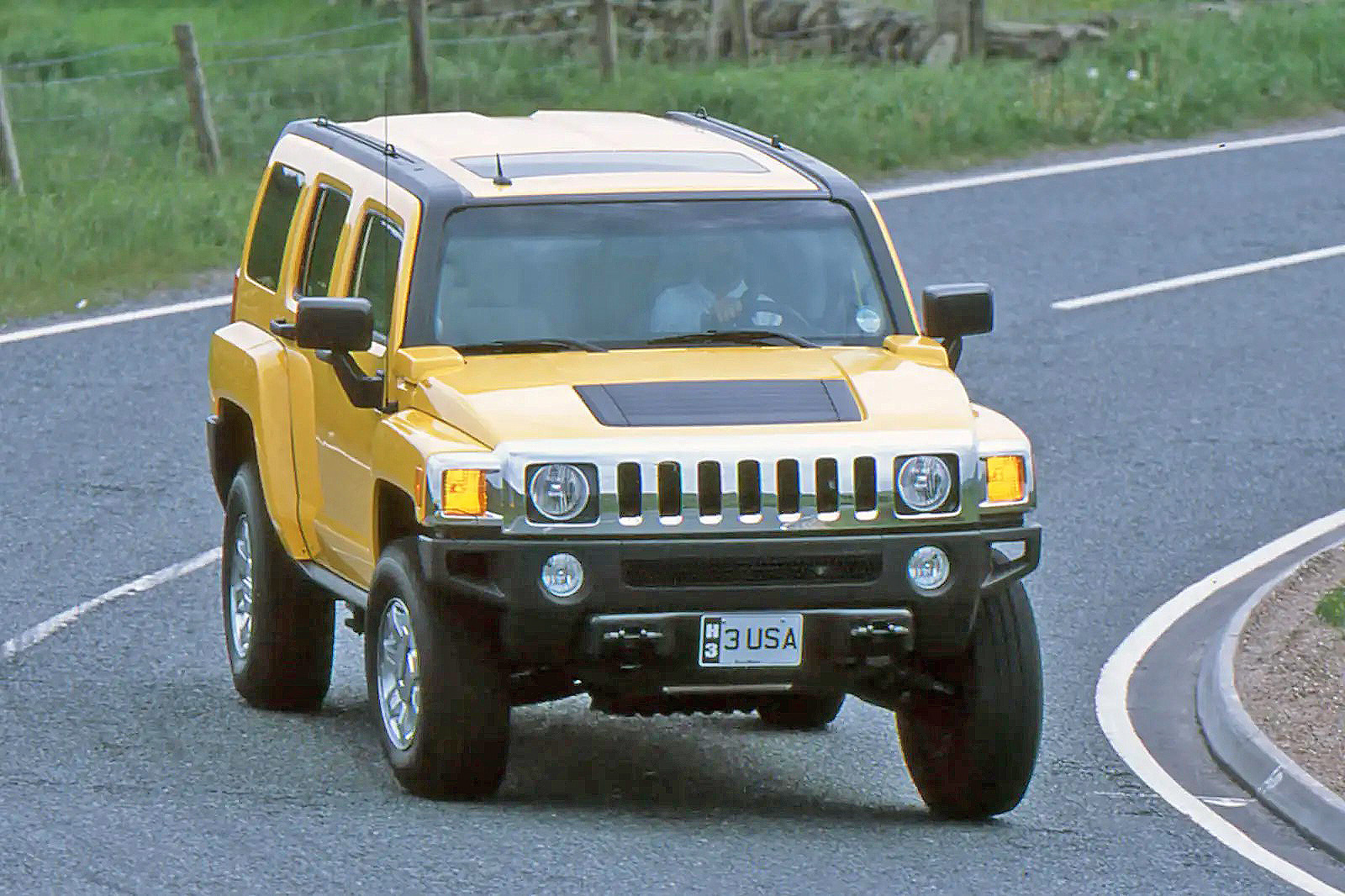
After the Hummer H2 succeeded to sell 35,259 cars in 2003, the marque began plotting its next model, the H3, which would be sold in 2005 and would be the first Hummer to hit British shores as of 2007. It had great mud-plugging ability and could tackle challenging offroad terrain that even a Defender would struggle with. It was offered in the UK with a 241bhp 3.7-litre five-cylinder with a choice of a five-speed manual or a four-speed automatic gearbox.
Unfortunately, after selling 71,524 cars in 2006, Hummer’s highest sales figure, the global financial crisis hit which saw GM file for bankruptcy. Its tacked-on chrome grille, bloated bodywork and vibrant colours might not have ticked boxes for many but it’s something that Hummer has always gotten away with and that’s exactly why we like it – and it’s no surprise to see the brand revived today for a new range of GMC EV trucks.
Suzuki Jimny
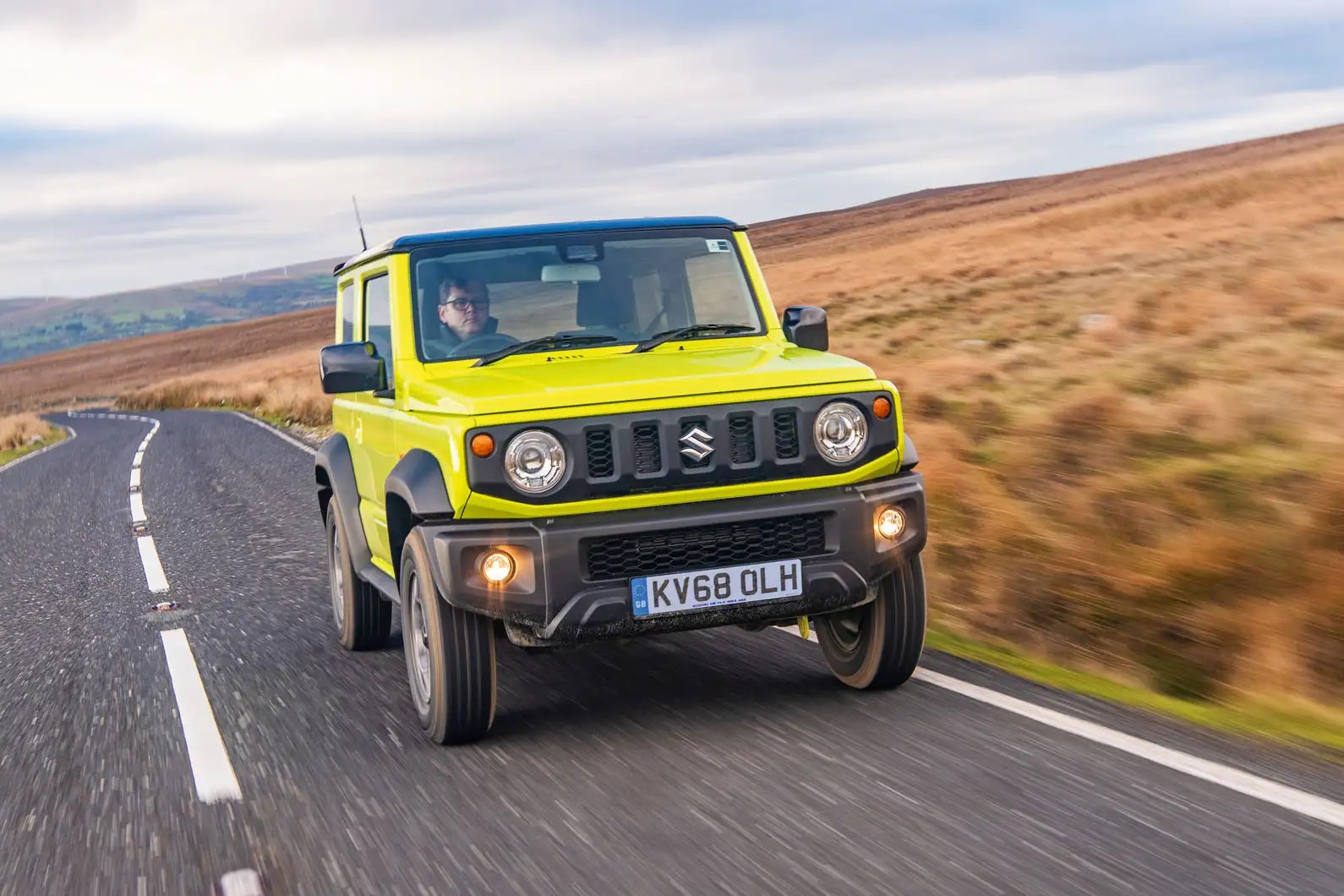
On one level, there seems little to recommend the Jimny even in its latest generation. Its 100bhp 1.5-litre engine ensured noisy and pedestrian performance, it had vague steering and was no fun at all on the motorway, especially when it is windy.
But… it looks charming and can tackle virtually any rough terrain thrown at it. No wonder so many country folk love them – and lament its short sub-three-year lifespan, forced by emissions rules.
Lamborghini LM002
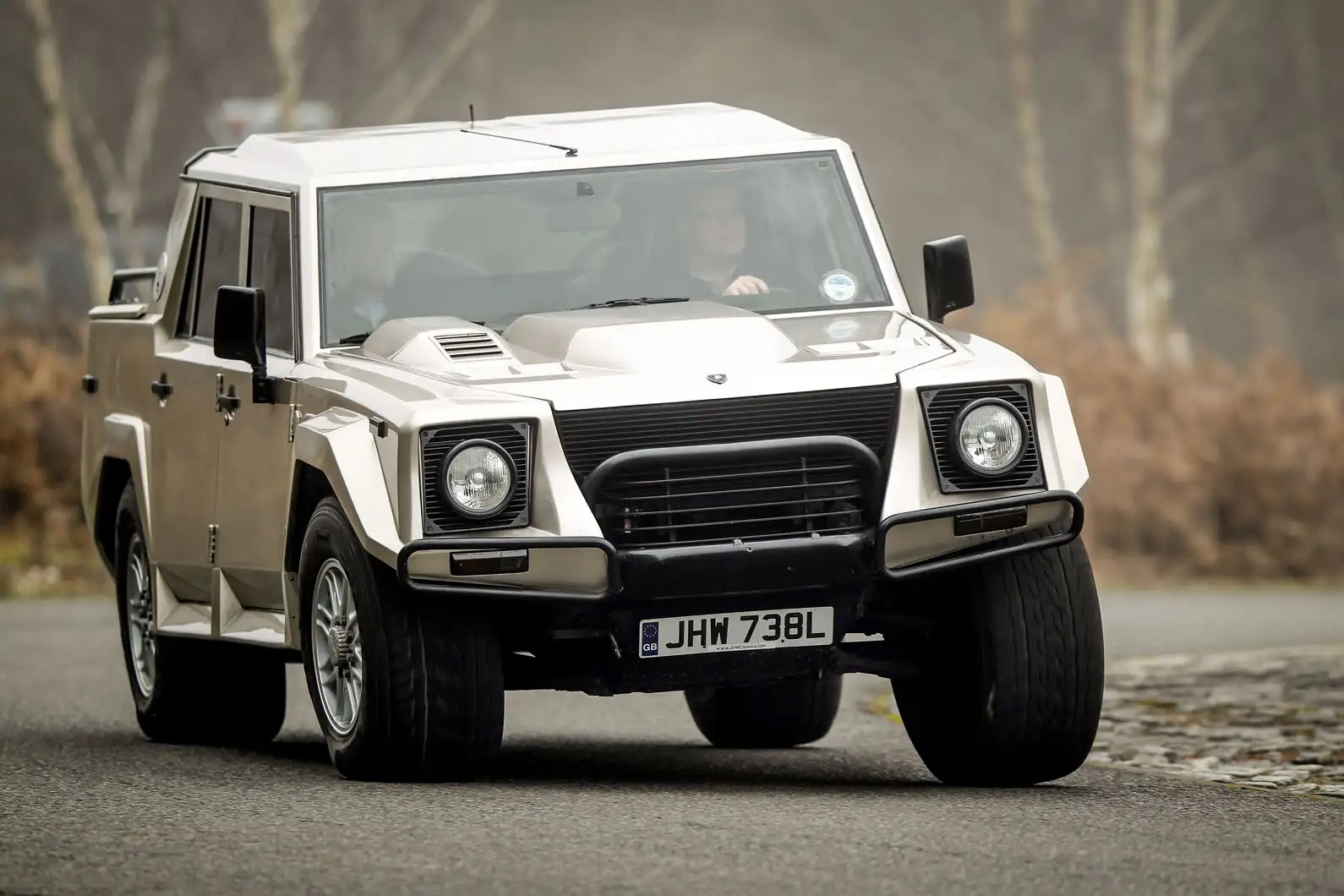
On many levels the LM002 is a failure: Lamborghini developed it as a military vehicle in order to win a lucrative contract with the US Army. It lost out to the Humvee but carried on development, swapping its Chrysler V8 with a rather more fruity 5.2-litre V12 borrowed from the Countach.
It weighed just under three tons but despite that could hit 62mph in 8 seconds, and was in many ways the forerunner of the super-fast SUVs that are quite common today, including Lambo’s very own Urus. And say it quietly, but we quite like how the LM002 looks – shh…
Isuzu Vehicross
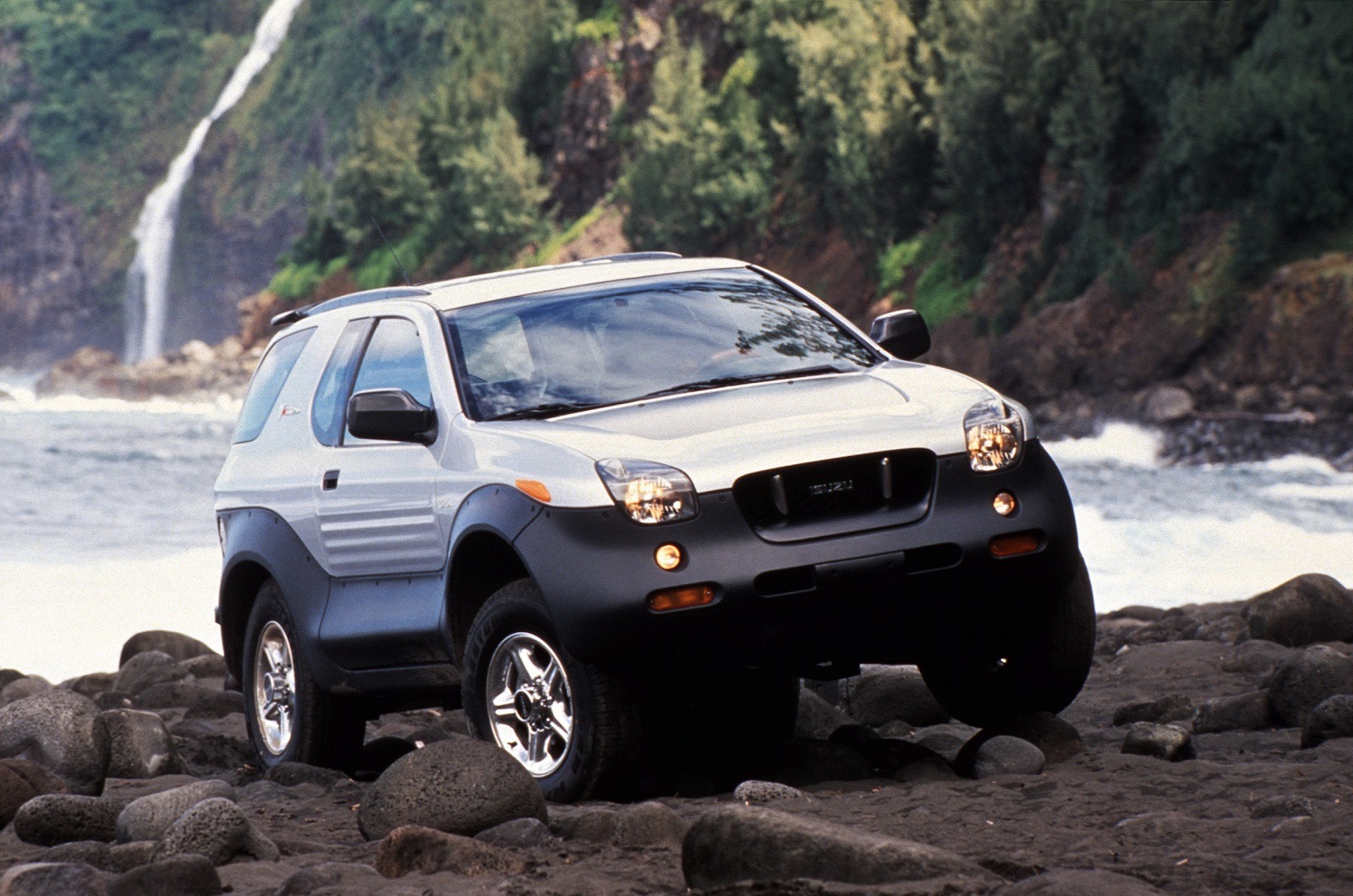
No one quite knew what to make of the Vehicross when it arrived in 1997, and many weren’t exactly sold on those looks, complete with black plastic bumpers. But Isuzu’s commercial vehicle roots ironically rather helped the car and is a reason we like it: it was more than capable off road, built sturdily, and even had enough poke courtesy of 3-2.-litre and 3.5-litre V6 engines, the latter good for 215bhp.
It’s also nice and small – just 4130mm (163in) long – which meant it even worked in town. Unfairly forgotten now, 5598 examples were made, 74% of which went to America, the rest remaining in Japan.
Mercedes-Benz G63 6x6
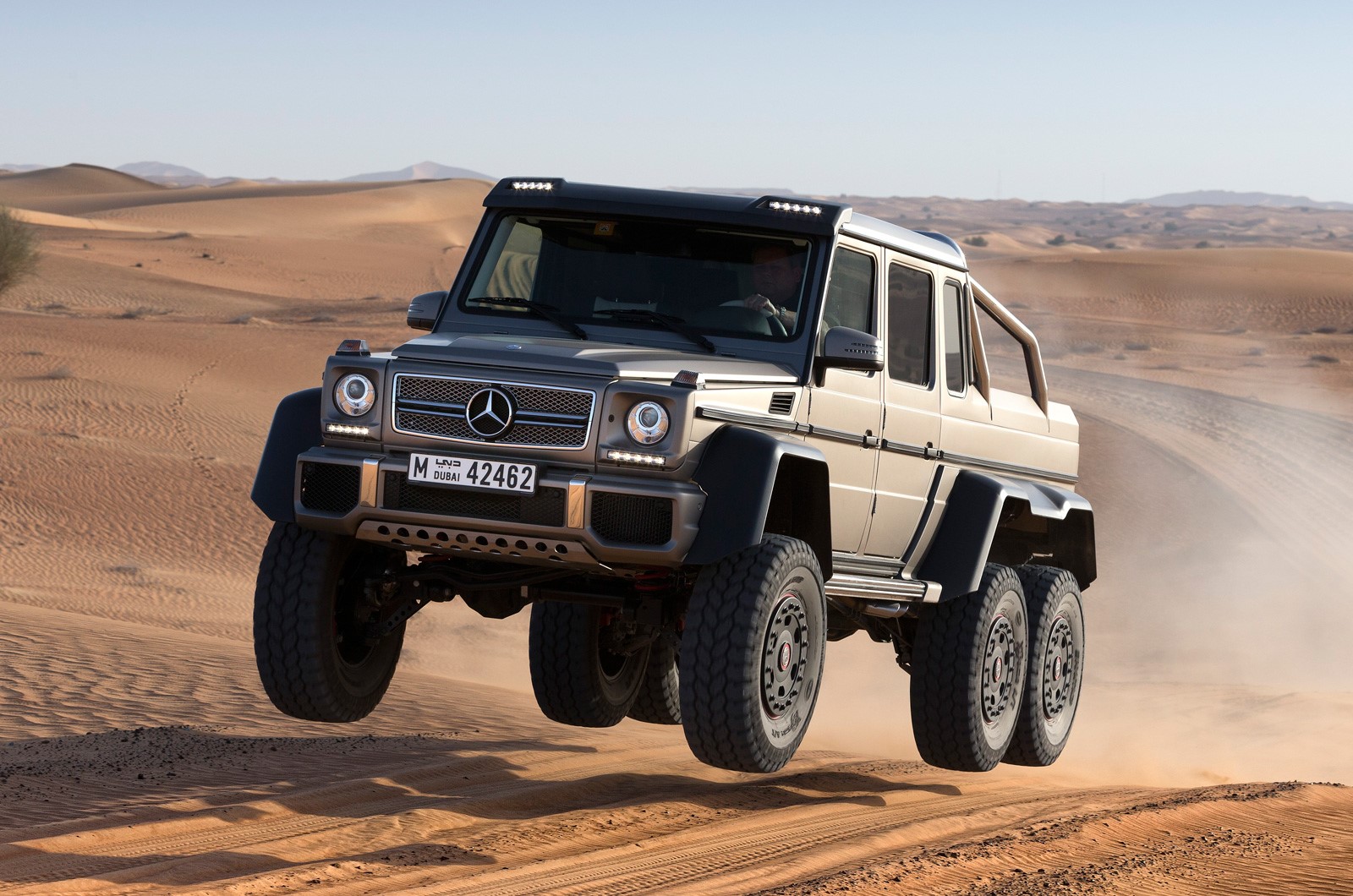
Due to its 5875mm length, 2.3m height and near four-tonne weight, it was claimed that there was no justification for a car of this size to be on public roads. Mercedes-Benz had originally designed the G63 6x6 for the Australian army in 2008 which was then commercialised and put on sale in 2013.
Its military roots meant it had a low-range ratio, five differential locks, a tyre-inflation system to keep the 37in tyres topped up and portal axles. The 540bhp 5.5-litre bi-turbo V8 meant it could reach 62mph in 7sec. There aren’t many 6x6 cars on the market, making the 6x6 G63 AMG a work of art by Mercedes and for that reason this particular OTT machine gets our vote.
Subaru SVX
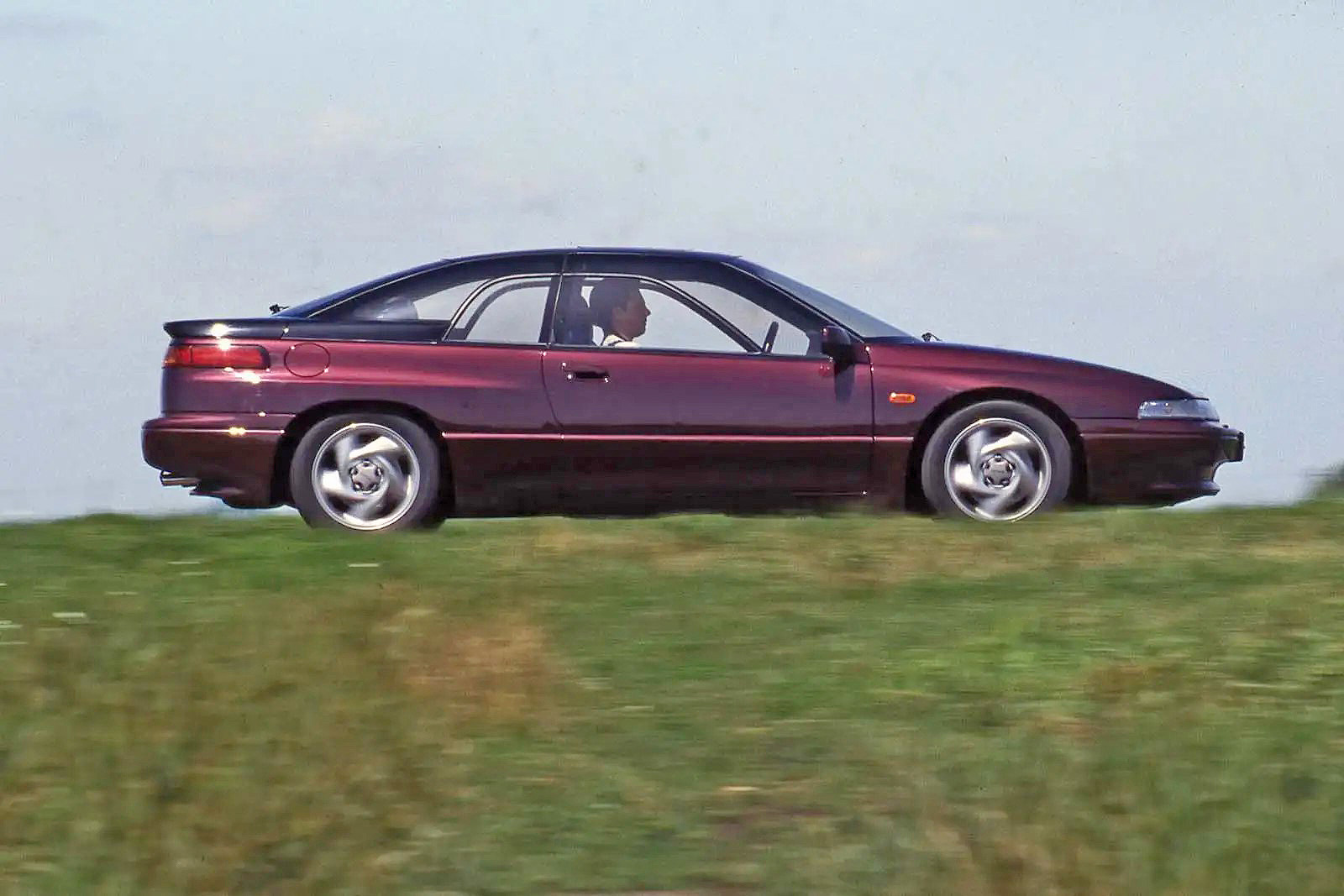
Subaru’s attempt at a two-door luxury coupe started from a tricky spot. Its left-field looks and glasshouse-like canopy were courtesy of DeLorean designer Giorgetto Giugiaro, but were rather different from would-be competitors like Mercedes. Furthermore, a bespoke 24-valve 3.3-litre Boxer engine was dropped in producing around 230bhp 0 but was only available in a questionable four-speed automatic gearbox which restricted the car’s capabilities.
Sales of 25,000 over six years were never quite Subaru was after and the car was expensive, not very fast or attractive - but we can’t help ourselves admiring it nonetheless.
Infiniti QX70
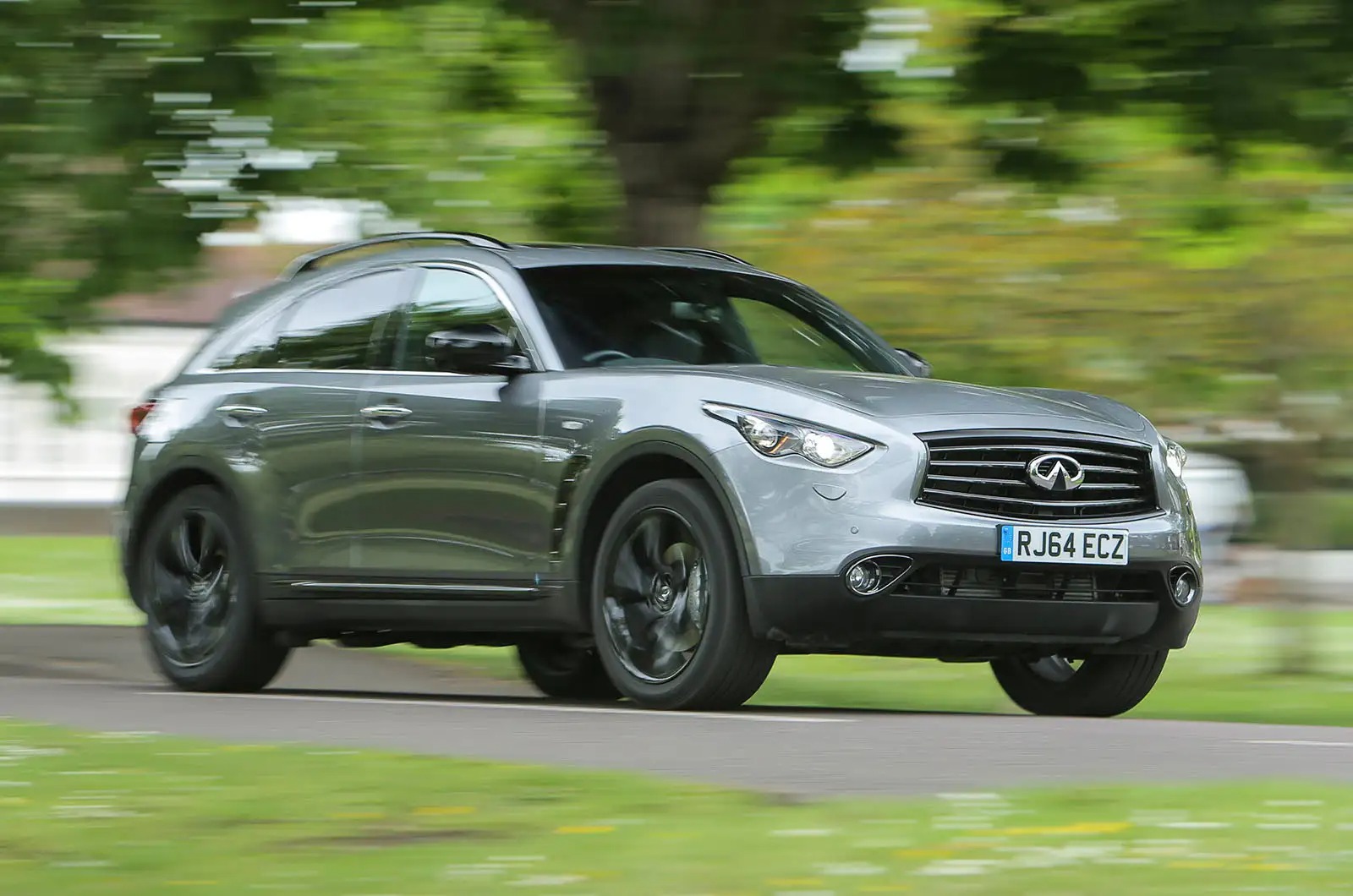
The QX70 was a performance-orientated SUV and had its target set on the BMW X6, giving buyers a choice of a 3.7-litre V6 and a 5.0-litre V8. All cars arrived with a seven-speed automatic gearbox with paddle shift and stiff suspension.
Very few people liked its elongated bonnet, curved headlights and tacked-on side grilles. However, next to a competitor like the X6, it looks unconventional and from some angles it looks posher; it’s almost like it should sit in a class of its own, and that’s exactly why we like it.
Porsche 914
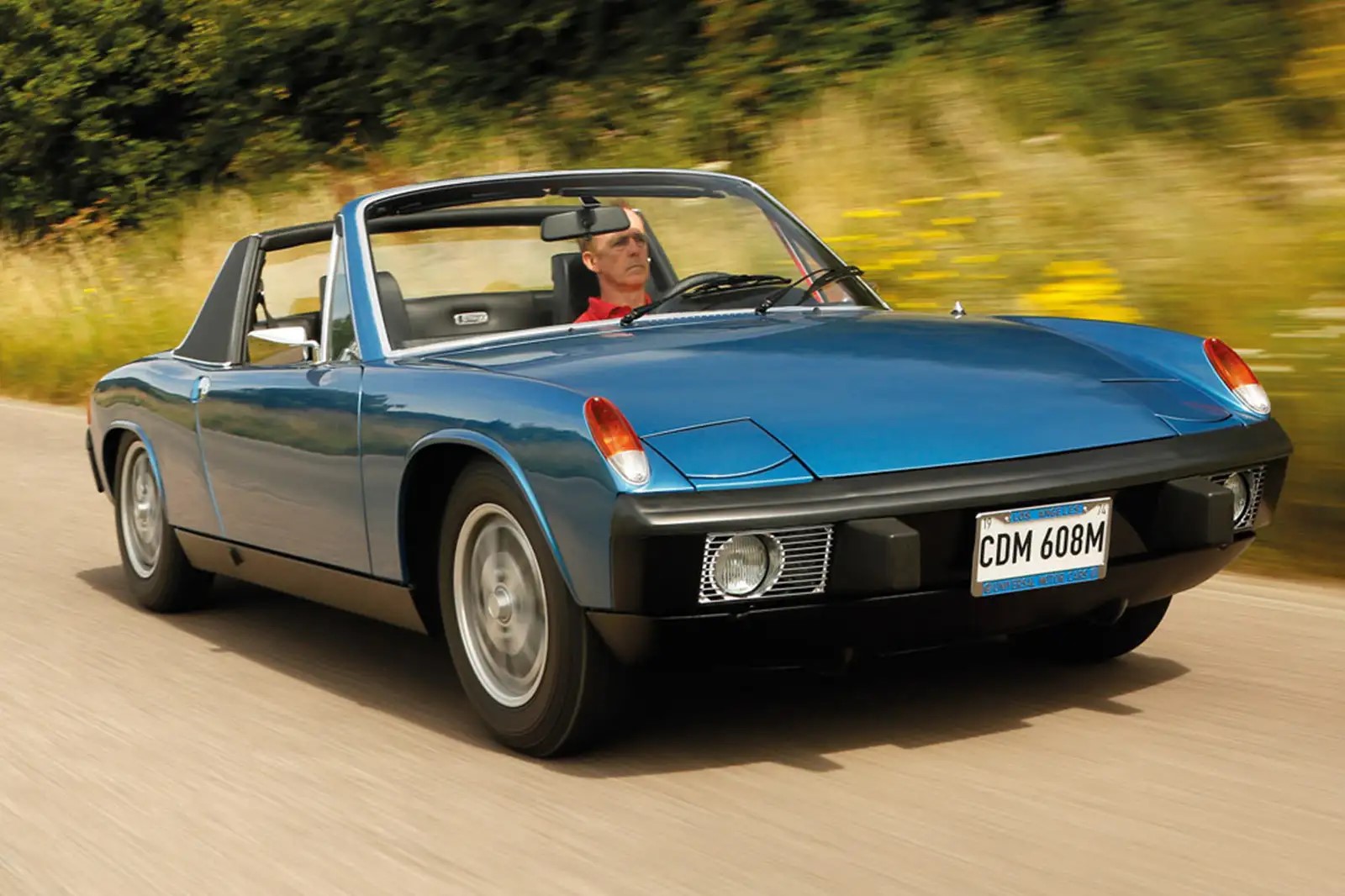
When unveiled at the Frankfurt Motor Show in 1969, people couldn’t decide whether the Porsche 914 was a Volkswagen or a Porsche due to it being a collaboration between the two German giants. Volkswagen wanted to replace the Karmann Ghia while Porsche wanted a new car to succeed the 912. The 914 was fitted with a monocoque chassis and an 80bhp mid-mounted four-cylinder from the Volkswagen Type 4 and, in a car that weighed 900kg, this meant 0-62mph arrived in a leisurely 14sec.
A revised 914/6 variant was later equipped with a more powerful 2.0-litre flat-six from the 911T, although this came with a higher price tag which saw less than 4000 units being built. Volkswagen or Porsche debate aside, the 914 is a classic and it’s a joy to drive enthusiastically.
DeLorean DMC-12
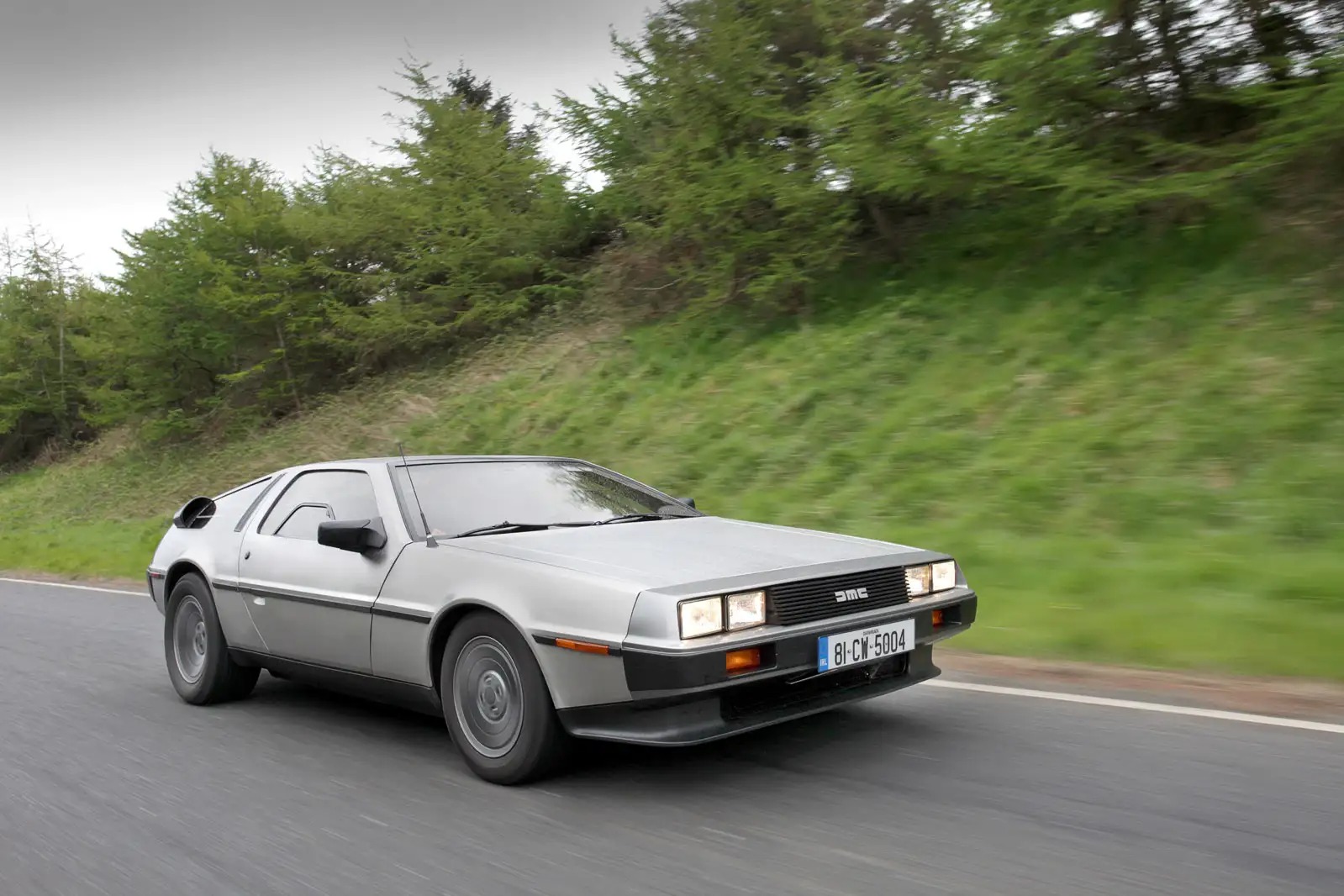
While it looked like a supercar with its gull-wing doors, its build quality, alongside slothful performance, quickly put it under the tyres of the American and Italian cars it was trying to compete with. Its 2.8-litre V6 produced just 130bhp and gearbox choices were either a five-speed manual or sluggish three-speed automatic.
Forgetting its woes, we think the DMC-12's design cues, such as its brushed stainless steel body panels, quad headlights, slated rear boot lid and tyres that were almost too big for the bodywork, isolate it from anything ever produced by any other manufacturer. This, combined with a supple Lotus-tuned chassis, means that it sits comfortably in the cool category.
Toyota Rav4 Convertible
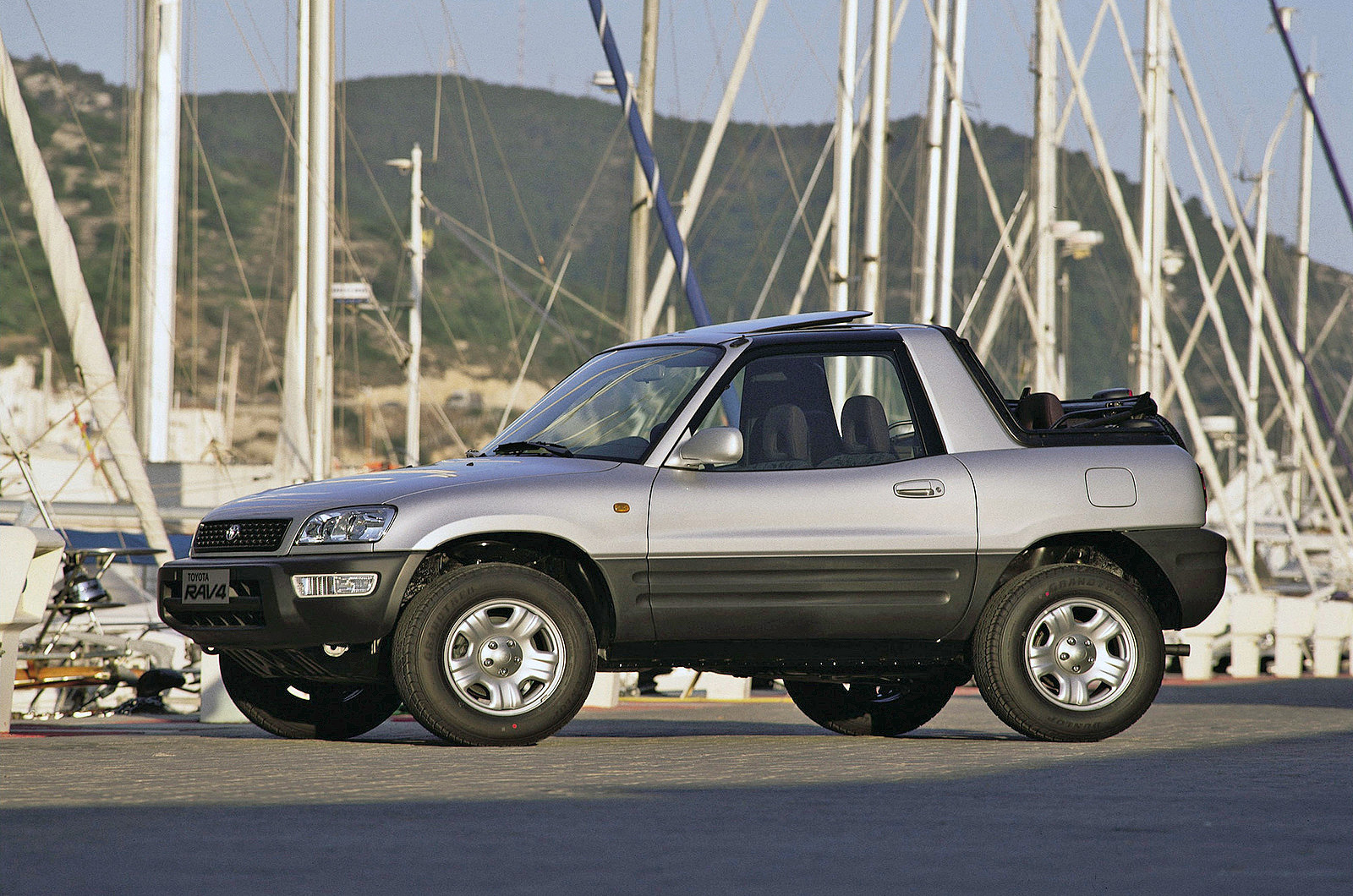
The small but capable Rav4 was already popular when released but Toyota decided to go a step further and make it even more fun and interesting with the Rav4 convertible. Available only in a two-door, Toyota skipped on the motorised roof and opted for a manual roof which meant owners would need to undo the zips at the side to remove the vinyl rear windows, flip two latches inside and push the roof down.
Although additional structural reinforcement was added, it was still nervous in corners. Sales were low in comparison to the hard top and the Rav4 Convertible was unfortunately canned after a two-year production run. People struggled to see the Rav4 Convertible’s point but its short wheelbase and chunky tyres made it a lot of fun.
Lada Niva
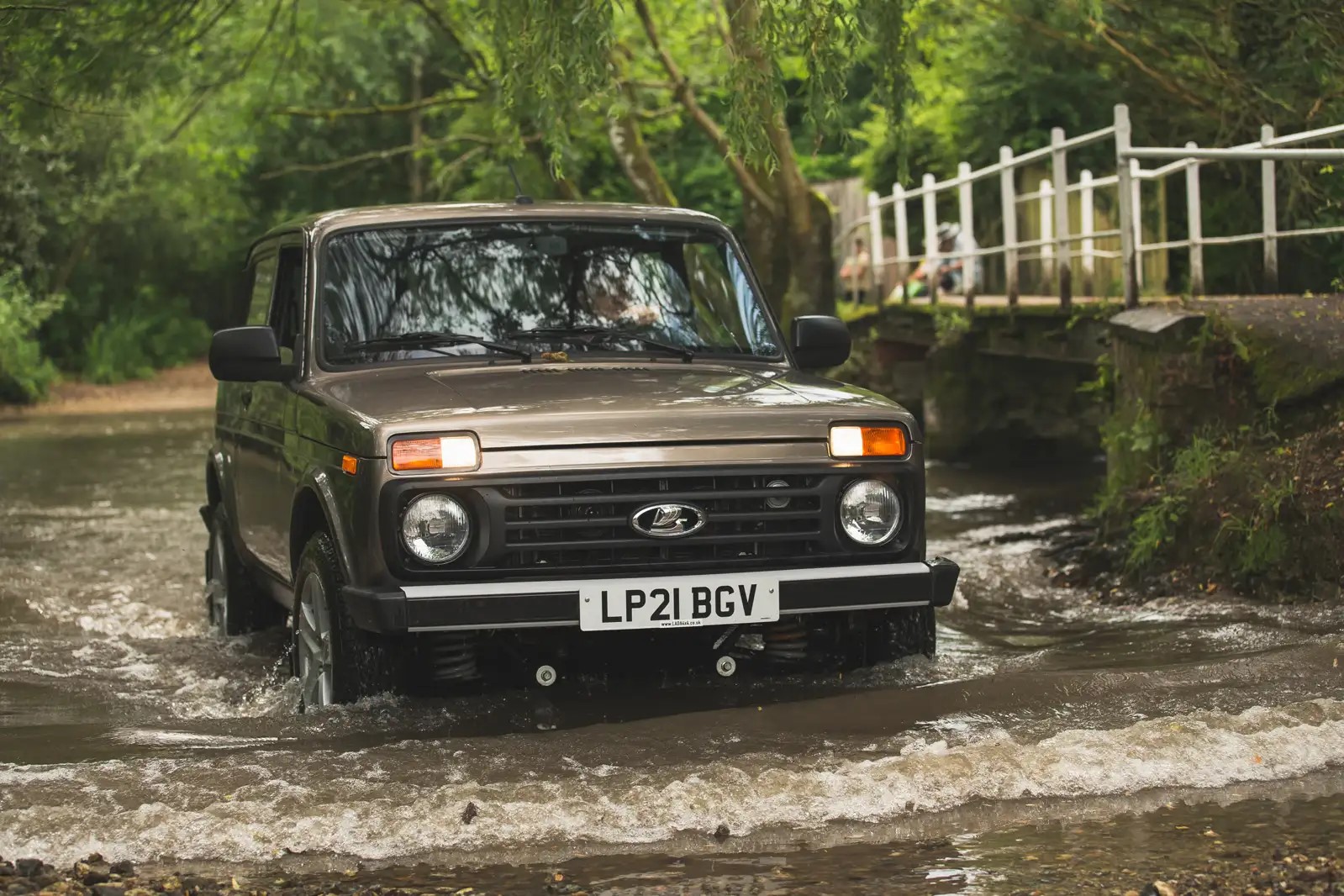
Russia’s Lada has never had the world’s greatest reputation: they came with Soviet-era build quality and a distinct lack of mod-cons such as power steering. And while we wouldn’t give most Ladas a second glance, we’d make an exception for the Niva.
Without its iconic shape and retro design, it would lose its charm. Those looks have stuck throughout the Niva’s lifecycle: high sides, circular headlights with eyebrow indicators and large front and rear bumpers, continue to make it look tough and green-lane ready – we simply can’t help loving it.
Rolls-Royce Cullinan
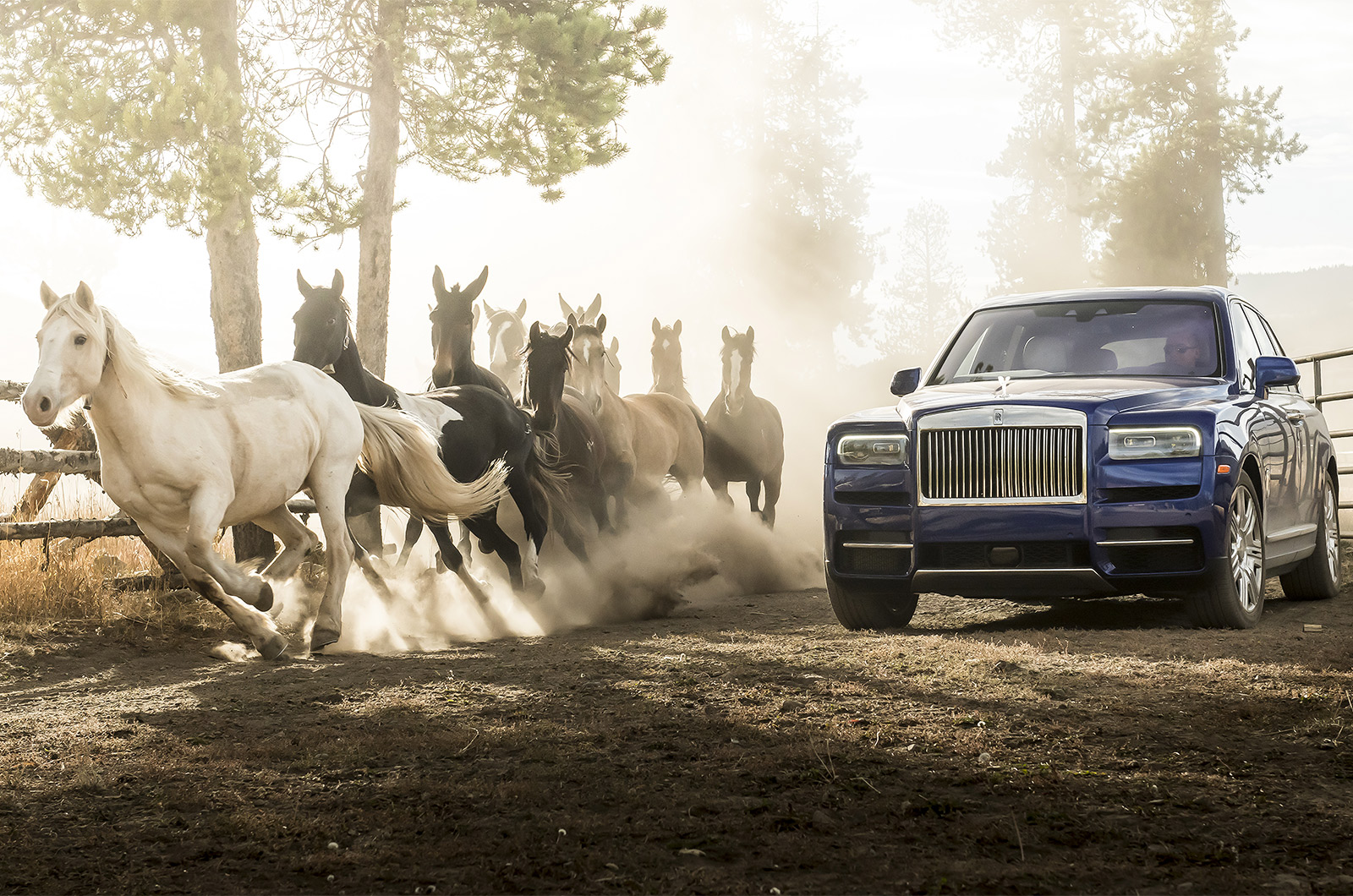
When Rolls’ first SUV was first revealed its looks were not for everyone, to say the least. SUVing the famous Rolls-Royce look was never going to be an easy task – and whatever the result it was inevitable there would be critics.
But we reckon the sloped futuristic rear is pleasant, the chrome grille sits perfectly at the end of its long nose and there’s just something oddly satisfying about it when it's caked in mud after an offroad venture – but it’s vital to get the right colour-and-wheel combination – such as the one pictured.
Pontiac Aztek
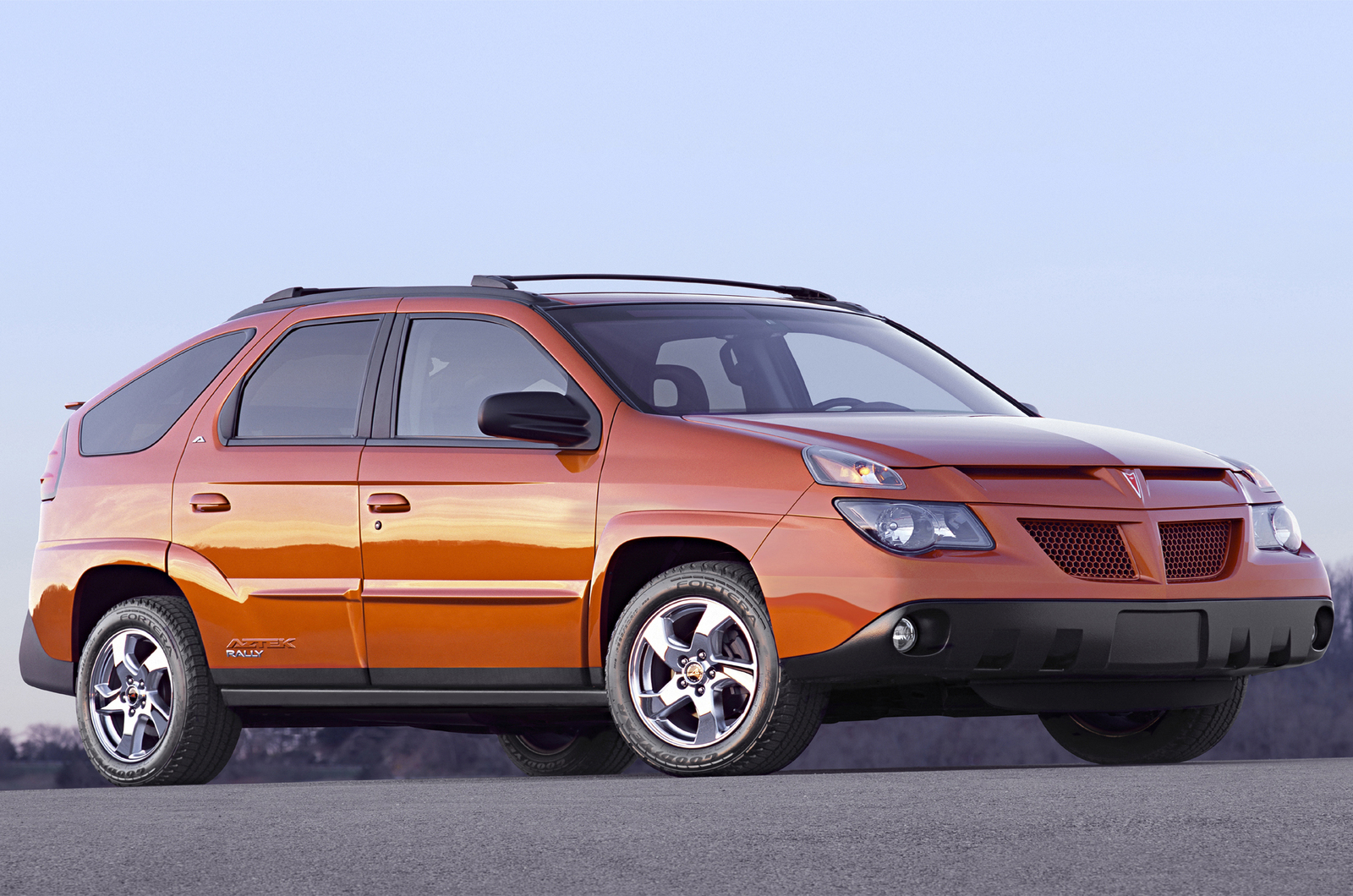
The Aztek was often blamed for killing off the Pontiac brand, and although the car that was meant to save Pontiac failed, the company was losing money before the Aztek and closed due to being unprofitable. For a brand that gave us sleek and powerful muscle cars, its looks aren’t favoured but the reason the Aztek makes our list is because of its practicality.
Between the front two seats was an arm rest that doubled as a cooler box and the boot lid split just like a Range Rover. And there are very few brands that offered an optional tent and blow-up mattress with their models like Pontiac did with the Aztek.
Nissan Juke Nismo
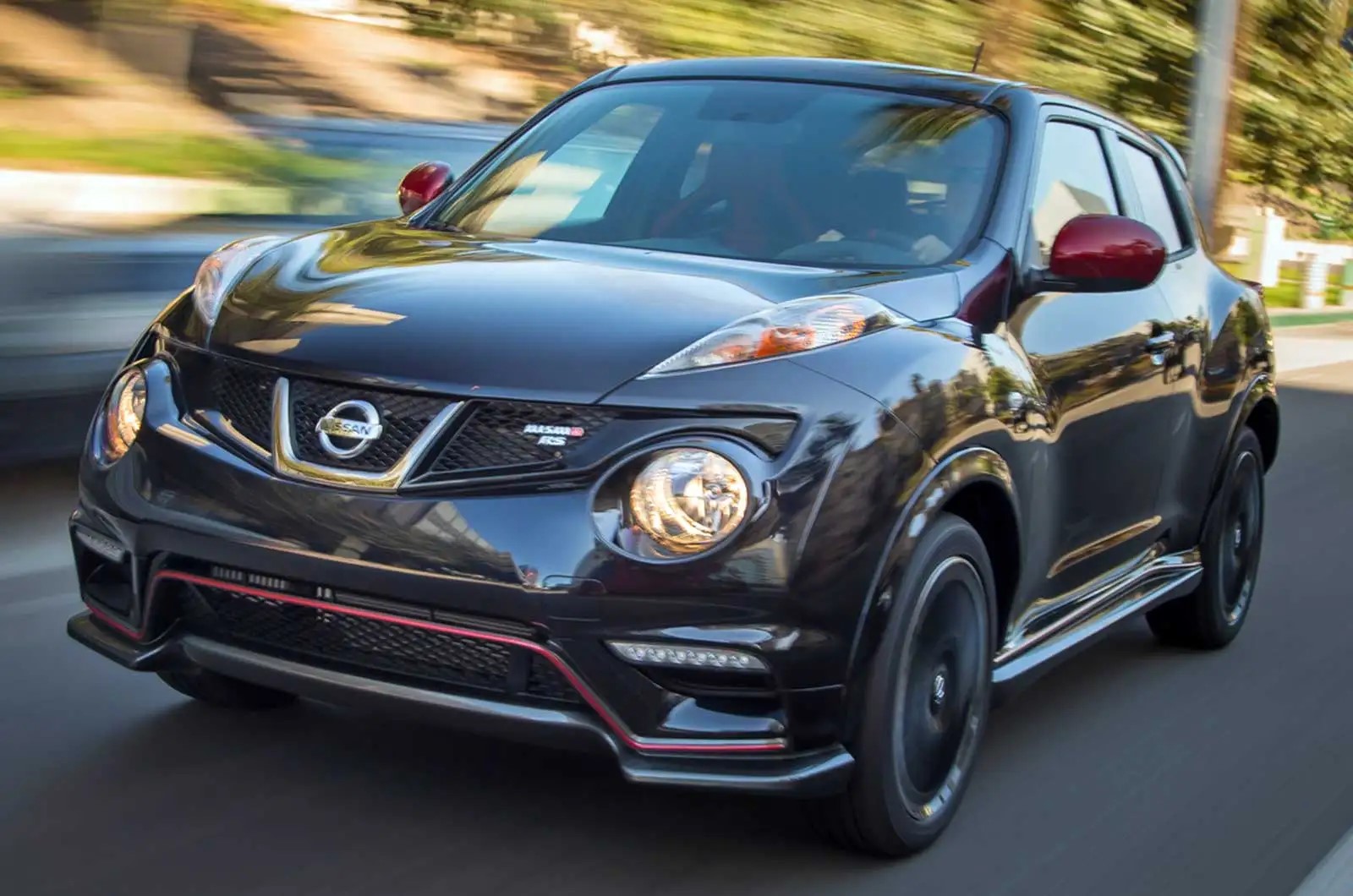
When released, the Juke Nismo had heaps of character with its edgy looks and punchy engine as it took on the hot hatch market. It started with 197bhp in standard Nismo form but the RS introduction saw this increase to 215bhp which gave a 7.0sec 0-62mph time. The MacPherson strut front suspension and torsion beam rear axle now had stiffer springs, larger disc brakes were fitted and the body was stiffened.
The Nismo RS struggled in the corners compared to its competitors like the Fiesta ST or Mini Cooper S due to being tall which resulted in being less desirable, but with all the Nismo bodywork and splitters it looked - and looks - fantastic.
Plymouth Prowler
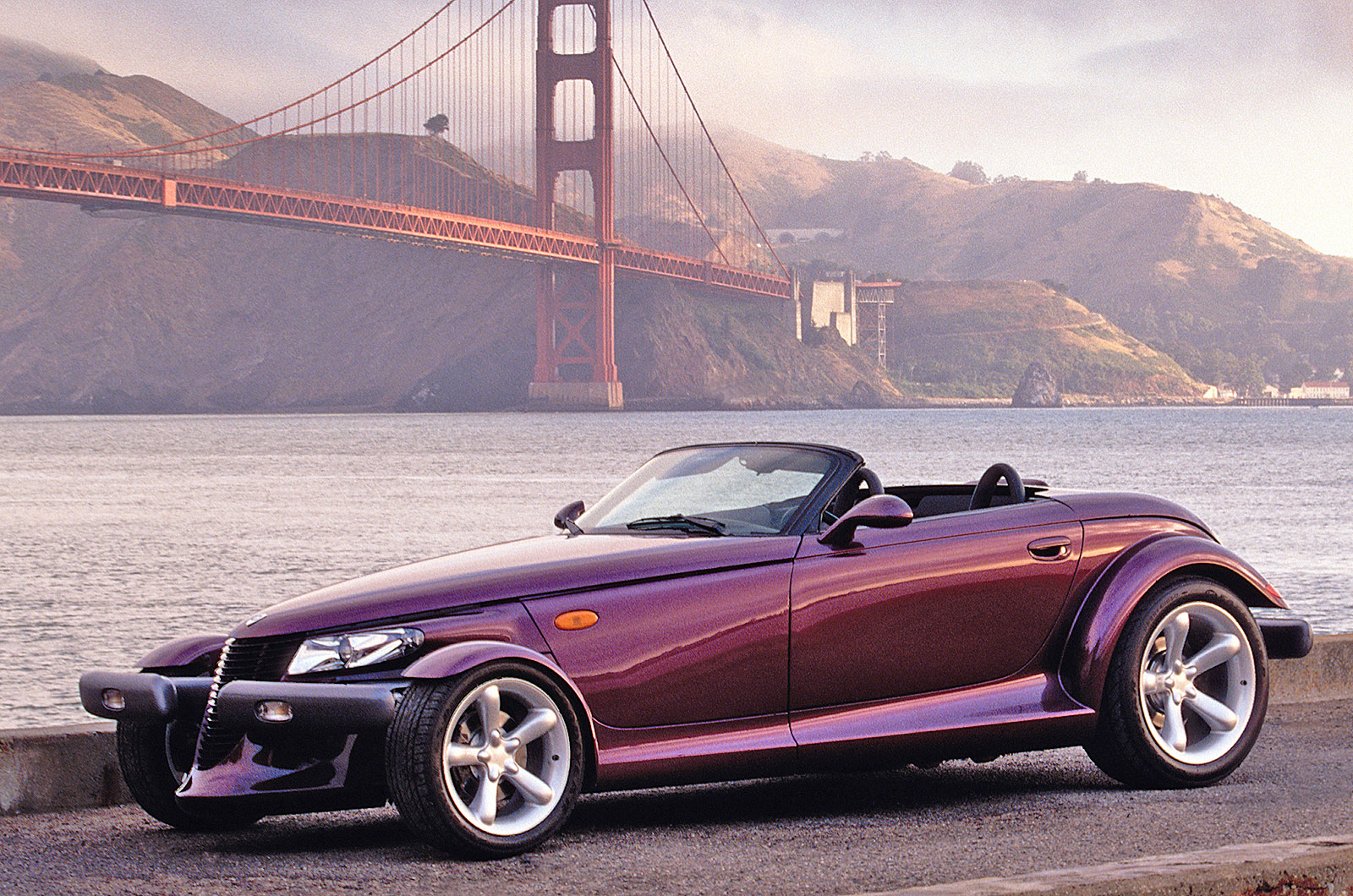
The Prowler’s retro-look was not for everyone, but the main criticism was targeted at its rather lazy 3.5-litre V6, whose 214bhp was channeled through a rather lazy four-speed automatic transmission.
But we’ll give this hotrod for the road a big thumbs-up: big chrome wheels sat on all four corners, and a body and chassis made from aluminium giving it a weight of just 1270kg (2800 lb).
BMW 5 Series GT
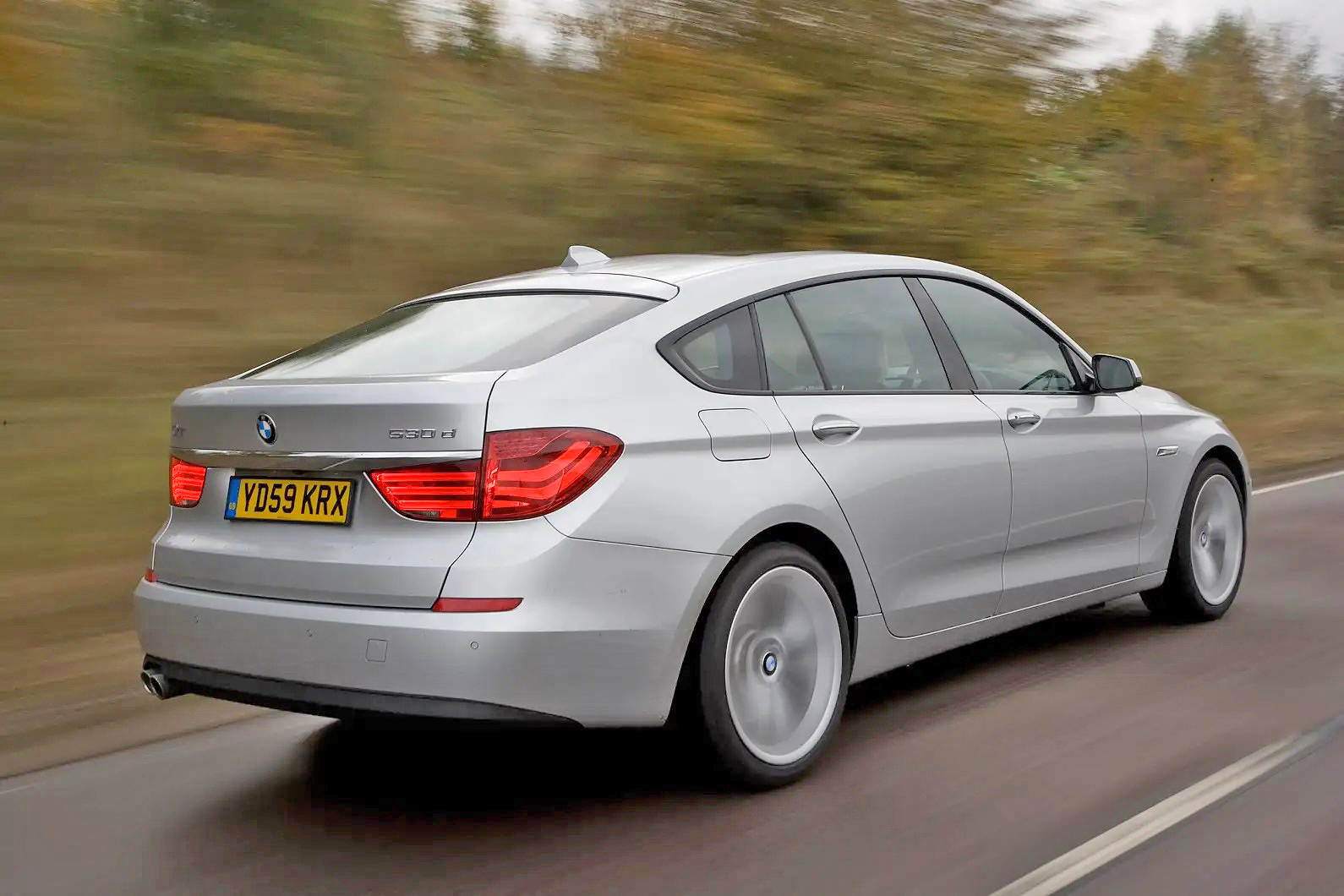
BMW attempted to slot the 5 Series GT between the regular 5 Series and 5 Series Touring and while the front was still aggressive, the hatchback rear was classed by many as ungainly. The GT sat on the 7 Series platform making it longer than a Land Rover Discovery of the same era and 300kg heavier than a standard 5 Series.
Regardless, its winning point for us is the lush interior with aluminium switchgear and lashings of quality wood, especially when equipped with white leather seats and executive-style two single rear seats.
Alfa Romeo 4C
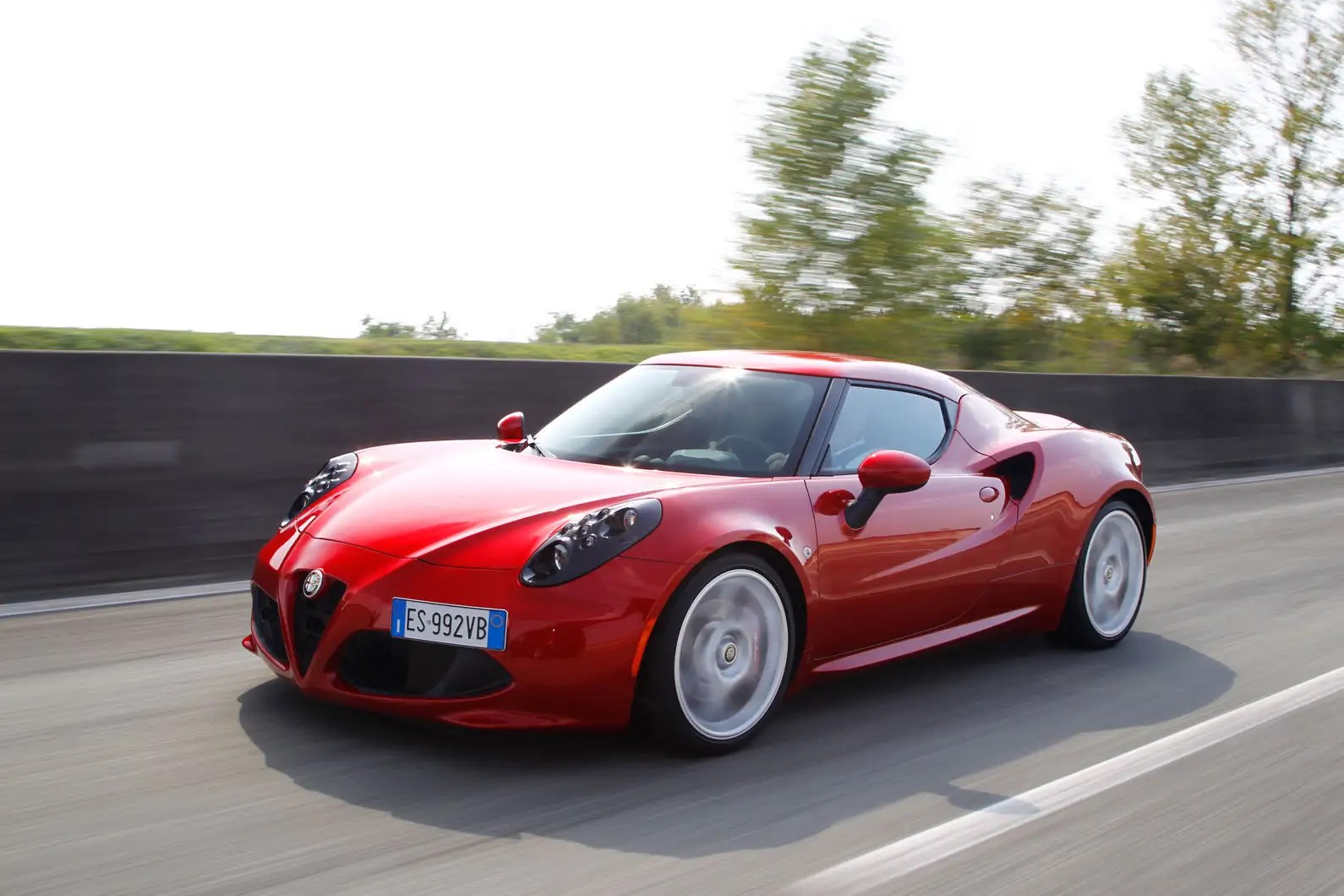
When the 4C landed in 2013, it looked like Lotus had a true competitor. Unfortunately, the 4C disappointed on any non-track surface. Its steering skipped around over any small road imperfection and its onboard tech wasn’t groundbreaking for the price that Alfa was asking.
However, we just can’t help but love its carved body lines and wide supercar-like stance or the way the turbo whistles resonate through the cabin. In its Spider variant, the rear boot lid vents, ducktail spoiler and spider-eye LED front lights make it look exotic.
Chrysler PT Cruiser
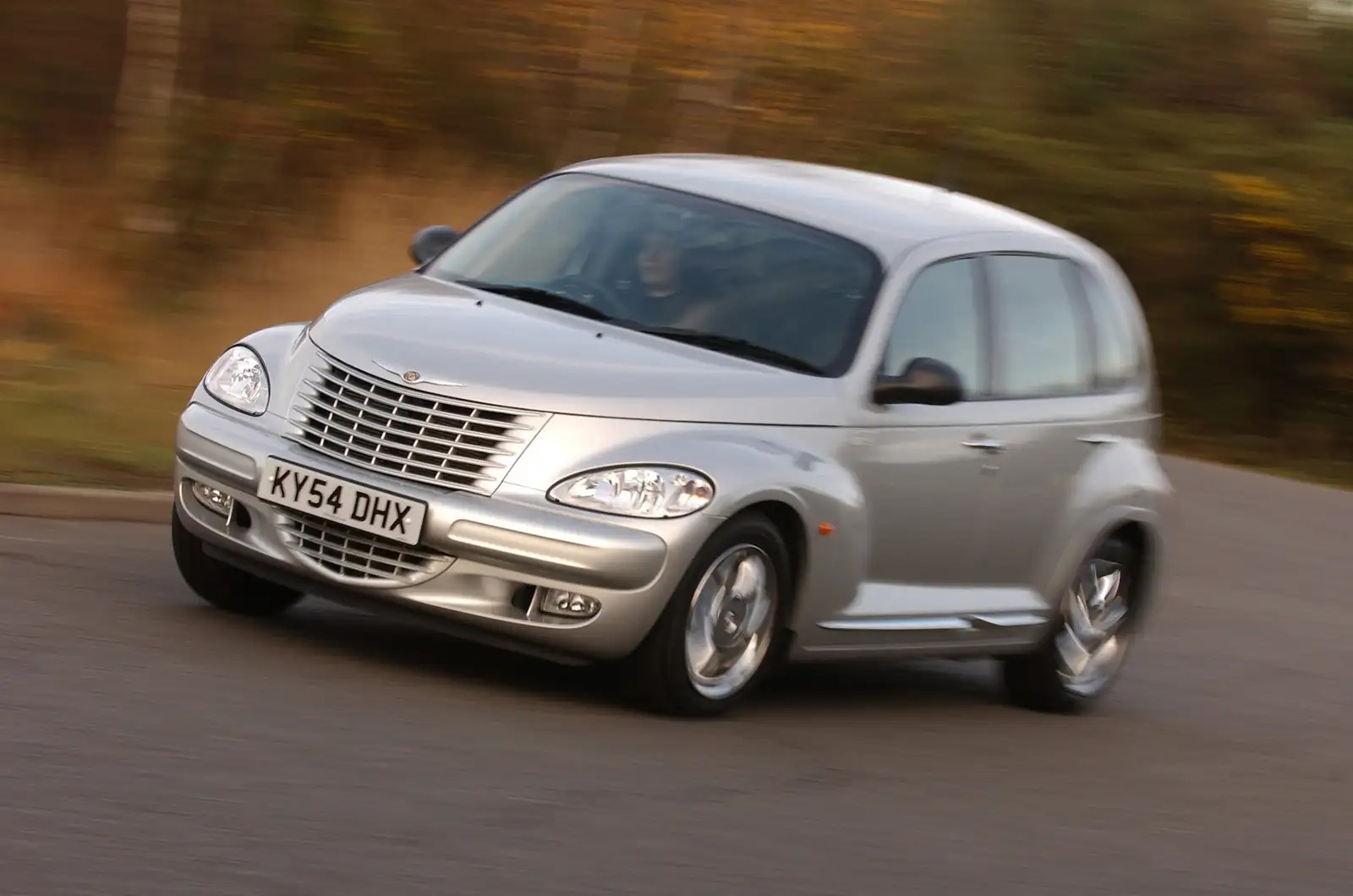
It received the ‘Worst Car of the Past 20 Years Award’ back in 2013 thanks to its awful safety ratings, off-the-wall looks and underpowered 2.4-litre engine. But we feel that in a world of Volkswagen Beetles and Minis the PT Cruiser’s retro design quirks, such as the 1930s hot rod-inspired nose and front bulbous arches, chrome wheels, sloped roof line and flat boot lid, made it utterly individual and that’s why we’ll always have a soft spot for it.
Nissan Figaro
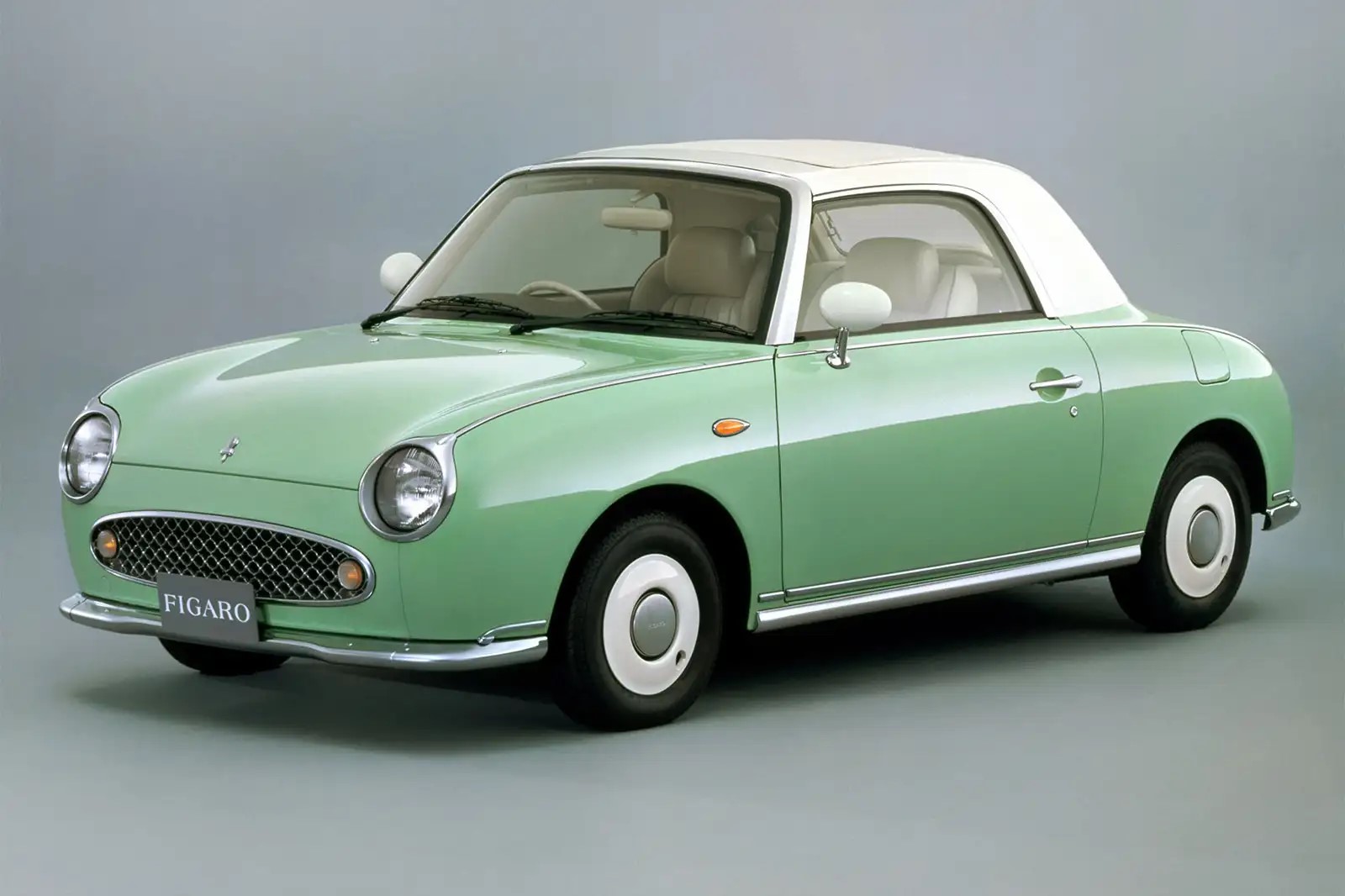
The Figaro arrived in 1991 and never lasted long due to serious rust issues. People couldn’t really accept their retro styling: the roofs leaked, and the slushy three-speed gearbox was simply hopeless. Whilst these were concerning, the Figaro earned its place on our list as one of Nissan’s most weird and wonderful cars.
This is not only because of the array of 1930s colours on offer but because of the chrome eyelids that sit above the headlights, the stacked rear lights and the artsy interior that used a variety of interesting switches - including side window switches that were shaped like 1930s lampshades. Wonderful.

Nissan Sales Surge as Crossovers Offset Declines in Z and Leaf Models

UK Automotive Industry at a Crossroads as Protectionism Challenges Free Trade Amid Chinese Competition
European Union has already proposed protectionist legislation – which could lock UK out of key benefitsRise of Chinese brands has prompted argument over how best to protect British and European car industries
How should a country built on free trade react when its most important trading partners start erecting barriers, as the EU and the US are doing? Or when that free trade starts benefiting the importer to the detriment of its own industry, as is happening with the Chinese?
That conundrum facing the UK was a key theme that this year’s Society of Motor Manufacturers and Traders (SMMT) Summit conference, which brought together key car makers and suppliers to discuss how to respond to rapid changes to the trade status quo.
Just the fact that erecting barriers was being discussed indicated that a seismic shift was happening.
“It’s the first time in a long time I’ve heard the word ‘protectionist’ used positively in a conference,” said Sam Lowe, partner at business advisory firm Flint, on one panel.
Protectionism as applied to the automotive industry has long been perceived as almost shameful. Putting up tariff and other barriers was the preserve of emerging countries like Brazil, Russia and India as they sought to protect an uncompetitive local automotive industry from global competition.
But now the rise of the Chinese and their global export juggernaut has brought Western car makers and the countries whose economies they support to the realisation that actually, compared with the Chinese, with their low cost-base, fast-evolving tech and state support, it’s them that might be the uncompetitive ones.
But what to do about it? In a survey of automotive business leaders published by the SMMT to coincide with the Summit, more than 80% said they either agreed or strongly agreed that the UK government should “take a more proactive stance to protect the UK automotive sector” from increased threats from global competitors.
That view was voiced at the Summit by Carol Rose Burke, managing director of Unipart's manufacturing, engineering and design division. She believes the UK needs to make hard decisions to create a strategy to create more high-value jobs.
“We need to be much more protectionist,"she said. "And I use that word provocatively, because we need to stop talking about why we can't do something."
Burke’s point was taken up by Paul Thomas, chief technology officer at Wrightbus, who said the company takes pride in the fact that 51% of its buses' components are sourced from the UK and the EU.
Protectionism, he said, isn't a dirty word: “It's not a new idea. There's many other countries around the world that use protectionism, like Australia and Canada, and they still have competitive markets."
Protecting a local industry and supply chain reduces risk in a volatile world, argued Stephen Bennett, UK managing director of automotive control unit supplier Kostal.
“The next Strait of Hormuz is not going to be the Manchester ship canal,” he said, adding that car makers, and by extension governments, need to recognise there’s a monetary value in having suppliers close by and not the other side of the world.
Exactly what form that protection would take, however, wasn’t voiced. The UK currently hasn’t applied its own version of the EU’s ‘countervailing’ (ie subsidy-neutralising) tariffs on Chinese EVs and is showing no willingness to do so.
Despite the phenomenal increase in market share of the Chinese to around 16% of the UK car market in the first five months of this year, only Vauxhall has overtly called for an investigation into “inequities”. The Vauxhall executive who made that call has since left the company.
The SMMT, which counts Chinese brands among its members, isn’t about to file a complaint needed trigger any potential investigation into unfair practices. “We don't have a clarion call from our members for any change,” CEO Mike Hawes told journalists at the Summit.
Even if they did, they wouldn’t find common ground with the Labour government. “Tariffs are a lose-lose,” Peter Kyle, secretary of state for business and trade, told the Summit.
The Conservatives also wouldn’t follow the EU in applying tariffs on Chinese EVs. “We don't advocate for protective tariffs or the erection of artificial non-tariff barriers,” Andrew Griffith, Kyle’s shadow, told the audience. “We'll compete on our own merits.”
Unfortunately for the UK, it's experiencing first hand the pain of being on the receiving end of increased protectionism. The EU’s proposal to bolster its own industry via the ‘Made in Europe’ Industrial Accelerator Act as currently written would lock the UK out of a swathe of benefits given to EU-built electric cars.
The proposals “would effectively make UK automotive products uncompetitive” on the continent unless the EU agrees that our cars can be recognised as ‘assembled in the EU’, Hawes said.
Meanwhile, from 1 January 2027, new rules of origin as formalised in the original Brexit agreement between the UK and EU, designed to encourage more locally sourced parts, will trigger a 10% tariffs on many new EVs and PHEVs in both directions, mainly because of Chinese battery content. SMMT puts the UK’s potential tariff bill at £1.4 billion annually.
The change in the EU-UK TCA (the Brexit agreement) drags in so-called non-originating active cathode battery materials, which is the highest-value part in EVs but unfortunately also one that China excels at and Europe doesn’t.
That’s a particular concern of Agratas, the Tata-owned battery business that will supply JLR cells from a factory currently under construction in Somerset.
“The uncomfortable truth for UK and Europe is that this capability is just beginning to evolve,” Karthik Selvan, its chief procurement officer, told the Summit. “The active material is largely missing. It's all locked up in Asia. If you introduce the policy before it's really available, you end up putting tariffs on the very industry that you are trying to [help].”
The UK is hoping to avoid the TCA cliff edge and be included in ‘Made in Europe’, but that will come at a price.
“We're kind of in this perpetual state of having to deal with the EU from the outside,” Lowe said. “In some areas we will be accommodated, in others we won't, but in every instance we're going have to give something back.”
With around 80% of UK-built vehicles sold abroad, we need more tariffs like we need a hole in the head. The increase in US tariffs, for example, handed JLR an additional bill totalling some £500 million last year.
Every new element of friction serves to reminds the UK that free trade is best. Protectionism flies in the face of innovation, competitive pricing and global relations. It also risks narrowing the market for our vehicles.
“I don't think we can choose protectionism. The domestic market is too small to sustain the industry,” said Greg Clark, former business secretary and current advisor to the Independent Industrial Strategy Advisory Council.
Instead the focus must be on fostering innovation, he believes: “If you're going to have open markets, then you can't be uncompetitive. Otherwise you will be taken over by the competition."
But then the world has never faced a competitor like China, where state-directed industries have broken the natural order of the free market.

USMCA Renewal Rejected as Trump Administration Seeks Trade Deficit Reductions and Stricter Content Rules


EPA Versus CARB Standards and the Uncertain Future of US Emissions Regulation