

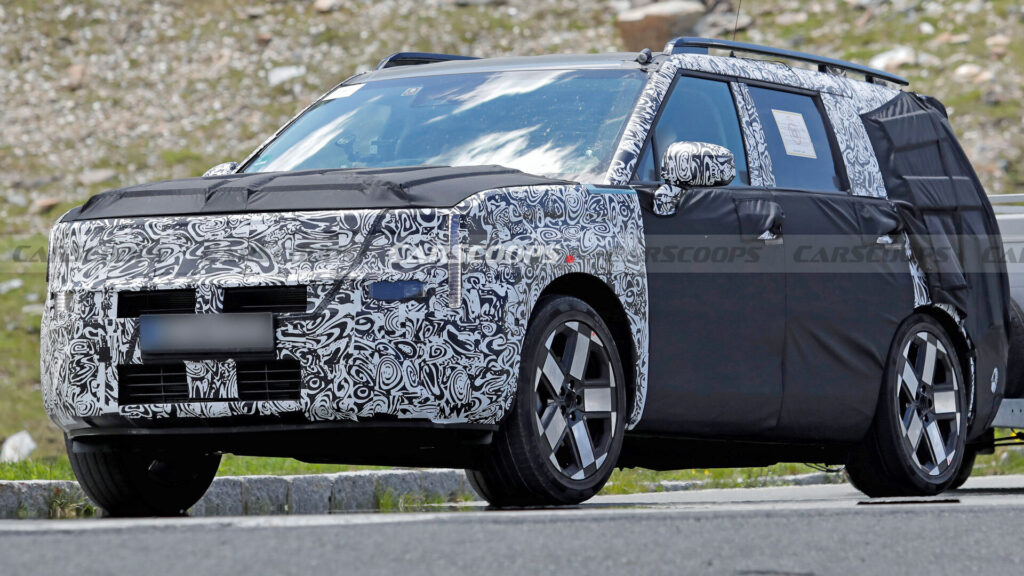
Hyundai Santa Fe Facelift Signals Strategic Design and Tech Upgrades to Sustain Sales Momentum

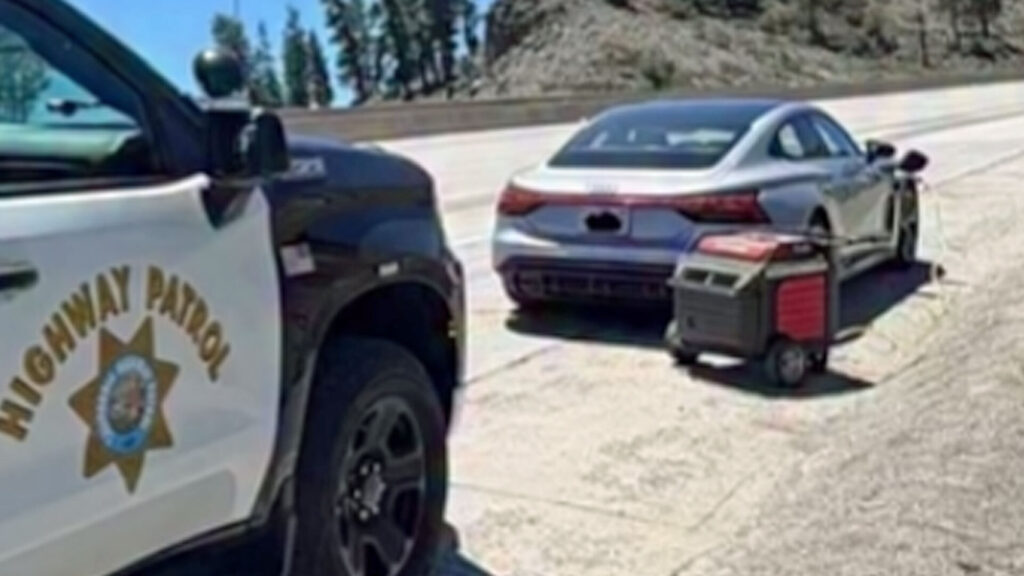
Audi e-tron GT Highlights Range Anxiety Risks as California Highway Patrol Urges Smarter EV...

Paper Airplanes in Space Reveal Surprising Insights into Physics and Material Behavior


JLR’s Strategic Retreat in China Positions Brand for Profitable Growth Amid Premium Market Turmoil
Long-wheelbase Jaguar XF is still among JLR's best-sellers in ChinaJLR got ahead of pain points hitting rivals in China and now it is ready to roll out value-over-volume plan
Most European premium brands including BMW and Porsche have suffered badly in China in recent months, but not all.
JLR was actually bullish about its future in the country at its recent investor day held in June. So how did a company that has experienced well-documented problems in the world’s largest car market in recent years finally get it right?
“Unlike other OEMs, we are not signalling a problem in China. Now I expect to start seeing growth coming back into that market for us,” new CEO PB Balaji told investors.
The market has long proved a rich seam of gold for JLR’s imported models leading with the Range Rover, Range Rover Sport and Defender. That was still the case in the company’s financial year ending March, when the average selling price of its imports – mainly from the UK – hit £105,609.
That figure was up by over £10,000 from five years ago in a market that is famously driven by discounts. “Today, we sell 16,000 Range Rovers there annually without batting an eyelid. And we are amongst the lowest in terms of VMEs [discounts] that we put in that market,” Balaji said.
Look at sales figures alone and JLR’s situation looks as bad as someone like BMW, who issued a profit warning in June after sales took an unexpectedly big hit in the country, down 15% to the end of May.
JLR overall retail sales in the country fell 25% to 62,400 in the financial year, a loss of some 20,000 vehicles, with a greater fall of 35% in the three months to the end of March.
But in that figure are almost 25,000 vehicles built locally by company’s joint venture with Chery, led by the Range Rover Evoque and – still – the Jaguar XF long-wheelbase.
That side of the business has long suffered amid the “killing fields” of mass premium, as CFO Richard Molyneux memorably described it, with discounts dragging down the average selling price of the smaller China-built models to just £34,738 in the last financial year.
“The challenge in the market happened in terms of the lower end cars,” Balaji said.
That joint-venture side of the business helped pushed China to become JLR’s biggest global market, selling a record 87,774 models built in the Changshu, Shanghai, plant in the 2018 financial year. But it has often come at immense cost to the company, most famously contributing to a £3.1 billion writedown in the 2019 financial year after overstuffing the Chinese market.
Only in recent years have the JV losses been stemmed after JLR cut back on volumes, but profits have been small and inconsistent, most recently £10 million in the 2026 financial year. It hasn’t generated a dividend for JLR in the last five years.
The smart solution JLR has devised is to hand the development of models for the plant over to Chery, which earlier this year launched the first of a “portfolio” of Freelander models to built there. JLR receives a royalty payment and gets to gracefully exit a 12-year chapter in its history that generated mainly headaches and not much profit. Production of the last JLR models in China – including the Jaguar XE and XF – end in September.
Essentially JLR has already been through the pain and solved the problem that is just starting to properly hit the bigger premiums like BMW and Audi. Their bigger footprint in the country and its continued outsized influence on the balance sheet foretells a larger battle ahead as premium customers continue to shift to electrified models from local brands and away from the mainly combustion engine offerings from European brands.
JLR can now follow Porsche in restricting sales to high-end valuable imports via its shrunken dealer network at a level the market will take, without needing to push too hard. “With the volumes of the [locally-built] models also going off, it's a much smaller but more profitable and extremely powerful set of products there in the market,” Balaji said. “It's more about now build back, but build back gradually. Don't be in a hurry, because the market will take its time to settle itself.”
JLR is now looking to the US – it’s new biggest market – to provide the bulk of luxury sales that will drive margins in coming years. On analyst pointed out that back in 2022 JLR had made the same claims for China, which didn’t materialise. “The market has also changed dramatically,” Balaji said. “I don't think in ‘22 there was a major callout in terms of the local OEMs going up to a 60% plus market share.”
Problems remain. JLR’s import business in China is now all combustion engine powered after it pulled plug-in hybrids from the market, along with all other European premiums. For now luxury customers are content to stick to ICE but even that’s dropping, with JLR wholesales (ie its import business) down 27% last year and 30% in the three months to the end of March. The delayed Range Rover and Range Rover Sport electric models are coming, potentially by the end of the year, but it remains to be seen how persuasive they’ll be against some pretty impressive local competition.
Meanwhile changes to the 10% luxury tax China imposed July last year dragged in all Range Rovers after the threshold shifted from 1.3 million RMB (£145,000) to 900,000 (just over £100,000). JLR admitted that, like the US tariffs, it’s a tax hike they can’t price in.
What JLR does have going for it in China is the strength of brand, with the Defender particularly still the benchmark design seven years after launch. “I probably will not exaggerate if I say there's 100 copycats of Defender [in China],” chief commercial officer Leonard Hoornik said. “But if you are in a Defender at a traffic light, and there is a lookalike Defender next to you, the magic of what we do is that person looks at you and thinks, I want to be in that Defender. And you, in a real Defender, you look at that car, and say, ‘I would never want to be in that’”.

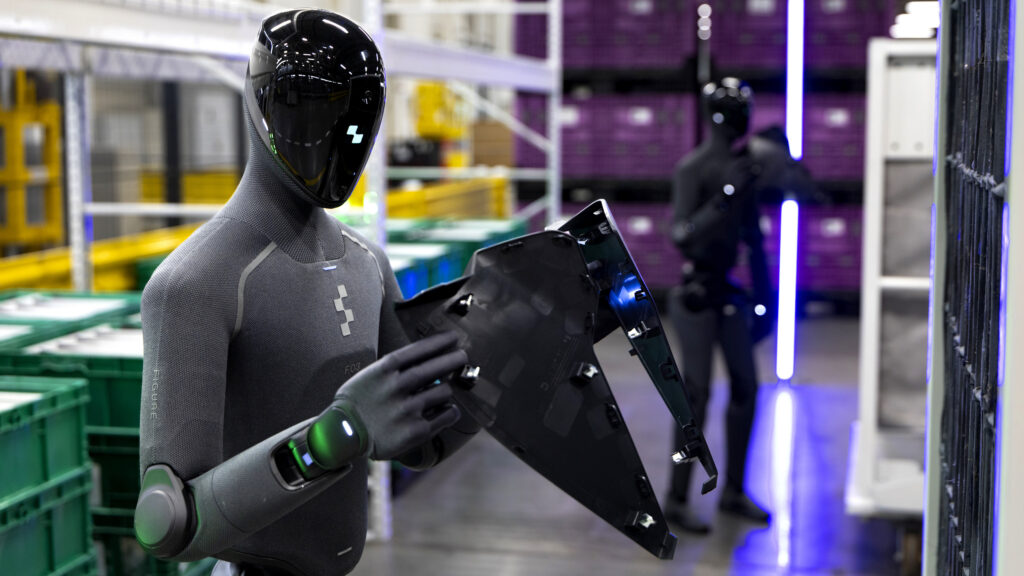
Humanoid Robots Reshape BMW’s Factory Logistics Without Replacing Human Workers

Reflecting Pool Renovation Falters as Trump Motorcade and Environmental Factors Complicate Blame


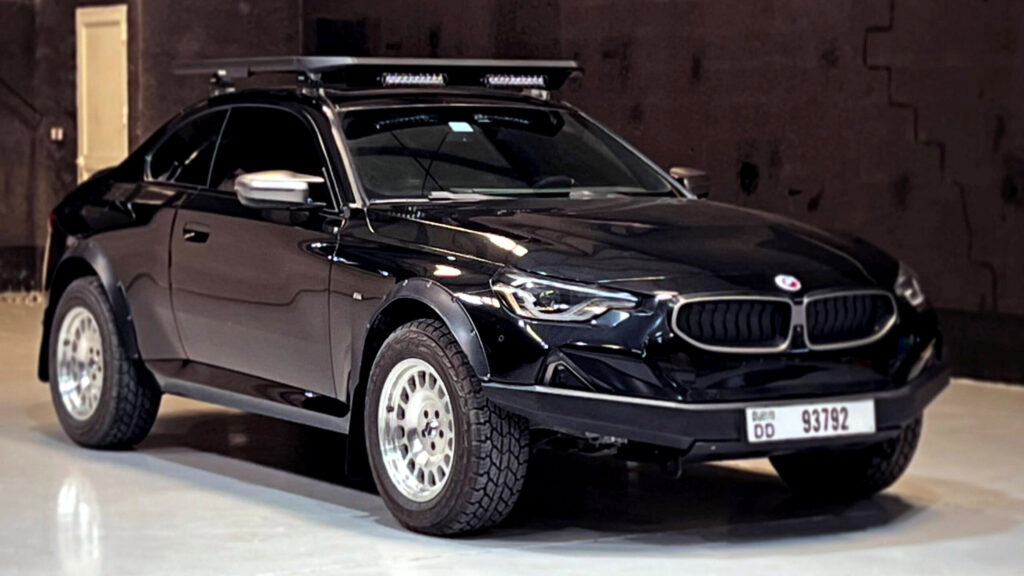
BMW M240i Transformed by Zeus Offroad Challenges the Boundaries of Sports Car Capability in...

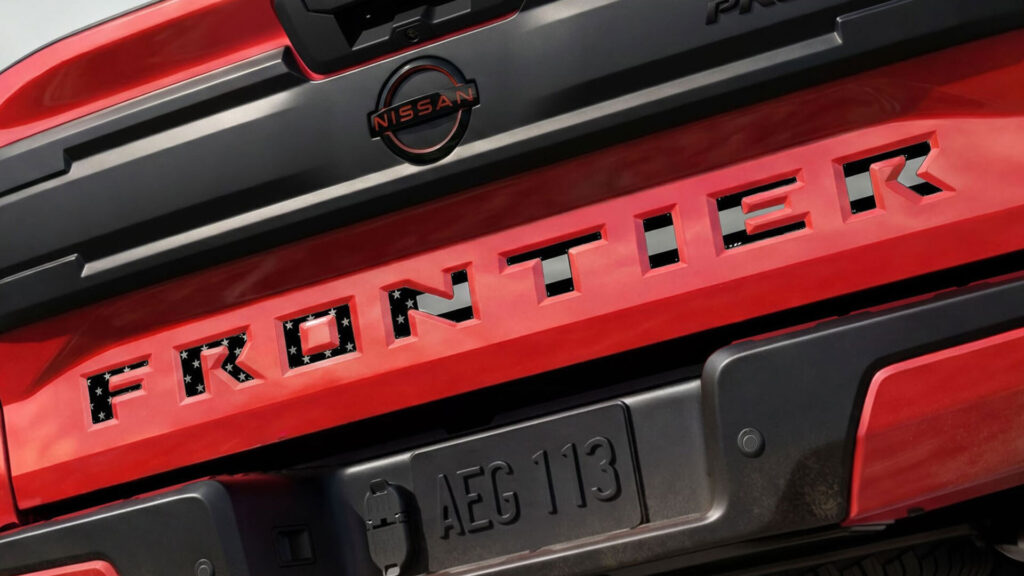
Nissan Frontier 250th Anniversary Edition Marks American Heritage with Subtle Patriotic Detail

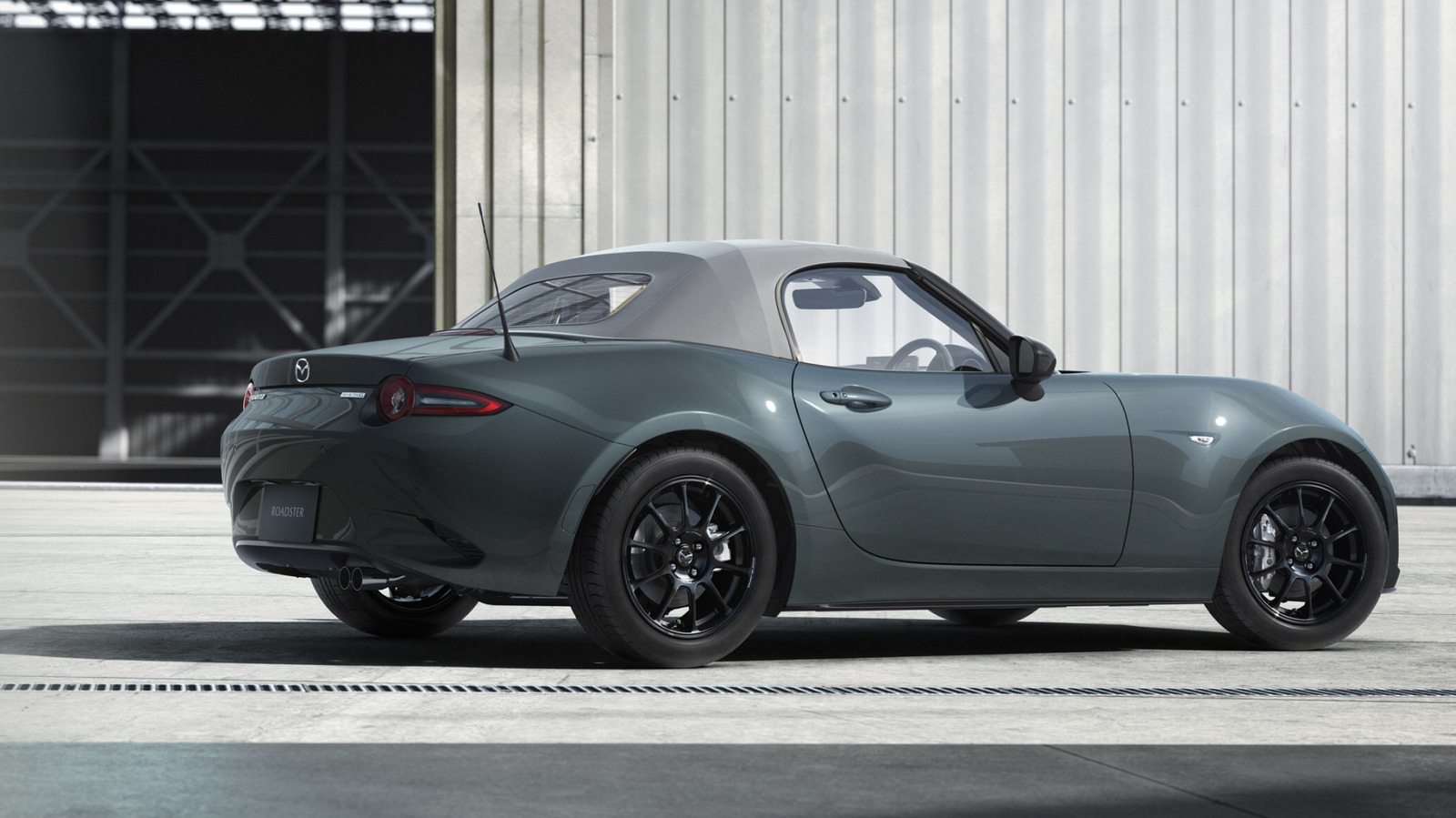
Mazda Refines ND Miata for Japan Balancing Noise Regulations with Enhanced Driving Experience

Jeep Reinvents European Lineup with Region-Specific SUVs and Chinese Joint Venture Flagship to Drive...
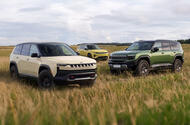
Two smaller SUVs will use new Stellantis platform; 4x4 flagship will be a Dongfeng productionAmerican brand rethinks its European strategy as it primes a line-up of five multi-energy models by 2030
Jeep will overhaul its European product line-up with the launch of three new models in the next four years, including two small crossovers developed specifically for the region and a new large SUV co-developed with Chinese firm Dongfeng.
The three new cars, which will all be multi-energy models and have a four-wheel drive option, will sit alongside the existing Avenger compact crossover and mid-sized Compass, with the goal of helping the American brand substantially grow its European sales.
Jeep is part of the Stellantis empire and one of its four designated ‘global’ brands, which means it will take priority in terms of product investment.
But while Jeep’s European strategy has previously focused on models taken from its core American range (joined by the occasional regional addition such as the Avenger), it will now develop a largely bespoke line-up – potentially with the Compass as its only model also sold in the US.
Fabio Catone, Jeep’s European boss, said that the three new arrivals would all build on the brand’s existing design pillars of capability, protection and versatility, and offer 4x4 ability.
He vowed they would represent what “makes a Jeep a Jeep, so the values, the product formula, the off-road heritage and our unique design language – at the end of the day, our identity”.
Small SUVs to focus on key Euro market
Jeep’s two new B-segment SUVs will sit above the existing Avenger, with one being described as "compact" and the other as "large".
Catone said that while the Avenger is positioned to win over buyers of B-segment hatchbacks, the compact B-SUV will be “wider, much more SUV-style”, while the larger B-SUV will be closer in size to the C-segment, which means it will sit just below the existing Compass.
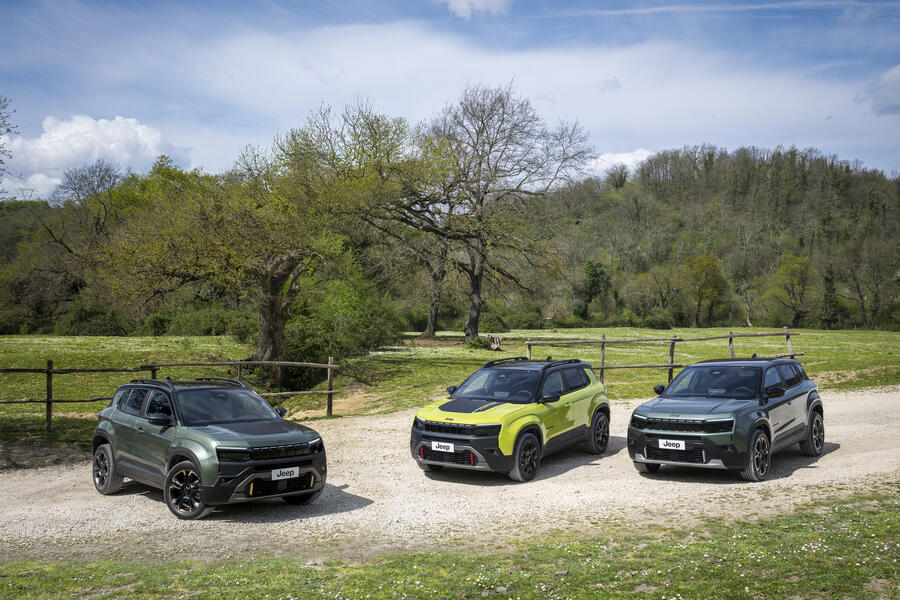
Both will sit on the new STLA One platform that Stellantis is introducing across its brands and both will be manufactured in Europe.
Jeep has traditionally had mixed fortunes developing cars specifically for Europe: the Renegade compact SUV sold well but lacked the authentic off-road capability the brand was known for, while the Avenger is currently its best-seller and a former Car of the Year award winner.
“Jeep is a global brand with values that are shared all over the world,” said Catone. “The product formula is the same all over the world, but we are a global company with strong regional tools, and so we are developing a line-up that is strongly oriented to European customers’ needs.”
Catone hinted that the next-generation STLA One platform is being developed to ensure Jeep can deliver the four-wheel-drive ability that it's known for: “It’s not that we are developing on something [that is] existing that we have to adapt; we are working on something new. It's a shared platform globally, but we have the opportunity to create these cars from scratch, so we can implement all of our requirements as a Jeep.
“We are very confident that we will be able to deliver a true Jeep experience and benefit from the manufacturing and the industrial efficiency of the co-operation within the group.”
Catone said that the new platform is being engineered to ensure that the 4WD of the new Jeeps will be able to offer “best-in-class” off-road ability, with “specific investments” being made to offer the technical ability and approach and departure angles requited.
He hinted that could mean the new Jaapes will feature technology that will be enabled on STLA One such as steer-by-wire, which is being introduced by sister brand Peugeot in its future line-up.
Chinese joint venture to supply new flagship
Jeep’s new large SUV will be produced in a joint venture with Chinese firm Dongfeng, which is already partnering with Stellantis on a pair of new global Peugeot models.
Catone said the new machine, which will be built in China on a Dongfeng platform, will feature a design entirely set by Jeep and will still be engineered for off-road ability.
He described it as a “global Jeep project that will be sold in China and other regions, including Europe” but insisted it's a “vehicle fully designed by Jeep”.
He said it's similar to “an iPhone model, in which the technical features of the design are fully lined with the identity of the brand but we leverage on the industrial footprint”.
The D-SUV will also be multi-energy, with a plug-in hybrid option that's likely to be based on Dongfeng’s range-extender technology.
The Chinese company recently established M-Hero as a similarly positioned off-road brand, which is a likely candidate to provide the basis for Jeep's new European flagship.
M-Hero was launched in 2023 with the 917, a relatively extreme off-roader, and followed it up last year with the M817 (below), a 5.1m-long family SUV with rugged styling and four-wheel drive.
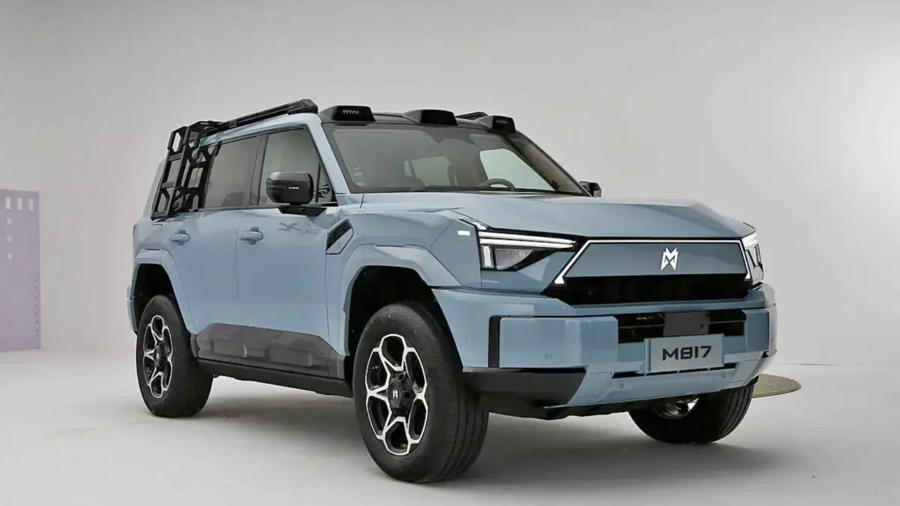
Available in China with either a PHEV or a REx drivetrain and up to 900bhp combined, the M817 bears a strong resemblance to the D-SUV silhouette shown in Jeep's strategy presentation and would seem best placed for sale in Europe as a rival to the Land Rover Defender and Toyota Land Cruiser.
Jeep briefly offered the large, American-built Grand Cherokee in Europe but ditched that more upmarket model due to slow sales.
Asked if a large Jeep could find success in Europe, Catone said: “The D-SUV marked in Europe for us is a white space, and globally it’s a very strong pillar for Jeep. Our position is to add a strong D-SUV proposition, and we found this a strong opportunity with Dongfeng.”
Jeep currently doesn't sell the fabled Wrangler 4x4 in Europe, due to emissions regulations, and Catone said the firm is still looking for a way to reintroduce it in the future.
No mention was made of the US-built Recon and Wagoneer S electric SUVs, which suggests that an earlier plan to bring them here has been put on ice.