

Supercar Configurators and the Fantasy of Ownership in the Digital Age

Harrison wasn't sold on the new 849 Testarossa – until he fired up the configurator, that isI can't afford a Ferrari Testarossa, but I'll still waste hours choosing how to specify it
When I was 13, my IT teacher sent a note home to my parents to tell them that I'd been caught viewing "inappropriate websites" in a lesson. They were naturally concerned - what could an innocent young teenager such as myself be looking at?
The answer, to their eternal relief, was the configurator for the then new Aston Martin DB11.
For as long as I've had access to the internet, I've been squandering copious amounts of precious time speccing up cars I'll never buy. I think the first configurator I ever found was for the Bugatti Veyron Grand Sport, which went live pretty much when I was still in a nappy.
I remember being downright astonished by the detail you could go into even back then, from the more regular options like selecting the split-tone paint finish and which wheels you'd like, all the way to more obscure things like your choice of finish for the fuel filler cap. It was certainly a mammoth test of strength for the old family laptop, which was operating right at the limits of its feeble processing power if the constant, deafening noise of the fan was anything to go by.
If I was at all interested in a new sports car or luxury car, I'd have a go at making one online, but I'd just as happily get stuck into the options of some more mainstream metal because of how detailed those configurators were: the Fiat 500 springs to mind, with thousands of colour, trim and decal options available.
From a pure enthusiast's standpoint, I don't think you can really get a read on just how much you like a new car until you've specced it to your own taste. Take the recently launched Ferrari 849 Testarossa, for instance - a car I wasn't initially sold on visually until I went to the company's website and built one in a 1970s-style bronze called Giallo Ambra with all-silver wheels, at which point I decided that it looked really quite good after all.
Thankfully, I'm not alone in this: whenever a really exciting new car is launched, my friends and I will all have a go and share our results with each other to see whose is the most tasteful of the lot. Maybe we're just a bit odd, come to think of it. But it's huge fun.
Spending not insignificant amounts of time choosing how you would spec a car you'll never be even close to buying is, rationally, a mad thing to do. But it's almost like I inhabit another being whenever I load one up, escaping into some ludicrous reality where I'm actually a bloke richer than Croesus who has decided to plough his money into nothing but cars. The decision of whether or not I'd like carbonfibre centre caps suddenly seems extremely important, much more so than deciding what to have for dinner or what colour to paint my bedroom.
The configurator league tables? Well, Aston Martin's must be up there, despite getting me into such trouble all those years ago - it has been great for as long as I can remember, and only seems to get better as time goes on. You can choose any of the current production models, select from a possibly unmatched list of colours to paint them and then load "your" car parked up in environments as varied as the Scottish Highlands and the Brooklyn Bridge.
Rolls-Royce's is also predictably fantastic, as are equivalents from Lamborghini, Bentley and, of course, Porsche, which gives you free rein with its vast array of paint-to-sample colours. Even Morgan has a brilliant one these days.
Sadly, some configurators remain locked away to maintain customer exclusivity. I've heard amazing things about the current Bugatti configurator, open only to its extremely well-heeled clients - and I'd love to have a go. Otherwise, how else will I know which of the nine available paint options I want for the brake calipers on my £4 million Tourbillon?

Torque Vectoring in Electric Cars Promises Agility but Falls Short of True Driving Engagement
 Motors open up new opportunities for making a car more agile, but its potential has yet to be realised
As we enter the era of the electric driver's car, there's a lot of talk about torque vectoring - not least from me.
It's nothing new, but EVs have given it new relevance, partly because car makers are desperately scratching around for ways to make their fast but silent cars exciting and partly because electric motors open up opportunities.
Before jargon overload makes you tune out, let's remind ourselves of what it is. Just imagine a wheelchair: if you rotate the right wheel more than the left, the chair turns left, and vice versa. Tracked vehicles like tanks operate similarly.
Of course, a car is already able to steer using the front wheels, but there are limits to that. Once it reaches the limit of its grip, you can keep turning the wheels but not much will happen. That's understeer - and having the rear wheels helping along can be useful in countering it.
Then there's the fleshy bit inside, which may not be very good at actually driving the car so may benefit from some help from an unseen hand. If the computers can translate their desires (rather than their actual, less than perfect inputs) into behaviours, they might be safer and might even like the car better.
We've seen a couple of ways to accomplish all of this. Most aren't specific to EVs.
The simplest, cheapest and commonest is torque vectoring by braking. Braking an inside wheel has a similar effect to accelerating the outside wheel in a corner, with the downside that the car is wasting energy and effectively slowing itself down. It's also not unheard of for a car that relies heavily on such tech to finish a track day with its brakes on fire because the vectoring had been so busy. Done well, though, it's an easy win.
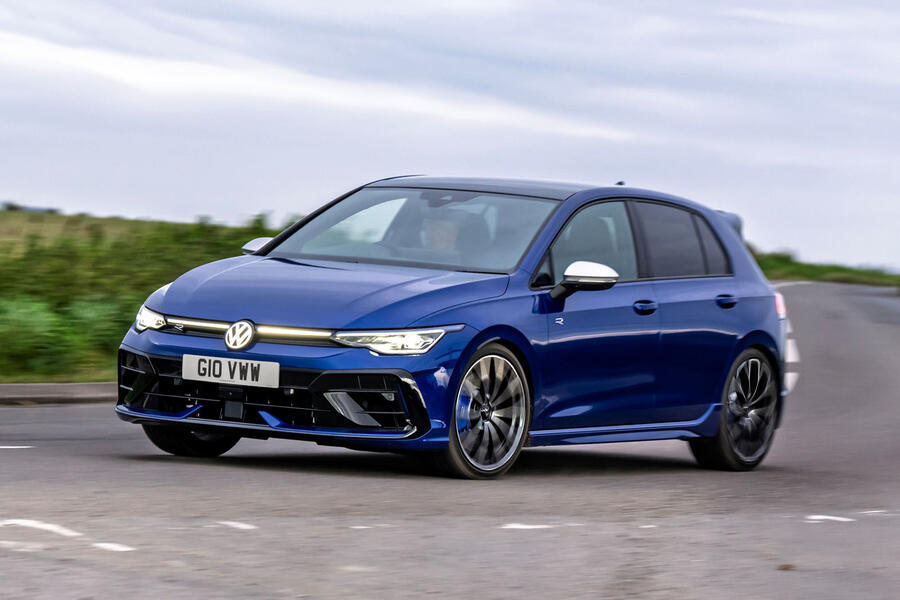
Then there are fancy differentials that use clutch packs to send power one way or another. These have featured in everything from the Mk3 Ford Focus RS to the Volkswagen Golf R to the pre-update Polestar 3. In all these cars, the effect is pretty obvious when you drive them hard. You can really feel how the rear end moves around on the power and actively tightens your cornering line. It makes the four-wheel-drive hot hatches more playful than they might otherwise have been, while the heavy electric SUV just feels much more agile than it has any right to.
The trouble is that such systems are mechanically complex and are very hard to make and keep reliable, particularly if they have to cope with the violence of electric motors.
That's why we're seeing more and more EVs with what you might call natural torque vectoring, where the car has individual motors for the left and right wheels. This is the closest a car can get to the wheelchair concept.
There have been a couple of low-volume supercars with a motor for each wheel, such as the Mercedes SLS AMG ED and Lotus Evija. More common is to have one motor at the front and two at the back. After all, the rear axle is where the biggest opportunities for torque vectoring lie, seeing as the front wheels can already steer.
The thing is, so far I've found this a bit disappointing. I've driven the Audi SQ8 E-tron, Tesla Model S Plaid, Alpine A390 and Maserati Granturismo Folgore, and most of them felt like very fast but dynamically pretty staid four-wheel-drive cars. If anything, some of them felt a little unpredictable. The Maserati felt more playful but not out of the ordinary for a car with 751bhp.
I think the problem is twofold. The first is that such systems are so utterly reliant on software calibration for everything that there's a danger of the driving experience feeling a bit digital. The other is that with two smaller motors instead of one big motor, the most power the car can ever send to one wheel is 50%, whereas with a good electronic differential there's more flexibility.
Clearly, differentials are mature tech being applied to new drivetrain tech in EVs. Dual-motor axles are still very new and still have a way to go. I'm intrigued to see where it goes, and it's clear from speaking to chassis engineers that they revel in this stuff. At the same time, I do wonder whether it will be able to fill the hole left by interesting engines in making cars exciting day to day.

Car Industry Freebies and the Subtle Pressures Shaping Automotive Reviews

Dacia Duster model was procured on Verpraet's very first press tripThe Jeep M&Ms are nice and I like my Polestar bottle - but gifts don't mean five-star reviews
There’s an uncomfortable truth in motoring media that isn’t talked about very often: there are a lot of freebies going around. Some of them are necessary, of course. We can’t test a car properly without spending a decent amount of time in it, so it does mean getting a ‘free’ car for the week.
It’s also more convenient for the car’s manufacturer to fly the assorted European media out to Spain or somewhere else sunny than it is to bring the limited number of existing early production cars around to each country.
And since they have to put us all up for the night, I guess it would be a bad look for Kia, let alone a more prestigious name like Ferrari, to book out the local El Travelodge. A posh hotel it is, then, even though I’d happily trade the sea view for a location closer to the airport or testing roads.
They’re not outright bribes, but it is a way of exerting soft power by way of innocent-looking widgets. Some of these make sense, others are very random. And, just to be clear, our company has clear rules on what gifts we can and can’t accept to ensure they don’t cloud our opinions.
On press launches, there are usually some branded notebooks and ballpoint pens lying around. The PR team obviously would like us to pay attention during the product briefing, so it’s wise for them to provide some stationery, even if a lot of us take notes on our phones.
I still like the old-fashioned way, but I’ve had to start to be selective about which notebooks I take with me, because I go through only about one a year and attend many more press launches than that.
Following an exhaustive group test that included a notebook from Mazda (not the most advanced, but with very nice perceived quality from the cork) and Abarth (basically the same as the one from Vauxhall but with a different badge), I’ve settled on my current dream team of a Toyota pen (smooth and reliable) and a Bentley notebook (heavy and bulky but luxurious and high-quality).
During the drive, the kind PR teams like to keep us energised and hydrated, which leads some manufacturers to provide us with reusable water bottles. On paper, that’s more sustainable than plastic bottles – until you find five of them rattling around in your kitchen cupboard.
Anyway, my Polestar bottle (designed in Scandinavia, produced in China) has so far managed three years of trips to and around the Horiba MIRA proving ground without going missing, so I guess that’s a win.
I’ve also ended up with a pot of Jeep-branded M&Ms (sounds American, actually produced in Europe) and a tin of Skoda mints (sensible, a bit boring). Those are reasonable driving snacks, but here’s where we get into the slightly bizarre stuff.
Bentley honey isn’t as weird as it seems, because Bentley actually has bees on site in Crewe and makes its own honey, but I once got a bottle of Skoda olive oil and, as far as I know, global warming has yet to make olive production viable in the Czech Republic.
Of course, there are plenty of model cars on offer. I’m not much of a collector, because I just don’t have the space, but I will keep the Dacia Duster from my very first press trip, and another one I couldn’t refuse was a BYD Dolphin.
Not, you’ll understand, because the Dolphin is a particularly inspiring car, but because it’s the most detailed model car I’ve ever seen. It’s incredibly meticulously finished and lifelike: the mirrors and the rear seatback fold, it has filigree seatbelts and there’s carpet in the interior. Carpet! Brilliantly, it came with a white glove, because you wouldn’t want to get fingerprints on your Dolphin, would you?
One that made me slightly uncomfortable for how overly nice it felt, but which has proven very comfortable on subsequent cold evenings in front of the TV, was the Volvo wool blanket with my initials embroidered onto it (high perceived quality initially but proved a bit flaky over time).
Anyway, before you think it informed my recent glowing review of the EX60, I actually got it on the UK launch of the EX90, which I gave three stars and called ‘annoying’.
Honestly, I’m not entirely sure how I feel about launch swag. It’s clear why it exists but realistically 75 grams of honey isn’t going to buy anyone an extra star, so I might as well enjoy the nonsense. I might ponder the question further over a cup of Volvo hot chocolate in my vRS mug.

Shrinkflation and the Ferrari Luce Backlash Why Small Losses Fuel Outsized Outrage
 Why has the electric Ferrari attracted so much ire? It all started with a missing olive in 1987
It's hard to pinpoint the precise moment when the continuous chipping away of nice things began. I think you could make a case that Robert Crandall is the poster boy for the movement - which you could call shrinkflation, or enshittification, or something else, as you prefer - because of what he did as American Airlines CEO in 1987.
Crandall realised that removing one olive from each salad served to passengers would make no huge difference to any individual flyer (lots of them didn't eat the olives anyway) but, added up over a year, because American Airlines served so many salads, it would save the corporation $40,000 - around three times that in today's money.
Nearly 40 years on, shrinkflation or skimpflation are still in full flow. In 2024, consumer association Which? found that supermarkets were prime offenders: a box of PG Tips had recently gone from 180 to 140 teabags, while beef content in a Tesco lasagne had fallen from 23% to 19%. Still, at least it's no longer horse.
Shrinkflation has parallels in what military analysts call salami tactics. You have a metaphorical salami. It's yours and intact. Very nice too. You wouldn't tolerate anyone stealing it, for sure. But along comes, say, Russia, and flies some drones over your border. What are you going to do about it? Not a lot. Slice Perhaps they hang some ships around above your internet cables, because how are you seriously going to react? Slice They make cyber attacks on your infrastructure. Slice They poison people on your own soil. Slice Before you know it, you have rather less agency over your salami than you did, and you have done effectively nothing in response.
Recently it was reported that in 2022 the Chinese planted a bug in the prime minister's car. What are we going to do, deport all Jaecoos? And so it goes in normal life too. Salami tactics are the reason why British Airways now considers two Hobnobs 'a snack' on a pan-European flight and a Toffee Crisp can no longer be called a chocolate bar because there's not enough chocolate in it.
If you were being cynical, you'd say there were parallels in policing and surveillance, governmental or corporate. My local hospital charges £2 for overnight parking. If you forget this, as I did at 3am after spending five hours in A&E with a child, the car park operator Parkingeye will send you a bill for £100. I find it impossible to despise these people enough.
Then there's the changing climate, which means you can less easily have the nice things you want, like a cheap flight to the Med, affordable home heating or a petrol-engined hot hatchback.
Unless you're wealthy, in which case nice things are still available and salami tactics don't apply. And most of us don't mind that at all, because we're aspirational. Perhaps one day, if we work hard or our numbers come up, we might have a nice thing too.
Maybe a Ferrari. But dear me, *Slice* not one of those. I am talking, of course, about the Luce, Maranello's upcoming electric five-seater.
I don't want to dwell on it, because this column isn't really about the Luce, on which extensive and measured opinions have been offered. No, this is a column about fury, hysteria - anger that seems vastly out of proportion to the fact that the Luce is merely a car that people think is a bit ugly.
I think the reason is that it represents much more than that. I think the Luce represents, for the outraged, another slice - a slice made not by Ferrari but imposed on it.
I say this hesitantly, given the seriousness of issues in the news that people are furious about (and there is, honestly, a lot to be very cross about), but while the Luce may be the wrong car, more than that it has arrived at the wrong time. It's a cut that has caught the fingers of those who feel that their salami is no longer their own and that their world is not what it was. The outrage may be disproportionate, but it should be noticed and heeded by institutions well beyond the motor industry.

Generation Axe CEOs Reshape Carmakers by Slashing Investments and Refocusing on Core Manufacturing

CEOs like Stellantis’s Filosa (centre) are going back to basicsSome £26 billion of spending has been cut as CEOs look to chop new models, plants and headcounts
The enormous number of CEO replacements at global car makers over the past year share a common thread: once installed, they have invariably started chopping.
Between them, this new crew - let's call them Generation Axe - have written off investments worth more than £26 billion as they delete models, electric platforms, underachieving plants and swathes of workers, whether underperforming or not.
The size of the bets in EVs, in China and in software were such that when they crumbled in the face of Trump's emissions reversals, customer apathy, Chinese rivals or sheer unworkability, the only solution was to replace the leadership, cancel the bad debt and start again.
A new CEO signifies a fresh start. It sells a new message to investors, invariably one involving cutting costs and returning to the basics of car making. Often it's in the interests of the new boss to cut back dead wood, not only to free themselves of unprofitable projects tied to the previous CEO but also to compose a growth story for themselves. It's easy to do that when initial writedowns plunge the company into the red.
It's also a chance for the board to rewrite the incentive plan. CEOs usually make the bulk of their income from bonuses linked to short-and long-term targets. Getting those wrong puts your company on a dangerous course.
For example, 30% of the incentive payout for previous Stellantis CEO Carlos Tavares was linked to the 'projected number of EV nameplates at the end of a three-year period'. This was almost certainly why Stellantis gave more weight to EVs, especially in the US. New CEO Antonio Filosa's pivot back to ICE formed the bulk of last year's £19bn in write downs.
Incentives are incredibly motivating; Tavares took home €23.1 million in 2024. But they must steer the company in the right direction. Filosa's long-term incentives are equally generous, up to 1040% of his $1.8m base salary. The EV nameplate goal has gone, replaced by one linked to quality improvements.
Getting the right CEO and setting them on the right path is incredibly difficult when today's forecasting might as well be done by a soothsayer. But returning to the basics of car making, as Generation Axe have told investors they plan to do, will at least provide the reset the industry needs to cope with whatever comes next.

Saab’s Relentless Pursuit of Innovation and Why Its Cars Still Matter
 Saab launched relatively few cars in 71 years – but most of them were great
Are you familiar with the American sitcom The Goldbergs? No, me neither. But there is a brilliant snippet from one episode doing the rounds on social media that resonates with me.
As miserable teen Erica munches through a tray of brownies after being dumped by her boyfriend, her mum attempts to lighten the mood by suggesting that she go on a date with another chap called Bruce, who she says "drives a way cooler car than Drew". "Cooler than a Mustang 5.0?" asks Erica, cynically. "Yes!" replies Beverly. "A Saab."
She's right, of course, even if Erica isn't entirely convinced: "A Saab? What the hell is that?!" But anyone who knows their onions knows that Saabs are proper thinking man's cars: clever, stylish and brilliantly engineered. Which is why I'm still holding out for a comeback.
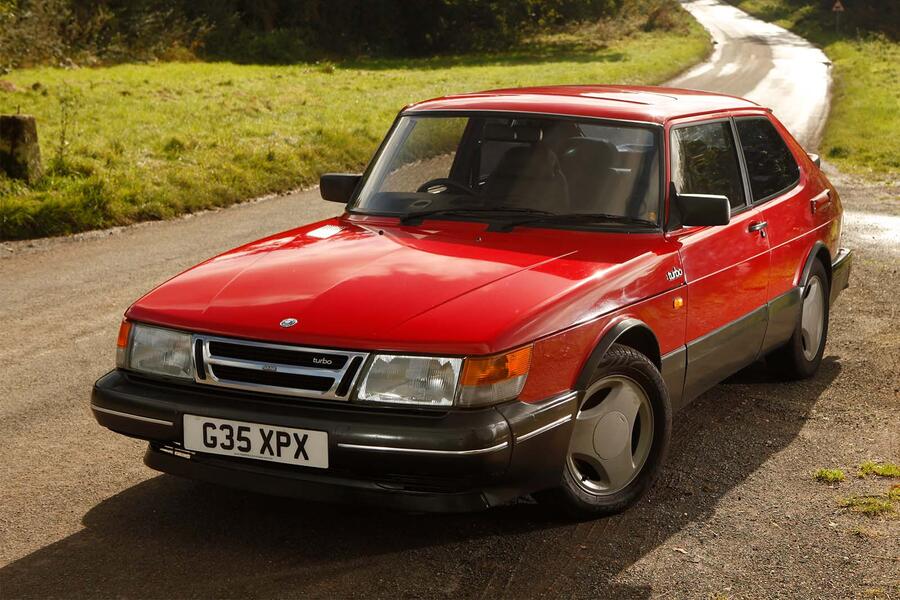
This much-missed brand always did things differently. 'Only one aircraft manufacturer makes cars' was the strapline for one of its racy, jet fighter-inspired adverts, and this wasn't just marketing fluff: Saabs of yore really did tap into the aeronautical side of the business, employing wraparound windscreens, aerodynamically honed bodywork and the iconic ignition barrel between the seats.
Through the 1980s and 1990s, off-the-wall cars like the 90 and 900 Turbo aimed to lure executive buyers away from the comparatively predictable alternatives on offer in the BMW, Mercedes and Audi dealerships, with striking styling, bombproof mechanicals and satisfying dynamics among their commendable attributes.
Saab's premium focus, though, meant high development costs and low volumes, so it was haemorrhaging cash in its later years, almost collapsing in 1989. Thankfully a deal was struck with General Motors, which bought a controlling 50% stake in the company.
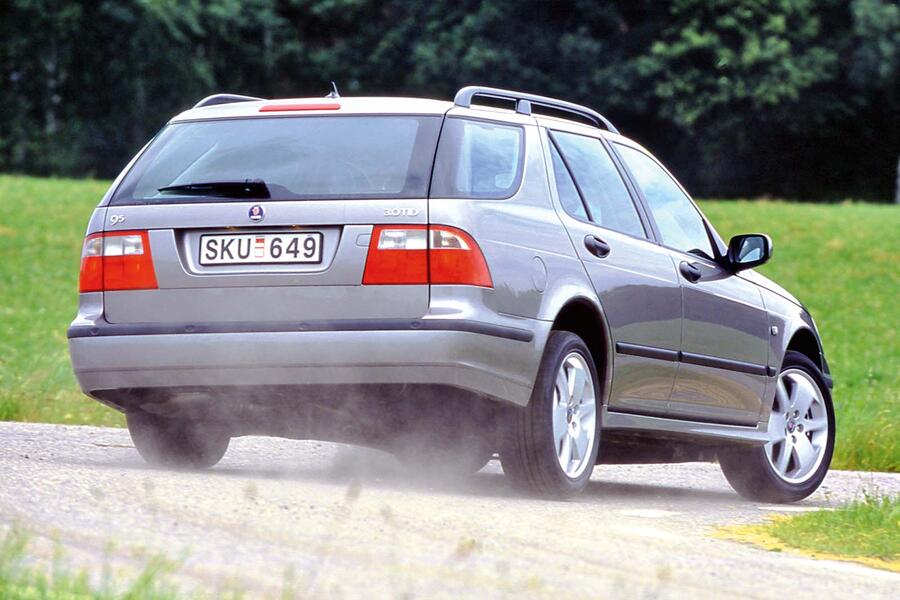
But this was not to be a happy marriage. Saab initially agreed to rebody and rebadge Vauxhalls for its future models but soon realised that they simply weren't good enough to compete with the German stalwarts it had always chased, so ignored the high-ups in Detroit and did their own thing.
The first-gen 9-3, for example, was meant to basically be a Vectra with a different badge but ended up being so bespoke that it had a shorter wheelbase and even its own sat-nav system. Such shenanigans got Saab into trouble, and GM made its frustrations clear by delaying the 9-3 and canning the inbound 9-5, which would have used a Saab-developed platform.
Ultimately these were blows from which Saab never recovered. Shortly before its demise, the company rushed the second-generation 9-5 into dealerships before it was even finished. Autocar's road testers awarded it only two stars, labelling it entirely uncompetitive with the better-rounded Skoda Superb and Volvo S80.
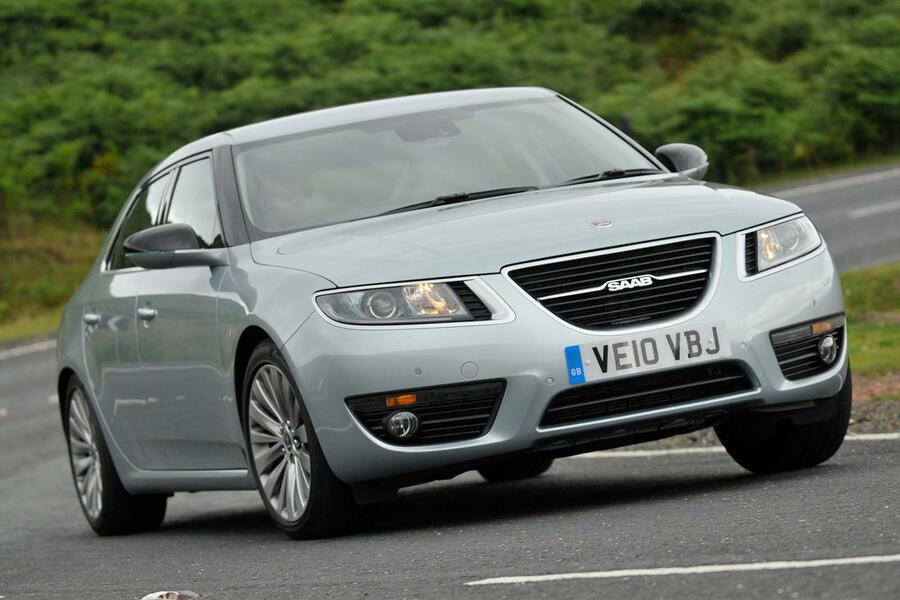
Despite its pitiful verdict, I would really like one with the 2.8-litre petrol V6. I don't fancy the £760 annual tax bill, but there's an unassuming classlessness to its design that means it still looks chic today. Maybe I'd better settle for a 900 Turbo (preferably a 16 S variant) with those glorious 16in turbine wheels.
I imagine that if Saab were still alive today, it would have a similar vibe to compatriot Polestar. Its cars would be suave, refined and loaded with tech - positioned as the four-wheeled equivalent of today's Gripen E fighter jet.
Saab's greatest trait was its unwillingness to accept low effort. If its engineers or designers didn't like something, they made it better - and who could possibly fault them for that? Well, apart from its accountants...

Goodwood Festival of Speed Reveals the Emotional Divide Between Synthetic EV Sound and Authentic...
 Can you beat the majesty of a highly strung V10 or V12 engine? Festival of Speed showed much remains to be decided
Given it’s the closest thing Britain now has to a motor show, the Goodwood Festival of Speed is a chance to gauge the state of the car industry, and the displays laid out on the Duke of Richmond’s lawn this year represented a microcosm of the changes it’s undergoing.
We saw established firms leaning ever further into their heritage beside the ever-growing confidence of the Chinese; the sheer size of BYD’s stand sent quite a message, and there was also a substantial presence from the likes of MG and Lepas.
It was also fascinating how firms such as Mercedes-AMG and Alpine used Goodwood to showcase new EVs, such as the AMG GT 4-Door Coupé, CLA 45 and next-generation A110. Winning over the Festival’s enthusiast audience will be key to making EVs appeal as more than mere rational appliances.
How best to do that? For the new CLA 45, AMG has bet on a rorty, synthesised engine sound. At Goodwood Steffen Jastrow, the car’s chief engineer, enthused about the details to achieve this, such as shakers built into the seats that give physical feedback to match the sound and even how they programmed the digital rev counter dial to wobbly slightly. “It’s about making the driving experience more immersive,” he said. “It’s just really, really fun.”
But not everyone is convinced. Talking to Alpine boss Philippe Krief about the new A110, it was obvious that he isn’t a fan of fake combustion noise. “We have to find something,” he said, “but not necessarily to reproduce [engine noise]. It’s a new sound.”
A huge appeal of Goodwood is to stand beside the hillclimb and listen to some magnificent petrol engines roar past. There's still a majesty to a highly strung V10 or V12 Formula 1 engine at full roar or the deep rumble of a Le Mans-winning V8. It’s part of the full sensory experience that creates emotion around cars. And that’s the challenge: an artificial noise will never replace that.
That’s not to say there isn’t a place for it: the Hyundai Ioniq 5 N has shown that such noise can help make electric vehicles more engaging to drive. But ultimately they won’t succeed simply by being high-tech imitations of petrol versions.
Progress for performance EVs will come when they are judged on their own abilities, not how similar to a combustion car they are.

Porsche 911 Variants and the Challenge of Choosing the Right Sports Car
 There are 21 different flavours of Porsche 911, and buying the 'wrong' one is easier than you might think...
A colleague asks me if I can explain exactly where the GT3 sits in the 911 range, because I've said it's the best driver's version, but doesn't Porsche do a GT2 as its hardcore variant?
I explain that it did, and it was kinda like a GT3 but with a Turbo engine, but you can't buy one at the moment; and that there is, or was, actually also a GT3 RS, but you can't get that right now either; and that is, or was, the genuine hardcore version, because it has, or had, focused suspension and a zingy, naturally aspirated engine that is, or was, the real treat in the line-up.
But now he's asking about the GT3 Touring and I'm trying to explain that, yes, while that's also a GT3, you can have your GT3 with wings, albeit not RS-level huge wings, or without, and that's the Touring, which is a bit more relaxed as a road car.
And now I think my colleague is going away even more confused than before, but so am I. Am I sure you can't buy a GT3 RS now? I thought not, but it appears on the configurator.
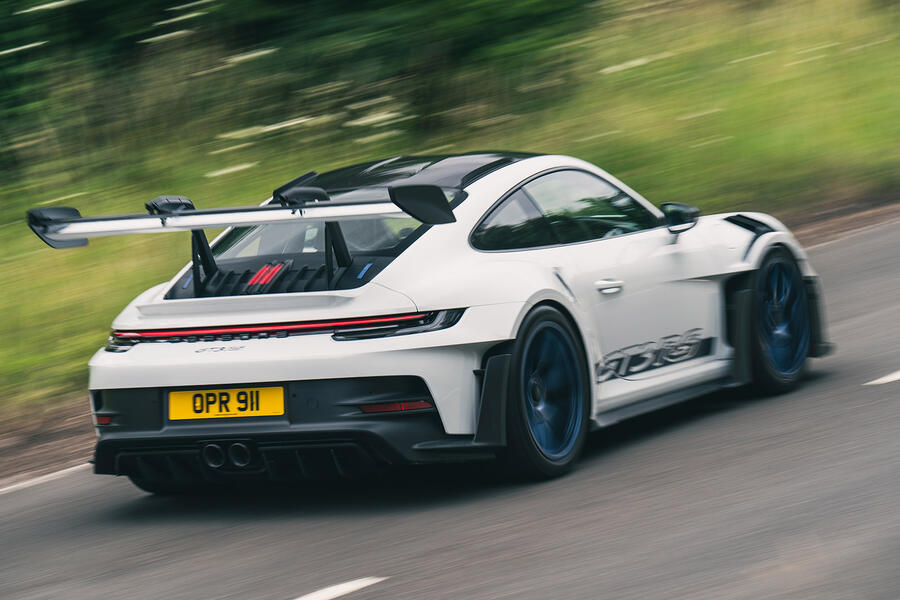
There's something about the modern 911 that I would call unique, except it reminds me too much of how I also view the old Land Rover Defender.
Neither model range is that broad, because all old Landies are old tough 4x4s and all new 911s are great sports cars, yet there's a specificity to each variant, a breadth across the range, that means they can do quite different jobs.
I have an old Defender, for example, which is a 2005, Td5 (five-cylinder turbo diesel) 90 Station Wagon with six seats. And for the past 13 years it has done honest work as a tow car, family car, utility car and family pet.
But even though I don't consider myself a Land Rover diehard and I'm not blind to its faults, I could have several more old Landies and find a distinct role for each, in which one wouldn't step on the toes of another: a plush-finished 90 tow car, a 110 pick-up for carrying building materials or firewood and a 130, maybe a converted old army ambulance, as an overlanding camper - plus a lifted 90 with no roof for local giggles. See, one model but a dozen different varieties.
The modern 911 is the same. Could one deliver a pithy, few-word verdict summing up what each different 911 does or what it's for, wondered our associate editor after hearing the aforementioned conversation with colleague? I could have a go, but there may be just too many new 911 varieties for this.
On the Porsche UK website there are 21 different flavours of it. I certainly haven't driven all of them and there are some I know too little about to say for sure. But let me have a crack at some of the notable ones.
Carrera (£110k, 389bhp) joyful entry-level model. All the 911 you could need.
Carrera T (£122k, 389bhp): a bit sportier and manual. Probably better?
Carrera S (£126k, 473bhp): a bit faster. Carrera 4S (£133k, 473bhp): as S but for when it rains.
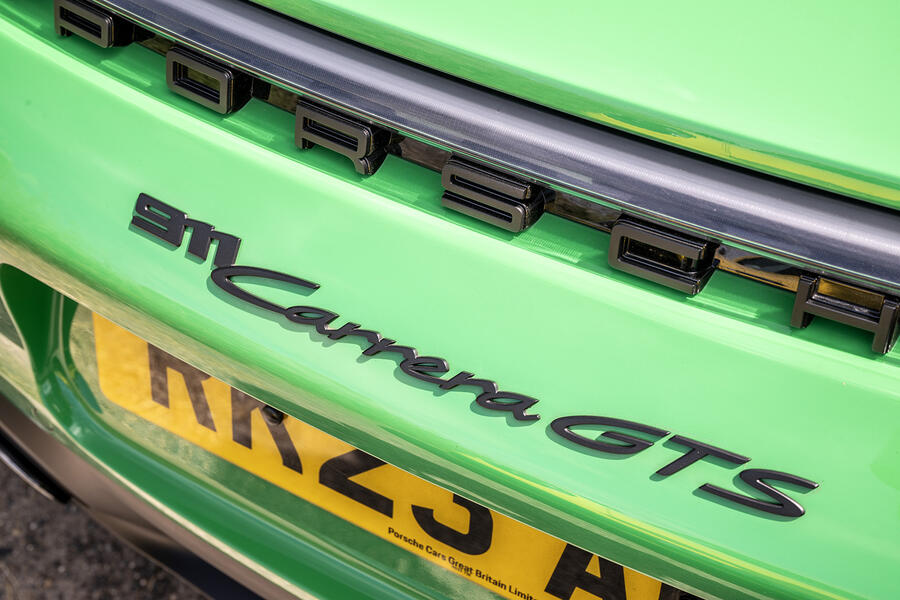
Carrera GTS (£144k, 534bhp): the latest Turbo engine turned down; less agile than Carrera.
Carrera 4 GTS (£150k, 473bhp): as above but for rain.
Cabriolet versions of all of the above: as above but for sun.
Targa versions of two of the above four-wheel-drive variants: for half-sun?
Turbo S (£205k, 701bhp): hypercar performance in a daily sports car.
Turbo S Cabriolet: as above for sun.
No, there isn't a Turbo S Targa.
GT3 (£165k, 503bhp): world's best driver's car.
GT3 with Touring Package (£165k, 503bhp): same but without wings.
GT3 S/C (£206k, 503bhp): same but for sunny roads.
GT3 RS (£192k, 518bhp): bigger wings and more zing, for track use.
Spirit 70: psychedelic GTS Cabriolet.
Now, these are all 911s and they're all great, but some are greater than others and I do think there's a possibility of buying the 'wrong' one for your use case, in a way that wouldn't happen if you bought, I don't know, the wrong Vauxhall Grandland. And if none is quite right, I suppose you could always buy a Porsche Boxster or Cayman. But which one? Well...

Electric Performance Cars and the Pursuit of Sensation: Mercedes-AMG’s Simulated Exhausts Bridge Engagement and...
 Mercedes has moved the engine fakery game on with seat shakers and simulated pops and bangs
The arrival of the Hyundai Ioniq 5 N was a landmark moment for electric performance cars. There’s a distinct split between those from before it and its virtual gearbox and those that came after.
The new Mercedes-AMG CLA 45 is only the latest to jump on the trend after the Porsche Taycan and Honda Super-N, and I wouldn’t be surprised to see more in the years – even months – to come.
AMG’s people are aware that it’s a little bit frivolous and that the emergence of such technology is perhaps a fad rather than a long-term trend. But they also argue that it’s also a bit of fun – and what’s the point of a car like this if not to have fun?
After a brief hands-on with the CLA in a studio, I’m inclined to agree.
To recap, in case you're unfamiliar, the EV replicates the turbocharged four-cylinder engine in the old CLA 45. Mercedes brought in staff from the music industry to bolster its authenticity: 13 microphones were mounted both inside and outside an A45 S (powered by the same engine) to record more than 1600 clips covering all manner of driving scenarios.
The EV starts in utter silence, but clicking the drive mode dial into S+ fires it into life in a flash. It’s certainly loud enough to wake the neighbours, so I'm glad there's a quieter setting.
The seat shakers give you a nice little rumble in the small of your back as you stab at the pedal and watch the revs rise and fall, and it's enough to recapture a hint of the viscerality that is often missing from sporting EVs.
The revs themselves seem to ebb and flow quicker here than in the petrol A45 S that I drove a couple of winters ago, as if to replicate a car with a lightweight flywheel.
I can see how such a system would really bolster engagement if you were out for a blast – although final judgement on that front will have to wait until we've driven the CLA.
There are perhaps a couple of points of improvement.
I’d like a little rumble through the steering wheel, or maybe even the dashboard, to give a greater sense of the underlying power here.
And there’s still a sense of digitisation about its sound signature – although it’s better in person than on camera. It reminds me of my first time trying a McPlant vegan burger: certainly enjoyable and close to the genuine article, but I’m not 100% sure that we’ve beaten the original just yet.
It would also be nice to start the CLA with the ‘engine’ activated. Starting in complete silence loses a bit of the theatre of stepping into a blue-blooded performance car, prodding the starter and relishing in the boom of combustion power that is so instructive of its intent.
Hear it for yourself by watching the video above.

BMW i3 Redefines Affordable Family EVs With Lasting Innovation and Character
 The arrival of an infant means I must find efficient, family-friendly transport – but it must also have soul
I'm on the hunt for new wheels: something nimble and efficient but with a bit of soul. It takes me back 10 years, when I was on a similar quest.
Commuting from London to Northampton in my Mk1 Focus RS, the drudgery of the M1 did not sit well with the fuel bills. The eventual solution was an original Honda Insight; a safer bet would have been to lease a Volkswagen Up, but the little aluminium two-seater from Tochigi, where it was built alongside the NSX, was irresistibly more interesting.
Once I'd learned how to screw maximum efficiency from its three-cylinder powertrain, it cost me just £3.20 each way - less than a coffee shop cappuccino. I shed a tear two years ago when I sold it, in fine fettle despite 200,000 miles on the clock, not because I'm a skinflint but because it was such a singularly lovable and wholly undemanding machine.
The brief this time round is only slightly different in that I need rear seats, courtesy of a screaming infant crash-landing into my life. And it needs to be friendly and straightforward enough to drive for my wife (her words). There exist a great many sensible and worthy options, but they are, in the main, unspeakably drab. I therefore find myself drawn to the BMW i3.
I have always had something of a soft spot for BMW's electric curtain-raiser, whose name is today applied to a more capable but more ordinary machine. When I was an editorial underling I was sent to Munich to report on the i3's development story, and I found myself sitting next to design chief Adrian van Hooydonk and a few of the engineers one evening, eating schnitzel in a cosy backstreet restaurant.
What struck me was how utterly committed they were to this vision of an optimised city car, how they had a raw excitement for the idea, palpably more so than with the supercar-styled i8. Their energy was tempered only by the certain knowledge that the production-spec i3 wouldn't get the McLaren Senna-style glass doors - a wonderful touch for judging kerbs when parking - or the front bench seat that was devised so you could shuffle across with ease if your parking spot slammed your offside tight against a wall.
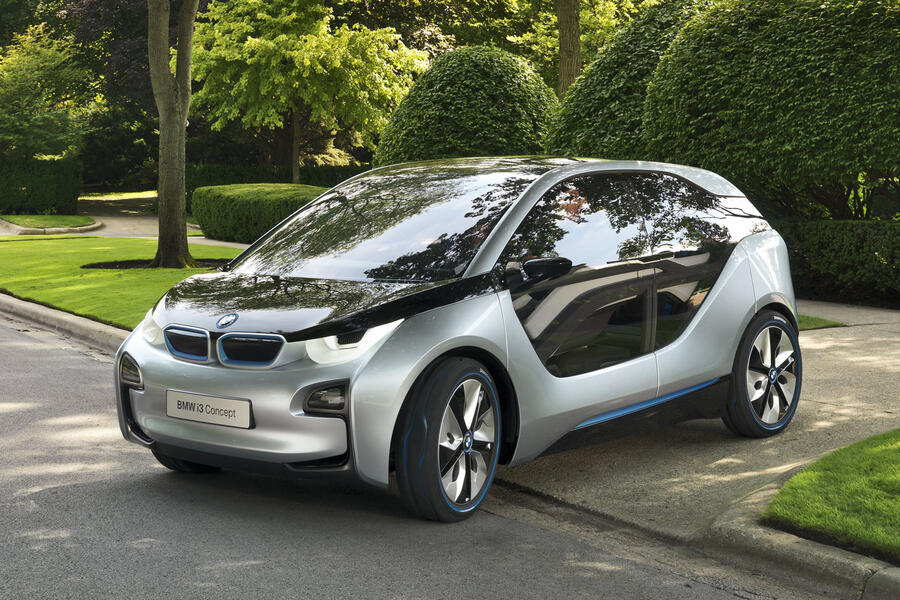
These were the only meaningful punches BMW pulled with the showroom model, which today still feels totally contemporary.
The excitement in Munich, back in 2012, stemmed from the fact that the car's creators had been let off the leash in a way that is unusual and, it could be argued, hasn't happened since. The most radical approach since the i3 is probably Renault's unfolding reinvention of its classics - the new 5 looks superb and the Twingo is just sensational. But those cars don't have a turning circle almost the match of a black cab, or a carbonfibre tub strong enough to permit coach doors. Bluntly, they do nothing of engineering interest, either real or conceptual.
As well as the intellectual buy-in of the people tasked with developing the i3, there was also an element of broader philanthropic purpose they surely felt. In the US, the Washington state facility that produced carbonfibre for the tub operated purely on local hydroelectric power, while juice for the Leipzig production plant, where each car spent only 20 hours in build, was generated by wind on-site.
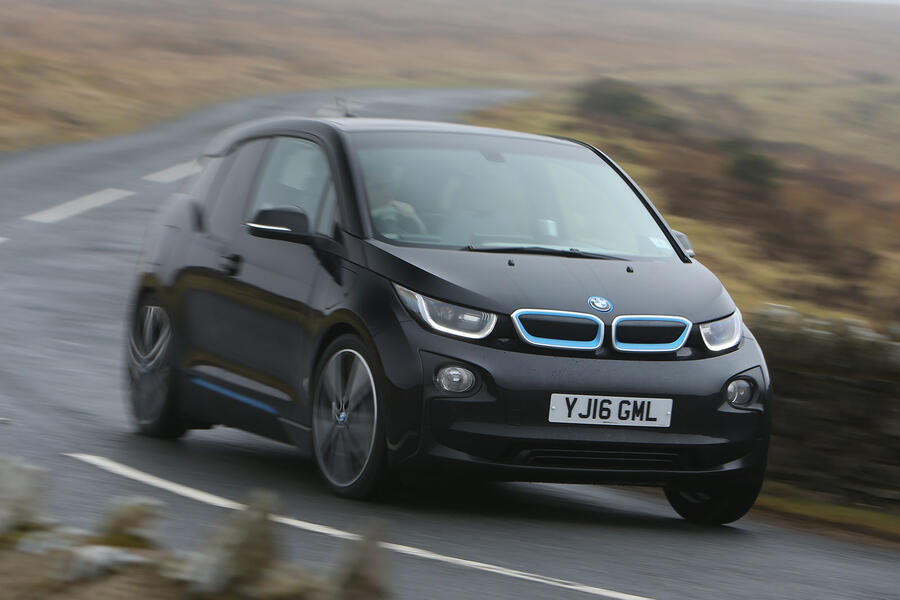
The exterior panels were deliberately numerous, such that city-speed dings meant only localised repairs would be needed. BMW reckoned accident repair costs would be 40% lower than for conventional cars such as the 1 Series, with benefits not only to owners' wallets but also in terms of the reduction of material wastage. Sell several hundred thousand cars, as BMW did between 2013 and 2022, and that really makes a difference.
Against this backdrop the i3 is also a decent thing to drive. The steering has an almost hydraulic-feeling life about it and forward visibility is tremendous, underscoring the sense of narrowness for which owners are grateful in town.
BMW also offered a range of interiors, including the punchy 1970s-like Lodge trim, with its brown weave and leather against a wood dash insert. You feel like you're sitting in with Fleetwood Mac during a recording session.
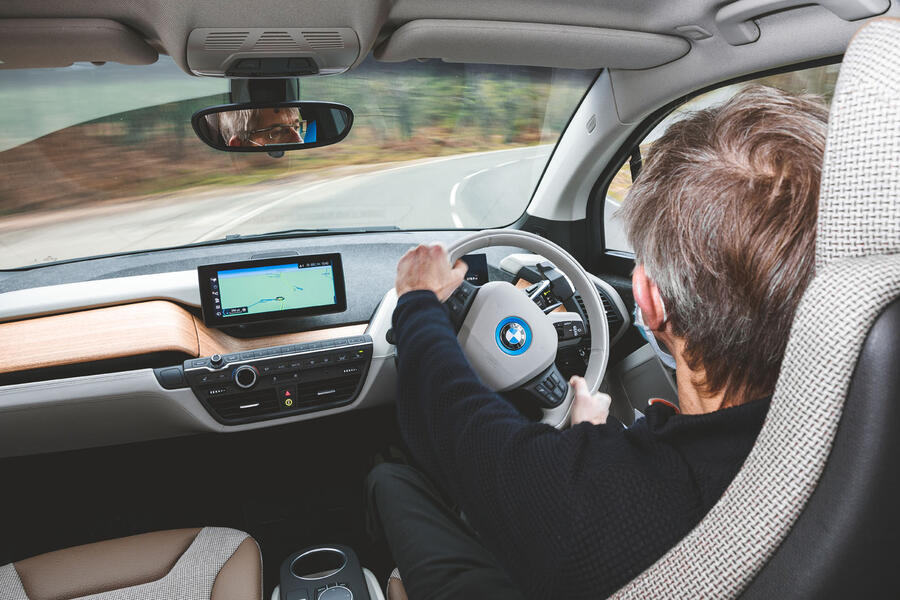
The i3 is a car of quiet but monumental character, which is why I'm willing to overlook the paltry real-world range, which amounts to only 150 miles even if you opt for the larger post-2018 battery.
That and the slightly shonky springing. In 2014, a speed bump in Tufnell Park caught me by surprise and, hitting it at perhaps 25mph, one of the first i3s in the country covered the next 20 yards with never more than one of its skinny tyres in contact with the road. Or so it felt. Ride quality is even worse with the sportier i3s, which is a shame, because its stance is welcome.
And yet those of us who consider a lack of soul to be a worse crime than simply being a bit crap will gladly put up with the drawbacks. And owning one of the finest city cars ever made, not to mention one of the bravest projects in modern automotive, for less than £10k? Hard to complain.