

Range Rover’s Heritage and Personalisation Drive Its Ascent into Ultra-Luxury Rivalry with Rolls-Royce
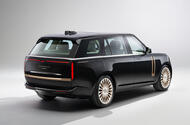
One of Overfinch's Holland and Holland Range Rovers was sold for more than £1mThe British brand's decades of heritage holds plenty of appeal for the ultra-wealthy
So, the $500,000 (£410,000) Range Rover is upon us - and there's every indication that the brand has plenty of headroom – courtesy of its extensive personalisation offering – to take transaction prices ever higher as it penetrates ever further into the upper echelons of the luxury car market?
Will it work? History would certainly suggest so.
There's a tale from the early days of Asian motor shows, about how one British luxury marque displayed a fabulously opulent one-off limo on its exhibition stand.
One local collector was so smitten he would have had his staff carry it out of the hall on day one were it not for one thing: the price.
The firm had whispered a figure of $900,000, which upset the potential owner: he could never buy such a vehicle unless he could tell friends his new car had a seven-figure price.
Adjustments were hurriedly made - including the embroidery of an old master oil painting into the headlining, which doubled the car's value - and the purchase went through.
Back then, this was a rare story; today, tales of people competing to pay ever higher prices for cars are an emerging phenomenon. The global population of ultra-high-net-worth individuals (estates valued at $30 million-plus) grew by nearly 10% between 2025 and 2026, the biggest rise yet.
Plenty of them will be in the market for new Range Rovers, and most will want the best there is.
But don't run away with the idea that these consumers are pushovers. Most are canny; they know how many decades it takes for a car to acquire authenticity and achieve greatness.
So if Range Rover is about to coin it as never before, its success is directly down to the brilliance of the designers and engineers who started this journey back in the 1960s - and to the inspiration of their successors across every decade since.

Chinese Carmakers Reshape UK Mid-Market as Legacy Brands Lose Ground
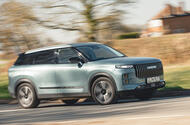 It's not the easy prey at the bottom but some mid-market stalwarts that are losing out
On the face of it, the UK new car market is a land of milk and honey again for car makers selling here, with sales up nearly 10% year on year.
Given that increase, you'd expect to see general growth across the board – or at least no worse than standing still – but the volume of new entrants from China means there are a significant amount of losers.
Patterns are now emerging and the mid-market is where the action is happening for Chinese brands and where the impact is being felt by established car makers.
There are five brands who are really making an impact on the UK and have sold more than 20,000 cars here so far this year: BYD, Chery, Jaecoo, MG and Omoda. They've captured around 180,000 of the UK's nearly 1.3 million new car sales this year, which is around 14% of the market.
Add in Leapmotor and Geely and you're pushing the 200,000 mark. Everyone else from China – Changan, GWM, Aion, Xpeng – is for now making up the numbers.
The sales success of those five brands has demonstrated that China can sell cars at significant volumes, and not all of those sales are additive.
It's the mid-market stalwarts – those operating a level below the very biggest sellers in the UK – that have seen their sales dip the most, with an obvious pattern.
Nissan's sales are down almost 16% this year, Hyundai's almost 9% and Peugeot's 15%. These are brands that have so far sold just under or over 50,000 cars in the UK this year, a similar volume to BYD and MG.
At a couple of rungs below at around the 20,000 volume, Chery and Omoda have pushed ahead of Honda and Mazda, which have recorded 16% and 21% drops respectively this year.
Above the middle market, and into the upper echelons of the UK car sales, the drops are smaller: Volkswagen, Ford and BMW have had small single-digit drops while Audi and Kia have managed to increase sales, albeit not at the same pace of growth of the market overall. China is having an impact there but currently it is not a crisis. Standing still here is progress of sorts. For now…
It's hard to get too much of a read on what impact China is having on the smaller players in the market – the likes of Alfa Romeo, DS and Jeep, for example – because their sales are so relatively small and other factors can cause them to spike them up or down, making China more likely an excuse than a reason.
China is having success in the mid-market by offering a lot of car for not a lot of money. Heavily leaning toward electric models, Chinese brands aren't bogged down by the ZEV mandate targets that legacy car makers are wrestling with.
Crucially, they also enjoy far lower production costs. That makes aggressive fleet discounting or non-retail giveaway deals viable for them, where it would be financial suicide for legacy players.
The mid-market has long felt the squeeze from those both above and below it, but China is a different kind of threat because its marques enter with brand and badge neutrality; you don't know what you're going to get from a BYD but you recognise its best cars as being cheap without feeling cheap.
What is Nissan beyond the Qashqai? Name three cars from the Honda range. What's the best-selling Peugeot? Try and spot a Hyundai when you take the badge off the bonnet. What was the last new Mazda
The mid-market isn't a total struggle in the UK for established players: Vauxhall, Renault and Skoda are doing well. They also feel like brands that have a plan and an identity, with a centre of gravity in their ranges, be it the small EVs from Renault, the SUV consistency from Skoda, or the value push from Vauxhall.
But the question has long been asked about who the losers will be when the Chinese car industry starts to sell at volume overseas. Now, we're starting to see those who are feeling the pain.

Triumph TR7 and the Enduring Value of a Misunderstood British Sports Car
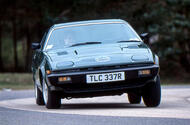 Unreliability and bad quality scuppered the TR7, but there's so much to love about it
What most people know about the Triumph TR7 of 1974-1981 is that it's a metaphor for the whole British car industry at the time: an adventurous design scuppered by ropey early manufacturing quality that fatally damaged its reputation.
It wasn't a complicated car, just a front-engined, rear-driven roadster with a moderately warm 2.0-litre four-pot engine, driving a live rear axle. Brakes were disc and drum. But its design, the work of a team led by oft-misrepresented Harris Mann, was very progressive: a wedge with an upwardly sweeping swage line, labelled "the shape of things to come".
It sold strongly in the US in the beginning, initially as a coupé and later as a convertible too (after it was established that encroaching American crash safety standards could still allow drop-tops), but the unreliability and bad quality were the big hurdles.
Yet there were great things about TR7s, and I know because I had two of them. Their short wheelbase and relative lightness made them agile, their seats and driving position were brilliantly comfortable, the convertible's top-down protection was exceptional when cruising and they were easy to mend.
My first TR7 was an early convertible with a four-speed gearbox and a busted engine, bought for a song with four flat tyres because it had stood in a north London street for several years. Its virtues were a loud green paint job and the tartan seats my family all liked.
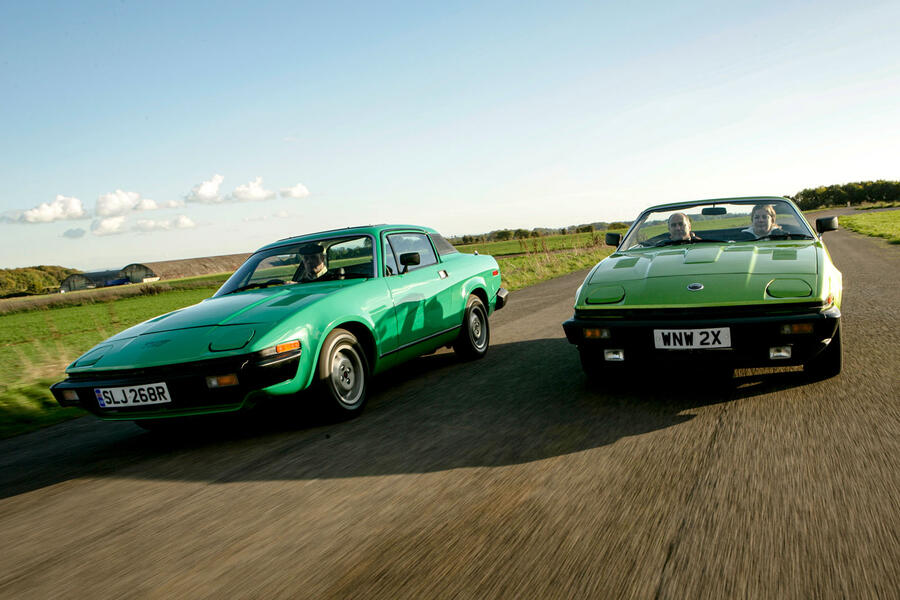
I sent it off to S&S, a now-closed TR7 specialist in Ramsbottom, Lancashire, which fitted an ex-Rover 3.5-litre V8, a five-speed gearbox and a taller-ratio back axle, beefed up the suspension and brakes and gave it back as quite a weapon.
That was circa 1990. I always wonder where that car is now and hope it's still living a happy life, because happy is what it made me, for a year or two.
My second TR7 was a later model in white, also a convertible and a healthy low-miler with the standard five-speed gearbox. I kept it that way, because to change it would have been a shame. It had all the virtues I listed before, plus decent body rigidity and quite taut suspension. Again, I bought it cheaply, because you couldn't pay much in the mid-1990s.
I was persuaded out of it because someone who saw it in the street offered me a £500 profit. I summarily sold it and didn't think much about it for years - until I finally met Mann at a gathering of MG XPower SV owners a few years back and he explained the car's conception and what a birth struggle it had endured, because it was progressive and thus ripe to be misunderstood by 'management'.
Nowadays I wish I had either car, or both, back again, because have pleasant memories of their simplicity and agility, the pleasant nose-heaviness of the V8 and the light steering of the four-pot. I can still feel that gearlever in my hand. Furthermore, TR7s are still good value and the styling, barring a few details, still looks brilliant today.
But most of all I'd like to remember a brave but low-key British designer who believed in progress, rather than in maintaining the status quo, and was content to live with criticism from those who couldn't see as far ahead as he could.
I see TR7s getting scarce now, and I see their prices deservedly strengthening. The trick now is to find unmolested versions. I keep my eyes open, and if I ever see the right car I will be sorely tempted.

Ferrari’s Synthetic Gearshift Challenges the Meaning of Driving Engagement in a Digital Era
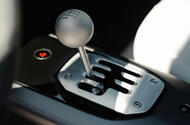 Is a synthetic gearshift still satisfying if the mechanical link is missing? Ferrari thinks so
Recently I went to Maranello to get educated about tech that goes deep into the petrolhead psyche. Nothing too dystopian: Ferrari’s white-coats haven’t been holding up test tubes to a backbeat of sardonic laughter and thunder as they devise subliminals to make us love the Luce. But they do appear to have concocted a gearbox that can convince you it’s something it manifestly is not.
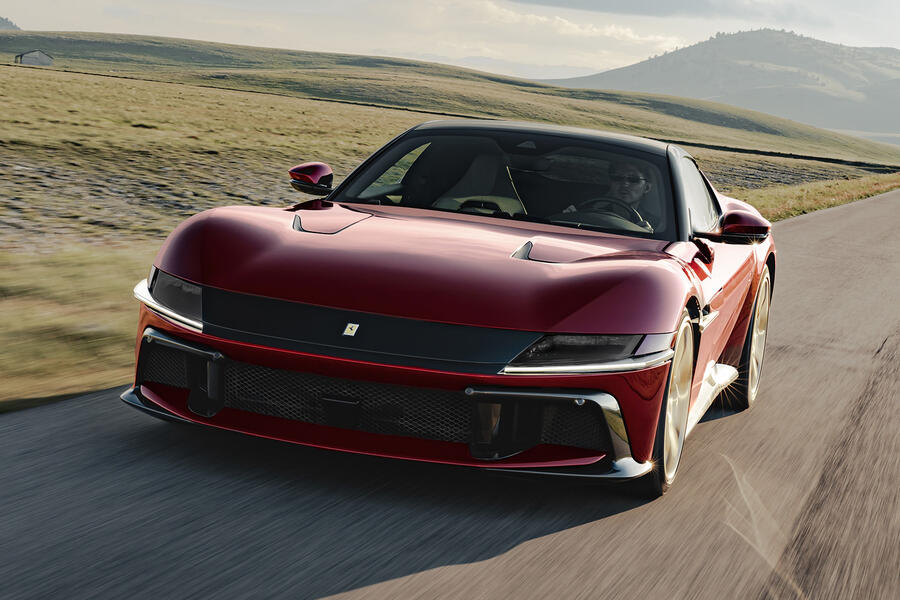
The 12Cilindri Manuale is the first V12 Ferrari with the famous open-gate gearlever and a full complement of pedals since the 599 GTB. Note the careful omission of the word ‘manual’. It costs an abject fortune – an entire 911 GT3 on top of the regular car – and naturally is sold out.
In a Euro 7 world, a new V12 Ferrari with an H-pattern shift feels like a black swan event. And rather a wonderful one at that. You guide that engraved orb on its slender lever, through the snick-snack gates, so that it manipulates an articulated rod that runs for a short while alongside the propshaft before docking portside at the transaxle, where – still under your control – it elicits an artful spasm of forks, synchro rings and dog teeth. It’s a decadent and romantic thing to contemplate, let alone orchestrate, if you love cars and driving.
Which we all do. But of course the kicker here is that none of the above is actually happening in the hysterically hyped 12Cilindri Manuale. Instead, and as you’ve possibly read, position sensors on the gearlever act in concert with a sensor on the clutch pedal.
It’s all inordinately clever, and the dual clutches in the ’box at the back will engage in a manner dictated by your left foot. Timid drivers will be able to smudge the car off the line in town, just as those with unresolved emotional issues will be able to bang the clutch back in to break traction. But this is all ultimately shift-by-wire, just with a UI of mind-blowing tactility. It’s like listening to the Rolling Stones at Madison Square Garden on Spotify.
Actually, that’s not quite right. In the Manuale you’re there, doing the act, and that act has been painstakingly recreated. It’s more like being in Madison Square Garden, listening to Gimme Shelter on the world’s greatest PA system, only with Jagger and Richards pouring pints at the bar rather than up on stage with their instruments.
It was clear that journalists at the Manuale’s unveiling didn’t instinctively know how they should feel about it all. No, this isn’t usually a problem. Heavy batteries bad. Mezger good. Lane keeping bad. Skoda Yeti good (very good). But the Manuale defies easy classification. The physical act is real but it lacks emotional stuffing, because it ends at a sensor just out of sight in the transmission tunnel or the roof of the pedal box.
Does enjoying the process of changing gears like this subvert your credibility as a petrolhead? Is a perfectly faithful reproduction of the shift quality enough for you, or is the root of the appeal in knowing that something oily and mechanical is relaying the command?
I can’t quite work it out. What I will say is that, after a series of faintly cynical questions in the press conference, technical chief Gianmaria Fulgenzi threw up his hands and said something to the effect of: ‘For God’s sake, remember this is an 830bhp V12 that you can drive as a manual!’
And the man has a point. Assuming they really have got the weights and elasticities of the controls right, the Manuale is going to be sensational to drive. Riotous, even. The resolve of the most po-faced detractor will melt before even a half-decent rev-matched downshift. It will be pure joy regardless of the absent mechanicals.
And it might just be the start of something. Perverse as it sounds, for now the €590,000 Manuale represents the affordable end of this technology. Koenigsegg has offered a similar by-wire system since 2022 with the £3 million CC850 and its extraordinary ESS gearbox (nine speeds, seven clutches, one open-gate plate).
And there is the upcoming Lola T70S GT, which will give the driver by-wire ‘manual’ control over a six-speed sequential ’box, for an optimal blend of rawness and usability. Prices for that will be somewhere between the Koenigsegg and the Ferrari.
So Ferrari has done something a bit rogue here, but not necessarily bad or, as some have suggested, degrading for the company. Rather it has kick-started a wider conversation that may just end up allowing you to enjoy the sensations of a manual gearbox in your Golf GTI, long after emissions regulations or whatever have made it prohibitively expensive to fit a real one. And you won’t have to buy a Luce to get your hands on it.

Alfa Romeo’s Price Spectrum Reveals How Racing Heritage Enables Brands to Span Mass Market...
 Line-up ranges from Junior to 33 Stradale hypercar - but not everyone could achieve that spread
Which brands, a colleague wondered, could retail a car at under thirty grand but also, like Alfa Romeo, launch a limited-edition, several-million-pound supercar?
Alfa Romeo won't quote a price for the new 33 Stradale, so it's impossible to know for sure how much it costs. Tragically, it's not on the regular model configurator.
I saw a build slot for one of the 33 examples advertised at £3.5m, but even if that is genuine (I'm unconvinced), asking isn't getting, several people would want to profit from it and who knows if that allows for possible option costs.
Those can change things drastically. McLaren says the average array of options on its £2m W1 add £600,000 to each car and that one customer is spending £900,000.
Anyway, it doesn't matter. What matters is that you can spend as little as £29,015 or something approaching 100 times that on an Alfa Romeo. Is that unique?
In the market, right now, I think one could fairly confidently say that it is - and that it's the broadest model price spread in the business. But who else could, if they chose to, do similar?
My colleague thought hardly anyone, but I'm not so convinced. Almost every manufacturer wanting millions for limited-edition cars will be reaching upwards from its normal sphere, of course-even McLaren or Rolls-Royce. But I think what would mark most out as able to do it is not how far upwards they're stretching but how far down they've already stretched.
Take Mercedes-Benz, BMW or Audi, for example. They could make squillion-pound cars and indeed have. Most recently, the AMG One was around £2.4m, while an A-Class can be had for budget-Alfa money.
What enables them to do it at the top end of the market is ultimately the same reason people want their cars at the bottom end. They've decades of experience of making expensive, thoroughly engineered cars-a lot of them for racing. If it feels okay to hand over £2m to a manufacturer because it has won eight Formula 1 constructors' championships, it fairly well stands to reason that it also feels fine to hand over £30,000 to one.
What's perhaps surprising about this is that premium or luxury (or who would like to think of themselves as luxury) manufacturers moved down into mainstream segments seemingly without affecting their appeal at the top end.
It has been an awfully long time since the introduction of the A-Class, BMW 1 Series and Audi A1. There was a fear, for a time, that selling better-value cars would 'cheapen' those brands - lessen their appeal as premium names. It doesn't seem, though, to have come to pass.
Even discounting the unobtanium, Audi, BMW and Mercedes routinely sell cars costing into the hundreds of thousands, which is very lucrative business - certainly more so than selling cars cheaply.
Pity, then, those manufacturers, many with long and storied pasts, that couldn't pull off this feat, and for which value cars are effectively the whole deal. For them, a shift of just a few per cent in sales when margins are incredibly tight can mean the difference between a modest profit or an extraordinary loss.
I don't think there's a Chinese manufacturer that could do it today (at least in Europe) - but, given that Toyota and Honda probably could, who's to say that won't change in the future?
Could, say, Vauxhall or Citroën or Skoda realistically pitch customers a 'few-off' car at £3m? It feels unrealistic.
Unusually for a car maker with value roots, Ford could and has made very expensive cars. It made 1350 examples of its most recent GT and charged £1.4m for a 67-off track-only version.
Racing, then, must count for something. I don't suppose anyone has raced as much as Ford, and it feels to me like it would be at the root of the appeal of most of these kinds of cars. I know they used to say 'win on Sunday, sell on Monday', but it feels like there's more to it than that. More 'win in 1966, sell in 2026'. It has always been difficult to quantify the amount of cars an extensive racing programme helps to sell, but I think it changes the kinds of car one is able to sell too.

Dream Garage Realism Why Three Cars Offer More Joy and Less Hassle Than a...
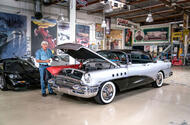
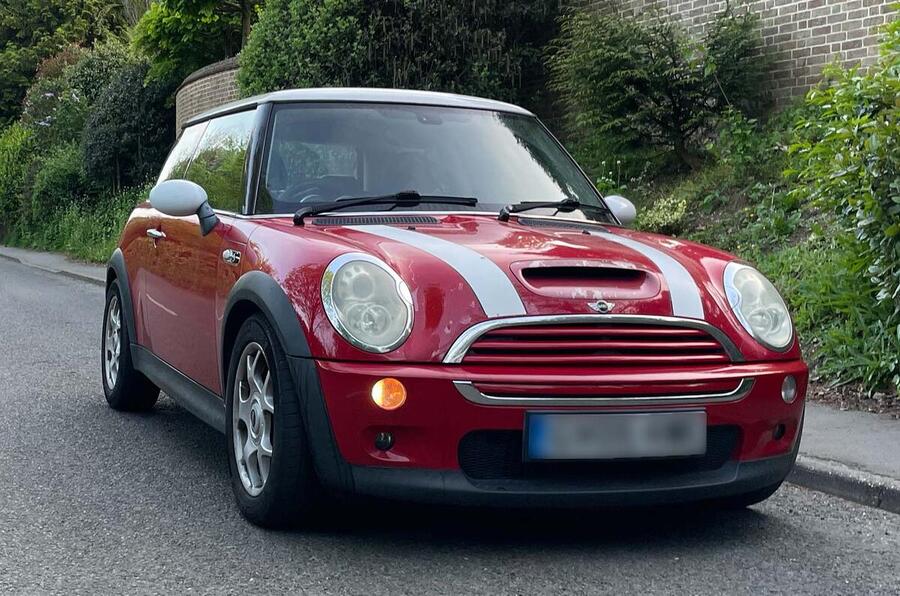
Jay Leno's Garage is a dream, but does he actually have too many cars? | Getty ImagesI've got an old Mini Cooper S and BMW 3 Series Touring, but my next car might be something wildly different
A popular pastime among car enthusiasts, both in conversation and mentally during idle moments, is to ponder the dream garage. More specifically, which cars will occupy it, should money not be a concern. Less commonly pondered is the garage itself and how big or small it should be.
Like many, I enjoy the Jay Leno’s Garage videos on YouTube. Freed of having to feign interest in Keanu Reeves’ latest action flick or some washed-up politician’s ‘tell-all’ book but not of the money that that sort of thing used to pay, Leno can spend plenty of time with his collection. To many, it probably looks like the dream: an enormous hangar in California with a couple hundred cars from all eras.
But I’m not sure it is. Don’t get me wrong: I wouldn’t turn down a similar arrangement if it came my way. But even with full-time staff to look after the fleet, having more cars than days in the year seems impractical to me. Just trying to drive every car at least once a year would be a near-impossible mission.
Maybe 10 is the magic number? I’ve not tried it, but that still seems like a lot. The hangar required to house all that metal still needs to be pretty sizeable, and you have to keep up with 10 insurance policies, 10 MOTs, 10 road tax reminders and 10 services, never mind the more specialist attention that old bangers tend to demand. The thought alone makes me want to lease a Suzuki Swift.
I suspect the sweet spot is three. I’m currently on two: a Mini Cooper S from 2005 and a BMW 325i from 1990. One is a year-round do-it-all car, the other a slightly more interesting do-it-all car, but which is limited to three seasons, because it’s liable to turning to brown dust. They cover a lot of bases and the admin is somewhat manageable.
I’ve had the BMW a year, and I've already done nearly as many miles as the previous owner managed in six. Thanks to him and the owner before, who didn’t drive it at all for 10 years, I had the opportunity to buy a nice, low-mileage car. But I do wonder how cars end up sitting like that. Perhaps the ‘mistake’ is keeping special cars for special occasions.
You may simply be of the restoring or collecting persuasion, which is absolutely fine, but assuming you buy cars to drive, I think the best way of getting enjoyment out of cars on the side is to just use them to brighten up mundane journeys. I’ve been driving the BMW to the supermarket and to the odd UK-based job and then taking the long way back. It has been most enjoyable.
Even so, I think there’s space (functionally, if not physically in the single-car garage I’m renting) for a third car – something a bit silly that’s wildly different from normal traffic and an event every time.
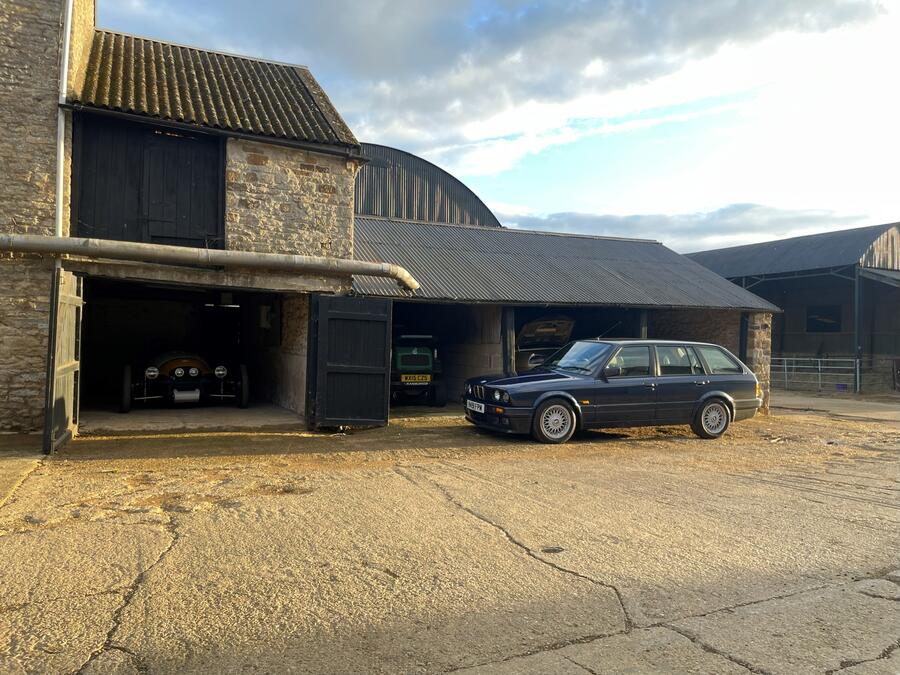
No, not a supercar: that’s way out of my league financially. I’m thinking pre-war. For the past few months, we’ve had a Morgan Super 3 on the long-term fleet. I was lucky to prize the keys from Matt Prior’s hands for a weekend, and I loved how it made low-speed driving interesting, whereas most modern cars aim to do exactly the opposite.
I suspect that with a pre-war car, the need for double-declutching, the uncouthness, the confused looks from passers-by, might inject similar cheer into ordinary driving. The oldest thing I’ve driven so far is a Series II Land Rover, so I may be delusional...
There are signs that this is a great time to buy a veteran car, because prices are dropping as large parts of the established fanbase move on to a more ground-based existence. I came across a 1928 Franklin with an air-cooled straight-six engine, a three-speed transmission and wooden wheels. I’m sold on the concept of an air-cooled straight six alone, but it’s still £13,000, which is a bit much for a bakery-run car, so maybe I need to give it a few more years.
Am I mad for wanting a machine that’s approaching 100 years old? After all, there is a notable absence of Franklin main dealers near where I live. Maybe the three-car garage is better left as a mental exercise. But I’d love to be told otherwise.

Car Testing Under Constraints How Media Hype and Limited Access Undermine Meaningful Hypercar Reviews
 An "exclusive opportunity" to try a long-awaited new car turns into a media circus - what did I really learn?
The alarm goes at 4.30am. Ahead of you is a 150-mile drive that thousands will be doing this week: the well-trodden way to the Goodwood Festival of Speed. Except you're going a day early, to the neighbouring racing circuit, for a date with 1600bhp. Yes, sixteen hundred.
You're carrying out the magazine's first test of one new all-electric, tri-motor sports car. The FoS is an increasingly popular venue for the public debut of new performance cars. Manufacturers therefore tend to build preliminary media test drives around it.
The invite to this one definitely said it would be "an exclusive opportunity" suitable for "experienced testers". When you arrive, however, it seems those definitions have been stretched a little. There are six cars in the pit lane but perhaps 10 or 12 road testers you recognise - and as many vloggers and social media influencers again, all milling excitedly around the cars, smartphones in hand.
When Jenson Button turns up, he does us older hands an unexpected service by distracting the Instagram crew as they swarm on him demanding their selfies. Even so, if there are this many people in the UK with "plenty of track experience" of 1000bhp-plus electric sports cars, then my name is Michael Faraday. Still, we're all here. Better get on with it.
Next, after disclaiming any legal rights you might have had, against either the circuit operators or the car manufacturer in the event of accident or injury, you are ushered into a half-hour press conference.
This follows time-honoured convention. First, some superfluous product introduction, which, if you've read the press material sent to you in advance, you will already know. Second, some design waffle about "flowing lines" and "sculptural artistry", which will be about as useful for your story as the first part. And, finally, some technical information - which won't be quite as extensive or detailed as you might have liked, because they had to make time for all of the earlier rubbish. Your PR contact will promise to send you the slides via email, but will they arrive on time? You have questions, but you won't ask them here because why share the answers with the whole room? In any case, time is short. Remind me, why did we bother with this bit again?
Now, you wait for the one-and-only, three-lap, perhaps five-minute track stint you have been promised, in the car you have come all this way to drive. Colleagues take their turn, returning looking little the wiser than when they had departed; somebody you're chatting to wonders if this might be the farthest he's driven, for the least useful amount of test time, in some four decades in the job.
Finally your turn comes. There is 1584bhp under your right foot, apparently. You do a gentle installation lap; a quicker flying lap; and then, just as it feels like the beginnings of your impressions are forming in your mind, it's all over - before you have even had a chance to acclimatise yourself to that funny, grabby brake pedal, never mind anything else.
You haven't been able to drive exactly as you would like, which might ordinarily involve experimenting with drive programs, stability control settings and launch control. The instructor in the passenger seat was under strict orders to not let you exceed a given speed; to not let you slow down or stop on track; or generally to not let you do your job quite as you might have chosen to. The fact is, even if he had stayed absolutely mute, you wouldn't have driven as you would if he had not been there at all.
No matter how many times you ask, that's your lot. Have a demonstration of our automated parking system, sir. Take a short road test loop in a car that you haven't actually come here to drive (although, of course, you will). The main event is over. Three laps. Five minutes. Not too fast, now. But tell me, what did you think?
By mid-afternoon you're back at your office desk, writing up what impressions you could glean against an imminent deadline - first on the car you didn't expect to drive, and then on the one you did. Then, at the end of an 18-hour day, you're finally off the clock.
People tell me regularly that I must have "the best job in the world". True, it can certainly have its moments. But only rarely do they go on to ask: "What's it really like?"
That, for the record, was a not-unusual, alarmingly real Wednesday.

Roof Boxes Defy Automotive Downturn as Thule Maintains Premium Edge Amid Global Market Shifts
 The Chinese market is grim for European car makers, but it's an entirely different story for accessory makers
The second-quarter financial details of car makers are starting to come through, and we know from previously released volume figures that they will contain bad news from China.
But in the spirit of summer holiday optimism, I'm swerving the gloom to look at a success story from an automotive-adjacent company whose executives didn't mention China once in their second-quarter call to investors.
Swedish accessory firm Thule – the name emblazoned on thousands of bike racks shedding garage cobwebs onto the roads this summer – reported a rise in operating margin to 22% for the second quarter, up from 21% the year before. For the full half year, the margin hit 20%.
Anyone who has bought a Thule product new won't be surprised to learn the company reports profit margins closer to that of Porsche before it suffered its China/EV meltdown. They're expensive.
But the revelation is that Thule hasn't yet suffered its own China crisis in the form of competition offering similar performance for a much reduced price.
After all, since Covid the Chinese have become mad keen on camping and other outdoor activities, fed by multiple equipment firms. Established bike makers, for example, are suffering the effect of competition from China. But Thule appears to occupy its premium position without serious threat.
Car firms do periodically try to chisel at its market lead. JLR is the latest to promise a big push into the space, particularly via its Defender brand. But generally no one has managed to really bite into the market.
Why? It's hard to say. But perhaps when you're buying a bike rack, roof tent or dog carrier, you know it's going to do you 10 years so you splash out on a brand you've heard of.
Thule even cashed in on global instability, with boss Mattias Ankarberg telling investors that more people are holidaying closer to home this year, "which is typically positive for Thule".
It's not all rosy. Thule has been hit by the same rising raw material prices as car firms. Ankarberg flagged a 2.5% price increase for his products coming in August.
There's probably not much for car companies to learn from Thule's continued imperviousness to global price destructive trends in automotive. But it might be comforting to hear that not everything is falling under the China steamroller.

Art Cars in Motorsport Showcase Creativity Over Corporate Branding and Deepen Fan Engagement
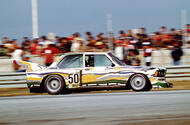 Racing cars covered in corporate logos are dull; bold, creative art cars are what truly capture fans' imaginations
One appealing aspect of car culture is that, whether mechanically or through design, vehicles can be used to express individuality and creativity. And, when it comes to the cosmetic side of things, to me there’s no better expression of that than the ‘art car’.
My favourite art cars are those found within motorsport, where standing out for maximum visibility is one of the main aims of the game – second only, perhaps, to winning.
Yes, motorsport liveries are usually intended to accommodate sponsors, which play an essential role in financing a team, but they can also allow a car to draw the eye on a grid of a dozen or more other similar shapes, which could ultimately be the difference in gaining supporters.
They also allow teams to show some creativity in circumstances where restrictive regulations usually mean they’re either unable to or can only do so in areas that the casual fan will never fully appreciate.
A good livery can give a car an extra layer of identity, and the best examples have the ability to stay in the memory of fans and spectators for much longer than where the car finished in a race, or even the name of the driver at its helm.
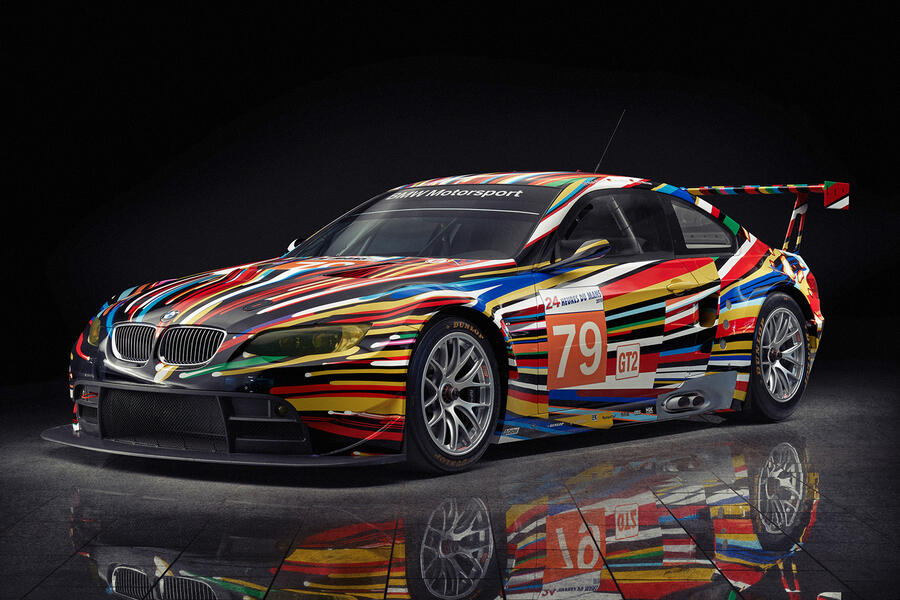
Because they’re rare, art car liveries always feel a little more special, a point of difference on the grid, and usually do a better job than anything else of winning the hearts of the spectators.
Many of them even abandon big title sponsors – and the financial benefits they bring – to ensure the livery isn’t dictated by logos or brand names. Their only purpose is to make a statement and put smiles on the faces of the fans,which you have to admire.
BMW is the undisputed king of the art car. For 50 years the Munich brand has been associated with liveries dreamed up by artists, from the 1975 3.0 CSL by Alexander Calder and the 1977 Roy Lichtenstein 320i Group 5, to the 1979 Andy Warhol M1 Procar and, most recently, the M Hybrid V8 hypercar designed by Julie Mehretu for the 2024 Le Mans 24 Hours.
The Jeff Koons M3 GT2 from 2010 is still my personal favourite, with its many multicoloured ribbons. The lineage currently stands at 20 art cars that punctuate BMW’s motorsport history, as well as a few road cars, and I hope that number continues to grow into the future.
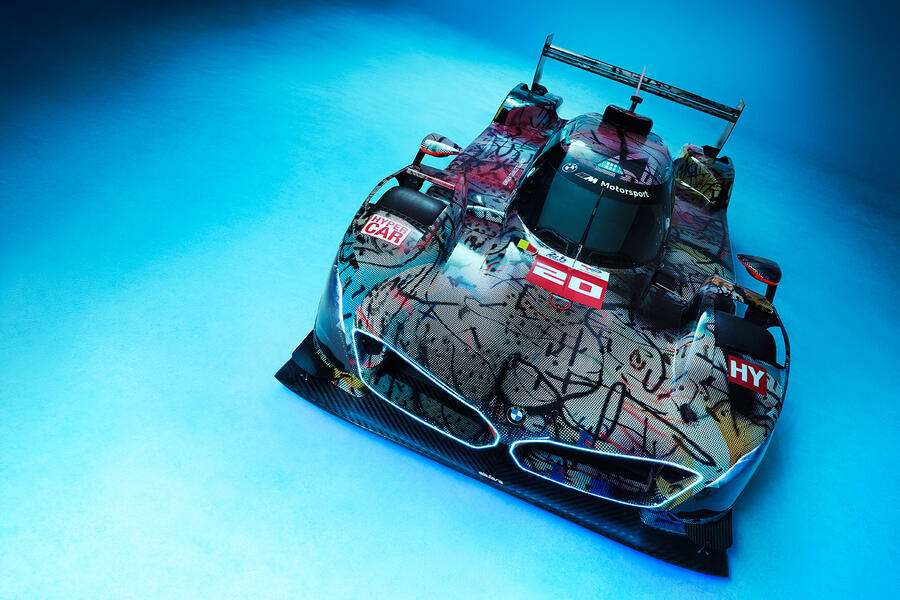
The motion of an art car is still pleasingly called upon by others, too, as displayed by the fantastic HWA 190E Evo R that recently raced in the Nürburgring 24 Hours, featuring an awesome glow-in-the-dark livery by Hanna Schönwald that came alive after the circuit was plunged into darkness for the night stint.
That colourful faux-Mercedes received plenty of attention, which isn’t much of a surprise: my love for art cars is clearly shared by plenty of others, and I think the motorsport world wouldn’t be quite as fun without them.

Range Rover GT Redefines JLR’s Electric Strategy with Distinct Architecture and Jaguar Influence
 Sleek new mid-sized Rangie is completely unrelated to Type 01 - but there could be a Jag link
Some people have suggested that the new Range Rover GT is an inflated Jaguar Type 01 – which is an understandable thought.
It's the sort of thing a car company would normally do, after all: create a new platform and then have it underpin lots of new models; first that, then this.
It's even less surprising considering that the first bit of the GT to have been fully revealed is its interior, which looks quite like the one in the upcoming Type 01: bright but button-light, just as the rest of the world is pivoting back towards the tactility and functionality of physical controls.
I'm told the GT will ultimately have a rounder steering wheel than the one in pictures, though.
Yet the GT isn't a lifted Type 01 at all, sitting as it does on an all-new platform, which becomes evident when you climb into both cars.
The Type 01 has separate battery packs in its all-aluminium Jaguar Electric Architecture (JEA), which occupants sit on but with their feet between, allowing them to be located very low in the car, so the roofline can be sleek.
The GT isn't like that. Occupants sit on the batteries, which are arranged more conventionally in a pack under the floor of this brand-new, electric-first but hybrid-accepting Electric Modular Architecture (EMA).
The cabin floor is flat and much higher than the Jaguar's and is extremely spacious too - not a defining trait of the Type 01.
If the GT does owe something to a Jaguar, it's not the Type 01 but the I-Pace. Chief engineer Matt Eyes told me that lessons learnt there have been applied here, particularly in terms of battery crash safety.
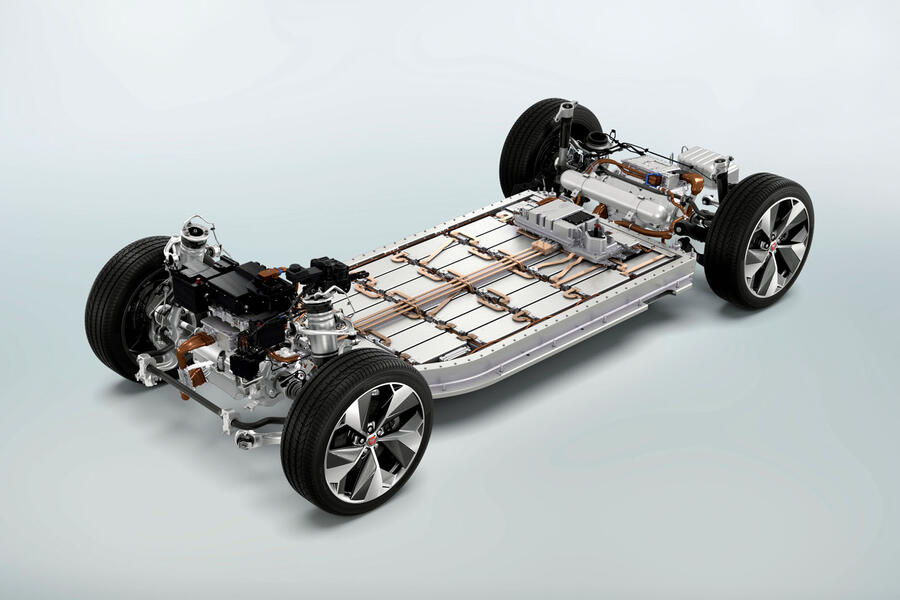
The I-Pace's pack (pictured above) was given chamfered corners for this purpose, but that reduced capacity, given its dimensions, to less than 90kWh. Now the engineers are better at designing it, allowing an EMA pack to hold up to 120kWh of energy.
Given this architecture isn't entirely unlike a Mk2 I-Pace's would be, then, could it one day underpin a Jaguar? They won't say, of course, but it's easy enough to imagine the brand wanting a new crossover/SUV at some point down the line.
This platform's cab-rearward design differs from that of the first I-Pace but is in keeping with Jaguar's latest language.
The hybrid opportunity presented by the EMA is for a front-mounted engine - albeit not, Eyes says, anything as big as a six- or eight-cylinder.
This Range Rover GT, though, is a car that JLR has wanted to make for some time. If you were being particularly arcane, you could say it finds its roots in the 1950s Road Rover project, well before the Range Rover was even imagined.
Several prototypes of this rugged station wagon were made, one of which survives at the British Motor Museum in Gaydon.
Eyes says JLR has more recently experimented with several lower, sleeker Range Rover models, getting quite a long way down the road with development of one lately before deciding it didn't quite suit its underpinnings.
Having not found an architecture right for the job, then, the EMA was created in part specifically to enable this car.
That's quite a JLR thing to do: create a new architecture to underpin fewer cars than rival manufacturers would make.
And over the coming months it will become clear just how much bespoke work the company has done with it, as it has with the JEA.
I do wonder what effect this approach has on its cars' performance in the hands of customers.
Some manufacturers would force new cars to fit known platforms or outsource high proportions of components to suppliers. JLR's insistence on doing its own thing when off-the-shelf parts aren't appropriate, as a middle-sized car company, creates cars that nail their briefs and which new buyers love but which does leave it exposed if any of those components have issues.
Anyway, which other models will the EMA underpin? The Range Rover GT will wear a Land Rover badge, not as branding per se but as what JLR now calls a 'trust mark' within its 'house of brands' (bleurgh), yet I don't think it's likely to suit a full-sized Defender model.
I do find it easy enough to imagine it under a Discovery - albeit since the arrival of the new Defender and with more Range Rovers around it, that brand is seemingly still searching for its happy place.
And it could yet be a Jaguar too, of course.
The Range Rover GT isn't a lifted Jaguar in any way, but who's to say it won't yet become one?