

Chery’s Low-Cost Strategy Reshapes Global Car Profit Margins and Challenges European Automakers
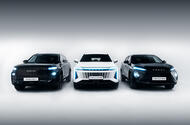
Modular T1X platform helps Chery to build cars at low costChinese firms are often accused of making losses but some, such as BYD and Chery, are generating huge margins
A common refrain about the Chinese car industry is that its firms don’t make money. For rivals, it would be comforting to know that phenomenal market-share growth among Chinese brands isn’t sustainable.
For some, including electric-focused start-ups like Nio and Xpeng, that’s true. But it’s not true for the big companies, such as BYD and Chery, that are inflicting real pain on the European volume makers.
Take Chery, the largest Chinese car maker in the UK based on May sales, with a bigger market share than Ford and the Renault Group. Chery posted profits last year equivalent to just over £2 billion, with a net profit margin of 6.5%. For context, the Volkswagen Group’s profit margin was 2.1%.
Chery’s first-quarter profits were equivalent to just under £500 million, which suggests a similar overall profit figure this year.
What’s remarkable, though, is that Chery managed this on an average selling price per car last year of £12,705, based on total revenue divided by sales volume. This is from sales of mostly SUVs from the Chery brand, Jaecoo, Omoda and Chery’s other, more Chinese-focused brands.
That will be a frightening figure for established brands. First, it shows just how determined Chery is to grow market share globally. Indeed, Chery said in its annual report that selling and distribution expenses rose almost a third last year to the equivalent of £1.2bn due partly to an increase in “advertisement and marketing expenses”, including discounts.
But it also shows how cheaply Chery can build cars. Today, much of its output comes from the modular T1X platform and its supply chain is low-cost.
That £12,705 average selling price compares with the equivalent of £30,754 for the Volkswagen Group last year, illustrating the challenge for Europe’s firms, with their higher cost base.
Yes, subsidies reduced the figure, with Chery noting the receipt of help equivalent to £174m last year.
Chinese profits are under pressure. Building EVs and PHEVs are lower-margin and Chery posted gross margins (ie product costs) for its so-called new energy vehicles of 8.8% for the year versus 15% for ICE vehicles. BYD profits halved in the first quarter of this year on heavy discounting in China.
But the financials show that China can’t be beaten in a price war. It would be crazy to try.

Automotive Marketing at a Crossroads as Political Culture Wars Threaten Industry Unity
 The automotive world must reject the toxic political marketing chosen by Indian Motorcycle
I've often thought, and sometimes written, that politics could learn a thing or two from the automotive industry when it comes to advertising.
Car adverts tend not to shout down or abuse competitors; rather they big-up the virtues of their own product. They try to sell me something: a benefit, an idea, a dream. Even if the dream is just that I too could be going surfing with beautiful companions in a compact crossover. An aspiration is an aspiration.
Lately, politics has spent rather too much time doing the opposite. Rather than pitch me an ideal, often it will tell me I'm wrong for liking a particular policy or a person it opposes. Rather than acknowledging that, yes, perhaps everyone has a point, but this is our dream, it's too often argued that there is only one true way, and that those who think differently are several kinds of numpty.
This is not a compelling way to change somebody's mind, incidentally. Automotive, bluntly, does better marketing and advertising.
Until today. Now, this column contains motorcycles, but before you comment, it's not actually about motorcycles; it's about the insidious creep of politics into an arena I had rather hoped it would avoid.
Recently Indian Motorcycle - an American motorcycle maker whose bikes I like a great deal - launched an extraordinary broadside against its chief rival, Harley-Davidson.
"The culture is not confused. Neither are we,' says the caption on its video. "Harley hired a CEO from a pizza company," the script begins, about Harley's new CEO, Artie Starrs, who was formerly CEO of Topgolf and Pizza Hut. "Indian chose a lifetime industry veteran and avid motorcycle rider," it continues about its new CEO Mike Kennedy, who until 2018 had spent 28 years working at Harley and who was appointed after Indian's sale by Polaris to private equity firm Carolwood LP in February.
"They chase electric bikes and moved production to Thailand," the ad says about Harley. And Harley does build things overseas, albeit predominantly for export. "We built PowerPlus engines and American bikes right here in Spirit Lake, lowa." Yet Indian had overseas production too, in Vietnam and Poland, although it has now ended.
Then comes the really divisive stuff: the politics. "They chase political trends," it goes on, highlighting Harley's DEI (diversity, equity, inclusion) programmes, which Harley felt obliged to wind down in 2024. "We back the people who matter," says Indian, in what it presumably thinks is an enigmatic way.
This follows Indian's appointment in February of Noise Media as its paid media agency - the people who pay influencers and celebrities to push a message. "The brand is entering a new era-one focused on sharpening its position, reconnecting with its roots and showing up with renewed confidence as the OG American motorcycle brand," said Noise at the time.
Then it added, in a paragraph since deleted from its press release (but archived, because the internet is forever), that it would be "working closely with Brad Parscale, President Trump's ex-campaign manager, who is leading Indian Motorcycle's wider brand and positioning work. Brad is setting the vision for how the brand returns to what made it iconic, and our role at Noise is to help bring that to life through paid media."
This is the stuff I find so tiresome: 'culture' and 'politics' brought into an area that simply doesn't need it. I hope that Indian and the wider bike and car industry will see it for what it is: a grim piece of marketing and advertising aiming to stoke division in an arena where, frankly, there isn't room for it.
Whether it's cars or motorcycles, there aren't enough of us loving the hobby to stoke and inflame the differences between us. Because it matters so little to us. I own a classic car literally commissioned by the literal biggest Nazi of all time. And yet nobody in the automotive industry has thus far thought to bring politics into Beetle ownership.
I don't want to label myself, or be labelled, as a libtard for choosing a Harley-Davidson or a fascist for choosing an Indian. I just want to ride a motorcycle and drive a car. Keep politics, culture wars and division out of my hobby.

Diesel’s Decline as EVs Surpass Long-Distance Milestones and Reshape the Case for High-Mileage Motoring

Diesel engines were revered for mega-mileage potential, but they're a niche case nowDiesel was long the fuel of choice for big MPG motorway work, but it's losing its place in the world
The eternal straw man argument around electric car reticence is that hypothetical scenario wherein someone might have to leave the house at the drop of a hat and whizz 600 miles to the tip of the country without stopping.
"Could an EV do that? No, didn't think so," argue the sceptics, who so often cite the unparalleled long-distance credentials of their old diesel smoker as the reason they could never make the switch to an EV that might require several charge stops on such a voyage. "My Peugeot 406 HDi does 60mpg and 800 miles to a tank," they coo. "Try that with your Elroq."
To be sure, for a long time it was a convincing argument (irrespective of the fact that the average UK motorist drives only around 115 miles a week) simply because EVs charged too slowly and there weren't enough chargers to make such journeys possible.
But – as perhaps best represented by the axing of the best-selling Volkswagen Golf diesel – the tide is well and truly turning. There are now nearly 30,000 rapid EV chargers across the country, which are capable of adding meaningful mileage in just a few minutes – and given the exorbitant cost of filling a massive diesel tank in 2026, even the cost argument is dissipating.
Plus there is an increasing number of EVs that have the legs to rival diesel for non-stop motorway-bashing ability – the latest Mercedes, BMW and Volvo EVs being among those that can officially crack 500 miles on a charge.
That's without considering the wide array of plug-in hybrids now on offer that can return 600-700 miles with a full battery and tank. Try driving even half that without stopping for a 'comfort break'.
Don't get me wrong – I'm a huge diesel apologist myself, having owned and thoroughly enjoyed all manner of old oil-burning smokers. Diesel had its place, for sure, and for many it will remain the most logical powertrain choice for years to come (not least because old derv lumps like the VW PD130 and Peugeot XUD are so reliable that they won't need replacing for decades), but as EV technology and infrastructure continue to improve, the argument for supping from the black pump weakens by the day.
Is it any surprise, then, that the flag-bearer has fallen; that Volkswagen has finally pulled the best-selling Golf diesel from sale in the UK? Perhaps not.

Fiat 500 and the Art of Authentic Retro Revival in Modern Car Design
 Fiat captured the 1957 car's spirit in 2007 with great effect - and it's worked for 20 years
What goes into a successful retro revival of an old car?
For a good example, let's look at the Renault 5. The consensus is that it gets all the key features right. Much like the original 5, it's great to drive and even better to look at, but at its core it captures that classless spirit that the car always had. Just as with that car (and even more so in the modern era of PCP finance and leasing), almost anyone can walk into a Renault dealership and drive away with a sharp, stylish runaround that would look just as at home in Knightsbridge as it would in Kettering.
Other rebirths haven't been so well resolved, losing touch of the elements that defined the original, whether that be through a hike in pricing (the Land Rover Defender, I would argue) or a complete departure in terms of positioning, shape, styling and character (it starts with 'F' and ends with 'ord Capri').
So there are hits and there are misses, but when all is said and done, the king of the comeback has to be the Fiat 500.
Astonishingly, you have to go all the way back to 2004 to find the genesis of this modern classic, in the form of the Trepiùno concept, conceived in response to the overwhelming success of the Smart Fortwo city car in Fiat's home market. It was instantly recognisable as a descendant of the Nuova 500 that had mobilised Italy after World War II.
The footprint was still tiny in comparison to its contemporaries, at comfortably less than 4m long, but there was enough space inside for a 3+1 seating layout - hence the name, which translates literally as 'three plus one'.
It was a hit. Such a hit, in fact, that the production version was immediately green-lit and revealed just two years later with minimal fettling - apart from the sensible addition of a full-sized fourth seat.
From the off, it was clear that Fiat had stayed faithful to the 500's original purpose. This new car was just as much of an everyman's car as the original: priced well and easy to use. It used the Panda's platform as its base while power came from the well-aged but eternally excellent Fire engine, economical, revvy and robust as it is.
The reborn 500 excelled in everyday use, thanks to the great visibility out of its expansive windscreen and generous cabin space that belied its diminutive dimensions, and there was a lot to love for driving enthusiasts too: well-weighted steering and a low kerb weight made it a joy to chuck about, along with the later addition of a peppy, charismatic two-cylinder engine.
A gorgeous interior, with kitchen appliance- esque HVAC dials and a delightfully simple combined speedo and tacho, helped make it an inherently cheerful car, putting a smile on your face whenever you drove it.
But the looks were what really sold it to the masses. It was as desirable as a Gucci bag or a pair of Diesel jeans (both brands that collaborated with Fiat to create special-edition 500s). Ferrari UK even ordered a fleet daubed in its signature Rosso Corsa paint to use as courtesy cars for customers.
My mum was among the admirers, buying three in a row over the years - including one in which I learned to drive and eventually had the joy of using every day.
It was an everyman's car, yes, but it was a truly enviable one. Fiat captured lightning in a bottle in a way that very few others have ever done.

Chinese Car Brands Face Survival Test in Crowded UK Market
 When even car journalists struggle to keep up with new Chinese entrants, does the industry have a problem?
I suppose it finally had to happen. An entire vehicle brand has been launched in the UK before I realised it even existed.
Retailers started offering this maker's cars only four days before I found out about it, but still.
I feel like I've failed. The car market has left a self-confessed car bore like me behind to the extent that there are not just models but now entire brands (okay, this one sells only one model at the moment) that can arrive and remain below my radar.
My fault, I think, for having a holiday towards the end of April when, during the week we reviewed the Aion V, I was watching short-oval racing in New Hampshire (Ford Crown Victoria single-make races a particular highlight).
Otherwise I like to think/pretend I'd have spotted the V's existence. But it continued to skim beneath my consciousness until a colleague today prompted me for my thoughts about one. What do I think? Honestly couldn't say. A bit embarrassing.
So welcome to the UK market the Aion V, which the internet tells me is a car made by a company that's part of GAC, or Guangzhou Automobile Group. And, yes, I have heard of that because it's one of those Chinese state-owned conglomerates that has been around for decades.
GAC is one of China's top five car makers, producing almost two million vehicles last year, and has joint ventures with Toyota and Honda.
So although the Aion brand is new, the car is unknown and by the end of the year there will be only 25 UK dealers for the V (which, in case you missed it or have forgotten already, is a mid-sized electric crossover), it is not really a shock to find out that Aion knows a thing or two about building cars.
The V, which has 201bhp and a 317-mile range from its 75kWh battery, is by all accounts not bad.
But if I don't know about it, how are customers expected to? Buying a car isn't like going on Amazon to select a new electric razor or doorbell camera where it doesn't matter what it's called, you can buy one with one click and it will be with you tomorrow. This is spending £36,000.
On the one hand, this means prospective buyers will be more inclined to do some research. But on the other, it also means having a recognisable name is all the more necessary. A car needs a hook, a reason, a story: to be, if it can't be an actual Range Rover, the Temu Range Rover.
These can't all last, can they? This scattergun, market-overwhelming approach, like Uber in the taxi market, is bad news for a lot of established players. But sooner or later it will be clear that some are here to stay, and others are not.

Horsepower’s Persistent Mythology and Its Mismatch with Modern Automotive Performance
 You wouldn't want a Ferrari F80 pulling coal from a mine all day, even if it does make a huge 1183bhp
Horsepower has an interesting backstory. If you're a keen petrolhead, however, I'd advise you not to read it, as I have this week. Enjoy your blissful ignorance if you can.
There are only three things you really need to know about it, in any case. First, that celebrated Scot James Watt didn't actually invent it, he just formalised it. Second, that it's more of an idea than a measurable product of an engine anyway - a bit of mathematics. And third (perhaps only academically), that it has actually been misapplied to automotive engines all along. It's simply the wrong kind of measure for any motor that sits within and propels a moving vehicle.
Not that the last bit matters much, because imagining an automotive world without horsepower is almost impossible. Who gets excited by the idea of a new supercar with 883 kilowatts of peak power? How much horsepower has it got? 1184 imperial ponies? Yes, please. Wax on about whacking great torque figures and even add in engine speed ranges if you like (any expression of engine power is only torque multiplied by engine speed and then 'interpreted'), but horsepower is what matters, isn't it? What sells. It's the only real, universal performance car X factor.
Which is lucky, because otherwise why on earth would you choose to measure the output of a modern car's engine based on a pretty arbitrary and disputed estimation of the amount of work that a brewery draught horse could get through in the late 18th century? How has an entirely notional figure, dreamed up to help sell static steam engines to early industrialists, become the closest thing to a global currency for comparing modern cars?
For Watt all those years ago, horsepower was a sales tool - "translational marketing". Before they would sign their bankers' drafts, mining entrepreneurs needed to know not only how much coal they could load into their railway hoppers but also how quickly that coal could be moved from the bottom of the mineshaft to the top of it. Horsepower gave them an idea of how many horses they could put out to pasture for each steam engine they bought-or else, unless they had some very large stables indeed, just how transformative this early form of mechanisation could be for their profit margins.
But here's the dirty truth about horsepower: Watt lowballed his maths. As the story goes, when he observed those brewery draught horses in 1782, his sums were calculated to represent not what a particular horse could achieve when working intensively but what the average horse could sustain for a full working day. He was selling static steam engines, remember, not the kind of engines fitted into moving vehicles, on which load might have been considered a more dynamic (ie ebbing and flowing) factor. He sold engines that just grunted away constantly all day long. That's why, as has been proven since, one fit horse can usually produce a good 15 horsepower when it's really working up a sweat.
I'm not sure exactly how long a working day was in an 18th-century brewery. But imagine loading up, say, a Land Rover Defender Octa with whatever ballast might be needed to stress its engine to maximum load (think a trailer with several dumpy bags of sand on it). Now drive that Defender flat out on an oval, in third or fourth gear and at a steady 6000rpm for eight, 10 or even 12 hours straight (you will have to imagine some clever air-to-ground refuelling system too).
Even allowing for the very finest performance car engineering there has ever been, it doesn't take much imagination to guess what would be likely to happen, does it? Before too long, you would have a very hot, very broken, quite possibly burning Land Rover. And would that seem like a fair way to test the limits of a modern automotive engine? Of course not. Cars simply don't need to work like that – and certainly aren't designed to.
That's why, as romantic as the notion of an invisible team of a thousand thoroughbred stallions pulling along a Ferrari F80 might seem, it's ultimately fanciful for more than just the obvious reason. Vehicle engines have always deserved their own convention when it comes to power output. Here's hoping they never get one.

Electric Super GTs Redefine Brand Identity as Jaguar and Mercedes-AMG Compete for the Luxury...
 These two cars are similar in size, ethos, power, purpose and marketing. Why?
It feels to me like the new electric Mercedes-AMG GT 4-Door Coupé will be the best indication yet of how we should expect Jaguar's upcoming Type 01 GT to perform when it eventually goes on sale.
There have been big, expensive and fast electric cars on the market before, of course. They're still there. But the most powerful variant of the Porsche Taycan, the Turbo GT, and the Tesla Model S Plaid are variants within rather larger model ranges. And the big Lotus electric saloon is, after all, just a Lotus - which I don't mean to be a slight on the Emeya, but it and the Eletre SUV are such departures from the traditional Lotus line-up that one could almost consider it to be a new marque in its own right.
Meanwhile, the new GT 4-Door Coupé comes from AMG, a consistent brand (albeit a subsidiary of a larger one) that sells a limited number of expensive luxurious and fast cars - not unlike Jaguar in some respects. (Also it has a history of using a nice rorty V8, like the one it's going to reintroduce in the upcoming Mythos variant of the CLE 63 coupé, which has until now been available only with a straight six.)
The electric GT 4-Door Coupé, then, is a car of serious significance but not a radical departure in its aims from the cars the company typically makes. It's only a radical departure in terms of how it's powered.
One could view the new Jaguar similarly: it is, after all, a big car on the outside, a compact one inside, with a long bonnet and plenty of performance. Jaguar has made loads of cars like that over the years, to the extent that it's now showing the XJ-S in its advertising for the Type 01.
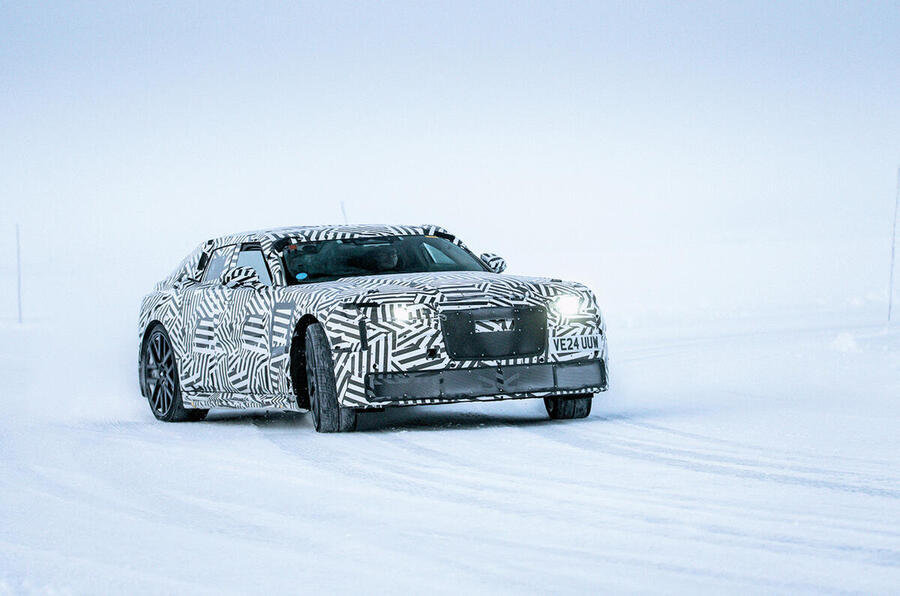
While there are parallels to both projects, they also both contain - let's put this diplomatically - rather different takes on the more recent design language of the two companies.
When the GT 4-Door Coupé was previewed by the GT XX concept car, it didn't create quite such a stir as Jaguar's Type 00 concept, and I don't suppose it was really meant to: the company doesn't need the same kind of reinvention.
But the AMG production car has arrived with some fairly polarising looks. I tend not to comment too much about aesthetics unless a car is widely considered glaringly beautiful or a massive gomper, because you've got eyes, but I don't think it's overly controversial to say that the new GT 4-Door Coupé is an unusual-looking car. More so than the concept that it vaguely resembles. AMGs don't usually take such a departure from the models around them.
The Type 01, we're told, will much more closely resemble the Type 00 - and that, you will remember, was a very polarising concept.
That was caused as much by the messaging that came along with it, amplifying the attention the design received. Jaguar had courted that but was eventually entirely overwhelmed by it and has since somewhat rowed back from it.
Buying the new Jaguar might be a statement purchase in a way that buying the new AMG may not be. But if you can separate the attention from the cars, I think what we're looking at are two reasonably similar cars in size, ethos, power and, ultimately, purpose.
The GT 4-Door Coupé has arrived first, so it will be intriguing to see how well it sells, as an indicator of how well the Type 01 might perform.
It's true that the AMG is but one model in a larger line-up, which is again only one part of a much larger Mercedes range. For Jaguar it's rather different: so much of the brand's future, and indeed the wider company's future, will follow from the success or otherwise of a very fast, expensive, electric coupé - a type that hasn't recently demonstrated it sells in vast numbers.
JLR recently denied reports that it was working on a combustion-engined range-extender version of the Type 01, and such was the vehemence of that denial that you have to take it at face value. But I suspect JLR will be keeping a very close eye on the kind of production numbers AMG can achieve in the run-up to the Type 01's release.

Pikes Peak Hillclimb as Motorsport’s Ultimate Test of Ingenuity and Endurance
 Twisting, 12.42-mile hillclimb is an icon – and one of the most gruelling races of the year
There are hillclimbs and then there's Pikes Peak.
Cars have been driven up steep roads against the clock for about as long as motorsport has existed but, unless someone builds a paved road to the summit of Everest, it's unlikely that any hillclimb course will ever match the twisting, 12.42-mile, hairpin-riddled road to the top of this Colorado mountain.
With its raw nature and extreme dangers, Pikes Peak-the 104th running of which takes place this weekend - is reminiscent of the Isle of Man TT: if it wasn't such an ingrained piece of motorsport history, it couldn't possibly exist today. The pile of health and safety paperwork would probably rise higher than the mountain's 14,115ft summit.
The reputation of Pikes Peak arguably exists because the hillclimb's one-off nature and bespoke rulebook mean it's incredibly malleable, allowing manufacturers and drivers to shape it in their image.
Think Pikes Peak and you might picture Ari Vatanen in a Peugeot 405 T16, one hand raised to shield the sun from his eyes, the other deftly applying opposite lock as he power slides around a bend.
Perhaps you picture Rod Millen in his succession of Toyotas, Nobuhiro 'Monster' Tajima in his monstrous Suzukis or Sébastien Loeb putting Peugeot back on top of the literal mountain a few decades after Vatanen with the 208 T16.
Or maybe your brain is still trying to compute the electric Volkswagen ID R seemingly defying the laws of physics as Romain Dumas charged to a still-standing hill record in surreal near-silence (well, apart from a compulsory siren more annoying than any ADAS bong) back in 2018.
Yes, the event has changed greatly over time - not least because the 156-hairpin road to the summit is now fully paved. Don't think it's any less challenging, though: the brutal conditions at elevation mean the road is constantly shifting and adjusting; no two runs are the same.
The efforts of Vatanen, Loeb and Dumas resonate in part because they were as much marketing stunts as motorsport endeavours. Indeed, Vatanen's ascent was immortalised in the thrilling Climb Dance video, which you really should devour on YouTube after reading this.
But what I really love about Pikes Peak is that, while those big-budget manufacturer efforts pop up every few years to bring attention to the event, the hillclimb is really an amateur competition at heart.
The bulk of the brave drivers who flock to Colorado each year are privateers with home-brewed machines and big dreams. They're not there for glory but to test themselves on an unrivalled stage.
The spectators might be even tougher. There's only one road up Pikes Peak-and it's needed for the competitors. So spectators have to drive up the hill long before dawn on race day, and they can't descend until the event finishes many hours later.
Add in unpredictable weather (it can be baking hot at the bottom yet snowing at the top, even in summer), a lack of oxygen and exposed vantage points, and spectating at Pikes Peak is a challenge in itself. It's worth it, though: they don't make motorsport events like this any more.

Jaguar Mark 2 and the Enduring Power of Personal Automotive Obsession
 Each to their own: Mark 2 Jag isn't the bedroom wall fantasy of most teenagers - but it was for me
For a long time my favourite car was the Jaguar Mark 2.
It's a strange object of infatuation, given the wealth of heartstopping, bedroom poster-material cars that came after. I mean, it was the fastest four-door saloon in the world in 1959, but why should eight-year-old me have cared about that more than four decades later?
Well, I have always thought the Mark 2 was immensely pretty. I remember seeing restored examples at car shows and thinking how purposeful they looked, how beautifully crafted the engine was and how smooth they sounded.
One year, on the way back from a family camping holiday in the Dordogne, we stopped off to see some old family friends in Le Havre. As a child, I was expecting this to be a boring affair; staying the night with two septuagenarians was hardly my idea of fun.
Our hosts Jacques and Mathilde put us up in a beautiful townhouse overlooking the city. They were very accommodating, although Jacques couldn't speak English and Mathilde spoke with a thick German accent, so that ruled me out of a lot of conversation.
At one point, after my parents had communicated how much I liked cars, I was asked by Mathilde on behalf of Jacques: "Quelle est ta voiture préferée?"
Normally when I told adults that my favourite car was "umm, probably a Jaguar Mark 2", they would look at me as if I had just said my favourite TV show was Songs of Praise. Surely it should be a Lamborghini or a Ferrari. What had my parents done to make me so boring? Jacques, however, smiled and left the room.
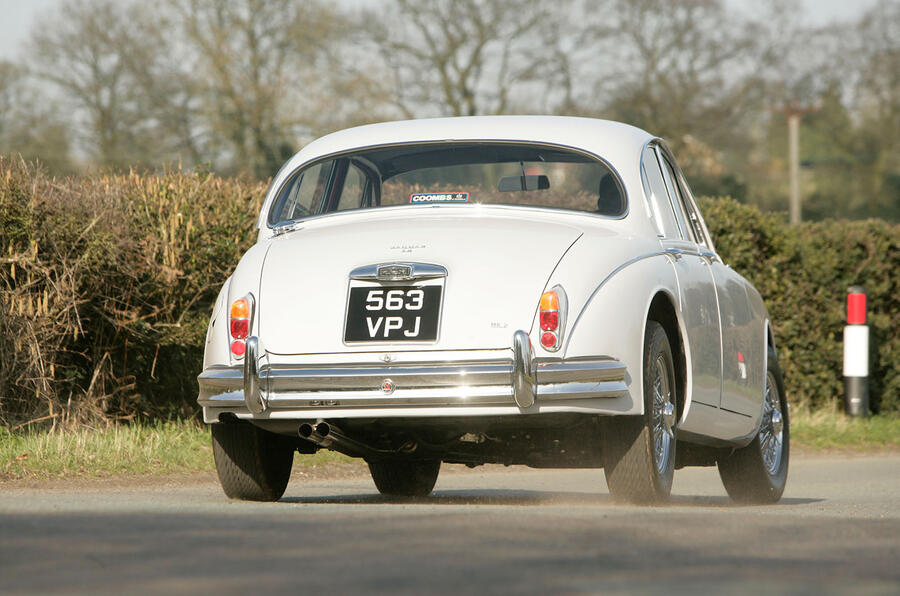
A minute later Mathilde grinned and invited me over to the window, and there it was: a gorgeous Mark 2 parked right outside. I can't remember if it was red or green, a 3.4 or a 3.8, but I can tell you with 100% certainty that the upholstery was beige and it had the obligatory walnut dashboard, steering wheel and gearknob. I can still smell it.
Jacques had recently had a hip operation and wasn't meant to drive, but he could see that I was smitten and wasn't about to deprive me of this potentially character-defining experience. The Jag's creamy six-pot roared into life and we set off in dramatic fashion, the rear wheels spinning and leaving a light trail of rubber as we wound down the hill into the town.
Jacques floored it down the quiet city boulevards and the noise ricocheted from the buildings around us. I was intoxicated, bouncing around gleefully - and unbelted - on the Mk2's sprung passenger seat. At every turn Jacques would brake sharply before flicking the wheel to induce a perfectly controlled powerslide. We careened through the city centre, thundering over tramways, screeching around roundabouts and dodging the dumbstruck evening motorists with abandon - but always with the sense that I was in safe hands. Jacques and Jaguar were in total harmony.
Ten youth-defining minutes later and it was all over: we pulled up back at the house, nosed the beast back into the garage and shuffled sheepishly back into the kitchen, Jacques probably muttering some fib about having just pootled up and down the driveway.
It would be many years before I held the keys to my very own Jaguar - and, it being a lethargic, £400 X-Type, it was almost entirely incomparable with the 1960s stunner that lit my passion for the brand. But I have never forgotten a second of that glorious Normandy night, and neither has my affection for Jaguar's seminal saloon been dulled even slightly.

Steering Wheel Design and Driver Safety Why Round Shapes Remain Essential for Road Cars

Audi had more than 100 steering wheel designs – soon it will have just five, all roundWe need to abandon the gimmick and return to the only shape that actually works: a circle
I have an affliction that, when I begin to think about how difficult it is to find a pleasing steering wheel in a new car, Feargal Sharkey's 1985 hit A Good Heart begins to play on repeat in my head - only with 'wheel' replacing 'heart', of course.
I've learned to live with it as something as inevitable as getting into a new car and being faced with an unnaturally awkward primary control surface – one that routinely changes position from where you last held it. Owing to it, y'know, not being round.
I still can't pinpoint the exact moment that un-round steering 'wheels' (I'll use the term even though I suspect it isn't grammatically accurate) began to be a thing. The 'quartic' steering wheel was so widely ridiculed when it featured on the 1973 Austin Allegro that the industry gave up on them for a while, and I kind of think that, with the widespread adoption of power steering in the years that followed, the best steering wheels were created then too: small, with modest spoke and rim sizes, perhaps even deeply dished on something sporty.
I wonder which particular wheel was 'peak wheel'? Do write in.
It was probably before the first airbags appeared, because some early bagged wheels were big fat shockers, but manufacturers got to grips with those relatively briskly too, compressing the bags down so that they took up not much more space than a conventional steering wheel boss. Buttons have increased spoke width, which isn't optimum for vehicle control, because it reduces the amount of rim available to grip but is probably worth the sacrifice for the increased convenience.
What I find (much) less forgivable is the idea that a steering wheel doesn't need to be nearly round or that a wildly alternative shape is somehow superior. I understand that in racing cars, where access is difficult so you might want to flatten the bottom, and in single-seaters, where a round wheel could protrude into the air flow and you will only need to hold the wheel at a quarter to three because the steering rack is so direct, a squared wheel with sculpted grips is preferable. Necessary, in fact.
But in a road car, even one with such a direct steering ratio that there are only two turns between locks, any wheel that isn't nearly round is, to be blunt, ergonomically stupid. Drivers should not be required to look at the steering wheel as they're driving. They shouldn't have to guess or gauge or estimate where the steering wheel rim is while they're turning it. Such a shape adds, even at a semi-conscious level, another thing to think about, increasing a driver's cognitive load, like feeling for a light switch while walking into a darkened room, at a time when a car should be making things as easy as possible.
But now some new things are happening - some encouraging, others not. The Luce has a far more round wheel than other recent Ferraris and Audi's newish CEO Gernot Döllner recently told me that while Audi has 100(!) different steering wheel designs, "none of them is any good". By 2030, he said, it will have five, "and they will all be round". This is good news.
Not everything is good news. The coming of steer-by-wire, as in the new Lexus RZ, brought with it a yoke, which I hated. Tesla offered one for a while too. And there's to be an upcoming Peugeot with a nearly square 'wheel, which I have tried a prototype of and also disliked. The thinking is that, as in a racing car, if you don't need to turn the wheel more than 180deg. you don't need to move your hands from quarter to three.
The difference being that spending four hours on the M6 isn't the same as doing a stint at Silverstone. You may well want to drape a hand elsewhere on the wheel to relax your muscles while cruising in a straight line, but these controls won't let you. They feel to me like 3D films: an industry's attempt to zhuzh up something that didn't need it and which was asked for by approximately zero customers.
I try not to have too many hills to die on, but I honestly think that designing a steering wheel that isn't round is almost as nonsensical as a road wheel that isn't round.