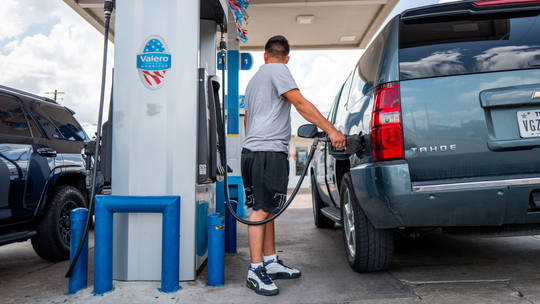
A wave of “fill up and flee” crime is sweeping petrol stations across the UK, while American drivers are waking up to drilled-through tanks and drained fuel as the US-Israeli war on Iran has sparked a spike in oil and gas prices across the globe, according to media reports and industry watchdogs.
When the US captures an Indian ship 1,600 miles away from Iran this identifies wanton exertion of power. What next? Confiscating Iranian cars who travelled to Iraq? Stripping the Iranian embassy?
The US does not realise that the permanent escalation causes problems too.
China,… https://t.co/IM37E6Dhyy
— Alternative News (@AlternatNews) April 22, 2026
The crisis has been mostly triggered by the de-facto closure of the Strait of Hormuz, a critical chokepoint that handles roughly 20% of the world’s oil supply. The situation has been exacerbated by Iranian retaliatory strikes on the Gulf energy infrastructure – although the attacks have now been paused as part of a tentative US-Iran truce.
Petrol prices in the UK have surged to over £1.58 ($2.14) a liter on average, up from £1.33 before the war, according to the Royal Automobile Club. Rising prices encouraged a 27% increase in drive-off thefts, according to a crime prevention watchdog Forecourt Eye.
Read more: US nuclear official leaks sensitive info to undercover journalist (VIDEO)
A study by the body, which was based on data from around 500 petrol stations across England, Scotland and Wales, found more than 6,500 liters of fuel were stolen every day in March, a 15.7% rise from February. It also calculated that if this data is extrapolated nationwide, petrol stations would be losing around £1.25m ($1.69 million) each week.
“At current fuel costs, motorists deliberately evading paying for fuel is costing the sector more than £100m a year,” Claire Nichol, executive director of the British Oil Security Syndicate, told The Sun, adding that operators should be “extra vigilant during peak periods.”
Read more: Iran says it will use ‘all capabilities’ to defend national interests against US threats
The picture is the same across the Atlantic. As of Monday, the American Automobile Association pegged the US national average at over $4 per gallon and up to $6 in California. Before the war, the AAA average was less than $3.