In medicine, silence is never neutral—it has consequences. Doctors exist on the side of life, against death and suffering; that is the premise our profession is built on. Yet history shows the profession has often been timid, at times aligning with power rather than justice. Atrocities such as genocide and state repression are not inevitable; they persist through inaction and a lack of moral courage.
Within days of October 7, 2023, Gaza’s healthcare system was rapidly devastated—hospitals destroyed, physicians killed or detained. These are direct assaults on the core principles of medicine, yet the U.S. physician community’s response has moved along a spectrum from silence to open intimidation. Physicians who spoke up faced suspension, censure, or job loss—one pediatrician was stripped of a national leadership role for urging her own academy to address the deaths of Gaza’s children. Even trainees were not spared: medical students’ names quietly circulated among the same program directors reviewing their residency applications. Editors faced similar pressure—Scientific American retracted a Palestinian-solidarity piece despite finding no factual errors—and when Gaza is written about at all, the silence often persists in another form: framing that never asks why its health system collapsed in the first place.
This silence—and the intimidation that enforces it—demands scrutiny not only in Gaza but in Pakistan. The two are geographically distinct, and in Pakistan the perpetrator is the state itself rather than a foreign power, yet the muted, conflicted response from the medical community remains strikingly similar. Many Pakistani physician social media groups have reached the same conclusion: that Pakistan itself is too political or divisive a subject to raise. APPNA, the leading U.S.-based physician organization of Pakistani descent, met the November 2024 Islamabad killings with an equivocal “both-sides” statement that diluted accountability and bordered on victim-blaming—prioritizing performative neutrality over moral clarity rather than condemning force against unarmed protesters. Now, as its annual convention season returns, APPNA remains mired in the same controversy, with new candidates once again promising to do better if elected.
Across both contexts, the principle is clear: whether through silence or selective framing, failure to confront harm is not neutrality—it is complicity.
A Troubled History of Ethical Failures
In the face of such realities, many institutions invoke “medical neutrality” as justification for silence. But neutrality was never meant to signify indifference.
History shows this repeated pattern by medicine and the cost of that silence. During World War II, the International Committee of the Red Cross maintained neutrality despite evidence of Nazi atrocities—an omission it later acknowledged as a grave moral failure. In response to similar failures, advocacy-driven models like Doctors Without Borders emerged during Nigeria’s civil war in the late 1960s.
History, it seems, continues to repeat itself, showing selective humanism. The U.S. medical community’s response to the wars in Ukraine and Gaza reveals striking disparities often described as a double standard. Support for Ukraine was rapid, widespread, and institutionally coordinated, whereas responses to Gaza have been more fragmented, constrained, and at times marked by internal debate over even basic advocacy indicating political alignment, not a lack of awareness, that helps explain the muted response. The starkest irony came when the New England Journal of Medicine convened a symposium to reckon with its own silence on Nazi atrocities decades earlier—only for its editor-in-chief, at that very event, to acknowledge that the journal had yet to publish a single piece on the healthcare catastrophe unfolding in real time in Gaza.
In Pakistan, the silence from the medical community—both at home and abroad—is even more pronounced, in part because these abuses are often framed as a domestic political issue rather than a global humanitarian concern, unlike Gaza. Yet a growing body of scholarship on neocolonialism and structural violence suggests that similar systems of power and control may underlie both conflicts, despite differences in how they are framed. The silence among physicians of Pakistani origin is likely a consequence of the environment from which many remain professionally and socially connected. In Pakistan—long shaped by military dominance—brutality has become increasingly overt, particularly over the past three years, creating a climate of fear. Despite media manipulation and suppression, several accounts of political violence have gained international attention, including the case of Imran Khan, who remains in arbitrary detention for well over 1,000 days amid concerns about solitary confinement, custodial abuse, suboptimal medical care, and deteriorating health, including vision loss. Raising concern about treatment of political prisoners is not bound to agreements over politics, but as physicians, we are bound to uphold the dignity, safety, and access to appropriate medical care for all individuals. Given the resources of the Pakistani physician diaspora—particularly in North America—their voice carries significant moral and professional weight, making their silence all the more consequential.
Fear, Silence, and the Erosion of Moral Courage
For many healthcare professionals practicing far from these conflicts, the answer is often preservation of self-interest or fear. There are numerous documented cases of institutional backlash, professional consequences, or public targeting for physicians who speak out. In both cases, the situation reflects a deeper moral paralysis. The Prophet (peace be upon him) warned of a time when a community, though large in number, would be “like foam on floodwaters”—lacking strength and easily swayed—due to wahn: the love of worldly life and fear of death (Sunan Abi Dawud 4297). This metaphor captures how attachment to comfort and status can erode moral courage and unity.
Read more:Askari Privilege and the Making of a Hopeless, Lawless, and Sacrilegious Society
Even when a handful of physicians in the United States have raised concerns about Pakistan, responses from organizations such as APPNA have emphasized their identity as charitable, non-political entities. As a professional society of physicians, APPNA’s reliance on its non-profit status to avoid addressing human suffering undermines the ethical foundations of medicine. Instead, it projects a culture more invested in celebration and networking than in upholding the profession’s core commitments. In recent years, candidates have pledged to prioritize human rights, yet these commitments frequently fade after elections, raising questions about the gap between stated values and sustained action. Nevertheless, many members continue to invest time and effort in internal elections. Experience to date, however, suggests that without a clear commitment to professional ethics, changes in leadership alone are unlikely to produce lasting change.
In addition, for Muslim physicians, this moment carries additional weight. Islamic ethical tradition emphasizes justice as a core obligation—standing for truth even against one’s own interests (Surat An-Nisa, 4:135). It is a universal moral imperative embedded in the very fabric of medical ethics.
Reclaiming the Role of the Physician
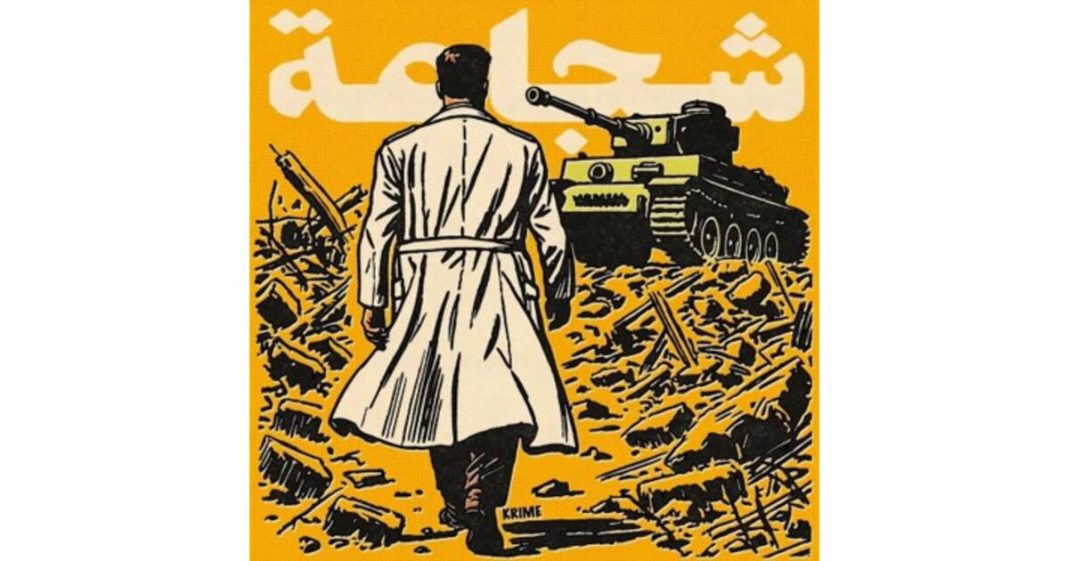
The professional progress that comes with medicine’s advancement means little without ethics behind it; history will judge the profession by its moral courage, not its scientific advancements alone.
Physicians are not required to be political experts. But they are required to recognize human suffering and to respond when that suffering is systematically inflicted. Speaking out against the targeting of civilians, the denial of care, and the destruction of infrastructure is not political activism. It is professional integrity.
The path forward is not complicated, though it is difficult: to acknowledge reality, even when it is uncomfortable; to maintain ethical consistency across all contexts; to reject the misuse of neutrality as a shield for silence; and, when necessary, to distance ourselves from organizations or institutions whose actions compromise fundamental ethical principles of medicine.
Zoobia W. Chaudhry is a Baltimore-based physician and advocate for human rights in Pakistan and Palestine. She serves as Communications Director at First Pakistan Global. X@zoobiachaudhry
The views expressed in this article are solely those of the author and may not necessarily reflect the position or editorial policy of the publication.