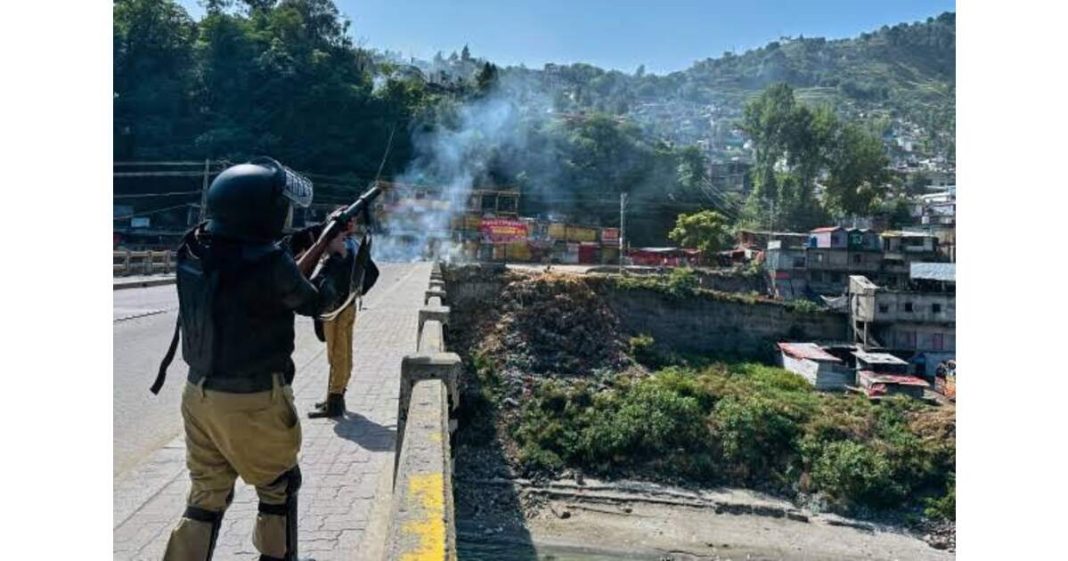
Clashes in Pakistan-administered Kashmir ahead of a protest called for Tuesday killed 11 people and injured more than 70 as police and paramilitary forces sought to scatter a group of protesters from a banned alliance of civil society groups.
Police said the protesters of the Joint Awami Action Committee, which seeks to uphold economic and political rights, had gathered outside a hospital morgue where the body of another group member was taken after his death in firing by police.
“Four police officers and a passerby died after miscreants shot at them,” Sardar Waheed Khan, commissioner of the Poonch sector in the region, told Reuters, adding, “As the result of the law enforcers’ response, six protesters were killed.”
Police Chief Liaqat Malik said 23 security officials and 50 protesters were among the injured in Sunday’s incident, with 30 offenders arrested in the Himalayan region that is a flashpoint with neighboring India.
“The state has begun a massacre of our people in Rawalakot,” Shaukat Nawaz Mir, a JAAC leader, said in a video message on X, referring to the district where the incident happened. He vowed that the group would stay united to ensure the June 9 lockdown.
Read more: Israel and Iran trade strikes, threatening to drag region back to war
In response, Khan said, “The JAAC leadership is misleading the masses by terming it a massacre. The state’s action was meant to restore law and order.”
When security forces tried to disperse the protesters, the group’s activists used automatic rifles, petrol bombs and other weapons to target them, he added.
The JAAC called the strike to protest the reservation of 12 seats for refugees in July 27 elections to the region’s legislative body, out of 45 up for grabs.
The alliance is demanding abolition of the reserved seats in the Azad Jammu and Kashmir Legislative Assembly, which are being contested by candidates who do not live in Kashmir, but elsewhere in Pakistan.
On Friday, the regional government designated the JAAC a proscribed group under an anti-terror law and advised domestic and foreign tourists to leave the region before June 9.
Mass demonstrations in the last two years led by the JAAC to protest the rising costs of flour and electricity turned deadly after clashes between its supporters and the security forces.