Israel and Iran traded fire early Monday in retaliatory strikes that threatened to drag the wider Middle East back into a regional war.
JUST IN: 🇮🇷🇮🇱 Iran launches new wave of ballistic missiles at Israel.
— BRICS News (@BRICSinfo) June 8, 2026
Israeli authorities said two waves of Iranian missiles targeted the country, and urged the public to seek shelter. Explosions could be heard in central Israel as Israeli air defenses sought to intercept the incoming Iranian fire.
Iran’s paramilitary Revolutionary Guard said it had targeted two military bases in Israel, describing the attack as being part of Operation Nasr, or “Victory.” The Guard said it launched the missiles after Israel targeted radar sites in three areas of Iran.
Israel launched strikes on central and western Iran early Monday in response to missile fire from Tehran, in the most serious crossfire since an April 8 ceasefire was reached in the Iran war.
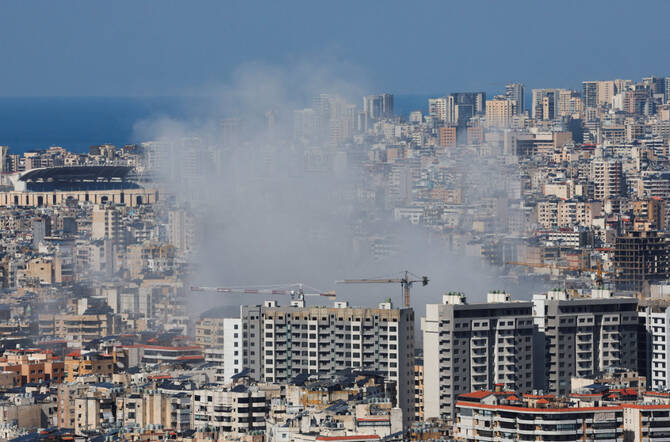
Tehran warned of retaliation on Sunday after Israel struck Beirut’s southern suburbs without warning in defiance of Washington’s request days ago to stand down.
Monday marked the 100th day of the Iran war, launched Feb. 28 when Israel and the United States killed Supreme Leader Ayatollah Ali Khamenei and other senior Iranian leaders. The war raged until reaching a nominal ceasefire on April 8, but a permanent end to the hostilities have been challenged by Iran’s chokehold on the Strait of Hormuz, through which a fifth of all traded oil and natural gas once passed in peacetime, as well as fighting between Israel and the Lebanese Shiite militia Hezbollah.
With global energy supplies threatened, Iran still holding a vast stockpile of highly enriched uranium and even Yemen’s Houthi rebels apparently getting involved in the fighting Monday, the risks of the war fully erupting again appears to be rising.
Israel strikes Iran
Iranian state television reported the sound of explosions being heard in Isfahan, Karaj, Tabriz and Tehran, without immediately elaborating. A witness in Tehran described hearing at least one large blast somewhere to the west of the country’s capital city. Iran closed the airspace around Tehran’s Imam Khomeini International Airport, the country’s main airfield, after the Israeli attack.
Officials offered no details on what had been struck, nor any damage information. Iran’s paramilitary Revolutionary Guard said that Israel used air-launched ballistic missiles in its attack Monday morning, without elaborating.
The semiofficial Fars and Mehr news agencies said Israeli strikes had hit a petrochemical factory in city of Mahshahr in Khuzestan province. It did not elaborate on damage.
The Israeli military later confirmed the strike on the petrochemical plant.