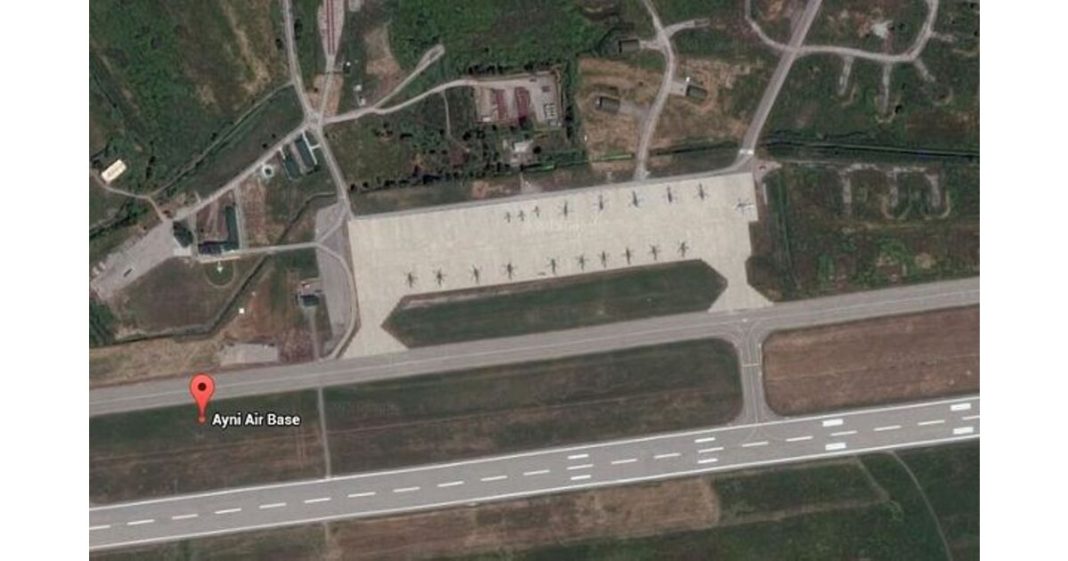
Tajikistan has formally asked India to vacate the Ayni Air Base, marking the end of India’s military presence in Central Asia after more than two decades. The Ayni Base, located near Dushanbe, was India’s only overseas military installation, and its loss is being described by analysts as a major strategic and diplomatic setback for New Delhi.
Located just 10 km from Dushanbe, India had been controlling the Ayni base for more than 25 years.
Situated close to Afghanistan, Pakistan, and China, the base served as a crucial hub for intelligence coordination, logistical support, and regional surveillance. It symbolized India’s northern frontier in Central Asia and its access to Afghanistan.
The closure of the base has been dubbed the collapse of India’s northern frontier in the region. According to Indian media, New Delhi had invested $100 million in upgrading and maintaining the Ayni airbases’ infrastructure, including runways, hangars, and surveillance systems. India had built a long runway for fighter jets to land here, a fuel storage depot, and an air traffic control tower.
The base was conceded as a strategic point, helping India secure long-term access for air and intelligence operations. However, the call of Tajikistan to end the base has adversely affected the massive investments made by India.
The development is facing sharp criticism from opposition parties in India, including the Indian National Congress, which called the closure of the base a strategic failure of India. Party officials said that the loss demonstrates the erosion of India’s diplomatic standing in Central Asia.
Indian media outlet, The Print, revealed that India had stopped operating the base back in 2022. The print claims that India was operating the airbase along with Tajikistan on a lease period. Tajikistan had informed India in 2021 that the lease would not be extended, and hence, New Delhi will have to vacate the base.
Sources claim that the withdrawal was completed in 2022 but had remained under wraps. The news outlet, attributing it to the sources, said that Tajikistan was reluctant to extend the lease because of pressures from Russia and China over non-regional military presence at the airbase.
India’s existing National Security Advisor Ajit Doval and former Air Chief Marshal B S Dhanoa played a critical role in establishing the base, which was funded by India’s Ministry of External Affairs.
India lost a key strategic depth it had with an air base at Ayni in Tajikistan, as it was forced to shut down and leave with all its military assets recently. China and Russia led to Tajikistan asking India to vacate the air base. pic.twitter.com/QZyYSd4WGM
— Varun Karthikeyan (@Varun55484761) October 28, 2025
🚨🇮🇳🇹🇯 India confirms handover of Ayni Air Base to Tajikistan pic.twitter.com/8uPYu0HLlk
— Sputnik India (@Sputnik_India) October 30, 2025
I think the fact that the Indian withdrawal from Ayni occurred 3 years ago and was only reported now is a emblematic of India’s entire stint at Ayni. No one knew what India was doing there and why, up to and including when it withdrew. https://t.co/nqbvR6zjmP
— Christopher Clary (@clary_co) October 29, 2025
The idea to develop the Ayni Base was first tabled around 2001 and 2002 by the strategic thinkers in the Indian Ministry of External Affairs and the Security Establishment.
Read more: India was on the brink of nuclear war with Pakistan: President Trump
Air Marshal Dhanoa was appointed as the first base commander in 2005.
Under the Narendra Modi government, India briefly deployed Su-30MKI fighter jets to Ayni. Strategically, the base gave India the ability to project power across the region, maintain proximity to Afghanistan, and indirectly pressure Pakistan, since Tajikistan’s border lies only about 20 kilometers from Pakistan-administered Azad Kashmir via the narrow Wakhan Corridor.
The Print claims the base could have helped the Indian Air Force to target Pakistan’s Peshawar from Tajikistan, which could have put additional pressure on Pakistan. This could have also meant that Pakistan would have to relocate its assets from its eastern borders to its western borders.
Defence analysts argue that India never fully utilized the base’s strategic advantages. With Tajikistan’s decision to end the lease, India’s presence in Central Asia effectively comes to an end—signaling the collapse of India’s northern frontier strategy.
GVS South Asia Desk