

Kei Cars and the Allure of the Unattainable: Why the Daihatsu Mira TR-XX Avanzato...
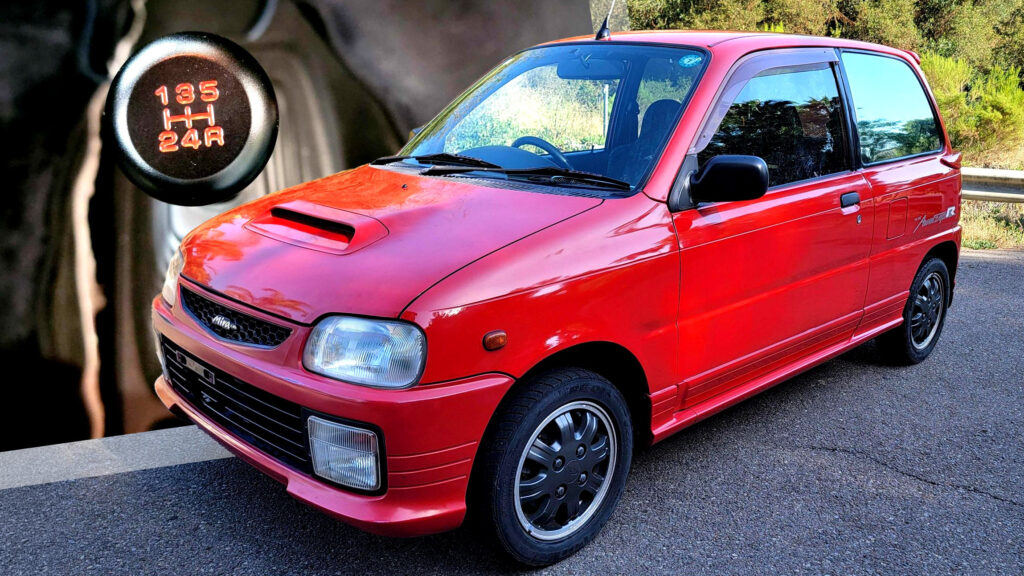

Dune Buggy Culture Returns as Beach Driving Reopens Amid Wildlife Concerns
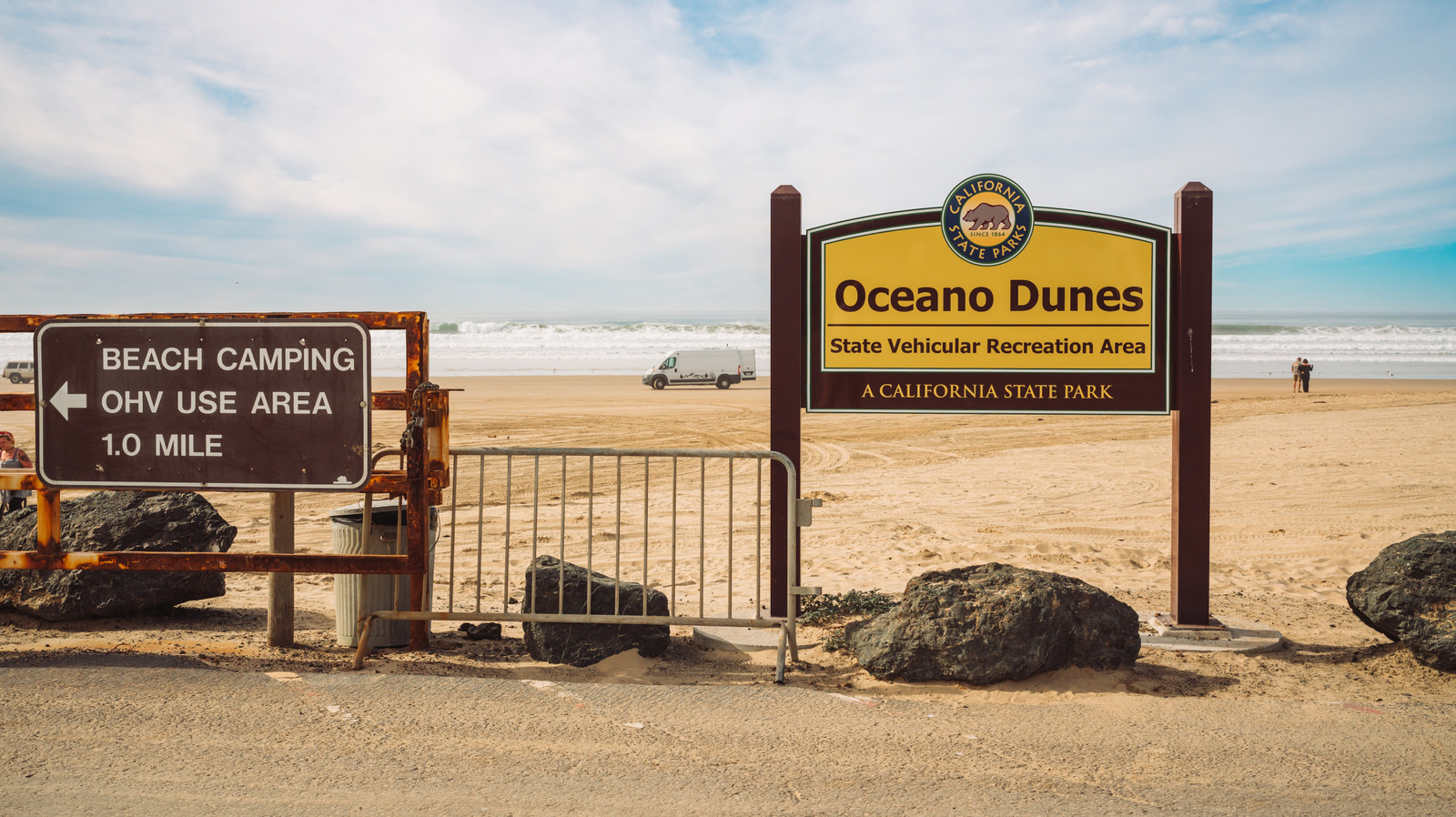

Bovensiepen Zagato Redefines the Modern GT by Fusing M4 Performance with Italian Coachwork and...
 Bovensiepen Automobile debuts with a stunning, carbon-bodied coupe, but what's it like to drive?
In Buchloe old habits die hard, if indeed they die at all.
The Bovensiepen family has now relinquished the rights to the 60-year-old Alpina name, trading them to the BMW Group, and the first model of their latest venture – Bovensiepen Automobile – represents a new dawn in a great many ways. And yet here we are, pounding round the Salzburgring in a modified BMW of a distinctly road-going disposition, with capitalised letters parading luridly across its chin.
There are twice as many letters now but it’s all uncannily familiar. When the Bovensiepens ran Alpina, a trip to the Salzburgring was their preferred method of letting the press loose in a fresh model. There’d be a couple of cars, chatty senior management and old workshop hands mulling in the pits, plus a mountain of ALP-marked tyres and Brembo brakes in one of the garages.
It never felt less than an incongruous arrangement, given the laid-back nature of the luxury cruisers that made Alpina famous, and sure enough, the same is true for the stunning new Bovensiepen Zagato. This £320,000 2+2, penned just outside Milan by Norihiko Harada, is pitched both as extra-special collector’s curio and as a credible alternative to something like an Aston Martin DB12 S, but one thing it is certainly not is a track-day blade. It’s an opulent, leather-stuffed GT with monstrous torque.
That said, one key difference between the Zagato and Alpinas of yore – even the most special ones – is that rather than being based on a mainline BMW, underneath the full carbon body lurks an M4. An M4 Competition xDrive Convertible. We will come to the implications of the Zagato using a full-blown M base in a moment, but first, why choose the heavier convertible?
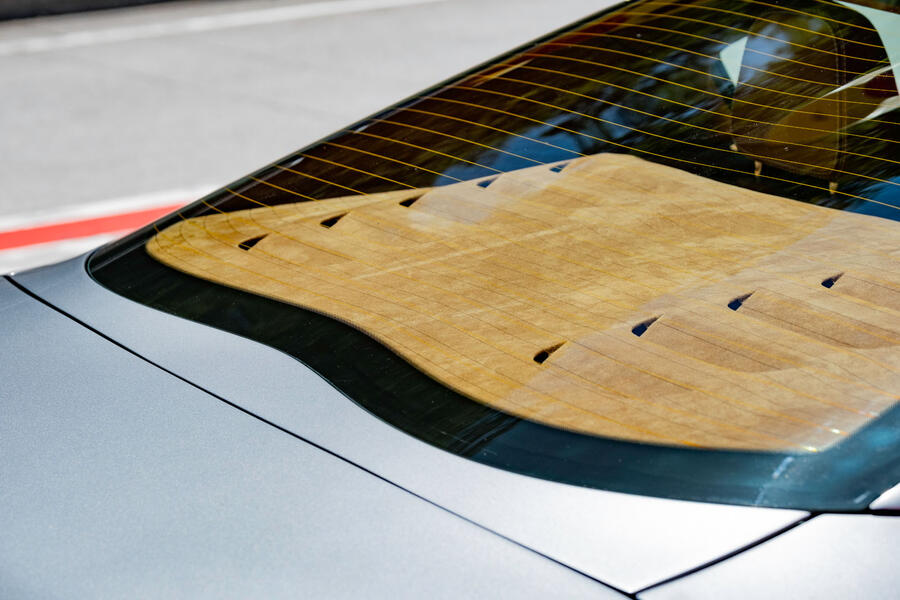
Chiefly because it allowed for the pillarless design that so appeals to company owner and CEO Andreas Bovensiepen. It also meant the double-bubble roofline – a Zagato signature since 1948 – could be designed and fabricated from scratch, then installed without cutting into the donor car’s monocoque. And it was worth it, because the way the contours of the roof flow seamlessly into the rear screen is one of the prettiest things about the car.
That and the wicked rake of the bonnet, which is 100mm longer than that of an M4 and hides a scything outlet whose existence must be 20% necessity and 80% theatre. It culminates in headlights as low as the BMW architecture allows, and the effect is predatory but undeniably elegant and to these eyes a touch Lagonda.
The conversion removes the donor car’s folding roof mechanism. The new body of 12 carbon panels then weighs just 50kg, even with the fixings that pin them to the underlying structure. While the join between the roof and M4 Convertible’s header rail can only be disguised so much, it’s a deft job in the main. If there’s any drawback, it’s that the rear haunches are double-skinned. They form an integral part of the crash structure and the steel couldn’t simply be removed and replaced with carbon, so the latter is laid over the top.
Inside you’ll find humble 4 Series ergonomics juxtaposed with an almost obscene degree of material lavishness. This is where the Bovensiepen saddlery excels and where you begin to understand why each car takes a minimum of 250 hours to build, rising to 400 hours if the commission is grand enough. The boot alone – appointed in tobacco Alcantara with white stitching on our car – is the equal of Bugatti polishing the wishbones of the Veyron to a sheen: unnecessary but, boy, it leaves an impression.
In the cockpit, barely any surface that is not finished in carbonfibre is covered in pristine supple leather (Lavalina if you like), from the floor to the Alcantara-trimmed ceiling. There’s little doubt these cabins will age beautifully, and in an era where sustainable, man-made upholstery is in vogue, it all feels borderline illicit.
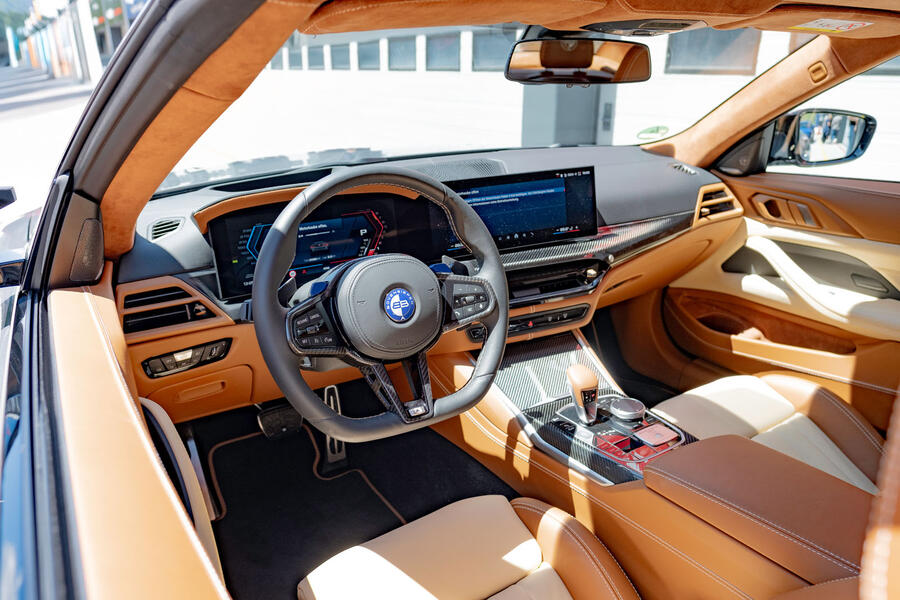
Because it is an M4 at heart, the Zagato’s driving ergonomics are very good. Firm, low, reassuring seats are complemented by plenty of adjustability in the steering column. The BMW’s surprising generosity of rear leg room is also carried over. Visibility is excellent too, what with the lack of B-pillars and a rear screen far larger than the M4 Convertible allows for. In short, this car is much more usable than most £300k-plus specials.
Elsewhere, Bovensiepen has tried to inject some shape into the inky, unromantic cliff face that is the M4’s sweeping digital display. It was worth an attempt, but the slim cowling that is ahead of the driver is the only bit of the cockpit that feels a bit bolt-on. Not so the paddle shifters, which are in aluminium and not only look the part but also feel more satisfying in use than the rubberised blades of the M4.
Fire up the Zagato and it is unapologetically loud. The nasal timbre is trademark ‘S58’ 3.0-litre straight six, but a higher-frequency rasp and greater bass betray the titanium exhaust from Akrapovic. And you get the works – the titanium starts at the block, not the silencer. The resulting drop in back pressure, with a modified intake tract and an electronic tickle, raises power from 534bhp in the M4 to 602bhp, with torque swelling from 479lb ft to 516lb ft.
It gives the 1875kg Zagato a power-to-weight ratio of 321bhp per tonne – a little better than that of the current Porsche 911 Carrera GTS – and with four-wheel drive the 3.3sec 0-62mph time feels a touch conservative.
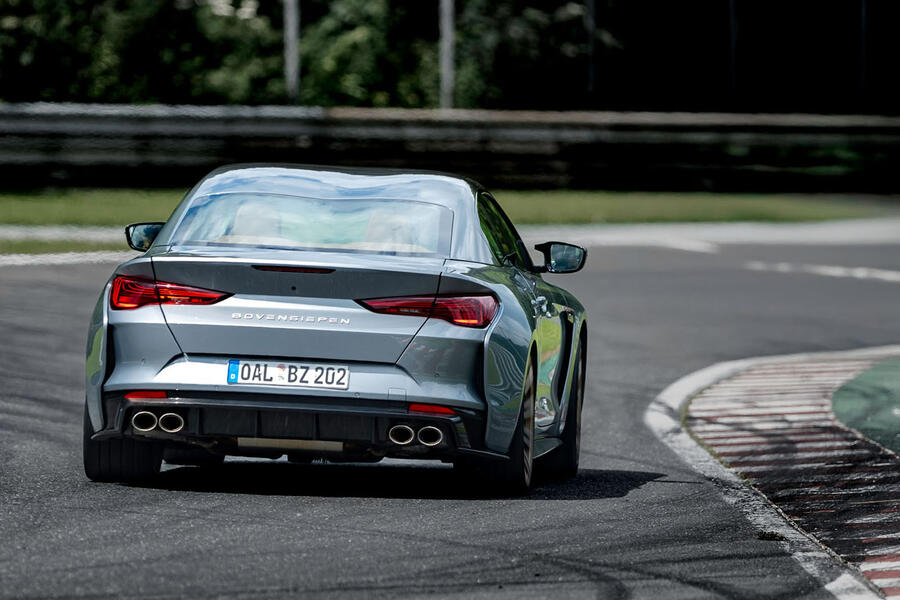
Launching the Zagato out of the pit lane confirms silly-fast status. A handful of laps on circuit is not going to provide the final insight for a car like this, though Ostschleife – with its terrifyingly porridge-textured track surface, entered at more than 160mph in a car this rapid – is a good assessment of composure.
On which note, Bovensiepen has swapped out the M4’s factory dampers for a set of Bilstein Damptronics. It also fits custom Eibach springs and has changed the top mounts and installed slimmer anti-roll bars. The donor car’s spread of three driver-selectable damping modes is retained but the characteristics are altered to give the Zagato’s body more freedom of movement and long-legged compliance.
Meanwhile, the forged wheels wear Michelin Pilot Sport 4S tyres – 285/30 at the front and 295/25 at the back, mirroring the largest optional fitment available on an M4. Interestingly the torque split between the axles hasn’t been tinkered with and neither have the electronically controlled M differential or ESC settings (so you get M Dynamic Mode).
It is obvious that Andreas Bovensiepen and the team have enjoyed using a tough-as-nails M-car base rather than a mainline BMW, as was the Alpina way. He described the M4 as being “perfect” and not needing anything in the way of driveline or chassis reinforcement, or additional cooling.
The result of all this is a bit of a conceptual mutant: a more relaxed M car, a psychopath in repose. On track you notice the additional suspension travel the Zagato allows compared with an M4. It manifests in the form of extra suppleness of course, the body subjected less to the turbulence underwheel, but also in a more neutral and less playful balance.
You have to work harder to get the Bovensiepen to rotate, and through its vertical travel, the body feels heftier than I was expecting. But that heft, along with the extra neutrality both on a trailing brake and under power, perfectly suits the torquey thrust of the car and the all-weather touring brief. Whether you can forgive the small deficit in structural rigidity that comes as a result of using the convertible monocoque, not that of the coupé, is a matter of how much you love the roofline.
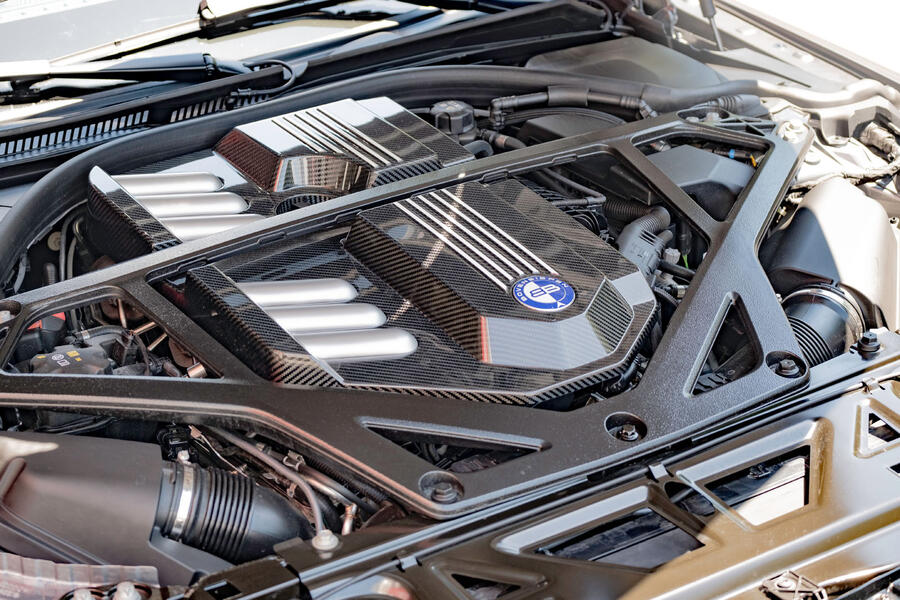
I confess at this point that I did not slot the driveline in RWD and hang the Zag out around Ostschleife, or any other bend. Time was short and our follow-the-leader lapping wasn’t an appropriate format for that. But there’s little reason to doubt that, on the road, in rear-drive mode, and with the dampers in Sport Plus, this car wouldn’t be fluidly entertaining.
It is softer than an M4, yes, but has the same core tautness and this gives it predictability and precision. In terms of dynamic character, the blend of insouciance with underlying control and effortless torque make it tempting to compare the Zagato with something like a revitalised Ferrari 550 Maranello.
We’ll have to drive this rare machine on the road to know for sure, but with only 99 examples planned, there is no guarantee we’ll get the chance. Do feel free to envy the owners, though. Lord knows they’re paying for the privilege, but in the Zagato, they’ll own a beautifully finished, indecently pretty but unostentatious coupé in the mould of the classics, and one that’s sensibly sized and undemanding to drive fast. The Bovensiepens have gone back to the future.
Price £319,000 (approx) Engine 6 cyls in line, 2993cc, twin-turbocharged, petrol Power 602bhp at 7200rpm Torque 516lb ft at 2500rpm Gearbox 8-spd automatic, 4WD Kerb weight 1875kg0-62mph 3.3sec Top speed More than 186mph Economy 27.2mpg CO2, tax band 235g/km, 37% Rivals Aston Martin DB12 S, Ferrari Amalfi
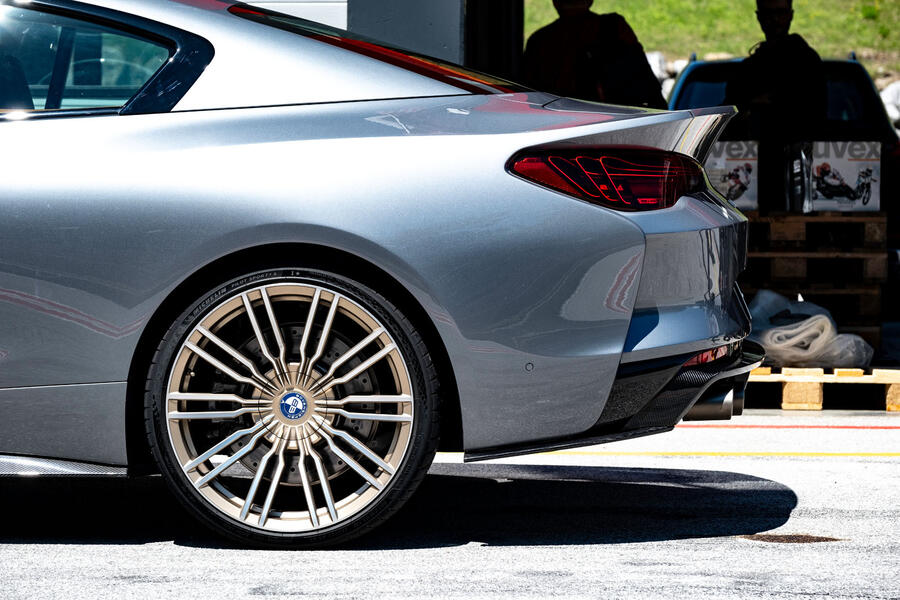

Silverado 2027 Redefines V8 Power and Digital Luxury as Chevrolet Counters Industry Turbo Trend

AI Chatbot Promises Car Buyback Deal Dealers Refuse to Honor


Mercedes CLA Reinvents the Electric Saloon with Efficiency, Comfort, and Engaging Dynamics
 Mercedes' breakout EV is cleverly packaged, hugely efficient and even fun to drive
It may seem a little old-fashioned to have an awards category for saloon cars, but the saloon has proven impressively resilient and adaptable.
Not the estate, not the MPV and not the SUV have been able to replace it, and in the EV era the aerodynamic advantages of a low-slung car with a teardrop rear end give it a head start in the range race.
It's no wonder, then, that Mercedes-Benz chose to launch its brand-new breakout EV platform with a compact saloon, the CLA.
Despite its somewhat traditional shape, it represents a rethink on how to make a successful European premium car. Although cars atop the MMA platform are also available with a petrol engine, they're designed as EVs first, which helps with packaging the battery and ancillary electronics.
As a result, the CLA not only looks and feels like a saloon in its profile and driving position but also offers distinguishing boot space and a roomy frunk.
The excellent aerodynamics and Mercedes' general commitment to EV technology pay dividends in other areas too. Thanks to 800V electricals, new inverters and a two-speed gearbox for the main drive motor on the rear axle, the electric CLA is very efficient, giving it class-leading range despite a relatively modest battery capacity.
All those rational qualities are great, but what makes the CLA endearing as well as competitive is how well it drives. There's a natural progression to all the controls that makes it smooth and intuitive to drive.
Meanwhile, Mercedes has also nailed the chassis set-up. With modern Mercedes models, you often need to spend big to get the version that makes good on the expectation of luxury, but whatever version of the CLA you pick, it will cruise quietly, with a supple ride and good isolation.
Rather than feel compromised, though, the handling feels nicely harmonious, with communicative steering, a keen front end and even some subtle adjustability on the power.
The CLA shows there's nothing old-fashioned about saloons. It's the embodiment of how they can be efficient, well packaged, comfortable and fun to drive.

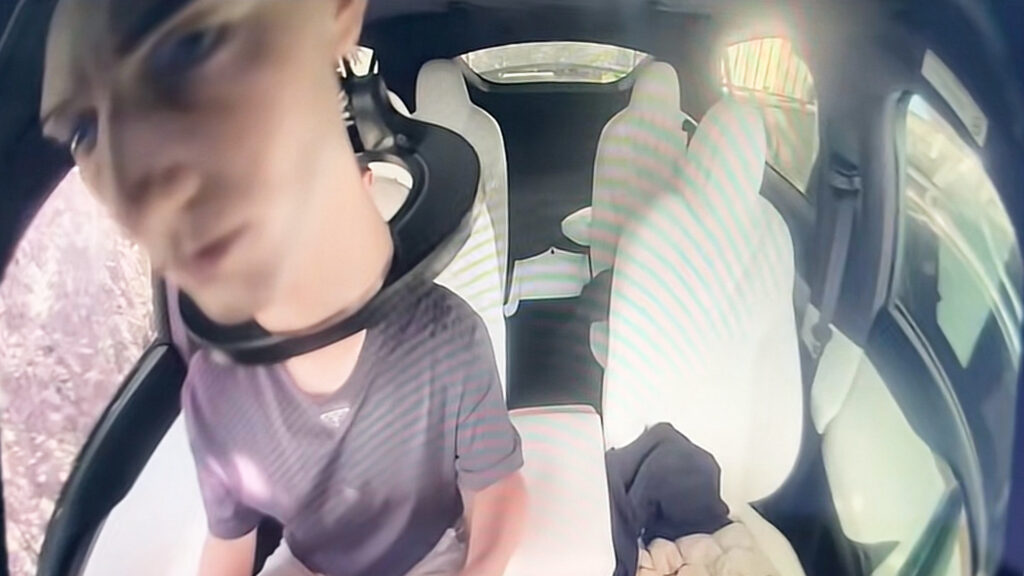
Tesla Driver Monitoring Undermined as Cheap Doll Heads Expose Critical Flaw in Autopilot Safety

Renault’s Strategic Focus on Electrification and Product Quality Drives Rapid Turnaround Under Cambolive
 Under CEO Fabrice Cambolive, Renault has its mojo back – this is why
If Renault boss Fabrice Cambolive ever fancies a career change, he'd make a great tour guide.
As he deftly guides me through the centre of Paris from the driver's seat of the new Twingo, Cambolive is supposed to be telling me about the French manufacturer's remarkable story of rejuvenation and success. Instead, he's busy pointing out his favourite views, comparing the city's Left and Right Banks and detailing his favourite arrondissements.
It's fascinating stuff, and Cambolive is clearly enjoying himself, although I realise I'll have to slowly drag the conversation back to the car industry. After all, there is much to discuss regarding Renault's recent success - it's why Autocar has named the brand our Best Manufacturer for 2026. Our decision is based partly on commercial achievement: last year Renault's UK sales were up 13% year on year to 68,000, of which 29% were full EVs. So far this year those sales are up a further 7% and, buoyed by the success of the Renault 5, which is one of the best-selling EVs among private buyers, the firm's EV sales are tracking well ahead of the UK's zero-emission vehicle mandate requirements.
But a major reason for this award is, well, une bonne vibe: Renault has its swagger back. At a time when some rivals are still dithering about their electrification plans or fretting about how to take on Chinese rivals, Renault has picked a confident path: it is focused on EVs and full hybrids, has expanded its offerings in the crucial C-segment and, with the 5, 4 and Twingo, has proven that small electric cars can be not only affordable but also fun and desirable.
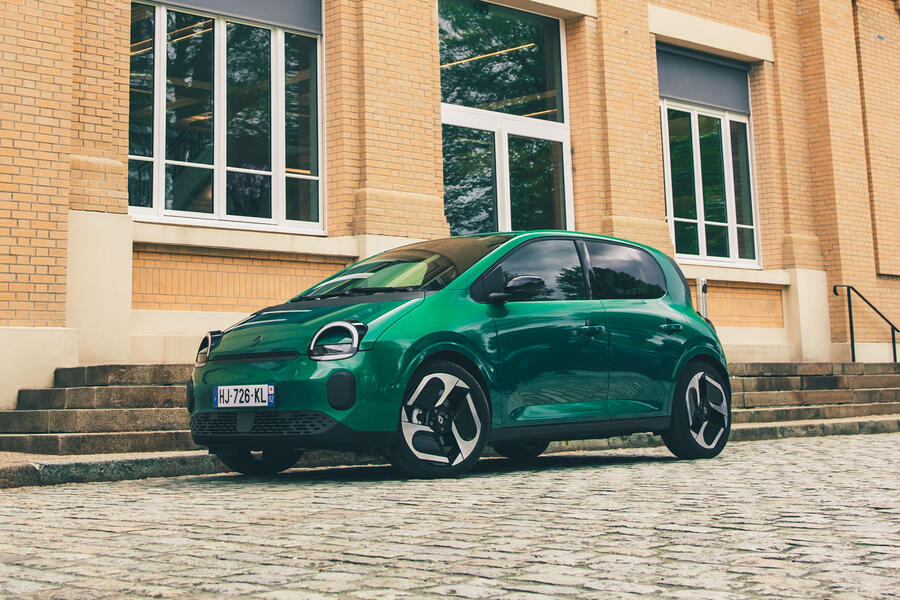
The new Twingo, in fact, is Autocar's Best Small Car for 2026. To wrap up everything in one neat package, we suggested Cambolive might celebrate by taking us for a tour of Paris in the award winner. And so, as we zip our way from Renault's HQ in Billancourt and follow the path of the Seine towards the Eiffel Tower, Cambolive outlines what's led to the Twingo's success. Well, he will eventually. First he takes time to point out an old wall from the French Basque Country against which Basque pelota is now played. He knows these roads in great detail: it really is his commute to his apartment. He even shows us where he sometimes stops to admire the view.
But about Renault's success? Well, there isn't one specific reason, but "a lot of successive points". He adds: "If you want to be good you have to tick a lot of boxes." Cambolive cites several key factors that were initiated as part of former group CEO Luca de Meo's Renaulution plan and which continue today under the revised strategy of his successor François Provost.
One key action, says Cambolive, was "to be in on electrification, but to stay on two legs and not go in one direction. The fact we invested in hybrids on the one hand and BEV on the other was good." That was helped by the fact that, as a relatively small manufacturer, Renault simply couldn't afford to pursue the range of powertrain technologies some rivals have.
Cambolive adds: "Sometimes that's easier than thinking you want everything." But it was a change in approach: his early moves included axing the plug-in hybrid versions of the Megane and Captur. At the time, moving away from PHEV technology felt a risk given market trends, but it has been rewarded. Renault is making a similar move now, focusing on range-extender technology for its next wave of cars.

"Sometimes you have to gamble a bit," says Cambolive. But even if you gamble, you need a plan: "Automotive is not improvisation, because you embed many billions in each decision."
Another factor behind Renault's success in the past year was the decision to put a major focus on developing new products and an associated effort to change Renault's commercial approach. You'll see this from its new flagship stores and general market.
"If you have bad salespeople and good product, you're dead," says Cambolive. "If you have good salespeople and bad product, you're dead. The key was to improve both at the same time and not consider volume as an objective but as a result of doing that.
"Luca never pushed me to gain market share, other than by improving the value of the product. We had the capacity to be consistent between the quality of the product and the quality of sales."
We're currently sitting in an example of that push to improve product. During the Twingo's development, much was made of its 'China-speed' two-year development cycle and sub-£20,000 starting price. But none of that would matter if it wasn't so brilliantly well conceived: it is so well designed and engineered it doesn't feel like it was built to a budget.
Cambolive is keen to show off all the functions, notably flicking to Waze on the Google-based infotainment system. "I was amazed by the level of connectivity the Twingo offers," he says. "It's more connected than some cars that are three times more expensive."
Spoken as you would expect of Renault's CEO, of course, except Cambolive is refreshingly honest. He acknowledges some of the harder plastics in the Twingo - "but with this sort of car you have to aim for durability first" - and admits that he thought he would notice the lack of a multi-link rear suspension. "But frankly," he says, "for this car a torsion beam is fine."
He gets a chance to show that off, too, as he suddenly takes a quick left down a side street, barely pausing for our Scenic chase car to follow. He knows the traffic round here well and is keen to avoid it. Still, he thinks the Twingo is perfect for these roads, saying: "It's chaotic with all the cars, pedestrians and bikes. So having a really short turning circle and an electric powertrain is really useful. Driving this car is like having a kind of superpower in the city."
To drive a Twingo, first you need to buy one - and one example of how Renault has worked at improving its sales environment to match the desirability of its products can be found in its flagship store on the Champs-Élysées, just down from the Arc de Triomphe. Our initial plan had been to head there for some laps of the Place Charles de Gaulle roundabout, but with a glance at Waze Cambolive isn't keen: the traffic is building. Much time has been spent plotting out today's route but, with the instinct and adaptability needed to run a modern car brand, Cambolive pivots the plan.
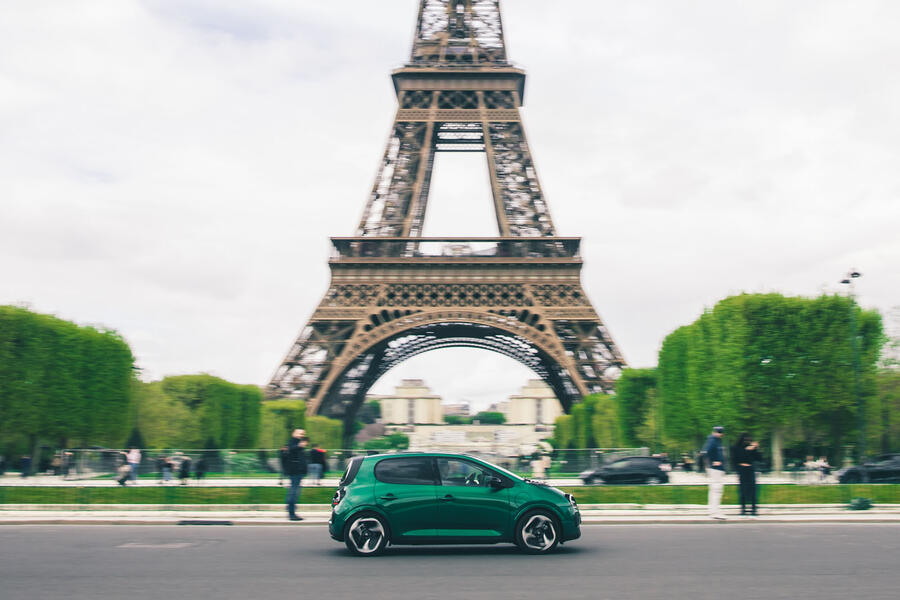
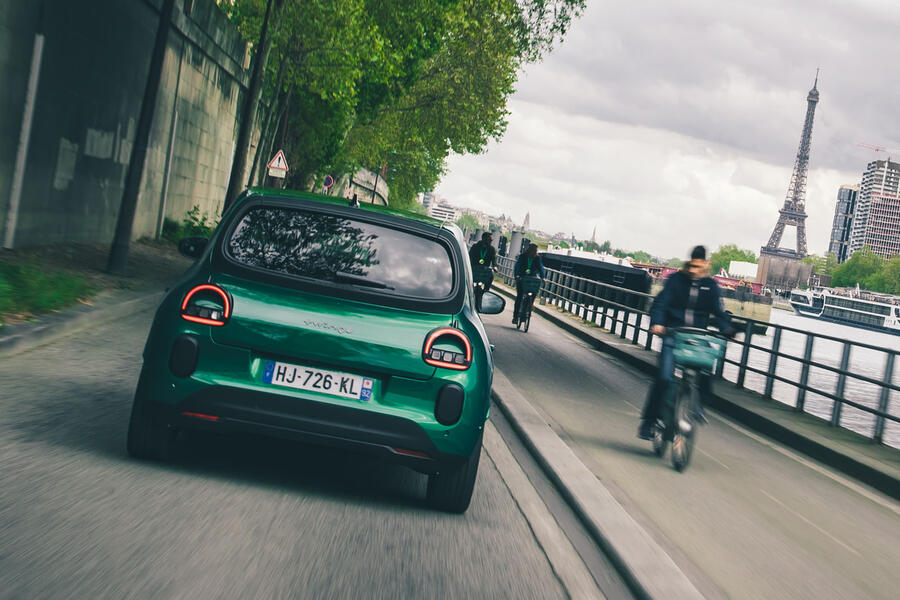
Instead we lap Place du Trocadéro while snapper Jack attempts to get two French design icons - the new Twingo and the Eiffel Tower - into frame at the same time; as a bonus, we pass a third-generation Twingo soon after. As we begin our return back to Billancourt, Cambolive is still enthusing about the potential of the new electric version. It's an example, he says, of how the firm "tries to design cars to be loved".
But that's not the only goal. "If we put technology or connectivity on a car, it has to be people-oriented," he says. And if the firm is going to make EVs, then Cambolive says it has to be because it serves a purpose "and not something we have to do to comply with CO2 rules".
And, crucially, each car has to have its own appeal. In fact, as much as Renault's award-winning success is driven by a rejuvenated product line-up, Cambolive wants you to think of individual models. "I'm against commercials where you see a full line-up of a manufacturer," he says, while nimbly wheeling the Twingo into position for some shots outside Renault's HQ. "People don't buy you; they buy one of your products. And each product has to be targeted to a specific customer."
Our Paris excursion is over and, as you might expect, even more impressive than Cambolive's tour guide skills are his understanding and vision of Renault's success. The brand has undergone a quick turnaround, but it has been hard-earned - and he knows things don't stay still for long.
"This industry changes fast. We have been an example of rapid success over the past two years," says Cambolive, "but there are lots of examples where a firm is having success and its situation changes abruptly. We monitor our competitors, and with some I could anticipate what they would announce later. We have to be very modest and have a lot of humility."

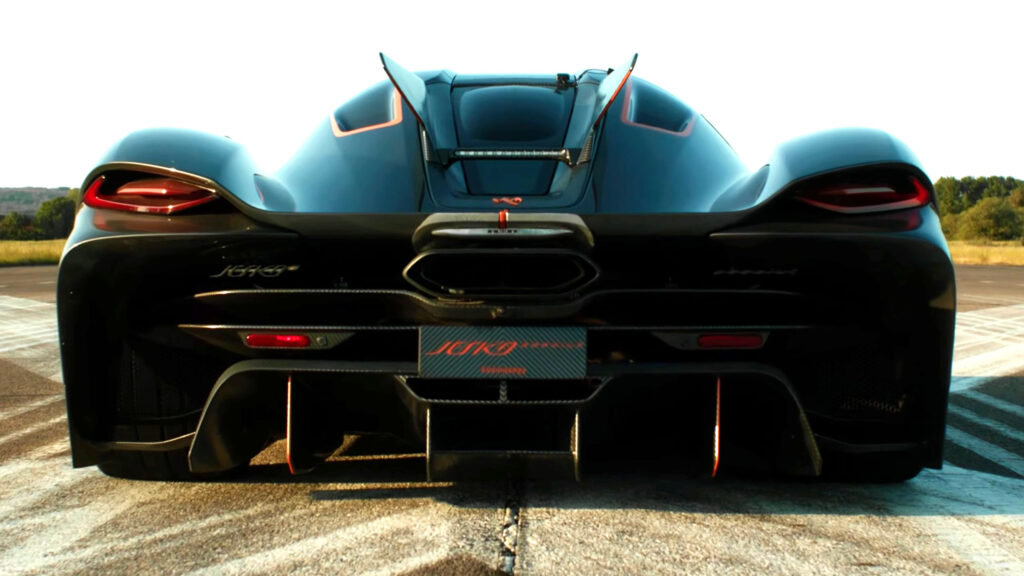
Koenigsegg Jesko Absolut Redefines Combustion Hypercar Acceleration with Transmission Breakthroughs

Kia PV5 Redefines the Electric Van with Smart Design, Value, and Versatility
 Kia's entry into the van market was unexpected, but it's created one of the smartest vehicles you can buy today
Bold and imaginative vehicle design is something that, by and large, the commercial vehicle buyer has traditionally been deemed uninterested in.
Boxy conservatism reigned supreme and unchallenged for years, because why bother making your utilitarian workhorse look good when all it does is gather dirt, hold your tools and move your trade materials? If it looked good, it would only distract people from the name of your up-and-coming plumbing business, surely?
Well, the reimagining of the LCV for the electric age would seem to be an opportunity to change all that, giving van and MPV drivers more to feel good about - and it's an opportunity being driven by an all-new player in the field.
Does that make Kia the van market's Tesla-style grand electric disruptor? Is it out to offer a similarly emphatic, clean-slate break from the old way? Perhaps - but if it is, it won't be using digital technology and a proprietary rapid-charging network to supercharge its success but rather simpler lures.
That's because, besides looking so wonderfully progressive, fresh and unusual, the Kia PV5 is very cleverly packaged, appealing to travel in, really well mannered to drive - and it's outstanding value for money.
It's shorter than conventional box-van rivals but, because it's more efficiently laid out, just as big inside. It comes with up to 161bhp of power and a drive battery of up to 71.2kWh, making performance and range less compromised than in a number of other commercial-market EVs.
And yet, because it uses an adapted version of the same underpinnings found beneath Kia's electric cars, it's cheap: yours for less than £23,000 as a van (without accounting for VAT but including the government's Plug-in Van Grant) or from little more than £30,000 as the entry-grade Passenger MPV - when the cheapest Volkswagen ID Buzz is literally double that.
With clever seven-seat and wheelchair-accessible conversion variants due soon, the PV5 looks set to be one of the smartest ways you could spend a modest budget on a big, quirky family car for some considerable time to come and we like it a lot.