Audi Q7 Redesign Signals Strategic Shift After a Decade of Stagnation

Ford Escort RS Reimagined as a Lightweight Performance Benchmark by Boreham Motorworks
 Stunning 'continumod' of 1970s icon is new from the ground up and has blistering performance potential
British engineering firm Boreham Motorworks has revealed its £300k Ford Escort RS 'continumod' in production form for the first time - and claimed it will be "one of the most focused lightweight performance cars of the modern era".
Unlike a conventional restomod, Boreham's super-light Escort is an entirely new creation, rather than being a modernised or re-engineered version of an existing classic car.
It's officially licensed by Ford and described as "the first brand-new road-going Ford Escort Mk1 in more than 50 years".
The RS was revealed initially in 2024 and has now been shown in full – with final specs – at the London Concours classic car show, ahead of Boreham beginning production in the coming months.
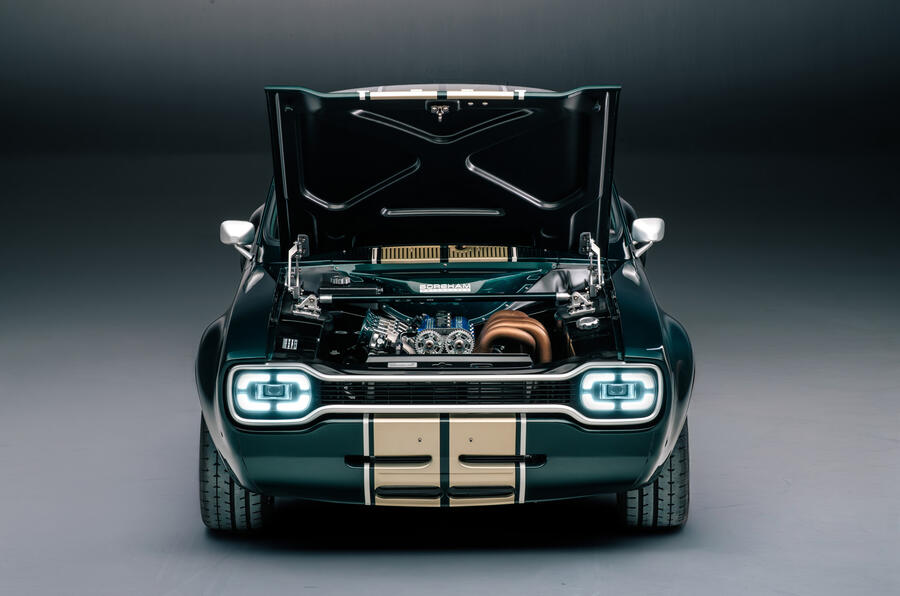
Pricing starts from £295,000 before options and taxes – so £354,000 in the UK – and just 150 examples will be built in total, in right- or left-hand drive.
Weighing just 895kg, the RS is available with a bespoke naturally aspirated four-cylinder engine that's said to combine motorsport learnings with "modern engineering precision" to deliver a "visceral, analogue driving experience".
Named Ten-K in reference to its screaming 10,000rpm redline (demonstrated in the below video), the 2.2-litre lump weighs just 85kg yet sends an impressive 326bhp and 155lb ft of torque through the five-speed dog leg manual gearbox to the rear axle.
Boreham has yet to release performance figures but, based on a power-to-weight ratio of nearly 300bhp per tonne, the RS should be well capable of keeping pace with most modern sports cars off the mark.
The RS will also be available with a reworking of the storied Twin Cam engine that powered the Escort to competition success and a powerplant derived from Ford’s current offerings.
The Twin Cam has been upsized from 1558cc to 1845cc and its twin Weber carburettors have been replaced by fuel injection. The changes net an extra 73bhp for 182bhp. This is sent to the rear wheels via the original four-speed gearbox, with straight-cut, close-ratio gears.
The RS is based on the two-door Escort RS bodies that were produced by Ford’s Advanced Vehicle Operations in Aveley, Essex, before it was shut in 1975. Boreham digitally recreated the shell and used computer simulations to re-engineer it for improved handling, adding extra bracing and widening the wheel arches.
It also developed a new rear axle made from aluminium and titanium and moved the rear dampers from their original canted position to a more conventional vertical orientation.
Power steering, anti-lock brakes and traction control are omitted to match the driving experience of the original car.
It’s also fitted with coilover suspension and an automatic torque-biasing limited-slip differential that’s said to provide “controllable and predictable” oversteer.
As well as all the changes under the skin, Boreham employed Wayne Burgess – formerly head of design for Jaguar SVR models, including the XE Project 8 – to bring the Escort up to date aesthetically.
For example, its chrome bumpers and main indicators were removed to match the look of contemporary race cars (such as the Alan Mann-developed Escort that won the 1968 British Saloon Car Championship), while the new LED headlight design mimics the cross-shaped tape that was applied in period to prevent light housings from shattering.
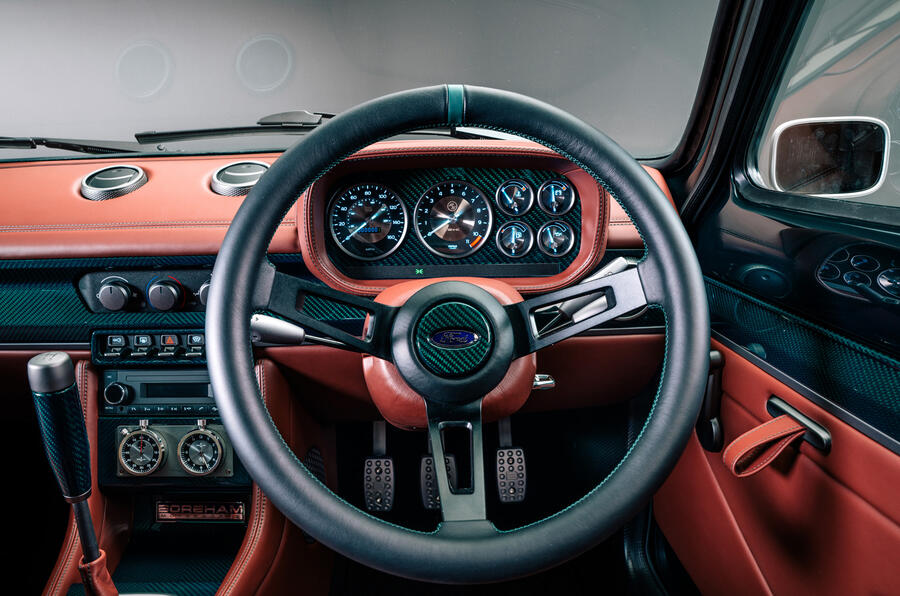
The interior design combines references to the original, such as its six-clock instrument panel and two central air vents, with modern accoutrements.
is also working on a plan to revive the Ford RS200. Like the Escort, this will be built from the ground up as an “entirely new” creation.

Buy European Policy Expands as EU Redefines Origin Rules to Counter China and Rescue...

Ford Demonstrators Expand Beyond EVs as Racing Division Embraces Hybrid and Combustion Innovation
 Firm has developed a string of electric demonstrators in recent years but will now pivot back to ICE
Ford Racing will continue to develop a line of high-performance 'Demonstrators' that are intended to push technology – but will broaden them out beyond EVs.
The firm has developed a string of electric Demonstrators in recent years, including the Supervan 4.2, an F-150 Lightning Supertruck and a Mustang Cobra Jet 2200.
The vehicles have competed in the Pikes Peak hillclimb, appeared at events such as the Goodwood Festival of Speed and been used as testbeds to develop Ford’s high-performance EV powertrains.
Speaking exclusively to Autocar, Ford Racing boss Mark Rushbook said that the decision to build the range of electric Demonstrators rather than compete in a category such as Formula E was “because we did not feel existing electric series were right for us".
He continued: "That's not a knock on those series, but we wanted the ability to truly learn with a free canvas, and a series like Formula E does restrict you. With the Demonstrators we can do whatever we want, whether it’s a Transit or an F-150, a Mustang Mach-E or even a Mustang coupé.
"We can do what we want and we can learn what we need to about the motor, battery cell technology, the controls, the calibration, aero and so on.”
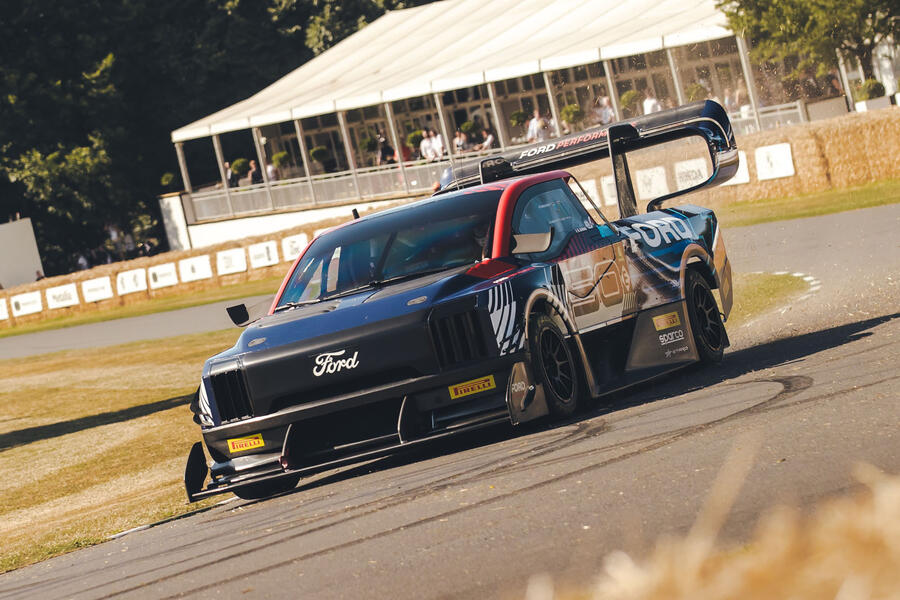
But with Ford adjusting its future plans to put more of an emphasis on hybrid and combustion powertrains, Rushbrook said its Demonstrators would shift from a pure EV focus.
“We’ll continue to do Demonstrators, but we’re not going to restrict ourselves to full electric,” he explained. “We still have a lot of electric cars in our future, but we also have a lot of hybrids coming, and we also have a lot of combustion vehicles coming. So we’ll do more demonstrators, but you will see more powertrain technology in them, not just full-electric.”
Rushbrook highlighted hybrids as one key area in which Ford was keen to push development. The firm is building experience through its Formula 1 power-unit partnership with Red Bull, and Rushbrook added: “We’re learning a tonne about hybrid powertrains in F1, but there’s more that we can learn.”

Toyota Rewrites Mille Miglia History as Japanese Icons Join Italy’s Legendary Road Race

Lucid Gravity Expands Hands-Free Driving Capabilities with Latest Software Update

BMW Hydrogen Flat Storage Unlocks Flexible Production and Mainstream Viability for Fuel Cell Vehicles
 'Flat storage' system doesn't intrude into cabin space and enables iX5 to be built on same line
BMW has moved its fuel cell electric vehicle (FCEV) development on another step with the new ‘BMW Hydrogen Flat Storage’ system – a new method of storing compressed hydrogen on board vehicles.
This new approach overcomes a major barrier because it’s modular and fits into the same space in the iX5 as the ‘Gen6’ high-voltage EV battery. There’s no intrusion into cabin space as there might be with more conventional tanks and, crucially, it allows iX5 Hydrogen models to be built on the same production line as other powertrain types.
The production X5 now supports five types of powertrain – petrol, diesel, BEV, plug-in hybrid and now FCEV – in what BMW calls a “technology-open approach”. All powertrain variants will share BMW’s new ‘Heart of Joy’ centralised control unit, combining drivetrain, braking and driving dynamics into one system.
BMW says the iX5 FCEV’s electric motor is exactly the same as the BEV version’s. But rather than one large battery, a hydrogen fuel cell stack generates electricity drawing on hydrogen stored in on-board tanks.
A small high-voltage lithium ion buffer battery provides the bursts of energy for acceleration and stores energy during regenerative braking.
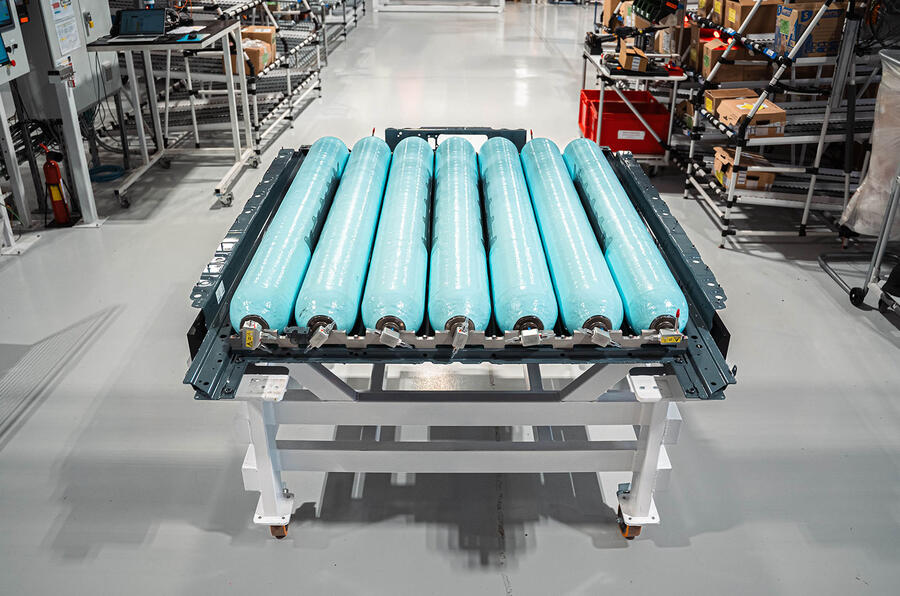
The new Hydrogen Flat Storage system holds enough compressed hydrogen at a pressure of 700 bar to give the iX5 a range of 385 miles. Early prototypes were equipped with a pair of tanks storing 6kg of hydrogen for a range of 313 miles.
Being able to produce a fuel cell car on an existing platform where a compressed gas fuel storage system fits in the same space as an EV sibling’s battery is significant for making an FCEV viable to build and sell.
Given the X5 architecture can support five different drive system variants, it should be possible to scale manufacturing to match demand rather than relying on bespoke manufacturing, which is how FCEVs have been made in the past. That should be a good fit with what is still a limited worldwide hydrogen refuelling infrastructure.
The Hydrogen Flat Storage system consists of seven slim tanks replacing the larger twin tanks of the early cars. Each one is a ‘Type 4’ design, which means it’s constructed from carbonfibre-reinforced composite wrapped around a polymer liner.
The tanks are connected in parallel, hold a total of 7kg of hydrogen and can be refilled at a hydrogen pump in under five minutes. The seven tanks are integrated into a metal frame and controlled by a single, main, central control valve rather than operating separately.
It forms part of the overall fuel cell powertrain, at the heart of which is the latest ‘Gen3’ fuel cell system developed with FCEV veteran Toyota. BMW says the pilot fleet of 100 iX5 Hydrogen prototypes was successfully tested worldwide and in 2028 will become its first hydrogen-powered model to enter series production.

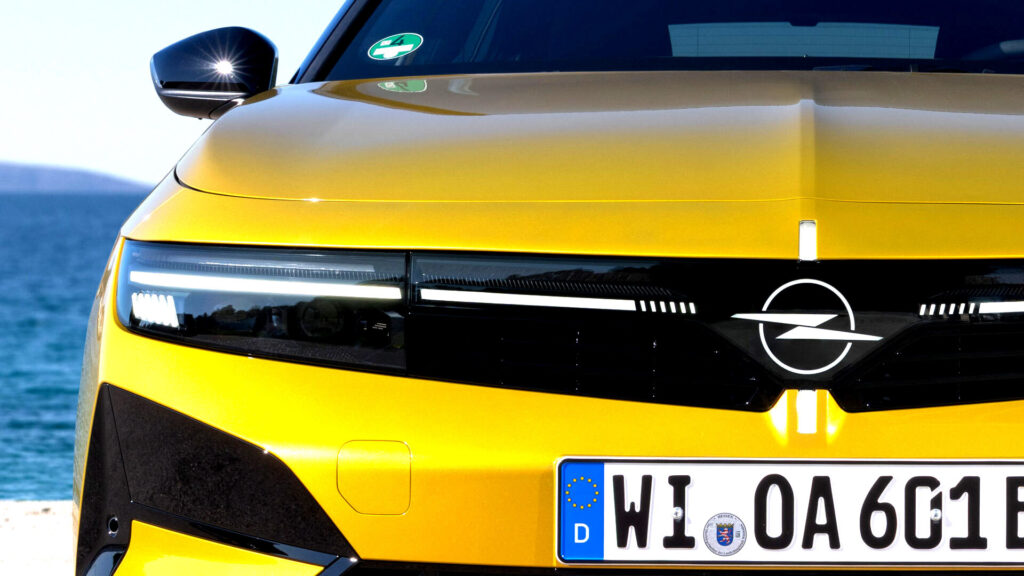
Opel’s Next-Generation Astra and Corsa Signal Stellantis’ Modular EV Strategy and Cost-Cutting Ambitions

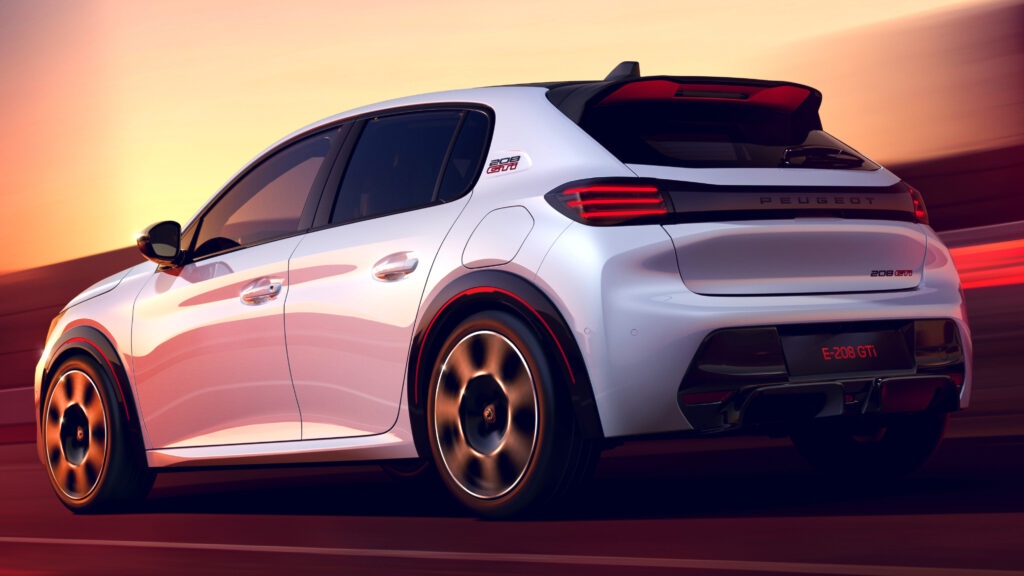
Peugeot e-208 GTi Redefines the Hot Hatch with Electric Power and Performance Ambition

Parakeet Behavior Challenges Wildlife Experts as Car Damage Escalates in Scotland