

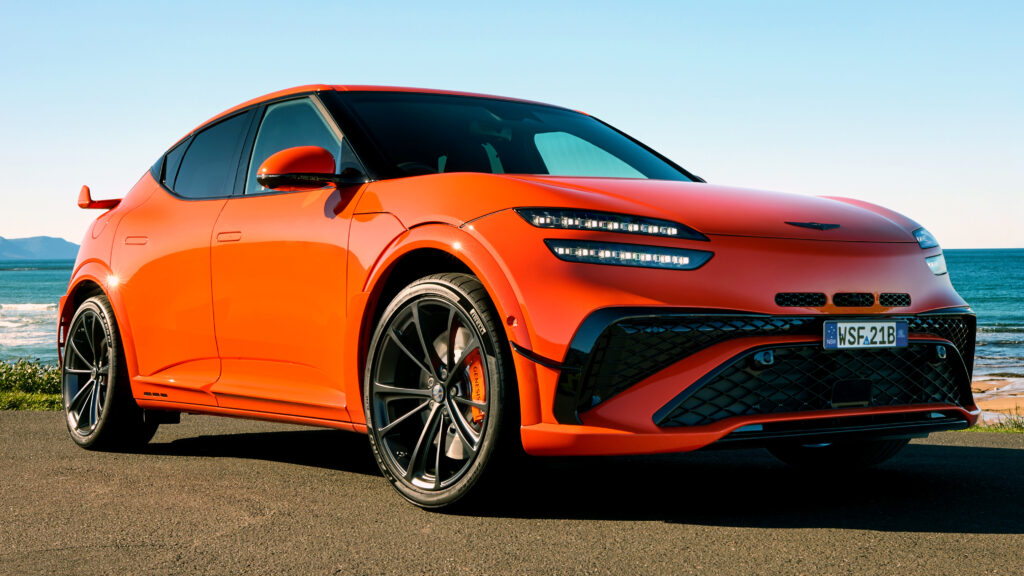
Genesis Magma Signals Ambitious Shift Toward High-Performance Luxury Rivaling AMG and BMW

3D Printed Concrete Enables Lighter Bridges Without Sacrificing Strength


Junkyard Classics at Collins Auto Salvage Reveal Shifting Values in American Automotive History
 We visit Auto Salvage to find out if there really is gold in those hills
Auburn, Georgia is home to Collins Auto Salvage, a yard with close to 1000 cars.
At this yard the cars are strewn all over the place instead of being stacked-up neatly on racking, as is the norm these days. In other words, it’s exactly the kind of place we love to explore…
A few years ago we spent a wet November morning digging around in the undergrowth, uncovering this wonderful collections of unloved classics.
FORD MUSTANG
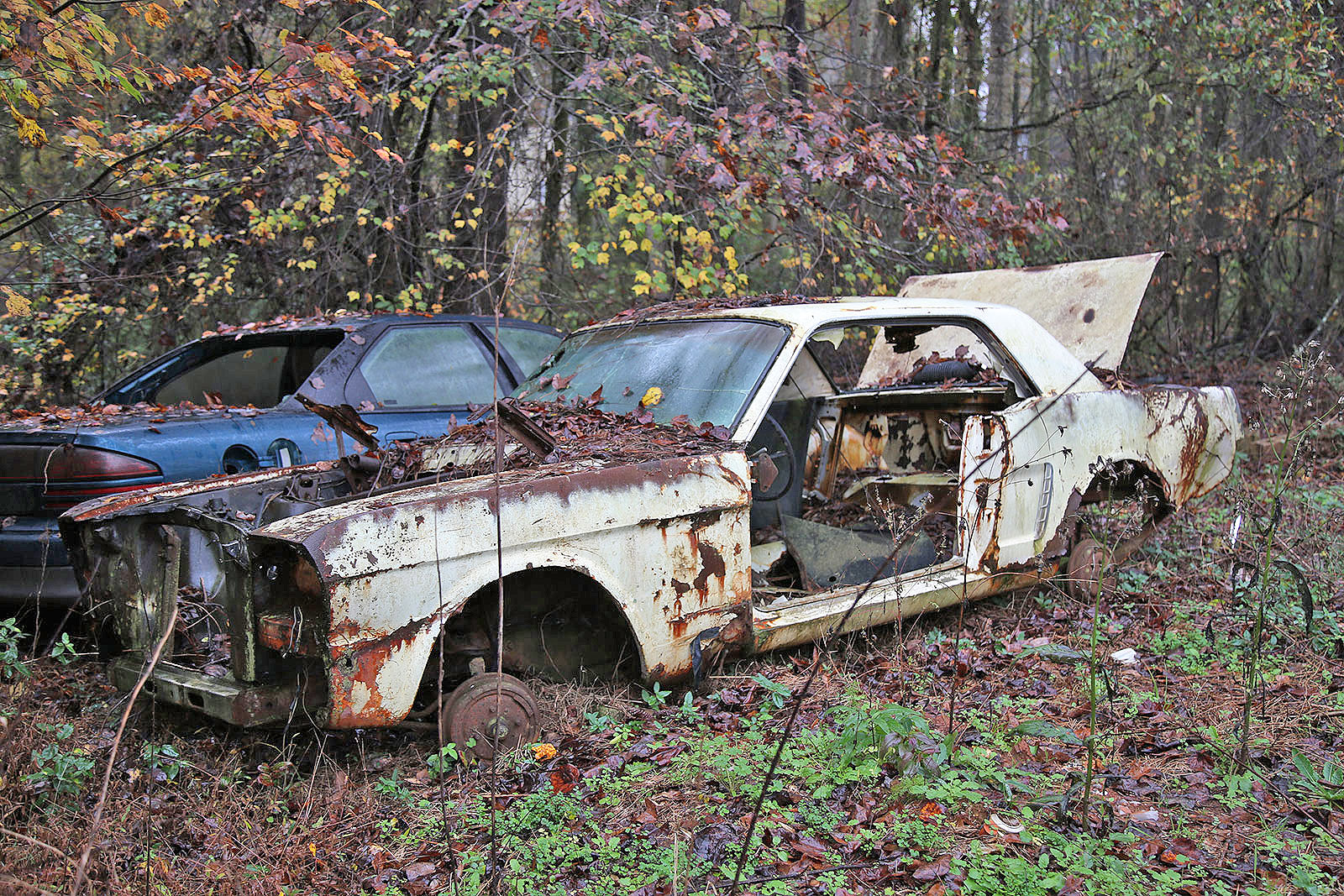
This original Ford Mustang must have been a resident of Collins Auto Salvage for many years to have been so extensively picked over. The wings and boot-lid were rusty, and of little use to anyone, leaving the windscreen as one of the few remaining parts worth saving. We’d guess that this has since been fed to the crusher.
FORD LTD - 1978
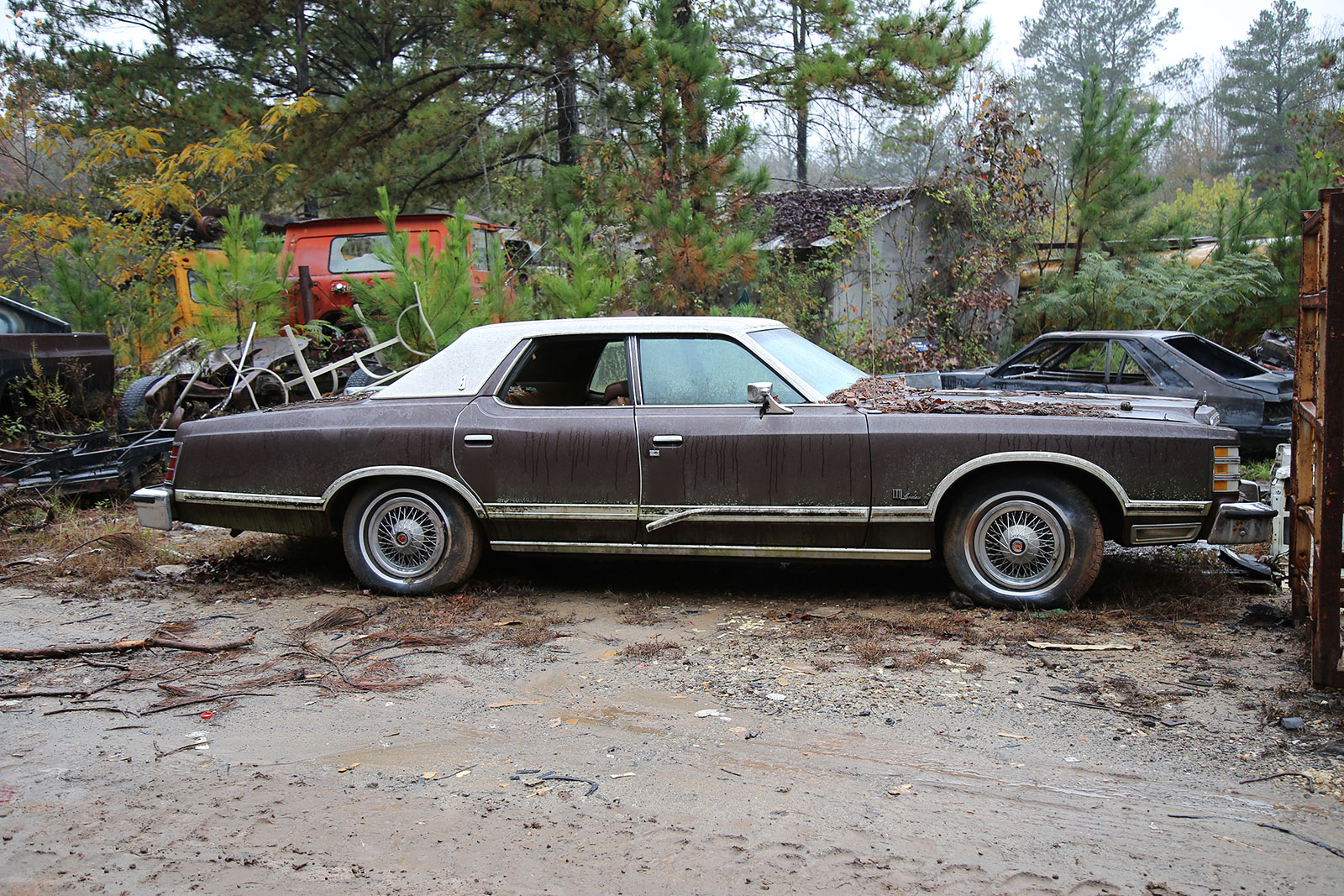
Although the bulk of the inventory dates from the 1990s or newer, we did find a number of 1970s cars too, including this wonderful 1978 Ford LTD Landau. According to the license plate tag, it hadn’t been on the road since 1993, so it’s odd that it still held air in all four of its tyres.
The LTD was 5.18 metres long, and weighed-in at 1764 kg. However, time was quickly running out for cars of these proportions, and the 1978 LTD was 17.8 cm shorter and 318 kg lighter.
CADILLAC SEVILLE - 1985
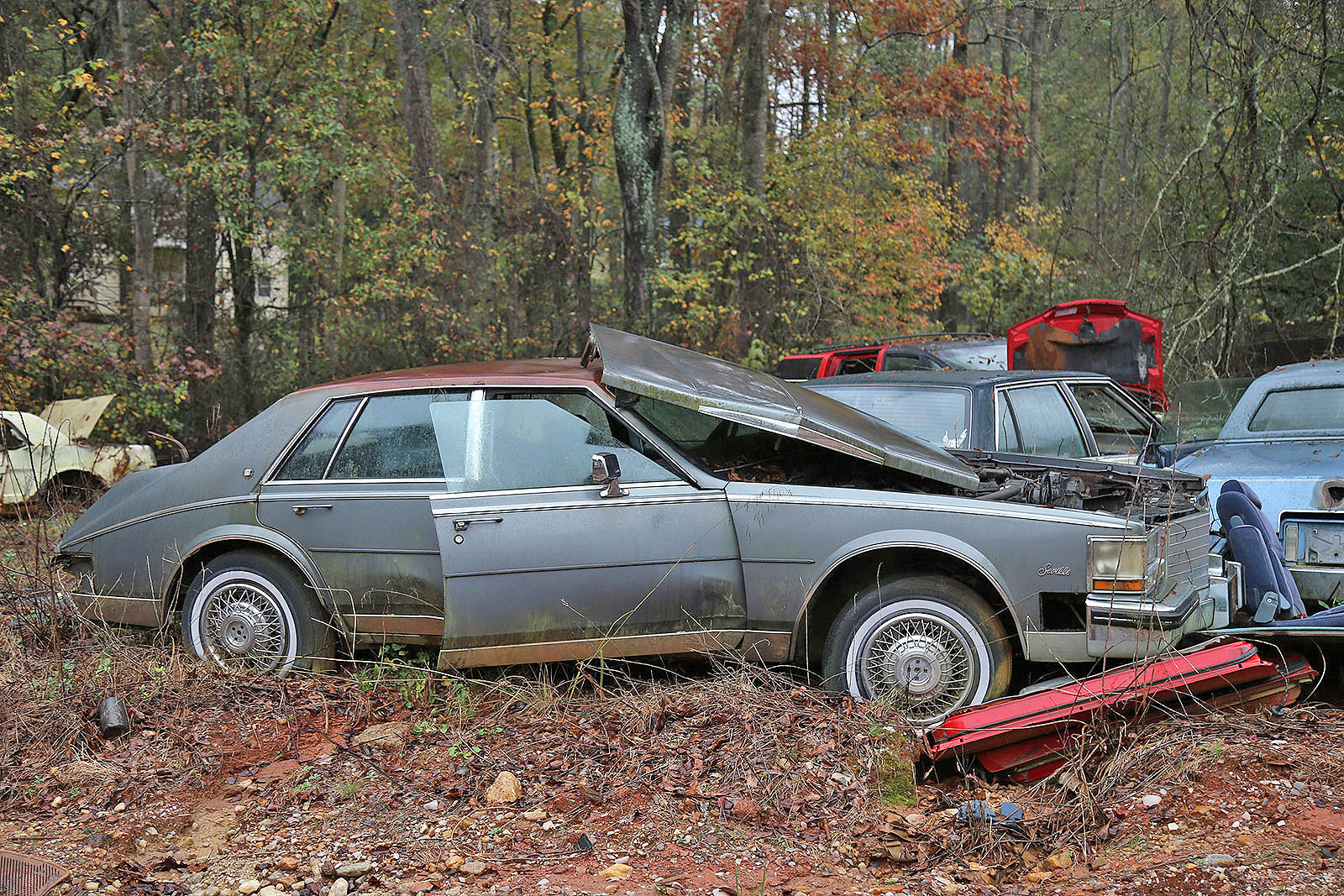
The 1980 Cadillac Seville was certainly eye-catching, thanks to its slant-back styling. The distinctive rear end, which resembled some 1930s saloons, and closely resembled the Daimler DS420 limousine, was actually supposed to appeal to a younger generation who were buying German imports.
Although 200,000 of them were produced (1980-1986), they’re few and far between in salvage yards, making this circa 1985 example something of a rarity.
PACE ARROW - 1984
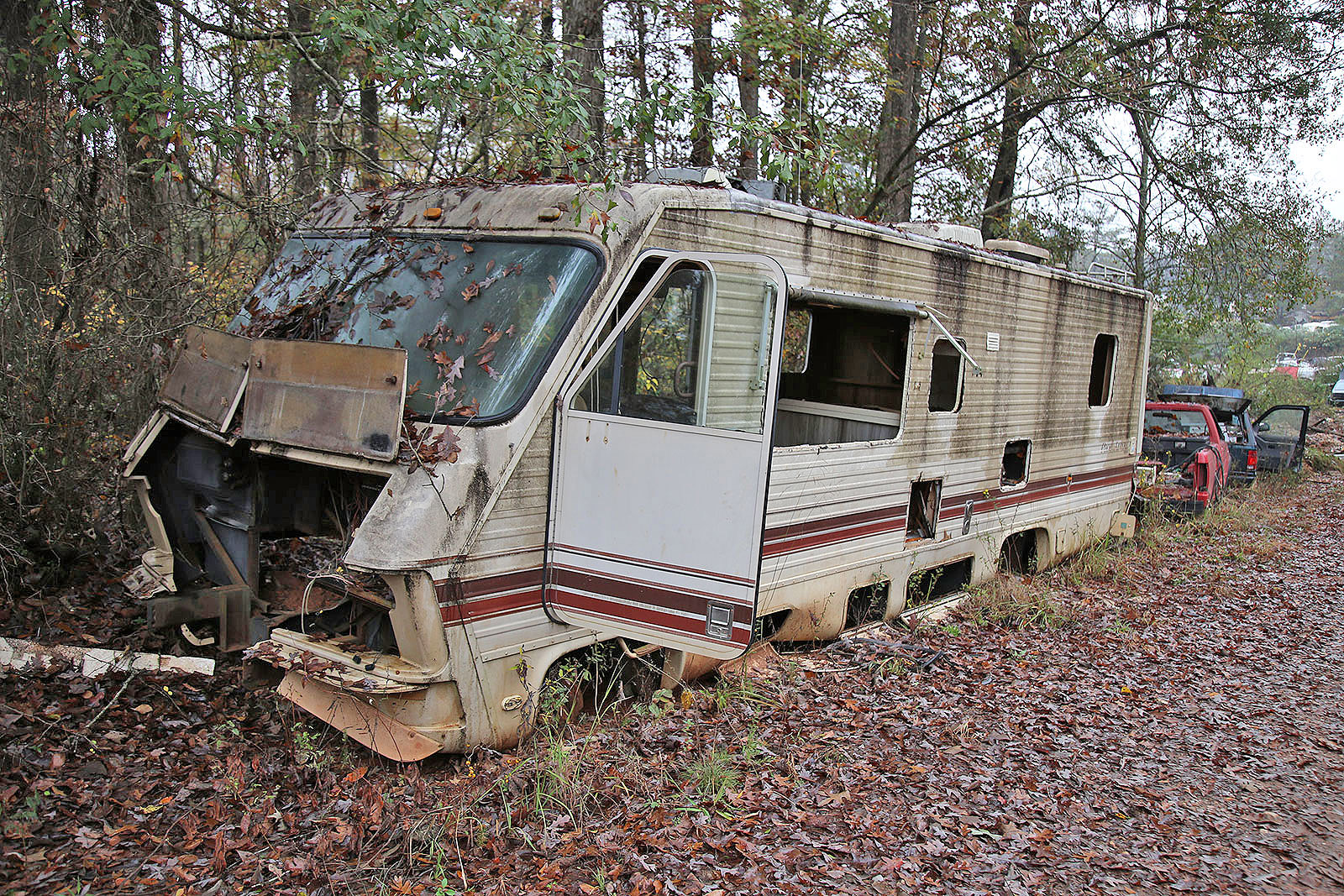
Complete with its signature yellow and orange stripes, this 1984 Pace Arrow Recreational Vehicle didn’t look too different to the mobile drug lab that featured in the first series of Breaking Bad. However Walter White, and Jesse Pinkman in fact cooked up their signature blue drugs in a Fleetwood Bounder.
CHEVROLET CORVAIR
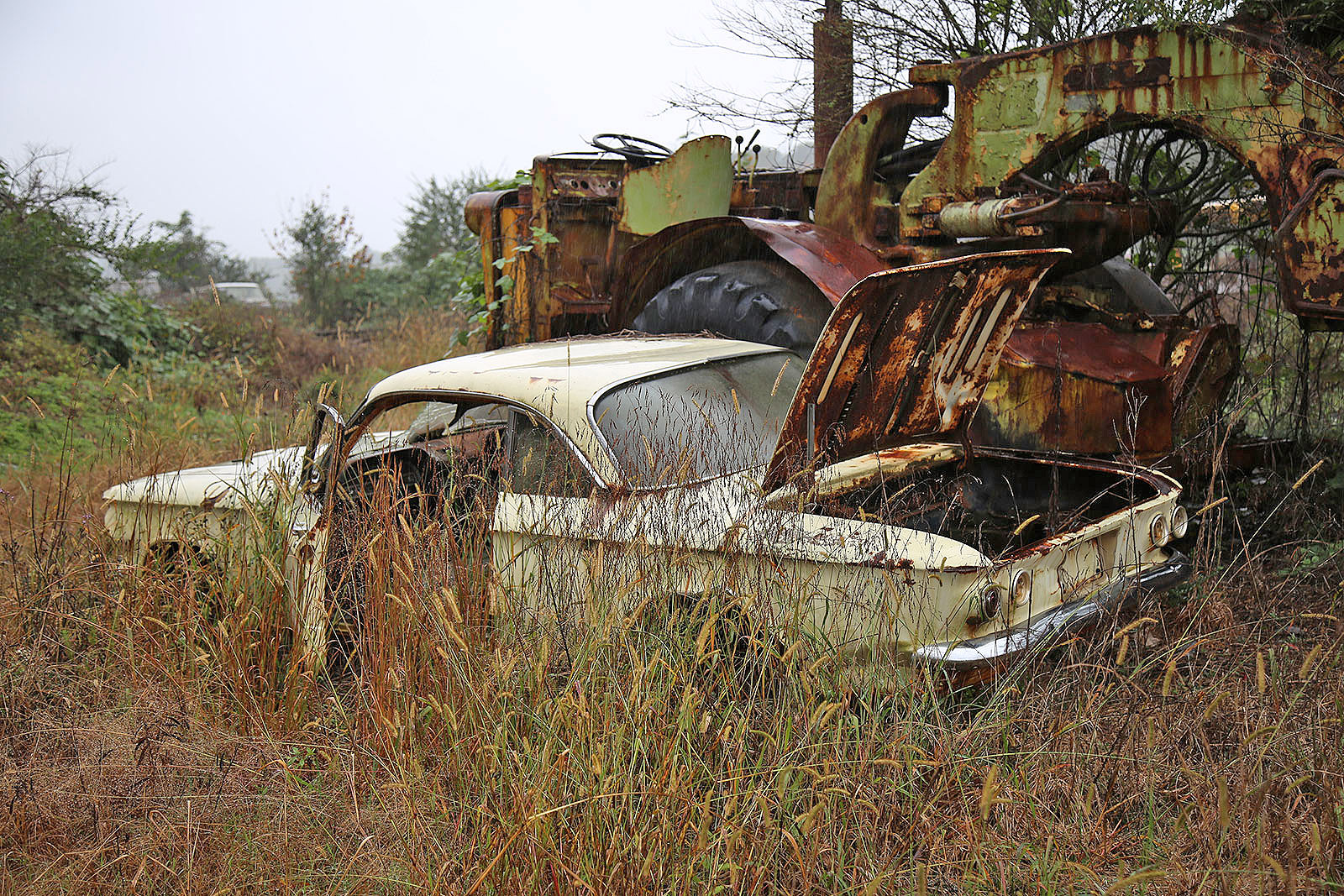
We never cease to be amazed at how many Chevrolet Corvairs still turn up in salvage yards. Then again, more than 1.8 million of them were built between 1960 and 1969.
The US’s first and only mass-produced car with a rear-mounted, air-cooled engine, it was supposed to be a direct competitor to the far smaller Volkswagen Bug.
CHEVROLET EL CAMINO - 1977
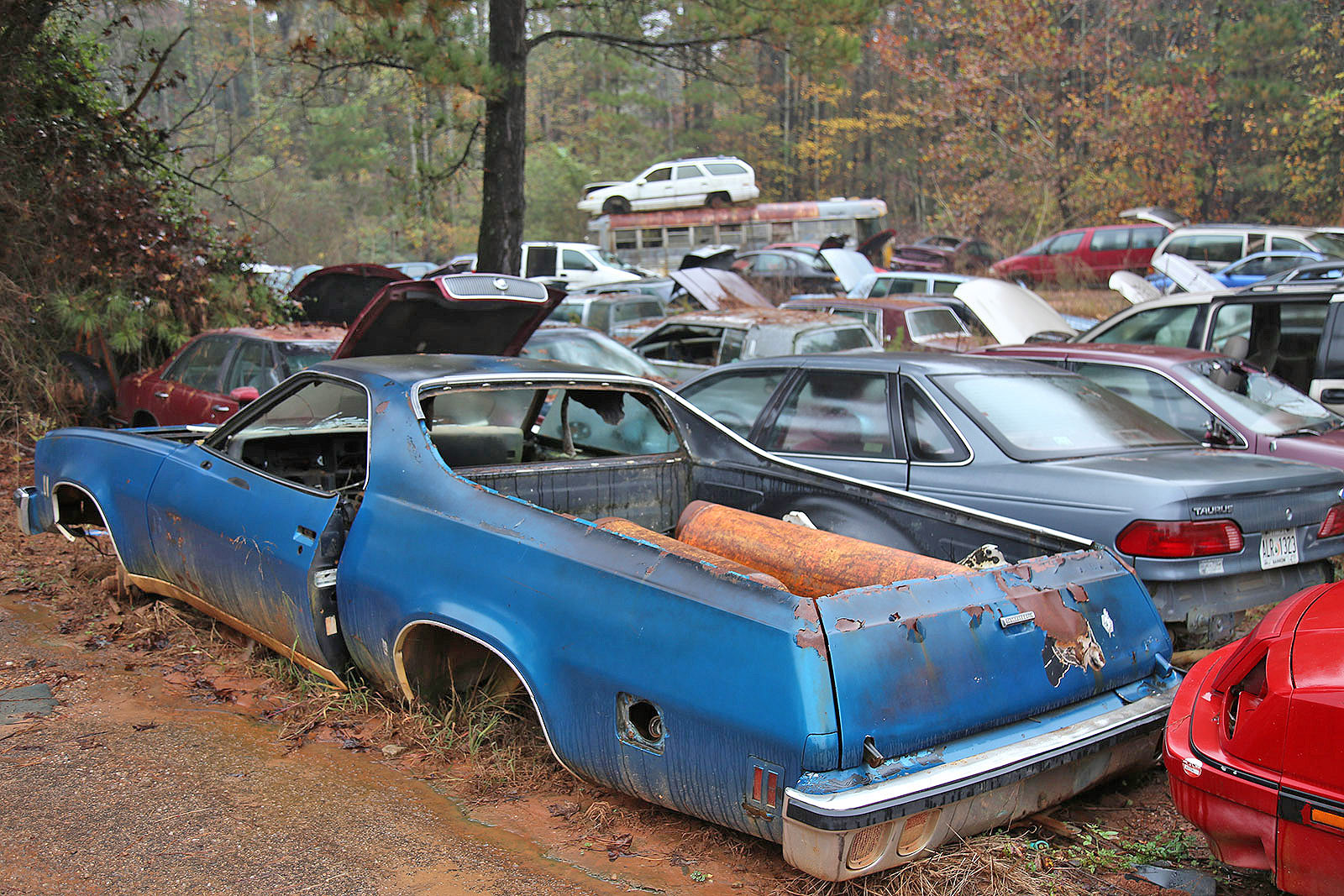
It may have been missing its engine and most of its glass, but this 1977 El Camino Classic’s bodywork was still in great shape.
The 1977 trucks didn’t look a whole lot different to those from the previous year, and featured the same stacked headlights. The key difference was a new grille, with vertical instead of horizontal bars. The big changes would occur in 1978, with the launch of the fifth generation El Camino.
FORD FAIRLANE - 1959
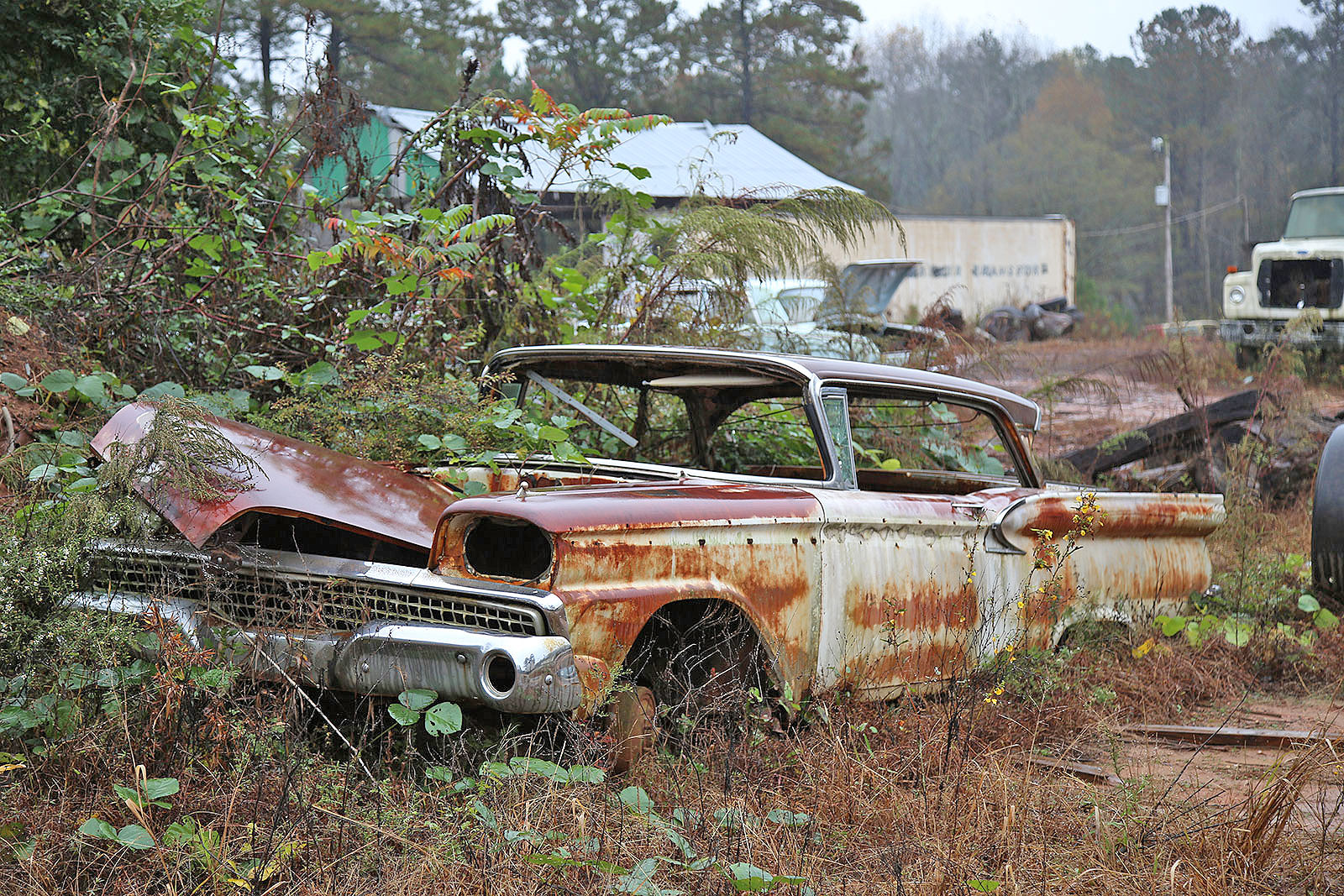
This 1959 Ford Fairlane two-door hardtop was one of a handful of 1950s cars we found in the yard. Note all the empty space in the background, which would once have contained a lot more similarly aged classics, now long since crushed. Presumably the straight body panels saved this one from a similar fate.
PLYMOUTH VALIANT - 1965
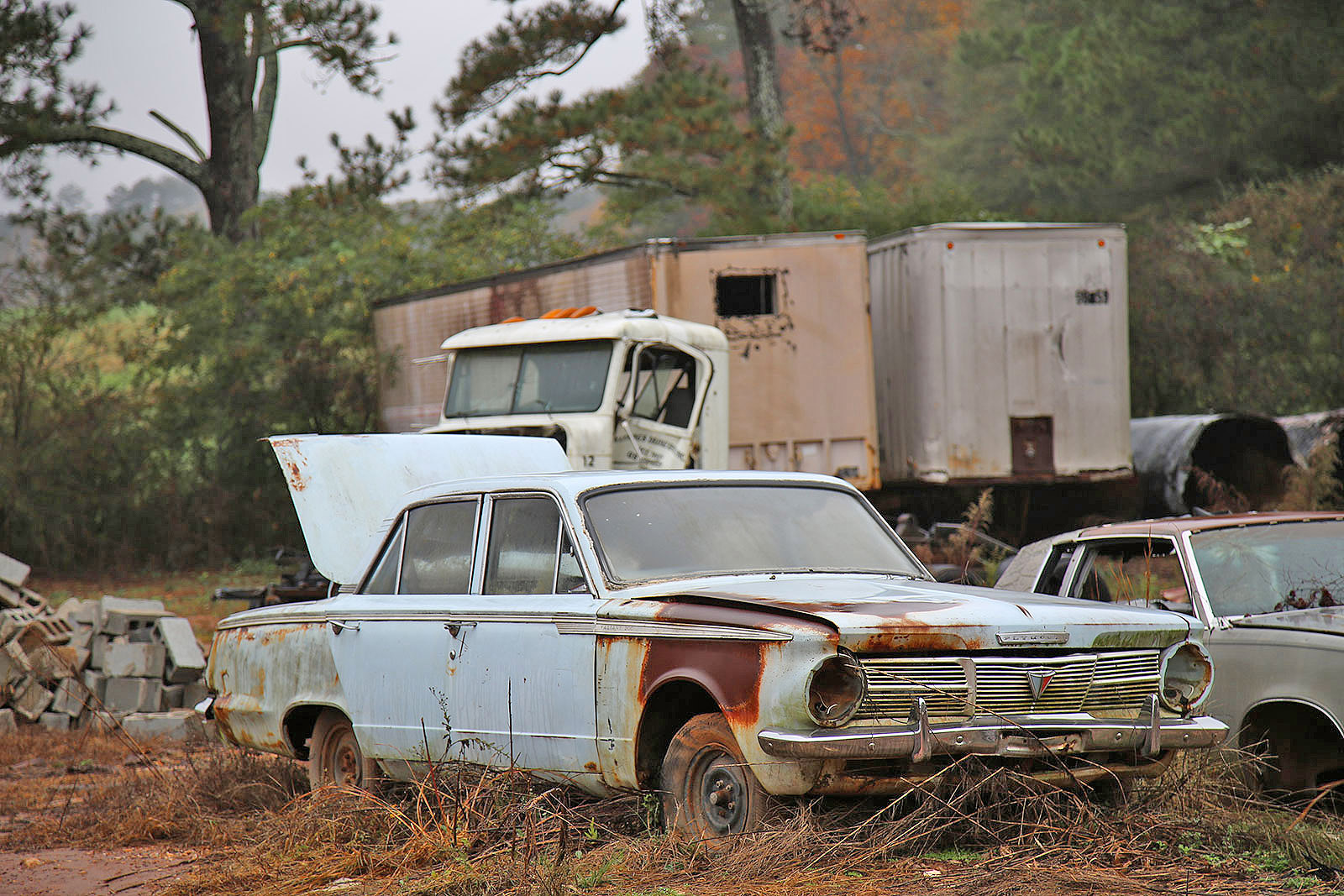
Unfortunately 1965 Plymouth Valiants aren’t particularly valuable or desirable when they’re in good condition, and the situation is even worse when they’re as badly abused as this one. However, acting in this example’s favour was its scarcity. It’s a high-spec V200 two-door sedan, one of just 8919 built. But we doubt if that was enough for someone to save it.
CHEVROLET MONTE CARLO - 1977
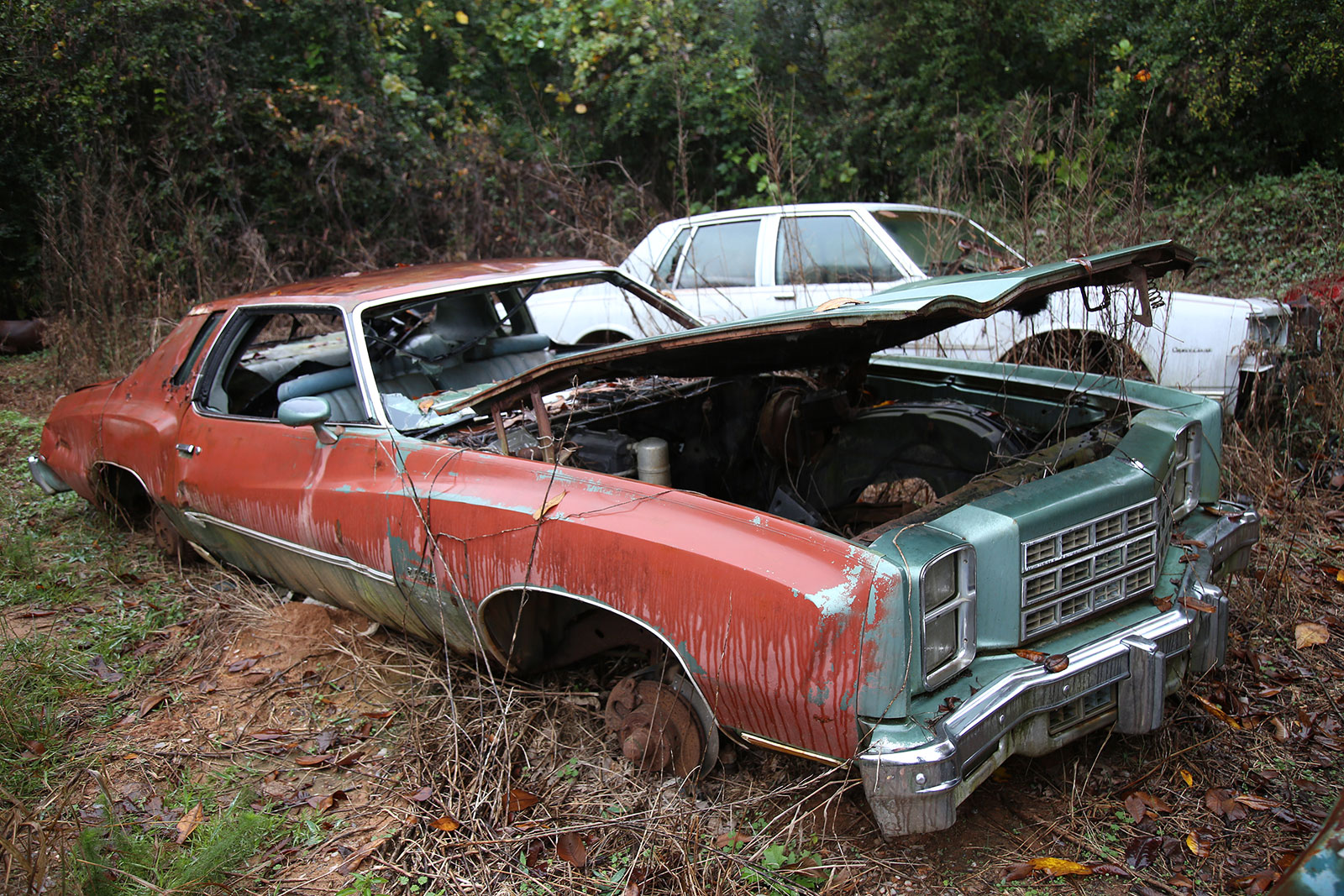
In 1977 the American automobile industry was downsizing. But while General Motors had already put the Caprice on a diet, the Monte Carlo had another 12 months without having to worry about its weight. A year later it would lose 364 kg and 38 cm in length.
But despite its size, there was no shortage of buyers for Chevrolet’s luxury personal car, which sold 411,038 units. The S coupes, like this one, were slightly more popular than the Landau coupes. The Monte Carlo was built over seven generations, between 1970 and 2007.
PLYMOUTH FURY - 1972
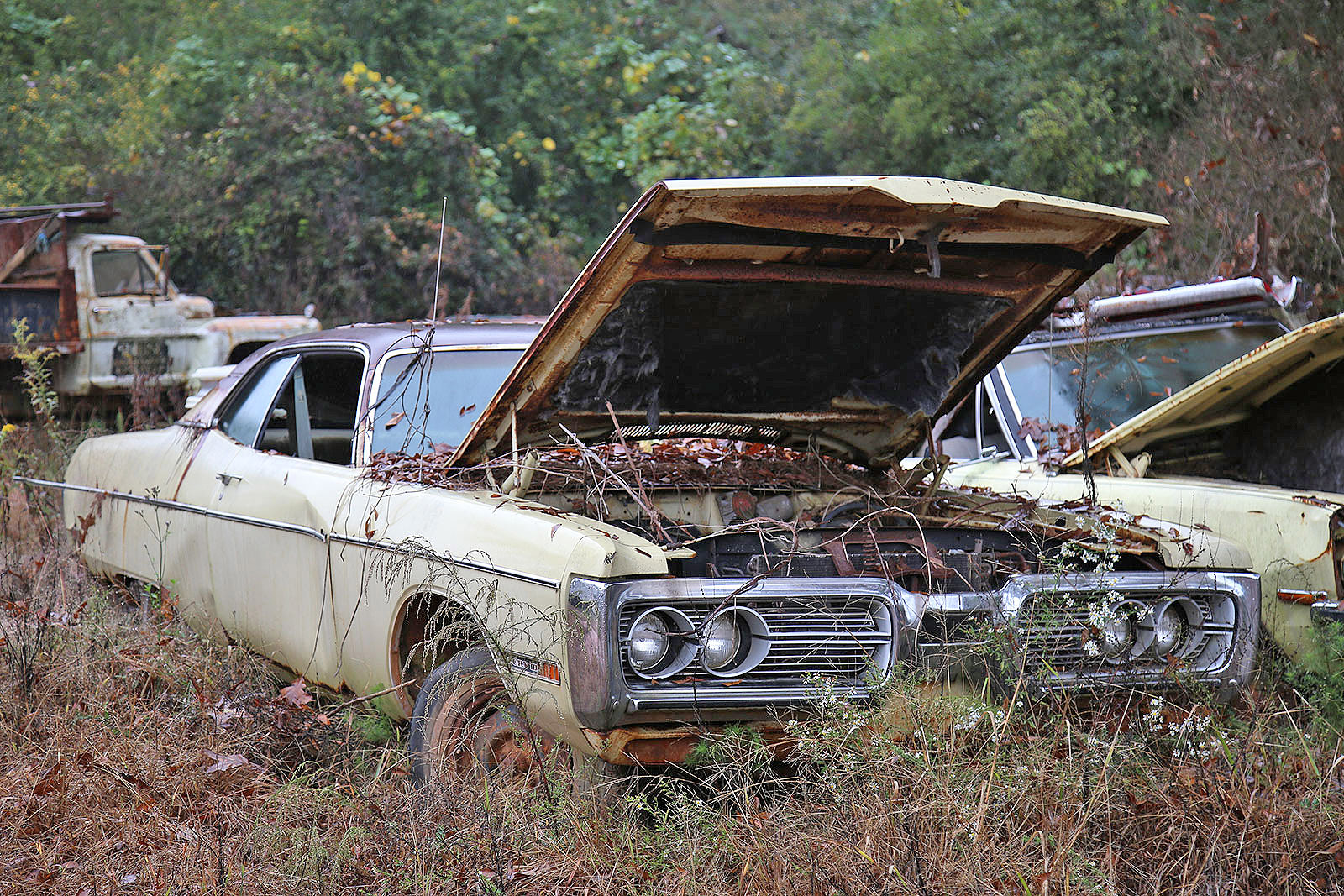
And here’s another bloated two-door car from the 1970s - a 1972 Plymouth Fury III. However, despite weighing in at 1723 kg, with a V8 under the hood it could still shift. Though the standard 5.2-litre engine would power the car to 60mph in 13.1 seconds, the Sport Fury GT, with its 7.2-litre V8, did it in a blisteringly quick 7 seconds.
PLYMOUTH - 1949
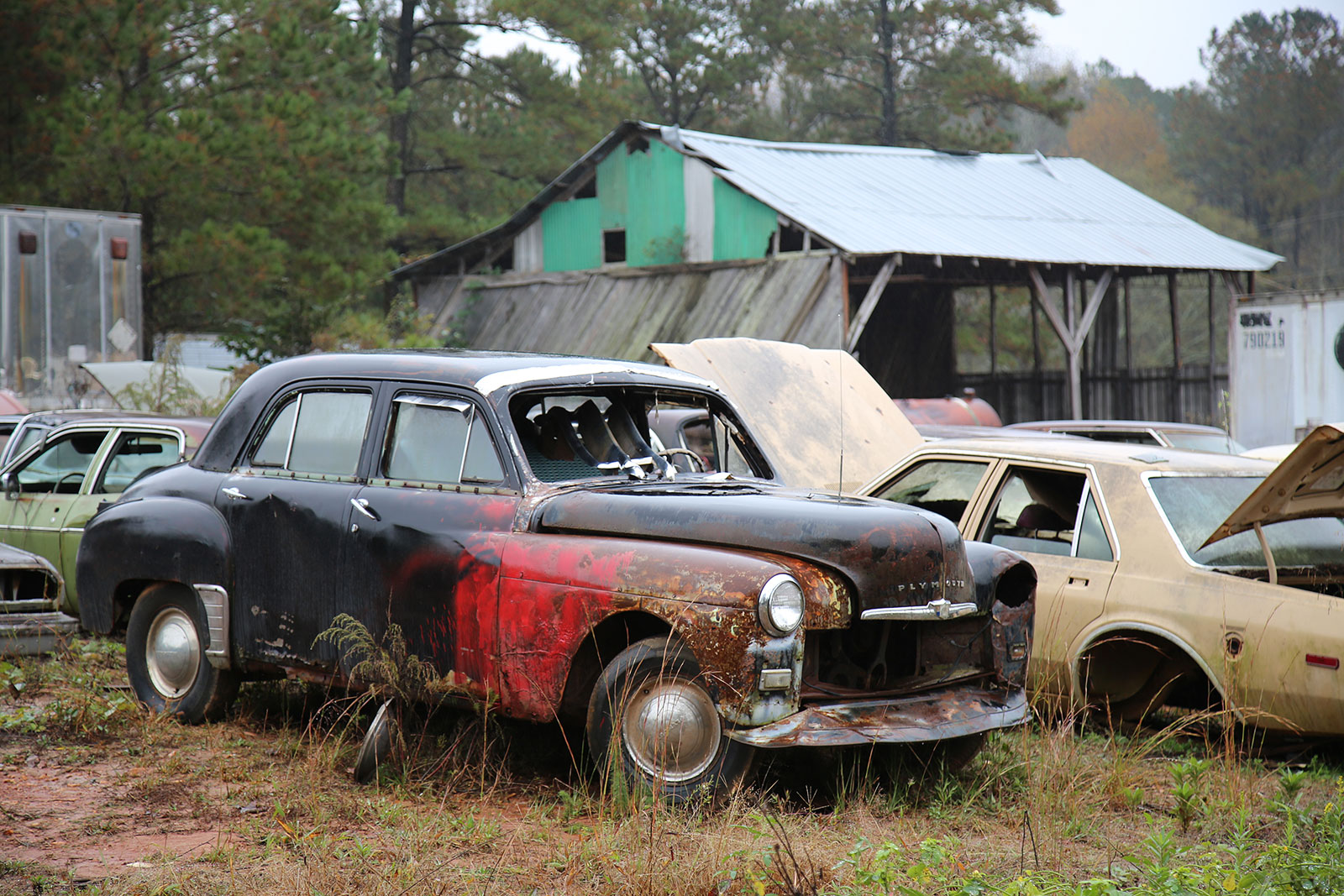
In 1949, when this rolled off the line, Plymouth was America’s third best-selling automobile marque, behind Ford and Chevrolet. In fact it held this number three spot from 1932 to 1954, before dropping a place to Buick.
This example, which had miraculously retained its original wheel trims, was the oldest car we found at Collins Auto Salvage. But that’s not to say there weren’t a few older ones we missed, lurking in the undergrowth.
MERKUR SCORPIO
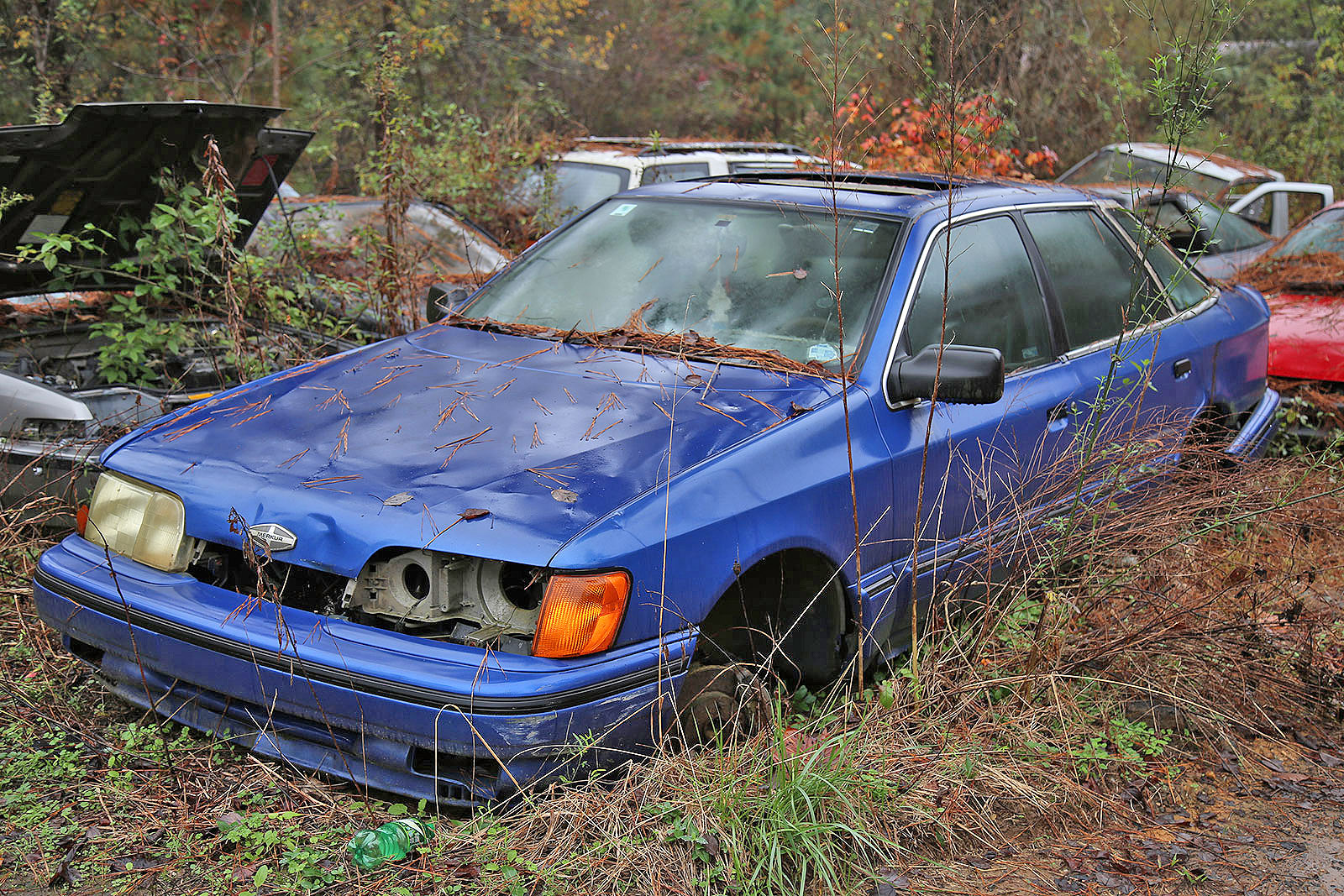
Think automotive flops, and Edsel springs to mind. But let’s not forget that the Merkur marque sold half as many cars, finding just 64,474 buyers in the five years - 1985 to 1989 - it was active in the USA.
The worst seller of its two models was the Scorpio, a rebadged German-built Ford Granada. Despite being a decent car, only 22,010 people were prepared to hand over the required $26,000 to drive one of them out of a Lincoln-Mercury showroom.
CAPRI
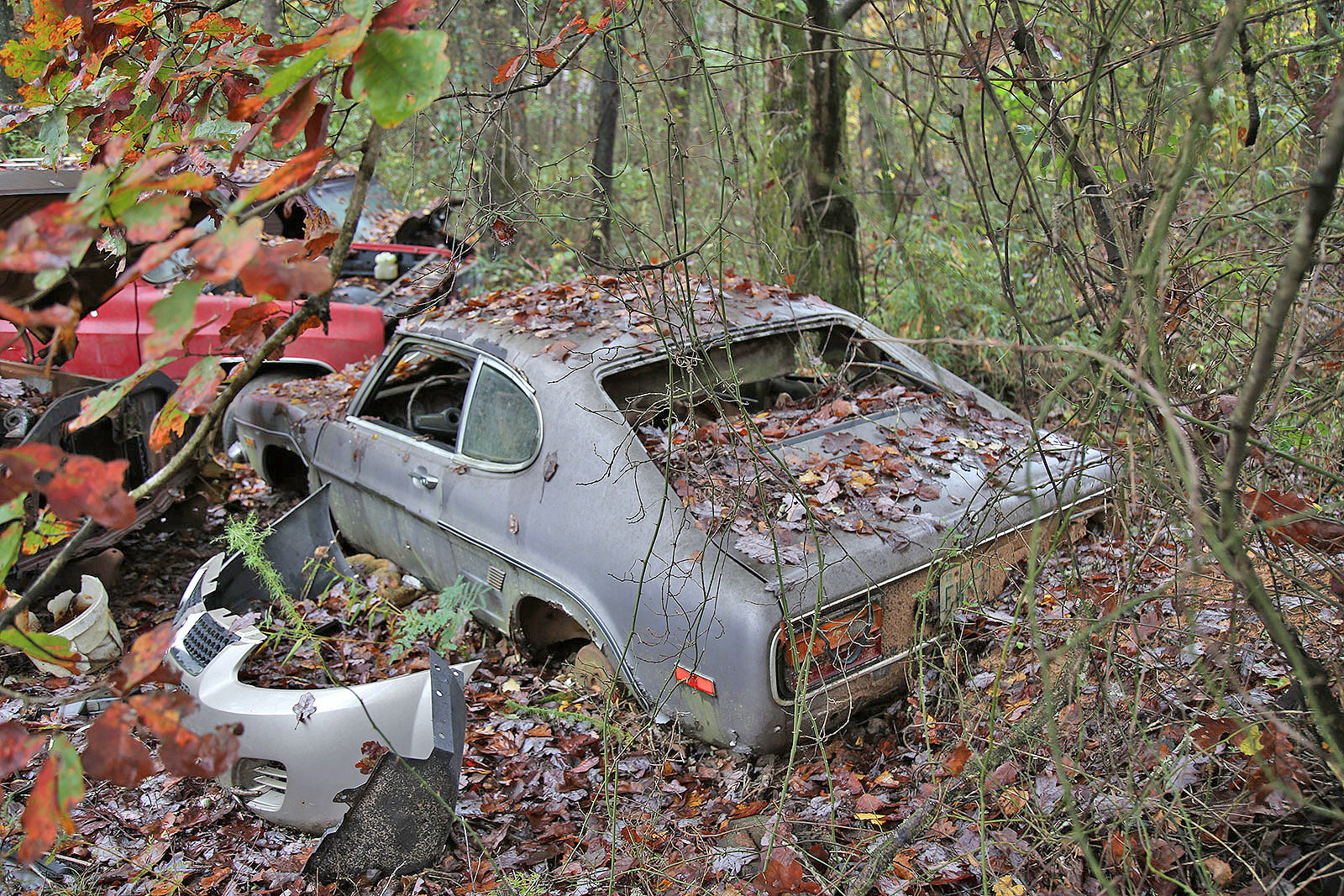
In contrast to the Scorpio, here’s a captive import that sold well. Designed in the UK and built in Germany, the Capri and Capri II were marketed by Lincoln-Mercury dealerships between 1970 and 1978. When this early 1970s example was sold, the Capri was the second most popular imported car after the Volkswagen Bug, and in total 513,500 were sold.
PONTIAC LE MANS - 1979
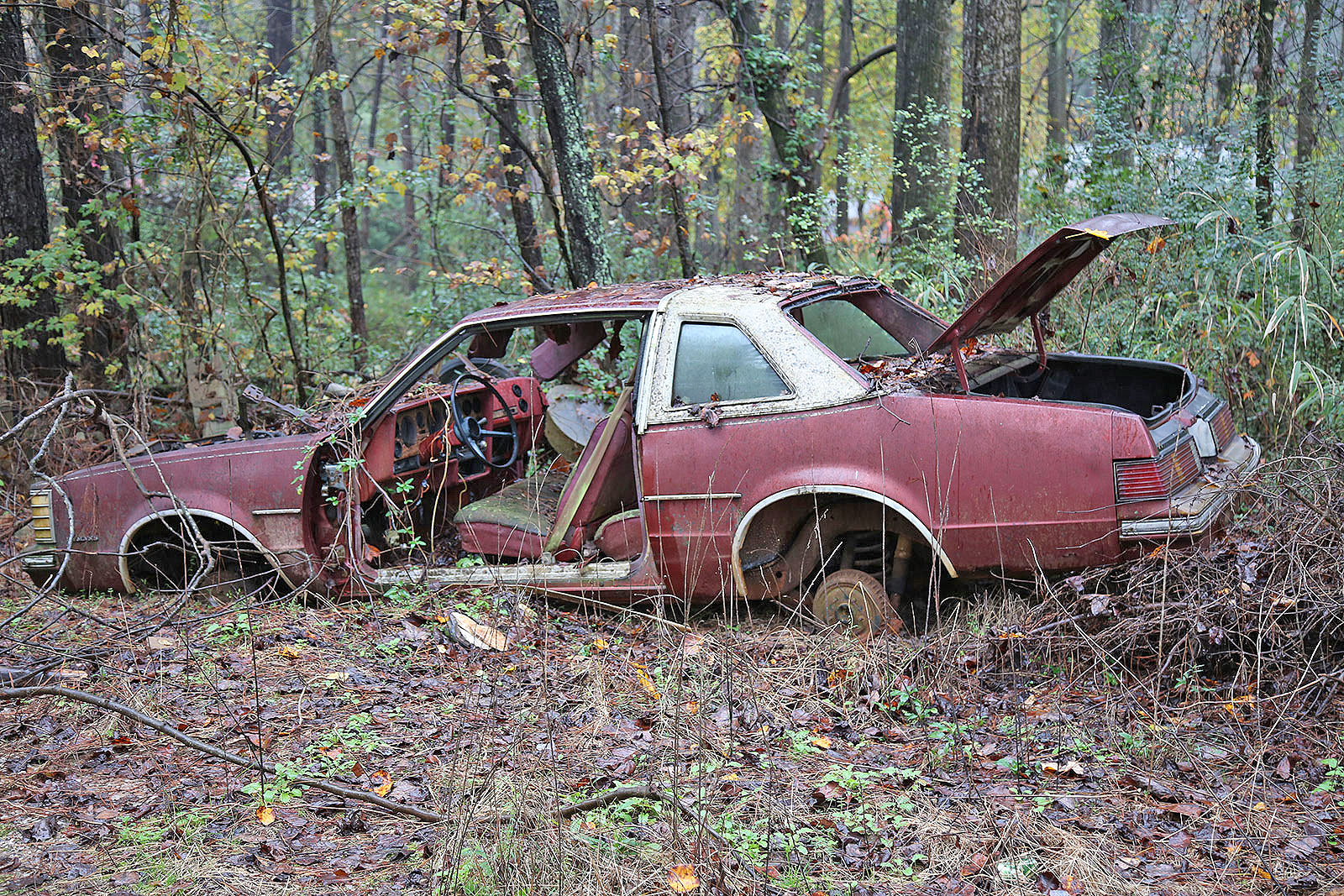
Ignoring the rotten interior, this 1979 Pontiac Le Mans coupe still had plenty of great parts to offer. Then again, we can’t imagine too many people would have been interested in restoring one, so we suspect it will have probably ended up in the crusher. Of the 68,670 Le Mans built that year, less than a quarter were coupes.
FORD MAVERICK
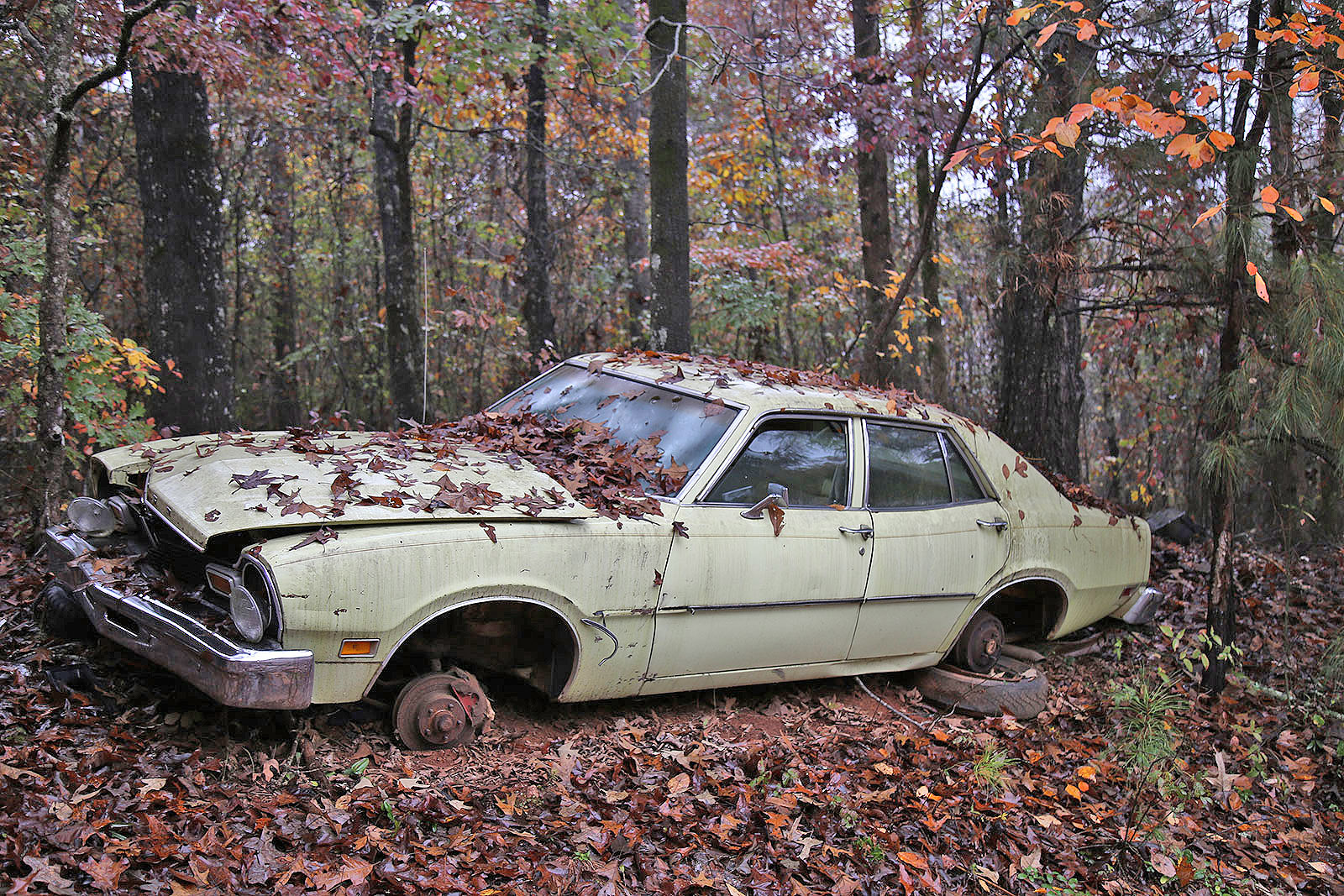
Here’s an equally undesirable car from the same era, a Ford Maverick four-door sedan. As well as battling it out with the Chevrolet Nova and Dodge Dart, the Maverick was designed to tackle the growing threat from small Japanese cars.
While it didn’t set the world alight, it did sell well, with Ford producing 2.1 million units between 1969 and 1977. The nameplate has proved useful too, which is now used on a popular compact pickup truck.
FORD FAIRLANE - 1958
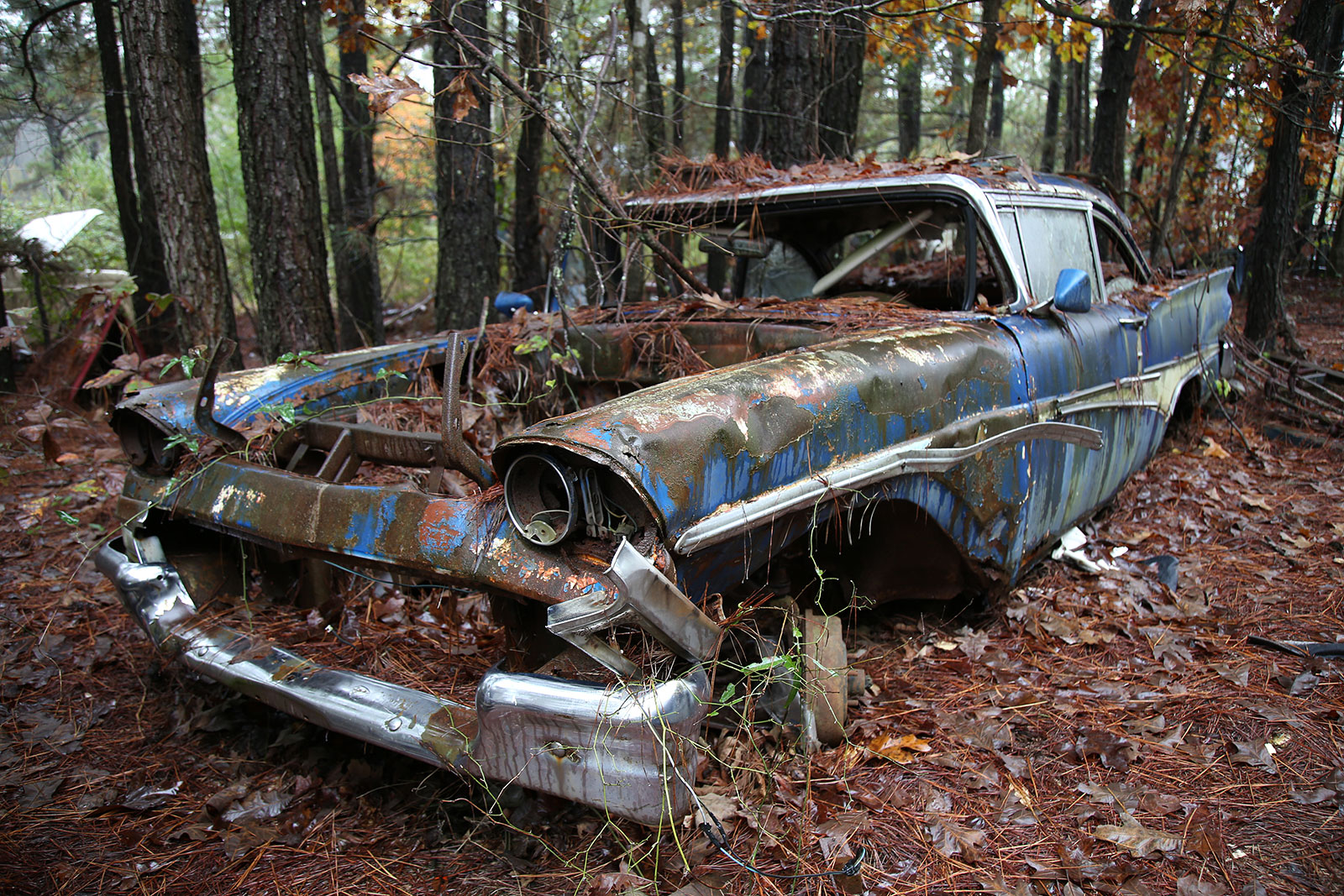
It’s hard to imagine that this 1958 Ford Fairlane was new once. For the first few years of its life, its proud owner would have washed and polished it every weekend.
They’d have checked out their reflection in its gleaming chrome and shiny paintwork, and likely gone into a month-long depression at discovering the first scratch. Those days had long since passed by the time we photographed it…
FORD ECONOLINE
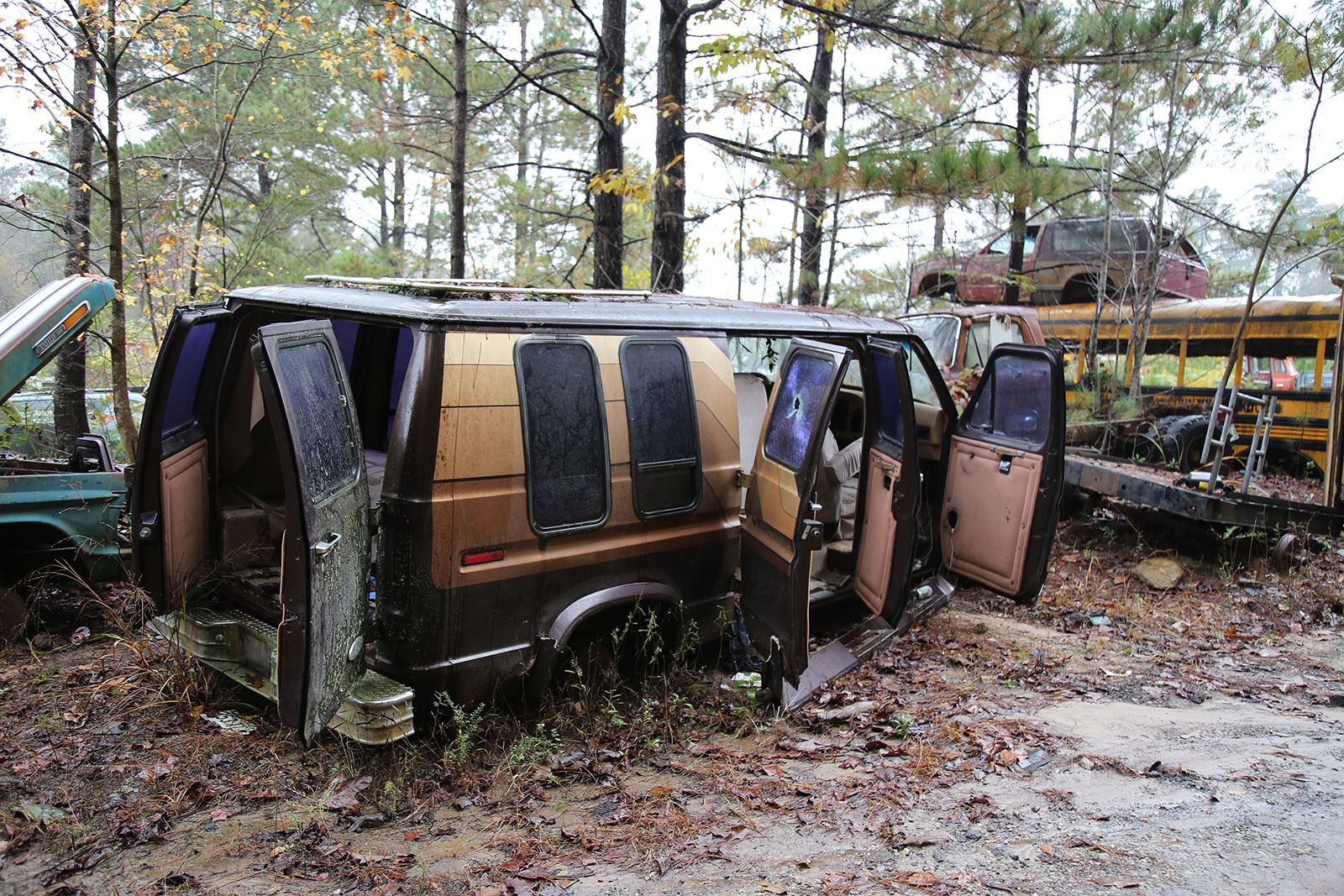
Nothing screams the early 1980s like a brown and gold Ford Econoline day van. Unfortunately it was in a bad way, which is a shame, as it might have made a great restoration project for somebody. The E-Series has been in production for more than 60 years, making it one of Ford’s longest running models. Although sales have fallen sharply since the launch of the Transit, it still sells in excess of 30,000 units per year. More than 3 million have been produced so far.
TOYOTA CELICA GT
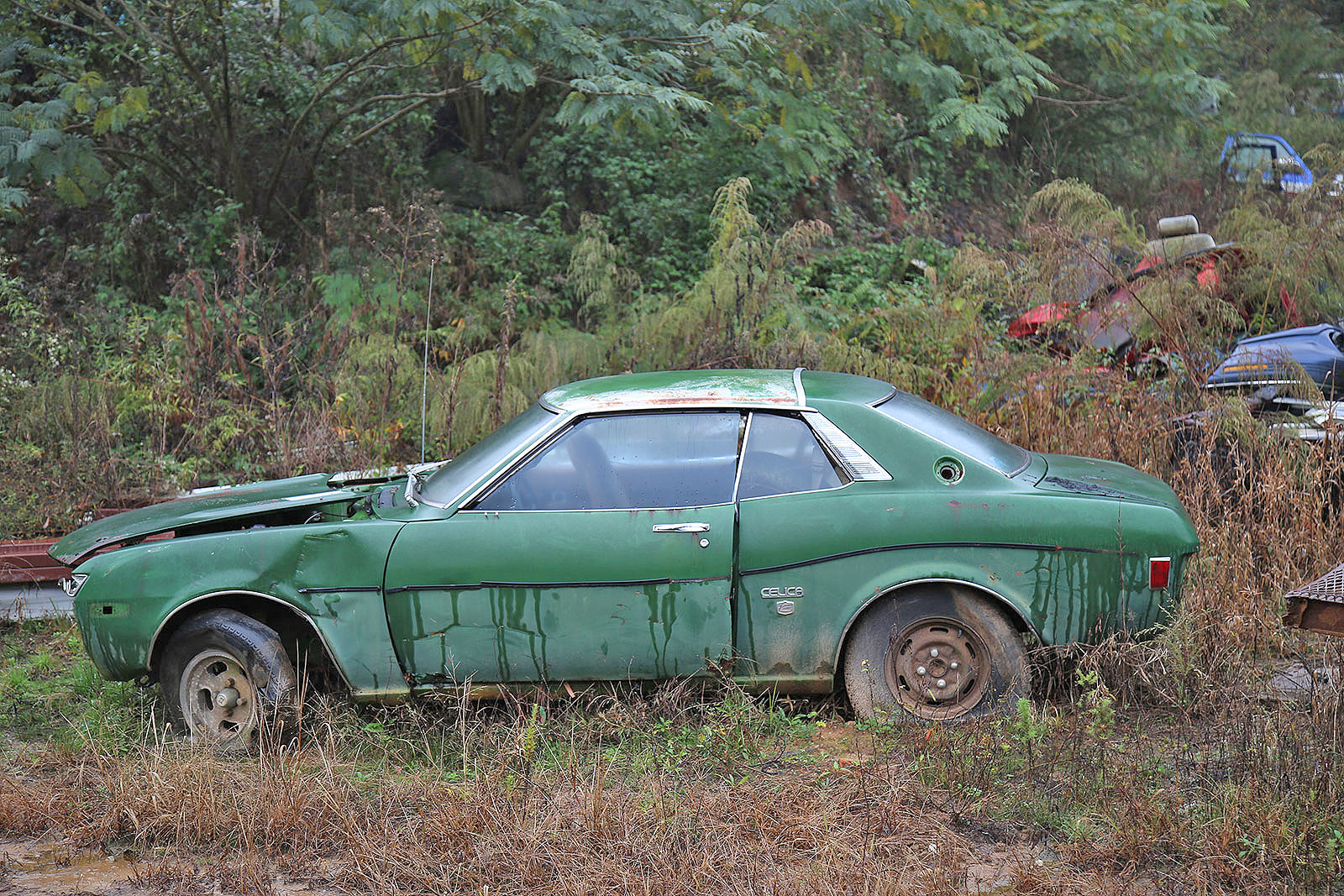
Just like the Ford Mustang, the Toyota Celica was a sportscar based on a boring sedan – in this instance a Carina. This GT is a first generation car, and was probably built in 1975. If so, it would have been fitted with 5mph safety bumpers.
BUICK ELECTRA PARK AVENUE - 1982
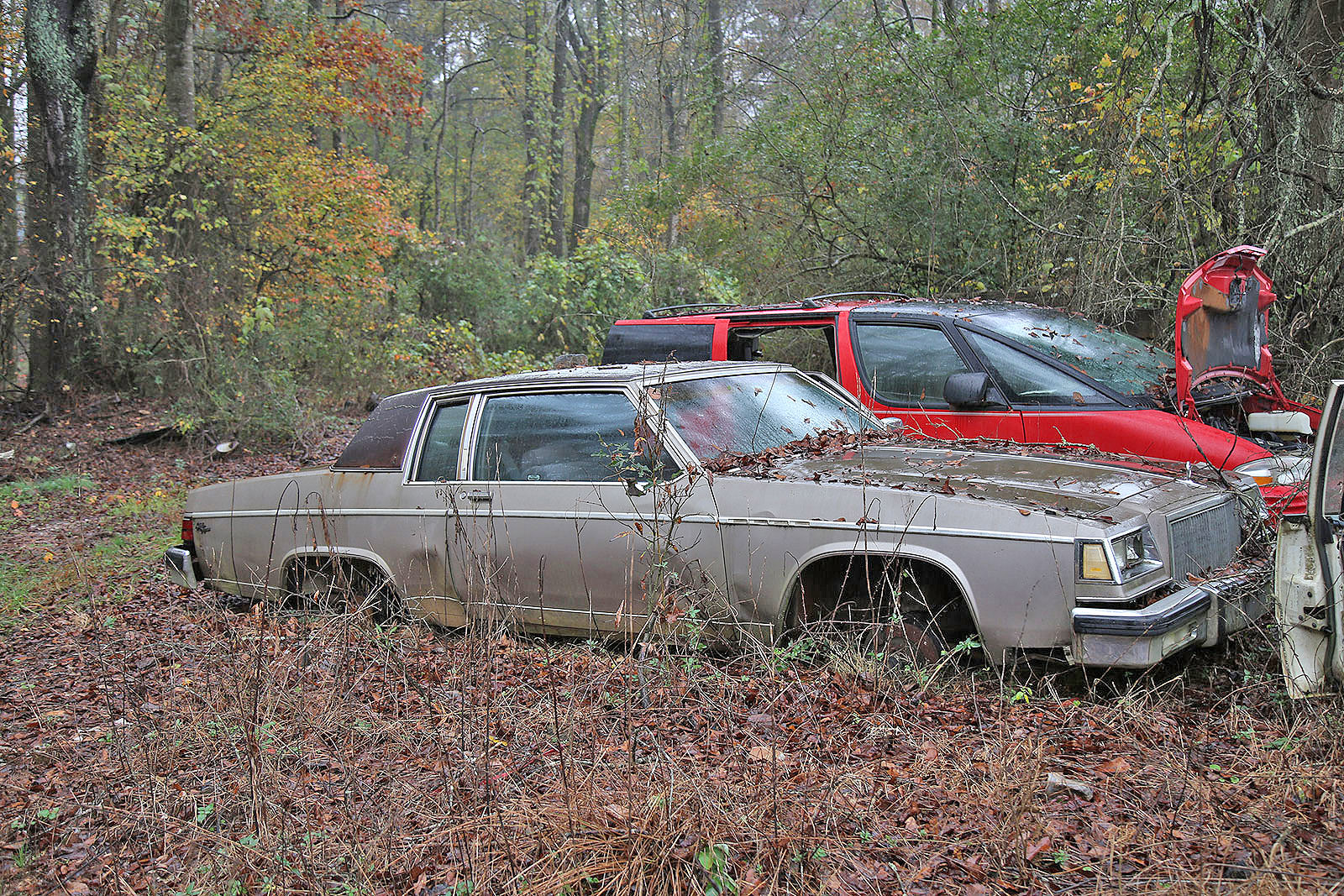
We know this isn’t the most exciting car in the world, but Buick Electra Park Avenues of this era are disappearing fast, so we reckon it deserves a place in this collection. It’s a 1982 coupe, and although a bit battered and bruised, it appeared to be mainly rust-free. Of the 76,232 built that year, just 8182 had two doors.
CHEVROLET BELAIR - 1962
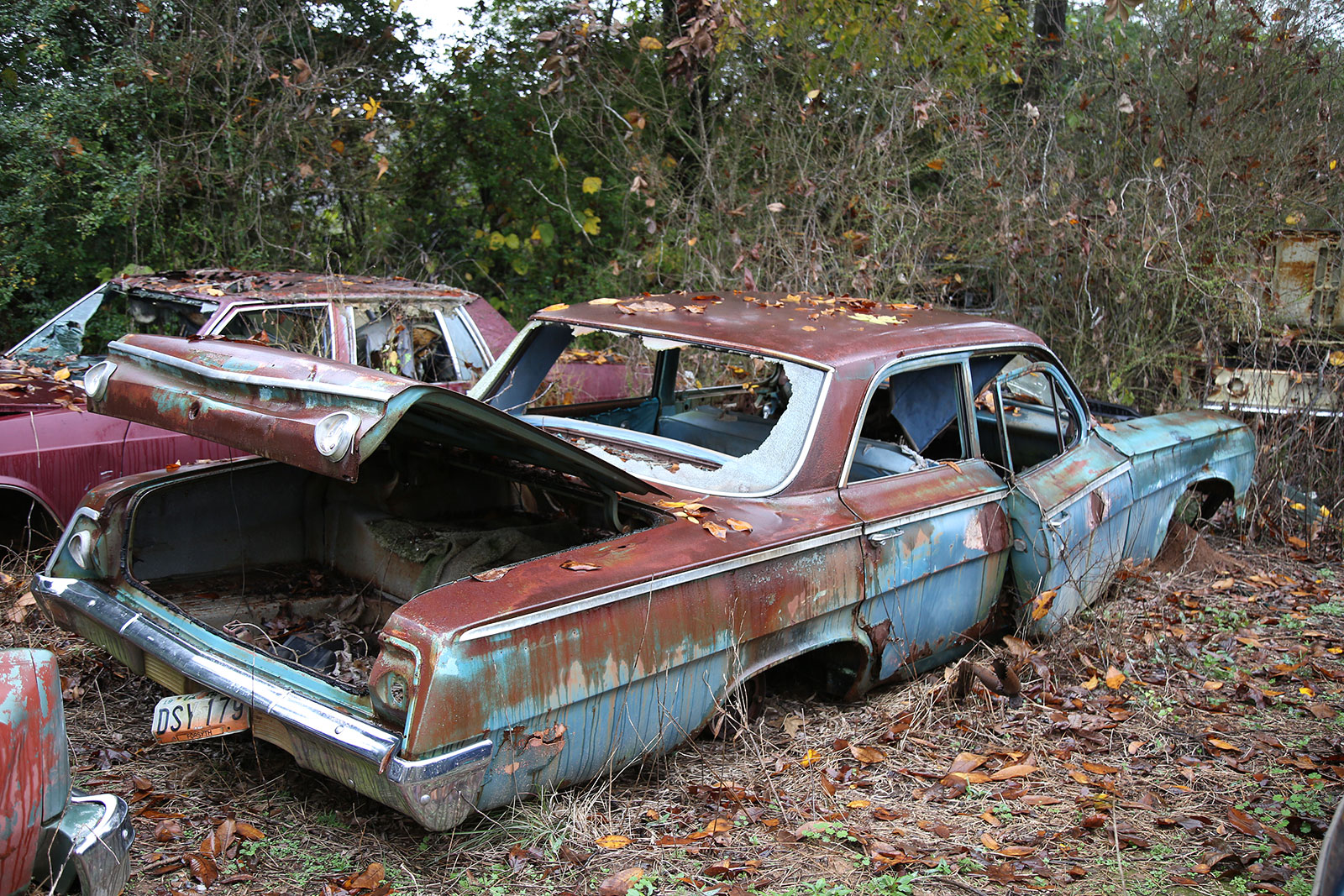
This 1962 Chevrolet Bel Air had done well to survive for this long. However, seeing as most of its body panels were riddled with rust, we reckon its days may have been numbered. The famous Bel Air name was used on American Chevrolets from 1950 through to 1975, and continued for a further six years in Canada.
If you enjoyed this story, please click the Follow button above to see more like it from Autocar

GM Subscriptions Transform Profit Model as Software Margins Eclipse Car Sales

Car Reliability in 2025: Owner Survey Reveals Standout Models and Persistent Problem Areas

Every year Autocar’s sister title What Car? carries out a survey of car-owners to help identify the most reliable cars on the market – and the least.
The survey is based on the experiences of over 32,000 owners over the past two years - and is a great way to help you choose your next car if you want low hassle and low maintenance costs. Let’s take a look at the cars who came top – and bottom:
Small Cars - Most reliable
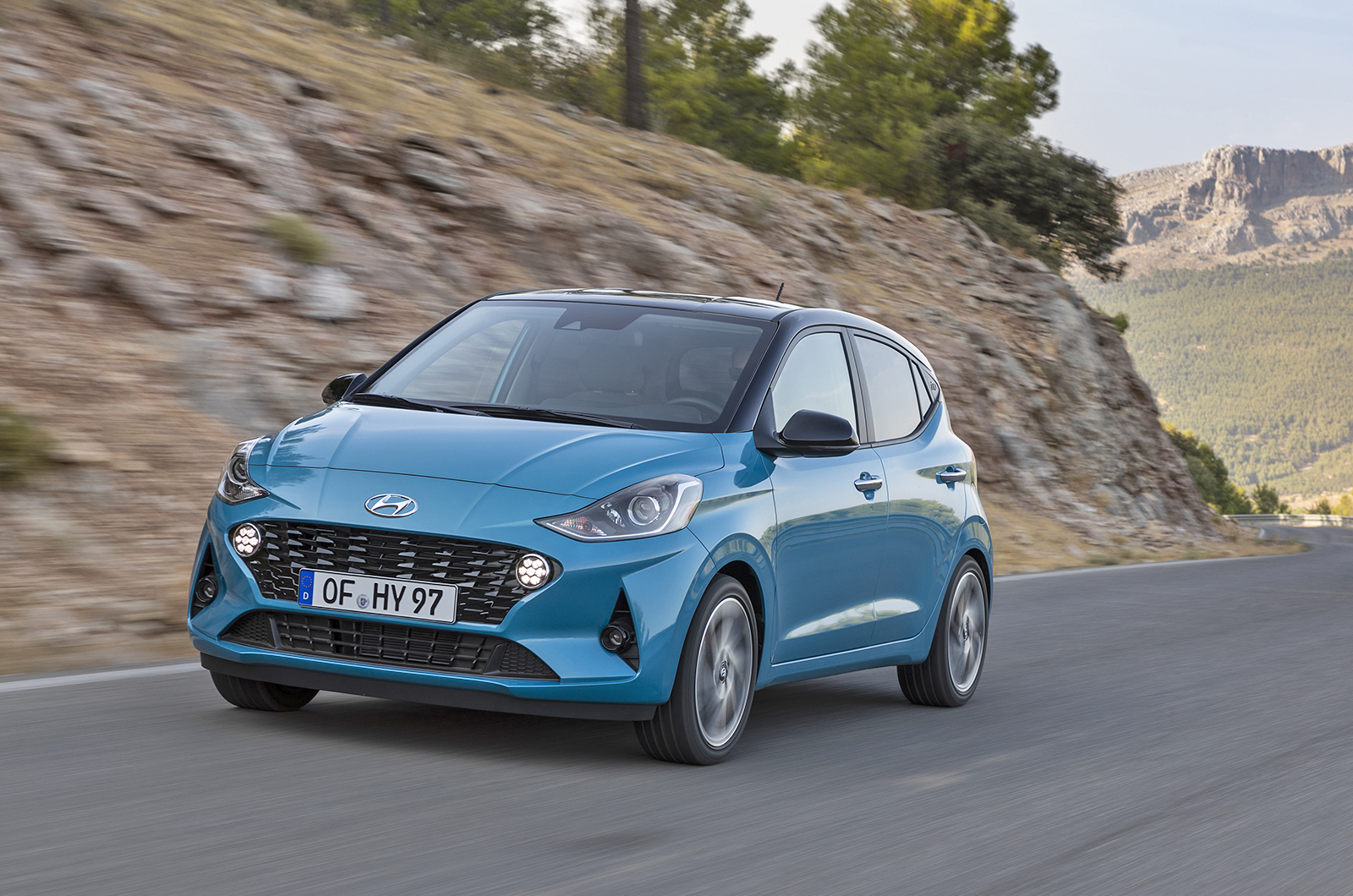
1: HYUNDAI i10 (2020+) - 100%
The i10 is just one of just four cars to achieve a 100% reliability rating. That means not one of the cars owners told us about suffered any faults at all in the previous 24 months.
Also highly rated:
Toyota Aygo X (2022+) - 99.7%
Mini Hatch (2014-2024) - 99.1%
Small Cars - Least reliable
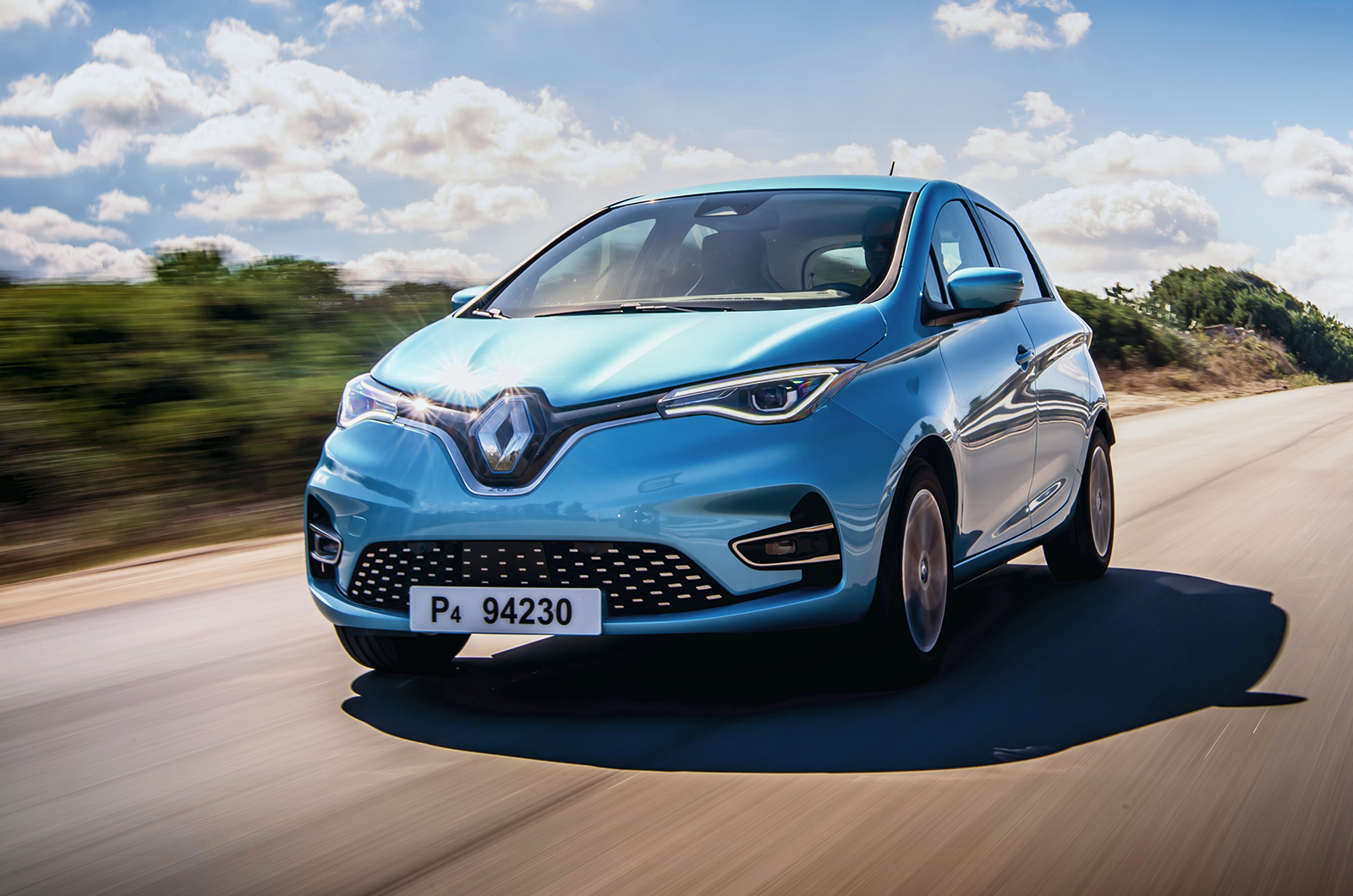
1: Renault Zoe (2013-2024) - 85.1%
With a fault rate of 39% and a high proportion of problems reported with EV batteries, the Zoe is one to avoid if you’re after a reliable small EV. Owners also told us their cars had suffered problems with their 12-volt batteries, air conditioning and other electrical systems.
Also lowly rated:
Opel Corsa Electric - 87.6%
MG 3 - 87.9%
Family Cars - Most reliable
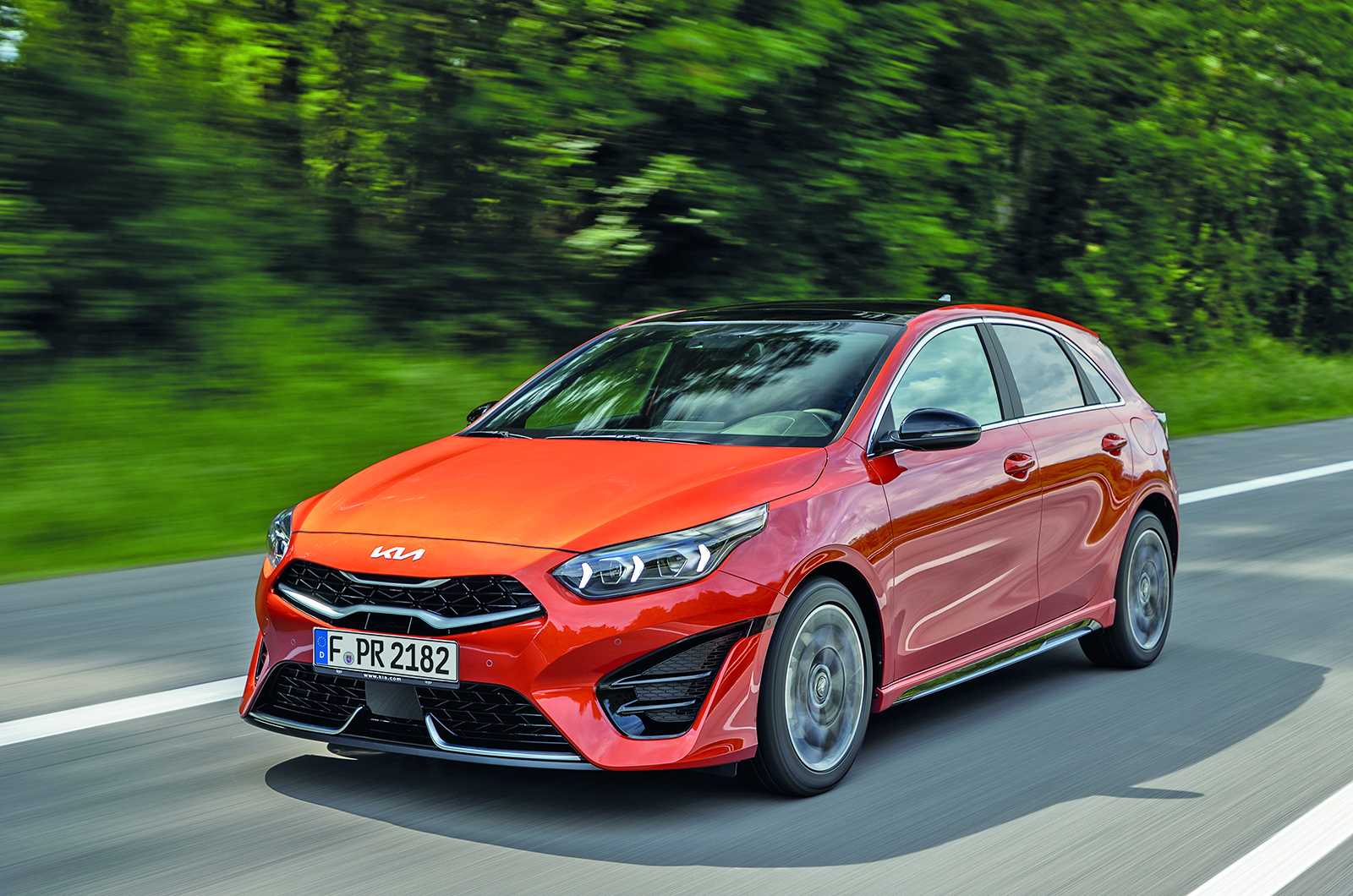
1: Kia Ceed (2018-2025) - 98.8%
Kia’s family hatchback may not be the last word in driver involvement or sophistication, but it is the most dependable choice in this class. Owners told us that only 8% of Ceeds had any issues, with the sat-nav/infotainment system being the only area of concern.
Also highly rated:
BMW i3 (2013-2022) - 97.4%
Honda Civic (2022+) - 97.3%
Family Cars - Least reliable
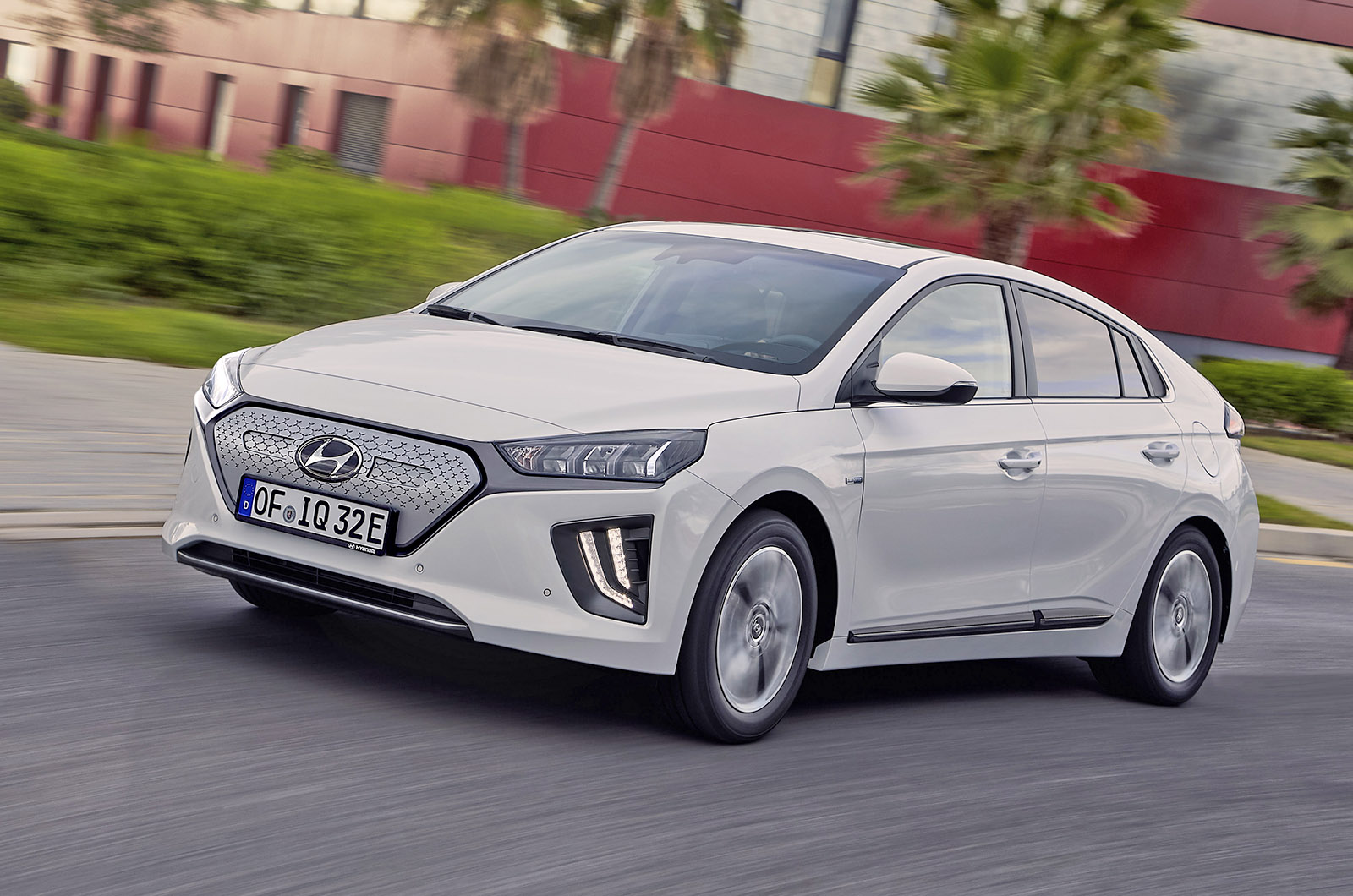
1: Hyundai Ioniq Electric (2016-2022) - 80.1%
EV and 12-volt battery issues have blighted the Ioniq Electric. The EV battery was the cause of 18% of issues and the 12-volt unit was responsible for 29% of faults. Together, they rendered 80% of affected vehicles undriveable. Repair work was slow in many instances, too; 70% of cars were in the workshop for more than a week, and we were told that some were out of action for several weeks due to parts supply issues.
Also lowly rated:
Hyundai Ioniq 5 (2021+) - 80.7%
Volkswagen Golf (2020+) - 82.2%
Executive cars - Most reliable
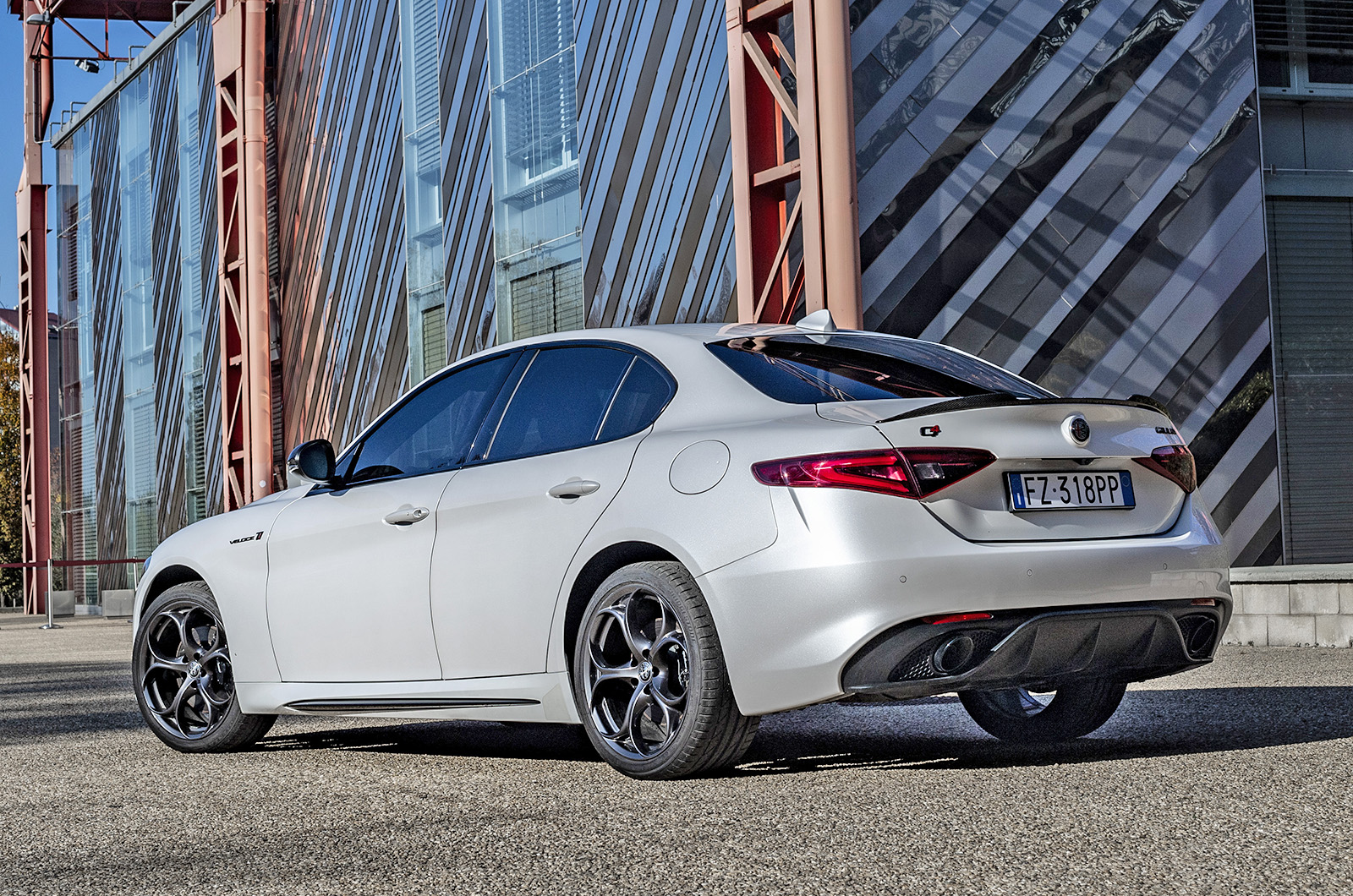
Alfa Romeo Giulia (2016+) - 98.2%
Only 9% of the Giulias that owners told us about suffered any glitches, and all those that did were put right for free. Problem areas included the bodywork, brakes, interior trim and non-engine electrics, but three-quarters of the affected cars could still be driven.
Also highly rated:
BMW 3 Series (2019+) - 98.0%
Skoda Superb Diesel (2015-2024) - 98.0%
Executive cars - Least reliable
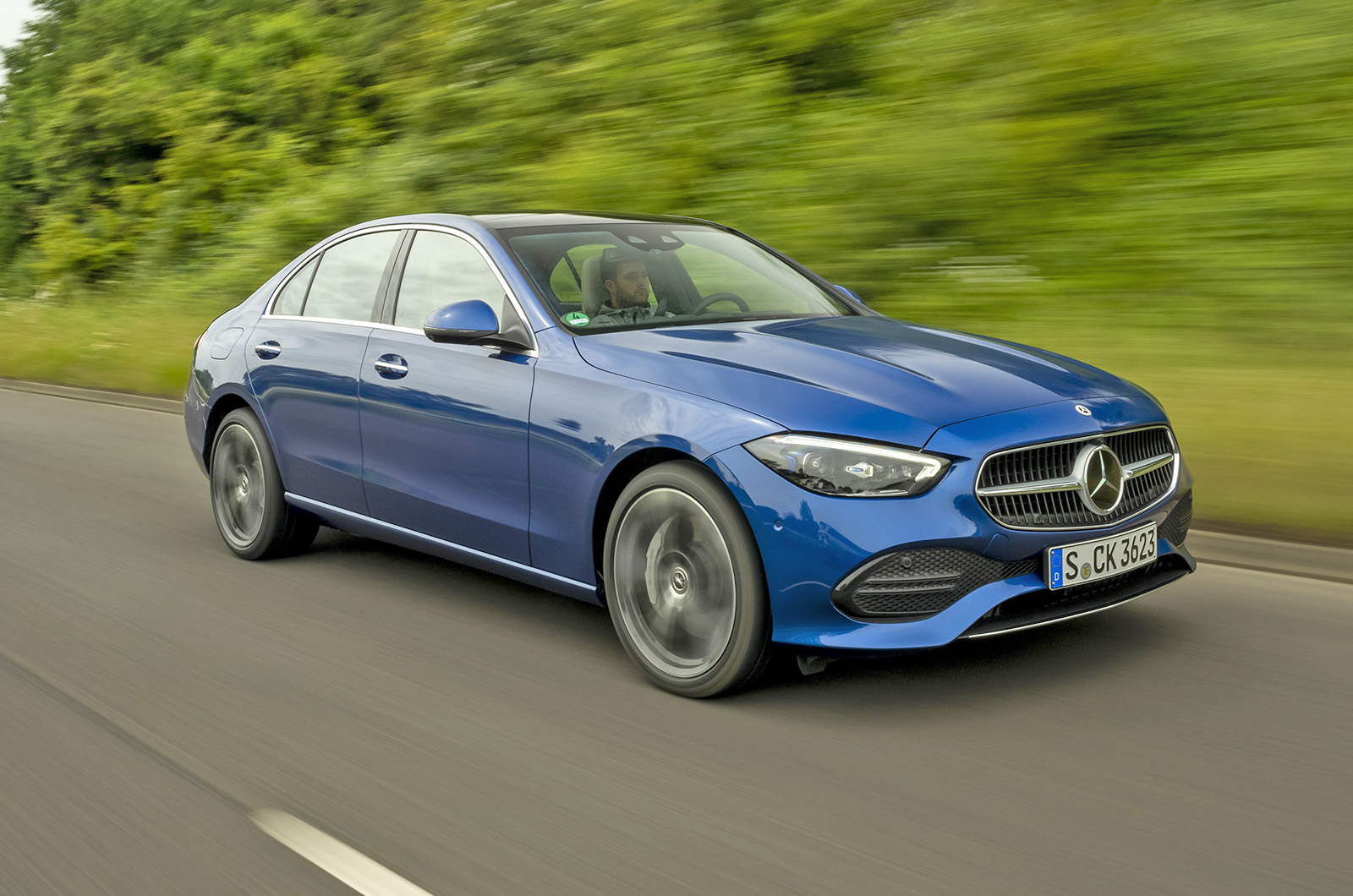
Mercedes-Benz C-Class (2021+) - 76.3%
The latest C-Class isn’t looking as sturdy as the previous model; 43% of cars built from 2021 onwards had a glitch, compared with 23% for the 2014-2021 generation. Failures occurred across a range of areas, including the air-conditioning, engine, fuel system, gearbox and non-engine electrics.
Also lowly rated:
Volvo S90 (2016-2023) & Volvo V90 (2016+) - 76.7%
Skoda Superb Petrol (2015-2024)
Small SUVs - Most reliable
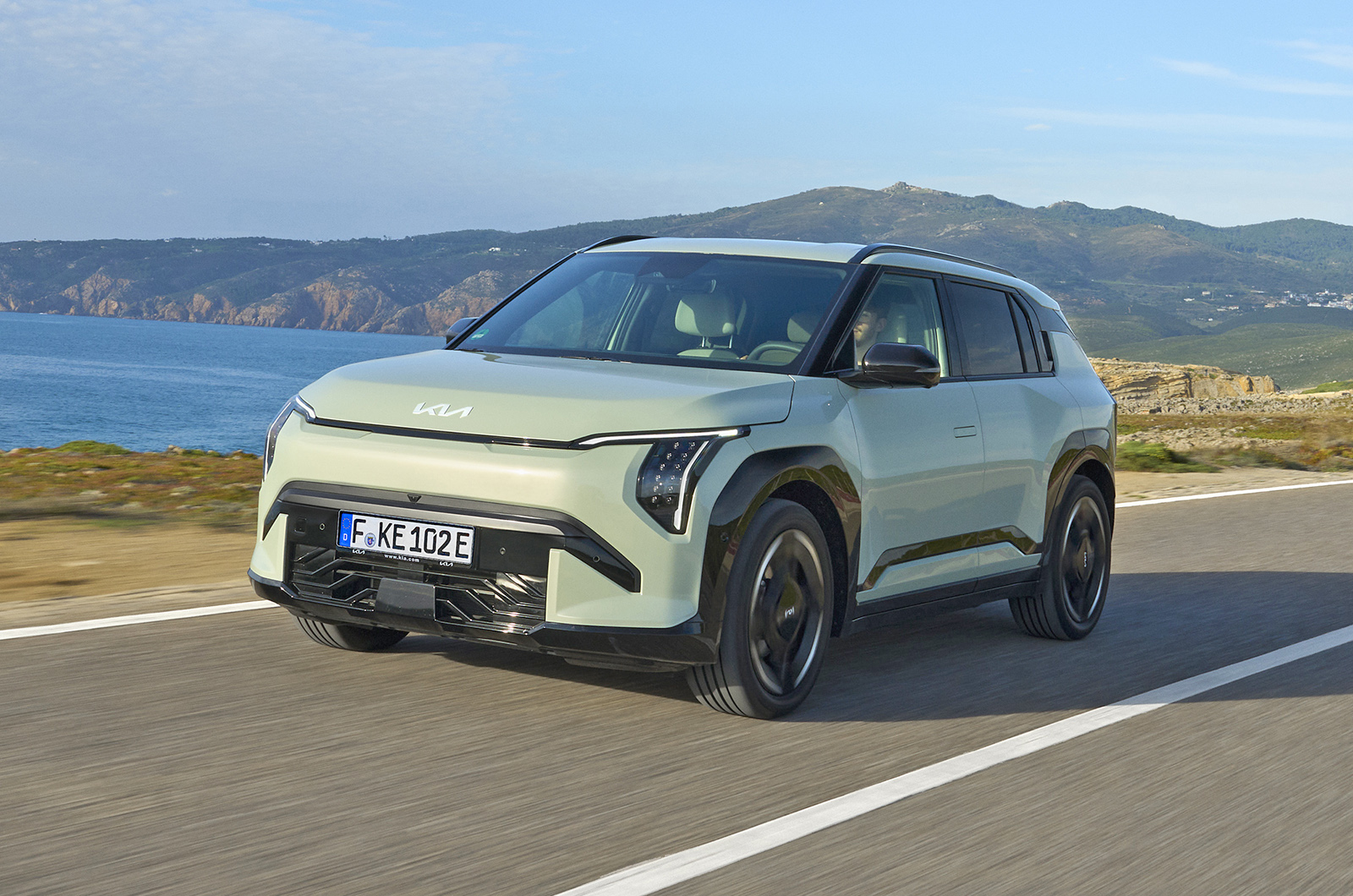
Kia EV3 (2024+) - 100%
While some of the latest electric models have struggled with battery and motor flaws, the Kia EV3 has sailed through its first reliability survey with none of these. In fact, it’s one of just four models to have achieved a full 100% reliability rating this year.
Also highly rated:
Volkswagen T-Roc (2018+) - 99.0%
Hyundai Kona Hybrid (2019+) - 98.7%
Small SUVs - Least reliable
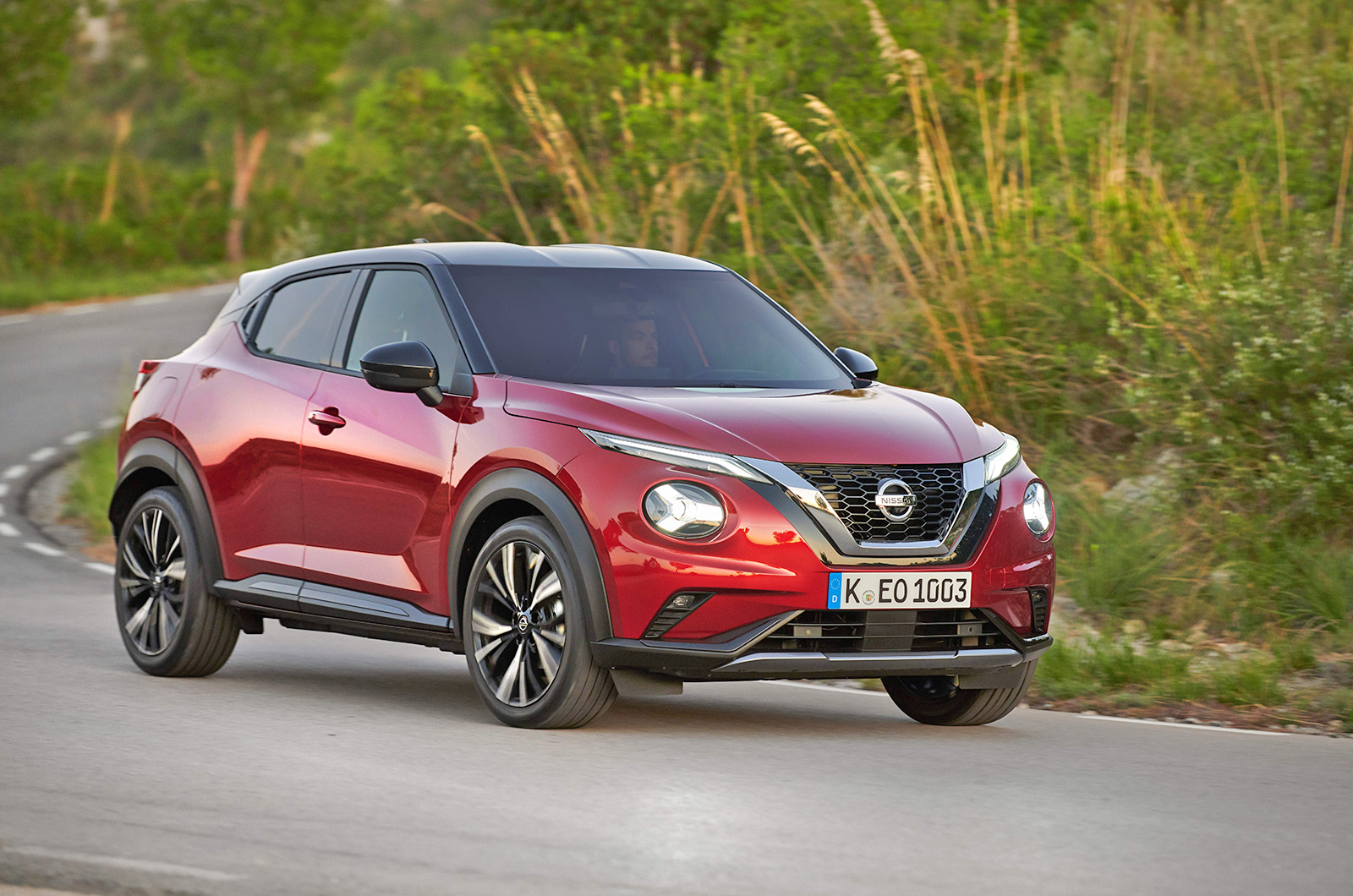
1: Nissan Juke Petrol (2019+) - 55.2%
A combination of slow repairs and some huge repair bills have dragged the petrol Juke to the bottom of the chart for small SUVs. In fact, its 55.2% reliability rating is the lowest of all the cars included – in any category – in this year’s survey.
Although only 24% of petrol Juke owners said their car had gone wrong, 64% of those said their cars were out of action for more than a week, and only 30% of problems were fixed for free.
Also lowly rated:
Lexus LBX (2023+) - 81.9%
Nissan Juke Hybrid (2022+) - 89.0%
Family SUVs - Most reliable
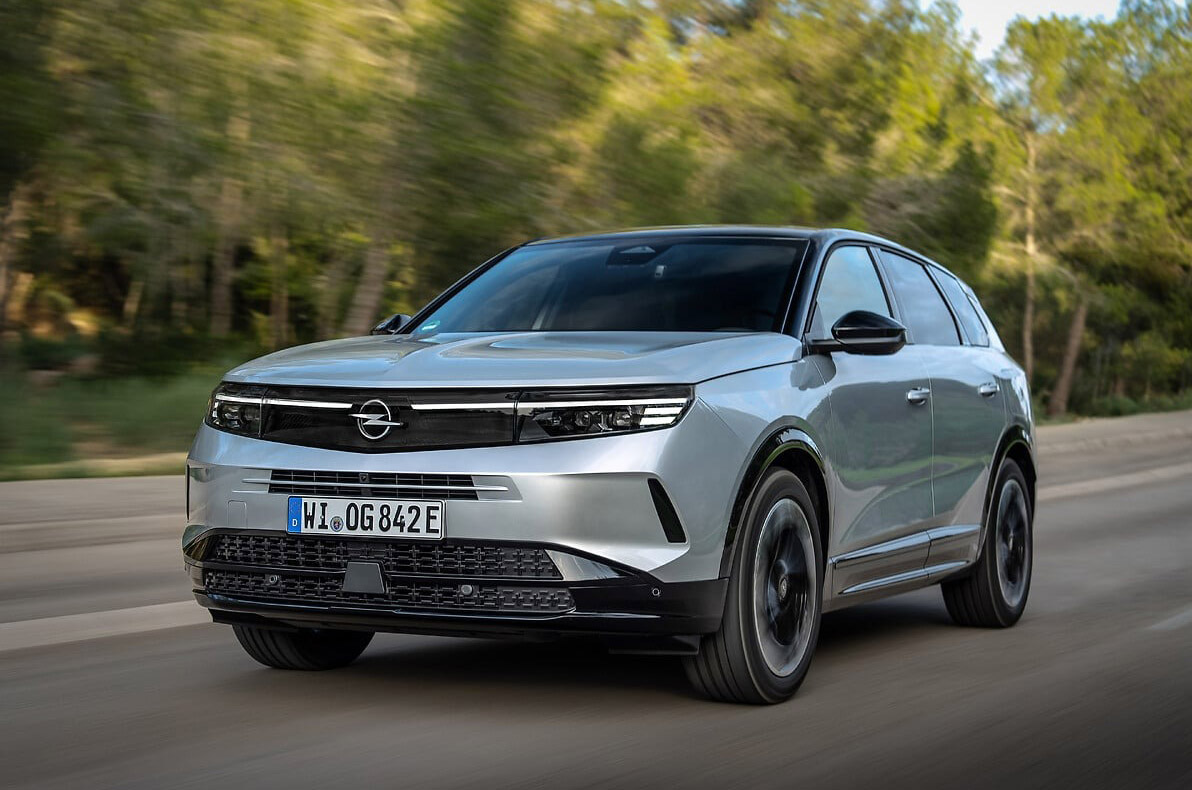
1: Opel Grandland Petrol (2024+) - 99.6%
The second-generation Grandland is looking far more robust than its predecessor, with a minimal fault rate of just 4%, compared with 19% for the 2018-2024 model. Unspecified non-engine electrical problems were the only issues reported by owners.
Also highly rated:
Toyota RAV4 (2019+) - 99.2%
Porsche Macan (2014+) - 99.0%
Family SUVs - Least reliable

1: Volkswagen Tiguan (2024+) - 64.2%
The Tiguan has the highest fault rate of any car in this year’s survey; 81% of the cars we were told about had some sort of problem. The infotainment system accounted for 31% of issues, and the braking system and non-engine electrics each accounted for another 19%.
Also lowly rated:
Kia Sportage (2016-2021) - 72.9%
Mazda CX-60 (2022+) - 76.2%
Luxury cars - Most reliable
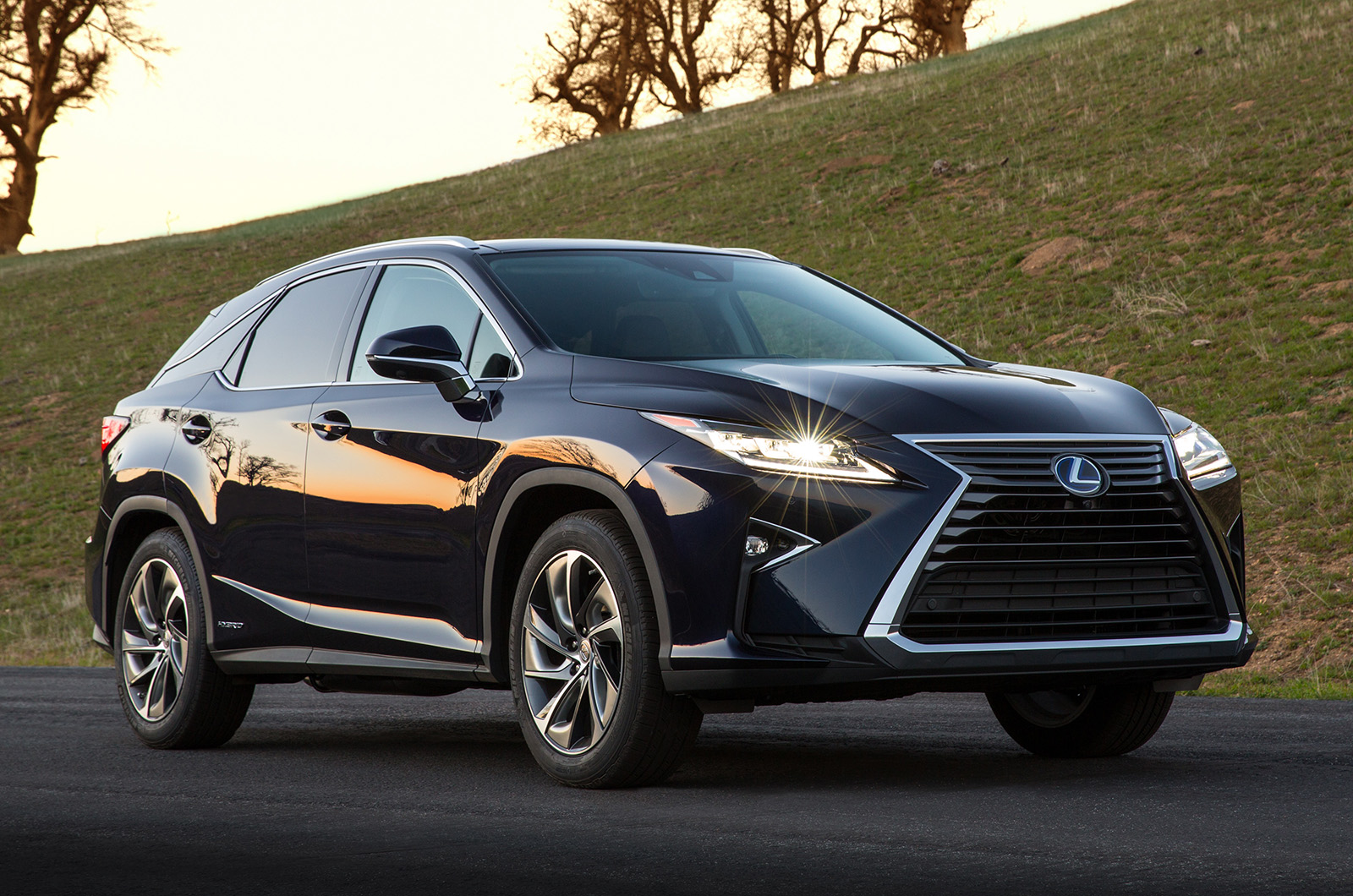
1: Lexus RX (2016-2022)
The RX is the highest-scoring luxury model for the second consecutive year, beating models from other premium brands when it comes to dependability. A mere 7% of the RXs owners told us about had any problems, with air-conditioning, bodywork and non-engine electrics the trouble spots.
Also highly rated:
BMW X5 Petrol & PHEV (2018+) - 96.2%
Range Rover Sport (2013-2022) – 94.9%
Luxury cars - Least reliable
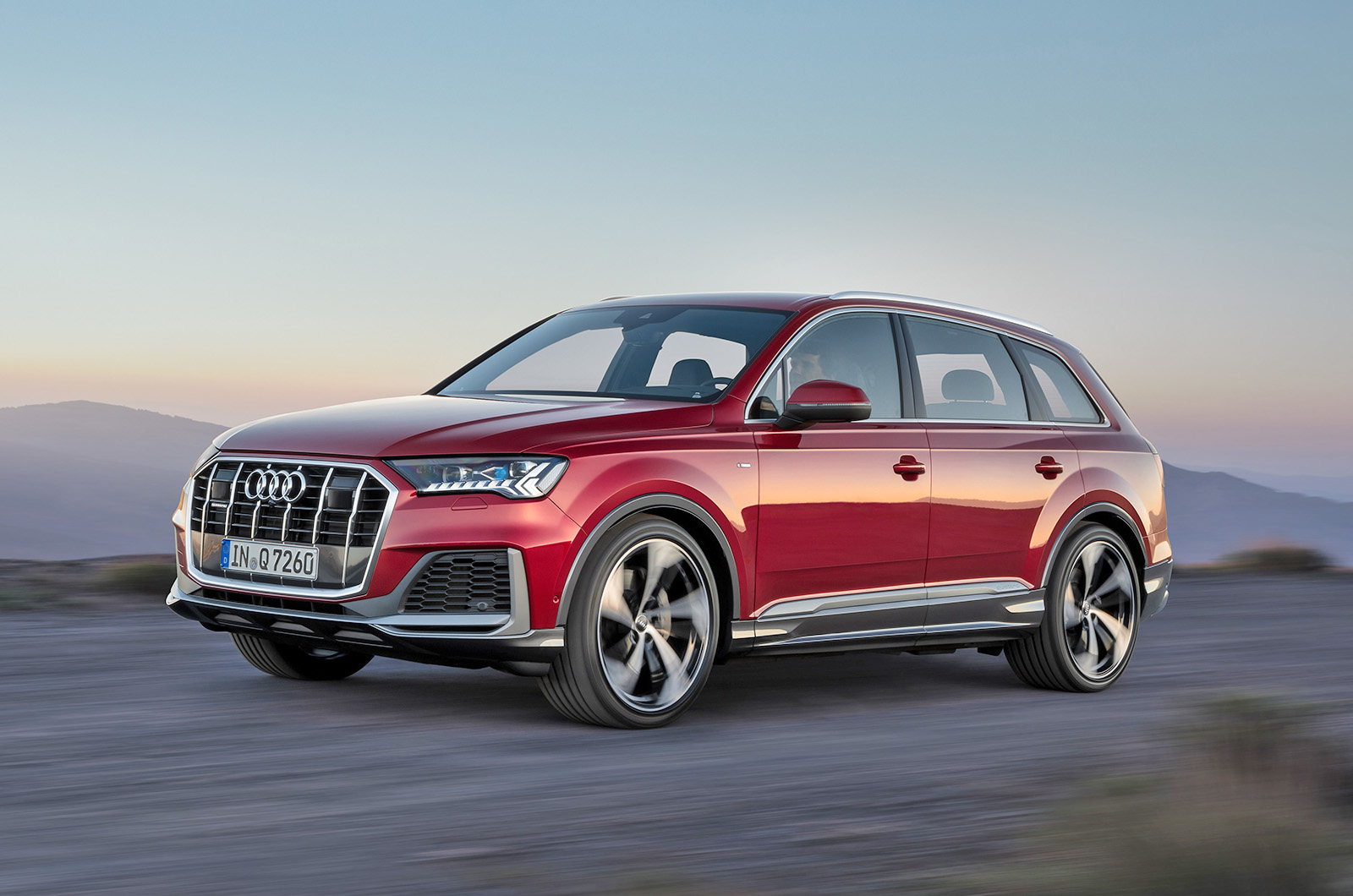
Audi Q7 (2015+) - 78.6%
Faults suffered by the Q7 can be far more costly to remedy than those of its main luxury SUV rival, the BMW X5. 47% of Q7s had a problem, most (20%) being caused by non-engine electrical issues. The engine, exhaust and infotainment system were also cited as problematic.
Also lowly rated:
BMW iX (2021+) - 81.0%
Mercedes-Benz GLE - 82.0%
Seven-Seaters - Most reliable
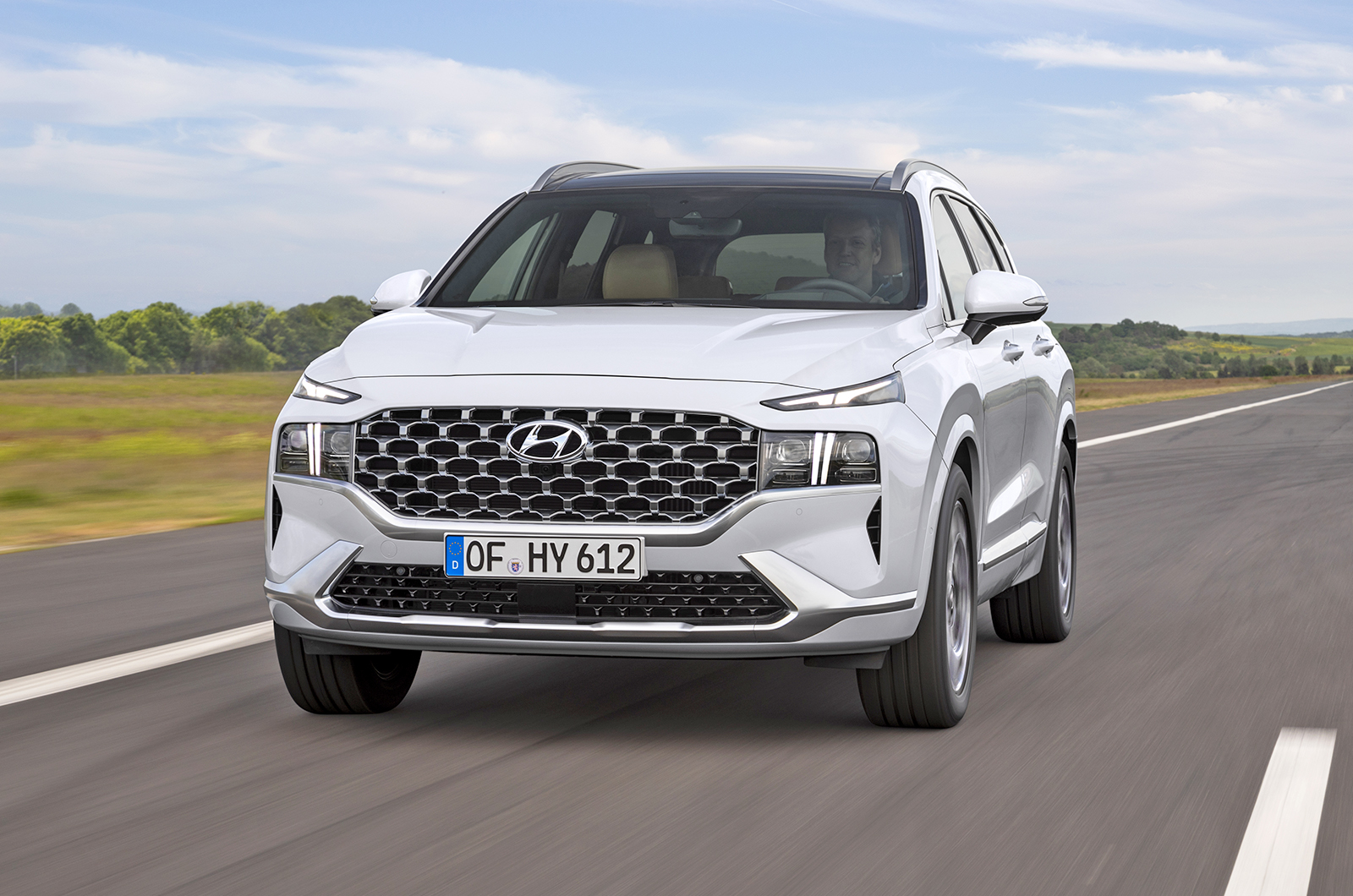
1: Hyundai Santa Fe (2018-2024) - 100%
Results in the seven-seater category were disappointing this year. Only cars in the electric SUV category posted a lower average score, so a seven-seater that manages an
unblemished 100% rating deserves a lot of praise. The Santa Fe not only does just this, but it’s also the second Hyundai model to gain a perfect score this year, alongside the much cheaper i10 city car.
Also highly rated:
Skoda Kodiaq Diesel (2016-2024) - 97.8%
Mercedes-Benz GLB (2019+) - 96.0%
Seven-Seaters - Least reliable
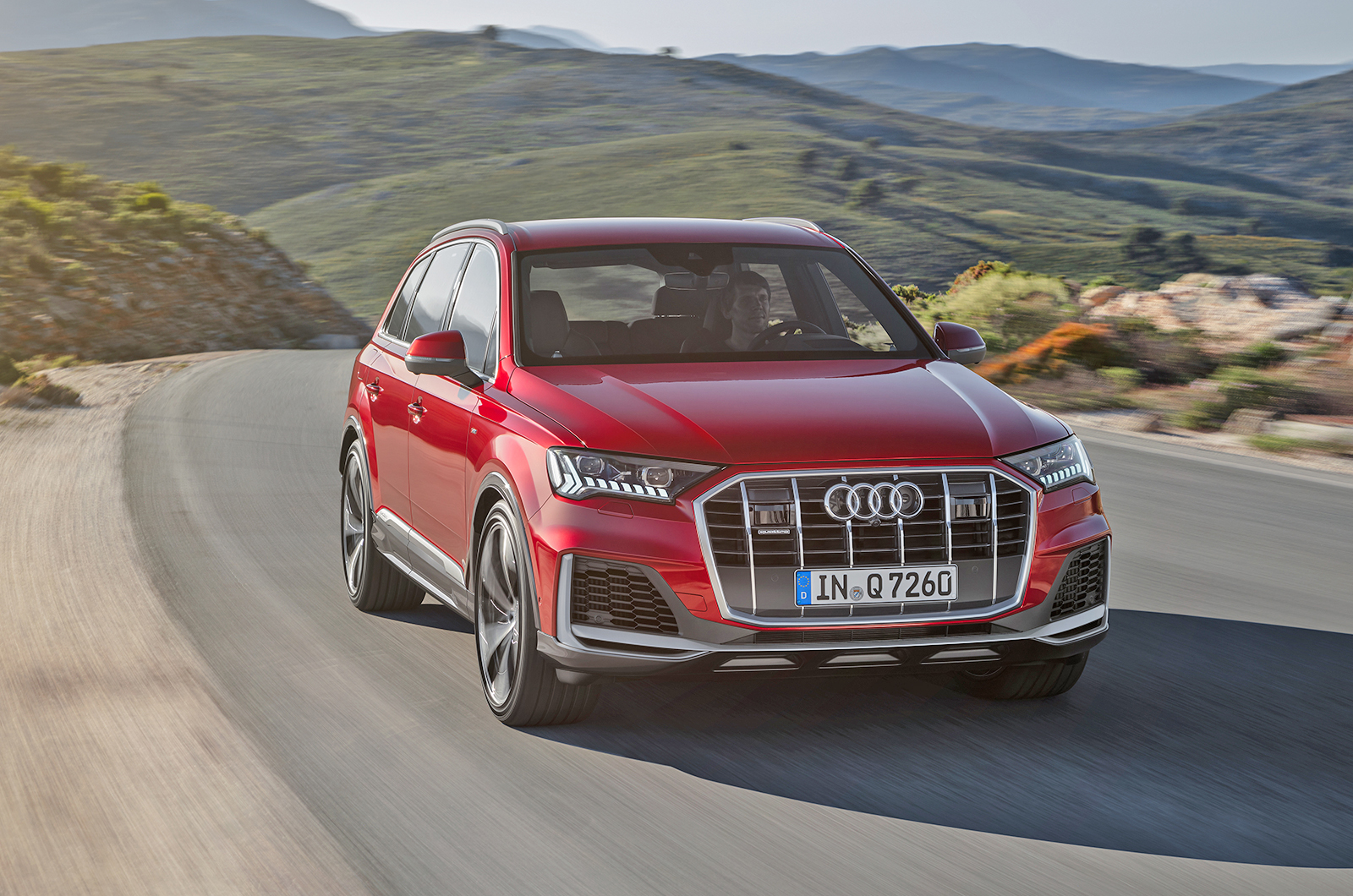
The Q7 appears in this survey as both the lowest-scoring luxury car and the poorest-rated seven-seater. Owners told us that 47% of their cars had gone wrong; Q7 owners were asked to pay for far more repairs than those with seven-seaters from other brands; only 15% of Q7s were fixed for free.
Also lowly rated:
Land Rover Discovery Sport (2014+) - 81.8%
Seat Tarraco (2018+) - 84.9%
Electric cars - Most reliable
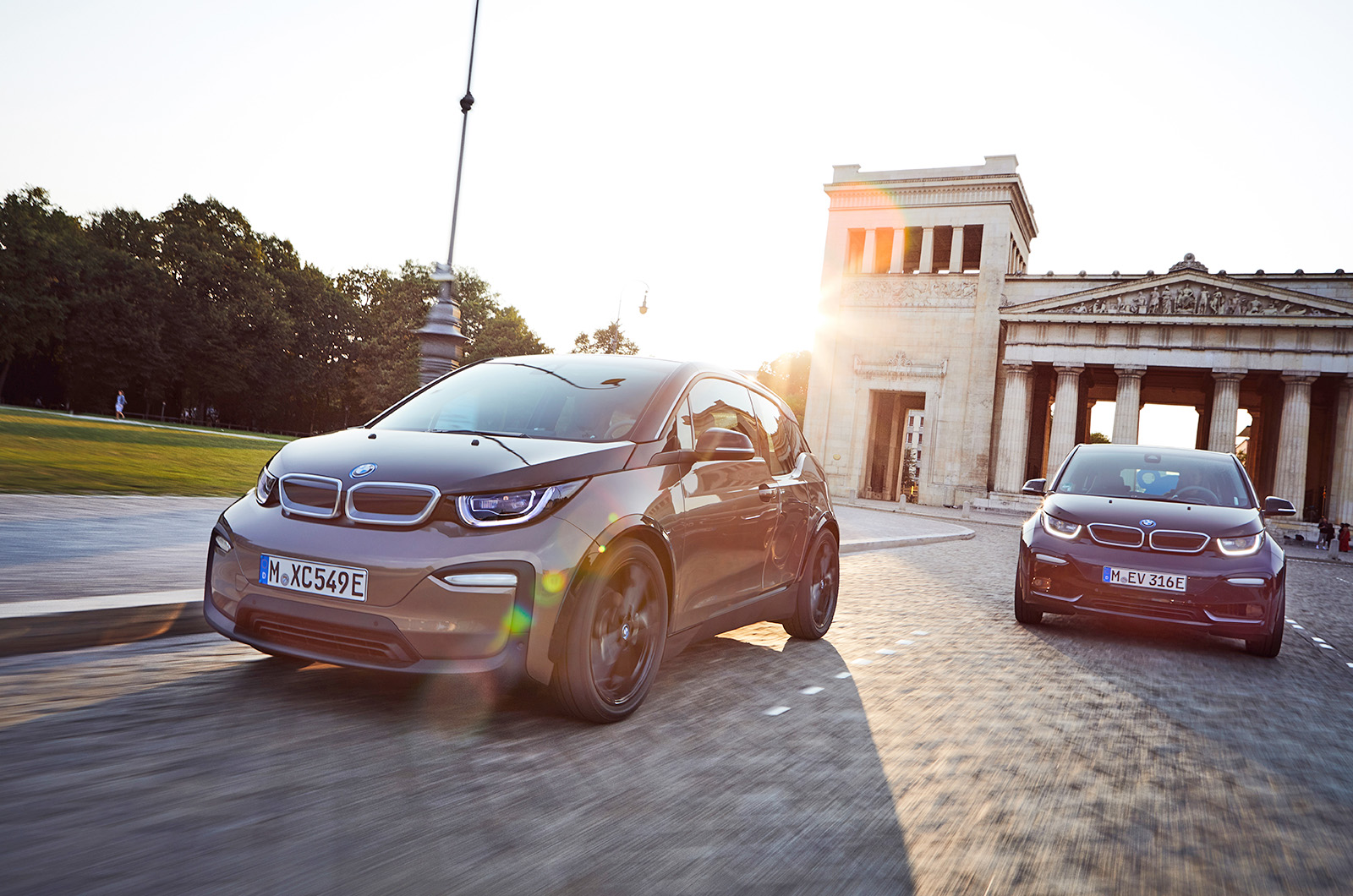
1: BMW i3 (2013-2022) - 97.4%
The i3 may no longer be on sale, but it’s still a great option if you’re after a dependable small EV. Its fault rate of just 11% beats not only the Nissan Leaf family hatchback but also tops that of the i3’s pricier BMW i4 stablemate.
Also highly rated:
BMW i4 (2021+) - 96.8%
Nissan Leaf (2018-2024) - 96.5%
Electric cars - Least reliable
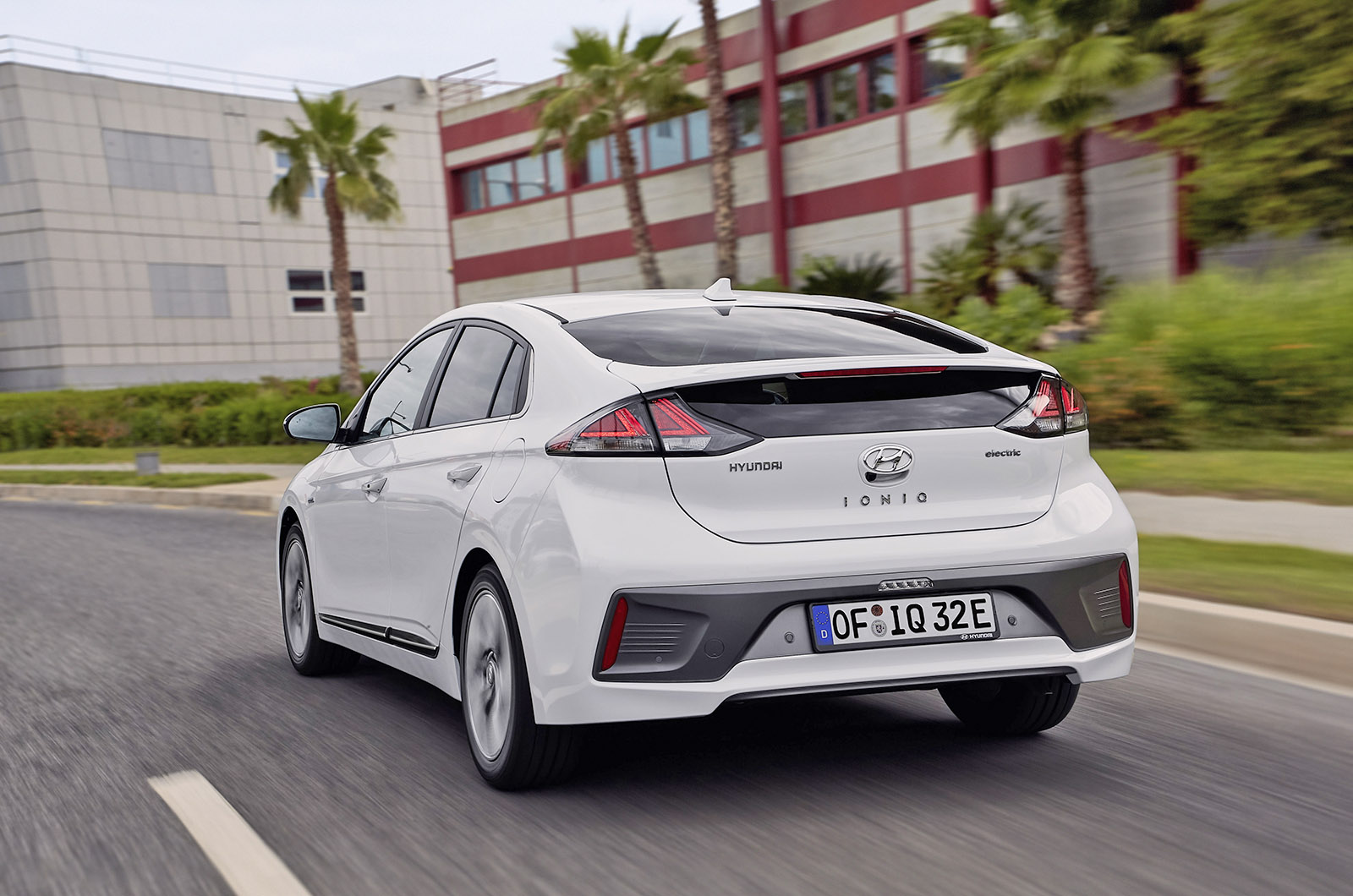
1: Hyundai Ioniq Electric (2016-2022) - 80.1%
The now-discontinued Ioniq Electric family car is the lowest-scoring EV in our survey, not helped by how long owners had to do without their cars while repairs were made. Among the cars that went wrong, 90% were unable to be driven until repairs were carried out, and 70% of these spent more than a week receiving workshop attention.
Also lowly rated:
Hyundai Ioniq 5 (2021+) - 80.7%
Porsche Taycan (2020+) - 81.2%
Electric SUVs - Most reliable
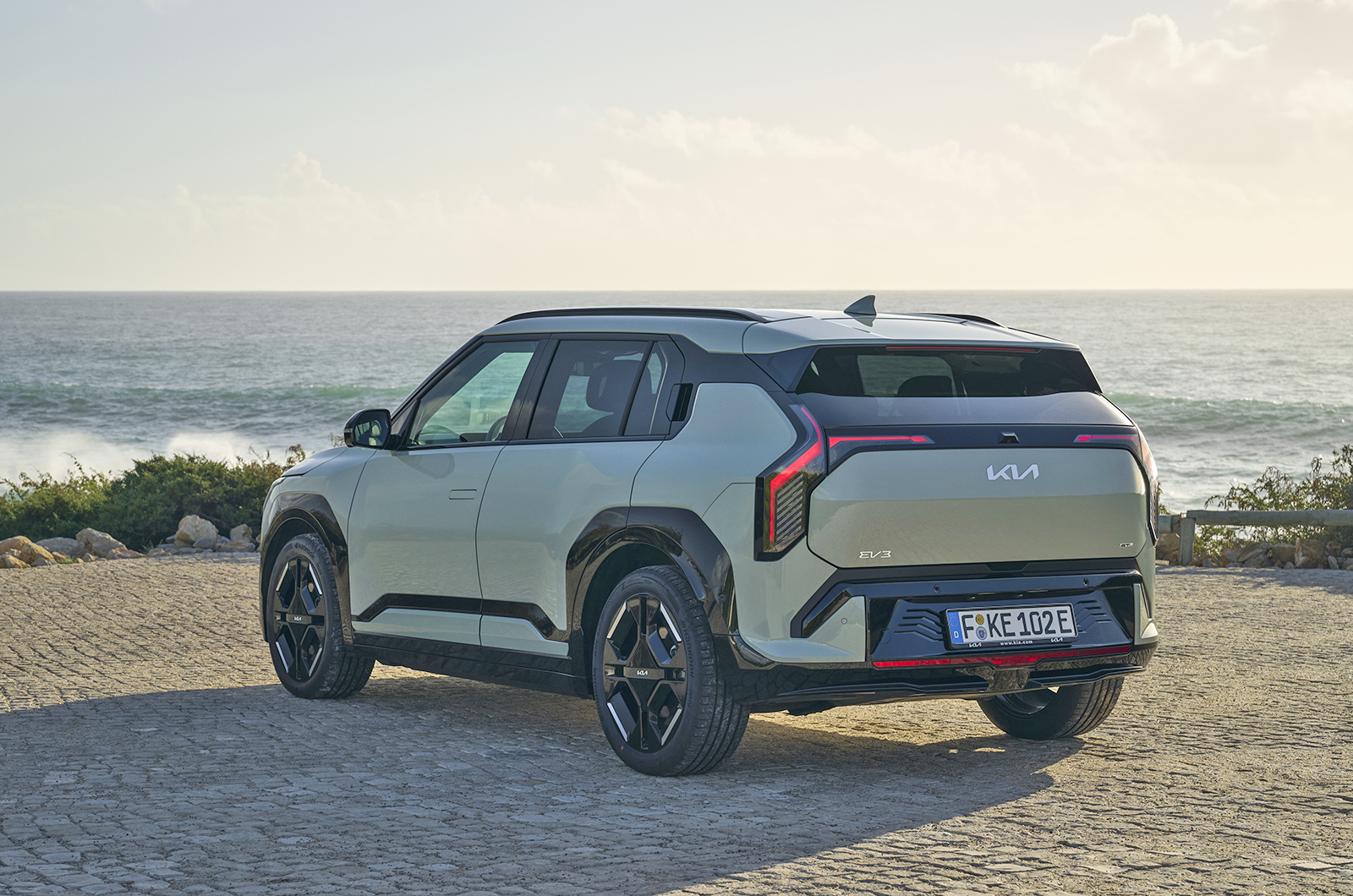
1: Kia EV3 (2024+) - 100%
The EV3 is the first Kia model to attain a perfect 100% reliability rating in our survey. It’s the brand’s most affordable pure electric model, yet it outperforms many larger, more expensive electric SUVs – including the BMW iX – when it comes to durability and build quality.
Also highly rated:
Renault Scenic (2024+) - 97.5%
Tesla Model Y (2022+) - 97.1%
Electric SUVs - Least reliable
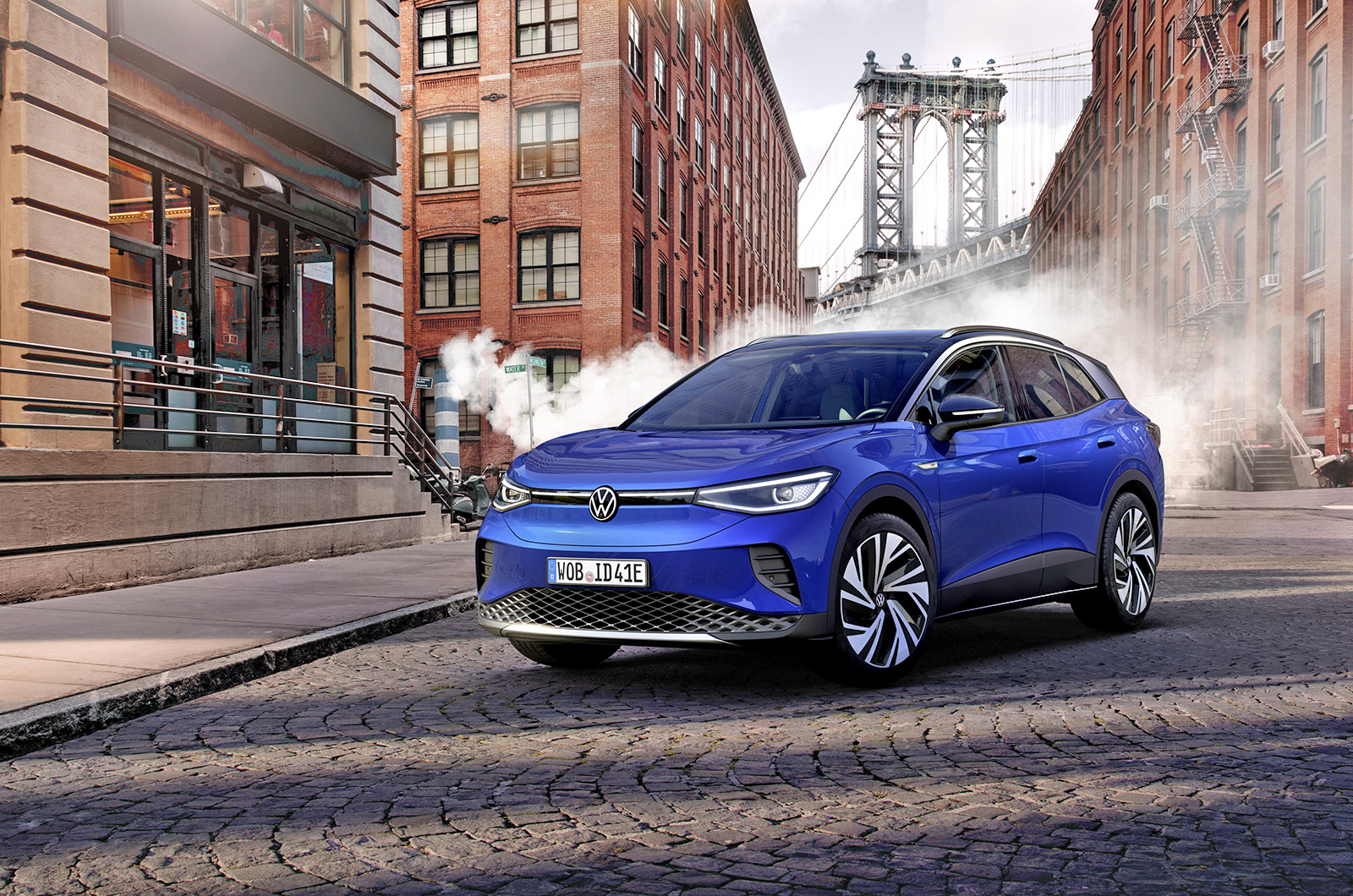
Volkswagen ID 4 (2021+) - 79.6%
36% of ID 4 owners had problems, compared with 30% of people with Enyaqs and 29% with Q4 e-trons, which are sister cars. What’s more, 67% of faulty ID 4s were off the road for more than a week, while only 28% of Enyaqs (and 52% of Q4s) took that long. The EV battery and electric motor were the main issues for ID 4 owners, but VW did pay for all repairs.
Also lowly rated:
Nissan Ariya (2022+) - 80.9%
BMW iX (2021+) - 81.0%
Coupes/Convertibles/Sports cars - Most reliable
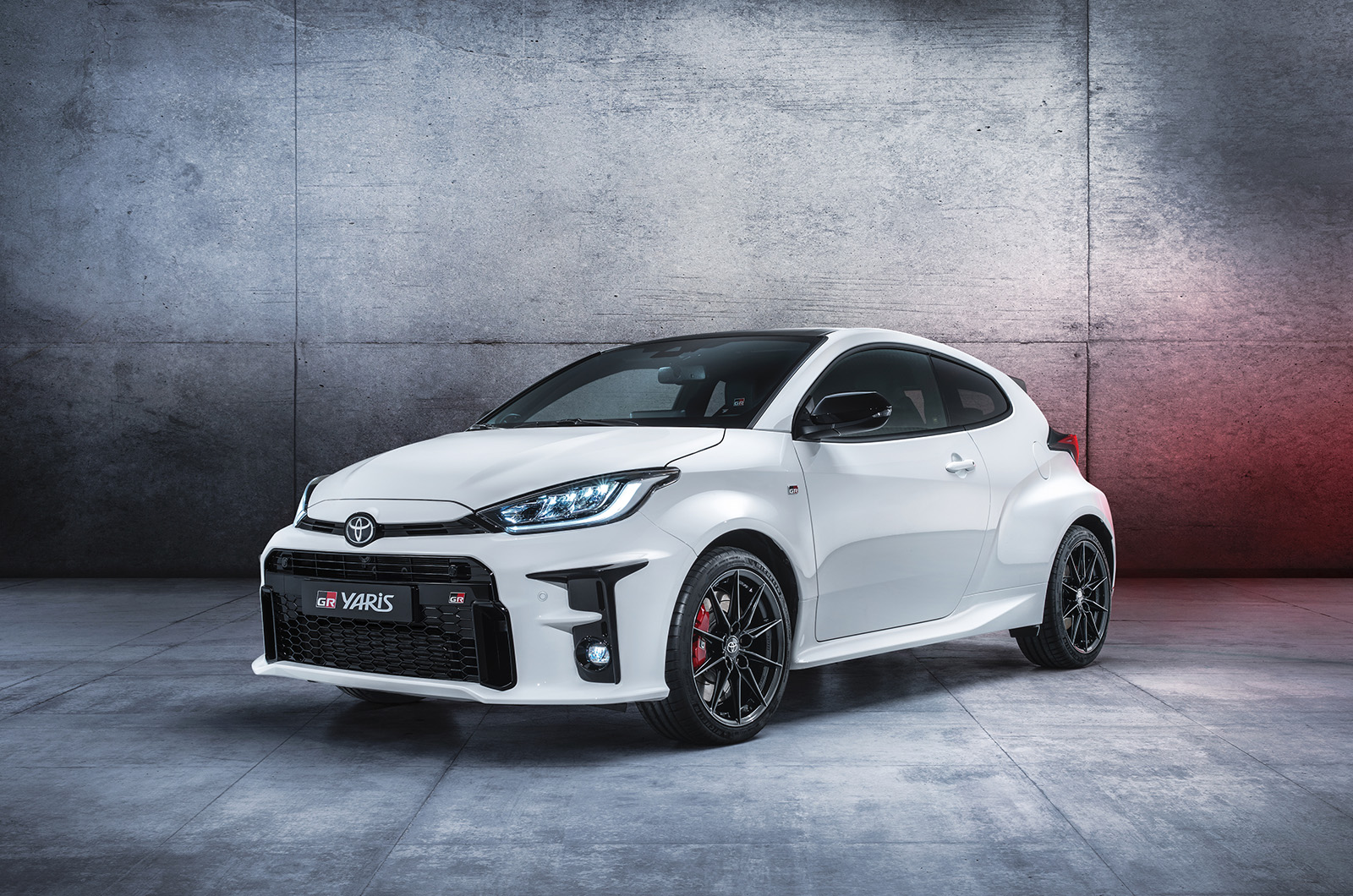
1: Toyota GR Yaris (2020+) - 100%
This red-blooded, rally-bred hot hatch outperforms its more subdued, sensible namesake – the Yaris Hybrid small car – when it comes to reliability. In fact, not a single GR owner reported any faults whatsoever. Not only did the GR Yaris post a 100% rating, but it’s also the only car in a class full of sporty models to have achieved this feat in the past seven years of the What Car? Reliability Survey.
Also highly rated:
BMW 4 Series Coupe/Convertible (2020+) - 98.5%
Toyota GR86 (2022+) – 97.9%
Coupes/Convertibles/Sports cars - Least reliable
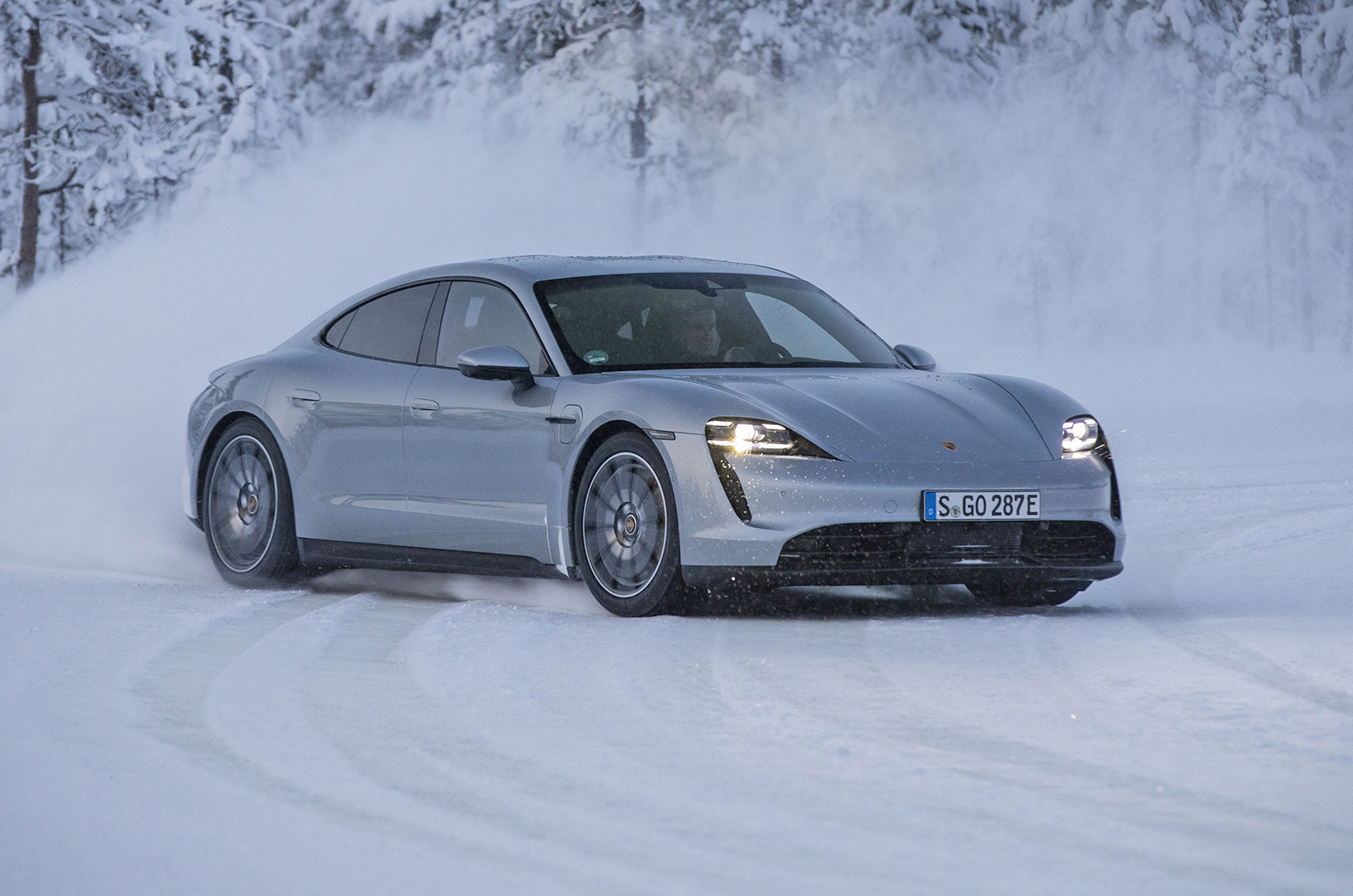
1: Porsche Taycan (2020+) - 81.2%
Taycan owners told us that 54% of their cars had gone wrong in some way, compared with 16% of BMW i4s and 8% of BMW 4 Series Coupés. The Porsche’s main problem area was the air-conditioning, which accounted for 22% of issues; EV batteries and 12-volt batteries also caused headaches for some owners. Repairs were slow, with 81% of cars taking more than a day to fix, but Porsche paid for virtually all of the work.
Also lowly rated:
Jaguar F-Type (2013-2024) - 81.9%
Porsche 718 Boxster/Cayman (2016+) - 89.8%
If you enjoyed this story, please click the Follow button above to see more like it from Autocar

Fiat Panda Redefined as World’s Narrowest Drivable Car Challenges Automotive Conventions

Tesla User Experience Redefined by Practical Innovations from Branded Toilets to Intelligent Pet and...
 Yes, a toilet. It's strange, but it does show the brand's sharp focus on the EV ownership experience
Tesla has a knack of staying ahead of the EV competition. Initially, simply being the first mass-market electric car brand gave it the lead in the EV world.
Then came the proprietary Tesla Supercharger network, offering cheaper, easier and more reliable charging than third-party providers without the faff of having to download a new app every time or even tap a credit card.
The quick and easy way of buying a car directly from Tesla and then operating it just as simply using the Tesla app put it even further ahead of the EV competition.
And now we have the latest evolution: the Tesla loo. Situated just off the M1 at a garden centre north of Luton, the first Tesla-branded toilet block is about to open its doors. It will be left unlocked during garden centre opening times and remain accessible out of hours via a passcode you can find on your Tesla's screen. A vending machine is also going to be installed.
Some loos aren’t going to move the dial for the brand but they symbolise its willingness to try things and make the user experience better. So many chargers just don’t have adjacent facilities on site when you're filling up, making installing them in the first place somewhat of a half-finished job.
The wider Tesla user experience is the thing I’m enjoying most about running our Model Y and what’s making this test so interesting. As stated in an earlier report, so many electric cars of this size and shape are so similar to look at and drive that manufacturers have to do something to stand out.
A few other features in the Model Y are now starting to shine. One of them is Pet mode, for leaving dogs in the car while you go about your business. Regardless of how cool the cabin temperature might be, I’d never leave my dog alone in a car, but a passenger? All the time.

With your phone used as a key, the car locks as you walk away. But if you activate Pet mode as you leave, your passenger can stay cool without setting off any alarms or leaving the car running. If they’re good, you can give them a treat when you return.
One feature that was a novelty at first soon became a detriment to the car – until I worked out how to use it properly. Sentry mode utilises the car’s cameras for CCTV purposes, providing both security and reassurance when you’ve left your Tesla somewhere you’d rather not.
If someone gets too close to it you get an alert, and you can catch up on what you’ve missed later on by watching video footage saved by the car on its touchscreen.
Parked up in North Norfolk one sunny morning, Sentry mode was triggered for the first time when a camper van parked far too close for comfort – and you didn’t need to go to VAR to see that some contact, however light, had been made. No note was left. No damage either, so there was no further action to take, but the feature will come in useful if you find a bump on the car that wasn’t there when you left it.
The problem is that if you run Sentry mode continuously – as I did – it really drains the battery. I didn’t make the connection at first, and was left wondering why about 10% of range had disappeared overnight. Not just indicated miles, which is always going to be variable due to things like climate, but the actual state of charge.
A trip to Gemini AI to describe the battery drainage symptoms gave me the answer, pointing to the energy breakdown use of the Model Y since the last charge. Almost 25 miles of range had been drained while it was parked up in less than 24 hours, compared with the single mile used preconditioning the car.
Now Sentry mode defaults to off and I save it for some of the more unsavoury car parks or streets I visit. None of your business how frequently that is...

Honda Civic e:HEV LX Redefines Small Car Excellence but Australian Pricing Pushes It Out...

Car Enthusiasm and the Enduring Appeal of Memorable Automotive Details

CitroMuseum and the Preservation of Citroën’s Postwar Legacy Through Originality and Rarity
 Visiting his collection is like traveling through time and a must for all Citroën fans
The company-owned Citroën Conservatoire in Paris has serious competition.
Over the course of 40 years, French enthusiast Henri Fradet has patiently and diligently put together a spectacular collection of over 120 post-war Citroën models. They’re housed in a museum named CitroMuseum located in Castellane, a small town in southern France.
Fradet prefers low-mileage, unrestored cars and he has traveled all over France to track down the best examples left. Follow along as we trek out to the scenic French Alps and travel through time:
The three Citroën chambers
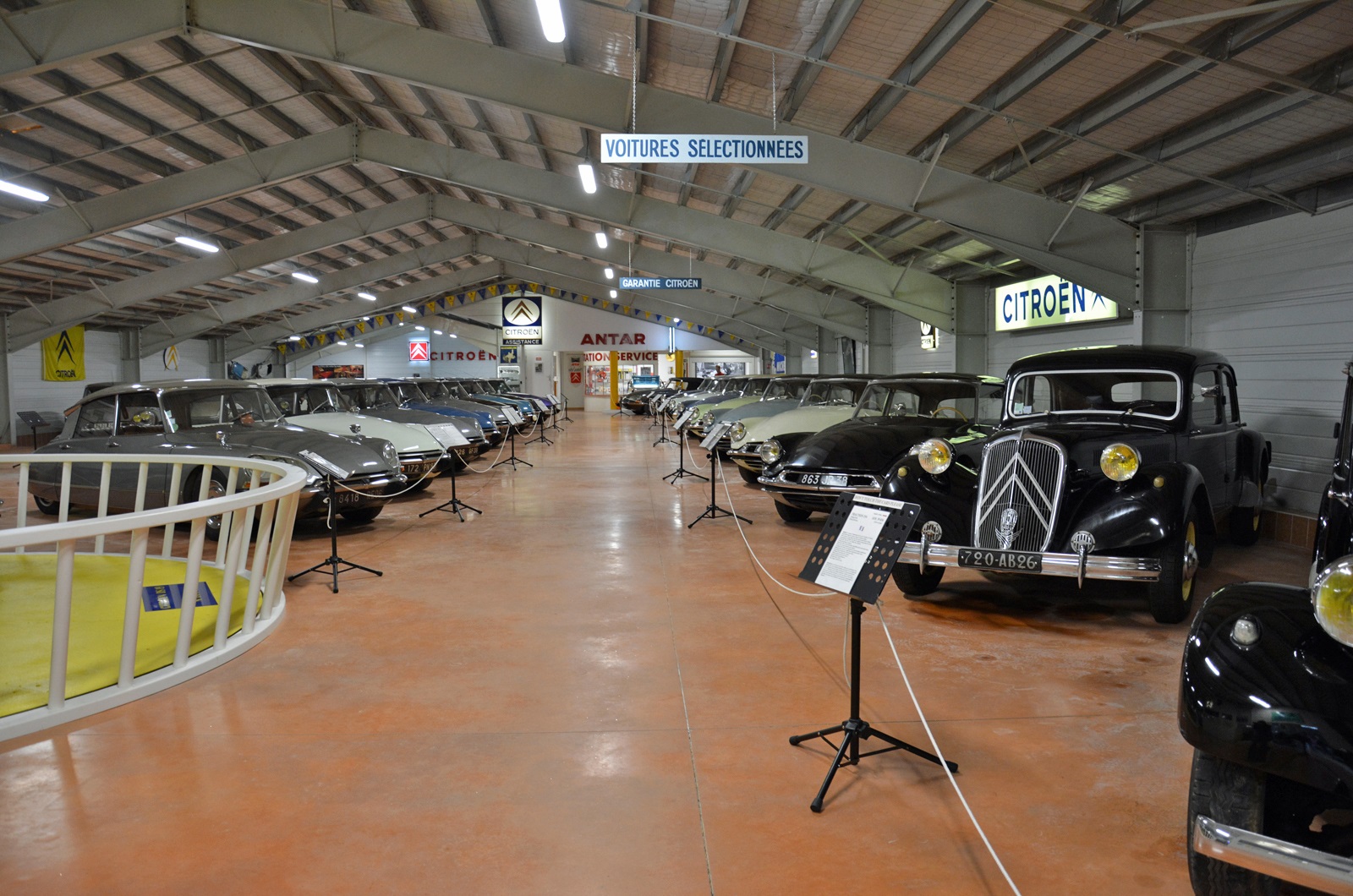
The museum is split into three distinct sections. The first highlights the Traction Avant and variants of the DS/ID. The second is dedicated to the 2CV and its numerous derivatives. Finally, the third – and most recent – wing houses cars made between the 1970s and the 1990s.
Fradet wasn’t content with simply parking his cars in a warehouse and calling it a day. Every section contains a treasure trove of Citroën memorabilia like original documents from the company’s research and development department, model cars and vintage dealer signs.
Traction 15/6 (1952)
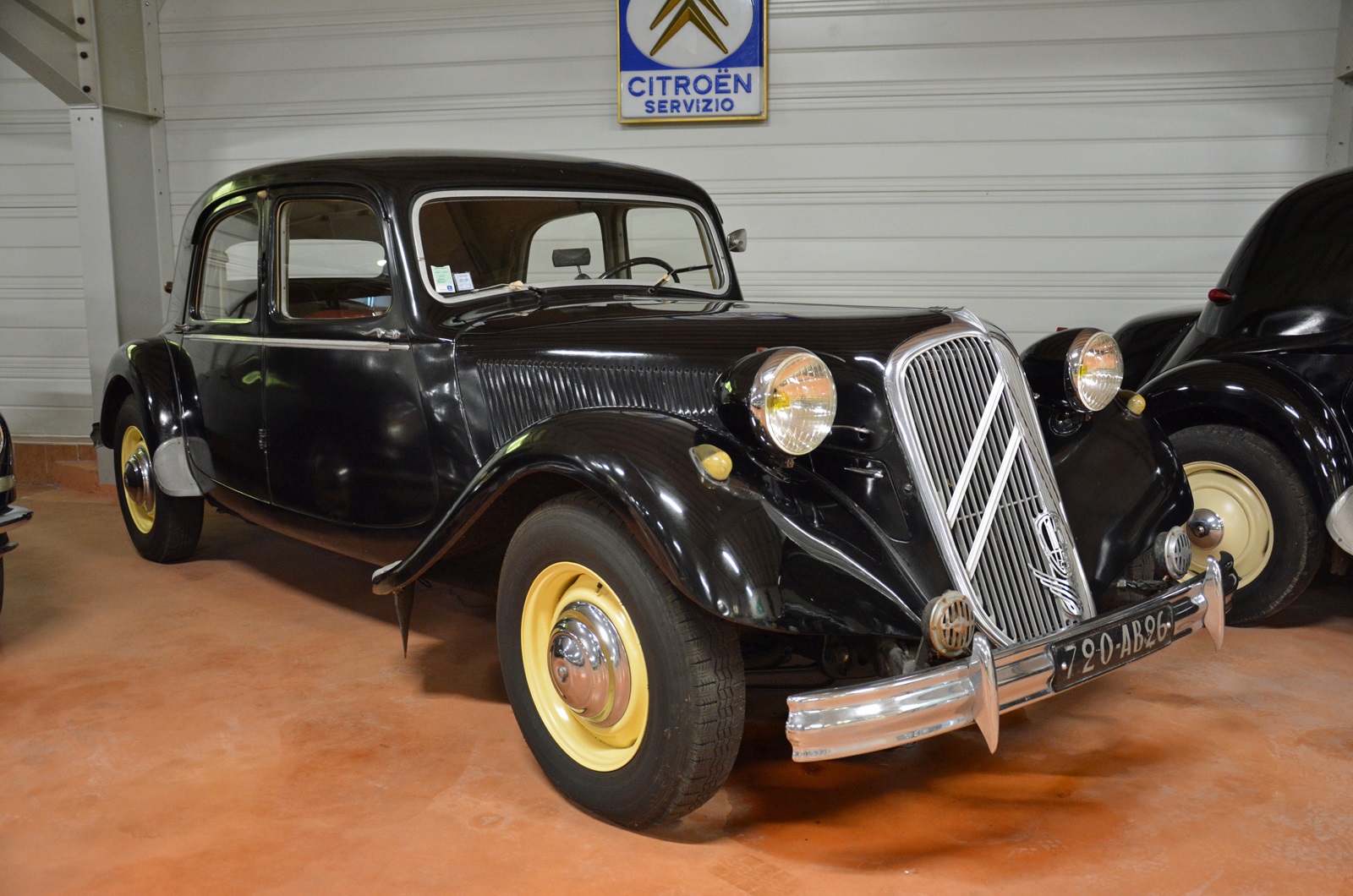
Citroën released the Traction Avant in 1934, so it doesn’t fully qualify for post-war status, but the model’s unusually long production run is its saving grace. The last examples were built in 1957.
Powered by a 2.9-liter straight-six engine rated at 77hp, this 1952 example has covered approximately 40,000 km (25,000 miles) since new. It was purchased from the original owner in 1973 by a collector who cherished it and always stored it indoors. It joined the CitroMuseum in 2016.
DS (1955)
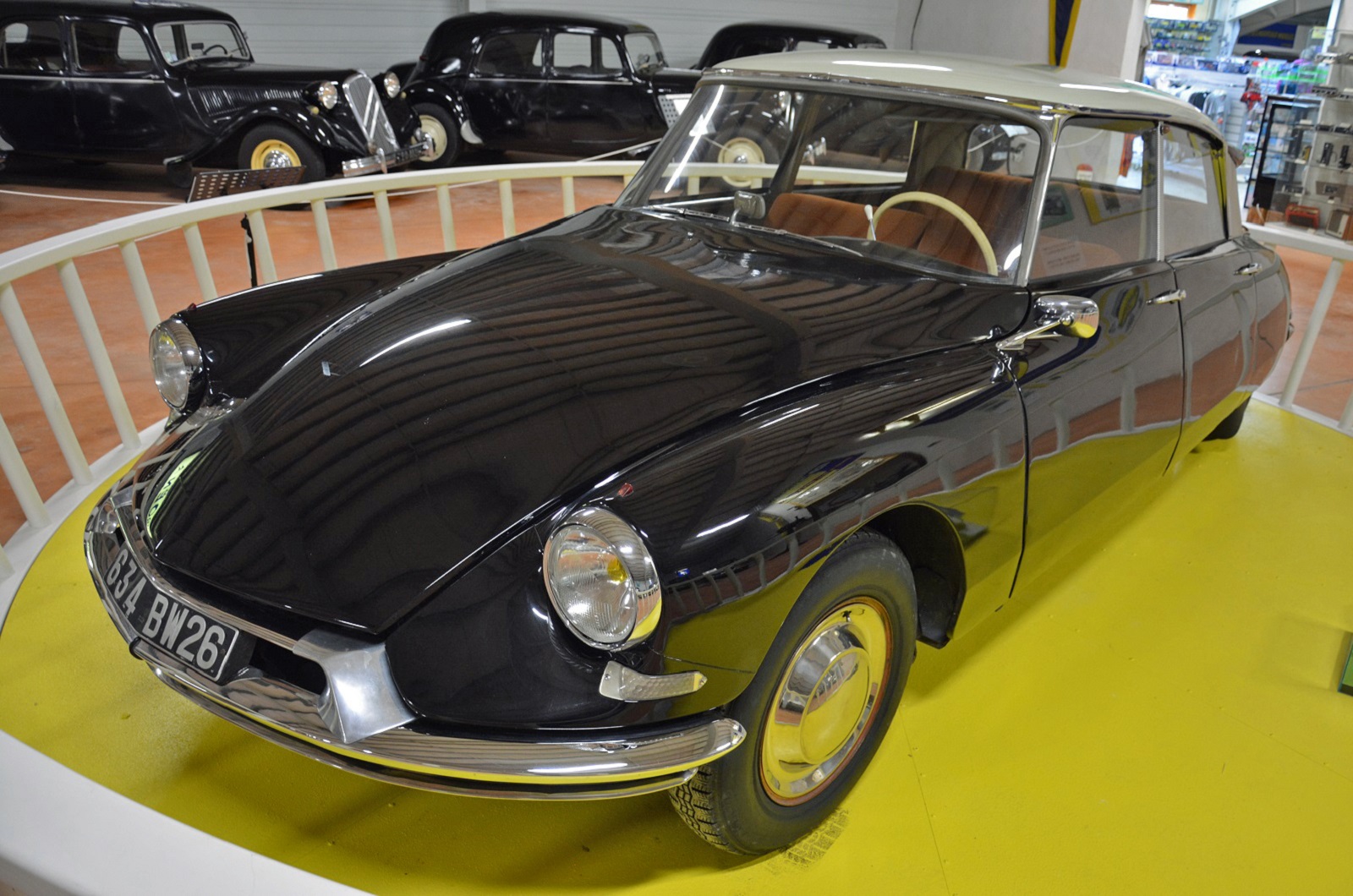
The CitroMuseum houses several examples of the DS/ID but this black 1955 model is unquestionably the most historically significant one. Wearing chassis number 32, it’s the 14th DS ever sold and the oldest series-produced example remaining. The first 13 cars were most likely destroyed well before they became sought-after by collectors.
Citroën didn’t begin mass-producing the DS until February 1956 so the 175 cars registered in 1955 were made entirely by hand. Number 32 was delivered to a Citroën dealership in Valence, France, and used as a demonstrator. It should have been returned to Citroën’s headquarters but the owner of the dealership instead sold it to one of his most loyal customers. It subsequently went through the hands of several owners, covering about 69,000 km (43,000 miles), and spent 13 years parked in a museum in Holland before joining the CitroMuseum in 2004.
ID 19 (1963)
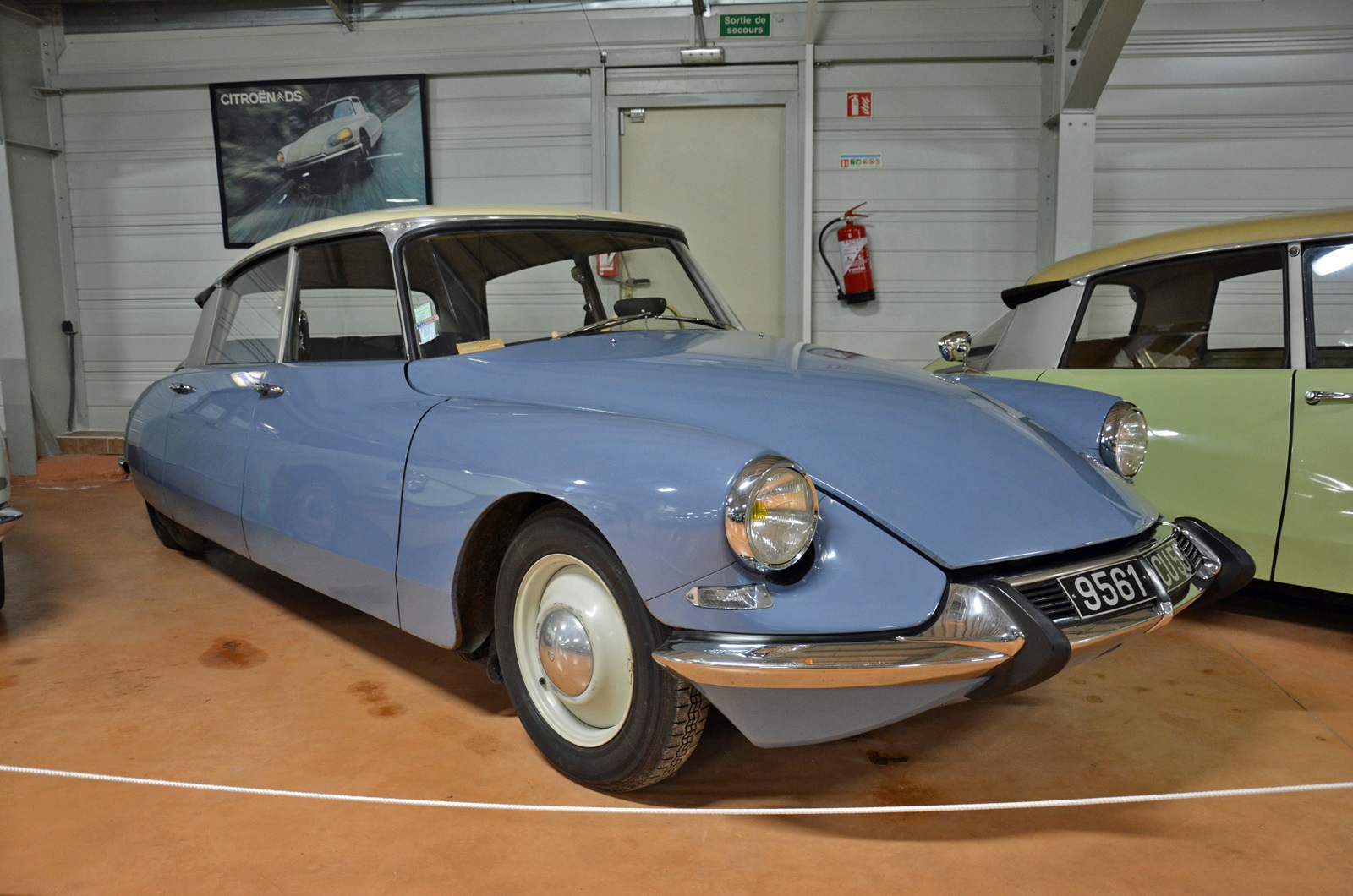
The ID 19 was a cheaper, more basic alternative to the DS 19. Finished in an unusual shade of blue called Bleu de Provence, this 1963 example has covered 27,000 km (18,000 miles) since new. Fradet bought it from the second owner and drove it to Norway, where he was living when he purchased it, after removing the hydraulic system’s high-pressure pump on the side of a Belgian road to loosen a stuck valve.
DS 21 Cabriolet (1966)
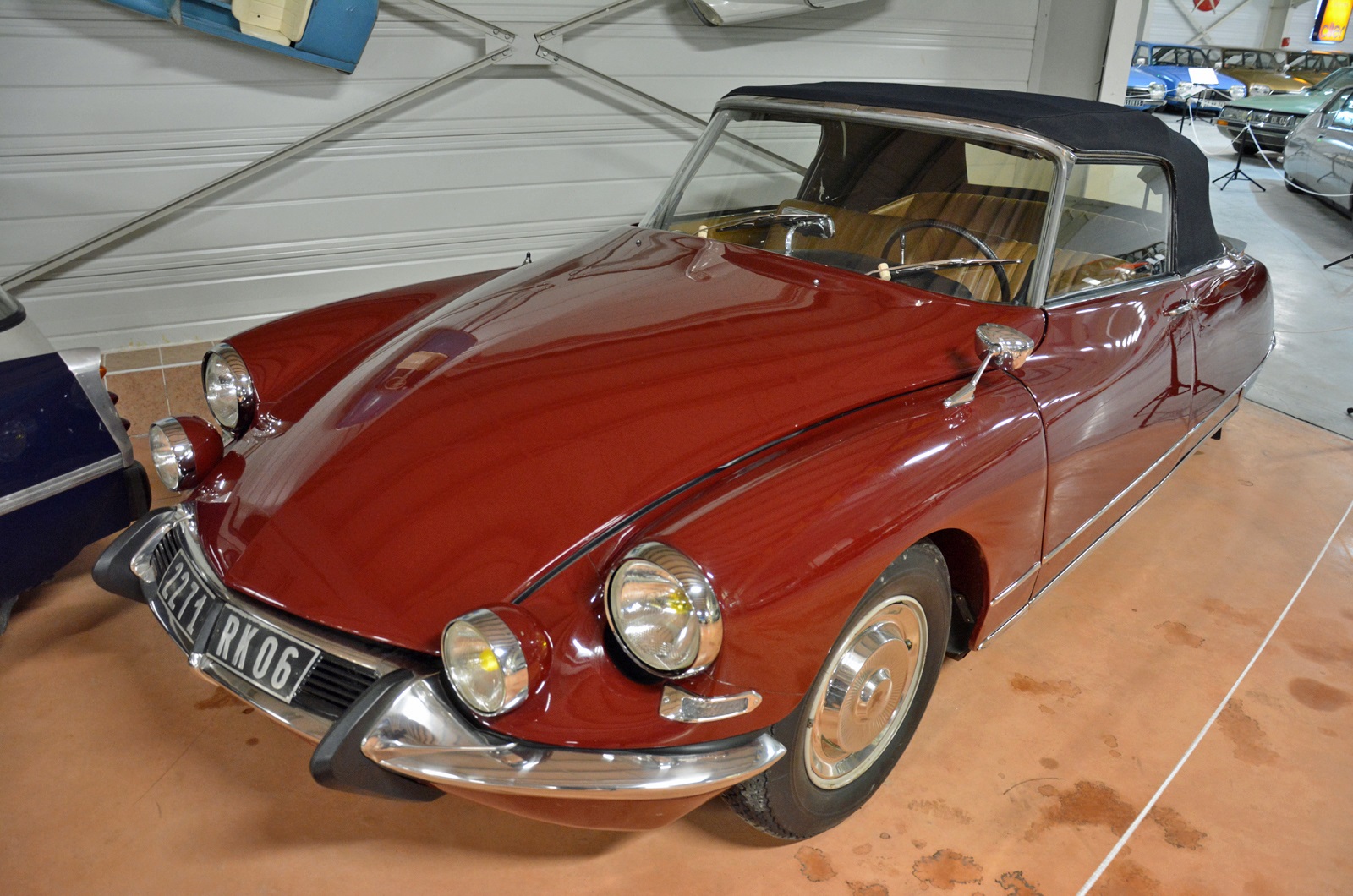
Many coachbuilders transformed the DS into a convertible; it was an irresistible foundation on which to build. One of 1365 units made, this 1966 example was manufactured by French coachbuilder Henri Chapron using blueprints provided by Citroën. It was a factory-authorized conversion that shared its front sheet metal and all of its mechanical components with the standard four-door model.
Sold new in Paris, this example traveled to Cannes in 1970 and ultimately covered approximately 147,000 km (91,000 miles). It was partially restored about 30 years ago, meaning it’s one of the very few cars in the CitroMuseum that’s not 100% original.
D Super (1970)
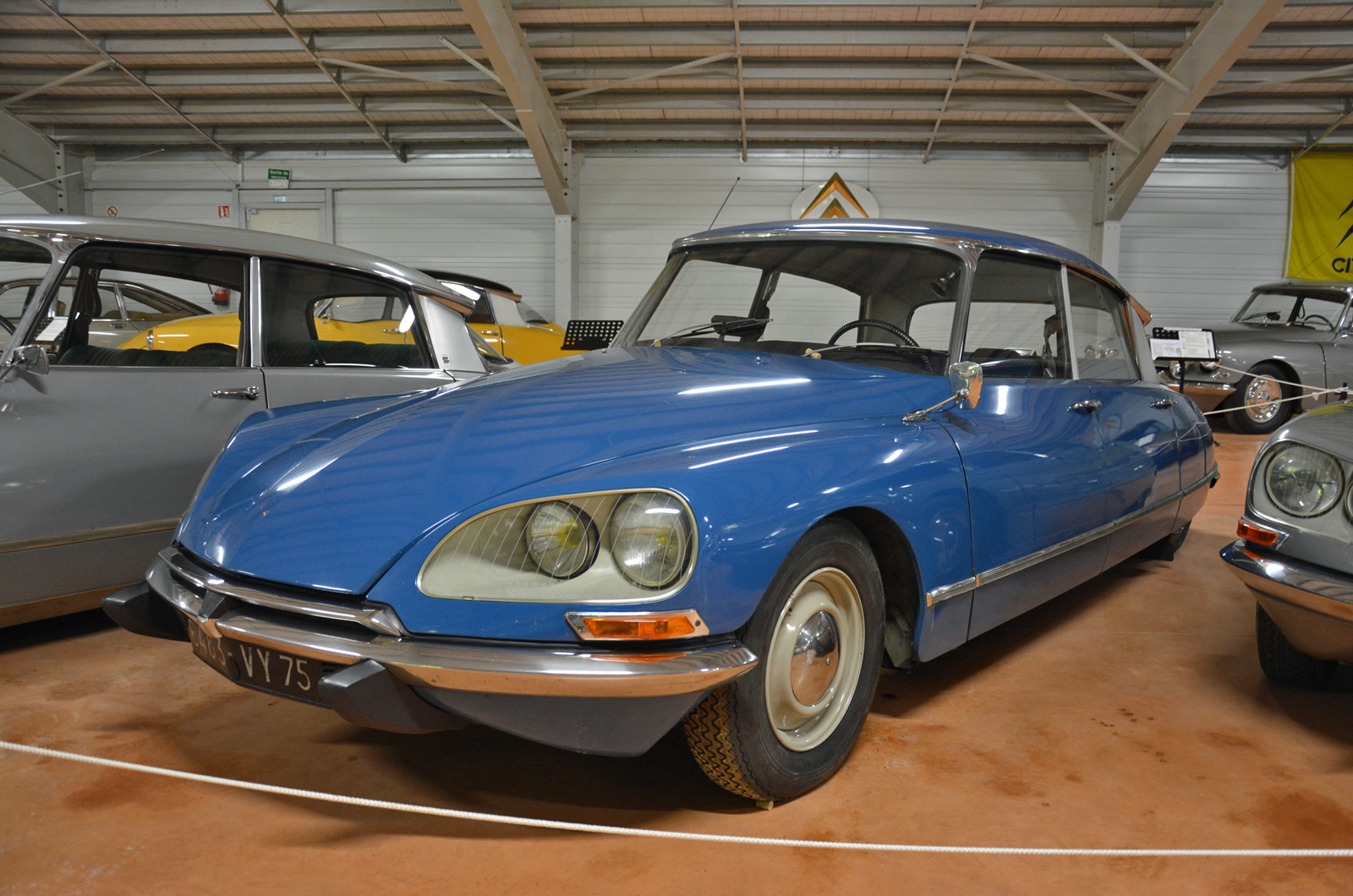
The D Super replaced the ID as the smaller, cheaper alternative to the full-fat DS in 1969. This example was purchased new by a radio operator who fitted it with a transmitter and added a 110-volt power outlet to the dashboard. He sold it with 50,000 km (31,000 miles) on the clock when he became too old to drive.
The 2CV’s family tree
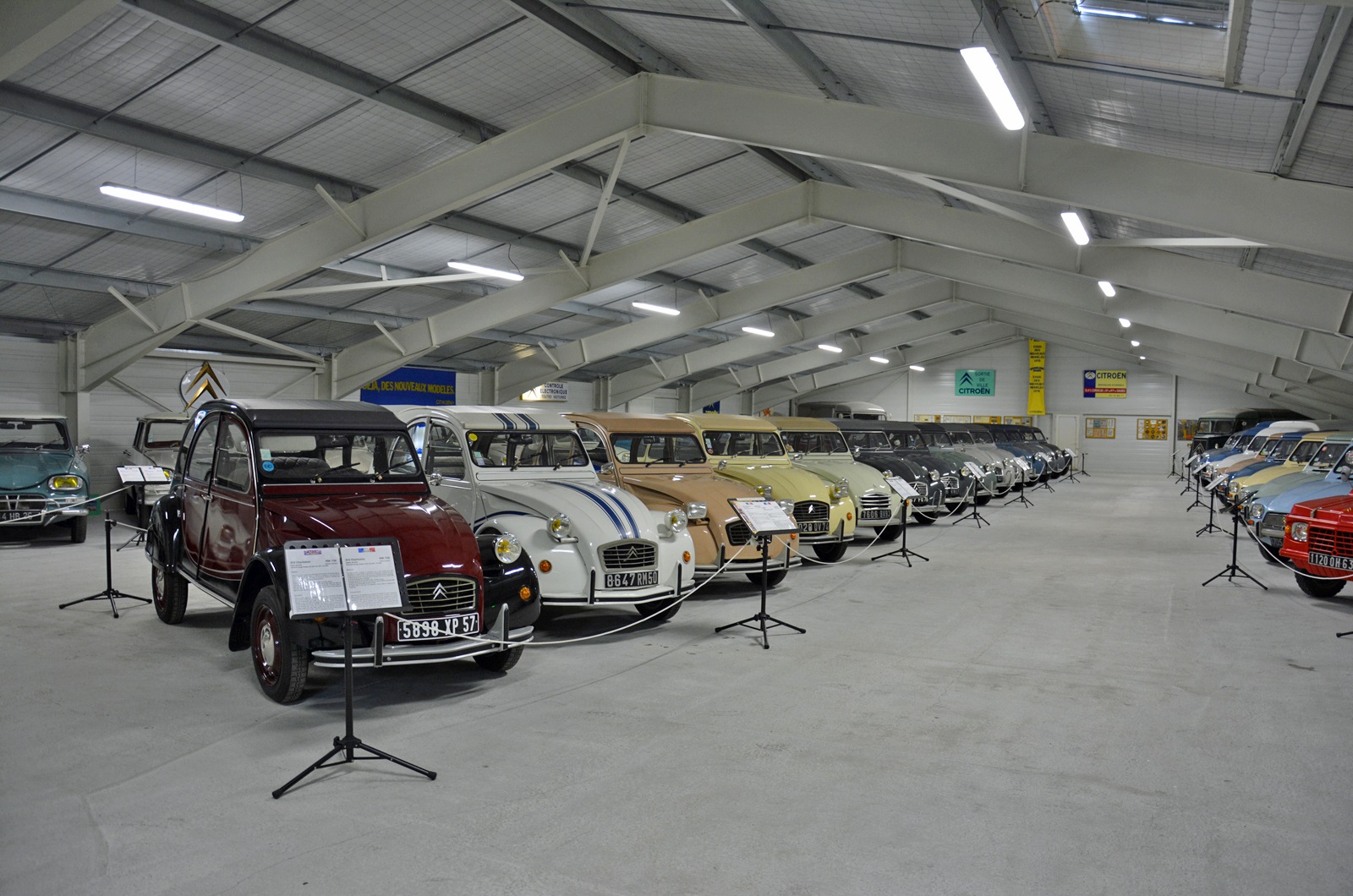
Today, spotting a 2CV in like-new condition at a vintage car show is easier than finding a baguette in central Paris. It wasn’t always that way; for decades, Citroën’s ugly duckling was worth very little and considered completely undesirable by motorists who called it excruciatingly slow and overly basic.
The 2CV and its numerous off-shoots were mass-produced and mass-destroyed so the cars in this part of the CitroMuseum are lucky to have survived long enough for a collector to tell their story.
2CV A (1954)
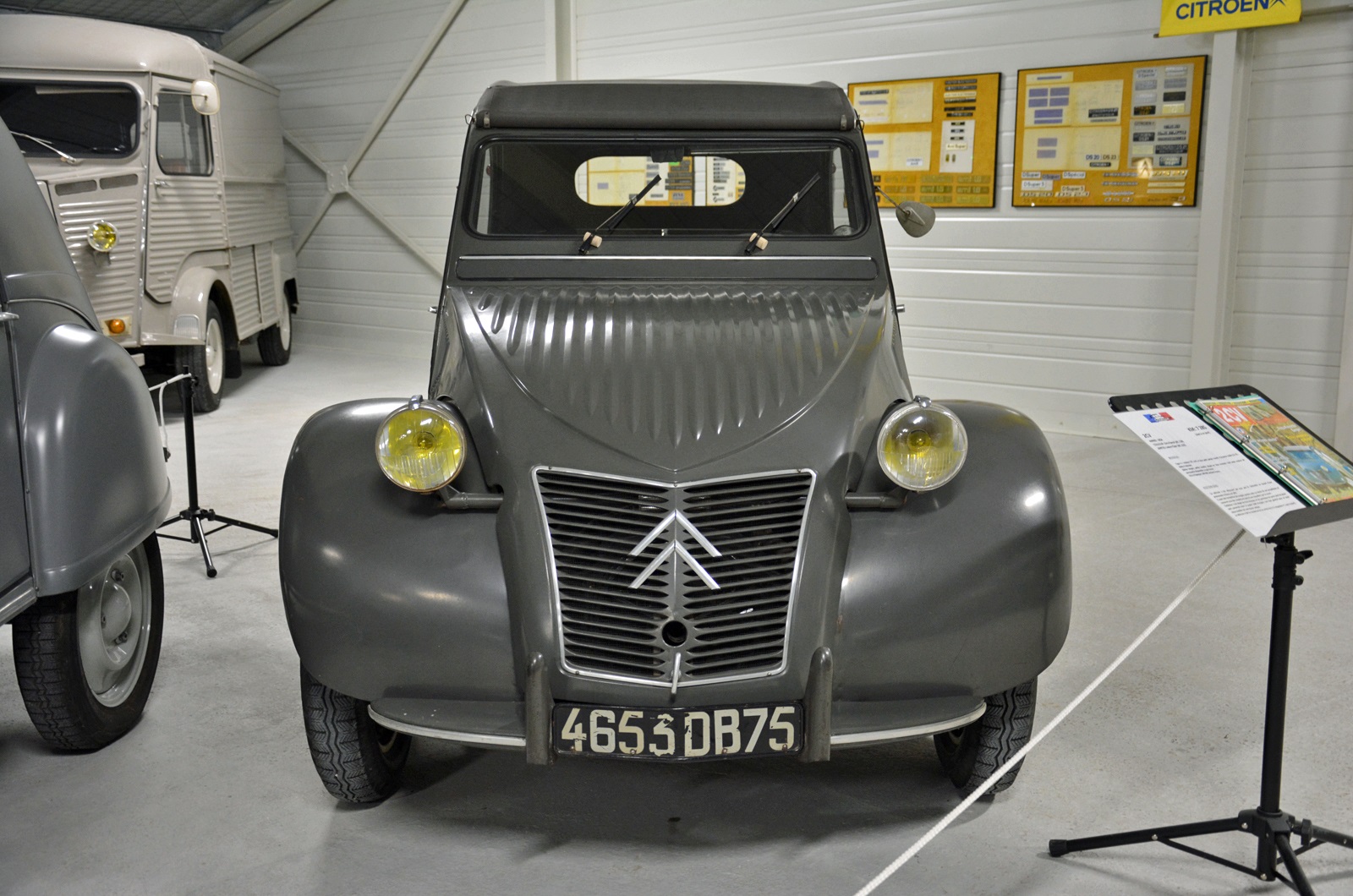
The original owner of this 1954 2CV A bought it solely to take an elderly family member on Sunday drives. It was parked in 1958 after the person it was purchased for died; the owner later explained she had no interest in driving and preferred biking to work. An eagle-eyed enthusiast spotted it in a garage on the outskirts of Paris in 1991 and spent four years convincing the owner to sell it. The call finally came in 1995.
In like-new condition, this time-warp 2CV has covered 7300 km (about 4500 miles) in 65 years. It’s equipped with its original 375cc, 9.5hp flat-twin engine and its door panels are still covered by the protective brown paper fitted before the car left the factory.
2CV AZU (1961)
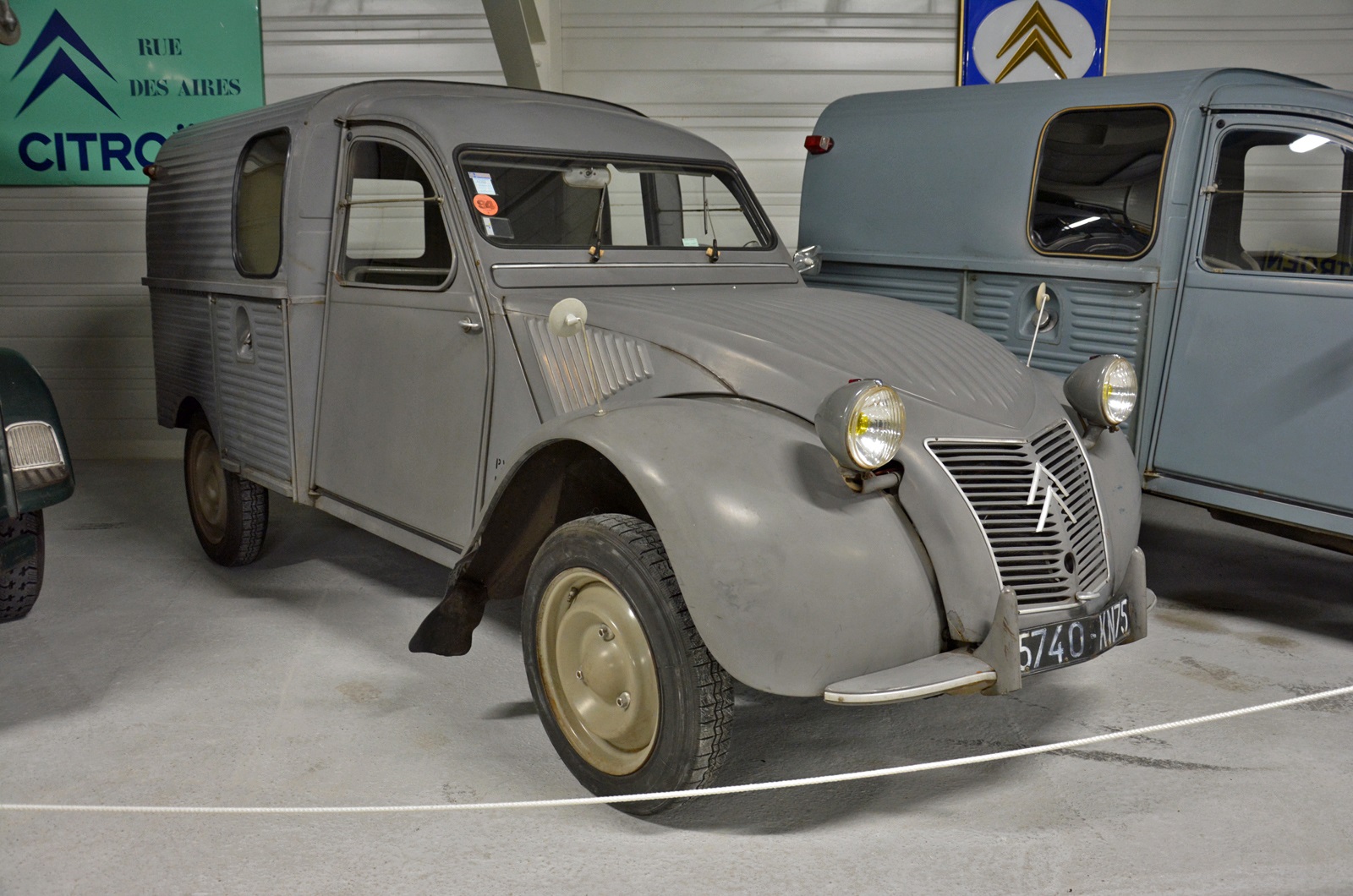
The AZU variant of the 2CV trucklet received a bigger, 425cc flat-twin engine that made 12hp. The 1961, 15,000-km (9600-mile) example in the CitroMuseum was upgraded with an optional pair of rear side windows by an aftermarket company named GlacAuto. The conversion was approved by Citroën and GlacAuto-modified cars were sold through the company’s dealer network.
2CV AZLP (1959)
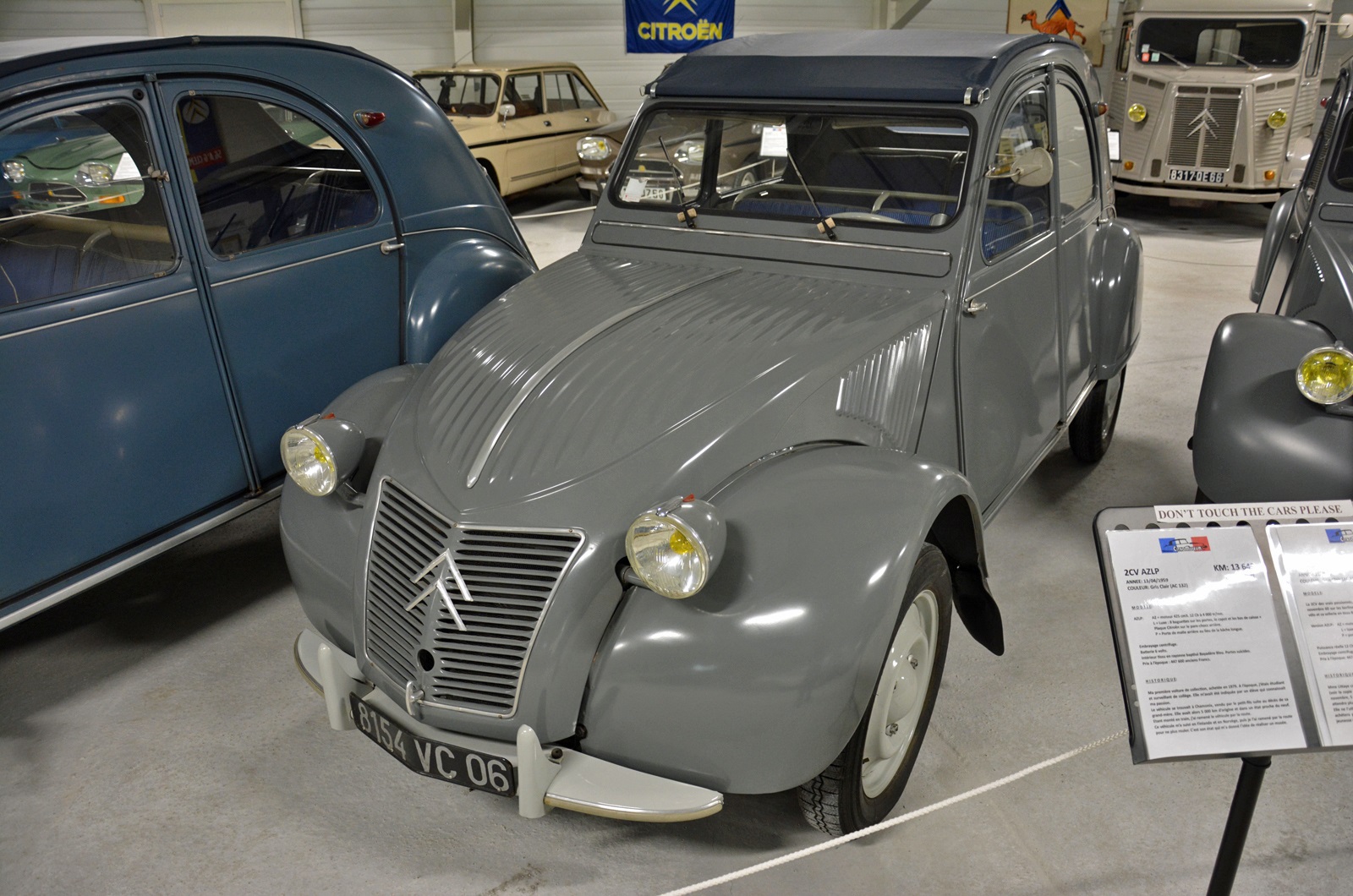
Fradet purchased this 1959 2CV AZLP in 1979 with an odometer reading of approximately 5000 km (3100 miles). It was his first vintage car and it's the one that got him hooked. He stopped driving it when it had about 13,000 km (8000 miles) on the clock. Its like-new condition inspired him to create a museum dedicated to original, low-mileage cars.
2CV6 CT (1984)
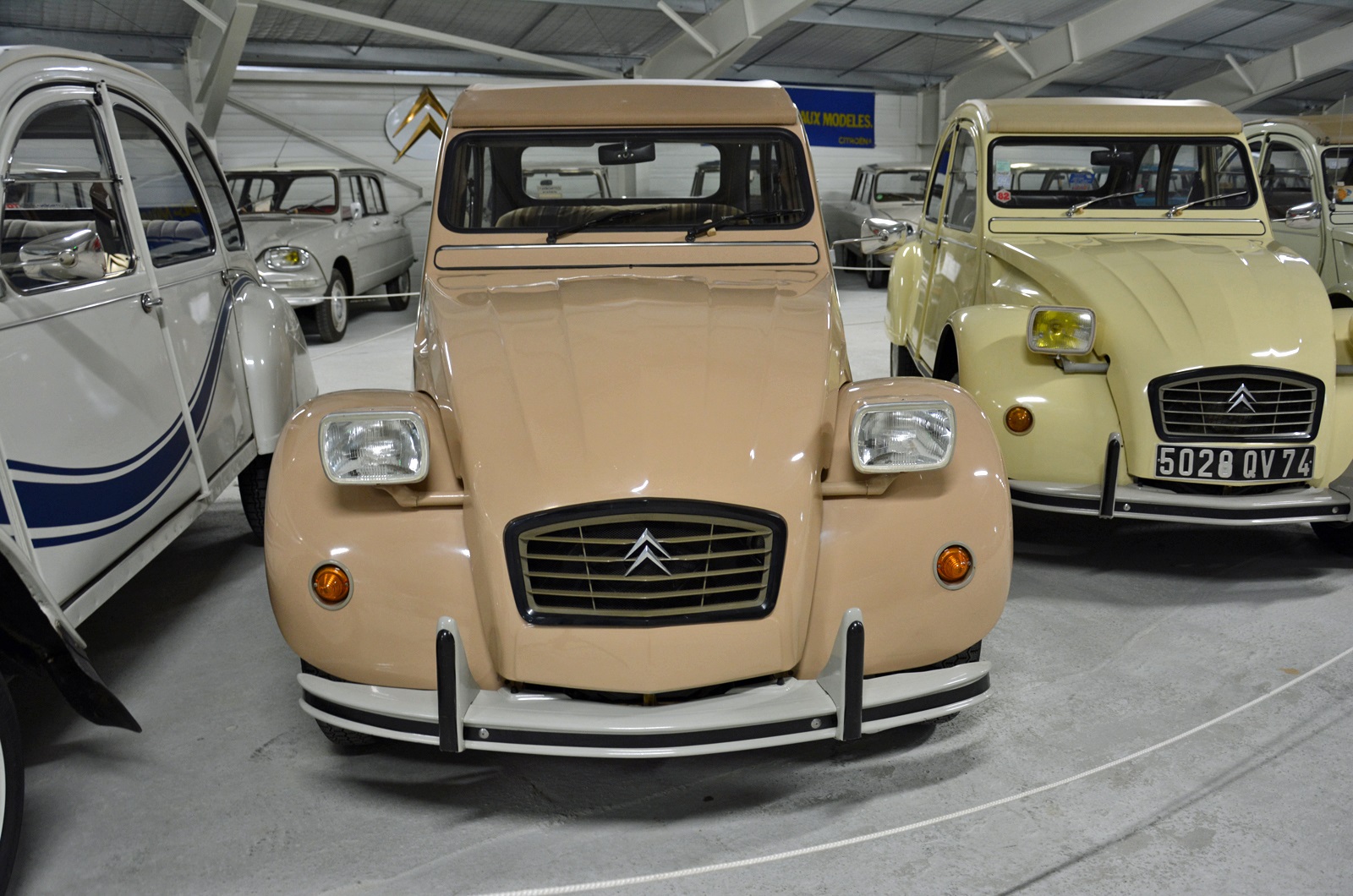
The 2CV6 CT was manufactured in Spain and sold in the local market. The initials CT stand for comfort. It’s very similar to the 2CV Club sold in France. With 84 km (52 miles) on the clock, the example in the CitroMuseum stands out as one of the very last 2CVs made in Spain.
It was purchased new by a dealership in Andalusia who planned on keeping it in like-new condition without driving it or even registering it. It was sold twice before joining Fradet’s collection.
2CV Charleston (1990)
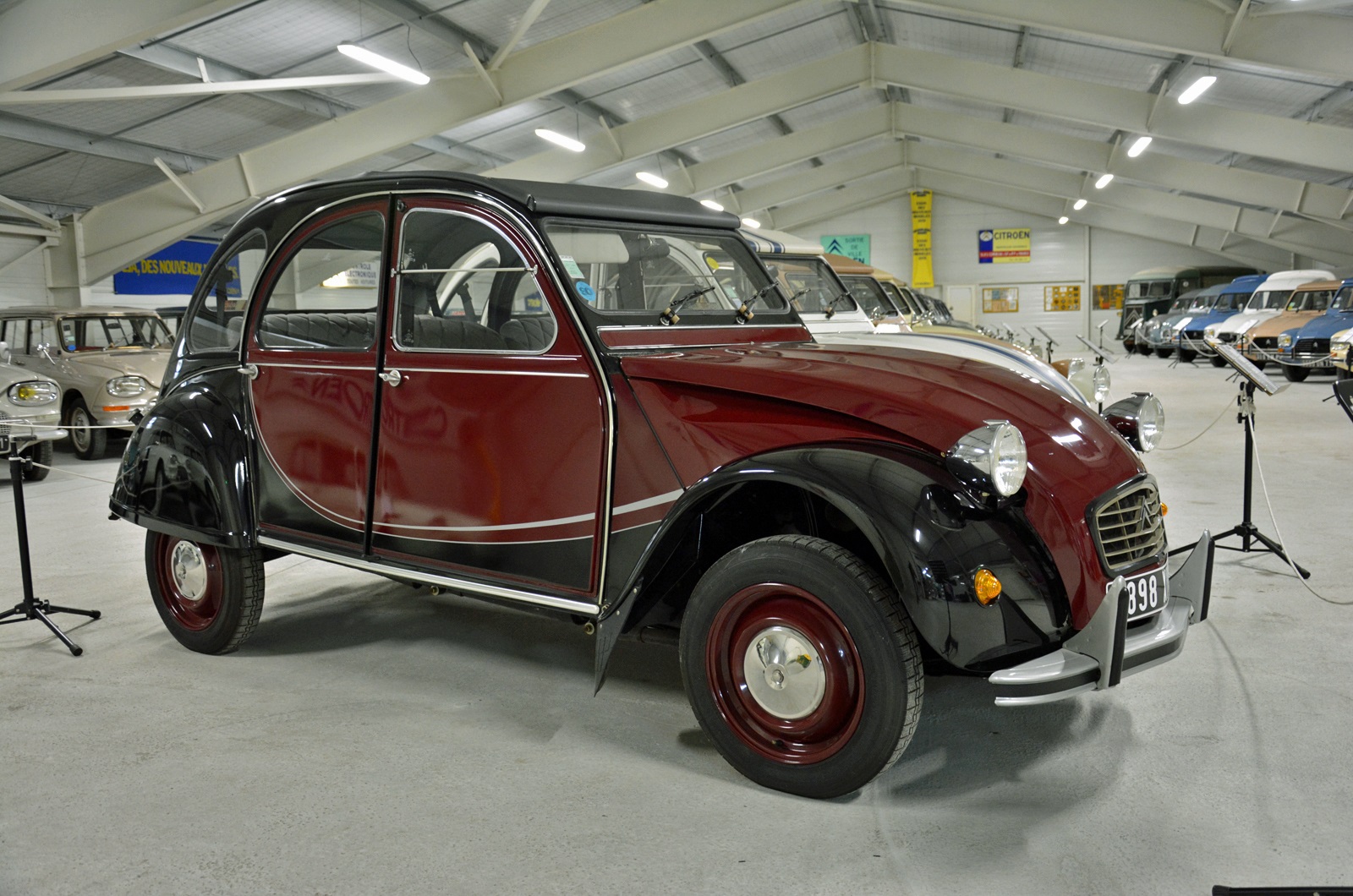
In 1990, when Citroën announced plans to finally stop making the 2CV, two brothers each purchased a brand-new example with the intent of keeping it as original as possible. Both were driven for about six months to take advantage of Citroën's free maintenance plan then stored indoors for over 20 years.
The first one (pictured) has covered 726 km (451 miles); the second one has been driven for only 21 km (13 miles) but the original owner wants to keep it.
Ami 6 (1963)
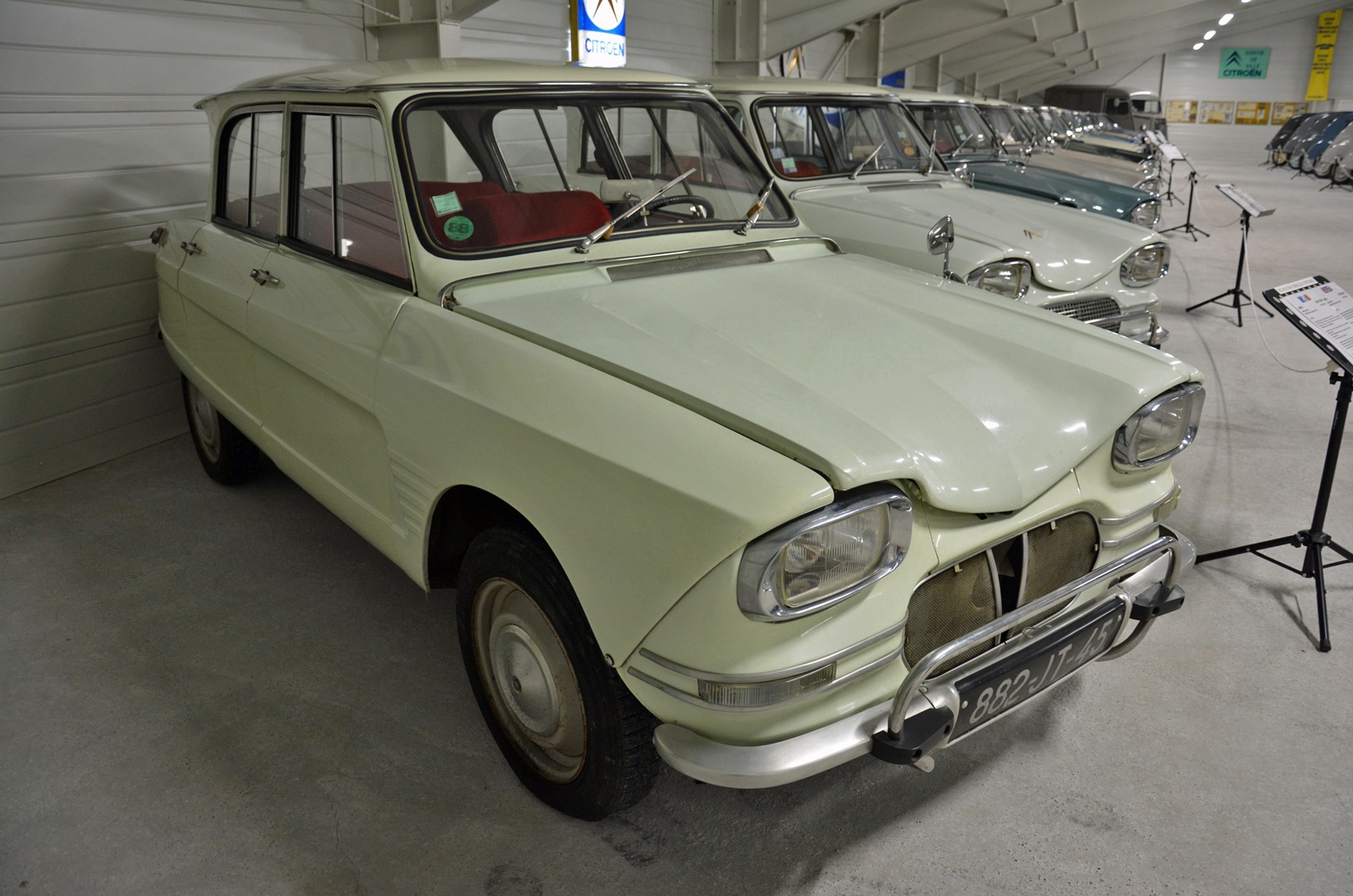
The 6 is the most collectible member of the Ami family thanks largely to its unique Z-shaped roof line. This example was purchased new by someone who wanted a comfortable car in which to carry her mother; the car then spent 30 years in a garage following her death.
She finally sold it with 2800 km (1700 miles) on the odometer and Fradet purchased it from a fellow enthusiast in 2010 with an odometer reading of 8525 km (5300 miles).
Ami 8 (1973)
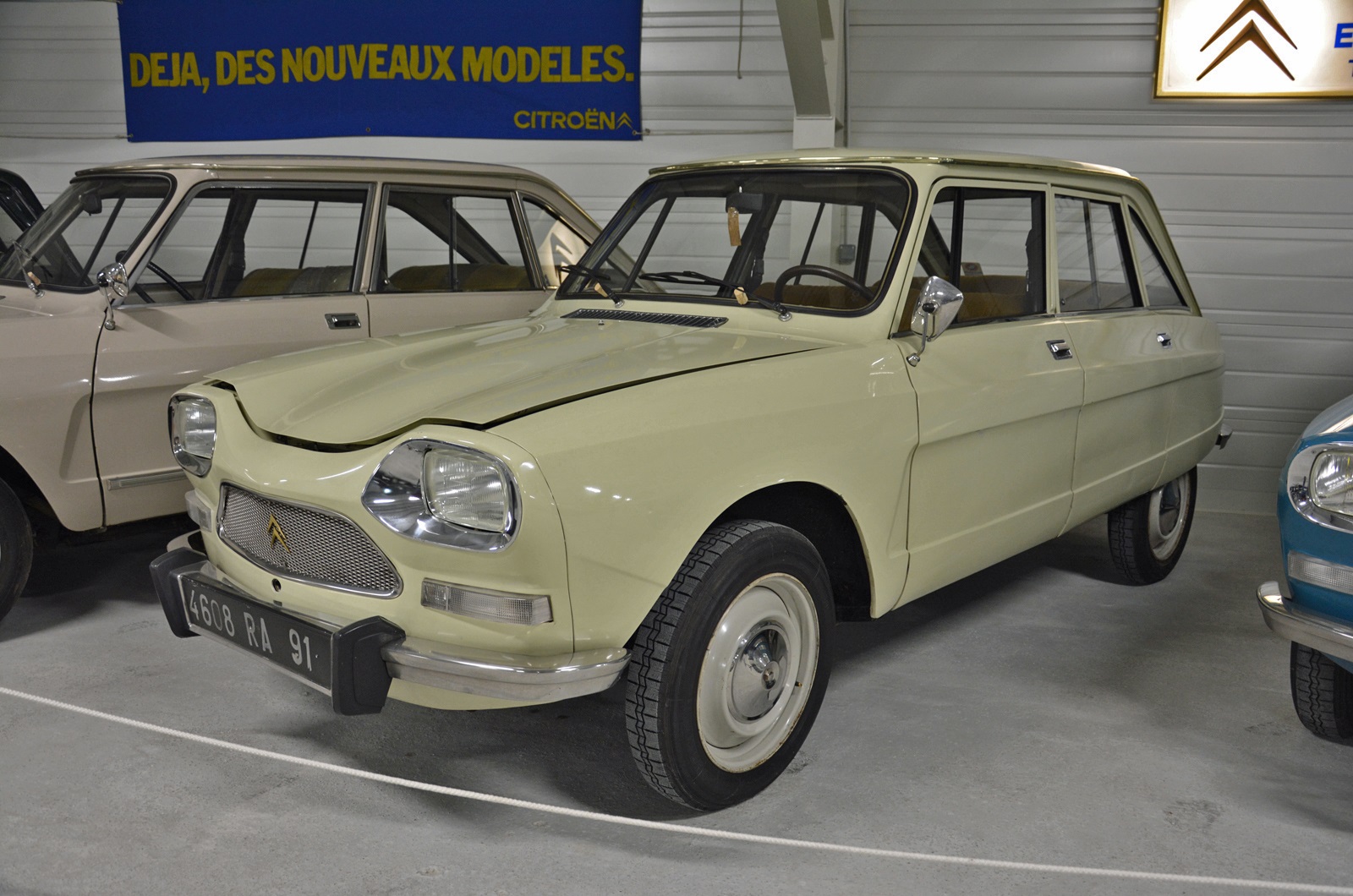
Though it’s more practical and usable than the Ami 6 it replaced, the Ami 8 has a less distinctive silhouette so it’s not as sought-after; it’s another great example of a car that was mass-produced and mass-destroyed. With 1412 km (877 miles) on the odometer, this one was purchased new by a retired postal worker who used it for only a few months. He quickly decided he was too old to drive and parked it for 30 years.
M35 (1970)
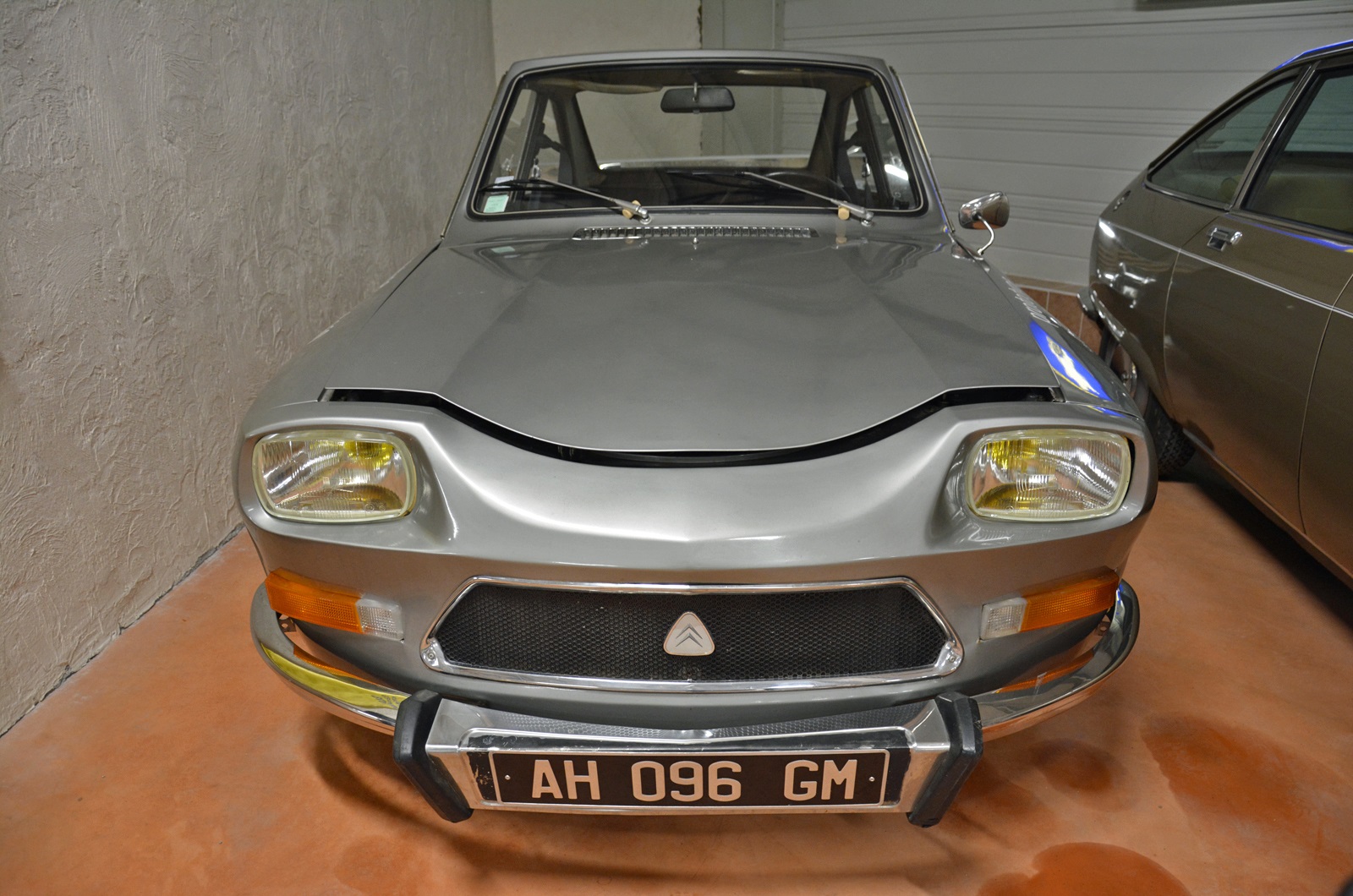
The M35 was a rolling display of Citroën’s engineering prowess. Starting with a frame borrowed from the Ami 8, it received a single-rotor Wankel engine that made 59hp and a model-specific version of the hydropneumatic suspension also found in the DS. It took the form of a coupe with an almost fastback-like roof line that shared only a few basic styling cues with the Ami 8.
Citroën planned on making 500 M35s and putting them in the hands of its most loyal customers to get feedback about what it was like to operate in real-world conditions. It aimed to apply the knowledge gained to the development of a regular-production model. The M35 was far too expensive – it cost as much as an entry-level D Super – so production ended after just 267 cars were made between 1969 and 1971.
This 31,000-km (19,000-mile) example was sold new in southwestern France before making its way to the Alps. The dealership that purchased it from the original owner later filed for bankruptcy, closed and gave the M35 to someone it owed money to. The new owner sold it without ever driving it. It’s in running condition and it’s one of two M35s in Fradet’s collection.
Ami Super (1973)
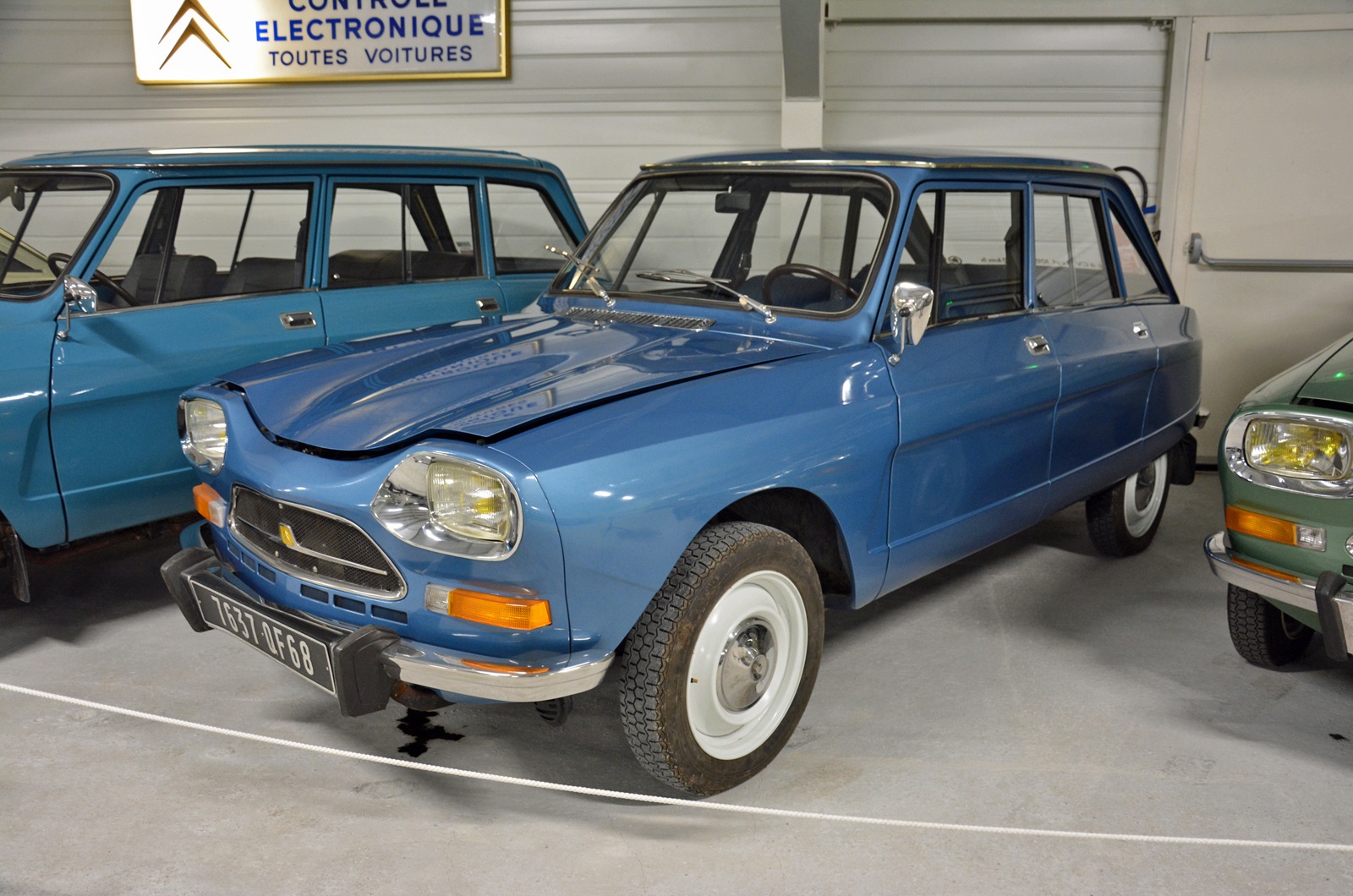
The Super was the most powerful and most expensive version of the Ami and today it's also the rarest. Citroën released it in 1973 to fill the gap between the 2CV-based cars, like the Ami 8, and the bigger GS. The recipe was simple: the firm took an Ami body and installed a 1.0-liter flat-four borrowed from the GS in the engine bay. It could reach 86mph.
One of several in Fradet’s collection, this blue example was purchased by a man who wanted to upgrade from a 2CV. He never got used to driving the car; he was notably confused by the shift pattern, which places first gear left and up, where reverse is on a 2CV. He put only 2000 km (1200 miles) on it between the day he bought it and when he purchased a used 2CV in 1980.
Dyane (1983)
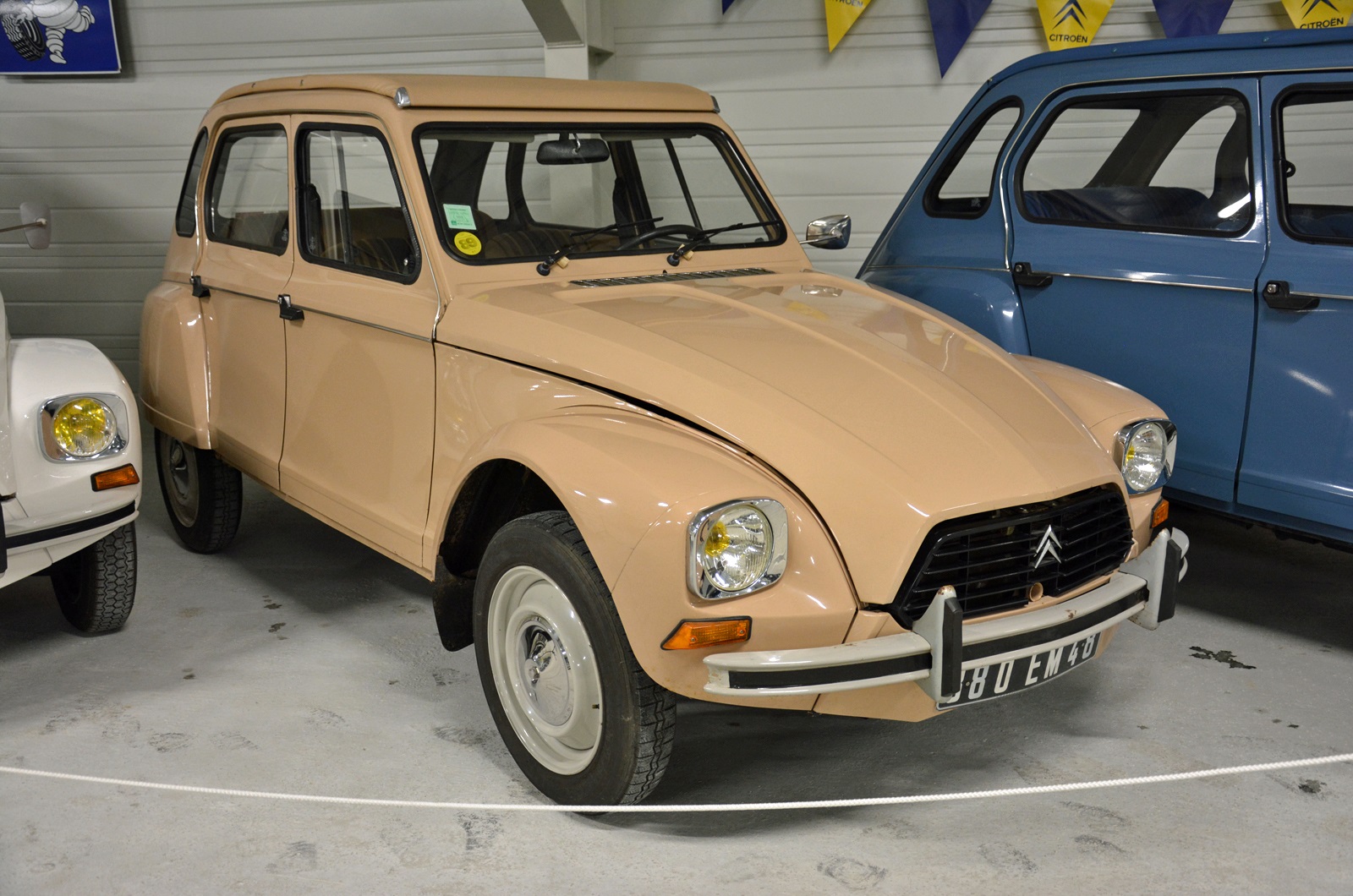
Citroën launched the Dyane in 1967 in a bid to offer buyers a more modern alternative to the 2CV. In an odd twist of automotive history, it was outlived by the car it should have replaced by seven years. Made during the last year of production, the CitroMuseum's Dyane was purchased by a farmer who used it as his Sunday car. He must have not gone very far because he racked up just 5684 km (3500 miles)
Mehari (1972)
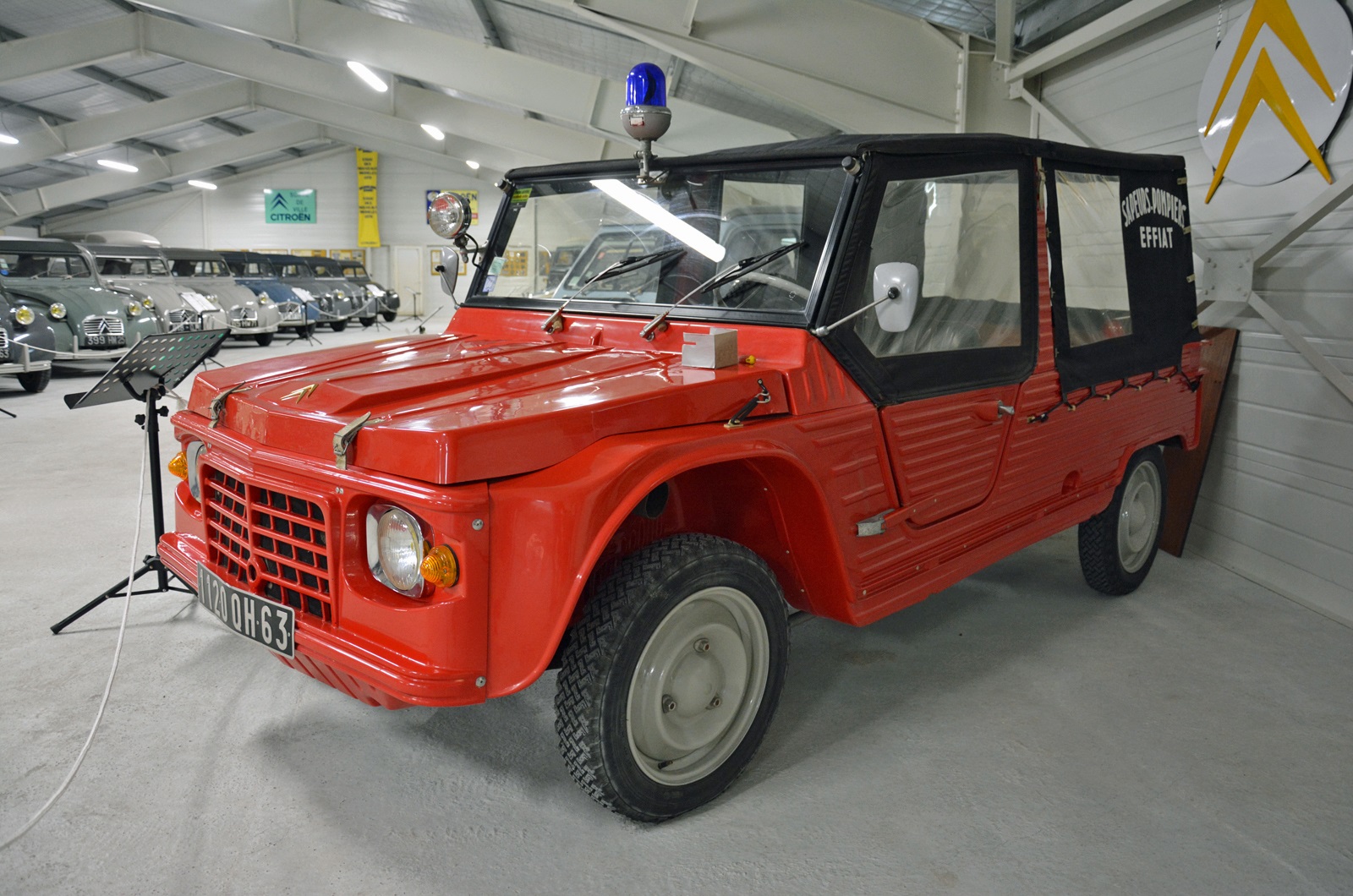
Finding an original, unrestored Mehari that hasn't been repaired, rebuilt or repainted is easier said than done. Many were driven into the ground when values were low and later restored with aftermarket parts. Literally every component is available new from a variety of vendors, which is both a blessing and a curse. This 1972 example was purchased by a small town in central France and used sparingly by firefighters. It has been driven for 4300 km (2600 miles).
HY (1982)
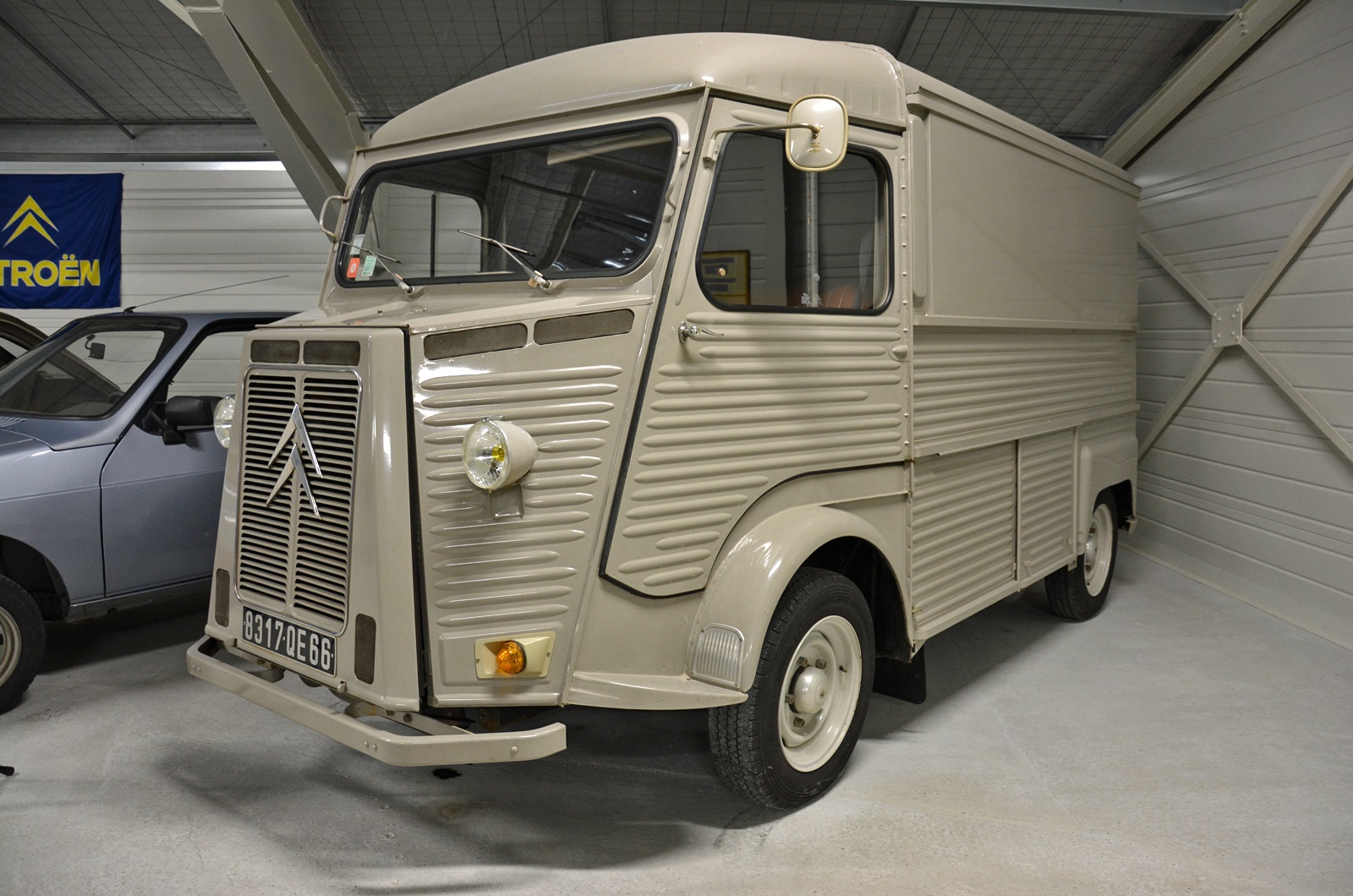
Fradet’s HY van stands out as one of the very last examples made. It was manufactured in December 1981 and first registered in early 1982. It was purchased by a winemaker who used it on his property but went to significant lengths to keep it in like-new condition. It was stored indoors after covering 12,000 km (7400 miles).
Newer collectibles
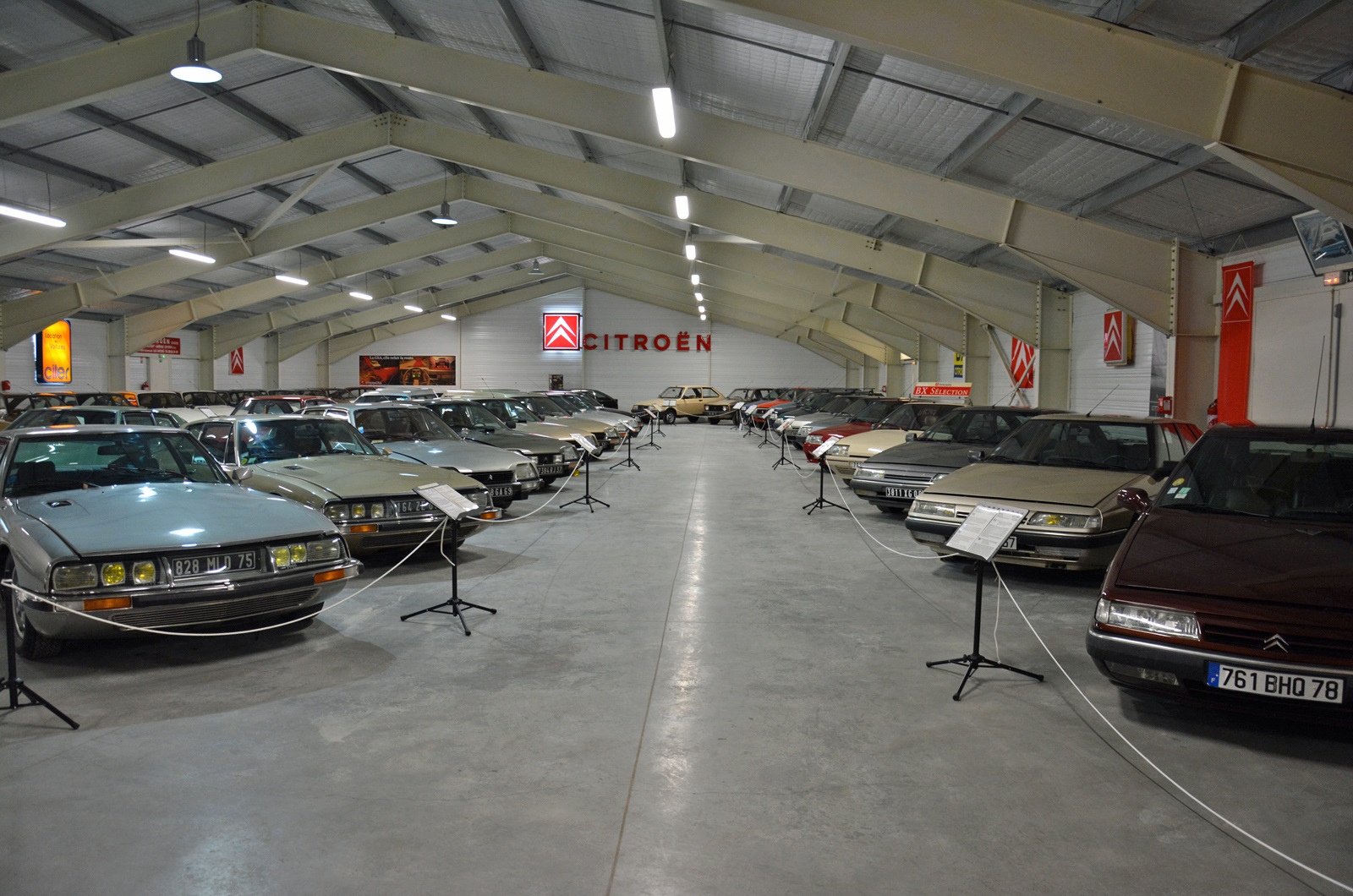
The museum’s most recent wing houses an impressive array of various GS and GSA models plus newer cars that are either starting to reach classic status or aren’t fully there yet. Cars like the AX and the Xantia are lingering at the bottom of their depreciation curve, and today they're usually in the hands of their uncaring eighth owner, so standing face-to-face with like-new examples is a rare treat. Visitors won't see anything too new, though.
The ZX and the Xsara are among the nameplates missing from the collection. Fradet explained he's not as interested in newer models that are reasonably easy to find with low miles.
SM (1971)
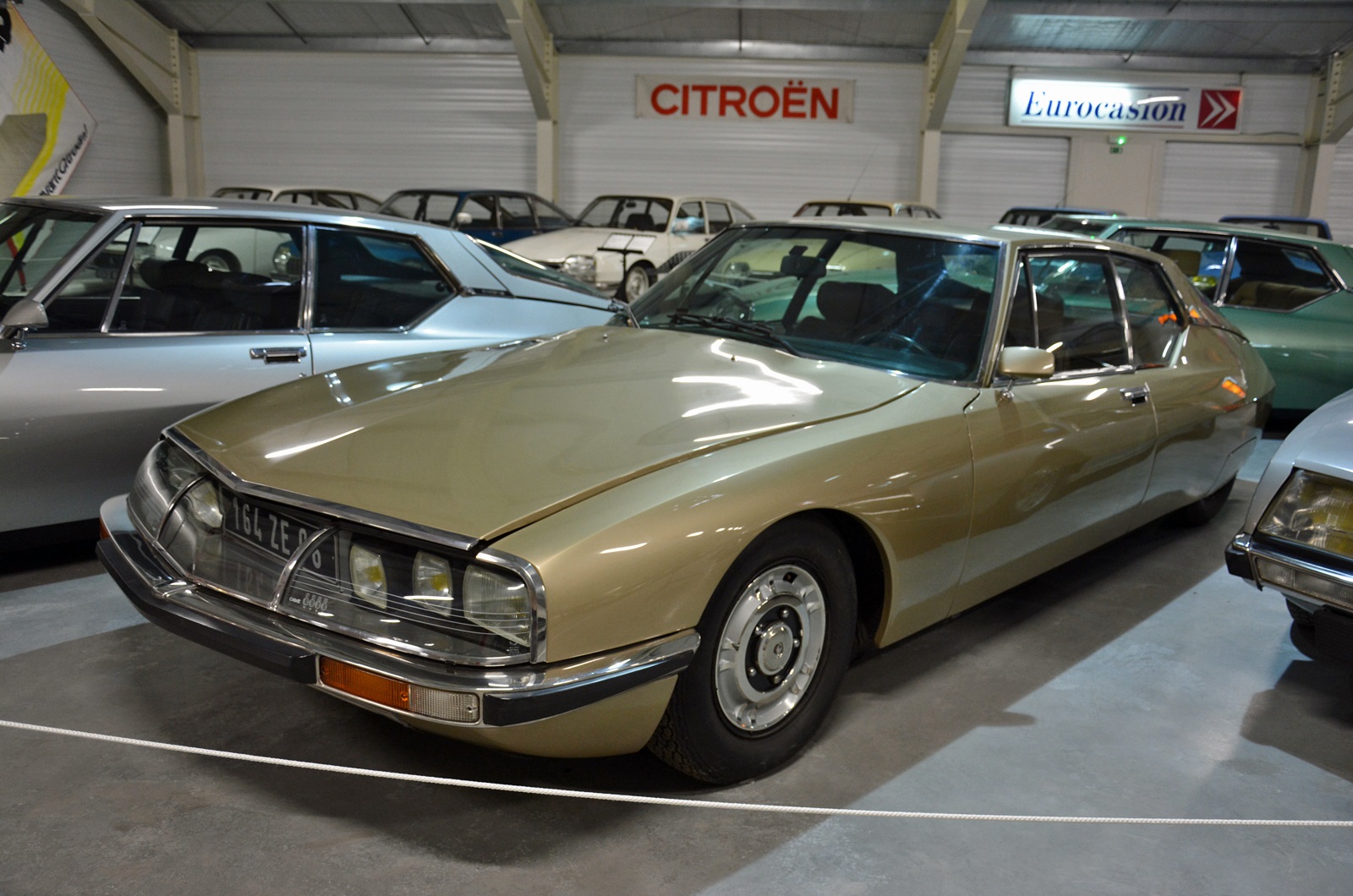
Citroën teamed up with Maserati, which it purchased in 1968, to create a high-performance range-topping model named SM. The coupe lived up to its flagship status with a comfortable ride made possible by a hydropneumatic suspension, a luxurious interior and a powerful V6 engineered by Maserati. At its launch in 1970, the SM stood proud as one of the most advanced cars sold new in Europe.
The SM was briefly successful in the US, but fell foul of federal ride-height regulations which its suspension couldn't get around, and it was withdrawn from sale. Fradet purchased this 1971 example – one of several he owns – from a chauffeur in Monaco. He drove it for 38,000 km (23,000 miles).
GS (1972)
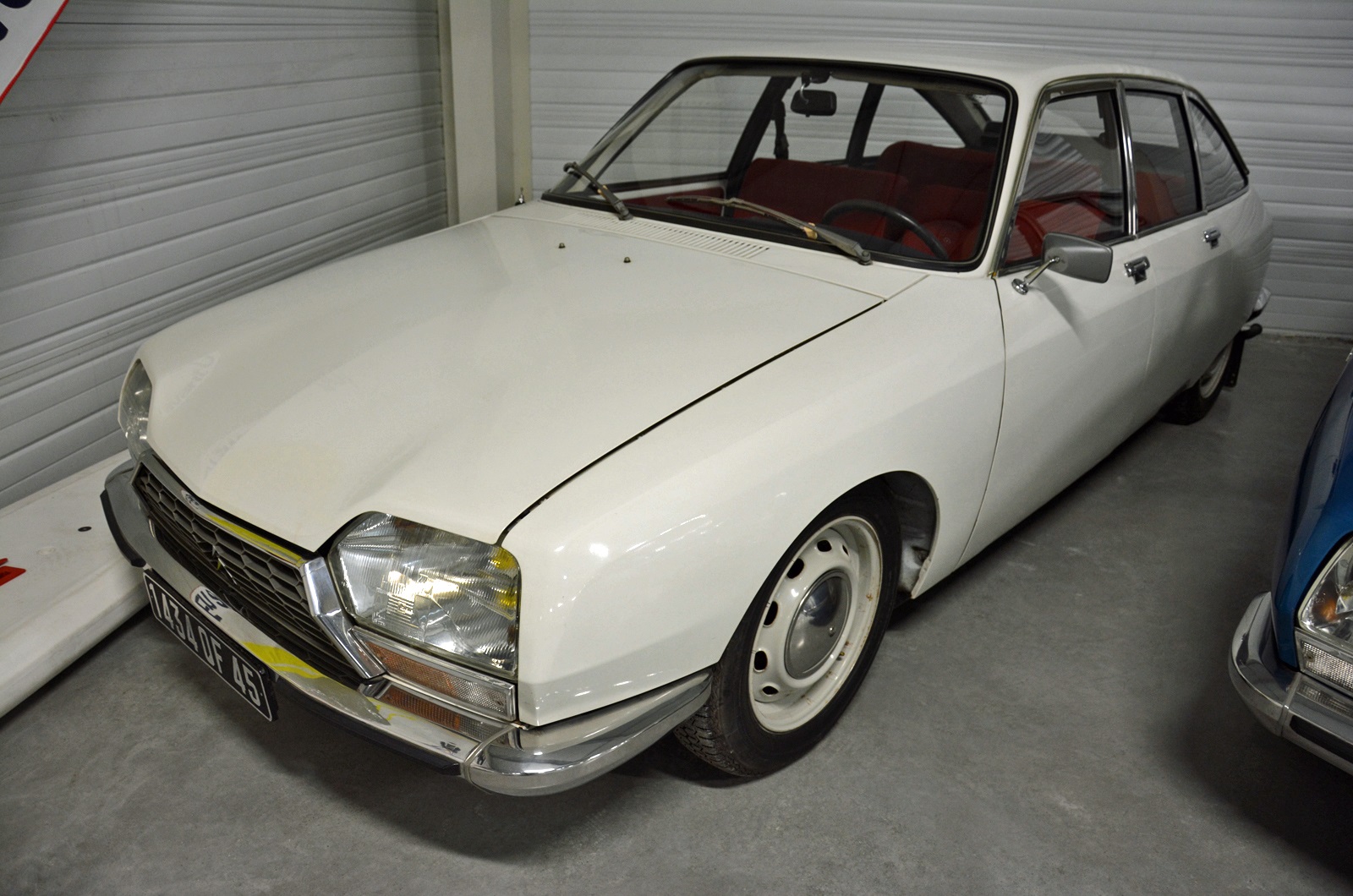
Years in the making, the GS arrived in 1970 to fill the chasm that separated the 2CV and its derivatives from the much bigger D Super. The couple who purchased this 1972 Club model divorced shortly after taking delivery. They returned it to the dealership they bought it from and split the money.
The dealership preserved it in like-new condition for decades instead of selling it as a used car. It has under 2000 km (1200 miles) and is one of the cleanest examples left.
GS Birotor (1974)
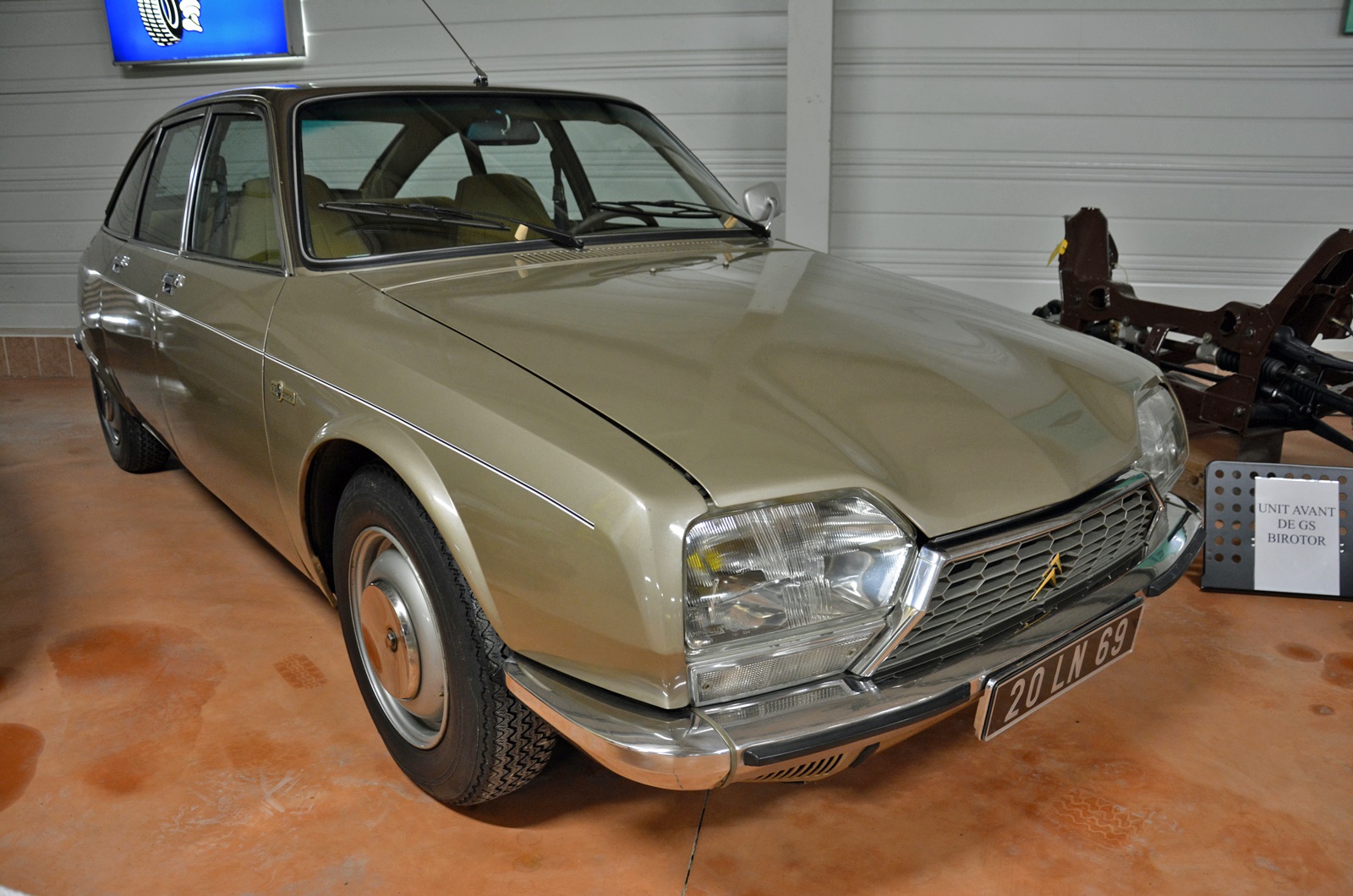
As planned, Citroën channeled the lessons it learned from the M35 project into the GS Birotor. Powered by a twin-rotor Wankel engine rated at 105hp, the Birotor was marketed as the range-topping member of the GS family. It was priced and equipped accordingly. Visually, it stood out from the standard GS with wider wheel arches, model-specific wheels and hubcaps, a more complete instrumentation and seats with integrated headrests. An audible alarm went off when the engine reached its 7000rpm redline.
The GS Birotor flopped because it went on sale just a few months after the 1973 oil crisis. High fuel consumption was one of the Wankel’s main drawbacks and Citroën couldn’t keep it in check. Instead of building an unsellable car for years on end, Citroën ended production after making 847 examples and attempted to buy back every single one of them by offering customers generous trade-in incentives. Historians believe about a third of the production run remains today.
Made in 1974, Fradet’s Birotor suffered from an engine failure while driving to a Citroën enthusiast meet in 1995. It was brought to the convention on a flatbed, sold there and shipped to Cannes in southern France. It joined the CitroMuseum in 2009 with about 28,000 km (17,000 miles). As a work in progress, it’s the only non-running car in the collection.
GS Pallas (1977)
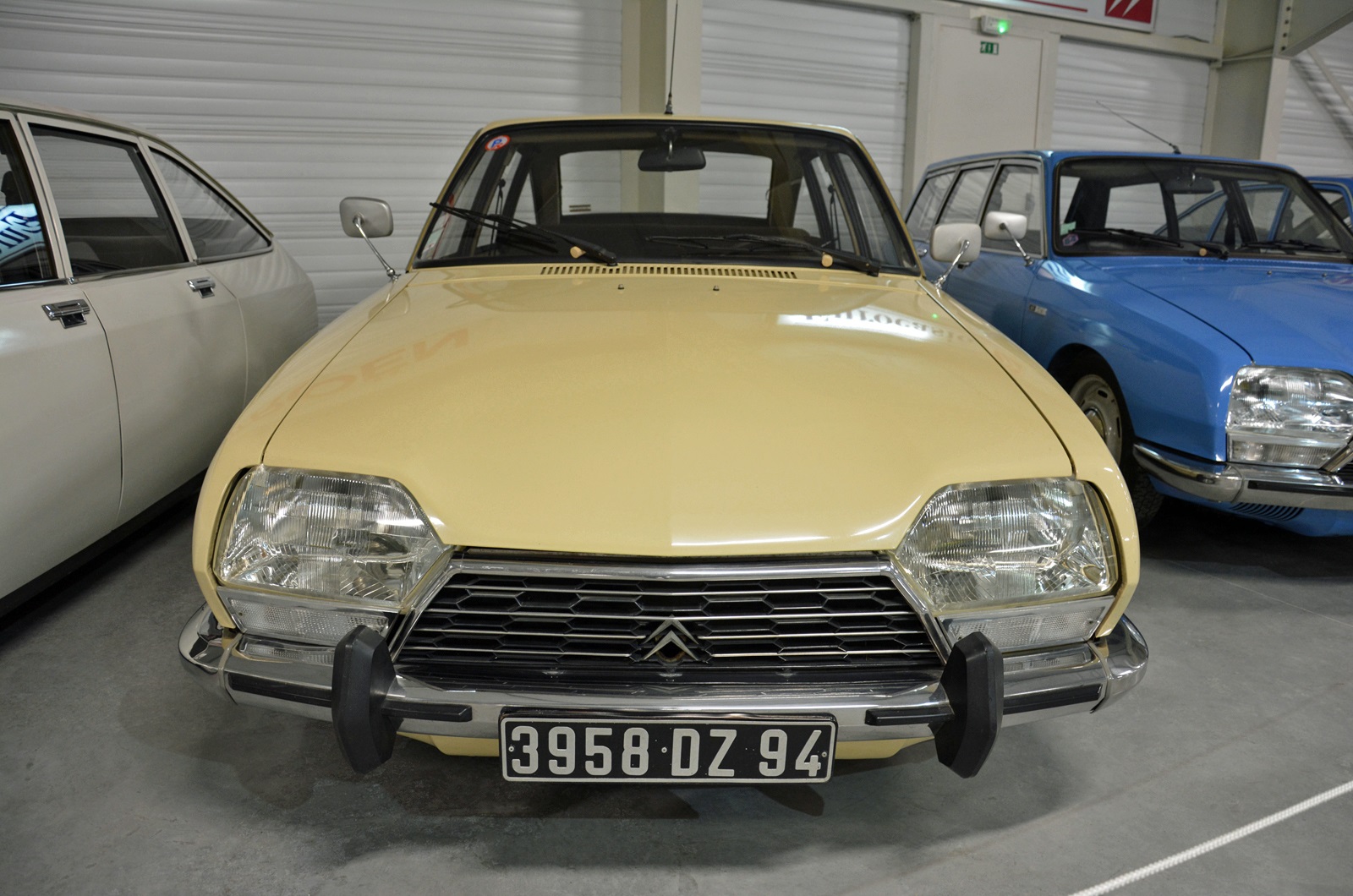
The couple who bought this 1977 GS Pallas – an upmarket trim level – parked it after driving it for 35,000 km (21,000 miles) because they considered themselves too old to drive in Parisian traffic. It was found in their building’s parking garage by the owner of a repair shop in Orleans.
GS Basalte (1978)
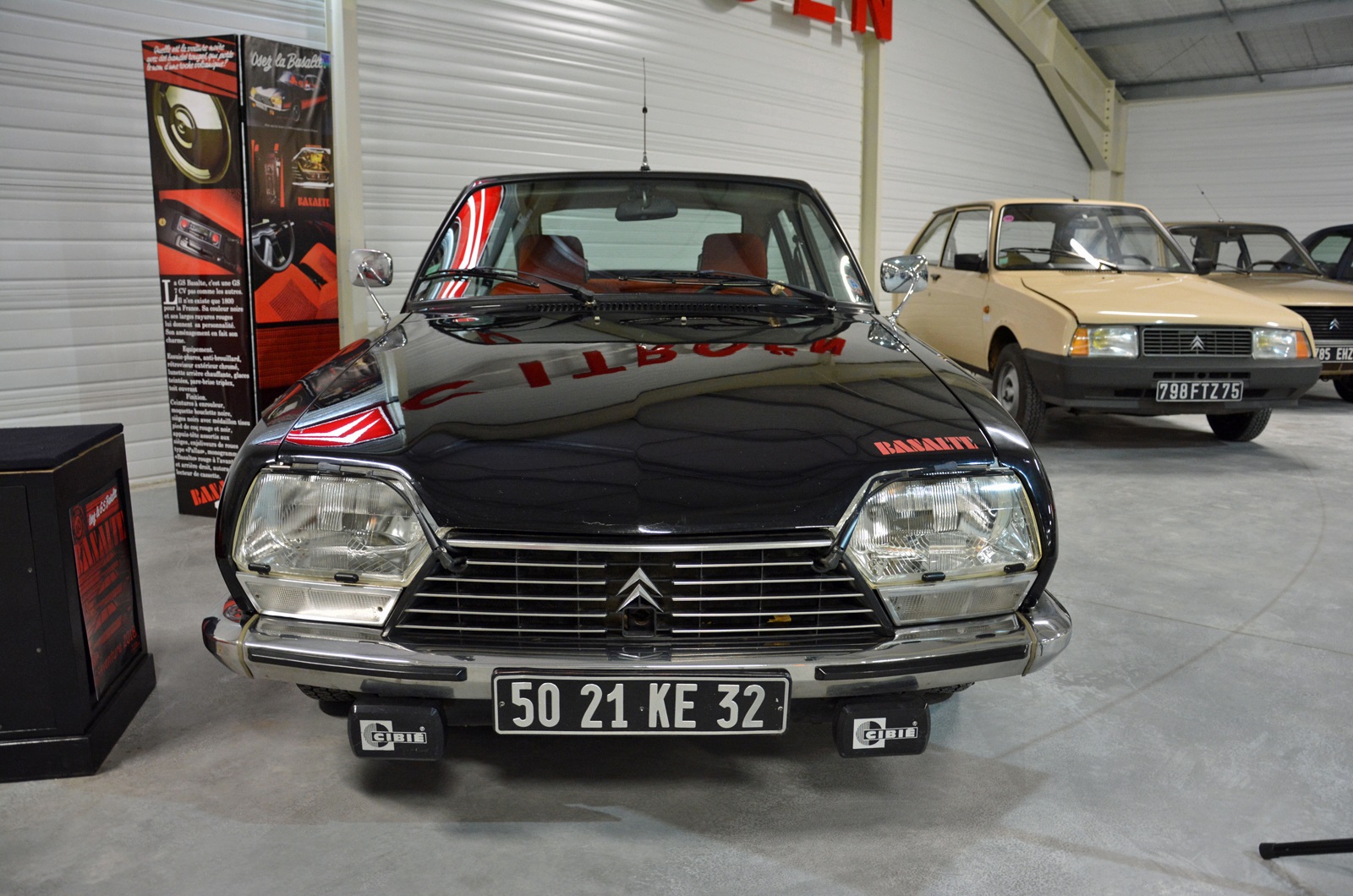
With nearly 100,000 km (62,000 miles) on the odometer, this limited-edition 1978 GS Basalte has spent considerably more time on the road than the low-mileage classics it shares a warehouse with. It earned a spot in the collection due to its rarity (it’s one of 1800 examples made for the French market) and its like-new condition.
GSA (1984)
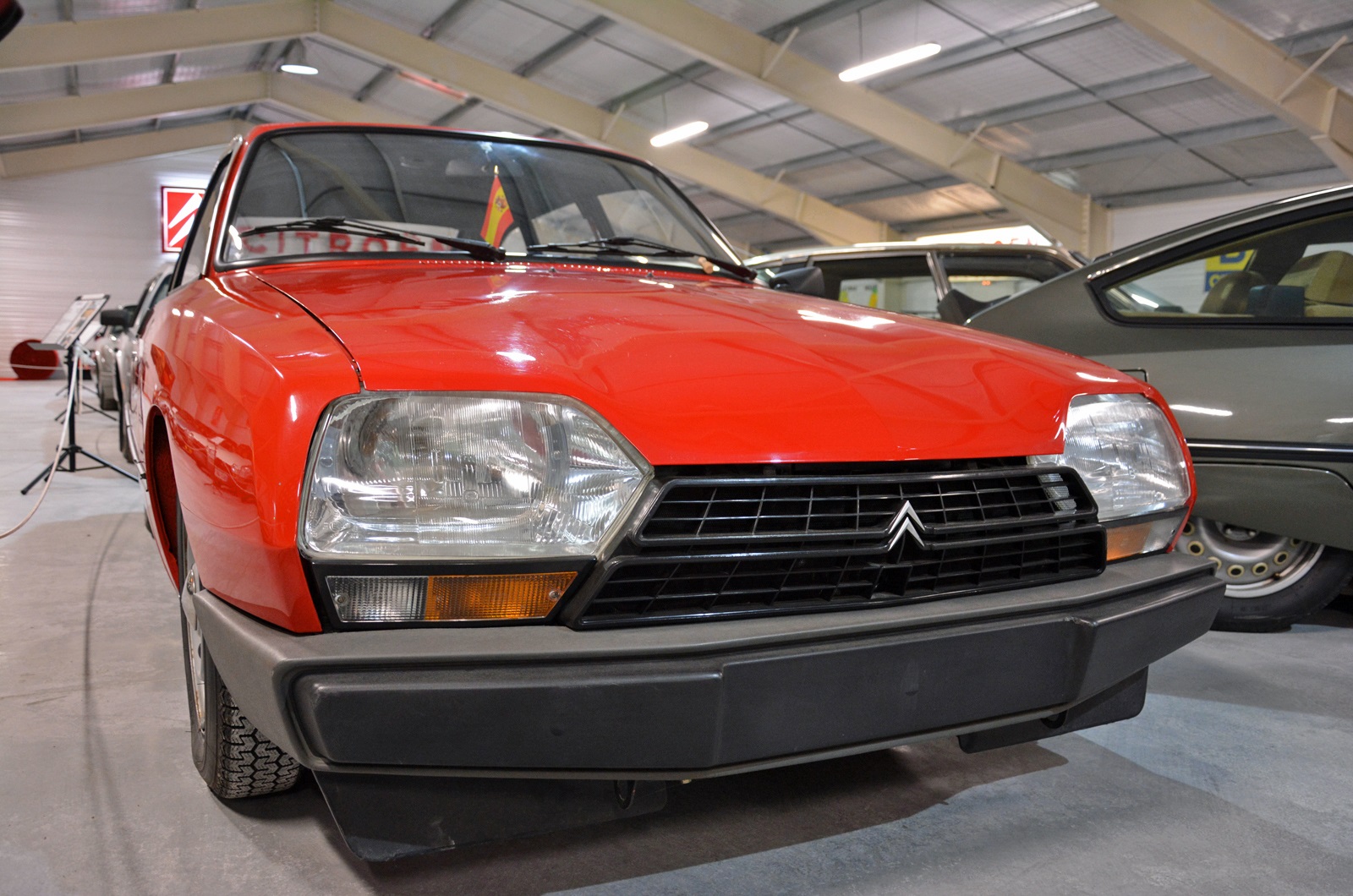
One of our favorite cars in the CitroMuseum, this 1984 GSA with 41 km (25 miles) sat unsold and unregistered for years. It was made in Spain and Fradet believes it didn’t find a home because it looked and felt completely outdated compared to the more modern BX.
GSA (1984)
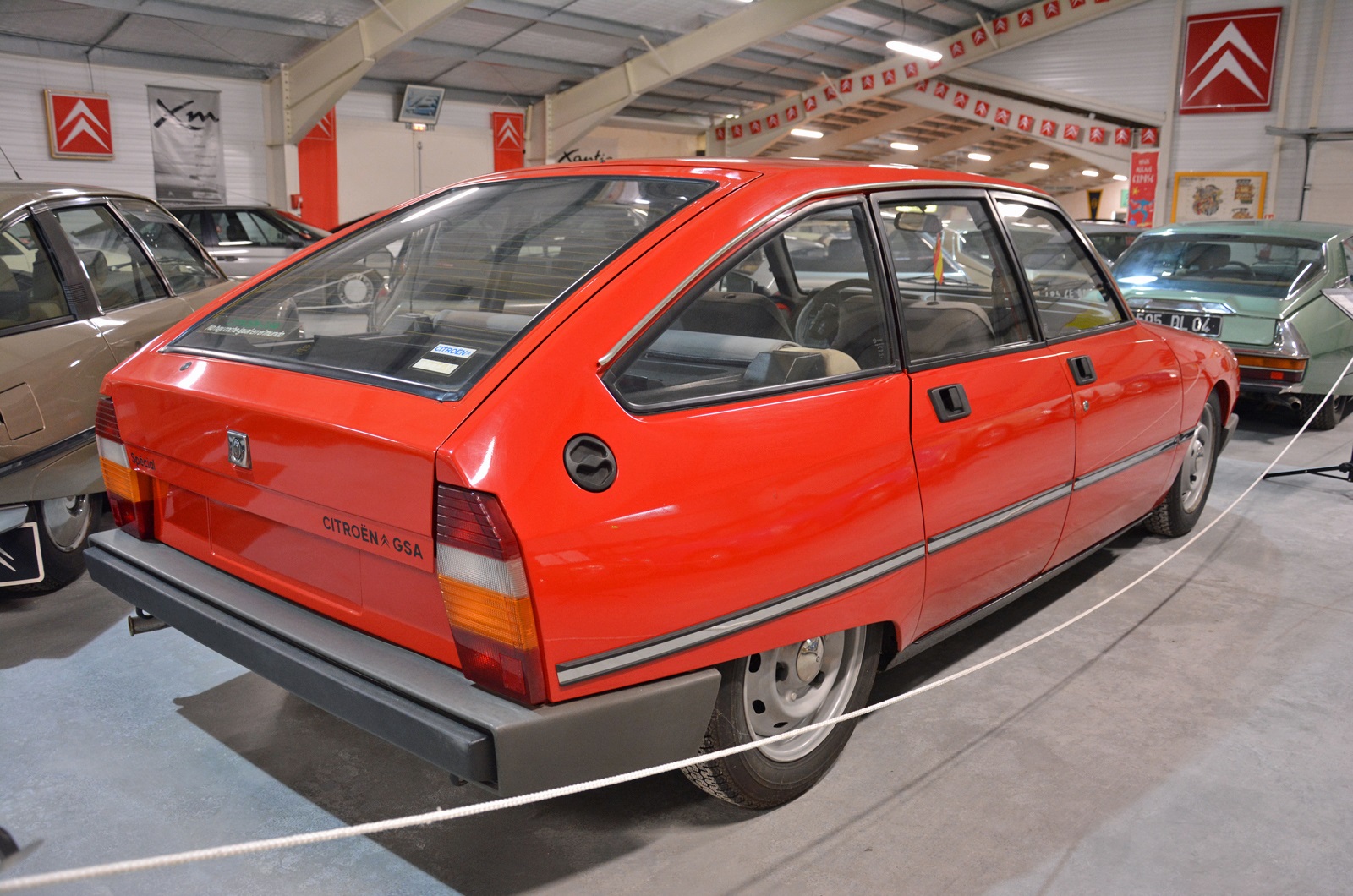
The GSA went through the hands of two collectors before joining the CitroMuseum. Luckily, both were aware of its rarity and chose to display it rather than drive it. While Fradet has driven some of the cars he has purchased back to his museum, he put the GSA on a flatbed for its trip from Spain to the Alps.
GSA Cottage (1984)
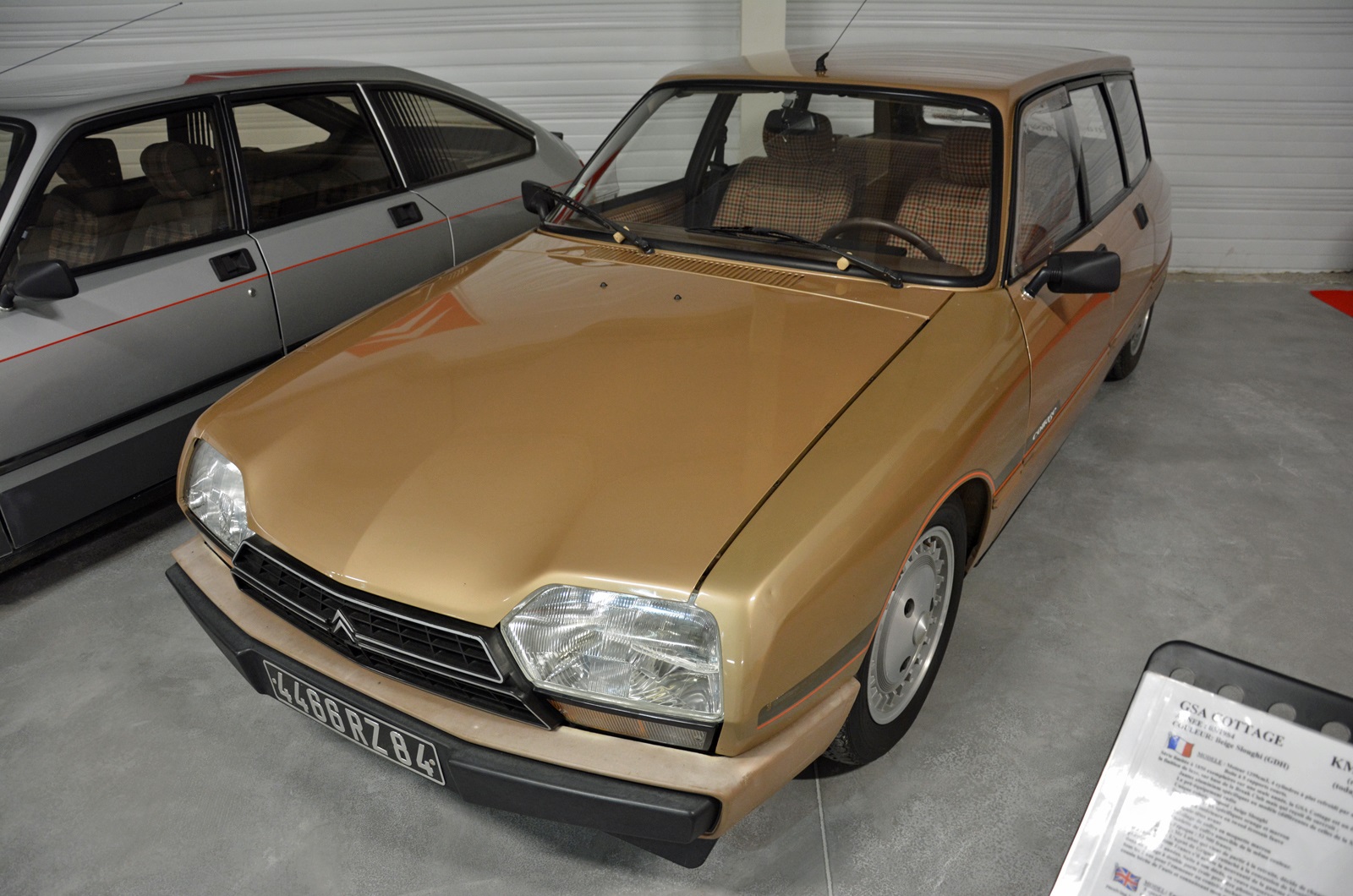
Citroën made 1850 examples of the limited-edition GSA Cottage. Starting with a wagon model, the firm added edition-specific tweed upholstery, front headrests, brown and orange graphics to complement the beige paint and alloy wheels borrowed from the GSA X3.
The CitroMuseum’s Cottage has about 15,000 km (9300 miles) on its odometer. Its story is par for the course when it comes to low-mileage cars. The original owner died shortly after purchasing the car and his widow kept it due to its sentimental value. Fradet bought it from the widow’s cousin after she died.
CX 2400 GTI (1977)
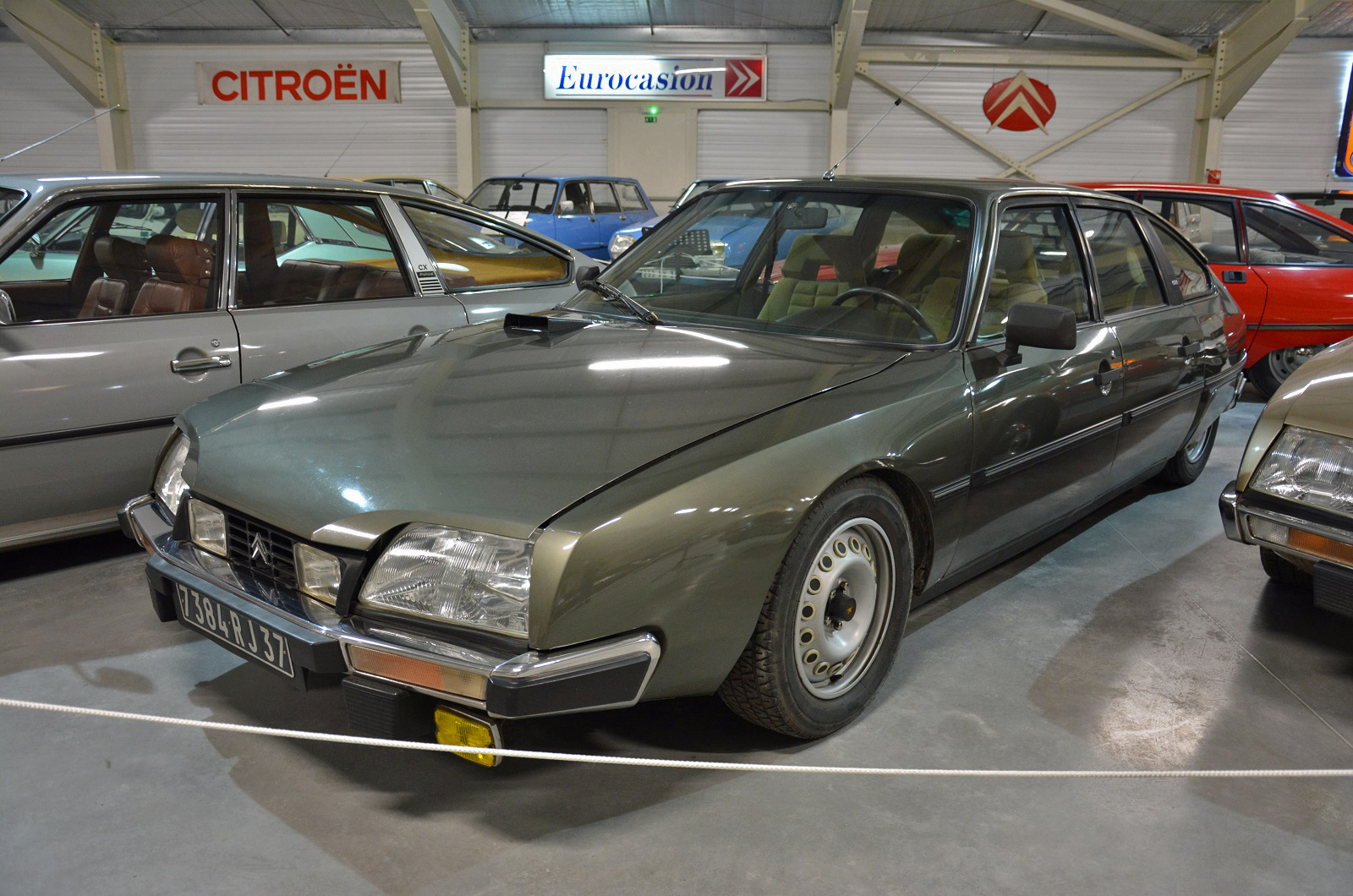
The owner of a Citroën dealership in northwestern France purchased this CX 2400 GTI as his personal car in 1977. After taking delivery, he went to his store’s parts department and ordered two popular period accessories: a grille with integrated driving lights and louvers for the rear window.
The 128hp 2.3-liter four-cylinder rarely got the chance to stretch its legs; the owner added less than 49,000 km (30,000 miles) to the odometer. He sold it to the CitroMuseum in 2008. It’s still sitting on a set of rarely-seen wheels made specifically for Michelin TRX tires. They’re rare because TRXs are fabulously expensive so CX owners often swap other Citroën wheels measured in inches or alloys plucked from the Alfa Romeo parts bin, which bolt right on.
CX 22 TRS (1988)
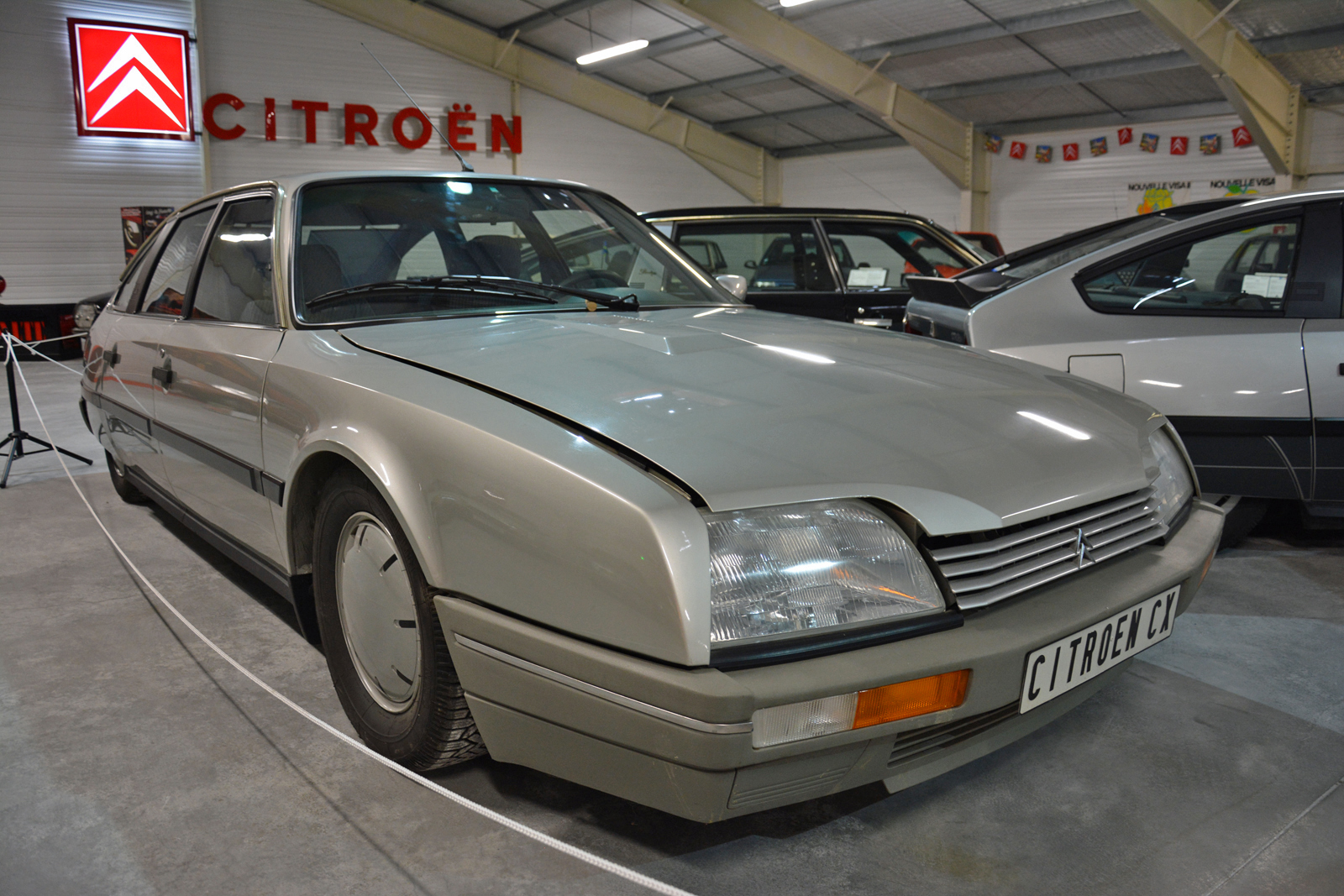
This late-model CX was shipped to a Citroën dealership in northwestern France nearly a year after it was built. It arrived too late; the XM, its replacement, had already been on sale for a month. The dealership that ordered it couldn’t sell it - buyers after Citroën’s flagship wanted the firm’s latest and greatest car - so it stored it in its basement for 17 years. It has been driven for 62 km (38 miles).
CX REGAMO prototype (1987)
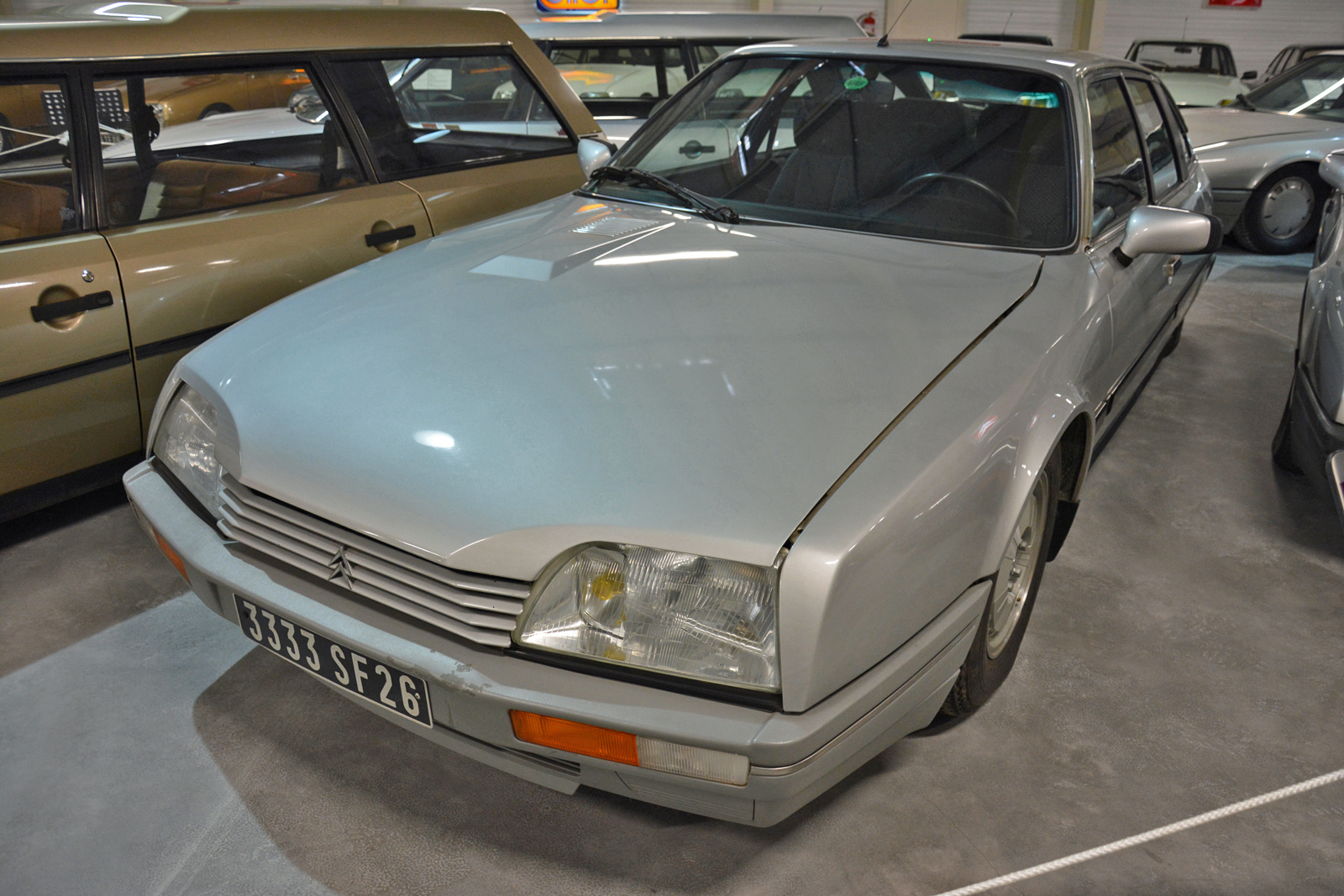
At first glance, this car looks like a run-of-the-mill late-model CX. It’s not; it’s a prototype named REGAMO made by Citroën to test some of the technology that was later fitted to the XM. The list of add-ons included a switch that let the driver select the suspension’s sport or auto modes and an electronic suspension control unit hidden under the carpet in the front passenger’s footwell.
Citroën made about a dozens examples of the REGAMO, according to Fradet. Half were tested by Citroën and the other half were dispatched to hand-selected dealers with instructions to loan them to loyal customers who drove a lot. They were to be returned once they reached 30,000 km (18,000 miles), transformed into regular CX GTIs and sold as used cars. Fradet’s is still fitted with its REGAMO-specific equipment and it has covered 30,296 km.
LNA 11E Cannelle (1983)
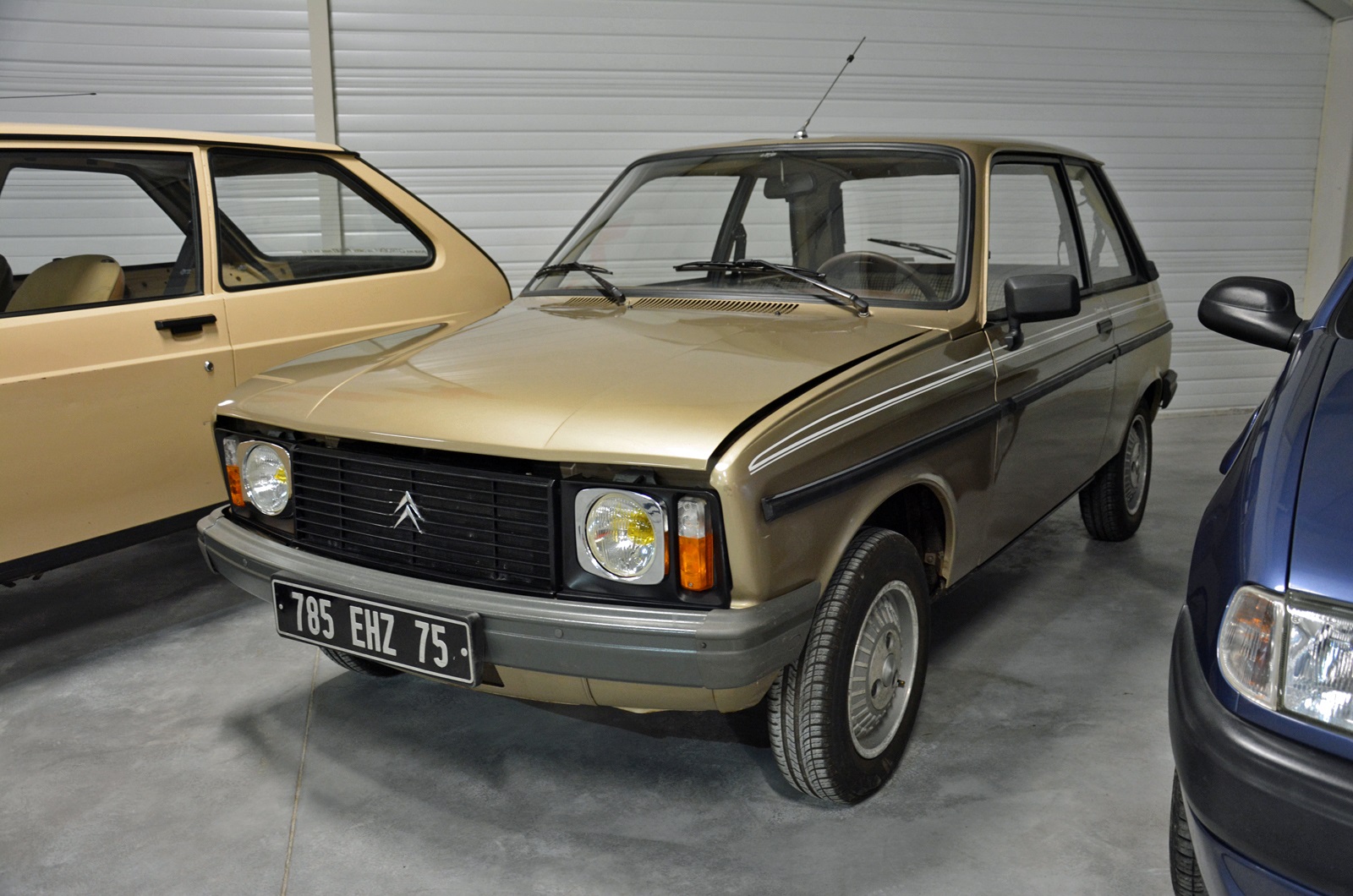
Released in 1976, the LN remains one of Citroën’s most controversial models because it was the first car developed under Peugeot’s guidance. It was little more than a two-door 104 that had been Citroënized. It became the LNA in 1978 after receiving a series of mechanical upgrades. Some models came with a flat-twin derived from the unit that powered the 2CV and shared with the Visa, but the 11E variant in the CitroMuseum is fitted with a Peugeot-sourced 1.1-liter four-cylinder rated at 34hp.
While the LN and the LNA have both failed to gain traction on the collector car market, Fradet’s 4700-km (2900-mile) example is an exception and not just because of its low mileage. It’s a limited-edition version named Cannelle that Citroën made 2000 examples of. It stood out with alloy wheels, white strips that ran down both sides of the body and seats with a specific upholstery. This car's original owner parked it prematurely because he was hospitalized shortly after buying it.
Visa Super (1978)
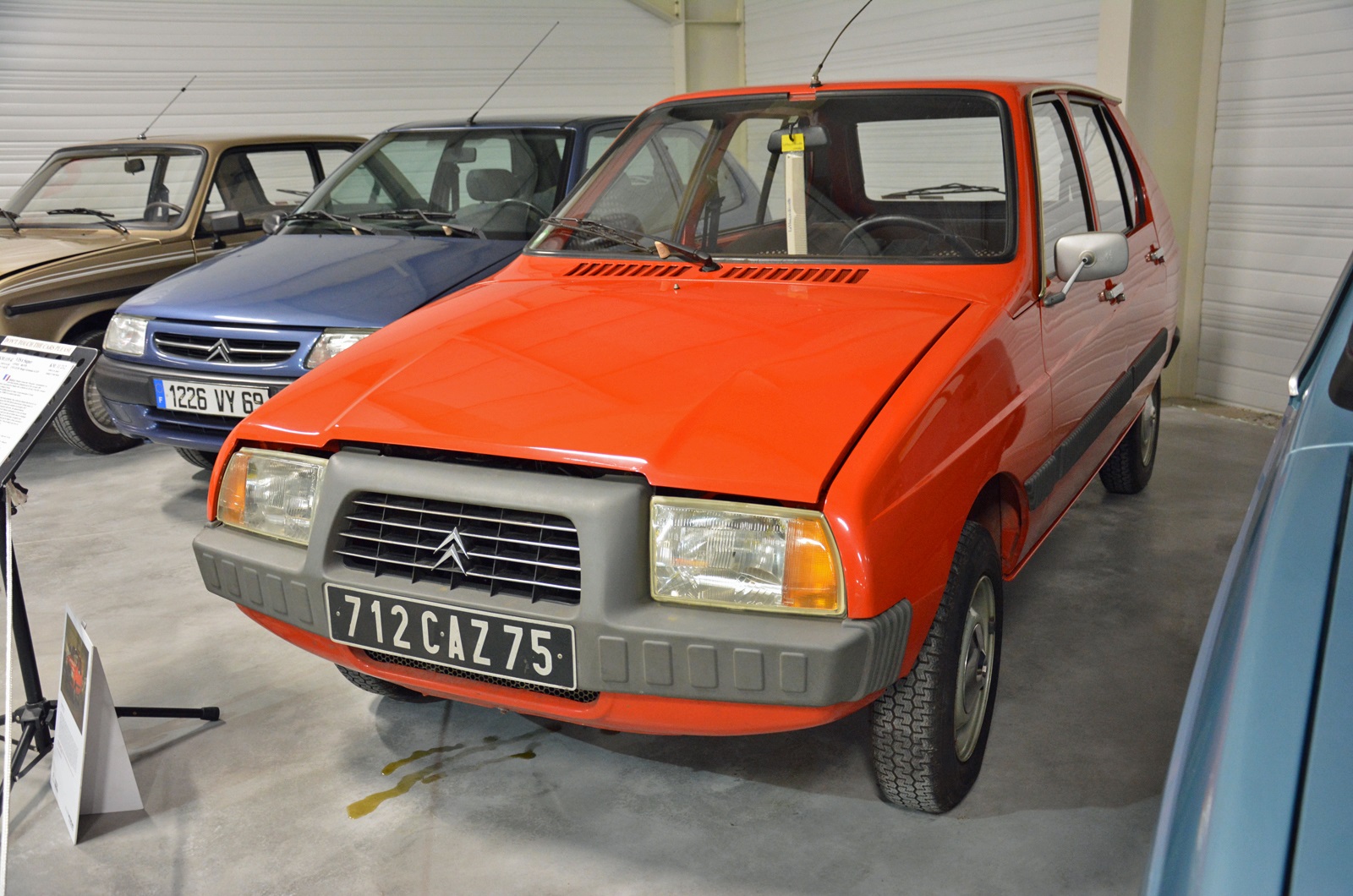
Released in 1978, the Visa was another Peugeot-derived model that rubbed Citroën purists the wrong way. The CitroMuseum’s example is one of the very first ones made. It was plucked from the assembly line by Citroën’s marketing department and used to illustrate period sales brochures before traveling to Greece to participate in the Visa’s press launch. It’s one of the cars Autocar's road testers could have driven in 1978.
Citroën kept this example in its Conservatoire until it decided to auction off part of its collection in 2017. It has 11,000 km (6800 miles) on the odometer.
Visa II Super E (1982)
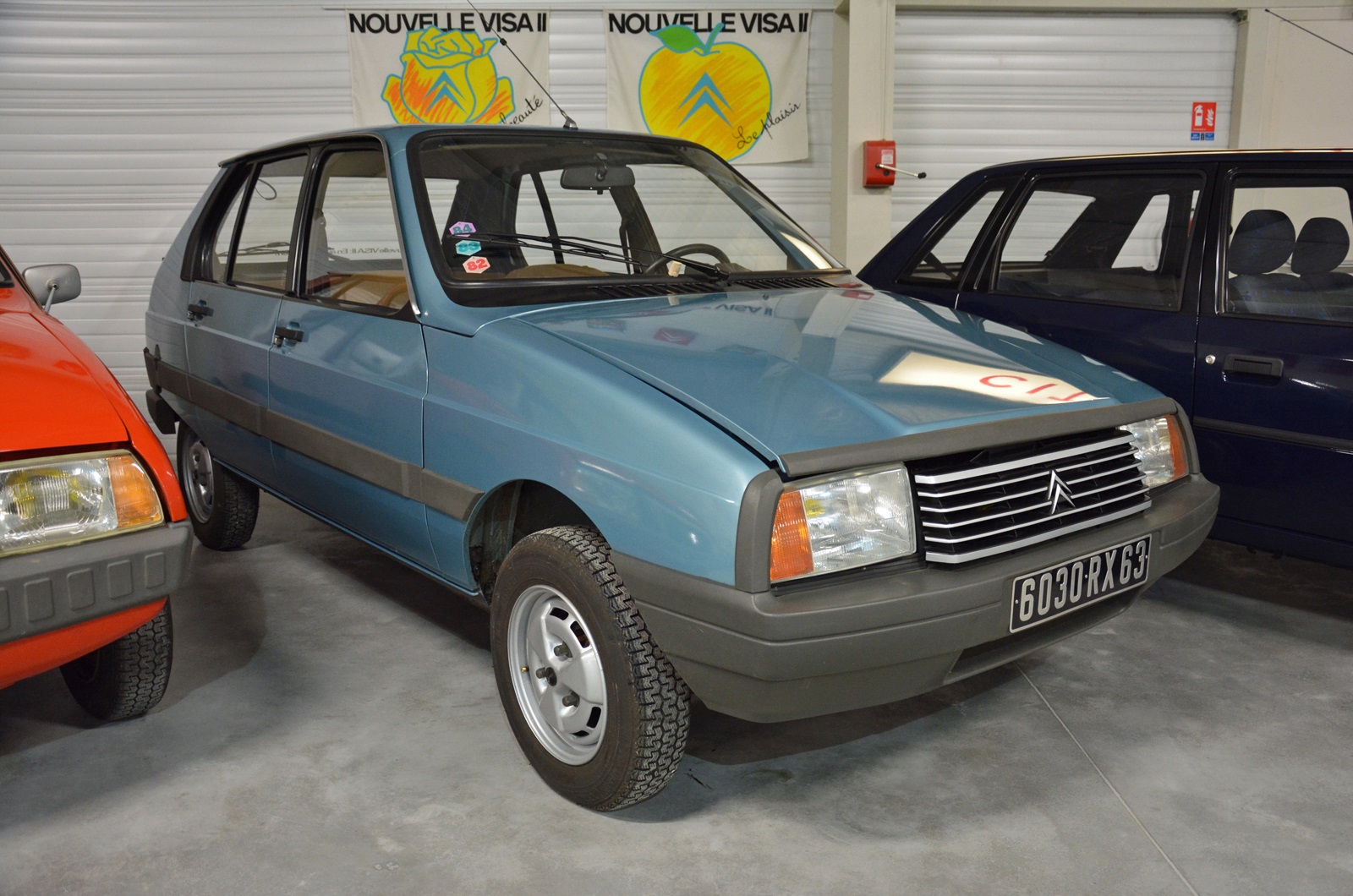
The original Visa split the public’s opinion with a front end many compared to a pig’s nose. Citroën addressed the criticism when it released a face-lifted model in 1981 that wore a more streamlined design. The same parts later appeared on the C15 van.
Still unpopular at best among collectors, the Visa is a car that was rarely cherished and usually driven mercilessly. The person who purchased this example put 2226 km (1400 miles) on it before she died in 1982. It remained in storage until 2012.
Axel Entreprise (1986)
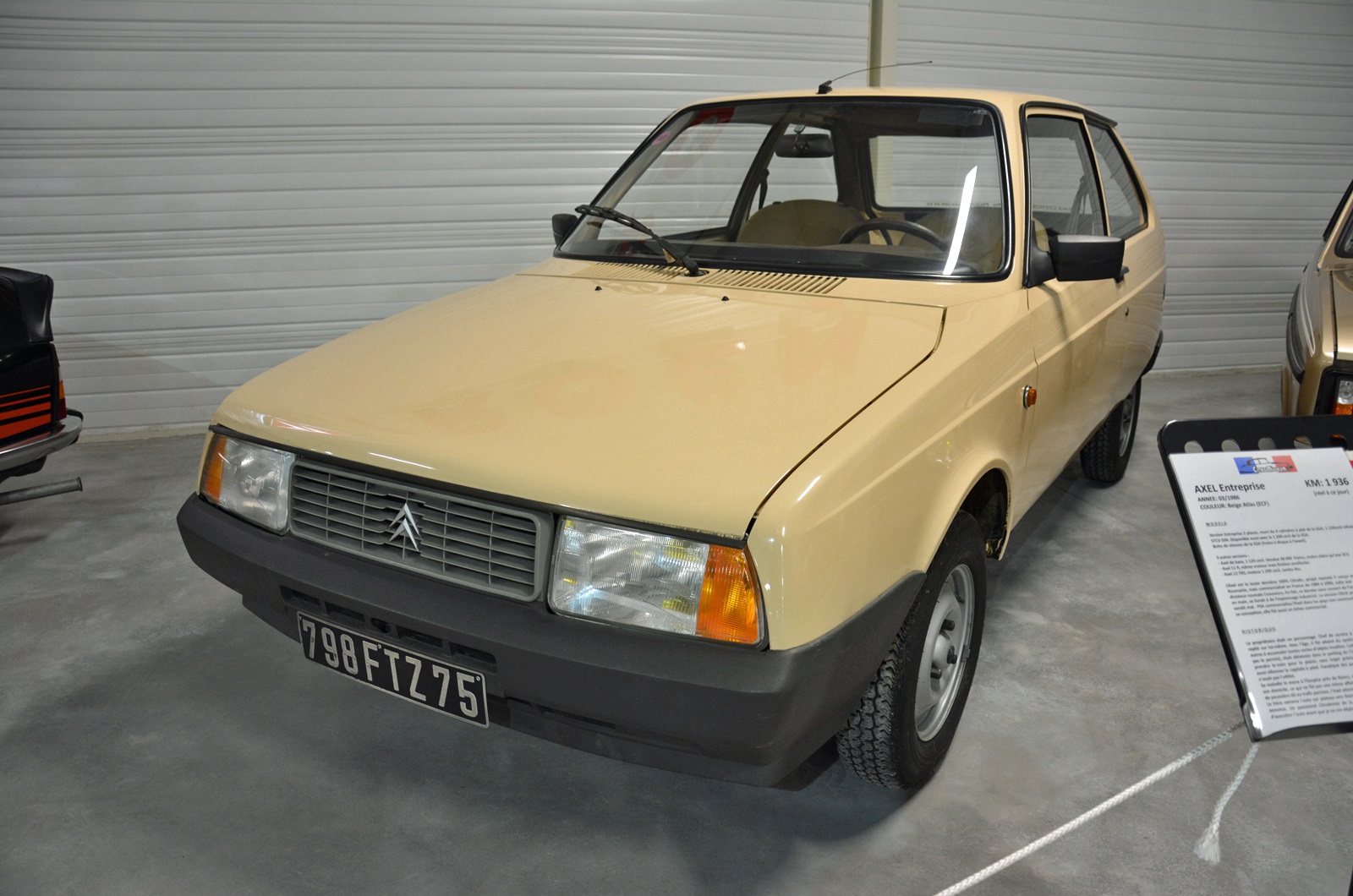
The Axel looks like a two-door version of the Visa; it’s actually the other way around. Development work started in 1974, before Citroën went bankrupt and fell under the Peugeot umbrella, but the model wasn’t released until 1981. It was built and sold in Romania as the Olcit but Citroën marketed it as the Axel in select western European countries between 1984 and 1990. Equipped with GSA-sourced mechanical components, including an air-cooled flat-four, the Axel was cheaper than the 2CV when it was new but sales were low at best outside of Romania.
The CitroMuseum’s Axel is a two-seater model built specifically for businesses; even today, companies in France can buy a two-seater version of a car like the Citroën C3 to benefit from a tax break. The original owner was an older man diagnosed with Diogenes syndrome who bought it for no apparent reason. Compulsive hoarding is one of the side effects of this illness. He didn’t have a driver’s license so the Axel sat in a Parisian parking garage until he died in the mid-1990s. Fradet purchased the car from the original owner’s brother with under 2000 km (1200 miles).
BX Leader (1987)
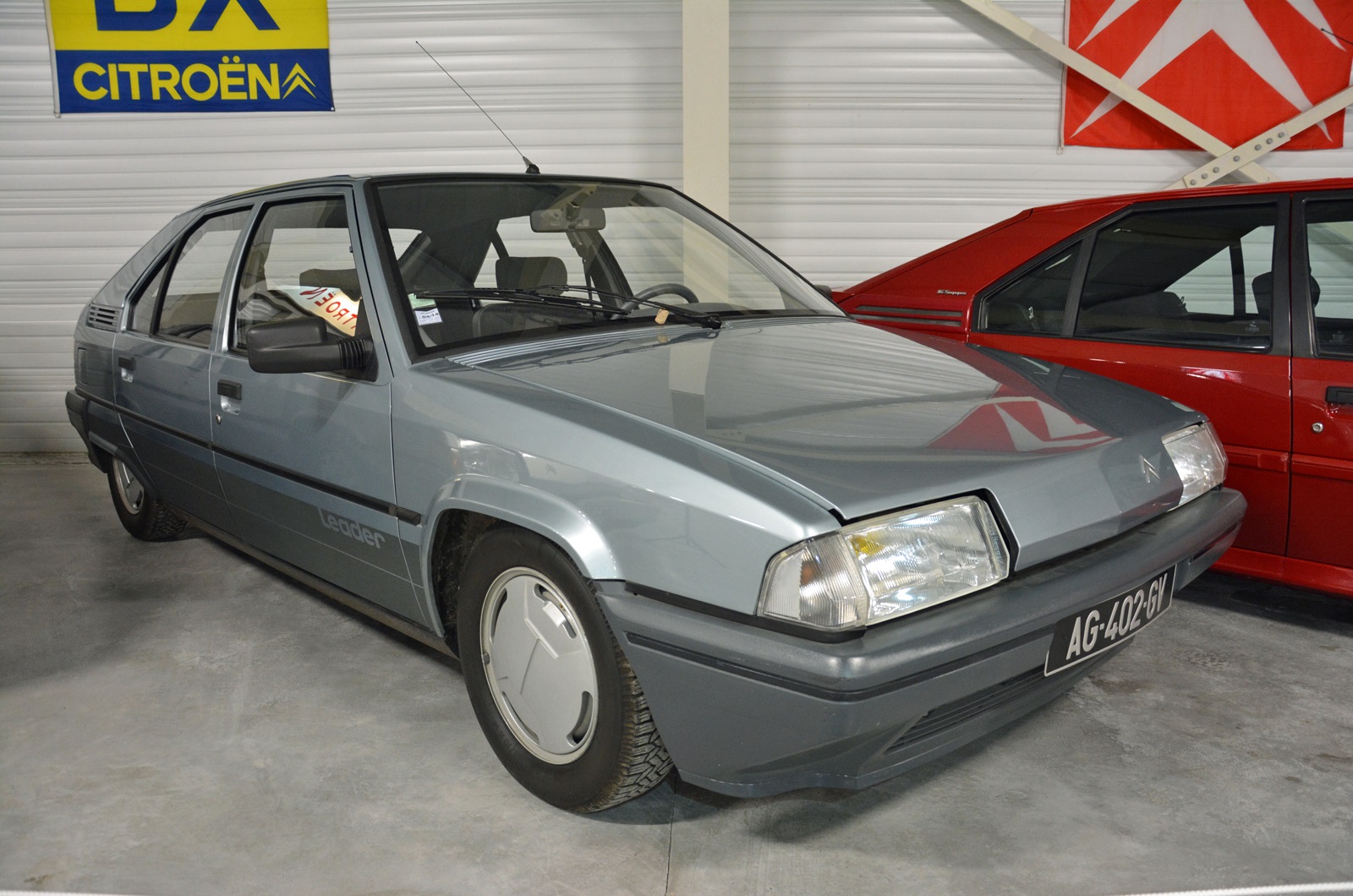
In the 1980s, Citroën sold value-packed Leader variants of the BX, the CX and the Visa. Made in 1987, this BX Leader was purchased new by an older man who put just 3000 km (1900 miles) until he died in 2009. An enthusiast added another 3000 km before selling it to the CitroMuseum in 2016.
BX 16 Soupapes (1989)
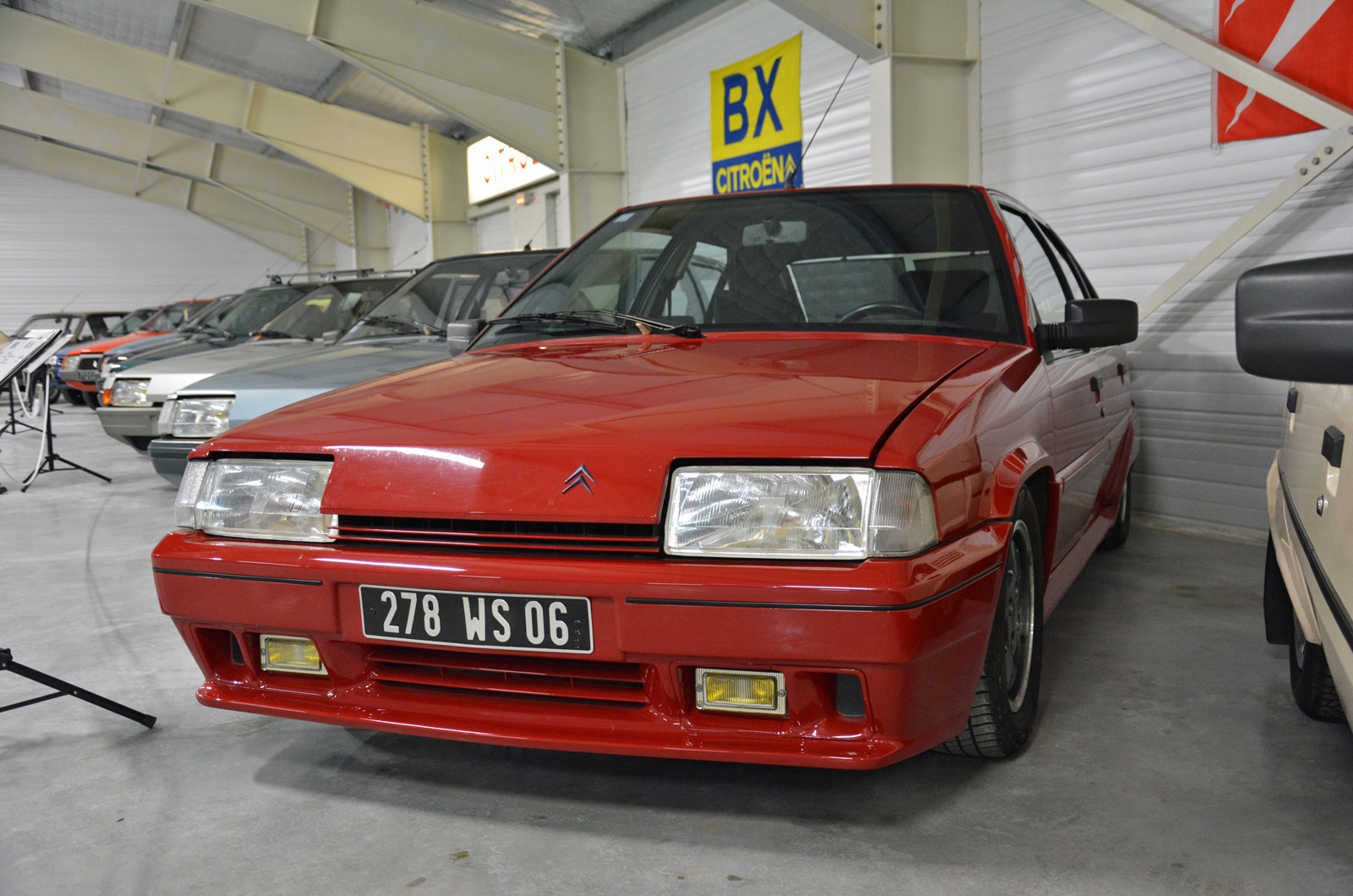
Citroën stuffed Peugeot’s 16-valve, 1.9-liter four-cylinder in the BX’s engine bay to create the aptly-named 16 Soupapes model. With 160hp, it was quick enough to embarrass more than a few hot hatches – at least in a straight line. This example was purchased new in Grasse and spent most of its life there.
Its story is simple: there is no death or quirk involved. It was simply rarely driven. Its odometer reads about 53,000 km (33,000 miles) and its first owner meticulously kept it in excellent condition.
XM (1992)
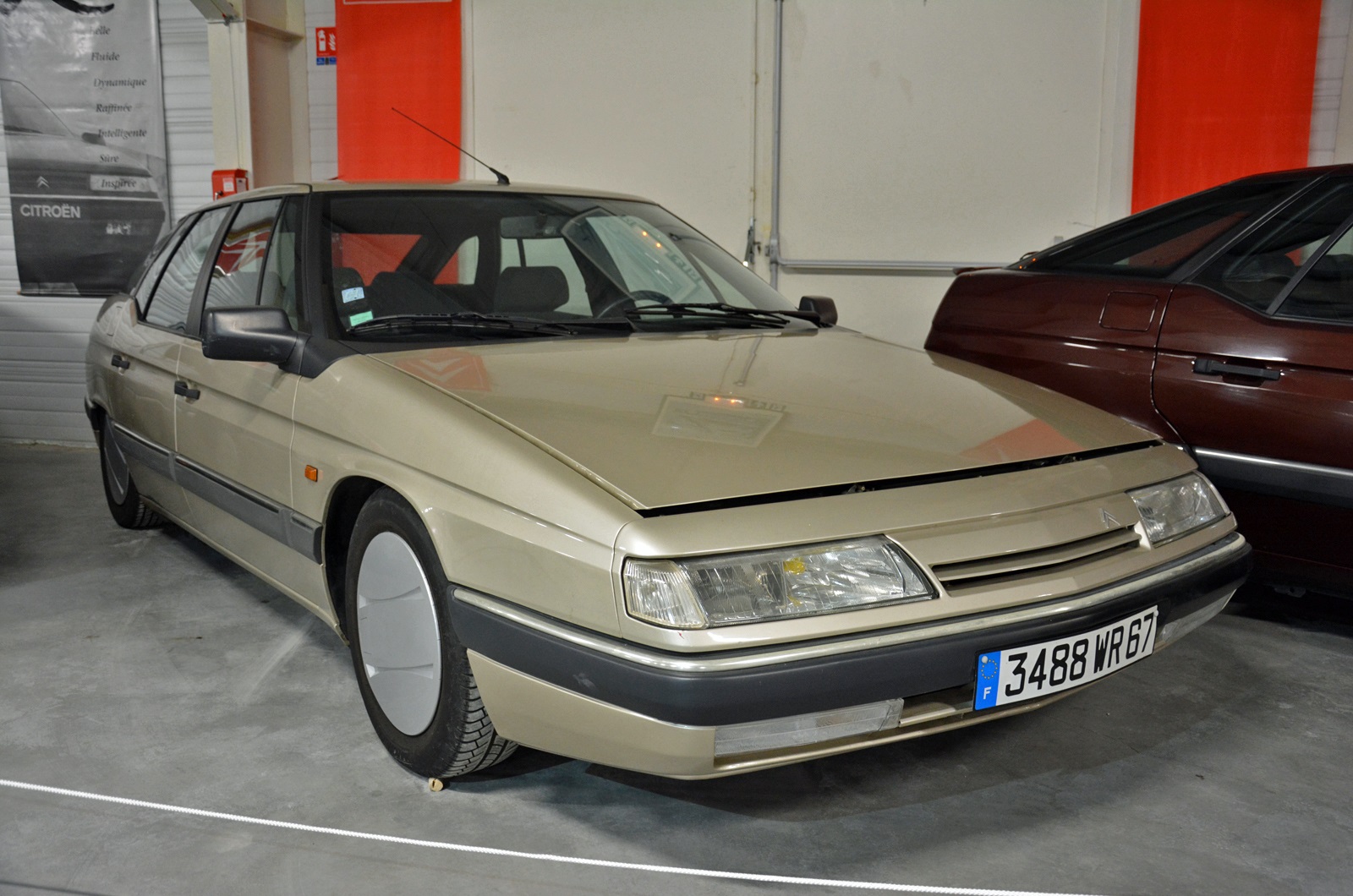
Powered by a carbureted, 115hp four-cylinder engine, this XM represents the entry-level variant of Citroën’s then-new range-topping model. It has 35,000 km (21,000 miles) on its odometer. Fradet purchased it in Strasbourg from the owner’s estate and assumed it ran as well as it looked but he experienced transmission issues while driving it down to the Alps. The problem has since been fixed and the car is back in like-new condition.
39. AX (1995)
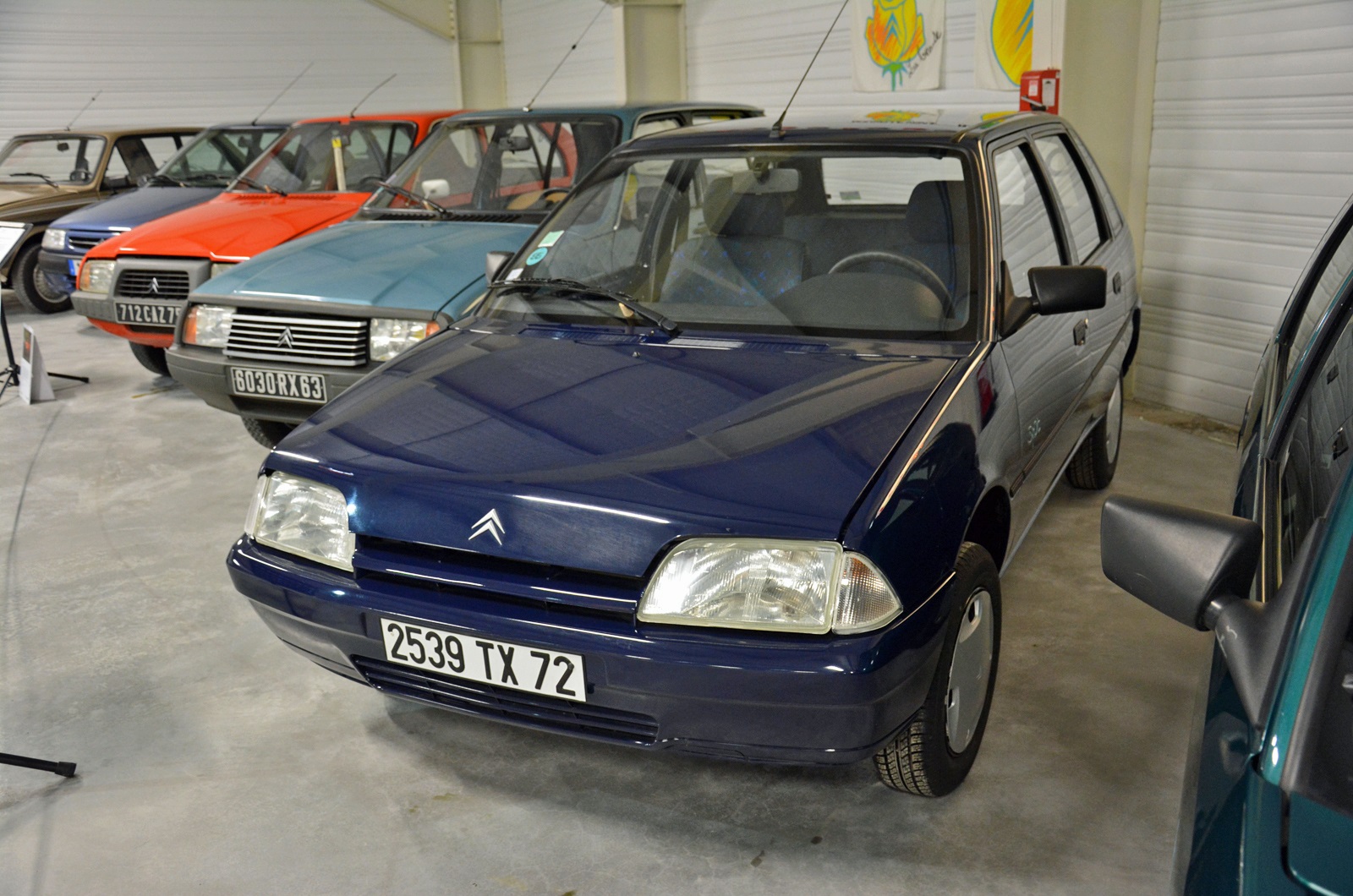
Released in 1986, the AX played a hugely important role in the Citroën line-up during the 1980s and the 1990s. It gradually replaced the Visa, the LNA, the Axel and even the 2CV as the company’s entry-level model. While it should have disappeared when the Saxo made its debut in 1996, it remained part of the company’s portfolio until 1999. Citroën offered several variants of this multi-tasking city car including bare-bones models, hot-rodded GTIs, colorful limited-editions and even a 4x4 aimed at the Fiat Panda.
The example in the CitroMuseum has covered 174 km (108 miles). The woman who purchased it new wanted a car to replace her 1960 2CV, which was equipped with a centrifugal clutch that made stalling impossible. She never got used to driving the AX (and presumably stalled it on a regular basis) so she parked it next to the 2CV. Both were sold when she died in 2017.
Saxo Electrique (1998)
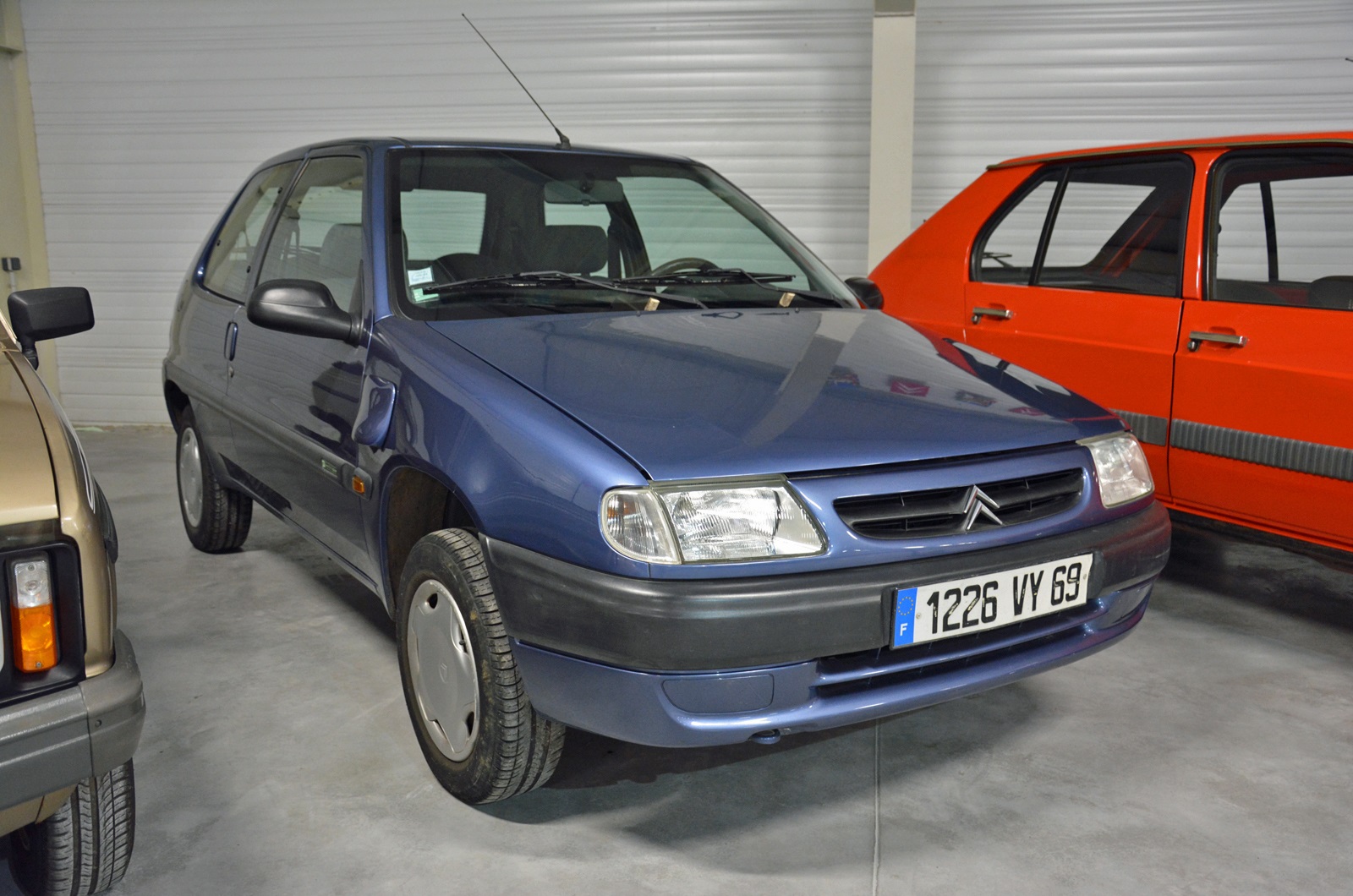
Citroën experimented with an electric variant of the AX. It improved the powertrain and stuffed it in the Saxo and the Peugeot 106, a pair of city cars that were all but identical under the sheet metal. While the AX was largely experimental, the electric Saxo and 106 represented a serious attempt at giving buyers an alternative to fossil fuel-powered cars. The technology remained expensive, however, especially once motorists factored in the high cost of renting the batteries. The 56-mile range and the 60mph top speed further decreased their appeal. Production ended in 2003 after coachbuilder Heuliez converted 3540 examples of the Saxo and 2270 of the 106 to run on batteries.
Like many electric Saxos and 106s, this example was purchased new by an employee who worked for EDF, France’s state-run power company. He put about 119,000 km (75,000 miles) on it by using it to commute for about 15 years. It joined the CitroMuseum without its nickel-cadmium battery pack.
Citromuseum
Fancy a closer look? CitroMuseum is located in Castellane, a small town in southern France, about 60 miles inland from Nice, on the Route Napoléon. It's open to the public between April and October; there's an €8 entry fee. Find more information from its website.
If you enjoyed this story, please click the Follow button above to see more like it from Autocar