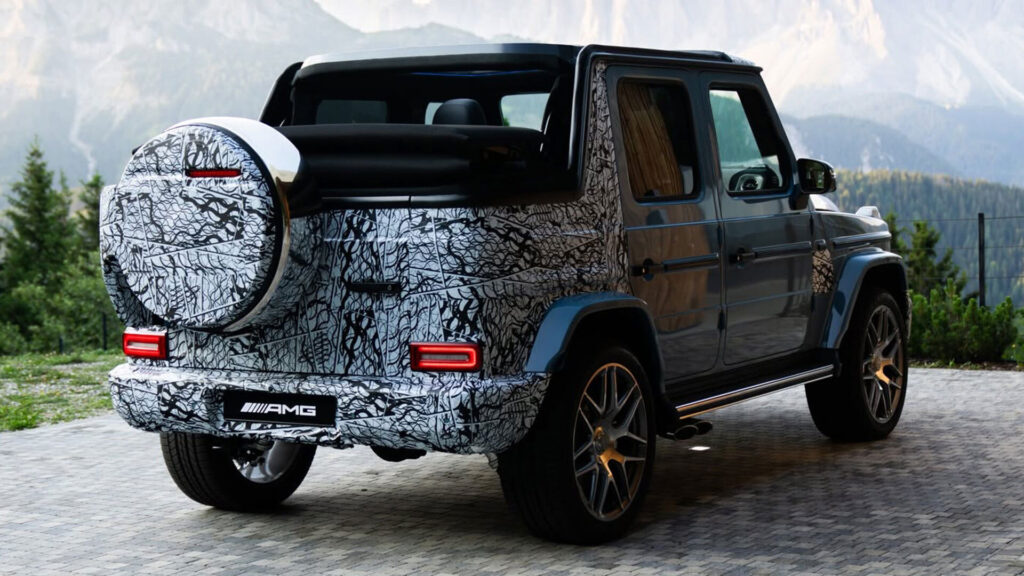
Mercedes-AMG G-Class Cabrio Reveals Bold Soft Top Design and Limited Open-Air Ambition

Bugatti’s W16 Era Closes as Tourbillon Production Signals a New Chapter

Lancia Thesis and the Limits of Ambition in Luxury Car Design
 Lancia poured time and money into development, but fewer than 20,000 sold in eight years - we look back
Lancia Thesis
Compared with the Thesis, few cars from Lancia had so much time and money invested in them.
A a car of slightly mysterious allure but plenty of technology, it was developed on its own bespoke chassis and the same sort of suspension used in the Maserati Spyder, Granturismo and Quattroporte. It even had radar-guided cruise control - the first Lancia to do so.
Despite the effort and attention lavished on it to make it a true rival for the BMW 5 Series and Mercedes E-Class, it was dropped from the price list after eight years with less than 20,000 produced.
We therefore thought it best to find out why, partly because it has never been sold in the UK, partly because it’s a relatively rare sight even in its native Italy, and partly because it looks a little weird.
Front end design
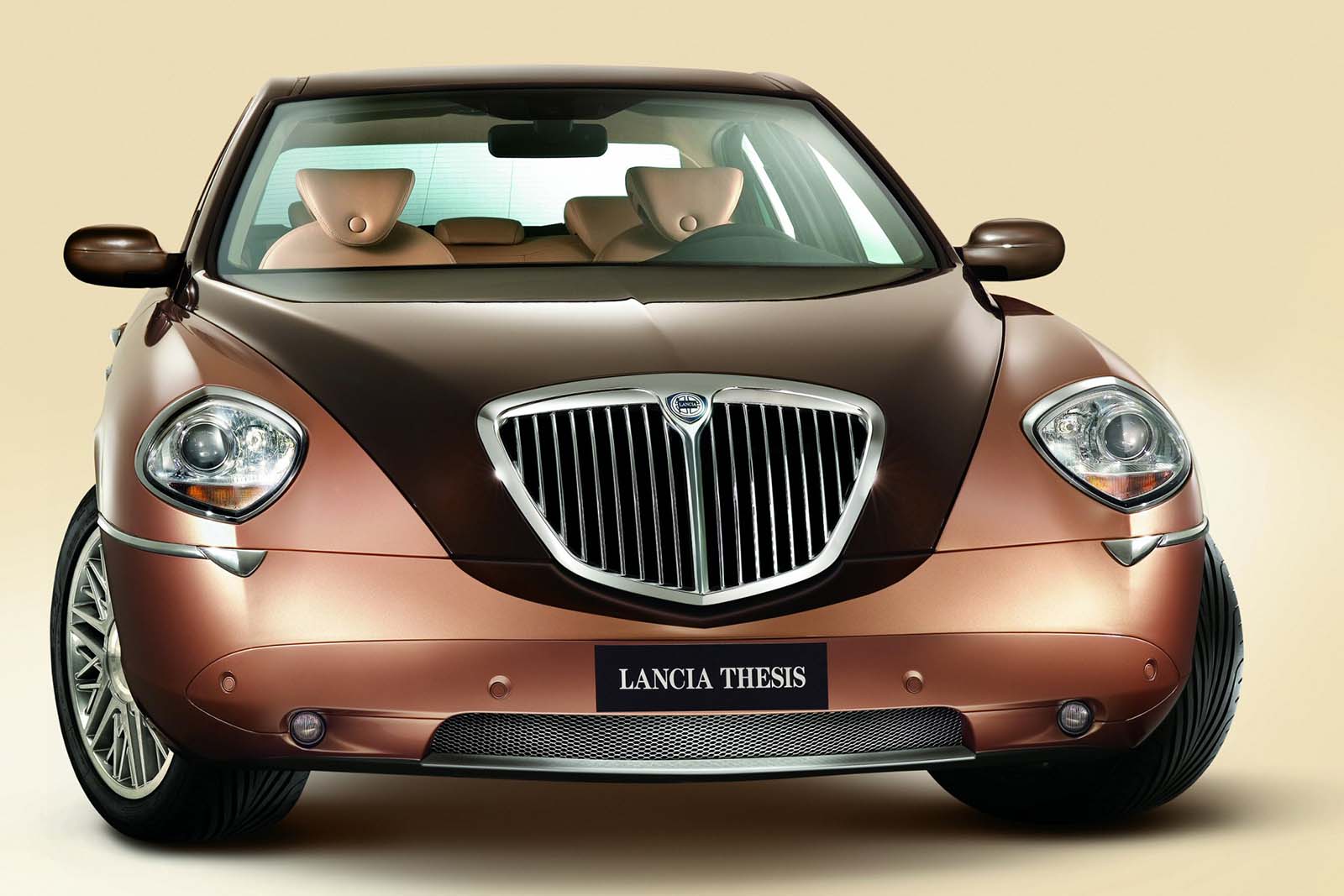
From the front its chrome Lancia grille resembles a medieval shield, and from the rear, where the translucent glow of some rather gothic tail-lights give it a look like no other car on the road.
Piggy in the middle
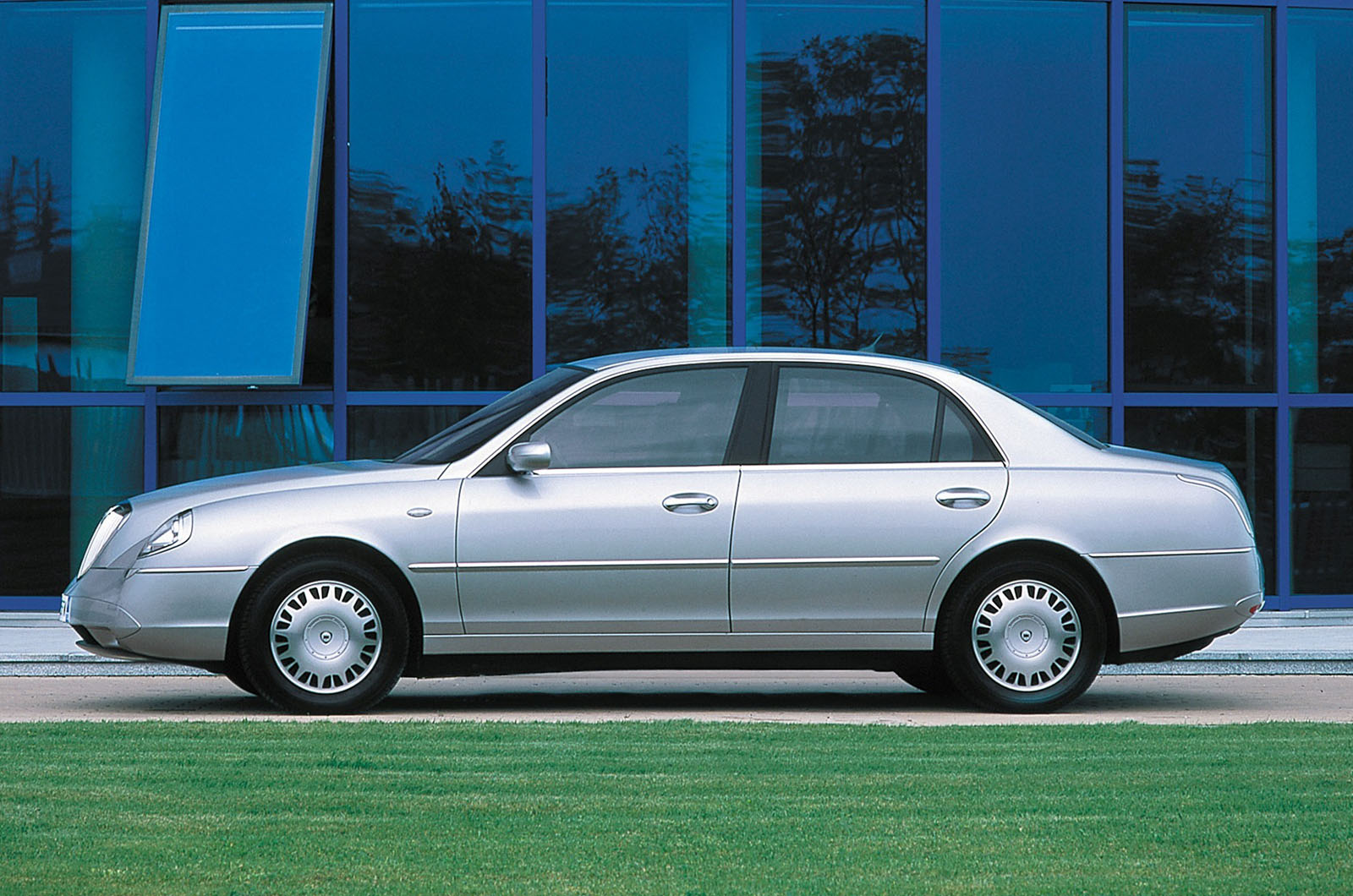
From the side, however, the Thesis is a car of three parts, its distinctive nose and tail sandwiching one of the dullest centre sections of any executive car on the road. Which is a pity.
Concept
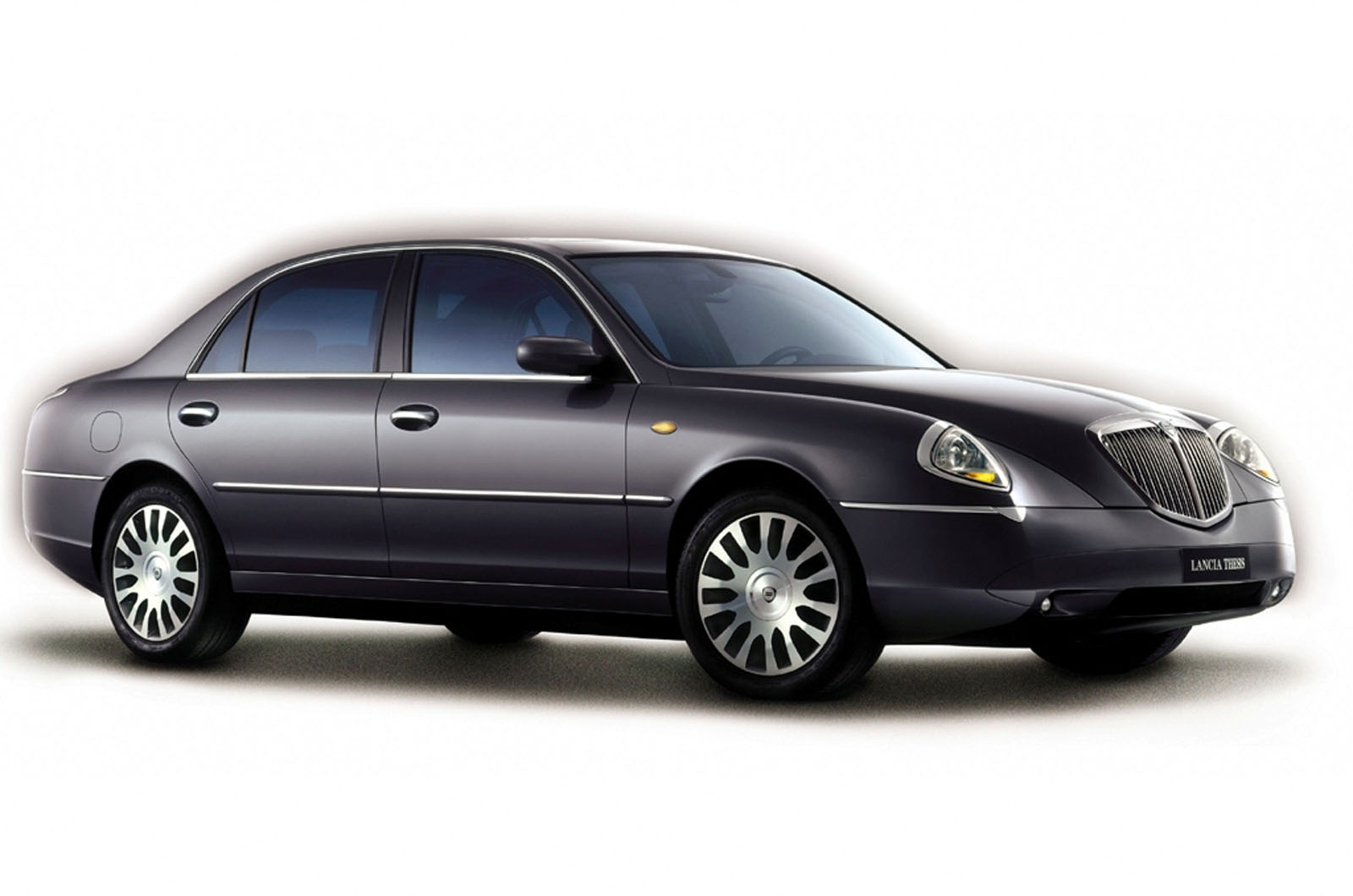
Such dullness is all the more disappointing given the design origins of the Thesis – pronounced ‘tay-sis’, rather than as per the lengthy academic tract - which stemmed from a striking 1998 concept called Dialogos.
This car’s clean flanks, wooden floor, subtly sculpted dashboard and suicide-rear-doors promised something refreshing, but Lancia’s nerve faltered, the production version trading the subtle curviness of the original vision for banality instead.
Beauty on the inside
Given that Lancia’s biggest barely registers on any sales graph featuring the 5 Series, E Class and A6, it might just as well have gone the whole way and produced something really different.
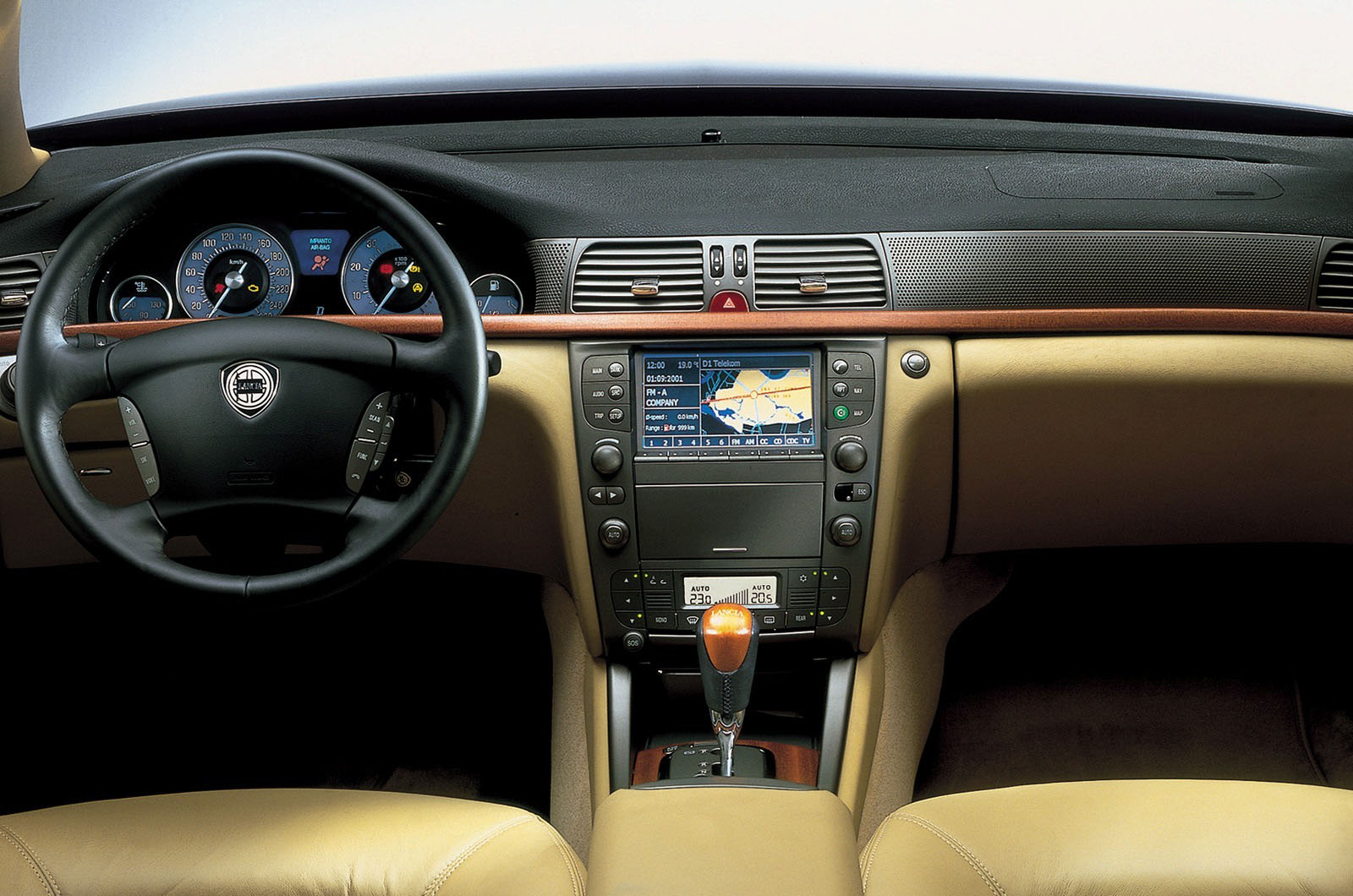
Especially as the Thesis feels pretty special inside, despite the loss of the concept’s (admittedly impractical) wooden floor and smooth-contoured seating.
Sparely deployed wood, cream-faced instruments and richly upholstered seats make this Lancia a car you want to get in as do the heated and cooled massage seats that can be optionally installed front and rear.
Forbidden fruit
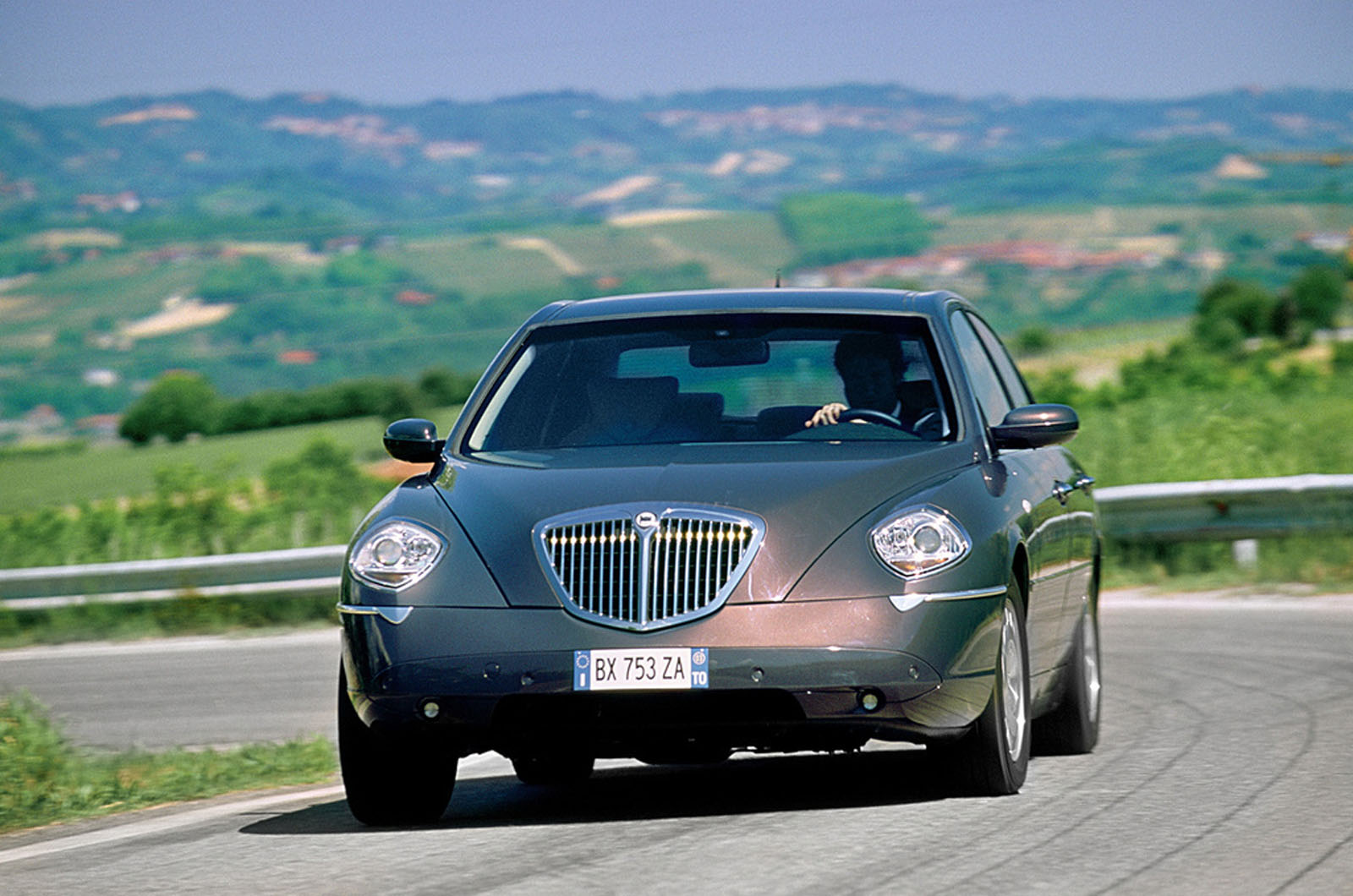
The Thesis’s non-availability in the UK meant that I had a long wait, after its 2001 launch, before sampling its charms, and then only as a passenger. But that was enough to discover whether it was burdened with a problem afflicting almost every Fiat Auto product of the day, which was an inability to absorb sharp, transverse ridges like motorway expansion strips without firing a creaky judder through the dashboard.
Disappointment
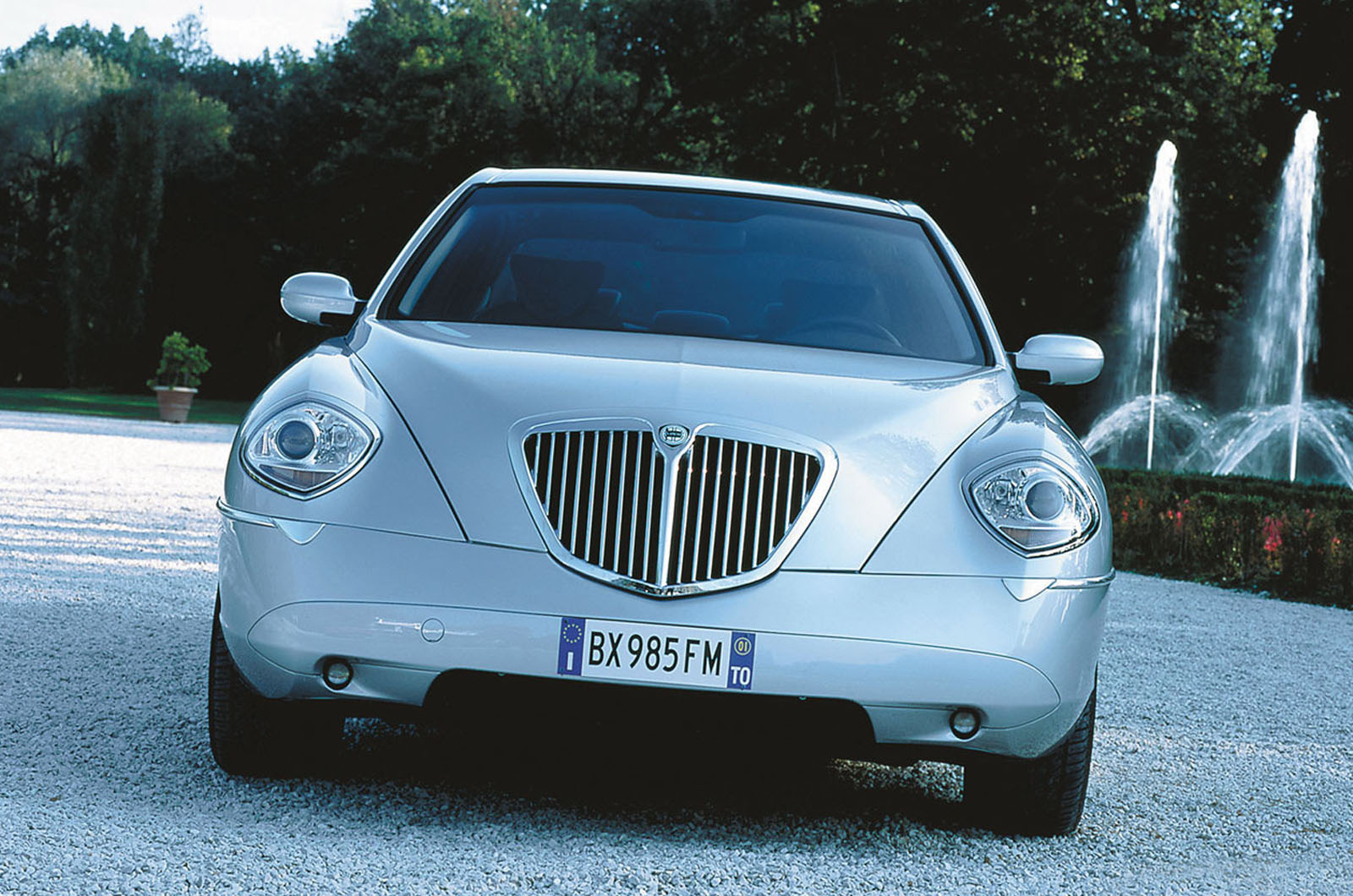
That might sound a ludicrously arcane basis on which to judge a car, but the aura of mild flimsiness provoked by this flaw was one I hoped this more substantially assembled Lancia would be free of. Within minutes of climbing aboard a Thesis at Turin airport I had my answer – it soon hit an autostrada expansion strip, and I heard the faint plastic crack of a dashboard quivering with a tremor that the suspension had failed to suppress. Oh, the disappointment.
Mild yearning

A couple of years later I got to actually drive a Thesis, and discovered a car not much more able in the bend-bashing department. But those beguiling tail-lights and that classy Italian cabin make this a saloon that I have a mild yearning for - especially as they're so rare.
Consequently we couldn't find any Thesis' for sale in the UK today. But in Italy cars are available at less than €10,000 for a clean example. Tempted?

Kia Sportage Redesign Signals Shift to Upright Styling and Advanced Hybrid Powertrains

Wildfire Risk Highlights Gaps in Auto Insurance Coverage for Smoke and Fire Damage


Lancia Thesis and the Limits of Ambition in Executive Car Design
 Lancia poured time and money into development, but fewer than 20,000 sold in eight years - we look back
Lancia Thesis
Compared with the Thesis, few cars from Lancia had so much time and money invested in them.
A a car of slightly mysterious allure but plenty of technology, it was developed on its own bespoke chassis and the same sort of suspension used in the Maserati Spyder, Granturismo and Quattroporte. It even had radar-guided cruise control - the first Lancia to do so.
Despite the effort and attention lavished on it to make it a true rival for the BMW 5 Series and Mercedes E-Class, it was dropped from the price list after eight years with less than 20,000 produced.
We therefore thought it best to find out why, partly because it has never been sold in the UK, partly because it’s a relatively rare sight even in its native Italy, and partly because it looks a little weird.
Front end design
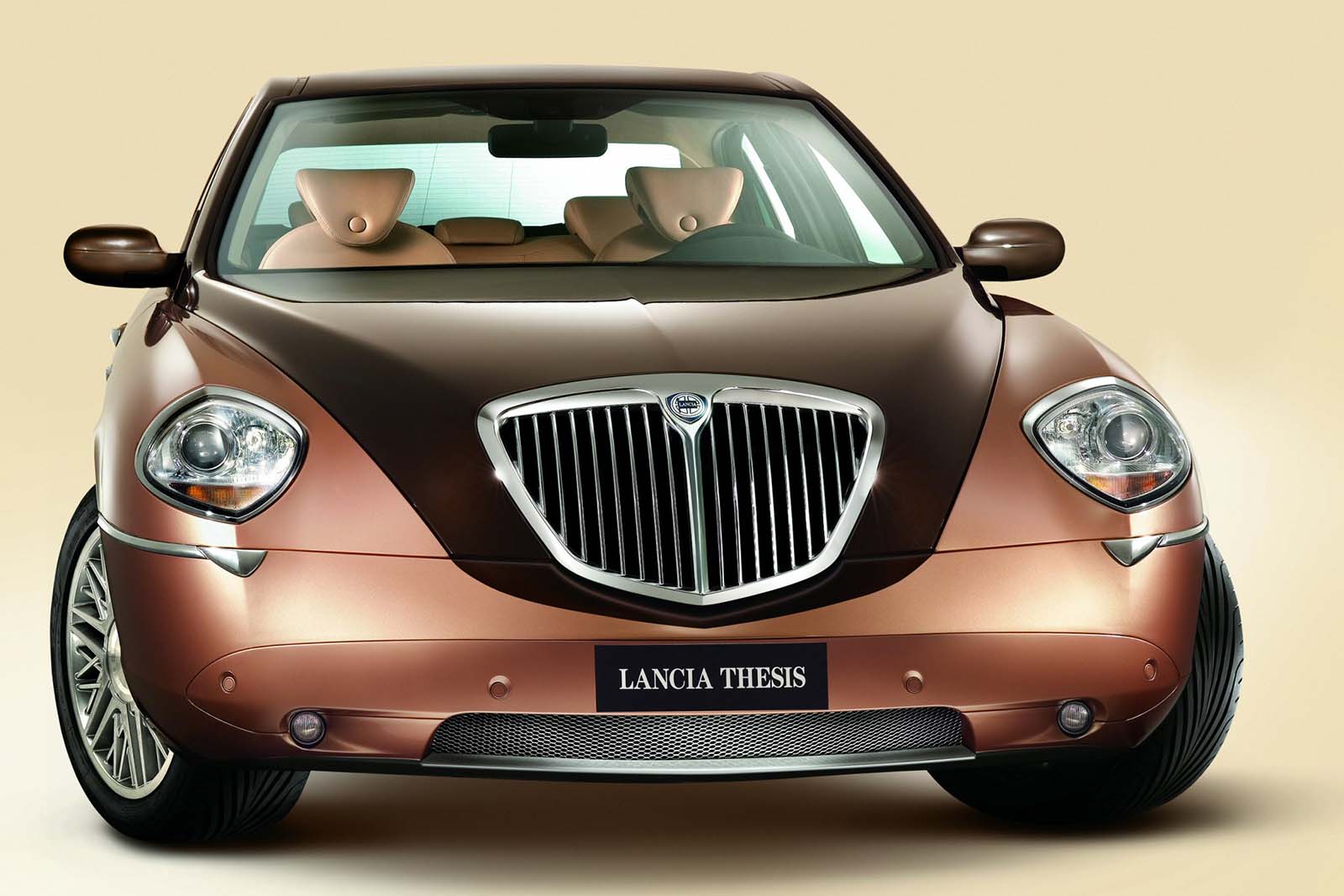
From the front its chrome Lancia grille resembles a medieval shield, and from the rear, where the translucent glow of some rather gothic tail-lights give it a look like no other car on the road.
Piggy in the middle
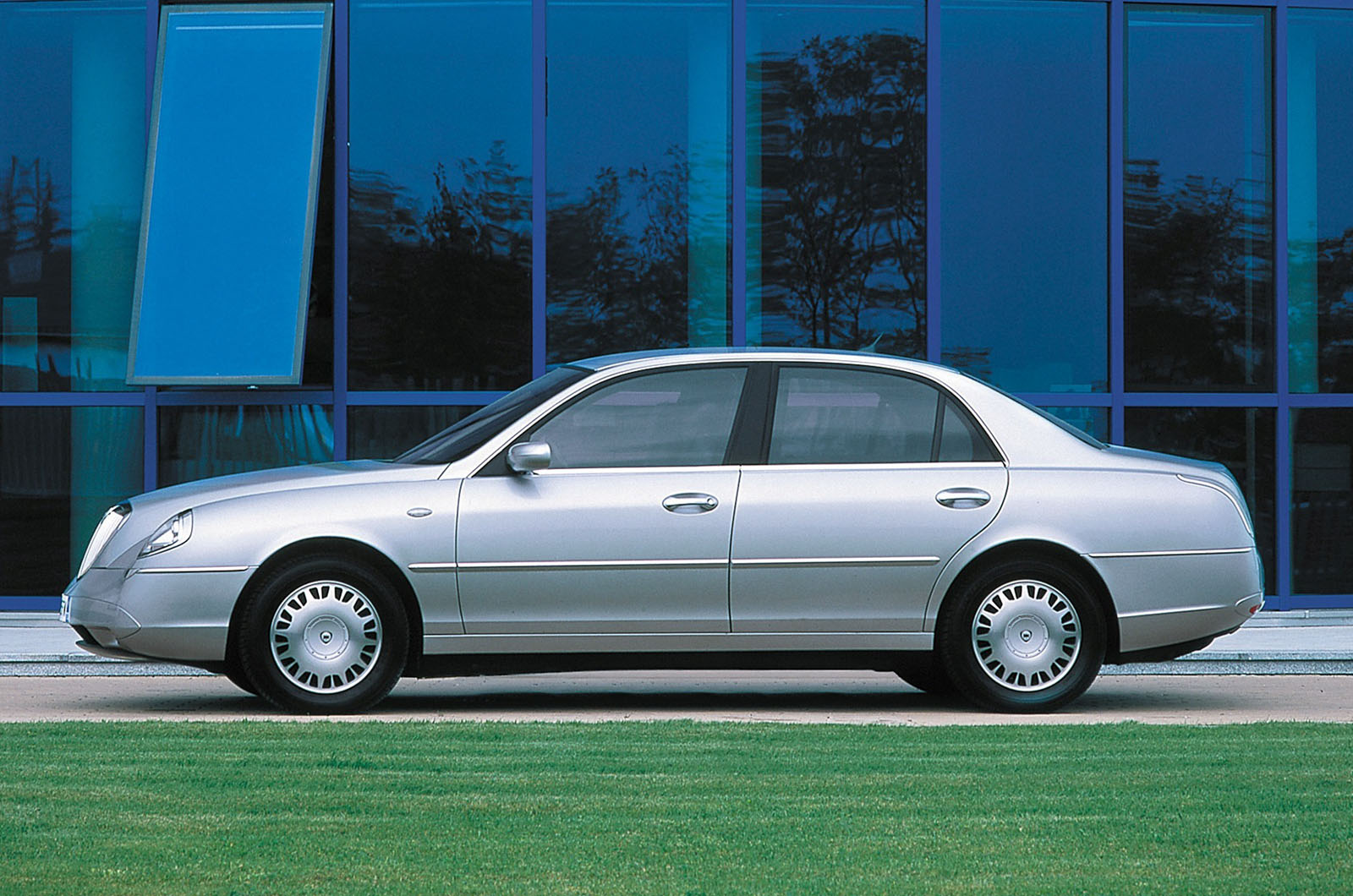
From the side, however, the Thesis is a car of three parts, its distinctive nose and tail sandwiching one of the dullest centre sections of any executive car on the road. Which is a pity.
Concept
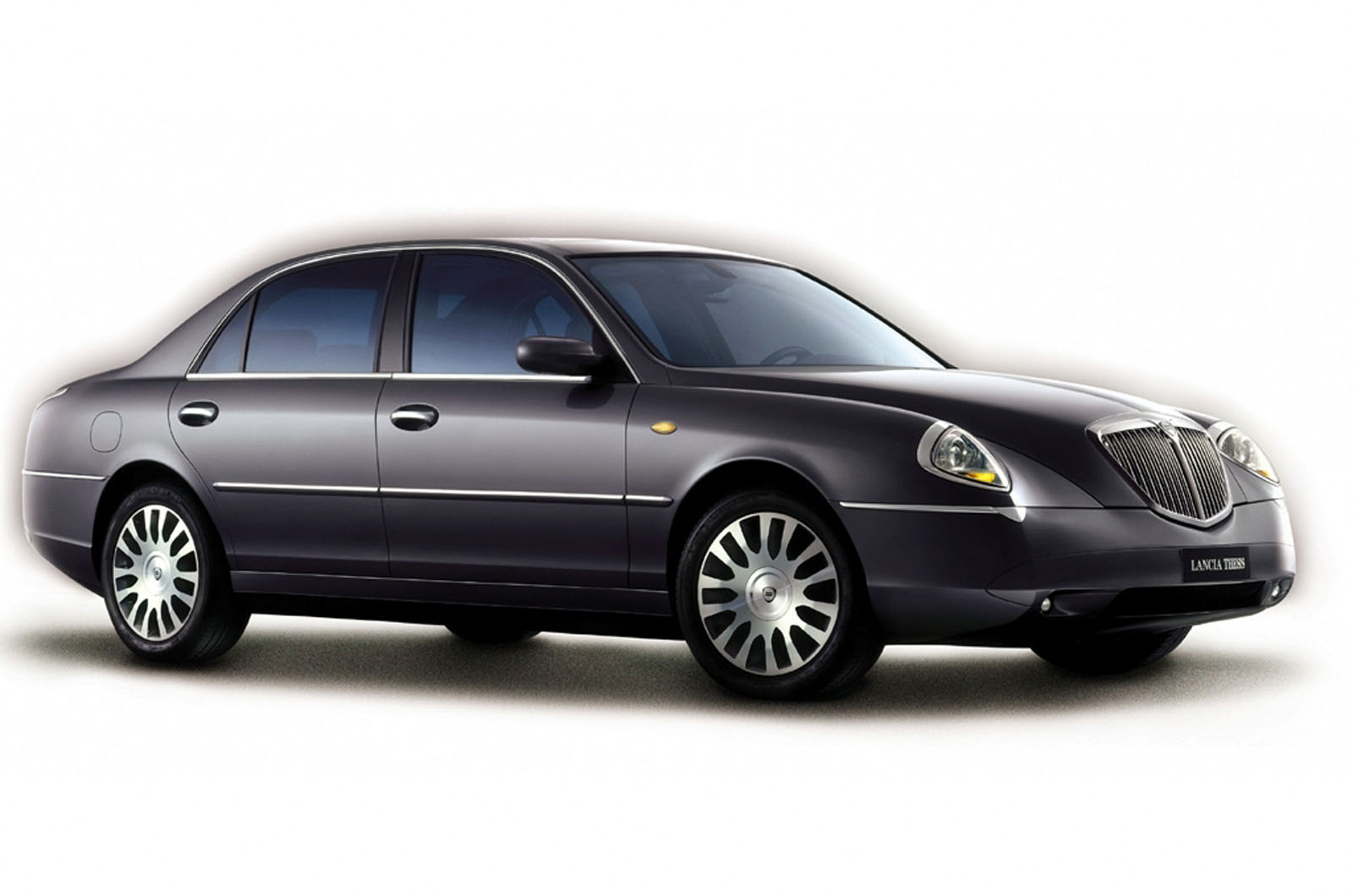
Such dullness is all the more disappointing given the design origins of the Thesis – pronounced ‘tay-sis’, rather than as per the lengthy academic tract - which stemmed from a striking 1998 concept called Dialogos.
This car’s clean flanks, wooden floor, subtly sculpted dashboard and suicide-rear-doors promised something refreshing, but Lancia’s nerve faltered, the production version trading the subtle curviness of the original vision for banality instead.
Beauty on the inside
Given that Lancia’s biggest barely registers on any sales graph featuring the 5 Series, E Class and A6, it might just as well have gone the whole way and produced something really different.
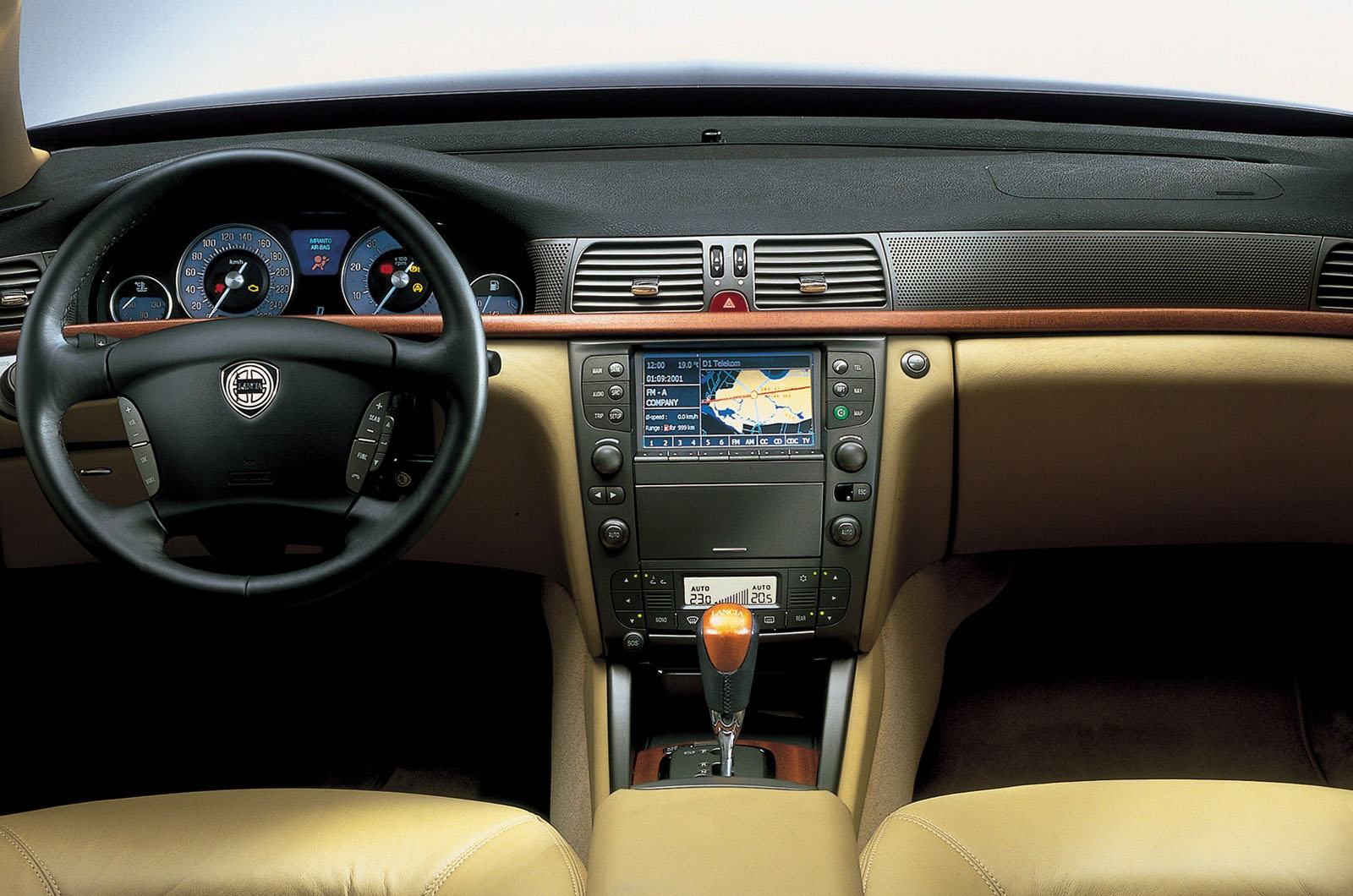
Especially as the Thesis feels pretty special inside, despite the loss of the concept’s (admittedly impractical) wooden floor and smooth-contoured seating.
Sparely deployed wood, cream-faced instruments and richly upholstered seats make this Lancia a car you want to get in as do the heated and cooled massage seats that can be optionally installed front and rear.
Forbidden fruit
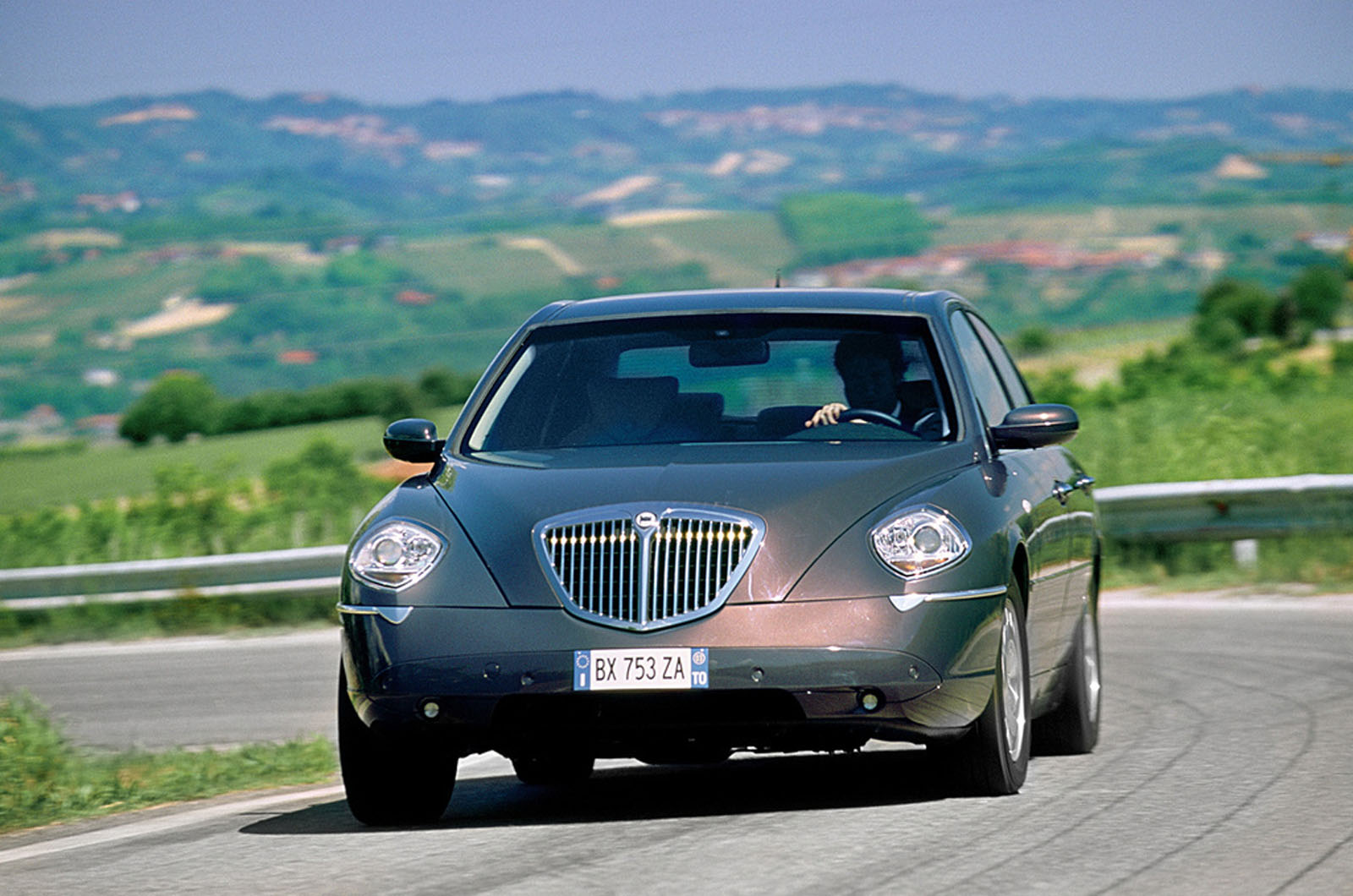
The Thesis’s non-availability in the UK meant that I had a long wait, after its 2001 launch, before sampling its charms, and then only as a passenger. But that was enough to discover whether it was burdened with a problem afflicting almost every Fiat Auto product of the day, which was an inability to absorb sharp, transverse ridges like motorway expansion strips without firing a creaky judder through the dashboard.
Disappointment
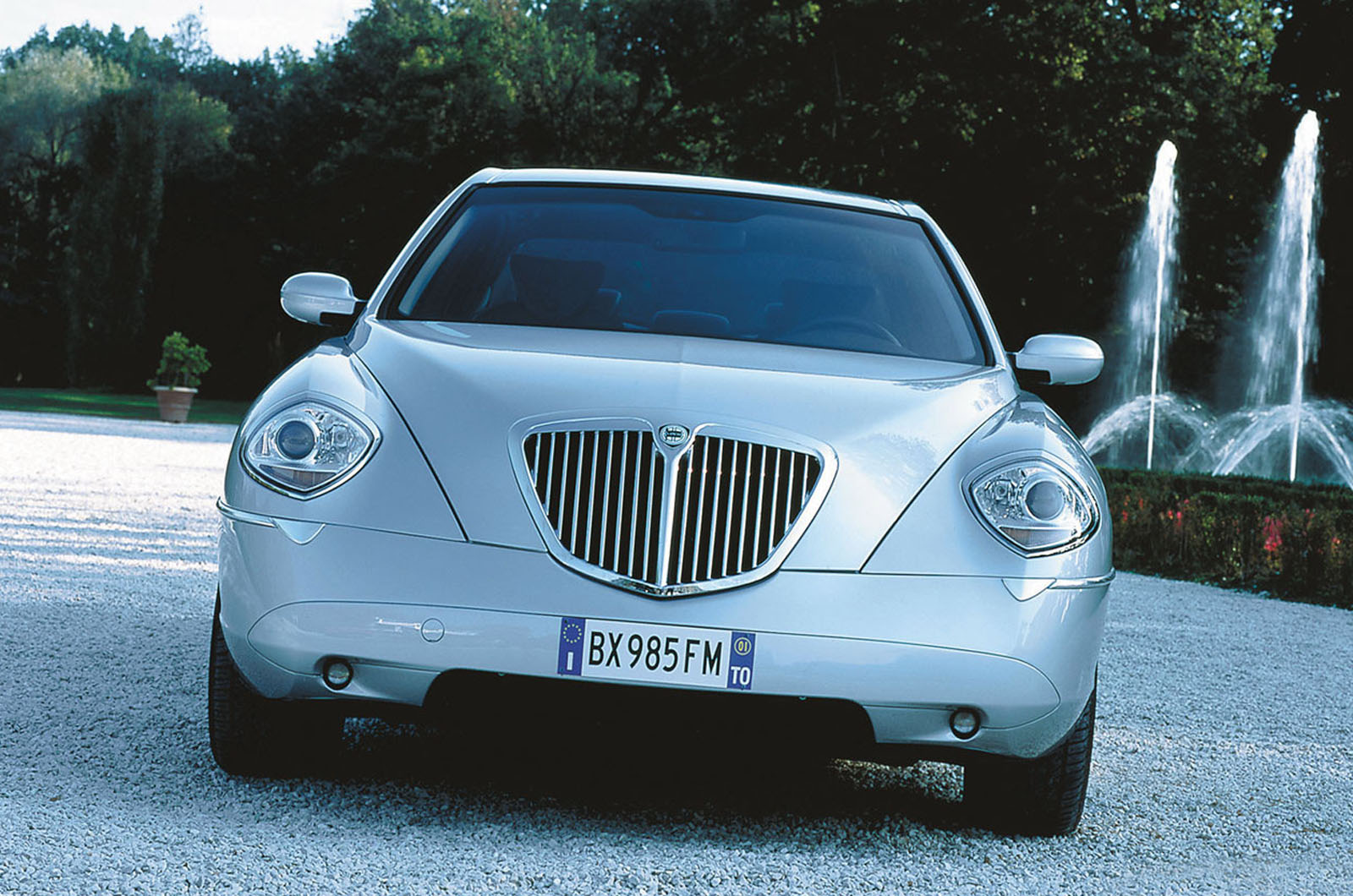
That might sound a ludicrously arcane basis on which to judge a car, but the aura of mild flimsiness provoked by this flaw was one I hoped this more substantially assembled Lancia would be free of. Within minutes of climbing aboard a Thesis at Turin airport I had my answer – it soon hit an autostrada expansion strip, and I heard the faint plastic crack of a dashboard quivering with a tremor that the suspension had failed to suppress. Oh, the disappointment.
Mild yearning

A couple of years later I got to actually drive a Thesis, and discovered a car not much more able in the bend-bashing department. But those beguiling tail-lights and that classy Italian cabin make this a saloon that I have a mild yearning for - especially as they're so rare.
Consequently we couldn't find any Thesis' for sale in the UK today. But in Italy cars are available at less than €10,000 for a clean example. Tempted?

Car Tracking Devices Reveal Hidden Security Risks but Real-World Hacking Threat Remains Low

Gas Prices Shift Public Opinion on Middle East Conflict


L&L Classic Auto Salvage Yard Reveals the Forgotten Diversity and Rarity of American Automotive...
 The world’s finest junkyard? Gems from L&L Classic Auto in Wendell, Idaho
L&L Classic Auto of Wendell, Idaho, is surely one of the world’s greatest salvage yards, and definitely one of the US’s biggest vintage car specialists.
The yard was founded in 1968, and has more than 8000 parts vehicles spread over its sprawling 120-acre site, ranging in age from the 1920s to the 1990s. Additionally there are more than 400 project cars for sale, and several warehouses packed full of spare parts.
Aerial
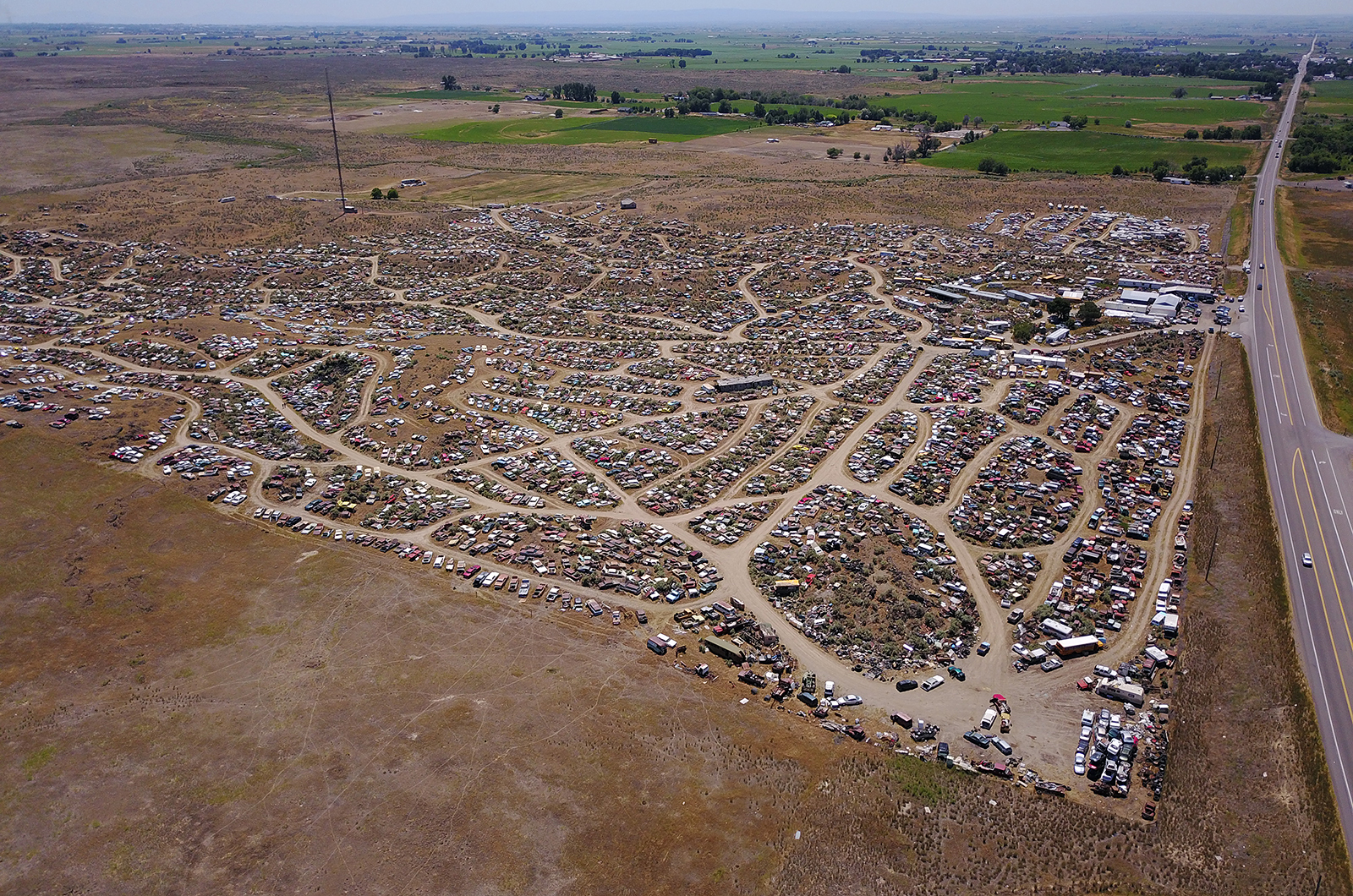
We spent several pleasurable hours exploring L&L Classic Auto, but as you can see from this aerial photograph, we would have needed several days to have done the place justice. There is very little order to the stock, and you never know what gems you’re going to uncover down the next dirt track, or lurking behind the numerous rocky outcrops and shrubs that litter this incredible yard.
Cadillac hearse 1954
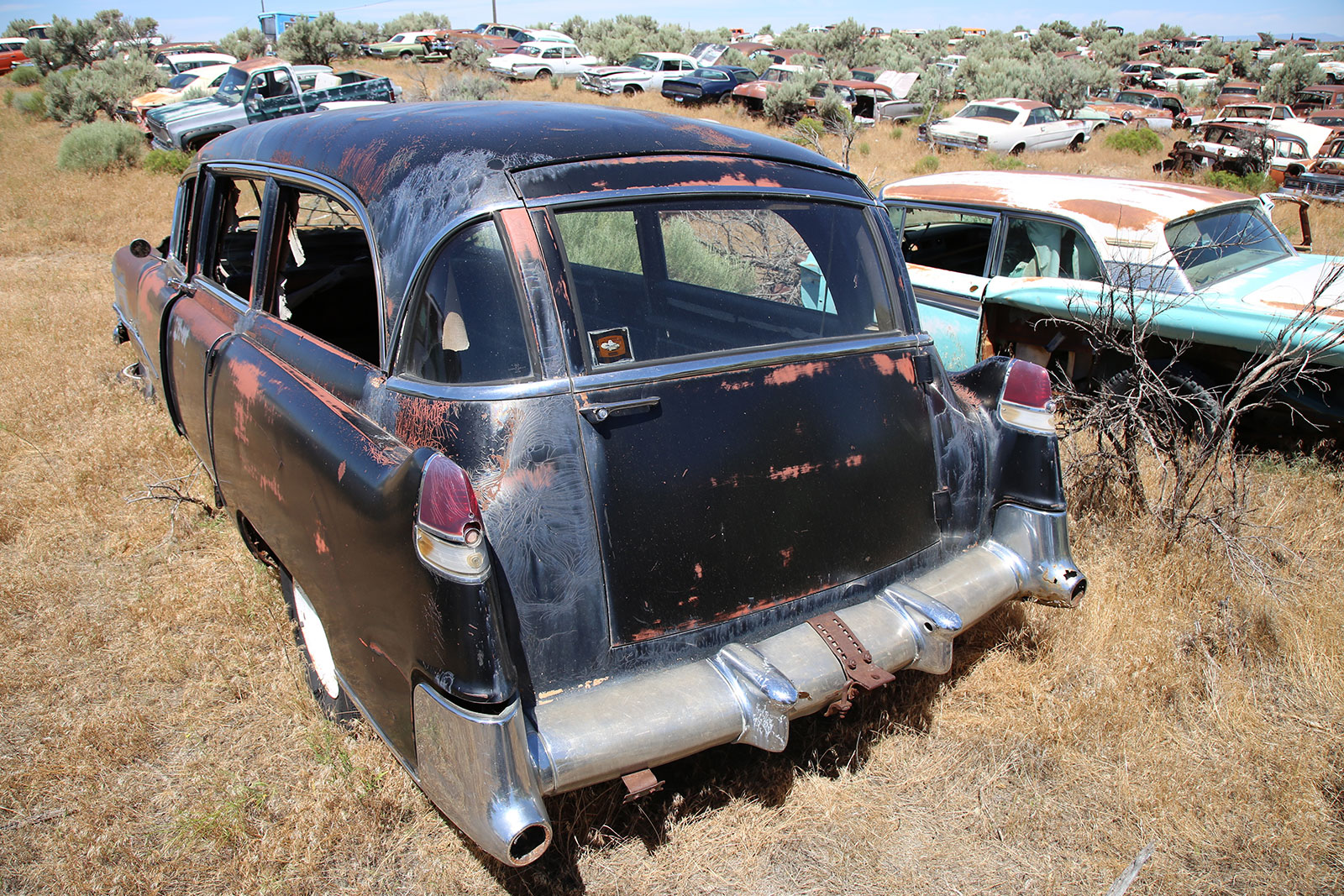
L&L Classic Auto is asking $5500 for this extremely solid 1954 S&S Cadillac hearse. Although it’s missing its driveline, that’s probably not a bad price, considering how rare it is. After all, just 1611 commercial chassis were sold to bodybuilders that year for conversion into ambulances, hearses and flower cars. This one was initially built for a San Francisco-based customer.
Ford Anglia 100E 1953
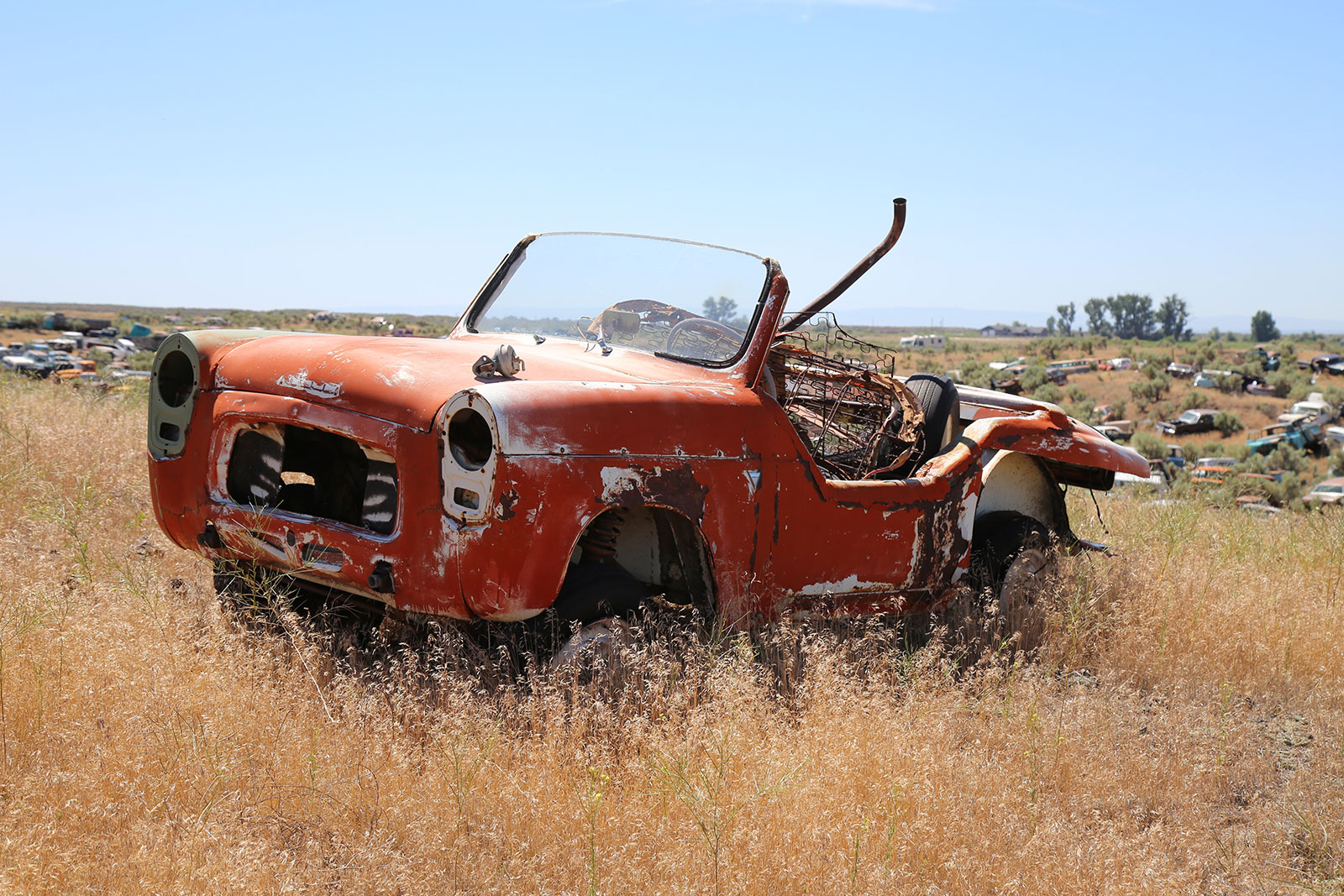
It looks like someone has taken a can-opener to this British-built Ford Anglia 100E. Look at the shape of the door. It makes us think that whoever created this monstrosity was attempting to replicate a Nash Metropolitan’s styling.
More than 100,000 of these cars were built between 1953 and 1959.
Cadillac Coupe de Ville 1977
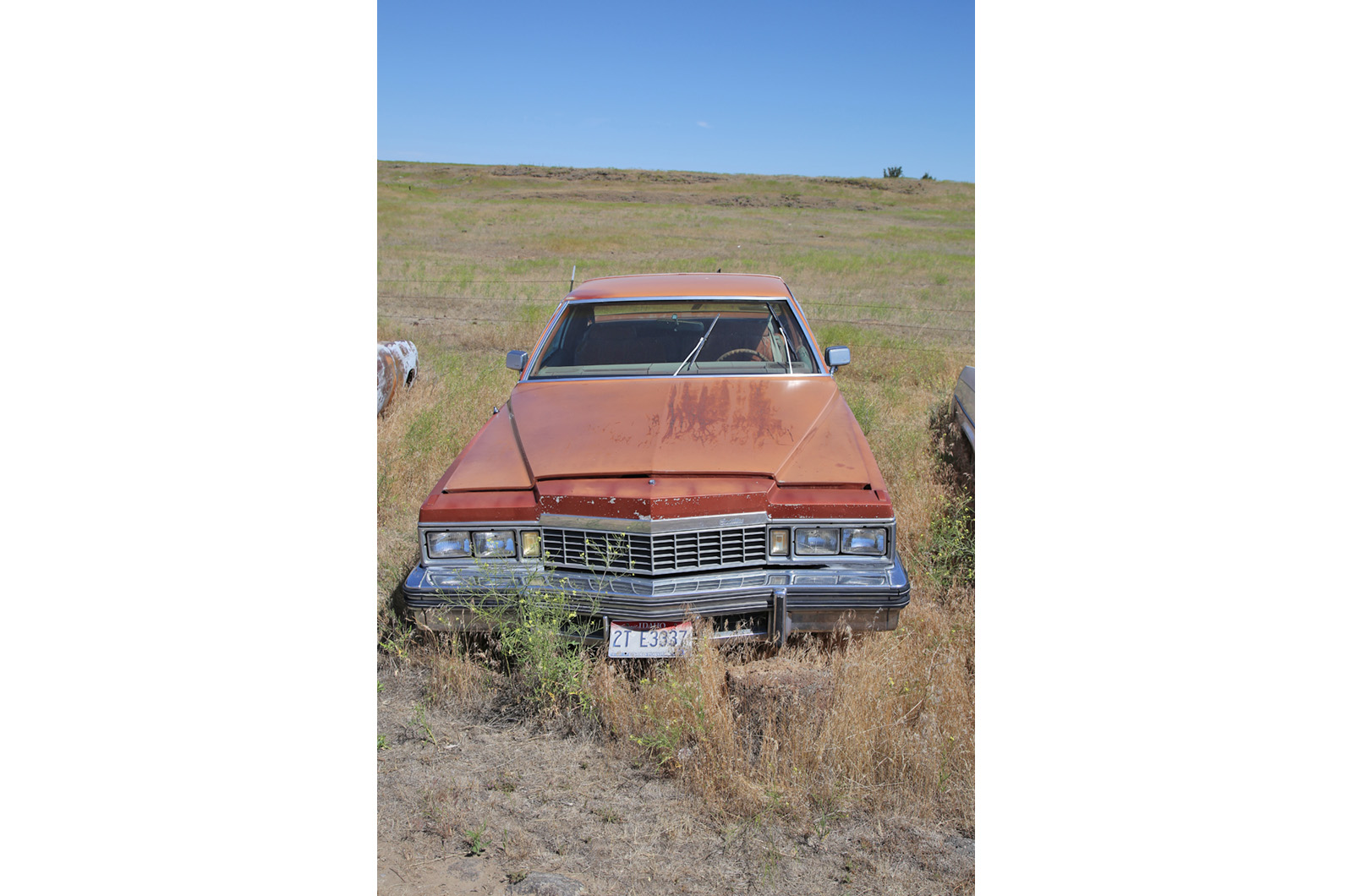
Wendell, Idaho gets an average of just 10in of rain per year, compared with a national average of 38in, which is why the cars at L&L Classic Auto tend to be so solid.
That said, judging by the position of its windshield wipers, it must have been raining on the day that this 1977 Cadillac Coupe de Ville took its final journey. Billed as “The next generation of the luxury car”, the 1977 Cadillacs were smaller and lighter than their predecessors.
Oldsmobile Custom Cruiser 1981
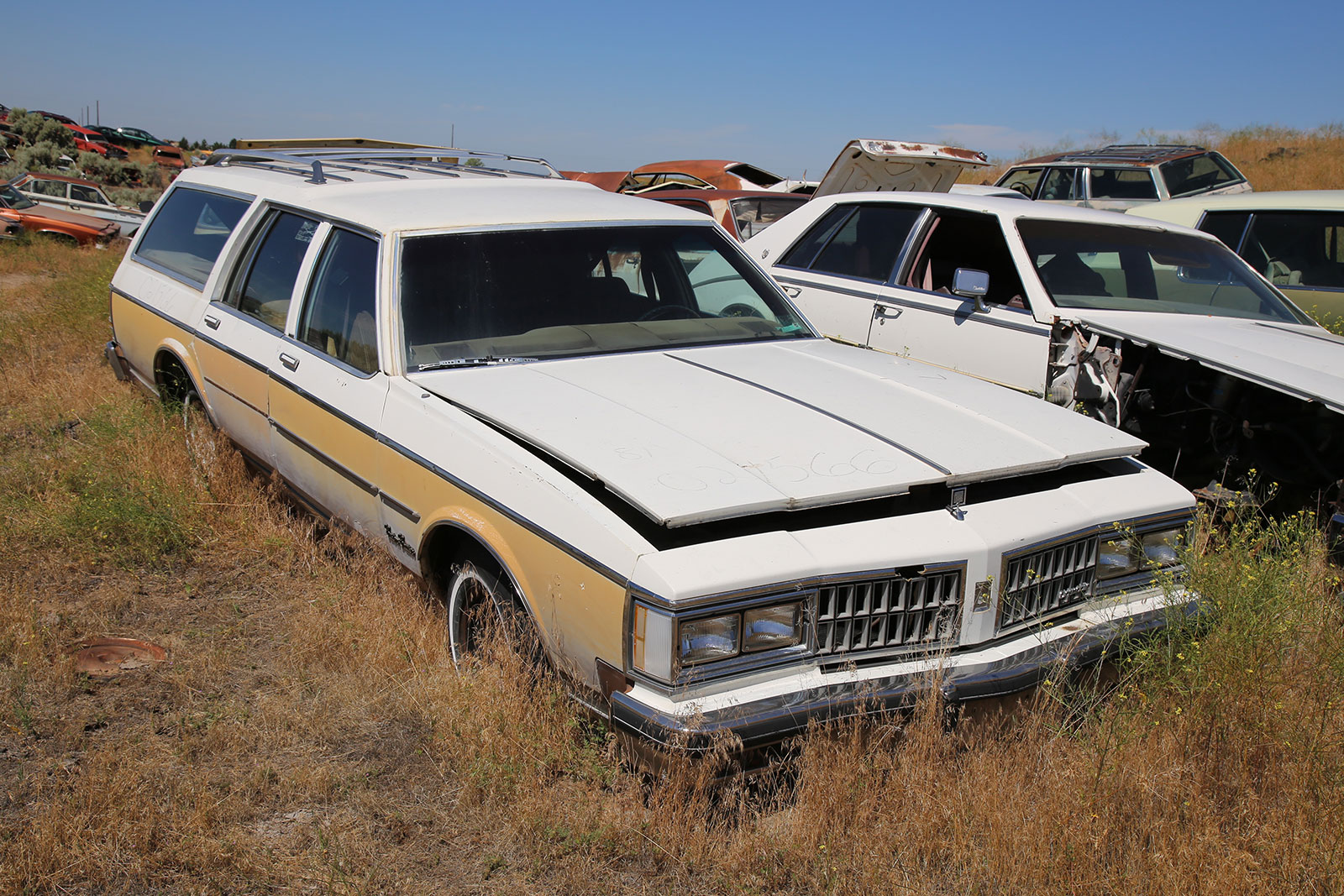
Between 1978 and 1985 Oldsmobile offered diesel engines, as fitted to this 1981 Custom Cruiser.
Although the V6 and V8 units were initially popular, peaking at 310,000 units in 1981, reliability issues ensured that their success was short-lived. In fact they arguably did enough damage to tarnish the fuel’s reputation in the US for car for the next three decades – at which point another scandal came along, this time courtesy of Volkswagen…
AMC Pacer 1979
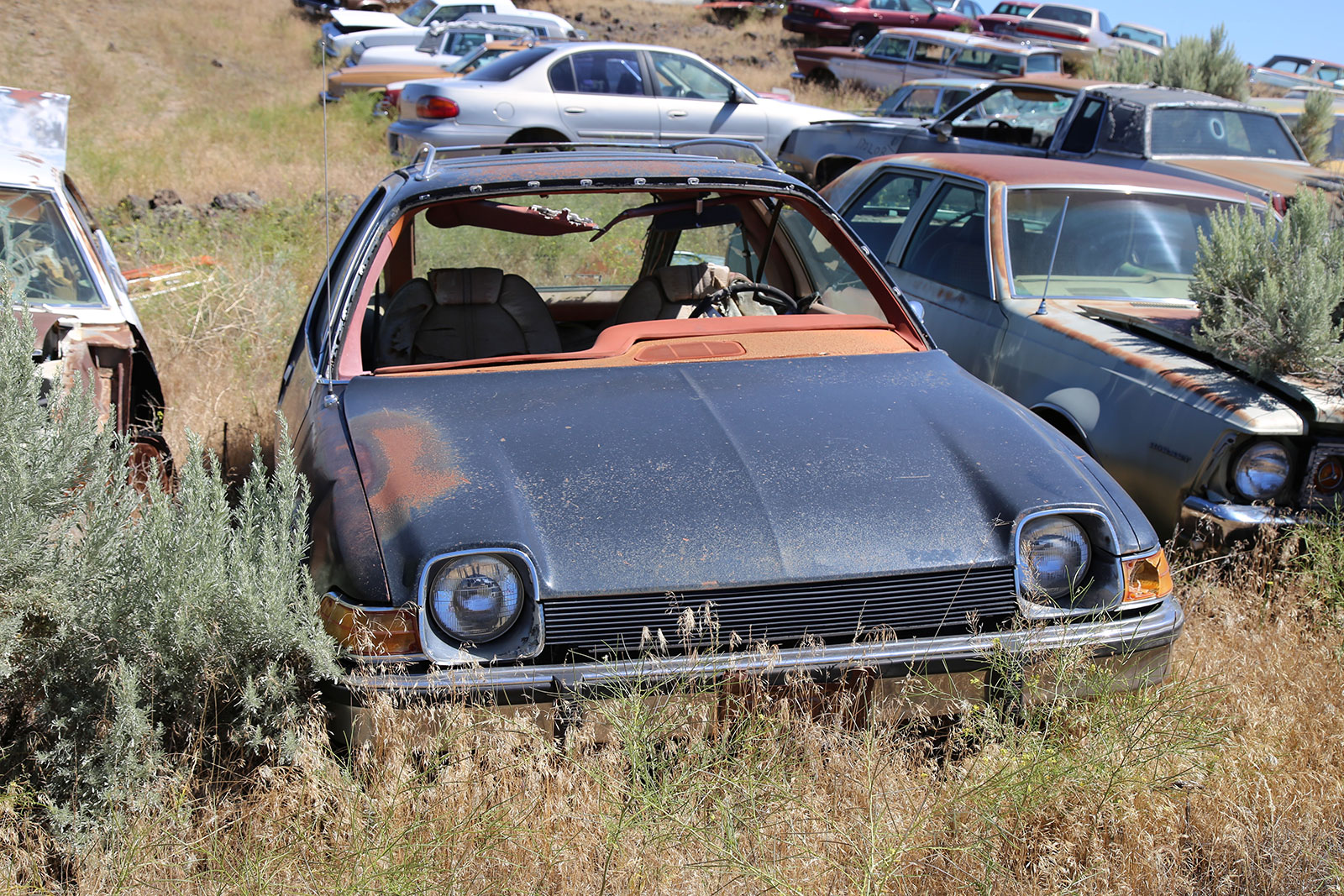
‘Glass egg’, ‘pregnant guppy’, ‘glassmobile’, ‘pacemaker’ and ‘fishbowl on wheels’, were some of the more popular nicknames the AMC Pacer picked up over the years. But beauty is only skin deep, and between 1975 and 1980 a total of 280,000 people were prepared to overlook its aesthetically challenged exterior, and take ownership of a new one.
According to the scribbling on the side of this car, it was built in 1979.
Cadillac Catera
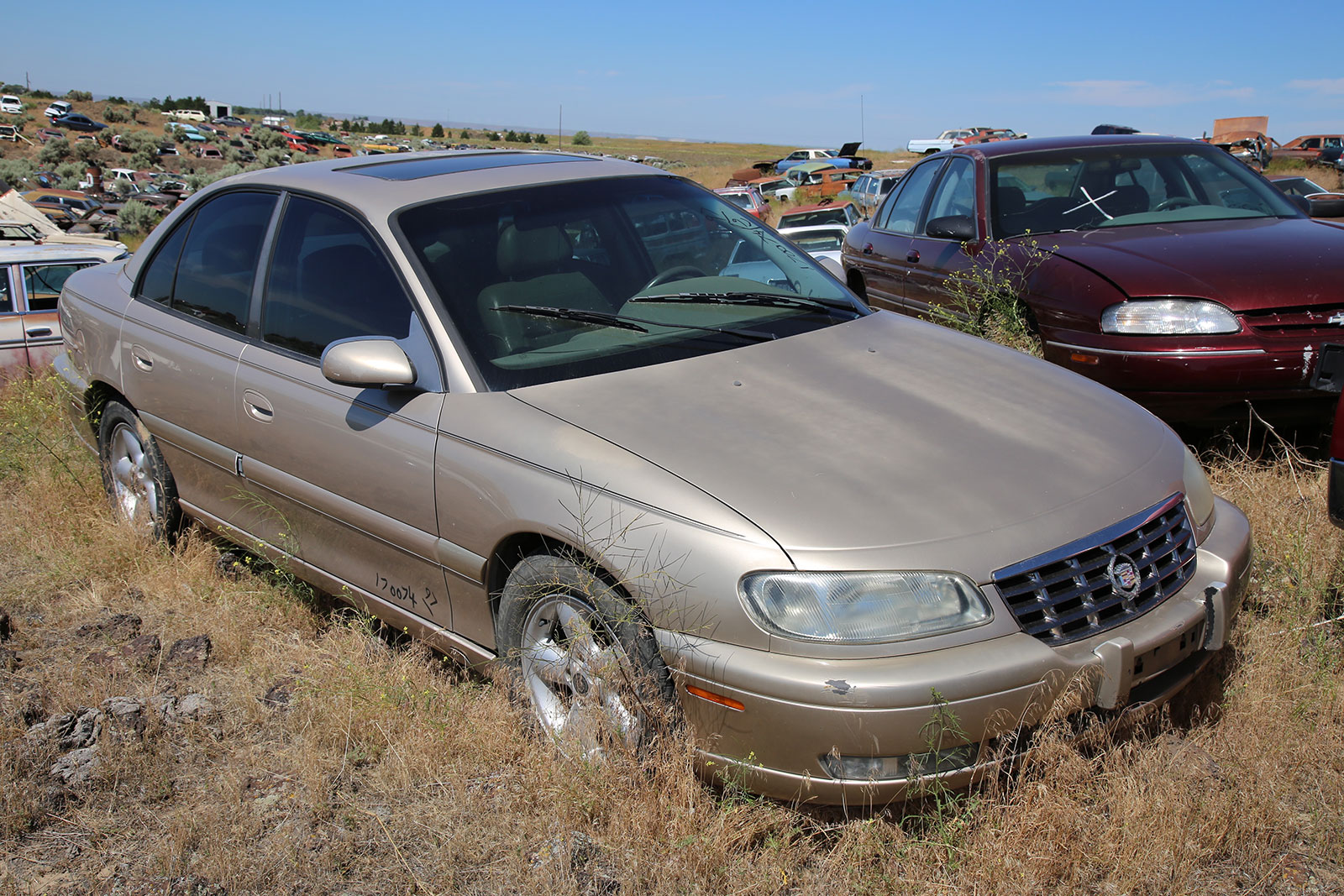
Like us, you’d probably forgotten all about the Cadillac Catera, which isn’t surprising considering that less than 100,000 were sold between 1996 and 2001. Built by General Motors in Germany, and badged as an Opel or Vauxhall Omega in Europe, these cars featured a UK-sourced 3-litre V6 engine.
This is one of 25,411 that hit the road in 1997, its most successful year.
AMC Eagle 1980
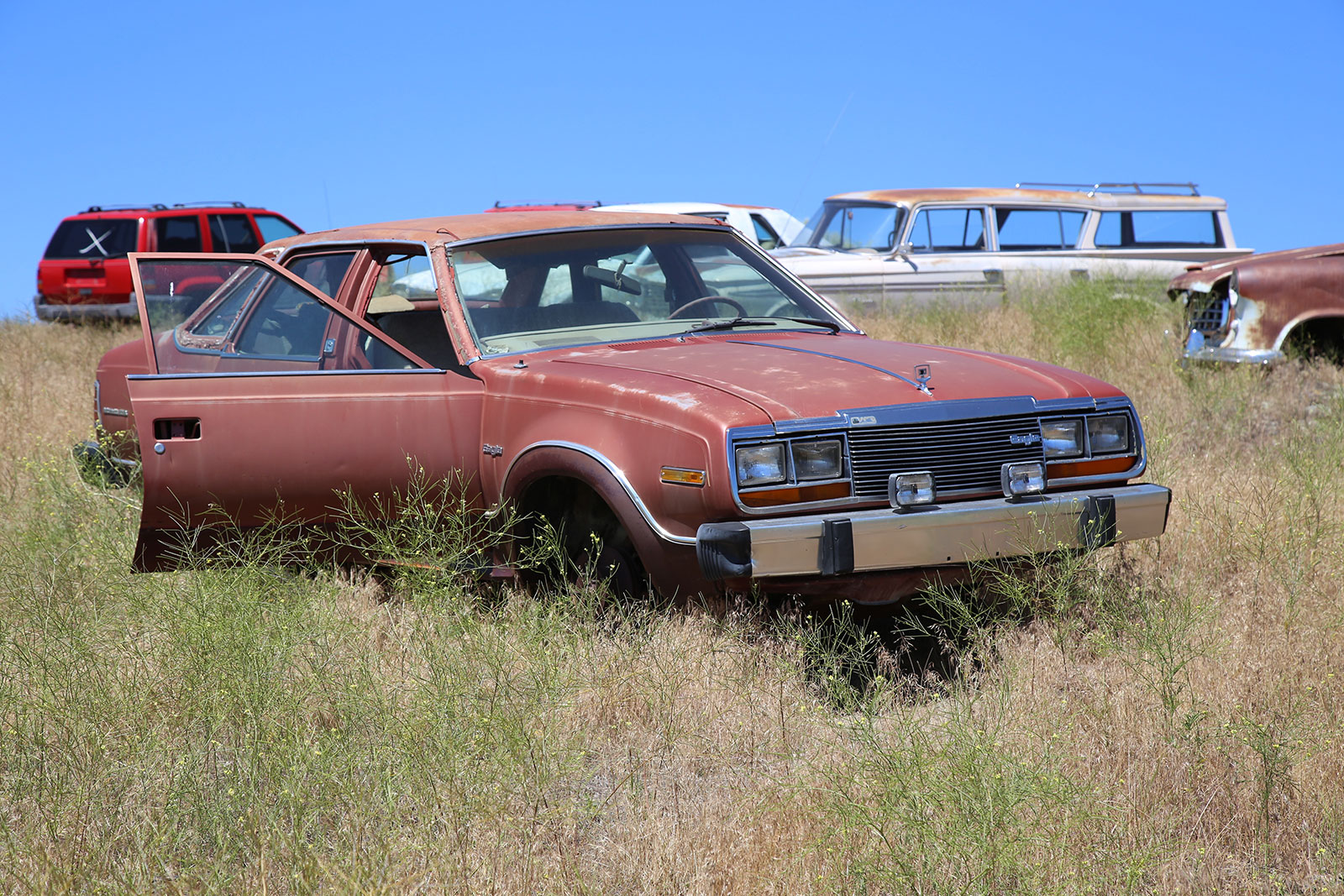
Who would have thought that cash-starved AMC would spawn an entirely new class of car? But that’s exactly what happened in 1979, when it launched the four-wheel-drive Eagle.
It’s just a pity that the world’s first crossover vehicle was about 30 years ahead of its time. This four-door sedan appears to be a 1980 car, one of nearly 10,000 built in its first year of production.
Lincoln Continental MKIII 1971
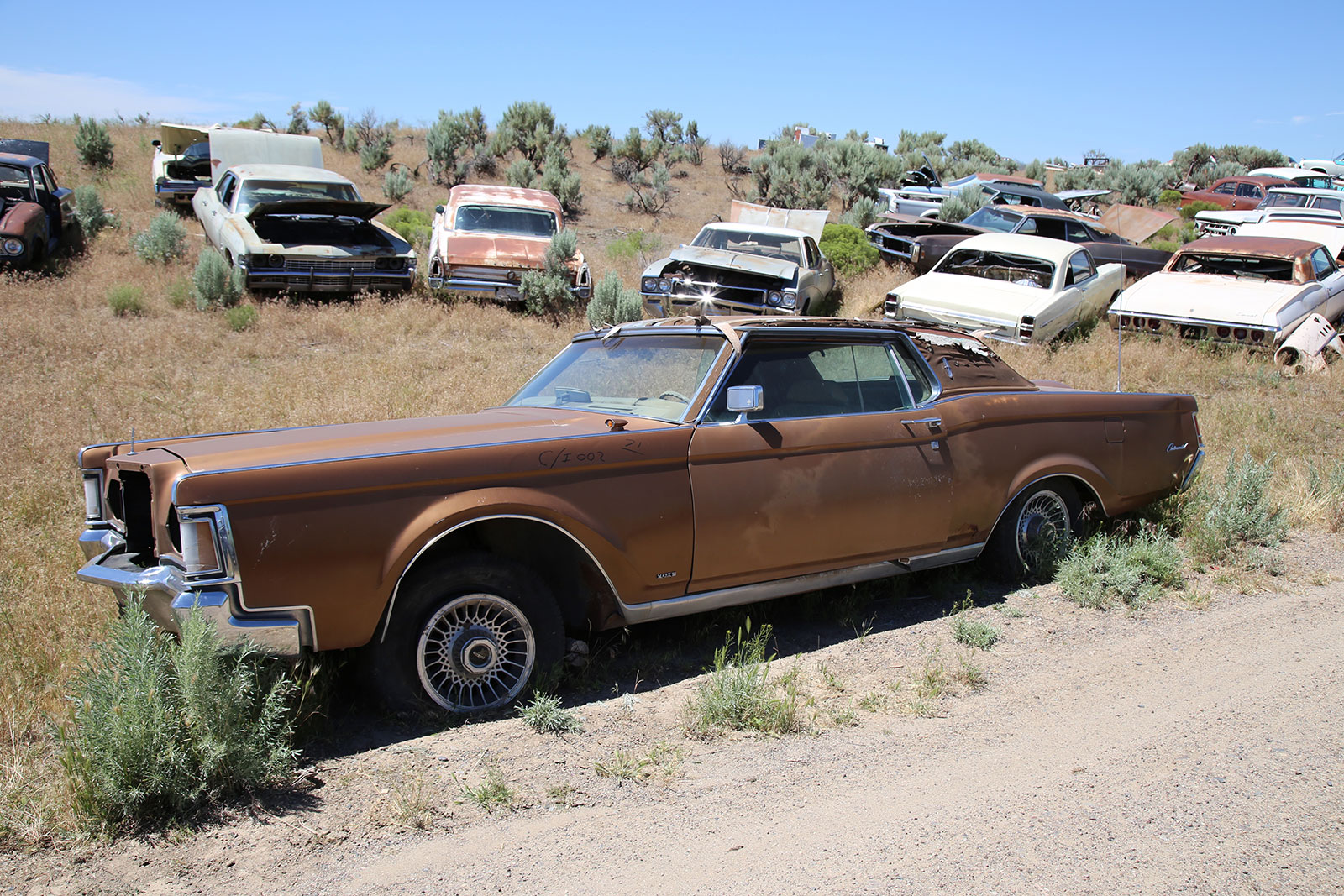
The Lincoln Continental MkIII two-door hardtop coupe, Ford’s flagship vehicle at the time, apparently came about when Ford vice-president Lee Iacocca instructed the designers to put a Rolls-Royce grille on a Thunderbird. Unfortunately, the grille is missing from this 1971 example.
DeSoto Fireflite Sportsman 1957
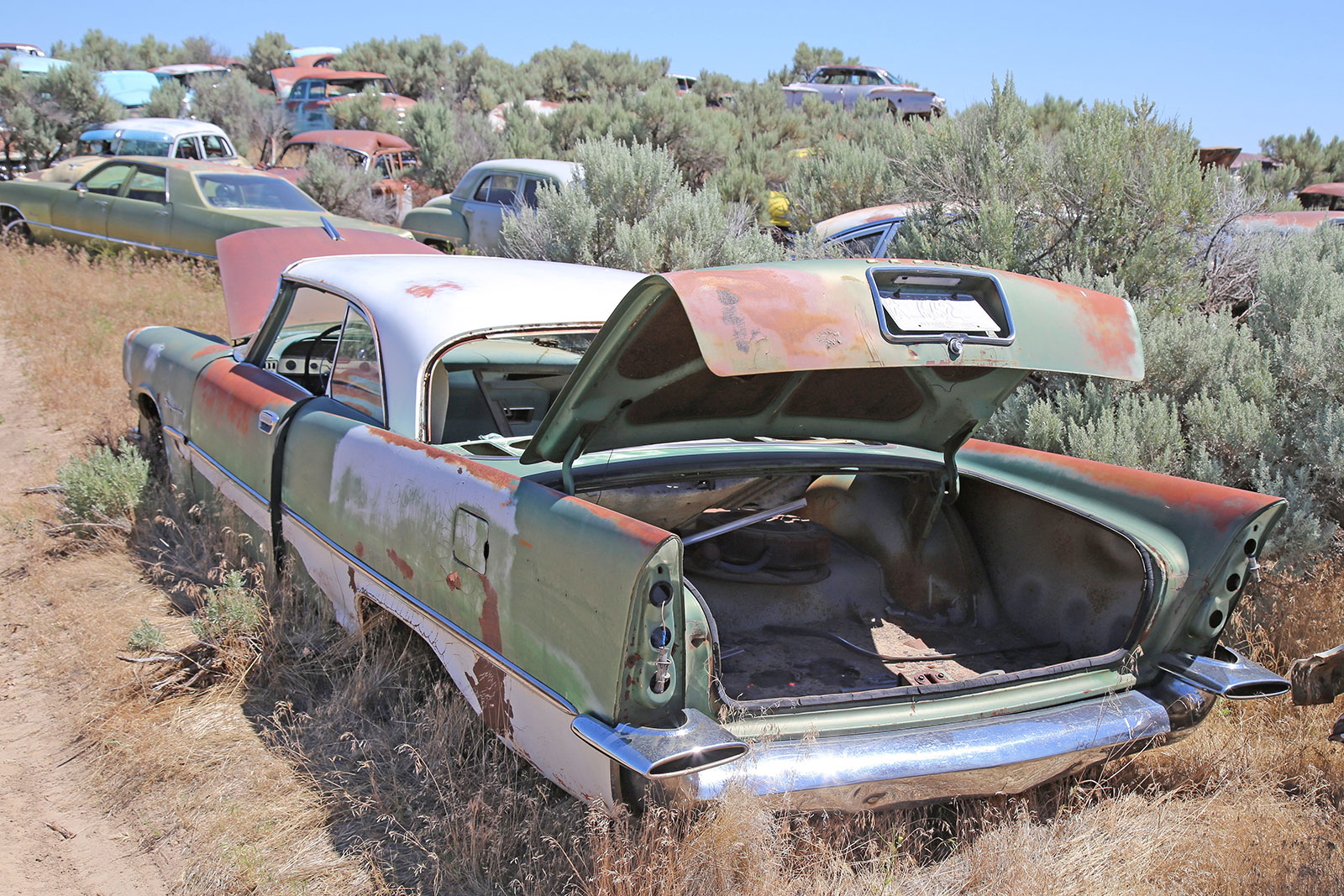
The Fireflite was introduced in 1955 as DeSoto’s top-trim car.
However, in 1957 when this Sportsman hardtop was built, the Adventurer had taken over the top spot. Of the 28,430 Fireflites to find buyers, less than 7217 were Sportsman hardtops, making this a genuine rarity.
Jeep SJ 1974
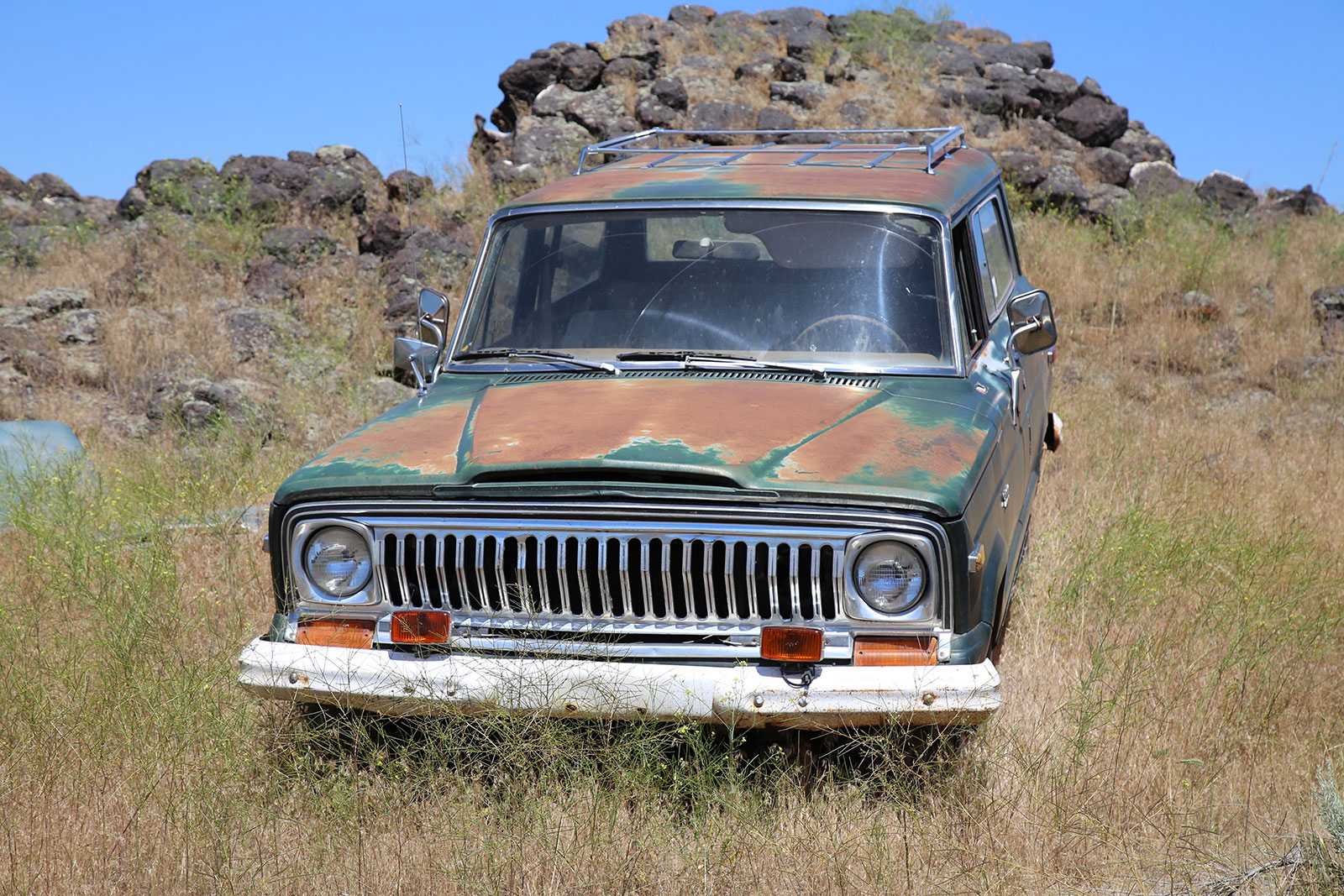
Hidden behind one of numerous rocky outcrops, we discovered this reasonably tidy 1974 Jeep Cherokee SJ.
We wonder why it ended up here, and more puzzling still is why it hasn’t been rescued yet. Built between 1974 and 1983, the SJ was basically a two-door version of the Wagoneer. In 1974 Jeep used the term Sports Utility Vehicle for the very first time.
Rambler Station Wagon 1962
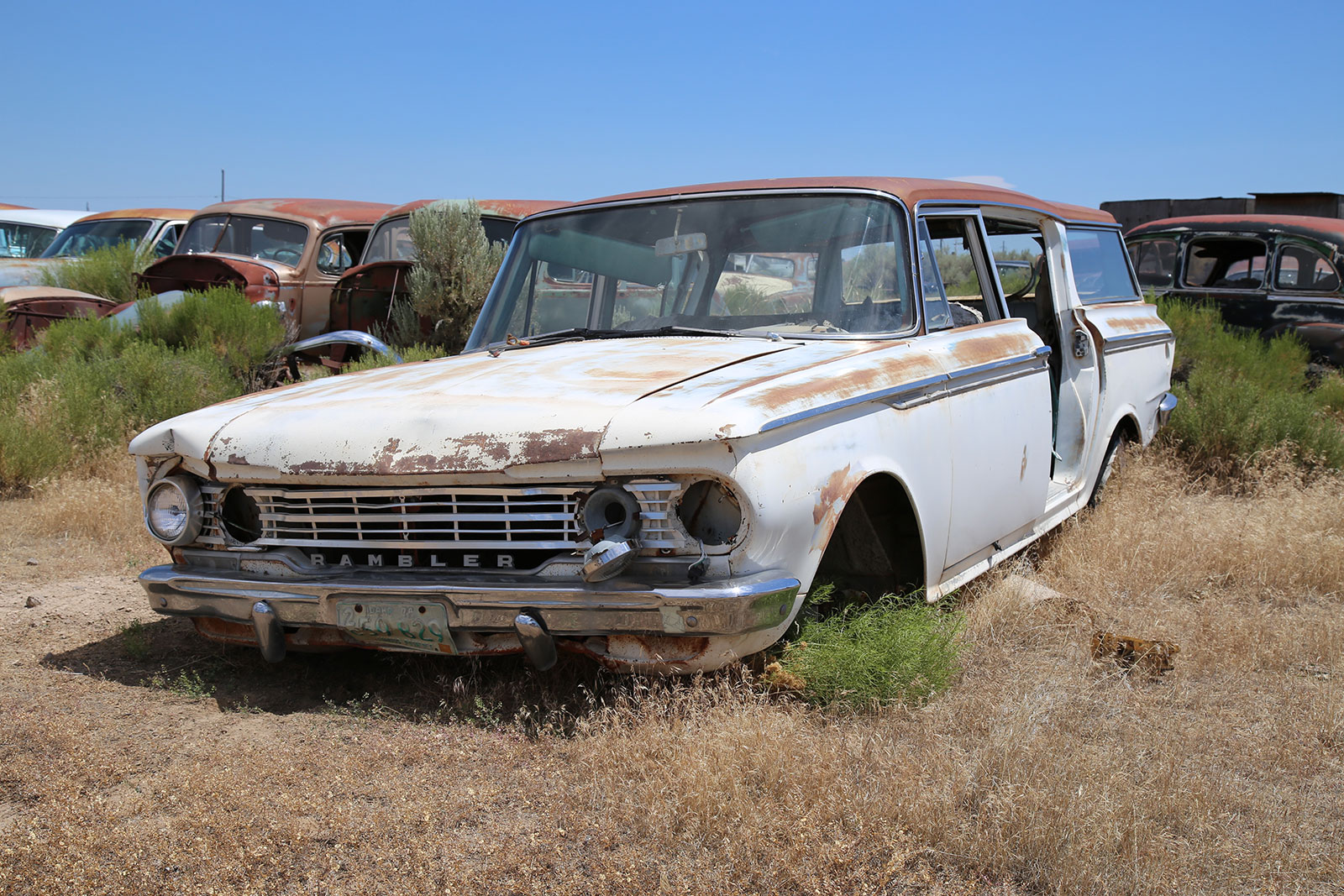
In the early 1960s AMC was on a high, and its Rambler brand was consistently the third or fourth best-selling make of car in the US. But the position wasn’t tenable, and a decade later AMC had dropped to ninth place.
This Rambler Classic is one of 100,000 four-door station wagons built in 1962.
Opel GT 1968
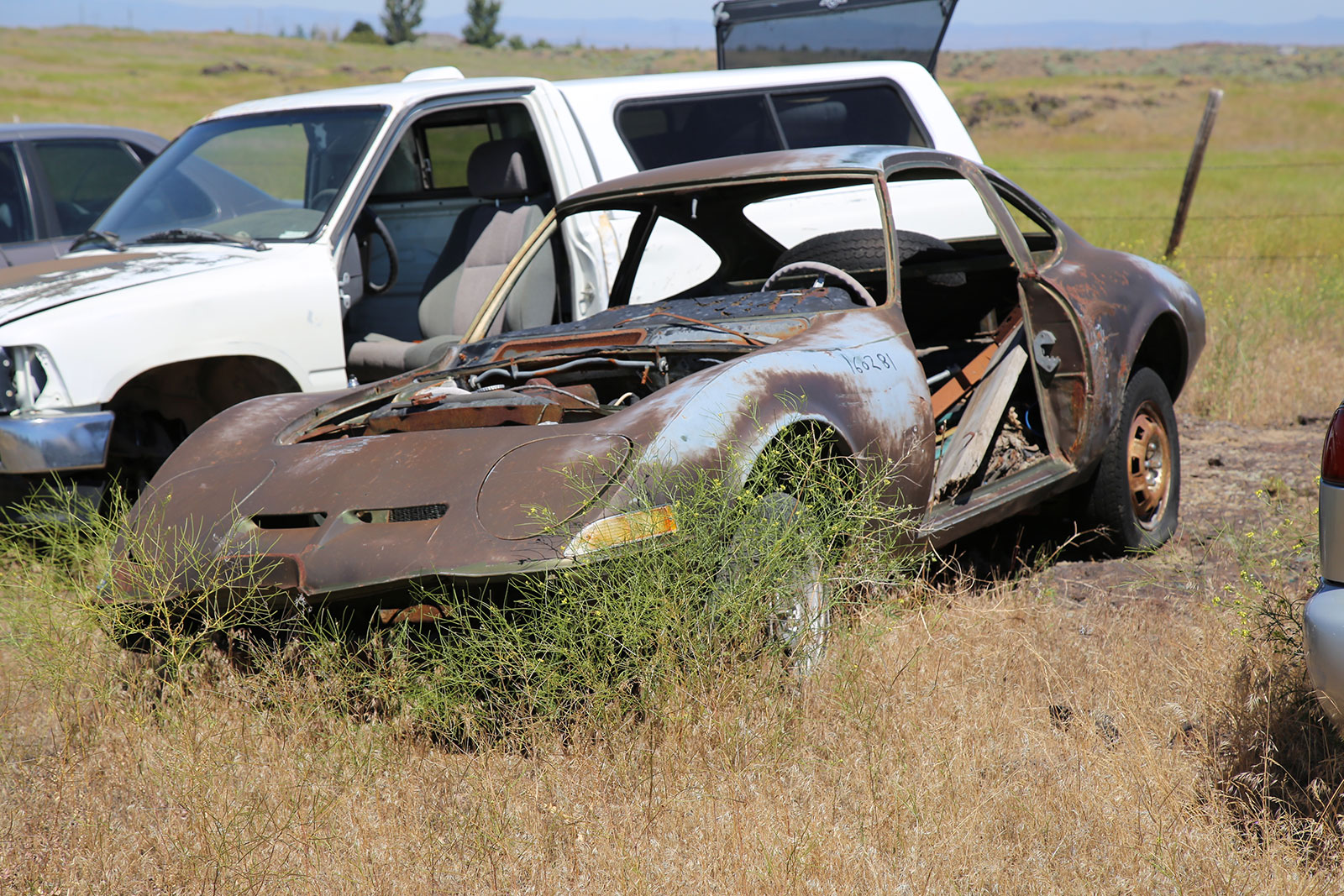
German car-maker Opel, which was owned by General Motors between 1929 and 2017, turned a few heads at the 1965 Frankfurt and Paris auto shows when it showed its GT concept car. It was well received, and three years later full production commenced.
Between 1968 and 1973, 103,463 of these attractive fastbacks were built, proving particularly popular in the US, where they were sold through Buick dealerships.
Plymouth Gold Duster
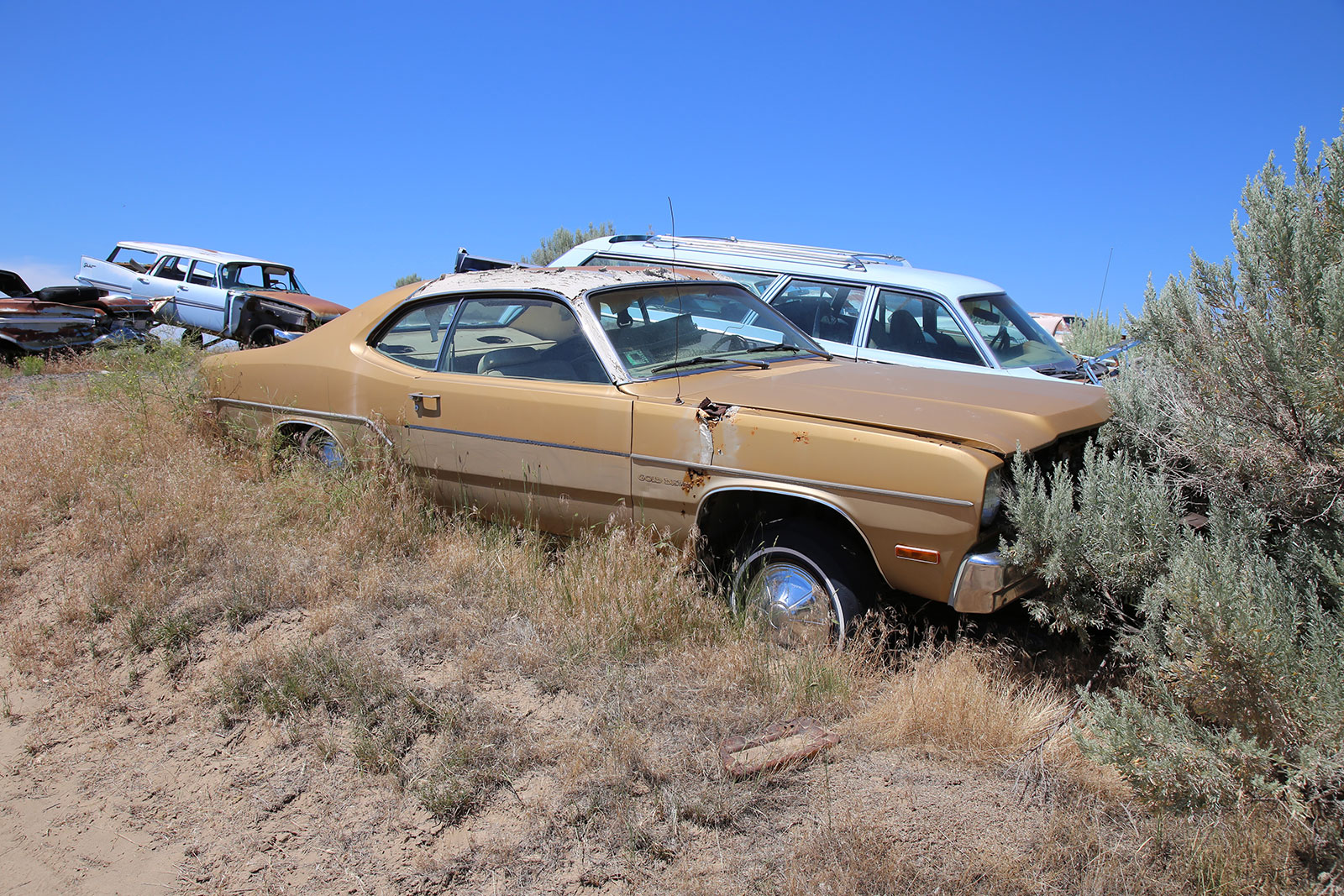
Over the years Plymouth made several special editions of the Duster, including the Feather Duster, Space Duster and this, the Gold Duster.
Introduced in 1970, amongst other things it featured distinctive decals,improved insulation, and plush carpets. But the pièce de résistance was a snakeskin pattern vinyl roof. But this car’s wire aerial and hole in the front fender weren’t part of the Gold Duster package…
Ford Cortina
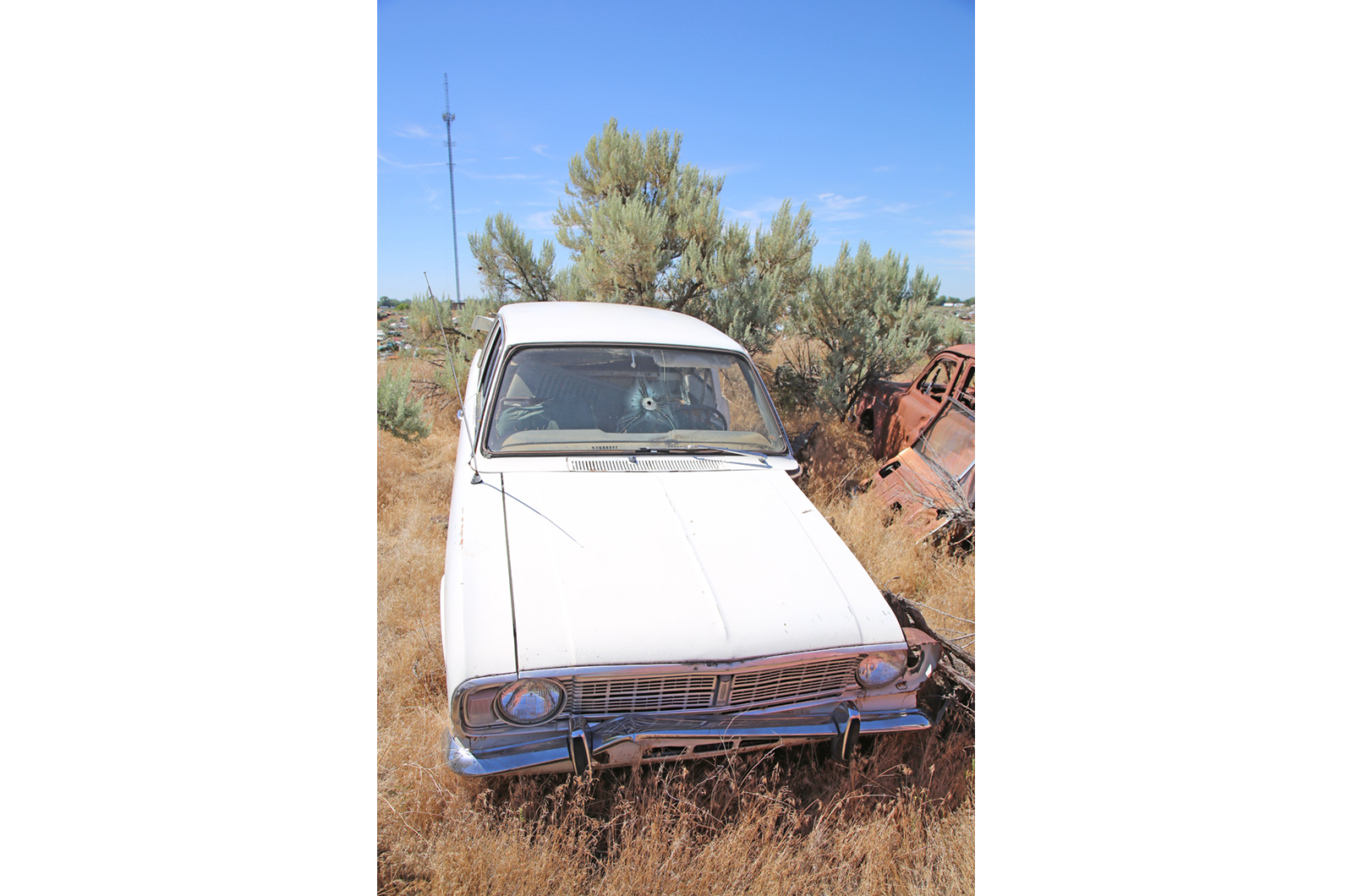
Relatively undesirable European imports, like this British-built two-door Mk2 Ford Cortina, can sit in salvage yards for years without yielding a single part. Surprisingly though, this one has actually donated one of its rust-free fenders.
The Mk2 Cortina was sold in the US between 1967 and 1970, achieving 60,000 sales. That might sound like a decent figure, but it was dwarfed by the Cortina’s small-car rival, the VW Beetle, which was consistently selling over 350,000 units per year in the late 1960s.
Desoto Custom 1948
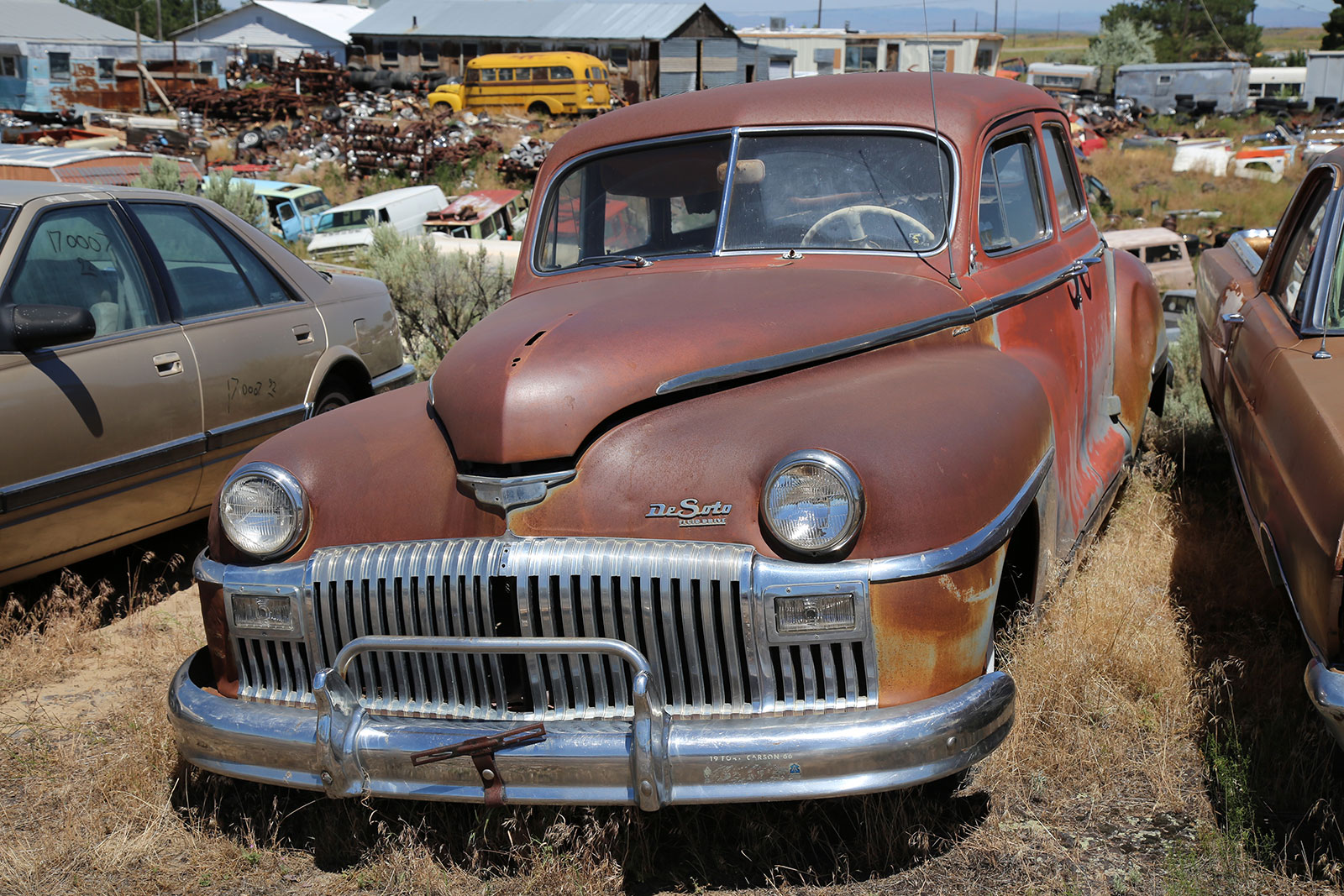
When it left the factory this 1948 DeSoto Custom four-door sedan was finished in Butterfly Blue, but there’s not much evidence of that color left. What we do have though is a very solid and complete restoration project.
The car’s inline six-cylinder motor still runs, and the optional semi-automatic Fluid Drive (with Tip-Toe shift) transmission is working. Admittedly the exterior has one or two battle scars, and there’s a smashed window, but other than a missing center grille piece and hood ornament it’s complete.
It’s a similar story inside, where just a sun visor, gear-shift knob and radio buttons are missing. It could be yours for $4500.
Chevrolet Corvair 1960
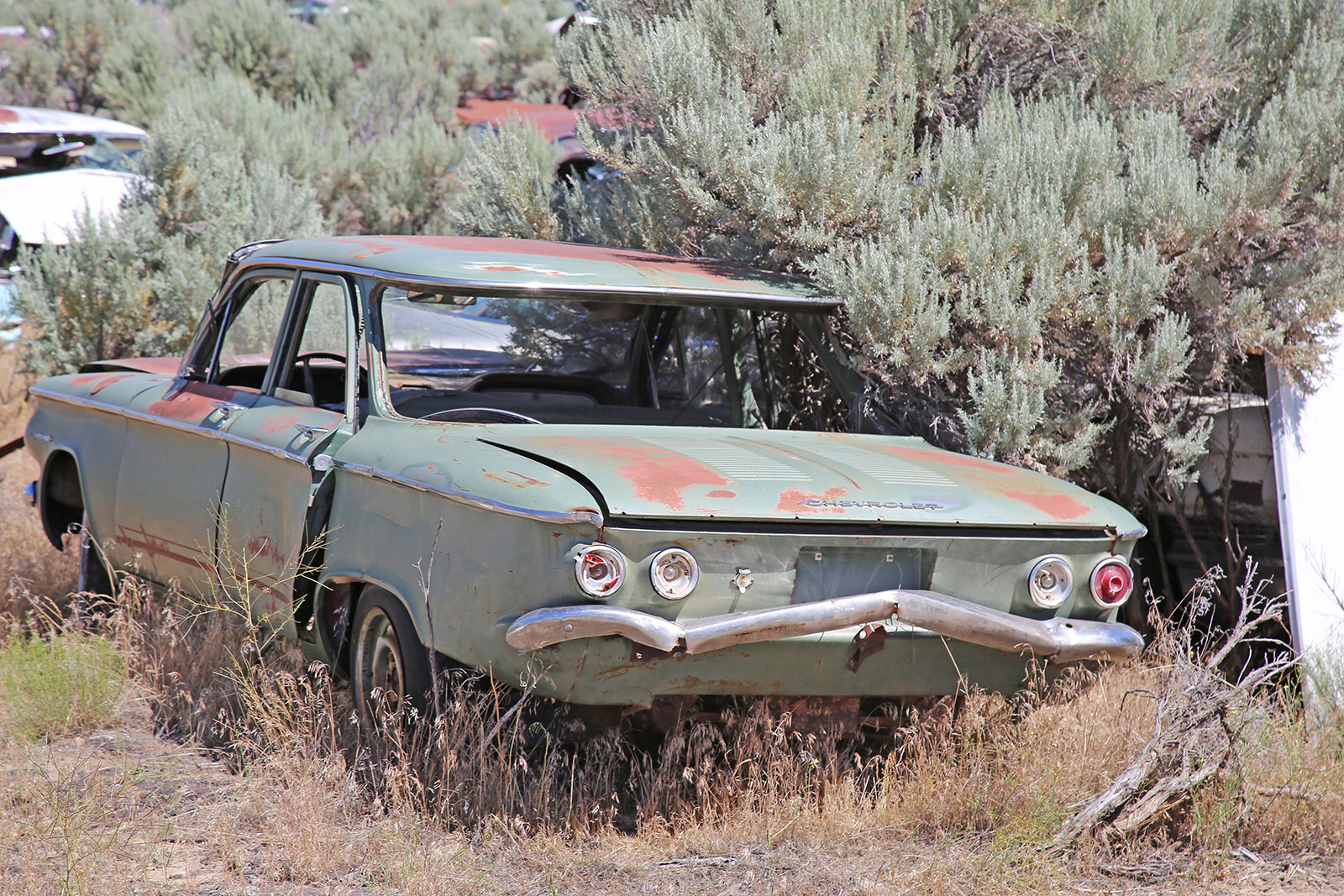
This 1960 Chevrolet Corvair looks a bit down-in-the-mouth, but then with its windows and interior missing, it has very little to smile about.
Despite Ralph Nader declaring it “unsafe at any speed”, in actual fact the Corvair is the only vehicle ever certified as ‘safe’ by the US government. In total, close to 2 million of them were built between 1960 and 1969.
Oldsmobile Vista Cruiser 1968
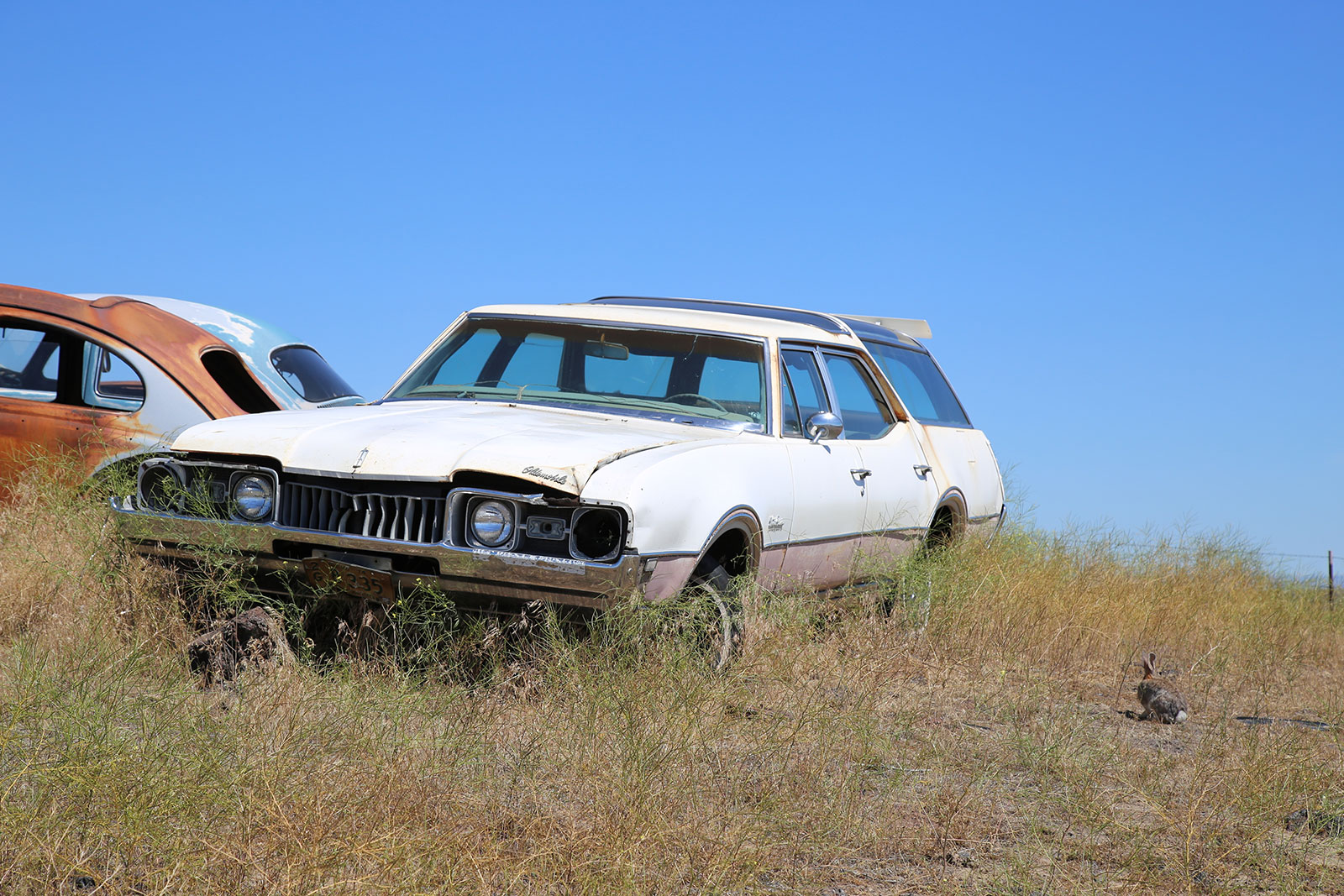
Oldsmobile Vista Cruisers used to be favorites amongst Demolition Derby drivers, but that’s when they had very little value. These days they’re far more sought after, receiving a popularity boost when a 1969 example had a starring role in That 70s Show.
This one, with its characteristic raised roof and panoramic skylights, was built in 1968. Note the rabbit on the right of this picture, one of hundreds that live amongst the cars.
Mercury ParkLane 1964
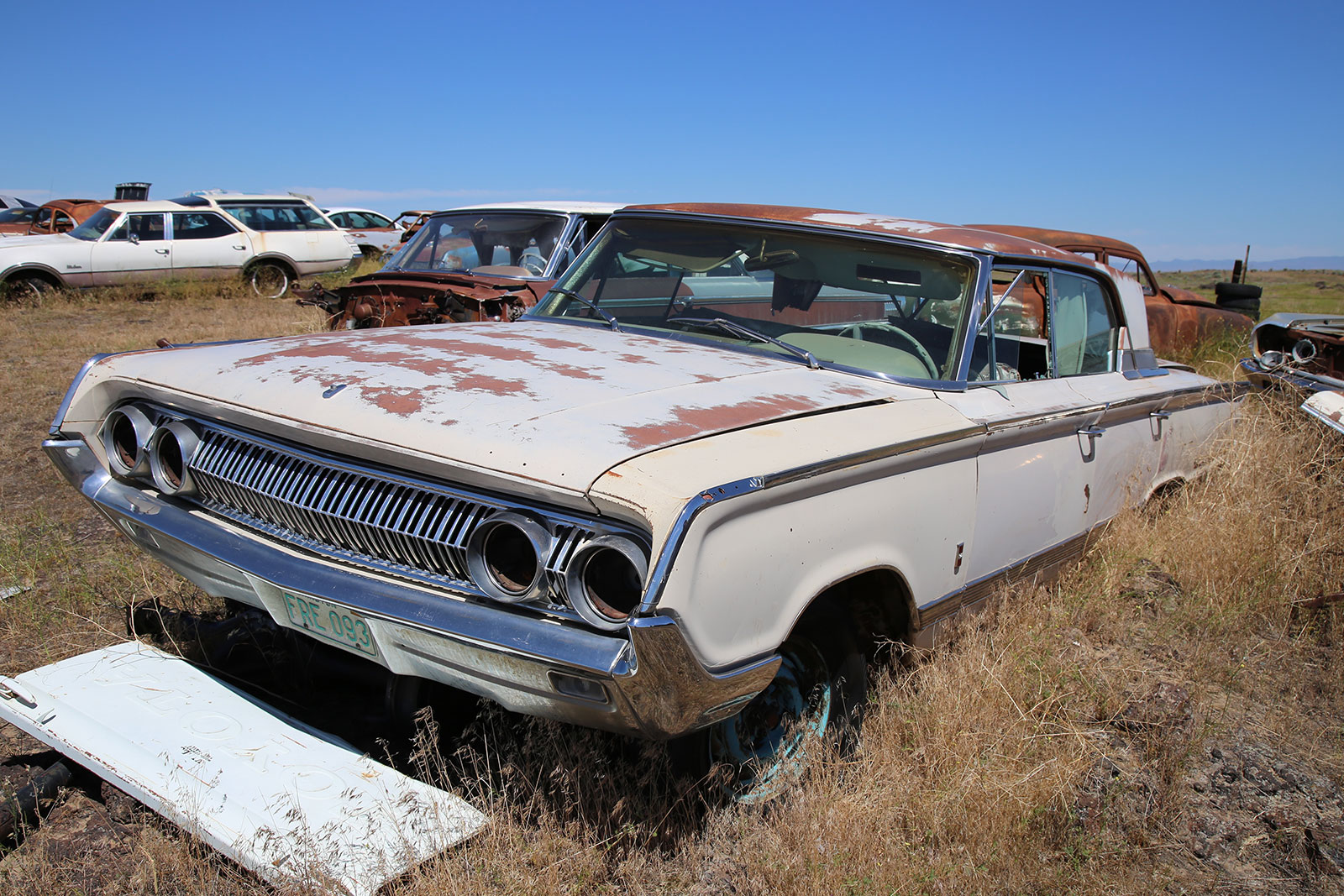
Only 2420 buyers parted company with the $3413 needed to secure a brand new Mercury Park Lane Breezeway hardtop sedan in 1964. That makes this impressively straight and rot-free example rather rare. Look how the chrome gleams in the Idaho summer sunshine.
Buick Riviera 1972
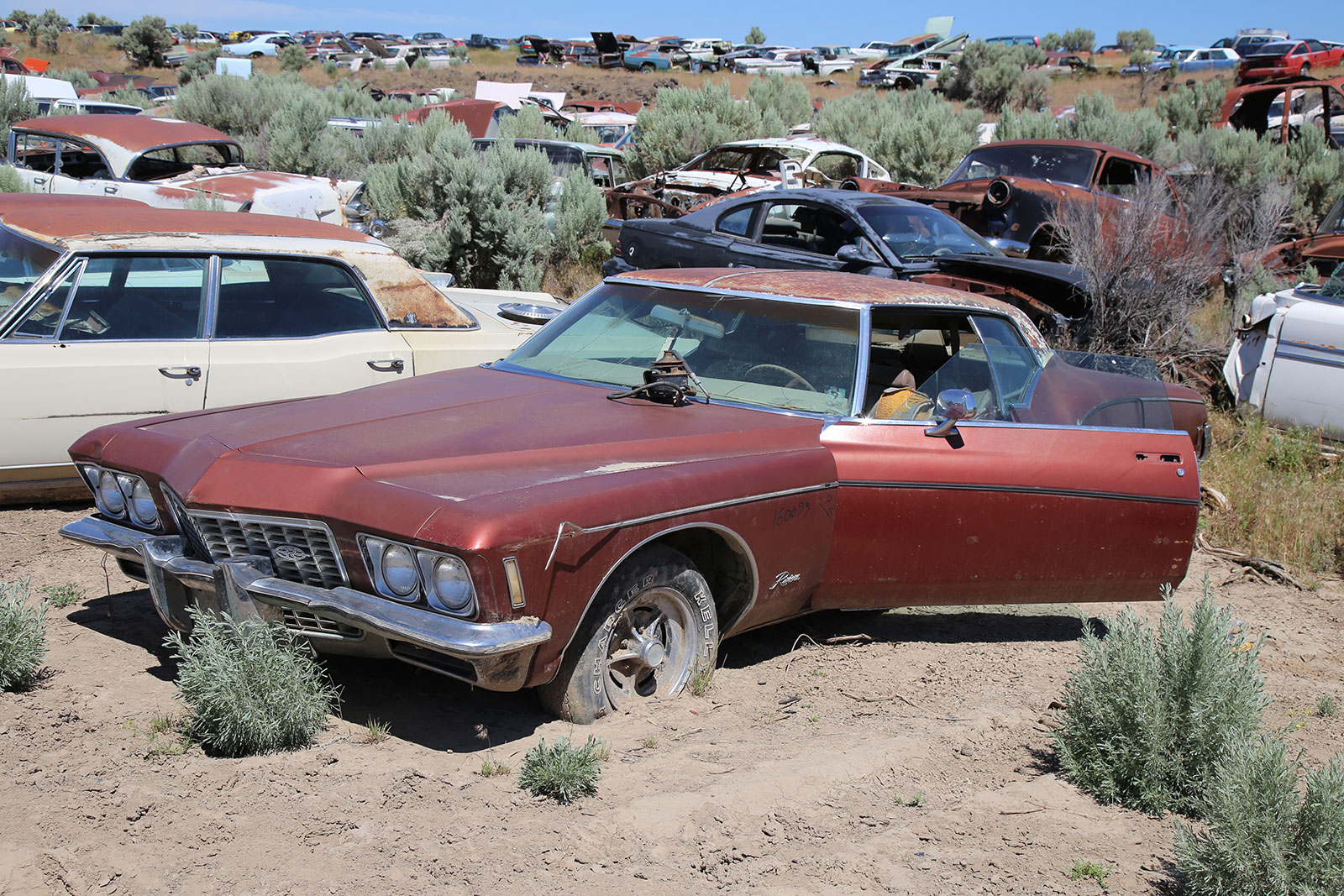
While some salvage yards are fastidious about ensuring that doors and trunk lids are always closed, it doesn’t seem to be a priority at L&L Classic Auto. This 1972 Buick ‘boattail’ Riviera’s driver’s door has probably been open for years, which explains why the seat has been totally destroyed.
We wonder how many years it has sat in this same spot to have sunk this deep into the Idaho dirt.
Frazer Standard 1948
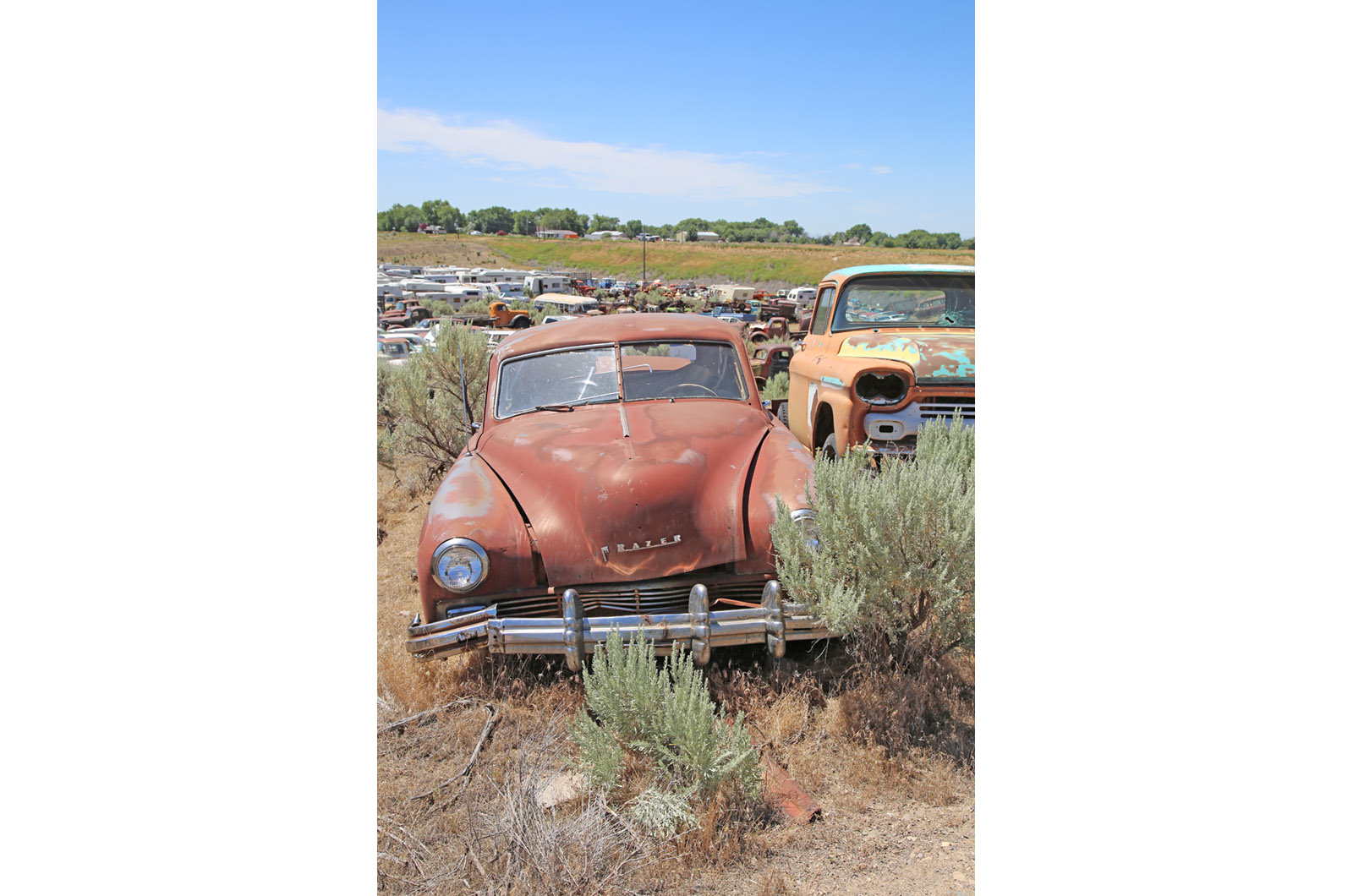
Fancy restoring a rare Frazer Standard? If so, spending $3500 on this rust-free 1948 four-door sedan could make a lot of sense. Although there is a bit of external damage, particularly to the front and rear bumpers, other than a missing taillight and rear windshield, it’s all there.
The six-cylinder engine and three-speed manual column-shift transmission are still in place, and other than the door panels, the interior is complete too.
Pontiac Grandville 1973
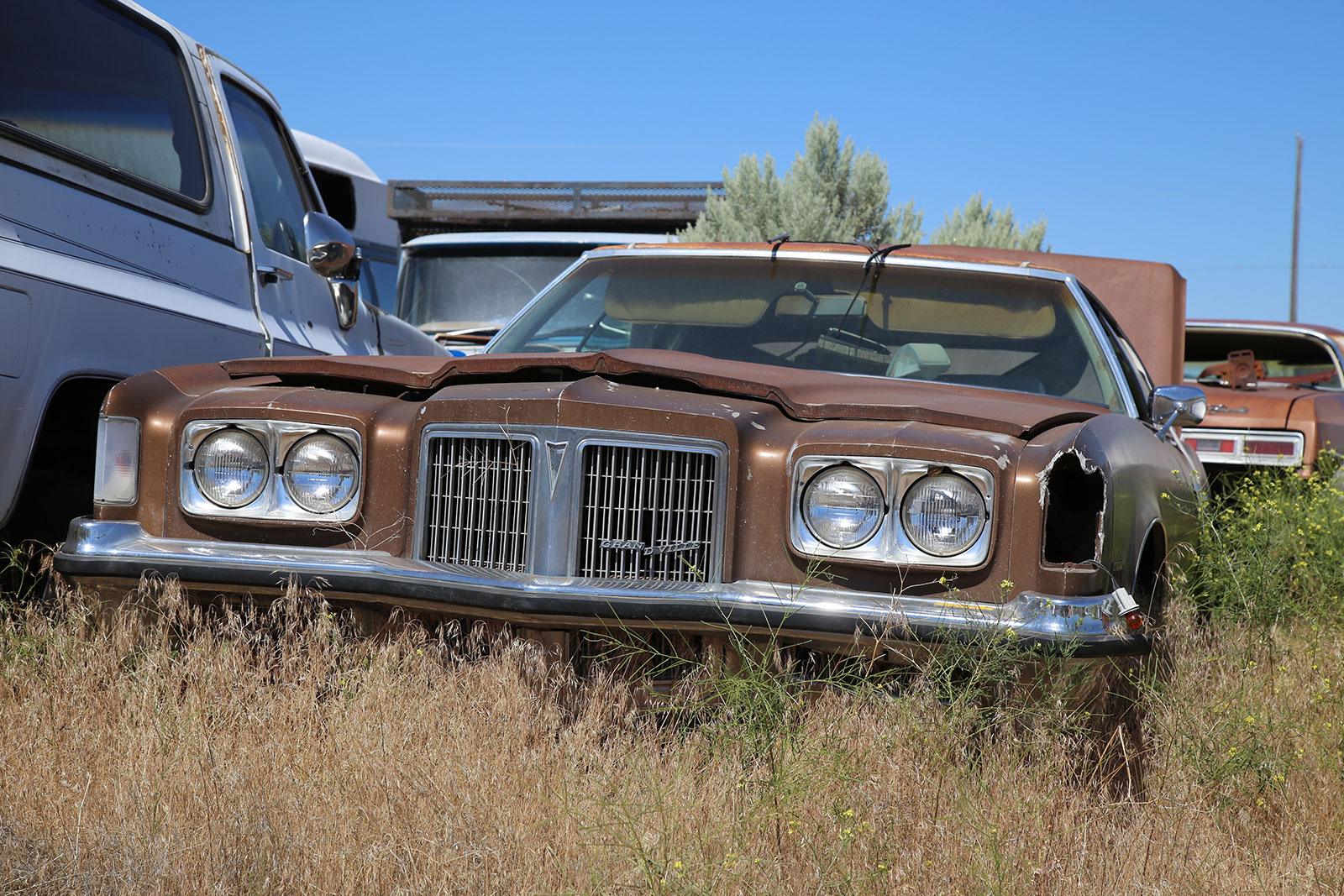
The Bonneville’s reign as Pontiac’s flagship car ended in 1971, when the Grand Ville arrived on the scene. It was big and brash, and well received, and this 1973 example is one of 90,172 built that year.
However, the oil crisis of late 1973 had a detrimental effect on the demand for gas-guzzlers, and in 1974 less than half that number of Grand Villes found buyers.
Ford 1959
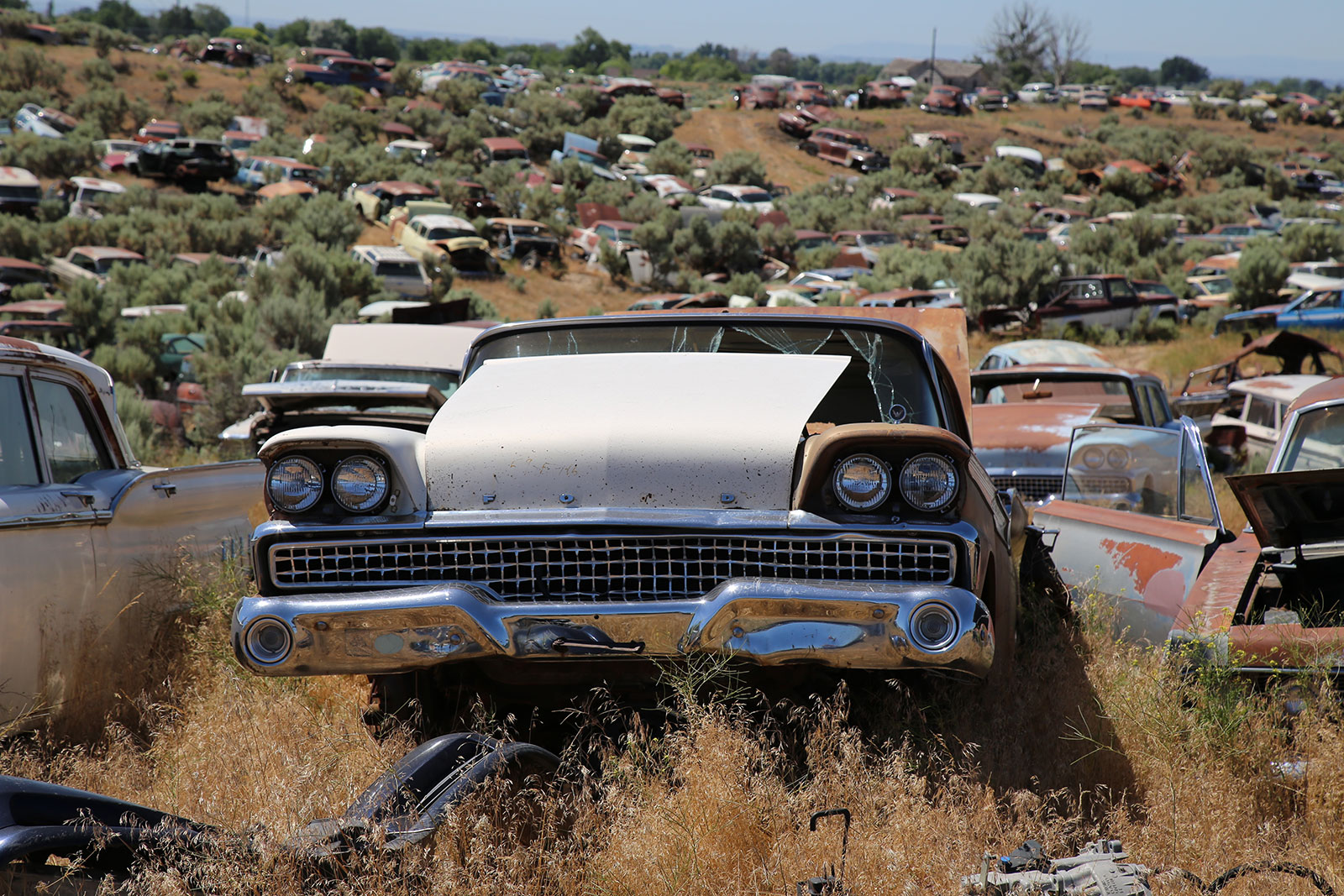
Although this picture only features a tiny portion of the yard, you do get a feel for the sheer expanse of L&L Classic Auto. Stick to the miles of dirt tracks which meander through this yard, and it’s relatively easy to navigate around the place, but venture into the tall grass and you’re dealing with uneven ground, boulders and hidden car parts.
It’s no wonder that they asked us to sign an insurance disclaimer before being allowed to explore. At the forefront we have a 1959 Ford.
DeSoto Firedrome 1953
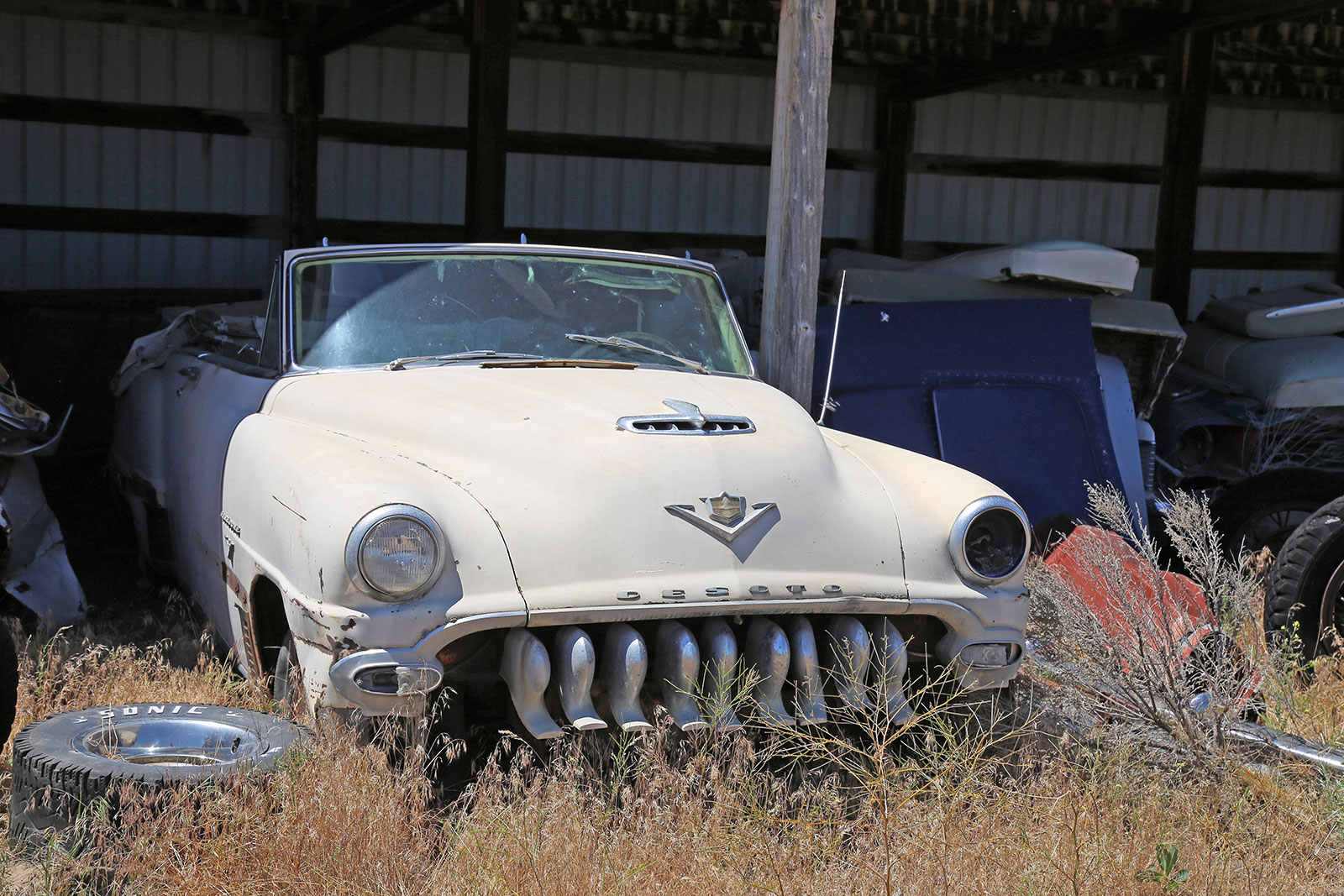
Some of the rarer vehicles have been kept undercover, like this desirable 1953 DeSoto Firedome V8 convertible. It’s one of just 1700 built, and it’s looking for a new home.
Incredibly, the car was driven into the shed some 30 years ago, having covered just 70,897 miles. It is solid, rust-free, and other than a few missing bits of trim, is pretty much complete. This particular barn find has an ambitious $16,000 price tag.
Rambler Cross Country 1960
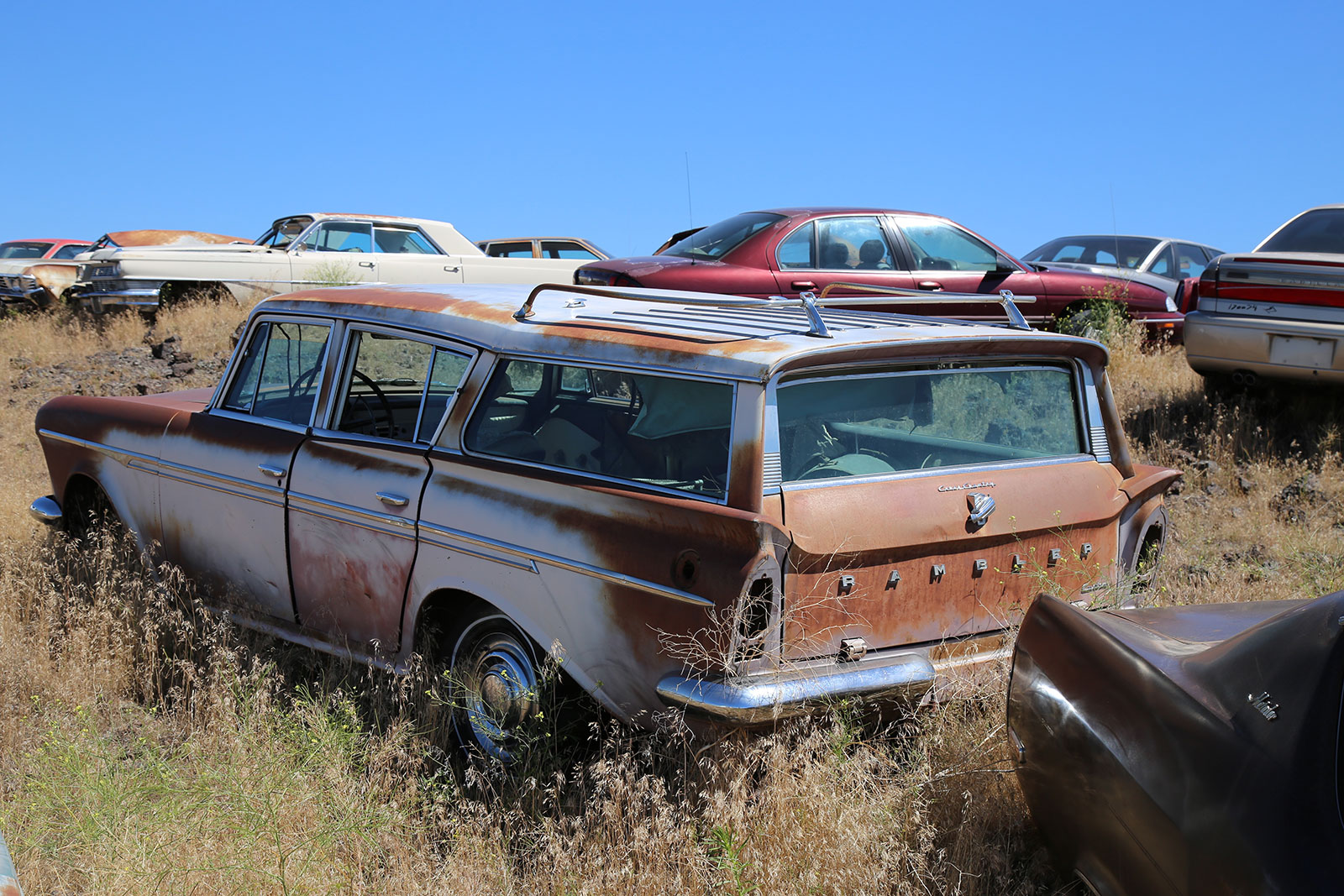
As you can tell from the 1964 Cadillac and 1990s Chevrolet Lumina behind the 1960 Rambler Cross Country, there isn’t a whole lot of order to the yard. And how the employees are able to locate particular vehicles on the 120-acre site is a mystery to us.
At the time of taking the picture the Rambler was pretty much complete, but seeing as it’s not being sold as a project car, it could well have lost a few more of its valuable parts since then.
Nash Ambassador Country Club 1953
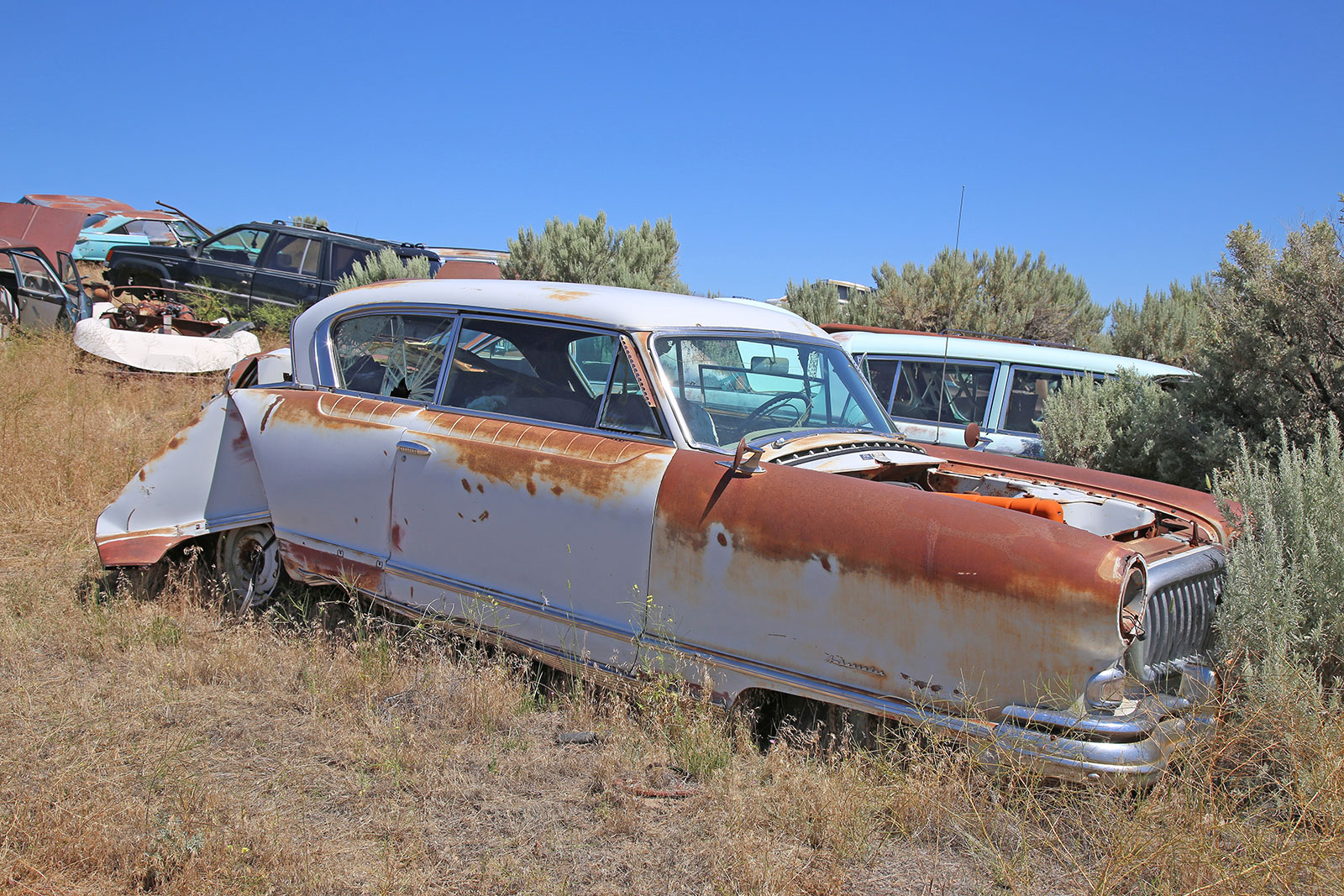
This rare 1953 Nash Ambassador Country Club hardtop coupe’s final journey must have been a traumatic one, as it clearly suffered a massive rear-end shunt. Whatever hit it must have been travelling at quite some speed to inflict this much damage to such a solid car.
Chevrolet Step-Van 1960s
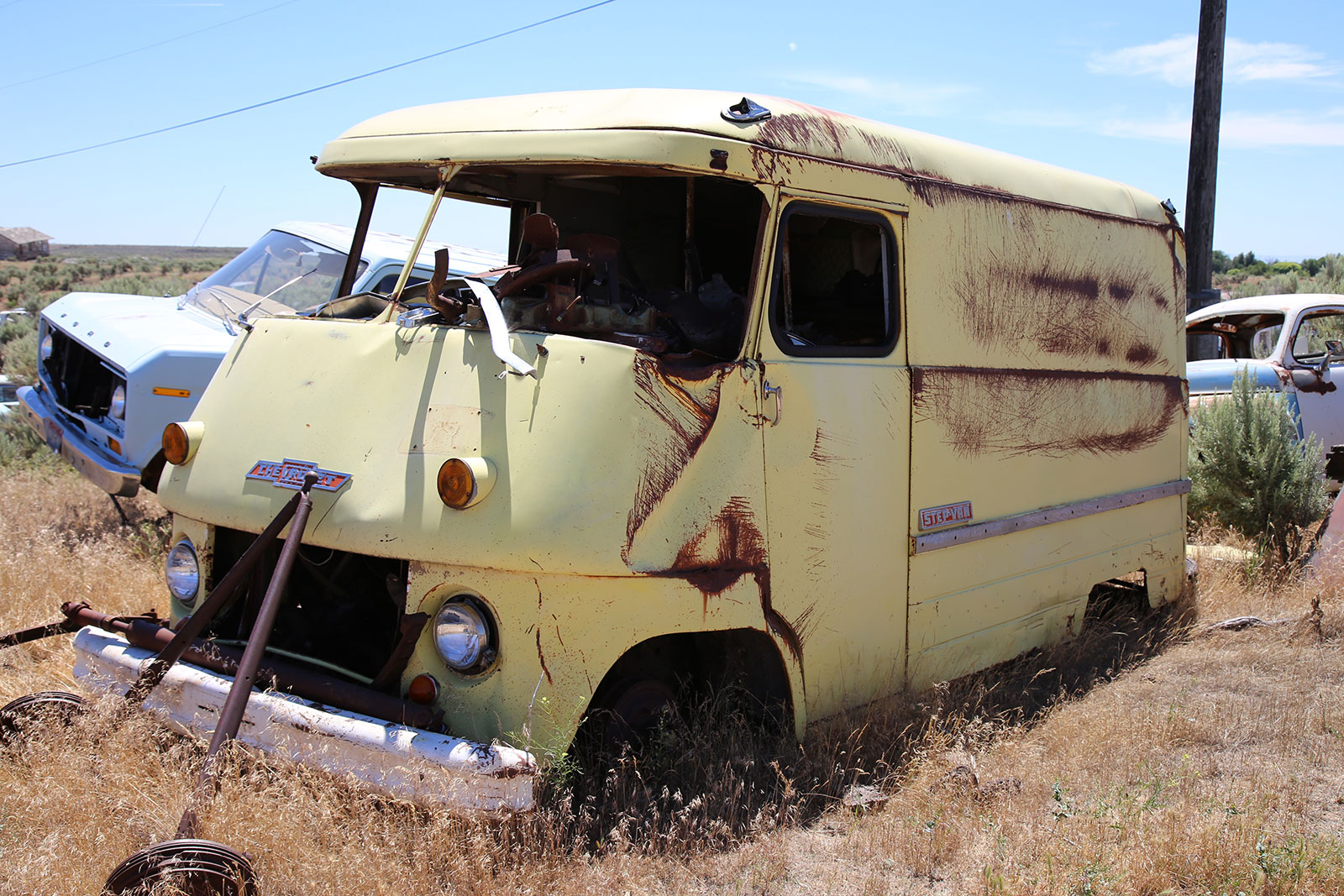
An early 1960s Chevrolet Step-Van is another resident of L&L Classic Auto that ended up in the yard after a crash. Judging by the damage, it clearly rolled onto its side, and probably slid for some time. That said, it’s a mystery how the door handle survived the accident.
Chevrolet Step-Vans were built from 1940 to 1999, and older ones are gaining popularity as quirky mobile catering vehicles.
Jeep Wagoneer 1982
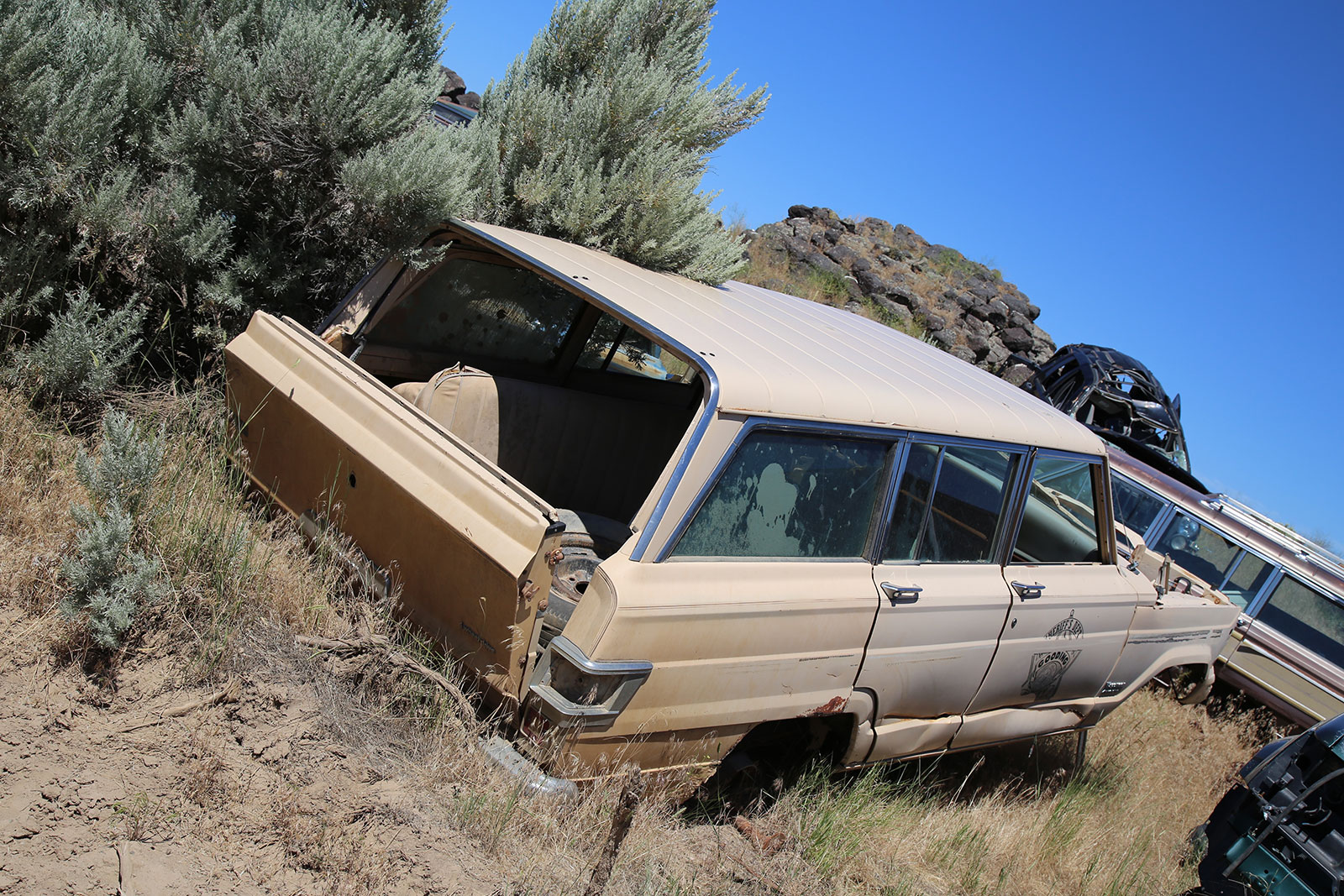
We spotted a number of ex-Police cars at L&L Classic Auto, our favorite being this 1982 Jeep Wagoneer. It belonged to the Sheriff’s Department in Gooding, a small town about 10 miles north of the yard, with a population of just 3500.
Dodge Charger 1972
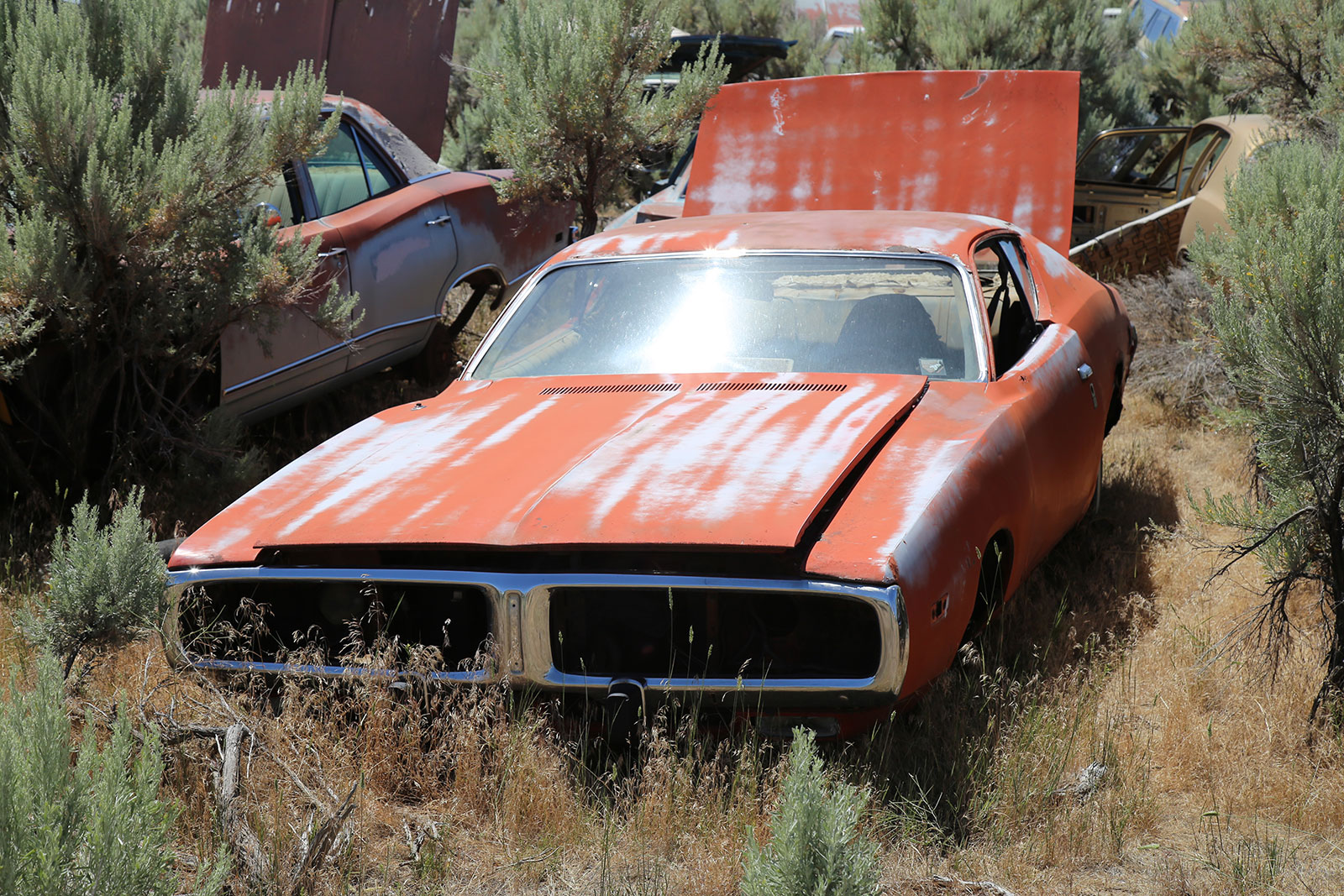
This was one of two almost identical 1972 Dodge Charger hardtop coupes we spotted. The better of the pair was a project car, and had a $5500 price tag, but this one is gradually being stripped for parts. You’d need to spend well in excess of $20,000 to pick up a decent one today.
Plymouth Valiant Signet 200 1962
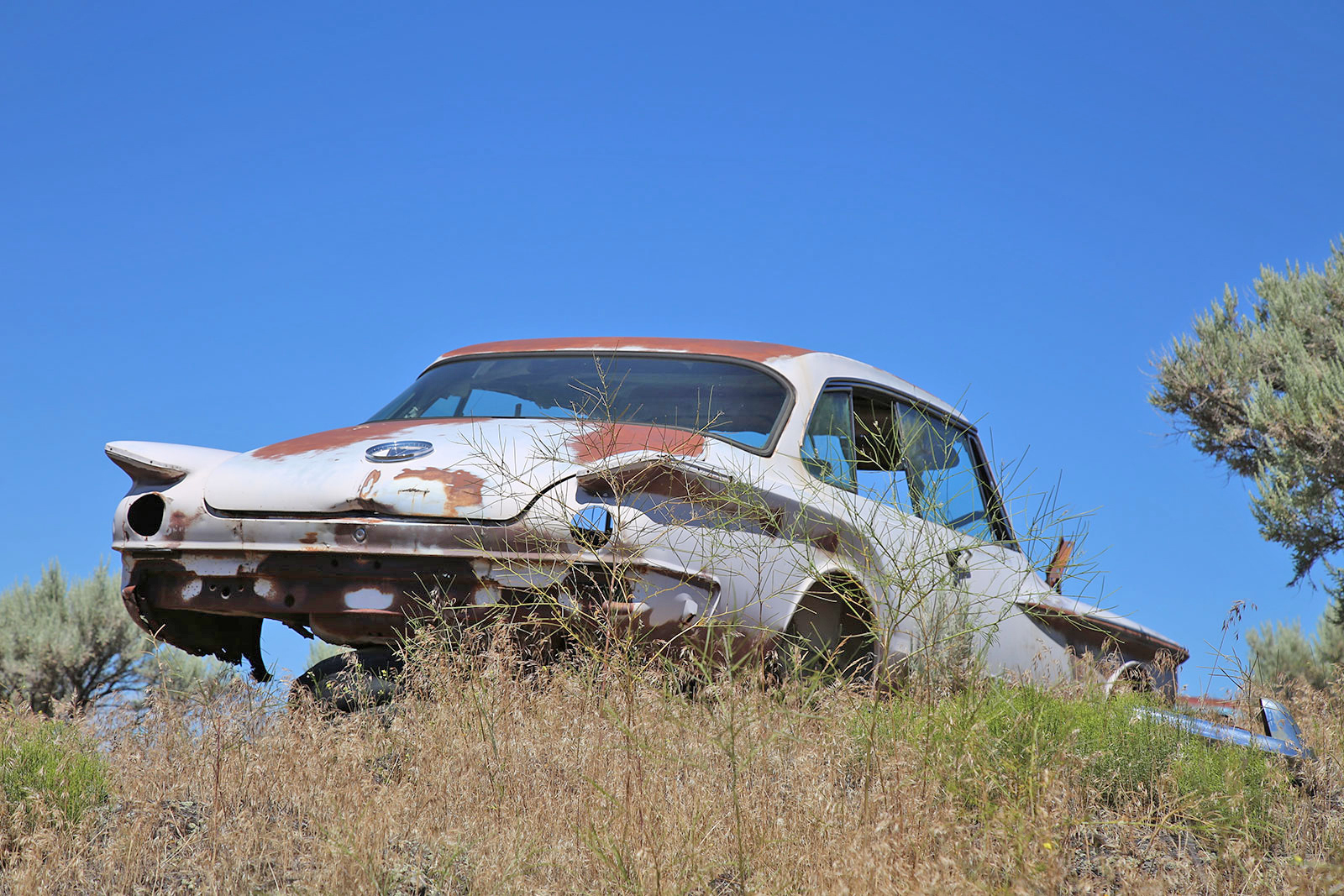
If this 1962 Plymouth Valiant Signet 200 two-door hardtop coupe had a Facebook account, we reckon it would use this rather misleading photo for its profile picture, as it’s definitely its best side, believe it or not.
But look a bit closer, in particular at the blue sky that’s visible through the nearside turn signal orifice, and you soon realise that things aren’t what they seem. The driver’s side is almost completely missing.
Dodge Seneca 1961
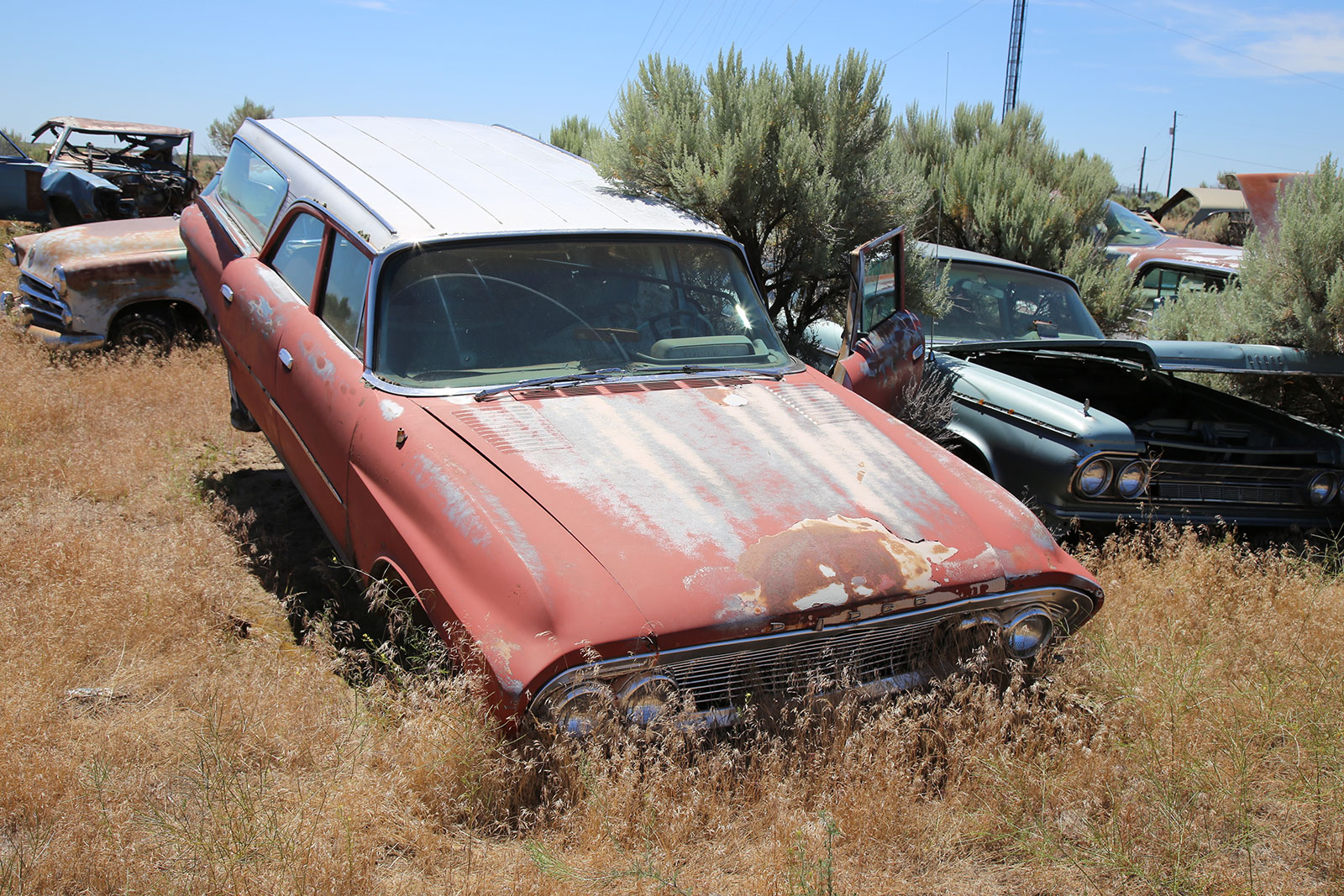
It almost looks as though this 1961 Dodge Seneca was mid-way through a Dukes of Hazzard-style jump when the photo was taken. That said, although the V8-powered wagon could certainly get up to speed, managing 60mph in a fraction over 9sec, it weighs 4000 lb, so wouldn’t be airborne for very long…
Ford Edsel Ranger 1958
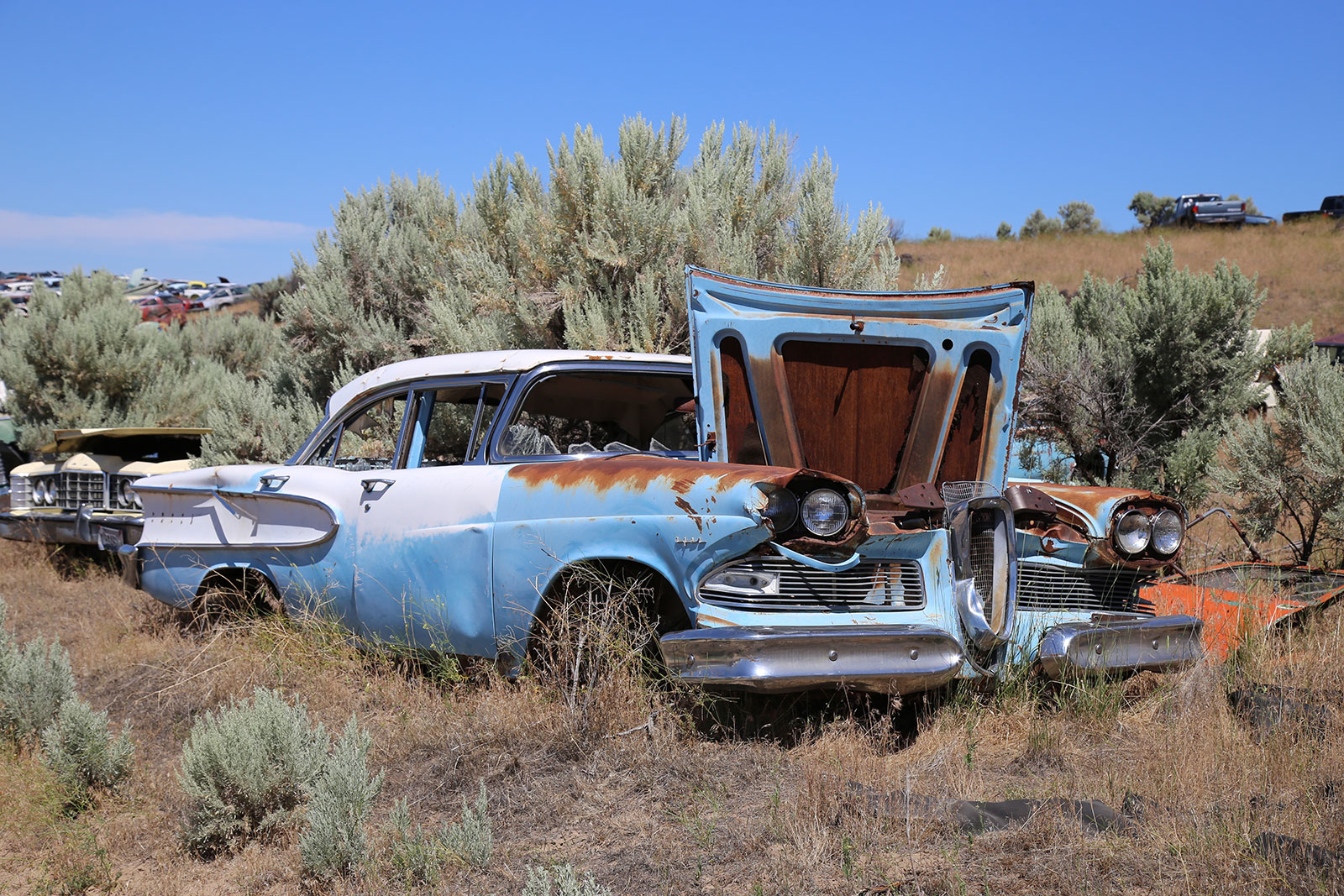
Considering it was one of the biggest automotive flops of all time, a surprisingly large number of Edsels have survived.
This one is a 1958 Ranger four-door sedan, and with 7414 being sold, it proved to be the most popular of the 18 models offered in its first year of production. By 1959 the model range had been slimmed down to 10, and dropped to just seven in 1960, its final year.
Imperial Crown Coupe 1965
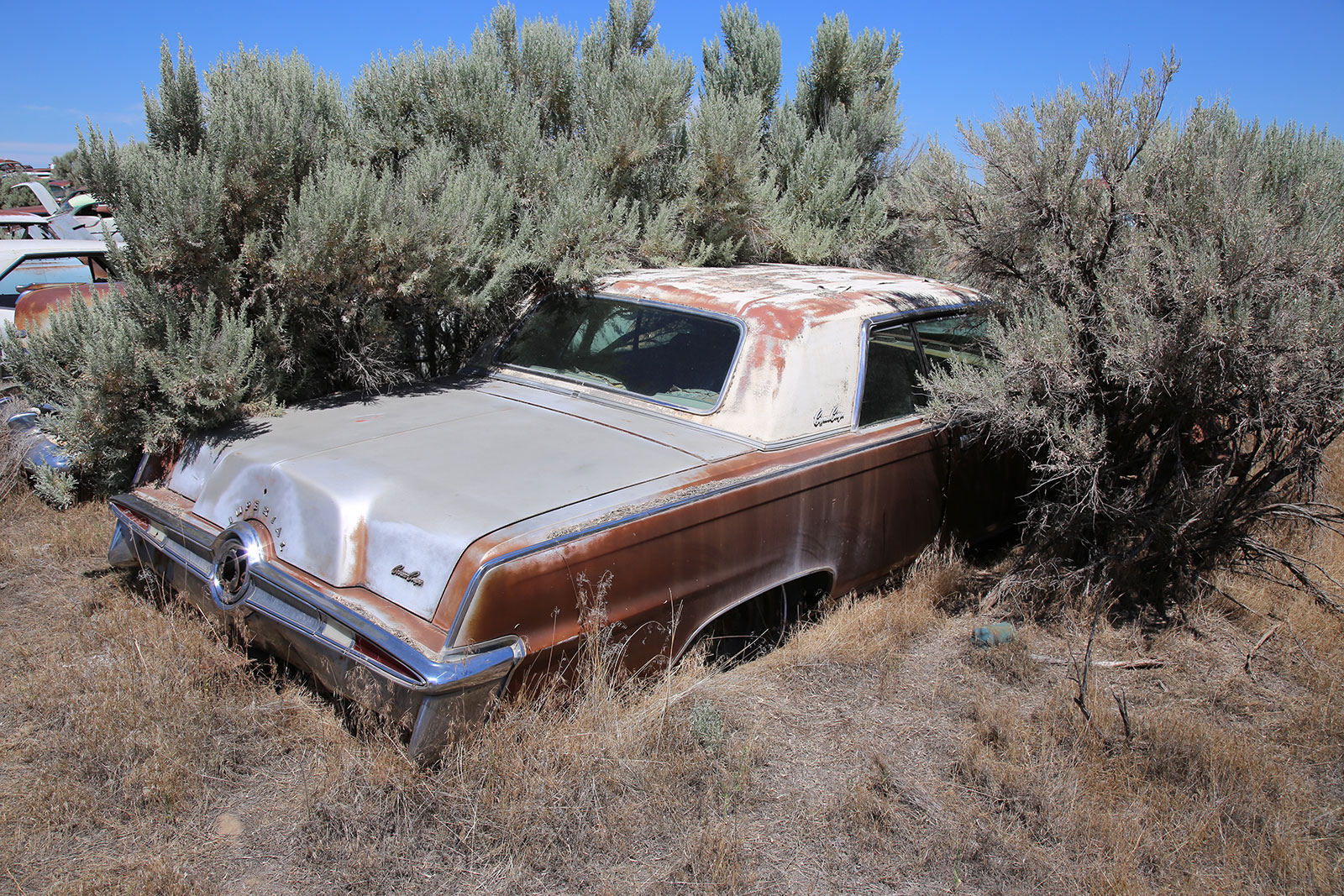
Whoever purchased this Imperial Crown Coupe two-door hardtop in 1965 specified it with the optional vinyl roof. But unfortunately there’s not much left of it now. It’s also lost its front right fender and a couple of bits of trim. On the positive side, the tan interior is complete, the V8 engine and auto transmission are in place, and it’s rust-free.
This classic could be yours for $4,500.
Chrysler Newport 1973
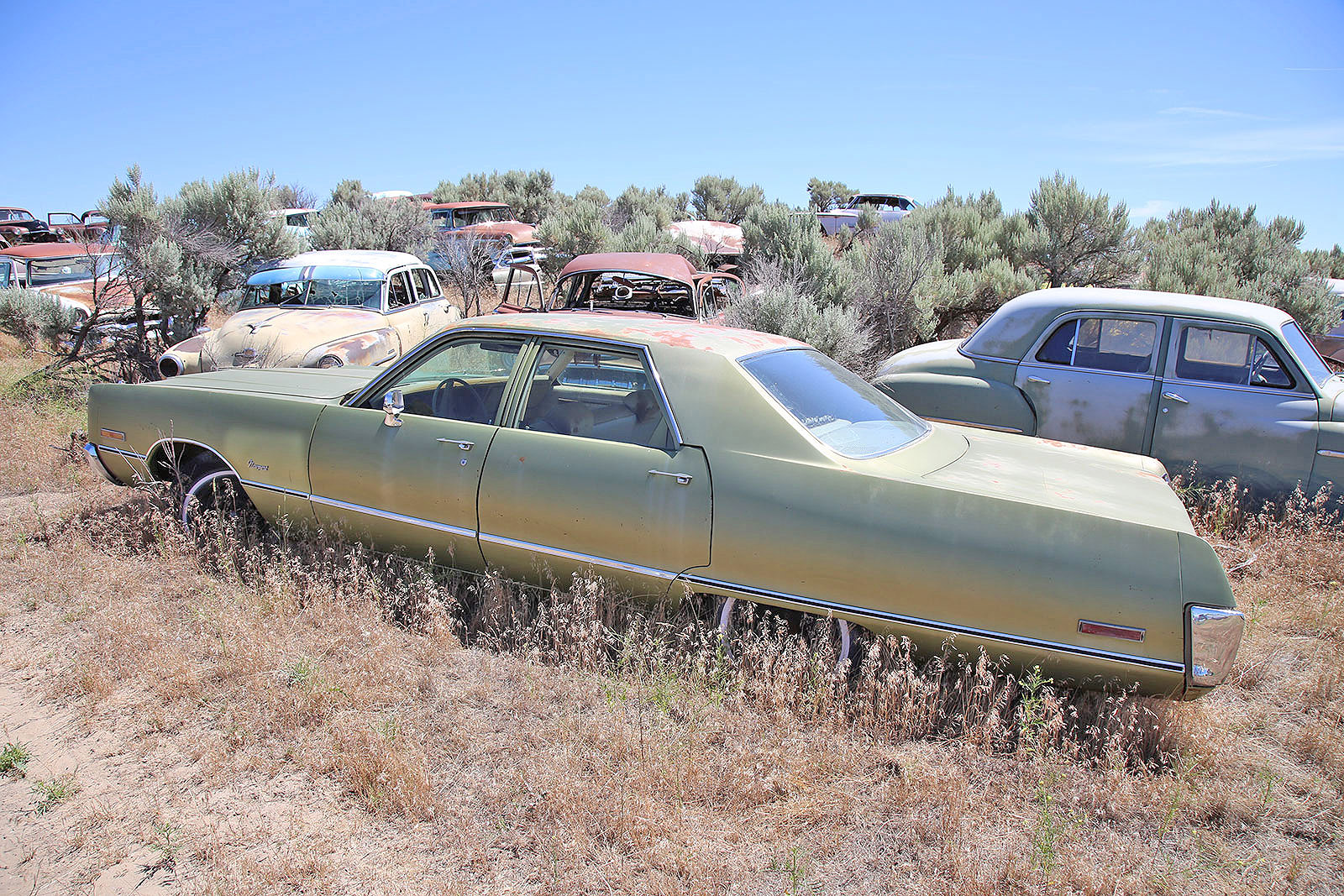
Look at how incredibly straight the bodywork is on this 1973 Chrysler Newport sedan. While this car is huge, measuring 230in bumper-to-bumper, it’s certainly not the biggest barge to sail out of Detroit. That honor goes to the 1974-76 Cadillac Fleetwood 75 nine-passenger sedan, which measured 252.2in.
Mercury Cougar 1977
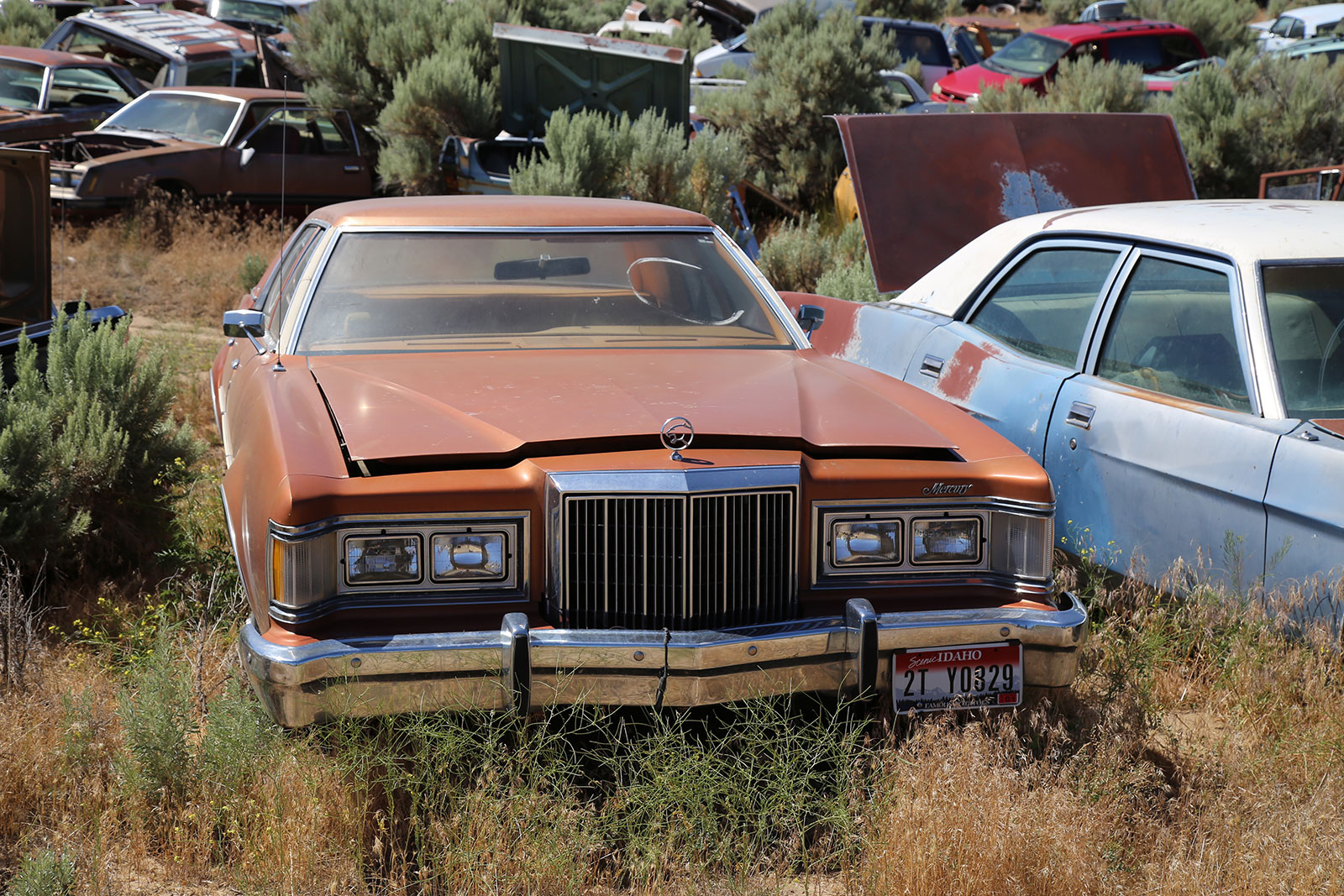
Despite having not been on the road since 2001, this 1977 Mercury Cougar Brougham sedan still looks incredible. From this angle it appears to be 100% complete, and gives the impression that a little bit of elbow grease is all that’s keeping it from winning trophies at a classic car show.
However, it probably has some serious mechanical defects, and the fact that the hood is cracked open, means it may well have parted company with its V8.
Lincoln Towncar 1976
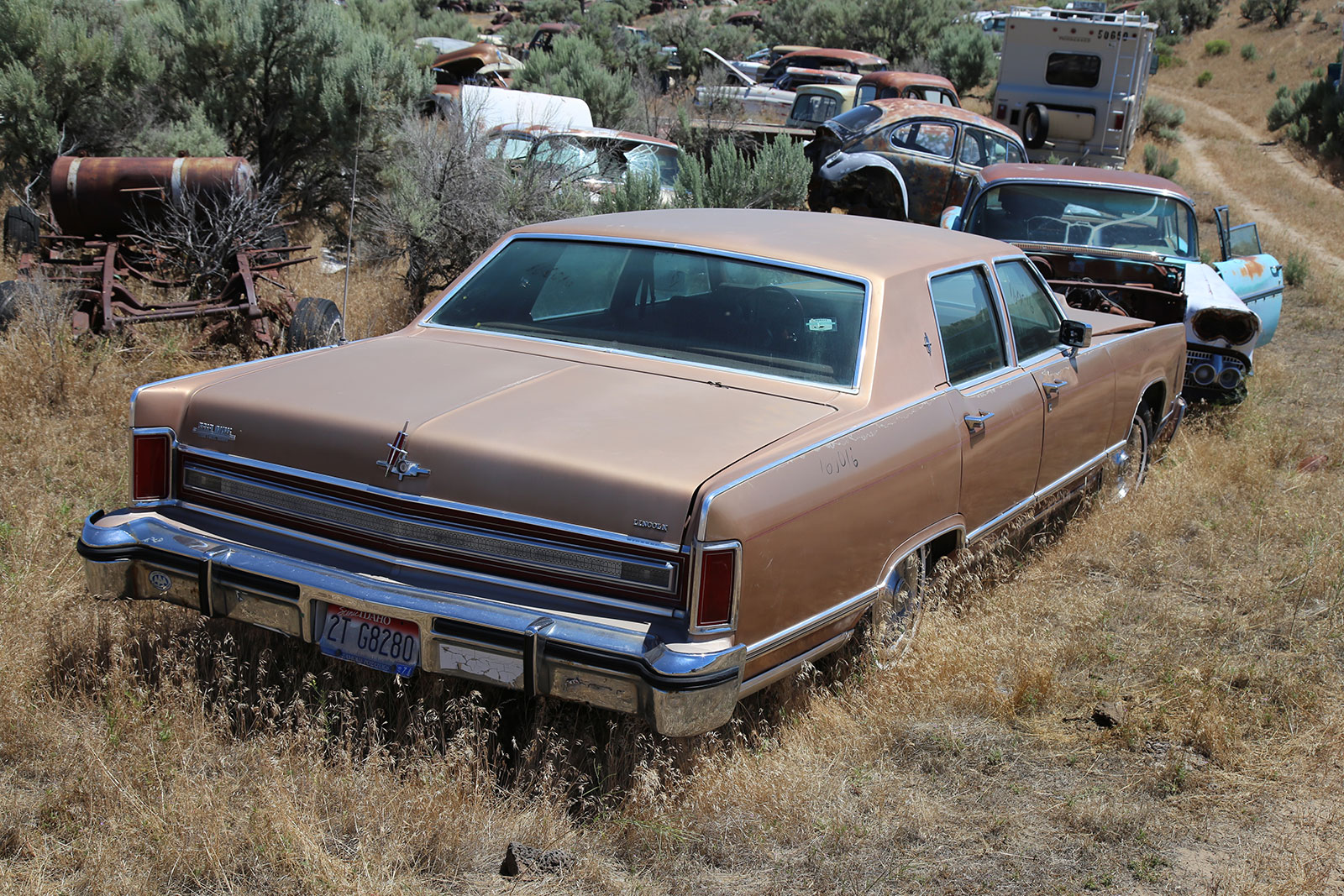
Here’s another incredibly straight car from the same period, which looks like it could be driven straight out of the yard, and onto the highway. Judging by its condition, you’d think it had been parked here yesterday, when in actual fact the sleeping giant arrived at L&L Classic Auto in 2007.
It’s a 1976 Lincoln Town Car, which weighs a whopping 5344 lb. It needed a 7.5-liter V8 to propel it to 60mph in 12.4sec.
Dodge Coronet 440 1969
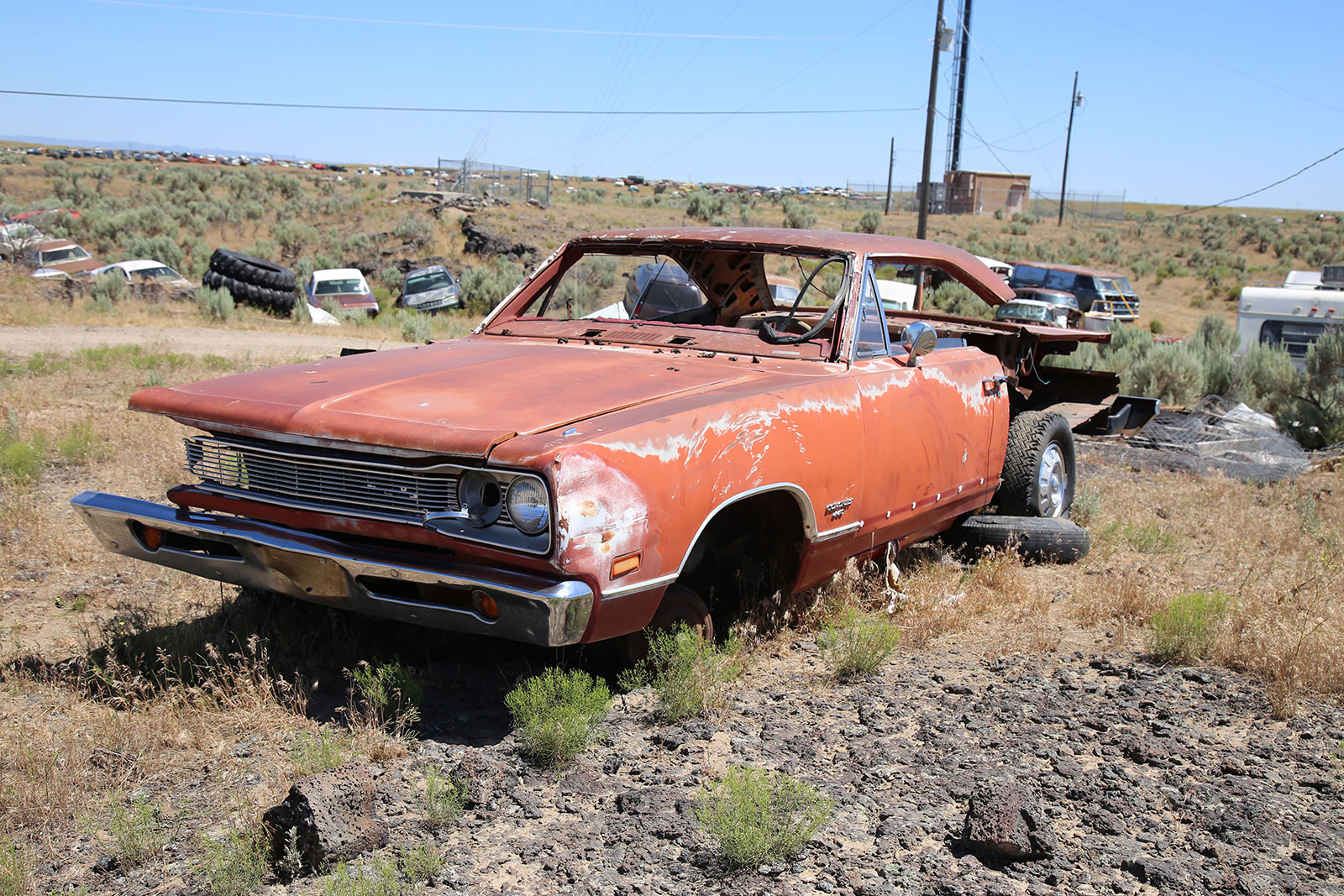
1969 Dodge Coronet 440s are relatively desirable: after all they can accelerate to 60mph in just 7.5sec, and do a quarter mile in 16sec.But in this condition they’re worth little more than their weight in scrap metal, which in this instance, isn’t much at all.
Chevrolet Nova Custom 1973
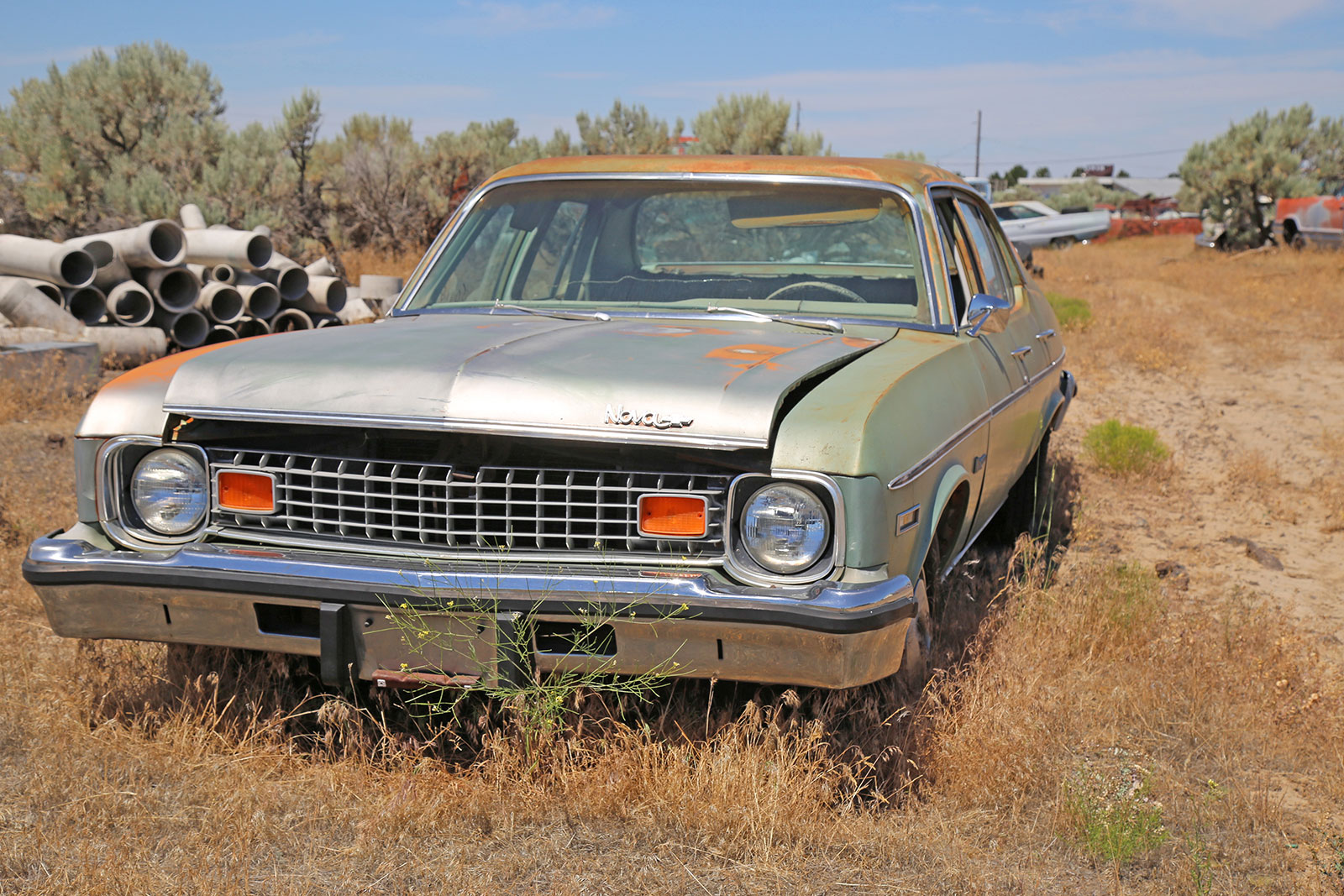
How do you fancy rehoming a classic? This 1973 Chevrolet Nova Custom four-door sedan is desperately seeking a new owner, ideally someone with deep pockets and plenty of time on their hands, who will restore it to its former glory. It seems to be in relatively good condition, so justifies its $4000 asking price.
The third generation Nova was launched in 1968, and remained in production until 1974. They were consistently good sellers, finding 369,511 buyers in 1973 alone.
Studebaker Champion 1958
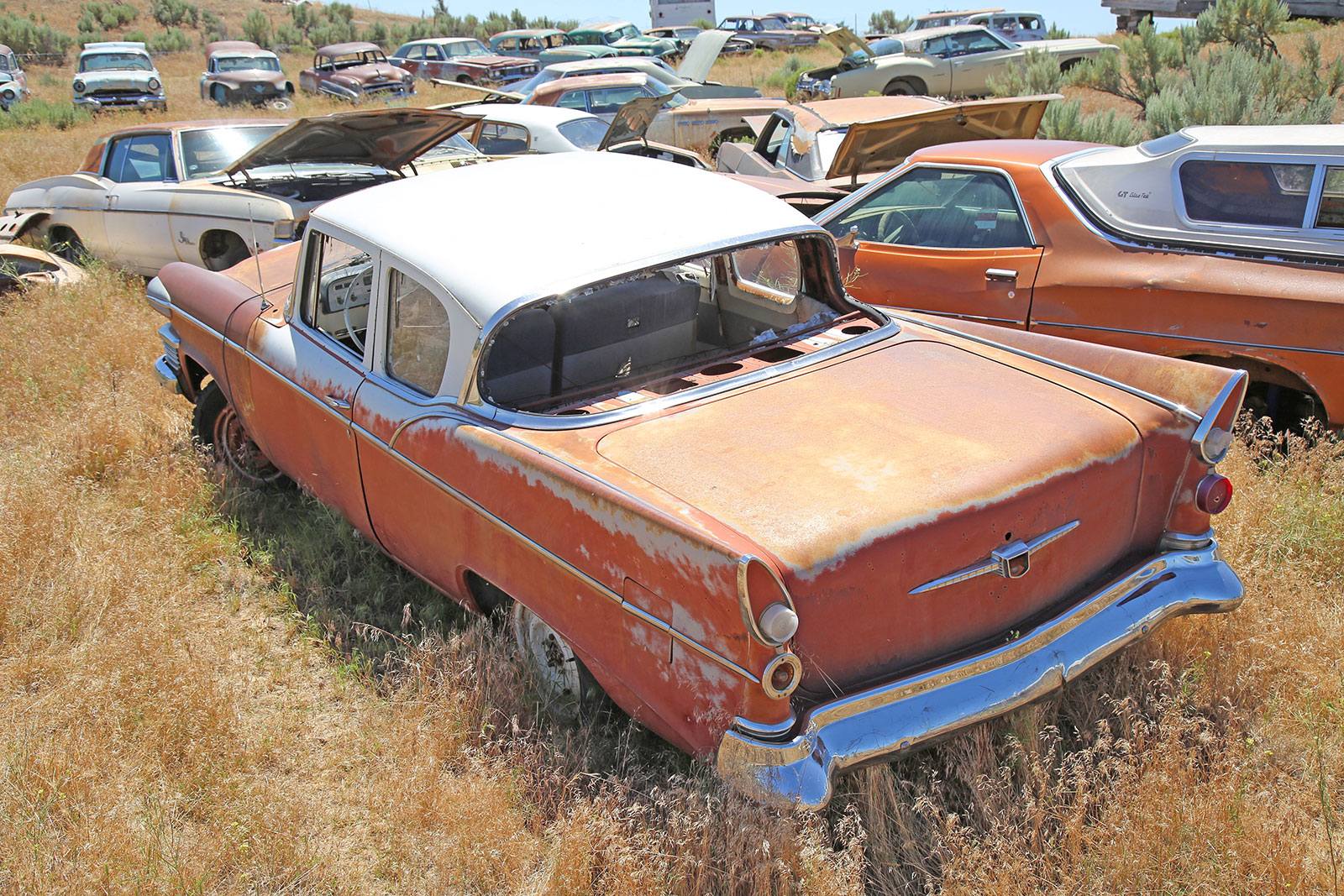
Studebaker only built 1455 two-door Champions in 1958, and finding them in salvage yards is incredibly unusual. This one is for sale at $5500, which seems like a reasonable price for such are rare automobile.
Although the rust-free bodywork is straight, and most of the trim appears to be in place, unfortunately that missing rear windshield has had a devastating effect on the interior.
Saab 96 1969
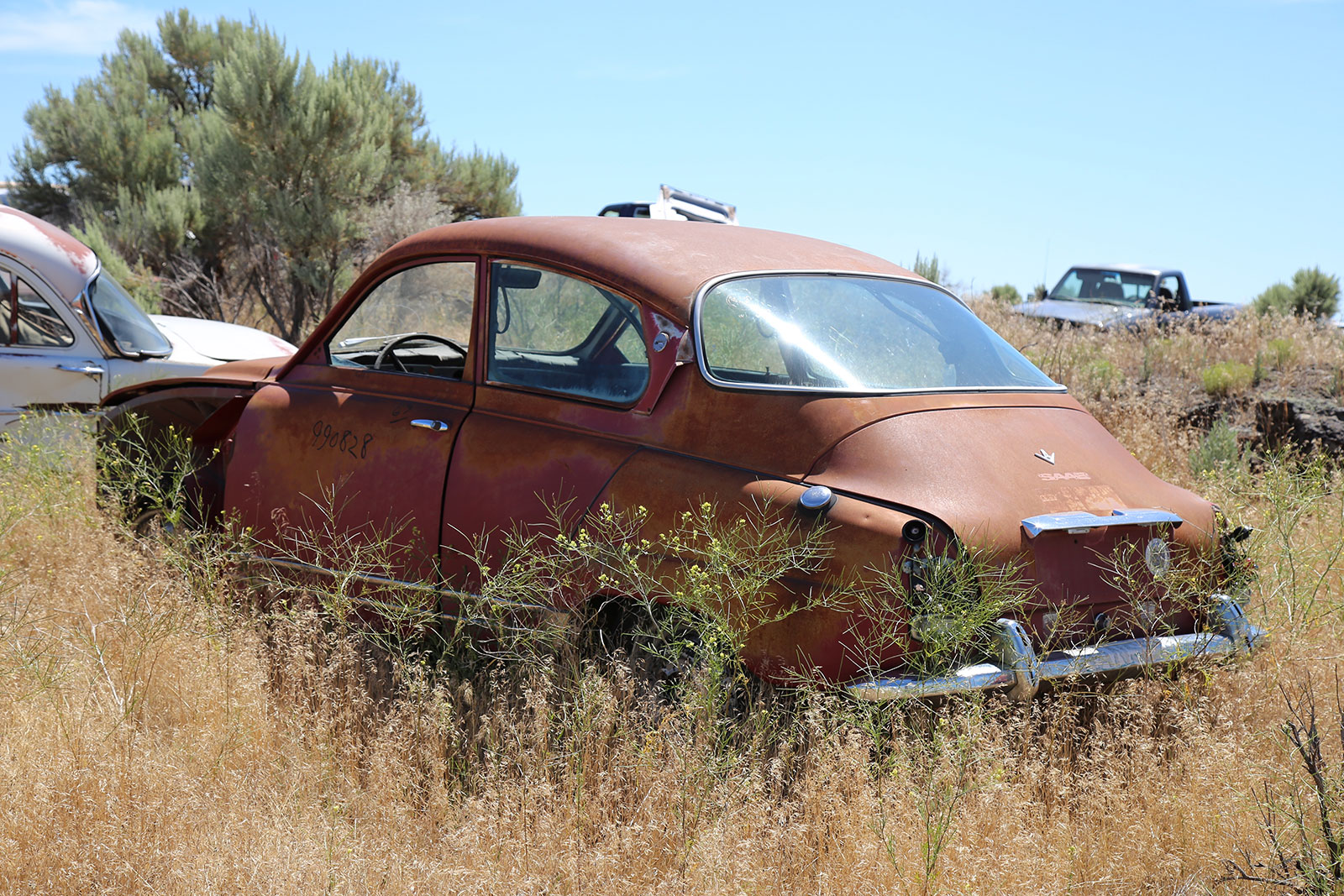
The 96 was the first Saab to sell in significant volumes in the US, where it was available between 1961 and 1973. This example hails from 1969, and was powered by a European-built Ford 1498cc V4 engine. Back in Sweden, the car enjoyed a 20-year production run, during which time 500,000 were manufactured.
About the author

British automotive journalist Will Shiers has been photographing abandoned American cars for 35 years.
He has visited all 50 states on his tin-hunting trips, exploring barns, fields, deserts, ghost towns and salvage yards, while searching for hidden treasures. Will has been contributing to car magazines for three decades, and is the author of Roadside Relics - America's Abandoned Automobiles.

Off-Roading Preferences Reveal Americans Strongly Favor Gas SUVs Over EVs for Adventure