

Company Car Choices in Transition Weighing Diesel, Petrol, Hybrid, Plug-in, and Electric for Cost,...
 Electrification is happening in stages, so there’s plenty of choice if you’re shopping your next company car – but each has its pros and cons.
Diesel
The diesel engine enjoyed a decade of strong demand in the UK following a reform of the company car tax system in 2002.
Designed to incentivise efficient, low-CO2 vehicles, cheap Benefit-in-Kind (BiK) tax created an almost overnight ‘dash for diesel’ in the fleet sector, doubling its market share to 60% of company cars and slashing average emissions by 15g/km within two years. By 2012, over half of all new registrations, including private cars, were diesel-powered.
That market has collapsed quickly since then as public perception has changed, tougher emissions regulations have made diesel engines more expensive, BiK has increased and the choice of models has declined.
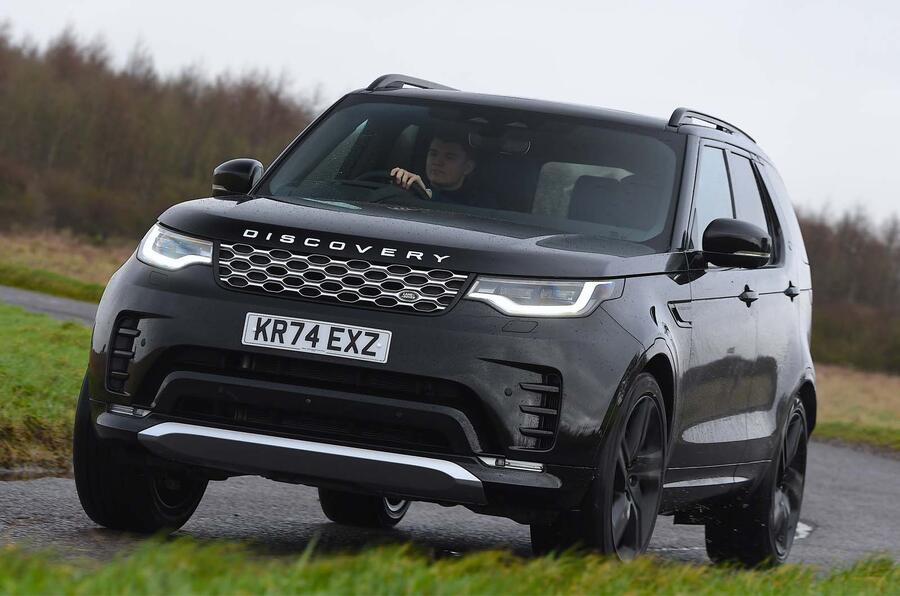
Diesel’s share of the company car market has since fallen behind hybrid and electric vehicles, and it became the least popular fuel choice for new lease cars back in 2022, according to the British Vehicle Rental and Leasing Association (BVRLA). Plenty of once-popular diesel cars are now petrol or hybrid only.
Who should consider a diesel company car? It’s a niche market, but if you’re regularly towing or don’t have for regular, pricey charging stops, then a diesel can still make sense.
Petrol
Petrol is the most popular fuel for passenger cars globally, and it’s benefiting from an influx of investment as manufacturers rush to fill the gap left by diesel engines.
With precise fuel injection and ‘mild-hybrid’ technology (a very light form of electrification), todays downsized petrol engines can deliver the sort of efficiency you’d have only wrung out of a diesel car a few years ago.
For drivers, the main advantage is choice: unlike diesel or hybrid cars, manufacturers typically offer petrol versions across their entire model range, and they’re cheaper than either of those alternatives. However, a small, turbocharged petrol engine can still be thirsty if it’s working hard, and company car tax can be almost as pricey as the finance costs for buying privately.
Who should consider a petrol company car? Drivers who can’t plug in at home, and who need a wider choice of vehicles than are available with a hybrid system.
Hybrid
Fleets were quick to take advantage of tax breaks for full hybrids (sometimes referred to as ‘self-charging’ hybrids) when the first models launched in the UK more than 25 years ago. These usually combine a petrol engine with one or more electric motors, which provide assistance under load and offer a short range on battery power while coasting.
Hybrid company cars overcome some of the challenges of plug-in vehicles for fleets, offering diesel-like efficiency, fast refuelling without drivers having to plug in regularly to get the most out of them. However, their short electric range means they miss out on the hefty CO2-based incentives afforded to plug-in hybrids (PHEVs) and a lot of manufacturers have skipped them as a middle ground.
Who should consider a hybrid company car? Today’s hybrids can be a direct replacement for a high-mileage diesel car, but they offer the biggest fuel savings for city drivers. Stop-start traffic offers plenty of opportunities to slip into EV mode.
Plug-in hybrid
Plug-in hybrids (PHEVs) are effectively a ‘full’ hybrid with a larger-capacity battery that can also charge from the mains.
With a much longer electric range (some can travel more than 70 miles on battery power) a diligent driver should be able to cover most of their day-to-day journeys without using any fuel before slipping back into hybrid mode on longer journeys. Even with the plug-in range depleted, it’ll shift into EV mode for short bursts to wring more miles out of every gallon.
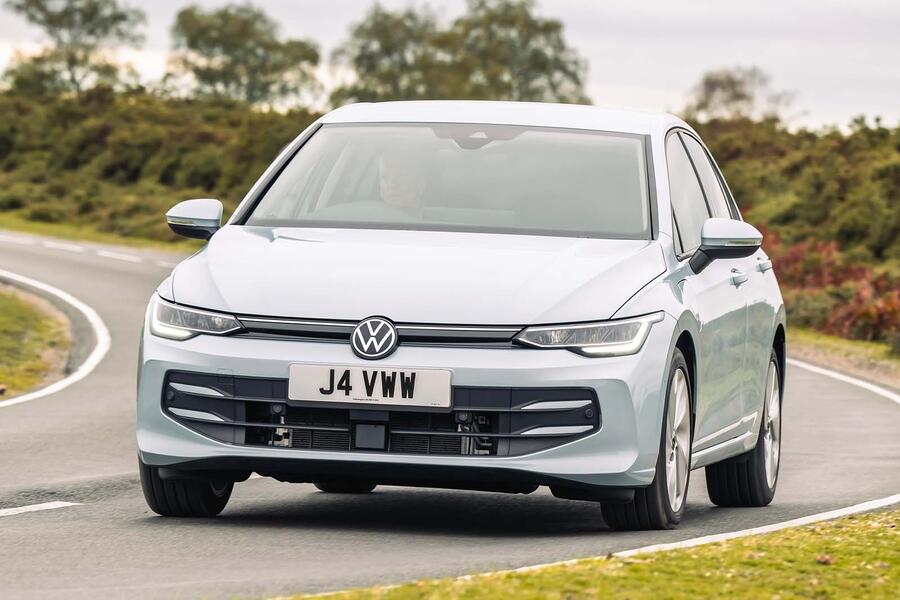
For drivers, PHEVs deliver ultra-low CO2 figures with a corresponding reduction in Benefit-in-Kind tax, while avoiding the need to use public charging. Although a few can now rapid charge, it’s often cheaper and always faster to fill up with fuel. The downside is you’ll get nowhere near the published efficiency if you do.
Who should consider a plug-in hybrid company car? Drivers who can commute on electric power and charge at home and/or at work are best placed to get the most out of a plug-in hybrid.
Electric
New petrol, diesel and hybrid cars will be phased out within a decade in the UK, but there are plenty of reasons for fleets to go electric today.
Most manufacturers offer a selection of different vehicle types, often with a range of 200-250 miles between 20- to 30-minute charging stops. Meanwhile, company car tax incentives were renewed in 2020, just as the tougher WLTP fuel economy test raised the CO2 emissions and tax bands of other vehicles. Two in every five company cars are electric, according to the latest HMRC figures.
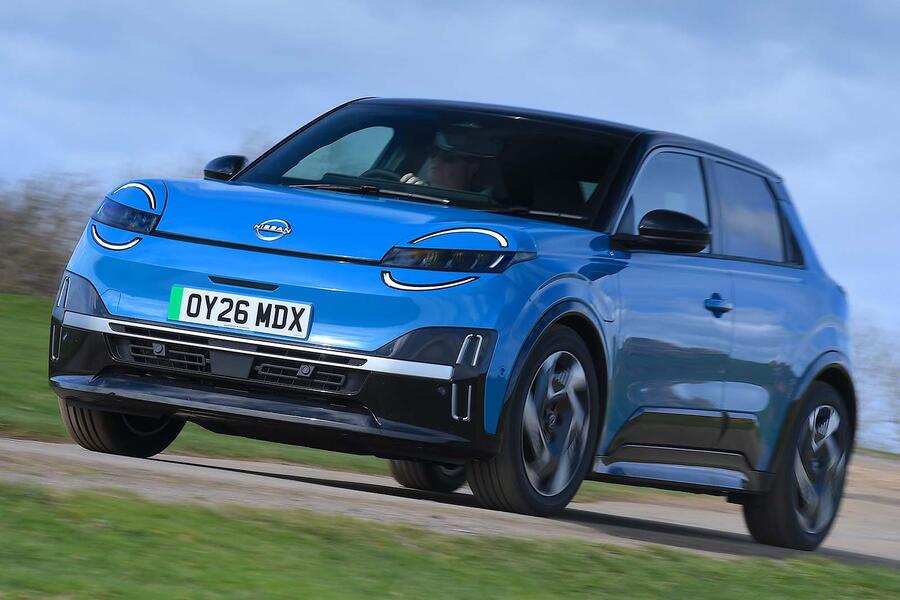
EVs take some adjustment, but early range concerns are dissolving and the UK has a well-developed (if expensive) public charging network for regular motorway drivers. The upshot is electric company car could reduce your benefit-in-kind bill by 80%, save your employer money on fuel and servicing costs, and shrink their carbon footprint, too.
Who should consider an electric company car? Even high-mileage drivers can go electric in 2026, but it’s a much easier (and cheaper) option if they can charge at home or work.

Air Support Transforms High-Speed Motorcycle Pursuit Strategy for Safer Police Outcomes


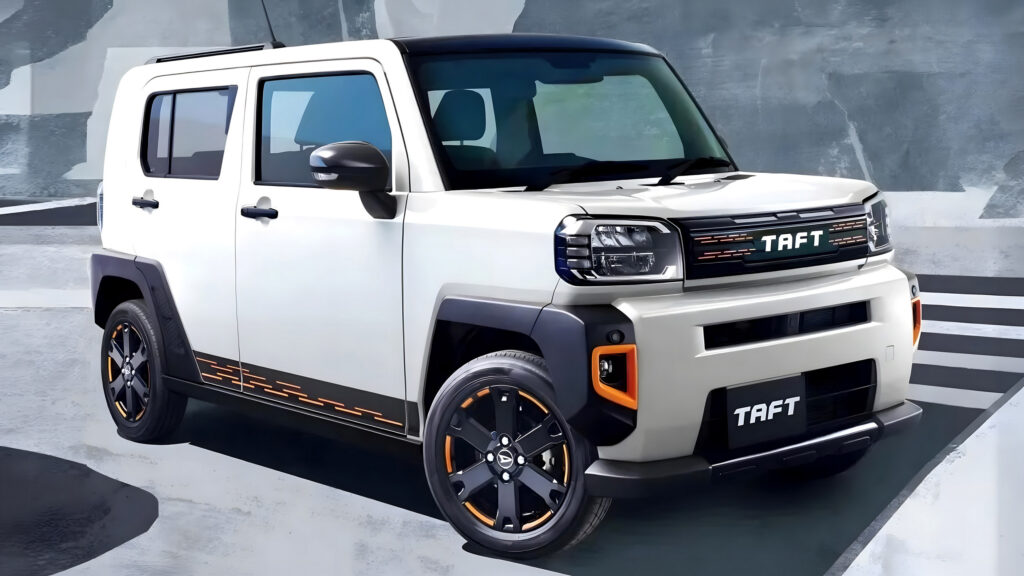
Daihatsu Taft Refresh Expands Kei Crossover’s Appeal with Special Editions and Enhanced Safety for...

Range Rover Sport Electric Delivers Refined Performance Without Sacrificing Off-Road Capability
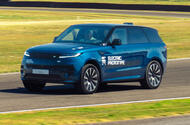 Luxury 4x4 flagship is still going electric - and now its smaller, sportier sibling is, too
You might have a sense of déjà vu reading this, because precisely a year ago Matt Saunders wrote about how he got to drive around an off-road course in a late-stage prototype of the electric Range Rover, with its market launch supposedly imminent.
Now I'm driving a late-stage prototype of the slightly smaller Range Rover Sport EV around a circuit with some obstacles ahead of a supposedly imminent market launch.
Knowing that the full-size Range Rover and the Sport are mechanically all but identical save for some tuning differences, we're effectively in the same place as we were a year ago. The Range Rover people say they wanted to do further testing and make sure that everything is perfect, but it's no secret that demand for big, expensive EVs still isn't all that, particularly in the US, an incredibly important market for JLR. But with the Porsche Cayenne Electric here and a new BMW iX5 inbound, it seems the time for such things has come.
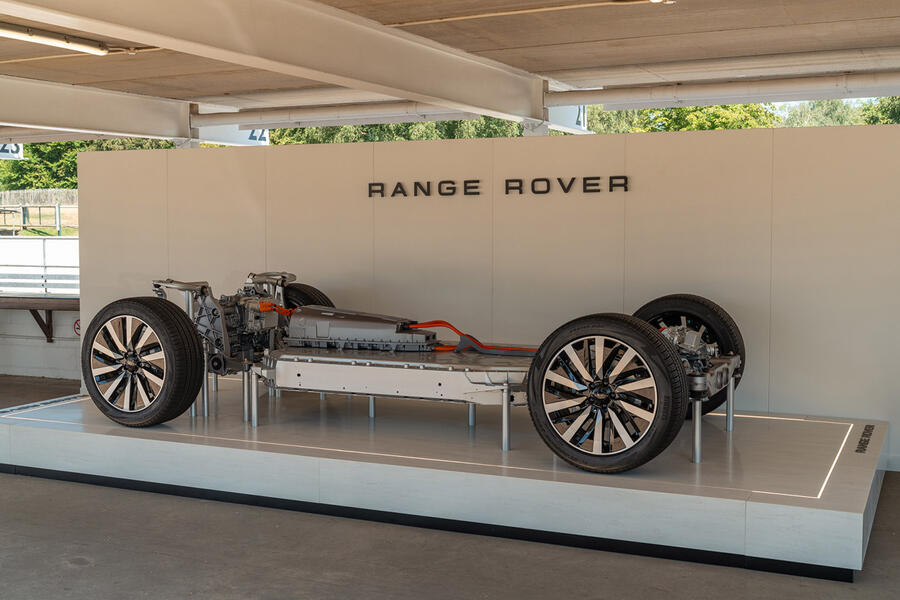
The technical details for the Sport are much the same as for the full-size Range Rover. The MLA platform was always designed with a big battery pack in mind but still meant primarily for ICE powertrains, given that the EV's battery electronics live in the transmission hump and the front motor sits in a cradle that mimics an engine in a crash. Still, the internal floor isn't any higher, there aren't any major packaging compromises and the EV is said to weigh about the same as the plug-in hybrid.
The motors — producing 444bhp or 542bhp in total, depending on the version — are a JLR development, because they couldn't find one with the right characteristics to give the car sufficient off-road performance, such as high torque output from rest. They're also produced in a JLR factory alongside the firm's engines.
Thanks to 800V electricals, charging will be rapid, even if the exact kW figure remains a secret. The battery consists of double-stacked cylindrical cells from AESC. With a usable capacity of 118.5kWh, it's quite big compared with the Cayenne's but not compared with the iX5's enormous 144kWh pack. JLR is projecting 330 miles on the American EPA test cycle, which is a bit more pessimistic/realistic than WLTP, so it should compare pretty well with the Cayenne, at least.
The engineers make no bones about the efficiency, which was never going to be class-leading, due to the characteristically bluff Range Rover shape and the standard all-season tyres, which give the Sport its off-road capability at the cost of some rolling resistance.
After all, job number one was to maintain that Range Rover character: the look, the refinement, the off-road capability and the commanding driving position. As such, the electric Sport isn't meant to be an EV statement but rather just another powertrain option.
Indeed, unlike the iX5 prototype that I drove a while back, this car isn't camouflaged, because there's nothing new to hide. Other than the closed-off front grille and the EV badges on the slightly more aerodynamically optimised wheels, it looks the same as any other Sport.
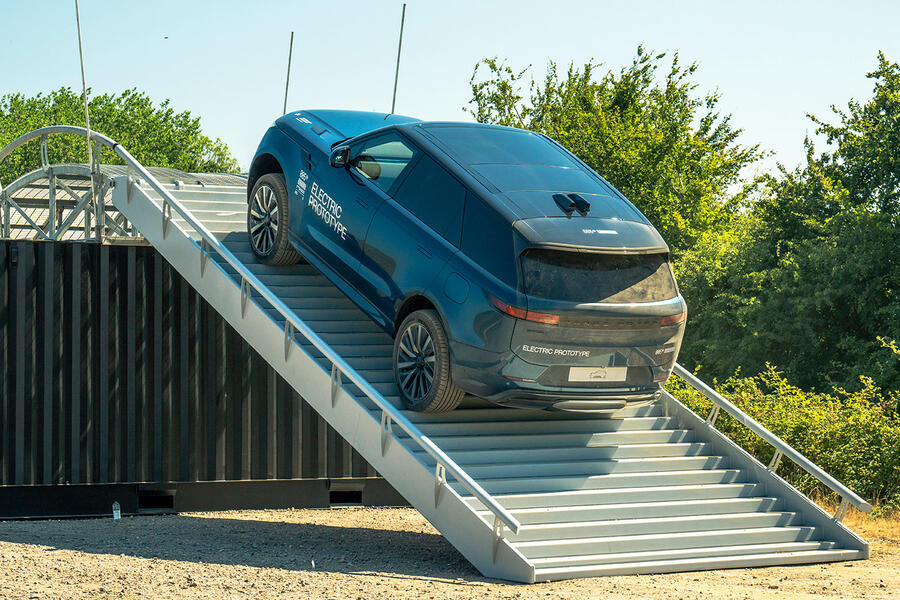
As far as I could tell from a lap of the Goodwood circuit with some diversions onto gravel paths and some cones and a cut-up Airbus to drive through (an owner's typical commute, then), it drives like one too — possibly even a bit better.
As Saunders noted about the full-size Range Rover EV, the really smooth power take-up is a boon off-road. There's no waiting for an engine to rev or a torque converter to convert torque: it's all there from zero and beautifully linear. There's also no need for locking differentials or a low-range gearbox, because the electronics have much finer control over the electric motors compared with an engine.
The regenerative braking plays into this as well. There are no paddles, just D (which can be configured in the screen as 'light' or 'standard') and S (one-pedal) on the drive selector, but all settings are nicely progressive. The engineers say that the one-pedal mode is useful off-road, but in the hardcore rock-crawl-type stuff you often actually need quite a lot of braking force at a very low speed, which is something that friction brakes are much better at than regenerating motors, so I found that the brake pedal offered more consistent response in those situations.
Away from the rough stuff, the Sport seems to benefit from a lower centre of gravity. Range Rovers can have a slightly tippy feeling in faster corners, but this EV feels nicely planted, with reassuringly meaty steering. Even though the front and rear motors are the same, there's a nice rear-biased feel to it when you power out of corners.
One slight misstep is the noticeable torque steer under very hard acceleration. A Range Rover minus an engine is a very refined, quiet thing at speed, but a question mark remains over how the ride feels. The Sport was pretty smooth and composed over a gravel road, but we know Range Rovers can struggle with the harsh, potholey stuff, and there was none of that on the test loop.
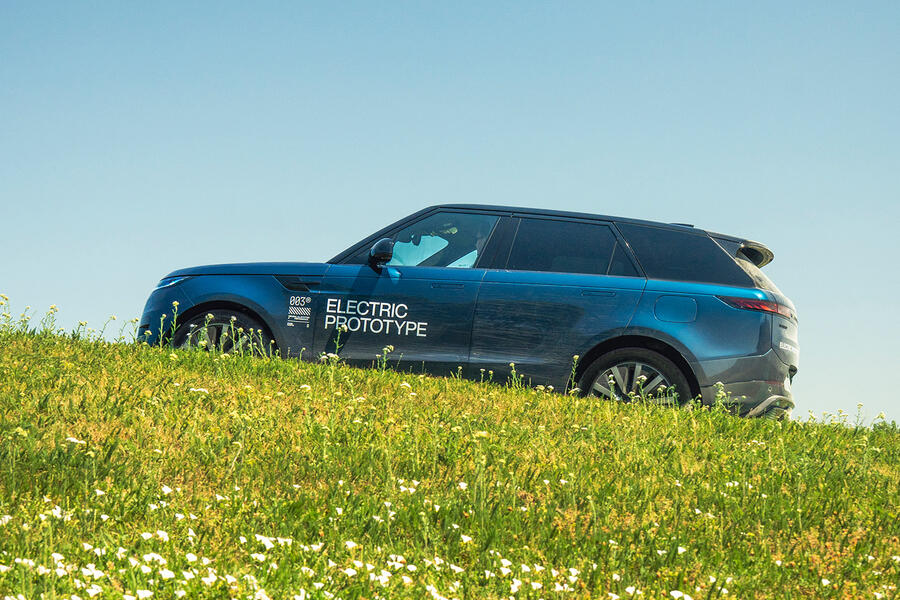
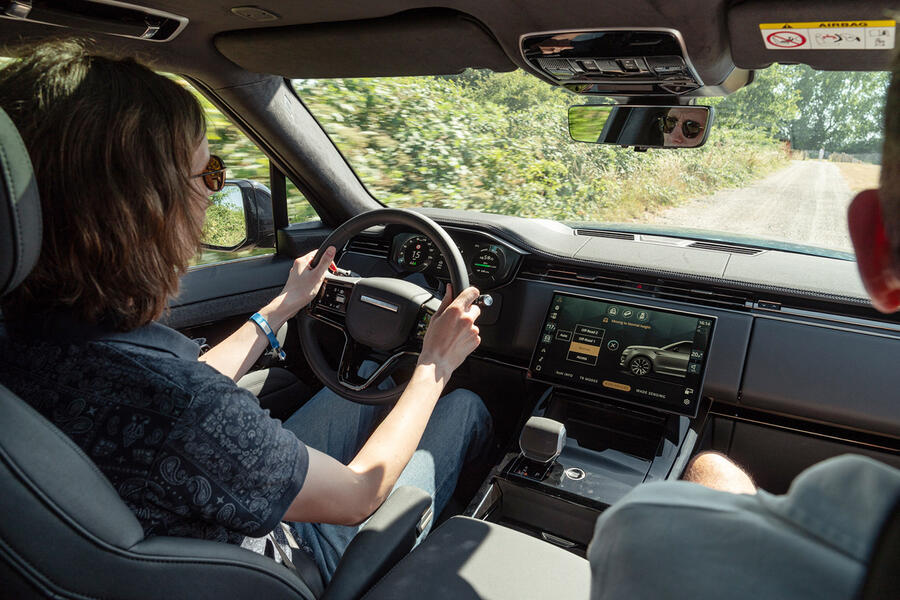
The interior is the same as other Sports, which means that most of the materials are lovely and the driving position is great, but it's brought down by the big slab of gloss black plastic in the centre console and the terrible touchscreen user interface for the climate control and drive-mode selection.
With finer speed control off-road and greater refinement on it, it sure looks like an electric Sport is a better Sport in many cases. It doesn't have the satisfaction of a V8 and those 330 miles of range will quickly evaporate if you do any towing, but then the V8 and the diesels aren't going anywhere for the foreseeable.
Away from the edge cases, the Sport EV is smooth, fast, nice to drive and highly capable off road.
Range Rover Sport Electric 550PS
Verdict: Smooth and silent electric power suits the Sport very well. Interior UI is still a problem and ride and real-world range are still unknown.
| Specification | Details |
|---|---|
| Price | £100,000 (est) |
| Engine | Two permanent magnet synchronous motors |
| Power | 542bhp |
| Torque | 627lb ft |
| Gearbox | 1-spd reduction gear, 4WD |
| Kerb weight | 2700kg (est) |
| 0-62mph | 4.4sec (est) |
| Top speed | 130mph (est) |
| Battery | 130/118.5kWh (total, est / usable) |
| Range, economy | 380 miles (est), 2.9mpkWh (est) |
| CO2, tax band | 0g/km, 4% |
| Rivals | BMW iX5, Porsche Cayenne Electric |

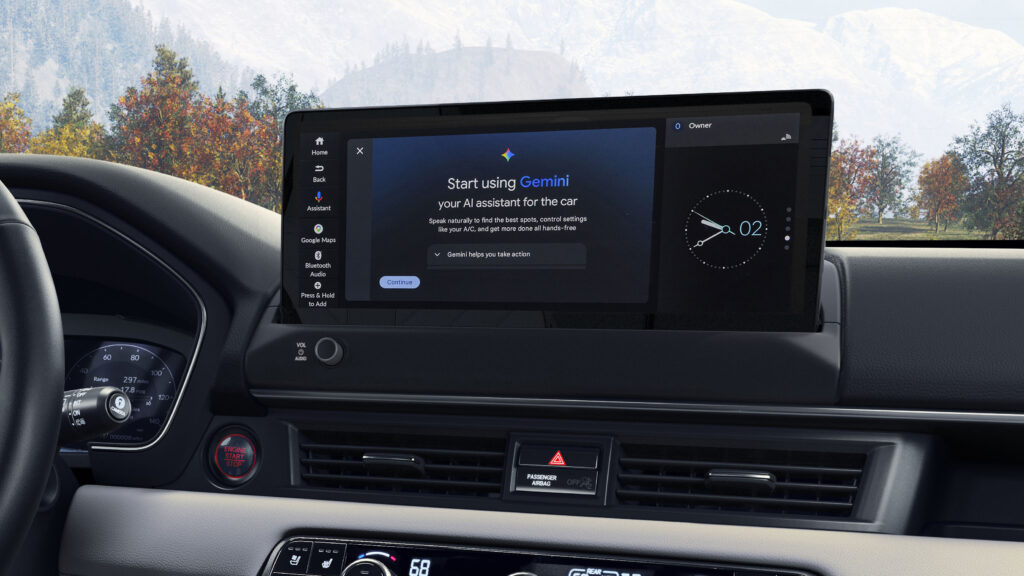
Gemini AI Transforms Honda In-Car Experience With Natural Conversation and New Privacy Tradeoffs

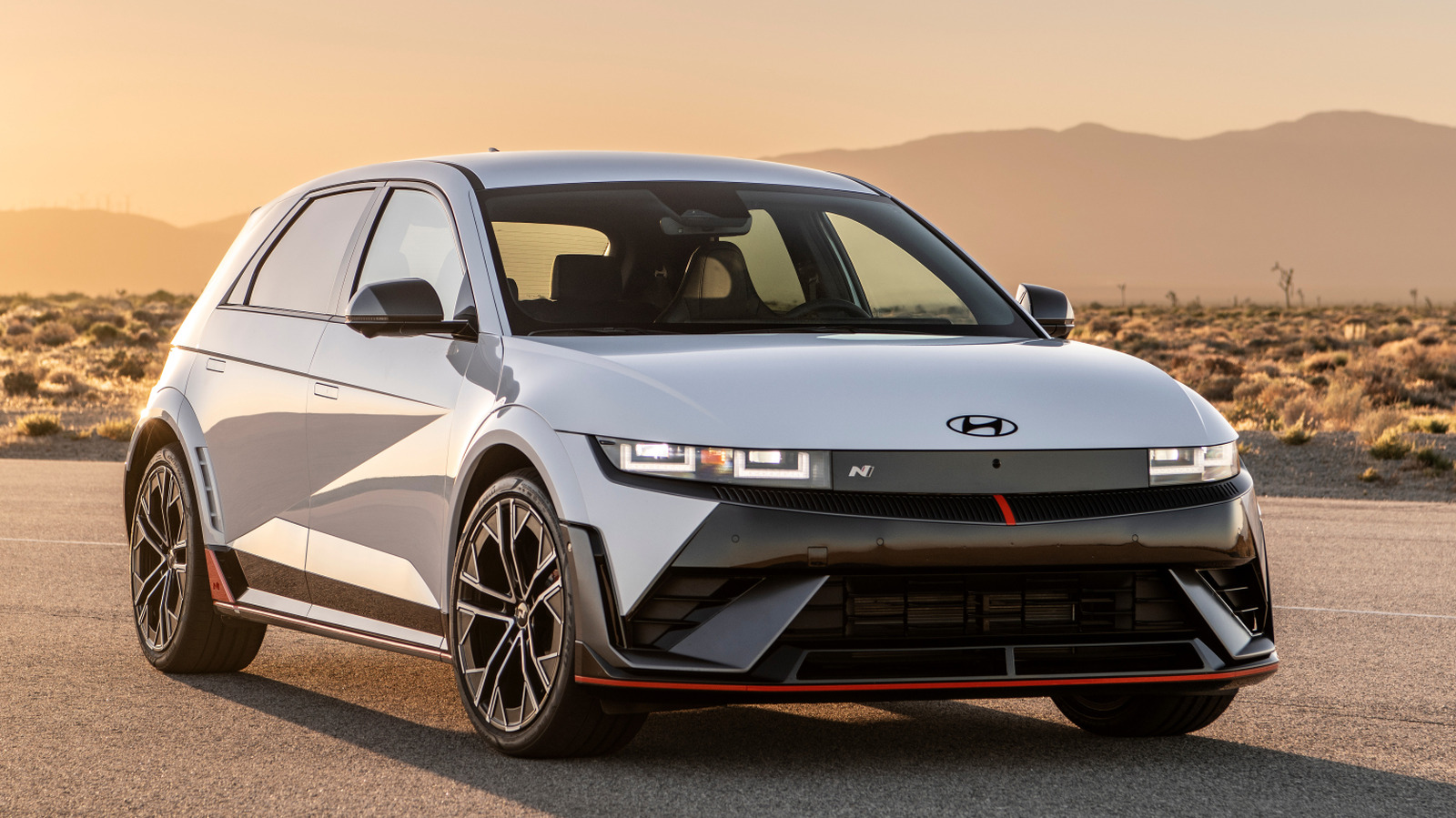
Ioniq 5 N Price Drop and NACS Integration Signal Hyundai’s Strategic Shift in EV...

Geely EX2 Challenges European Electric Hatchbacks with Affordable Range and Ambitious UK Expansion
 New small electric hatchback undercuts European rivals on UK market; will offer 214 miles of range for £25k
Geely is hoping to usurp the likes of the Renault 5 and Volkswagen ID Polo with the new EX2, which will be priced from £20,990 in the UK.
China's best-selling car, the EX2 is a small electric hatchback. It's the third model the Chinese brand has launched here, after the EX5 EV and Starray PHEV.
Sales will begin next month, with three specifications on offer: Pro (£20,990), Max (£23,490) and Ultra (£25,490).
The Pro is powered by a 35kWh battery pack and a rear-mounted 80bhp motor, yiedling an official range of 155 miles. That puts it in the same ballpark as the smaller Renault Twingo and Honda Super-N.
Upgrading to Max brings a 47kWh battery and a 114bhp motor, boosting range to 214 miles – positioning it between the Urban Range and Comfort Range versions of the Renault 5.
The EX2's interior is dominated by digital panels, with a 14.6in infotainment touchscreen used for controlling most functions. This has Apple CarPlay and Android Auto smartphone mirroring as standard.
Bar the upgraded powertrain, the Max's specification matches that of the entry-level Pro. Moving up to Ultra brings ambient lighting, a 360deg camera, heated front seats and a heated steering wheel, among other niceties.
The EX2 will be instrumental in Geely’s ambitious plan for dramatic growth in the UK: it will have a portfolio of 10 models by 2029 and aims to reach 100,000 annual sales by 2030.
For reference, it took Korean marque Kia decades to reach the same milestone, having finally crossed the 100,000-car milestone in 2022.
Geely sold a total of 450,000 EX2s in China last year.
Michael Yang, general manager of Geely Auto UK, higlighted the car's "attractive pricing" as one of its key attributes.
The company is positioning itself as a value-focused alternative to European competitors, hoping that will help it steal sales from mainstream brands.

Hummer EV Icon 25 Edition Marks Anniversary With Bold Design Amid Slow Sales and...

Slate Versus Ford Assessing Value Beyond Destination Fees in Automotive Pricing

BMW i3 Touring Expands Electric 3 Series with Practical Estate Design and Enhanced Utility
 New pictures showcase electric saloon's transformation into a more practical wagon
The new BMW i3 – the electric 3 series – will be offered in Touring estate form, and Autocar's spy photographers have caught it testing for the first time.
Although the prototype's rear end is disguised, it appears to be longer than the i3 saloon, with a sloped roofline.
The new images come after a silhouette of the i3 Touring was shown during the saloon's unveiling.
"Business customers and families will be particularly delighted: the Touring has always been a favourite with them," said then BMW Group chief Oliver Zipse.
The current petrol 3 Series has 480 litres of boot space as a saloon and 500 litres as an estate. BMW has yet to publish a capacity for the new i3, but it's expected to offer substantially more space.
However, it doesn't appear to reprise the unusual split tailgate – in which the rear window alone can be opened to provide easier access to the boot – that featured on previous Touring versions of the 3 Series.
The i3 and related iX3 SUV are the first models of BMW's Neue Klasse era – a complete rethink of how it designs and engineers cars for the EV age, inspired by the original Neue Klasse cars that brought the brand into the mainstream 60 years ago.
The i3 saloon is among the UK's longest-range EVs, officially allowing drivers to cover 567 miles between charges. It remains to be confirmed how the Touring conversion will affect this, but the poorer aerodynamics are expected to reduce the figure slightly.
The estate is expected to be slightly more expensive than the saloon, which starts at £53,005.