

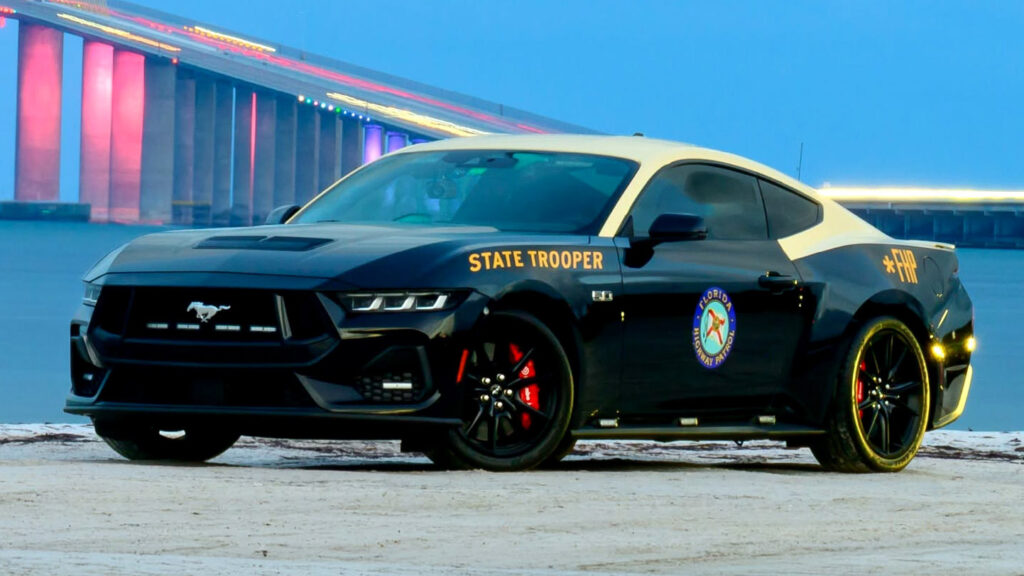
Best Looking Cruiser Contest Highlights Florida’s Unmatched Streak and the Power of State Pride

Valentino Rossi Pursues Nürburgring Challenge to Redefine Post-MotoGP Legacy

Genesis Box Buggy Redefines Golf Course Mobility with Quad-Motor Luxury and Lateral Movement Innovation
 Genesis channels the 1970s for its latest concept, which can move sideways and has more than 200bhp
Genesis has reinvented the humble golf buggy as a quad-motor, open-sided and luxuriously appointed off-road cruiser.
Making its UK debut at the Genesis Scottish Open golf tournament over the weekend, the Box Buggy is the work of Genesis design chief Luc Donckerwolke and a small team of the Korean brand's designers.
It was first shown at the Le Mans 24 Hours last month, where it was used as a pit-lane shuttle for the Genesis Magma hypercar racing team. Now it has returned to its conceptual roots at the Renaissance Club in Scotland, where it put the humble golf buggies at the PGA Tour event into the shade, and not only for its tartan seats and central touchscreen.
The Box Buggy is packed full of technology, including four in-wheel electric motors producing around 40bhp apiece, as well as brake- and steer-by-wire systems and electronic dampers.
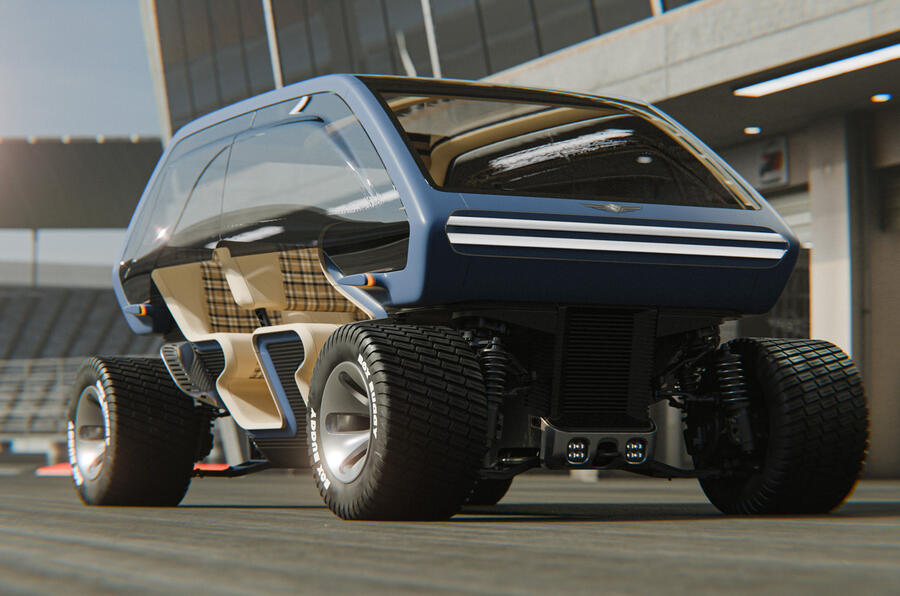
It also has the ability to turn its wheels 90deg – using rotating motors developed by sibling company Hyundai Mobis – so that it can shuffle sideways into parallel parking bays.
The Genesis design team took inspiration from the Brubaker Box, a 1970s limited-run custom buggy based on the Volkswagen Beetle.
The 'Box' name is not only a nod to that classic but also a play on the racing phrase 'box, box', instructing a driver to go to the pits.
There is no production intent for the Box Buggy; rather it's the latest in a series of wild concepts that push the boundaries for the Genesis brand beyond its current range of SUVs and saloons.
Genesis has recently revealed the Magma GT and GT3 supercars on the performance side, while the X Skorpio and X Gran Equator have shown its vision for a line of go-anywhere off-roaders.

DoorDash Driver Struck by Fleeing Suspect Highlights Risks and Resilience in Gig Work


Trump Administration Policies Undermine Clean Energy Investment and Threaten Climate Progress


Alfa Romeo Reinvents Its Compact Crossover Strategy with 2028 Tonale Successor on STLA One...
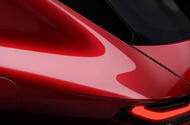 First teaser hints at fresh shape for new compact crossover, confirmed for unveiling next year
Alfa Romeo has released the first image of its replacement for the Tonale compact crossover, due in early 2028.
The image showcases the rear flank of the car, with a new and sharper rear light design and a scalloped wing. This suggest it could have a more rakish, coupé-like roofline than the upright Tonale.
The new car, which has yet to be named, will be one of two Alfa Romeo models in the C-segment – the heartland of the European market – as the Italian brand looks to rejoin the mainstream.
As with the spiritual successor for the Giulietta hatchback, it will be based on Stellantis's new multi-energy, segment-spanning STLA One architecture.
Alfa Romeo previously confirmed it will offer the hatchback with both combustion-engined and electric powertrains in a bid to broaden its appeal, and the same will apply for the Tonale replacement.
The ICE cars are likely to use developments of the mild- and plug-in hybrid powertrains currently offered in other models across the Stellantis portfolio.
Announcing the hatchback at Stellantis’s investor day in May, Alfa Romeo said it would “leverage Stellantis’ global scale while differentiating its offering to continue developing authentic Alfa Romeos”.
The new crossover will be instrumental in the brand’s future, considering the Tonale was its second-best seller globally in 2025. Its “leading light”, however, was the smaller Junior crossover.
The future of the brand’s flagships, the Giulia saloon and Stelvio SUV, remains to be determined. The sibling models were briefly retired in September 2025 but production was restarted months later as the development of their replacements was delayed.
The new Giulia and Stelvio were originally due to be offered solely as electric cars but were held back so they could be retrofitted with hybrid powertrains.
Alfa Romeo said in May only that it was “studying solutions to continue operating in the D-segment”, hinting at further changes and indeed delays.
The current Giulia and Stelvio are confirmed to remain on sale through 2027.
Alfa Romeo’s global sales grew by 20% last year to some 73,000 cars. That was, however, largely due to the ramp-up of the high-volume Junior.
The Tonale was updated with a fresh look and a series of mechanical changes last October, but the success of these changes has yet to be determined.
Autocar understands that fewer than 200 examples of the facelifted Tonale have been sold since it arrived in UK showrooms in January.

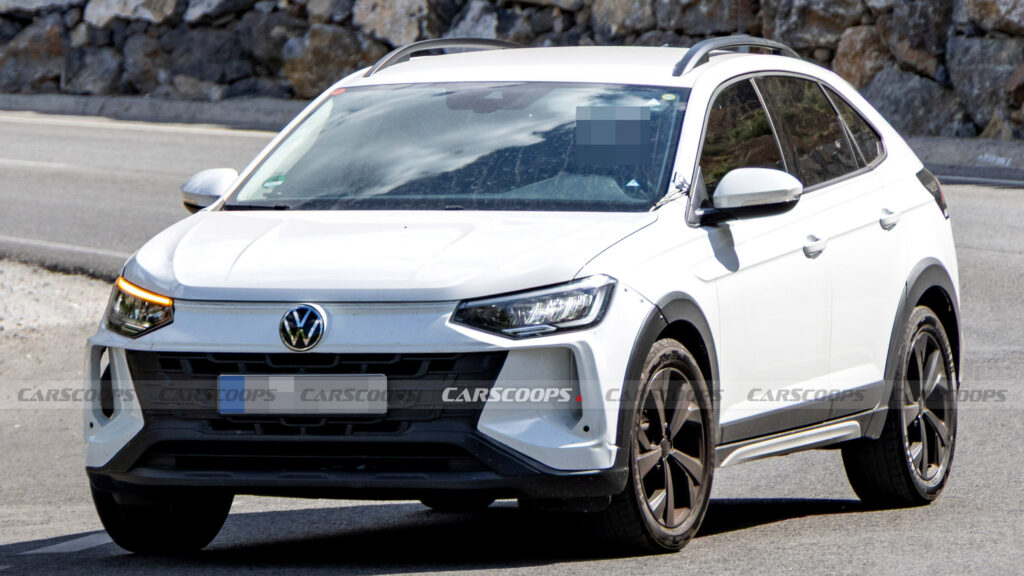
Volkswagen Nivus Redesign Signals Platform Shift and Hybrid Ambitions for Global Markets

Axial-Flux Motors Redefine Hybrid Efficiency in Horse’s Methanol Range-Extender Powertrain
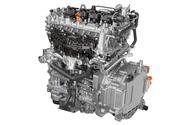 Horse's D20 powertrain uses power-dense axial-flux electric motors to save space and boost efficiency
Horse Powertrain, a joint venture of Geely and the Renault Group, has revealed a new range-extender hybrid powertrain with an advanced axial-flux electric motor.
The pancake-shaped axial-flux design is much more compact and power-dense than the drum-like radial-flux design that's commonly used in today’s electric and hybrid cars.
Horse claims its motor is 46% shorter than a similarly specified radial-flux one, making it easier to package in tight spaces, such as on a hybrid car’s gearbox – as it has been in the new 'D20' powertrain.
It also produces 63% more power than a radial-flux motor of the same size, according to Horse, for a total of 141bhp.
Axial-flux motors are rare today, featuring in hybrid supercars such as the Ferrari 296 GTB and SF90 and Lamborghini Temerario and Revuelto. Mercedes-AMG also uses three such motors in its new GT 4-Door Coupé EV, which puts out 1169bhp.
Horse’s application of an axial-flux design is notable in that it isn't used for high performance but rather its packaging and efficiency advantages.
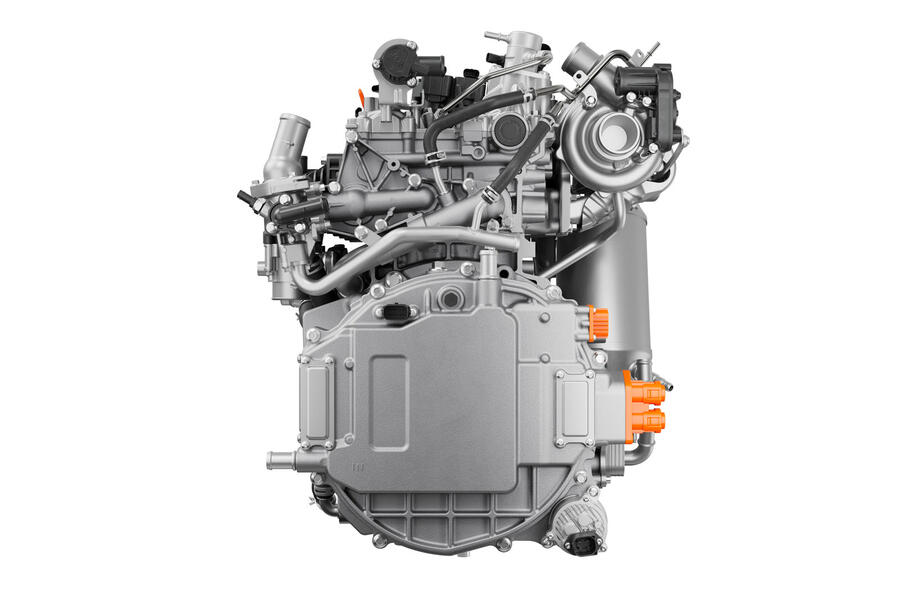
The D20 powertrain matches the motor with a naturally aspirated 2.0-litre engine that runs on methanol and doesn't drive the car's wheels but instead generates electricity.
Horse claims it can fully recharge a 40kWh battery pack using 19.6 litres (4.3 gallons) of methanol.
Methanol is also rare in its use today but is becoming increasingly commonplace in China.
Geely is a significant backer of the fuel: it has supported its use in large taxi fleets and earlier this year revealed a one-make-racing version of its Xingyao 6 saloon powered by the biofuel.
The development of this methanol range-extender powertrain reflects Horse’s strategy to speed up decarbonisation through hybridisation, rather than relying on the industry to put its weight behind full battery electrification.
Speaking to Autocar earlier this year, CEO Matias Giannini explained: “I think that [widespread adoption of EVs] is so far away that I see the opportunity and the obligation that a company like ours has to solve the problem of decarbonisation in the meantime. It is big enough to motivate this company to continue to do what we're doing.”

Jetta M6 Electric Sedan Targets China’s Budget EV Market with Familiar Tesla-Inspired Design
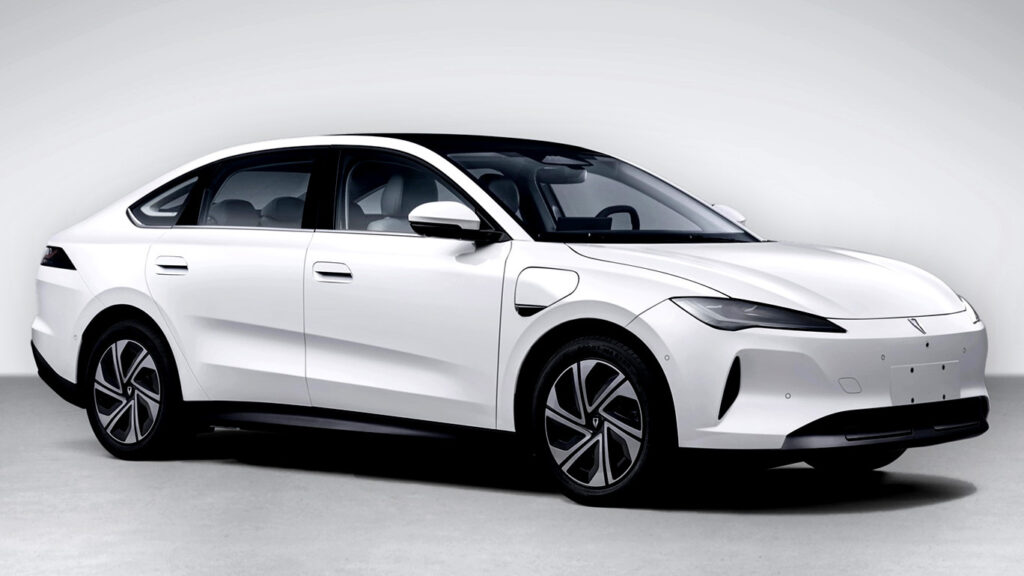

Volkswagen Weighs Building Chinese-Developed EVs in Germany to Address Overcapacity and Competitive Pressures
Tesla Model 3-sized ID Unyx 07 is among the Chinese models VW could build in GermanyChinese-market Tesla Model 3 rival and Touareg-sized SUV could fill capacity at VW's German plants
Volkswagen is studying plans to produce its Chinese-developed EVs at under-utilised German factories as part of a wider effort to increase production, safeguard jobs and make better use of manufacturing capacity.
The proposal, reportedly backed by the German state of Lower Saxony, Volkswagen's second-largest shareholder, comes as the company reshapes its domestic manufacturing operations in response to shrinking sales, falling profits and increasing competition in European markets from Chinese car makers.
Sources at its Wolfsburg headquarters say the leading candidates are EVs from Volkswagen's new Unyx line-up, including those developed in China by Volkswagen in partnership with Xpeng.
No production decision has been taken, although the programme is understood to form part of a broader review of how Volkswagen can make better use of excess capacity at its German plants.
If approved, the move would represent a landmark reversal in Volkswagen's operations. Rather than exporting German-developed vehicles to China, it would build Chinese-developed models in Germany for European markets.
The first of the potential candidates for German production is the ID Unyx 07, a rear-wheel-drive saloon that became Volkswagen's first production model to adopt the new China Electrical Architecture (CEA) platform. At 4881mm in length, it competes with the Tesla Model 3 in China.
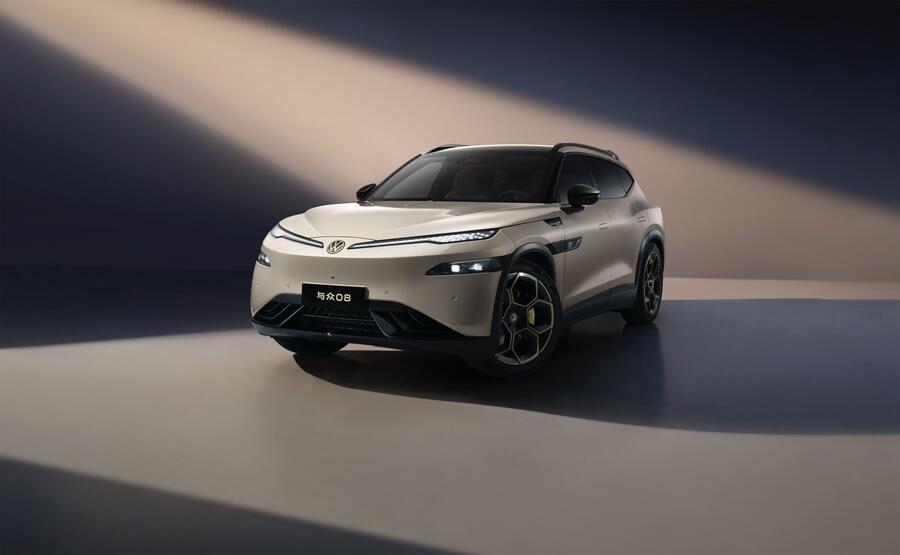
Also claimed to be under consideration is the 4887mm-long ID Unyx 08 SUV (below), which one senior Volkswagen executive recently described to Autocar as pointing towards the role once occupied by the Touareg within the brand's global SUV line-up.
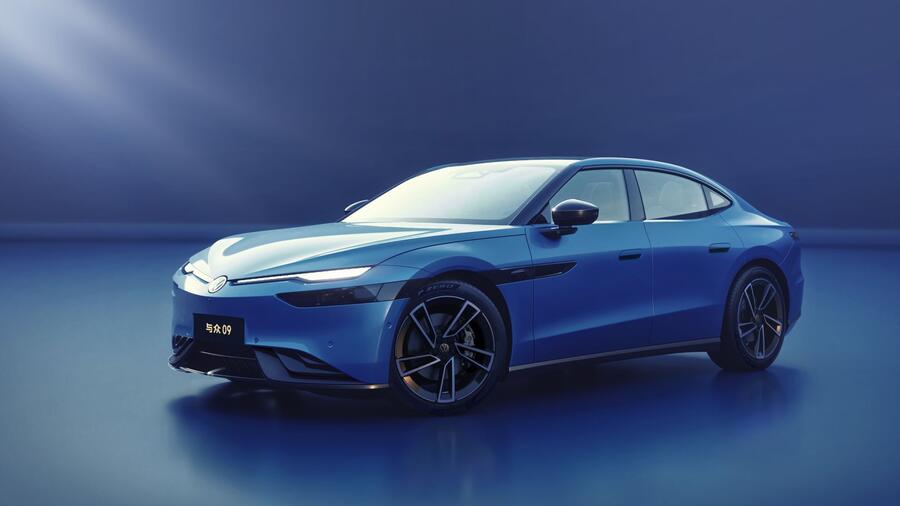
A third model, the upmarket ID Unyx 09, is planned to join Volkswagen’s Chinese line-up in October. Recently revealed in filings published by China's Ministry of Industry and Information Technology, the 5081mm-long luxury saloon is set to be sold in China with the choice of rear- or four-wheel-drive.
Like the 08, the 09 (below) uses a CATL-supplied lithium-iron-phosphate battery and Volkswagen's latest AI-based driver assistance technology, developed specifically for the Chinese market.
Volkswagen views the Unyx programme as central to rebuilding its competitiveness in China, where domestic manufacturers have rapidly gained market share in recent years.
The proposal to build China-developed models in Germany comes as Volkswagen undertakes one of the biggest restructurings in its history. Its network of German factories is currently operating well below capacity, following weaker-than-expected demand for EVs in Europe, prompting its board to examine a range of measures aimed at increasing utilisation while reducing manufacturing costs.
The discussions also raise the prospect of a deeper partnership with Xpeng. If Volkswagen proceeds with German production of the Unyx family, it could ultimately provide the manufacturing framework for the Chinese EV firm to assemble its own cars alongside Volkswagen cars for sale in European markets.
European production of Xpeng's G6 and G9 SUVs is currently handled by contract manufacturer Magna Steyr at its factory in Graz, Austria.